Tag: International

  • Apple sales plummet in Greater China

    Apple sales plummet in Greater China

    “In fact, most of our revenue shortfall to our guidance, and over 100 per cent of our year-over-year worldwide revenue decline, occurred in Greater China across iPhone, Mac and iPad,” he said.

    The Apple sales decline in China, Hong Kong and Taiwan would most likely exceed $4.3 billion, roughly equal to the company’s overall drop in revenue.

    Previously, Apple had forecast revenue of between $89 billion and $93 billion. Now it expects the figure will be closer to $84 billion, but notes final figures will not be calculated for several weeks.

    Cook said the rising tension between the US and China played a part in the declining sales, with traffic to Apple stores in the region declining as the quarter progressed. This, in turn, led to lower than expected iPhone revenue in the region, which was compounded by the stalling iPhone upgrades seen in other markets.

    “We believe there are other factors broadly impacting our iPhone performance, including consumers adapting to a world with fewer carrier subsidies, US dollar strength-related price increases, and some consumers taking advantage of significantly reduced pricing for iPhone battery replacements,” Cook explained.

    In response to these trends, the business is seeking to make it easier to trade in used iPhones at Apple stores, as well as allow payments to be made over a longer period.

    “This is not only great for the environment, it is great for the customer, as their existing phone acts as a subsidy for their new phone,” Cook said.

    Despite the slowing traffic, Apple’s other categories grew over the period, with the company’s wearables category growing by almost 50 per cent due to the popularity of Apple Watch and AirPods.

  • Amazon to expand Whole Foods, open more stores

    Amazon to expand Whole Foods, open more stores

    Nearly a year-and-a-half after Amazon acquired Whole Foods for approximately US US $13.5 billion, things are about to start changing. Amazon is planning to expand its Whole Foods Market portfolio by adding more stores to put more customers within its two-hour delivery service range, The Wall Street Journal reported this week. The report says Amazon has been scouting locations for bigger Whole Foods stores in states and regions where they don’t currently have any stores at all–places like Idaho, south­ern Utah and Wyoming, along with many other suburban areas.

    The report goes on to say that these stores will be approximately 45,000 sq. ft. in size and the extra space is intended to accommodate Amazon delivery and pickup from online orders.

    According to WSJ, the world’s largest online retailer also plans to expand its two-hour delivery service, Prime Now, to nearly all of its roughly 475 Whole Foods stores in the United States.

  • Amazon sees ‘record breaking’ holiday season

    Amazon sees ‘record breaking’ holiday season

    Global online marketplace Amazon has announced a record-breaking holiday season, with customers shopping en-masse across both the Christmas and Boxing Day sales events on the storefront. “This season was our best yet… we are thrilled that in the U.S. alone, more than one billion items shipped for free this holiday with Prime,” Amazon chief executive of worldwide consumer Jeff Wilke said.

    While the online store didn’t provide sales figures, Australian purchases saw a love of gaming push sales of the Nintendo Switch and New 3DS XL consoles dominate the holiday period, as well as Sandisk memory cards and various video games compatible with the systems themselves.

    Fashion brands Birkenstocks, Bonds, Champion, Nike, Tommy Hilfiger and Puma were also noted as being “particularly popular” through the period.

    “We were delighted to see so many Australian consumers shopping across all categories on Amazon.com.au in the run up to Christmas [and] during our Boxing Day Sale Event,” Amazon Australia country manager Rocco Braeuniger said.

    “Our first year in Australia saw us increase selection five-fold to over 100 million products and introduce many new products and services for customers to enjoy, [and] we look forward to bringing much more to Australian consumers in 2019.”

    In the lead up to the event, research from PayPal noted that it expected a quarter of Australian shoppers to head online on Boxing Day, with 70 per cent of those surveyed stating that online shopping is less stressful.

    “Australians are looking for the best deals, not the stress that’s traditionally associated with heading out to the shops for the Boxing Day sales,” PayPal shopping expert Liz Lefort said.

    “Increasingly those deals, or better deals can be found online, and Aussie shoppers are taking heed of that.”

  • Artificial intelligence is $300 billion cost-saving opportunity

    Artificial intelligence is $300 billion cost-saving opportunity

    The use of artificial intelligence in the retail sector is a $300 billion cost-saving opportunity for retailers which are able to scale and expand the technology, though just 1 per cent of retailers have achieved the necessary level of development, according to research from Capgemini Research Institute. The study looked at 400 global retailers, and how they are implementing the burgeoning technology at different stages of maturity, and found that over a quarter of retailers are deploying AI in their businesses – a seven-fold increase from 2016.

    “For global retailers, it appears reality has kicked in regarding AI, both in terms of what the technology can achieve and what they need to do to get there,” Capgemini vice president global consumer products and retail sector Kees Jacobs said.

    “Of course, deploying and scaling will be the next big objective, but retailers should be wary not to chase ROI figures without also considering the customer experience.”

    According to the research, retailers deploying AI systems were eight times more likely to be working on high-complexity projects rather than smaller projects which are easier to scale, and generally lack a focus on customer usability.

    Only 10 per cent of such retailers noted customer experience as a driving factor of these developments, and only 7 per cent noted customer pain points as a priority. Meanwhile, cost (62 per cent) and ROI (59 per cent) are driving most investment into the space.

    Despite this, 98 per cent of retailers surveyed expect customer complaints to decrease, while 99 expect to see an increase in sales, as a result of investment into AI – far ahead of the more contrasted expectations noted in 2017.

  • Kathmandu Australia drops expectations after slow holiday sales

    Kathmandu Australia drops expectations after slow holiday sales

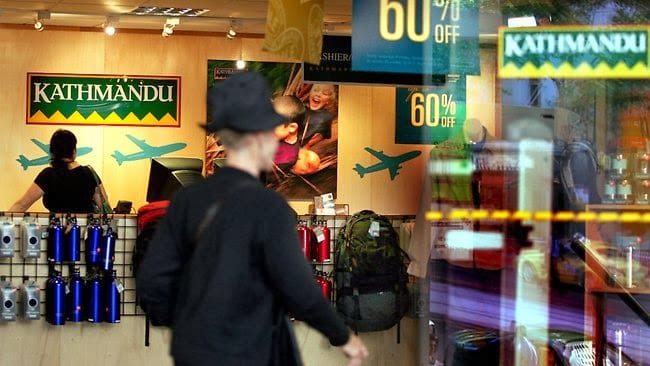
    Outdoor retailer Kathmandu has seen sales fall over the first 15 weeks of the 2019 fiscal year after sales during the December Summer Sale failed to reach expectations, deflating the retailer’s projections for 1H2019. Same store sales for the 22 weeks ending 30 December fell 1 per cent year on year, falling 0.2 per cent in Australia and 2.4 per cent in New Zealand.

    “Following strong same store sales growth in Q1, we are disappointed in trading results in Australia and New Zealand over the Christmas and Boxing Day period,” Kathmandu chief executive Xavier Simonet said.

    “Despite sales being below expectation it is pleasing to see the improvement in retail gross margin and continuing strong growth from the recently acquired Oboz business.”

    Gross margin improved to roughly 64 per cent over the period, partially offsetting the lower than expected sales to date for the 2019 year.

    First half sales in US footwear brand Oboz are now projected to grow 35 per cent to approximately $23.5 million (NZ$27.5 million), and see a gross margin of 40 per cent.

    Total group profits are expected to reach approximately 4 – 8 per cent above 1H2018, assuming current trends continue.

  • DHL announce ecommerce service expansion in Turkey

    DHL announce ecommerce service expansion in Turkey

    German based logistics firm DHL Express has said it will be investing more on ecommerce operations and infrastructure in Turkey in a bid to expedite parcels passing to and from Europe and several other parts of the world. A key part of the innovations and improvements will be a new operations hub at Istanbul airport but more developments are planned.

    The announcements were made at the DHL International Cross Border eCommerce Summit, which took place in Istanbul during December. And it was noted that the importance of Turkey is its strategic position as the meeting point between Europe, Africa and Asia. As a crucial trading hub, they reckon that DHL will be able to move consignments to numerous destinations in the Middle East and Africa more quickly by operating through Turkey.

    This makes Turkey a very important country for us, and we are working to make it a regional hub,” Leendert van Delft, VP Global Sales Programs DHL Express said. The operation center at the airport in Istanbul will be the first step in that direction the vice president announced. “Today, when you look at the world, everyone speaks of the US and China as ecommerce markets. But in the case of Turkey, you’re not at the initial phase of this journey, but you have actually moved from the infancy to the stage of walking. It is time for Turkey to run now.

    DHL says that their current share of global ecommerce deliveries is estimated to be in the region of 29% but they they hope to achieve something closer to between 40-50% by the end 2020. They also note that the DHL portion of same stood at 5% in 2016 and increased to 10% at the start of 2017 before rising to 15% in November 2017. And as competition and ecommerce increases, an ongoing share of business of roughly 25-30% is their reported aim.

  • Goldwin tops sports market growth through store investment

    Goldwin tops sports market growth through store investment

    Marketing of sports brands has become increasingly retail-led in the last decade and a focus on retailing has enabled Goldwin to make serious gains while the two biggest domestic brands, Asics and Mizuno, have been distracted by overseas expansion. Goldwin took a close look at its beleaguered business 15 years ago and decided retail could be its salvation. At current rates it will catch up with Mizuno’s domestic sales in a few years.

    Goldwin was a struggling sports apparel distributor 15 years ago, floundering in declining wholesale channels, the implosion of the ski boom, and a fear of risking all on expensive retail investment, resulting in sales collapsing from a peak of ¥78 billion to less than ¥50 billion.

    No longer. The rights owner for The North Face and Helly Hansen in Japan posted another strong set of results in 1H2018: sales jumped 16.2% to ¥33.4 billion and operating profit doubled to ¥3.1 billion. The strong first half follows an equally good 2017 when sales rose 15.6%, the eighth straight year of growth. Operating profit reached ¥7.1 billion, up 81% and the highest for 25 years.

    Sales for FY2018 ending March are expected to come in 13.6% higher at ¥80 billion, with operating profit of ¥9.1 billion, up 28.1%. If these numbers turn out to be correct, Goldwin will have achieved it highest sales ever and met the goals set out in its medium-term plan ending March 2021, two years ahead of schedule. It has now updated the medium-term plan from ¥80 billion to ¥90 billion in sales, operating profit from ¥6.5 billion to ¥11 billion, and an ROE of 15% against a forecast 11.2% (the ROE in FY2017 was 15.4% and is forecast at 18% for FY2018).

    What has changed? The key factor is the success of its outdoor brands, which accounted for ¥49 billion, or 70%, of sales in FY2017, and in particular the change in management’s willingness to invest in retail stores in shopping centres a decade ago.

    Since the decision to invest in retail, Goldwin has opened well-executed stores in busy malls such as Lalaport and Lumine, as well as some very popular outlet stores. Today, its own directly operated stores account for 56% of sales. In addition, Goldwin garners another 5% of sales from e-commerce, still a small percentage but online sales were up 50% in a year. This performance is far better than either of the two largest domestic brands, Asics and Mizuno. Goldwin had little choice than to risk all given its dependence on the Japanese market for almost all its sales, forcing it to seek an alternative to its traditional wholesale model.
    Goldwin has focused investment on key brands rather than try to lift all boats at once.

    The growing appetite for outdoor fashions from both active consumers and those who just like the outdoor look, has helped propel The North Face and Helly Hansen in the last few years. In contrast, other Goldwin brands, like Ellesse, Canterbury and Speedo, which are sold at wholesale and through department store corners, have seen sales languish, falling 3.3% in FY2017.

    What is impressive about Goldwin’s stores is relentless effort to attract new footfall. In-store events are held regularly to pull in customers and deepen interaction, with customer feedback passed back to product planning and marketing teams. Goldwin also locates stores close to outdoor sports activities, such as its Nagano and Niseko The North Face Gravity stores which combine merchandise sales with ski rental services and even a library of books on outdoor sports. At the new National Stadium in Gaien-mae, it has opened an athletics complex/store called Neutralworks by Goldwin.
    On the supply side, Goldwin has worked to simplify supply chains through more direct contracts with factories, which in turn has helped streamline inventory management, resulting in a lower cost of sales, better sell-through and an increase in operating profit margins from 4.9% to 9.4%.

    Given the intense competition and the plethora of similar product from multiple sports brands, Goldwin has been investing in product innovation for both its own brands and licensed product. In 2017 it built a technical research centre in Toyama – where the company was founded – at which it develops new fabrics and performance functions using environmental chambers and motion capture systems. It has also partnered with other companies: it uses a synthetic, protein-based, petroleum-free silk developed by Spiber (in which it has invested ¥3 billion) for jackets and hoodies, and has licensed odour-reducing, sweat-absorbing fabrics originally developed by Jaxa for astronauts’ underwear.

    Goldwin is now investing in stores for other promising brands. It opened stores in Aoyama, Tokyo and Sapporo for the US brand Woolrich in October, and forecasts sales growth of 6.5% this year. Goldwin plans 10 stores for Woolrich through FY2020. For its eponymous Goldwin brand it opened the first flagship store in November in Nijubashi Square in Marunouchi.

    Going forward, plans for overseas expansion look promising for the first time. In the last two years, it introduced a new logo and updated merchandise for the Goldwin brand. It will transform what was a domestic skiwear label into a lifestyle sports label with global reach, similar to Descente’s plans for its own brand. In A/W 2019 a new lifestyle collection of sports apparel and accessories will be launched at home and overseas – this year the ‘hero’ product, a down parka using synthetic silk from Spiber, was gold winner at the European sports trade show, ISPO Munich.

    Last year, Goldwin acquired a stake in Woolrich International, a UK-based entity that owns the Woolrich brand, and plans to “participate actively” in its global development, particularly in Asia, including production – it has created a premium collection for the brand this year.

    Investment in sports retail stores will increase at home over the next couple of years, with all major sports brands looking to expand. The success of Japan in the soccer World Cup, big expectations for the Japan team in the 2019 Rugby World Cup, and the upcoming Olympics in 2020 all contribute to consumer interest in sports. Goldwin itself is hoping for an afterglow effect after the Olympics – what it calls “Golden Sports Years” – but the even more important trend is growing interest in health and well-being in general.

    What also makes the prospects for sports brands so bullish over the next decade is that interest in active sports, and the attire to go with this, is common to all age groups in Japan. This includes the fast growing population segment, the over 60s, ensuring sustained demand for many years to come. Sports and sports fashion is in many ways one of the few consumer categories to be largely immune to a demographically challenged market like Japan.

    Some local sports firms have been complacent in taking for granted customer loyalty to Japanese brands, but Goldwin has matched international brands in development of solid retail concepts, mixing innovative products with store entertainment and services, the basis of its new found success. Asics and Mizuno will be hoping that investment plans in the next few years will be enough to restore the balance.


     

  • Prosecutors drop charges against Samsung chairman

    Prosecutors drop charges against Samsung chairman

    Prosecutors dropped tax evasion and embezzlement charges against Samsung Group Chairman Lee Kun-hee on Thursday. The decision was based on the judgment that further investigation into the case was impossible due to Lee’s health issues. The investigation may resume if Lee recovers, but the possibility is slim. Lee has been hospitalized for more than four years now since a fall in May 2014.

    Lee was accused of avoiding taxes worth 8.5 billion won ($7.6 million) that involved multiple bank accounts under the names of Samsung executives. More than 1,700 accounts were found to have been used for this purpose since 2008, when the investigation started.

    Another charge against the chairman was the embezzlement of 3.3 billion won from Samsung C&T, which was used to pay for the interior renovation of Lee’s private home.

    The Seoul Central District Prosecutors’ Office, however, did decide to indict four Samsung executives who played a role in the two cases – one for the tax evasion scheme and three for the embezzlement case.

  • Petronas buys 10% of Block 61 onshore Oman

    Petronas buys 10% of Block 61 onshore Oman

    Petroliam Nasional Bhd (Petronas), through its subsidiary, PC Oman Ventures Ltd (PCOVL) has acquired a 10% stake in Block 61, onshore Oman from Makarim Gas Development LLC (MGD), after the conditions for the completion of the transaction were fulfilled. MGD is a subsidiary of Oman Oil Company Exploration & Production LLC. Petronas said the completion of the transaction was formalised at an event held in Muscat, Oman on Dec 27.

    Following the deal, MGD’s stake in Block 61 will be reduced to 30%, while P Exploration (Epsilon) Ltd as the operator holds the remaining 60% stake.

    Petronas noted that the acquisition of Block 61 marks an important step in realising the group’s growth strategy in the upstream sector in the region and globally, as it aligns its activities to ensure sustainable energy supply.

  • Raf Simons exits Calvin Klein

    Raf Simons exits Calvin Klein

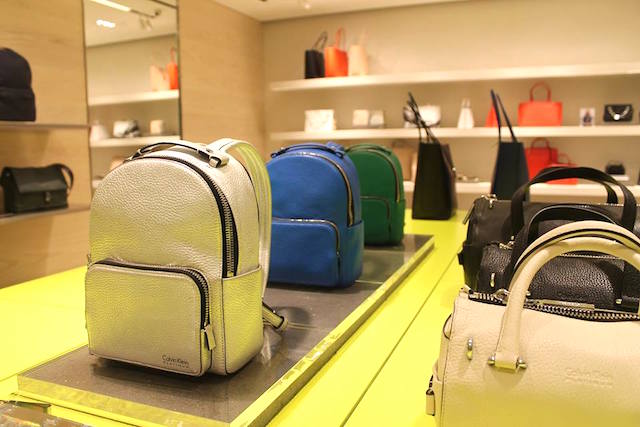
    Raf Simons is exiting Calvin Klein less than two years after his debut as its first chief creative officer and eight months before the end of his contract. The brand will not stage a runway show in February. The designer’s stint at Calvin Klein — coming after his turn as artistic director of women’s haute couture, ready-to-wear and accessory collections at Dior — won plaudits within the industry but failed to resonate commercially. His exit was widely expected after Calvin Klein parent PVH Corp. chief executive Emanuel Chirico last month criticised the brand’s uneven financial performance and skew toward “high-fashion” under Simons.

    “Both parties have amicably decided to part ways after Calvin Klein Inc. decided on a new brand direction which differs from Simons’ creative vision,” the company said in a statement. A representative for Simons declined to comment.

    Simons’ appointment in 2016 was met with much fanfare. The Belgian designer, as well known for his cult menswear label as his well-regarded stints at Jil Sander and Dior, was given a multi-million-dollar salary and the title of chief creative officer, with oversight over all aspects of marketing and design for the American megabrand, a degree of control he did not have at Dior.

    From the start, hiring a high-concept fashion designer for a brand best known to consumers for its denim, underwear and provocative marketing was a risky move. But PVH leadership saw competing businesses like Ralph Lauren stagnating for lack of creative innovation, while European stalwarts like Gucci soared after radical creative overhauls.

    With Simons, Calvin Klein hoped to not only generate a halo effect for its lower-priced products, but transform the label’s high-end ready-to-wear business, renamed 205W39NYC, from a marketing expense into a commercial powerhouse.

    But from the very beginning of Simons’ tenure, there was a disconnect between his personal aesthetic and the needs of a multi-billion-dollar, multi-tiered brand, driven less by high design and more by mass marketing, an area in which Simons had no experience. His first advertising campaign for the ready-to-wear collection, received mixed feedback. Shot by longtime collaborator Willy Vanderperre, it was arty and bloodless; far from the sexualised minimalism for which the brand was so well known.

    Yet there was plenty of industry praise for Simons’ catwalk shows. And in the first season alone, doors selling 205W39NYC jumped from 30 to 300. What’s more, Simons seemed committed to the cause of translating his designs into mass sales, visiting with Macy’s executives and hiring the Kardashian family to pose for underwear and denim advertisements.

    As recently as March, PVH appeared committed to the partnership as well, with Chirico touting the “credibility” that 205W39NYC would bring to the brand’s other lines. But PVH’s patience began to wear thin over the course of 2018, as the buzz generated by Simons failed to translate into consistent revenue growth.

    In September, a runway concept that required Simons to show off-site (recent catwalks have been held on the ground floor of the company’s headquarters) was scrapped due to budgetary constraints. Then, according to multiple sources, PVH expressed concerns that Calvin Klein’s extensive partnership with the Andy Warhol Foundation — which included merchandise — was too arty and high-brow for a mass audience.

    PVH, which also owns Tommy Hilfiger, missed sales projections in its most recent quarter. And Chirico last month called out the 205W39NYC ready-to-wear collection’s failures, adding that Calvin Klein’s recent denim collection had been a “fashion miss.” The brand’s revenue grew just 2 percent in the third quarter to $963 million. PVH shares are down 35 percent this year.

    “We will cut back on a number of these planned investments in the 205 collection business, and as we move forward, we will [be taking] a more … commercial approach to this important business,” Chirico said after PVH released financial results in November, adding that Calvin Klein will shift the focus of its marketing campaigns from high-fashion to more affordable items targeting a more mainstream audience.

    In recent months, the company had begun to dial back on some of Simons’ responsibilities, installing L’Oréal veteran Marie Gulin-Merle to be Calvin Klein’s new chief marketing officer, reporting not to Simons but to the brand’s chief executive Steve Shiffman.

    Simons earned multiple awards from the Council of Fashion Designers of America during his time at Calvin Klein and his absence will be keenly felt at New York Fashion Week, where he was one of the few designers who could command true international attention.

    “Raf brought a unique point of view to American fashion and the CFDA wishes him future success,” said CFDA chief executive Steven Kolb. “Calvin Klein is an iconic American brand that will continue to flourish under new creative direction.”

  • Australian shopping app Booodl goes bankrupt

    Australian shopping app Booodl goes bankrupt

    Australian retail app Booodl has said goodbye officially in December, announcing it has started liquidating its assets to pay off creditors just before Christmas. Backed by media mogul James Packer and Westfield mall owner Scentre Group, Booodl first withdrew from the market last year, with the app – which connects shoppers to retailers in their immediate vicinity – filing as insolvent with the Australian corporate regulator.

    The company reported having AU$80,606 worth of assets and owed creditors $70,456, according to the recent filing.

    With creditors to be paid in full, company shareholders will not receive a return, said founder George Freney.

    “There is always a huge risk associated with technology ventures, and the unfortunate reality is that many fail,” Freney said.

    Founded by Freney in 2014, the $8 million start-up was conceived as a social media platform to play against photo pinning app, Pinterest, where users would curate personal profiles portraying their favourite things.

    Then, in 2015, Booodl evolved into a mobile shopping app, sourcing and directing shoppers to shops that they sought via the platform. In the same year, Scentre Group became a major shareholder, investing $2.85 million in Booodl to fund the research and development required to build its web and mobile platform. In particular, it funded the technology used to help consumers locate physical retail stores and in-turn see retail businesses be more easily discovered by shoppers.

    By August 2017, retail heavyweight Scentre group was using the app and website for its Westfield mall chains across Australia and New Zealand, effectively rolling out the app to 35 malls.

    “This latest milestone is validation of the role Booodl’s technology plays in the retail ecosystem. The platform now boasts $86.7 billion of shopping centre assets and is utilised by more than 150 Australian shopping centres to increase in-store visits,” Freney said, at the time of the Scentre Group news.

    Prior to this, Booodl had inked deals with shopping centre owners SCA Property Group, ISPT Super Property and QIC.

  • 5 Tips for Digital Transformation

    5 Tips for Digital Transformation

    Retailers know they need to evolve, even though they cannot do it overnight. But while there’s no silver bullet for transforming culture, collaboration, and workflows inside a large organization, there are steps you can take to make sure your business is receptive to the change it’s about to undergo.

    Understand performance goals

    Before you start, you need to understand the business problem and the role that technology is going to play. Solving complex organizational issues needs the relentless management of changes in behavior, process, and technology all working together to support your performance goals and objectives.

    Collaboration is not a KPI

    Decide how you’re going to measure your KPIs. And remember that collaboration is not a KPI – it’s a means to an end. KPIs could include customer satisfaction, getting products to store faster, selling more products per visit, or retention. You need to get down to that granular detail.

    Shut things off

    If you have an existing tool which people did not like and you invest in something new to overcome those challenges and frustrations, you need to have a path to turning that tool off or at least turning off the elements that are now conflicting. This will impact adoption of new tools and ways of working.

    Educate, educate, educate

    Launching a tool is the easy part, the real work begins when people use it. People need to be educated on what they should be using it for. Show some examples of what ‘good’ looks like, and also what the tool should not be used for. Design an internal marketing campaign and treat it exactly the same as an external campaign. A product-driven approach could help here. Think about how companies try to refresh products in the market over time to improve adoption.

    Put somebody in charge

    For any system, and especially for a collaborative experience, you need someone who can get employees to use the tool in the right way at different times. That might be a community manager who understands the business cycle. Putting up content is the single most important driver of getting people to use the platform and to entice them to contribute their own.

  • H&M HOME to open concept store on London’s Regent Street in 2019

    H&M HOME to open concept store on London’s Regent Street in 2019

    H&M HOME will be opening the new Concept Store in central London in Spring 2019: at 208 Regent Street. The new H&M HOME Concept Store covers approximately 700 square metres across two floors and will offer the full assortment, the newly launched range of furniture, lighting and the Classic Collection.

    First launched earlier this year across five European markets – Denmark, Sweden, Norway, Germany and UK – including first stand-alone store in Westfield London (White City), the aim of H&M HOME concept store is to be an inspiring interiors destination that will bring together the latest products from the full H&M HOME assortment, as well as a selection of pieces from a curated selection of other brands.

    “Our H&M HOME concept stores complement to our digital offering by offering personal service from H&M HOME colleagues, and allowing our customers to interact with the products in an inspirational environment. We are investing in a next level customer experience, and we could not have hoped for a better location for our upcoming concept store. We are very proud to be a part of the legendary Regent Street,” says Anders Sjöblom, Managing Director of H&M HOME.

    The exact opening date and full details of the products, services and experiences that will be available at H&M HOME on Regent Street will be revealed in the new year.

  • ‘E-commerce share in India’s FMCG retail sales triples in 2 years’

    ‘E-commerce share in India’s FMCG retail sales triples in 2 years’

    Growing consumer trust and confidence in online buying has helped e-commerce platforms expand their share in India’s total FMCG retail sales by as much as three times, according to market researcher Nielsen. This has led to online purchase of a broader range of categories, with a particularly interesting upswing seen in fresh and packaged groceries, Nielsen said in a report.

    It further stated that global online grocery purchasing is up 15 percent in the last two years, leading to an estimated US$ 70 billion additional sales in online FMCG.

    The 2018 Nielsen Connected Commerce Report said e-commerce categories — travel (69 percent), fashion (66 percent), and IT and Mobile (63 percent) continue to account for the largest proportion of online transactions in the country.

    Interestingly, categories posting the most significant growth in e-commerce channel included packaged grocery (where 40 per cent of respondents said they made a purchase), fresh groceries, and baby and children products.

    “From tracking the e-commerce evolution in pioneering countries like South Korea where online sales now account for a staggering 20 percent of the total FMCG sector, we know that consumers follow a certain pattern of online shopping behaviour,” Sameer Shukla, Executive Director (Retail Measurement Services), Nielsen South Asia said.

    Travel, fashion and IT/ Mobile products are typical categories for first-time online shoppers and as their familiarisation, comfort and trust levels increase, their category repertoire expands into areas like beauty, personal care and baby products, he added.

    “… and then moves even wider afield to packaged and fresh grocery categories, and this is evidenced in the significant jump we’ve seen in online purchasing within grocery and food delivery in recent years,” he said.

    The report also revealed that consumers are more open to purchase packaged and fresh groceries online when they are offered certain purchasing options and quality assurances.

    About 60 percent of consumers pointed towards the need to offer and improve hassle-free refund, replacement experience as well as free cost delivery, which if offered, would boost their confidence to buy online with higher frequency.

  • 7-Eleven Malaysia mulls float

    7-Eleven Malaysia mulls float

    The 7-Eleven Malaysia business may be floated. Malaysian businessman Tan Sri Vincent Tan is considering turning over his shareholding in convenience store operator 7-Eleven to his Berjaya Corp Bhd group. Maintaining that the share price of 7-Eleven is undervalued on Bursa Malaysia, Tan claims that the business, currently valued at RM1.43 billion (US$342 million) should be worth more than US$1 billion.

    The chain has 2250 locations within the territory, and according to Tan aims to open at least another 200 stores next year.

    “We are considering maybe sell all my 46 per cent shareholdings in 7-Eleven to BCorp, then let BCorp launch a General Offer (GO), but nothing is firmed yet,” he said.

    The businessman owns 48.33 per cent of Berjaya Corp, which is valued at around RM1.35 billion (US$323 million).