Tag: #internet

  • IOX Cable to build new Indian Ocean cable

    IOX Cable to build new Indian Ocean cable

    IOX Cable Ltd and Nokia’s Alcatel Submarine Networks last week announced plans to build the IOX Cable System in the Indian Ocean.

    The new submarine cable will connect the eastern coast of South Africa with the eastern coast of India, hooking up the islands of Mauritius and Rodrigues along the way.

    It will span 8,850km and offer a planned total design capacity of 13Tbps per fiber pair via ASN’s 1620 SOFTNODE and ROADM gear.

    IOX is based in Mauritius, and clearly local access for the island and its neighbor to the east is a key driver for the plans. Rodrigues is new to me, and is apparently a part of the Republic of Mauritius as well. Its 42 square miles are home to just 42,000 or so people.

    But they also clearly hope to cut latency between South Africa and India, and thus bring in some traffic that otherwise would have to hug the coastline past the Middle East and East Africa.

  • Korea still has fastest average broadband speeds

    Korea still has fastest average broadband speeds

    South Korea retained its position of having the world’s fastest average internet speeds during the first quarter, but it was the only market in APAC to experience a year-on-year speed decline.

    These are among the findings of Akamai’s latest State of the Internet – Connectivity report, which found that South Korea’s average speed was 28.6Mbps for the quarter.

    Hong Kong had the second fastest average speeds in APAC and the fourth in the world at 21.9Mbps, followed by Singapore (seventh globally) at 20.3Mbps and Japan (eighth globally) at 20.2Mbps.

    Vietnam had the highest year-on-year gains in average speeds at 89%, but remained in ninth place among APAC countries and just 58th globally with an average speed of 9.5Mbps. India (87% improvement to 6.5Mbs) and China (78% improvement to 7.6Mbps) also recorded strong gains.

    The Philippines continued to have the slowest average broadband speeds in APAC at 5.5Mbps, despite a 57% year-on-year improvement. The report notes that president Duterte’s up to $4 billion national broadband network project has the potential to turn the market around. Deployment could commence as early as this month.

    By contrast, besides South Korea’s year-on-year decline, Hong Kong had the lowest level of improvement with just a 10% gain.

    In terms of average peak connection speeds, Singapore retained its top spot with a speed of 184.5Mbps, up 26% year-on-year. Singapore was followed by Hong Kong (129.5Mbps), South Korea (121Mbps), Thailand (106.6Mbps) and Taiwain (106.6Mbps), which had global rankings of fourth, fifth, eighth and 13threspectively.

    The slowest average peak connection speed was recorded in India (41.4Mbps), followed by the Philippines (45Mbps), China (45.9Mbps), Australia (55.7Mbps) and Sri Lanka (57.3Mbps).

  • Hawaiki Cable manufacturing nearing completion

    Hawaiki Cable manufacturing nearing completion

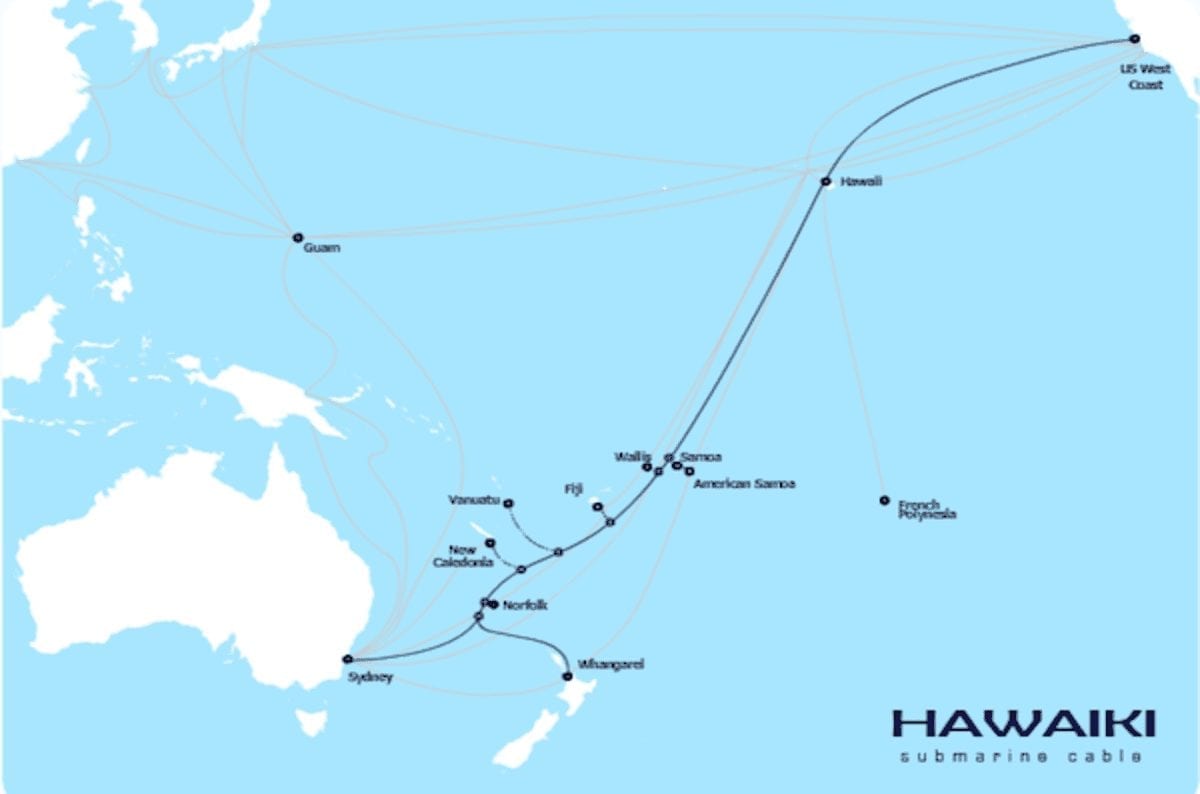
    The first cable load for the Hawaiki Cable – the subsea cable that will link Australia and New Zealand to the continental US, Hawaii and America Samoa – will commence next month.

    Hawaiki Submarine Cable and TE SubCom announced that construction of the cable remains on schedule, with more than 13,000km of the 14,000km transpacific cable now manufactured. The initial cable load will include 7,000km of this cable.

    Installation permits for Australia, New Zealand and Oregon in the US have also been procured, and horizontal directional drilling for the cable landing of Pacific City in Oregon have commenced.

    In Sydney, more than half of the conduits for the land duct route have meanwhile been installed, and drilling operations will start early next month.

    Once complete in mid-2018, Hawaiki is expected to be the highest cross-sectional capacity link between the US and Australia and New Zealand. The carrier-neutral cable system will have options to expand to several South Pacific islands, including Tonga, Fiji and New Caledonia.

    “We’re very close to completing the manufacturing stage of Hawaiki and are preparing to launch installation in just a matter of months,” Hawaiki CEO Remi Galasso said.

    “Once live, this cable system will help eliminate the distance between all Pacific communities and provide an economic boost to a region consistently starved for broadband access.”

  • A 100ms website delay can turn away customers

    A 100ms website delay can turn away customers

    Website performance is critical to maintaining customer attention and completing online transactions, research from Akamai indicates.

    The company’s latest State of Online Retail Performance report finds that a mere 100-millisecond delay in website load time can hurt conversion rates by 7%.

    The data, gathered by SOASTA (now part of Akamai), represents one month’s worth of anonymous user data from top online retailers, equating to approximately 10 billion user visits. The team applied data analytics to generate insights into the intersection of IT, business, and user experience metrics.

    Half of consumers browse for products and services on their smartphones, while only one in five complete purchases using those phones. The study showed that a two-second delay in web page load time increases bounce rates by 103%. More than half (53%) of mobile site visitors will leave a page that takes longer than three seconds to load. Bounce rates were highest for mobile phone shoppers, while tablet shoppers had the lowest bounce rate.

    “Since my days as Executive Director at Shop.org I have seen how e-commerce businesses are impacted by performance challenges, yet struggle to identify and treat the root cause,” said Scott Silverman, co-founder of GrowCommerce and the Global e-Commerce Leaders Forum. “This research clearly shows the link and provides a methodology for retailers to systematically assess and address those issues.”

    The report identifies ways that high-performance web pages are different from poorly performing pages, looks at third-party scripts and other outside factors that can impact performance, and provides the reader with practical, actionable guidance on how they can compete in an ever-changing e-commerce landscape.

  • Orange Business launches public cloud suite in APAC

    Orange Business launches public cloud suite in APAC

    Orange Business Services, a subsidiary of French multinational telecoms operator Orange, has launched its suite of global public cloud services in Asia Pacific.

    The new suite consists of three pillars – the Flexible Engine IaaS/PaaS public cloud platform developed in partnership with Huawei, professional services to assist customers in their migration, and managed services to operate customer applications and legacy systems.

    The suite will enable enterprises to digitally transform their business operations and support Asian businesses in their expansion plans across China, Southeast Asia and Europe. It also supports European companies with their business development across Southeast Asia and China.

    Already available in Europe, the services will continue to be rolled out in the US in 2017 and in the Middle East and Africa in 2018.

    “Businesses around the globe recognize that it is imperative for them to digitally transform in order to remain competitive,” says Helmut Reisinger, executive vice president for International Business, Orange Business Services.

    “Cloud adoption continues to be one of their top technology focus for 2017 as they seek to digitally transform their infrastructure. However, this has become a significant challenge due to infrastructure constraints, security concerns and limits in scalability especially for multinational enterprises.”

  • Oracle, Fujitsu launch public cloud services in Japan

    Oracle, Fujitsu launch public cloud services in Japan

    Fujitsu and Oracle Japan have launched Oracle Cloud Platform services, including Oracle Database Cloud Service, via a Fujitsu data center, a first for Japan.

    Oracle and Fujitsu have a long history of collaboration when it comes to processors, servers, and software. This synergy now extends to the data center, where Oracle’s cloud services will be available locally to Japanese customers backed by Fujitsu.

    Fujitsu has the largest number of Oracle-certified Oracle Cloud engineers in Japan, and offers a coordinated portfolio of services to assist in the deployment and operations of Oracle Public Cloud, to help organizations build new modern cloud-based solutions and transition their enterprise systems, including mission-critical operations, to the cloud.

    Fujitsu and Oracle formed a strategic alliance in July last year, based on a strategic collaboration to deliver enterprise-grade, world-class cloud services to customers in Japan and their subsidiaries around the world.

    Together with making Oracle Public Cloud services available from Fujitsu’s robust and reliable data center in Japan, can now be used as part of Fujitsu Cloud Service K5, Fujitsu’s public cloud service.

    “The Oracle Cloud Platform running in Fujitsu’s Japan datacenter alongside Fujitsu Cloud Service K5 DB powered by Oracle Cloud is a natural continuation of the three decade history Oracle and Fujitsu have working together to help customers achieve competitive advantage,” said Edward Screven, Chief Corporate Architect, Oracle.

    “By combining Fujitsu’s system integration expertise with Oracle’s cloud services, Fujitsu and Oracle will accelerate the transition of our joint customers’ enterprise systems to cloud.”

    Oracle Cloud offers a complete range of public cloud services across SaaS, PaaS, and IaaS. Oracle Cloud Platform, which includes Oracle’s analytics, application development, data management, and integration services, has experienced steady growth, adding thousands of customers in fiscal 2017.

  • Growing Internet café lures Chinese company

    Growing Internet café lures Chinese company

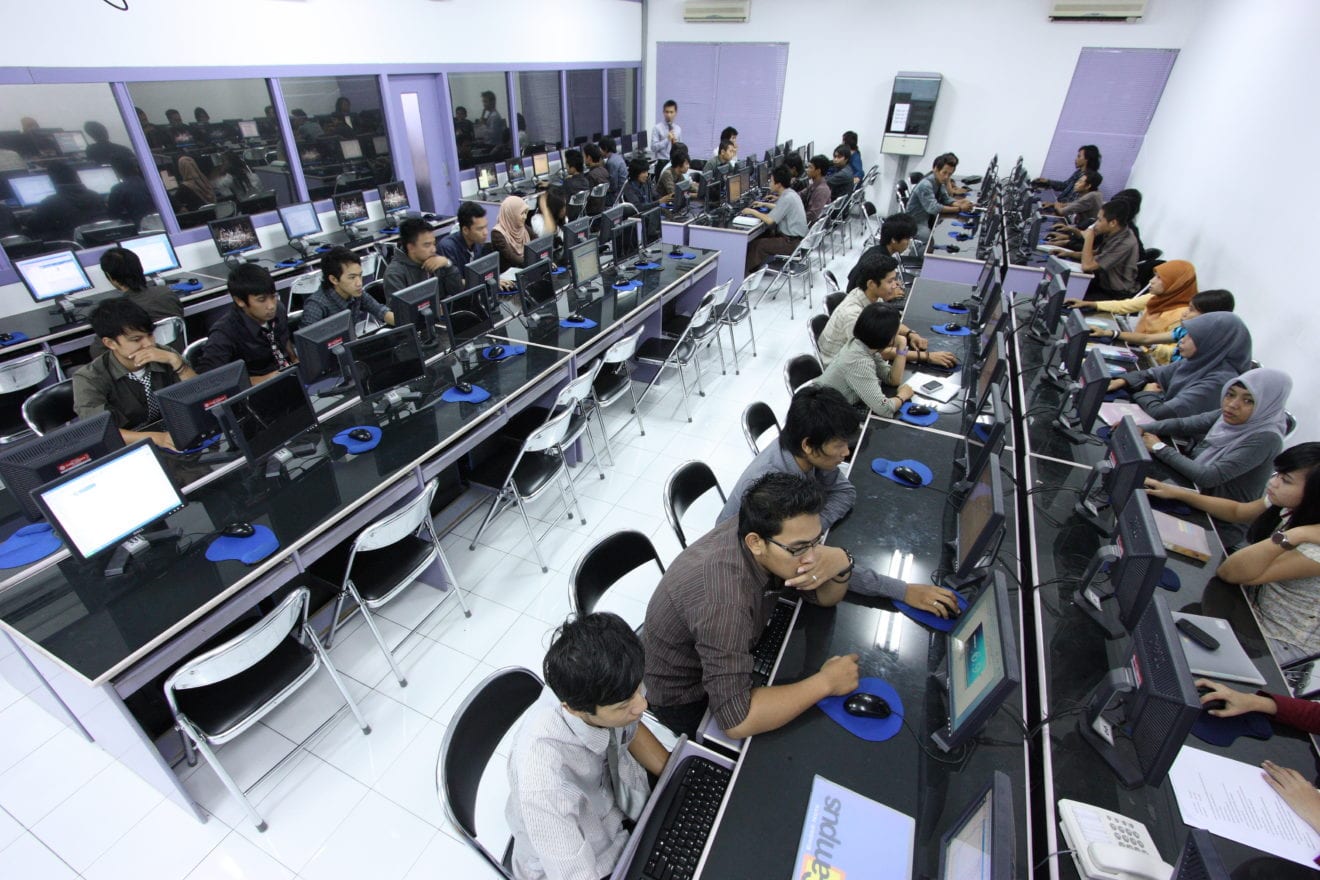
    Chinese computer-peripherals firm Shenzhen Rapoo Technology (Rapoo) is penetrating the growing local Internet Café (iCafé) sector to secure a dominant position in the market.

    The iCafé business is a growing industry here, according to Rapoo Philippines Retail Sales Manager Lem Estiva.

    “A lot of well-known i Cafes, like The Net.Com (TNC) and WarGods, have started expanding and actually franchising,” Estiva told the BusinessMirror on the sidelines of the company’s gaming peripherals launching in early April. “So it’s really a growing business.”

    He said the growth prompted the firm to introduce its gaming peripherals in Manila. He added the series of gaming peripherals they brought into the local market are categorically divided for two types of markets: retail and iCafés.

    “We have entry-level gaming peripherals targetting basically the iCafés for that,” Estiva said. “Meanwhile, the midrange and high-end level —that would be for personal use—target the retail market.”

    A little late

    ESTIVA disclosed they tried to reach out to some of the big local iCafés, including TNC and Mineski Corp. for possible partnerships. However, Estiva said they were a little bit too late.

    “We’ve been communicating with them, I guess for the last several months,” he said.

    Estiva added there was discussion before at the possibility of Rapoo being an original equipment manufacturer for TNC.

    “We provide them the products and have them rebrand it,” Estiva said. “Apparently, we came in a little too late.” Estiva, however, said they are “very hopeful” they can “eventually find other partners”. The Rapoo executive said they are also planning to form their own local eSports team before the year ends.

    “That’s one of our plans this year. I have quite a number of [team] names in my head,” Estiva said. “But I’m keeping them a secret.”

    Since 2014 Rapoo has been signing with teams and athletes, mostly from China, in various eSports titles, including “League of Legends” and “Dota 2”.

    Estiva said some of the iCafé operators already have First-Person Shooter and Dota 2 teams.

    “Usually they discuss with sponsors during the last quarter of the year about partnerships,” he said. “And we just came in the second quarter of this year.” Estiva said he expects the sponsorship by Rapoo starts next year.

    Peripherals

    Rapoo, which has market capitalization of $1.1 billion, began selling in the Philippines a series of wireless mice and keyboards in 2013.

    Last month the company has brought into the country its gaming peripheral series under a subbrand called “VPRO”.

    It is selling two gaming headphone models, which costs P1,515 and P2,945 each. Rapoo has four models of mice to cater to Filipino gamers with prices ranging from P1,245 to P2,190. Three of the four models are for entry-level users that are designed for ambidextrous gamers.

    For its gaming keyboard series, Rapoo VPRO brought nine different models in the Philippine market with prices ranging at a low of P1,265 and P6,730.

    Different league

    ACCORDING to Estiva, the company has an edge against competitors because of its pricing structure. “There are competitors, but we are on a different league. Some of them would be very expensive and for a new brand in the local market, we must have something different to offer on the table,” he said.

    Estiva said Rapoo is “very comparable in terms of design and durability with a very popular [brand].”

    “But it’s competitor’s product expensive,” he said. “So we come up with something similar but with an affordable price.”

    Estiva said Rappoo offers customers a direct product replacement if the products bought were deemed defective within its one-year warranty period.

    Estiva said Rapoo has its own dedicated research and development (R&D) team to ensure their products are of high quality—a way to defy the common Filipino notion that China-made products are substandard ones.

    “That’s why we have an R&D team to check all the products, because we know the reputation [here] of made in China products,” he said. “And because we are competing with other brands who have been in the business for years, we are not going to grow, or worse, we are going to die if we don’t actually provide very good products to the public.”

    Estiva said Rapoo aims to have its brand to be known as “something that would live for a long life”.

    Top three

    AT present Rapoo has two authorized distributors of its products in the Philippines: Techtron Systems Corp. and Philteq Enterprise Inc., according to Estiva. He said a third distributor is currently out of the question, as it could affect the retail price of Rapoo products in the market.

    “Probably the two distributors are enough. Because in the case of Techtron, they handle pretty much the bigger types of resellers and then Philteq would handle the growing ones or those in the mobile business,” he said.

    “So, I think we have pretty much a good balance with those two distributors. Having three would probably create a price war with the resellers,” he added.

    Rapoo Regional Sales Director Johnson Zhang said Rapoo is top three in the Philippine market, traling behind Taiwan-based firm A4Tech Co. Ltd. and Swiss company Logitech International SA. “We are trying our best to get more market share in the market,” Zhang told the BusinessMirror.

    Rapoo Philippines Country Manager Aileen Chua said the company’s revenue from the local market grew by 30 percent in 2016 from 2015. However, Chua did not disclose the company’s top line in the previous fiscal year.

    Plans

    Even with a 30-percent growth, Chua said she sees Rapoo could still perform better in the country, as much of their sales operations are focused in Luzon, particularly in Metro Manila.

    “We feel that we have penetrated Metro Manila well. However for provincial [operations], we are kind of poor in that aspect, because we don’t have the dedicated manpower assigned in those areas of the Visayas and Mindanao,” she said. “Hopefully, this year we could put up some people there who can help us promote the brand.”

    Zhang said the Philippines stands out compared to other countries in the Asia-Pacific region where Rapoo distributes its products.

    “The Philippines is performing quite good compared to most of the countries [where Rapoo is]. It performed very well,” Zhang said. “I think it’s because we have a very strong local team, and because of our quality products and cost-effective performance.”

    Estiva added the Philippines is better than other countries where Rapoo distributes its products in terms of sales target, revenue and market visibility.

    Zhang said Rapoo is currently developing its first wireless mechanical keyboard to be at par with other competitors. He said the company plans to launch it by the end of the year.

    “A lot of other brands are developing wireless gaming [peripherals], so we are also developing the same.”

    Estiva added the firm also plans to introduce in the country its product line for unmanned aerial vehicles or commonly known as a “drone”. According to him, the company has already introduced its drone called “Xiro” in the world market.


  • Thai ISPs given 7 days to block “illicit” pages

    Thai ISPs given 7 days to block “illicit” pages

    Thai ISPs have been given just seven days to block “illicit” webpages such as anti-monarchy content deemed illegal by the courts, or face the prospect of having their licenses revoked.

    Regulator NBTC has ordered the nation’s ISPs to ensure they are compliant with the nation’s censorship regime, which also covers material such as sedition and promotion of illegal content.

    ISPs found to still be in violation after seven days could face penalties including fines, the cancellation of their licenses or even criminal charges for the management.

    The NBTC has said it will work with ISPs that claim to have technical reasons for being unable to block illicit content to help solve the problem.

    Meanwhile, the regulator and the Ministry of Digital Economy and Society are pressing ISPs to extend their content blocking to include illicit video streaming on Facebook and YouTube from local CDNs.

    The agencies plan to discuss how local ISPs will be able to block illicit content through online and streaming video on overseas-owned sites.

    This initiative was announced on the same day that a Thai man broadcast the murder of his 11-month-old daughter over Facebook Live before killing himself, a tragedy that drew international media attention.

  • Delhi leads India by internet readiness

    Delhi leads India by internet readiness

    The state of Delhi leads India in internet readiness, according to a new report from the Internet and Mobile Association of India (IAMAI) and Nielsen.

    In the report titled Index of internet readiness of Indian states, Delhi has overtaken last year’s winner Maharashtra and is followed by Karnataka, Maharashtra, Kerala and Tamil Nadu.

    According to the report, Delhi has won top spot because of its superior infrastructure and online participation.

    Releasing the report, Aruna Sundararajan, Secretary, Ministry of Electronics & Information Technology (MeiTy), Government of India said: “We are hopeful that India will leapfrog from the present 155th position to world’s top fifth in connectivity, within the next 5-6 years. India today is one of the most rapidly digitizing economies in the world with the telecom industry leading the change. Things have improved multifold with state governments of Chattisgarh, Andhra Pradesh and Telangana among others taking proactive steps to improve connectivity and internet reach.”

    “The combination of various indigenous digital platforms along with innovative and disruptive startups holds the greatest scope for digital transformation in India. Post demonetization, the country today has 3 million POS as compared to 1.5 lakhs POS earlier which is clearly a transformation and going forward, the infrastructure for digital payments will grow 3X within a span of one year,” she added.

    The North East has ranked low in terms of overall internet readiness. Much more needs to be done in the form of investment and infrastructure development in the region. Among the north eastern states, Nagaland tops the list, closely followed by Manipur and Tripura. Nagaland leads in IT environment and performs moderately well in other categories to get to the top.

    Internet readiness index is a composite benchmark of four components: e-Infrastructure index, e-Participation index, IT-Environment and government e-services index. All four components have equal weightage in this model. Separately, a fifth Index (named the Core Internet Index) has been created this year, consisting of select variables already used in constructing the above indices.

    The purpose of the index is to give a sharper perspective for digital industries looking to expand their business in India.

  • Thailand plans to build Bangkok-China-Hong Kong cable

    Thailand plans to build Bangkok-China-Hong Kong cable

    The Thai government is eager to build a new subsea cable linking China, Bangkok and Hong Kong, as part of the efforts to transform Thailand into Southeast Asia’s digital hub.

    The Digital Economy and Society ministry is drawing up a master plan for the cable project, and lso aims to attract foreign investors to the project.

    According to the report, the government is currently in the process of identifying a marine route for the planned cable system.

    Thai cabinet has approved a 5 billion baht ($145.5 million) investment in the system. The investment will be handled by state-owned operator CAT Telecom via the Neutral Gateway Network & Data Center project.

    Investment in the cable forms part of the government’s Thailand 4.0 strategy, which aims to transform the nation’s economy with a focus on digitally-enabled innovation and establish the nation as a digital hub for the wider region.

    As part of this project, the government is also investing in establishing Digital Park Thailand, a planned new digital business economic zone, and has just approved the establishment of he facility along the Eastern Economic Corridor.

  • 60% of APAC travelers would pay for in-flight Wi-Fi

    60% of APAC travelers would pay for in-flight Wi-Fi

    Over 60% of APAC respondents would be prepared to pay up to $5 to access the internet on planes, according to YouGov’s latest survey on air travel.

    Although only 10% of APAC respondents say lack of connectivity is one of the three worst aspects of flying, many airlines are introducing internet access on flights so passengers can stay connected throughout the air journey.

    Almost one in five APAC respondents have tried in-flight internet access in the past and would like to do again in the future. And almost half of the APAC respondents haven’t tried in-flight internet access before but would consider doing so in the future.

    This should be a good news to airlines as this advancement on planes seem to be very well receiving in APAC. However, budget is also a concern as the majority of APAC respondents (64%) would only prepare to pay up to US$5 to access in-flight internet services, while less than 30% are prepared to pay up to $10.

    To further improve connectivity on flight, some airlines are also proposing new service like making VoIP calls on flight. Over 40% of APAC respondents express interest in making in-flight VoIP calls in the future.

    However, 65% of APAC respondents also think it is irritating to sit next to someone making a VoIP call on a flight. Because of this, almost 80% of APAC respondents think airlines should give passengers the option of sitting in different sections on planes where calls are and aren’t allowed.

  • Cloud Services in Indonesia Provided by Japan’s Leading Network Solutions

    Cloud Services in Indonesia Provided by Japan’s Leading Network Solutions

    FPT Telecom of Vietnam and Internet Initiative Japan on Thursday launched a cloud computing service for individual, business and enterprise customers in Vietnam.

    FPT Telecom has called the new service, FPT HI GIO Cloud, the first full-scale, full-spectrum and quality cloud computing service in Vietnam. Nguyen Van Khoa, general director of FPT Telecom, which is part of leading Vietnamese information technology group FPT, stressed the new service would provide access computing services via a stable network.

    The product enables users to quickly launch virtual machines instead of investing in physical devices.”We will lead the market in Vietnam to tap demand for cloud computing,” General Director of IIJ Global Solutions Vietnam Ryo Matsumoto told Retail News.

    FPT Telecom aims to acquire around 4,000 enterprise customers within a year. FPT Telecom and IIJ also aim to tap individual customers in a country where 70% of the more than 90 million population is expected to have access to the internet by 2020.

    IIJ, one of Japan’s leading internet and network solutions providers, has already launched similar cloud services in Singapore, Indonesia, and Thailand. FPT Telecom and IIJ are looking to launch additional joint projects related to security and network management in the coming years, according to Matsumoto.

    In Vietnam global players such as IBM, Google, Symantec, Amazon, Oracle and Microsoft have launched their own cloud and joint services by teaming up with local telecom companies and using mobile broadband infrastructure. FPT and IIJ’s partnership will further intensify competition in this area.

    Vietnam ranked 14th in the Asia-Pacific region in the Asia Cloud Computing Association’s Cloud Readiness Index 2016, coming after Singapore, Malaysia, Thailand, the Philippines and Indonesia.

  • Australia’s TPG to enter local mobile market

    Australia’s TPG to enter local mobile market

    Fast-growing Australian fixed line operator TPG Telecom has bid A$1.26 billion ($944.8 million) to acquire 2×10 MHz of valuable 700-MHz spectrum, and plans to build its own mobile network using the bandwidth.

    TPG has revealed plans to spend A$600 million over three years to deploy a mobile network that covers 80% of the Australian population.

    As well as its imminent 700-MHz holdings, TPG also holds spectrum in the 1.8-GHz and 2.5-GHz bands. The operator plans to deploy a network consisting of around 2,000 to 2,500 sites, and use its extensive 21,000km fiber network as backhaul.

    TPG currently operates as an MVNO over Vodafone Australia’s network, but now plans to invest in deploying its own network. The company estimates it can break even with around 500,000 subscribers.

    CEO David Teoh said TPG expects to have several advantages over incumbent operators Telstra, Optus and Vodafone due to the ability to operate fewer mobile towers and deploy advanced mobile technology on its network, without the requirement to support legacy equipment and networking standards.

    “We believe that our mobile strategy will be complementary to our ongoing fixed line business, with the ability to bundle mobile and fixed services expected to have a beneficial effect on our already low fixed services customer churn,” he said.

    TPG was also recently selected to become Singapore’s fourth mobile operator after bidding S$105 million ($74.8 million) for a license and spectrum, and last week successfully bid S$23.8 million for 10 MHz of 2500-MHz spectrum.

    The Australian 700-MHz auction raised more than A$1.5 billion – significantly higher than the A$857 million reserve price – with Vodafone Australia also securing 2x5MHz of spectrum for A$285.9 million.

    The licenses will commence in April 2018 and expire at the end of 2029.

  • Vietnam wants a healthy Internet society

    Vietnam wants a healthy Internet society

    The Ministry of Information and Communication urged enterprises to collaborate with the Government in efforts to build a healthy Internet society through advertising only on online channels which comply with established laws.

    Minister Trương Minh Tuấn issued the advice at a meeting on Thursday with major brands, saying that online advertising was an inevitable trend but also implied risks, especially inadequate attention to control the appearance of advertising.

    The call came several days after advertisements by some major brands accidentally appeared in clips containing pornographic, slanderous or anti-government content on YouTube, the world’s largest online video site.

    “It is really worrying, as it badly affects the prestige of brands,” Tuấn said as quoted by online newspaper vnexpress.net.

    Tuấn said that this was not only a problem for the advertising industry of Vietnam, but also for the global industry.

    What was more alarming was that running advertisements on clips with questionable content could help owners of these accounts earn money, which indirectly encouraged them to unload more, a representative from Qnet said.

    Nguyễn Thanh Lâm, Director of the Authority of Broadcasting and Electronic Information, cited statistics that as of Thursday, there were 15 accounts uploading 8,000 clips with immoral content, and attracting nearly 1 million subscribers. Those clips boasted a combined 500 million views.

    Lâm said that the department was working with Google, which owns YouTube, to remove such clips, and to date, only 42 had been removed.

    At Thursday’s meeting, all major brands including Vinamilk, Ford Việt Nam, VinHome, Sungroup and Unilever Việt Nam, said that they had stopped advertising on YouTube after receiving the Ministry of Information and Communication’s request.

    They also said that they would not resume advertising until ad agencies developed comprehensive solutions to ensure compliance with the established laws.

    “Through our advertising agents, we have asked Google and YouTube to ensure a safe advertising environment so as to protect businesses’ brands,” a representative from the dairy giant Vinamilk said.

    Ad agencies said that when signing contracts with Google to run advertisements for their partners on YouTube, they selected the appearance of ads through key words and categories of clips, adding that the cooperation of Google was necessary in filtering and preventing the appearance of ads in toxic clips.

    Online newspaper vneconomy.vn reported that Google had sent an official response late on Thursday, saying that YouTube had clear policies for governmental requests for content removal.

    A YouTube spokesperson also said that the company did not comment on specific cases, but it will continue working with the Government of Việt Nam and was always willing to receive questions or concerns from the Government, according to the newspaper.

    The ministry called for enterprises to participate in an action programme which includes saying no to advertising on immoral clips, only running advertisements on channels which comply with Vietnamese law, building a healthy Internet society and protecting copyright.

  • UN calls for “new deal” on mobile broadband

    UN calls for “new deal” on mobile broadband

    The UN Broadband Commission has called for a “New Deal” involving fresh industry collaboration and public-private partnerships to help connect the 5 billion people who lack mobile broadband access.

    At the Broadband Commission for Sustainable Development’s 2017 Spring Meeting in Hong Kong yesterday, participants debated the need for a new deal between all broadband stakeholders to work towards full global connectivity and digital transformation.

    Discussions had a particular emphasis on remote and rural areas – especially in the UN’s list of Least Developed Countries – which represent the biggest challenge for the industry.

    The Commission underlined the need to build an ecosystem with government, with all ministries and the private sector working together for more efficient investment and taxation, as well as issues associated with the cost of spectrum auctions in markets with the widest digital divides.

    “Our central conviction is that broadband and ICTs are critical if we are to achieve the Sustainable Development Goals,” ITU secretary general and Broadband Commission co-vice chair Houlin Zhao said.

    “ICTs underpin vital achievements and modern services in many sectors, and governments and industry must increasingly work together to create the conditions so badly needed to facilitate the growth of broadband for sustainable development.”