Tag: #internet

  • MPT has Myanmar’s fastest mobile speeds

    MPT has Myanmar’s fastest mobile speeds

    Myanmar’s MPT has the fastest internet speeds among the nation’s major mobile operators, according to a new report from Ookla’s Speedtest service.

    An analysis of the results of user-initiated tests over the Speedtest Android and iOS mobile apps indicates that MPT had an overall speed score of 11.45 during the first half of the year.

    The speed score is calculated by factoring in both a user’s download and upload speeds, with the former contributing to 90% of the final score and the latter constituting the remaining 10%.

    MPT had average download speeds of 12.41Mbps for the period covered in the report, and average upload speeds of 7.47Mbps.

    MPT is expanding its mobile network in collaboration with Japanese partners KDDI and Sumitomo.

    The operator’s closest rival, Telenor Myanmar, achieved a speed score of 10.51, based on download speeds of 10.97Mbps and upload speeds of 6.46Mbps. Ooredoo achieved a score of 6.23 with download speeds of 6.61Mbps and upload speeds of 2.87Mbps.

    Over the six month period, Myanmar’s average mobile download speeds reached 12.03Mbps and upload speeds reached 7.4Mbps after a sharp jump in both averages between April to June.

  • AirAsia to install broadband on more than 120 planes

    AirAsia to install broadband on more than 120 planes

    The Malaysian conglomerate has signed a contract to hook up much of its vast fleet with high-speed broadband. It announced the move last week as the ink dried on a contract with Inmarsat, a British satellite telecommunication company.

    From the first half of next year, the airline will set up its inaugural connected plane with GX Aviation, Inmarsat’s in-flight broadband tech.

    The contract covers all existing and future Airbus 320 and A330 across the AirAsia Group as a whole, including its long-haul operator AirAsia X. There is also a possibility for the agreement to cover planes joining the fleet in the future, such as the Airbus 350.

    Inmarsat Aviation President Philip Balaam said, “AirAsia Group is one of the aviation industry’s leading innovators and we are delighted that GX Aviation will play a key role in their future service offering. The fact that we have signed this contract within months of announcing a Memorandum of Understanding is testament to AirAsia’s confidence in GX Aviation and builds on its successful track record as a leading customer of our SwiftBroadband service.

    “The scale of this contract, covering more than 120 existing aircraft and one of the industry’s largest order books for additional aircraft, showcases our status as a global market leader in advanced in-flight broadband. Inmarsat has the fastest growing service uptake in our market, with, following this agreement, more than 1,300 aircraft, expected under signed contracts, both installed and under backlog, for our next generation GX Aviation and European Aviation Network (EAN) solutions.”

    AirAsia Group Chief Executive Officer Tony Fernandes said, “GX Aviation will form the backbone of AirAsia’s digital cabin offering. By delivering inflight connectivity that’s indistinguishable from what you get on-ground, our guests will be able to stay connected in ways that matter to them, whether it’s streaming movies or music, checking social media, messaging friends or catching up with work emails. Coupled with our ROKKI entertainment and e-commerce platform featuring free movies, music, articles and games as well as shopping, AirAsia guests will soon be able to enjoy one of the richest digital inflight experiences in Asia, while also enhancing our knowledge of our guests with very rich data.”

    This contract supports Inmarsat’s strategy of providing airlines with tailored scalable capacity by designing, owning and operating a global network of High-Throughput Satellites (HTS).

    AirAsia Group will connect to the GX network using new JetWave terminals produced by Honeywell Aerospace. The terminals are designed, according to Inmarsat, for ease of installation and maintenance to assure the lowest downtime for any cabin connectivity solution in the market, allowing installation with minimal labour and using standard tools available in maintenance hangars.


  • Inmarsat to supply broadband to AirAsia planes

    Inmarsat to supply broadband to AirAsia planes

    Communications services provider Inmarsat said on Wednesday that it would supply AirAsia Group with its next-generation GX Aviation in-flight broadband to more than 120 Airbus aircraft.

    The contract covers Airbus A320 and A330 aircraft across the AirAsia Group and the first onboard installations of GX Aviation are scheduled to commence in the first half of 2018. The deal also covers aircraft operated by the carrier’s long-haul arm AirAsia X.

    Inmarsat added that installations could also include additional aircraft types due for delivery in the coming years, such as the Airbus A350.

    Inmarsat Aviation President Philip Balaam said the contract meant that more than 1,300 aircraft had been fitted with, or were waiting for the installation of, Inmarsat’s GX Aviation and European Aviation Network service.

  • Google brings free WiFi to Indonesia

    Google brings free WiFi to Indonesia

    Google is extending its successful Google Station program to Indonesia. The company is partnering with internet service providers (ISPs), venue owners, and system integrators in Indonesia to provide consumers with free access to Wi-Fi at railway stations, universities, and other public areas.

    The expansion of the program, which was first launched in India 18 months earlier, could bring more users online, expanding Google’s global footprint and bolstering its potential ad revenue. Google Station can, in effect, boost the country’s rising internet penetration. Internet users in Indonesia increased 51% year-over-year (YoY) in January 2017, however, internet penetration remains low, at 40%. 

    By extending the program to Indonesia, Google is likely seeking to replicate the success of its Google Station program in India:

    • Free internet access has resulted in an early uptick in daily internet usage in India.In 2016, it was found that, on average, consumers used 15 times more data each day on Google’s Wi-Fi network than they did on their cell networks.
    • Offering high-speed data for free could mean new users associate Google with fast internet. Each day, around 15,000 people use one of these stations in India to connect to the internet for the first time, according to Google India Head of Connectivity Gulzar Azad.

    Google Station is just the latest effort by the company to connect the next billion users by catering to the needs of those in emerging markets. Google has previously released products and services targeted toward these smartphone users. Just last week, Google began experimenting with a light version of its Search app in Indonesia. The company is also rolling out Android Go, a low-data and budget-friendly version of the upcoming version of Android for developing markets.

    However, Google is not alone in turning to Indonesia to build out a user base. In 2015, Facebook launched its connectivity initiative, the Internet.org mobile app, in Indonesia, to get more people online. The app includes numerous connectivity strategies, including the Free Basics app, which enables consumer access to certain

  • M1 1H profit falls 17.6%

    M1 1H profit falls 17.6%

    Singapore’s M1 has reported a 17.6% slump in net profit for the first half of the year to S$68.8 million ($50.3 million) as a result of flat revenue and higher depreciation and interest expenses.

    Service revenue stayed at $406.2 million despite a 22.3% year-on-year increase in fixed service revenue to S$61.2 million.

    Mobile revenue by contrast fell 2.9% to S$317.1 million, and international call services revenue declined 9.6% to S$28 million.

    M1’s total customer base grew 4.5% during the six-month period to 2.2 million, including 176,000 fiber customers.

    On the mobile front, postpaid customers grew 3.7% to 1.3 million with prepaid customers up 2.5% to 777,000. But the shutdown of the operator’s 2G network during Singapore’s 2G switch-off led to a slight decline in total mobile customers to 2.04 million.

    M1 also announced an increase in average postpaid smartphone data usage to 3.9GB per month, up from 3.3GB a year ago. Mobile data’s contribution to total service revenue meanwhile increased 1.5 percentage points to 55.5%.

    Based on the first-half results and the current economic outlook, M1 said it is forecasting an overall decline in net profit for the full year, but CEO Karen Kooi said the company is positioned for long term growth.

    “M1 is well positioned to capture new opportunities presented by the digital economy. We have been investing in NB-IoT network and digital solutions, and expanded our offerings to include managed infrastructure services, cyber security, business solutions and analytics,” she said.

    “This would enable us to better serve our customers and generate new revenue streams for future growth.”

  • Australia’s Vocus gets two takeover bids

    Australia’s Vocus gets two takeover bids

    Australian fiber network operator Vocus Communications has revealed it has secured two competing non-binding takeover bids valuing the company at A$2.2 billion ($1.69 billion).

    Affinity Equity Partners has submitted a preliminary offer to acquire 100% of Vocus for A$3.50 in cash per share, subject to due diligence and other conditions. Vocus announced.

    The bid comes days after fellow private equity company KKR submitted a preliminary offer at the same A$3.50 per share price.

    Both private equity companies have been granted the chance to conduct due diligence on the potential takeover. The prospect of a bidding war has pushed Vocus shares on the Australian stock exchange up to A$3.595 as of around midday local time on Thursday.

    The price tag represents around a 16% premium on Vocus’ projected earnings for the current financial year, but the offer price may increase as negotiations progress.

    Vocus operates a range of telecoms brands serving enterprises, small businesses, government and residential customers, including Commander, iPrimus and Dodo.

    The value of the company has shrunk significantly lately due to concerns its profitability will be substantially reduced as customers migrate to the state-led national broadband network (NBN). A year ago the company has a valuation of around $5.5 billion.

  • WorldLink to build Nepal’s first 100G OTN

    WorldLink to build Nepal’s first 100G OTN

    Nepal’s WorldLink has engaged Nokia to deploy the nation’s first 100G optical network.

    WorldLink, Nepal’s largest fixed broadband operator, is upgrading its 650km backbone network with Nokia’s PSS DWDM technology.

    The backbone network spans from capital Kathmandu to the cities of Bhairahawa and Birgunj, and provides international connectivity between Nepal and countries including India.

    WorldLink has an estimated 120,000 residential broadband subscribers and 5,000 enterprise broadband circuits. The operator is currently connecting 10,000 residential FTTH subscribers per month, and is conducting the upgrade to help meet the fast-growing demand for network capacity.

    “WorldLink has a commitment to Nepal to transform the communications landscape so that our people and enterprises thrive,” the operator’s CTO Samit Jana said.

    “This is our largest project to date and it will allow us to provide ultra-fast broadband services for our mobile and fixed network subscribers in cities as well as rural areas across the country.”

    Nokia head of India Sanjay Malik added that the company is “proud to be part of WorldLink’s vision to transform Nepal’s communications architecture by providing the first 100G transport network. Nokia’s highly scalable optical platform will ensure low latency and high resiliency, and allow WorldLink to cost-effectively increase network capacity as needed.”

  • Undersea internet cable out of action for another three weeks in Vietnam

    Undersea internet cable out of action for another three weeks in Vietnam

    Repair work on the broken international cable won’t start until July 3 and will take at least 10 days to complete. International internet connections in Vietnam are likely to remain slow for another three weeks with repair work to a major internet cable which broke off central Vietnam last week expected to take until July 14, a service provider said.

    The source told us that repair work on the Asia Pacific Gateway won’t start until July 3 and is expected to take 10 days. The cable should be fully reconnected by July 14, depending on the extent of the problem, said the representative.

    The cable snapped on Tuesday afternoon about 125 kilometers off the coast of Da Nang.

    Service providers such as Viettel and VNPT said they have prepared contingency routes to minimize downtime.

    No announcement on the cause of the problem has been made.

    The cable was officially launched on January 3, but was quickly hit by a technical problem that took two weeks to fix.

    The cable cost $450 million and has a capacity of more than 54 Tbps, promising to double internet speeds in Vietnam and ease reliance on the notorious Asia America Gateway, which has ruptured or been shut down for maintenance on numerous occasions since 2011.

    The new system took four years to build, and links Japan with Hong Kong, mainland China, Malaysia, Singapore, South Korea, Taiwan, Thailand and Vietnam.

    Nearly 49 million people in Vietnam, or more than half of the country’s population, are online.

  • Australia plans to mandate 25Mbps broadband speeds

    Australia plans to mandate 25Mbps broadband speeds

    The Australian government has introduced new legislation that would mandate the supply of broadband services with peak speeds of at least 25Mbps to all premises in the country.

    The proposed Telecommunications Reform Package would require that services provided over the in-construction National Broadband Network (NBN) – even the fixed-wireless and satellite services – would need to be capable of broadband speeds of at least 25Mbps downlink and 5Mbps uplink.

    A draft version of the reforms published last December excluded the fixed wireless and satellite components of the network from this obligation.

    The legislation would also introduce the government’s planned A$7.10 ($5.36) per connection Regional Broadband Scheme, a levy that operators will pay to nbn for each connection capable of download speeds of 25Mbps.

    The levy will be used to defray the expected A$9.8 billion in losses over 30 years that are expected to be accrued by the fixed wireless and satellite components of the network due to the shortage of customers.

    In a concession for smaller players, the first 25,000 connections serviced by a broadband provider will not be subject to the levy for the first five years.

    The new reform package will also mandate the delivery of voice capability over the nbn in fixed line and fixed wireless areas.

    The Australian Communications Consumer Action Network (ACCAN)  has welcomed the consumer protection measures of the proposed legislation.
    “The legislation includes big wins for all consumers, especially for regional, rural and remote consumers,” ACCAN CEO Teresa Corbin said.

    “Broadband services are essential for consumers, yet currently, there is no requirement on nbn to connect and provide ongoing services to all premises. We are pleased that consumers can now be reassured that under the proposed legislation all premises must be able to access a broadband network capable of a minimum peak speed of 25Mbps download and 5Mbps upload.”

    But she said ACCAN will also be pushing to ensure that public phones will be provided where they are needed and consumers relying on satellite services have access to reliable telephony and broadband services.

  • Hong Kong ranked third worldwide for broadband speeds

    Hong Kong ranked third worldwide for broadband speeds

    Hong Kong has been ranked third worldwide for broadband download speeds, with HKBN named the market’s fastest provider, according to Speedtest results from Ookla.

    Between the fourth quarter of 2016 and the first quarter of 2017, Hong Kong achieved an average download speed of 142.65Mbps. This speed represents the experience of a typical consumer in the market.

    The fastest broadband speeds were recorded by subscribers to HKBN at 544.18Mbps, followed by Netvigator at 470.43Mbps, 3 Hong Kong at 290.17Mbps and i-Cable Communications at 141.5Mbps.

    Top upload speeds were meanwhile recorded at 544.07Mbps for HKBN, 460.63Mbps for Netvigator, 201.15Mbps for 3 Hong Kong and 27.89Mbps for i-Cable.

    To determine this metric, Speedtest compares the top 10% of each ISP’s speed results to provide an accurate view of their top-end performance.

    “We are proud to know that our outstanding network performance has been duly recognized by independent global leader Speedtest. Our top-notch fiber network, advanced facilities and round-the-clock network operation management ensures that our customers enjoy the best internet experience in this data hungry era,” HKBN CTO Gary McLaren said.

    “Currently, with about one-third of all households in Hong Kong connected to HKBN broadband, we look forward to bringing more top-value services to more people across Hong Kong.”

  • Yahoo signs off, completes sale to Verizon

    Yahoo signs off, completes sale to Verizon

    Yahoo’s chief executive Marissa Mayer resigned as Verizon finalized the $4.48 billion deal. Internet pioneer Yahoo ended its two-decade run as an independent company on Tuesday, completing the sale of its core online assets to telecom giant Verizon.

    Yahoo’s chief executive Marissa Mayer resigned as expected, as Verizon finalized the $4.48 billion deal integrating the Yahoo internet operations into a new unit called Oath, which includes another former sector leader, AOL.

    Tim Armstrong, former CEO of AOL, now holds the same title at Oath, a division in Verizon’s Media and Telematics organization.

    “We’re building the future of brands using powerful technology, trusted content and differentiated data,” Armstrong said in a statement.

    “We have dominating consumer brands in news, sports, finance, tech, and entertainment and lifestyle coupled with our market leading advertising technology platforms. Now that the deal is closed, we are excited to set our focus on being the best company for consumer media, and the best partner to our advertising, content and publisher partners.”

    Verizon has made no indication of how it will use the Yahoo brand — which is used by over a billion people worldwide — but indicated it is keeping the names Yahoo Sports, Yahoo Finance, Yahoo Mail and more.

    Some reports have said more than 1,000 jobs would be eliminated as a result of the merger, but statements from Yahoo and Verizon on Tuesday made no mention of any cuts.

    Yahoo’s sale caps a long decline from when it had a peak market value of some $125 billion in 2000.

    The original Yahoo group now becomes a holding company with stakes in Chinese internet giant Alibaba and Yahoo Japan.

    On Friday, it will change its name to Altaba Inc. and on Monday begin trading under the ticker symbol “AABA.”

    Mayer, who was unable to stem the decline of the iconic Silicon Valley company, is getting a departure package worth an estimated $186 million, according to regulatory filings.

  • Over 1m new mobile internet subs to be added daily

    Over 1m new mobile internet subs to be added daily

    The telecoms industry is on track to attract more than 1 million new mobile internet subscribers per day between now and 2022, according to the latest Ericsson Mobility Report.

    The report predicts that there will be 2.6 billion new mobile broadband subscribers added through 2022, with LTE set to become the dominant access technology in 2018, making it the fastest growing mobile technology in history.

    Ericsson noted that it has taken just five years for LTE to cover 2.5 billion people, compared to eight years for 3G. There were 250 million new LTE subscriptions added in the first quarter of 2017 alone.

    Total traffic over mobile networks meanwhile grew 70% over the 12 months ending in Q1 – the fastest year-on-year mobile data growth globally since 2013 – and is set to increase to eight times its current level by 2022, the report predicts. Recent growth has been driven by explosive increases in consumption in India.

    Global growth in demand for mobile data will also drive 5G deployment. The report predicts that there will be more than 500 million 5G subscriptions globally by 2022, not including IoT connections. By this time, 5G is expected to cover around 15% of the world’s population.

  • Vietnam, Indonesia have much faster internet speed than India

    Vietnam, Indonesia have much faster internet speed than India

    Ranked 89 globally, India’s average internet connection speed of 6.5 Mbps is slower than Vietnam and Indonesia, which are much faster, a report said on Friday.

    While Vietnam, ranked 58, had an average internet speed of 9.5 Mbps, Indonesia at rank 77 provided a speed of 7.2 Mbps, Global leader in content delivery network services Akamai Technologies’ “The State of the Internet Q1 2017 Connectivity” found.

    The report also said that India witnessed a 4 Mbps broadband adoption of 42 per cent in the first quarter of 2017 with a year-over-year change of 81 per cent.

    “Increases in connection speeds and broadband penetration have helped enable the internet to support levels of traffic that even just a few years ago would have been unimaginable,” David Belson, editor of the report, said in a statement.

    “One need only look to January’s US Presidential Inauguration, which broke traffic records for live coverage of a single news event delivered by Akamai, largely thanks to the combination of more viewers watching at increasingly higher levels of video quality,” Belson added.

    On a global level, the average connection speed was 7.2 Mbps – an increase of 15 per cent year-over-year – and average peak connection speed increased 28 per cent year-over-year to 44.6 Mbps in the first quarter of 2017.

    “While South Korea had the highest average connection speed globally at 28.6 Mbps in the first quarter, Singapore had the highest peak connection speed at 184.5 Mbps in the first quarter,” the report noted.

    The average mobile connection speeds ranged from a high of 26 Mbps in Britain to a low of 2.8 Mbps in Venezuela. Germany had the highest peak mobile connection speed at 200 Mbps in the first quarter.

  • China Telecom aims to make Shanghai a gigabit city

    China Telecom aims to make Shanghai a gigabit city

    China Telecom’s Shanghai branch Shanghai Telecom plans to deploy the first commercial FTTH network in China using 10G PON technologies, and aims to provide full 1Gbps fiber coverage across Shanghai over the next three years.

    Shanghai Telecom has contracted Huawei to help with the rollout, which marks an important step towards making Shanghai China’s first gigabit city, the vendor said.

    Shanghai Telecom was providing 1Gbps access for 269 communities in the city, and through the deployment aims to increase the average access rate for its network from 50Mbps to 280Mbps by the end of 2018.

    The operator is using its high-speed network to offer a range of home broadband services, such as multi-channel 4K video streaming, video calls and conferencing an video-based smart home services.

    Under the latest rollout, the company is adopting Huawei optical line terminals (OLT) and optical network terminals (ONT) capable of providing gigabit convergence, 4K video streaming to 16,000 concurrent households over a single subrack, 8K video streaming, VR applications and smart home services.

    Separately, Nokia has announced it has secured a contract to deploy millions of ONT home gateways in 29 provinces across China for China Mobile.

    China Mobile plans to deploy home gateway units based on Nokia’s solution to over 30 million users this year, and use established FTTH networks to extend internet coverage in the home and enable IoT communications between devices and sensors.

    “China Mobile is progressing fast as a converged telecommunications operator — with more than 31 million FTTH subscribers — and has proven it can successfully leverage its extensive fiber access network to deliver ultra-broadband applications such as 4K TV services and Gigabit access to customers across various provinces.,” IDATE principal analyst Roland Montagne commented.

    “With the addition of intelligent home gateway technology, China Mobile will be able to further differentiate its services, providing consumers with enhanced internet coverage in the home and a more seamless experience for connecting various devices and sensors.”

  • Qatar Airways taps Inmarsat for in-flight broadband

    Qatar Airways taps Inmarsat for in-flight broadband

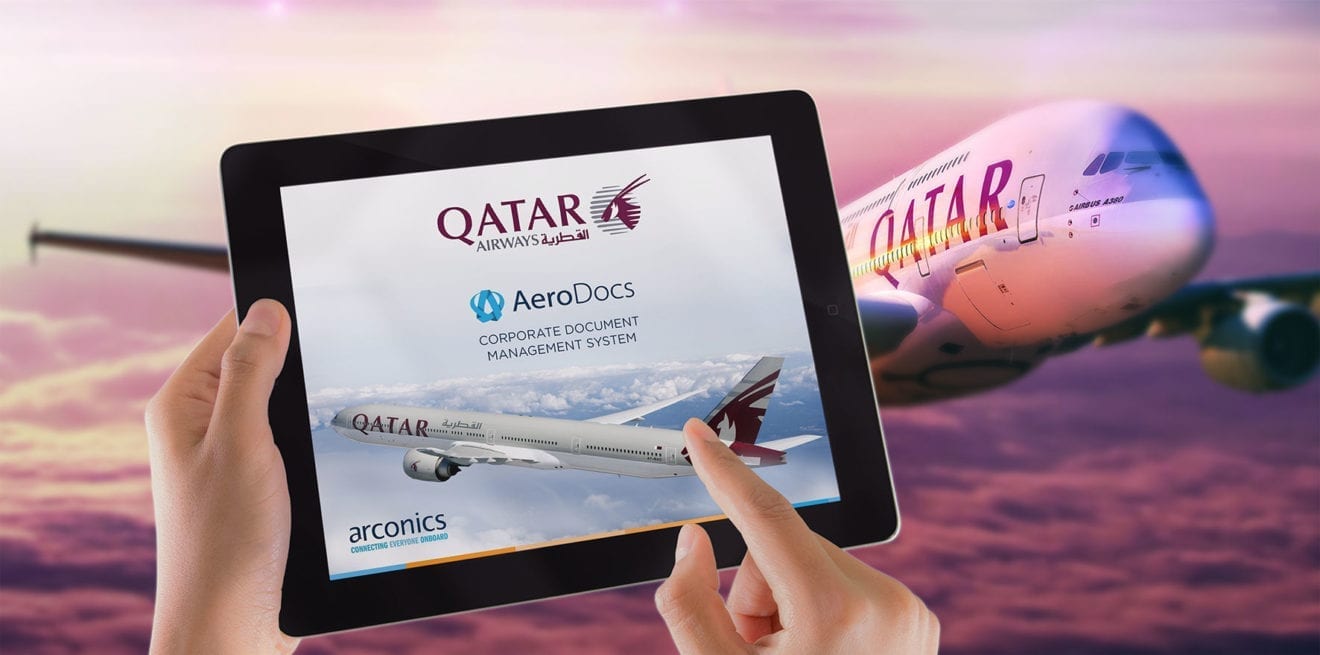
    Qatar Airways has become the first major Middle East airline to select Inmarsat’s new GX Aviation in-flight broadband solution for in-flight broadband.

    The Inmarsat solution will initially be available to Qatar Airways passengers on board more than 130 aircraft, consisting of Airbus A350s and Boeing 777s.

    GX Aviation technology has already been equipped on Qatar Airways’ latest Airbus A350s. Installations on the airline’s remaining Airbus A350s, together with the Boeing 777s, will start on a retrofit basis from this summer.

    GX Aviation is touted as the world’s first in-flight connectivity solution with reliable, seamless high-speed global coverage provided through a single operator. Inmarsat says the service allows airline passengers to browse the internet, stream videos, check social media and more during flights, with an on-board connectivity experience “on par with broadband services available on the ground.”

    “Broadband transformation on the ground is already well advanced and we are able to transfer that into the very challenging in-flight environment, working with Qatar Airways to make connectivity a success,” said Leo Mondale, president of Inmarsat Aviation.

    “Our networks are engineered with multiple layers for redundancy and global coverage. Our design philosophy is to scale up capacity over time to fit the route systems of our airline customers and reflect the industry’s real needs.”

    The service will integrate with Qatar Airways’ in-flight entertainment system and ensure that connectivity initiatives, such as its passenger app and aircraft technology, will be strengthened using dependable in-flight broadband. GX Aviation also complements the airline’s latest passenger experience innovations.

    Qatar Airways will connect to the GX network using exclusive JetWave terminals produced by Inmarsat partner Honeywell Aerospace. The terminals are designed for ease of installation and maintenance to assure the lowest downtime for any cabin connectivity solution in the market.

    The selection of GX Aviation follows a separate announcement that Qatar Airways has activated an advanced new space-based system, supplied by Inmarsat, to track all of its flights across the world.

    Inmarsat worked exclusively with Qatar Airways to develop this solution, which uses Inmarsat’s satellite technology to provide the exact real-time location of the airline’s aircraft in latitude and longitude.