Tag: #internet

  • Naver says its Green Dot is the future of searching

    Naver says its Green Dot is the future of searching

    Naver’s iconic green search bar may one day be a thing of the past – at least in the mobile app.

    Korea’s most popular portal site is experimenting with a new tool called the Green Dot that allows users to search for information not only by text, but also by voice, location and photos.

    The Green Dot was first unveiled last month. It is what the company calls an “interactive search” button located at the bottom of Naver’s app.

    When touched, the button opens a small window that offers various search functions like voice recognition, music recognition and recommendation on trending restaurants and bars nearby. The user can also add short-cuts to frequently used Naver services, from blogs to shopping.

    “Naver’s green search bar was developed at a time when searching online through PCs was about keywords and being linked to [web pages with] text information,” said Kim Seung-eon, the portal giant’s design head, at the Naver Design Colloquium held Friday in Dongdaemun, central Seoul. The annual event invites Naver designers to share their strategies and design insight.

    “But now with mobile, [portals] aren’t just about new information; we listen to music, reserve restaurants and use services that are closely linked to our daily lives. There are so many usages now and ways to input information. The Green Dot integrates all these; it’s the start of a new way to search and connect.”

    Kim added that the Green Dot will be the new design identity of Naver and a core function related to services coming in the future.
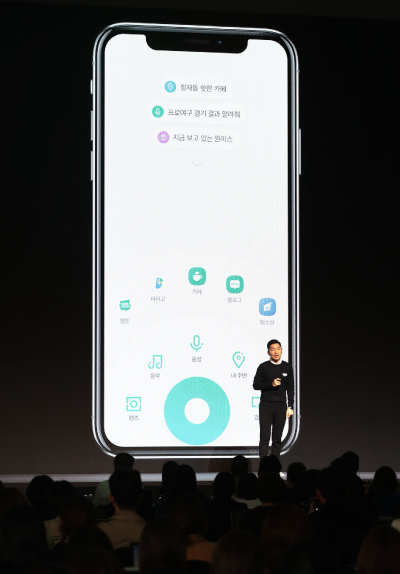
    The portal giant also shared the results of its first page overhaul on its mobile app.

    Last month, Naver introduced a new first page of its mobile app that left out news and trending keywords, leaving nothing but the search bar, weather information and the Green Dot.

    Its explanation was that the change was purposed to put a larger emphasis on searching, which accounts for 60 percent of why users turn on the Naver app. The change was available as a beta service.

    According to Naver, some users felt that the blank space was awkward, but the beta service had also showed meaningful results: the amount of time users spent on the app increased 15 percent and the number of searches rose 20 percent.

  • KT increases fixed-line network speed tenfold, to 10Gbps

    KT increases fixed-line network speed tenfold, to 10Gbps

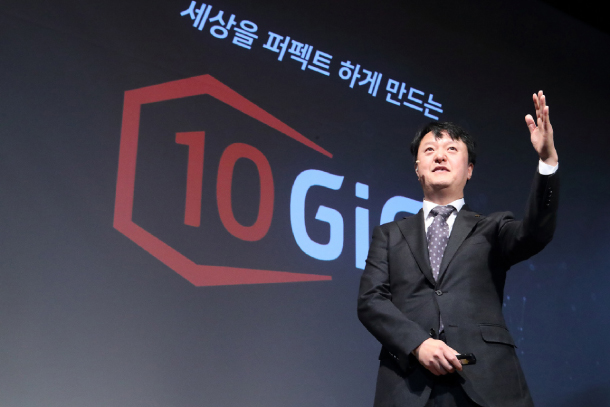
    KT announced Wednesday it will introduce a fixed-line network 10 times faster than its current offerings in Seoul as well as six major Korean cities.  The launch of Korea’s first home internet with speeds of up to 10 gigabits per second (Gbps) comes about four years after the mobile carrier launched wired internet with 1-Gbps speed.

    According to the company, Korea’s largest fixed-line internet service provider, a faster home internet has become a necessity as the number of independent content creators, like YouTubers and dedicated Esports players, has grown explosively.

    “The 10 times faster network will enable creators to air their content in ultra high-definition quality,” said Lee Pill-jai, senior executive vice president for marketing at KT. “It will also make virtual reality and augmented reality content a norm.”

    In a demonstration Wednesday at KT headquarters in Gwanghwamun, central Seoul, the actual download and upload speeds of the new internet service exceeded 8 Gbps whereas the existing internet achieved speeds of less than 1 Gbps. With the new internet, it takes only 30 seconds to download a 33-gigabyte ultra high-definition movie, according to KT. At 1 Gbps, it takes four minutes and 30 seconds.

    “You also need to think of the many devices that will be connected to home internet in the future,” said Park Hyun-jin, head of the wire and wireless business unit at KT. “I personally use five internet-powered devices, but by 2021, an average person will have 13 devices connected to the internet.”

    According to Park, the connection of numerous devices will slow internet speeds and make a 10-Gbps fixed-line a necessity to maintain tolerable internet speeds on each device.

    Faster fixed-line internet will also support the deployment of the high-speed 5G wireless internet nationwide, according to KT.

    “The 5G network is offered as wireless internet through base stations, but 5G network equipment and base stations need to be connected via a wired backbone network,” a spokesperson from KT said. “Having a 10-Gbps fixed-line network as the 5G’s backbone network will increase the stability of the wireless service.”

    The so-called backbone is a part of a computer network that connects other networks.

    According to KT, its 10-Gbps internet will be able to cover about 60 percent of the country by the early half of next year.

    To subscribe to the 10-Gbps internet, it costs 110,000 won ($96) per month, but if users already subscribe to KT for TV services, the monthly fee could be discounted to 77,000 won on a three-year contract basis.

    The company also released 5-Gbps and 2.5-Gbps internet plans, for those wanting faster but affordable home internet.

    To enable users to get a feel for 10-Gbps internet, KT said it will gradually install the network at 80 Starbucks Reserve shops in Korea and six PC rooms operated by AfreecaTV by this year.

  • Airport Retailing Consumer Electronics Market Witnessing a 2x Increase in Consumer Electronics Sales across SEA; India Most Lucrative

    Airport Retailing Consumer Electronics Market Witnessing a 2x Increase in Consumer Electronics Sales across SEA; India Most Lucrative

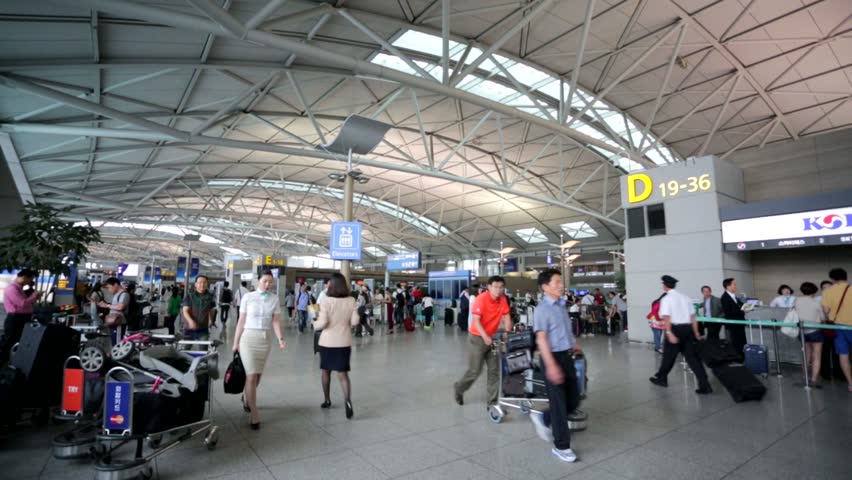
    The airport retailing consumer electronics market is foreseen to expand at a significant pace with global revenues crossing US$ 1,700 Mn in 2017, according to a new study. Traditionally pervasive as transportation service facilities, airports are now witnessing an influx of retail outlets for consumer electronics products. The shift in customer perspective toward airports as a retail destination continues to influence the growth of the airport retailing consumer electronics market.

    Fact.MR envisages that prospects for consumer electronics in airports are expected to remain promising, with the airport retailing consumer electronics market to grow at a CAGR of 6.3% in terms of value throughout the period of forecast, 2018-2028.

    The market valuation is likely to remain influenced by growing number of airports. Sales of consumer electronics in airports are projected to remain concentrated in the Southeast Asian (SEA) countries, making the region a lucrative market for airport retailing consumer electronics. India is poised to showcase higher market attractiveness in SEA during the forecast period on the back of steady economic development coupled with rising air tourism, according to the study.

    India’s lucrativeness in the airport retailing consumer electronics marketplace is attributed to rising number of air passengers. According to IATA (International Air Transport Association), the air passenger count in India is expected to reach 478 million by 2036. This is expected to present potential opportunities of growth for airport retailing consumer electronics in the coming years. In addition, sales of airport retailing consumer electronics on departure are likely to be on an upswing as compared to sales on arrival in the country. The report forecasts that the sales of airport retailing consumer electronics in India could exceed US$ 250 Mn by 2028.

    Growing sales of accessories are expected to largely contribute to the growth of the airport retailing consumer electronics market, according to the report. Consumer preference for accessories is projected to expand at a higher rate as compared to electronic devices. Against this backdrop, airport retailers are also planning to rent accessories for travellers opting for short trips.

    IATA projects that by 2036, global air passenger traffic is expected to reach 7.8 billion. This indicates that growth of airport retailing consumer electronics market is likely to remain significant in large airports. However, medium size airports are projected to showcase growing demand for airport retailing consumer electronics, says the report.

    Trend of hyper-personalization remains instrumental in driving growth of airport retailing consumer electronics market. With critical airline restrictions apropos to amount of goods to be carried in flight, a new personalised service in the airport retailing consumer electronics space has been witnessed. Airport retailing consumer electronics stores can use customer data from boarding passes, and deliver products to the customer’s destination. This trend is likely to influence growth in revenues of airport retailing consumer electronics in the coming years.

    Advertisements on flyers continue to remain instrumental in driving the growth of airport retailing consumer electronics market. Growing digitalization coupled with product displays on flyers are expected to influence sales of consumer electronics in turn presenting positive growth avenues for airport retailing consumer electronics market. This is likely to translate into increasing product sales across specialty retail stores in airports, consequently making them a key growth platform for airport retailing consumer electronics, says the report.

    As traditional brick and mortar sales are getting impacted due to mega trends such as relentless onslaught of online selling platforms, the physical retailing in airports is thriving. Overall, the airport retailing consumer electronics scenario remains positive and stakeholders can expect an optimistic growth path in the airport retailing consumer electronics market in the forthcoming years.

    The insights presented here are from a research study on Airport Retailing Consumer Electronics Market by Fact.MR

  • SKT, Deutsche Telekom sign co-investment agreement

    SKT, Deutsche Telekom sign co-investment agreement

    SK Telecom and Germany’s Deutsche Telekom have signed a strategic cross-investment partnership aimed at strengthening their competitiveness in 5G.

    Under the agreement, SK Telecom will invest in MobiledgeX, a Deutsche Telekom subsidiary focused on edge computing technology.

    Deutsche Telekom will reciprocate by investing the same amount in ID Quantique, an SK Telecom strategic partner in quantum cryptography communication technology.

    The operators have made the cross-investment in a bid to ensure they are in a position to offer specilized 5G services in the upcoming 5G era, supporting the expected development of intelligent services such as connected vehicles, smart factories and wearable devices.

    As part of the collaboration, SK Telecom and Deutsche Telekom are evaluating applying quantum cryptography communications technologies on their respective 5G trial networks.

    The companies are also reviewing using mobile edge computing technologies to reduce data transfer time, for applications such as enabling authorities to conduct on-site monitoring of disaster-affected areas or responding more quickly to traffic accidents.

    The collaboration will also cover initiatives in new business areas such as artificial and virtual reality. SK Telecom is pleased to enter into a cross-investment agreement with Deutsche Telekom as it will serve as a valuable opportunity for us to further solidify our 5G leadership in the global market and drive new growth,” SK Telecom president and CEO Park Jung-ho said.

  • Construction begins on PEACE cable

    Construction begins on PEACE cable

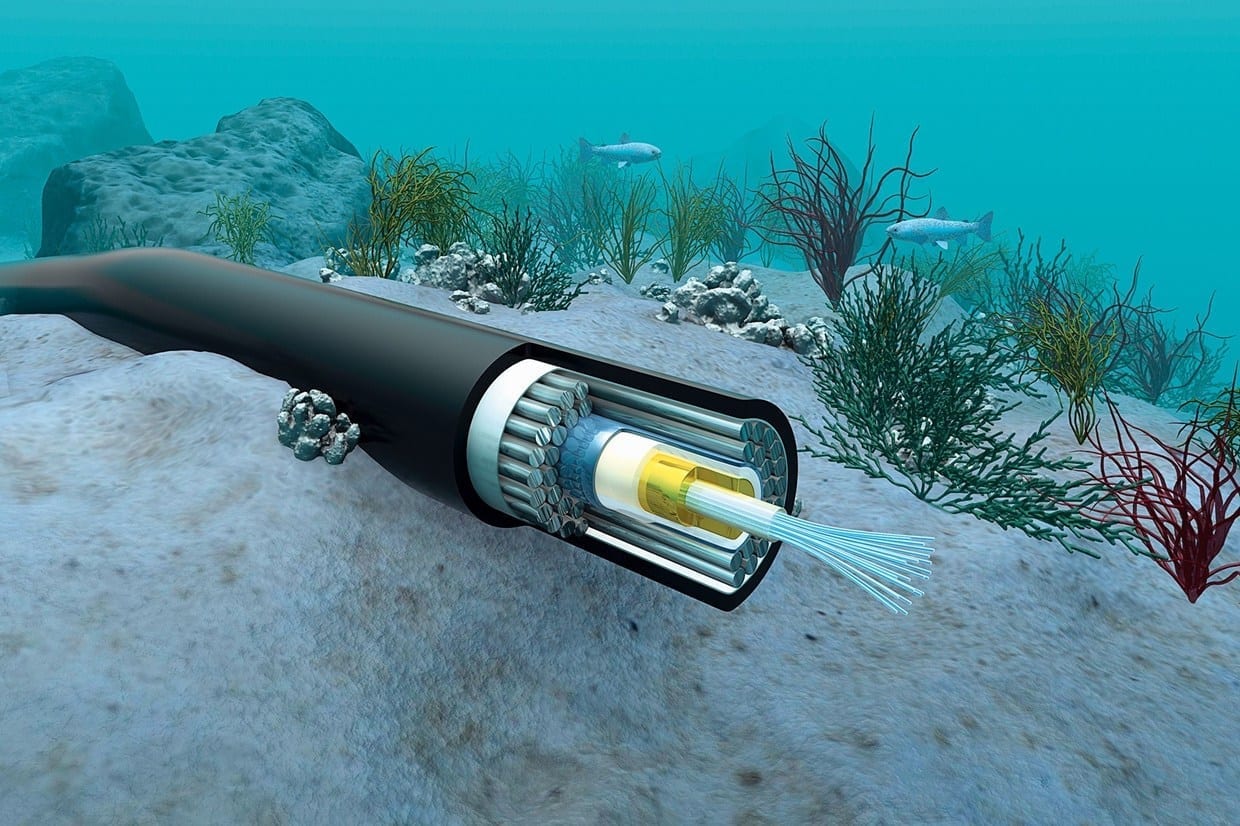
    Huawei Marine Networks and the 12,000 kilometer PEACE Cable system have hit a new milestone. The project has now entered into the cable and material manufacturing stage, staying on schedule for an RFS date in the first quarter of 2020.

    PEACE stands for Pakistan & East Africa Connecting Europe, which tells you pretty succinctly the route they will be taking. With one end in Pakistan and the other in southern France, it will come ashore in Djibouti and Egypt along the way with an extension south to Somalia, Kenya, and the Sechelles.

    Further plans suggest extending that branch further down to South Africa.  The landing parties on either end will be Pakistan’s Cybernet and Djibouti Telecom, and the agreements for destinations in between are expected to follow in the next few weeks.

    The build promises the lowest latency route between Europe and China, although the materials I have don’t say exactly how they plan to do that – a terrestrial leg through Pakistan and western China perhaps?

    When complete, the PEACE cable promises 16Tbps per fiber pair. An earlier announcement suggested 5 fiber pairs for a total of 60Tbps, though I don’t know if plans have evolved since then.

  • Converge ICT Solutions launches all fiber network

    Converge ICT Solutions launches all fiber network

    Huawei has provided its Agile WAN Solution to the Philippines’ Converge ICT Solutions to support the operator’s goal of rolling out the Philippines’ first pure end-to-end fiber network.

    Converge, which started as a HFC-based cable TV operator, has deployed an extensive all fiber network covering Central Luzon, the Philippines’ Capital Region and South Luzon.

    The company has licenses to operate fixed networks, fiber optics, cable TV, enterprise private lines, fixed broadband, and wireless broadband services.

    The company is expanding on its MAN service market in Metro Manila with high speed optical services, and has been seeking a solution to deliver a reliable, high capacity and elastic network.

    Huawei recommended its Agile WAN Solution for the deployment. Huawei has mostly built Converge’s entire network, from its DWDM backbone and MPLS core through to the MAN and down to the access network.

    Converge COO Jesus Romero said the network upgrade will support the company’s future plans to expand into services such as FTTH, enterprise data services, data center services, cloud services, and smart city services nationwide.

    “Early on we felt we needed a network that was reliable, scalable, cost-effective, and allowed us to easily implement new products and services, and we are very pleased that we were able to, in fact, get that with Huawei,” he said.

    “Huawei has been responsive in terms of support. In terms of pricing, they remain competitive, and they help us a lot with strategy planning, what to do next, and where to go – which is one key area where we feel we should continue and expand cooperation.”

  • India’s Reliance Industries to invest in two MSOs

    India’s Reliance Industries to invest in two MSOs

    India’s Reliance Industries, parent company of operator Reliance Jio Infocomm, has announced strategic investments in two multiple system operators (MSOs) to accelerate the planned JioGigaFiber rollout. The company plans to invest 22.9 billion rupees ($311.48 million) to take a 66% stake in Den Networks Limited, India’s largest cable TV distribution company and a provider of high-speed broadband services in 100 cities nationwide.

    Reliance Industries will also invest 29.4 billion rupees for a 51.3% stake in Hathway Cable and Datacom Limited, a cable TV company providing high speed broadband in 21 cities.

    The company intends to make open offers for DEN and Hathway shares as well as two Hathway subsidiaries, as required by Indian takeover regulations.

    Announcing the planned investments, Reliance Industries said the acquisitions will accelerate Jio’s efforts to bring the JioGigaFiber service to a potential 50 million homes across 1,100 Indian cities and towns as quickly as possible.

    Jio will work with Hathway and DEN to bring the JioGigaFiber services to the two companies’ 24 million existing cable customers.

    Jio plans to use the JioGigaFiber network to offer high-speed broadband, ultra high definition video streaming, multi-party video conferencing, VR gaming, smart home and AI virtual assistant and fixed mobile convergence services.

    Reliance Industries chairman and MD Shri Mukesh said the acquisition is also expected to benefit the 27,000 local cable operators (LCOs) that are aligned with Hathway and DEN by enabling them to participate in India’s digital transformation. Indian LCOs provide coaxial cable connections on a per-neighborhood basis.

    “With Local Cable Operators now as part of the Jio ecosystem, we look forward to bringing Jio’s advanced JioGigaFiber and Smart Home Solutions to more Indian homes, even quicker,” he said.

    “We look forward to welcoming other MSOs and LCOs to be part of this partnership. This will result in growing wireline data connectivity in India and making state-of-the-art high-speed affordable internet and digital services accessible to the widest population in the shortest possible time.”

  • StarHub offering free local calls to prepaid customers

    StarHub offering free local calls to prepaid customers

    Singapore’s StarHub has started offering prepaid customers free outgoing local calls as long as they have an active data plan. The company will continue offering prepaid customers free local calls for the duration of their data plan, even if they run out of data.

    StarHub offers customers a choice of six prepaid data plan over its Happy Prepaid app, starting at S$2 for 30MB of data and free outgoing calls for three days. An S$8 mid-tier option adds 1GB and free calls for seven days, while an S$25 plan offers 5GB of data and free calls for 30 days.

    “Just by being on our new prepaid data plans, customers can enjoy the best of two worlds – surfing on Singapore’s fastest 4G network and chatting with family, friends and co-workers easily and affordably,” StarHub VP of marketing Donovan Kik said.

    “Simplicity is key and we will continually enhance our services to ensure we deliver the best possible experience to customers.”

  • Satcom Direct to distribute Intelsat’s FlexExec service

    Satcom Direct to distribute Intelsat’s FlexExec service

    Satellite operator Intelsat has teamed up with business aviation connectivity provider Satcom Direct to provide in-flight broadband connectivity to business jets globally. Satcom Direct has become the first solution partner and master distributor for Inmarsat’s FlexExec service for the business aviation sector. The company will add FlexExec to its new SD Xperience portfolio.

    Under the agreement, Inmarsat will provide Satcom Direct with immediate access to Intelsat’s Ku-band satellite fleet including its high throughput satellites.

    FlexExec is designed to differentiate from the competition by not sharing capacity with commercial aviation or customer broadband customers to provide business jet owners with guaranteed provide seamless, on-demand connectivity.

    “We are delighted that Satcom Direct has chosen FlexExec to be a part of their SD Xperience platform,” Intelsat VP and GM for mobility Mark Rasmussen said.

    “The global footprint, resiliency, redundancy and flexibility of FlexExec’s seamless Ku-band platform will ensure that passengers can easily extend fast, high quality broadband connectivity from their office into the skies.”

  • Ericsson CEO talks 5G with US FCC

    Ericsson CEO talks 5G with US FCC

    Ericsson president and CEO  Börje Ekholm recently met with FCC Chairman Ajit Pai to talk about how the US is making more millimeter wave spectrum available for 5G, its progress in reducing the time involved in tower siting and clearing the way for network slicing, a key component of 5G.

    Ekholm applauded the FCC’s recent order removing barriers to infrastructure investment and expressed appreciation for the chairman’s focus on releasing spectrum, particularly millimeter wave spectrum, to help fuel increased innovation and investment in 5G. Ekholm also noted that the Internet Freedom order clears away a cloud of uncertainty over network slicing, according to an ex parte filing(PDF).

    Also present during the October 3 meeting were Niklas Heuveldop, president and CEO of Ericsson North America; Lynn Starr, senior director for Ericsson Government Affairs; Jared Carlson, vice president for Ericsson Government Affairs; and Rachael Bender, Chairman Pai’s wireless and international legal adviser.

    Importantly, Heuveldop covered some of the investments Ericsson is making in the US, including Ericsson’s decision to begin manufacturing in the US in the fourth quarter of this year. The Swedish vendor plans on providing volume production of next-generation radios in order to introduce products into the US market faster.

    Ericsson is also opening a new software development center with a baseband focus in 2018, eventually employing more than 200 software engineers when it’s fully operational.

    In addition, Ericsson said it will increase its investment in artificial intelligence and automation, employing about 100 specialists in North America by the end of this year. The team will work on using AI technologies to accelerate automation, examine product road maps and explore new business opportunities.

    It’s worth noting that Heuveldop joined a chorus of other industry leaders in urging the FCC to move forward with plans to make more midband spectrum available for 5G. He also stressed that the US mobile industry will need significantly more than 100 MHz in the 3.7-GHz to 4.2-GHz band for operators to offer the combination of speed and coverage they need for 5G.

    Midband spectrum also is of great interest to Ericsson’s rival Nokia, whose CEO Rajeev Suri met with Chairman Pai earlier this year. Suri and other Nokia executives stressed the urgency of making spectrum available in the 3.7-GHz to 4.2-GHz band as the centerpiece for nationwide 5G deployment in the U.S.

    This past summer, the FCC adopted an Order and Notice of Proposed Rulemaking that identifies new opportunities for flexible use in up to 500 megahertz of midband spectrum between 3.7-GHz and 4.2-GHz. The notice proposes to add a mobile allocation to all 500 megahertz in the band and seeks comment on various proposals for transitioning part or all of the band for flexible use, including market-based, auction and alternative mechanisms.

  • Spark launches flexible pricing broadband plan

    Spark launches flexible pricing broadband plan

    New Zealand operator Spark has moved to differentiate its broadband offerings by launching a new unlimited fiber broadband plan that offers consumers discounts on months they use less data.

    The company’s “Unplan” branded fiber broadband plan offers unlimited bandwidth for NZ$85 ($55.50) per month.

    But on months where consumers use less than 60GB of data this price reduces to NZ$65, and for months where 60GB to 120GB of data is consumed it reduced to NZ$75.

    An entertainment plan is also available for an additional NZ$10 per month that comes with 6 months of free Netflix and a subscription to the Spark-owned Lightbox SVOD service for the life of the plan.

    The offer is also available via Spark’s fixed wireless broadband service, but restrictions will apply on usage of over 300GB of data in a single month of regular usage of 180GB in an average month.

    “We think it’s a fairer way of offering broadband, as it reflects our customers’ needs. This is the first broadband plan in New Zealand that flexes to reflect customers’ data usage – and it has the potential to save our customers a lot of money,” Spark consumer lead Joe Goddard said.

    “It’s also the first plan that’s only available on new generation broadband options of wireless broadband and fiber.”

  • 5 countries driving 50% of mobile internet subscribers growth

    5 countries driving 50% of mobile internet subscribers growth

    Just five countries – including China, India, Indonesia and Pakistan – are expected to drive 50% of all new mobile internet subscriber growth between now and 2025, according to GSMA Intelligence.

    The research body’s latest Mobile Trends Report, [PDF] published yesterday, forecasts that the four Asian countries and Nigeria will together account for around 700 million of the 1.6 billion new internet users over the period.

    China and India will be by far the biggest growth markets, adding 321 million and 308 million new mobile internet users respectively by 2025. Indonesia is expected to add 75 million new users, while Pakistan and Nigeria will add 53 million each.

    The next generation will not just be mobile first in terms of mobile internet use, but mobile only, with GSMA Intelligence forecasting that there will be a total of 3.7 billion mobile only internet users by 2025.

    Meanwhile the report forecasts that the revenue growth outlook for mobile operators will be conservative until proven revenue streams emerge for the IoT and 5G. The GSMA expects there to be around 400 million connections by 2022, and over 1.3 billion 5G connections by 2025, representing a global average penetration of 15%.

    But growth will be driven by a small number of countries, with China being the single largest market. But South Korea is expected to see the greatest take-up in terms of the percentage of the market’s mobile subscriber base by 2025 at 60%, followed by Japan and the US at nearly 50% each.

    Globally, LTE will continue to drive the majority of revenue for the next 10 years, with GSMA Intelligence forecasting that the technology will grow to account for 57% of total connections in 2025. Even if 5G’s total share exceeds 15% it is expected to complement rather than replace LTE.

  • Singtel launches ultra-fast broadband for gamers

    Singtel launches ultra-fast broadband for gamers

    Singtel has launched a new ultra-fast fiber broadband service targeted at gamers, which comes bundled with a dedicated gaming Wi-Fi modem.

    The new 1+1 Gbps Fibre Pro Gamer Bundle comes with the newly launched Razer Sila gaming router and a subscription to the WTFast Gamer Private Network service, which is designed to automatically connect gamers to the fastest servers.

    The bundle is priced at S$69.60 ($50.41) on a 24-month contract, and connects to a dual network which comprises 1Gbps of dedicated bandwidth for gaming and another 1Gbps for regular internet usage.

    The dedicated bundle is being launched today at the opening day of Singtel’s first PVP Esports Championship in Suntec City, a three day event featuring teams from Australia, India, Indonesia, the Philippines and Thailand competing for a $300,000 prize pool.

    “We are pleased to offer our customers this broadband bundle that’s specially designed for online gaming during our inaugural PVP Esports Championship event,” Singtel CEO consumer Singapore and group chief digital officer Yuen Kuan Moon said.

    “Online gaming is extremely popular with our customers. This requires high connectivity performance and specialized devices to optimize the gaming experience. By bringing together Singtel’s superior network connectivity and Razer’s Sila gaming router, we believe the 1+1 Gbps Fibre Pro Gamer Bundle will provide the ultimate performance for gamers.”

  • Myanmar Net taps Ruckus Networks for carrier-grade Wi-Fi

    Myanmar Net taps Ruckus Networks for carrier-grade Wi-Fi

    Myanmar’s largest pure-play ISP Myanmar Net contracted Ruckus Networks to deploy a carrier-grade Wi-Fi network across all major townships in Yangon and Mandalay.

    Through the deployment, Myanmar Net is offering consumers and businesses internet access at speeds of up to 62Mbps and prices competitive with the mobile operators’ existing data plans.

    Ruckus Networks provided Wi-Fi access points that use its smart antenna system with 180-degree and 120-degee antenna patterns to provide wider coverage and more stable connectivity.

    Allen Miu, CTO of Myanmar Net parent company Frontiir, said the company was facing a number of unique challenges with the deployment, associated with Myanmar’s extreme weather, power fluctuations from the nation’s old and unstable power grid and high population density.

    “Besides AP density, the high population density is also a challenge as we anticipate huge demand for our services due to the very affordable prices we offer. One of the key initial concerns we had was whether Wi-Fi technology could hold up to the growth and demands on our network,” he said.

    “Being the first in Myanmar to deploy a wireless network for the general populace is no easy feat, and we are only able to make this a reality with Ruckus’ engineering expertise and knowledge.”

  • NEC completes construction of SACS cable

    NEC completes construction of SACS cable

    Japanese vendor NEC has announced it has completed the construction of the first subsea cable crossing the south Atlantic ocean for Angola Cables.

    The South Atlantic Cable System (SACS) has been deployed and is now ready for commercial service. The cable system spans between Angola with Brazil, connecting the African continent to Latin America directly for the first time.

    The system uses a four fiber pair configuration to deliver an initial design capacity of 40Tbps. In Angola, it will land at the existing Sangano cable landing station, while in Brazil it will land in a newly constructed data center constructed for SACS and another cable system connecting Brazil with the US.

    SACS was partly funded through a loan provided by the Japan Bank for International Cooperation to Angola state-owned development bank the Banco de Desenvolvimento de Angola.

    “NEC is honored to have been selected as a partner for SACS, the world’s first optical submarine cable system crossing the South Atlantic, directly connecting two Portuguese speaking nations of Angola and Brazil,” NEC GM for submarine networks Toru Kawauchi said in a statement issued on Monday.

    “Yesterday, all communication between the two continents had to go up north and cross the North Atlantic. From today, this new cable will bring information at the speed of light, improving the connectivity between the two nations and two continents.”