Tag: #internet

  • Executives blind to disruptive nature of 5G

    Executives blind to disruptive nature of 5G

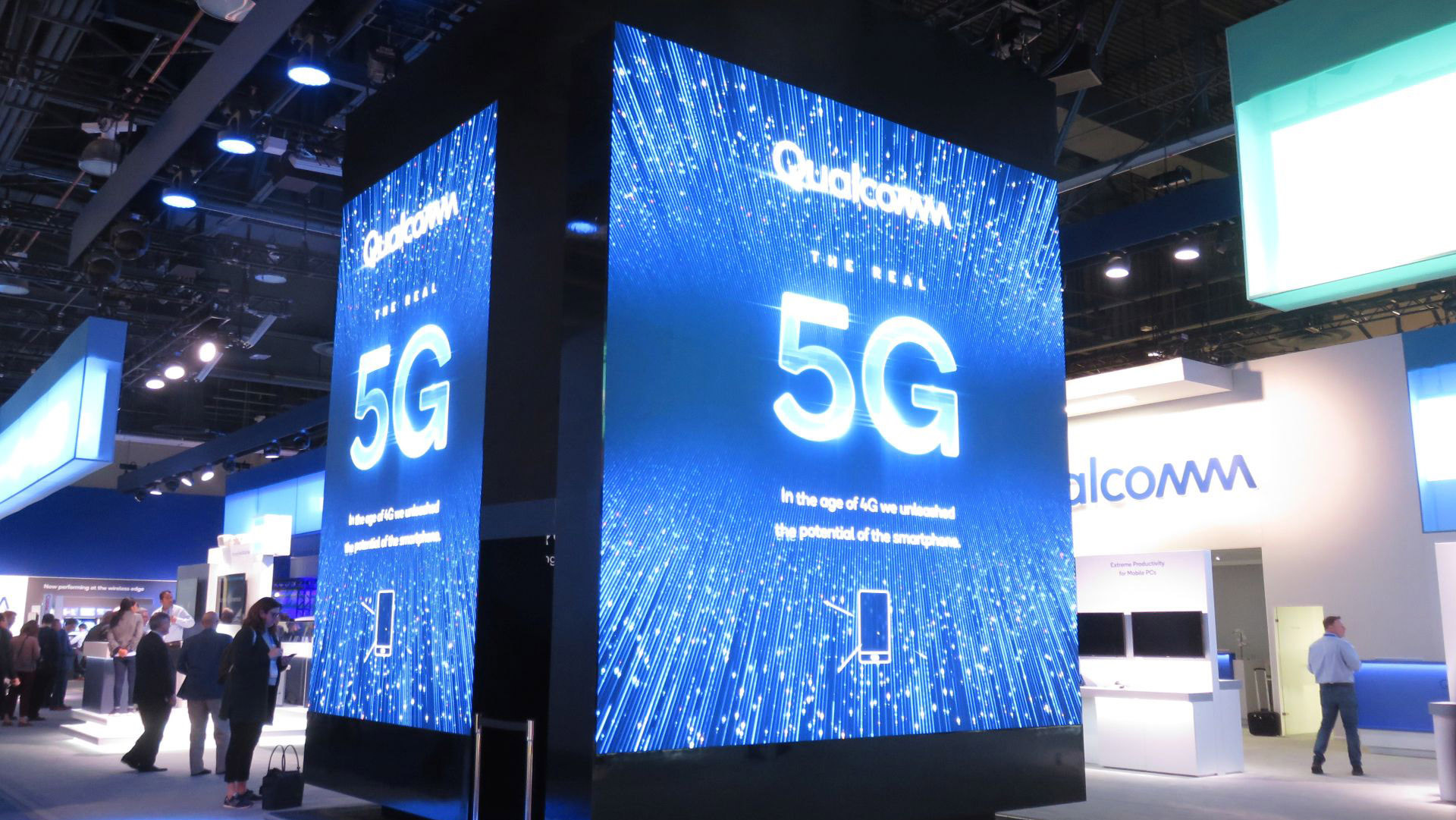
    Accenture says business and technology executives underestimate the disruptive potential of 5G technology. Fifty-three percent of respondents in a global survey of 1,800 executives in 10 countries believe there are “very few” things that 5G will enable them to do that they cannot already do with 4G networks. Only 37% expect 5G to bring a “revolutionary” shift in speed and capacity.

    Competitive advantage

    5G is believed to have important competitive implications. Up to 60% of surveyed executives believe 5G will cover nearly all the population by the year 2022, and 70% believe that 5G applications will give them a competitive edge with customers. Speed will be a key advantage according to 46% of respondents while 42% cite its capacity.

    “The reality is that 5G will bring a major wave of connectivity that opens new dimensions for innovation and commercial and economic development,” said George Nazi, Accenture’s Network practice global lead. “Breakthroughs in three-dimensional video, immersive television, autonomous cars, and smart-city infrastructure will unleash opportunities that are difficult to imagine today but will soon be transformative. Telecommunications companies will play a pivotal role in bringing these prospects to light.”

    Role of carriers

    Up to 72% of executives said they need help to imagine future possibilities and use cases of 5G. These see telcos as just the right partner on their 5G journeys, cited by 40% of respondents. Hampering this partnership is the recognition by 60% of respondents who cite telcos’ lack of industry knowledge as a key challenge.

    Other barriers include the need for upfront investment (36%), security (32%) and employee buy-in (29%). While 78% of executives believe that using 5G in the workplace will make their business more secure, 32% have concerns about the security of the new connectivity standard.

    Anders Lindblad, Accenture’s Communications & Media industry lead for Europe, said, “Despite the knowledge gap, there is excitement among business leaders about the value that 5G can bring to enterprises. This value is currently trapped within the perceived risks and uncertainty around 5G, which can be unlocked by organizations that understand customer needs, can overcome barriers to adoption and can drive collaboration among service providers.”


  • India’s copper cabling market to reach $862m by 2023

    India’s copper cabling market to reach $862m by 2023

    The India structured cabling market is projected to reach $861.6 million by 2023, according to Research and Markets.

    Increasing demand for copper cables, growing data center market, higher product launch activities by the market players, and rising demand for bandwidth solutions are the major factors driving the growth of the market.

    Based on wire category, the India structured cabling market is divided into Cat5e, Cat6, Cat6A, and Cat7. The most popular category, Cat6 held the largest market share in 2017. Cat6 owed its popularity to the backward compatibility of this cable with Cat3, Cat5, and Cat5e cable system while providing at least 150 MHz of more frequency range than older types of cables that provides a cost-effective solution for the end users.

    In India, demand for Cat6A is surging owing to its low cost/feature characteristics. It is forecast to grow at 11.9% CAGR. Cat6A cable provides a better cost-effective solution than Cat7 cable and double the bandwidth than Cat6 cable.

    On the basis of application, the India structured cabling market has been categorized into data center and LAN. Data center is expected to register faster growth in the market, during the forecast period, owing to growing demand for cloud computing and cloud storage. This demand is fulfilled by increasing number of data centers in the country.

    The market for data centers in India is expected to reach a value of $4.1 billion by 2020. Tier I cities predominantly, Mumbai, New Delhi, Chennai, Bengaluru, and Pune are expected to be the main locations for data centers in the country.

    Copper cabling has been providing a flexible, reliable, and economical communication medium since decades. Initially, commencing with the analog telephone and continuing with present high-speed digital networks, copper cabling has been the preferred choice for much of the communications infrastructure installed in India’s residential, commercial, industrial and institutional buildings.

  • Indian telcos call for fiber deployment fund

    Indian telcos call for fiber deployment fund

    Indian operators are calling for the establishment of a fund to help incentivize deployments of fiber across the country ahead of the introduction of 5G.

    The Cellular Operators Association of India (COAI) has urged the government to offer incentives including tax relief, rationalization and reduced red tape on investments in order to encourage the deployment of more fiber.

    The industry body believes a national policy should be established that would include the introduction of uniform and reasonable approval processes and right of way policies.

    As part of the government’s National Digital Communications Policy, the government is considering introducing incentives, and establishing a special purpose vehicle to grant low-interest loans to operators to fund network expansion.

    The policy also calls for the introduction of a new National Fibre Authority to help meet operators’ needs for fiber backhaul. The government aims to increase India’s fiber footprint fivefold by 2022 to around 7.5 million route kilometers. According to the policy, less than a quarter of current telecom towers are connected to a fiber backbone.

  • Global business leaders raise concerns over e-commerce policy changes in India

    Global business leaders raise concerns over e-commerce policy changes in India

    Several global business leaders have raised concerns over the evolving regulatory challenges concerning the e-commerce sector in India and said they want a stable policy regime to help this space achieve its robust growth and investment potential. According to a report, multiple business leaders attending the World Economic Forum Annual Meeting here said there are confusions in their mind in the backdrop of recent policy changes for e-commerce players having FDI in India.

    They did not want to be named, given the sensitivity of the subject and the evolving nature of the proposed rules, but said they have directly, or through their representatives, raised their concerns with the Government. They wanted to raise the issue directly with Commerce and Industry Minister Suresh Prabhu in Davos, but his plan to come here got changed at the last moment.

    At a session here at the WEF meeting, WTO Chief Roberto Azevedo also said there was a need for a global multilateral framework on e-commerce business.

    India’s FDI policy allows 100 percent foreign direct investment in marketplace model, but investors also want a stable policy and regulatory regime, a senior official of a leading online retailer said.

    An industry lobby group official said there is a fear that certain new rules proposed by the Government could lead to discrimination against investors as this policy is only for foreign players and not for domestic ones in the e-commerce sector.

    Another executive claimed it is being seen as a non-consultative approach even with investors who bring in huge foreign direct investment.

    However, Government officials rejected these allegations and said the new changes seek to safeguard competition and the interest of domestic players. The rules have been made after due consideration and consultations with concerned stakeholders, they added.

    The Commerce and Industry Ministry brought certain changes to Press Note 2 on December 26, 2018 which prohibited e-commerce companies from entering into an agreement for exclusive sale of products along with tightening norms for firms having foreign investment.

    The Government has also barred online marketplaces like Flipkart and Amazon from selling products of companies where they hold stakes and banned exclusive marketing arrangements that could influence product prices.

    The revised policy on foreign direct investment in online retail also requires these firms to offer equal services and facilities to all its vendors without discrimination. The policy would be effective from February 2019.

    In India, the policy as such does not permit FDI in inventory-based model of e-commerce.

    Companies have been seeking more time to implement the changes even as some of them have warned that these substantial modifications in the way they do business pose risks of derailing the e-commerce sector that has been a big job creator.

    Executives from another global retail major said the impact could also be felt by several connected sectors such as advertising, logistics, warehousing and manufacturing.

  • Naver says it’s not interested in opening an internet bank

    Naver says it’s not interested in opening an internet bank

    Naver said Monday that it has no plans to launch an internet-only bank, shutting down rumors that the IT giant might open the country’s third such bank after K bank and Kakao Bank. “Although we have reviewed [joining] the internet-only bank business, we decided against it and will not attend the information session regarding internet-only bank licenses on Wednesday,” said a Naver spokesperson.

    “This is the decision we made after giving a lot of thought into whether Naver can be competitive when the domestic internet-banking environment is already so well established and existing internet-only banks K Bank and Kakao Bank are doing well.”

    The announcement comes as a surprise to the industry as Naver has been hailed as one of the likeliest candidates to qualify for a banking permit. Last month, financial authorities announced that they would grant internet-only bank licenses to up to two companies this May in an effort to boost competition in the banking industry. The information session, organized by the Financial Supervisory Service and Financial Services Commission, comes as part of the government’s effort to facilitate the application process.

    Despite government initiatives, however, no major company has yet to directly express an intention to apply for a bank license.

    Game developer NHN Entertainment and booking and shopping platform Interpark – which led a failed effort to apply for a permit in 2015 – have also said they don’t plan on pursuing internet-only banks.

  • Amazon to soon deliver packages right in customer’s garage

    Amazon to soon deliver packages right in customer’s garage

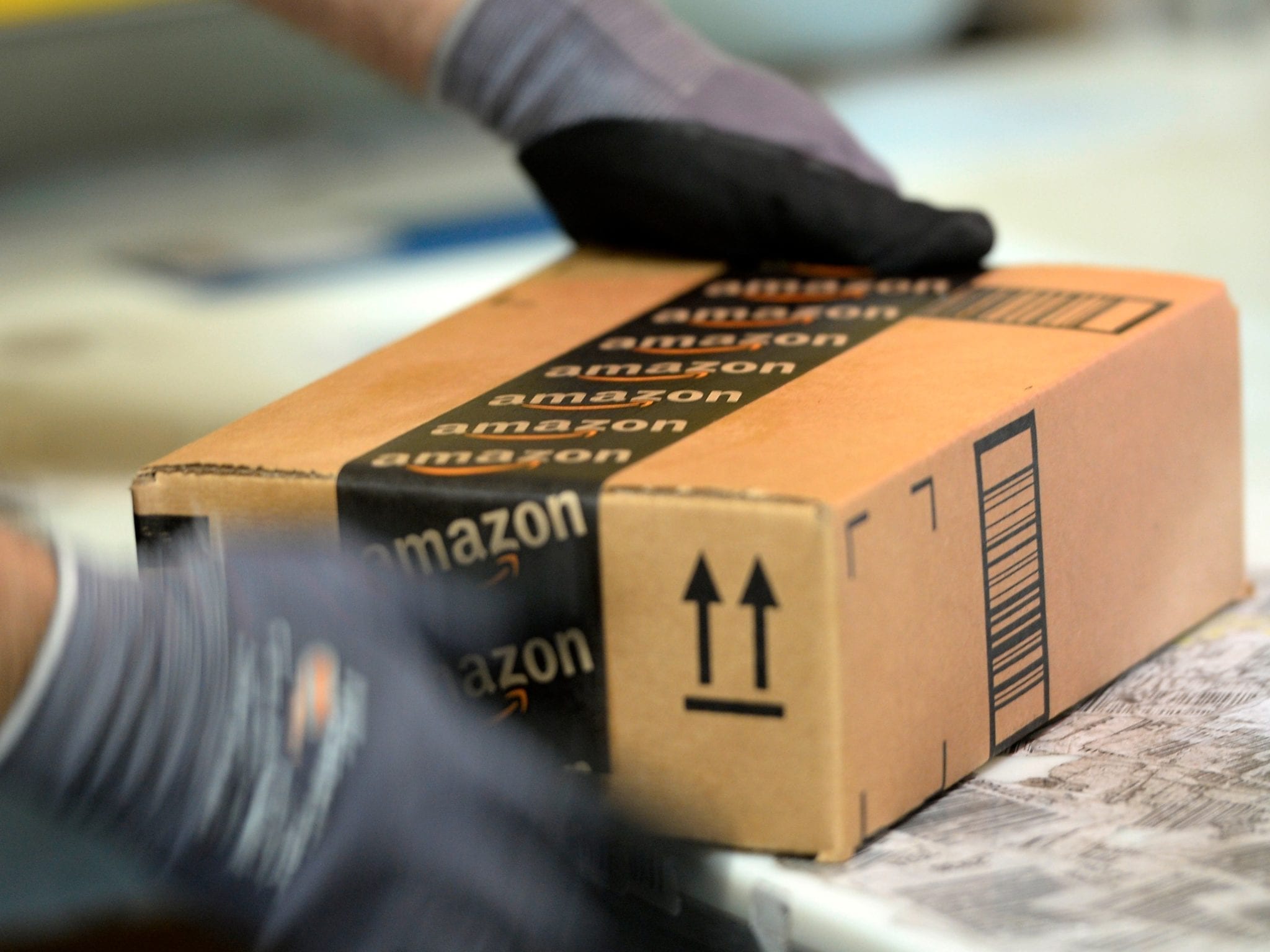
    To enhance its in-home delivery service, Amazon has launched new products and tools within its ‘Key by Amazon’ offering for Prime members, beginning with the US. The online retail giant unveiled ‘Key for Garage’ that will allow customers to monitor and control their garage door via the Key app. “In addition to receiving deliveries at home and in your car, eligible Amazon Prime members will soon be able to get deliveries in their garage,” Amazon said in a statement on Tuesday.

    ‘Key for Garage’ is made possible by integrating Key with CGI’s proprietary ‘myQ-connected’ technology.

    “We started with the idea of in-home package delivery and quickly learned that our customers found peace of mind from the control Key gives them over their most important place – their homes – even when they aren’t there themselves,” said Rohit Shrivastava, GM of Key by Amazon.

    The online retail giant unveiled ‘Key for Garage’ that will allow customers to monitor and control their garage door via the Key app

    Amazon launched ‘Key’ in 2017 and the in-car delivery facility later. The new delivery services are available to Prime customers in some markets at no additional cost.

    Other offerings include the new Schlage Encode Smart Wi-Fi Deadbolt — the first WiFi-enabled smart lock for Key.

    The smart lock offers an innovative option for any customer who wants to experience the magic of a keyless life without any additional hub or hardware.

    “Even with all the advancements in the category, we recognized there was still a gap in simple, secure, high performance and cost-effective, all-in-one access solutions,” said Lee Odess, Vice President, Solutions Providers Business at Allegion, maker of Schlage locks.

    ‘Key for Business’ is a smart fob for drivers delivering Amazon packages to commercial and residential properties.

    “The technology allows building owners and managers to give controlled access to delivery drivers to drop off Amazon packages to their residents, and eliminate the need for building staff to manually give access each time deliveries are made,” said amazon.

    The Schlage Encode Smart Wi-Fi Deadbolt is available for pre-order for US$ 249.99 or US$ 299.99 when bundled with an Amazon Cloud Cam. It will begin shipping to the US customers on March 5.

    Key for Garage will be available in the US in the second quarter.

  • Korea’s KT 5G bus hits the road

    Korea’s KT 5G bus hits the road

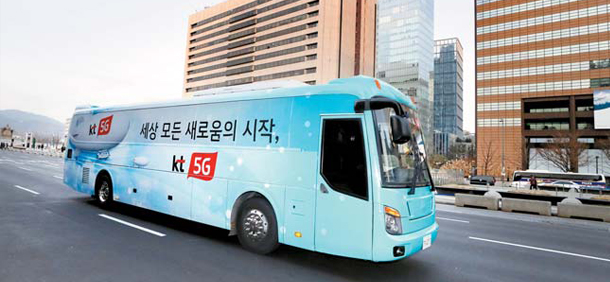
    Are you curious about all the hype over 5G? A ride on a 5G-powered bus may answer some questions. Mobile carrier KT announced Tuesday that people can sign up for free rides on its 5G bus. The bus will be connected to its ultra-fast 5G wireless network and will demonstrate devices that can be used to enjoy new media services like KT’s GiGA Live TV. GiGA Live is a head-mounted display – thick goggles with a screen embedded inside. GiGA Live supports virtual reality (VR) media services, including live sports broadcasts, as well as 360-degree films.

    VR and augmented reality (AR) are commonly cited as the technologies that have the most to benefit from 5G network. Because 5G promises up to 20 times faster speeds than LTE, it can transfer large volumes of data quickly in real-time, which is integral to the proper operation of VR and AR services.

    Those who want to take 30-minute sojourns on the 5G bus can apply online at www.kt5Gbus.com. The bus will run in the Gwanghwamun area from Jan. 15 to 24, and Gangnam Station from Jan. 25 to Feb. 2. Rides will be offered five times a day, excluding Sundays and Mondays.

    “5G network makes it possible to transfer huge volumes of information safely and in real-time,” said Park Hyun-jin, head of KT’s 5G business. “We will continue to offer innovative 5G services that can provide new experiences and value to consumers.”

    Earlier this month, KT added 5G-capabilities to its barista robot B;eat in Samsung Life Insurance’s Seocho District office. The robot, which looks like an advanced vending machine, can now recognize customers’ presence and send real-time footage of orders to human managers.

  • Hyundai Cars to go online – and have legs

    Hyundai Cars to go online – and have legs

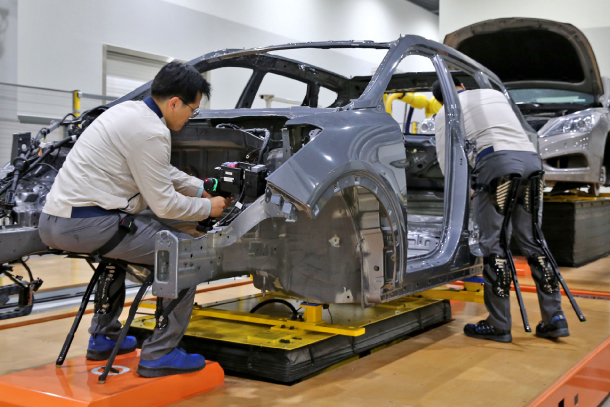
    By 2022, all cars made by Hyundai Motor will be connected to the internet, the automaker announced during a press briefing held Monday in Las Vegas ahead of the 2019 Consumer Electronics Show (CES). “We aim to have 10 million active users of our connected-car services globally and apply connected-car technology to all vehicle segments in the global market by early 2022,” said Suh Jung-sik, senior vice president of Hyundai Motor Group’s ICT division.

    At the CES, the company also introduced a vehicle in which the wheels are attached to robotic legs with a wide range of motion. Hyundai’s concept of a truly connected car is a car smarter than a computer that can share information not only with other vehicles on the road but also with homes, surrounding infrastructure and cities.

    Using connectivity, the cars can offer real-time traffic and parking lot information to drivers and also alert drivers remotely of theft. Remote adjustments of in-car settings, such as temperature, will also be possible.

    While Hyundai is already offering early versions of its connected cars in Korea, the United States, China, Canada and Europe, the automaker said it will establish additional big-data centers to offer similar services in countries like India, Brazil and Russia.

    To offer better connectivity worldwide, the carmaker is currently developing an operating system, a cloud platform and network technology for connected cars. The company also announced a plan to introduce an open platform on which third parties can develop new technologies using big data shared by Hyundai.

    Hyundai is not the only carmaker that came to CES with grand ambitions to take leadership in the connected car business.

    BMW will introduce the BMW Intelligent Personal Assistant, which can interact with drivers and allow for video meetings, shopping and other digital services inside cars. Audi is introducing a virtual-reality entertainment service for passengers in back seats. VR games or travel content will match the actual movements of the car. In the long run, the carmaker said the videos will reflect real-time traffic conditions so that if a car stops due to red light, the video will show an obstacle.

    Other participants, including Mercedes-Benz, Nissan, Bosch and Continental, all shared their focus on connectivity.

    “In the future, cars will be categorized as cars with hyper-connectivity and those without,” Suh of Hyundai Motor Group added.

    Apart from connectivity, Hyundai said it will develop personalized electric vehicles for everyone by giving customers the freedom to select software and hardware for their vehicles.

    To bolster open innovation, the carmaker has been setting up global open innovation centers to collaborate with foreign start-ups. Already there are three centers, established in Korea, the United States and Israel. Two more centers are set to be established, in Berlin, Germany and Beijing, China this year.

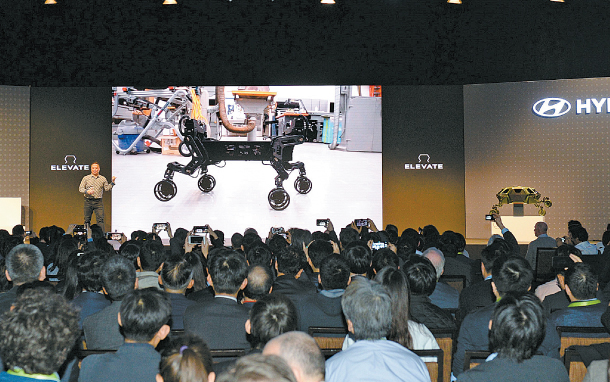
    Hyundai Motor and its innovation center in Silicon Valley, the Hyundai Cradle, introduced the “Elevate” concept vehicle at this year’s CES. It has four robotic legs specifically designed for rescue in challenging environments.

    U.S. design-consulting firm Sundberg-Ferar was involved in the development of Elevate, which Hyundai calls the ultimate mobility vehicle. It can swiftly move around places inaccessible to existing rescue transport.

    Hyundai said the Elevate’s body can be switched depending on the mission and that the robotic-leg architecture has five degrees of freedom. The company added that the vehicles can also aid people with physical impairments.

  • Vietnam says Facebook violated cybersecurity law

    Vietnam says Facebook violated cybersecurity law

    Vietnam says Facebook has violated its new cybersecurity law by allowing users to post anti-government comments on the platform. “Facebook had reportedly not responded to a request to remove fanpages provoking activities against the state,” the official said, citing the Ministry of Information and Communication. In a statement, a Facebook spokeswoman said: “We have a clear process for governments to report illegal content to us, and we review all these requests against our terms of service and local law.”

    She did not elaborate. The ministry said Facebook also allowed personal accounts to upload posts containing “slanderous” content, anti-government sentiment and defamation of individuals and organizations, the agency added.

    “This content had been found to seriously violate Vietnam’s Law on cybersecurity” and government regulations on the management, provision and use of internet services, it quoted the ministry as saying.

    Facebook had refused to provide information on “fraudulent accounts” to Vietnamese security agencies, the agency said in Wednesday’s report.

    The information ministry is also considering taxing Facebook for advertising revenue from the platform.

    The report cited a market research company as saying $235 million was spent on advertising on Facebook in Vietnam in 2018, but that Facebook was ignoring its tax obligations there.

    In November, Vietnam said it wanted half of social media users on domestic social networks by 2020 and plans to prevent “toxic information” on Facebook and Google.

  • Australian shopping app Booodl goes bankrupt

    Australian shopping app Booodl goes bankrupt

    Australian retail app Booodl has said goodbye officially in December, announcing it has started liquidating its assets to pay off creditors just before Christmas. Backed by media mogul James Packer and Westfield mall owner Scentre Group, Booodl first withdrew from the market last year, with the app – which connects shoppers to retailers in their immediate vicinity – filing as insolvent with the Australian corporate regulator.

    The company reported having AU$80,606 worth of assets and owed creditors $70,456, according to the recent filing.

    With creditors to be paid in full, company shareholders will not receive a return, said founder George Freney.

    “There is always a huge risk associated with technology ventures, and the unfortunate reality is that many fail,” Freney said.

    Founded by Freney in 2014, the $8 million start-up was conceived as a social media platform to play against photo pinning app, Pinterest, where users would curate personal profiles portraying their favourite things.

    Then, in 2015, Booodl evolved into a mobile shopping app, sourcing and directing shoppers to shops that they sought via the platform. In the same year, Scentre Group became a major shareholder, investing $2.85 million in Booodl to fund the research and development required to build its web and mobile platform. In particular, it funded the technology used to help consumers locate physical retail stores and in-turn see retail businesses be more easily discovered by shoppers.

    By August 2017, retail heavyweight Scentre group was using the app and website for its Westfield mall chains across Australia and New Zealand, effectively rolling out the app to 35 malls.

    “This latest milestone is validation of the role Booodl’s technology plays in the retail ecosystem. The platform now boasts $86.7 billion of shopping centre assets and is utilised by more than 150 Australian shopping centres to increase in-store visits,” Freney said, at the time of the Scentre Group news.

    Prior to this, Booodl had inked deals with shopping centre owners SCA Property Group, ISPT Super Property and QIC.

  • Google Launches New Products and Services for Indonesia

    Google Launches New Products and Services for Indonesia

    American technology giant Google announced a slew of new products and services that promise to benefit Indonesia’s rapidly growing digital economy.

    WizPhone 

    What surprised the audience most during the third annual “Google for Indonesia” event in Jakarta on Tuesday was the announcement of the WizPhone. The device, with styling reminiscent of the 1990’s, is the first Indonesian-made mobile phone equipped with Google Assistant, the tech giant’s artificial intelligence-powered virtual assistant.

    The WizPhone, which runs a lightweight mobile operating system known as KaiOS, will be sold at Alfamart convenience stores across Indonesia for only Rp 99,000 ($6.80).

    AI for Indonesian Translations 

    “More than half of online content is available in English, but only 1 percent of web content is available in Bahasa Indonesia,” said Ken Tokusei, director of international search at Google. This means that most internet content may not be accessible to some Indonesians.Tokusei said Google was working with Wikimedia to deploy a neural machine translation system that uses artificial intelligence to translate Wikipedia content from English to Bahasa Indonesia. Relevant search items that only used to be available in English will now also be available in Bahasa Indonesia, he said.

    Google Go

    With the use of artificial intelligence, the Google Go application can now be used to narrate articles on your favorite news websites, which is particularly handy if you are on the go. Just press “play” on any website and Google Go will read the text out loud to you in real time.This feature even works with a slower 2G connection as it is designed to use less data. The app is already available in Google Play and will also come preinstalled with all Android Oreo Go edition devices.

    “Our applications, such as YouTube-Go, Google-Go and Assistant-Go, have been designed to only use 50 percent of the phone memory compared with traditional applications,” Google Indonesia managing director Randy Mandrawan Jusuf said.

    New Features

    Bahasa Indonesia was added as an option in Google Assistant on all Android and iOS devices last April, which allows locals to set alarms or call people in their mother tongue. Scott Huffman, engineering lead for Google Assistant, said many people ask the application to tell them a joke to brighten up their day.One of the new features available in Google Assistant helps you book online transportation. You can tell it where you want to go and the digital assistant will open the Go-Jek or Grab app for you.

    This feature is currently only available in English, but Bahasa Indonesia will be added soon. Go-Jek Indonesia chief executive Nadiem Makarim said his company is looking forward to enabling Google Assistant to directly book rides without the need on to open the Go-Jek app.

    Another new future is a partnership with Indosat, Indonesia’s second-largest telecommunications service provider. Through Google Assistant, Indosat customers can now access their monthly bills and manage and monitor their quotas.

    A third new feature is the accessibility of news update, anywhere, anytime. All you need to do, is say, “listen to the news today,” and your digital assistant will do the rest.

    Advanced Google Maps Features

    Krish Vitaldevara, director of product management at Google Maps, said the navigation feature now has new options to make your daily commute easier. It allows you to follow public bus locations in real time. It also allows you to share the progress of your journey in real time, so if your bus is running late, you can keep your friends or family in the loop about your expected time of arrival. Google Assistant will even be there to remind you when to get off the bus.

    Business Application

    Google My Business is designed to help business owners connect with and attract more customers. Think of it as a social media platform for your business. Business entities now can make posts that will appear on their business profiles on Google Search and Maps, and share updates about products, offers and even events.It also allows customers to follow and interact with businesses.

    According to a Deloitte study, businesses can experience revenue growth of up to 80 percent by having an online presence. Based on this, Google has made it its mission to help Indonesian companies grow their online presence.

    “This country is full of determined and enthusiastic people; people who are ready to take over the world,” Randy said.

  • Almost all Vietnamese internet users shop online

    Almost all Vietnamese internet users shop online

    Up to 98 percent of internet users in Vietnam have made purchases online, up one percentage point over 2017. Increasing effectiveness of the online retail ecosystem in meeting the convenience of its shopper base has strengthened the online shopping habit, according to the 2018 Nielsen Connected Commerce Report.

    Fashion, travel, books and music continue to account for the largest proportion of online transactions in consumer goods, with 59 percent, 52 percent and 51 percent of Vietnamese consumer respondents saying they have purchased goods in the above categories in the respective order.

    These are also considered typical categories for the first-time online shoppers.

    Nguyen Anh Dung, director and head of Retail Measurement Services for Nielsen Vietnam, said that as levels of familiarity, comfort and confidence grow, consumers are likely to move on to purchasing items such as beauty products, personal care, packaged food or fresh groceries.

    For relatively new products, about two in three consumers said that return policies for products not of satisfactory quality have encouraged them to shop online.

    The other concern of consumers is free or same day delivery services.

    Vietnam has targeted that 30 percent of its population shop online between 2016 and 2020, with yearly sales value of approximately $350 per person.

    The country’s e-commerce value climbed to about $4 billion in 2016, becoming one of the fastest-growing markets in the world.

    Revenue from online retail in Vietnam is forecast to hit $10 billion by 2020, accounting for five percent of the country’s retail market.

  • Google Korea office raided by tax agency

    Google Korea office raided by tax agency

    The National Tax Service (NTS) launched an investigation into Google Korea on Wednesday, sending an official to secure accounting documents at the company’s office in Gangnam District, southern Seoul. The investigation is thought to be into YouTubers suspected of avoiding taxes, as NTS Commissioner Han Sung-hee previously promised during the National Assembly’s annual questioning session in October to take measures to “prevent tax evasion” by well-paid YouTubers.

    Commissioner Han revealed that the NTS had advised 513 YouTubers to pay income taxes in the past, and was open to launching investigations into those who have not declared taxes.

    The raid comes just a day after global IT giants like Google and Amazon were ordered to start paying 10 percent value-added tax (VAT) in Korea from next July.

    The National Assembly passed a bill to revise the country’s Value-Added Tax Act in a move to impose VAT on foreign IT firms, the Assembly announced Tuesday. Specifically, the revision means IT firms will have to pay 10 percent in taxes for revenue made from business-to-consumer services, which include online advertisements and cloud computing services.

    Also subject to VAT will be revenue made from online-to-offline services like hotel booking platforms that market online to raise sales in physical stores, as well as sharing economy services, which are spearheaded by companies like Airbnb. The revision will go into effect from July 1 next year.

    “We will continue discussing the issue of taxing business-to-business transactions between Korean and overseas firms, which could not be agreed on in this revision,” said Rep. Park Sun-sook of the minor opposition Bareunmirae Party, who submitted the bill for the revision.

    Like in other countries, the issue of taxing global IT giants has been the subject of fierce debate in Korea. Politicians have long raised concerns over how little IT giants like Google are being taxed in Korea, while domestic IT firms have bemoaned how the “reverse discrimination” was allowing overseas competitors to thrive at the expense of domestic companies.

    Google Korea is estimated to have paid less than 20 billion won ($17.7 million) in corporate taxes in 2016, when it raised nearly 5 trillion won in revenue in Korea in the same year through the Google Play store and YouTube advertisements. In 2017, however, Naver, which earned slightly less at around 4.67 trillion won, paid a total of 423 billion won in taxes, or 20 times more than Google.

    Strengthening regulations on corporate taxes will be much more difficult to achieve than changing VAT rules, however.

    Current international agreements like the OECD Model Tax Convention and tax treaties protect enterprises from paying income tax to foreign countries if they do not have permanent establishments in those countries. Though the definition of permanent establishments is often questioned, by current standards, Korea is not home to permanent establishments of any of the major IT firms – they mostly operate small affiliates here and conduct most of their business online from headquarters in the United States and other countries.

    These global IT firms only need to fulfill the corporate tax requirements for revenues made by their Korean subsidiaries, which is not much.

  • Google plans a representative office in Vietnam

    Google plans a representative office in Vietnam

    A senior Google official says the tech behemoth is studying the process of opening a representative office in Vietnam. Google senior vice president Kent Walker told Deputy Prime Minister Vuong Dinh Hue at a meeting Tuesday that the opening of a rep office in the country would follow the principle of ensuring that host country regulations do not contradict the firm’s international commitments.

    A report on the government website chinhphu.vn also quoted Walker as saying that he agreed with the Vietnamese government on the need for cyber-security to ensure a stable society. Google will cooperate with authorities in achieving this goal, he said.

    The rep office announcement came as Vietnam’s cybersecurity law is set to take effect next month. The law requires digital businesses like Facebook and Google to open a representative office in Vietnam.

    Deputy PM Hue said that he appreciated Google’s contribution to a draft decree on guidelines to implement the law and ensure cyber-safety and security.

    “Vietnam’s market advantages and the adaptability of its young workforce will be attractive factors for Google to open a representative office in Vietnam,” he said.

    Meanwhile, a Google spokesperson said on Wednesday: “We remain very excited to see how technology is being used by businesses and people in Vietnam. There are a number of different factors we look at before opening an office, but we have nothing to announce at this time.”

    Vietnam’s Cybersecurity Law, which was passed in June, requires tech businesses to store the data of Vietnamese users in Vietnam, and to provide this data to the Ministry of Public Security upon receipt of requests in writing, in cases where any infringement of the cybersecurity law is being investigated.

    Seventeen U.S. lawmakers in July urged the CEOs of tech giants Facebook and Google to resist changes stipulated by the law.

    However, Vietnam’s Ministry of Foreign Affairs reasserted that the cybersecurity law is designed to protect rights of organizations and individuals.

  • Factories, tractors and robots benefit from 5G in Korea

    Factories, tractors and robots benefit from 5G in Korea

    All three of Korea’s mobile carriers launched their 5G networks on Saturday, the first day of December, officially kicking off an era of the high-speed network. SK Telecom started transmissions from its Bundang network management center in Seongnam, Gyeonggi; KT from its Gwacheon network control center in Gyeonggi; and LG U+ from Magok Science Park in western Seoul. All of the 5G networks operate on a 3.5-gigahertz (GHz) frequency band.

    5G boasts a 20 times faster data transmission speed than the currently prevailing fourth-generation long-term evolution (LTE). Its competitive edge lies in ultra-wide bandwidth, ultra-low latency and ultra-fast connectivity. Data transmission speed of 5G is more than 20 gigabytes per second (Gbps), meaning a 2.5-gigabyte ultra high-definition video can be downloaded in just one second.

    The network can currently only be accessed by corporate clients, not individual users. Businesses can use the card-shaped mobile routers to pick up the 5G network and convert it into super-fast Wi-Fi.

    Individual subscribers are expected to be able to start using 5G from March, when smartphone devices supporting the new network will become available. Samsung Electronics is expected to unveil its Galaxy S10 smartphone as early as February and may come up with two different versions: one supporting LTE and one that works on 5G.

    SK Telecom’s first 5G customer was Myunghwa, a product quality assessment firm in Banwol Industrial Complex in Ansan, Gyeonggi. The company is using the network to process ultra-high definition photos of auto components taken from different perspectives as the products are being moved on a conveyer belt. The images are transmitted using the 5G mobile router to a cloud server, where a high-performance artificial intelligence interface can instantly tell whether a product is faulty.

    SK Telecom also began test operations of its 5G autopilot vehicles in Hwaseong and Siheung, both in Gyeonggi. The vehicles are able to exchange information about their status while on the road with a control center and traffic lights dozens of times per second.

    KT celebrated the launch of its 5G network by having a robot as its first subscriber. The robot, called Lota, will be guiding visitors to the Seoul Sky observatory at Lotte World Tower in Songpa District, eastern Seoul.

    “We chose Lota to show that 5G doesn’t simply mean a generational shift, but will become a platform that will innovate our overall lives and industry,” said KT in a statement.

    KT plans to prioritize 24 major cities nationwide as well as key public transportation routes and university areas, where traffic demand is expected to be high, for 5G installation in the near future.

    LG U+’s first corporate customer is LS Mtron, an industrial machine developer based in Anyang, Gyeonggi. The two companies have jointly developed a 5G remote-controlled tractor, the first in Korea. LG U+ said 5G-based remote-controlled technologies may minimize human engagement in risky working environments, such as the removal of mines and industrial waste disposal.