Tag: #internet

  • Malaysia-Cambodia-Thailand subsea cable launches

    Malaysia-Cambodia-Thailand subsea cable launches

    A new subsea cable connecting Malaysia, Cambodia and Thailand has been launched in Cambodia, adding at least 30Tbps of regional capacity.

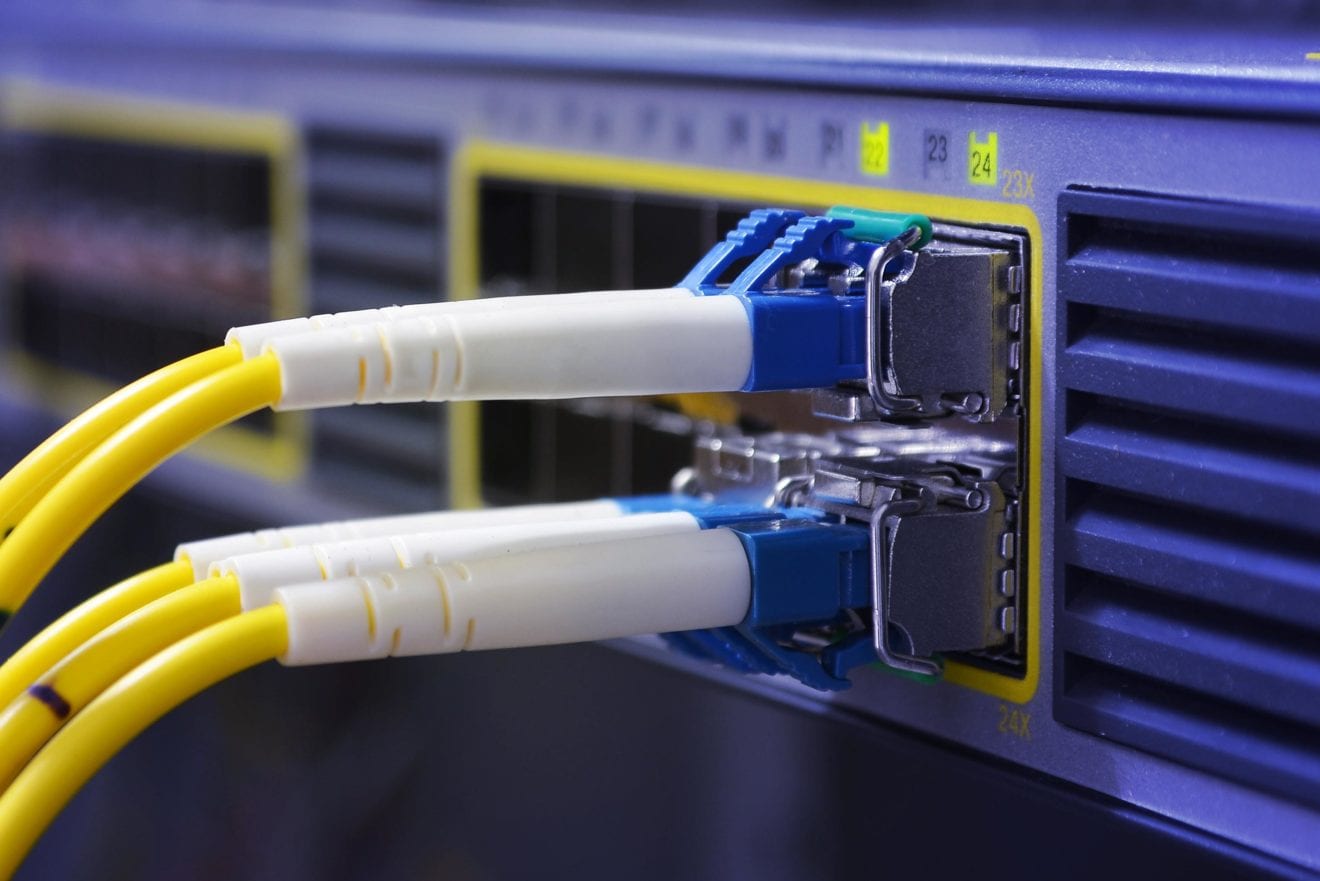
    The Malaysia-Cambodia-Thailand (MCT) cable system was designed and deployed by Huawei Marine for Cambodia’s EZECOM, Telekom Malaysia and Symphony Communication of Thailand.

    The 1,300km cable system uses 100Gbps technology, and will connect to other submarie cable systems, including the Asia-America Gateway (AAG).

    Speaking at the launch of the system, EZECOM CEO Paul Blanche-Horgan said the launch is the culmination of six years of work. He said the launch of the cable will improve the security of Cambodia’s connection to the internet.

    “With this cable, we are now directly connected POP to POP, which means a much more secure connection for Cambodia. This is of great importance, as [Cambodian deputy prime minister and minister of interior] Samdech Krolahom does understand, for the context of national security as well as certain key sectors like banking.”

    Samdech Krolahom himself said that with the new cable, “Cambodia now has faster, more reliable, more affordable and, most importantly, a more secure internet connection for all.”

  • Prysmian group claims record for densest subsea cable

    Prysmian group claims record for densest subsea cable

    Cable manufacturer Prysmian Group has supplied what it says is the densest and highest fiber count subsea cable ever made.

    The company has delivered a FlexTube cable containing 1,728 optical fibers for Australia’s Superloop for the TKO Express project.

    TKO Express is a project to provide broadband connectivity between the aras of SiuSai Wan on Hong Kong Island and the Tseung Kwan O Industrial Estate data center hub on the mainland.

    The company’s and industry’s previous record was a subsea FlexTube cable with just 720 fibers from 2014.

    Prysmian Australia CEO Frererick Persson said the construction was a major logistics and engineering challenge.

    The base cable was manufactured in France, then airlifted in Australia to apply moisture barriers and aluminum tape as well as double armoring layers of wrapped steel wires to ensure the cable could withstand being buried up to five meters into Hong Kong’s sea bed.

    “It was a logistics challenge indeed. Airfreighting a drum weighing 15 tons was something that we have never done before. But we mastered it and the drum was successfully delivered to the TKO Port three days before the promised date. It has been definitely great success for both companies,” he said.

  • Gemalto to power China’s first internet car

    Gemalto to power China’s first internet car

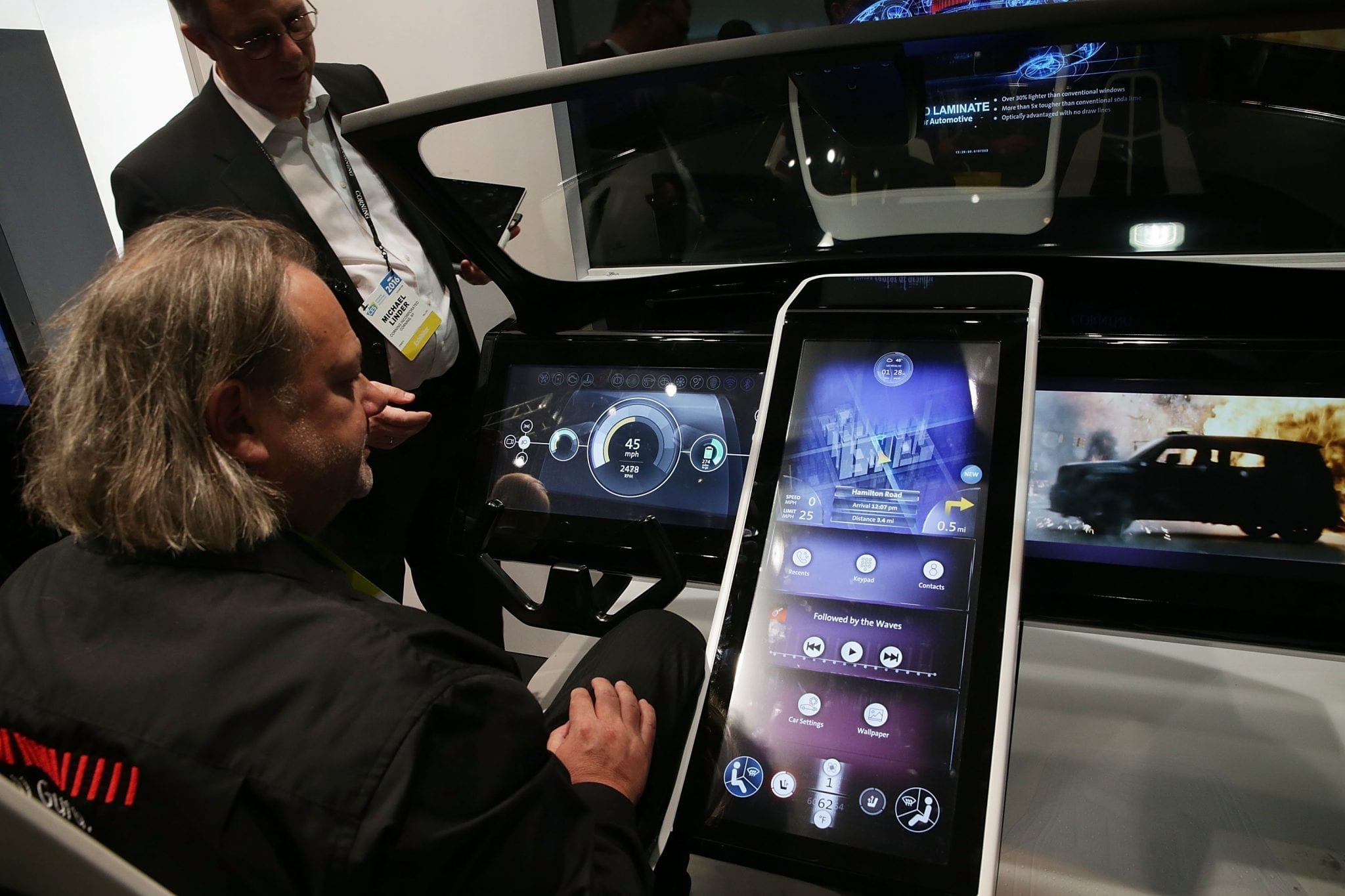
    Gemalto is working with Banma Technologies, a new joint venture between Alibaba Group and SAIC Motor, to help produce China’s first internet car the Roewe RX5.

    The RX5 leverages Gemalto’s machine identification module (MIM) — securing cellular M2M connections for industrial applications — and features advanced telematics such as Bluetooth virtual car key, locationing of the vehicle, voice-command-enabled remote control of in-car functions, and real-time road condition alerts, etc.

    The MIM is compliant with the GSMA standards and supports remote provisioning of any operator’s profile.

    “The Roewe RX5, empowered by Alibaba’s YunOS operating system, is the first mass produced internet car. It’s a breakthrough embodying years of research and technological innovation,” said Alex Shi, CEO of Banma. “It is a product that demands the most secure and reliable end-to-end connectivity.”

    Suzanne Tong-Li, president of Greater China and Korea at Gemalto, said connected cars mark the beginning of digital transformation across the automotive industry, paving the way for autonomous vehicles in the near future.

    “Our expertise and global experience, combined with tried-and-tested secure connectivity solutions, put us in a sweet spot to help car manufacturers create smarter and more connected vehicles,” said Tong-Li.

    The Chinese car market is currently the largest and fastest-growing in the world. In 2015, foreign and domestic car makers sold a total of 21.1 million passenger cars, up by 7.3% compared to 2014.

    For 2016, the local connected car market is expected to generate a substantial revenue of $7.7 million.

    With an estimated compound annual growth rate of 45%, this market is potentially worth up to $33.9 million by 2020. Moreover, connected car penetration in China is projected to triple from 4.8% to 18.1% over the same period.

  • Vietnam’s internet environment ranked 32nd in the world

    Vietnam’s internet environment ranked 32nd in the world

    The country is number one in the world for local content, but scores poorly on internet education.

    A new index that measures a country’s internet for its availability, affordability, relevance of content and public access has found that Vietnam is doing better than more than half of the world.

    The 2017 Inclusive Internet index compiled by the Economist Intelligence Unit assessed 75 markets on how they enable the adoption and beneficial use of the internet.

    Vietnam stands in 32nd place overall for internet availability, affordability, relevance and readiness.

    The country stands above its Southeast Asian neighbors Indonesia and the Philippines, but far behind Malaysia, Thailand and the number 1 position holder Singapore.

    It performs “relatively strongly” in terms of relevance, with a global ranking of 18th out of 75, supported by a top score in local content.

    Many non-English-speaking markets have made considerable progress in ensuring that domestic internet users have content available to them in their country’s primary language, said the Economist.

    Vietnam is among 13 markets tied for first place in the local content category, along with China, Japan and Russia.

    But the country scores low in terms of internet readiness due to limited support for digital literacy and web accessibility, based on the index. Vietnam’s education and preparedness for internet use ranks 63rd worldwide.

    Availability ranks 40th worldwide with a high score for quality, but network infrastructure is poorly developed.

    Its affordability ranks 32nd with a top score for fixed-line monthly broadband costs.

    More than 49 million Vietnamese people, or more than half of the country’s population, are online.

  • Indonesia launches Telkom 3S satellite successfully

    Indonesia launches Telkom 3S satellite successfully

    The Indonesia’s biggest telecommunication company Telekomunikasi Indonesia (Telkom) has successfully launched its Telkom 3S satellite from Arianespace’s spaceport in Kourou, French Guiana, at 6.39 p.m. on February 14 local time or Wednesday at 4.39 am Jakarta time.

    The US$215 million worth satellite carries 24 C-band, eight extended C-band, and 10 Ku-band transponders, which intends to provide high-definition television services, faster mobile communications and Internet applications across the sprawling archipelago of over than 17,000 islands.

    “With Telkom 3S, Telkom will have a total of three satellites. The launching intends to increase the coverage since Telkom 1 and Telkom 2 has the same coverage with Telkom 3S. The reason is that our capacity is not enough; we still rent [transponders] from other countries,” Telkom’s president director Alex J. Sinaga said.

    Telkom 3S will first travel to 135.5 degrees east for testing purposes; then it will reach the final orbital position at 118 degrees east. The US$215 billion worth satellite is fitted with 24 C-band, eight extended C-band and 10 Ku-band transponders.

    Alex said that it would take ten days from the satellite launched until it could reach 135.5 degrees orbital position for testing purposes. After that, the spacecraft would be moved one degree a day to reach its fixed orbital position at 118 degrees east, he added.

    Top executives from PT Telekomunikasi Indonesia including president director Alex J. Sinaga (center), chief technology officer Abdus Somad Arief (second from right) and satellite project head Tonda Priyanto (right) pose after the successful launch of Telkom 3S on Tuesday. The satellite was launched according to plan at 6.39 p.m. from Kourou, French Guiana.(JP/Winny Tang)

    Arianespace has successfully orbited two satellites: Telkom 3s for Telkom Indonesia, together with SKY Brasil-1 for the operator AT&T/ DirectTV.

    “Arianespace is delighted to announce that SKY Brasil-1 and Telkom 3s have been separated as planned on the targeted geostationary orbit,” Stéphane Israël is the Chairman and CEO of Arianespace said in the satellite viewing site named Jupiter control room on Tuesday night local time.

    Replacing the position of Telkom 2, the Telkom 3S, which has a lifespan of 15 years, will cover Indonesia and a part of neighboring Malaysia.

    Apart from Indonesia, other countries, such as Brazil, Mexico and other South American countries, have also launched their satellites from the country.

  • Telkom’s $250m satellite to better connect Indonesia’s islands

    Telkom’s $250m satellite to better connect Indonesia’s islands

    Close to the equator, French Guiana, a scarcely populated country with only 158,000 inhabitants, is regarded as an ideal place to launch satellites. Mostly covered by equatorial forest, the South American country provides a stable climate, as well as invulnerability to earthquakes and hurricanes. Lying just over 500 km north of the equator, Kourou provides an advantage for satellite launches, because the earth’s spinning boosts the propulsion of the rocket taking the satellite into space.

    In this part of Guiana, where a joint French and European spaceport has been built, Indonesia’s biggest telecommunication company Telekomunikasi Indonesia (Telkom) is set to release its latest satellite into space early in the morning of Feb. 15, Jakarta time. Called the Telkom 3S, the firm’s third satellite, which costs up to Rp 3.33 trillion (US$250 million), will provide high-definition television services, faster mobile communications and internet applications across the sprawling Indonesian archipelago of more than 17,000 islands, reaching primarily to the most remote areas.

    This will be enabled by new technology, high-frequency Kuband transponders, which will cut installation time and allow faster connections.

    “Unlike Telkom 1 and Telkom 2 Telkom 3S has Ku-band. The benefit is that the dishes needed to receive signals are smaller,” Telkom satellite project head Tonda Priyanto said on Sunday in Kourou.

    Indonesia has long struggled with poor information and communication technology infrastructure despite the fact that many of its citizens are already highly tech-savvy.

    The current administration kicked off late last year its ambitious Palapa Ring project in a bid to connect all areas nationwide through its fiber-optic network.

    However, only around one third of Indonesia’s area can be covered by terrestrial communications systems, leaving the rest to be linked through satellite systems.

    A McKinsey report released last September revealed that Indonesia could realize growth of an estimated 10 percent in the gross domestic product (GDP), equivalent to $150 billion, by 2025.

    “The need for satellite technology is absolute in Indonesia. Meanwhile, the supply is still low,” Telkom chief technology officer Abdus Somad Arief recently said.

    Overall, the Telkom 3S satellite will carry 49 transponders, adding to the 140 transponders that Telkom currently operates through its two orbiting satellites.

    Satellite builder Thales Alenia Space has handled the design, testing and in-orbit delivery of the satellite, while the satellite launch company Arianespace will be in charge of releasing the satellite into space.

    During the planned launch, Telkom 3S will be positioned at 118 degrees east, to replace Telkom 2. Telkom 2, which still has a life span of about four years, will be moved to another orbital position.

    In response to the satellite launch, Communications and Information Minister Rudiantara said the Telkom 3S satellite would definitely help meet the demand for better network quality in Indonesia.

    “I think that even if the government begins launching its own satellites, we will still be at a deficit even up to the year 2023,” he said. “What the government can do in the meantime is to give satellite lending rights to local companies to avoid dependence on foreign ones.”

  • APAC widens lead for average broadband speed

    APAC widens lead for average broadband speed

    Asia-Pacific further increased its lead in the fourth quarter in terms of the average bandwidth of residential broadband services, as well as the best value for money in terms of cost per megabit, according to Point Topic.

    The research firm said average bandwidth in the region jumped 28% year-on-year during the quarter to 419Mbps, well ahead of the global average of 118Mbps.

    Globally, the average monthly cost for residential broadband services declined by $2 to $98. Costs have been decreasing for several quarters. In APAC by comparison, the average monthly cost is roughly $50.

    The 118Mbps global average bandwidth provided to residential subscribers was up from 112Mbps in the previous quarter, in a result Point Topic attributes to the accelerated rollout of Docsis 3.1 cable networks capable of 1Gbps speeds.

    The global average price per Mbps accordingly fell to $0.83 by the end of the Q4, from $0.89 at the end of the previous quarter. The average cost per Mbps of a copper connection reached $7.07, compared to $0.58 for cable and $0.45 for fiber.

  • Half the world is now online

    Half the world is now online

    Internet penetration increased by 10% in the last 12 months to hit 3.773 billion, or 50% of the world’s population, according to a report from social media management platform Hootsuite and social media agency We Are Social.

    The report also showed that global social media use has increased by 21% in the last 12 months, reaching 2.8 billion users globally.

    Another finding is that mobile social media use has increased by 30% year-over-year to surpass 2.5 billion users globally, with 91% of social media users accessing social from mobile.

    In APAC, mobile data traffic leads significantly over other regions, with 4.12 billion gigabytes consumed, compared with 1.24 gigabytes from North Europe, Middle East, and Africa.

    Social media growth rates increased by over 50% year-on-year. More than 1.5 billion people across APAC now use social media on a monthly basis, 95% of whom access social via mobile devices – the highest ratio in the world.

    As a result, organizations in APAC should plan to transform their communications strategy to increase customer engagement and real-time interaction across the customer journey.

    “Half of the world’s population is now online, which is a testament to the speed with which digital connectivity is helping to improve people’s lives,” We Are Social’s Simon Kemp said.

    “Given this latest data, it’s probably time for us to stop referring to social as ‘new media’, and integrate it more seamlessly into our day-to-day activities.”

    The report compiles data from the world’s largest studies of online behavior, conducted by organizations including GlobalWebIndex, GSMA Intelligence, Statista, and Akamai.

  • South Korea’s Race To 100% Internet Access

    South Korea’s Race To 100% Internet Access

    The proliferation of smartphones in the hands of the entire population — but mostly the elderly and children — are the main cause of these rising internet implementation rates. It’s been reported that senior citizens are one of the larger user groups surfing the web. Dubbed “silver surfers,” those above the age of 60 are mainly using the internet as a means of communication in instant messaging apps.

    From map navigation to shopping, banking, cloud usage and more, nearly every connected area imaginable is rising in South Korean user activity. Data shows three-fourths of respondents were utilizing maps, and over half were playing online games three to four times per week. Of particular interest is the popularity of instant messaging, as survey results show 88.3 percent are using some form of a messenger app.

    Now, although internet connectivity is normally seen as a good thing, there’s always a not-so-shiny side. It was found that 99 percent of respondents go online at least once per week, where they spend an average of 14.3 hours. Teenagers have shown signs of internet addiction, and parents are now enrolling their children in rehab centers for treatment. Given our world’s continual increase in connected devices and services, receiving help for this particular type of addiction may be a very tough road ahead for us all.

    As more people get online to communicate with one another, we just may see internet addiction rehab centers popping up all over.

  • Indonesian govt to embrace IoT

    Indonesian govt to embrace IoT

    By 2019, 20% of local and regional governments in Indonesia will use IoT devices to turn infrastructure like roads, street lights, and traffic signals into assets instead of liabilities, IDC predicts.

    This year, however, it said 90% of Indonesian cities will fail to take full advantage of smart city data and digital assets due to a lack of process, project management, and change management skills.

    “In Indonesia, digital transformation is still not adequately represented within the enterprise, and this disparity in leadership will lead towards a delayed response towards market changes that will adversely impact business,” IDC Indonesia country manager Sudev Bangah said.

    Timing is critical, and archaic thinking of riding out trying economic times is no longer relevant and should be addressed with process-led innovation.”

    These insights are among the top technology predictions announced recently by IDC Indonesia at the IDC FutureScape Media Briefing.

    The research firm highlighted that digital transformation will attain macroeconomic scale over the next two to three years in the country, changing the way enterprises operate and reshaping the global economy. IDC calls this as the dawn of the “DX Economy.”

    “As digital transformation reaches macroeconomic levels, a DX economy will emerge and will become the core of what industry leaders do and operate,” IDC Indonesia research manager for consulting Mevira Munindra said.

    “Essentially, to succeed, Indonesian enterprises must begin to think of the relevancy of their business in 10 years, and how they should react in the face of disruptive forces.”

    In the enterprise sector, IDC’s predictions are as follows:

    1. By 2019, 50% of IT organizations will create new customer-facing and ecosystem-facing services to meet the business DX needs.
    2. By 2018, lack of vision, credibility, or ability to influence will keep 80% of IT executives from attaining leadership roles in enterprise DX.
    3. By 2020, Indonesian firms will use open innovation to allocate expertise to 15% of new projects, aiming to increase their new product introduction success rates by over 50%.
    4. By 2020, nearly 20 percent of operational processes will be self-healing and self-learning — minimizing the need for human intervention or adjustments.
    5. By 2018, online brand ambassadors and social media influencers will have more marketing power than traditional digital advertising, yet this will subside through 2019 and beyond.
    6. By 2019, digital transformation investments will double, drawing funds away from store capital and profoundly changing the retail industry.
    7. By 2019, only 30% of manufacturers investing in digital transformation will be able to maximize the outcome; the rest will be held back by outdated business models and technology.
    8. By 2019, cloud adoption will reduce infrastructure spend by 25% among top-tier banks.
  • Vietnam’s notorious internet cable AAG finally back up to full speed

    Vietnam’s notorious internet cable AAG finally back up to full speed

    Out of the three undersea internet cables that crashed in January, one still remains adrift. The repair work on the notorious Asia America Gateway (AAG) undersea cable system was completed on Thursday, quoting service provider CMC Telecom.

    The same day, another service provider VNPT Telecom confirmed that the rupture-prone AAG is back up to 100 percent of its capacity, just in time before the Lunar New Year holiday.

    In early January, the AAG and two other internet cables, the Intra Asia (IA) and the newly launched Asia Pacific Gateway (APG), all experienced problems and were subsequently shut down.

    The APG was fully recovered on January 23 while the other is expected to be fixed by February 5.

    The AAG is well known to internet users in Vietnam for its frequent ruptures, which even inspired internet memes blaming the issues on “sharks.”

    In 2016 alone, it ruptured three times – in March, June and August – heavily affecting outbound traffic.

    Vietnam has five submarine cable systems. The AAG was connected in November 2009 with a length of over 20,000 kilometers and a design capacity of 2 terabit/second, directly connecting Southeast Asia with America.

    The latest addition is the recently broken and now fixed APG Submarine Cable. It began operations in late December and was officially launched on January 3. The cable cost $450 million and has a design capacity of more than 54 Tbps.

    In addition to submarine cable systems, Vietnam has a land-based system with a capacity of 120 gigabit/second that goes through China, and there are plans to build another one.

  • Telkom Ready to Face Google Balloons in Indonesia

    Telkom Ready to Face Google Balloons in Indonesia

    PT Telekomunikasi Indonesia Persero (TLKM) or Telkom signals it is ready to block the expansion of Google’s hot air balloon as part of Google’s Project Loon across Indonesia, by increasing the number and capacity of its satellite.

    “We continue to add satellites to expand internet services that reach remote rural areas. So, do not let the balloon (Google Loon) over Indonesia,” said Director of Network and IT Solution Abdus Somad Arief.

    Abdus said in addition to continuing to build fiber-optic network infrastructure, Telkom also utilizes satellite technology to equalize communication access across the country. Moreover, he added, Indonesia with 17,000 islands, is unlikely to be completely reachable with optical cable network, Telkom’s satellite then should continue to be developed.

    Still cited by Antara, it is known around mid-2015, Google actively expanded in a number of countries, including Indonesia, bringing Internet networks in remote locations which are difficult to access with optical cable infrastructure, with balloons that acts like a satellite.

    The balloons used in the project fly with solar power, the company plans to expand its worldwide internet network coverage by creating Wi-Fi networks in the air using the balloons.

    Telkom’s efforts to block the Google Loon are reflected from the company’s planned launch of Telkom 3S Satellite scheduled on February 15, 2017, at around 4:39 AM, with launch site at the Guiana Space Center of Kourou, Guyana, France.

    Telkom 3S satellite will occupy an orbital slot of 118 degrees of east longitude which is above Kalimantan and currently is occupied by Telkom-2 satellite.

    With satellite’s active period about 15 years since its launch, Telkom 3S has a capacity of 49 transponders, consisting of 24 C-band transponders (24 TPE), 8 extended C-Band transponders (12 TPE), and 10 Ku-band transponders (13 TPE).

    “If Telkom 3S satellite [is launched], Telkom has three active satellites orbiting, i.e., Telkom 1, Telkom 2, and Telkom 3S Satellites,” he said.

    Abdus added Telkom has experienced in satellite management for 40 years; it is the time to make satellite with its self-produced technology. For Telkom 3S Satellite, in terms of local content, Telkom is no longer user, but it is capable of build its own.

    Telkom since 1976 has been managing satellite, Telkom through a center of excellence, especially in satellite field is ready to take part to build the nation.

  • Private cloud can cut IT costs by 25%

    Private cloud can cut IT costs by 25%

    Most large enterprises can save at least 25% on their IT costs over five years by migrating to a private cloud from a legacy IT environment, according to financial analysis from by Nokia.

    The analysis, known as the Nokia Enterprise Private Cloud TCO Model, also demonstrates that enterprises can expect to break even on their private cloud investment in less than three years.

    Advocates of enterprises moving to private cloud have typically focused on the operational and business benefits that this approach can offer, in terms of flexibility, agility and the ability to scale quickly.

    The analysis underlying the Enterprise Private Cloud TCO Model is among the first available in the market that exclusively explores the question that is most critical to IT managers – what are the cost benefits of this move?

    The model shows that the common assumption that private cloud is too difficult or costly to adopt is wrong, and that large enterprises should make the move directly to private or public-private hybrid cloud because it utilizes off-the-shelf components and is less expensive.

    The analysis began with an existing budget for a representative legacy IT environment, and contrasted that with the requirements of a shift to a private cloud model and associated costs.

    More specifically, the analysis takes the overall operational budget of the enterprise data center (eliminating costs that will be largely the same in either scenario such as facilities costs – power, rent, air conditioning/heating), and then provides a high-level breakout by the software or operational tasks performed. The breakout was then used to calculate potential cost impacts – both increases and decreases – for a cloud environment.

    Nokia’s financial model is based on a private cloud, or private-public hybrid cloud architecture that can be built at any large enterprise today, incorporating commercial components from a variety of vendors as well as open source components including OpenStack cloud management software.

    The model also assumes that the cloud architecture is one that does not require ‘forklift’ replacement of the IT environment, but instead sits on top of the existing IT infrastructure as an overlay. As a result, it also assumes a deployment strategy that would minimize changes to day-to-day IT operations.

    Leading industry analyst firm IDC validated the model overall, including the ranges of potential increased and decreased costs by category.

    The cost savings identified by the model were calculated using the most conservative assumptions available, based on the needs of highly regulated industries such as finance and healthcare. Further, increased costs, such as the costs of migrating legacy applications to the cloud, were calculated at the upper end of a possible range of values. Therefore the overall 25% cost savings can be considered a minimum baseline – actual savings in practice would likely be considerably higher.

  • How new network technology helps Singapore’s traditional retailers to cut expenditure

    How new network technology helps Singapore’s traditional retailers to cut expenditure

    While Internet-based competition has created serious issues for traditional retailers, the Internet is now benefiting established retailers by becoming a conduit for substantially reducing their computer network costs while offering increased flexibility, reliability and new options for servicing customers.

    Lower communications costs are helping traditional retailers to shrink the advantage gained by digital retailers whose go-to-market strategies have significantly lower operational expenses. These on-line traders have eliminated costs such as store rental, store staffing and store connectivity from headquarters.

    In response, conventional retailers are developing strategies that leverage their store and staffing investments to provide ‘value added’ in-store experiences that digital retailers are unable to match. Their tactics include introducing upgraded customer loyalty schemes and customer knowledge programs, better demonstration facilities, improved customer tracking, and increased investment in online customer service and sales training.

    Compounding the issues of raising the capital expenditure to invest in these strategies, established retailers are finding that their new IT-based solutions are increasing the volumes of data being sent to and from each of their stores, inevitably resulting in higher monthly costs.

    The answer lies in new technology – the software-defined wide area network, or SD-WAN.  This allows organizations to replace or augment their present networks, which run on a technology called multiprotocol label-switching (MPLS), with the far less expensive commodity Internet links. The cost advantages can be as high as 60 percent.

    SD-WAN is the latest iteration of data communications, which began with dedicated bandwidth via copper cable through telephone exchanges. In the early 2000s, these ‘pipes’ were replaced by frame relay technology which delivered greater flexibility and more bandwidth and lower costs. In turn, frame relay was replaced by MPLS, further reducing cost.

    Now SD-WAN is becoming the next stage of the evolutionary process, offering retailers a spectrum of technical and monetary benefits. It can help with most of the initiatives that traditional retailers are introducing to combat Internet-based retailers.

    The traditional retailers are working to create a compelling in-store experience, a key area where Internet sales organizations are unable to compete. Free Wi-Fi and the tracking of customers as they move through the store are projects that can benefit from inexpensive and flexible Internet-based networks, rather than MPLS networks. Using the Internet via SD-WAN, a store that wishes to demonstrate 4K television to a customer can simply download the demo from head office without delay or incur prohibitive costs.

    A marked trend among conventional Singapore retailers is to retain a brick-and-mortar presence while conducting business around an online e-store. Omni-channel retailing entails the maintenance of a seamless experience and connectivity across channels from physical stores, the mobile app and the website to drive sales.  Retailers must be prepared to handle the increase in customer data and improve their store-to-store communications.

    Loyalty plans are a trend at present, as stores reward good customers. Contactless payments such as e-wallet services like Apple Pay which was introduced last year in Singapore as well as mobile payments are changing the way traditional retailers collect payment.

    As these initiatives became globalized we expect a trend to their becoming cloud-based solutions, with data on customers stored in remote data centers. At present, most traditional retailers are using expensive MPLS bandwidth to reach their data centers.
    Many lack the network capacity to minimize computer equipment in each of their stores and do not have the option of administering their networks centrally.

    By switching to SD-WAN these retailers can gain low-cost Internet communications to all their branches, enabling them to run their software-as-a-service (SaaS) solutions more efficiently and cost-effectively.

    Another issue that SD-WAN can help resolve arises among retailers that need to backhaul all their network traffic, including cloud applications, to the data center then out to the Internet and back. This infrastructure is a source of network bottlenecks and poor application performance. SD-WAN is able to make this an all-broadband route, savings substantial costs, and increasing traffic speed.

    The rise of SD-WAN

    So how are Singaporean retailers and other organizations responding to the emergence of SD-WAN technology? We saw 2016 as the year of proof-of-concept. Organizations are looking to add branch or store locations incrementally by taking advantage of a localized SD-WAN solution initially and slowly, over time, migrating toward full SD-WAN coverage.

    Most have long-term contracts in place with telecoms providers for their communications links, so we are unlikely to see full savings of the new technology for two or three years as contracts come up for renewal. Singapore’s retailers can use the intervening time to proof SD-WAN and make sure it works optimally. When the time comes to retire their MPLS links, they will have a deep knowledge of the new technology and be well versed to appreciate the differences in cost and flexibility. They can switch over safely knowing it delivers the goods.

    Initially, we expect to see smaller retailers going 100 percent with SD-WAN, while larger organizations with more applications in their data centers will use a hybrid MPLS/SD-WAN setup. In this architecture, they would use MPLS only to exchange secure information between a store and the in-house applications at head office.

    Some are already leveraging SD-WAN to bring their idle Internet links to life, adding broadband Internet as part of a hybrid MPLS-Internet network, or even ditching MPLS and implementing dual broadband connections to the branch.

    The proven SD-WAN capabilities, including dynamic path control, zero-touch provisioning and path conditioning, which delivers forward error correction and real-time packet order correction, make Internet connectivity simple to deploy and manage and deliver retailers a more cost-effective means of achieving 99.99 percent service availability.

    Offerings from leading vendors such as Silver Peak are already linking users securely to their applications via the most cost-effective source of connectivity available. The flexibility of SD-WAN allows retailers to augment or replace MPLS with any combination of transport connectivity, including broadband, DSL, LTE and more. Its visibility and control allow network administrators to see and control all applications, and encrypt all WAN overlay traffic with AES-256 for maximum security.

    An SD-WAN-enabled architecture resolves the issues of high cost and complex MPLS; shows clearly what cloud applications are consuming a network; and puts an end to users complaining about poor application performance over distance.


  • Alibaba Cloud to help boost Singapore’s digital economy

    Alibaba Cloud to help boost Singapore’s digital economy

    Alibaba Cloud the National University of Singapore (NUS), and EZ-Link, Singapore’s largest issuer of Contactless e-Purse Application (CEPAS) compliant cards, have teamed up to boost Singapore’s smart computing and data-driven capabilities.

    The three organizations have signed a memorandum of understanding aimed at bolstering the University’s data science curriculum and paving the way for a pilot data analytics project with EZ-Link.

    The collaboration is also aimed at helping build local IT skillsets, meet enterprise demands and support the research and development of advanced technologies in the big data era.

    Ethan Yu, Vice President of Alibaba Group and General Manager of Alibaba Cloud Global said, “Singapore has been a pioneer in fostering innovation and technological disruption in Asia, and we are proud to contribute to the nation’s development through our partnership with NUS and EZ-Link.

    By leveraging the expertise of academia, the government and enterprises, we intend to raise the bar in nurturing talent, business and communities to reach new frontiers of the digital economy.”

    Alibaba Cloud will contribute $500,000 in cloud credits towards the use of its cloud platform and data centres by students and researchers from NUS for academic and research purposes. IT experts from Alibaba Cloud will also offer hands-on lessons on the use of Alibaba Cloud’s platform for NUS staff and students.

    In addition, Alibaba Cloud and NUS will collaborate in the areas of cloud computing, big data analytics, artificial intelligence, cybersecurity, quantum computing, and interactive digital media, as well as identifying opportunities for joint research projects and information exchange.

    “NUS contributes to Singapore’s vision of becoming a digital economy through our University’s strengths – creating value through fundamental and applied research, and training the next generation of digital talent,” NUS deputy president for research and technology  Professor Ho Teck Hua said.

    “By working with Alibaba Cloud, a global cloud leader, we can tap into its extensive ecosystem and technology capabilities for these efforts. The partnership with Alibaba Cloud and EZ-Link further demonstrates the close collaboration between academia and industry in solving real-world problems, and will help contribute towards a future, cashless Singapore.”

    Alibaba Cloud and NUS are currently working with EZ-Link to analyze card usage patterns across the EZ-Link card schemes, service touch points, and customer segments to improve customer experience and create better services via real-time insights.