Tag: Investment

  • Trading house Itochu taking on Alibaba and JD.com

    Trading house Itochu taking on Alibaba and JD.com

    Itochu and two partners are investing roughly 7.6 billion yen ($67.6 million) in an e-commerce venture selling Japanese goods to the Chinese market in hope to enhance its own forays into China’s internet sector.

    The Japanese trading house is investing around 4 billion yen into the Tokyo-based startup Inagora, with telecom KDDI and financial services company SBI Holdings providing the rest.

    Itochu previously invested around 100 million yen in the company and will now hold a roughly 20% stake, making it the second-largest shareholder behind founder and CEO Weng Yongbiao.

    Founded in 2014, Inagora operates Wandou, a Chinese-language e-tailer with some 3 million users.

    The site boasts around 40,000 offerings, with a focus on cosmetics, clothing and foods from brands including Japanese fashion label Samantha Thavasa, Swiss lingerie maker Triumph International and Japanese food producer Ajinomoto.

    China’s cross-border e-commerce market is growing rapidly. The market for goods from Japan is seen nearing 2 trillion yen in 2020. The country’s overall e-commerce leaders currently have a strong grip on the cross-border segment: Top player Alibaba Group Holding commands a roughly 40% share, while second-place JD.com and major internet player NetEase control shares in the 10-20% range.

    Itochu has already taken its first step into the cross-border market, launching a high-end site in spring 2017 with Chinese state-owned conglomerate Citic, a major partner.

    But the trading house has realized breaking Chinese heavyweights’ grip will require savvy marketing that can respond nimbly to consumer tastes — hence its turn to Inagora, which excels at creating videos highlighting the appeal of Japanese products for local consumers.

    The trading house will supply products for Inagora’s site through units including food wholesaling arm Nippon Access and Edwin, Japan’s largest maker of jeans. In addition, Itochu will have the site carry local specialty items from across Japan stocked by convenience store chain FamilyMart, another member of the Itochu group.

    Itochu Logistics, with over 100 locations in China, will also cooperate with Inagora, which plans to add warehouses to its own distribution network using money from the latest round of investment.

    The startup will also hire more sales staff to encourage companies to list their products. Forays elsewhere in Asia are on the agenda as well: The company plans to bring its business to Taiwan, Malaysia and elsewhere in 2018.

    Inagora anticipates around 15 billion yen in transactions this year, six times the 2016 level. With help from Itochu and others, the startup targets 100 billion yen in transactions in 2019 and 176 billion yen a year later.
  • VIP to invest in Australia

    VIP to invest in Australia

    A Chinese online shopping giant has arrived in Australia this week to unveil its new Sydney distribution centre.

    VIP.com is one of the largest players in China’s e-commerce space with total orders for the third quarter of 2017 increased by 23 per cent to 74.0 million from 60.1 million in the prior year period.

    “Australia is already a very strong market for VIP.com. We are looking to procure about AUD 500 million of Australian goods in FY18 and we expect to double that figure the year after,” said Hillary Wang, VIP.com’s head of global buying.

    “We have highly effective partnerships with many Australian businesses and have become their primary sales channel in China. We have serious aspirations to become the number one platform in China for many more of our suppliers’ businesses.”

    With Australian brands highly sought after in China – based on consumer’s perceptions of trust and value – VIP recently partnered with Australia’s largest food manufacturer, Nestle,  to introduce Australia’s Uncle Toby’s, Allen’s confectionery and Soothers trademarks to China.

    “We only deal with brand owners directly or through their authorised distributors. Authenticity is critical to building brands and Chinese shoppers know that VIP.com delivers that,” Wang said.

    VIP stated its female skewed audience (+80 per cent) and ability to customise the recommended range of products to shoppers, based on demographic and purchase history, give it major point of differences to its Chinese e-commerce competitors.

    “We are pleased to be investing in Australia,” said Wang.

    “Chinese consumers trust Australia’s production standards and quality of its natural resources.

    “Australia is our number one import market for nutrition and food and beverage, and whilst we have made much progress, we have plans for further significant growth. This trip is about deepening our partnerships with existing suppliers and inviting participation from potential new partners.”

    The online retailer will invest in local infrastructure to enable growth in trade between Australian businesses and its accessible database of 300 million Chinese shoppers.

    Investment is being channelled into supply chain capability and people in Australia to facilitate trade.

    “In discussions with our Australian partners, we are often told the Australian market is a highly contested and offers relatively low growth,” said Wang.

    “We are happy to bring a good news story to these businesses, the opportunity to share with Chinese shoppers brands that are rich in history, made with the best ingredients to the highest standards, by hard working Australians. These are exciting times.”

  • Deutsche Bank to advice investors to avoid bitcoin

    Deutsche Bank to advice investors to avoid bitcoin

    Deutsche Bank has joined the ranks of those warning about the virtual currency bitcoin as an investment.

    “I would simply not recommend this to the everyday investor,” Ulrich Stephan, chief strategist at Germany’s largest lender, said on Wednesday.

    Stephan said that fluctuations are too great and regulation too scant. He noted that German investors were reluctant to invest in stocks, but were generating hype about bitcoin.

    Bitcoin smashed through the $8,000 level for the first time over the weekend and traded at $8,216 at 1523 GMT on Wednesday, with many experts saying $10,000 is possible.

    An eightfold increase in the value of the volatile cryptocurrency this year has led to multiple warnings of a bubble, and institutional investors are broadly staying away.

    Retail investors, however, as well as some hedge funds and family offices, are piling in despite JPMorgan Chase & Co Chief Executive Officer Jamie Dimon earlier this year calling bitcoin a “fraud”.

    Although UBS Chairman Axel Weber urged caution on bitcoin last week, he also said there was potential for the technology underpinning it.

    “At this point, I‘m very cautious about bitcoin as an entity. I‘m much more optimistic about the underlying technology,” Weber added.

    Sweden’s central bank is one organization which is investigating the potential for digital currencies.

    “An e-krona would have the potential to counteract some of the problems that could arise on the payment market in the future when the use of cash is rapidly declining,” the Riksbank said in a report in September.

  • Singaporean auto firm ups stake in Vinamilk

    Singaporean auto firm ups stake in Vinamilk

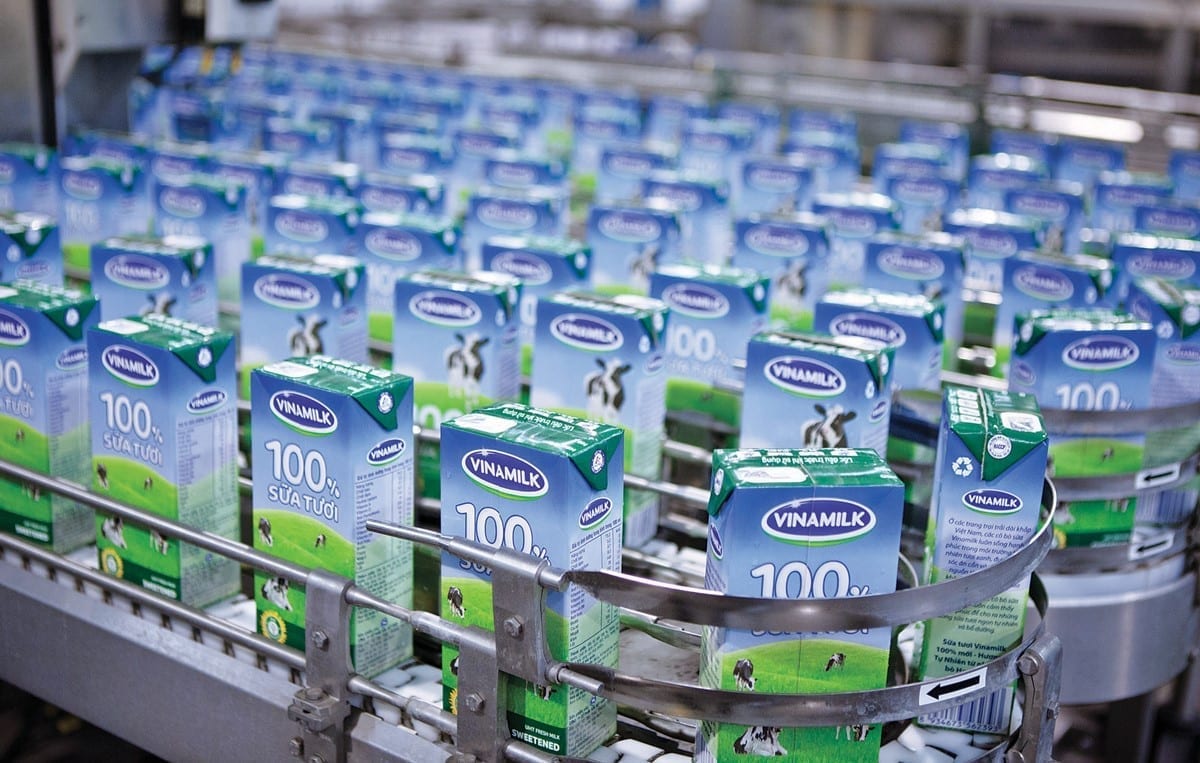
    Singapore’s biggest auto group Jardine Cycle & Carriage has bought an additional 1.1 percent stake in Vietnamese dairy firm Vinamilk, raising its current share in Vietnam’s biggest listed company to 10 percent.

    The investor bought 16.4 million more shares for VND3.1 trillion ($136.5 million) over the weekend.

    Last Monday, Jardine Cycle & Carriage spent $400 million on 48.8 million shares in Vinamilk after purchasing 48.3 million of shares for $396 million on November 10.

    The two deals gained it a 8.9 percent stake in the company, and with the latest deal it now owns 145.6 million Vinamilk shares, representing a 10 percent stake, the company announced on its website.

    Foreign investors currently hold a 56.4 percent stake in the dairy firm.

    Jardine Cycle & Carriage is now the third biggest shareholder after Singapore’s Fraser&Neave, which has a 18.74 percent stake.

    Vietnam’s State Capital Investment Corporation holds the majority share with a 36 percent stake.

    The government is trying to divest from hundreds of state-owned enterprises, including brewers Hanoi Beer Alcohol and Beverage JSC (Habeco) and Saigon Beer Alcohol Beverage Corp (Sabeco) in which it owns a combined $7.8 billion worth of shares by market value.

  • ASEAN signs free trade, investment pacts with Hong Kong

    ASEAN signs free trade, investment pacts with Hong Kong

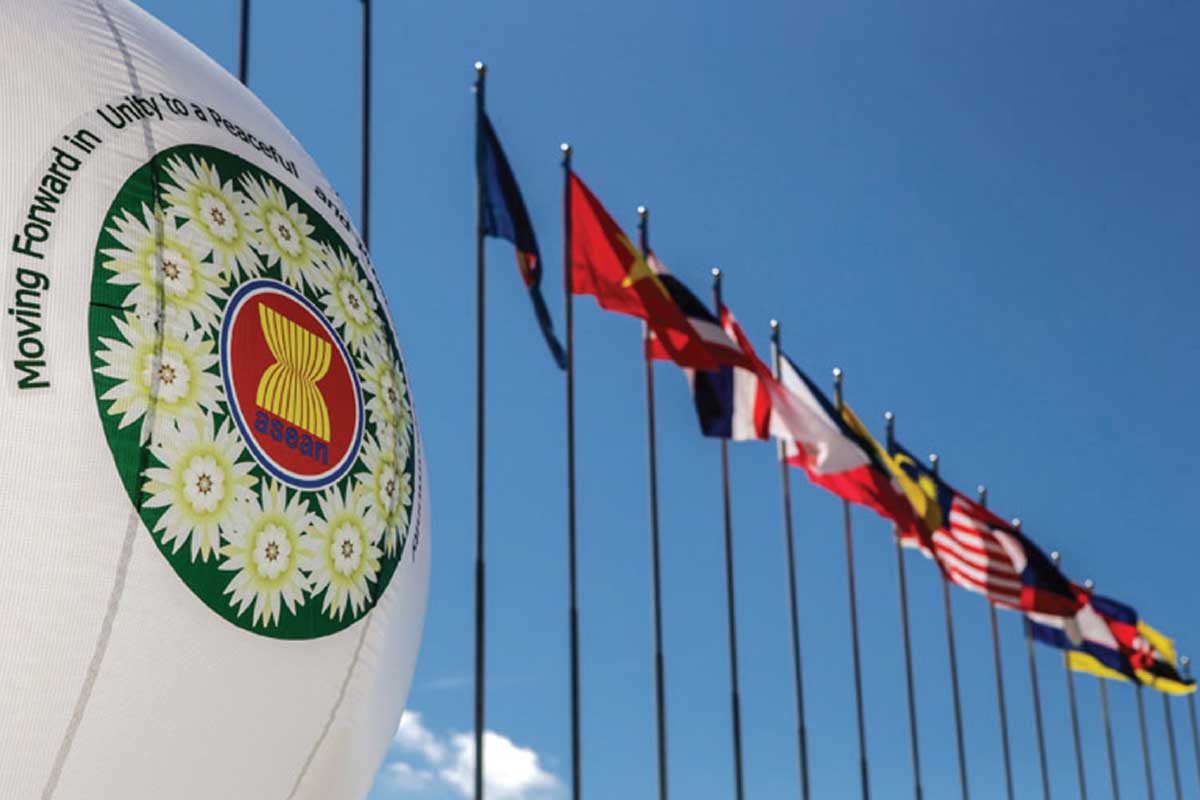
    Hong Kong on Sunday signed free trade and investment pacts with the ten-nation Association of Southeast Asian Nations, in what one of the Chinese territory’s senior officials called a “loud and clear” vote against rising regional trade protectionism.

    The pacts conclude nearly three years of talks, are expected to take effect on January 1 at the earliest, and aim to bring “deeper and bolder” integration of market access with the bloc, said Edward Yau, Hong Kong’s commerce and development secretary.

    “In the face of protectionist sentiments in other parts of the world, these two agreements are in fact a loud and clear vote from all of us here for freer and more open trade,” Yau said.

    “Hong Kong, being a free trade promoter and advocate of a strong, rule-based multilateral trading system, will continue to take this pathway, continue to do our utmost.”

    Total merchandise trade between Hong Kong and ASEAN was HK$833 billion ($107 billion) last year, official figures show. Total services trade was HK$121 billion ($16 billion) in 2015.

    The ASEAN Hong Kong China Free Trade Agreement (AHKCFTA) was signed on the sidelines of a summit of the regional grouping in the Philippine capital of Manila.

    It came after leaders attending an Asia-Pacific Economic Cooperation (APEC) summit in Vietnam agreed to tackle “unfair trade practices” and “market distorting subsidies” in a statement on Saturday that bore the imprint of U.S. President Donald Trump’s efforts to reshape the global trade landscape.

    That summit offered a contrast between the vision of U.S. President Donald Trump’s “America First” policy and a traditional consensus favouring multinational deals that China now seeks to champion.

    While Hong Kong already has one of the world’s freest and most open economies, the pacts will see many ASEAN countries gradually eliminate or slash customs duties on goods from the former British colony that returned to Chinese rule in 1997.

    Professional services are also expected to benefit, with increased investment flows, Yau added.

    The ASEAN grouping includes Brunei, Cambodia, Indonesia, Laos, Malaysia, Myanmar, the Philippines, Singapore, Thailand and Vietnam.

  • Japanese-Bruneian fund seizes investment opportunities in Indonesia

    Japanese-Bruneian fund seizes investment opportunities in Indonesia

    SBI Islamic Fund (Brunei) Limited, a joint venture between Brunei Darussalam’s Ministry of Finance and Japan’s Strategic Business Innovator (SBI) Holdings, is looking for opportunities to invest in Indonesia.

    SBI Islamic Fund (Brunei) Limited CEO Amran Mohammad said the fund would build fish processing factories in Maumere, East Nusa Tenggara, and in Aceh. The facilities would be used to process tuna to be exported to Japan.

    “The one in Aceh will be much bigger than that in Maumere. We are sealing the agreement for [the project in] Aceh,” he told The Jakarta Post during the 3rd IDB Member Countries Sovereign Investment Forum in Nusa Dua on Tuesday.

    The investment for the development of the two facilities would come from its second sharia fund totaling US$60 million.

    Both Brunei’s Ministry of Finance and SBI Holdings contributed $25 million each to the fund, while the remaining $10 million comes from the Islamic Development Bank (IDB).

    SBI Islamic Fund (Brunei) Limited’s first sharia fund worth $75 million was created three years ago and invested in Indonesia’s logistics firm Pandu Logistics, among other investments.

    However, Brunei Ministry of Finance deputy permanent secretary for investment Khairuddin Abdul Hamid said the fund was still looking for another $40 million from private investors.

    “We have already talked with some prominent parties during this forum and are still waiting for the reply,” he said.

  • Philippines gov’t to sell $596M retail treasury bonds

    Philippines gov’t to sell $596M retail treasury bonds

    The Philippines plans to sell at least 30 billion pesos ($596 million) worth of three-year retail treasury bonds to provide small investors with safe investment options, the Bureau of Treasury said on Thursday.

    It would be the second retail bond issue under President Rodrigo Duterte’s nine-month-old government, which in September 2016 raised as much as 100 billion pesos from such offering.

    “We want more Filipinos to get into the habit of investing, and become more financially aware of how their money could work harder for them,” National Treasurer Rosalia de Leon said.

    Public offering runs from March 28 to April 6, with investors given an option to earn from a minimum investment of 5,000 pesos.

    The RTBs earn a fixed interest rate based on prevailing market rates with interest coupons paid quarterly.

    The treasury bureau has tapped First Metro Investment Corp and Land Bank of the Philippines as joint lead issue managers.

    BDO Capital & Investment Corp, BP Capital Corp, Development Bank of the Philippines, China Bank Capital Corp and SB Capital Corp are joint issue managers.

  • BEI of Jayapura office opens share investment clinic

    BEI of Jayapura office opens share investment clinic

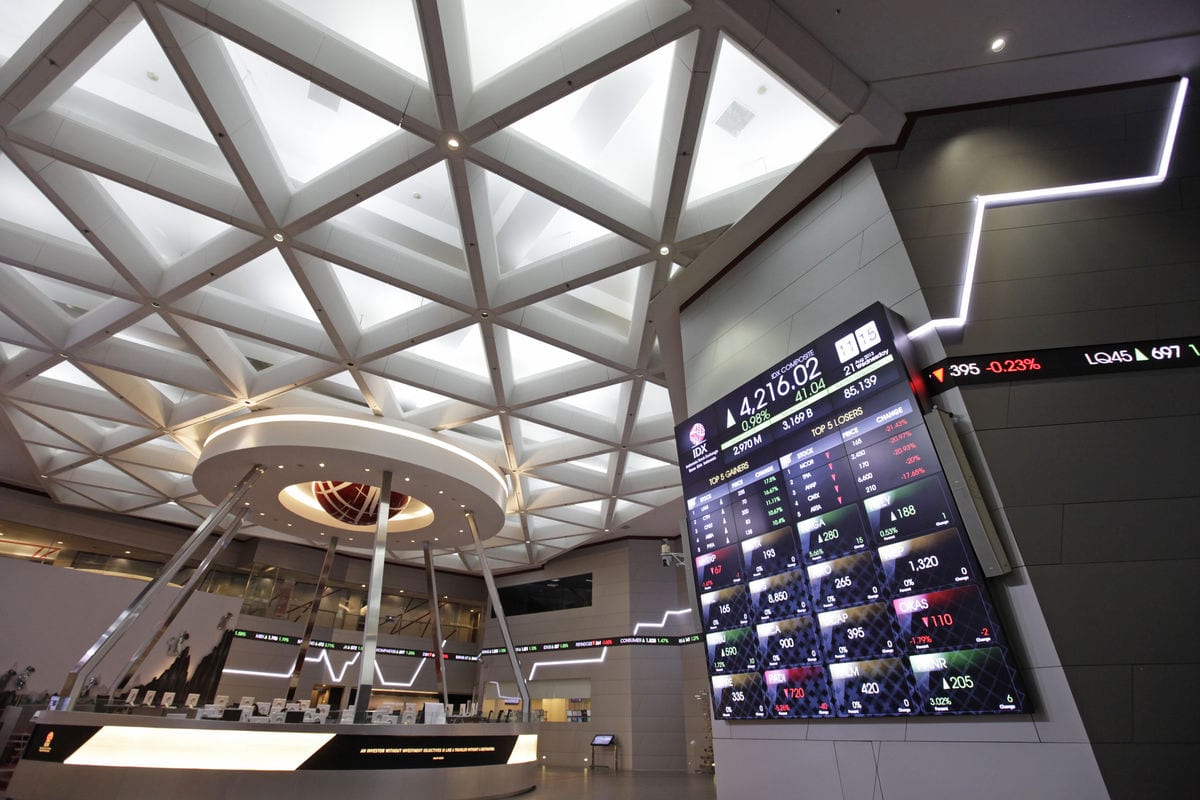
    The representative office of the Indonesian Stock Exchange (BEI) in this Papua capital city has opened a clinic class for non active registered share investors.

    “They need guidance especially as the share customers are different in type. Therefore, we open share investment class for them,” head of the BEI representative office of Jayapura Kresna Aditya Payokwa, said here on Tuesday.

    Participants are told how to buy and sell shares, and how to analyze the marker trend, Kresna said.

    “We open the share investment clinic every Monday, Wednesday and Friday . Now it is already the fifth group,” he said.

    From the class it could be seen who among the investors more active in the share trade, he said, adding a prize is given to the most active traders.

    The clinic is part of the program to promote share trading in a bid to increase the number of investors in BEI.

    By January , 2017, BEI recorded 2,391 investors , up from 1,300 investors a year earlier.

    The number of investors in Papua has continued to increase. Transactions in 2016 were valued at Rp1.3 trillion. Monthly transactions average Rp100 billion, he said.

    Many of the investors at the Jayapura representative of BEI are not active, he said.

    “Transactions in January 2017 were valued at Rp70 billion with active participants making up only 60 percent of the total number of registered investors,” he said.

    Most of the people do not understand share trading. “BEI is new for them , therefore, we need to intensify socialization,” he added.

  • Thailand invests $7.7 billion in Vietnam

    Thailand invests $7.7 billion in Vietnam

    According to the Ministry of Planning and Investment’s Foreign Investment Agency (FIA), Thailand has invested US$7.7 billion in 440 projects in Viet Nam to become the country’s tenth largest investor.

    Amata industrial zone in Dong Nai Province, where Thailand has invested in infrastructure. Foreign investment in Viet Nam grew in January.

    So far, Viet Nam has attracted foreign direct investment from 112 countries and territories, the agency says.

    Thai businesses began investing right after Viet Nam introduced policies to attract foreign investment, it says. From 2006 to 2008, Viet Nam wooed the largest investment capital from Thailand amounting to $5 billion, accounting for 21.4 per cent of the total investment from ASEAN to Viet Nam worth $23.3 billion. Investments from Thailand have focussed on processing and manufacturing industries.

    At present, Thai investors have assured investments of $7.04 billion in 205 projects in the processing and manufacturing industries, accounting for 87.2 per cent of total registered invested capital. The largest project in those industries is the Southern petrochemical complex with a total investment of $3.77 billion.

    The agency says Thai investors are now turning their attention to industrial infrastructure and retail sectors. These include a joint venture project between Amata VNPCL of Thailand and Sonadezi Bien Hoa in the infrastructure sector and a project of MM Mega Market Co, Ltd in HCM City, with a capital of $36 million, reports vneconomy.vn.

    Viet Nam is considered an important investment destination in the region in line with Thailand’s policies on promoting investment in foreign countries. This is big opportunity for Viet Nam to attract investment capital from this country, FIA says.

    Thailand is near Viet Nam on the map and the two countries have cultural similarities. They signed an agreement on encouraging and protecting investments in 1992 and to create favourable conditions for investment co-operation. Therefore, Thai investors have not faced many difficulties while investing in Viet Nam. Meanwhile, the Thailand government has also encouraged and supported Thai investors already in Viet Nam.

  • World Bank approves loan for Indonesia`s logistics sector

    World Bank approves loan for Indonesia`s logistics sector

    The Executive Board of the World Bank has approved a US$400 million Development Policy Loan for the Indonesias Logistics Reform, which will be used to improve the countrys logistics system and connectivity.

    “These reforms will help Indonesia in achieving higher inclusive growth,” World Banks Country Director in Indonesia Rodrigo Chaves said in a statement received by ANTARA here on Thursday.

    Chaves explained the US$400 million loan will support Indonesia to overcome obstacles in the supply chain, such as dwelling time and trading permits.

    The inefficient dwelling time has resulted in Indonesias logistics costs accounting for 25 percent of the total costs, while Thailand is only 15 percent and Malaysia is 13 percent.

    Currently, the cost of container shipping of oranges from Shanghai, China to Jakarta is cheaper than the cost of similar items shipping from Jakarta to Padang, West Sumatra.

    Though, the distance between the two cities in Indonesia is only a sixth of the distance between Jakarta and Shanghai.

    “Logistics efficiency will improve connectivity and provide a significant impact on the competitiveness of the country. Improved logistics can reduce the cost of goods and services flows, especially in remote and underdeveloped regions in Indonesia,” Chaves said.

    The Development Policy Loan will support Indonesia over a transition period from the commodity-dependent economy to manufacturing-based economy with high competitiveness.

    World Banks Senior Economist Massimiliano Cali added that the high cost and unreliable logistics are obstacles in improving national competitiveness.

    “Managing these problems will increase production and export, thus lifting economic growth,” he said.

    The three main objectives of this funding is increasing the performance of the ports, improving the competitiveness of logistics services and strengthening trade facilitation.

    World Banks support for the logistics reform is an important part of the Partnership Framework of World Bank Group States, which is centered on the governments priority to bring significant changes.

  • Walmart makes another big move in China

    Walmart makes another big move in China

    Walmart has made another big e-commerce investment in China.
    On the heels of launching three major e-commerce initiatives in China, Walmart will invest $50 million in New Dada — China’s largest local on-demand logistics and grocery online-to-offline (O2O) e-commerce platform.
    Walmart’s newest investment further extends its agreement with JD.com, which uses New Dada’s network to offer customers two-hour delivery on groceries ordered from Walmart stores through the JD Daojia Dada app.
    New Dada, an independent joint venture between Walmart’s Chinese partner JD.com and Dada, has more than 25 million registered customers. Providing local on-demand delivery capabilities with 2.5 million crowd-sourced deliverers across more than 300 cities in China, this new service complements the 426 stores that Walmart operates in nearly 170 cities.
    Overall, Walmart’s investment in New Dada will help the retailer target Chinese shoppers with faster delivery times in a popular, fiercely competitive online grocery market, according to a company statement.
    “All around the world, we’re creating seamless shopping experiences that bring together our stores, sites and apps to make shopping faster and easier,” said Walmart CEO Doug McMillon. “Our alliance with JD and cooperation with New Dada will enable seamless shopping to millions of customers across China.”
    Specifically, the business partners expect the combination of New Dada’s delivery network with Walmart stores to give “consumers convenient access to a wide range of high-quality goods delivered to their homes and offices in record time,” said Philip Kuai, CEO of New Dada. “We look forward to deepening our cooperation with Walmart as China’s O2O retail industry continues to evolve and grow.”
    Walmart’s next move is to double the number of its stores that offer two-hour delivery by the end of the year, the statement said.
  • Chinese Investors Consider GNC Acquisition

    Chinese Investors Consider GNC Acquisition

    GNC first popped up in Chinese towns and cities in 2011, with small stores within grocery stores, and now rumors are swirling the giant dietary supplement retailer might end up with a Chinese owner.

    The Wall Street Journal broke the news that GNC is up for sale and a pair of Chinese equity firms are among the interested parties. The journal reported any such acquisition could be worth US$4 billion, including debt—GNC’s market value is around $1.3 billion, with outstanding debt of around $1.4 billion.

    One of the prospective buyers named is Fosun Group, a Shanghai-based investment firm with holdings across insurance, financial, retail and other industries. Its motto is “Combining China’s Growth Momentum with Global Resources.” Fosun most recently bought the English football club Wolverhampton Wanderers and, through Fosun Pharmaceutical, acquired Indian pharmaceutical company Gland Pharma—a number of Chinese pharmaceutical firms are also interested in GNC.

    The other named suitor is Zhongzhi Capital (ZZ Capital), a Beijing- and Hong Kong-based asset management firm focused on media/entertainment, internet, high-end manufacturing, healthcare, financial, IT and logistics. Among its goals is to help overseas companies better penetrate the Chinese market.

    Speculation on the motivation of such firms interested in GNC to a Chinese buyer has centered on the growing trend of Chinese investors purchasing overseas vitamin and sports supplement companies to satisfy Chinese consumer demand for foreign nutrition brands in lieu of quality-challenged Chinese brands.

    Beijing-based Primavera Capital Group paid $238 million to purchase Australian nutrition contract manufacturer Vitaco Holdings in August 2016, and Binzhou, China-based Xiwang Foodstuffs Co. acquired Canadian supplement maker Iovate Health Sciences for $730 million in June 2016.

    GNC has opened around 60 store-within-store locations throughout China involving eight grocery chains. According to its 2015 annual report, released in February 2016, it had five locations  in China, including standalone franchise stores and a small regional retail office.

  • Philippines raises 100 bln pesos through retail T-bond sale

    Philippines raises 100 bln pesos through retail T-bond sale

    The Philippines raised 100 billion pesos ($2.1 billion) from the sale of retail treasury bonds, the government said on Monday.

    The nine-day public offer for 3.5 percent 2026 bonds closed on Sept. 16.

    Proceeds from the sale will be used to finance the government’s plan to increase infrastructure spending.

    ($1 = 47.9100 Philippine pesos)


  • More protection to be offered to wealthy Singapore investors

    More protection to be offered to wealthy Singapore investors

    Wealthy investors in Singapore may soon be able to choose to be covered by the same protections as retail investors under proposals from the Monetary Authority of Singapore (Mas).

    First announced by the regulator in September 2015, Mas intends to table amendments to the legislation in Parliament by the fourth quarter of 2016, reports Bloomberg. If passed, the changes would come into force in 2017.

    Current framework

    Under Singapore’s current law, it is assumed that wealthy (accredited) investors are better informed and have greater means to protect their own interests. Therefore, banks are exempt from having to provide as much information about financial products as they would to retail investors.

    Accredited investors

    Currently, an individual with personal assets exceeding S$2m (£1.1m, $1.5m, €1.3m) or an annual income of at least S$300,000 is classified as an accredited investor. The ‘opt-in’ regime proposed by Mas would require those meeting accredited investor status to make a conscious decision to be treated as such, with the full knowledge of the lower level of regulatory protection afforded to accredited investors.

    Investors opting to be treated as accredited investors would sacrifice the benefits of stronger regulatory safeguards to have easier access to a wider range of complex and risky products.

  • BEI launches online investment-based simulation game

    BEI launches online investment-based simulation game

    The Indonesia Stock Exchange (BEI) launched an online investment-based simulation game “Nabung Saham Go” (Saving Stocks Go) as one of the measures to introduce the capital market industry to the public, especially to university students.

    “The game was one of the steps to introduce the capital market to the public. The Nabung Saham Go game can be played by anyone although it is aimed at university students as it is easier for them to play. The game is similar to Pokemon Go,” Development Director of BEI Nicky Hogan stated here on Tuesday.

    Hogan emphasized that the game falls under the education category and offers a fusion of the virtual and real worlds. Players will encounter small adventures bearing different themes and will get a series of interesting information.

    “The application encourages players to become more familiar with the capital market,” he remarked.

    Hogan elaborated that the “Nabung Saham Go” game invites players to collect points gained after answering the questions posed by the gaming application.

    “Players can visit certain places, such as the Financial Services Authority Building and Indonesia Stock Exchange Building to get information on how to gain points in the game. In each of the places visited, the player will have to answer a few questions on the stock market. Each correct answer will be given points,” he explained.

    In addition to “Nabung Saham Go,” Hogan said the users can play an analog game called “Stocklab,” which is associated with investment instruments, such as stocks and mutual funds.

    “The game Stocklab uses media cards and as an outline, the players will be guided on the strategy of investing and are invited to find out how the company made its initial public offering,” he added.