Retail News CRM

Tag: Investment

  • Foreign Investment into Tobacco Industry Banned in China

    Foreign Investment into Tobacco Industry Banned in China

    The Ministry of Industry and Information Technology (MIIT) has recently issued regulations regarding retail of tobacco products in China. The new regulations stipulate that foreign invested commercial enterprises or individual business households are not permitted to engage in tobacco wholesale or retail business, nor engage in trading of tobacco monopoly products in alternative forms such as franchise, absorption of franchise stores or other re-investment, etc. The Measures for Administration of the Tobacco Monopoly License and Measures for Administration of Shipment Permit of Tobacco Monopoly Products will both become effective as of July 20, 2016.

    Shanghai Issues Notice on the List of Automatic Preferential Tax Policies

    Shanghai Municipal State Tax Bureau and Shanghai Municipal Local Tax Bureau has released a notice outlining and clarifying eight preferential tax policy matters which do not require additional materials to apply for. They are as follows:

    • Deduction/reduction of VAT for purchase of special equipment for the VAT control system.
    • Exemption of small sized and micro profit enterprises from VAT.
    • Exemption of ticket income of science halls, natural museums, science & technology education bases and science & technology education activities from VAT.
    • Exemption/reduction of enterprise income tax on qualified small sized and micro profit enterprises.
    • Accelerated depreciation or remuneration for fixed assets or software purchased.
    • Accelerated depreciation or one-off deduction of fixed assets.
    • Preferential stamp tax during the restructuring process of an enterprise.
    • Preferential stamp tax on loan contracts concluded between small sized and micro enterprises.
    State Council Issues the Guiding Opinions on Cutting Overcapacity in the Non-Ferrous Metal Industry

    The General Office of the State Council issued “Guiding Opinions on Creating a Favorable Market Environment to Promote Structural Adjustment, Transformation and Increases in Benefits in the Non-Ferrous Metal Industry (Opinions),” which addresses dealing with overcapacity problems in the non-ferrous metal industry. The Opinions consists of 15 articles, making detailed directives for key tasks and policy assurance, stressing that work should be done to cut overcapacity and disposal of surplus material in accordance with the laws and regulations, and guide the transfer of non-competitive capacity.

    The Opinions states the key tasks as including: strict control of newly-added capacity and investigation and management of newly-built electrolytic aluminum projects in violation of the regulations; quickening of disposal of excess material, dealing with overcapacity in accordance with the laws and regulations and guiding the transfer of non-competitive capacity; stepping up technological innovation, pushing forward intelligent manufacturing and development of refined processing; expanding market applications, enhancing upstream and downstream cooperation and improving relevant product standards; improving reserves systems; actively promoting international cooperation, etc.

  • Foreign direct investments rise to RM12.8b in first quarter

    Foreign direct investments rise to RM12.8b in first quarter

    Despite a weaker global environment, Malaysia remains a competitive investment location for foreign investors, with an increase of 28% in this quarter, says minister Mustapa Mohamed.

    In the first quarter (Q1) of 2016, Malaysia recorded RM37.3 billion of approved investments in the services, manufacturing and primary sectors.

    These investments involved 1,271 projects and will create 39,990 employment opportunities.

    “Despite a weaker global environment, Malaysia remains a competitive investment location for foreign investors, with an increase of 28% in this quarter.

    “Year-on-year, FDI (foreign direct investments) increased to RM12.8 billion in Q1 2016 from RM10.0 billion in the corresponding period of 2015.

    “Domestic investments led with RM24.5 billion or 65.7% of total approved investments in Q1 2016,” said International Trade and Industry Minister Mustapa Mohamed today.

    “Taking into account the two lumpy projects approved in last year’s Q1 i.e. PRPC’s project in Johor and LNG9’s project in Sarawak, Q1 2016 showed a decrease from RM69.8 billion in comparison as these two projects alone amounted to RM35.3 billion.

    “ I would like to highlight that without the two big projects, Q1 2016 actually shows an overall increase of 8.1% from RM34.5 billion last year,” the minister added.

    Services sector

    The services sector attracted the largest portion of approved investments in the first three months of 2016, amounting to RM27.6 billion. A total of 1,088 services projects were approved, creating 20,200 employment opportunities, the largest potential employer in the economy.

    “Foreign investment in the services sector surged by 112.1% from RM3.3 billion in Q1 2015 to RM7.0 billion in the same period this year.

    “We are seeing more foreign participation in distributive trade, education services, global establishments, financial services and real estate sub-sectors,” explained Mustapa.

    Distributive trade saw an increase of 992% of foreign participation from RM101.5 million in Q1 last year to RM1,108.7 million in Q1 2016.

    The increased investments from regional and international retailers have boosted Malaysia’s ranking to third position in the 2016 Global Retail Development Index (GRDI) by A T Kearney.

    For the education sub-sector, the increase of 672.7% of foreign investments from RM19.3 million in Q1 2015 to RM149.2 million in Q1 2016 reflects Malaysia’s success in accelerating the process in making the country a regional education hub of excellence.

    The private education sector will complement the government’s efforts in providing access to quality education to the people.

    As to date, there are 501 private higher institutions that offer a wide range of disciplines at every level of education, including short-term and professional courses certificate, diploma, degree and post-graduate degree qualifications.

    Global establishments and end-to-end global supply chain management services are fast becoming important components in the Malaysian economic backbone.

    In Q1 2016, the Malaysian Investment Development Authority (Mida) approved a total of 60 global establishments with investments of RM5.6 billion.

    The lion share of these was from six principal hub projects with total investments worth RM5.5 billion. These investments were in the industries of aerospace, electronic & electrical (E&E), food & beverage as well as resource-based industries.

    The principal hub initiative is among the high value-added services that are currently promoted by Malaysia.

    Manufacturing sector

    Investments in the manufacturing sector for January-March 2016 totalled RM8.9 billion from 170 projects. The approved manufacturing projects are expected to generate about 19,650 employment opportunities.

    “Despite the decrease in investments in this sector for the first quarter of this year, it is noteworthy that Malaysia has attracted significant investments in the transport equipment industry, with a spike of 1,584% from RM40.1 billion in Q1 2015 to RM675.7 billion in Q1 2016.

    Other industries which recorded high growth rates were paper, printing & publishing (944.0%), food (550.0%), leather & leather products (162.3%), chemical & chemical products (159.1%), scientific & measuring equipment (78.8%), and rubber products (57.1%).

    Regardless of a lower investment value in Q1 2016, the E&E industry emerged as the main contributor to the total approved investments in the manufacturing sector compared to the corresponding period last year.
    Most of the high quality projects in E&E are concentrated in solar, fabricated wafers and semiconductor devices.

    Primary sector

    Malaysia continued to register a lower investment in the primary sector due to the challenges in global crude oil prices. Investments in this sector recorded a total of RM874.9 million in Q1 2016.

    The mining subsector led with approved investments of RM692.2 million, mainly from oil and gas exploration activities.

    Approved investments in the plantation and commodities subsector totaled RM129.0 million. In Q1 2016, a total of RM53.7 million investment was approved in the agriculture subsector.


  • Japan to invest in fire extinction technology in Indonesia

    Japan to invest in fire extinction technology in Indonesia

    The Investment Coordinating Board said a Japanese company engaged in fire extinction technology is interested in investing Rp600 billion in Indonesia.

    The Head of the Board, Franky Sibarani, in a press release received by Antara here on Monday, said the potential investors will build a forest fire prevention system and develop this technology in Indonesia.

    “This business will deal with ways to prevent forest and land fires by applying such technology,” he added.

    Sibarani informed that the company already has a local partner, a fact that will help them realize the investment.

    The Japanese company is currently reviewing two locations that could be used to set up its operations here. These sites are in Sei Mangke Industrial Area, North Sumatra and Tanjung Api-Api Industrial Area, South Sumatra.

    Sibarani explained that the raw material used in fire fighting technology can be procured from within Indonesia.

    “The Indonesian workers who will operate the technology would be first trained in Japan for at least six months,” he disclosed.

    An Indonesian official of the Investment Promotion Office in Tokyo (IIPC), Saribua Siahaan, remarked that this investment plan was quite interesting, considering that the Japanese investment in the country is largely in the automotive sector and its supporting components.

    “We are ready to help the company to realize its investment in Indonesia. This investment is also expected to contribute positively to the governments efforts to prevent forest fires,” he noted.

    Data obtained from the Investment Coordinating Board shows that in the second quarter of 2016, the realization of Japan investment in Indonesia had reached US$1.58 billion and covered 427 projects, providing jobs for 28,377 people.

    In 2015, the realization of Japanese investment amounted to US$2.87 billion with 2,030 projects and had absorbed 115,400 workers.

  • Is There a Tech Bubble in China?

    Is There a Tech Bubble in China?

    Wealthy Chinese investors are in a bind. All the usual, typically safe investment vehicles—commodities, stocks, even stable real estate—have been anything but usual or safe over the last couple months. The Chinese economy has slowed and inflation has picked up, the yuan has been under pressure, oil has tanked, and gold markets have been rattled. Real-estate markets in previously inviolable zip codes like Manhattan, a longtime sure bet for foreign investors looking to park their money in the stability of multi-million-dollar apartments, have started to sway.

    With the new reality of so much risk and little hope for returns in these markets, Chinese investors are pushing their money toward technology start-ups, according to Reuters. Investments in these companies more than doubled last year, according to CB Insights research, leaping to $32.2 billion. So far this year, venture-capital investments have already climbed to $4.7 billion. That stands in stark contrast to the Shanghai Composite Index, which is down nearly 20 percent in 2016. Established-enough Chinese start-ups like the ride-hailing Uber competitor Didi Kuaidi have benefited the most. The company saw its valuation jump 25 percent to about $20 billion—dwarfing its American competitors.

    We’ve watched this movie before in the U.S. As investors got tired of waiting to wade back into the muck of traditional markets in the wake of the financial crisis, they looked for new places to strike gold. They set their sights out West, to Silicon Valley, pouring their money into small start-ups with huge funding rounds, hoping for a payday. The result was the birth of dozens of new billion-dollar companies. On a hope, a prayer, and the blood, sweat, and tears of many a millennial, these unicorns hung on and continued to raise money. But now, the chickens are coming home to roost.

    Last month, Fidelity marked down investments in 19 start-ups, including onetime Silicon Valley standouts Dropbox and Zenefits (the markdown, however, seems like the least of Zenefits’s worries). Millennial darling Snapchat got similar treatment from Fidelity last fall. Others, like Jawbone, and again, Zenefits, have laid off workers. Funding has started to dry up, yet even those able to raise capital are struggling. Oscar, the health-care app pegged to Obamacare exchanges, closed a round last month that boosted its valuation to $2.7 billion. But on Tuesday, the company reported that it was bleeding money, losing more than $100 million in 2015.

    American investors thought they were trading risky investments for the kinds of returns they could only dream of, but it appears the risk in their their start-up bets were just as great. Now, as Chinese investors make similar calculations, they may face a similar fate.

  • Malaysia’s Ebizu raises $3m from Singaporean investors

    Malaysia’s Ebizu raises $3m from Singaporean investors

    Malaysia-based retail advertising and intelligence technology provider, Ebizu Sdn Bhd, has secured a round of Series A investment amounting to $3 million from undisclosed Singapore investors to fuel its regional expansion plans.

    Ebizu’s operations has grown to a team of 130 people spread across offices in Malaysia, Singapore and Indonesia.

    Established in 2013, Ebizu, an O2O (Online to Offline) solutions provider which specializes in retail advertising and location intelligence, has expanded within the Southeast Asia region. Co-founder Rohit Maheswaran said, the company has been aggressively enhancing its solution as well as expanding its beacon and retailer network in the past five months. “Behind all these, negotiations for investments were being conducted and we were glad to see so many interested parties. This round of  funding will help us maintain the intensity of our growth,” he said.

    “We emphasise on helping physical retailers and brands reach out and engage with their consumers, our product is evolving to become more data driven, so that merchants and brands can acquire and retain customers with more precision,” Maheswaran said.

    He added that Ebizu’s brand new geo-behavioural intelligence and insights platform will help advertisers target online and offline ads better. Seeing the accelerated growth in digital ad spend and mobile advertising, Ebizu was formed to bridge the gap between brick and mortar retailers and mobile technology utilization.

    The company’s integrated retail solutions empower the offline retailers with knowledge of the customer’s journey, enabling retailers to reach and engage shoppers’ on-the- go with promotions, vouchers and loyalty campaigns, engaging them at the right time and optimizing sale conversions.

    Currently, Ebizu’s merchant network consists of 1,900 retail outlets with the target of 5,000 to be reached by the end of 2016. It also has around 5,000 geofenced points of interest and 10,000 BLE beacons installed across Malaysia and Indonesia, at the moment, with hopes to grow that network to 25,000 by year end.

    At the end of last year, it was named the 2015 Asia Pacific BLE (Bluetooth Low Energy) in Connected Retail Company of the year by Frost & Sullivan.

  • South Korea Now Fourth Biggest Foreign Investor in US Real Estate

    South Korea Now Fourth Biggest Foreign Investor in US Real Estate

    Over the past few years South Korea has invested billions of dollars in the real estate market in the United States. The country has always been a major investor but just recently the diversity and stability of the US market has made it increasingly attractive.

    Last year South Korea became the fourth largest foreign investor in office space in the United States but its interest isn’t confined to one particular type of property. Although commercial buildings are of major interest, investors are also putting money into data centres, retail and logistics.

    According to Commercial Property Executive, Koreans have been actively investing in foreign real estate since around the turn-of-the-century. Even though South Korea isn’t a small market, there is still a lot of interest in investing globally with investors looking to diversify their portfolio in order to get a better yield. Over the past year South Korean funds have made high-profile investments in the US market, attracted by the fact that the market in this country is very developed, offering more opportunities and more deals.

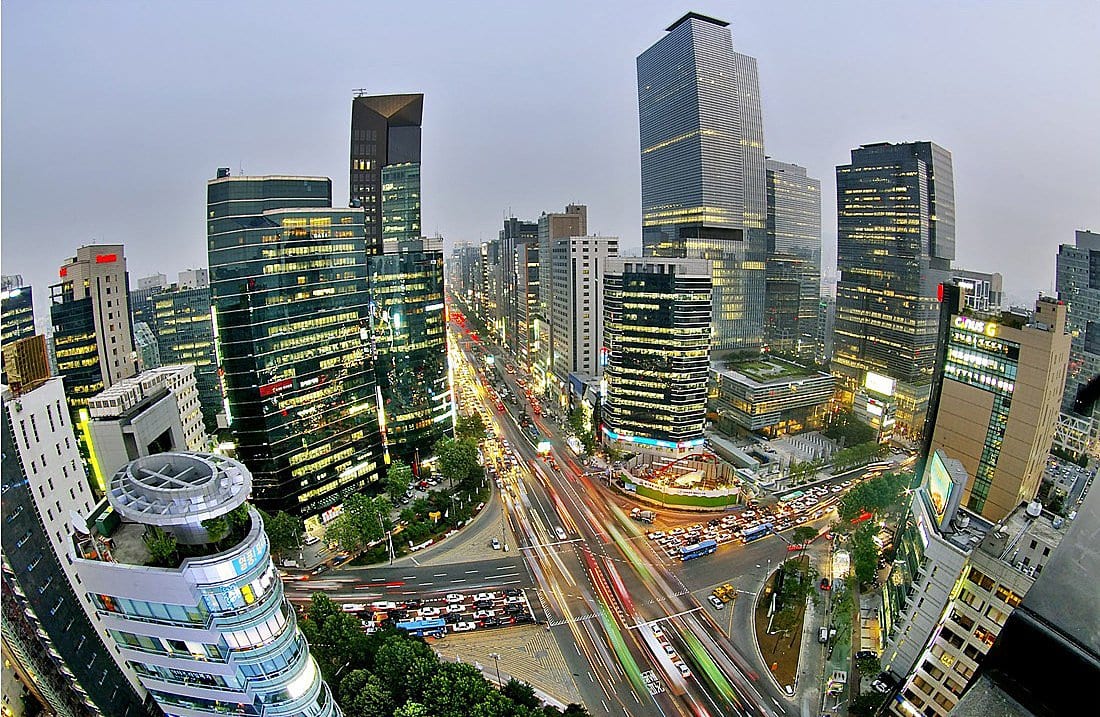
    night-1085845_1280

    Most of the interest from South Korean investors is from global brands such as Samsung SRA and from pension funds, and is mainly centered in gateway cities. These cities include Los Angeles, San Francisco, Washington DC and Chicago, but there is also increasing interest in secondary cities that include Seattle and Denver. While there is considerable interest in commercial properties, this isn’t to the exclusion of residential properties, provided they are of the right type. This doesn’t always mean they have to have a huge price tag, although this is often the case. For asset management companies, prices can go up to $400 million and may start at $150 million.

    In spite of the interest from South Korean investors, there are various challenges that have to be resolved during transactions. These are mainly due to the difference in cultures as transactions in Korea are conducted in the way that is very different from the US. Even with these differences, there is expected to be continued growth in the amount of South Korean funds being invested in the US as there just isn’t as much opportunity in Korea as in foreign countries. Although this growth may be set to continue there are signs the Koreans are becoming more selective in terms of asset types and yield requirements as they are becoming more cautious.

  • Major Asia investment for Michael Kors

    Major Asia investment for Michael Kors

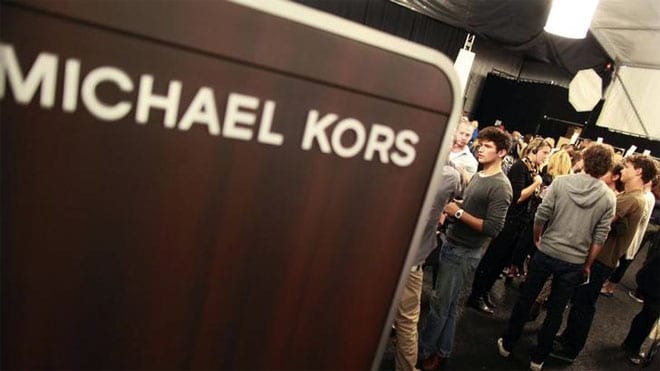
    Michael Kors has paid $500 million in cash to acquire Michael Kors HK, the exclusive licensee of the company in China and certain other jurisdictions in Asia.

    Approved by independent members of the company’s board of directors, the acquisition is subject to adjustment.

    The greater China business generated total revenue of $197 million for the year ended March 31, with a network of 91 company-run retail stores and six travel retail locations across China, Hong Kong, Macau and Taiwan.

    This fiscal year, the greater China business is expected to contribute about $200 million to retail net sales, reflecting sales for the 10-month period following the closing of the acquisition.

    Michael Kors chairman/CEO John Idol says the company is excited about acquiring its greater China licensee. “We have worked diligently over the past several years with our licensed partner in this region to build the infrastructure, establish the brand and grow acceptance of Michael Kors in the Chinese market.

    “We believe our brand is gaining strong momentum in greater China, making it the ideal time for us to integrate this territory into our business and capitalise on the enormous growth potential in this region.”
    CEO Neil Saunders of retail research agency Conlumino says the acquisition will allow the business to ramp up its pace of expansion in the region and, over the medium term, boost earnings potential.

    “It is fortunate Michael Kors has other regions to turn to for growth, with Asia having the most potential.”

    An award-winning designer of luxury accessories and ready-to-wear fashion, Michael Kors established his namesake company in 1981. Michael Kors stores can be found in Seoul and Tokyo.

  • Singapore government to spend $2b on ICT this fiscal

    Singapore government to spend $2b on ICT this fiscal

    Singapore’s soon-to-be-formed Government Technology Agency (GovTech) will continue to partner the ICT industry and invest in technologies such as data analytics, ICT infrastructure, and platform-as-a-service to develop citizen-centric services.

    GovTech, which will be established at the end of this year, will replace the Infocomm Development Agency of Singapore (IDA) and aim to lead technological transformation in government.

    The agency is expected to continue to partner the industry to co-create such digital solutions and will be calling for a projected S$2.82 billion ($2.04 billion) of ICT tenders across fiscal year 2016.

    These ICT tenders will comprise mainly infrastructure and ICT security bulk contracts due to some multi-year contracts ending in FY16, as well as contracts relating to agency-specific systems. Last year, SMEs accounted for more than half of the total contracted value of ICT tenders.

    One key focus for government procurement this year will be to enhance ICT infrastructure to better support the data and digital services needs of a Digital Government in a Smart Nation.

    For example, increased data center virtualization will allow the government to modernize its hosting of ICT applications and ensure faster time to production for new digital services.

    Wi-Fi will be extended to more areas within government schools to support smart learning. The government will also continue to invest in its cybersecurity efforts, with a bulk tender for IT security services to be called in this fiscal year.

    “We want to empower Singapore with possibilities through technology. To do that, investment in infrastructure is necessary so that innovative citizen-centric services can be built and enhanced on a strong foundation,” IDA managing director Jacqueline Poh said.

    “There will be opportunities abound for the government and industry to collaborate and build a smart nation together.”

  • Private Fixed Asset Investment In China Is Crashing

    Private Fixed Asset Investment In China Is Crashing

    We often think of liquidation events exclusively in terms of price, but in the real economy there is volume to consider. When financing dries up as financial agents run for cover lest they receive only further margin or collateral calls, it enacts a short run disruption in economic flow. At the margins, some firms are forced to delay activity while others can only give up altogether. It is difficult to figure how much in any liquidation is temporary and how much ends up as a permanent reduction.

    The dramatic events of January and February all across the globe undoubtedly created just this kind of mix. As it ended around February 11, there was going to be some bounce back in economic terms as funding began to flow again, allowing delayed projects and activity to restart. Because of that, it wasn’t surprising to see certain economic accounts and factors seemingly improve especially in March. That did not mean anything other than the end of the liquidation crunch, as the baseline decay remains in place and, as we are finding out again, was only amplified by further reduced capacity during the liquidations – those projects and activity that will never be restarted.

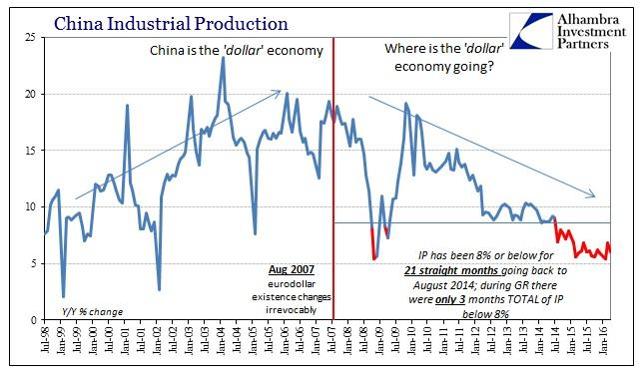
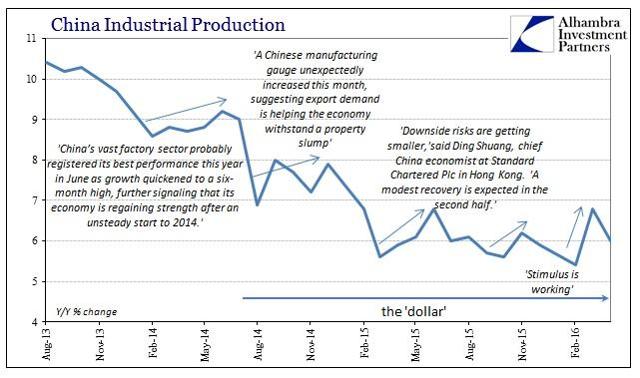
    As usual, this global process is most evident in China. Despite a burst of optimism especially in March statistics, the temporary part of the liquidation rebound is increasingly within view. Industrial production had jumped to 6.8% from a multi-year low of 5.4% in the January-February holiday combination and brought with it the usual “it’s all over” commentary. Instead, IP dropped back to just 6.0% in April which, like exports, suggests only what I propose above; a (very) brief respite only because the “dollar” hasn’t been as obviously stifling as it was to start 2016.

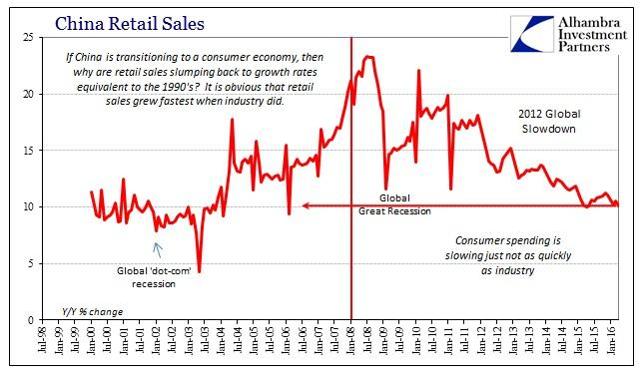
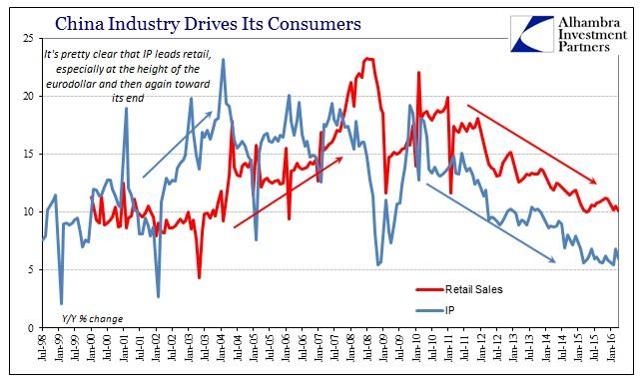
    The same trend was recorded in Chinese retail sales as well, which is perhaps a bigger blow to March’s hopeful sentiment. Even economists have started to admit China’s industrial “miracle” may never be resumed so they have turned in near desperation to the idea of a “consumer driven” economy, as if there is some plan being carried out to replace the manufacturing/export orientation of the rising eurodollar period. This wishful thinking gained traction only because retail sales have decelerated at a lag to industrial production.

    It is clear, however, through a wider perspective that China’s consumers are slowing just as China’s industry where “stimulus” can at best explain the delayed reaction. Even in 2016, the same pattern emerges as in manufacturing and export; retail sales were atrocious to start the year (Jan/Feb) at just 10.2%, nearly as bad as the worst of 2015, rebounding to 10.5% in March. The latest update for April is even worse than the Jan/Feb period, as Chinese retail sales slowed again to just 10.1%.

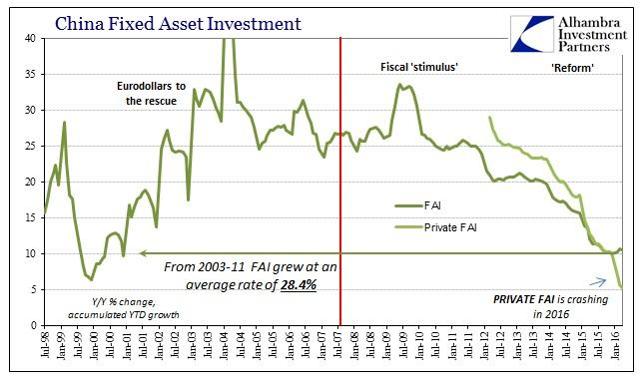
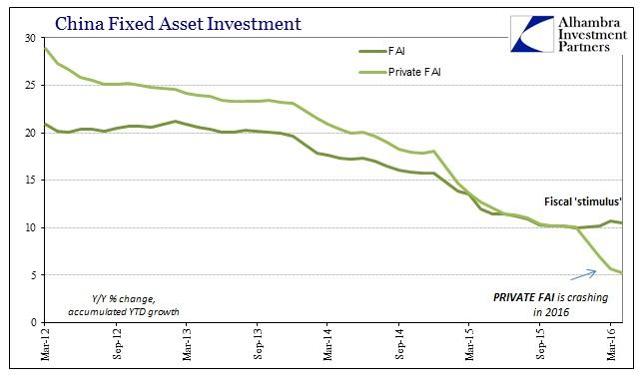
    As bad as those end results are for the direction of the Chinese economy, the real bad news is buried in productive capacity. Where industrial production and retail sales may have picked up the temporary portion of the economy disrupted by liquidation, fixed asset investment (FAI) suggests the reduction in baseline economic reality might be even worse than feared. Private FAI is crashing in China.


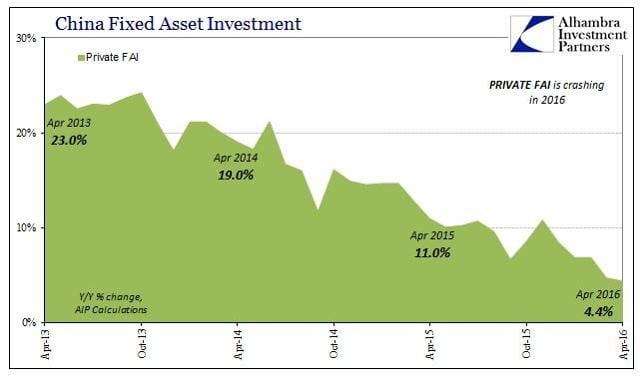
    Overall, total fixed asset grew 10.5% in April, down from 10.7% in March. Private FAI was just 5.2%, however, as it is clear the Chinese government is back to fiscal “stimulus” once again. The National Bureau of Statistics reports FAI in “accumulated” annual growth, which means the stated estimates for April include all months of the year through April. Since Private FAI was 6.9% to start the year but only 5.2% in April, actual growth in capex was less than that still. In other words, rather than rebound Private FAI has only slowed further into this year.


    By simple calculation we find that Private FAI for April alone was just 4.4% more than April 2015. That compares to 11.0% growth in April 2015 over April 2014. Before the “rising dollar”, private-driven capex in China was expanding at and above 20%, and had been nearly 30% when the NBS first broke out the private component in 2012. That would be a level more consistent with what China was expecting of the “recovery”, which can only suggest 4.4% (and the obvious trajectory to get to that level) really is crashing industrial investment.

    Unlike the remaining components in FAI, private sources of capital investment are the primary expressions of job growth and Chinese economic advance. Any “stimulus” that flows through the State-Owned Enterprises is largely inefficient and ineffective, the usual waste of spending for the sake of spending. Because China is still oriented toward manufacturing, private spending to increase that capacity accounts for about a third of all Chinese labor! Further, state-owned media has reported that Private FAI is responsible for 90% of new urban employment. China is in big trouble at 4.4% (with the arrow still pointing further down).


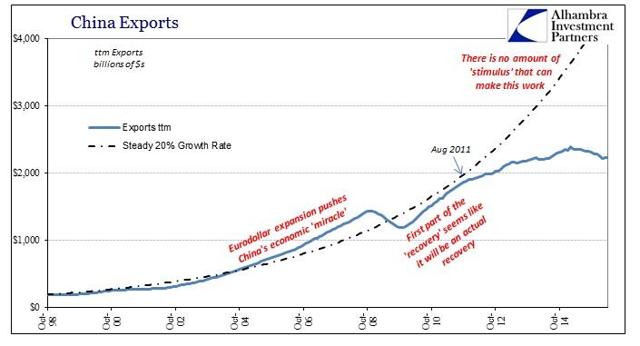
    This helps explain the lagged deceleration in retail sales and the Chinese economy overall, more so the persistent and stubborn slowing than the lag. Unlike temporary bursts of production levels, capex investment growth is determined by longer run projections and harder reality than the overflowing optimism that arrives with every minor, short-term uptick in monthly variation. In many ways, this descent in the Chinese baseline is incredibly simple and intuitive unlike the orthodox commentary that tries to deny it month after month:


    The fact that Private FAI is now crashing in 2016 is related to the effects of the liquidation(s). The lack of financial flow in “dollars” convinces more and more firms that despite all the promises the global economy will never rebound while at the same time mothballing projects that will never be restarted and canceling many before they ever get that far. It is the brutal reality of this ongoing paradigm shift – the slowdown that will not stop slowing down. From this perspective, as noted on the chart above, it is easy to understand that there is no amount of “stimulus” (read: waste) that can make it work; without a eurodollar resurrection there is no path back to 2005. The manner of this decline is often uneven and lumpy, but it is uniform across China and the global economy. It will be undisturbed by anything except further liquidations to carry out the business end of the capacity reduction.

    That is the most important piece of the economic update for China in April. Industrial production and retail sales demonstrate that despite some optimism that March wasn’t January/February, the direction of the Chinese economy has not actually changed. The dramatic slowing in Private FAI suggests an even sharper incline in the already downward tilted baseline. (Jeffry P.)

  • South Korea’s Overseas Direct Investment Topped US$10 Billion in Q1

    South Korea’s Overseas Direct Investment Topped US$10 Billion in Q1

    The Ministry of Strategy & Finance announced on May 12 that South Korean enterprises’ and individuals’ overseas direct investment increased by 29.5% from a year ago to US$10.3 billion in the first quarter of this year, breaking the US$10 billion mark for the first time in four years.

    The amount has continued to increase since early last year. It rose by 32.8% from US$34.44 billion to US$45.74 billion between 2010 and 2011 and then fell 13.3% to US$39.65 billion and 10.1% to US$35.64 billion in 2012 and 2013, respectively. However, it rebounzded to US$40.23 billion last year after edging down by 1.8% to US$35 billion in 2014.

    The overseas direct investment by the banking and insurance sector increased by 96.3% year on year to US$4.02 billion in the first quarter of this year. During the same period, that by the manufacturing sector totaled US$2.76 billion with a year-on-year growth rate of 33.6%. Meanwhile, that by the mining sector fell 13.8% and that by wholesale and retail dropped by 42.3%.

    The amount of the investment in Asia soared by 64.3% to US$2.95 billion to take up 28.6% of the total. That in Latin America jumped by 75.4% to US$2.35 billion. In contrast, that in North America declined by 10.9% to US$2.73 billion while that in Oceania dropped by 30%. By country, those in China and Vietnam increased by 93% and 36.3%, respectively. On the contrary, those in the United States and Canada fell 8.2% and 60.9%.


  • Campaign encourages more Japanese SMEs to invest in the Philippines

    Campaign encourages more Japanese SMEs to invest in the Philippines

    Japanese SMEs are being enticed to invest in the Philippines, where labor cost is competitive and a majority of workers are English-speaking.

    Spearheading the campaign are Rizal Commercial Banking Corp. (RCBC) and Resona Bank, a bank for small and medium enterprises in Japan’s Kansai and Osaka areas. To date, 55 Japanese firms have established their facilities in the Philippines following the tie-up agreement they entered into in 2012.

    Japanese companies which have established their facilities in Philippines affirmed the advantage of the competitive cost of Philippine labor with the added benefit of Engish-speaking skills that enable easier training and work atmosphere.

    In their latest campaign, RCBC’s Japanese Business Relationship Office first senior vice president Yasuhiro Matsumoto recently accompanied Trade Secretary Adrian Cristobal Jr.  to a Philippine Investment Opportunities Forum in Osaka, Japan.

    Attended by 350 corporate clients, the forum was organized by the Resona Foundation for Asia and Oceania with co-organizers Osaka Prefecture Government, the Osaka Municipal Government, the Kansai Economic Federation, the Osaka Foundation for Trade and Industry, and the Osaka Chamber of Commerce Industry. This was also supported by JETRO, Resona Bank and the Kinki Osaka Bank.

    Matsumoto highlighted the success secrets of companies operating in the Philippines. As RCBC’s key senior officer focused on Japanese clients, Matsumoto had seen and supported the entry and growth of Japanese companies, specially in export processing zones.

    Matsumoto further cited the growing spending power of the Filipino consumer as shown by the surge in business by a range of consumer-focused companies in food, beverage, and middle-end retail outlets that are supplanting the formerly ubiquitous low-end sari-sari stores in the urban centers. With the second largest population in ASEAN, with a young average age, the Philippine potential for investments is huge, he said.


  • Digi to spend $217.6m on capex in 2016

    Digi to spend $217.6m on capex in 2016

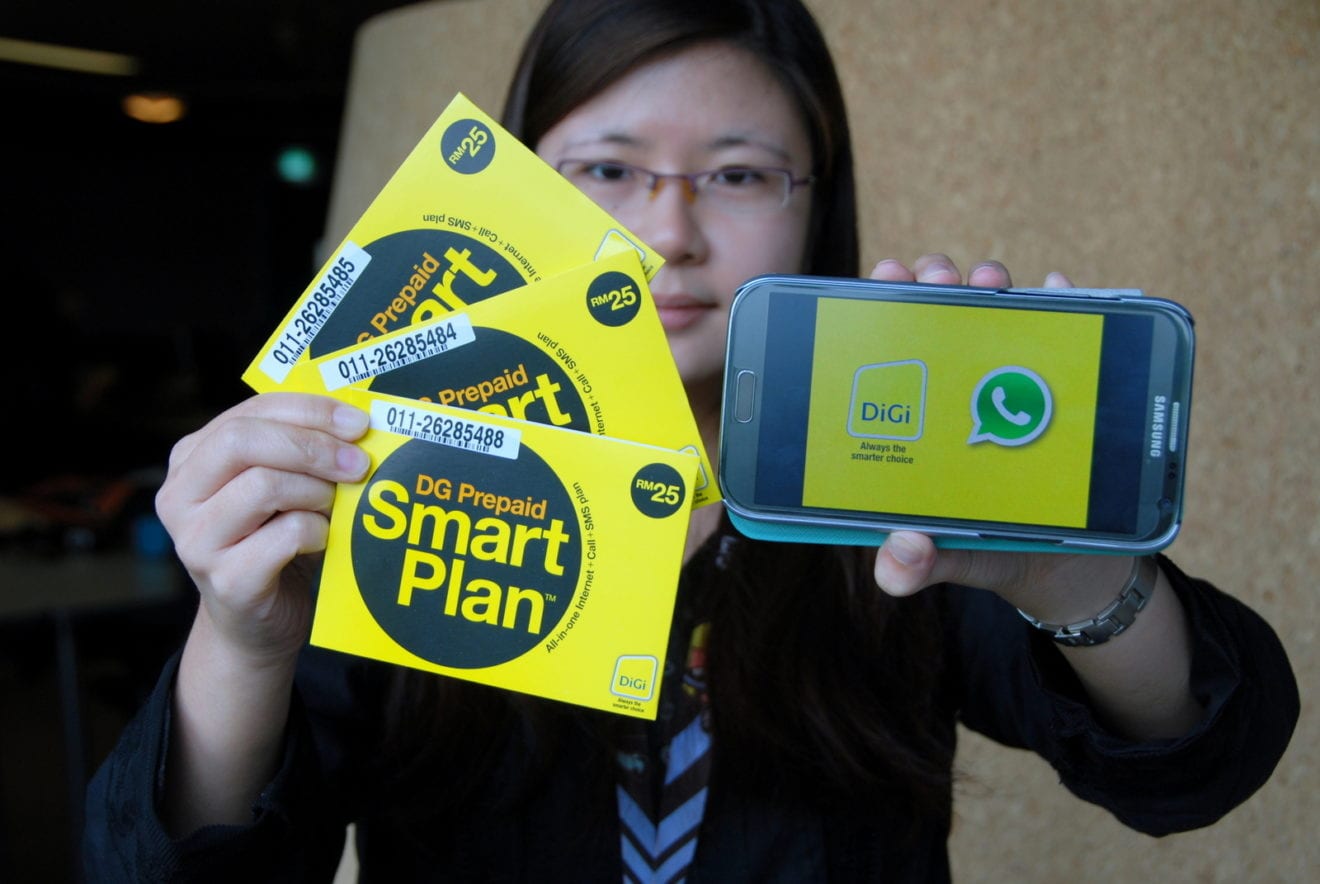
    Malaysia’s Digi Telecommunications has allocated 904 million ringgit ($217.6 million) in capex for 2016, to pursue expansion projects including the rollout of VoLTE and VoWiFi.

    The operator has roughly maintained its capex budget at the same size as 2015.

    Digi is currently testing voice over LTE and Wi-Fi technologies and anticipates a commercial launch this year, according to chief marketing officer Christian Thrane.

    He said the operator’s LTE network currently covers around 72% of Malaysia’s populated areas and 150 major cities and towns.

    In response to growing data demand, Digi recently launched a postpaid plan starting at 28 ringgit per month that offers higher internet quota than previous plans, as well as the ability to roll over unused data. The operator will offer promotional discounts on the new plans until June 30.

    Digi has also introduced data roaming plans for frequent and budget travellers starting at 10 ringgit per day.

  • Thai Robinson to invest $479 mln on new stores over 5 years

    Thai Robinson to invest $479 mln on new stores over 5 years

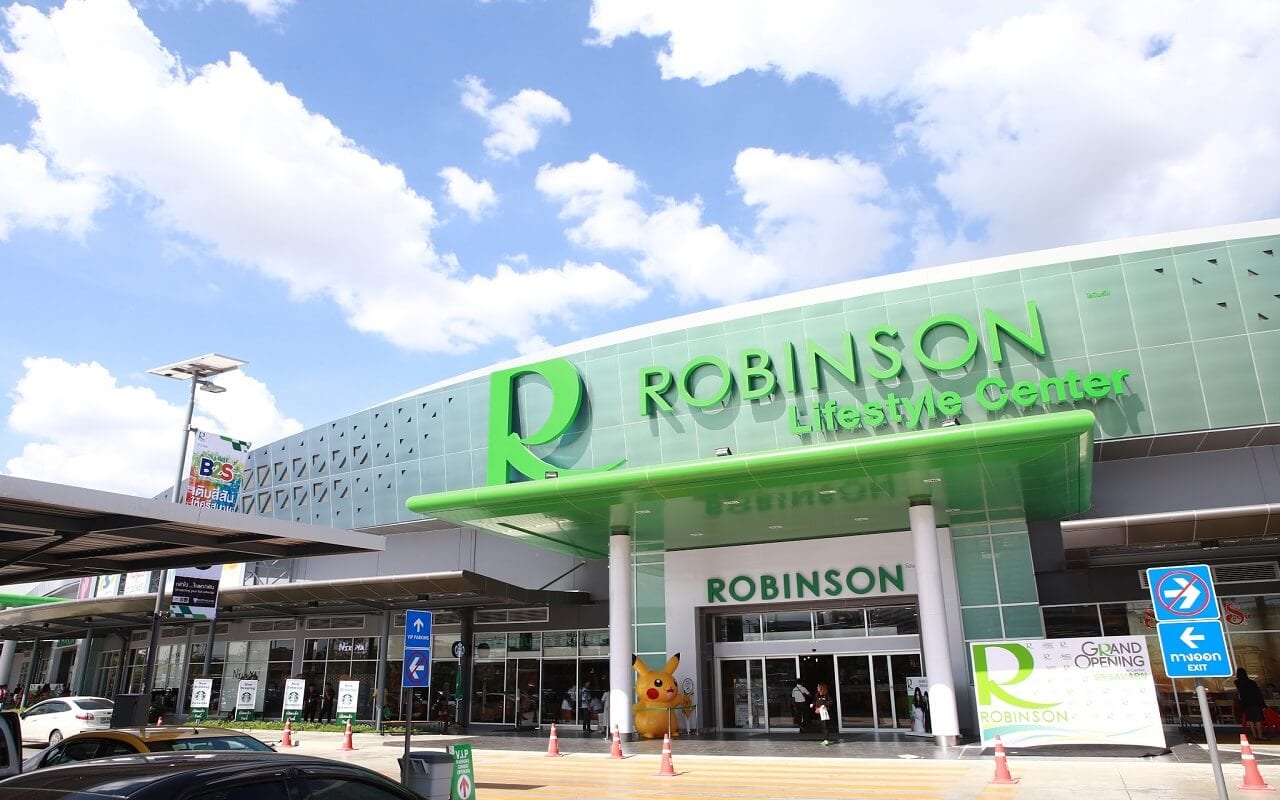
    Thailand’s Robinson Department Store PCL said on Tuesday it aimed to invest about 16.8 billion baht ($479 million) over the next five years on opening new stores in a move to boost average sales growth by 5-7 percent a year.

    Speaking at a news conference, President Alan Thomson said Robinson, majority-owned by Thailand’s largest retail conglomerate Central Group, planned to boost the number of stores to 56 by 2020 from 42 now, pinning its hopes on government economic stimulus measures stoking a pickup in the country’s now-depressed consumer spending.

    Growth at that pace would be equivalent to an average of 2.8 new stores a year. But Robinson’s rate of expansion has slowed recently, dropping to two new stores this year, versus four in 2015 and five two years earlier, a deceleration that reflects Thailand’s current economic weakness, Thomson said. This year, the company will spend 1.6 billion baht on opening two branches. It’s aiming for sales growth of 7 percent from 2015’s 25 billion baht, and expects sales to reach 35 billion baht by 2020, Thomson said.

    He also said Robinson planned to spend 2.5 billion baht to renovate 20 existing stores in an effort to respond to changing retail patterns and attract more customers despite the spread of online shopping.

    Robinson also operates two stores in Vietnam, and aims to double that by 2020, Thomson said. “We are trying to identify challenges before we expand in Vietnam,” he said, adding the company would likely invest more in Vietnam next year after a pause in 2016.

    After being hit in recent years by weak spending in the slowing economy, like other Thai retailers, Robinson has seen signs of improvement in demand, thanks to the government’s stimulus measures, Thomson said.

    The company’s same-store sales rose 3.1 percent in the fourth quarter of 2015, versus a drop of 2.1 percent for the
    full year, according to company data.


  • Thai investment in VN concentrated in processing, manufacturing

    Thai investment in VN concentrated in processing, manufacturing

    According to the agency, there are about 200 Thai projects in such industries, with combined investment of US$7 billion or 88 per cent of Thailand’s total investment in Vietnam.

    These sectors are followed by agriculture, forestry and seafood sectors, which have 31 projects worth $235 million. The rest are in retail and construction sectors.

    As the end of February this year, Thai businesses had invested in 428 projects in the country, with a total investment capital of $7.88 billion, ranking 11th among countries and territories that have invested the largest capital in Vietnam.

    A Thai project was worth $18.4 million on average, about $14 million more than the average value of a foreign investment project in the country.

    The southern Ba Ria – Vung Tau Province attracted the highest number of foreign direct investment projects from Thailand, worth $3.77 billion. It’s followed by the northern Vinh Phuc Province with projects worth $744 million and the southern Binh Duong Province with $513.4 million.

    The statistics also showed that Thai joint venture investments comprised 70 per cent of Thailand’s registered investment in Vietnam, worth $5.5 billion.

    Vietnam has become a favourite destination of many Thai billionaires in recent years, with many large projects and merger and acquisition transactions taking place in retail and consumption areas.

    These include Thai company Berli Jucker’s (BJC’s) purchase of Metro Cash & Carry Viet Nam for more than $870 million; and Power Buy, a subsidiary of the Central Group of Thai billionaire Chirathivat, also acquired a 49 per cent share in New Solution and Technology Development Company NKT, the owner of Viet Nam’s leading retailer Nguyen Kim Trading JSC.

  • SM Investments Corporation wins two Anvil Awards for its Annual and ESG Reports

    SM Investments Corporation wins two Anvil Awards for its Annual and ESG Reports

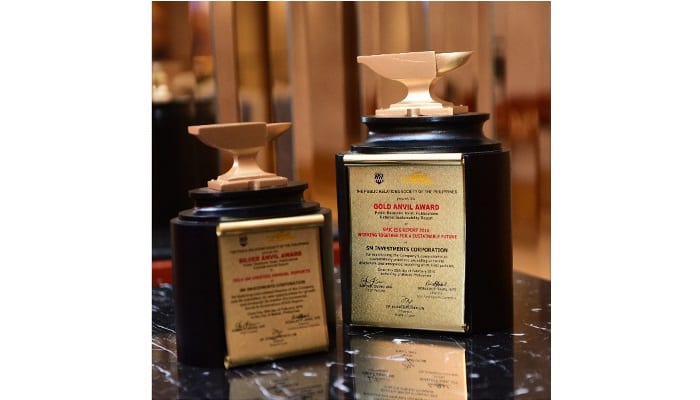
    SM’s first 2014 ESG report with the theme, “Working Together for a Sustainable Future”, earned a Gold Anvil Award for manifesting the company’s commitment to sustainability practices and for providing accurate disclosure and integrated reporting of its ESG policies. It is a group-wide report highlighting good governance, social development and environmental consciousness of SM companies such as SM Retail, SM Prime Holdings, and BDO Unibank. SM recognizes that adhering to ESG global best practices is a journey as global guidelines and the needs of SM’s stakeholders continue to evolve.

    The 2014 Unified Annual Reports bagged a Silver Anvil Award for featuring inter-related themes of the company and its subsidiary on new opportunities for growth.

    The 2014 Unified Annual Reports consist of the Annual Report of SM with the theme, “Pursuing New Opportunities for Growth” and that of SM Prime Holdings, Inc. that carried the theme, “Building New Opportunities for Growth”.

    Dubbed as the “Oscars” of the public relations industry in the Philippines, the Anvil is presented to the outstanding public relations tools and programs that have met the high standards set for each category.  PR practitioners, industry communications specialists, academicians and business persons attended the event.