Retail News CRM

Tag: Investment

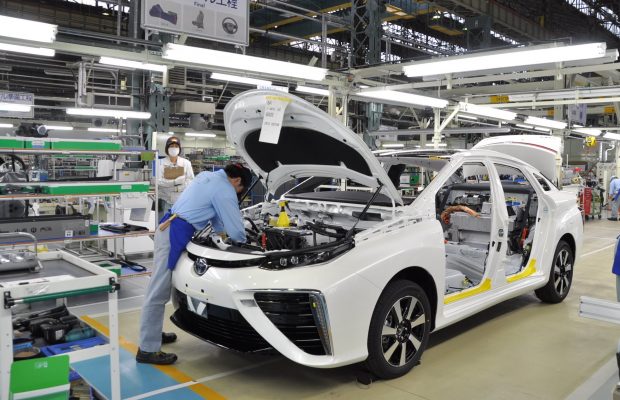
  • Toyota, Mazda to build $1.6 billion plant in Alabama

    Toyota, Mazda to build $1.6 billion plant in Alabama

    Alabama will be the site of a new $1.6 billion Toyota Motor Corp and Mazda Motor Corp auto plant, a victory for President Donald Trump who had prodded manufacturers to build new U.S. facilities and threatened tariffs on foreign production, sources said on Tuesday.

    The plant, which will employ up to 4,000 people and produce about 300,000 vehicles a year, will be located in Huntsville, Alabama, and is a boon for the state, where Toyota has a large engine plant and an existing network of automotive suppliers.

    A formal announcement by company and state officials is expected on Wednesday in Montgomery, sources briefed on the matter said.

    The new plant –in a state Trump won by 28 points in 2016 — could be a political boost to the Republican president, who has urged automakers to build plants in the United States and add jobs. The companies said they expect the plant to open in 2021.

    Trump tweeted in March he wanted “new plants to be built here for cars sold here.” The White House did not immediately comment on Tuesday.

    The announcement also comes at a time of declining U.S. auto industry sales, so it could exacerbate overcapacity and add pressure to cut prices. U.S. new vehicle sales fell 2 percent in 2017, after hitting an all-time record high in 2016, and are expected to fall further in 2018.

    Details of an anticipated tax and incentive package for the investment were not yet known. It has been reported the companies sought at least $1 billion in incentives.

    A Toyota spokesman declined to comment, except to say an announcement was expected soon. A Mazda spokeswoman also declined to comment.

    In recent months, the companies had narrowed their choices down to sites in Alabama and North Carolina.

    Local media last month said the leading site under consideration was in northern Alabama’s Limestone County, near Toyota’s large engine plant in Huntsville. In September Toyota announced a $106 million technology upgrade for the Huntsville plant.

    A Chamber of Commerce of Huntsville website for the “Huntsville Mega Site” touts the fact it has been “certified as development-ready.” The commerce chamber, local and state officials declined to comment on Tuesday on plans for the plant.

    A year ago, President-elect Trump criticized Toyota and threatened hefty tariffs against the Japanese automaker if it built its Corolla sedan for the U.S. market in Mexico.

    “Toyota Motor said will build a new plant in Baja, Mexico, to build Corolla cars for U.S. NO WAY! Build plant in U.S. or pay big border tax,” Trump posted on Twitter in early 2017.

    Toyota and Mazda announced plans for a new plant in August. Toyota said it would shift production of Corollas from Canada to the new venture rather than in Guanajuato, and would build Tacoma pickups in Mexico instead. Mazda plans to build new crossover SUVs at the plant.

    Trump praised the joint venture announcement, saying in August on Twitter: “Toyota & Mazda to build a new $1.6B plant here in the U.S.A. and create 4K new American jobs. A great investment in American manufacturing!”

    In October, Toyota said it would scale back investment in a planned plant in Mexico by 30 percent to $700 million and cut planned annual capacity in half to 100,000 vehicles as it shuffles its production plans to meet market demands.

    Toyota has 10 U.S. plants in eight states in an arc running from West Virginia through Kentucky, Indiana, Alabama, Mississippi and Texas.Toyota and Mazda announced a capital alliance in August and are exploring joint development of technologies for the basic structure of competitive electric vehicles.

    Over the last 30 years Toyota, along with German and Asian automakers, has built a second auto industry in the United States, rivaling the operations of the Detroit Three automakers in size and employment, but with newer, and fewer unionized, plants.

    States covet auto assembly plants because they typically pay above-average wages and spin off jobs at suppliers and service companies. Southern U.S. states have the advantage of good transportation infrastructure, business-friendly regulators and generally anti-union politicians.

    The Alabama Department of Commerce shows 150 of the large automotive suppliers operate in the state, providing the logistical strength that Kristin Dziczek, a researcher at the Center for Automotive Research in Michigan, said helped land the plant.

    Dziczek said that Alabama in 2017 was tied for fifth among U.S. states in auto production, at 9 percent with Tennessee. It was behind Michigan at 19 percent; Indiana at 12 percent, Kentucky at 11 percent; and Ohio at 10 percent.

    “The impact of an auto assembly plant extends beyond its immediate economic impact, and that’s why states offer robust incentives,” said Dennis Cuneo, a site-selection consultant and former Toyota executive. “It creates a halo effect that in turn helps attract other projects.”

    Alabama spent an estimated $250 million to woo Daimler AG’s Mercedes-Benz to put an auto plant in Tuscaloosa two decades ago.

  • India paves way for foreign stakes in Air India

    India paves way for foreign stakes in Air India

    Foreign investors will be allowed to own 49 per cent of Air India when it is privatised, opening the path for companies such as Singapore Airlines to take a stake in the country’s flag carrier.

    The Indian government announced it would allow foreign companies to take a non-controlling stake in the struggling company as part of long-running plans to sell it off.

    The cabinet in New Delhi last year gave its approval for a sale, but ministers have been grappling for the past few months with how exactly to do so.

    One of the most politically sensitive decisions has been whether to allow foreign companies to bid for part or all of the airline.

    While many officials think it will be difficult for domestic carriers to swallow the company whole given it has $8bn of debt, some politicians are reluctant to see what they view as a prized national asset fall into foreign hands.

    Many still talk of the role the airline played in helping to airlift nearly 200,000 Indians from Kuwait before the war in 1990.

    A parliamentary panel this week reportedly recommended the government find “an alternative to disinvestment of our national carrier which is our national pride”.

    Atul Anjan, national secretary of the Communist Party of India, said of Wednesday’s decision: “Air India is not merely an air carrier, it is our national pride.”

    Despite Air India’s status in the country’s national consciousness, it has struggled in recent years to keep up with no-frills domestic airlines and better resourced international ones.

    The company has made losses for almost the entire past decade, and received a Rs422bn ($6.6bn) government bailout in 2012.

    Government officials are hoping several foreign companies might enter the bidding for the company, but so far only Singapore Airlines has indicated possible interest.

    Last week Leslie Thng, chief executive of Vistara — an Indian joint venture between Tata and Singapore Airlines — said the two companies were open to making an offer.

    Kapil Kaul, chief executive in South Asia for the Centre for Asia-Pacific Aviation, said: “I would expect a significant interest from foreign airlines, though the offer and conditions attached will determine the level of participation in the bids.

    “What’s more, this is a major reform and national economic policy decision — not just limited to aviation. It sends a very important signal to the global investors.”

    At the same time, ministers also decided to make it easier for foreign retailers to set up in India, without having to partner with local companies.

    The cabinet in New Delhi said foreign investors would no longer require government approval to invest more than 49 per cent in an Indian single-brand retail business.

    It did not decide to do the same for retail chains who sell more than one brand, a move that would have allowed major chains such as Walmart and Carrefour, both of which have previously operated in India, to open their own stores.

  • Bullish investors can bring Vietnam’s stock market to record high in 2018

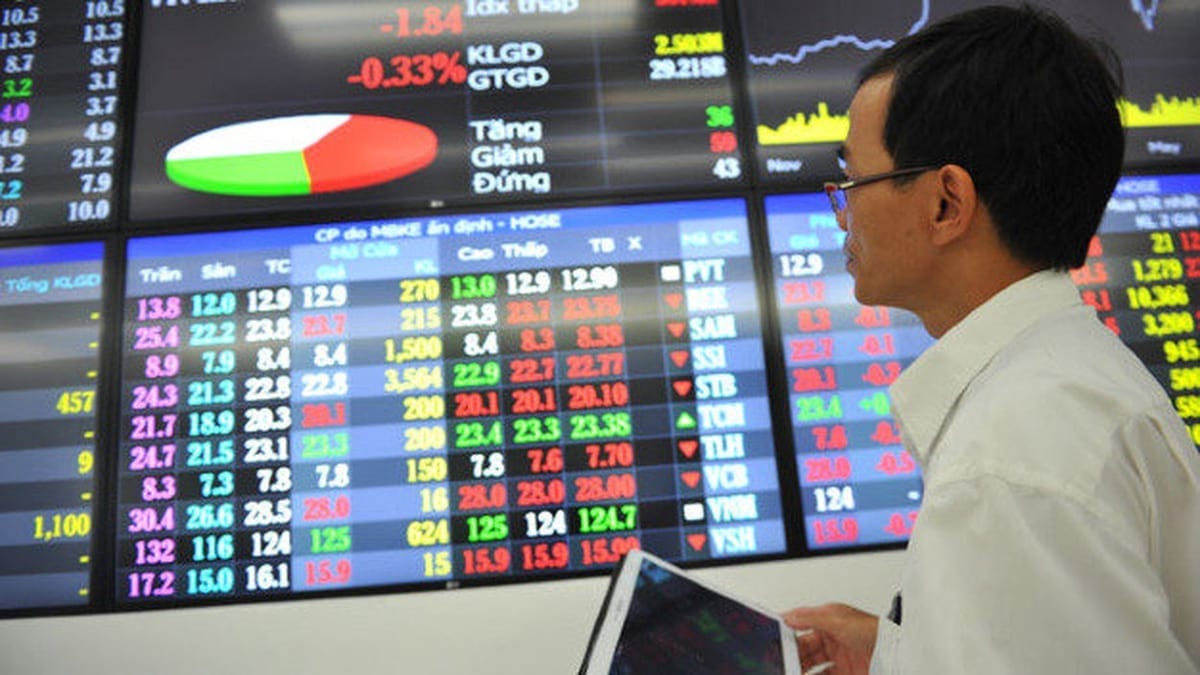
    Bullish investors can bring Vietnam’s stock market to record high in 2018

    Vietnam’s stock market is expected to keep its upbeat sentiment of 2017 and drive the benchmark VN-Index to an all-time high at year end, analysts said.

    The Vietnam Stock Index (VN-Index), a capitalization-weighted index of all the companies listed on the Ho Chi Minh City Stock Exchange, already reached 1,000 points on Wednesday, the highest since the global financial crisis in 2007.

    It closed at 984.24 on the last working day of 2017, wrapping a bullish week and setting a 10-year high.

    Analysts believe the momentum will continue and bring the index to surpass the record 1,178 points in 2007.

    The market is seeing very low risks, and high confidence for growth, they said.

    RongViet Securities Corporation in Saigon said in a report that VN-Index will increase at least 17 percent this year or even 67 percent in its best scenario, meaning it could end the year somewhere between 1,170 and 1,640.

    Nguyen The Minh, a senior analyst at Saigon Securities Incorporation, was more specific.

    “VN-Index can reach 1,050 points in the short term and 1,300 at year end,” he said.

    Minh said stocks that have not received much attention last year should create big potentials now.

    The market in 2017 was driven by consumer goods stocks, but banking and energy will take the lead this year, he said.

    Minh said the market will be boosted by interest from the foreign sector. Foreign investors made more than $1 billion of net purchase last year, the biggest in five years, and they will continue to stick around for more privatization at public giants.

    Bloomberg called Vietnam a “frontier market” in Asia last year, as it was the biggest gainer in percentage terms: a 47 percent gain in the VN-Index. The market capitalization increased almost double to nearly $150 billion, fueled by state-owned company sales and listings, it said.

    Vietnam’s economy grew 6.8 percent in 2017, breaking its own 6.7 percent target which both government officials and economists had considered ambitious.

    The country remains one of the fastest growing economies in the world and has set the goal to expand another 6.7 percent this year.

  • Thinking about investing in Bitcoin?

    Thinking about investing in Bitcoin?

    Investors who bought Bitcoin just ahead of Thanksgiving certainly have something to be thankful for. Bitcoin prices breached $11,300 for the first time, representing a rise of over $3,100 in a week.

    It is a stunning rise for the cryptocurrency, which only just broke the psychologically important milestone of $10,000 hours earlier—despite financial heavyweights voicing their concerns about an asset with limited regulatory clarity.

    But several major governments, including the U.S., have signaled a willingness to regulate the cryptocurrency space rather than outright ban it. Meanwhile, institutional investors have also been jumping onto the bandwagon, with the Chicago Mercantile Exchange saying that due to client demand, it would launch Bitcoin futures by the end of 2017.

    The Wall Street Journal reported that both Nasdaq and Cantor Fitzgerald are looking to launch bitcoin derivatives. A futures market for Bitcoin would likely usher in more institutional investors, adding more liquidity — and potentially stability — to the cryptocurrency market.

    “Demand pressure is essentially driven by two things. Firstly, the increasing awareness by both the public and investors that cryptocurrencies are here to stay, and secondly, the increasing professionalization of cryptocurrency trading,” said Daniele Bianchi, an Assistant Professor in the Finance Group at the Warwick Business School, in an email.

    Bitcoin’s price has risen dramatically over the past year. While it took nearly four months to climb from $1,000 to a closing price of over $2,000, it soared to $10,000 from $9,000 in the course of about three days.

    Bitcoin Cash’s price has also risen to $1,611, about 2.5% in the past day and about $300 in the past week. The price of Ethereum has risen about 5% in the same period to $496.31.

    While Bitcoin bulls hail its rise as a sign of increasing acceptance, other investors are warning of an increasingly volatile bubble. Investing legend Jack Bogle, who founded the Vanguard Group, cautioned investors to steer clear of Bitcoin because it does not provide a steady stream of income in the way that bonds or dividends might. Instead, its price is dependent on sentiment.

    “Bitcoin has no underlying rate of return,” said Bogle at a Council on Foreign Relations event on Tuesday, as reported by Bloomberg. “You know bonds have an interest coupon, stocks have earnings and dividends, gold has nothing. There is nothing to support Bitcoin except the hope that you will sell it to someone for more than you paid for it.”

  • Japan Industrial Production On Tap For Thursday

    Japan Industrial Production On Tap For Thursday

    Japan on Thursday released preliminary October data for industrial production, setting the pace for a busy day in Asia-Pacific economic activity. Industrial output is expected to rise 1.8% on month and 7.2% on year after falling 1.0% on month and gaining 2.6% on year in September.

    Japan also will see October figures for vehicle production, housing starts and construction orders. Housing starts are expected to fall 2.8% on year to 950,000 after sliding 2.9% in September to 952,000.

    Vehicle production was up 1.7% on year in September, while construction orders plummeted 11.6%.

    China will see November numbers for its manufacturing and non-manufacturing PMIs; in October, their scores were 51.6 and 54.3, respectively.

    The central bank in South Korea will wrap up its monetary policy meeting and then announce its decision on interest rates, with the bank widely expected to keep its benchmark lending rate unchanged at 1.25%.

    South Korea also will see October numbers for industrial production and retail sales. Output is expected to add 0.6% on month and 6.1% on year after gaining 0.1% on month and 8.4% on year in September. Retail sales were up 3.1% on month and 8.3% on year in September.

    Australia will provide October numbers for private sector credit and building approvals, plus Q3 data for private capital expenditure.

    Private sector credit is expected to add 0.4% on month and 5.3% on year after gaining 0.3% on month and 5.4% on year in September.

    Building approvals are expected to sink 1.0% on month and surge 14.1% on year after adding 1.5% on month and 0.2% on year in the previous month. Capex is expected to rise 1.0% on quarter after adding 0.8% in Q2.

    New Zealand will see November results of the activity outlook and business confidence indexes from ANZ; in October, their scores were 22.2 and -10.1, respectively.

    Hong Kong will provide October figures for retail sales – which are expected to rise 6.2% on year after gaining 5.5% in September.

    Thailand will release Q3 data for current account and October trade data. In the third quarter, the current account surplus was USD8.32 billion and the financial account deficit was USD6.89 billion. In September, imports were worth USD16.47 billion and exports were at USD21.87 billion for a trade surplus of USD5.40 billion.

    Malaysia will see October numbers for producer prices; in September producer prices were up 1.1% on month and 6.0% on year.

  • Thai Listed Property Developer Sansiri Invests $80m In Six Global Startups

    Thai Listed Property Developer Sansiri Invests $80m In Six Global Startups

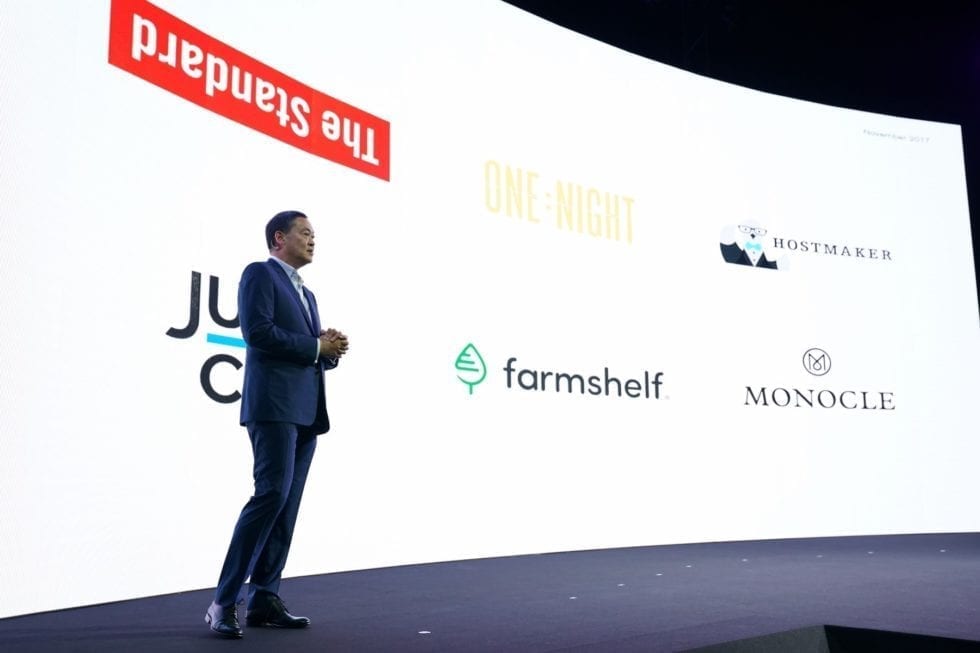
    Thai listed property developer Sansiri Pcl announced an investment of $80 million across six global technology and lifestyle companies as part of a bid to expand beyond real estate development and into the global market.

    Of this, Sansiri will invest about $58 million in US-based boutique hotel chain Standard International and its mobile booking application, One Night. The Thai firm will hold a 35 per cent stake in the hospitality firm.  

    The remaining include a $3.1-million stake in Tyler Brûlé’s lifestyle magazine Monocle; $6.6 million in London’s Airbnb management firm Hostmaker; $12 million in Southeast Asia’s co-working space JustCo; and $300,000 in a smart indoor farm technology firm Farmshelf, according to a Financial Times report.

    Srettha Thavisin, president of Sansiri Pcl, said that the company’s investments will focus on three key activities, which include strategic investment in global lifestyle brands; developing property technologies in partnership with industry disruptors; and enhancing influence and audience through premium lifestyle media.

    Kang Wan Sing, Founder and CEO of JustCo, said that the partnership with Sansiri will support JustCo to launch four co-working spaces in Bangkok. “We expect to have 20 co-working spaces across Asia-Pacific by 2018, giving Sansiri access to our 12,000 members,” he added.

  • Foreign Investment Hotspots In Asia Pacific

    Foreign Investment Hotspots In Asia Pacific

    Cross-border real estate investment in the Asia Pacific region could achieve a record high this year as foreign investors shore up interest and seek assets in greener pastures beyond borders.

    As it stands, year-to-date intra-regional cross-border transaction volumes have already exceeded the previous 10-year record high in 2015 (1Q15-3Q15) by 30 per cent, and is currently a 21.8 per cent step up from its 10-year average (2007-2016).

    Singapore the main source of intra-regional capital

    Chinese would be the largest group of foreign investors if inter-regional flows were part of the picture. But in the context of intra-regional capital flows (which only considers deployment within Asia Pacific), Singapore continues to dominate with year-to-date foreign investments currently standing at US$5.6 billion.

    China (US$2.1 billion) and Hong Kong (US$2.9 billion) were ranked second and third respectively given a significant portion of capital are recycled between the two closely-integrated countries.

    These three countries make up 85 per cent of total source of foreign capital within the region.

    Much of the capital from these countries is allocated to office assets. From the standpoint of Singapore investors, most are seeking to plough capital in gateway cities such as Melbourne and Sydney, which offer steady and attractive income streams.

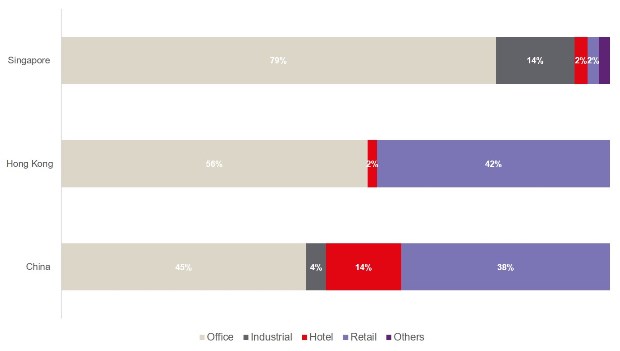
    79 per cent of Singapore capital has been allocated into outbound office assets, with 11 out of 18 of the office assets acquired based in Australia.  One such cross-border deal is the acquisition of 206 million Telstra Plaza building by Singapore’s ARA Asset Management and co-investment vehicle Straits Real Estate.

    While 45 per cent of China capital is allocated to office assets, most are flowing into Hong Kong strata-titled opportunistic assets, with a focus on capital growth.

    Figure 1: Allocation of intra-regional cross border capital outflow by asset classSource: JLL

    Australia and China most popular for foreign investors

    Australia and China draw the most foreign investments given assets in those markets generally offer more attractive yields. But relative to domestic purchasers, (Figure 3) India stands out with 65 per cent of its total transactions coming from foreign investors (all of which were Singapore based institutional funds investors).

    One notable example was Singapore sovereign wealth fund GIC’s US$1.4 billion joint venture with DLF Cyber City Developers, which also happened to be the largest cross border deal year-to-date.

    These investors are looking to ride the investment wave via debt deals and joint ventures with local partners, as the market continues to grow in depth and demonstrates their willingness to shift from traditional markets if the opportunity presents itself.


  • Trading house Itochu taking on Alibaba and JD.com

    Trading house Itochu taking on Alibaba and JD.com

    Itochu and two partners are investing roughly 7.6 billion yen ($67.6 million) in an e-commerce venture selling Japanese goods to the Chinese market in hope to enhance its own forays into China’s internet sector.

    The Japanese trading house is investing around 4 billion yen into the Tokyo-based startup Inagora, with telecom KDDI and financial services company SBI Holdings providing the rest.

    Itochu previously invested around 100 million yen in the company and will now hold a roughly 20% stake, making it the second-largest shareholder behind founder and CEO Weng Yongbiao.

    Founded in 2014, Inagora operates Wandou, a Chinese-language e-tailer with some 3 million users.

    The site boasts around 40,000 offerings, with a focus on cosmetics, clothing and foods from brands including Japanese fashion label Samantha Thavasa, Swiss lingerie maker Triumph International and Japanese food producer Ajinomoto.

    China’s cross-border e-commerce market is growing rapidly. The market for goods from Japan is seen nearing 2 trillion yen in 2020. The country’s overall e-commerce leaders currently have a strong grip on the cross-border segment: Top player Alibaba Group Holding commands a roughly 40% share, while second-place JD.com and major internet player NetEase control shares in the 10-20% range.

    Itochu has already taken its first step into the cross-border market, launching a high-end site in spring 2017 with Chinese state-owned conglomerate Citic, a major partner.

    But the trading house has realized breaking Chinese heavyweights’ grip will require savvy marketing that can respond nimbly to consumer tastes — hence its turn to Inagora, which excels at creating videos highlighting the appeal of Japanese products for local consumers.

    The trading house will supply products for Inagora’s site through units including food wholesaling arm Nippon Access and Edwin, Japan’s largest maker of jeans. In addition, Itochu will have the site carry local specialty items from across Japan stocked by convenience store chain FamilyMart, another member of the Itochu group.

    Itochu Logistics, with over 100 locations in China, will also cooperate with Inagora, which plans to add warehouses to its own distribution network using money from the latest round of investment.

    The startup will also hire more sales staff to encourage companies to list their products. Forays elsewhere in Asia are on the agenda as well: The company plans to bring its business to Taiwan, Malaysia and elsewhere in 2018.

    Inagora anticipates around 15 billion yen in transactions this year, six times the 2016 level. With help from Itochu and others, the startup targets 100 billion yen in transactions in 2019 and 176 billion yen a year later.

  • VIP to invest in Australia

    VIP to invest in Australia

    A Chinese online shopping giant has arrived in Australia this week to unveil its new Sydney distribution centre.

    VIP.com is one of the largest players in China’s e-commerce space with total orders for the third quarter of 2017 increased by 23 per cent to 74.0 million from 60.1 million in the prior year period.

    “Australia is already a very strong market for VIP.com. We are looking to procure about AUD 500 million of Australian goods in FY18 and we expect to double that figure the year after,” said Hillary Wang, VIP.com’s head of global buying.

    “We have highly effective partnerships with many Australian businesses and have become their primary sales channel in China. We have serious aspirations to become the number one platform in China for many more of our suppliers’ businesses.”

    With Australian brands highly sought after in China – based on consumer’s perceptions of trust and value – VIP recently partnered with Australia’s largest food manufacturer, Nestle,  to introduce Australia’s Uncle Toby’s, Allen’s confectionery and Soothers trademarks to China.

    “We only deal with brand owners directly or through their authorised distributors. Authenticity is critical to building brands and Chinese shoppers know that VIP.com delivers that,” Wang said.

    VIP stated its female skewed audience (+80 per cent) and ability to customise the recommended range of products to shoppers, based on demographic and purchase history, give it major point of differences to its Chinese e-commerce competitors.

    “We are pleased to be investing in Australia,” said Wang.

    “Chinese consumers trust Australia’s production standards and quality of its natural resources.

    “Australia is our number one import market for nutrition and food and beverage, and whilst we have made much progress, we have plans for further significant growth. This trip is about deepening our partnerships with existing suppliers and inviting participation from potential new partners.”

    The online retailer will invest in local infrastructure to enable growth in trade between Australian businesses and its accessible database of 300 million Chinese shoppers.

    Investment is being channelled into supply chain capability and people in Australia to facilitate trade.

    “In discussions with our Australian partners, we are often told the Australian market is a highly contested and offers relatively low growth,” said Wang.

    “We are happy to bring a good news story to these businesses, the opportunity to share with Chinese shoppers brands that are rich in history, made with the best ingredients to the highest standards, by hard working Australians. These are exciting times.”

  • Deutsche Bank to advice investors to avoid bitcoin

    Deutsche Bank to advice investors to avoid bitcoin

    Deutsche Bank has joined the ranks of those warning about the virtual currency bitcoin as an investment.

    “I would simply not recommend this to the everyday investor,” Ulrich Stephan, chief strategist at Germany’s largest lender, said on Wednesday.

    Stephan said that fluctuations are too great and regulation too scant. He noted that German investors were reluctant to invest in stocks, but were generating hype about bitcoin.

    Bitcoin smashed through the $8,000 level for the first time over the weekend and traded at $8,216 at 1523 GMT on Wednesday, with many experts saying $10,000 is possible.

    An eightfold increase in the value of the volatile cryptocurrency this year has led to multiple warnings of a bubble, and institutional investors are broadly staying away.

    Retail investors, however, as well as some hedge funds and family offices, are piling in despite JPMorgan Chase & Co Chief Executive Officer Jamie Dimon earlier this year calling bitcoin a “fraud”.

    Although UBS Chairman Axel Weber urged caution on bitcoin last week, he also said there was potential for the technology underpinning it.

    “At this point, I‘m very cautious about bitcoin as an entity. I‘m much more optimistic about the underlying technology,” Weber added.

    Sweden’s central bank is one organization which is investigating the potential for digital currencies.

    “An e-krona would have the potential to counteract some of the problems that could arise on the payment market in the future when the use of cash is rapidly declining,” the Riksbank said in a report in September.

  • Singaporean auto firm ups stake in Vinamilk

    Singaporean auto firm ups stake in Vinamilk

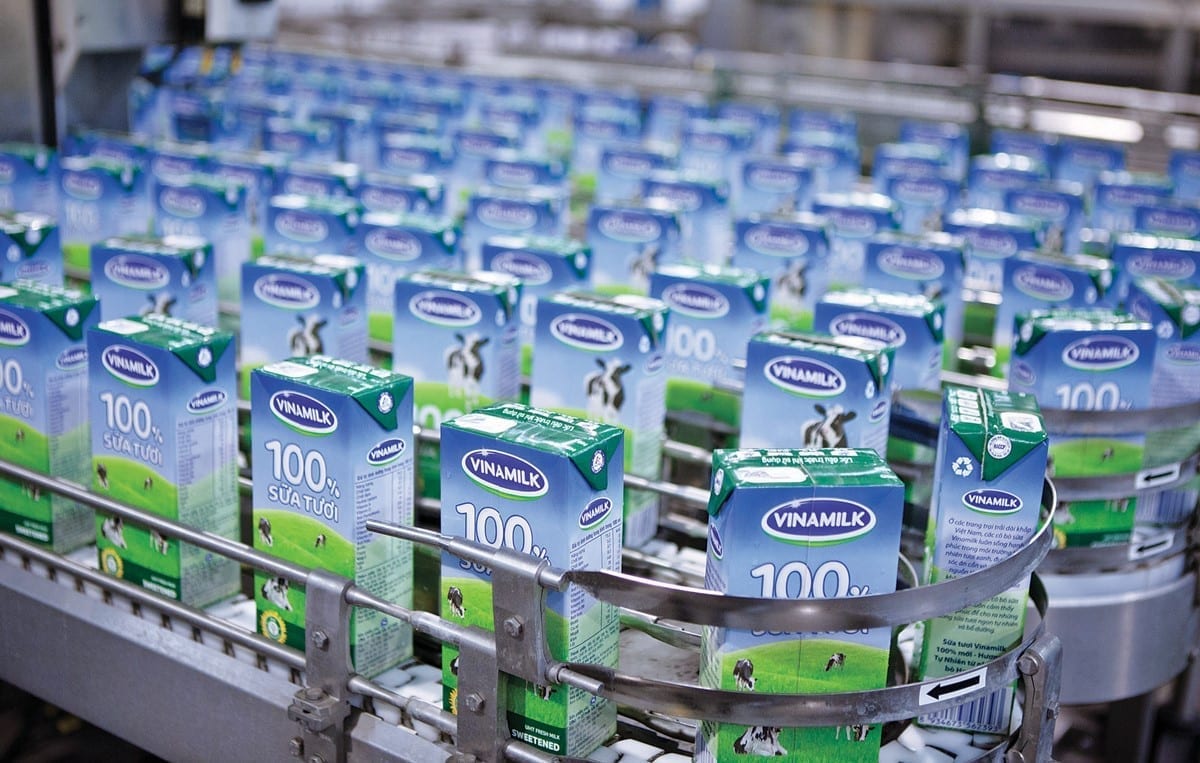
    Singapore’s biggest auto group Jardine Cycle & Carriage has bought an additional 1.1 percent stake in Vietnamese dairy firm Vinamilk, raising its current share in Vietnam’s biggest listed company to 10 percent.

    The investor bought 16.4 million more shares for VND3.1 trillion ($136.5 million) over the weekend.

    Last Monday, Jardine Cycle & Carriage spent $400 million on 48.8 million shares in Vinamilk after purchasing 48.3 million of shares for $396 million on November 10.

    The two deals gained it a 8.9 percent stake in the company, and with the latest deal it now owns 145.6 million Vinamilk shares, representing a 10 percent stake, the company announced on its website.

    Foreign investors currently hold a 56.4 percent stake in the dairy firm.

    Jardine Cycle & Carriage is now the third biggest shareholder after Singapore’s Fraser&Neave, which has a 18.74 percent stake.

    Vietnam’s State Capital Investment Corporation holds the majority share with a 36 percent stake.

    The government is trying to divest from hundreds of state-owned enterprises, including brewers Hanoi Beer Alcohol and Beverage JSC (Habeco) and Saigon Beer Alcohol Beverage Corp (Sabeco) in which it owns a combined $7.8 billion worth of shares by market value.

  • ASEAN signs free trade, investment pacts with Hong Kong

    ASEAN signs free trade, investment pacts with Hong Kong

    Hong Kong on Sunday signed free trade and investment pacts with the ten-nation Association of Southeast Asian Nations, in what one of the Chinese territory’s senior officials called a “loud and clear” vote against rising regional trade protectionism.

    The pacts conclude nearly three years of talks, are expected to take effect on January 1 at the earliest, and aim to bring “deeper and bolder” integration of market access with the bloc, said Edward Yau, Hong Kong’s commerce and development secretary.

    “In the face of protectionist sentiments in other parts of the world, these two agreements are in fact a loud and clear vote from all of us here for freer and more open trade,” Yau said.

    “Hong Kong, being a free trade promoter and advocate of a strong, rule-based multilateral trading system, will continue to take this pathway, continue to do our utmost.”

    Total merchandise trade between Hong Kong and ASEAN was HK$833 billion ($107 billion) last year, official figures show. Total services trade was HK$121 billion ($16 billion) in 2015.

    The ASEAN Hong Kong China Free Trade Agreement (AHKCFTA) was signed on the sidelines of a summit of the regional grouping in the Philippine capital of Manila.

    It came after leaders attending an Asia-Pacific Economic Cooperation (APEC) summit in Vietnam agreed to tackle “unfair trade practices” and “market distorting subsidies” in a statement on Saturday that bore the imprint of U.S. President Donald Trump’s efforts to reshape the global trade landscape.

    That summit offered a contrast between the vision of U.S. President Donald Trump’s “America First” policy and a traditional consensus favouring multinational deals that China now seeks to champion.

    While Hong Kong already has one of the world’s freest and most open economies, the pacts will see many ASEAN countries gradually eliminate or slash customs duties on goods from the former British colony that returned to Chinese rule in 1997.

    Professional services are also expected to benefit, with increased investment flows, Yau added.

    The ASEAN grouping includes Brunei, Cambodia, Indonesia, Laos, Malaysia, Myanmar, the Philippines, Singapore, Thailand and Vietnam.

  • Japanese-Bruneian fund seizes investment opportunities in Indonesia

    Japanese-Bruneian fund seizes investment opportunities in Indonesia

    SBI Islamic Fund (Brunei) Limited, a joint venture between Brunei Darussalam’s Ministry of Finance and Japan’s Strategic Business Innovator (SBI) Holdings, is looking for opportunities to invest in Indonesia.

    SBI Islamic Fund (Brunei) Limited CEO Amran Mohammad said the fund would build fish processing factories in Maumere, East Nusa Tenggara, and in Aceh. The facilities would be used to process tuna to be exported to Japan.

    “The one in Aceh will be much bigger than that in Maumere. We are sealing the agreement for [the project in] Aceh,” he told The Jakarta Post during the 3rd IDB Member Countries Sovereign Investment Forum in Nusa Dua on Tuesday.

    The investment for the development of the two facilities would come from its second sharia fund totaling US$60 million.

    Both Brunei’s Ministry of Finance and SBI Holdings contributed $25 million each to the fund, while the remaining $10 million comes from the Islamic Development Bank (IDB).

    SBI Islamic Fund (Brunei) Limited’s first sharia fund worth $75 million was created three years ago and invested in Indonesia’s logistics firm Pandu Logistics, among other investments.

    However, Brunei Ministry of Finance deputy permanent secretary for investment Khairuddin Abdul Hamid said the fund was still looking for another $40 million from private investors.

    “We have already talked with some prominent parties during this forum and are still waiting for the reply,” he said.

  • Philippines gov’t to sell $596M retail treasury bonds

    Philippines gov’t to sell $596M retail treasury bonds

    The Philippines plans to sell at least 30 billion pesos ($596 million) worth of three-year retail treasury bonds to provide small investors with safe investment options, the Bureau of Treasury said on Thursday.

    It would be the second retail bond issue under President Rodrigo Duterte’s nine-month-old government, which in September 2016 raised as much as 100 billion pesos from such offering.

    “We want more Filipinos to get into the habit of investing, and become more financially aware of how their money could work harder for them,” National Treasurer Rosalia de Leon said.

    Public offering runs from March 28 to April 6, with investors given an option to earn from a minimum investment of 5,000 pesos.

    The RTBs earn a fixed interest rate based on prevailing market rates with interest coupons paid quarterly.

    The treasury bureau has tapped First Metro Investment Corp and Land Bank of the Philippines as joint lead issue managers.

    BDO Capital & Investment Corp, BP Capital Corp, Development Bank of the Philippines, China Bank Capital Corp and SB Capital Corp are joint issue managers.

  • BEI of Jayapura office opens share investment clinic

    BEI of Jayapura office opens share investment clinic

    The representative office of the Indonesian Stock Exchange (BEI) in this Papua capital city has opened a clinic class for non active registered share investors.

    “They need guidance especially as the share customers are different in type. Therefore, we open share investment class for them,” head of the BEI representative office of Jayapura Kresna Aditya Payokwa, said here on Tuesday.

    Participants are told how to buy and sell shares, and how to analyze the marker trend, Kresna said.

    “We open the share investment clinic every Monday, Wednesday and Friday . Now it is already the fifth group,” he said.

    From the class it could be seen who among the investors more active in the share trade, he said, adding a prize is given to the most active traders.

    The clinic is part of the program to promote share trading in a bid to increase the number of investors in BEI.

    By January , 2017, BEI recorded 2,391 investors , up from 1,300 investors a year earlier.

    The number of investors in Papua has continued to increase. Transactions in 2016 were valued at Rp1.3 trillion. Monthly transactions average Rp100 billion, he said.

    Many of the investors at the Jayapura representative of BEI are not active, he said.

    “Transactions in January 2017 were valued at Rp70 billion with active participants making up only 60 percent of the total number of registered investors,” he said.

    Most of the people do not understand share trading. “BEI is new for them , therefore, we need to intensify socialization,” he added.