Retail News CRM

Tag: iphone

  • Foxconn chaos to leave Apple short 6 million iPhone 14 Pro and Pro Max units this year

    Foxconn chaos to leave Apple short 6 million iPhone 14 Pro and Pro Max units this year

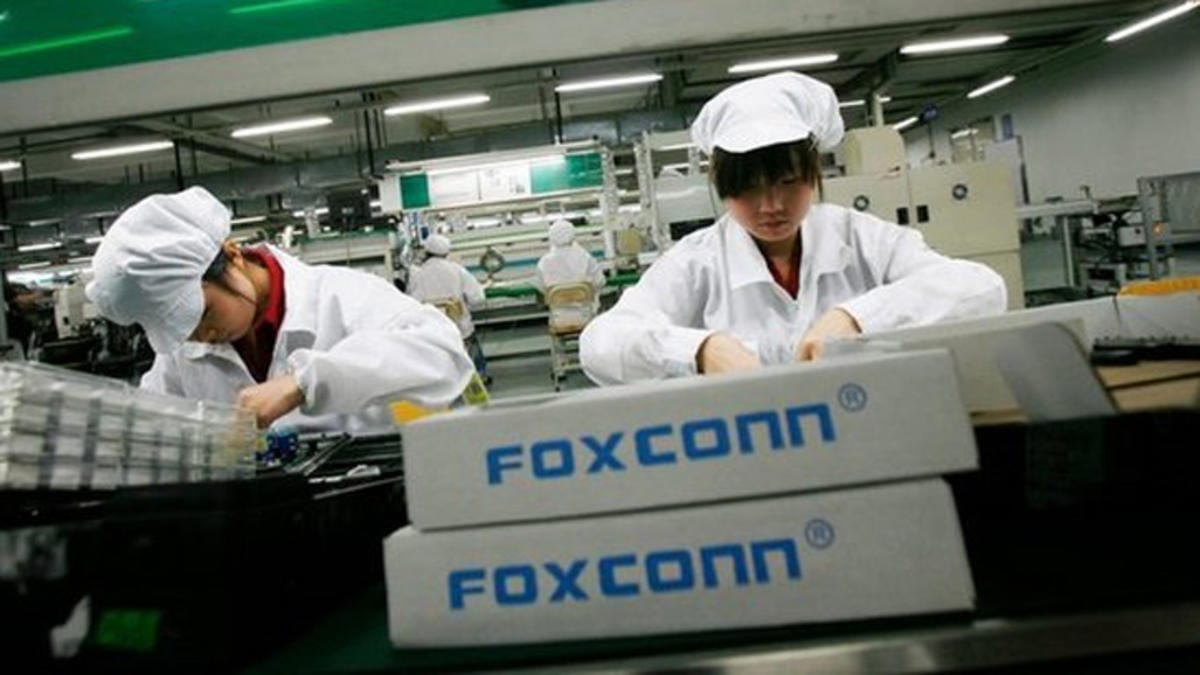
    We’ve closely monitored the events at Foxconn’s largest iPhone assembly facility in Zhangzhou, China. The factory reportedly produces half of the iPhone units made worldwide, and this year the plant is turning out iPhone 14 Pro and iPhone 14 Pro Max models. But production has slowed thanks to the exodus of workers who weren’t enamored with China’s COVID lockdown in the city.
    COVID has returned to China, forcing the country to lockdown certain areas. As a result, Foxconn now bans the consumption of meals in the communal dining room, forcing everyone to eat in their dorm. Workers also felt closed in, forced to stay on campus 24/7. After a large number of workers escaped, even Apple had to admit that the production of its pricier iPhone 14 Pro models this quarter would be less than expected. Apple did not specifically give an estimate of how many units it will be short but it did say, “customers will experience longer wait times to receive their new products.” Some reports called for as much as a 33% shortfall.
    Foxconn tried to entice new and former workers to man the assembly lines by offering bonuses for employees who stay for 30 and 60 days, and the Chinese government asked veterans and Communist party members to recruit new employees for Foxconn. And all of these things, the bonuses and the pressure from the government might have worked until last Tuesday night. That’s when a major clash between workers and security guards at the Foxconn grounds in Zhengzhou occurred.

    Workers said that the contracts they were offered would have paid them bonuses only after more than 60 days had gone by, and the employees also said that they weren’t being separated far enough away from older workers who might have COVID. In an attempt to quell the violence, Foxconn offered new employees cash to quit their jobs and leave the Foxconn campus. The company later said that a “technical error” was made relating to the bonuses and it apologized. Supposedly, 20,000 workers took the offer.

    Today, a new report from Bloomberg gives us a better idea about how Apple will be impacted by the chaos we’ve seen in Zhengzhou. The report indicates that Apple will be short nearly 6 million iPhone 14 Pro units this year. And make no mistake about it, the iPhone 14 Pro and iPhone 14 Pro Max are the more expensive 2022 iPhone models. Apple could take a $6 billion revenue hit during the current quarter. That would be 8.4% of the $71.6 billion in iPhone revenue generated during the fiscal first quarter of 2022 (October-December 2021).

    Considering that this shortfall would occur during the holiday shopping season, consumers worldwide could end up frustrated in their attempt to purchase one of the 14 Pro models as a holiday gift. Two weeks ago, even before the issues in Zhengzhou reached a fever pitch, UBS analyst David Vogt said that wait times for the iPhone 14 Pro and iPhone 14 Pro Max in the U.S. and China had hit “extreme levels.” In the U.S., the wait time was 34 days for these models while in China the wait was up to 36 days.

    Vogt pointed out that 35% to 40% of Apple’s calendar fourth quarter iPhone production is assembled during December which could lead to shortages during the fourth quarter of this year and extending into the first quarter of 2023. The analyst expects Apple to ship 83 million iPhone units during the fiscal first quarter of 2023 which already takes into account “recent disruptions.”
    However, Vogt made this comment before the violence broke out at the factory and before Foxconn paid 20,000 workers to leave the facility. If he does have a new updated figure, we will update this story.
  • Old iPhones back in vogue as new models remain beyond reach

    Old iPhones back in vogue as new models remain beyond reach

    With the iPhone 14 series expensive and difficult to obtain, many Vietnamese consumers are turning to used models.

    Huy Quoc of Hanoi has been looking to buy a phone with about VND20 million ($800) in hand. Originally, he planned to buy an iPhone 14 or an iPhone 14 Pro Max via instalment payments. Retail prices of iPhone 14 Pro and Pro Max are in the VND28.9-32.5 million ($1,165-1,310) range.

    However, after a few weeks of deliberation, he decided to buy a used 13 Pro Max in mid-November. Quoc said the “99%” (almost new) iPhone 13 Pro Max 256 GB cost him VND 20.5 million.

    He felt the price and six-month warranty provided by the store made his purchase a reasonable choice given his current budget and needs.

    “Even though it’s not the latest product, this is still a phone model with a more advanced configuration and design than the regular iPhone 14, with more stock, no waiting and not as costly as the 14 Pro Max,” he said.

    Many people seem to have adopted Quoc’s approach. Several retailers in Vietnam say that the number of people looking to buy used iPhones has increased significantly in November.

    The most bought used models are the Pro series of iPhone 12 and 13, and the regular and Pro Max versions of iPhones 11.

    The CellphoneS chain said that sales of second-hand iPhones in October and November increased by 40% compared to the previous months.

    “The iPhone 13 Pro Max is the most popular item among consumers, accounting for 40-45% of old iPhone sales,” said Nguyen Lac Huy, the company’s representative.

    At the HnamMobile chain, the iPhone 11 Pro Max model launched three years ago and currently priced at VND11 million continues to be the most popular old model, accounting for nearly 40% of second-hand phone sales, followed by 12 Pro / Pro Max, 13 Pro / Pro Max, each with 20%.

    According to Xa Que Nguyen, CEO of HnamMobile, pre-owned iPhones are now quite large in number and vary in models.

    “In the context of the genuine iPhone 14 being in short supply and of high price, older models, especially the Pro and Pro Max versions, are becoming the go-to option for many domestic users,” Nguyen said.

    According to store representatives, after sales of the iPhone 14 began mid-October, many people bought new models, indirectly creating a supply of used iPhones in the market.

    The new 128 GB VN/A iPhone 13 Pro Max is currently selling for about VND27 million, while an old one can be bought for VND20-21 million. The old iPhone 11 costs VND7-8 million, VND3 million lower than the new one. The iPhone 11/12 Pro Max can only be purchased as used devices.

  • New supplies quench iPhone thirst in Vietnam

    New supplies quench iPhone thirst in Vietnam

    Apple has shipped more iPhone 14 Pro and iPhone 14 Pro Max phones to Vietnam, easing a supply shortage that has lasted a month or so. Local distributors said they received iPhone 14 shipments in the middle of the week, the latest model many Vietnamese consumers were waiting for.

    Phung Phuong, representative of Mobile Vietnam said the latest shipment was enough to deliver to customers who had pre-ordered the phone, more than a month after its release.

    The next batch of the iPhone 14 models is expected to be delivered to Vietnam early January 2023, the peak shopping season because of the Tet (Lunar New Year) holiday.

    Nguyen The Kha, Director of Mobile Telecommunications Division of FPT Shop system, said it would be difficult to predict the price of new shipments amidst constant fluctuations in foreign exchange rates and the supply chain.

    Retail prices of iPhone 14 Pro and Pro Max are in the VND28.9-32.5 million ($1,165-1,310) range. Retailers said sales of the two models account for 90% of total iPhone 14 sales.

    On November 7, Apple had announced on its website that though there was strong demand for iPhone 14 Pro and iPhone 14 Pro Max models, their shipments would be lower than anticipated. It said customers would experience longer wait times to receive their new products.

    According to the U.S. tech giant, Covid-19 restrictions had temporarily impacted its primary phone assembly facility in the Chinese city of Zhengzhou, causing the supply shortage.

  • iPhone 14 Pro, Pro Max in short supply

    iPhone 14 Pro, Pro Max in short supply

    Customers have been waiting for a month for delivery of iPhone’s latest models, the 14 Pro and 14 Pro Max, due to high demand and low supply, retailers said.

    Apple said on its website on November 7 (Vietnam time): “We continue to see strong demand for iPhone 14 Pro and iPhone 14 Pro Max models. However, we now expect lower iPhone 14 Pro and iPhone 14 Pro Max shipments than we previously anticipated and customers will experience longer wait times to receive their new products.”

    According to the U.S. firm, Covid-19 restrictions have temporarily impacted its primary phone assembly facility in the Chinese city of Zhengzhou.

    Phung Phuong of Mobile Vietnam said Pro and 14 Pro Max supply only met 20% of demand in the country. Nguyen Huu Phuc of Minh Tuan Mobile said there is no plan or schedule for the next batch of deliveries to customers.

    Quoc Thien of the central city of Da Nang ordered a purple 128 GB Pro Max in mid-October and was told it would be delivered in two weeks. The store then rescheduled the delivery to early November, but Thien did not receive it then, and has not heard about the new delivery date either.

    Diem Ai in HCMC’s Go Vap District said she urgently needed to buy 20 Pro Max phones to gift, but no store could supply them though she was willing to pay extra.

    Pham Tuan Anh of ShopDunk said hundreds of customers who have ordered the purple Pro Max with 128 or 256 GB are waiting for delivery, but phones in other colors and with larger capacities are available.

    The Pro and 14 Pro Max cost VND28.9-32.5 million (US$1,165-1,310). The purple version costs an additional VND1 million ($40).

    In contrast, the iPhone 14 and 14 Plus, also released in mid-October, are widely available.

    Retailers said sales of the two models account for less than 5% of total iPhone 14 sales.

  • Dollar hike spikes iPhone prices

    Dollar hike spikes iPhone prices

    Electronic retailers have hiked iPhone prices by around VND1 million (around $40) as the U.S. dollar strengthens against the Vietnamese dong.

    The prices of iPhone 11 has increased from VND10.7 million last week to VND11.3-11.7 million this week, that of iPhone 13 from VND18.5 million to VND19.1-19.3 million, and iPhone 13 Pro Max from VND27 million to VND28-28.5 million.

    The U.S. dollar has risen 8.55% over the Vietnamese dong since the beginning of this year.

    Most retailers have hiked prices of older models like iPhone 12 and iPhone 13 Series by more than 5%, but kept those of the latest model, iPhone 14, unchanged to attract customers.

    However, many dealers say that the selling prices of iPhone 14 will also increase sooner than later because of the exchange rate.

    A 24hStore manage told Tuoi Tre newspaper that iPhone 14 prices are likely to go up by more than VND1 million, and that of iPhone 14 Pro by more than VND2 million.

    Since the U.S. dollar has risen against the Vietnamese dong to nearly VND25,000, the selling prices of other new products of Apple, including iPad Pro M2, iPad Gen 10, MacBook and Apple Watch, as well as their accessories such as styluses and keyboards, have increased by 5-7%.

    A CellphoneS store manager said most importers and distributors of Apple products and related accessories such as charging cables and speakers have hiked their selling prices by 5-10%.

    Some others, which have yet to increase prices, have cut promotions.

  • Vietnam contributes to Apple’s sales boom

    Vietnam contributes to Apple’s sales boom

    Apple’s chief financial officer said iPhone sales was particularly impressive in several large emerging markets, including Vietnam.

    Luca Maestri as saying Saturday: “We set September quarter records in the vast majority of markets we tracked. And our performance was particularly impressive in several large emerging markets, with India setting a new all-time revenue record and Thailand, Vietnam, Indonesia and Mexico more than doubling yearly.”

    Apple’s fourth financial quarter ended when iPhone 14 was just launched. Strong growth in iPhone sales in large emerging markets contributed to the company’s revenues of US$90.1 billion and profit of $20.7 billion during the quarter.

    For the full fiscal year revenues were $394.3 billion, up 8% from the previous year.

    Apple CEO Tim Cook said: “Across nearly every geographic segment, we reached a new revenue record for the quarter.”

    Recently Vietnamese retailers reported a boom in iPhone sales, with FPT Shop, The Gioi Di Dong, and CellphoneS seeing huge sales of the 13 Pro Max, which costs more than VND30 million ($1,200).

    The manger of a retail chain said the second and third quarters are usually the slowest in the smartphone market, but the discount and other promotions to clear stocks to prepare for the iPhone 14 have helped older models achieve bigger sales.

    Experts predicted strong growth for Apple in the last quarter, with the iPhone 14 continuing to sell well.

    However, the management acknowledged it is difficult to buy the 14 Pro and Pro Max models because production speed has not caught up with demand in many markets.

  • TSMC suspends production of powerful GPU chip for Chinese tech firm

    TSMC suspends production of powerful GPU chip for Chinese tech firm

    Taiwan Semiconductor Manufacturing Company Ltd. is known throughout the planet as TSMC. The largest foundry in the world produces chips based on the designs presented to it by companies like Apple, Qualcomm, Nvidia, MediaTek, and more. In fact, Apple is TSMC’s largest customer and accounts for approximately 25% of the company’s revenue.
    TSMC currently produces powerful and energy-efficient chips such as the Apple A16 Bionic found inside the iPhone 14 Pro series, and the Qualcomm Snapdragon 8+ Gen 1 found in newer high-end Android phones including the Samsung Galaxy Z Fold 4, Galaxy Z Flip 4, and the Motorola Edge 30 Ultra. TSMC has suspended production for Chinese start-up Biren Technology.
    The reason for halting production for this company is that TSMC is following U.S. regulations that prevent it from making chips for the Chinese-based firm. Part of the reason for this is that Biren’s products outperform Nvidia’s A100 Graphics Processing Unit (GPU) silicon based on what the English language South China Morning Post calls “information in the public domain.” The U.S. is trying to keep cutting-edge chips away from China.
    This past September, the U.S. ordered that Nvidia stop shipping the A100 chip to China to “…address the risk that products may be used in, or diverted to, a ‘military end use’ or ‘military end user’ in China.” The A100, according to Nvidia, is used to “power the world’s highest performing elastic data centers for AI, data analytics, and high-performance computing (HPC) applications.”
    The U.S. Commerce Department last month expressed a goal to “keep advanced technologies out of the wrong hands.” China called it a “tech blockade.” At the same time, commerce ministry spokesperson Shu Jieting said that “the U.S. continues to abuse export control measures to restrict exports of semiconductor-related items to China, which China firmly opposes.”
    Biren was trying to raise funds earlier this year at a valuation of $2.7 billion. The company designs its BR100 and BR104 processors to be competitive with GPUs designed by Nvidia and AMD that work with AI and Machine Learning models and algorithms.
    TSMC itself isn’t sure that Biren’s chips are covered by U.S. regulations but has decided to halt their production anyway. Biren, of course, says that its AI chips are not covered by U.S. export restrictions. A TSMC spokesperson made a limited statement noting that the foundry complies with all relevant rules. The U.S. Commerce Department’s Bureau of Industry and Security (BIS) announced new semiconductor restrictions on October 7th.
    A spokesperson for the U.S. Commerce Department said, “While BIS cannot comment on company-specific actions, we expect all companies to comply with export controls. Since the rule’s release on October 7, BIS has been undertaking a vigorous outreach effort to educate those impacted by it to aid compliance efforts.”
    One of the Biren GPU chips that TSMC was going to produce for the company was the BR100 GPU which was manufactured using TSMC’s 7nm process node and features 77 billion transistors in each chipset. This particular component was said to be 2.8 times faster than Nvidia’s A100.
    Export rule changes have been used before to restrict the distribution of silicon to China. A restriction announced by the U.S. Commerce Department in 2020 prevents foundries using American technology to manufacture advanced chips from shipping these chips to Huawei. The latter is considered a national security risk by both major political parties and the restriction has forced Huawei to abandon its own Kirin 5G Application Processor (AP) chips. Its current flagship Mate 50 and Mate 50 Pro handsets are powered by the Snapdragon 8+ Gen 1. While this is Qualcomm’s current top-of-the-line mobile AP chipset, the chip sold to Huawei is tweaked to prevent it from working with 5G networks.
  • Apple reportedly cuts iPhone 14 Plus production

    Apple reportedly cuts iPhone 14 Plus production

    Last year Apple announced that it was doing away with the iPhone mini. The model with the 5.4-inch display twice (with the iPhone 12 mini and iPhone 13 mini) failed to gain any traction with the phone-buying public. So the crew in Cupertino had an epiphany; if going small doesn’t work, we will go LARGE. Apple decided to replace the iPhone 13 mini this year with a 6.7-inch non-Pro model that Apple named the iPhone 14 Plus.
    The 6.7-inch panel gives the iPhone 14 Plus the same screen size as the iPhone 14 Pro Max although the quality of the display is better on the pricier model. The iPhone 14 Plus also features the boring and static notch instead of the shape-shifting and entertaining Dynamic Island. It also doesn’t have the spectacular camera setup found in the iPhone 14 Pro Max, nor does it offer the 120Hz refresh rate of the ProMotion display.
    You might think that the outstanding battery life of the iPhone 14 Plus (it has a 4325mAh battery which is slightly larger than the 4323mAh battery powering the iPhone 14 Pro Max) and the lower price ($899 and up compared to the starting price of $1,099 for the iPhone 14 Pro Max) would have helped to generate some big time sales of the phone. But Apple had some manufacturing issues with the device which forced a delay in the handset’s release to October 7th. The rest of the line was in stores on September 16th.
    Apple has decided to cut production of the iPhone 14 Plus. The report alleges that Apple has already told one supplier in China to halt production of the components they make for the iPhone 14 Plus. In late September, another report indicated that demand for the entire iPhone 14 series was less than what Apple expected.
    That report also said that the iPhone 14 Pro and iPhone Pro Max have been outselling the non-Pro phones and that Apple has decided to shift some production to the more expensive models. In late September, those familiar with Apple’s plans said that the company had changed its production target for the second half of the year to 90 million units which would be flat with the number of iPhone 13 models that were produced during the second half of 2021.

    Some of the problems that Apple is seeing has to do with softening demand for smartphones in general. Research firm Canalys says that the smartphone market declined 9% during the third quarter on a year-over-year basis. The firm also says to expect weak smartphone demand over the next six to nine months.

    Some critics will point out that almost every year Apple is rumored to cut iPhone production for one reason or another. Within a few weeks afterward, another story comes out denying that Apple sliced production. The timing of this story is interesting considering that Apple is expected to report its fiscal fourth-quarter earnings on October 27th. This is a very volatile time for the stock as professional traders are taking positions on Apple’s shares based on what they believe the fiscal fourth quarter results will be.
    The possibility of Apple cutting production along with a weak general market has pushed the company’s shares down slightly this afternoon. Some traders will fade stories like this and buy the stock or call options paying a cheaper price because of the decline in the stock generated by this news.
    Some Apple investors (more like gamblers to be honest with you) consider reports like today’s to be created as a way to manipulate the price of Apple’s shares. However, considering that we have been seeing a slowdown in smartphone demand in general due to economic conditions worldwide.
  • iPhone 14 sales fetch millions of dollars

    iPhone 14 sales fetch millions of dollars

    Vietnamese spent millions of dollars buying iPhone 14 smartphones when it was launched on Oct. 14.

    The manager of an electronic retail store estimated more than 55,000 phones, mostly the most expensive version, Pro Max, were sold. “The total revenues were over VND1.5 trillion (US$63.8 million).”

    Many distributors reported record sales. FPT Shop sold 5,000 iPhone 14s right in the early morning on Oct. 14, and a total of over 14,000 worth VND400 billion ($17 million) during the day. It has yet to deliver to over 5,000 buyers.

    The Gioi Di Dong said it has delivered some 12,000 phones, mainly iPhone 14 Pro Max 128 GB and 256 GB to pre-ordered customers. Many other distributors and e-commerce platforms also reported sales of hundreds of billions of dong. Of the four versions of the phone, Pro Max accounted for some 80% of sales.

    Business insiders said the current shortage of Pro and 14 Pro Max versions would continue at least until the end of October. The Gioi Di Dong has to deliver over 20,000 phones yet, and others also have thousands of unfulfilled pre-orders. People looking to buy the Pro Max have to place pre-orders and wait until November for delivery.

    But the two least expensive variants, iPhone 14 and iPhone 14 Plus, are available at most stores.

    Retailers required iPhone 14 buyers to unseal and activate the phone right at the shop to prevent them from reselling at higher prices. However, many iPhone 14 Pros were indeed resold at VND1-2 million higher than the official price, and Pro Maxs at a VND4 million premium.

    According to statistics released by the Ministry of Industry and Trade, Vietnam spent over US$1.2 billion importing iPhones last year.

    Overall, imports of phones and comp

  • Digital marketing trends for China in 2022

    Digital marketing trends for China in 2022

    Digital marketing trends are always evolving in China and without the set features of global platforms like Google and Facebook, Chinese digital companies are often leading the rollout of promotional and ecommerce features on their platforms. Therefore, it is very important to stay on top of  these trends to leverage the most value out of every marketing dollar.

    Live streaming shopping format

    Livestreaming is one channel that has become extremely popular in China. In 2020 alone, $1.2T of sales were generated through livestreaming with $151B generated on Singles’ Day which is a big shopping day in China. Platforms from Alibaba and Tencent are pushing this medium and social media applications like Douyin have also added very successful livestreaming options with integrated online stores. KOL marketing in China has become part of the strategy for major brands and you will find celebrities and even diplomats using the medium to get information out and sell for brands, report Ashley Dudarenok from Alarice International, a digital marketing agency specialised on the Chinese market.

    Rise of Bilibili

    Another interesting development in the social media space has been the rise of Bilibili as a force to contend with. Originally started as a community for those interested in anime and videogame culture, the site has grown to 171 millions monthly users. Bilibili offers brands the chance to target younger demographics directly and keep track of the trends popular among the young in China. 70% of users on the platform are below the age of 24 and this allows brands to push out very relevant content. Collaborations with KOLs and content creators on this platform will also reap huge benefits.

    WeChat mini programs

    WeChat mini programs allow brands to create a customized interactive experience for their followers. The number of people using WeChat mini programs has risen by 11% to 829 millions monthly users from 2019 to 2020 and continues to grow. The huge variety of applications that can be created on the platform can range from the useful, like productivity apps to the inspirational, like stories told through games. Leveraging this open form tool will be integral to marketing strategies as we move forward.

    Existing brands’ goals

    Brands should also examine case studies of other companies that have made successful forays into China. Some of the trends that these brands are focused on include:

    Brands want to create private traffic

    Over the last few years of international brand penetration competing with domestic companies, advertising and therefore, acquisition costs in China have skyrocketed. On Tmall, the customer acquisition cost more than doubled from 207RMB to 536 RMB from 2018 to 2019. So, brands have started to work out strategies to reduce reliance on traffic from external platforms like WeChat and ecommerce platforms. This means creating owned properties like blogs and email lists where customers can be contacted directly instead of having to rely on traffic from external sources.

    Brands want to reach lower-tier cities and young consumers

    Another area of growth has been targeting demographics where there is still market share to be won. Lower-tier cities have increasing mobile network penetration and spending power which makes them very attractive. This is a strategy being used by Pinduoduo, an emerging ecommerce platform looking to compete with Alibaba and Tencent. Using a combination of low prices and social features, the company has seen the most growth year on year compared to Alibaba and Tencent. Targeting younger consumers has also been on the agenda for many brands and platforms like Bilibili allow for this.

    Conclusion

    Having an appreciation that consumer expectations and buying culture in China can be very different from other countries is very important to success.

  • Apple iPhone users sue Meta for allegedly stealing their personal data

    Apple iPhone users sue Meta for allegedly stealing their personal data

    When Apple started to allow iPhone users to opt-out of getting tracked by third-party apps with the App Tracking Transparency (ATT) feature last year, Facebook complained the loudest with CEO Mark Zuckerberg shelling out the big bucks it costs to run full-page ads in some big-time newspapers. And as it turned out, Zuckerberg knew exactly what was coming and as he figured, it was a disaster.
    According to the Electronic Frontier Foundation, in the year since the ATT rolled out, Facebook lost $10 billion in potential revenue. There is speculation that Facebook has come up with a way to help it generate the revenue it lost from Apple’s decision to roll out ATT. Just last month, we told you that Felix Krause, a former Google engineer, and a security researcher, alleged that Meta is tracking the keystrokes made by iOS users typing on Facebook’s in-app browser.
    Krause said that Facebook and its Instagram unit could use JavaScript to grab your credit card data, address, passwords, and more without your permission. Now comes word that two class action suits have been filed against Facebook parent Meta by three iOS users who are citing Krause’s allegations. The lawsuits were filed on behalf of all iOS users impacted and accuse Meta of committing several illegal actions, including:
    • The concealing of privacy risks.
    • Ignoring the privacy choices made by iOS users.
    • “Intercepting, monitoring, and recording all activity on third-party websites viewed in Facebook or Instagram’s browser.
    The plaintiffs claim that Meta used the data collected to collect “personally identifiable information, private health details, text entries, and other sensitive, confidential facts.” The users, whose information was allegedly stolen by Meta, had no idea that this was going on. The latest filing was made yesterday by California’s Gabriele Willis and Kerreisha Davis from Louisiana.
    Adam Polk, a lawyer, working for the law firm of Girard Sharp LLP, which is handling the case involving Willis and Davis, said it is important to stop Meta from continuing to hide their continued privacy invasions. The law firm also pointed out that in the past, Facebook (now Meta) had been fined $5 billion by the Federal Trade Commission (FTC).
    Polk said that “Merely using an app doesn’t give the app company license to look over your shoulder when you click on a link. This litigation seeks to hold Meta accountable for secretly monitoring people’s browsing activity through its in-app tracking even when they haven’t allowed Meta to do that.”
    The complaints related to the class action suit “revealed that Meta has been injecting code into third-party websites, a practice that allows Meta to track users and intercept data that would otherwise be unavailable to it.” Researcher Krause has determined that Meta uses code to override the wishes of Facebook users wanting to use their default browser forcing them to use Facebook’s in-app browser instead when using the app.
  • Walmart now lets you try clothes on a virtual model of you by using only your iPhone

    Walmart now lets you try clothes on a virtual model of you by using only your iPhone

    It’s very convenient to buy clothes online. However, there’s always the risk of not liking how the apparel looks on you when you try it at home. And when this happens, then the whole online shopping thing becomes a hassle. But what if you could see how the new t-shirt you are so eager to buy will look on you before ordering it?

    Well, it appears that Walmart now offers a way for you to try your potential purchases online and then decide whether you will add them to your cart. As the company announced in a new press release, the Walmart app on iOS now offers a “Be Your Own Model” feature, allowing you to try clothes on a virtual model of you created from a photo of yours.

    To do this, tap the “Try It On” button and then choose the “Be Your Own Model” option. The first time, you will be prompted to take a picture of yourself within the Walmart app and input your height. After that, you will see an image of you wearing the item.

    You could argue that the system just slaps images of clothes on your picture and that there is nothing special about it, but according to Walmart, its technology uses algorithms and AI, which was originally created for designing highly accurate topographic maps. The company stated that, with Be Your Own Model, you see an “ultra-realistic simulation” with shadows and fabric draping, including where your desired clothing falls on your virtual body.

    Walmart also shared that more than 270,000 items across the retailer’s portfolio now support the virtual try-on feature. The company also stated that Be Your Own Model will soon be available on Android and Desktop as well.

    In 2021, Walmart acquired Zeekit, a company developing a virtual fitting room platform. And earlier this year, it introduced the try-on feature, but up until now, you could use it only with a virtual model that resembled you the most.

  • iPhone sales more than double in Q2

    iPhone sales more than double in Q2

    iPhone increased its market share in Vietnam to 15.4% in the second quarter from 7.1% a year earlier to become the third largest seller in the country.

    Its year-on-year growth of 115% was the highest among all manufacturers, Hong Kong company Counterpoint Research said in a report.

    Sales from 230,000 devices in Q2/2021 to nearly 500,000. But overall smartphone sales fell by 0.9% to 3.2 million units.

    Apple was behind Samsung (38.4% share) and Oppo (20.7%), but surpassed Xiaomi (13.2%) and Vivo (4.4%).

    Vietnamese buyers’ preference for high-end devices and price cuts on older iPhone models drove Apple’s sales up, with two of its products being best-sellers, the report said.

    “The premium price band (>US$400) grew by around 75% year-on-year driven by the iPhone 11, iPhone 13 Pro Max and Galaxy S series,” Counterpoint analyst Akash Jatwala said.

    Apple also increased the number of its stores in Vietnam via official distributors, helping further expand its customer reach as offline remains the key sales channel in the market.

    Vietnam is one of the emerging markets with “very strong double-digit growth” that have contributed to the company’s success in the second quarter of 2022, Apple CEO Tim Cook said recently.

    Xa Que Nguyen, CEO of smartphone store chain Hnam Mobile, said: “This is not surprising as Apple is paying more attention to Vietnam. Second quarters are normally low seasons, but Apple’s price drops have stimulated demand.”

    The Counterpoint report had “moderate expectations” of Vietnam since demand could be affected by macro issues and consumer preference could shift to other essentials.

  • Samsung is reportedly giving Apple the chance to close the gap in phone shipments this year

    Samsung is reportedly giving Apple the chance to close the gap in phone shipments this year

    Earlier this month we passed along a report from Reuters stating that smartphone production at Samsung’s Vietnam factories, which are responsible for half of the company’s annual phone production, had been curtailed sharply. Samsung continues to lead the world in smartphone shipments, it has dropped its target for 2022 and now plans to deliver 260 million units down 13.3% from its earlier estimate of 300 million units.

    The report added that Samsung originally planned to build 334 million smartphones this year and ship 300 million of them. Out of the 334 million units scheduled for production, 284 million handsets were set to roll off of Samsung’s own assembly lines with 50 million being produced by its China-based contract manufacturers. But after taking the headwinds into account such as supply chain issues (like the chip shortage and a shortage in experienced workers), inflation, and the drop-off in demand for smartphones, Samsung reportedly has cut production plans.

    TheElec says that between October and November, Samsung plans on building only 34 million smartphone units in its own factories. It says that this would be a huge decline compared to the same time period in previous years.

    Last year, the South Korean manufacturer shipped approximately 270 million units, so if Sammy does deliver 260 million handsets, it would be a 3.7% decline on an annual basis. It also could give Apple a chance to close the gap with Samsung. Last year, Apple delivered 235 million iPhone units and this year the iPhone 13 line has been selling well with the iPhone 14 series to be unveiled possibly inside three weeks.
    During the second quarter of 2022, Canalys reported a 9% year-over-year decline in smartphone shipments. Samsung still had the highest market share in the industry at 21% thanks to its mid-range Galaxy A product line. More affordably priced than its premium handsets, the Galaxy A models have big screens, viable cameras, and huge batteries. Apple was next with a 17% slice of the global smartphone pie followed by Xiaomi (14%), Oppo (10%), and Vivo (9%).
    If Samsung does see its smartphone shipments decline to 260 million units, it would be its lowest annual total since the pandemic reduced 2020 deliveries to 253 million. The year before, it had shipped 296.5 million smartphones.
  • With iPhone 14 coming soon, Apple changes the focus of its television advertising

    With iPhone 14 coming soon, Apple changes the focus of its television advertising

    Apple’s Services unit is the company’s second-largest business segment after iPhone. With nearly $20 billion in revenue during the fiscal third quarter, the unit is running at close to an $80 billion annual rate. One of the less-heralded but brilliant moves made during the Tim Cook era was to take advantage of the large number of active iPhones around the world and sell their users recurring monthly subscriptions that bring in revenue 12 times a year.
    Apple Services includes Apple Music, Apple News+, Apple TV+, Fitness+, iCloud, and Apple Arcade. Those services charge monthly subscription rates. Other Apple services that are part of the unit include the App Store, Apple Pay, Apple Care+, and more.
    With the unveiling of the new iPhone 14 line approximately four weeks away, Apple has apparently decided that now isn’t the time to advertise the iPhone 13 series with the world waiting for the 2022 handsets to be introduced. In other words, Apple wouldn’t be getting the same bang for the advertising buck with many potential buyers waiting for the new line to be announced.
    So today Apple released its latest television ad, a thirty-second spot for Apple One. In 2020, Apple created the Apple One bundle which has three separate tiers of service. These are the Individual Plan, the Family Plan, and the Premier Plan.
    Individual Plan-$14.95 per month (saves $6/month)
    • Apple Music
    • Apple TV+
    • Apple Arcade
    • 50GB of iCloud storage
    Family Plan-$19.95 per month (saves $8/month; can be shared with five other people)
    • Apple Music
    • Apple TV+
    • Apple Arcade
    • 200GB of iCloud storage
    Premier Plan-$29.95 per month (saves $25/month, can be shared with five other people)
    • Apple Music
    • Apple TV+
    • Apple Arcade
    • 2TB of iCloud storage
    • News+
    • Fitness+
    The new ad shows off the services inside the bundle. Apple Music is mentioned first and the music streamer includes surround sound. The 3D Spatial Audio feature allows you to hear music that sounds like it is coming from all around you. Next is Fitness+, which is only part of the most expensive Premier plan although it can be subscribed to a la carte ($7.99/month, $79.99/year). Fitness+ offers workout videos that cover 11 different styles. While you are working out, the screen will show your heart rate along with other metrics related to your workout.
    Like Apple Music, TV+ is available on all three tiers of Apple One. The new ad points out that with TV+ you can see the biggest stars just as the screen quickly shows Jennifer Aniston and  Reese Witherspoon (The Morning Show) and Tom Hanks (various films). News+ is also found only on the highest-priced Premier tier of Apple One and includes the best publications on Earth, according to Apple.
    Apple Arcade is also available on all three tiers of the Apple One bundle and features over 200 ad-free games. Also on all three tiers is cloud storage service iCloud. Apple says that with iCloud, you can store everything that you love. Note, however, that the amount of available storage depends on the plan you purchase. The individual plan comes with 50GB of cloud storage, rising to 200GB with the Family Plan. And with Premier, you get a whopping 2TB of cloud storage.

    If you’re already subscribed to some of Apple’s recurring subscription services, you might be able to save some money by signing up for Apple One instead. With the Premier tier, you can save as much as $25 per month by going with the bundle. You can start with a one-month trial of Apple One. From your iPhone, tap on Settings and then your name. Go to subscriptions and tap on the Apple One box. That will take you to the sign-in page and at the bottom of the screen you will see a blue button that says “Start Free Trial.”