Retail News CRM

Tag: iphone

  • iPhone 13 Pro Max is Apple’s most popular phone in Vietnam

    iPhone 13 Pro Max is Apple’s most popular phone in Vietnam

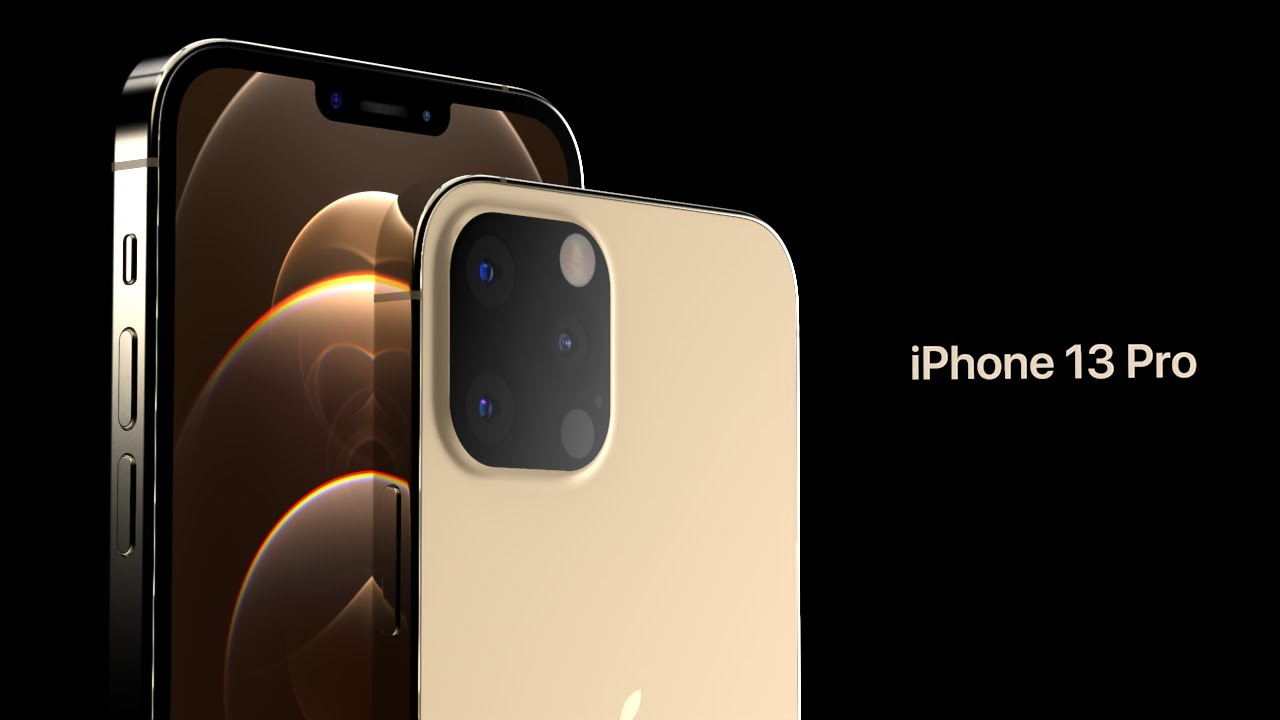
    The high-end iPhone 13 Pro Max was Apple’s top-selling smartphone in Vietnam in the first half of the year, according to data from retailers.

    At FPT Shop, the 128-GB version has been topping sales for months, beating out the iPhone 11 and cheaper Android devices like the Samsung Galaxy A12 and A22.

    CellphoneS and Minh Tuan Mobile reported similar results.

    At The Gioi Di Dong, no Apple device made it to the top 10 list in terms of number of units sold, but iPhone 13 Pro Max (128 GB and 256 GB version) topped in revenues due to their high price tags.

    “Despite having the highest price, the 13 Pro Max beat other Apple smartphones in sales,” Nguyen Lac Huy, media representative of Cellphone S, said. “It was followed by the iPhone 11 after its price drop in late June.”

    The iPhone 13 Pro Max was launched last September, and pre-orders for it accounted for 70 percent of all Apple sales then. It also dominated the high-end smartphone segment (prices of VND20 million ($857) and higher).

    Its closest competitor was the iPhone 11, which had a price tag of VND10.5 million.

    Retailers expect sales of the 13 Pro Max to keep rising thanks to the price adjustment at the end of June, which brought it down to VND27 million.

    “Buying the most high-end model is common among Vietnamese,” Nguyen Huu Phuc, head of sales at Minh Tuan Mobile, said.

    “Meanwhile, retailers also offered various promotions on the device, and so the iPhone 13 Pro Max always accounted for a large proportion of sales.”

    Huy of CellphoneS said the iPhone 13 Pro Max “will definitely retain its best-selling position” until new products are launched.

  • Apple receives patent for technology that helps iPhone users type in the rain

    Apple receives patent for technology that helps iPhone users type in the rain

    Apple has just been awarded a new patent from the U.S. Patent and Trademark Office called “Modifying functionality of an electronic device during a moisture exposure event” that could make it easier to use an iPhone in the rain. Sure, your phone is probably built to withstand some moisture, but that doesn’t make it easy to type on a wet display or with wet fingers.

    Apple plans to have the iPhone screen adjust to the moisture whether it is light rain, a steady drenching, or if the handset is being used underwater. False taps on the screen generated by the liquid will be detected by the technology listed in the patent and eliminated. On-screen controls could change accordingly with buttons growing larger while also moving farther apart from other buttons to improve the accuracy of pressing the right button when the screen is wet.

    At the same time, the capacitive iPhone display would automatically change to a pressure-sensitive screen similar to Apple’s no longer used Force Touch and 3D Touch technologies. To prevent rain drops or liquid from accidentally setting off touch inputs, Apple would require these finger presses to have more force than a dynamic threshold that would change depending on the kind of moisture event (light rain, heavy rain, for example) that is making the touch screen hard to accurately type on.

    An image in the patent documentation shows an iPhone camera app offering settings for “dry,” “wet,” and “underwater” modes. Depending on the mode, changes are made to the camera UI. For example, in wet mode, some features are removed from the UI while in underwater mode, some controls are replaced with extra-large buttons. They are easier to activate underwater but have restricted functionality.
    The phone’s display will show the current depth of the device in order for the user to keep it within the limits of the handset’s water resistance. Apple will have to take care with the size expansion and the location changes of camera UI buttons to make sure that users do not get confused.
    Apple receives so many patents over the course of a year and not every one results in new technology that is implemented right away. It is not clear whether Apple will be interested in implementing this patent right away.
  • Google announces five new features coming to Chrome for iPhone and iPad

    Google announces five new features coming to Chrome for iPhone and iPad

    If you have an iPhone and don’t like Safari, chances are you’re using Google’s internet browser, Google Chrome. If that’s the case for you, you’ll be delighted to hear that Google Chrome’s latest update for iOS is now bringing some very useful features, including improved security, a redesigned main screen, and more.

    Google has recently been bringing loads of updates to its Chrome browser. Now, some update love is being sent to its iOS version, and Google has announced some new features coming our way. Let’s see what these are.

    First off, we have Google’s Enhanced Safe Browsing feature. This one is a security-centered feature that proactively warns you about dangerous websites you are about to visit. Enhanced Safe Browsing has been available on Android and desktop for months now, and it’s finally made its way to iPhone users.

    The feature works by sending real-time data to Google Safe Browsing to check for malware, phishing, and other dangerous animals that lurk in the Internet’s dark corners. This way, you’ll get warned if you encounter a dangerous website.

    Speaking about security, Chrome for iOS also gets another useful feature: alerts for compromised credentials. iOS’ own password service does warn you about those, but it’s never a bad thing to get two warnings if you have a compromised password: you know, hackers can use this to access some of your accounts, so better be vigilant about it.

    To enable Enhanced Safe Browsing, update your Chrome app, and then go to Chrome > More > Settings > Enhanced Safe Browsing (you can do that from iPhone or iPad).

    Moving on, another useful features coming to Chrome for iOS is called “Chrome Actions”. This is a quality-of-life feature that lets you easily perform a certain tasks without having to dive deep into the app’s settings to find it.

    To use Chrome Actions, you simply need to type into the address bar of Chrome what you want to do. Examples include typing “Clear Browsing Data” or “Open Incognito Tab”, and even “Set Chrome as Default Browser”.

    Additionally, Chrome can also predict when you will need a Chrome Action by the words you are typing in the address bar, so you don’t need to memorize all the commands to benefit from this feature. Since 2020, the desktop version has had it, and Android users got it in April 2022, but it’s never too late to get something useful like that.

    But that’s not all. This new update lets you set Google Password Manager as your Autofill provider, if you want to do so. This comes as an alternative to Apple’s own password service, as well as third-party tools such as 1Password or Dashlane.

    The app’s main screen also has a new look now with this new update. The main screen now includes more than just your recent tabs, adding access to your Discover feed. Unlike the previous features, that’s something the Android version of Chrome is yet to get, and Google has stated it will be available in the future.
    The update also brings some minor changes as well. There are improvements of Google’s website translation feature. This will help you see websites in your preferred language (the feature uses on-device machine learning), and it is now getting an updated language identification model. Pretty much, this means the app will be able to more accurately recognize the language of a webpage and whether it needs to be translated for you.
    Other minor tweaks include the ability to manage camera and mic permissions for specific sites, and the ability to download and add iCalendar files to your Calendar.
  • Spotify working on a Community page that shows what your friends are listening to in real-time

    Spotify working on a Community page that shows what your friends are listening to in real-time

    Spotify has been steadily evolving in the past few months, from testing more podcast features to aiming to conquer the audiobook market. It appears the music-streaming platform has another area in which it sees more possibilities for growth – the social aspect. Spotify is working on adding a new Community tab, which will allow you to check out what your Facebook friends are listening to.
    Then, what is this feature all about (at least for now)? The Community page looks similar to the Friend Activity sidebar in the desktop version of Spotify. The page lets you keep track of what your friends are listening to in real-time.Well, it basically pulls the list of songs from your friends’ Facebook accounts – if these are connected to the app.

    You can get a preview of the tab if you have an iPhone: open Safari, go to “spotify:community” via the address bar, and then tap the button to open the Spotify app. This shortcut doesn’t work on Chrome on Android so far, so only iPhone users can get a glimpse of the new page for now (it is still unfinished by the way, as it is in early development).

    Given the fact that this feature is still in early development, it is unknown how much time it will take for Spotify to refine it and release it as a part of an official update. So, it might take a while before you’ll be able to check out your friends’ music preferences from the app.

  • Apple suppliers competing for workers in Vietnam

    Apple suppliers competing for workers in Vietnam

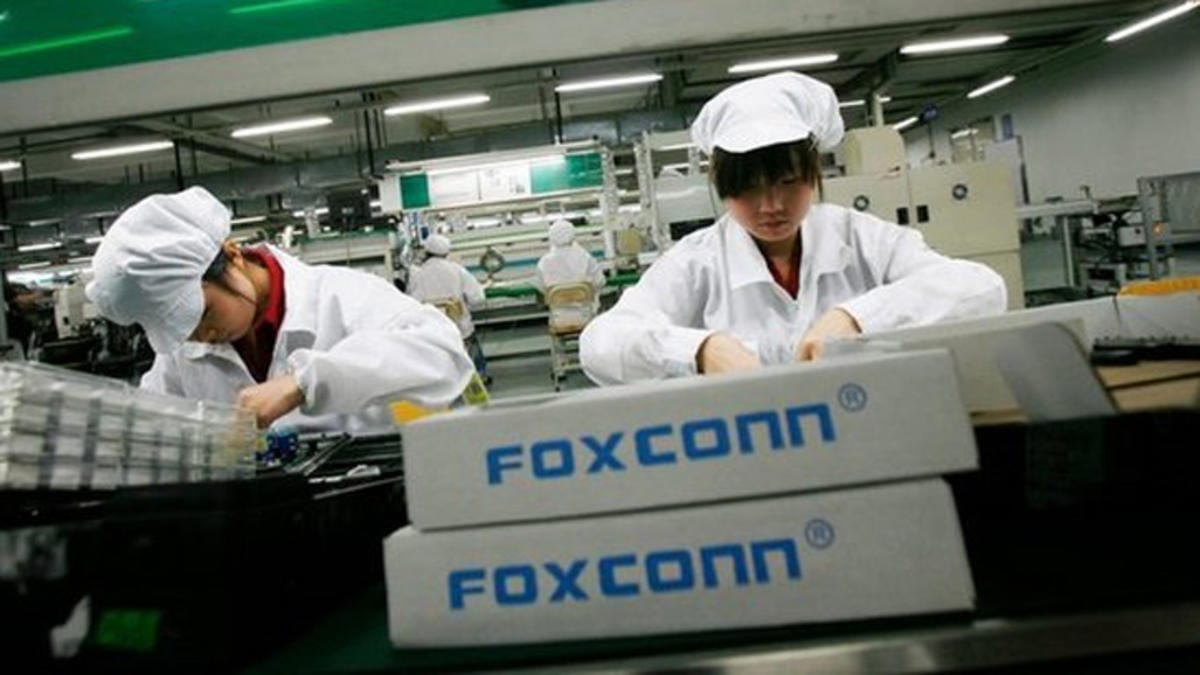
    Apple’s major Chinese suppliers are competing for Vietnamese workers as they seek to expand operations outside their country.

    Young Liu, chairman of Foxconn’s flagship unit Hon Hai Precision Industry Co., told reporters in Taipei Saturday that his firm’s Chinese competitors have set up operations near its facilities in Vietnam just to poach workers.

    “The move should not be condoned,” he said without naming any companies.

    In recent years Foxconn’s competitors like Luxshare, GoerTek and BYD have flocked to Vietnam to avoid U.S. tariffs.

    Foxconn employs around 60,000 workers in Vietnam, which is its largest manufacturing base outside China.

    Liu said Foxconn would “significantly” increase the numbers of employees in Vietnam over the next one to two years.

    Earlier reports said Apple would mass produce its iPads for the first time in Vietnam as part of efforts to diversify its supply chain and reduce dependence on China.

  • Apple iPhone gets stuck inside Qantas aircraft, earns frequent flyer miles

    Apple iPhone gets stuck inside Qantas aircraft, earns frequent flyer miles

    An iPhone was lost by its owner on a Qantas flight and the handset ended up stuck on the plane during several international flights. The action started on May 6th as detailed in an online forum called the Australian Frequent Flyer Community. That is when a member of the community using the handle “Rugby” asked for a phone number for Qantas’ lounge.
    He needed the number because his wife had apparently left her iPhone on a Qantas plane. Rugby wrote that thanks to the “Find My” app, he knew that the handset had boarded the plane with his wife, flying from Sydney to Auckland. It then flew back to Sydney, went from Sydney to Honolulu to Sydney, and then flew from Sydney to Auckland to Sydney again.
    Meanwhile, the Rugby family was able to follow the phone’s travels and there must have been enough battery life for the phone to continue sending out signals. The device was believed to be stuck in the seat that Mrs. Rugby had been sitting in during the original flight. You would have thought that this would have led Qantas to do whatever was needed to extricate the phone from the chair.
    That’s because the airline always makes announcements warning passengers that a phone stuck in a chair could catch on fire. Indeed, back in 2016 an iPhone stuck in a business class seat on a Qantas flight from L.A. to New York caught fire after the lithium battery inside the phone was crushed. The passenger tried to use the recliner to free the device and it ended up bending the battery and engulfing the phone in flames.
    Luckily, the onboard crew was able to put out the fire using fire extinguishers and Qantas decided to redesign the seats on its planes. You would have thought that the airline would have put forth a more serious effort to find and/or free Mrs. Rugby’s Apple iPhone considering the mid-flight fire that took place only a few years back. One person monitoring the thread suggested that the Rugby’s send an email to Qantas to let them know of the potential threat to the airplane.
    Another member of the community had a good point about how poorly Qantas is cleaning its planes between flights if it couldn’t find the phone. Also, the airline’s security checks between flights are also lacking.
    After the phone made three roundtrips and landed in Sydney for the third time, a member of the forum assisted Qantas with the retrieval of the phone. It wasn’t known whether this person was a passenger who had been following the forum or a Qantas employee who is a member of the forum. Regardless, the Rugby’s received a call from a Qantas employee who said that they had the phone and would be taking it to international baggage services.
    Mr. Rugby was in Auckland when he heard from Qantas that they had his partner’s iPhone. He picked up the well-traveled device the following week when he returned to Sydney. By the way, leaving your phone on a plane is not an isolated situation. A member of a forum called One Mile At A Time who goes by the name of “JD,” wrote, “Flew MEX-FRA first class (747) a couple of years ago. When I woke up I could not find my iPhone anywhere.”
    He continued. “After a perfect in flight, it was like an out of body experience… I couldn’t find it, the flight attendants couldn’t find it and the other poor passengers in first class were like “get over it”. I was so embarrassed but once everyone deplaned, mechanics came on board and finally was (sic) able to find it… we almost missed our connecting flight but was elated to have my iPhone back for our month long vacation in Europe.”
  • Not being able to track you on iPhone could cost Facebook $12.8 billion in 2022

    Not being able to track you on iPhone could cost Facebook $12.8 billion in 2022

    As many of you probably know, Facebook was a loud critic of Apple’s App Tracking Transparency feature upon its announcement and release, and that has, surprise, surprise, a reason. In 2021, Facebook lost some money due to those privacy features, and the social media giant might lose an estimated $12.8 billion just because of ATT.

    App Tracking Transparency was launched back with iOS 14 in April of 2021, and it is a very useful privacy-related feature for iPhones. What it does is prevent third-party tracking to occur (of course, if you choose not to be tracked, which is what the majority of iPhone users chose anyway). This way, an app such as Facebook cannot track your activity online so that it can serve you with relevant ads.

    And Facebook has seen the impact of this. Almost 12 months after Apple’s launch of ATT, a new analyst now predicts the second year will cause major disruption to advertisers. Companies that rely on advertising, including Facebook, YouTube, and others, are estimated to collectively lose around $16 billion because of the feature.

    Towards the end of last year, Facebook’s Mark Zuckerberg reported the company would potentially see a $10 billion revenue hit for 2022. Well, it seems this number may be a bit higher, at least according to an analysis by research firm Lotame.

    According to the research, Apple’s App Tracking Transparency will continue to have an impact this year, but it should be lessening. Alongside the introduction of ATT, Apple also deprecated its old technology called IDFA (Identifier for Advertisers), which made it possible for third-party apps to track you across websites using an identifier and then serve you ads that you are more likely to buy something from.

    Despite that, Apple doesn’t wish death upon all advertisers, so the company introduced new frameworks to help advertisers, but this time, no personal tracking is used and the data is aggregated. This way, less relevant ads could be served to users.

    The report continues on to say that the collective impact for companies would be nearly $16 billion, and the company that’s going to lose the most is Facebook with an around 81% share of those $16 billion. Other companies expected to lose revenue are Snap, which could lose around $545 million, then Twitter with around $323 million. YouTube is also on the list of impacted companies, and there, the estimated revenue loss is around $2.2 billion.

    Pretty large sums, we might add. Interestingly enough, these sums represent in fact how much those companies and apps were actually relying on tracking you on the internet…

    The report also indicates that both Snap and Twitter have been quickly adapting to the situation, including using the new measurement systems provided by Apple, and these two companies don’t seem too troubled with it.

    Facebook has also stated that it will work to decrease its reliance on Apple. Earlier, the social media giant stated that it will look into other ways that advertisers can profit.

    But Apple’s App Tracking Transparency impact, at least according to the analysts, is going to decrease by the second half of 2022, and “other shocks” are expected to affect the advertising industry, but the report doesn’t delve into details on that.

    Facebook seems to have suffered the most from Apple’s ATT. You may remember earlier when Meta’s stock price drastically fell after Zuckerberg’s report on the revenue of the company and ATT. For those of you who are curious, currently, Meta’s share price sits at $214.99 (at the time of writing), dropping down from around $323 in February 2022 (before the report came out).
  • Percentage of teens looking to buy an iPhone is close to a record high

    Percentage of teens looking to buy an iPhone is close to a record high

    Investment house Piper Sandler released the results of its 43rd semi-annual Taking Stock With Teens survey. The latest results show that the number of American teenagers planning to purchase their first iPhone is close to a record high. Piper Sandler analyst Harsh Kumar says that 87% of the teens responding to the firm’s latest survey plan on purchasing an iPhone. Coincidentally, the survey showed that 87% of the teens responding already own an iPhone.

    We said that the 87% of teens who said that their next phone will be an iPhone was close to a record high. That’s because, during the Spring 2021 survey, 90% of teens were saying that their next phone would be running iOS while 88% of teens said that they already owned an iPhone in that survey. Kumar said that the results were encouraging for Apple.

    And in a boost for Apple’s large Services unit, teens’ favorite money transfer app is now Apple Pay which toppled previous leader Venmo in the latest survey. The analyst sees the results forecasting growth in the Services unit which took in $68 billion during fiscal 2021. Apple’s Services unit includes the App Store, Apple Pay, Apple Care+, Apple Music, Apple Arcade, Apple Card, Apple TV+, Apple News+, Apple Fitness+, iCloud, iTunes Store, and more.

    With over 1 billion active iPhones, Apple has a large number of possible buyers ready, willing, and able to spend on Services including recurring subscriptions. It’s that word “recurring” that brings a smile to the face of Apple CEO Tim Cook.

    As for the specifics of the survey, 7,100 teens responded to survey with an average age of 16.2 years. 44 different states were represented and they live in households with an average income of $69,298. 39% of the teens are employed part-time. Either they live in a household that is well off, or they are able to afford to buy the iPhone using their own paycheck.

    Piper Sandler’s Kumar rates Apple overweight and has a $200 target on the stock. For those not familiar with Wall Street talk, an overweight rating has nothing to do with Eddy Cue’s eating habits. It simply means that in calculating your portfolio, Apple shares should comprise a larger percentage of your portfolio compared to the rest of your holdings.

    The latest survey of teens has pretty similar results to the previous Taking Stock With Teens

  • iPhone 14 Pro Max detailed schematics and camera specs leaked

    iPhone 14 Pro Max detailed schematics and camera specs leaked

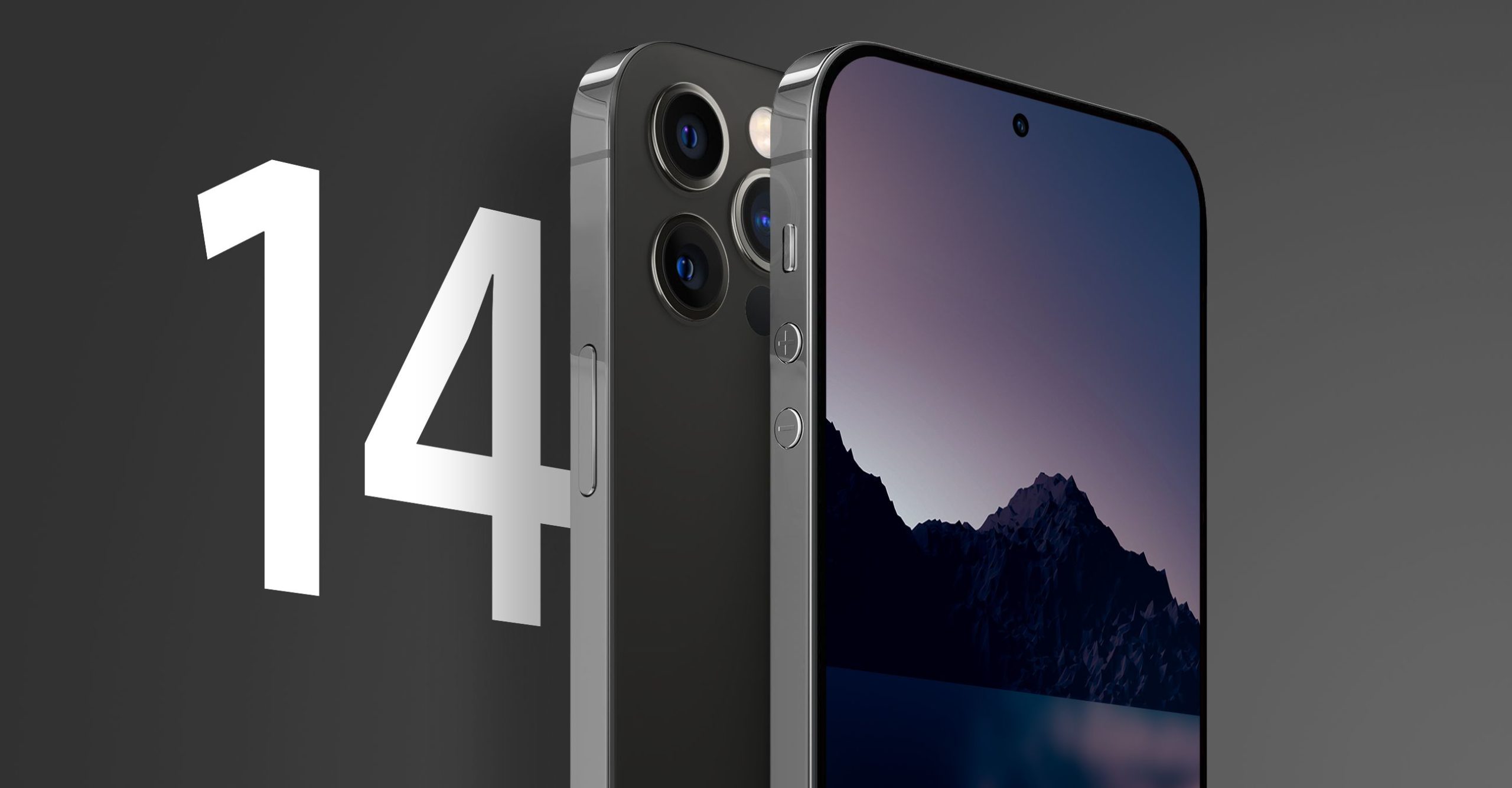
    Leaker ShrimpApplePro, who tweets from the account @VNchocoTaco and was the first to leak iPhone 14 Pro and Pro Max’s new front design, is now back with iPhone 14 Pro Max’s detailed schematics.

    The iPhone 14 Pro Max is expected to have pill and hole cutouts instead of a notch and per today’s leak, the pill will have a width of 7.15mm and the pinhole will have a diameter of 5.59mm. Accompanying images suggest there will also be a gap between the pill and hole cutouts. For comparison’s sake, the notch on the iPhone 13 Pro Max has a width of 26.83mm.

    In addition to that, the iPhone 14 Pro Max will allegedly flaunt smaller 1.95mm bezels, compared to 13 Pro Max’s 2.42mm bezels, which would further increase the screen to body ratio.

    The phone itself is expected to have a height of 160.71mm, width of 78.53mm (with the side button), and depth of 12.16mm (including the camera bump). That increase in depth can be attributed to the camera bump, which has seemingly increased in thickness from 3.60mm to 4.18mm.

    The bump has seemingly been made thicker because of the new 48MP primary sensor that will replace the 12MP camera. Analyst Ming-Chi Kuo had earlier said that the camera would be 25 to 35 percent bigger than the 12MP camera and the height of its 7P lens could increase by 5 to 10 percent.

    According to a new leak from a Weibo account called Fishing 8, which doesn’t have an established track record, it will be a 1/1.3 inches sensor with smaller 1.22µm pixels. The iPhone 13 Pro Max comes with a smaller 1/1.65-inches main sensor with larger 1.9µm pixels. Apple will likely employ a technology called pixel binning to combine data from multiple pixels when needed, such as during the nighttime.

    Back to the leaked schematics, Apple last year shrunk the size of the notch by combining the flood illuminator and dot protector into a single unit and moving the earpiece speaker to the top bezel. This year, the company may reduce the height of the earpiece speaker from 1.52mm to 0.57mm.

    The iPhone 14 Pro Max is expected to retain the 6.7-inches screen size of its predecessor and the iPhone 14 Pro will have a 6.1-inches screen. Both models will likely be powered by a new 4nm A16 Pro chip, which would presumably make them a lot faster than the best phones of today. The regular models aren’t expected to change too much. One thing worth mentioning though is that the iPhone 13 mini will be replaced by the 6.7-inches iPhone 14 Max.

    The iPhone 14 series will apparently be revealed in September.

  • Apple releases minor updates that could fix major iPhone and Apple Watch issues

    Apple releases minor updates that could fix major iPhone and Apple Watch issues

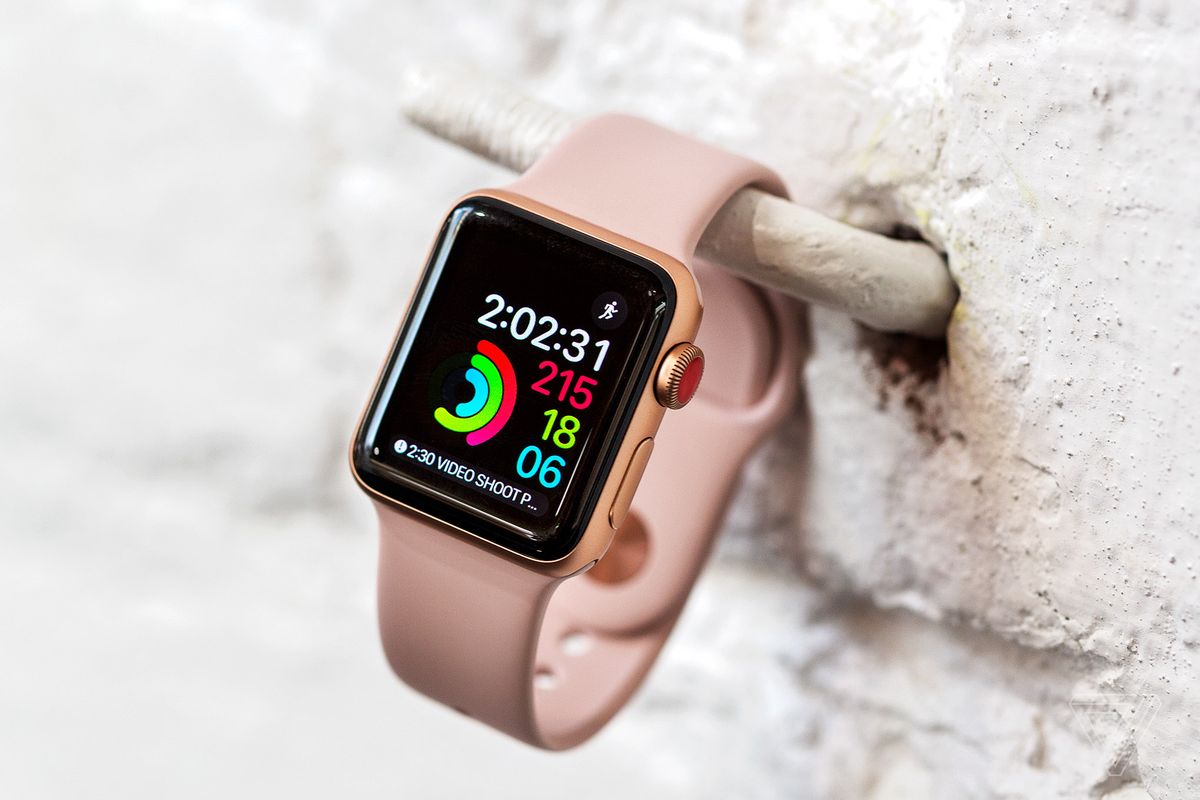
    Two weeks after updating iOS to 15.4, iPadOS to 15.4, watchOS to 8.5, and tvOS to 15.4, Apple dropped a minor update meant to exterminate bugs on the iPhone, iPad, the Apple Watch, and Apple TV. Right off the bat, we can think of some bugs that might be exterminated by these updates including one for the Apple Watch that broke fast charging on the Series 7 timepiece once watchOS 8.5 was installed.

    Apple iPhone users complained about the battery on their phones draining rapidly after iOS 15.4 was downloaded and installed. Naturally, we would expect Apple to fix this issue with a software update as fast as possible. Apple made some huge improvements to the battery life on the iPhone 13 Pro and iPhone 13 Pro Max, but the batteries went from hero to zero after iOS 15.4 was installed on these models. So once you have iOS 15.4.1 driving your iPhone, you might want to check to see if your battery life has returned to normal.

    Another problem that iOS 15.4.1 might repair is one that affects the quality of webcam images from Apple’s Studio Display. As many have noticed, the Studio Display runs a full version of iOS 15.4 which means that problems with Apple’s expensive display can be fixed with a software update. That certainly beats lugging the product on the subway and taking it back to the store to fix the hardware.

    With the updates, the build number for iOS and iPadOS moves from 19E241 to 19E258. The build for watchOS goes from 19T242 to 19T252, and with tvOS, the OS build goes to 19L452 from 19L440.

    To update your iPhone or iPad go to Settings > General >Software Update. To update the Apple Watch, open the Watch app and go to Settings > General > Software Update. Most updates will automatically be taken care of overnight which is when typical Apple Watch users have their timepieces on the charger.

    To install tvOS on Apple TV, follow these directions:

    • Click on the Settings app from your Apple TV Home screen.
    • Click on System.
    • Click on Software Update.
    • Click on Update Software.
    • Click on Download and Install.
    • Click on Update Now.
    • Wait for your Apple TV to finish the update.

    Hopefully, the major issues affecting the iPhone and the Apple Watch are now a thing of the past. Let us know by dropping your comments in the box below.

  • Apple reportedly considering a monthly subscription program for iPhone and other hardware

    Apple reportedly considering a monthly subscription program for iPhone and other hardware

    Apple is working on a hardware subscription service that would let you use its products in exchange for a monthly fee. It would be different than the iPhone Upgrade program that lets you pay for the iPhone in 24 monthly installments. Under that program, the device is yours once you have paid for it in full.

    The new rumored Apple subscription service will not work like that. It will be similar to paying a monthly subscription fee for paid apps. So, while this would let you use products like the iPhone during the subscription period, the monthly fees wouldn’t be the same as splitting the cost of an iPhone over a 12 months period, for instance, and thus, the phone will technically never be yours. It would be more like a leasing service.

    At the risk of reading too much into this, it could be that the monthly fees will be a lot lower when compared to the installments charged by carriers and Apple at the moment for ownership programs. The report adds that users would be able to swap out phones when a new one comes out.

    This would generate recurring sales for the company and will help further reduce the influence of carriers since Apple will apparently operate this program itself, via the App Store or iCloud.

    At the same time, it would also make Apple products more accessible to consumers who cannot afford to pay for the devices upfront.

    Apple could bundle it with the Apple One services subscription program and AppleCare extended warranty and technical support plans and promote it as a one-stop subscription service.

    Apple’s hardware subscription program has been subject to delays, and we can expect the company to formally announce it by the end of this year or in 2023.

  • Safari on iPhone and iPad might soon get much needed quality of life improvements

    Safari on iPhone and iPad might soon get much needed quality of life improvements

    Who doesn’t love a well-made Dark Mode on their screen? But let’s be honest, not all websites have a decent one and what do we normally do in that case? Well, one option is to use your device’s internal Dark Mode feature.

    On iPhones and iPads, as with other phones and tablets, whichever of the two modes you choose is applied to all of the systems, apps, and therefore—websites.

    More specifically, the report states that new code was found inside WebKit, the browser engine powering Safari, indicating the app might soon get support for per-website Dark Mode. In other words, no matter the color scheme of a website or your device, you will be able to control in which of the modes (Light and Dark) said website appears.

    What’s more, an equally, if not even more useful feature has also been found inside the new code. Apparently, Apple is also working on a way to give users the ability to block modal pop-ups for specific websites. These pop-ups are usually disguised as system alerts with the aim to trick you into tapping on them.

    If it really comes to fruition, being able to block these pop-ups would serve as a welcome boost in security while browsing through Safari. In addition to that, Apple is also seemingly preparing a new API for managing “Cookie Consent.”

    All of the features mentioned above, however, have not been commented on officially by Apple in any way. For now, they have a “to be announced” status in the WebKit code. That said, Apple’s Spring Event is probably nearing, with WWDC following after, so it shouldn’t be too long for us to find out. There is some probability that the tech giant is saving those for the release of iOS 16.

  • iOS users spend more than double on subscriptions compared to Android users

    iOS users spend more than double on subscriptions compared to Android users

    A new research report has shown that subscriptions made from the App Store are more than double in terms of payment versus Google Play Store. In other words, this means iPhone and iPad users generally tend to spend more on subscriptions and buy more subscriptions in comparison to users on Android phones.

    The information comes from a Sensor Tower report that showcases subscriptions revenue for 2021. In numbers, the App Store subscriptions have generated $13.5 billion in revenue, while Google Play subscriptions — $4.8 billion, despite the fact that Google Play spending is growing at a fast rate.

    Overall, the App Store sees the most money spent on apps and subscriptions, as well as in-app purchases, compared to Google. The record-high $13.5 billion spent us for the top 100 non-gaming subscriptions globally.

    Subscription spending on the App Store grew 31% since last year when it was $10.3 billion. On the other hand, Google Play saw a whopping 78% growth to reach this $4.8 billion mark.

    These are the global numbers. However, US numbers are not that different though. The report is also giving some information on US-only spending, and the App Store has recorded $6 billion, while the Google Play Store, $2.5 billion.
    In terms of specific apps, Alphabet (Google’s parent company) is at the top of the charts with YouTube on the App Store and Google One on the Google Play Store. According to the report, YouTube generated 1.2 billion globally and $566.5 million in the U.S., while Google One achieved $1.1 billion globally and $698 million in the U.S. in 2021.
  • Designer shares his concept of a foldable “iPhone Air” sporting powerful M1 chip

    Designer shares his concept of a foldable “iPhone Air” sporting powerful M1 chip

    Samsung is the early leader in the foldable market with its Galaxy Z Fold and Galaxy Z Flip handsets. While Apple has yet to officially throw its hat in the ring, TF International’s highly accurate analyst, Ming-Chi Kuo, says that a foldable iPhone is expected to be released no sooner than 2023 and that it will be of the Flip variety which means it will be a clamshell design similar to the Samsung Galaxy Z Flip.

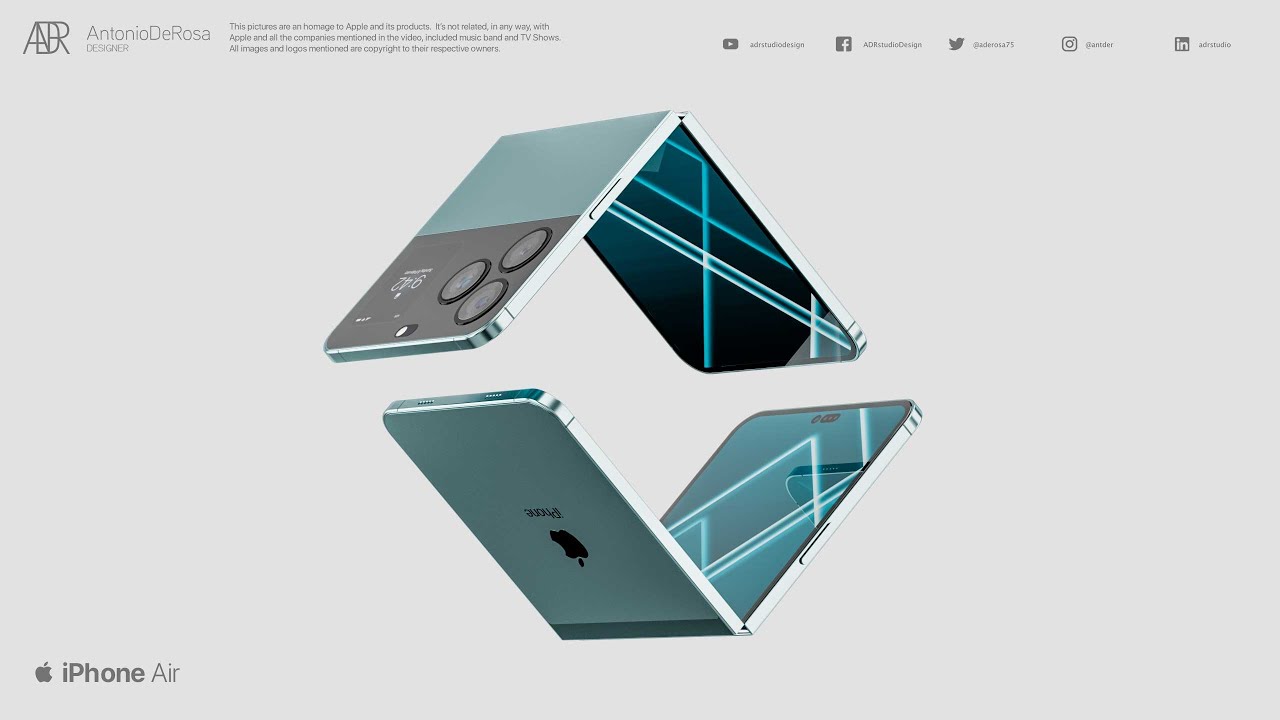
    The latest iPhone Flip concept design comes from designer Antonia De Rosa who calls the device the iPhone Air. De Rosa sees a powerful device powered by the 5nm Apple M1 chip carrying 16 billion transistors. That is one billion more than the amount found on the A15 Bionic chip that is found under the hood of the iPhone 13 series.

    The M1 chip powers the latest iPad Pro series and was developed by Apple to replace the Intel processors that drive some Mac computers.

    The iPhone Air mockup uses chrome hinges and similar to the renders that we’ve seen for the iPhone 14, the rear camera array is flush with the back panel. While Apple has been reportedly testing out different designs of a foldable iPhone, it also is keeping its eyes on the consumer reaction to the foldable being sold by rival Samsung.

    If you examine the iPhone Air in the video, you’ll notice that the phone is portless. This is a design that former Apple design chief Jony Ive had been striving for but could not achieve before his departure from Cupertino.

    And instead of the notch, if we can direct your attention to the display, you’ll see that the iconic and still controversial notch is replaced with a pill-shaped cutout at the top center of the screen. The iPhone 14 Pro and iPhone 14 Pro Max will reportedly do away with the notch and replace it with both a hole-punch cutout and a lozenge “pill shaped” opening.

  • iPhone doubles Vietnam market share

    iPhone doubles Vietnam market share

    iPhone’s market share in Vietnam increased from 4 percent in 2020 to 9 percent last year, making it the fifth-largest smartphone seller.

    The growth of 119 percent was the highest for any brand, Counterpoint Research said in a report.

    Apple was behind Samsung (34 percent), OPPO (19 percent), Xiaomi (13 percent), and vivo (11 percent).

    Strong growth in Apple products was seen in the last quarter of the year, with sales doubling year-on-year, the report said.

    This was when the company launched iPhone 13.

    Last year, taking advantage of the rising demand, several stores were set up to exclusively sell Apple products like FPT’s F.Studio, TopZone and Lazada Apple Flagship Stores.

    Counterpoint analyst Ivan Lam said: “Apple has always had a place in Vietnamese consumers’ hearts. Last year it expanded its distribution campaign in Vietnam.”

    The overall smartphone market grew by 7 percent last year, the report said.