Retail News CRM

Tag: iphone

  • Twitter brings Super Follows to everyone with an iPhone

    Twitter brings Super Follows to everyone with an iPhone

    Twitter announced it has begun testing a new monetization feature aimed at Twitter iOS users in early September. The so-called Super Follows feature is meant to allow Twitter users with more than 10,000 followers to earn a monthly revenue by offering an extra level of content and interaction as a monthly subscription.

    Initially, Super Follows was only available to select users in the US and Canada, all Twitter users on iOS will have access to the new feature. As mentioned earlier, if you’re a Twitter user with more than 10k followers and you live in the United States, you can apply to become a “super followed” content creator.

    There are three types of monthly subscriptions content creators can choose to offer to their followers: $2.99, $4.99, and $9.99. You don’t have to be in the United States to “super follow” someone, but you must have an iPhone to be able to use the feature.

    According to Twitter, content creators can earn up to 97% of the revenue from Super Follows subscriptions, as the company won’t take more than 3% share until you exceed $50,000 in lifetime earnings. After that point, Twitter’s share will increase up to 20% of future earnings.

  • Facebook criticizes App Tracking Transparency on iPhones

    Facebook criticizes App Tracking Transparency on iPhones

    When Apple introduced App Tracking Transparency back with iOS 14.5, a feature that allows iPhone users to opt-out of ad-related activity tracking on their phones, Facebook was not happy with it. Back then, Facebook criticized the new privacy feature claiming it would hurt small businesses’ advertising. Now, Mark Zuckerberg is at it again.

    On Monday, Facebook reported its third-quarter financial results that showed $29.1 billion in revenue from advertisements. Despite these results though, the company’s CEO Mark Zuckerberg has remained upset about Apple’s privacy changes that prevented ad tracking if the user didn’t want to be tracked. Reportedly, he stated in an investor call that Apple has been hurting not only Facebook but “millions of small businesses” with these changes.

    Zuckerberg stated that Facebook experienced “revenue headwinds” because of Apple’s App Tracking transparency and its impact on the advertising business. He criticized the iOS privacy features stating that they affect small businesses that rely on ad platforms in the “difficult times”.

    He also said that despite the impact these changes had on the social media platform, the company will learn to navigate the “headwinds” over time with investments Facebook is making today.

    Another participant in the investor call was Facebook COO Sheryl Sandberg stated that the iOS privacy changes advantaged Apple’s own advertising business. Additionally, Sandberg stated that now it is more difficult to target an ad or measure campaign results when it comes to iPhone and iPad users.

    Apple’s App Tracking Transparency, which was introduced back in April with iOS 14.5. The feature presented iPhone users with a prompt to opt-out of advertisement tracking on apps. If people wanted, they could click on a button and thus prevent tracking so they won’t receive targeted apps. Understandably, a large number of iPhone users opted out of tracking.

    Companies such as Facebook which rely heavily on advertisements disagreed with the new change ever since it was introduced back in April. Facebook criticized Apple on the move, stating multiple times that this change was hurting small businesses.

    It was not only Facebook complaining though. Last week, Snap’s CEO also stated the company’s revenue from Snapchat was affected by the new App Tracking Transparency technology. However, Snap’s CEO stated that these changes might be positive in the long run.

    By September of this year, according to data from analysis firm Statista, only 21% of iPhone users have decided to opt-in for app tracking and to allow for their activity to be tracked in order to receive targeted ads. The remaining percentage is, understandably, for iPhone users that have opted out and prevented apps from tracking them for ads.

    The App Tracking Transparency feature has now started to change the advertising market across the mobile industry. Right now, many advertisers focus primarily on Android devices, as many iPhone users have decided that they do not wish to be tracked for targeted ads.

    Apparently, it’s not only advertisers like Facebook that are affected by this change. A couple of months ago, we reported that the new App Tracking Transparency feature is also changing the mobile game industry and is influencing the way game makers have to go about in order to advertise in games, as they cannot be targeted to specific users.

    Recently, we reported on another fact: Apple’s in-house advertisement business has been experienced growth since the change. Apple has an ad service named Search Ads and it has grown since App Tracking Transparency was introduced on iOS devices.

  • With no Apple shop, mono stores mushroom in Vietnam

    With no Apple shop, mono stores mushroom in Vietnam

    Vietnam has no Apple store, so resellers are opening mono store chains in the country for consumers to experience an “Apple-standard shopping space.”

    An Apple mono store is a shop that exclusively sells Apple products. There are two kinds of mono stores – the AAR (Apple Authorized Reseller) with a minimum area of 50 sq.m., and APR (Apple Premium Reseller) with an area of 180-220 sq.m.

    “Vietnam and many other Southeast Asian countries are yet to house Apple stores, while the number of Apple users in these countries is getting bigger and bigger. We have opened the TopZone chain (Apple mono stores) for consumers to experience Apple-standard shopping space,” said The Gioi Di Dong (Mobile World) CEO Doan Hieu Em.

    The company will have a total of 50-60 TopZone stores by the first quarter of next year, he said.

    According to FPT Shop, another major electronics retailer that has established 15 Apple mono stores called F.Studio, sales of Apple products in Vietnam have posted two-digit growth rates in recent years. Authorized resellers will establish set up more Apple mono stores in the coming months.

    ShopDunk inaugurated five Apple mono stores on Oct. 22, the day iPhone 13 was launched in Vietnam. It plans to open another 50 stores in the next six months.

    Some other Apple authorized resellers in Vietnam, including CellphoneS and Minh Tuan Mobile, have also said they are planning to set up more Apple mono stores.

    In mid-2020, Apple had posted recruitment notices for many important positions in Vietnam, but it has made no further move since then. Experts have said that relatively small sales in Vietnam was the main factor in the absence of an official Apple store in the country.

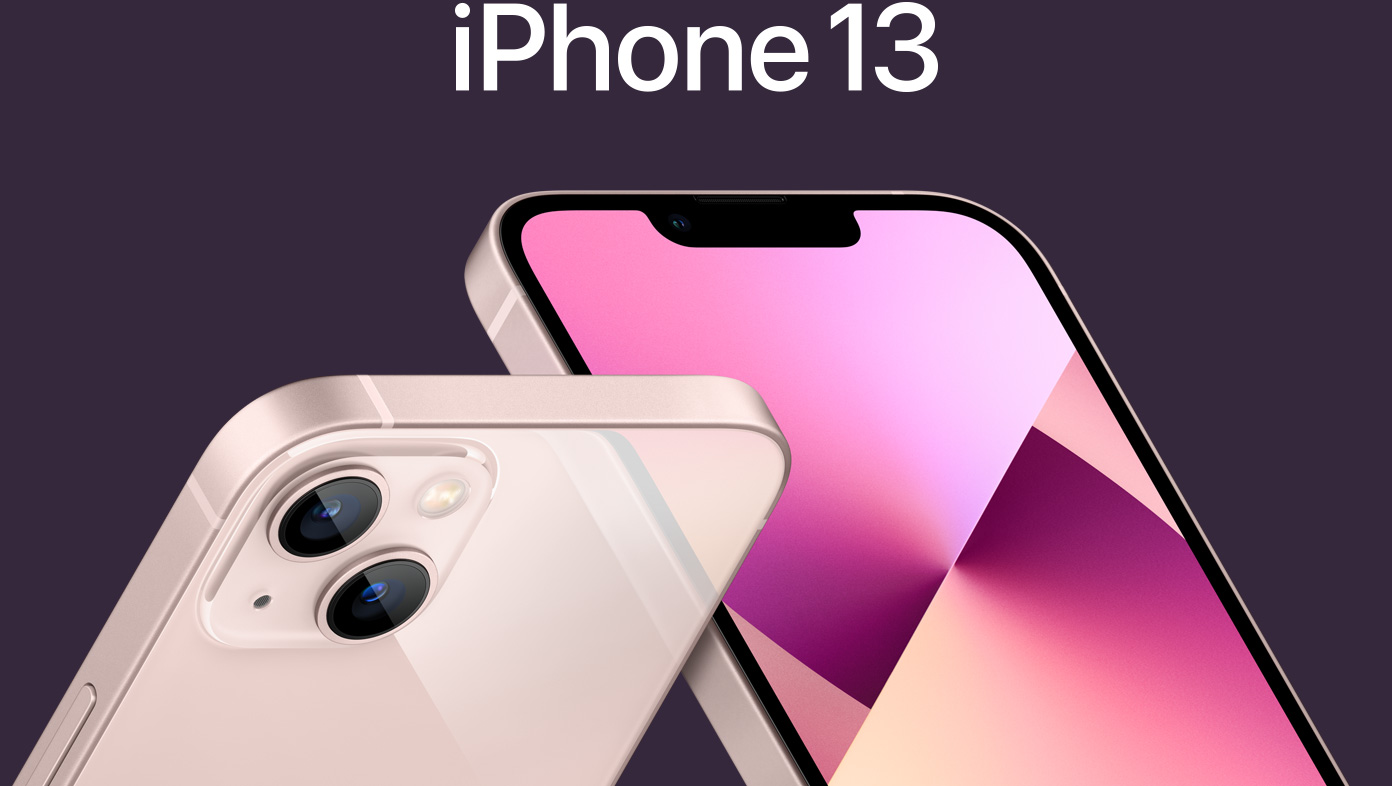
  • iPhone 13 sees record sales in Vietnam

    iPhone 13 sees record sales in Vietnam

    Tens of thousands of iPhone 13 phones have been sold in Vietnam within days of its launch, with numbers exceeding those of Apple’s previous offerings.

    FPT Shop sold nearly 5,000 phones for nearly VND200 billion ($8.79 million) on the first day of sales on Oct. 22, breaking previous iPhone records, Nguyen The Kha, director of the chain’s mobile telecommunications division, said.

    Last year it sold 4,500 iPhone 12s on the first day.

    CellphoneS sold nearly 3,000 iPhone 13s compared to around 1,000 last year.

    Minh Tuan Mobile, which began selling Apple products for the first time this year, sold 1,000 iPhone in two days.

    Industry insiders said the large number of incentives that Apple is offering users this year is causing more buyers to go to authorized stores instead of buying them from sellers who pick up the devices in other countries and sell them in Vietnam.

    “Apple almost did not seem to care about the Vietnam market before,” a seller in HCMC’s District 1 said. “But now it offers a lot of support and commission to distributors and incentives to buyers, which makes the unauthorized market less appealing.”

    Another factor is that the iPhone 13 arrived in Vietnam one month earlier than the iPhone 12 last year, which came on Nov. 26.

    ShopDunk, a distributor of Apple products, said it opened five new Mono Stores (exclusively selling Apple products) on the first day of iPhone 13 sales.

    It also saw the number of pre-orders triple to 15,000.

    A spokesperson for Minh Tuan Mobile said only 50 percent of orders could be met so far, and others have to wait.

    iPhone 13 mini, the smallest and cheapest in the iPhone 13 lineup, is being sold in Vietnam at around VND18.4 million.

    The remaining models cost VND21.5-VND31.9 million.

  • Vietnamese apathetic over iPhone 13 mini

    Vietnamese apathetic over iPhone 13 mini

    iPhone 13 mini seems to be the least favorite model of the latest Apple smartphone lineup, accounting for only 5 percent of total pre-orders in Vietnam.

    The most favored is iPhone 13 Pro Max with 70 percent pre-orders, followed by iPhone 13 and iPhone 13 Pro, each 12.5 percent, according to data from retail chains.

    But the iPhone 13 mini, the smallest and cheapest of the lineup, is set to see shortages due to a lack of supply.

    For retail chain CellPhoneS, only 2 percent of its iPhone 13 imports are mini.

    “We might only meet 50 percent of customer demand,” said spokesperson Nguyen Lac Huy.

    The unofficial market, where buyers pick up the phone in Singapore and Hong Kong and bring them back to Vietnam, does not seem to have a lot of supply for iPhone 13 mini either.

    “We only imported a small number as there is almost no demand from customers,” said a smartphone vendor in downtown Hanoi.

    Last year, the iPhone 12 mini was also the least favorite. Many stores had to repeatedly lower prices to get rid of their inventory.

    Industry insiders say Vietnamese prefer the most expensive iPhones.

    The four models of the iPhone 13 line is set to be officially delivered to Vietnam starting Oct. 22.

  • Apple wants you to install iOS 15.0.2, iPadOS 15.0.2 and watchOS 8.0.1

    Apple wants you to install iOS 15.0.2, iPadOS 15.0.2 and watchOS 8.0.1

    On Monday, Apple released iOS 15.0.2, iPadOS 15.0.2 and watchOS 8.0.1. The update for both the iPhone and iPad fixes a couple of bugs related to the Find My app. It also includes a major security fix for a flaw that Apple says is already under attack by hackers.

    Discovered by an anonymous researcher, CVE-2021-30883 “may be able to execute arbitrary code with kernel privileges. Apple is aware of a report that this issue may have been actively exploited.” Keep in mind that CVE-2021-30883 could allow an attacker to exploit the IOMobileFrameBuffer and “execute arbitrary code with kernel privileges” and take over your device.

    The bug fixes cited by Apple in iOS 15.0.2. will take care of the following issues:

    • Photos saved to your library from Messages could be deleted after removing the associated thread or message.
    • iPhone Leather Wallet with MagSafe may not connect to Find My.
    • AirTag might not appear in the Find My Items tab.
    • CarPlay may fail to open audio apps or disconnect during playback.
    • Device restore or update may fail when using Finder or iTunes for iPhone 13 models.

    Apple drops iOS 15.02 to add a needed security patch and some bug exterminations

    The iPadOS 15.0.2 update helps users with the following problems:

    • Photos saved to your library from Messages could be deleted after removing the associated thread or message.
    • AirTag might not appear in the Find My Items tab.
    • Device restore or update may fail when using Finder or iTunes for iPad mini (6th generation).

    And watchOS 8.0.1 helps patch these issues for Series 3 users:

    Apple releases an update to watchOS 8.0.1 beta

    Software update progress may not be displayed accurately for some Apple Watch Series 3 users

    Accessibility settings may not have been available for some Apple Watch Series 3 users.

    To install iOS 15.0.2. go to Settings > General > Software Update. Follow the same directions for iOS 15.0.2. For watchOS 8.0.1, open the Watch app on your iPhone and tap General > Software Update. Make sure your iPhone is at least 50% charged and that it is connected to Wi-Fi. The handset must be within close range of the Apple Watch in order for the update to download and install.

    Apple originally released iOS 15 on September 20th and followed that up with iOS 15.0.1 which exterminated a bug preventing iPhone users wearing a face mask from unlocking their devices using Face ID. With iOS 15.0.1, users wearing an unlocked Apple Watch that they have signed into can unlock their handsets without using their passcodes.

    The company is beta testing iOS 15.1 which will return SharePlay to the operating system. SharePlay allows users to share video and audio content with other FaceTime users on the same chat. It also allows users to store a digital copy of their vaccination card in Apple Wallet and adds certain features to the iPhone 13 Pro camera including ProRes. The latter compresses video but does so on a lossless basis.

    All you need to know about ProRes is that it improves the quality of the videos you shoot with your iPhone. ProRes is available only for the iPhone 13 Pro and iPhone 13 Pro Max. To enable ProRes, go to Settings > Camera > Formats > and enable the Apple ProRes toggle. Keep in mind that ProRes video capture will use plenty of your storage. Apple reminds users that one minute of 10-bit HDR ProRes uses 1.7 GB of storage for HD and 6 GB for 4K.

    ProRes capture supports up to 30fps at 4K and up to 60fps at 1080p for iPhone 13 Pro devices with 256GB of storage and higher. Devices that top out at 128GB of storage are limited to 1080p capture at 30fps.

    And with iOS 15.1, users will be able to disable the auto macro mode feature. This will allow users to turn off the feature that automatically enables a macro shot when using the ultra-wide-angle lens to zoom in real tight on a subject.

  • Apple fans have their minds blown by Intel in new video

    Apple fans have their minds blown by Intel in new video

    When Apple decided to use its own “Apple Silicon” on Macs replacing Intel processors, Intel was not happy. Today, Intel got back at Apple by posting a series of videos showing how Apple fans can be tricked into thinking that innovations created by Intel were discovered by Apple. In the first video called Breaking the Spell, a moderator named Kevin meets with Apple fans (“I’m an Apple girl in an Apple World,” says one) for some one-on-one discussions.

    Kevin has these Apple fans watch a video that they believe is about to show off a new Apple product. The video shows a chip called CPU Pro and on the screen, the video says, “Systems you can customize,” “Laptops you can upgrade,” and “Now you’re in control.” The Apple fans watching the video shake their heads up and down. This is what they have all been wanting.

    The moderator captures the attention of the Apple fans by asking them whether they would be interested in a device that plays over 57,000 different games effortlessly. He then shows an animation of a laptop with two 4K touchscreens. And if the laptop could fold into a tablet, that would be even better, the Apple fans said. “I would like to have my iPad and my laptop combined,” said one.

    Kevin goes out of the room and brings back a two-in-one laptop/tablet. “That kind of eliminates the need of an iPad,” one Apple fan says. The moderator then asks, “What if I told you that everything we’ve been talking about today is available now?” But Kevin then reveals, “But this was not Apple. That is a PC powered by Intel.”

    When the group hears that it was Intel, not Apple, that was behind the device that had just seen, they are stunned. Some laughed, others said, “Really” in disbelief. Several were ready to whip out their credit cards right away. The tag line: “When you break Apple’s spell the choice becomes clear.”

    Intel released the video on Monday and titled it a social experiment. You might recall that Apple was about to use a new 5G modem chip developed by Intel until it reached a settlement wiping out litigation between Apple and Qualcomm. As a result, Apple is able to stuff Qualcomm’s 5G modem chip inside both the iPhone 12 and iPhone 13 series. Eventually, though, Apple plans on designing its own 5G modem chips.

    In July 2019, Apple purchased most of Intel’s smartphone modem chip business for a cool billion dollars. And this past summer, roughly two years after it bought Intel’s smartphone modem chip operations, prescient TF International analyst Ming-Chi Kuo said that by as early as 2023, Apple might be ready to use its own 5G modem chip for the handsets that would make up the iPhone 15 line.

    Losing this business would be a terrible blow to the pocketbook for Qualcomm since the latter cannot make up for the loss of this business by designing Apple’s AP chips. Apple does that itself while having the chipset built by TSMC. Kuo said that Qualcomm might be forced to enter new markets in order to compensate for losing Apple’s 5G modem chip business for the iPhone.

    Even if Apple does start including a 5G modem chip that it designed itself with the iPhone 15, some older models that could still be in production would continue to use Qualcomm’s 5G modem chips. If for some reason you are unaware, Apple started offering 5G connectivity on the iPhone with the 2020 iPhone 12 series.

    This year, Apple started replacing Intel processors on Macs with the M1. This is a powerful chip designed by Apple and is built by TSMC using the 5nm process node. It contains a whopping 16 billion transistors.

  • Global chip shortage impacts the iPhone less than the rest of the industry

    Global chip shortage impacts the iPhone less than the rest of the industry

    Counterpoint Researc has lowered its estimate of global smartphone deliveries this year. Shipments of the device were originally forecast to hit 1.45 billion units in 2021 for a 9% annual gain, but thanks to the chip shortage Counterpoint has cut its estimate for this year to 1.41 billion smartphones shipped for a 6% growth rate year-over-year. The shortage of semiconductors started to be an issue during last year’s fourth quarter and it has continued since.

    Inventories of chips held by manufacturers are now scraping the bottom of the barrels and many manufacturers have said that during the second quarter, they received only 80% of the number of components ordered. And to make matters worse, things were worse during the just-completed third quarter of the year with some firms receiving only 70% of the number of components ordered.

    Counterpoint Research claims that 90% of the smartphone industry is affected by the shortage. Even though components like the Display Driver IC (DDI), the main semiconductor used on smartphone displays, and power management integrated circuits (PMIC) have both been in short supply, advanced planning helped the smartphone industry continue to grow. Additionally, hoarding of Application Processors (AP) and camera sensors have allowed smartphone manufacturers to continue showing growth.

    The Application Processor (AP) is just a fancy term for what we usually refer to as the chipset used on a phone. For example, the AP used with the iPhone 13 series is the A15 Bionic. Counterpoint blames the shortage of AP chips on low yield rates tallied by new assembly lines churning out chips in fabrication facilities owned by the foundries. Qualcomm and Mediatek, two of the top AP vendors for the smartphone industry, rely on Samsung and TSMC respectively to build the chips Application Processors sold to phone manufacturers and low yields add to the chip shortage.

    Tom Kang, Research Director at Counterpoint Research, stated, “the semiconductor shortage seems to affect all brands in the ecosystems. Samsung, Oppo, Xiaomi have all been affected and we are lowering our forecasts. But Apple seems to be the most resilient and least affected by the AP shortage situation.” While Counterpoint didn’t explain why Apple was able to get off the hook, the answer is pretty easy to understand.

    As the largest customer of the world’s largest foundry, Apple surely gets special treatment from TSMC. It’s not just about supply. For example, starting in January, TSMC will hike its prices by 20% but Apple will see just a 3% rise in the price it pays TSMC for its chips. Apple accounts for over 20% of TSMC’s revenue, but less than 20% of its profits.

    Apple is being negatively impacted by TSMC’s announcement weeks ago stating that the 3nm process node, which was to be used to produce the A16 Bionic for next year, is too complex and will be delayed until the A17 Bionic for the iPhone 15 series. This could mean billions of fewer transistors will be packed inside the A16 Bionic resulting in a smaller improvement in performance and energy efficiency for the iPhone 14 line.

    So to reiterate, the 2022 A16 Bionic will be made using the 4nm process node and if the issues related to the complexity of the 3nm process node are ironed out in time, the A17 Bionic will possibly be the first 3nm chipset to power a smartphone.

    Apple fans are hoping that the company works on the A16 Bionic’s CPU. The CPU on the A15 Bionic showed very little improvement compared to the A14 Bionic as Apple faced an exodus of engineers from its unit that designs semiconductors.

    The transistor count on the A15 Bionic rose 27% to 15 billion compared to the 11.8 billion on the A14 Bionic, and the 8.5 billion transistors carried by the A13 Bionic. More telling was the transistor density on the A15 Bionic, which measures the number of transistors that fit inside a square mm. That metric rose to 135.14 million from 134.09 million the previous year.

    While the iPhone has avoided getting hit by the chip shortage, Apple did admit that the iPad and the Mac were hurt during the company’s fiscal third quarter which ended in June. Following the earnings report, Tim Cook told the media during the conference call that “The shortage primarily affected Mac and iPad. We had predicted the shortages to total $3 to $4 billion. But we were actually able to mitigate some of that, and we came in at the low-end part of that range.”

    Among other manufacturers that had to make adjustments due to the chip shortage, Google was forced to limit the release of its Pixel 5a mid-ranger to the U.S. and Japan. We won’t know whether Google will have to stagger the release of the Pixel 6 series until it officially announces the new line possibly later this month.
  • iPhone 13 module production to pick up in October

    iPhone 13 module production to pick up in October

    The delay in iPhone 13 parts manufacturing in Vietnam is set to improve in mid-October as one key facility could resume production after months of Covid-19 disruption.

    The facility in southern Vietnam, a key iPhone camera module manufacturing facility in the country, has gradually resumed production in recent days, an executive familiar with the situation said.

    The delay in making the new sensor-shift optical image stabilization module is causing buyers of iPhone 13 to face longer delivery times, it said.

    “There’s nothing we can do but to monitor the situation in Vietnam every day and wait for them to ramp up the output,” one of the executives with direct knowledge told the news outlet.

    The module is used on all four new iPhone 13 models. Previously, it was only in the premium iPhone 12 Pro Max.

    Vietnam has suffered severe Covid-19 impacts in the fourth wave, resulting in strict restrictions being imposed on factories and transportation in many localities, especially in HCMC and neighboring Binh Duong Province.

  • Mounting An iPhone On Your Motorcycle Could Lead To Camera Damage

    Mounting An iPhone On Your Motorcycle Could Lead To Camera Damage

    Tech giant Apple has issued a new warning for iPhone users particularly those who ride motorcycles. The company has shared a support document that suggests that mounting your iPhone on the motorcycle could lead to potential damage to the device. The damage would extend to the camera, which could result in the camera module being broken. The iPhone’s optical image stabilization (OIS) could be damaged as a result of the prolonged vibrations, bringing a drop in the camera quality.

    In its statement, Apple said, “Exposing your iPhone to high amplitude vibrations within certain frequency ranges, specifically those generated by high-power motorcycle engines, can degrade the performance of the camera system.” The manufacturer further added that long-term direct exposure to high-amplitude vibrations within certain frequency ranges may degrade the performance of these systems and lead to reduced image quality for photos and videos. It is recommended to avoid exposing your iPhone to extended high-amplitude vibrations.”

    The issue though isn’t just with Apple but most modern smartphones equipped with OIS and another tech to help you take better shots and iron out movement, vibrations, and other effects. The issue is specific to high-powered motorcycles that are heavy on vibrations, which travel from the engine to the handlebar.

    Essentially, the Apple iPhone’s camera module comprises a sensor that helps compensate for your hand movements to help you get a more stable shot. The sensor moves using little springs correcting the little undulations. On a modern-day iPhone 12 Pro, the camera module can move up to 5,000 times per second. When the iPhone is exposed to the vibrations for a prolonged period, the springs connected to the sensor break. That’s when the phone won’t be able to focus correctly and will give you random blurriness in the pictures instead. This will also extend to the video that will record without clarity.

    A simple way to counter this issue is to use a high-quality phone case that gives the phone enough protection from vibrations. However, it does not completely protect your iPhone camera from damage.

  • Apple could release surprise update before dropping iOS 15 next month

    Apple could release surprise update before dropping iOS 15 next month

    Developer Brendan Shanks posted a tweet recently in which he noted that according to a beta of Apple’s Xcode software development platform, the tech giant is planning to release iOS 14.8 which is something of a surprise considering that iOS 15 is currently being beta tested with the final version expected to drop as soon as next month. The update could be needed to set up the iPhone to work with a new feature that Apple has already announced.

    As Apple says, “iOS now offers a choice between two software update versions in the Settings app. You can update to the latest version of iOS 15 as soon as it’s released for the latest features and most complete set of security updates. Or continue on iOS 14 and still get important security updates until you’re ready to upgrade to the next major version.” The update to iOS 14.8 could contain the software necessary to make this possible.

    Other possibilities include adding the software needed for the child sexual abuse material (CSAM) detection system that Apple recently announced. While most people would be in favor of ending the spread of material that would be considered sexual child abuse, some would consider this the beginning of a slippery slope. The fear is that Apple will exploit the system to scan pictures taken by users that have nothing to do with child abuse.

    A website containing an Open Letter to Apple shares concerns about photo scanning by stating that “Apple’s proposal introduces a backdoor that threatens to undermine fundamental privacy protections for all users of Apple products.” The letter goes on to say that Apple’s measures could turn every iPhone into a device that is always scanning images thus turning the handset into a “a radical new tool for invasive surveillance, with little oversight to prevent eventual abuse and unreasonable expansion of the scope of surveillance.”

    Apple released iOS 14 on September 16th, 2020 which gives us a possible release date for iOS 15 sometime over the next five weeks.

  • Apple might add a way to measure temperature with your iPhone

    Apple might add a way to measure temperature with your iPhone

    We all know how serious Apple is about the impact its devices have on our health. They’ve been consistently providing more ways for us to track our heart rate, sleep, stress, and other vital stats. Most of the technology enabling this, like the blood oxygen sensor, Apple offers only on the Apple Watch.

    Yes, you do get a very detailed health tracker on iPhone, but that’s all software. Now, we might be getting hints at possible future hardware that could improve the phone’s health tracking capabilities even more.

    A patent application titled “Camera attachment and image data processing for temperature measurement” has been revealed. It shows that the American tech giant has been investing in camera technology that would be capable of analyzing an iPhone image to determine the temperature of a subject.

    The application states that “given the ubiquitous nature of smartphones, the attachment can be used to convert a smartphone into a temperature measurement device to provide readily accessible temperature measurements. In some embodiments, the attachment is a passive one (without electronics or need for a power supply) and may thereby reduce manufacturing costs and increase availability.”

    It looks like this innovative technology won’t be an integrated part of the iPhone itself but an attachment that can be added only when it is needed. “For example, in some embodiments, a camera attachment is provided that includes a frame configured to couple with a camera,” the patent mentions.

    The frame is explained to be the part that will be carrying all the tech required to determine said temperature. The text goes on to say that “the camera attachment includes a temperature reactive material (TRM) that is coupled with the frame. The frame is configured to position the TRM within the field of view of the camera such that images captured by the camera include at least a portion of the TRM.”

    The Apple Watch has been used by medical professionals and has aided them in their work and their ability to track their patient’s health. Similarly, this temperature measuring attachment that the company is looking into sounds like something that could make that whole process even easier.

    Let’s not also pretend we don’t notice the connection with the COVID-19 pandemic and the distance rules it’s imposed on society. Many places, from stores to country borders, use devices that can measure temperature from a distance, and Apple’s patent application highly resembles them.

  • Snapchat’s latest update fixes major crash bug on the iPhone app

    Snapchat’s latest update fixes major crash bug on the iPhone app

    Yesterday, Snap released an update for its iOS app which introduced a nasty bug that would prevent those who updated it to continue to use Snapchat. Basically, the app would crash at launch or just after the camera feed would pop up on the iPhone’s display.

    Although it was unclear how widespread the issue was, Snap acknowledged the problem and promised to fix it as soon as possible. That came after a wave of tweets that pointed out the bug, including one of The Verge’s writers who posted an article about the issue and tweeted it.

    True to its promise, the social company confirmed at the end of the day that the crash bug has been addressed. Snap also recommends those who are still having problems with the Snapchat app on their iPhones, to manually update to version 11.34.1.35 in the App Store.

    These things happen sometimes, but it rarely happens that they are fixed so soon. Kudos to Snap’s engineers for nailing this one so fast and props to users who patiently waited for the fix.

  • Google Fi enables VPN service on Apple’s iPhone

    Google Fi enables VPN service on Apple’s iPhone

    Google Fi has been offering customers a VPN service to protect their data while they’re browsing the internet for quite a while. Unfortunately, the said service was only available to those using Android devices.

    Today, Google Fi announced that it’s expanding the VPN service to iPhone. Those using Apple’s smartphone will be happy to know that Fi’s VPN service is included in all the carrier’s plans. It will allow Fi’s customers to stream, browse and download on an encrypted, private connection.

    More importantly, the service is meant to protect Fi customers against hackers on unsecured networks, as well as prevent websites from using their IP addresses to track their location. To enable Fi’s VPN service on an iPhone, you’ll have to go to Phone settings, tap Privacy & security, and enable Protect your online activity.

    You’ll get a pop-up, so make sure to choose Got it, and then Allow. You will then be required to enter your device passcode or fingerprint. If everything went well, you should see a VPN icon in the status bar when you’re connected.

  • Spotify updates Android and iPhone apps to improve accessibility

    Spotify updates Android and iPhone apps to improve accessibility

    With 365 million users around the world, Spotify is now one of the biggest music streaming services. Such a title always comes with certain responsibilities, especially when it comes to accessibility.

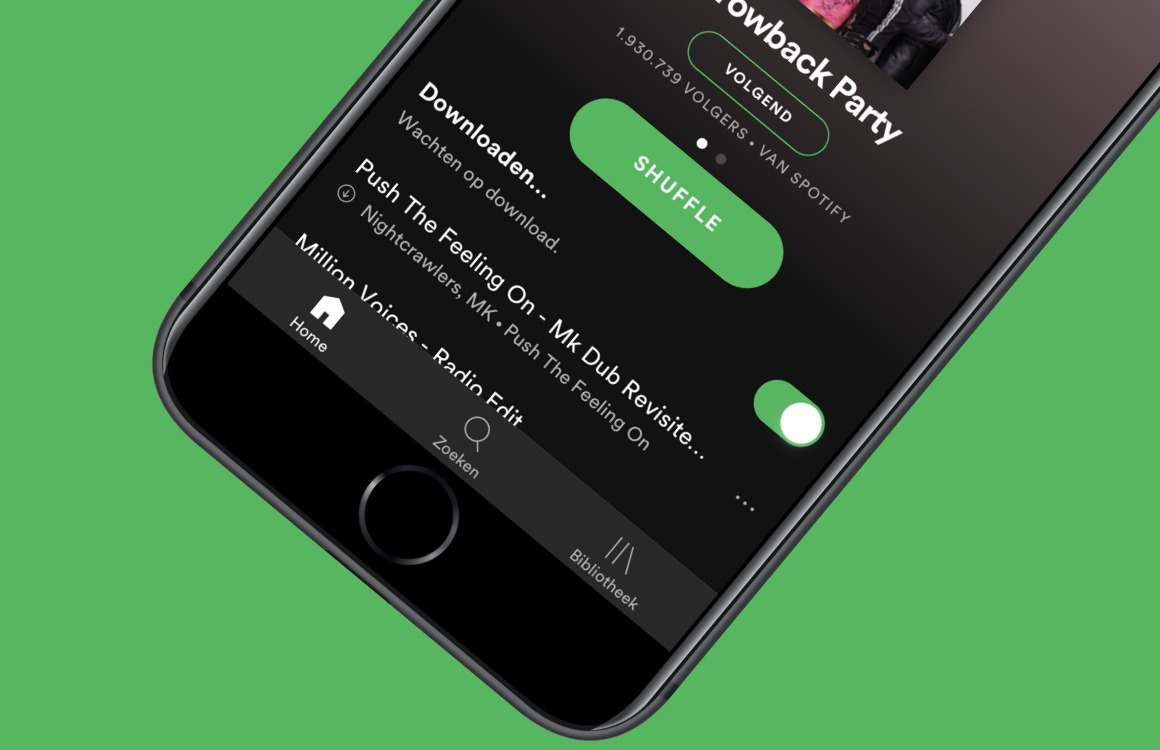
    Spotify introduced many changes to improve the experience of its users while they’re enjoying their favorite songs and podcasts. The most recent updates for Spotify on iOS and Android introduce three accessibility improvements to the user experience: buttons with increased readability features, options for text resizing, and a beta for podcast transcripts.

    Once the update makes it to your phone, you should notice changes to buttons in terms of color, text formatting, and size. These are meant to make it easier for low-vision and visually impaired users to take advantage of various features like shuffling playlists or start listening to a session. Moreover, the update will also help users in situations where there’s low lighting or high screen reflections.

    The next major change introduced today is the option to resize Spotify’s text inside Android and iOS apps. This can be done from the Settings menu on your iPhone:

    • On your phone, head to Settings > Accessibility, then select “Display & Text Size.”
    • Tap “Larger Text” for larger font options.
    • Drag the slider to select the font size you want.

    Last but not least, Spotify is rolling out auto-generated podcast transcripts, which will automatically generate transcripts for Spotify Original and Exclusive podcasts across iOS and Android. The new feature will make it easier for users to read text of the specific podcasts on their phones either with or without sound.