Tag: iphone

  • Opening date revealed for Apple Thailand’s second Bangkok store

    Opening date revealed for Apple Thailand’s second Bangkok store

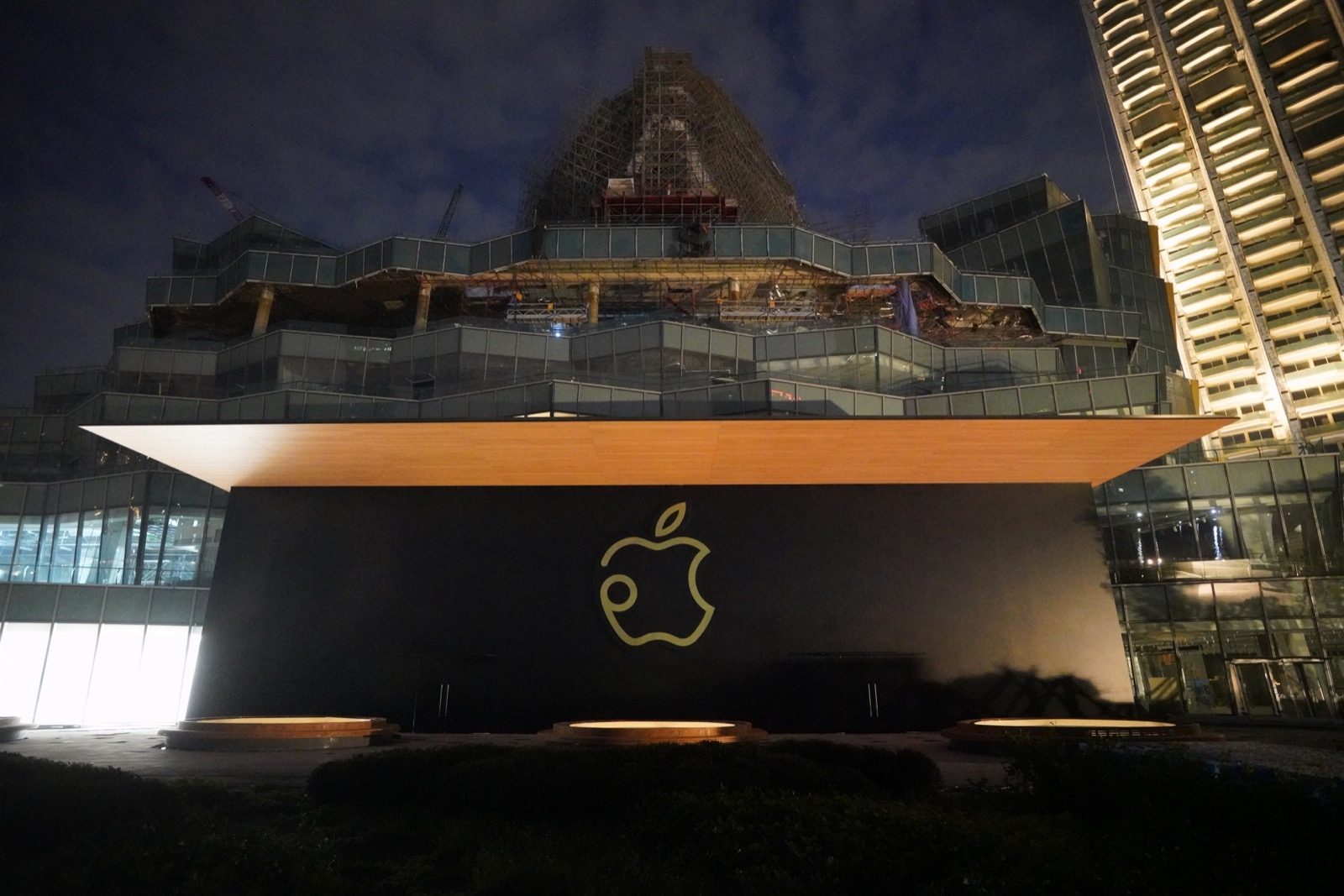
    Apple Thailand’s second retail store in Bangkok will open at the CentralWorld shopping center this week. A reliable local source says the opening date is scheduled for Friday, July 31. However, Apple’s Thai website has posted a colorful version of the brand’s logo with Thai lettering inside, teasing that the Apple CentralWorld store is “coming soon”.

    The website also features a tagline ‘Intersection of the creative idea and inspiration’, which refers to the Ratchaprasong intersection where Apple’s new space is located.

    Earlier this year, photos of the Apple Thailand’s second store were leaked on Twitter, showing a preview of what the store will look like. Apple Thailand’s second store features a unique design with a whirling cylinder of glass and curved timber radiating in concentric circles. It is located on part of a large courtyard outside the mall.

    The Apple CentralWorld store reflects the brand’s confidence in the Thai market, despite the Covid-19 situation in the country.

    Apple Thailand opened its first store at the IconSiam shopping center in Bangkok in November 2018.

  • Apple iPhone production in India shuts down due to dispute with China

    Apple iPhone production in India shuts down due to dispute with China

    Battles along the India-China border last month left 20 Indians dead, and as we told you at the time, negatively impacted iPhone production in and shipments to India. Indian authorities were blocking shipments from China into India. This left Apple iPhone components held up at Indian ports and a lobby group representing U.S. companies in India wrote the country’s commerce minister to state that holding up shipments from China could dissuade U.S. firms from doing business in the country.

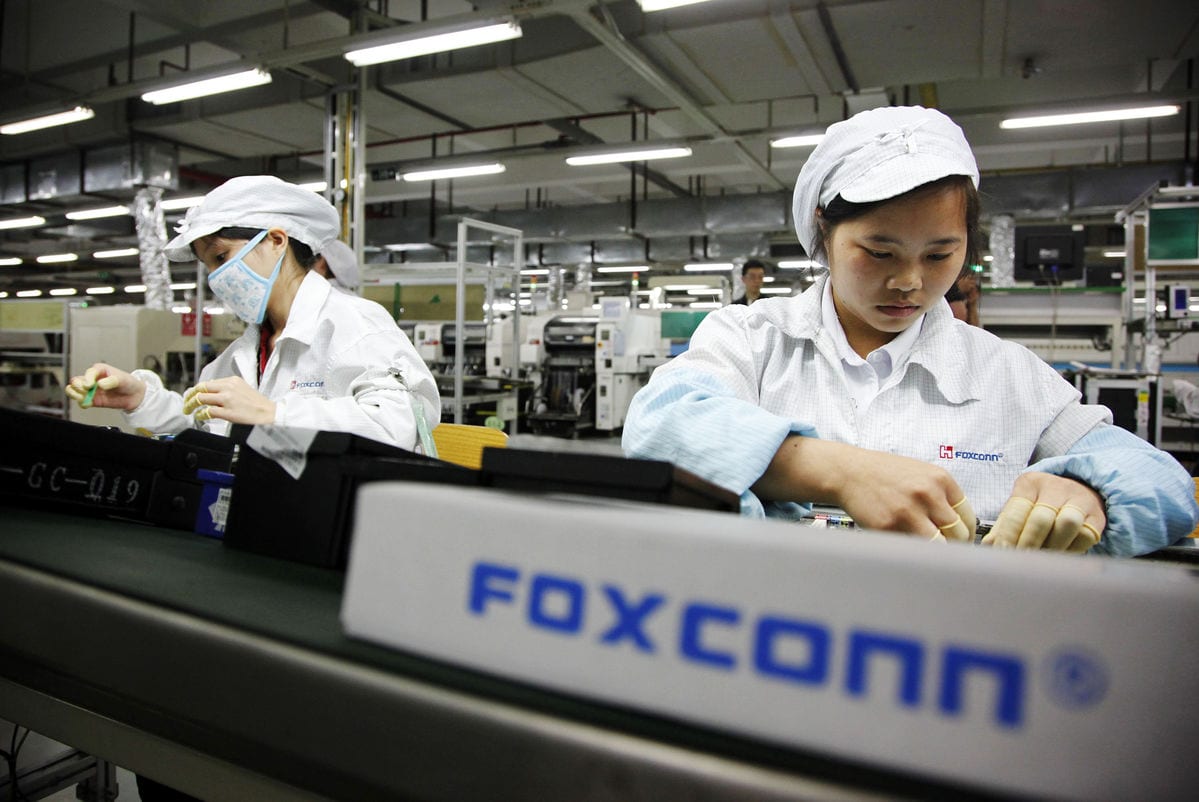
    India continues to make things difficult and is still blocking exports from China. Three sources inside India told Reuters that because Apple contract manufacturer Foxconn cannot receive supplies to its two factories in South India, hundreds of Foxconn employees had no work to do this week. Apple started manufacturing certain iPhone models in India starting with the OG iPhone SE. It now makes newer phones like the iPhone XR in India; by producing handsets in India, Apple is able to keep the country from imposing an import tax on them. Keeping the price of these phones down is important to the average Indian consumer; while it is the second-largest smartphone market in the world, India remains a developing country and for the most part, consumers there need to limit their phone purchases to low and mid-range models. Saving $100 to $200 by avoiding an import tax is a big deal to consumers in the market

    More than 150 shipments to Foxconn’s Indian facilities from its factories in China said to contain smartphones and other electronic parts, have been stuck at the port of Chennai and some are being cleared now. The manufacturer’s two plants in India are located in Tamil Nadu and Andhra Pradesh state. Besides assembling certain  Apple iPhone models in the country, the factories assemble some Xiaomi handsets; the latter’s value for money pricing plays very well in India. The plants have thousands of Indians on the payroll and many of them live in accommodations provided to them by Foxconn.

    One source discussing the matter with Reuters said, “Foxconn was in a very bad state … lots of workers stayed at the dormitory because there was no work.” Meanwhile, the Indian foreign ministry did not respond to a request by Reuters for comment. Two ministry officials did say that the extra scrutiny given all shipments imported into India are only temporary and will soon come to an end. One official in India said, “We cannot keep checking 100% of shipments forever … Shipments of non-Chinese companies being impacted will be cleared on priority.” Interestingly, customs has held back these shipments without a formal order.

    The delays to imports from China are hitting India at a time when the supply chain is still impacted by the coronavirus. U.S.-India lobby groups are asking the government to intervene. Today, China’s commerce ministry said that it hoped that India would stop its discriminatory action against Chinese companies ASAP. The country recently banned 59 Chinese apps including wildly popular short-form video app TikTok.

    As the planet’s second-largest smartphone market, the border battle between the two countries might have a negative impact on some of the top Chinese smartphone brands in India. Xiaomi’s 30% slice of the Indian smartphone phone might not be hurt that much because the brand delivers handsets at a good price and with good specs. Samsung could be the biggest beneficiary of this squabble since it is not a Chinese brand and the Galaxy A models feature viable cameras and long battery lives at a very reasonable price. The Samsung Galaxy A10 with 2GB of memory and 32GB of storage is priced at the equivalent of $109 USD.

    For now, production of iPhone models in India are held up by this dispute as Foxconn employees get an extended vacation.

  • Foxconn eyes development of $319 million workers housing

    Foxconn eyes development of $319 million workers housing

    Taiwan’s Foxconn wants to build housing for workers in northern Vietnam and has made a proposal to the government. The world’s largest contract manufacturer, a contractor for Apple and other global giants seeks to develop three housing projects at a cost of about VND7.4 trillion (nearly $319 million), and has apprised the Ministries of Construction and Planning and Investment of its interest.

    Foxconn wants to build them near industrial parks where it has its plants so that its own workers can also be housed in them.

    If approved by authorities, a project in Viet Yen District in Bac Giang Province will be the largest at 16.7 hectares and have the highest investment of VND3.42 trillion (about $147.4 million).

    Up to VND2.93 trillion ($126.3 million) will be invested in a 6.3-hectare project in Bac Ninh Province’s Que Vo District and the rest of the total investment will be poured into a 9.9-hectare project in Vinh Phuc Province.

    The company said besides apartments they would also have healthcare facilities, schools and shops.

    Since current policies pose certain hurdles, it plans to sell the houses to companies in the industrial zones for them to lease or sell to their employees.

    Foxconn came to Vietnam in 2007, and has been operating mainly in the northern provinces of Bac Ninh, Bac Giang and Vinh Phuc, manufacturing computers and other electronic products and car parts. Last year it expanded to the northern province of Quang Ninh.

    Last week it said for the first time that Vietnam is its largest manufacturing hub in Southeast Asia.

    This year Foxconn expects its exports from Vietnam to double to $6 billion.

  • Apple 12 Is Likely to Arrive Much Later

    Apple 12 Is Likely to Arrive Much Later

    Over the years, we have come to expect that each new generation of Apple products usually comes sometime in September. Everyone thought that the same thing would happen with the upcoming Apple 12 lineup.

    If you tend to follow the news regarding Apple phones, you might already know that the new Apple 12 models are set to be released within the usual September and October timeframe, with slight differences depending on location.

    However, this might not turn out to be the case if the latest rumors are to be believed. According to MacRumors.com, the forthcoming iPhone 12 models are likely to arrive a little later. They are basing this on the production schedules for the 6.1-inch iPhone 12 Max and iPhone 12 Pro, which have the two phones set for production in July and August.

    Production schedules influence the release date greatly, and these seem to show that Apple won’t have enough time to release the phones in September. However, even if they were able to release these two phones in the usual timeframe, it seems that the smaller iPhone 12 with the 5.4-inch display and the massive 6.7-inch iPhone 12 Pro Max are set for production in August and September.

    Looking at these rumors, it seems likely that Apple will release all four models at different dates. The iPhone 12 Pro and iPhone 12 Max could come out in the usual timeframe, while the base model, iPhone 12, and the most expensive one, iPhone 12 Pro Max, could come out in November, or later.

    If that were to happen, it would be the first time for Apple to release its main models later than usual. In fact, it would be the first time in almost an entire decade.

    The displays are the likely culprits for the delay. The new iPhone 12 Pro and iPhone 12 Max are supposed to have separate touch screen layers that are easy to acquire from suppliers, but the iPhone 12 and iPhone 12 Pro Max are likely to feature a different technology called Y-OCTA.

    Even though this is the likely reason for a later release date, it’s still good news because the technology will allow for thinner panels. This will likely result in more accurate colors and thinner bezels. More importantly, it could result in a 120Hz display. Many smartphone manufacturers are already using 120Hz displays as they create a much smoother user experience.

    For example, if you are an avid gamer or an online casino aficionado, you would have a tremendously improved experience. This would be akin to what PC gamers tend to get from monitors with higher refresh rates. That way, if you were to play slots found on Japanslots.com, the experience would be a lot smoother than if you were using a standard 60Hz display.

    So, that one extra month of waiting could end up being a good thing. Naturally, the release dates are still only rumors and we could still get all the new Apple models much sooner. Only time will tell.
  • iPhone maker Foxconn reports that March revenue is 60% up

    iPhone maker Foxconn reports that March revenue is 60% up

    The notorious electronics manufacturer has reported a rise in revenue for March 2020, equating to 59.9%. After having to stop most of its production during the initial breakout of coronavirus in China, Foxconn has been steadily going back to its normal working capacity in recent weeks. Initially suffering losses in revenue, particularly in the first three months of 2020, it appears that the company is recovering. Some of its products though is still being affected by travel restrictions, causing delays in product testing and other assistance from its clients.

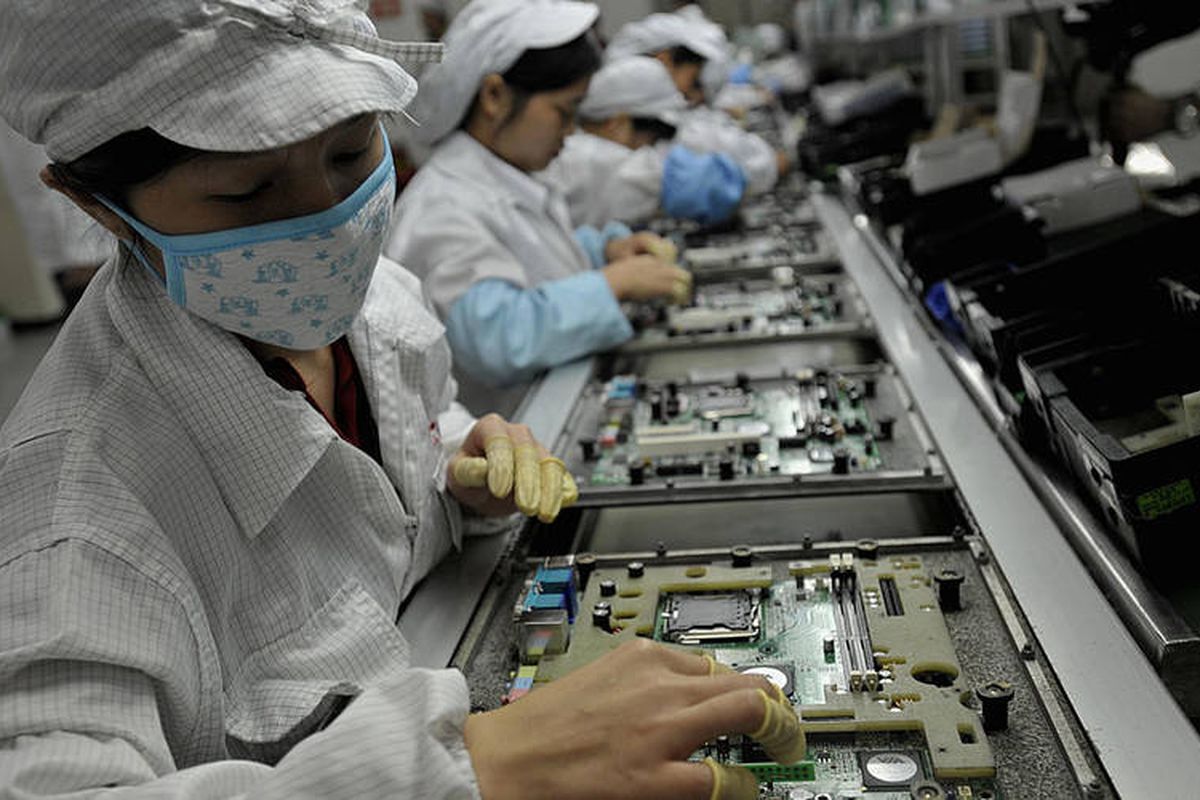
    Half of the world’s iPhones are made at Foxconn, with other popular products such as iPad, iPod, and game consoles Nintendo 3DS, PlayStation and Xbox also being partly or fully manufactured at their facilities.

    2020 has expectedly been a difficult year for businesses, with almost all smartphone companies suffering losses in revenue. Apple, however, has reportedly enjoyed a $56 billion revenue in the first quarter of 2020, 8% higher than last year, with its upcoming 5G iPhones expected to prove even more profitable for the Cupertino company. All of this, of course, equates to more business for its partner, Foxconn.

    Foxconn has been the subject of many controversies over the years, most notably allegations over appalling working conditions. In 2012, during its production of Wii U consoles, the company was found in violation of Nintendo’s Corporate Social Responsibility Procurement Guidelines, confessing to the employment of children under the age of 16 in one of its factories.

    Despite the waves of negative attention, Foxconn remains the world’s largest provider of electronics manufacturing services.

  • You might soon unlock your BMW with your iPhone

    You might soon unlock your BMW with your iPhone

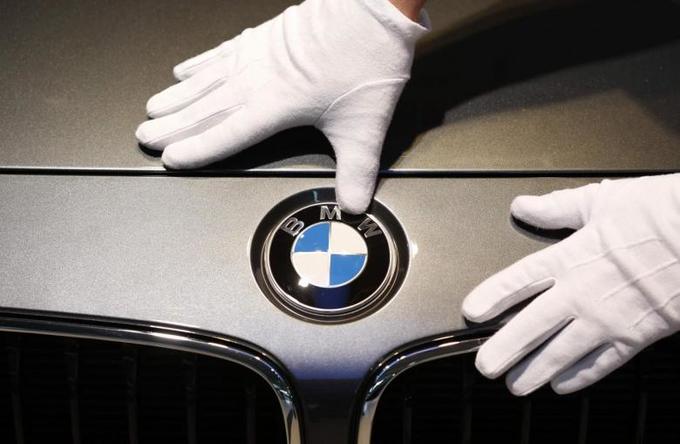
    Apple and premium German car manufacturer BMW are seemingly collaborating to bring the CarKey iPhone feature to eligible vehicles of the carmaker. Evidence for this was unraveled in the iOS 14 code, hinting that iPhone users might soon be able to unlock their BMW cars with their iPhones thanks to the CarKey feature. As a reminder, the existence of CarKey itself was revealed in the iOS 13.4 beta back in February.

    Given that BMW was among the very first automakers to adopt Apple’s CarPlay feature a few years back, it would make sense to assume that CarKey could be adopted on upcoming beemers as well.

    It seems that CarKeys could be stored inside the ubiquitous Wallet app and even be shared with other people through iMessage. “Yo, mom, shared me the keys for the car” would sound a whole lot cooler! Code strings suggest that you will not only be able to lock and unlock your vehicle with your device, but also start it remotely. This is already available through the BMW Connected app, but native iOS support would definitely be great. There would seemingly be two ways to unlock the car – either by holding your phone near the NFC-enabled door handle or just having your iPhone in your pocket.

    Apple could use NFC, UWB (ultra-wide band) chip, or a combination of the two. The UWB chip debuted with the iPhone 11-series but has been pretty underused when it comes to features, as it’s currently only used to aid AirDrop discovery.

    On the topic of anti-theft countermeasures, CarKey will enjoy the same level of biometric security that the sensitive data on your iPhone enjoys, but there would seemingly be an option to use CarKey without having to authenticate yourself with a Face ID scan or a PIN code for an even faster experience.

    BMW itself neither denied or acknowledged the rumored functionality. When asked, the company replied rather nonchalantly with “Please understand that at this point we cannot confirm your request nor give you further details. We would like to refer you to our press release, ” which suggests that we could be in for news on the matter very soon.

  • Apple limits online sales of iPhone as stocks go down

    Apple limits online sales of iPhone as stocks go down

    Apple has placed restrictions on bulk purchases of its iPhones in some Asian territories after the coronavirus outbreak caused interruptions to supply.

    Customers in Mainland China, Hong Kong, Taiwan, and Singapore are limited to buying two devices of the same model per order. While similar limitations are in place in many other regions, customers in those territories are not being notified of the limitations until check-out.

    The firm issued a warning to investors last month that the coronavirus outbreak had significantly affected its supply chain, stating that it may not meet its quarterly revenue expectations. Apple shut down all of its retail stores outside China 10 days ago, including 52 outlets in Mainland China, Hong Kong and Taiwan.

    Apple suffered a 61-per-cent year-on-year drop in iPhone sales last month, at a time when Chinese factories were largely closed. Many have since reopened as demand for iPhones drops globally with the spread of social distancing and closed retail outlets.

  • Nintendo brings real-time multiplayer to Mario Kart on iOS

    Nintendo brings real-time multiplayer to Mario Kart on iOS

    After a three-month beta test, Nintendo announced a multiplayer will be added to Mario Kart on iOS this week. Even better, all players will have access to the multiplayer aspect regardless of whether or not they’re paying for the Gold Pass.

    Nintendo introduced a premium subscription model a while ago, which offers some perks to those who pay $5 for a Gold Pass. While it was in beta, only Gold Pass subscribers had access to multiplayer in Mario Kart. However, when it launches later this week, it will be available to everyone except for Gold Races, which will only be accessible by those who pay for Gold Pass.

    Nintendo announced that three types of real-time multiplayer races will be available in Mario Kart on iOS, which you can find below:

    • With Friends or Others Nearby: Choose your own rules and race with friends or others nearby; rules do not change;
    • Standard Races: Race against players around the world to raise your grade with rules that change daily; two sets of rules change daily;
    • Gold Races: Available exclusively to MKT Gold Pass Subscribers, compete with the best of the best for the highest grade; four sets of rules change daily.

    If you’re still playing Mario Kart, you’ll be happy to know that multiplayer will be officially available on iOS devices starting March 8 at 8 pm.

  • Apple China reopens stores slowly

    Apple China reopens stores slowly

    Apple China has reopened 10 more stores in China, as the business begins to return to normal despite the ongoing coronavirus outbreak.

    The 10 reopened outlets, which are located in Shanghai, Chengdu, Dalian, Guangzhou and Qingdao Vientiane City, will operate with limited business hours, according to stores’ websites.

    It is not yet clear whether or not the 10 Apple China stores will apply the same measures to prevent coronavirus transmission as five stores in Beijing which reopened last week with protection, including temperature checks of customers upon entry

    Meanwhile, Apple warned of global iPhone supply shortages earlier this week, and said it would be unlikely to meet quarterly revenue targets while its Chinese factories remained shut.

    “Work is starting to resume around the country, but we are experiencing a slower return to normal conditions than we had anticipated,” the company said in a statement. “As a result, we do not expect to meet the revenue guidance we provided for the March quarter.”

    Although the iPhone manufacturing partners outside Hubei have resumed production, “they are ramping up more slowly than we had anticipated”.

    Meanwhile, archrival – Samsung – has launched its latest smartphone in Vietnam, saying its factories in the country are running at full capacity during the coronavirus epidemic.

    Nguyen Tri Thong, corporate marketing director at local smartphone unit Samsung Vina Electronics, told the Nikkei Asian Review that Samsung’s new products have been available for delivery as the company has a clear production schedule.

    “The outbreak of the coronavirus did create challenges to many businesses globally. However, we have been mobilizing our backup plans in order to maintain our position,” Thong said. “We don’t see any serious issues in our supply chain at the moment,” he said without giving further details.

  • Apple takes a shot in the dark with its latest iPhone ad

    Apple takes a shot in the dark with its latest iPhone ad

    Apple also developed Deep Fusion which is similar to the Pixel’s HDR+. When a photo is snapped on the iPhone, nine different exposures are created including four short exposures, four standard exposures, and one long exposure. Three standard shots are combined with one long-exposure to create a “synthetic long-exposure” which is then combined with the sharpest of the four short-exposure images.
    Once that occurs, it takes just one second for the neural engine on the A13 Bionic chipset to select the best pixels to use from four different processing steps. The result is a sharper photograph with less-noise. Deep Fusion is used with most telephoto shots and when using the primary wide camera in medium to low light environments. The iPhone 11 series represents Apple’s entry into computational photography which Google had a head start on with the Pixel line.
    Remember when iPhone users were called “wall huggers” by Samsung? A commercial produced for the Galaxy S5 back in 2014 took place at an airport where iPhone users were all sitting on “stained carpeting” charging the battery in their phones. The Galaxy S5 not only had a replaceable battery, but it also featured Ultra Power saving mode that turned off all non-essential features and turned the screen to grayscale. Those days are now long gone, especially with the new batteries that Apple included with the iPhone 11 models. Ironically, based on our tests, the Apple iPhone 11 Pro Max provides 56% longer battery life than the Galaxy Note 10+.
    And you might recall that a 2017 ad from Samsung for the Galaxy Note 8  chronicled how a lifelong iPhone user ended up switching to the Galaxy Note 8. It’s the old story: boy meets girl and starts a relationship with her. We assume that they were compatible in most areas although she always had a Samsung phone. In one scene from that ad, both of their phones end up falling off a dock and into the water. Her phone was fine because of the IP68 rating on the Galaxy S7; his iPhone ended up in a bowl of white rice because it didn’t have official water protection back then. But now, Apple has enhanced the water protection on the iPhone 11 models. The iPhone 11 can be submerged to a depth of 2 meters (6.5 feet) for as long as 30 minutes while the “Pro” models can be submerged to a depth of 4 meters (13.12 feet) for as long as 30 minutes. The Galaxy Note 10+ can be submerged to a depth of 5 feet for up to half an hour.
    The 2019 iPhone models are also protected from splashes caused by soda, beer, coffee, tea, and juice. Just rinse it off with tap water and dry. Keep in mind that Apple, like all other phone manufacturers, still will not cover water damage with the iPhone’s warranty. Apple does note that “Liquid damage is not covered under warranty, but you might have rights under consumer law.”
    You’ll probably see the new ad for Night Mode plastered all over your television set this coming week.
  • Apple iPhone production is set to resume in China on February 10th

    Apple iPhone production is set to resume in China on February 10th

    With the coronavirus claiming the life of 490 people and infecting 24,324 at last count, a number of businesses in China have cut back their operations or have closed altogether. This hits Apple right in the solar plexus since the company depends on contract manufacturers located in China to produce many of its products including the iPhone. The virus also impacted some of Apple’s China-based supply chain.

    Bloomberg reports that the Chinese manufacturer that Apple relies on the most, Foxconn (aka Hon Hai Precision Industry Co.) will resume production on February 10th. Other companies like Quanta Computer Inc., Inventec Corp., and LG Display Co. will also go back to work next week. TF International analyst Ming-Chi Kuo recently cut his estimate of iPhone shipments for the current quarter by 10%. For the calendar first-quarter (Apple’s fiscal second-quarter), Kuo now sees the company delivering 36 million to 40 million iPhones. Apple no longer releases the number of phones it ships during its quarterly reports, but the analyst believes that the manufacturer delivered 38 million during last year’s calendar first-quarter. So for the three months from January through March, he sees iPhone shipments declining as much as 5.3% or rising by as much as that same percentage.

    The February 10th date when production is supposed to ramp up again at Foxconn isn’t exactly written in stone. Some workers are living in municipal lockdowns and transportation of people and materials has slowed down tremendously. The facility where Foxconn builds most of its iPhones is located in Zhengzhou and the factory used by assembler Pegatron to build the device is in Shanghai. Both are more than 311 miles away from Wuhan, the city in China considered to be ground zero for the coronavirus.

    Earlier this week, Apple said that it would shut its stores, corporate offices and consumer centers through February 9th due to an “abundance of caution and based on the latest advice from leading health experts.” Apple is still able to ship orders throughout the country, so those looking to pick up a new iPhone in China won’t be blocked because of the virus.

    Meanwhile, GF Securities analyst Jeff Pu says that companies in the supply chain are seriously concerned about a lack of employees. He notes that “The main variable is whether the government will push back the time for resuming production, though it is not very likely given the complexities of organizing transportation for the returning migrant workers.” Apple has more than 10,000 direct workers in China including those working in the Apple Stores. The firms that make up Apple’s contract manufacturers and supply chain in China have over 1 million people producing parts and assembling Apple’s products.

    While it was feared a week ago that the virus could delay the launch of the iPhone 9, Foxconn now says that it has a backup plan that will allow the next new iPhone model to be released on schedule. As we told you during the waning days of January, trial production of the phone has already started. The iPhone 9 will look like the iPhone 8 down to the 4.7-inch LCD display. But unlike the iPhone 8 which is powered by the 10nm A11 Bionic chipset, the iPhone 9 will be equipped with the same 7nm A13 Bionic SoC found in the 2019 iPhone models. The new device will also be the beneficiary of a 50% hike in memory from 2GB of RAM to 3GB. We could see the iPhone 11’s 12MP Wide camera on the back along with a 1,821mAh battery. The iPhone 9 is expected to start at $399 and could be unveiled next month.

  • European Union wants Apple’s Lightning port gone

    European Union wants Apple’s Lightning port gone

    EU lawmakers might be in favor of diversity, but not when it comes to smartphone chargers. Today, these lawmakers called for the creation of one standard charger for all mobile devices. By an overwhelming vote of 582-40, members of the European Parliament passed a resolution that asks the European Commission (the body that drafts laws for the EU) to make sure that buyers of mobile devices no longer are under the obligation to purchase a new charger every time they buy a new device. The resolution calls for the EC to adopt new rules by this coming July.
    The idea is to reduce the amount of electronic waste that the EU is dealing with. During 2016, the last year that data was made available, such waste generated in the EU added up to 12.3 million tonnes or 36.6 pounds for each person living in the EU. The resolution noted that requiring a standard charger for mobile devices could reduce the amount of electronic waste and it also asked the Commission to pass a rulemaking sure that wireless chargers could be used to power up different mobile devices.

    The EC has actually been fighting for a standard mobile charger for over 10 years. in 2009, Apple, Samsung, Huawei, and Nokia signed a “voluntary memorandum of understanding” calling for these phone manufacturers to use standard chargers for phones that were coming to the marketplace in 2011. But it is obvious to the EC after nearly 10 years that the voluntary approach has not worked and that legislation is going to be needed in order to force the phone manufacturers to take action.

    The company that is on the line with this proposal is Apple. That is because most Android phones have a USB-C port which is the closest thing to a common charging platform that the mobile industry has today. However, Apple has its proprietary Lightning port which has been in use since 2012 when it replaced the 30-pin dock connector. Apple did switch to USB Type-C for the 2018 iPad Pro models and for the last couple of years there have been rumors about the same thing happening to the iPhone. Many iPhone users have been hoping that Apple switches to Type-C; that could make it easier for them to find accessories for their iPhones and at a lower price, too.
    While Apple might end up not having a choice in Europe, it is hard to see the company voluntarily switching to a standard system because of the profits involved. Having a proprietary charging system means that people will have to come to Apple for an original replacement. The company already took a little hit when it introduced the 2019 iPhones by including an 18W fast charger in the box with the iPhone 11 Pro and iPhone 11 Pro Max. While the iPhone 8 iPhone 8 Plus, iPhone XS, iPhone XS Max, and iPhone XR all support fast charging, owners of those models have to shell out $29 for an 18W charger.
    Last month, reliable TF International analyst Ming-Chi Kuo looked deeply into his crystal ball and said that the highest-end 2021 iPhone might not have a Lightning port or a USB-C port. Kuo is talking about the iPhone 13 Pro Max featuring a “completely wireless experience.” If indeed Apple is looking at offering a port-free phone, it could decide that it isn’t worth it to make a switch away from the Lightning port for a short period of time.
    However, there is still the EU to consider. Apple said last week that the mobile industry is already moving toward the use of Type-C as a standard, but also said that forcing a standard on the industry would hurt consumers in Europe. And Apple also points out that making a quick move to a standard charging platform would create plenty of electrical waste, exactly what the EU is trying to avoid in the first place.
  • Instagram’s next new feature has just been leaked

    Instagram’s next new feature has just been leaked

    Instagram is testing new features all the time, but we don’t hear about many of them until Facebook makes them available to everyone. This is one of those exceptions where we learn about a new feature that Instagram plans to add to its apps after thoroughly testing it.

    The next important addition to Instagram should be Reactions for Direct Messages. The information comes via Jane Wong, the reverse engineer who’s an ace when it comes to discovering unreleased features.

    But that’s not the only source of the information. Facebook’s Tech Communications Manager, Alex Voica, confirmed that the unreleased feature is being tested for a few days. At the moment, non-employees can only see the “love” reaction, but there are six more that should be available at launch.

    It’s impossible to give you an ETA for the new feature, but at least we know what Instagram is currently working on. Still, considering testing has only just begun, it will probably take a few weeks until they go public if nothing wrong happens.

  • Google brings iPhone support for an important security feature

    Google brings iPhone support for an important security feature

    In the age of digital security, two-factor authentication, or 2FA, is one of the most important lines of defense against a wide array of cybersecurity issues. Recently, Google released an update to let iPhone users take advantage of this tech a lot more easily.

    Need a refresher on what 2FA is? Basically, it’s a security system that requires two different authentication mechanisms to bypass, which are often based on something you know or have, such as a password or security key. Over decades, this technology has been integrated neatly into our lives, as the PIN code on your ATM card, perhaps, or, more recently, as those ubiquitous codes texted to you whenever you do basically anything.

    Several years ago, Google announced a new way of using 2FA, where your phone can act as its own security key, or one of the two factors you need to unlock your account. You might have run into this system if you’ve recently tried to reset your Gmail password from your computer—you were probably able to reset it just by interacting with a notification on your phone. The system is super simple, easy to use, fast, and secure.

  • Otterbox announces new iPhone screen protector that also protects users

    Otterbox announces new iPhone screen protector that also protects users

    For those worried about the dirt and crap that their phone’s screen protector collects over the course of a year, case maker Otterbox has come up with a solution. The company teamed up with Corning to create the Amplify Glass Anti-Microbial screen protector. Does it actually kill bacteria? Well, we can tell you that the antimicrobial technology used on the accessory is registered with the Environmental Protection Agency (EPA). The important thing is that this technology is embedded in the glass protector and doesn’t interfere with the touchscreen properties or the clarity of the screen.
    Otterbox CEO Jim Parke says, “Amplify Glass now features proprietary anti-microbial technology that suppresses the growth of several common stains and odor-causing bacteria to protect the surface of the screen protector.” So you will be able to put your face against your phone’s display when making a call without fear that you are going to be ravaged by some disease.
    And the Amplify Glass Anti-Microbial screen protector does more than kill bugs. It also protects the display on a phone up to five times better than rival screen protectors and keeps the screen on your phone from succumbing to drops, bumps and falls. Keep in mind that while Otterbox and Corning are protecting your phone, they are also protecting your health. The accessory will be soon available for the latest iPhone models and will be compatible with the company’s iconic cases.