Tag: jakarta

  • Indonesian Retail Sector Sees More Growth

    Indonesian Retail Sector Sees More Growth

    Despite the expected sluggish economic growth this year, Indonesian food and clothing retailers are gearing up for expansion to capture a greater share of the middle class and its higher income.

    “Expansion is crucial for the retail industry to boost sales turnover, other than renovating old branches,” said Tutum Rahanta, executive at Indonesian Retailers Association (Aprindo), adding he estimated sales turnover from the nation’s retailers to grow between 10 percent and 12 percent this year.

    Last year, Aprindo’s data showed turnover at Rp 150 trillion ($12.75 million).

    Tutum added that competition between retailers is intensifying, so companies must take risks by expanding.

    He said if expansion is delayed, a retailer may lose its market share.

    One retailer eager to expand is Hypermarket operator Matahari Putra Prima, which plans to open 20 new branches over this coming year.

    The company, which is controlled by the Lippo Group, has set aside Rp 700 billion for capital expenditure this year, an increase of 7 percent from 2013, most of which will be used for financing expansion of outlets in eastern Indonesia.

    Danny Kanjongian, corporate communication director at MPP said in January the company plans to open up to 22 outlets this year, mostly in the eastern islands of the country.

    “The company’s cash generation capability is strong, so it can support expansion plans,” Danny told reporters on Friday on the sidelines of an inauguration ceremony of a Foodmart Gourmet outlet in Cilandak Town Square, South Jakarta.

    As of the end of last year, MPP operated 99 Hypermart outlets in as well as 97 Boston Health & Beauty stores and 30 Foodmart outlets.

    Other retailers in different segments, including supermarket chain operator Indomarco Prismatama, department store Ramayana Lestari Sentosa, fashion retailer Mitra Adi Perkasa and electronic retailer Ace Hardware are also in expansion mode.

    Indomarco, controlled by Salim Group through Indoritel Makmur Internasional, the operator of Indomaret, plans to spend Rp 1.3 trillion adding 1,300 new outlets.

    Ramayana, which sells clothes to low-income consumers, plans to spend Rp 350 billion adding six branches this year.

    Mitra Adi Perkasa, which sells a number of well-known fashion brands, is also keen on a massive expansion with previous reports suggesting plans to spend up to Rp 600 billion opening 250 new outlets across the country.

    Despite increasing competition and ballooning expenses, retail businesses in Indonesia will continue to grow over the next few years, according Maybank Kim Eng Securities analyst Janni Asman.

    The country’s growing purchasing power and living standards are the catalyst to that growth, Janni said.

    Indonesia, over the past few years, has been the darling of the investment community, with economic growth of around 6 percent each year since 2007 to 2012 though it is predicted to slow in 2014.

    Gross domestic product has increased five times within 10 years and GDP per capita has increased four times to around $5,000 now.


  • The McDonald’s rendang burger lands in Indonesia

    The McDonald’s rendang burger lands in Indonesia

    McDonald’s Indonesia has introduced the rendang burger to celebrate the country’s 72nd anniversary of independence and being the burger and fast-food lovers that we are, we just had to try it.

    After all, what better way to honor Indonesian culture than bring one of its top dishes—which has even been regarded as the world’s most delicious food—in fast-food burger form to the masses? While the fast-food giant has released similar short-term specials, this rendang burger in its latest iteration, is sold as part of a special menu titled “Ini Rasa Kita” (this is our flavor). The menu is available from July 28 til September 10, 2017.

    The special menu includes three rendang burger options: your classic rendang burger with a single patty, the double rendang burger, and the rendang burger special, which has one patty and a fried egg on top. There’s also a limited edition soda belimbing (starfruit) you can order as a part of a meal package if you’re feeling particularly adventurous. 

    We’ve comprehensively tasted and reviewed Bali’s best burgers so we feel pretty confident about our ability to give you the 411 on McDonald’s ‘culturally adapted’ new number. Just sayin.

    Going in to Bali’s Jimbaran Ngurah Rai By Pass McDonald’s with a ‘go big or go home’ mentality, we ordered ourselves the rendang burger special, which set us back Rp 40k (USD2.99) a person since we went for the meal combo. Gotta get those salty McD fries, after all. 

    Upon unboxing the special rendang burger, we’ve got to tell you it’s a bit smaller than we expected since McD’s promotional photos make it look like a juiced up burger compared to their standard menu—but it turns out the rendang burger is just your classic McD cheeseburger with special toppings. Same nice greasy, cheesy taste, just nothing amped up quality-wise. Another thing we immediately noticed were the giant slices of onion on top. While those appeared a bit off-putting at first, they’re a nice textural addition to the greasy fried egg and thin standard beef patty.

    As far as the actual rendang seasoning goes, please don’t expect the tastiest slow cooked rendang from your favorite padang kitchen. Have you had Indomie rendang before? Because the spice packaging that comes with the instant noodles is exactly what the McDonald’s rendang sauce recipe tastes like. MSG-filled and a bit too ‘instant mix’ on the tongue to be that slow-cooked, creamy and rich coconut-milk spiced sauce that’s earned rendang world fame.

    That said, we loved the rendang special burger as a quick bite and anticipate some late night McDonald’s visits in the next couple of weeks to get our MSG and fast food fix.

  • Jollibee to open 15 more outlets in Singapore, eyes 150 in Indonesia

    Jollibee to open 15 more outlets in Singapore, eyes 150 in Indonesia

    The famous Philippine chicken joy is spreading its wings across Asia as home-grown fast-food chain Jollibee announced Friday its plans for expansion in Singapore and Indonesia.

    Dennis Flores, Jollibee president and head of international business in Europe, Middle East, Asia and Australia, confirmed that 15 more outlets will be opened in Singapore in the next five years.

    He also revealed the company’s long-term expansion plans in Indonesia.

    “We’re looking at putting up no less than 150 stores in Indonesia over the next 10 years,” Flores told ABC-CBN News.

    Jollibee opened its first outlet in Singapore in 2013 located at Lucky Plaza, a known hub for overseas Filipino workers. Flores said, a 6th outlet will open at Jurong East in April 2018.

    He said the growing number of Singaporean patrons is proof that “Jollibee’s offerings have greatly appealed to the taste buds of the locals.”

    Aside from Indonesia and Singapore, Jollibee is looking into growing its international store network in Malaysia and Macau.

  • Whitesky kicks off Jakarta-Bandung helicopter service

    Whitesky kicks off Jakarta-Bandung helicopter service

    PT Whitesky Aviation commenced on Monday the operation of its helicopter service from Jakarta to West Java’s capital of Bandung.

    Whitesky Aviation CEO Denon Prawiraatmaadja said on Sunday that the service, named Helicity, had received a license from the Transportation Ministry to operate as a public transportation mode.

    “Helicity is also to support the tourist sector,” said Denon, adding that the fare was Rp 36 million (US$2,664) per trip for six passengers

    Denon said his company operated 30 helicopters for its service across Indonesia.

    He said the operation of Helicity was initiated in response to the government’s aim to improve air connectivity to boost tourism.

    He expressed his optimism about the Helicity market, particularly because of the increasing number of foreign tourist arrivals in Indonesia – 12 million in 2016 and a targeted figure of 15 million in 2017, with each tourist spending an average of US$1,200 per visit.

  • Indonesia Bourse May Snap Losing Streak

    Indonesia Bourse May Snap Losing Streak

    Ahead of Friday’s holiday, the Indonesia stock market had tracked lower in back-to-back sessions – surrendering almost 120 points or 2 percent. The Jakarta Composite Index now rests just above the 5,950-point plateau, although it may tick higher on Monday as it catches up on missed positive sentiment.

    The global forecast for the Asian markets is soft thanks to political concerns in the United States, although a spike in crude oil prices should limit the downside. The European and U.S. markets were down and the Asian bourses figure to follow suit.

    The JCI finished sharply lower on Thursday following losses from the food and resource sectors.

    For the day, the index plummeted 109.23 points or 1.80 percent to finish at the daily low of 5,952.14 after peaking at 6,058.60. There were 215 decliners and 131 gainers, with 120 stocks finishing unchanged.

    Among the actives, Bank Pan Indonesia skyrocketed 13.68 percent, while Bank Danamon Indonesia plummeted 5.19 percent, Tiga Pilar Sejahtera Food plunged 5.19 percent, Jasa Marga tumbled 1.92 percent, Lotte Chemical skidded 1.62 percent, XL Axiata dropped 1.60 percent, Voksel Electric shed 0.68 percent, Bumi Resources retreated 1.96 percent, Vale Indonesia lost 0.72 percent, Indofood fell 3.62 percent and Bank MNC Internasional and Bank Mandiri were unchanged.

    The lead from Wall Street is negative as stocks opened sharply lower on Friday. They recovered in afternoon trade but still finished firmly in the red as they backed off recent record closing highs.

    The Dow slipped 40.76 points or 0.17 percent to 24,231.59, while the NASDAQ fell 26.39 points or 0.38 percent to 6,847.59 and the S&P 500 dipped 5.36 points or 0.20 percent to 2,642.22. For the week, the NASDAQ slid 0.6 percent, the Dow surged 2.9 percent and the S&P jumped 1.5 percent.

    The late-morning sell-off came on news that former National Security Adviser Michael Flynn has agreed to cooperate with prosecutors in the investigation of Russian meddling in last year’s election.

    However, stocks regained ground as Senate Majority Leader Mitch McConnell, R-Ken., declared that Republican leaders have won over enough reluctant lawmakers to pass their tax reform bill.

    In economic news, the Commerce Department reported a bigger than expected increase in construction spending in October, while the Institute for Supply Management noted a modest slowdown in the pace of growth in manufacturing activity in November.

    Crude oil futures rallied Friday after OPEC producers voted to extend supply cuts through 2018. January WTI oil climbed 96 cents or 1.7 percent to $58.36/bbl. Prices dropped 1 percent for the week.

    Closer to home, Indonesia will release November inflation data later today, with forecasts expected to show an increase of 0.3 percent on month and 3.45 percent on year following the 0.01 percent monthly increase and the 3.58 percent yearly gain in October.

  • Garuda Indonesia Cancels Flight Due to Lack of Pilots

    Garuda Indonesia Cancels Flight Due to Lack of Pilots

    National flag carrier Garuda Indonesia canceled a flight from Singapore Changi Airport to Soekarno-Hatta International Airport on Sunday due to a lack of available pilots. The plane was scheduled to depart at 10 p.m. Singapore time.

    Garuda spokesman Ikhsan Rosan said the pilots who were meant to fly that evening had flown for nine hours on Sunday – the maximum number of hours a pilot is permitted to fly in one day.

    “The pilots should fly for a maximum of nine hours a day after having flown five times but, due to delays, the pilots had reached the flying limit,” Ikhsan told on Sunday night, adding that the pilots were not immediately replaced as all available ones were in Jakarta.

    As a result, hundreds of passengers were forced to reschedule their flights on Monday as all Sunday flights were fully booked.

    One of the passengers, Rudy Bani, 39, said he was frustrated with the airlines because he had a meeting on Monday afternoon.

    “I am a frequent flyer of Garuda and this kind of thing had never happened before. This is the worst,” Rudy said.

    Passengers trying to book morning and afternoon flights on Monday reportedly had a difficult time finding available seats.

  • Common Myths About Doing Business in Indonesia

    Common Myths About Doing Business in Indonesia

    Some claims are so ingrained that even those who have lived in Indonesia for a length of time have trouble differentiating between what is true and false. The rumors shared through the expat community are not usually spread with bad intentions, but perhaps are based on misguided and outdated information. Many of these myths can be (and are) easily debunked below.

    The Local Shareholder Myth

    One of the most common misconceptions about doing business in Indonesia is that a local shareholder is required for starting a company. In reality, many business lines are open to full foreign ownership.

    Foreign investors are allowed to set up 100 percent foreign-owned trading and real estate companies in Indonesia. In the hospitality industry, that means hotels with three or more stars classification can be fully controlled by a foreign business entity. However, it’s the lesser rated hotels that requires percentage ownership with a cap at 67 percent for foreign holdings and the remaining stakes held by Indonesian shareholders.

    Foreign shareholding depends on your business classification. The document regulating restricted industries is the Negative Investment List or Daftar Negatif Investasi (DNI), and it is revised every three years. The purpose of the DNI is to protect local companies, especially smaller and aspiring businesses, from foreign competition.

    Business through Partnerships

    Another common misconception in Indonesia is that partnerships, specifically marital partnerships, allows business in Indonesia to be more conducive. Whether these partnerships are purely to secure residence permits, company registration or simply for further insight into the Indonesian business culture; it’s all speculative. And, although Indonesians do have a smaller capital requirement when starting a company, asset control is a huge issue–especially if the expat partner in question doesn’t legally hold any.

    For local perspective, it is oftentimes wiser to turn to a professional consultant or lawyer as regulations in Indonesia can change overnight and the information from a “trusted” advisor might become outdated or simply untrue. And, there are alternatives to partnerships for all other issues such as visas and company establishment,.

    Indeed, building a company under a local spouse’s name might seem like a good idea, but it carries high risks.

    Unsecure nominee agreements is one of the diciest ways of starting a business anywhere. As a foreigner in Indonesia, you would not have any legal claims to your business should the marriage go south.

    There are non-financial ways to contribute since paid up capital can be in the form of money or other assets. A personal nominee is only based on good will whereas professionally pledged shareholding agreements keep your assets safe.

    The Question of Marriage

    In Indonesia, religion plays a significant role. Foreigners who wish to marry an Indonesian partner often think they are required to convert to their future spouse’s religion, but there are ways around this statute. Most foreigners who change their faith do it because it is the wish of their spouse or their spouse’s family and they do it by choice, and perhaps a bit of obligation.

    Weddings conducted abroad are currently recognized in Indonesia. It takes a little bit of time and paperwork, but your marriage can be acknowledged by the Indonesian government. However, dual citizenship is not recognized in Indonesia so any move to change citizenship must be scrutinized with a fine-toothed comb.

    Land and Property Ownership

    The Basic Agrarian Law No. 5 Year 1960 dictates that foreigners are not allowed to own freehold land in Indonesia. The same law stipulates that foreigners can only obtain land under the following rights: Hak Guna Bangunan – Right to Build, Hak Guna Usaha – Right to Cultivate, and Hak Pakai – Right to Use.

    It is common practice among foreign investors to buy land or real estate using a local nominee, but this is a high risk maneuver that would waive any legal protection over your investment. Human relations have a tendency to change and there is no guarantee that your nominee won’t take over your land or property. The safest option to invest in property in Indonesia is through a foreign-owned company, which would allow legal ownership of the property.

    Conclusion

    Conducting business in Indonesia may seem arduous. Most businesses that struggle in Indonesia struggle for the same reason anywhere in the world–for lack of demand, high competition or poor management.

    The real issue here is red tape, so be prepared to invest a lot of time into your business venture. Seek advice from experienced people who have a proven track record in the relevant industry and try to ignore hearsay and horror stories. Investors entering Indonesia face entry barriers, but these obstacles are some of the reasons why the competition is relatively low. Opportunities abound, and playing it wisely can provide some lucrative rewards.

  • Indonesia to Restrict Bitcoin Trading

    Indonesia to Restrict Bitcoin Trading

    The list of countries that are hawkish of Bitcoin or outright ban it has something in common: up and coming economies that have just emerged from decades with a large grey sector. Russia is a prominent example, where cryptocurrencies saw years of outright repression. Morocco is the most recent country to consider an outright ban. Ecuador and Bolivia have long-standing bans, as well as Bangladesh and Nepal. The reasons for the ban vary, but the biggest concerns are about money laundering.

    Macedonia and Kyrgyzstan have similar stories- long years of economic struggle, a large grey sector and skepticism of anything related to potential financial scams.

    But now, a new batch of countries is joining in attempts to curb the spread of Bitcoin. Indonesia, a nation with a conservative streak, plans to ban all cryptocurrency transactions. Local Indonesian media, cited by FinanceMagnates, has pointed to a possible blockage for providing money services to cryptocurrency users.

    The refusal to provide a bridge to cashing out is nothing new in Southeast Asian countries, where a booming cryptocurrency community of exchanges and projects clashes with local banks, who are reluctant to provide accounts and see cryptocurrencies as competitive.

    Agus Martowardojo, Governor of Bank Indonesia, said the sovereignty of the Indonesian Rupiah will not be undermined, and the regulator will curb ” arbitrage opportunities, unhealthy business practices and business controls”.

    “Level playing fields with formal financial institutions need to be maintained, we require all financial technology activists who move in the payment system to register with Bank Indonesia, report on activities, and conduct trials in the regulatory sandbox,” said Martowardojo.

    In effect, the language of the ban means Indonesians who own Bitcoin will not have access to exchanges any time soon. Such a move may do what has happened in the past to other countries with limits on legal exchanges- owners would resort to LocalBitcoins for even more speculative and risky trading.

    So far, very few countries have gone directly after the Bitcoin network, walling off nodes or banning local mining. And experience has shown that when it comes to Southeast Asia, neighboring countries keep offering options.

  • Hay pop-up by BWI Furniture launched in Jakarta

    Hay pop-up by BWI Furniture launched in Jakarta

    BWI Furniture has to introduced Danish designer furniture brand Hay to Indonesia.

    It launched a pop-up store in Pacific Place Jakarta today, running until December 10.

    Furniture such as chairs, sofas, tables, lamps and bookshelves are available at the pop-up along with accessories.

    Copenhagen couple Rolf and Mette Hay worked with businessman Troel Holch Povlsen to establish Hay in 2002. The following year they launched their first first collection at the international furniture trade show IMM Cologne.

    With a vision to create attractive furniture at an affordable price, Hay has also collaborated with such designers as Clara von Zweigbergk, Doshi Levien, Iskos-Berlin, Ronan and Erwan Bouroullec, Scholten & Baijing and Shane Schneck.

    With its main office in Copenhagen, Hay has a presence in 50 countries including 30 mini-markets.

  • Indonesia threatens to block WhatsApp messaging over obscene content

    Indonesia threatens to block WhatsApp messaging over obscene content

    Indonesian government gave Whatsapp a two-day notice to block obscene GIF images.  Indonesia on Monday vowed to block Facebook Inc’s WhatsApp Messenger within 48 hours if the service did not ensure that obscene Graphics Interchange Format (GIF) images were removed.

    WhatsApp, which is widely used in Indonesia, the world’s most populous Muslim-majority nation, said message encryption prevented it from monitoring the animated graphics files, known as GIFs, that are available on the app through third-party services.

    WhatsApp said in a statement on Monday that it asked the government instead to work with those providers, which integrate their technology into WhatsApp to allow users to enter keywords to search for GIFs.

    Indonesia’s Internet is partly censored, with access blocked to websites providing criticism of Islam, dating services and sex education, according to research published in May by Tor Project, a nonprofit maker of Web browsing tools.

    Semuel Pangerapan, a director general at Indonesia’s communications and informatics ministry, said WhatsApp would be blocked within 48 hours unless the images supplied by third parties were taken off the service.

    “Yes, true. They have to follow the rules of the host,” Pangerapan said of the proposed block.

    The ministry had sent three letters to WhatsApp over the issue, he said.

    “They have responded, but asked us to speak directly to the third party. The GIFs appeared in their apps. Why do we have to be the one speaking to the third party? They are supposed to be the ones managing it,” said Pangerapan.

    Tenor Inc, one of the third parties, said it was attempting to release a “fix.” Giphy Inc, another provider, did not respond to requests to comment.

    Jennifer Kutz, a Tenor spokesperson, said in a statement that the company is working “to address the content issues raised by the Indonesian government within the next 48 hours.”

    Kutz said the company “regularly” works with “local entities to make sure our content reflects the cultural mores and legal requirements.”

    She declined to identify the proposed fix or existing regions with content restrictions. Tenor allows integrators of its service to block potentially objectionable image results or a defined list of search terms.

    “In the case of WhatsApp, we’re taking on this responsibility,” Kutz said in an email.

    Giphy, a New York City company that also works with WhatsApp, offers its partners a feature for filtering inappropriate images.

    Indonesia’s warning did not appear to target Gboard, a keyboard app developed by Google that provides comparable GIF search results but must be installed separately from WhatsApp on most devices.

    Indonesia had 69 million monthly active Facebook users as of the first quarter of 2014, ranking the country fourth globally after the United States, India and Brazil, company data showed.

    Some reaction on Indonesian social media to the threatened block was sceptical. “While you’re at it, why don’t you block Twitter too, (and) if necessary all browsers in the Playstore, because it’s way easier to search for porn there than on WhatsApp,” wrote one Twitter user, with the handle @jnessy.

    The country’s regulators have reached settlements with several technology companies after threatening to shut them down. In August, Indonesia announced it would block Giphy’s website for showing gambling-related ads. Access soon was restored after it agreed to cooperate with regulators.

    Bans similarly were rescinded in recent years on social media websites such as Vimeo and Tumblr and the chat app Telegram, which regulators had said was “full of radicals and terrorist propaganda.”

    The Indonesian Consumers Foundation (YLKI) had urged the communications ministry to block pornographic GIF images accessible via emoticons, complaining that children could easily reach them, according to news website kompas.com. Terms of use for WhatsApp, Tenor and Giphy say users must be 13 years old.

  • Indonesia’s Inflation Eased in September to 3.72%, Weighed by Food Prices

    Indonesia’s Inflation Eased in September to 3.72%, Weighed by Food Prices

    Inflation in Indonesia continued to ease in September as some basic food commodity prices dropped, suggesting full-year inflation will be limited despite a pick up in the first few months of the year.

    September’s consumer price index, a gauge of inflation, rose 3.72% compared with the same period a year ago, slowing from August’s 3.82% rise, the official Statistics Agency said Monday. Compared the month before, prices rose 0.13%, after falling 0.07% in August.

    The median forecast from a survey of 10 economists by The Wall Street Journal was for 3.70% year-over-year inflation. The median prediction for on-month inflation from seven economists polled was 0.10%.

    Inflation was stoked by a 1.03% increase in education costs in September, compared with August. But a 0.53% fall in basic food prices mitigated the impact on headline inflation, the agency added.

    Core inflation, which excludes volatile food prices and those determined by the government, picked up to 3.00% compared with a year ago, August’s 2.98%, the first increase in many months, which may indicate an early recovery in consumers’ purchasing power.

    Although inflation is likely to continue retreating for the rest of the year, Bank Indonesia isn’t expected to cut interest rates again next month, after two consecutive 0.25-percentage-point cuts recently.


  • Greyhound Cafe Jakarta opens in Grand Indonesia

    Greyhound Cafe Jakarta opens in Grand Indonesia

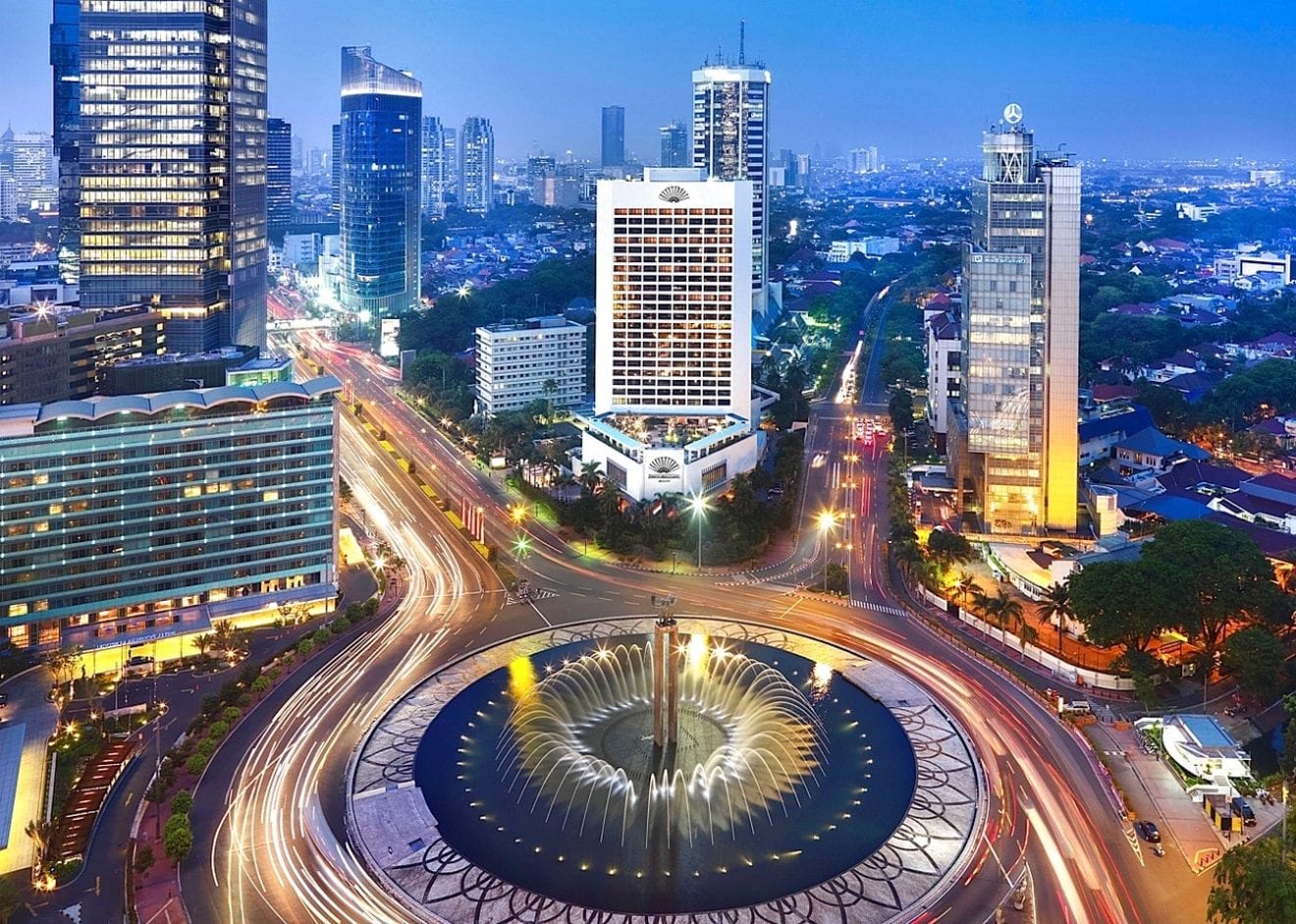
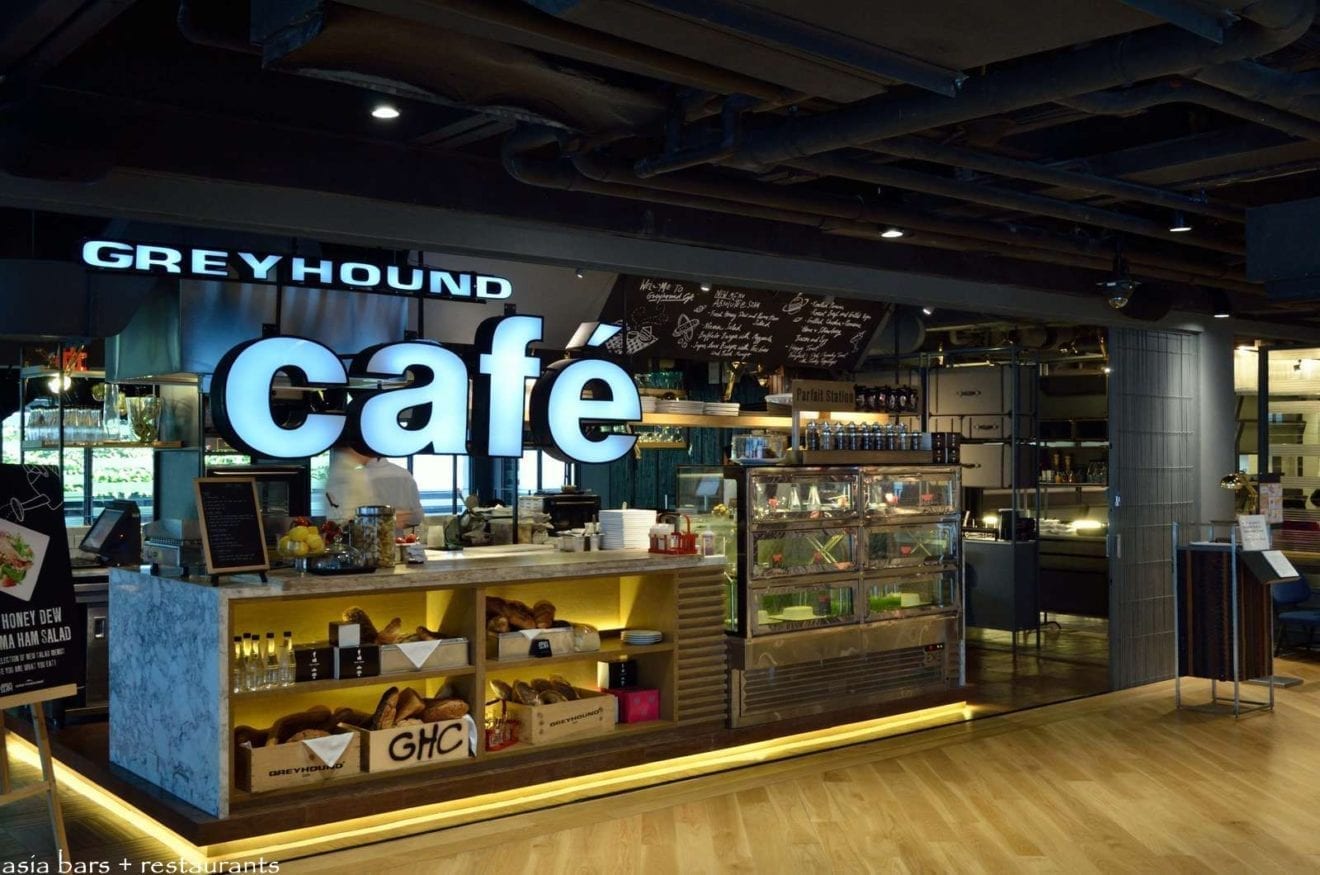
    Mainly Thai fusion dishes are offered at the new Greyhound Cafe Jakarta, in the Grand Indonesia mall. With a cactus display in its outdoor area, the ground-floor cafe has a mainly black-and-white theme and offers mainly Thai fusion dishes.

    A private dining area is available as well as a smoke area, and takeaway is possible.

    The Thai brand is being introduced in Indonesia by restaurant group Arena Corporation.

    Greyhound Cafe opened its 13th international outlet last December, marking its debut in Singapore.

    At the time it had 14 cafes in Bangkok plus outlets in Beijing, Hong Kong, Kuala Lumpur and Shanghai.

    For Greyhound, the cafe was actually an afterthought to complement to brand’s fashion line.

  • IDX Again Wins Global Islamic Finance Award

    IDX Again Wins Global Islamic Finance Award

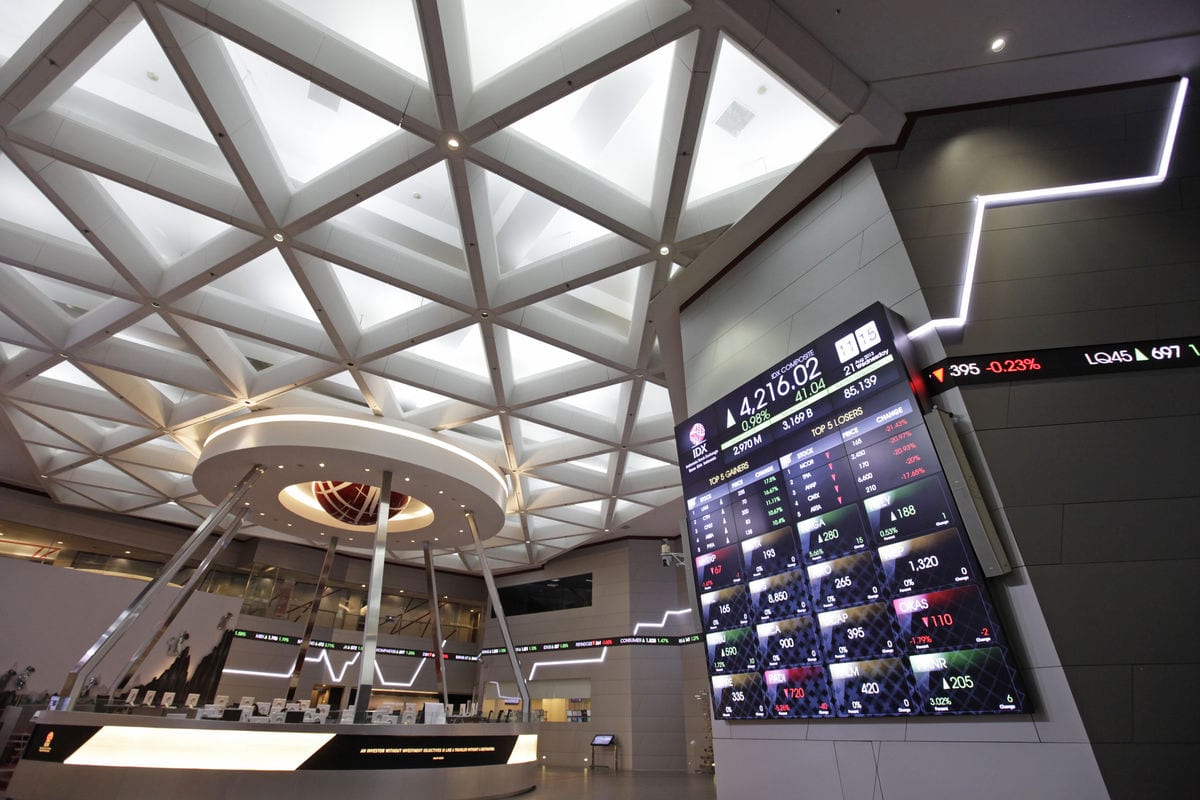
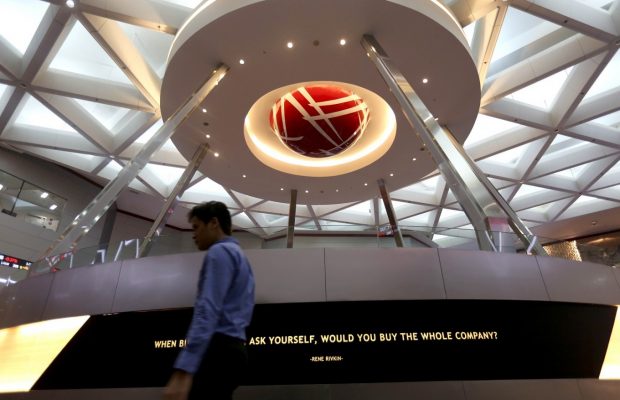
    The Indonesia Stock Exchange (IDX) was again awarded “The Best Supporting Institution for Islamic Finance of the Year 2017” from the Global Islamic Finance Award.

    Head of IDX Communication Division Yulianto Aji Sadono in an official statement in Jakarta, Sunday (9/10/2017) said that the bourse is the only institution from Indonesia that received the award from GIFA for two consecutive years.

    “This award is a benchmark for Indonesia to show that the Indonesian Sharia Capital Market has been able to compete at the international level,” he said.

    The award was handed over directly by Edbiz Consulting CEO Sofiza and received directly by the IDX Director Tito Sulistio in China on Saturday (9/9).

    The award, he added, is inseparable from the role of IDX which consistently encourages Indonesia’s sharia capital market industry to continue to advance and develop with world-level credibility, in accordance with the company’s vision and mission.

    He said that GIFA is one of the international awards in the world’s sharia financial industry organized by EdBiz Consulting, headquartered in London. GIFA 2017 is the seventh award.

    Yulianto Aji Sadono explained that since its establishment in 1997, Syariah Capital Market of Indonesia currently has two sharia indices namely Indonesian Sharia Stock Index (ISSI) and Jakarta Islamic Index (JII), 342 sharia shares, 16 fatwas from National Sharia Council-Indonesian Ulema Council (DSN-MUI), nine Regulations of the Financial Services Authority (OJK) and one Government Sukuk (SBSN) Law.

    By trade percentage, he also said that stock transactions in the IDX are dominated by sharia-based stocks. As much as 62 percent of the total shares traded on the IDX are sharia-based stocks, or about 55 percent of the market capitalization on the Stock Exchange.

    He said the market regulator expects the sharia capital market industry to be a safe investment alternative especially for Indonesian people who want to invest in accordance with sharia principles and can give real and optimal contribution in the growth and development of a sustainable national economy.

  • Indonesia Stock Market May Spin Its Wheels On Monday

    Indonesia Stock Market May Spin Its Wheels On Monday

    The Indonesia stock market has climbed higher in back-to-back sessions, collecting almost 35 points or 0.7 percent along the way. The Jakarta Composite Index now rests just above the 5,855-point plateau, although it may run out of steam on Monday.

    The global forecast for the Asian markets is mixed to slightly lower, with a decline in crude oil prices likely to weigh. The European and U.S. markets were roughly flat but mostly in the red, and the Asian bourses are expected to follow that lead.

    The JCI finished modestly higher on Friday following gains from the financial shares and resource stocks.

    For the day, the index advanced 24.81 points or 0.43 percent to finish at 5,857.12 after trading between 5,819.53 and 5,866.99. There were 159 gainers and 142 decliners, with 130 stocks finishing unchanged.

    Among the actives, Tiga Pilar Sejahtera Foods plummeted 5.03 percent, while Indofood Sukses perked 1.47 percent, Bumi Resources advanced 0.83 percent, Bank Pan Indonesia spiked 1.95 percent, Bank Danamon Indonesia collected 0.47 percent, Bank Mandiri jumped 1.92 percent, Bank MNC Internasional skidded 1.92 percent, Lotte Chemical added 0.78 percent, Jasa Marga shed 0.42 percent and XL Axiata gained 0.26 percent.

    The lead from Wall Street provides little clarity as stocks moved mostly lower on Friday, although the Dow eked out a modest gain.

    The Dow added 13.01 points or 0.1 percent to 21,797.79, while the NASDAQ fell 37.68 points or 0.6 percent to 6,360.19 and the S&P shed 3.67 points or 0.2 percent to 2,461.43. For the week, the NASDAQ tumbled 1.2 percent, the Dow slid 0.9 percent and the S&P lost 0.6 percent.

    The weakness came amid concerns about the economic impact of Hurricane Irma, which made landfall in Florida early Sunday. Irma followed close on the heels of Hurricane Harvey, which led to widespread devastation and flooding in Texas.

    In economic news, the Commerce Department said wholesale inventories rose more than expected in July, while the Federal Reserve said consumer credit jumped more than expected in July.

    Crude oil futures fell Friday but held onto weekly gains as data showed the U.S. oil rig count fell again in what is becoming a rough hurricane season. U.S. West Texas Intermediate light crude oil shed 2.04 percent or $1 at $48.09 a barrel.

  • Inflation in August estimated to be lower at 0.02 percent

    Inflation in August estimated to be lower at 0.02 percent

    The Central Java representative of Bank Indonesia (BI) predicted that the countrys inflation in August would be lower at 0.02 percent from 0.14 percent in July.

    “The decline in inflation was a result of a cut in the prices of a number of essential goods,” Rahmat Dwisaputra of the Central Java representative of the central bank said here on Tuesday.

    Rahmat said the inflation should be stable at a lower level, adding after Ied ul Fitr inflation would be as expected by the government.

    “In June and July inflation rates were quite high. That is the trend. We will stabilize the inflation that price hike is no longer high,” he said.

    In addition to the falling prices of essential goods especially volatile foods such as chili, garlic, and red onion, the cost of education is also expected to contribute to the decline in inflation in August.

    The time when the people have to pay extra for education has been over that there is less factors contributing to inflation.

    “In September, inflation is even expected to remain low with low consumption by the people,” Rahmat said.

    With the stability maintained the purchasing power of the people is expected to be unaffected, he added.