Tag: jakarta

  • 4.36 Percent Inflation Expected in 2017

    4.36 Percent Inflation Expected in 2017

    The Governor of Bank Indonesia Agus Martowardojo projects year-on-year inflation rate in 2017 of 4.36 percent, an increase compared to late 2016 of 3.02 percent, mostly attributable to pressure from administered prices.

    Agus said yesterday that the projection was based on the movement in the Customer Price Index (CPI) that was down in January to May 2017 and lower compared to January to April 2017.

    “At the meeting of the Board of Governor in April, the year end inflation rate is predicted at 4.63 percent (year on year/yoy). In May 2017, it will drop to 4.36 percent (yoy),” Agus said.

    Lower annual inflation forecast, according to Agus, was due to correction to inflation impacts of administered prices.

    Bank Indonesia views that inflation pressure from administered prices, particularly raise in electricity price for 900 VA category will not be as high as predicted before.

    Moreover, controls on food prices and other components in volatile foods category from January to May 2017 have convinced the central bank that inflation rate can be curbed.

    Inflation due to volatile foods as of May 2017 stood at 3.26 percent (yoy), whereas inflation contributed by administered prices hit 9.14 percent (yoy).

    “We will see the year-end inflation rate if the current forecast remains the same as has been targeted before,” he said.

    Bank Indonesia expect to set inflation target through out this year in the range of 4 percent plus or minus 1 percentage points. Inflation control is also the reason behind the central bank’s decision to hold the benchmark 7-Day Reverse Repo Rate at 4.75 percent for the eight consecutive time on May 18.

    Meanwhile, the government in the 2017 state budget (APBN) assume the inflation rate at four percent.

  • OCBC Bank subsidiary launches private onshore banking in Indonesia

    OCBC Bank subsidiary launches private onshore banking in Indonesia

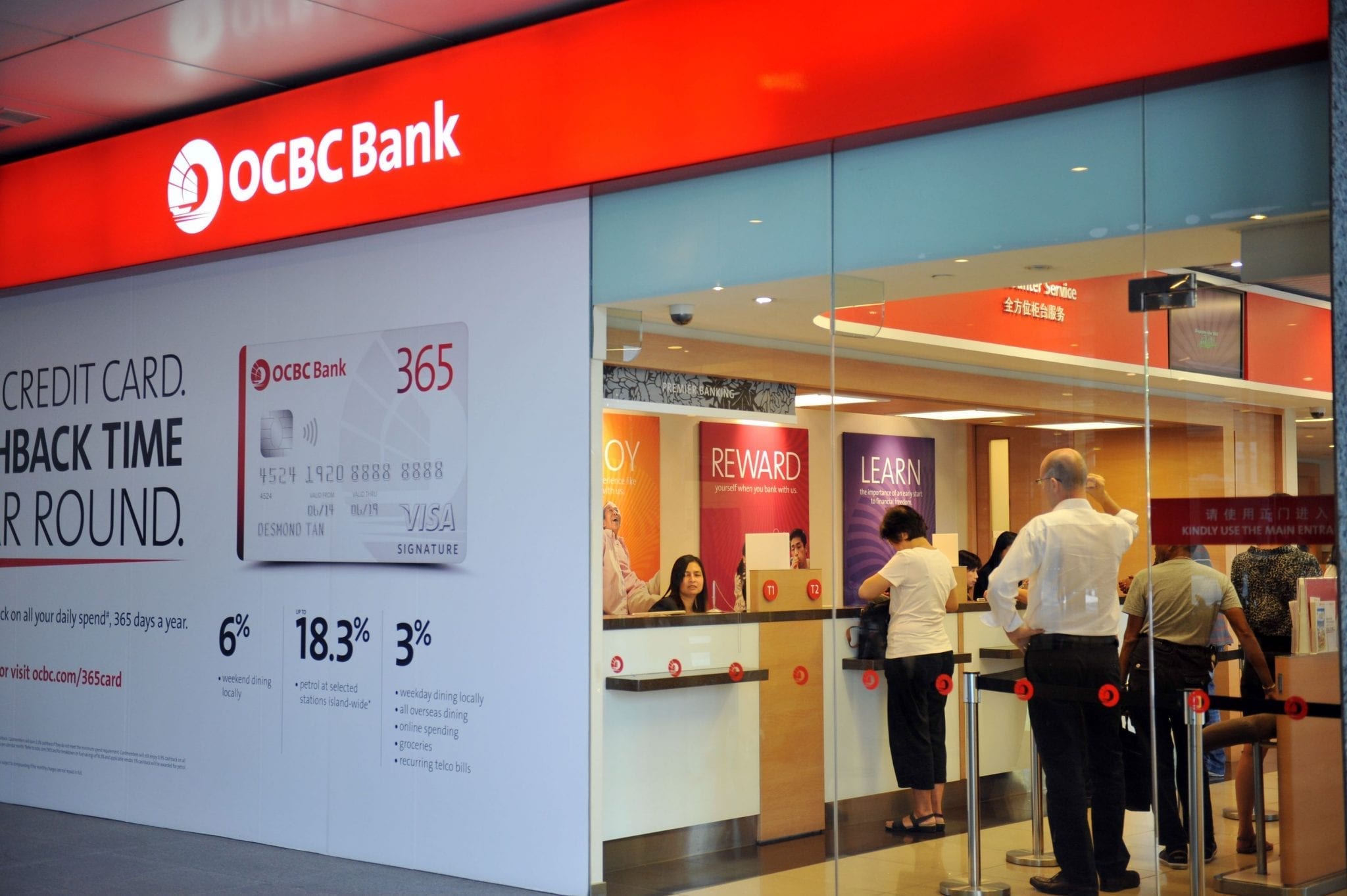
    OCBC Bank has launched onshore private banking in Indonesia through its 85 per cent-owned subsidiary, OCBC NISP, the company said on Monday.

    OCBC NISP has obtained regulatory approval to establish the private banking unit to manage the wealth of Indonesians with assets under management of more than US$1 million (S$1.38 million) with a comprehensive range of wealth management solutions.

    The unit will leverage OCBC Bank’s uniquely integrated wealth management platform that draws on the combined product expertise of the Bank and its subsidiaries – insurance products from Great Eastern Holdings, equities and bond funds from Lion Global Investors, brokerage services from OCBC Securities and private banking services from Bank of Singapore.

    The launch team includes four other private bankers who have an average of 18 years of onshore and offshore private banking experience and deep knowledge of regional markets. The team is expected to double in size by the end of the year.

    OCBC NISP private banking clients who are business owners will be able to draw on the commercial banking solutions offered by OCBC NISP and leverage OCBC Bank’s global network of more than 610 branches and offices across 18 countries and regions.

    “We are pleased to offer our wealthy clients alternative wealth management and investment options to help them manage their funds with the launch of our private banking business,” said Ms Parwati Surjaudaja, president director of OCBC NISP. “We will be introducing more sophisticated solutions that are tailored to our clients’ unique wealth planning and investment needs as we grow our business.”

    Calling the launch an important milestone in the expansion of OCBC’s wealth management franchise, Mr Samuel Tsien, group CEO of OCBC Bank, said the new business will help broaden client coverage of high net worth individuals. “We will leverage our strong product development, distribution and execution capabilities across the OCBC group to support this new customer segment in Indonesia.”

  • Unilever to Test New Packaging-recycling Tech in Indonesia

    Unilever to Test New Packaging-recycling Tech in Indonesia

    Consumer goods giant Unilever on Wednesday said it has opened a new facility in Indonesia as part of a pilot project for introducing a new technology for recycling sachets used to hold shampoos and other products.

    Single-use sachets are widely sold in developing and emerging markets such as Indonesia. The Anglo-Dutch company said billions of such packages — including its own — are sold every year, but that recycling them has long been a problem due to technological hurdles.

    To address this, Unilever said it has developed a technology it calls the CreaSolv Process together with the Germany-based Fraunhofer Institute for Process Engineering and Packaging IVV.

    “With this innovative pilot plant we can, for the first time ever, recycle high-value polymers from dirty, post-consumer, multilayer sachets,” said Andreas Maurer, head of the plastic recycling department at Fraunhofer.

    The facility, in Sidoarjo, East Java, will “test the long-term commercial viability of the technology.” If successful, it will be applied in other developing markets, especially in Southeast Asia, said Sancoyo Antarikso, director for governance and corporate affairs at Unilever Indonesia.

    The company plans to work with local waste collectors, waste banks and retailers to help collect used sachets. “Using this approach, we’ll be able to reduce our environmental footprint, while creating economic value and potential additional incomes for the communities, the recycling industry and other stakeholders,” Antarikso told reporters.

    Unilever Indonesia hopes the Indonesian government will promote the concept of separating household waste to make collecting sachets easier. Currently, most Indonesian households do not separate their recyclable and nonrecyclable waste, as the country’s outdated waste management system is not yet capable of accommodating the practice.

    Indonesia produces an estimated 0.5 million to 1.3 million metric tons of plastic marine debris every year, making it the second-largest producer of plastic waste polluting the world’s oceans after China, according to a study published at the Science journal in 2015.

    The new recycling facility will initially be able to process 3 tons of plastic sachets every day. Antarikso said once the operations prove viable from the business side, Unilever will let a “business partner” take over to handle commercial-scale production. He added that Unilever will use the end products as materials for packaging, which is expected to reduce costs.

    David Blanchard, chief R&D officer at the parent company, said: “We intend to make this tech open-source and would hope to scale the technology with industry partners, so others — including our competitors — can use it.” Unilever said it wants all of its plastic packaging to be “fully reusable, recyclable or compostable” by 2025.

  • Bisnis Travel Indonesia teams up with Zurich Indonesia

    Bisnis Travel Indonesia teams up with Zurich Indonesia

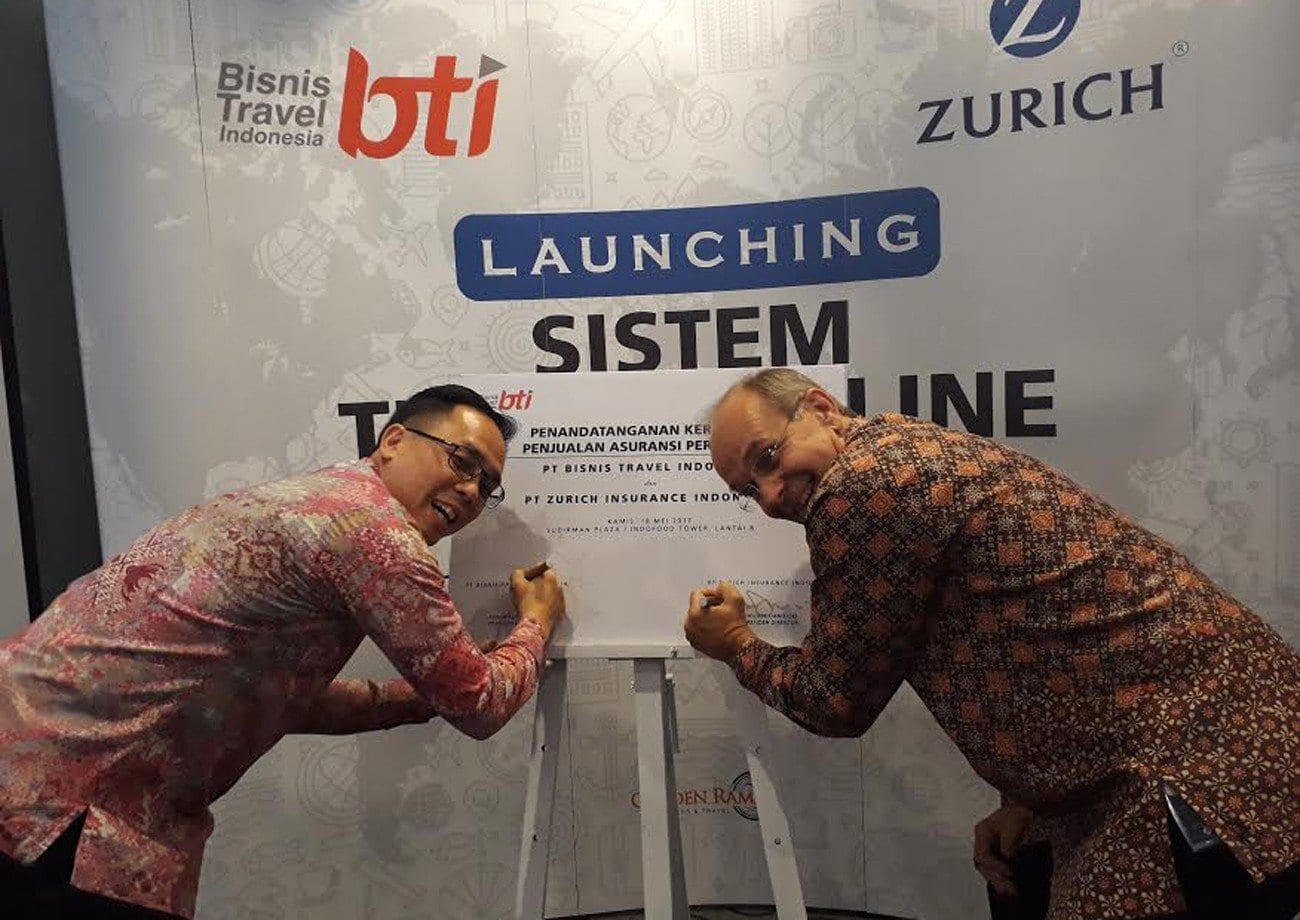
    Online travel portal Bisnis Travel Indonesia (BTI) is teaming up with Zurich Indonesia, the local unit of a Switzerland-based insurance company, by including Zurich Indonesia’s travel insurance on BTI’s list of products.

    Previously, BTI’s offered its members included airline tickets, hotel reservations and tour packages.

    “Through the partnership with Zurich, we want to expand options for our members,” BTI’s president director Johan Kurniawan told reporters during the partnership signing ceremony in Jakarta on Thursday.

    With the agreement, BTI’s portal will provide its members with three travel insurance products from Zurich Indonesia: Zurich Domestic Travel, Zurich Umrah/ Haj Travel and Zurich Passport.

    BTI aims to sell up to 600 travel insurance policies through its portal this year, Johan added.

    BTI is an online travel portal powered by Golden Rama Tours & Travel, a travel company established in Indonesia in 1971.

    About 90 percent of the portal’s members are individual travel agents, while the rest are office-based travel agents.

  • Cyber attack not disrupting stock market at IDX

    Cyber attack not disrupting stock market at IDX

    WannaCry malware attack has not disrupted the countrys share market, Tito Sulistio, President Director, Indonesia Stock Exchange (IDX), stated here, Monday.

    “The stock authority performs a routine check two hours before opening at 9 a.m. I directly oversaw todays monitoring system; I hope the market is protected from any threats, including the virus (ransomware),” Sulistio said in Jakarta.

    Some 88 countries, including Indonesia, have adopted a multi-layered security system which was already being used by US-based Nasdaq stock market.

    “We have Nasdaqs JATS-NextG (Jakarta Automated Trading System Next Generation) in our security protocols,” Sulistio revealed, while adding that the stock authority would continue to protect the system from any upcoming threats.

    During a separate occasion, earlier, Adena T Friedman, Nasdaq President, remarked her agency had committed to support IDXs trading and monitoring systems.

    “We have been partnering with Indonesia Stock Market to provide technology application for improving supervision and trading activities,” Friedman affirmed.

    Concerning the malware threat, the Indonesian Internet Service Providers Association (APJII) had suggested several preventive acts to reduce the impact of ransomware WannaCry.

    As the malware has infected only Microsoft-based computers, users have been asked to update the system by downloading Security Update Patch MS-17-010.

    “If the users are not aware about system updates, they can disconnect from any internet wires (LAN), or Wifi, and download the security patch from a non-Microsoft computer.

    Rifan has also recommended that users back up their files in a separate flash drive (USB) or a portable hard disk, before updating the security system on the computer.

    He further revealed that WannaCry malware had attacked computers in some 200 countries, including Indonesia.

    The malware works by locking the computers internal system and encrypting the file, after which the users are asked to pay a “ransom” in exchange for their data.

  • Indonesia’s Uber rival Go-Jek raises $1.2 billion led by Tencent at a $3 billion valuation

    Indonesia’s Uber rival Go-Jek raises $1.2 billion led by Tencent at a $3 billion valuation

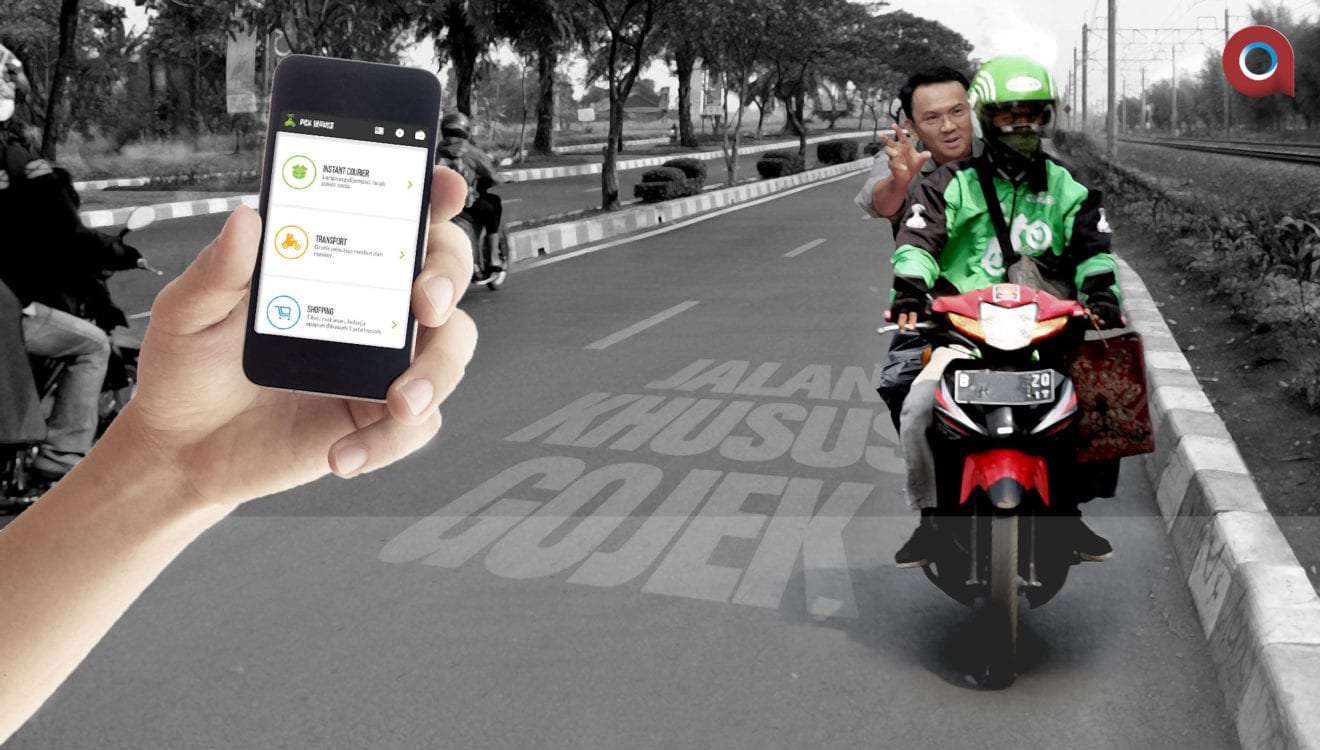
    Go-Jek, the motorbike on-demand startup that is battling Uber and Grab in Indonesia, has closed a new round of $1.2 billion led by Chinese internet giant Tencent, two sources close the company told. The deal, which we understand was signed last week, values the company at $3 billion post money. It is expected to be officially announced “soon.”

    Go-Jek raised $550 million as recently as August 2016, when it commanded a valuation of $1.3 billion so this new deal has pushed that figure up considerably over a short period of time. The Information previously reported that Tencent was considering an investment in Go-Jek. Other investors in the round are not clear at this stage, but we believe them to be from the existing pool of backers.

    One source told that Alibaba and its financial services spin-out Ant Financial held talks with the startup, but were ultimately unsuccessful. Ant Financial has since partnered with media firm Emtek to enter Indonesia. Alibaba and Tencent are fierce rivals that are not known for co-investing in deals, although both hold equity in Didi Chuxing after investing separately in Didi Kuaidi and Didi Dache which ultimately merged to create Didi (and is buying Uber’s China business).

    Go-Jek claims to have over 200,000 drivers across some 25 cities in Indonesia. It started out as a pure bike taxi player — because two wheels are an efficient way to navigate the congested streets of Asian mega-cities like Jakarta — but it has since expanded into four wheels with its GoCar private car service and a partnership with taxi firm Blue Bird. In contrast, Uber and Grab have both introduced motorbike taxi services in Indonesia to crank up the competition.

    Focused on the Indonesian market only, Go-Jek is involved in a dog fight with Uber and Singapore-headquartered Grab. Uber has, of course, raised more than $8 billion from investors — at a valuation that has surpassed $60 billion — while Grab is reportedly working on a new $1.5 billion funding round. Its most recent raise was $750 million at a $3 billion valuation in September 2016, but you can expect that figure to increase in the near future. Our sources told us that Go-Jek’s new fundraising is principally focused on increasing its war chest in order to continue to battle Uber and Grab on driver and passenger subsidies, develop its mobile payment business — Go-Pay — and expand its services business, which allows customers to get services such as shopping, massages and more on demand.

    Last year, Go-Jek hinted that it would expand its business overseas, but to date it has remained in Indonesia. One source told us that Go-Jek has considered partnerships or investments to expand to markets where other bike on-demand services exist, such as India or Sri Lanka, but it is staying focused on the battle in Indonesia. Aside from being Southeast Asia’s largest economy and population — Indonesia is home to over 250 million people — the country is tipped to be Southeast Asia’s largest internet economy by some margin.

    The region’s ride-sharing market itself is predicted to grow from $2.5 billion in 2015 to $13 billion by 2025, according to a report co-authored by Google. Indonesia’s share of that segment is forecast to jump from an estimated $0.8 billion to $5.6 billion over that same period.

    Grab is making a big push to win the opportunty. The company recently pledged to invest $700 million into its Indonesia operations, which includes building out its team, localizing its tech and making investments. Grab recently snapped up Kudo Payments in an undisclosed deal which sources told us is in the region of $80 million to $100 million. The acquisition is designed to boost Grab’s own payment platform, GrabPay, which is following GoPay’s footsteps and taking Grab into services beyond just car rides.

    The new Go-Jek deal also marks Tencent’s first investment in Indonesia, and the latest in a flurry of startup deals from the company, which is best known for operating China’s top messaging platform, WeChat. Tencent bought five percent of Tesla in March for just over $2 billion, and it has since done deals with Chinese streaming service Kuaishou and cross-border payment provide Airwallex.

  • Garuda Indonesia Provides 45,000 Seats during Eid Holiday

    Garuda Indonesia Provides 45,000 Seats during Eid Holiday

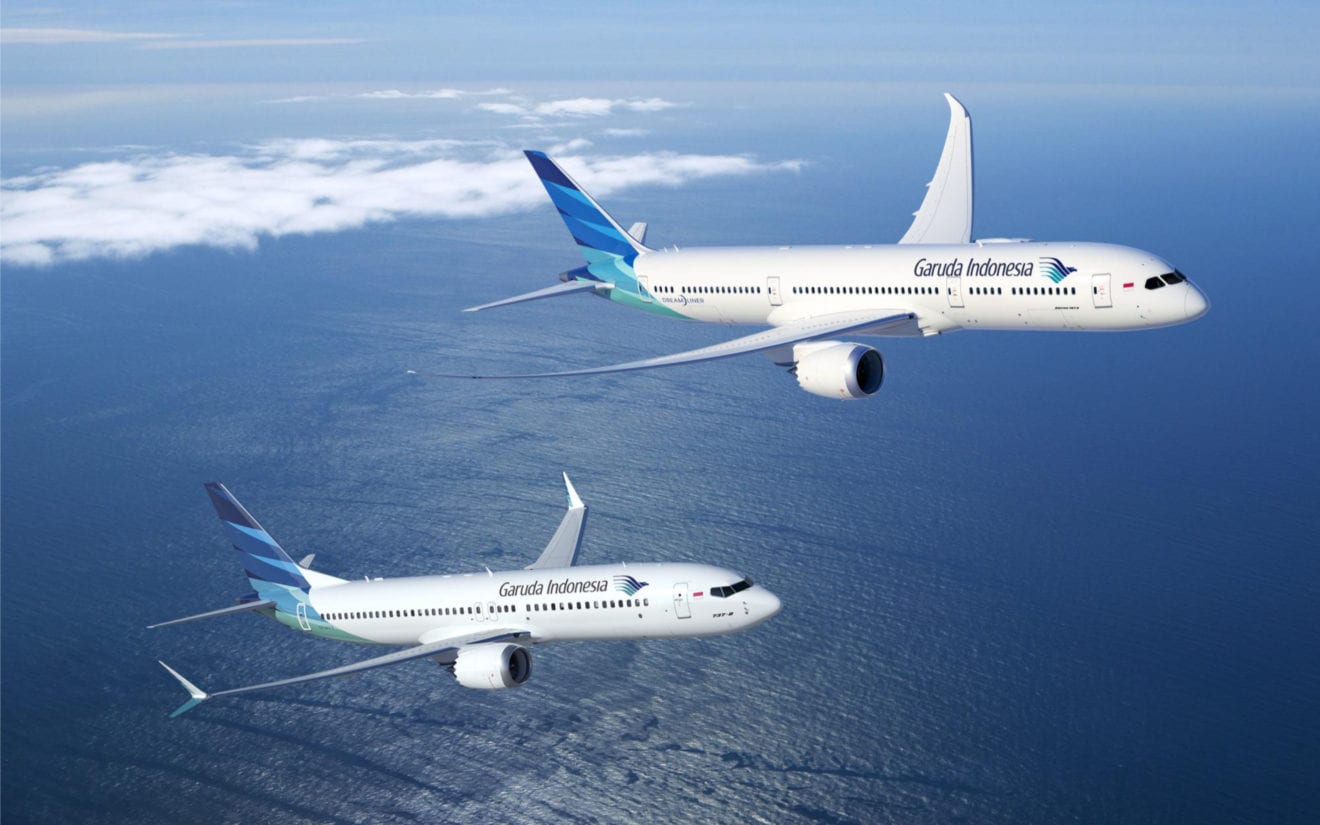
    PT Garuda Indonesia provides extra 45,000 seats to serve people for 2017 Eid al-Fitr.

    “This year we offer extra seats to people or consumers who travel before Eid al-Fitr and after the celebration,” PT Garuda Indonesia President Director Pahala N. Mansyuri said in Bali on Saturday (6/5).

    He added that the extra seats offered before and after 2017 Eid al-Fitr increase 39 percent compared to the previous year.

    “We offer the extra seats eight days before and after the celebration starting from 18 June to 3 July 2017,” he added.

  • Plug and Play Accelerator Program has officially started in Indonesia

    Plug and Play Accelerator Program has officially started in Indonesia

    In collaboration with Gan Kapital, a strategic investment advisory in Indonesia, Plug and Play is finally going to announce the 11 selected startups for its first batch of accelerator program in Indonesia. The announcement will be held at a coworking space where these startups will reside and learn during the 3-month program in Kuningan, South Jakarta. Based in Silicon Valley, Plug and Play Indonesia is part of the largest startup accelerator program in the world.

    Plug and Play Indonesia accepted more than 400 startups applied between the month of February and March. These applications came from Jakarta, Bandung, Yogyakarta, Bali, Malaysia, Singapore, Hong Kong, India, Brazil, and even Germany. Indeed, Plug and Play Indonesia accelerator program also welcomes foreign startups trying to enter Indonesia’s market. Plug and Play Indonesia proudly introduces the startups selected to be part of its first batch of accelerator program, that is Dana Didik, KYCK, Otospector, Bustiket, Karta Indonesia Global, Sayurbox, Brankas, Astrnt, Bandboo, Wonderlabs, dan Toucan.

    “Selecting these startups wasn’t an easy task because we met with so many high quality startups. We are positive that our months of rigorous selection process has led us the 11 best startups,” said Nayoko Wicaksono as the Accelerator Director of Plug and Play Indonesia. After carefully reviewing the online application and documents, 50 startups were invited for an initial pitch session on March 29 and 30.

    During this initial pitch, startups were asked to explain business model, traction, financial plan, as well as the team profile. The next step was another round of pitching in front of a panel judges from Plug and Play Indonesia, Play and Play Asia Pacific, Plug and Play Silicon Valley, as well as representatives from corporate members, such as Astra International and Bank Negara Indonesia. “Our Corporate Partners also have the right to vote for the startups who will be joining our accelerator program. This is one of the way to ensure that our startups will get the benefit of working with corporates,” said Wesley Harjono, President Director of Plug and Play Indonesia who was also a part of the final judging panel.

    Collaboration with corporate and seed funding are just some of the benefits received by the 11 selected startups. During the 3-month accelerator program, these startups will also be mentored closely by pool of experts united in Plug and Play Indonesia ecosystem. These startups will also have access to workshops of different topics that will be delivered by more than 60 experts from different areas. Among Plug and

    Play Indonesia pool of esteemed mentors are Kevin Darmawan from Coffee Venture, Sebastian Sieber from Lazada, Sukan Makmuri from KUDO, Anton Soeharyo from Touchten, Natali Ardianto from Tiket.com, Nikita Semenov from Zen Room, Norman Sasono from Bizzy, Mark. F Winkel from Prisma Public Relations, Rama Mamuaya from Daily Social, Wempy Dyocta Koto from Wardour and Oxford, and many more. The list doesn’t stop there, the selected startups will also have free access to a coworking space strategically located in elite are of Kuningan, South Jakarta. “With this holistic support from Plug and Play Indonesia, our startups can focus on developing their product to the market,” said Nayoko

    Wicaksono, Accelerator Director at Plug and Play Indonesia. At the end of the 3-month accelerator program, Plug and Play Indonesia will be holding a Demo Day. This Demo Day is meant to bridge Plug and Play startups with local and international customers and investors.

    The Demo Day is currently scheduled to be in August 2017.

  • Indonesia-Denmark launch wind power map

    Indonesia-Denmark launch wind power map

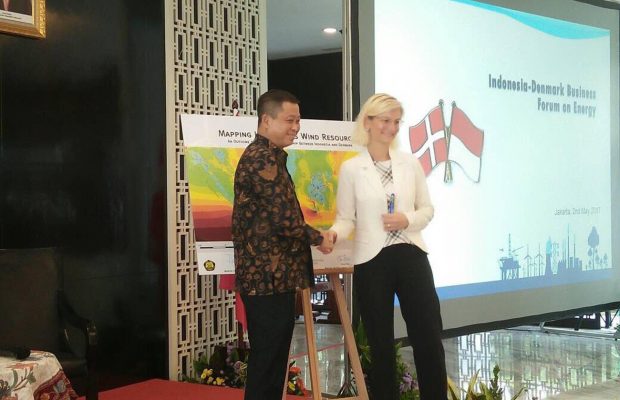
    The Energy and Mineral Resources Ministry and Denmark’s Development Cooperation Ministry launched on Tuesday a map pinpointing the wind power potential for electrification in Indonesia.

    Denmark Development Cooperation Minister Ulla Tørnæs said this was part of a six-month cooperative engagement between the two governments, during which they exchanged their experiences in developing renewable energy sources for electrification.

    “Today, we are launching a new wind map that shows the vast potential for utilizing wind in Indonesia,” Tørnæs said in her opening speech at the Energy and Mineral Resources Ministry in Central Jakarta on Tuesday.

    “A number of visits to Denmark by Indonesian officials over the past six months has deepened the discussion and insight into waste-to-energy solutions, the use of biomass and how to accommodate fluctuating markets.”

    The map displays the hot spots for wind power potential in Indonesia. It is expected to help the government and investors decide the best locations to develop wind turbines.

    The map was also launched alongside a book titled Integration of Wind Energy in Power Systems, which will serve as a guide for policymaking and the integration of electricity into state-owned electricity firm PLN’s existing system. The book was written based on Denmark’s experiences in wind power development.

  • Axiata taps Thaicom satellite to connect remote areas of Indonesia

    Axiata taps Thaicom satellite to connect remote areas of Indonesia

    The deal allows Axiata Business Services to purchase the remaining capacity on the IPSTAR-1 broadband satellite so that its operating company, PT XL Axiata Tbk (XL), can deliver more than one gigabit per second of High Throughput Satellite (HTS) capacity for broadband services in Indonesia.

    Axiata Business Services will use up to seven Ku-band shaped and spot beams on IPSTAR-1 located at 119.5 degree east to provide services including broadband access directly to residential and enterprise premises.

    “We are leveraging Thaicom’s capabilities in Asia to grow our enterprise business quickly and flexibly while providing reliable broadband services to all potential customers, regardless of location,” said Axiata group chief business operations officer Asri Hassan Sabri.

    “Where terrestrial-based connectivity is limited or unavailable, HTS connectivity serves as an enabler to unlock the digital ecosystem for new market opportunities,” he said. “As the world’s first-ever HTS, launched in 2005, Thaicom’s IPSTAR helps us connect users in remote and underserved areas of Indonesia cost-effectively. We are confident that the partnership will enable us to continue to grow our business faster without infrastructure limitations.”

    XL chief executive Dian Siswarini noted that many areas and islands in Indonesia are still without Internet access.

    “We believe the availability of HTS will help us to cover these unserved areas with considerable economic potential. On top of that, it will enable us to support the local community’s economic growth and the Indonesian government’s vision to accelerate the national development of digital economy across Indonesia.”

    Thaicom chief commercial officer Patompob Suwansiri thanked Axiata for its “trust” in inking the deal.

    “We are committed to working with leading mobile-network operators throughout Asia-Pacific to facilitate the growth of wireless broadband and other digital services in remote and underserved areas.”

  • Hong Kong Investor Expresses Investment Commitment to Jokowi

    Hong Kong Investor Expresses Investment Commitment to Jokowi

    During a meeting with President Joko Widodo or Jokowi at Conrad Hotel in Hong Kong, CK Hutchison Holdings Limited owner Li Ka-Shing expressed investment commitment in Indonesia.

    “CK Hutchison Holdings Limited is one of the largest companies listed in the Hong Kong Stock Exchange,” Foreign Minister Retno Marsudi said in a press release on Monday, May 1, 2017.

    CK Hutchison Holdings Limited is one of the largest container terminal operators in the world with a total investment of US$10 billion. Retno explained that the company views Indonesia as a country with a huge potential. Therefore, Li Ka-Shing expressed his commitment to increasing the company’s investment in Indonesia.

    “A commitment to increasing investment in Indonesia has been made,” Retno added.

    During the meeting, President Jokowi also elaborated a number Indonesian government plans to improve the economic growth.

    “Indonesia’s economic reform was one of the topics raised by President Jokowi,” Retno said. “President Jokowi also explained Indonesia’s infrastructure development plans.”

    In addition to Retno, attending the meeting were Trade Minister Enggartiasto Lukita, Cabinet Secretary Pramono Anung, and Investment Coordinating Board head Thomas Lembong.

  • 500 Startups funds Stockbit, a social network for stock trading

    500 Startups funds Stockbit, a social network for stock trading

    Indonesia’s Stockbit bills itself a “social network for stock traders.” Individual traders sign up for customizable stock market information and analytics. Basic features are free, while paying subscribers get more in-depth intelligence.

    The site’s been growing and adding features since 2012. The company just closed an investment from 500 Startups, it said in a release today. It’s a pre-series A round, and the sum is undisclosed.

    The new investment is supposed to fuel the launch of a new a feature that lets community members follow more experienced stock traders and copy their investment moves in an automated process.

    “Our proposition is simple. Just copy, let the best do the rest,” is how CEO Wellson Lo explains the feature. You can allocate a fixed amount, say US$5,000, and this amount will be invested by mirroring the person you are following. Trading “leaders,” as the people you can follow are called, also benefit. They get a share of the profits you make.

    It’s been in development since last year and will become available on Stockbit’s iOS and Android apps soon, though there’s no set launch date yet.

    Traders wanted

    Public participation in the stock market is extremely underrepresented in Indonesia, argues Wellson. Less than 0.3 percent of the adult population have a stock trading account. In Singapore, it’s 39 percent and more than 20 percent in China.

    Part of the reason is a knowledge gap, which Stockbit hopes to address by making it simple for novice traders to learn and reap benefits without risking too much.

    Back in 2015, after Stockbit last raised funds, including from local VC firm Ideosource, Wellson had told Retail News that the startup had 15,000 registered users, while paid subscribers were still only in the hundreds. The user base has about tripled since then, according to Stockbit.

    There’s an ongoing effort by the Indonesian Financial Services Authority to raise awareness about investment opportunities on Indonesia’s public markets, a development Stockbit hopes to be able to leverage for its growth.

    500 Startups partner Vishal Harnal says Stockbit is already the largest and most active community of stock traders in the country, which gives the startup an advantage over potential competition.

    Besides Stockbit, there are trading information sites like Idsaham or Infovesta, but those sites merely aggregate stock information and don’t yet offer analytics tools. Bareksa can be seen as a possible competitor, as it offers a variety of financial analytics tools and also aggregates information about the Indonesian Stock Exchange, among other functions.

    Algomerchant from Singapore has a similar solution, offering a mix of social networking and analytics. However, Algomerchant lets you subscribe to a set of trading algorithms, not individual people, explains Wellson. Stockbit’s social trading model is most comparable to Covestor in the US.

  • President makes three pleas to creative industry entrepreneurs

    President makes three pleas to creative industry entrepreneurs

    Indonesian President Joko Widodo (Jokowi) has made three pleas to the industry entrepreneurs while inaugurating the Inacraft Exhibition 2017.

    “I have made three pleas to craft and creative industry entrepreneurs in Indonesia to keep their products on spec or meet the buyers specifications, keep the budget or price at a reasonable rate, and timely delivery of the products,” he stated at the Jakarta Convention Center on Wednesday.

    Inacraft exhibition, which will be held from April 26 to April 30, will exhibit products from 1,392 local and foreign participants. This year, Inacraft has taken Yogyakarta as the icon, under the concept “Magnificent of Yogyakarta” and the theme “From Smart Village to Global Market.”

    The second plea from the president was regarding the packaging of the products.

    “Do not forget the packaging. Make the best you can and make it interesting. This is important because most of time, the packaging is what attracts the buyers,” he added.

    His third plea was to deliver the goods on time.

    “The delivery to the consumers could be made easier with various logistics infrastructures that we already have,” he stated.

    Jokowi also pushed the entrepreneurs to make use of the governments people credits program (KUR).

    “I understand the entrepreneurs problems regarding capital. Therefore, I remind the people of the KUR program, which has an interest rate of nine percent only. Hence, the products should be made better to make the investment bigger. I think our credit programs have a competitive interest rate too,” he reiterated.

    Indonesian Exporter and Handicraft Producers (ASEPHI) data, the committee of the exhibition, remarked that the Inacraft 2017 attendees included 65.95 percent of independent individuals, 24.5 percent from the Tourism Department, 8.7 percent from BUMN, and the rest 6.07 percent from other countries such as Myanmar, Japan, Pakistan, Poland, and India.

    This year, Inacraft has set a target of retail business increase of 10 percent, which reaches Rp142 billion, commercial contract of US$12 million, and around 200 thousand buyers from various countries.

    Some of the products exhibited include batik, fashion apparels, accessories, jewelries, and other crafts.

  • Giant ships begin to make a call at Jakarta’s Tanjung Priok

    Giant ships begin to make a call at Jakarta’s Tanjung Priok

    PT Jakarta International Container Terminal (JICT) in Tanjung Priok said it has entered a new era when it succeeded in serving a giant ship, the Otello of Frances Compagnie Maritime dAffretement – Compagnie Generali Maritime (CMA-CGM).

    “The ships of CMA-CGM are the largest ever making a call at Tanjung Priok,” Chief Executive of JICT, Gunta Prabawa, said here on Monday.

    Earlier, JICT was similarly successful in providing fast services for 2 other giant ships of CMA CGM – the Titus and Tancredi – with port productivity at the JICT of 27-30 Mph.

    Gunta described the visits by the giant ships as a new era of the appearance of more giant ships at the Jakarta port indicating that JICT has been ready to provide world class port services.

    “Global shipping companies have allowed their ships to berth at Tanjung Priok as they have confidence in our services,” Gunta said.

    The 334 meter long Otello had unloaded 1,551 TEUs of container goods at Tanjung Priok, he said.

    He said CMA-CGM has reached an agreement with PT JICT by opening new shipping service called the Java South East Asia Express Services/ Java SEA Express Services/ JAX Services.

    The weekly service will take the route of Tanjung Priok – West Coast (Los Angeles & Oakland) of the United States.

    “The first service of JAX Services began on 9 April, 2017 by the Titus of CMA-CGM. Indonesian exporters and importers are expected to utilize the service,” Gunta said.

    Earlier this month, President Joko Widodo said large ships would began to berth at Jakartas Tanjung Priok port after continued improvements in services by the port operator.

    “Soon or next week there will be a ship measuring 10,000 TEUS to call at Tanjung Priok,” Jokowi said when officially commissioning an access toll road to the countrys largest port.

    The president attributed the success in attracting large ships to Tanjung Priok to improved service including a significant cut in dwelling time.

    The dwelling time, needed for unloading, has been cut short to 3.5 days now from earlier up to six days. Long dwelling time had discouraged ships from making a visit to Tanjung Priok as it would mean losing time and an increase in berthing fee.

    The president himself stepped in to improve services, cut the red tape and simplify all procedures that reduce illegal levies earlier rampant at the port.

    The president said he hoped improvement in the port service would make Indonesia more competitive and the seas transport cost would be cheaper to and from Indonesia as large cargo ships could sail directly to and berth at Tanjung Priok.

    “The flows of goods could be much faster via Tajung Priok. Transit is no longer needed for imported container cargoes in Singapore,” he said, adding large container ships could be berthed at Tanjung Priok.

    Previously large ships carrying container goods for Indonesia have to make a transit in Singapore to unload the cargo to be loaded gain on smaller ships as Tanjung Priok could not yet accommodate large container vessels.

    The new access road would contribute to improving services at the port , Jokowi said, adding “This also helps improve the countrys competitiveness.”

    He said an estimated 3,600 containers would be transported via the 11.4 kilometer access road everyday.

  • Jokowi optimistic of witnessing 10% growth in automotive industry

    Jokowi optimistic of witnessing 10% growth in automotive industry

    Indonesian President Joko Widodo (Jokowi) is optimistic that the automotive industry would attract more investors and grow over 10 percent annually.

    “Indonesias automotive industry is more competitive now and is growing on an average of more than 10 percent,” he remarked in Bekasi on Tuesday.

    President Jokowi expressed optimism in his remarks at the opening ceremony of PT Mitsubishi Motor Krama Yudha Indonesia (MMKI) at the Greenland International Center, Central Cikarang, Bekasi District, West Java.

    “With such a large market, I am certain that more investments will flow into the automotive sector of Indonesia, as we have a large market, and greater the investments, more employment opportunities will be available,” he emphasized.

    President Jokowi lauded Mitsubishi Motors commitment to increasing its investment by setting up a new plant in Indonesia, which will be able to offer jobs to around three thousand people.

    “This can provide employment to some three thousand people. Once again, three thousand job opportunities,” the president pointed out.

    Hence, Jokowi is committed to easing the flow of investments, particularly in the automotive sector, considering its impacts on the economic growth.

    “The inflow of investments will create more job opportunities, and it means more people will have jobs,” he stated.

    However, the president highlighted the importance of the quality of human resources to meet the high standards of the automotive industry.

    He pointed out that the government is taking steps to boost economic development by providing skilled manpower through vocational schools.

    “Here, we will strengthen vocational education, vocational schools, as well as vocational training, entrepreneurship, and the labor market,” he affirmed.

    “The government will continue to implement policies that link and match or job matching between vocation and the industry,” the president noted.

    Investment in industry will also allow the transfer of technology and knowledge to Indonesia. Hence, President Widodo has urged the employees to use the opportunity extensively.

    “I hope you will also pay attention to the transfer of technology and knowledge. Continue conducting trainings for the local human resources, and it will be better if the Japanese work ethics, such as high discipline, can be imbibed by Indonesian human resources,” he said.

    “Do not hesitate to involve the Indonesian people in creating new innovations, as they are all actually smart,” added Jokowi.

    In addition, President Jokowi is optimistic that the automotive industry would begin developing its export market.

    “The local or domestic market is large, but we also need to focus on the export market to achieve a balance,” he pointed out.

    Some VIP guests also attended the opening ceremony with President Jokowi, including Minister of Industry Airlangga Hartarto, Minister of State Secretary Pratikno, Head of the Investment Coordinating Board Thomas Lembong, Vice Minister of Finance Mardiasmo, Vice Governor of West Java Deddy Mizwar, and Chairman of Mitsubishi Motors Carlos Ghosn.