Tag: Japan

  • Japan Food Town in Isetan Singapore shuttered

    Japan Food Town in Isetan Singapore shuttered

    Isetan’s Japan Food Town restaurants on the Singaporean department store’s fourth floor have been unexpectedly shuttered.

    A Straits Times report said Isetan filed a statement with the Singapore Exchange in late January, saying that notice had been served to the development for non-payment, immediately terminating the tenancy. The food court was a collaboration between the Japan Association of Overseas Promotion for Food & Restaurants and the Cool Japan Fund, backed by the government of Japan.

    Optimistic reports dating from just four years ago spoke of a long term commitment to the success of the project – those sentiments have now given way to an austere notice on Japan Food Town’s website announcing its closure and social-media announcements of promotions that faded out in late February.

    At least one of the tenants has now relaunched in multi-stall restaurant Picnic Food Park down in Wisma Atria, with potentially more to follow.

  • Starbucks Japan to open greenhouse store in theme park

    Starbucks Japan to open greenhouse store in theme park

    Starbucks Japan is to open a greenhouse store in western Tokyo this month, set in a theme park celebrating flora and fauna.

    Located inside the Hana Biyori greenhouse operated by Yomiuriland park, the Starbuck greenhouse cafe occupies a 1500sqm area, featuring colorful flower chandeliers and abundant greenery including begonia, fuchsia, petunia, geranium and bellflower.

    As can be seen from the artist’s impressions, large aquarium tanks will also be a central feature of the store.

    With 20 projectors and 18 speakers, the cafe will present an audio-visual experience filled with digital and real flora several times a day.

    Starbucks Hana Biyori will open its doors to the public on March 14.

  • Japanese Payment Solutions Firm Invests in Grab

    Japanese Payment Solutions Firm Invests in Grab

    Together with MUFG’s $726 million investment, the super-app has raised $876 million for its financial services push.

    TIS, a Japanese provider of network solutions and system integration services, is investing $150 million in super-app Grab in a strategic partnership that aims at supporting Grab’s regional expansion plans, the firm said in a press release.

    According to the statement, both companies will collaborate on developing emerging payment technologies and enhancing the digital payment infrastructure in the region and in Japan to enable greater adoption of cashless payment options, such as GrabPay.

    Digital payments are taking off in Southeast Asia, as it caters to a largely mobile yet underbanked population. We need to create better experiences to pay for daily transactions, Ming Maa, president, Grab, said about the partnership.

    On Friday, Grab announced that Mitsubishi UFJ Financial Group (MUFG) was making a strategic investment of 80 trillion yen ($726 million) in the company. Grab said MUFG will offer a range of financial services and loans to its user base across Southeast Asia.

    The bank will also tap on Grab’s artificial intelligence systems and data analysis capabilities, as it competes more with online banks and IT startups in its home market.

    Grab, already a leading food delivery and ride-hailing provider in Southeast Asia, has long had ambitions in the financial services space, saying it wants to be the region’s largest merchant network, insurtech policy provider and fintech lender. In the last two years, Grab has built solutions in payments, rewards, lending, and insurance under its GrabPay wallet and Grab Financial.

    Earlier in February, Grab announced the acquisition of Bento Invest, a Singapore-based robo-advisory start-up, through which it will offer retail wealth management solutions.

    The company is also one of the contenders for digital bank licenses in Singapore, to be introduced later this year, as part of a joint bid with Singtel.

    The news of the investments came on the heels of rumors on Tuesday that Grab was in talks with regional rival Gojek over a possible merger. According to a report by U.S. tech media «The Information,» the two sides are split over control of the combined firm

  • Tokyo Tokyo store opens at Haneda Airport

    Tokyo Tokyo store opens at Haneda Airport

    Tokyo Metropolitan Government has launched a souvenir shop, Tokyo Tokyo, at Haneda Airport.

    Located in a retail strip at the airport’s international terminal, Edo Ko-ji, Tokyo Tokyo offers a wide selection of souvenirs including traditional dolls Daruma, maneki-neko lucky-cat charms and models of the iconic Tokyo Tower.

    The store’s wall features drawings of the Asakusa and Shibuya neighborhoods which reflect the merger of “cutting-edge modern culture and centuries-old tradition”.

    The Tokyo Tokyo shop is part of the Tokyo Omiyage project which is a collaboration between Tokyo Metropolitan Government and local businesses to create a lineup of souvenirs promoting Tokyo as a travel destination to both domestic and international tourists.

  • Tokyo builds its case to become the next key global city for fashion

    Tokyo builds its case to become the next key global city for fashion

    Tokyo is to host Japan’s largest fashion and art event next month – Tokyo Creative Salon – part of a plan to boost its case to become one of the world’s key fashion hubs.

    Supported by the Tokyo Metropolitan Government, Tokyo Creative Salon will be held from March 15 – 31. It will feature a variety of fashion and art initiatives across Tokyo’s five key districts: Nihonbashi, Marunouchi, Shibuya, Ginza, and Daikanyama.

    Each district will present a line-up of exhibitions and activations such as street runways, art installations, dance performances, and talk sessions. Tokyo Creative Salon will be attended by Japanese girl group Nogizaka46 together with Japanese solo artist Kavka Shishido.

    Tokyo Creative Salon Nihonbashi will feature the “Off to meet” theme, which advises visitors to turn off their mobile devices to fully experience the event. Some 10,000 Sacoche bags, which block smartphone reception, will be given out as gifts. The Nihonbashi venue will feature Sakura Menu Walk and Nihonbashi Art Gate where artists create works with the “Nihonbashi (that is) unrecognizable by the smartphone” theme.

    Tokyo Creative Salon Marunouchi will transform Marunouchi Nakadori into a red runway with full-scale fashion shows. The event also features an exhibition “Fun in the Life” by Hobonichi, allowing people to experience “Fun in the life” through valuable shops and specially prepared products and food.

    A Ginza Rooftop Project will be held on the rooftops of several landmarks including Matsuya Ginza, Ginza Mitsukoshi, Wako and Tokyo Plaza Ginza. The district will also present other fashion shows and art installations.

    Tokyo Creative Salon Shibuya will run a Shibuya Runway for a one-day-only show where up-and-coming designers present their latest styles.

    During the Tokyo Creative Salon at Daikanyama, visitors will get to try on vintage kimonos. The winning works of Fashion Koshien will also be exhibited here.

  • Japan Airlines accelerates its retail transformationthrough NDC with Amadeus

    Japan Airlines accelerates its retail transformationthrough NDC with Amadeus

    Japan Airlines (JAL) is powering its ongoing retail transformation following the recent move by the airline to deepen its strategic distribution partnership, with Amadeus becoming the airline’s recommended distribution partner for travel agents in Japan.

    The implementation of Amadeus Altéa NDC  will be helping JAL enhance the retailing and servicing of its offers across channels, ensuring consistent brand delivery at scale.

    JAL will be integrating its NDC contents into the Amadeus Travel Platform for distribution using Amadeus NDC Connect, which is a solution specifically designed for Altéa airlines to make their NDC content seamlessly available for travel sellers worldwide.

    For Amadeus travel sellers this means that JAL’s NDC content will soon be available through the Amadeus Travel Platform through an NDC connectivity, ensuring operational continuity and access to a wide range of JAL’s content.

    “New technology such as NDC will enrich our customers’ experience and support the long-term digital transformation strategy of JAL. We are aiming to differentiate our travel offers based on value rather than just price,” says Yoriyuki Kashiwagi, Executive Officer, Managing Division Passenger Sales, Japan Airlines Co. Ltd.

    Cyril Tetaz, Executive Vice President, Airlines, Asia Pacific, Amadeus says: “We believe that it is key for airlines to open up innovative and exciting cross-channel retailing opportunities. Airlines are on a digital transformation journey and NDC is one of the ways they can improve their retailing capabilities. By implementing Amadeus NDC connect, Japan Airlines will be able to work in an agile and simple manner to support its long-term digital innovation strategy to effectively distribute NDC.”

    JAL is to be one of the airline partners in Amadeus’ NDC [X] program – a program to bring all the NDC activities across Amadeus under one roof. Currently, 25+ travel sellers and 16 airlines are a part of the program.  Amadeus is committed to make NDC work at scale across all channels, direct and intermediated; to ensure airlines can distribute their content easily through the channels of their choosing, and that travel sellers can compare, book and service that all content side by side regardless of source.

    As part of Amadeus’ commitment to making NDC a reality, Amadeus has continually been progressing in achieving the IATA certifications on its NDC capabilities and has obtained dual Level 4 certification as both a distributor and an IT provider.

  • FamilyMart Japan reveals results of shorter trading-hours test

    FamilyMart Japan reveals results of shorter trading-hours test

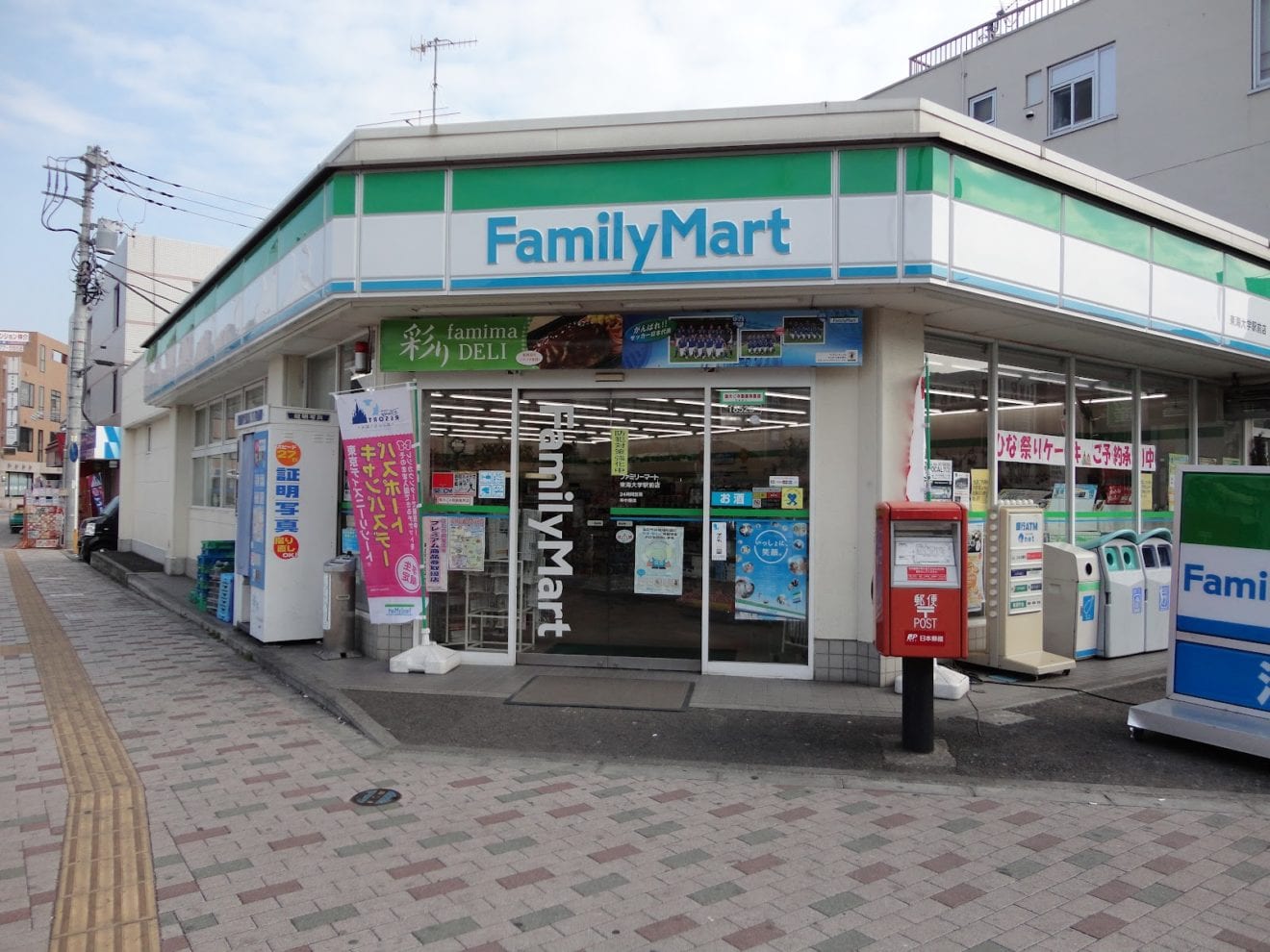
    A trial to reduce business hours has resulted in a 59 percent drop in operating profits for FamilyMart Japan.The trial by the traditionally 24-hour convenience-store chain operator was conducted from October to December at around 600 FamilyMart outlets to assess the effect of cutting late-night hours of business.

    While average labor costs fell 11 percent at participating stores, the average drop in sales of 6.7 percent led to the operating profit declines, according to a Jiji Press report. 41 percent of the outlets recorded growth in profits.

    FamilyMart Japan has now announced that it will allow its franchises to apply to reduce their hours permanently beginning in June.

    “From now, we will ask franchise store owners to decide whether to shorten service hours,” said FamilyMart VP Toshio Kato.

    Stores will be allowed to close late-night and early-morning operations daily or on Sundays only.

  • Japanese drug stores Matsumotokiyoshi and Cocokara Fine joined forces

    Japanese drug stores Matsumotokiyoshi and Cocokara Fine joined forces

    Japanese pharmacy chains Matsumotokiyoshi and Cocokara Fine are entering into a merger.

    Under the terms of the new agreement – if approved by the boards of both sides – shares in the two firms will be transferred to a new business entity, with the transaction expected to be completed by October next year

    The company that emerges from the new deal will lead the health and beauty market, with 3000 outlets trading at around ¥1 trillion (US$9.2 billion).

    Cocokara was previously courted for a merger by Sugi Holdings, although the firm ultimately decided to partner with Matsumotokiyoshi.

  • Japan retail sales down

    Japan retail sales down

    Retail sales in Japan dropped 2.6 percent during December compared to figures from the previous year.

    The details were released in a Ministry of Economy, Trade and Industry report last Friday, and stood in contrast to median market forecasts for a decline of just 1.8 percent.

    According to an RTT news article, the sales rate was still above a seasonally adjusted 0.2 percent on numbers for November, less than the expected 1.2 per cent gain following a 4.5 percent increase during that month. November sales had dropped 2.1 percent year on year.

    Sales for large-scale retailers were strongly affected with a full 3 percent year-on-year drop, compared to a projected fall of 2.5 percent.

  • Louis Vuitton cafe and restaurant opens in Osaka

    Louis Vuitton cafe and restaurant opens in Osaka

    The world’s first Louis Vuitton cafe and restaurant have opened inside the stunning new Louis Vuitton Maison Osaka Midosuji in Japan.

    In cooperation with renowned chef Yosuke Suga, the first Louis Vuitton cafe, Le Cafe V is located on the top floor, featuring a Cocoon Room, with a terrace and a bar.

    A speakeasy-style door connects the Louis Vuitton cafe, dubbed Le Cafe V, with the brand’s restaurant Sugalabo V where an open kitchen is set up. Design details are similar to the original, connecting to the central theme of the building’s design, according to DesignBoom.

    The Louis Vuitton Maison Osaka Midosuji is the result of a close partnership between Jun Aoki and New York designer Peter Marino, reflecting Osaka’s heritage as Japan’s most important port.

    Inspired by sailing vessels, the store’s facade, designed by Aoki, resembles a floating ship with a light and airy white structure. To create a floating effect, Marino creates wooden floors, wood-clad pillars, and metal ceilings.

    The launch of a Louis Vuitton cafe and restaurant follows similar forays into f&b by other luxury brands, including Tiffany & Co’s Blue Box Cafe, Armani Cafes and Ralph Lauren eateries.

  • Toranoana opens collaborative shop with Sanrio characters in Tokyo

    Toranoana opens collaborative shop with Sanrio characters in Tokyo

    Japanese manga-related retailer Toranoana has partnered with Sanrio to open a collaborative store selling Sanrio character merchandise, in Tokyo’s Akihabara district.

    A variety of Sanrio character merchandise, including the famous Hello Kitty, are displayed on the first floor of the store.

    Toranoana and Sanrio say they hope their partnership will strengthen their presence and help them continue to expand domestically and internationally.

  • Tea chain Nayuki expanding to USA and Japan

    Tea chain Nayuki expanding to USA and Japan

    Chinese tea chain Nayuki will launch its first stores in Japan and the US this year.

    The firm, which operates nearly 400 stores in China and three in Singapore, serves tea blended with fruit, cream cheese and toppings.

    “With our commitment to becoming an innovator and purveyor of Chinese tea culture, we hope to deliver our unique and exceptional tea experience to the world,” said Nayuki founder Peng Xin. “To achieve this goal, we have established tea fields where tea is cultivated under strict conditions from cultivation to processing.”

    In recent years, China’s traditional tea culture has been revamped by new-style tea franchises backed by large investments. The tea chain Nayuki, valued at RMB6 billion (US$865 million), received a multi-hundred-million RMB injection in Series A plus funding from TianTu Capital in 2018.

    In November last year, the company opened its largest shop – Nayuki’s Dream Factory – in Shenzhen, an 11,000sqft retail space offering an immersive in-store experience. Visitors are invited to see, hear and learn about the innovations of Nayuki’s teas while enjoying a menu of handcrafted teas, coffees, cocktails, baked goods, desserts and more exclusive to the store.

  • Japanese franchise Kura Sushi to launch in China

    Japanese franchise Kura Sushi to launch in China

    Japanese restaurant franchise Kura Sushi is launching in its third overseas market, China.

    The brand has already enjoyed some success in the US and Taiwan, and is now set to open its first Chinese mainland location in Shanghai. Ten further locations are planned for the territory later this year.

    According to a Nikkei report, the firm’s current strategy is to “double its revenues outside Japan to ¥300 billion (about US$2.7 billion) in 2030 by increasing its total number of outlets worldwide to 1000”.

    The move coincides with Kura Sushi’s launch of its global flagship in Tokyo, where it expects to serve 2000 people per day, including around 600 tourists.

  • Japanese restaurant group Skylark to end 24-hour trading

    Japanese restaurant group Skylark to end 24-hour trading

    Japanese corporate restaurateur Skylark Holdings says it will discontinue 24-hour trading of 150 stores by April.

    Skylark, one of Japan’s largest family-owned restaurant operators, owns the Jonathan’s and Gusto chains, among other brands. It launched 24-hour trading in 1972 and according to the company about 10 percent of its daily revenue comes in between midnight and 6am.

    The company says while round-the-clock trading appeals to customers, the increasing costs of labour makes it less viable to trade all night. Instead, it will focus on peak meal times.

    In total, Skylark owns 560 eateries across the country. Many of the other stores will have trading hours trimmed by a couple of hours a day to reduce labour costs.

  • Japanese restaurant group Skylark to end 24-hour trading

    Japanese restaurant group Skylark to end 24-hour trading

    Japanese corporate restaurateur Skylark Holdings says it will discontinue 24-hour trading of 150 stores by April.

    Skylark, one of Japan’s largest family-owned restaurant operators, owns the Jonathan’s and Gusto chains, among other brands. It launched 24-hour trading in 1972 and according to the company, about 10 percent of its daily revenue comes in between midnight and 6 am.

    The company says while round-the-clock trading appeals to customers, the increasing costs of labor makes it less viable to trade all night. Instead, it will focus on peak meal times.

    In total, Skylark owns 560 eateries across the country. Many of the other stores will have trading hours trimmed by a couple of hours a day to reduce labor costs.