Tag: Japan

  • Vietjet Inks Financing Agreements for Fleet Expansion  Worth US$1.2billion

    Vietjet Inks Financing Agreements for Fleet Expansion Worth US$1.2billion

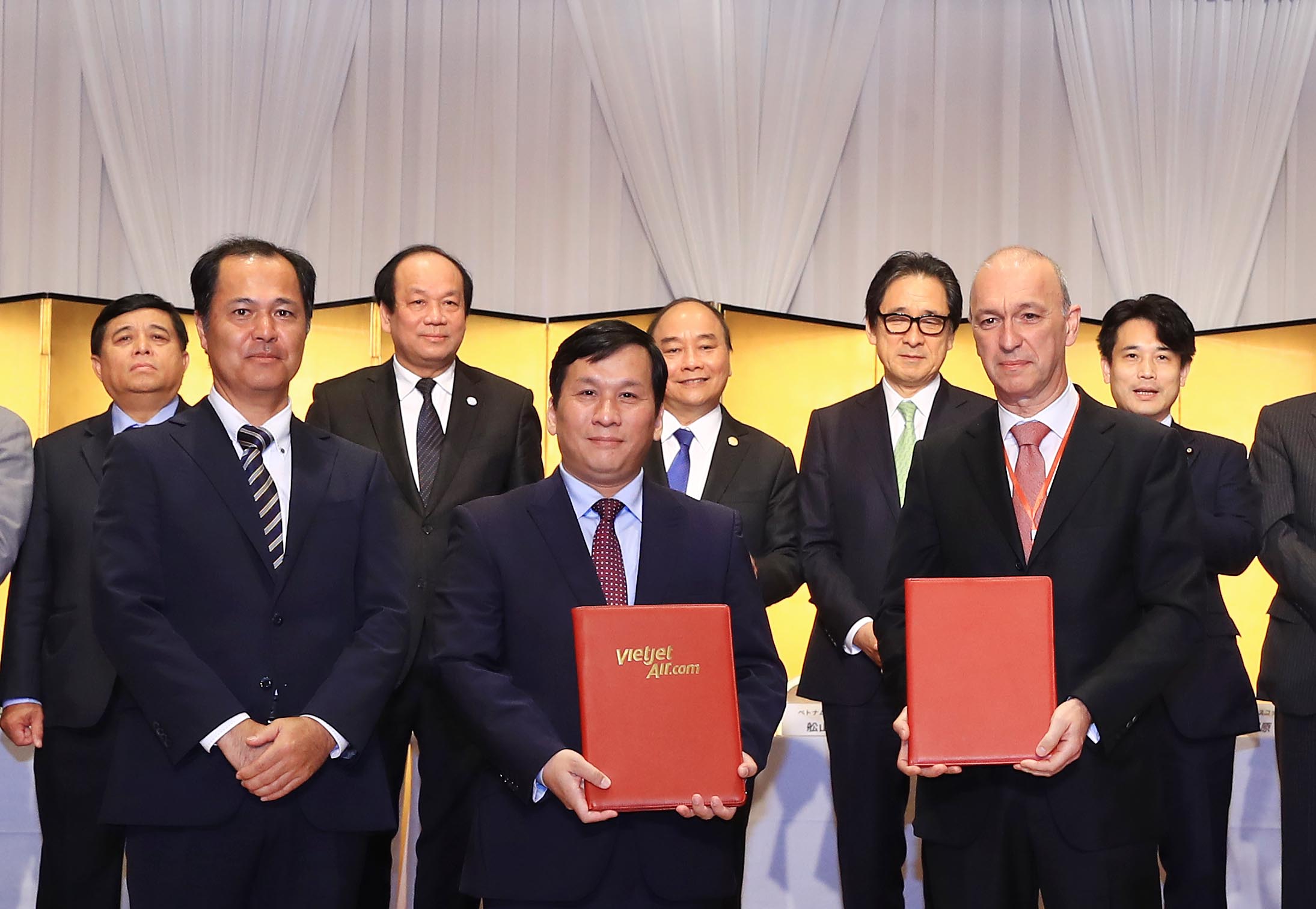
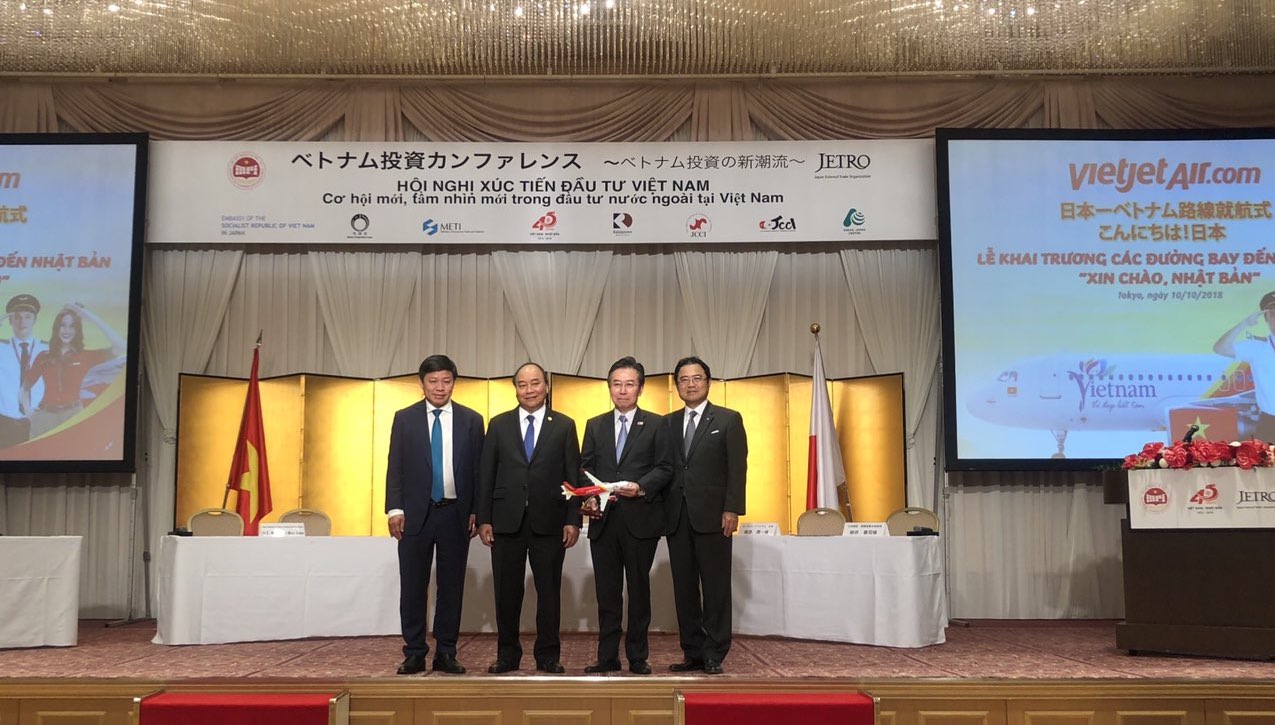
    Vietjet signed and exchanged an aircraft financing agreement with Mitsubishi UFJ Lease & Finance Company Limited (MUL) – a member of Japan’s leading finance group Mitsubishi UFJ Financial Group (MUFG), and France-based banking group BNP Paribas. The signing ceremony was witnessed by Vietnam Prime Minister Nguyen Xuan Phuc and several high-ranking Japanese and Vietnamese dignitaries. The agreement paves the way for MUL and BNP Paribas to finance Vietjet’s acquisition of up to five brand new aircraft, worth US$614 million, according to the manufacturer’s listed price.

    Additionally, Vietjet also signed a Memorandum of Understanding valued at US$625 million according to the manufacturer’s listed price with France-based banking group Natixis and some Japanese equity underwriters to facilitate the financing for five additional aircraft.

    These deals were made under a financing plan for Vietjet’s future ownership of the aircraft.

    The acquisition of these aircraft is part of a new-and-modern aircraft contract signed earlier between Vietjet and Airbus, including A321neo aircraft, which incorporates the latest in engine design, advanced aerodynamics and cabin innovations. According to the aircraft manufacturer, A321neo engines offer a significant reduction in fuel consumption — at least 16 percent from day one and 20 percent by 2020 — as well 75% reduction in noise and 50% in emissions.
    All aircraft financed will be delivered to Vietjet in the last quarter of 2018 or early 2019.

    Speaking at the signing ceremony, Vietjet’s Vice President Dinh Viet Phuong said, “The critical financing agreements signed once again confirms the confidence of leading Japanese financiers in Vietjet as the airline prepares to launch new routes to Japan soon. Also, these deals will greatly contribute to Vietjet’s plan for fleet expansion and network growth in the coming time, thus helping to better connect Japan and Vietnam. We are proud to have leading and renowned financing partners accompany us on the airline’s growth path. Together we are all fully committed to bring greater added values to the community.”

    Under the terms of the agreement, Vietjet and all financing partners will also work together to share best practices for the operation and management of the airline, boosting effectiveness and encouraging sustainable growth.

    Vietjet currently operates the latest generation narrow body aircraft fleet, which has helped the airline achieve an impressive operation performance rating of 99.66% for technical reliability.

    The airline’s flight safety performance and ground operation indicators are also amongst the top in the region while operating costs are among the lowest in the world.

    Vietjet was recently listed by Airfinance Journal as one of the world’s 50 best airlines for healthy financing and operations, achieving a better ranking than many of the world’s most prestigious airlines.

  • The theme for Uniqlo’s UTGP 2019 T-shirt design contest is… Pokemon!

    The theme for Uniqlo’s UTGP 2019 T-shirt design contest is… Pokemon!

    Now on its 13th year, UTGP 2019 will accept entries via smartphones and tablets to enable as many as possible to take part. The competition’s Grand Prize winner will receive USD $10,000; other winners will also receive cash prizes. All winning designs of the contest will be featured in Uniqlo Spring/Summer 2019 collection, with t-shirts being avialable for men, women, and kids.

    The competition will be judged by the following:

    • Tsunekazu Ishihara, President of The Pokémon Company
    • Ken Sugimori, Managing Director of Game Freak Inc.
    • NIGO® (UT Creative Director)

    The top three winners will be awarded in a ceremony in Tokyo, and they’ll be able to watch the 2019 Pokémon World Championships in Washington, DC. Entries can be submitted on October 23 until December 2, 2018 (10:59 PHT) at the official UTGP 2019 website.

  • MarlMarl Sanjo-Street Kyoto Open door

    MarlMarl Sanjo-Street Kyoto Open door

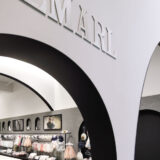
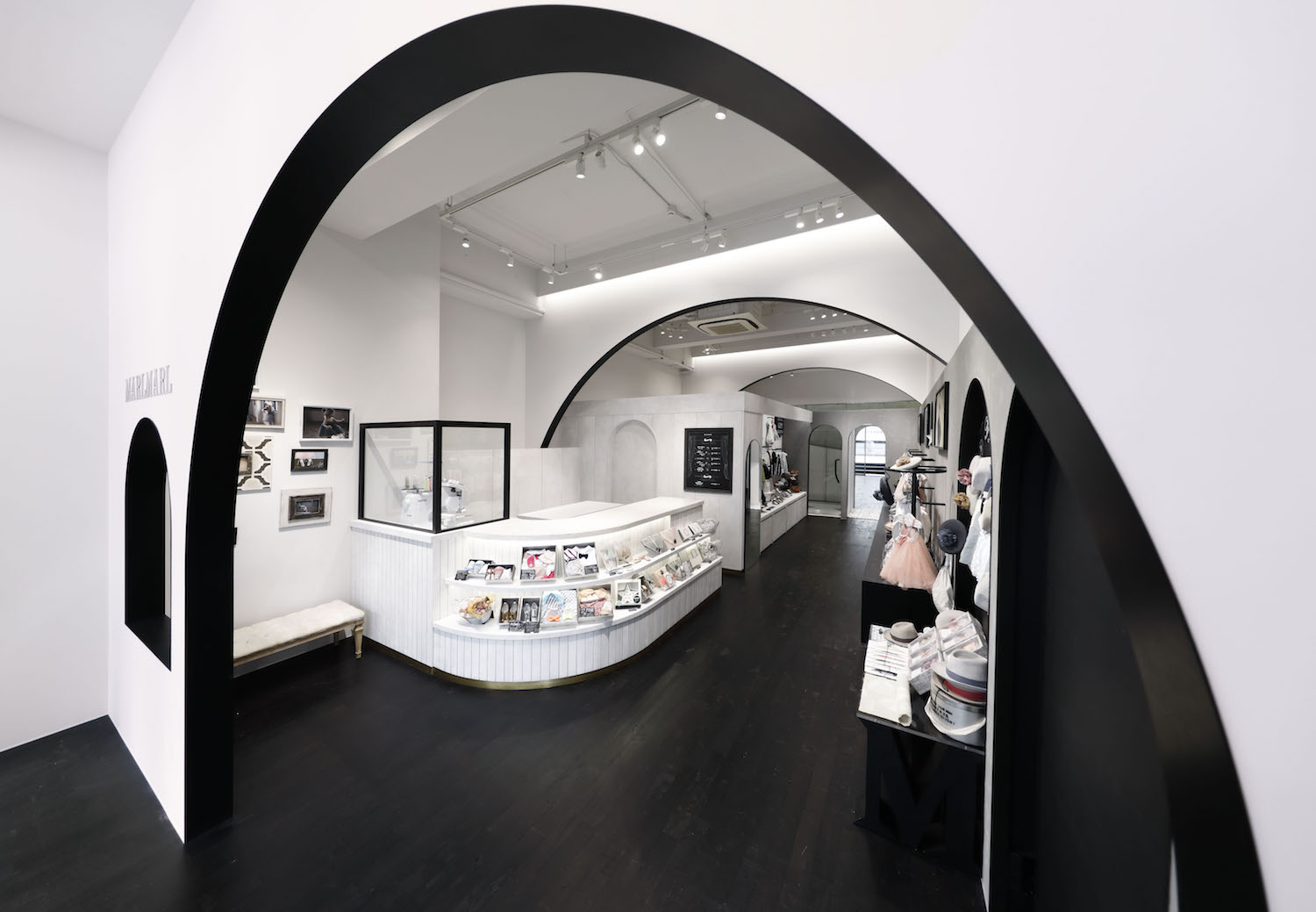
    Acclaimed for its abstract world view, MARLMARL, with Atsushi Suzuki / TANSEISHA as the designer, is one of the most dynamic brands of original baby clothing in Japan today, and is   continuing to expand in both domestic and overseas markets. MARLMARL worked on interior design for the brand in conjunction with the opening of a new branch in the Sanjo-street district of Kyoto, Japan’s historic capital.

    Kyoto’s Sanjo-street, featuring an attractive urban landscape characterized by a mixture of old and new, is a place where traditional architecture and modern architecture stand side by side. In these surroundings, we had to draw up a plan for the interior of a modern building highlighted by enormous and remarkably eye-catching arches. So, while honoring Kyoto’s historic landscape, we came up with a design concept that would integrate the brand’s abstract world view with the surrounding cityscape.

    Using the brand’s neutral tones and drawing on the motif provided by the building’s arches, we continued the arches inside the store, keeping the lines as simple as possible in combination with a monotone coloring to integrate the cityscape with the brand’s abstract world view. The imposing arches of the building and the light arches of the interior serve as complementary expressions, imbuing the space with a bright and airy impression befitting of a baby clothing brand.

    View the gallery below to join the mini tour to the store :

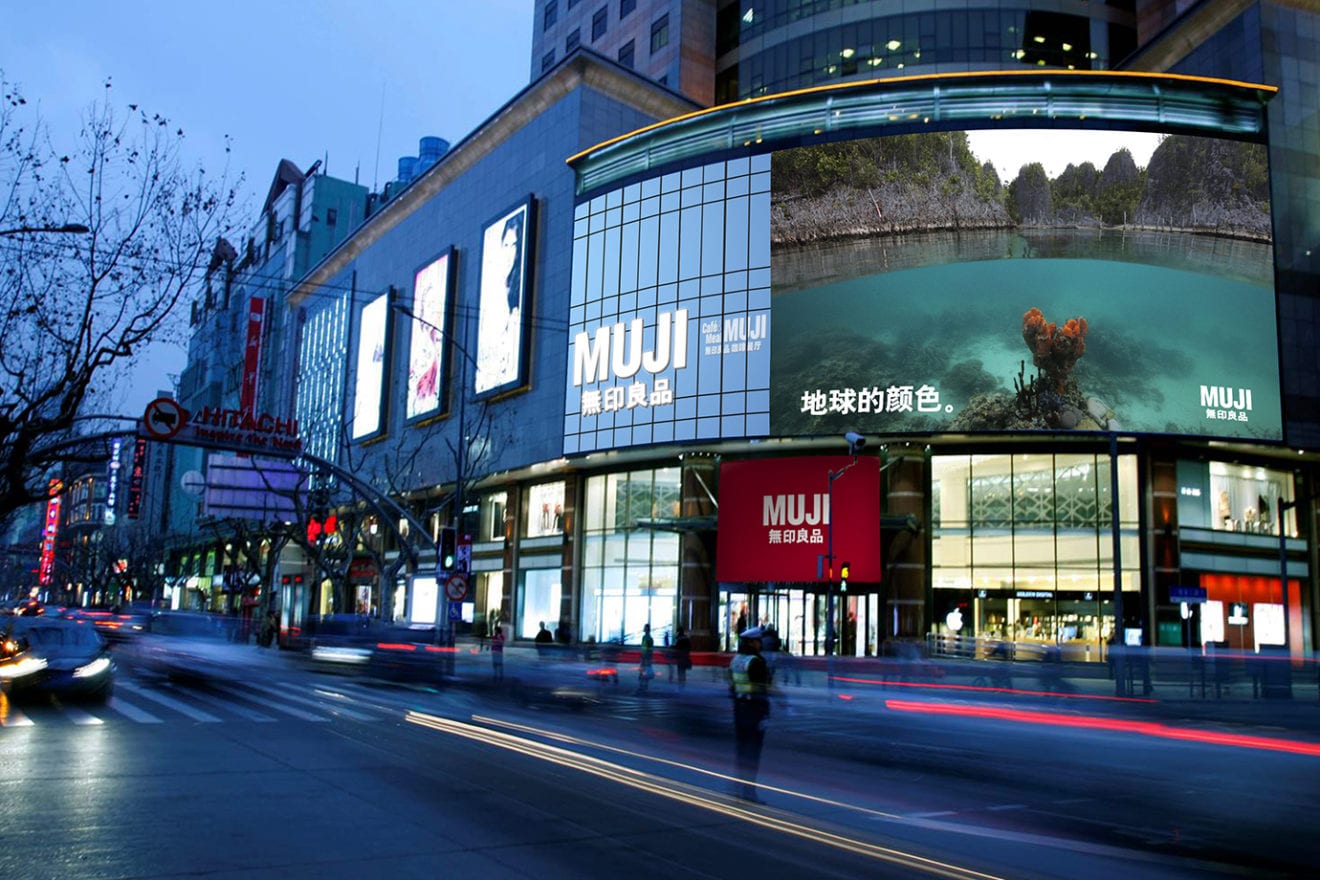
  • Giant Muji Ginza flagship plan revealed

    Giant Muji Ginza flagship plan revealed

    Japanese anti-brand retailer Muji will open a new global concept store in Tokyo’s Ginza district next April.

    Besides a seven-storey Muji Ginza retail store, the company will open a Muji Hotel, a gallery and community space and a Muji-branded Diner on the site. It will close its existing standalone Tokyo flagship store at Yurakucho on December 2.

    Satoru Matsuzaki, president and representative director of Muji’s parent company Ryohin Keikaku, says the new Muji Ginza flagship will be a global statement for the brand with a focus on food.

    “Muji wants to connect the relationships between people and people, people and society, and people and nature through its goods and services,” Matsuzaki said in a statement.

    “Among the three most basic of human needs (clothing, food, and housing), food is perhaps the most critical, essential part of life. City dwellers, however, have become far removed from the farms, ranches and fisheries, where the food is actually produced, and have come to consume food as nothing more than mere merchandise. Many of them know neither the producers, the land nor the sea that grew the food.

    “The new global flagship store will dedicate more goods and services to food. We hope it helps customers think about the producers and production areas, taking another look at the relationship between food and people.”

    A dedicated food area on the store’s ground floor features vegetables and fruits delivered directly from the farms near Tokyo. The store will sell freshly squeezed juice or desserts made from in-store fruits. There will be a space to eat on site and the store will sell teas, spice and fruits by measure.

    A Muji Diner will open in the first basement level, focusing on simple food and featuring a salad bar. Dishes of fish, meat or wild game in season will be available for individual diners and groups.

    Muji Hotel Ginza and Atelier Muji Ginza

    Described as “anti-gorgeous, anti-cheap” the Muji Hotel Ginza promises “a great sleep at the right price”. It will be the third Muji Hotel after properties in Shenzhen and Beijing, featuring 79 guest rooms.

    The Atelier Muji Ginza will open on the building’s sixth floor, beneath the hotel, intended as a “multi-purpose facility of design and culture”.  It will comprise two galleries for exhibitions featuring craftwork and design, a salon where people can talk over coffee or drinks, a library of books related to design and arts and a lounge for events and workshops.

    To bridge the gap between the old flagship’s closure and the new Ginza concept’s opening, a mini pop-up store is planned for Marronnier Gate Ginza – half way between the two sites – trading for three months from December 12. It will stock items selected from Muji’s 7000 lifestyle basics range.

  • Hypebeast launches Hypefest

    Hypebeast launches Hypefest

    Hypebeast is the prime destination for young male in their mid-2000s with a vague interest in Japanese denim or limited-colorway Nike Dunks or whatever it was that Pharrell was wearing that month.

    The fashion blog was among the first to enthusiastically document trends in sneakers and streetwear.

    Kevin Ma, who founded the blog in 2005 when he was a student in Vancouver, didn’t know much about fashion then. But 13 years later, the Hong Kong native sits quietly at the top of a publicly traded Hypebeast empire.

    His dominion includes the website, a quarterly print magazine, an online store, legions of influential fans and now a Hypebeast festival, which will take place the first weekend of October in an undisclosed location in Brooklyn with a “breathtaking view of the Manhattan skyline.”

    It will be called Hypefest.

    Mr. Ma, 36, and his team have been reluctant to share too much information in advance of the festival; it might kill the hype.

    Instead, taking cues from the brands that they’ve promoted for years, they are letting news about the festival trickle out slowly, and letting intrigue build.

    Upward of 10,000 tickets will be available online next week — for free.

    But promotional materials promise that Hypefest will be a “highly curated and educational experience.” There will be booths from global clothing companies like Adidas Originals, Diesel and Moncler, as well as streetwear brands like Needles and Girls Don’t Cry.

    There will also be music, food, art and talks with fashion designers, held in a “Hypetalks panel discussion area.”

    Perhaps most notably, Hypefest will not be a merch-fest.

    “We want people to really have an experience as opposed to shopping,” Mr. Ma said. “I feel that you can shop any time. You can shop at a shop. You can go to a pop-up to shop. You can go online to shop.”

    Hypefest merchandise will primarily be sold online, which could curtail the secondhand market that is endemic to hypebeast culture, in which “drops” of merchandise from vaunted brands are snatched up quickly in person and resold.

    Scarcity is part of the aesthetic, which has been adopted by celebrities like Jonah Hill (called “a budding darling of the hypebeast community” by Dazed) and Justin Theroux (a “low-key hypebeast,” according to The Cut). Their outfits have helped to incubate an entire media ecosystem, as tabloids analyze their casual style.

    The 2018 hypebeast bears only a loose resemblance to the one whose wardrobe Mr. Ma assembled in the early days of his site.

    During a recent interview at his apartment in SoHo, he was dressed down in a loose black long-sleeve shirt, jeans and black Vans. Even the most discerning eye might have missed that the jeans were from Mr. Completely, the Los Angeles store; that the shirt was from the Japanese brand N.Hoolywood; that his frames were from Gentle Monster, the Korean glasses retailer.

    Though Mr. Ma’s understated, globally sourced look spoke to the style ideology he has long tried to inculcate in his readers, Hypebeasts are now more easily identified by flashy, recognizable brands.

    But Mr. Ma understands, he said, that the term is now mostly out of his control.

    “It can be anything nowadays I feel,” he said. “Which is kind of cool.”

  • Docomo launches prepaid Wi-Fi for travelers

    Docomo launches prepaid Wi-Fi for travelers

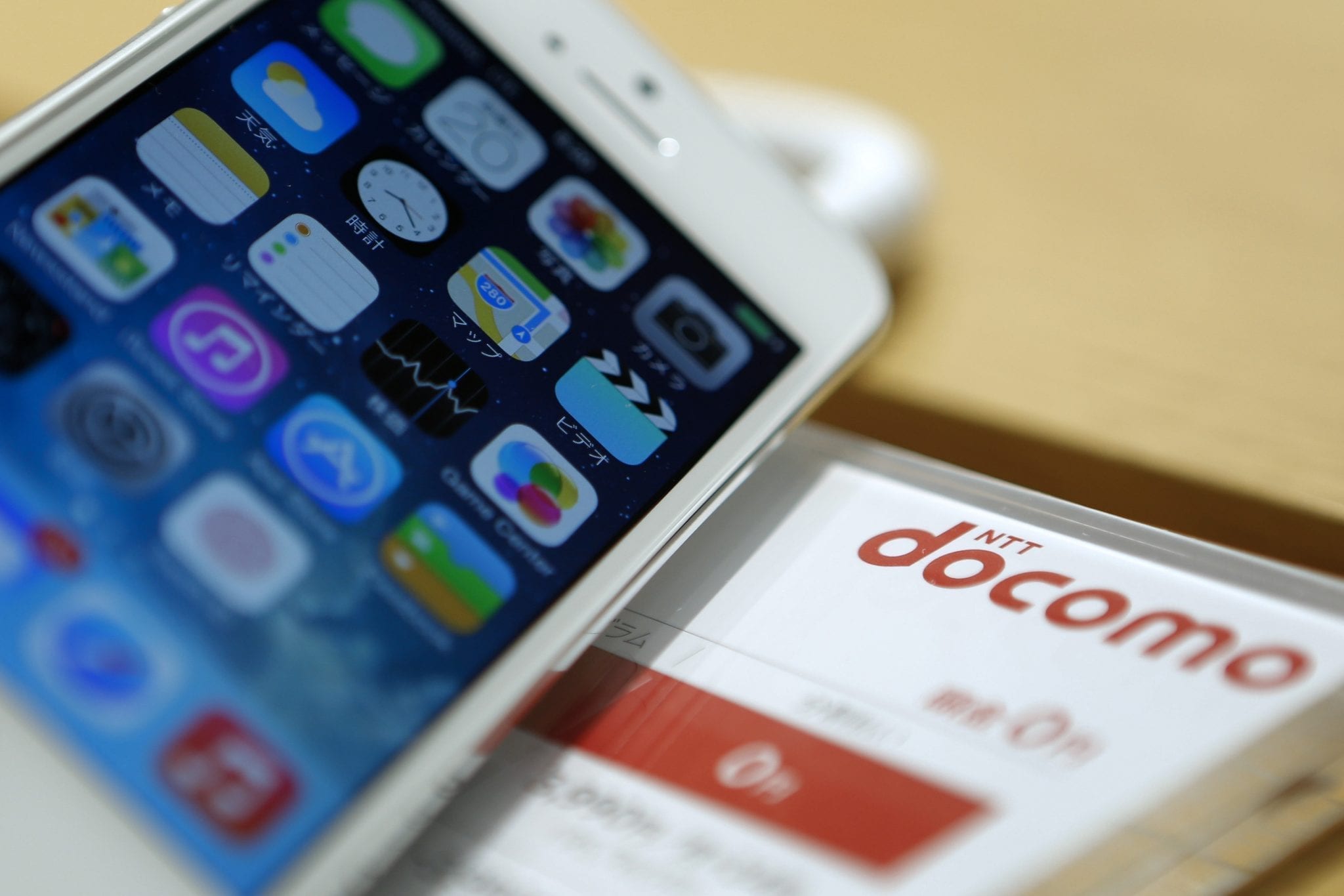
    Japan’s NTT Docomo has introduced a new prepaid Wi-Fi service for travelers to the nation, offering easy access to its national network of public wireless LAN hotspots.

    The new functionality is being added to the operator’s Japan Welcome SIM prepaid SIM service for tourists and business travelers.

    The service supports high-speed downloads at speeds of up to 988Mbps, and also provides access to Docomo’s LTE and 3G networks. It is offered through plans starting at 1,080 yen ($10) for no bundled data allowance, or 1,836 yen with 600MB of include data.

    Customers have the option to recharge their data allowance by viewing ads or answering questionnaires, and additional data can be purchased for rates starting at 100MB for 216 yen. A free plan with no bundled data allowance is available.

    Docomo is also extending the service period of the prepaid SIMs from five to 20 days, and has introduced an XL version of the plan for 3,024 yen with 2GB of data. As a promotion, the company will offer the XL plan at 1,944 yen for the first 999 customers using a coupon code.

  • French pâtissier Christophe Michalak to open his first store in Japan

    French pâtissier Christophe Michalak to open his first store in Japan

    French patisserie Christophe Michalak is about to open its first pastry store in Japan.

    The Michalak store opens tomorrow in Tokyo’s famous fashion district Omotesando.

    Michalak Omotesando will sell small desserts, cupcakes and items created to appeal to Japanese customers such as the Monkoeur which blends chocolate and passionfruit with the local citrus fruit the yuzu, in place of lime.

    A signature dish will be Kosmik, a small jar containing layers of mousse and sponge, which customers can customise.

    It will also serve savoury dishes such as quiche.

    Michalak operates four stores in Paris and chose Japan for his first overseas foray because he believes the nation to be home to some of the world’s best pastries.

  • Rakuten completes 5G trials in 28-GHz with Nokia

    Rakuten completes 5G trials in 28-GHz with Nokia

    Japan’s Rakuten Mobile Network said it has completed over-the-air 5G trials in the 28-GHz frequency band using equipment provided by Nokia and Intel.

    The trials were carried out from June in a shielded room at the Nokia Kawasaki Technology Center located in Kanagawa Prefecture in Japan, using Nokia AirScale base station and the Intel 5G Mobile Trial Platform.

    During the trials, Rakuten Mobile Network and Nokia verified a number of 5G applications including 4K video and 3D 360-degree VR live streaming, the Japanese mobile carrier said in a company statement.

    Rakuten Mobile Network, which is the newly created mobile subsidiary of Japanese e-commerce giant, secured government approval to deploy 4G mobile services in the 1.7-GHz frequency band in April 2018. The company aims to launch its first mobile services as a mobile network operator in October 2019.

    Rakuten Mobile Network is teaming with a number of vendors including Nokia on the design and construction of its nationwide mobile network. The two companies will also work closely together on 5G technology testing and evaluation, Rakuten said.

    “The next generation of mobile broadband and the Internet of Things, enabled by 5G, will transform virtually all sectors of society and industry, and further accelerate the opportunities to advance in healthcare, education, energy services and agriculture, and within new industry applications,” Rakuten Mobile Network CTO Tareq Amin said.

    “The results of our trials highlight the importance of realistic 5G OTA testing and reinforce the potential of 5G networks, taking us a step closer towards actual deployment,” he added.

  • Japan’s TOKAI taps into Telstra’s global network

    Japan’s TOKAI taps into Telstra’s global network

    Japanese fixed line operator TOKAI Communications has contracted Australia-based Telstra to provide connectivity to help pursue an international expansion.

    TOKAI Communications has arranged to use the Telstra Programmable Network (TPN) to access Telstra’s networks.

    The Japanese operator will also to tap into Telstra’s subsea cable infrastructure spanning 230 countries and territories, as well as its Ethernet Private Line services, to directly connect TOKAI’s business locations on point-to-point subsea cables linking Singapore and Tokyo.

    According to the companies, the partnership will give TOKAI Communications the capability to compete in new markets and to connect customers to new overseas opportunities.

    “Telstra developed TPN to empower enterprises to meet the challenges of the future, embrace digital transformation and to quickly respond to changing market and customer demands,” Telstra head of international Oliver Camplin-Warner said.

    “With TPN, employees at TOKAI Communications will operate on a single, integrated and intelligent platform that provides flexible and dynamic access to Telstra’s high bandwidth, low latency and secure networks that allow the enterprise adapt faster to changing demands.”

  • Softbank tests NIDD technology for IoT services

    Softbank tests NIDD technology for IoT services

    SoftBank said it has been using NIDD (non-IP data delivery) technology to allow its IoT services to bypass the internet.

    The Japanese operator announced recently that it has succeeded in completing what it claims is the world’s first connection test in a commercial environment for NIDD, which has been newly defined in the 3GPP for NB-IoT.

    Softbank said NIDD enables users to transmit data to IoT devices without allocating an IP address, which reduces the risk of a malicious attack targeting an IoT device, making it possible to build a highly secure IoT network.

    By eliminating such data as header information additionally required in conventional data communications, the company added, the electric power needed for communication is reduced and a broader area can be covered.

    Also, by enabling connection on a closed network with IoT platforms provided by service providers and with external application servers, Softbank said it will enable operator to build a highly secure network from end to end.

    Currently Softbank is providing IoT services using NB-IoT and LTE Cat-M1 technologies, for which an IP address is allocated.

    The company said it aims to introduce and commercialize NIDD technology for devices tailored to various businesses and fields, such as crime prevention, social infrastructure and agriculture, making full use of its distinctive features of high security, low power consumption, and high area coverage.

    A handful of companies – including Microsoft, Amazon Web Services (AWS), Qualcomm, DK Corporation, Affirmed Networks and SB Cloud – are supporting the company’s NIDD experiment in Japan and will work together with Softbank toward further development of the IoT market.

    “We expect that NIDD technology to reduce communication load for IoT devices and enables to accelerate utilization in IoT field especially for those who had difficulty in conventional conditions,” said Akira Sakakibara, CTO at Microsoft Japan.

    “As NIDD technology corresponds to open standards, it can easily connect to Microsoft Azure IoT platform and enable to implement data management, view and AI features. SoftBank and Microsoft Japan will continuously contribute to accelerate IoT technology utilization in every industry.”

    Tadashi Okazaki, head of solution architect at Amazon Web Services Japan, said security for IoT devices is strongly in demand as IoT popularity is growing.

    “With the implementation of NIDD technology which securely connects AWS IoT platform and peripheral device, we expect to accelerate the popularization of IoT technology,” he said.

    “Low power consumption is one of the characteristic of NIDD technology. Therefore, we hope to solve the long discussed controversy of IoT devices’ high power consumption.”

  • NEC completes construction of SACS cable

    NEC completes construction of SACS cable

    Japanese vendor NEC has announced it has completed the construction of the first subsea cable crossing the south Atlantic ocean for Angola Cables.

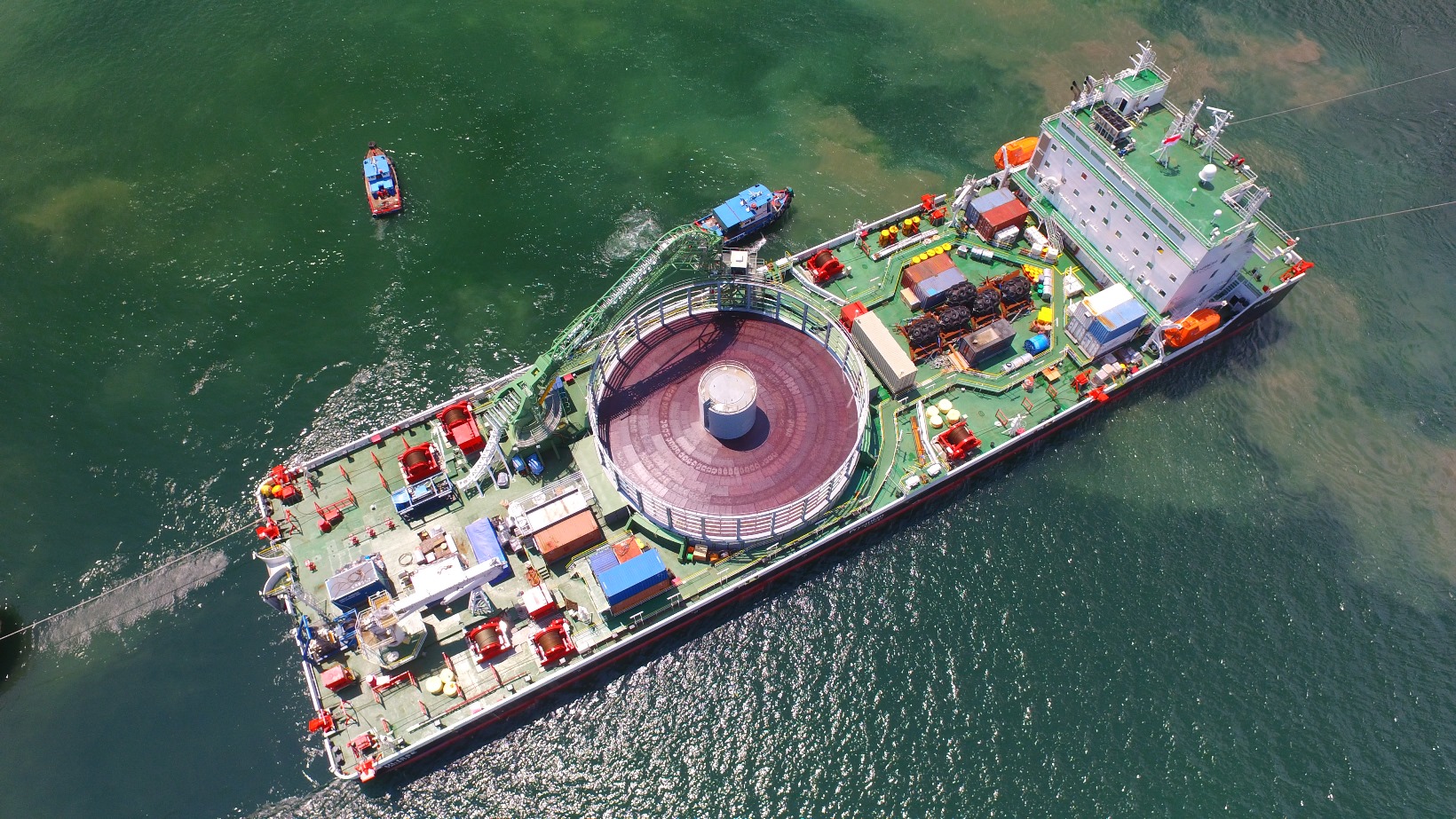
    The South Atlantic Cable System (SACS) has been deployed and is now ready for commercial service. The cable system spans between Angola with Brazil, connecting the African continent to Latin America directly for the first time.

    The system uses a four fiber pair configuration to deliver an initial design capacity of 40Tbps. In Angola, it will land at the existing Sangano cable landing station, while in Brazil it will land in a newly constructed data center constructed for SACS and another cable system connecting Brazil with the US.

    SACS was partly funded through a loan provided by the Japan Bank for International Cooperation to Angola state-owned development bank the Banco de Desenvolvimento de Angola.

    “NEC is honored to have been selected as a partner for SACS, the world’s first optical submarine cable system crossing the South Atlantic, directly connecting two Portuguese speaking nations of Angola and Brazil,” NEC GM for submarine networks Toru Kawauchi said in a statement issued on Monday.

    “Yesterday, all communication between the two continents had to go up north and cross the North Atlantic. From today, this new cable will bring information at the speed of light, improving the connectivity between the two nations and two continents.”

  • Yildiz Looking to Sell Godiva in Japan

    Yildiz Looking to Sell Godiva in Japan

    A sale of Godiva Japan is being considered which could value the business at US$1.5 billion.

    Parent Yildiz Holding is considering an offer which would allow it to use the proceeds to reduce debt and invest in other markets with larger growth prospects.

    Gidova Japan has annual sales of about $350 million a year.

    Yildiz Holdings was founded by Turkish brothers as a biscuit shop in 1944, acquiring Godiva in 2007 for $850 million. It now operates hundreds of Godiva cafes around the world as well as marketing Godiva-branded chocolate products, and its assets include UK brand McVitie’s biscuits.

    Unnamed sources said a formal sale process would commence within weeks.

    Prospective bidders include rival confectionery companies or private equity funds, along with Japanese trading groups.

  • US, Japan keen to invest in Vietnam infrastructure

    US, Japan keen to invest in Vietnam infrastructure

    Vietnam’s plans for building and expanding airports and seaports have attracted the interest of companies in the U.S. and Japan.

    Joel Szabat, deputy assistant secretary in the U.S. Department of Transportation’s Office of Aviation and International Affairs, said his country wants to strengthen ties with Vietnam in the transport infrastructure area, especially airports and seaports.

    He told Deputy Minister of Transport Le Dinh Tho at a meeting Tuesday that his department would facilitate U.S. investment in Vietnam’s infrastructure projects in the form of public-private partnerships (PPPs).

    But Vietnam needs to have more policy consistency and open policies, Szabat said.

    Last month Japan’s Secretary of State Tsukasa Akimoto told Deputy Minister of Transport Nguyen Ngoc Dong that many Japanese investors are eyeing key transport projects in Vietnam.

    They are interested in the Long Thanh International Airport and high-speed north-south railway, he said.

    At the meeting with Szabat, Tho said Vietnam is focusing on five areas of transport infrastructure: roads, aviation, waterways, railways, and network connections to boost logistics.

    One of its national infrastructure projects is the north-south expressway measuring over 2,100km in length, of which “650km will be built in 2017-2020 under the PPP model,” he said.

    With the country’s railway network being obsolete, there is need for an upgrade to both its long-distance and inner-city railways, he noted.

    “Our ministry is considering feasibility studies for the north-south high-speed railway.”

    The transport ministry is set to report on the high-speed railway to the National Assembly next year.

    It is now consulting various agencies for a feasibility study for the Long Thanh airport in the southern Dong Nai Province, which is expected to be approved by the government at the end of next year.

    Vietnam has 21 airports, eight of which receive international flights. Given the rapid rise in traffic, it plans to build, expand or upgrade several including Noi Bai in Hanoi and Tan Son Nhat in HCMC.

    The ministry this month approved changes to the upgrade plans for Tan Son Nhat Airport, including the addition of a third terminal and a 250-hectare expansion of the airport.

    Besides building a new terminal, T3, to the south with a capacity of 20 million passengers a year, the ministry also seeks to expand the two existing terminals to increase their capacity to 30 million passengers a year.When the work is complete, the airport’s size will increase from the current 545 hectares (1,350 acres) to 791 ha.

    The airport currently handles 36 million passengers a year against a designed capacity of only 25 million.

    Tho said Vietnam has two major ports, Lach Huyen in the north and Cai Mep-Thi Vai in the south, which can accommodate ships of up to 100,000 DWT.

    “However, network connections for logistics in ports remain underdeveloped.”

  • Japanese banks to offer instant money transfers using blockchain

    Japanese banks to offer instant money transfers using blockchain

    Japan will this month become the first major economy to launch a domestic payments system based on blockchain technology when three Japanese banks start offering customers free real-time money transfers via a new mobile app. The launch of the MoneyTap system, which secured approval for its licence from the ministry of finance last week, could be an important step in helping Japan to achieve its goal of reducing the use of cash, which still accounts for 80 per cent of transactions in the country. The new platform has been developed by SBI Ripple Asia, a joint venture between Japan’s SBI Holdings and US blockchain specialist Ripple.

    It will be launched by three of the country’s mid-sized lenders: SBI Net Sumishin Bank, Suruga Bank, and Resona Bank. Japanese banks charge customers about $3 to transfer even small amounts of money to other accounts via the Zengin domestic payments system, which only operates until 3pm on weekdays, meaning people often have to wait a day or more for money to arrive. That is much more expensive and slower than in many other countries. “We would like to change peer-to-peer and interbank payments in Japan, which are very inefficient,” said Takashi Okita, chief executive of SBI Ripple Asia and a former official at Japan’s Financial Services Agency.

    “The FSA is trying to reduce cash as a percentage of the economy and once people use the new MoneyTap system they will never go back,” he said. “The banking industry in Japan is still living in the non-internet era — even the banks realise they have to change.” Alipay, the mobile payments arm of China’s Alibaba, launched a service in June to provide a quicker and cheaper way for people to send money from Hong Kong to the Philippines over its GCash blockchain system using Standard Chartered as its banking partner.

    Ripple caused a stir in the payments industry in April by teaming up with Banco Santander to offer a service based on Ripple’s blockchain messaging technology that allows the Spanish bank’s customers in the UK, Spain, Poland and Brazil to send money in many currencies around the world. More than 100 financial institutions have registered with Ripple to use its blockchain-based messaging system, known as XCurrent, which allows banks to co-ordinate the transfer of money between currencies in seconds.

    The launch of MoneyTap in Japan will mean it is the first big country to have a blockchain-based system for transferring money between different banks. Mr Okita said SBI Ripple Asia had been working with a consortium of 61 Japanese banks on the new system and it hoped more of them would sign up to use it soon. He also plans to expand its offering to include cross-border payments. The MoneyTap app does not use Ripple’s XRP cryptocurrency, which is meant to be a cheap and universal bridge currency, providing an alternative to the expensive nostro and vostro accounts of correspondent banking. But Mr Okita said this option would be open in future to any banks that wanted to use it.

  • Ministop South Korea is for sale, rivals compete

    Ministop South Korea is for sale, rivals compete

    South Korean retail operators Lotte and Shinsegae are competing to buy the 21-year-old local subsidiary of Japanese convenience-store operator Ministop.

    Shinsegae and Lotte respectively own rival chains Emart24 and 7-Eleven and are both reportedly seeking to take full ownership of Ministop South Korea. Both companies see the deal as a means to grow their respective businesses in a market where convenience-store penetration has reached saturation point, limiting opportunities for organic network growth.

    7-Eleven currently operates 9535 stores across South Korea and Emart24 3413. The Ministop network numbers just 2535.

    Japan’s Aeon, which owns the Ministop brand, owns a majority 76 per cent of the South Korean business.

    Daesang group owns 20 per cent and Mitsubishi the balance. Aeon has appointed Nomura Securities to find a buyer for the business as it sees little future for the convenience store brand in South Korea, a highly competitive market. Instead, Aeon is looking to Southeast Asian markets for growth, including Vietnam, Thailand and Cambodia.

    Last year, Ministop South Korea sales totalled 1.18 trillion won (US$1 billion), ranking it fourth in revenue terms behind GS25, CU and 7-Eleven.