Tag: Japan

  • Japanese restaurant operator AP heads to Hawaii

    Japanese restaurant operator AP heads to Hawaii

    Japanese restaurant operator AP Co is heading to Hawaii, planning to open its first outlets in January.

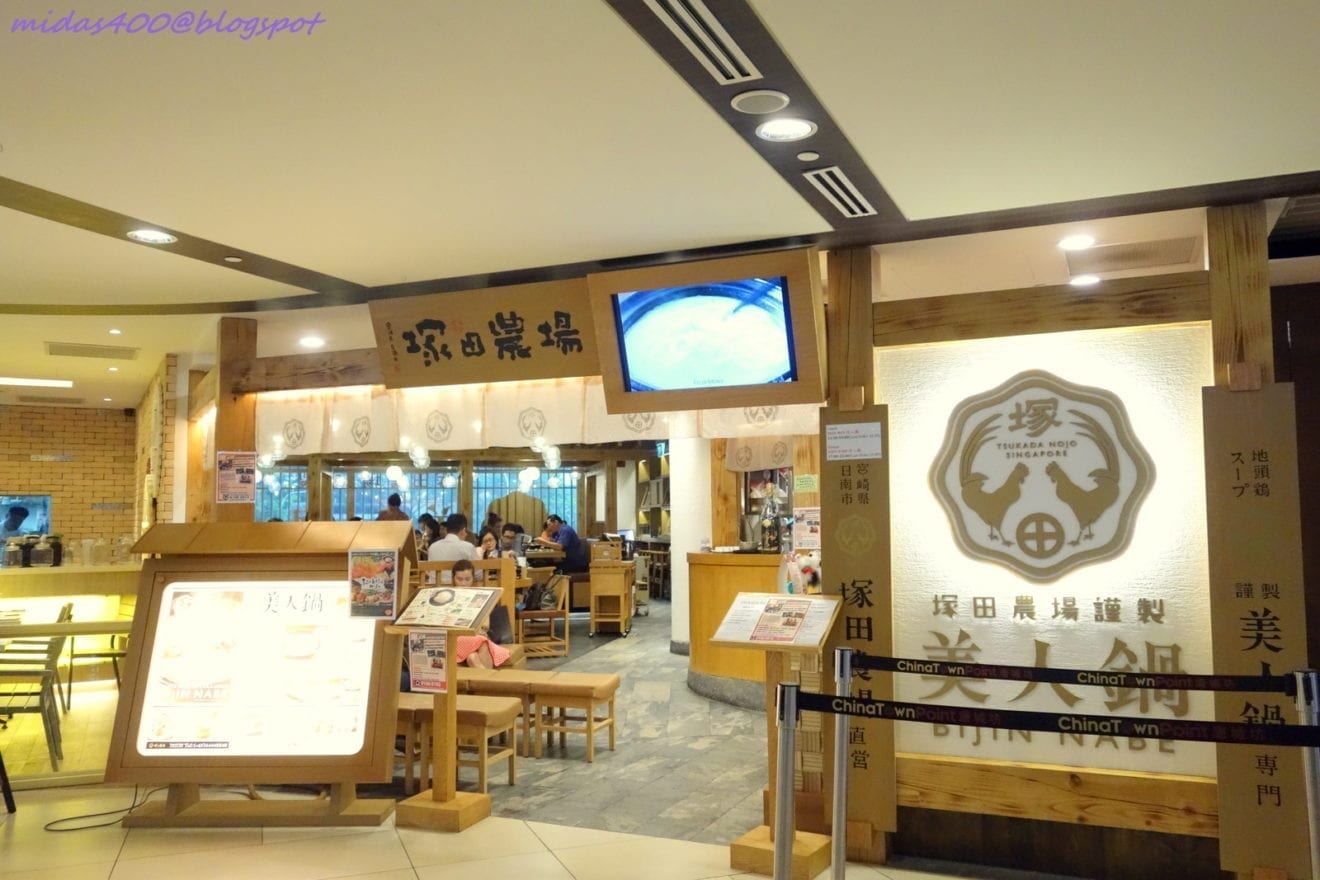
    AP owns more than 200 restaurants in Japan, Singapore and California and plans to take its  Tsukada Nojo and Sushi Maru brands to Waikiki, in the heart of Honolulu’s tourist area.

    The two eateries are an izakaya-style concept, serving small dishes and liquor, and a sushi restaurant, respectively.

    AP entered the restaurant business to create an outlet for produce from its farms and fisheries.

    “They are pursuing the same concept here by working with local farmers now in preparation for their opening next year,” a real estate source told Pacific Business News in an interview.

    The company is listed on the Tokyo stock exchange.

  • Airport offers Hello Kitty flight attendant

    Airport offers Hello Kitty flight attendant

    A Japanese airport is offering simulated around-the-world “jet” trips with a Hello Kitty flight attendant.

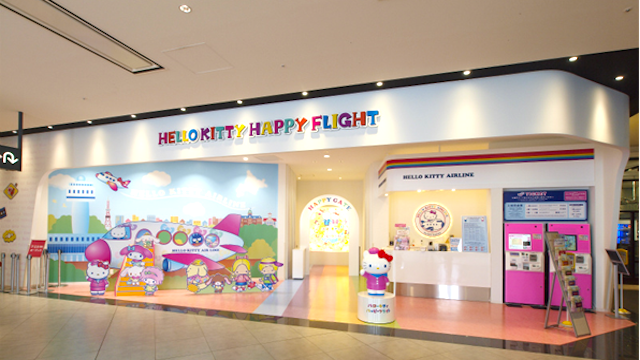
    Travel retail group Enleysha Co has opened the Hello Kitty’s Happy Flight amusement outlet along the connecting path on the third floor of the New Chitose Airport‘s terminal building in Hokkaido. It is the first Japanese attraction of its type, with the simulated trip taking visitors to meet Sanrio characters in international settings.

    Hello Kitty Happy Flight Japan airport 1

    The outlet includes a shop selling original products and Sanrio character merchandise, a Sanrio character cafe and a free space where children can play.

    Hello Kitty Happy Flight Japan airport 2

    Visitors enter a projection mapping theatre that presents Sanrio characters in Europe, the South Pole, America and Asia. There are also photo ops with the characters.

    On the third floor of the terminal, the attraction covers 1290 sqm along the Smile Road connecting path. There is an admission fee, and regular visitors can buy an annual passport.

  • Aeon Myanmar launched with acquisition

    Aeon Myanmar launched with acquisition

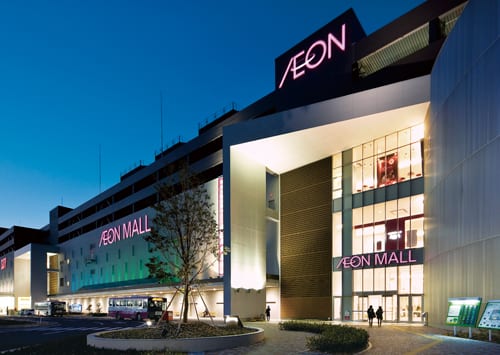
    Japanese grocery and mall giant Aeon is expanding its Asian footprint yet further, acquiring a 14-store supermarket chain in Myanmar.

    The Aeon Myanmar operation will be run by a new company, Aeon Orange, which has acquired the supermarket chain from Hypermarket Asia, one of the affiliate companies of Creation Myanmar Group.

    At the same time, the newly established company is preparing to open its first supermarket in Myanmar before year end.

    Aeon says that the economic liberalisation after transition to a civilian government, has seen

    Myanmar’s retail industry modernise, and the ranks of the nation’s middle class are growing.

    “With the population of 53 million people, the real economic growth rate in the country is 8.3 per cent – dramatic growth exceeding the average rate among five developed nations in ASEAN countries,” Aeon said in a statement.

    CMG’s 14 supermarkets are mainly in Yangon, Myanmar’s largest city, and it also holds more than 20 overseas brand sales licenses including Adidas and Mango operating some 130 stores.

    The launch of the Aeon Myanmar business follows successful forays into China, Thailand, Vietnam and Cambodia as the Japanese retailer looks for growth internationally to offset declining sales in its home market which is suffering from a falling population.

    “In order to develop business in a speedy manner in this fast growing Myanmar market, Aeon believes that cooperation with CMG is indispensable, as it has the retail business infrastructure in the country and is also familiar with the customer needs which differ from region to region,” the company said.

    Aeon will learn the customer needs in the region and the know-how of community-based

    product procurement, while offering Aeon’s private brand “Topvalu,” the global sourcing

    through utilising the group’s comprehensive multinational strength and quality control to assure “safety and security,” and bring logistics, IT, and human resource development to CMG.

  • Toyota, Daihatsu jointly debut new ‘green’ cars in Indonesia

    Toyota, Daihatsu jointly debut new ‘green’ cars in Indonesia

    Toyota Motor Corp. and Daihatsu Motor Co. jointly launched two different cars in Indonesia on Tuesday, a day after Toyota acquired all of Daihatsu’s shares.

    “It is a new relationship between Daihatsu and Toyota,” Daihatsu President Masanori Mitsui said during the launch in the industrial town of Karawang in West Java Province, where the cars are manufactured.

    Toyota launched the Calya, which means “perfect” in Sanskrit and will be sold at between $9,973 and $11,538, while Daihatsu launched the Sigra, which means “fast response” in the same language and will sell at between $8,153 and $11,461.

    The two companies earlier collaborated in producing the Avanza and Xenia in 2003, the Rush and Terios in 2006, and the Agya and Ayla in 2013.

    According to Mitsui, they have reached a huge achievement in production resulting from their cooperation.

    Toyota Managing Director Hiroyuki Fukui shared that view and said the collaboration will improve the companies’ performance amid tough global competition.

    The Calya and Sigra are multipurpose vehicles, which each can carry seven passengers. They are categorized into low-cost green car, a type of car highly encouraged by the Indonesian government.

    “Those kinds of cars in great demand, so we’re hoping for a positive response (from the market),” said Sudirman Maman Rusdi, president of PT Astra Daihatsu Motor, an Indonesian subsidiary of Toyota.

    According to him, his company has invested about 1.1 trillion rupiah (about $84.61 million) for the two cars’ production.

  • Takashimaya Vietnam opens doors

    Takashimaya Vietnam opens doors

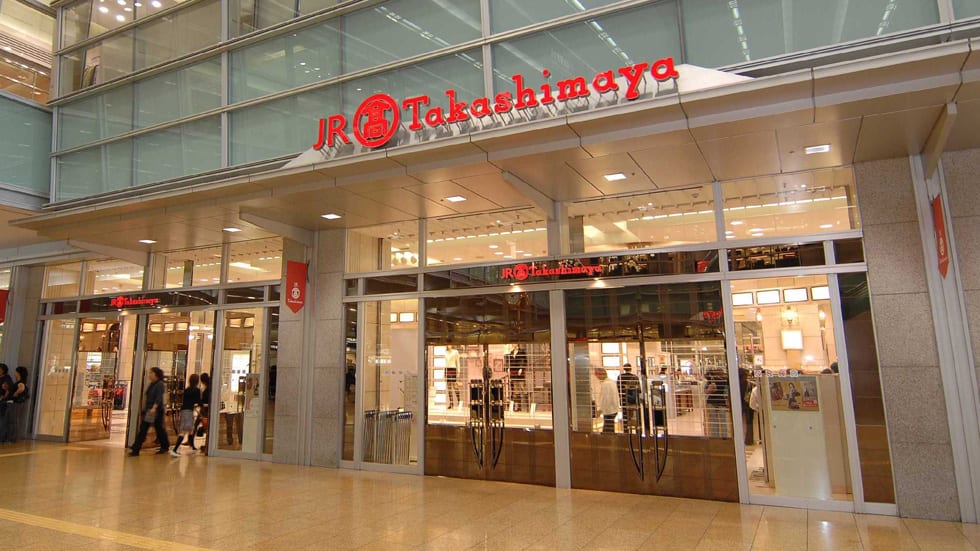
    Three years after the Japanese luxury department store chain announced plans to enter Saigon, Takashimaya Vietnam opened its doors at the weekend.

    As the anchor tenant of  downtown Ho Chi Minh City’s Saigon Center, Takashimaya takes up a whole five floors making it by far the nation’s largest department store – and likely its most expensive.

    The first impression that the department store makes is its spacious interior. Concessions to brands have been arranged to leave unusually wide aisles – ensuring the store was comfortable even on its crowded grand opening day.

    Takashimaya Vietnam - interior

     The central atrium of the expanded Saigon Center featuring Takashimaya’s first Vietnam store.

    The first floor of Takashimaya houses the food maison, most of which is filled by Japanese F&B brands such as Minamoto Kitchoan, Gyumaru, Azabu Sabo, Yamazaki and Suizan. Some tea brands make their way into that space, including Vietnam’s own Phuc Long, Singapore’s TWG tea, and B Tea.

    Targeting the high class consumers in Saigon and Vietnam, Takashimaya has chosen carefully the brands to appear in their stores, including luxury brands coming to Vietnam the first time, complemented by the high level of customer service Takashimaya offers elsewhere in the world.

    Takashimaya Vietnam

    The second floor is exclusively for ladies with international fashion names such as Banana Republic, Bebe, Bonia, Braun Buffel; footwear from Clarks, Geox, Cole Haan; bags from Carlo Rino, Cromia; and Furla with its first flagship in Vietnam after years being distributed by Ha Vang company.

    The rest space is occupied by cosmetics brands, including Korean labels Skinfood, which marked the store’s opening with a special event ‘Makeup Style for Your Summer’.

    Takashimaya Vietnam - Skinfood

    “We offer free makeup and manicure for our customers for two days. Besides, when they buy our products, they will receive a gift set,” said Kieu Oanh, senior PR & marketing executive of Skinfood Vietnam.

    For women, the excitement continues on the next level of Takashimaya: a heaven of luxury cosmetics, jewelleries and fragrances. Christian Dior is prominently located at the front, with rival Lancome opposite. Lancome also opened its own ‘Lancome Cafe’ – a style boutique, where women can take free makeup lessons and receive gifts for the best ‘artwork’.

    Takashimaya Vietnam - Lancome

    Other brands include Bobbi Brown, Shiseido, Estee Lauder, Swarovski, and Mac.

    Takashimaya Vietnam - Yves Rocher

    The next floor features international fashion and cosmetics brands including Diane von Furstenberg, Hugo, Versace and Paul & Shark, along with restaurants and cafes. This level has a rest space with some chairs for visitors arranged around a huge grey pillar.

    Takashimaya Vietnam - Diane von Furstenberg

    Local luxury multibrand retailer Runway comes back after closing its store in Vincom Center in March. As usual, it has a large space in the center, gathering all women’s favourite brands with modern and elegant designs.

    Takashimaya Vietnam - Runway

     The new Runway store replaces the local multi-label luxury brand’s previous space at Vincom. 

    Another highlight is the ready-to-launch space of women handbags Kate Spade New York. That outlet is expected to open soon.

    Takashimaya Vietnam - Kate Spade

    Coming soon: Kate Spade.

    The last level of Takashimaya is filled with men’s fashion and casual wear and children’s clothing and toys. Tommy Hilfiger has the largest outlet here, opposite the first authentic Fred Perry store.


    With more than 180 years of experience and US$290 million investment, it is expected that Takashimaya will not only take Vietnamese shopping to a higher level but also mark a turning point for economic development and quality retail in Vietnam.
  • JCB Launches New Website

    JCB Launches New Website

    JCB , the only international payments brand based in Japan, is pleased to announce that it will launch a new JCB global website on August 3 2016.

    The website has a portal function to link to a wide range of other JCB websites in many countries/territories, and is a new and easy-to-navigate website that offers comprehensive information about JCB corporate, products and services. At the same time as this release, some more new regional websites will also be released for countries and regions where JCB cards are issued, Vietnam, Hong Kong, Indonesia and Russia, in addition to the existing websites for China, Taiwan, Korea, the Philippines and Europe. We will provide attractive contents for all JCB customers.

    Also the JCB global website uses a top level domain*, “.jcb,” based on our concept of universal design that does not rely on languages or countries/territories. This domain is easy to understand and remember for customers, and can only be used by JCB, reducing the risk of counterfeiting or spoofing, and allowing customers to use the websites more safely.

  • DoCoMo grows Q1 profit by 38.1%

    DoCoMo grows Q1 profit by 38.1%

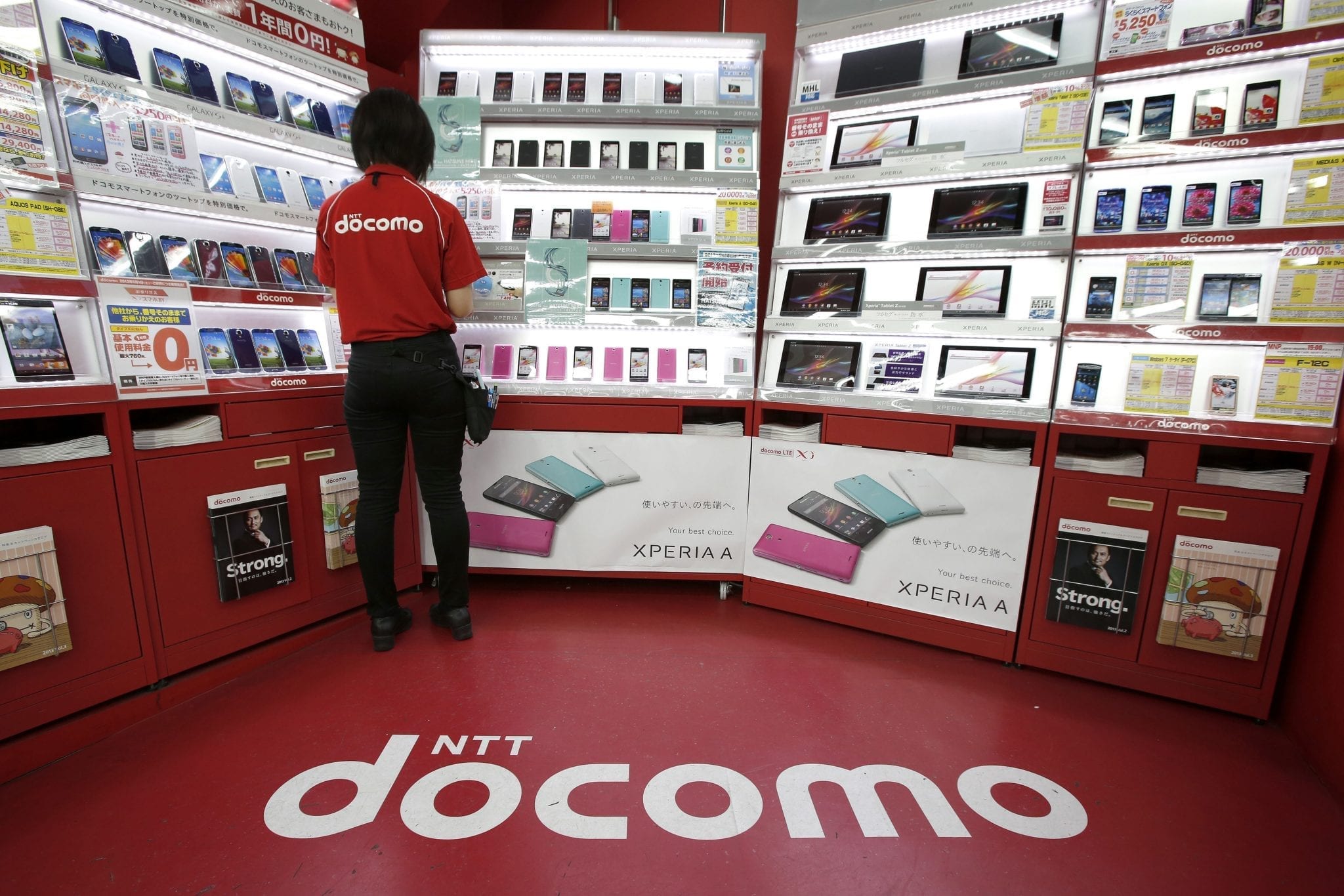
    Japan’s NTT DoCoMo grew its net profit for the June quarter by 38.1% year-on-year as the operator made progress adapting to an evolving business environment.

    The operator reported a net income for its fiscal first quarter of 206.9 billion yen ($2.01 billion), on the back of a 31.8% increase in operating revenues to 1.08 trillion yen.

    Operating revenues from the operator’s core telecoms business grew 1.9% to 878.6 billion yen despite a decrease in equipment sales revenues.

    The company ended the quarter with 71.6 million mobile customers, registering new LTE subscriptions of 2.4 million.

    During the quarter, DoCoMo expanded the coverage of its Premium 4G branded LTE-Advanced network to 1,203 cities across Japan and 30,900 base stations, and added the 3.5-GHz carrier to further improve network quality.

    DoCoMo’s quarterly report states that “the environment surrounding our business has changed significantly,” with competition intensifying as a result of the market entry of MVNOs and the government’s pro-competition policy.

    “In addition, technical advancements in the areas of cloud services, IoT, big data and artificial intelligence (AI), etc., and new policy developments such as the full liberalization of the electricity

    retail market, brought about active competition and collaboration with new players from other industries, accelerating competition in new markets that transcend the conventional boundaries of telecommunications business.”

    In response to this, DoCoMo aims to use the current financial year to make “a vibrant leap toward further growth,” concentrating on reinforcing its core telecommunications business while expanding into “smart life” and other areas, the operator said.

  • SoftBank lifts June quarter profit by 19.1%

    SoftBank lifts June quarter profit by 19.1%

    Japan’s SoftBank lifted its net profit for the June quarter by 19.1% year-on-year to 254.16 billion yen ($2.42 billion), largely as a result of solid growth from the company’s domestic telecoms business.

    Domestic telecoms service revenue grew 5.4% to 761.8 trillion yen following steady growth of the operator’s SoftBank Hikari fiber service. Total FTTH subscribers grew to 2.24 million, from 1.72 million in the previous quarter.

    The company meanwhile grew its mobile subscriber base by 580,000 year-on-year to 32.15 million, with smartphone and tablet subscribers outweighing net losses for feature phones.

    Total ARPU declined by 50 yen to 4,610 yen, but service ARPU increased by 40 yen to 560 yen, reflecting an increase in the number of subscribers to the operator’s content services.

    Revenues from SoftBank’s US subsidiary Sprint meanwhile declined 9.6% year-on-year to 848.09 billion yen, but remained largely flat in US dollar terms.

    SoftBank CEO Masayoshi Son assured reporters at an event announcing the company’s results that Sprint is about to turn into a revenue generator for the company after multiple quarters of negatively affecting the company’s results.

    SoftBank paid $21.6 billion to acquire control of Sprint in 2013, and the company has repeatedly insisted that Sprint’s fortunes are about to turn around.

    Now SoftBank is planning another big bet. The operator recently arranged to acquire chipmaker ARM for $31 billion to pursue opportunities in the emerging IoT sector, which Son believes will be the “biggest paradigm shift in human history.”

  • Store roll-out boosts Starbucks Asia

    Store roll-out boosts Starbucks Asia

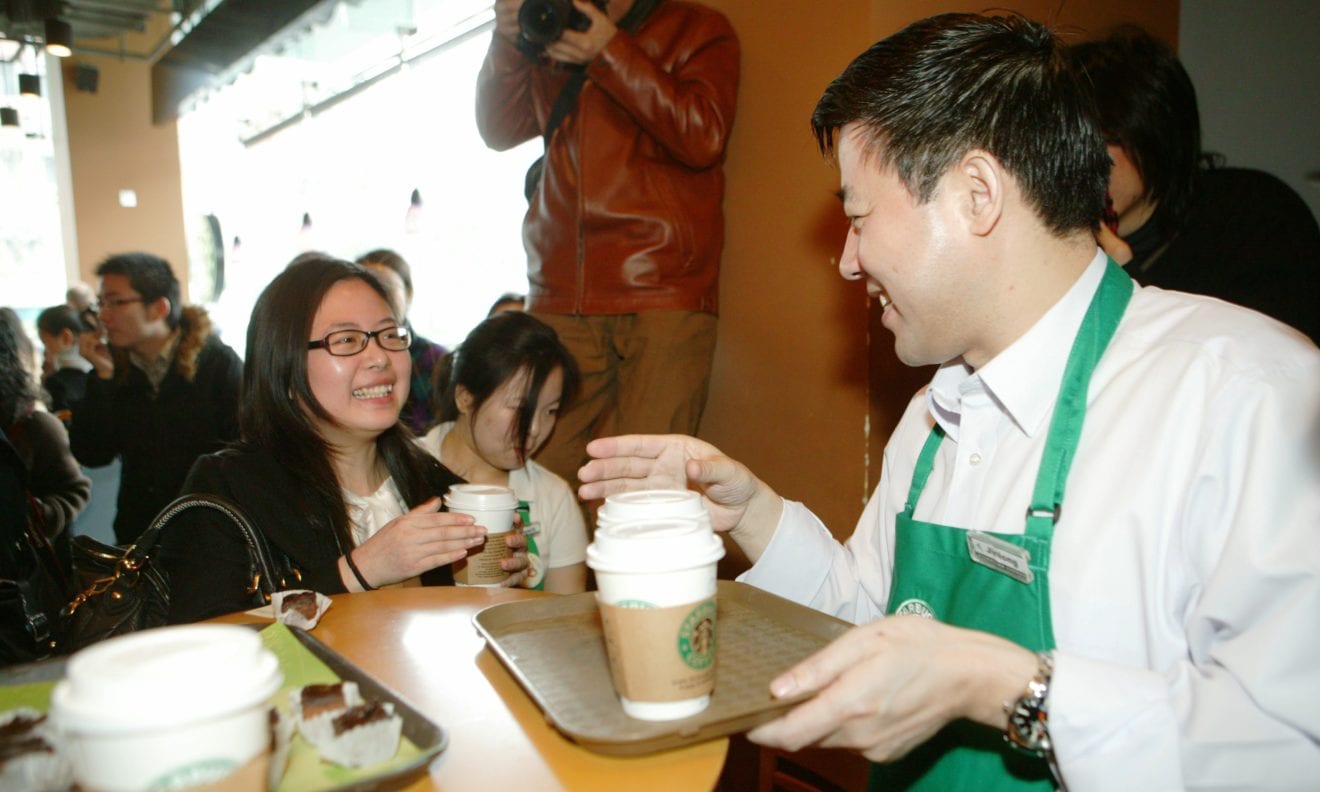
    A massive Starbucks Asia store roll-out has boosted the global coffee company’s third quarter results.

    Across China and the Asia-Pacific region, Starbucks opened 888 new stores in the first nine months of the current financial year. That helped lift revenues by 18 per cent in the region.

    However, underlying same-store sales were a far more modest 3 per cent up on the same quarter last year.

    “The concern is that some of this is related to a general slowdown in China which, if part of a longer term trend, could harm company earnings,’ observed retail analyst Neil Saunders, CEO of Conlumino.

    The company’s Channel Development division – which encompasses the sale of Starbucks branded products in grocers and other stores- also posted positive numbers, with revenues rising 9 per cent. This was aided by strong sales of single-serve Starbucks products following a new agreement with Keurig Green Mountain to push branded K-Cups into more channels. A new partnership with Nespresso to launch Starbucks-branded pods should provided a further uplift to this division in the quarters ahead.

    “Unfortunately, the stronger performances in Asia and in the Channel Development Segment were not enough to offset the weakness in the Americas, which remains larger than all other divisions combined,” said Saunders.

    “And therein lies the forward issue for Starbucks: it has to increase momentum in this part of its business if it is to get back into high growth territory and if it is to avoid a future squeeze on profits.”

    Globally, Starbucks seemed to lose momentum in the third quarter, with overall growth slowing to 7 per cent and global same-store growth moderating to 4 per cent – both below forecast.

    “Worryingly, the slowdown took hold across all regions with even the Americas division, which usually puts in a fairly robust performance, posting a lacklustre same-store increase of 4 per cent. The fact that the company appears to have run out of steam somewhat overshadows its nonetheless impressive achievement of breaking the $1 billion operating income barrier for the first time in a non-holiday quarter.”

  • Pokemon Go promotion backfires

    Pokemon Go promotion backfires

    Involving a celebrity with the Pokemon Go obsession may seem like a golden marketing opportunity, but for one Hong Kong shopping mall the combination has been a screw-up.

    Chrissie ChauWith the game not yet officially available in Hong Kong, actress Chrissie Chau claimed on her Facebook site that she would be the first to catch the augmented-reality (AR) game fever. With the heading “Exclusive Pokemon Go Real Live”, she announced she would do a live stream on Facebook.

    However, it turned out to be a video of Chau dressed in a Pokemon costume, pretending to be Pikachu. Later, some net users discovered that it was a promotional event Chau was working on with a shopping mall.

    This prompted an angry reaction from more than 10,000 internet users in Hong Kong, disappointed that it was just a gimmick and criticising the marketing stunt. Many used Facebook’s “angry” expression, and many left comments describing the the event as a “prank” and even a “PR disaster”.

    Meanwhile, McDonald’s Japan will be the first paying sponsor of Pokemon Go as the game launches there. It will be the first advertiser to test out Pokemon Go’s new sponsored location feature, reports Marketing magazine.

    With the fast-food chain confirming the collaboration, the game in which players use smartphones to search for virtual creatures layered over images of the real world is officially stepping into advertising. In return, McDonald’s Japan will host more than 3000 of its outlets as “gyms” or battle sites for players.

  • Revenue up but profit down for Fast Retailing Group

    Revenue up but profit down for Fast Retailing Group

    Revenue rose but profit fell for Uniqlo parent The Fast Retailing Group for the first nine months of its latest fiscal year, from September 1 last year to May 31.

    Consolidated revenue for the group reached ¥1.4346 trillion (US$215 billion), a rise of 6.4 per cent year-on-year.

    For its three business segments, Global Brands saw both revenue and profit rise, while both Uniqlo Japan and Uniqlo International had more revenue but less profit.

    Foreign-exchange losses were down ¥43.4 billion to ¥23.4 billion, resulting in consolidated profit before income taxes dropping by a considerable 41.9 per cent.

    However, consolidated revenue rose 6.2 per cent and consolidated operating profit grew by 18.6 per cent, thanks to a recovery in performance at both Uniqlo Japan and Uniqlo International.

    The group continued to boost Uniqlo store numbers, opened global flagship stores and large-format stores in major cities, and also expanded its low-priced GU casual fashion brand.

    On the product side, Fast Retailing sought to boost awareness and visibility of the Uniqlo brand through collaborations with designers and artistic directors from other brands.

    In April, the company launched a next-generation distribution centre in Tokyo, and is pressing ahead with plans to open distribution centres elsewhere in Japan as well as internationally, starting in China and the US.

    There are also plans to accelerate GU store openings outside Japan.

    In Japan, the eCommerce segment continued to grow strongly, with online sales rising 40.6 per cent to 5.5 per cent of total sales. On-ground stores increased by two to 846 at the end of May, including 39 franchise stores.

    Recovery

    Uniqlo International’s revenue for the nine months reached ¥532.8 billion (up 10.6 per cent) while its operating profit of ¥42.2 billion was an 18.7 per cent fall. However, both revenue and profit grew in the third quarter (March to May) by 5.3 and 41.1 per cent respectively.

    Profits recovered for Uniqlo Greater China (including Hong Kong and Taiwan) while Uniqlo Southeast Asia and Oceania (Australia, Indonesia, Malaysia, Singapore, Thailand and the Philippines) continued both revenue and profit growth.

    Uniqlo South Korea continued to struggle, losing profits in the face of a sluggish economy and increasingly fierce competition.

    The total number of Uniqlo international outlets grew by 161 to 928 stores.

    Under its CSR policy, Uniqlo joined the Nippon Foundation opening the Tsurumi Children’s Hospice in Osaka in April. This is for children with life-threatening illnesses and is the first community children’s hospice in Japan.

    Following the Kumamoto earthquake this year, Fast Retailing provided emergency clothing for victims, donating 13,600 items such as underwear, socks and loungewear.

    WIth its global partnership with the United Nations High Commissioner for Refugees (UNHCR), helped collect clothing for refugees and displaced persons on World Refugee Day. A special project exceeded its goal of collecting 10 million articles of clothing with a total of 12.81 million items. This involved 112 affiliated companies in 846 locations, 238 educational institutions, 28 student organisations, and communities in 16 countries and regions in which Uniqlo has business.

  • KDDI taps Gemalto for connected cars and IoT

    KDDI taps Gemalto for connected cars and IoT

    Japan’s KDDI has selected Gemalto to provide the platform to enable secure connectivity for connected cars and IoT applications worldwide.

    Gemalto will provide its LinqUs On-Demand Connectivity (ODC) subscription management solution and embedded SIMs (eSIMs) to the operator.

    As a result, KDDI can expect to provision any requested operator’s profile on connected cars equipped with pre-embedded eSIM.

    Motorists can access optimized real-time information about traffic and nearby amenities, navigation, vehicle diagnostics, and emergency services, anytime, anywhere.

    Gartner forecasts that by 2020, there will be around 250 million vehicles on the road with some form of wireless connectivity, making connected cars a major element of the Internet of Things. The lack of flexible and interoperable remote subscription management is a major challenge in deploying IoT.

    Gemalto’s solution, based on global GSMA specifications, is designed to simplify logistics for OEMs.

    “Gemalto’s solution is based on interoperable GSMA standards, and will provide a common and consistent way to connect devices in the future,” said Keiichi Mori, executive officer and general manager of KDDI’s IoT business development division.

    “With long-lasting relationships with over 500 mobile operators worldwide and a strong local presence, they can help us expand our services to other IoT applications, to obtain rapid growth in the connected world.”

    Michael Au, Gemalto president for South Asia and Japan, said IoT is increasingly turning connected cars into powerful hubs for value-added services such as infotainment, real-time vehicle telematics, and usage-based insurance, offering plenty of opportunities to OEMs and service providers.

  • NEC sets up open-source software center

    NEC sets up open-source software center

    NEC in Japan and NEC Technologies India have established the “OSS Technology Center,” an organization specializing in technical support related to the use of open source software (OSS).

    The new organization began operations July 1, with approximately 50 staff based out of NTI, consisting of experienced OSS engineers who are well-versed in OSS solution architecture, as well as essential software development and support capabilities.

    The OSS Technology Center aims to strengthen the organizational structure for supporting global enterprises in building systems based on OSS, to reinforce collaboration with international OSS vendors and to provide rapid technical support to users who construct systems operated globally using OSS.

    Moreover, the new organization will actively carry out development of new network functions related to Software-Defined Networking (SDN), Network Functions Virtualization (NFV) and application platform functions, such as container and Platform as a Service (PaaS).

    All of these are part of the OSS Technology Centre’s OpenStack-based development activities, in addition to its contributions to making source codes openly available by providing them to the OSS community.

    In recent years, the need for enterprises to capitalize on OSS, particularly OpenStack, in cloud computing, big data computing and SDN/NFV, has become increasingly pronounced.

    Also, in terms of next-generation ICT technologies, there are heightened expectations towards OSS applications in areas related to Systems of Engagement (SoE) and Internet of Things (IoT).

  • Batam to continue cooperation with Yokohama

    Batam to continue cooperation with Yokohama

    The Batam city government said it will continue cooperation, which began last year, with the Japanese city of Yokohama.

    Batam city mayor Muhammad Rudi said the cooperation would be continued as the cooperation has been a success thanks to assistance from the Yokohama city administration.

    “The assistance includes how Batam could reduce carbon gas emission and economize on power. At the airport and government hospital, power consumption could be saves by 30 percent,” Rudi cited.

    He said Batam also hopes that the Yokohama city administration to provide assistance in the form of technology needed for Batam development.

    “In seeking to reduce carbon gas emissions, denuded forests are a problem, therefore wee need more assistance to cope with the problem,” he said.

    “We are grateful with the equipment but we also need technology to use the technology products,” he said.

    Director of the Development Cooperation Department of Yokohama, Toru Hashimoto said Batam is the fourth city in ASEAN with which Yokohama cooperates.

    The three other cities are Da Nang of Vietnam, Bangkok of Thailand, and Cebu of the Philippines.

    Through the cooperation, Batam is expected to grow to be like Yokohama to become a smart city, Toru said.

    “Batam and Yokohama are equally good. In November we will have a seminar on Asia Smart City in Yokohama. We hope the mayor and deputy mayor would attend the seminar,” he said.

  • Fujitsu, Oracle form cloud alliance in Japan

    Fujitsu, Oracle form cloud alliance in Japan

    Fujitsu and Oracle are forming a new alliance to deliver cloud services to customers in Japan and their international subsidiaries.

    Under the alliance, Oracle’s Cloud Application and Platform services – such as Oracle Database Cloud Service and Oracle Human Capital Management (HCM) Cloud – will be powered by Fujitsu’s datacenters in Japan. Under the new strategic alliance, Fujitsu will work to drive sales of robust cloud offerings to companies in Japan and their subsidiaries around the world.

    Fujitsu will install the Oracle Cloud services in its data centers in Japan and connect them to its K5 cloud service in order to deliver enterprise-grade cloud services.

    The first Oracle application that will be offered to Fujitsu customers under the joint offering is Oracle HCM Cloud. As part of the agreement, Fujitsu will implement Oracle HCM Cloud to gain insight into its workforce throughout the company’s worldwide network of offices.

    The combination of these solutions including Oracle Database Cloud Service, Oracle HCM Cloud, and K5, will enable Fujitsu and Oracle to deliver mission critical systems over a cloud environment within Fujitsu’s data centers while maintaining the high levels of performance and reliability that had previously been achieved in on-premise environments.

    “We at Fujitsu support the digital transformation of our customers, and aim to contribute to optimized customer systems and business growth with the roll out of our Digital Business Platform MetaArc,” said Shingo Kagawa, SEVP, head of digital services business & CTO, Fujitsu Limited.

    “In particular, we offer the core cloud service on MetaArc, K5, which addresses systems of engagement (SoE) and systems of record (SoR). Oracle is a leader in Japan’s database market segment and possesses strong capabilities in the SoR domain. Now, as we look to strengthen MetaArc and K5, taking part in this strategic alliance with Oracle will work to meet the cloud needs of our customers.”

    “In order to realize the full business potential of cloud computing, organizations need secure, reliable and high-performing cloud solutions,” said Edward Screven, Chief Corporate Architect, Oracle.

    “Oracle’s new strategic alliance with Fujitsu will allow companies in Japan to take advantage of an integrated cloud offering to support their transition to the cloud.