Tag: Japan

  • Pablo Malaysia to launch in October

    Pablo Malaysia to launch in October

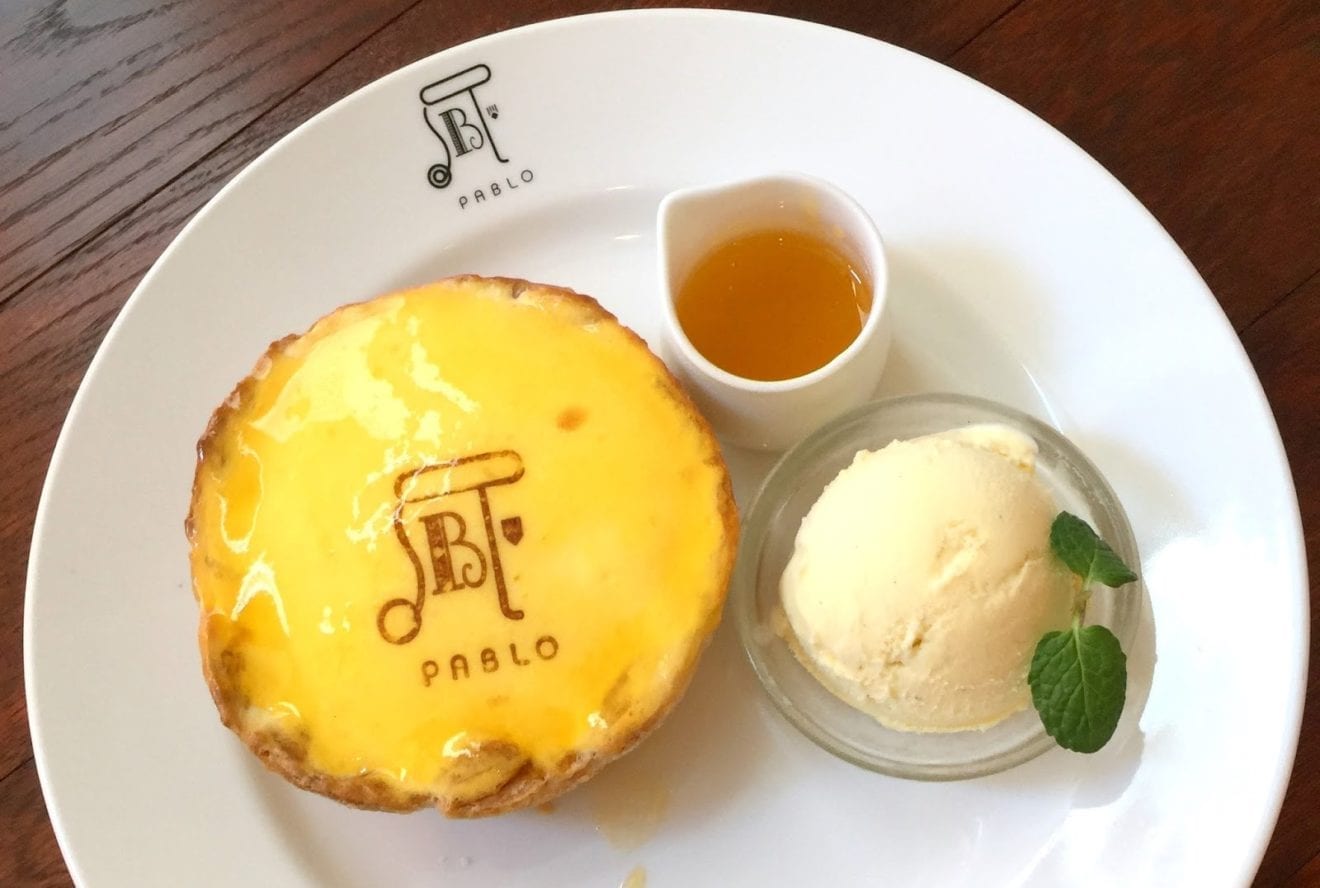
    Japan’s Pablo cheese tart chain will open its first store in Malaysia in October.

    Pablo Malaysia will make its debut with a flagship outlet inside 1 Utama shopping centre in Petaling Jaya with more cafes expected in other shopping centre in the Klang Valley later.

    Pablo Cheesetart Malaysia

    The Osaka-founded company is renowned for large size cheese tarts – generally 20cm in diameter, with a soft core. They’re sold in ‘rare’ or ‘medium’ format, which refers to the texture of the cheese filling.

    Flavours include apricot jam, matcha and chocolate glazes, with seasonal variants changed monthly.

    In March, Pablo Japan introduced mini versions of the cheese tarts measuring 6.5 centimetres with a shortcrust shell, sold in plain, chocolate, strawberry and matcha.

    Pablo has already opened outlets in Taiwan and South Korea and is headed for Singapore, also.

  • Ministop closing up shop in Indonesia for now

    Ministop closing up shop in Indonesia for now

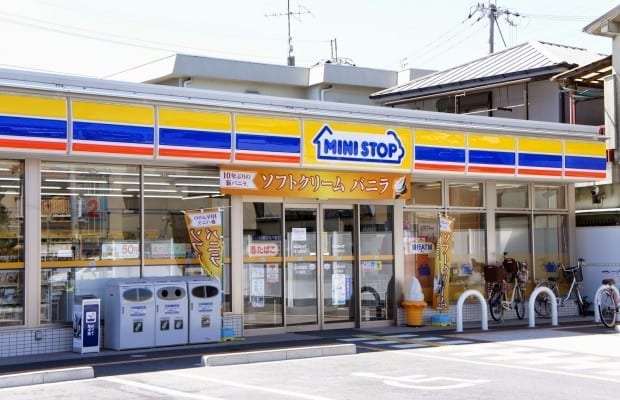
    Japanese convenience store operator Ministop is pulling out of the Indonesian market, at least for the time being.

    The company announced Friday that it is terminating a franchise agreement with local retailer Bahagia Niaga Lestari, which wants to concentrate resources in other areas.

    The retailer is Ministop’s sole franchisee in Indonesia. So when the six franchise stores it operates there are closed, the country will have no Ministops.

    Ministop said it will search for a new partner and plan a return to Indonesia, since the convenience store market there has growth potential.

    Ministop had inked the franchise agreement with Bahagia Niaga Lestari in 2012 because Indonesia bars foreign companies from investing in retail stores with less than 400 sq. meters of floor space. The first Ministop in that country opened in June 2013.

  • Japan to invest in fire extinction technology in Indonesia

    Japan to invest in fire extinction technology in Indonesia

    The Investment Coordinating Board said a Japanese company engaged in fire extinction technology is interested in investing Rp600 billion in Indonesia.

    The Head of the Board, Franky Sibarani, in a press release received by Antara here on Monday, said the potential investors will build a forest fire prevention system and develop this technology in Indonesia.

    “This business will deal with ways to prevent forest and land fires by applying such technology,” he added.

    Sibarani informed that the company already has a local partner, a fact that will help them realize the investment.

    The Japanese company is currently reviewing two locations that could be used to set up its operations here. These sites are in Sei Mangke Industrial Area, North Sumatra and Tanjung Api-Api Industrial Area, South Sumatra.

    Sibarani explained that the raw material used in fire fighting technology can be procured from within Indonesia.

    “The Indonesian workers who will operate the technology would be first trained in Japan for at least six months,” he disclosed.

    An Indonesian official of the Investment Promotion Office in Tokyo (IIPC), Saribua Siahaan, remarked that this investment plan was quite interesting, considering that the Japanese investment in the country is largely in the automotive sector and its supporting components.

    “We are ready to help the company to realize its investment in Indonesia. This investment is also expected to contribute positively to the governments efforts to prevent forest fires,” he noted.

    Data obtained from the Investment Coordinating Board shows that in the second quarter of 2016, the realization of Japan investment in Indonesia had reached US$1.58 billion and covered 427 projects, providing jobs for 28,377 people.

    In 2015, the realization of Japanese investment amounted to US$2.87 billion with 2,030 projects and had absorbed 115,400 workers.

  • H&M collaborates with Caitlyn Jenner for its newest athleisure range

    H&M collaborates with Caitlyn Jenner for its newest athleisure range

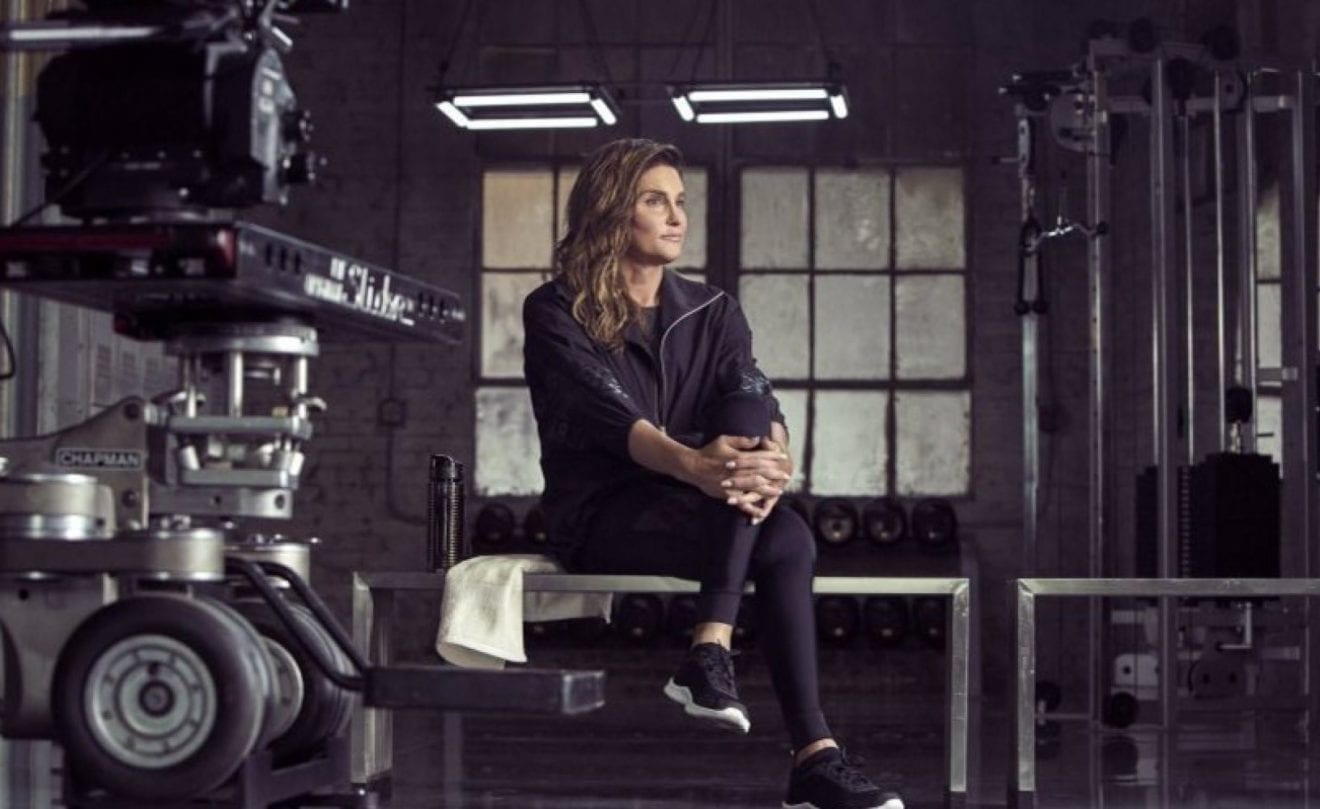
    A new H&M athleisure wear range is to be launched in July, developed with input from the Swedish Olympic team and fronted by personalities including Caitlyn Jenner.

    The launch of For Every Victory makes H&M one of the first major multinational fashion brands to make a serious foray into the booming athleisure wear market, to date dominated by fast-growing specialist brands including Lululemon, UnderArmour and 2XU.

    H&M -For Every Victory

    H&M For Every Victory – described by the H&M as “high fashion performance sportswear made to inspire” has been developed with input from the Swedish Olympic team, and the campaign is fronted by inspirational personalities who have all achieved their own victories, whether in sport or life.

    H&M -For Every Victory 1

    The athletes advised on design, performance and wearability. H&M also designed outfits for the Swedish Olympic and Paralympic team for Rio 2016, including the opening ceremony uniform, selected competition pieces and the prize ceremony outfits.

    “This is a collection about performance with great style and the input of the Swedish Olympic team has been invaluable in the creation process,” said Pernilla Wohlfahrt, design and creative director at H&M. “The result is high fashion technical sports pieces for everyone to wear.”

    The For Every Victory collection has a similar visual expression and technical knowledge to the Swedish Olympic team collection, with its own colour palette in black, grey, dusty pink and gold. It is centered on performance T-shirts, running shorts and leggings, as well as sports bras for women.

    H&M -For Every Victory 3

    The quick-drying, breathable materials help to optimise performance and recycled polyesters prove that high-function sportswear can also be conscious and more sustainable − all showing that there’s no compromise on either fashion or performance.

    H&M -Olympic collection

    Among the personalities fronting the new range are Caitlyn Jenner with her Olympic gold medal in the decathlon; Chelsea Werner, a gymnast who has never let Down Syndrome halt her progress; surfer Mike Coots who still takes to his board even though he lost his leg in a shark attack and boxer Namibia Flores who has fought against prejudice to pursue her dreams.

    The new range and brand will be launched globally on July 21.

  • Meet RoBoHon : Sharp new smartphone robot

    Meet RoBoHon : Sharp new smartphone robot

    A walking smartphone robot has been launched in Japan by Sharp.

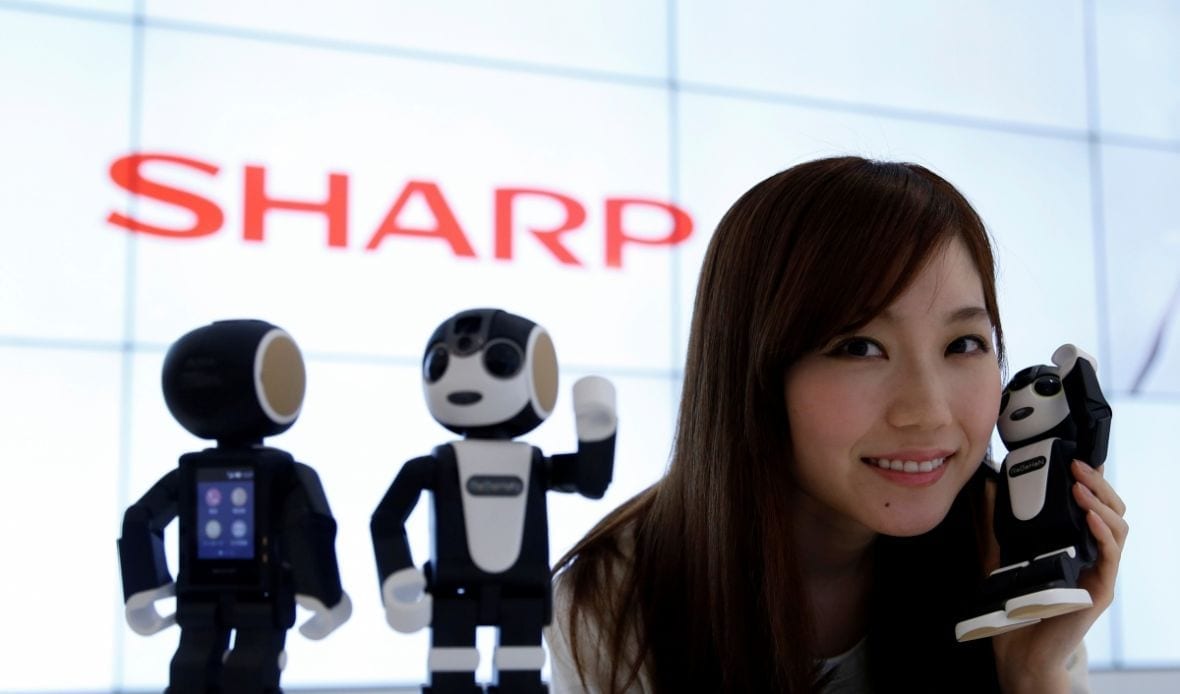
    Called RoBoHon, it has an Android smartphone for a body with tiny legs and arms.

    Ronohon Japan

    Sharp is producing 5000 RoboHon units a month, each selling for about US$1850, plus monthly charges.

    Sharp says the robotic phone was developed in collaboration with Robo Garage Co CEO Tomotaka Takahashi, who is also project associate professor at the University of Tokyo’s Research Center for Advanced Science and Technology.

    Ronohon Japan 3

    Sharp says users will be able to download apps to give RoBoHon more features. The company has even launched a RoBoHon Cafe where people can try out the robot as well as order robot-inspired dishes and beverages.

    Robohon cafe

    Standing 19.5cm high, the robot can walk, dance and answer calls. It weighs 390g. and can recognise people by their face and remember their names.

    RoboHon can hold small objects with its hands, and can also be used as a projector and broadcast video.

  • Uniqlo Indonesian batik collection for good cause

    Uniqlo Indonesian batik collection for good cause

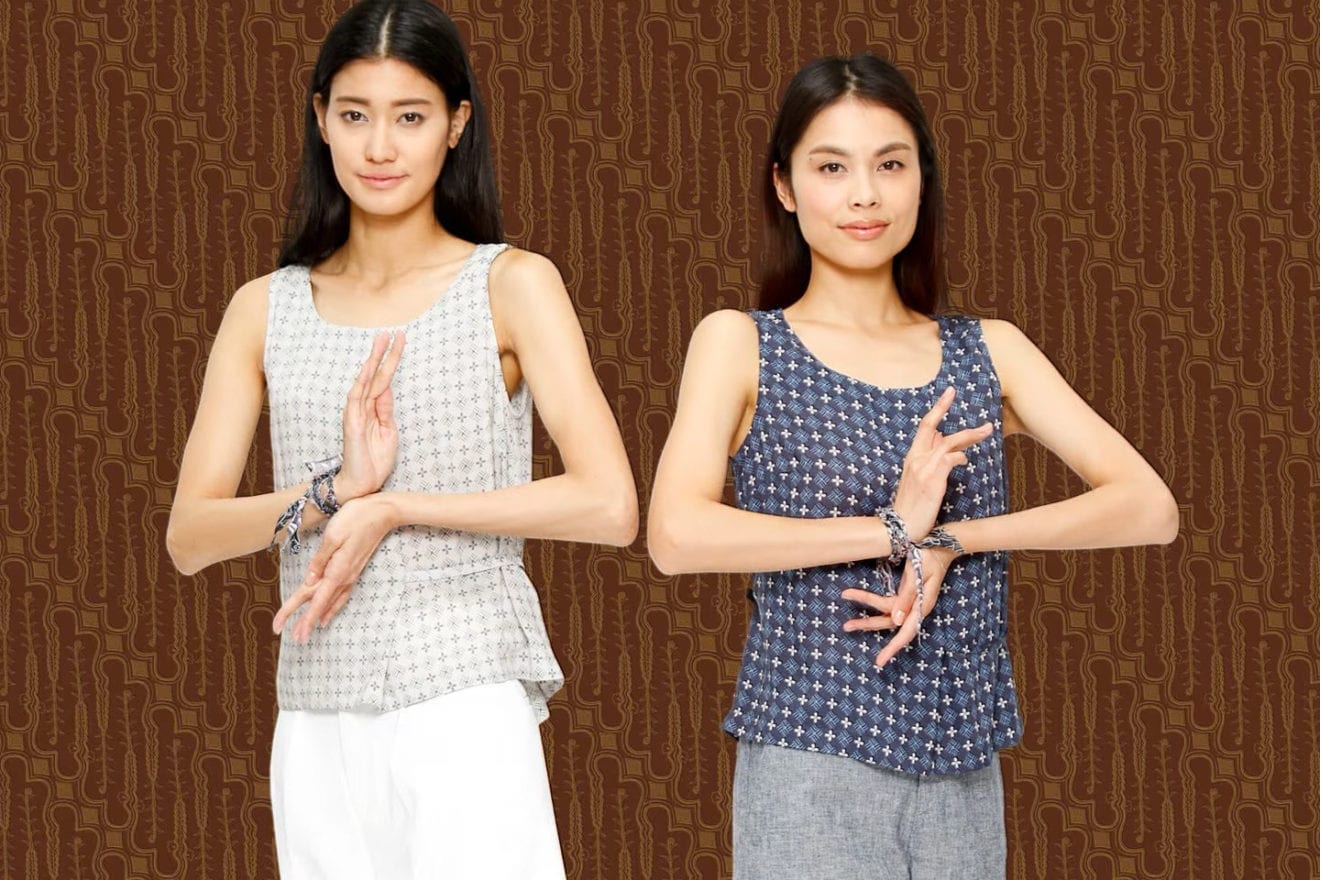
    Japanese apparel company Uniqlo has launched a special collection of items featuring traditional motifs of Indonesian batik, a heritage included on the UNESCO list of Intangible Cultural Heritages of Humanity in 2009.

    As part of a second program in the Uniqlo Factory Worker Empowerment Project, a portion of sales is be allocated toward helping with education for employees working in parent company Fast Retailing‘s affiliated factories in Indonesia. The special collection is available at five stores in Japan and on Uniqlo’s website.

    The batik patterns are part of Uniqlo’s LifeWear concept of offering clothes for a better life for everyone, every day. The collection of eight items includes men’s and women’s shirts as well as summer dresses. The batik patterns are original motifs jointly developed by Uniqlo and a designer recommended by the Indonesian Batik Foundation.

    The empowerment project was introduced last year, the first supporting female workers in sewing factories in Bangladesh through a women’s line featuring traditional Bangladesh clothing motifs. This sold in 14 markets worldwide, with a portion of sales being used for educational programs in such areas as nutrition, hygiene and health management.

    The education project is expected to run for about three years, and reach around 12,000 people.

  • Japan’s Uniqlo targets global stature with fashion identity

    Japan’s Uniqlo targets global stature with fashion identity

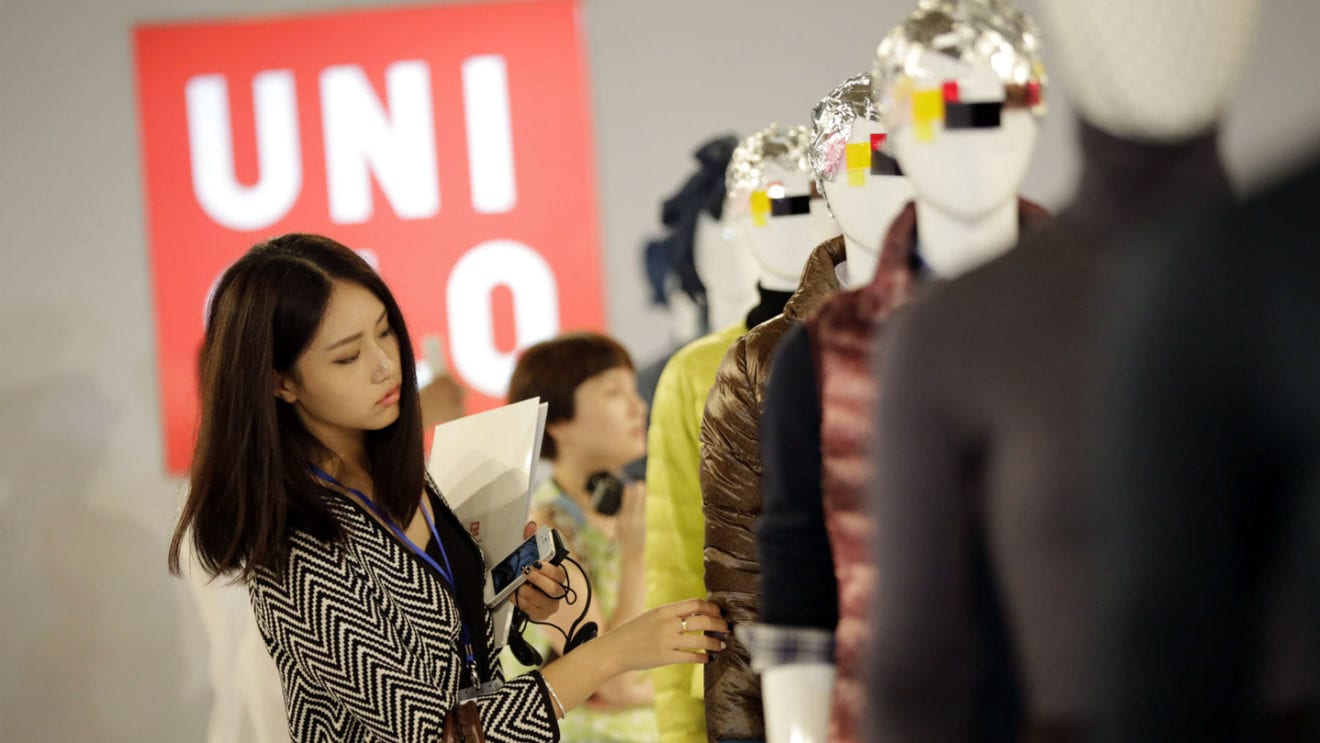
    Japanese clothing chain Uniqlo has leveraged its prowess in mass production to build a fashion empire filled with shelves upon shelves of affordable, good quality items like down jackets, underwear and T-shirts.

    Now the 17-nation, 1,734-store retailer is on a quest to beat Western giants like Gap, H&M and Zara to become the world’s biggest apparel maker.

    In the overcrowded, highly competitive casual fashion market, size is important but no guarantee of success: analysts say Uniqlo’s challenge is to carve out a brand identity of its own, going beyond its formula of delivering no-nonsense quality at good prices.

    “To win over consumers and break through the clutter, Uniqlo needs to get even more personal,” says Stuart Green, chief executive of Asia Pacific at Interbrand, which consults and ranks brands.

    “It will be critical for Uniqlo to maintain product quality and, most importantly, create a deeper, more emotional connection with its customers to drive brand loyalty,” he said.

    Interbrand ranks Uniqlo as Japan’s most valuable retail brand, and eighth among Japan’s global brands, including Toyota, Sony and Nintendo. The company’s founder and chief, Tadashi Yanai, is Japan’s richest man, according to Forbes magazine.

    Analysts say that to move it to its next stage of growth, Uniqlo also needs to beef up its digital presence and adapt to non-Asian markets. Winning over the huge market of suburban American shoppers will be crucial.

    Consumers these days are picking brands on digital platforms and social networks, as they increasingly shop online. To cope with the mind-boggling volumes of information online, consumers now rely on brands to serve as filters and curators, Green said.

    To help drive its global expansion, Uniqlo is tapping outside talent.

    It just hired Christophe Lemaire, formerly of Hermes and Lacoste, who started his own Uniqlo line last year, to head its Paris research center.

    In 2014, it brought in a global branding expert, John Jay. An American of Chinese origin, he who worked on ad campaigns for Nike, Coca-Cola and Microsoft, and a fleece campaign for Uniqlo, at U.S. marketing company Wieden+Kennedy.

    “Whether they’re in Beijing or New York, there is a commonality to young people and what they want in life,” Jay, whose title is president of Global Creative at Uniqlo’s parent company Fast Retailing, said at a recent Tokyo event, centered on Uniqlo’s second fashion show ever.

    “We have barely scratched the surface. Our potential is amazing,” he said.

    Uniqlo is still relatively small, with 44 stores in the U.S., 449 stores in China and 846 in Japan, its biggest market. Retail giant H&M of Sweden has 4,000 stores around the world, Gap Inc. of the U.S., 3,700 stores, and Inditex of Spain operates 7,000 Zara, Bershka and other brand stores.

    H&M and Inditex have posted healthy financial results recently, but Gap, which has the Old Navy and Banana Republic brands, is struggling, slashing prices to draw buyers and closing dozens of stores, including some in Japan. The Standard & Poor’s credit rating agency recently downgraded Gap’s debt to junk status.

    Uniqlo’s profits also have slowed recently, hurt by a warm winter that slowed sales of its down jackets, HeatTech underwear and other winter apparel.

    Fast Retailing, with 100,000 employees, forecasts a profit of ¥60 billion ($560 million) for the fiscal year through August, down 46 percent from the previous fiscal year, mainly because of falling profits at Uniqlo.

    Yanai’s turnaround plan includes sweeping cost cuts, improved efficiency, pricing reviews, and, perhaps most importantly, greater flair in the company’s fashion offerings, building on collaborations with designers.

    The company asked Nigo, a Japanese DJ with a reputation for innovation who created The Bathing Ape clothing line, to add more flair and edge to his T-shirts.

    Nigo added to the T-shirt line motifs from pop artist Andy Warhol, music producer and singer Pharrell Williams and from traditional Kabuki theater, in addition to old-time favorites like Mickey Mouse.

    A partnership with Carine Roitfield, former editor-in-chief of Vogue Paris, has brought into Uniqlo stores chic designs unlike most anything else you’d find.

    The company has strengthened its sportswear, signing on tennis stars Kei Nishikori and Novak Djokovic.

    Uniqlo also has partnerships with labels like Liberty London, with its colorful flower-pattern fabrics, and Hana Tajima, a designer who specializes in Muslim clothing such as head scarves and long dresses.

    “Uniqlo has a smart format, which stands out from most of the mass fashion retailers. Less concerned on fashion trends, and more focused on ‘basics’ or ‘investment pieces’ of good fabric and quality,” said Luca Solca, analyst with BNP Paribas. “They are trying to spice this up with designer collaborations.”

    Uniqlo executives believe fashion is globalizing, and people around the world, from China to New York, more or less want the same thing — quality for reasonable prices, and clothes that suit their lives.

    On a recent weekday, the company’s 12-story Ginza store was crowded, as tourists milled around snapping selfies in front of what has become a city landmark.

    Olga Symonenko, an IT worker from the Ukraine, said she had heard about Uniqlo from friends who had been to the store in the U.S.

    “The prices are good, and the quality,” she said, happily clutching two blue dresses. She said she and her husband planned to pick up 20 items.
  • Aqua City’s android has the answers

    Aqua City’s android has the answers

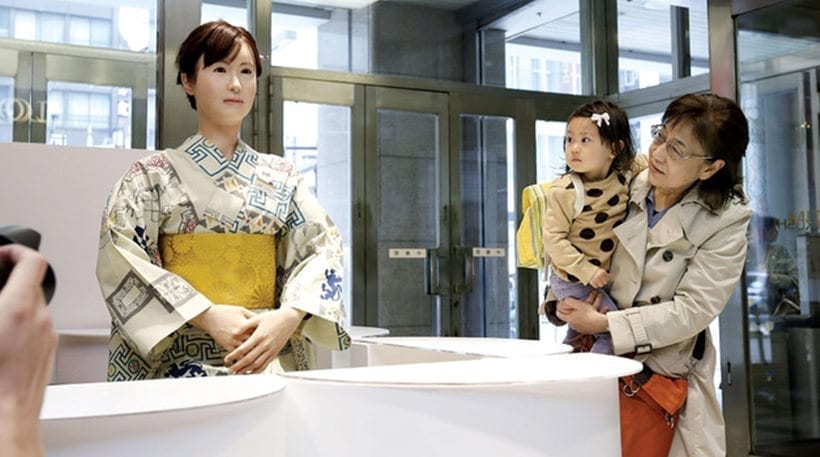
    Odaiba’s Aqua City waterfront shopping complex in Tokyo has an unusual lady on the third floor who waits patiently to answer visitor inquiries.

    Chihira Junco looks exactly like the type of polite, impeccably dressed and well-groomed staff attendant you’d find at a service desk in Japan, only she is not human at all – she is a robot, created by the Toshiba Corporation.

    Robot Japanese mal 1

    Junco gets her name from the fact she was “born” in June, reports Rocket News. Said to be 26 years old, she stands at 165cm and speaks Japanese, English and Chinese.

    Her facial features and hand movements draw large crowds daily. Next to her is an information desk staffed by three real-life female attendants who tend to be overlooked.

    Alongside the android at her desk is a futuristic device that lets visitors interact with her. A touch-screen panel displays options, and responds to mid-air “touch”, meaning customers do not have to actually touch any surface.

    Robot Japanese mal 2

    Once the selection has been made, Junco springs to life, offering guidance and directions in the language chosen, complete with lifelike gestures and a friendly smile. Visitors have a list of options for their inquiries, such as restaurants, transport access and tourist information.

    In the future, the company plans to have Junco respond directly to questions from customers rather than have them use a menu. They also hope to add more foreign languages, including Korean.

    When not responding to customer requests, Junco spends time speaking in Japanese, Chinese and British-accented English in rotation. On special holidays, like Christmas, she dresses up in appropriate outfits.

    * More photos here.

  • DoCoMo licenses wireless patents to Huawei

    DoCoMo licenses wireless patents to Huawei

    Japan’s NTT DoCoMo announced it has granted a standards-essential patent license for its wireless technologies to equipment vendor Huawei.

    The operator has now granted patent licenses to more than 10 companies and plans to pursue more such licensing deals in the future.

    As a result of its extensive R&D efforts over the past two decades, DoCoMo currently holds more than 5,300 standards-essential patents for W-CDMA, LTE and LTE-A technologies, the company said.

    The company licenses its patents both as part of patent pools lumping together interrelated standards-essential patents from multiple vendors, and through direct deals with individual licensees.

    Financial terms of the licensing deal have not been disclosed. DoCoMo said it plans to build up 5G intellectual property as it continues to contribute to the development of the standard, and will continue to pursue licensing deals for its patents via patent pools and individual negotiations.

  • Shiseido buying US-based Gurwitch Products

    Shiseido buying US-based Gurwitch Products

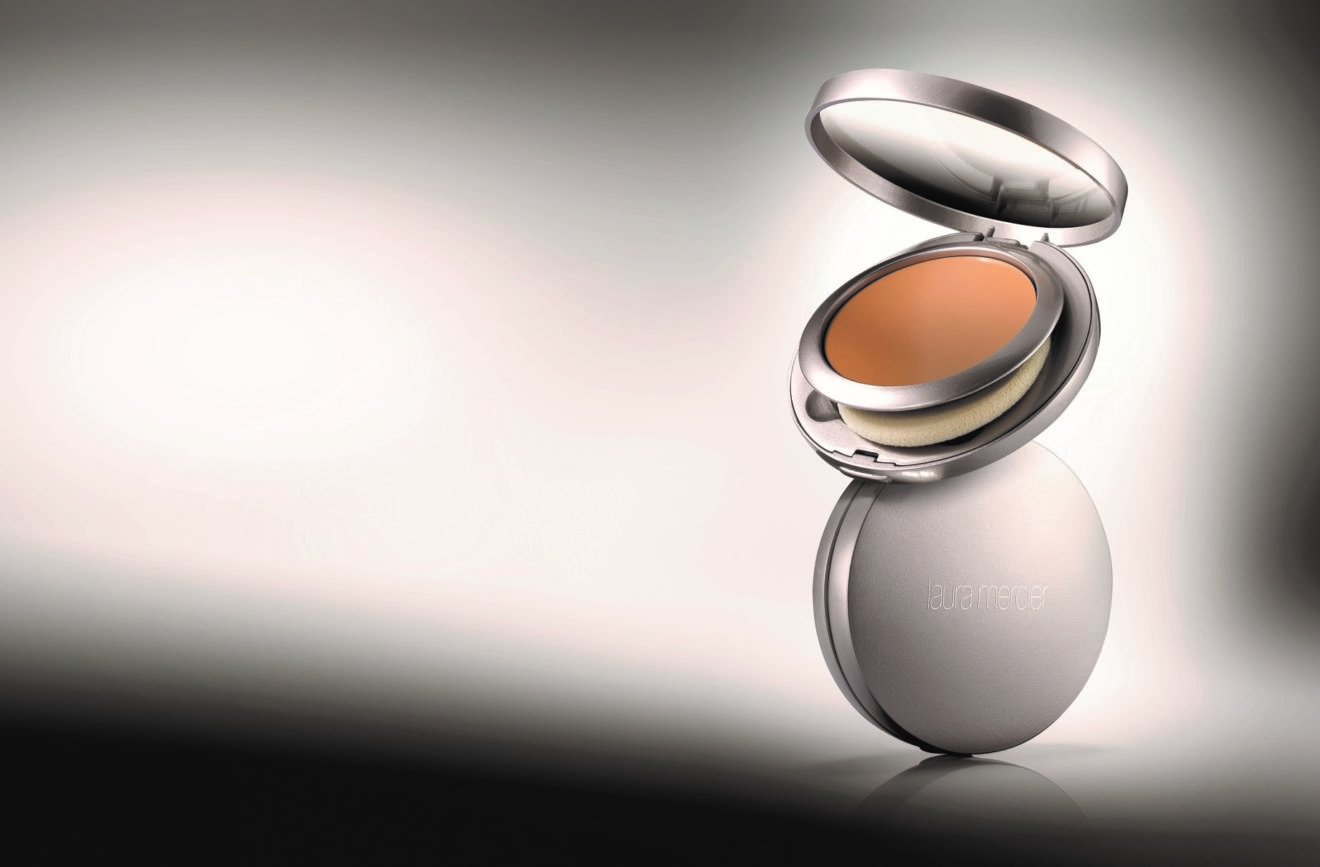
    Japanese cosmetics company Shiseido has agreed to buy US-based Gurwitch Products from Alticor.

    This move would add the Laura Mercier and ReVive brands as the 140-year-old cosmetics giant seeks growth overseas in the luxury anti-aging products market.

    Its American unit will lead the acquisition, Shiseido says, without disclosing terms. The transaction is scheduled to close in the third quarter of this year.

    Gurwitch had sales of US$175 million (about ¥19 billion) in its latest financial year.

  • Restructure for Rakuten Europe

    Restructure for Rakuten Europe

    A restructure of Rakuten Europe will see the Japanese eCommerce company exit two countries to focus on France and Germany.

    Following a strategic review of its operations in Europe, Rakuten has decided to close its operations in the UK and Spain, due to the high capital cost of growth relative to the size of the businesses. The company says the move will “ensure it is fit to capitalise on future opportunities in the region”.

    “Rakuten will focus its eCommerce marketplace investment in France and Germany as the businesses there have the scale and potential for sustainable growth,” it said in a statement.

    Rakuten has started to talk with employees around the its plans to close the Rakuten UK marketplaceand its Cambridge operations and the Rakuten Spain marketplace and its Barcelona operations.

    The company will also start serving Austrian merchants from its German operations base after closing its dedicated Austria portal, currently managed out of Vienna.

    Rakuten says the marketplaces will close by the end of August, subject to completion of the consultation process with impacted employees in relevant jurisdictions, as well as other legal processes.

    “Rakuten will continue to evolve the eCommerce business model in countries across Europe, including initiatives such as the launch of a new Price Club to enhance membership loyalty in France and Rakuten Pro in Germany, a low-commission model for merchants aimed at enhancing service quality,” the statement said.

    “Rakuten will also continue to grow its presence in Europe across its diverse business portfolio, from eCommerce to digital content businesses such as Wuaki and Kobo, to the Viber messaging platform and the adtech business Rakuten Marketing.

    Headquartered in Tokyo, Rakuten Inc is one of the world’s leading internet services companies, offering a wide variety of services for consumers and businesses with a focus on eCommerce, finance, and digital content. It is Japan’s largest online retail portal, long referred to as “Japan’s Amazon”.

  • Uniqlo sales bounce back

    Uniqlo sales bounce back

    Uniqlo sales have bounced back from decline, giving parent Fast Retailing a much-needed round of good news for May.

    Same-store Uniqlo sales in Japan rose 5.9 per cent year-on-year, even though customer traffic fell 3.6 per cent. The average purchase increased by 9.9 per cent to make up for the customer shortfall.

    Total sales including online increased by 7.6 per cent.

    The figures show only trading in Uniqlo’s Japan division.

    Analyst Masafumi Shoda of Nomura Securities said in a research note that Fast Retailing’s sales decline appeared to have bottomed.

    “While jogger pants remained strong, trendy merchandise such as women’s t-blouses and embroidered t-shirts also emerged as drivers. Another contributing factor was the successful expansion of the mainstay Airism line to bottoms. Even factoring out the boost from the customer appreciation sale at the end of the month, signs are beginning to emerge that the company is successfully asserting leadership on both price and fashion.”

    But Shoda said profitability will be likely to decline both overseas and in Japan in the March to May period, due to retooling, “but we think it will improve in June to August thanks in part to the likelihood of a rebound from prior-year results dampened by unseasonable weather”.

  • Lawson Japan eyes US for expansion

    Lawson Japan eyes US for expansion

    Convenience store owner Lawson Japan is seeking to buy chains in the US with the aim of boosting its number of overseas outlets by about a quarter within a year.

    “In the US, where the market is mature, mergers and acquisitions are a simple and straightforward way for us to expand, which would also allow us to buy time to boost the number of shops,” says Sadanobu Takemasu, who became Lawson president and COO this week.

    He says the group will also focus on expanding in Southeast Asia.

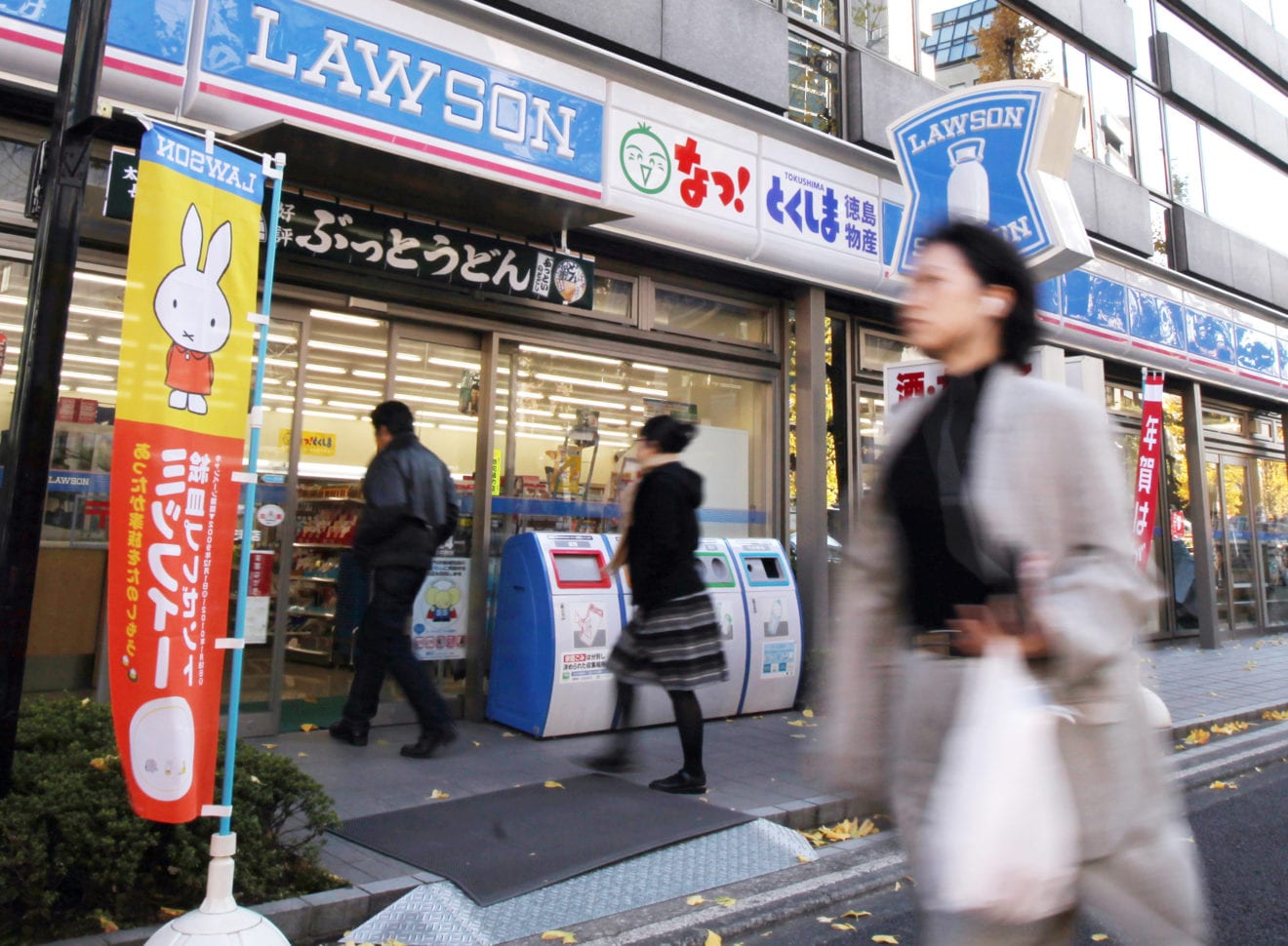
    Lawson has about 12,500 stores in Japan and 793 outside the country, and is targeting a 26 per cent increase to 1000 overseas outlets by February.

    Lawson joins other chains such as Seven & I Holdings’ 7-Eleven and FamilyMart in seeking overseas expansion while competing to displace conventional grocery shops and restaurants domestically amid Japan’s economic malaise and falling population.

    Lawson has a 5.3 per cent market share of Japan’s grocery retail sales, second only to 7-Eleven’s 12.2 per cent share, according to data from Euromonitor International. The situation is the same in the fast-food market, with 7-Eleven holding a  33.8 per cent share followed by Lawson with 12.4 per cent.

    Prime Minister Shinzo Abe says he is postponing an increase in sales tax until October 2019 as the government seeks to avoid depressing private consumption.

    But Takemasu says any changes in sales tax timing would have had only a temporary impact on Lawson’s business.

    “In Japan, I want to focus resources on the existing businesses to strengthen them, so I’m not considering adding new businesses through mergers and acquisitions for now.”

    Trading conglomerate Mitsubishi Corporation, where Takemasu was an aide to the president before joining Lawson, is Lawson’s top shareholder with a 33 per cent stake.

    Lawson bought the Seijo Ishii supermarket group in 2014, and the United Cinema chain the same year.

    While Lawson has outlets in China, Indonesia and the Philippines, Seven & I has about 40,000 shops outside Japan while FamilyMart has about 6000.

  • Ford expands recall of vehicles with defective Takata airbags

    Ford expands recall of vehicles with defective Takata airbags

    Ford Motor said it would recall about 1.9 million vehicles fitted with defective airbag inflators made by Japan’s Takata, in North America.

    Ford said on Wednesday that the affected vehicles include 2007-2010 Edge, 2006-2011 Fusion, 2005-2011 Mustang, 2007-2011 Ranger, 2007-2010 Lincoln MKX and 2006-2011 Lincoln MKZ, Zephyr and Mercury Milan.

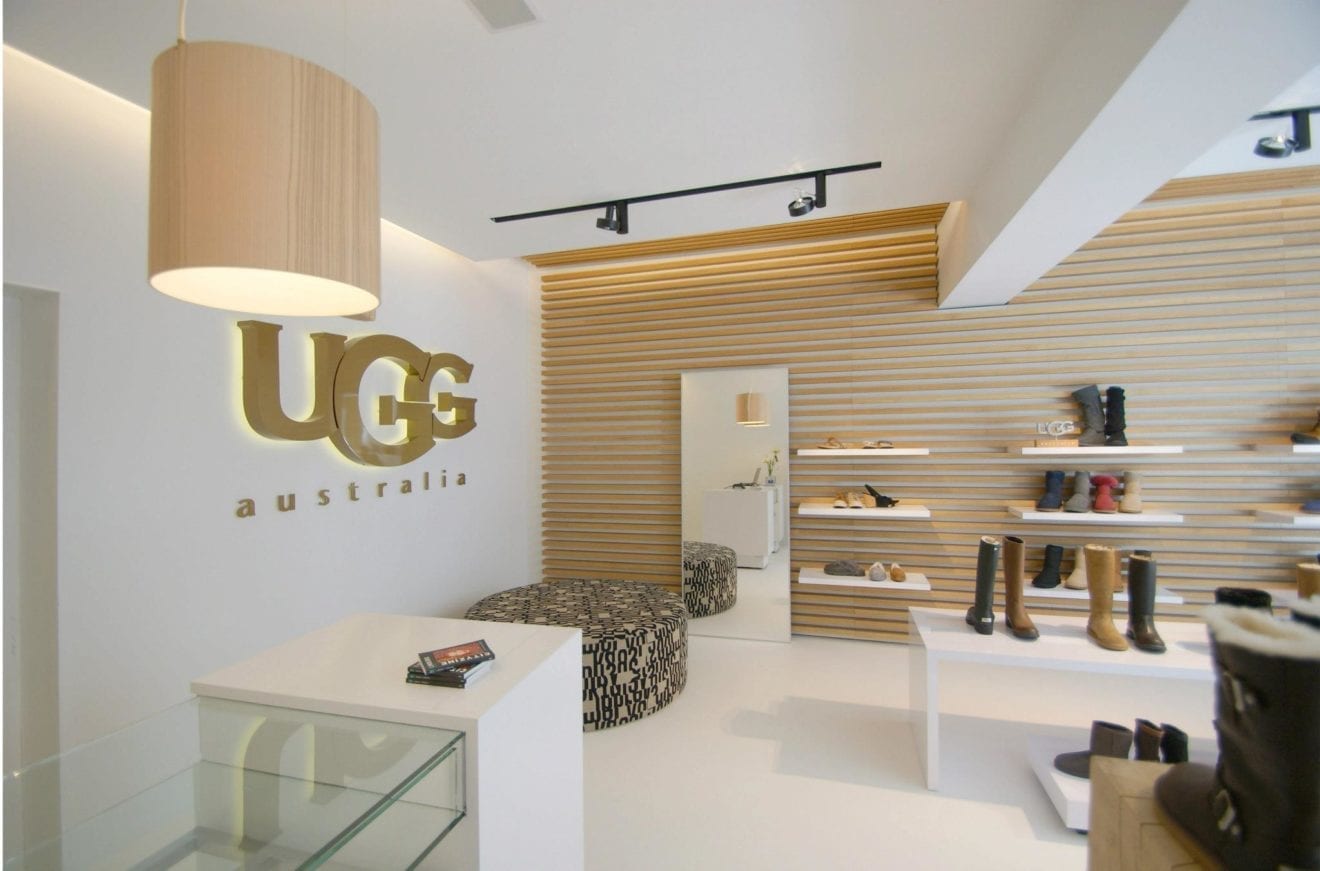
  • Ugg Asia to take on new store concept

    Ugg Asia to take on new store concept

    American footwear retailer Ugg’s new global retail store concept – part of the brand’s largest re-launch in 37 years – will be introduced in Ugg Asia outlets this year.

    Coinciding with the 10th anniversary of Ugg’s New York flagship store in SoHo, the new 263 sqm retail concept store opened at Disney Springs, Walt Disney World Resort, Florida.

    The store was designed by Checkland Kindleysides to be scalable so it can fit different formats from wholesale to showroom spaces.

    The concept honours the footwear’s history, says Stefano Caroti of clothing/footwear giant Deckers Brands, which owns Ugg.

    UGG Disney Springs 1

    “The inspiration came from the Californian roots of the brand, its connections to nature and its modernist vibe – a sense of stylish living that’s both ‘off duty’ and ‘on air’,” says Checkland Kindleysides creative director Joe Evans.

    “The store offers a relaxing social environment that radiates the Ugg brand’s luxurious warmth, engages through sensorial brand storytelling and invites you to enjoy the good things in life with good people.”

    Meanwhile, the new look will roll out in Shanghai and Tokyo toward the end of this year.