Tag: Korea

  • Coupang to exit Japan to focus on Korea, Taiwan

    Coupang to exit Japan to focus on Korea, Taiwan

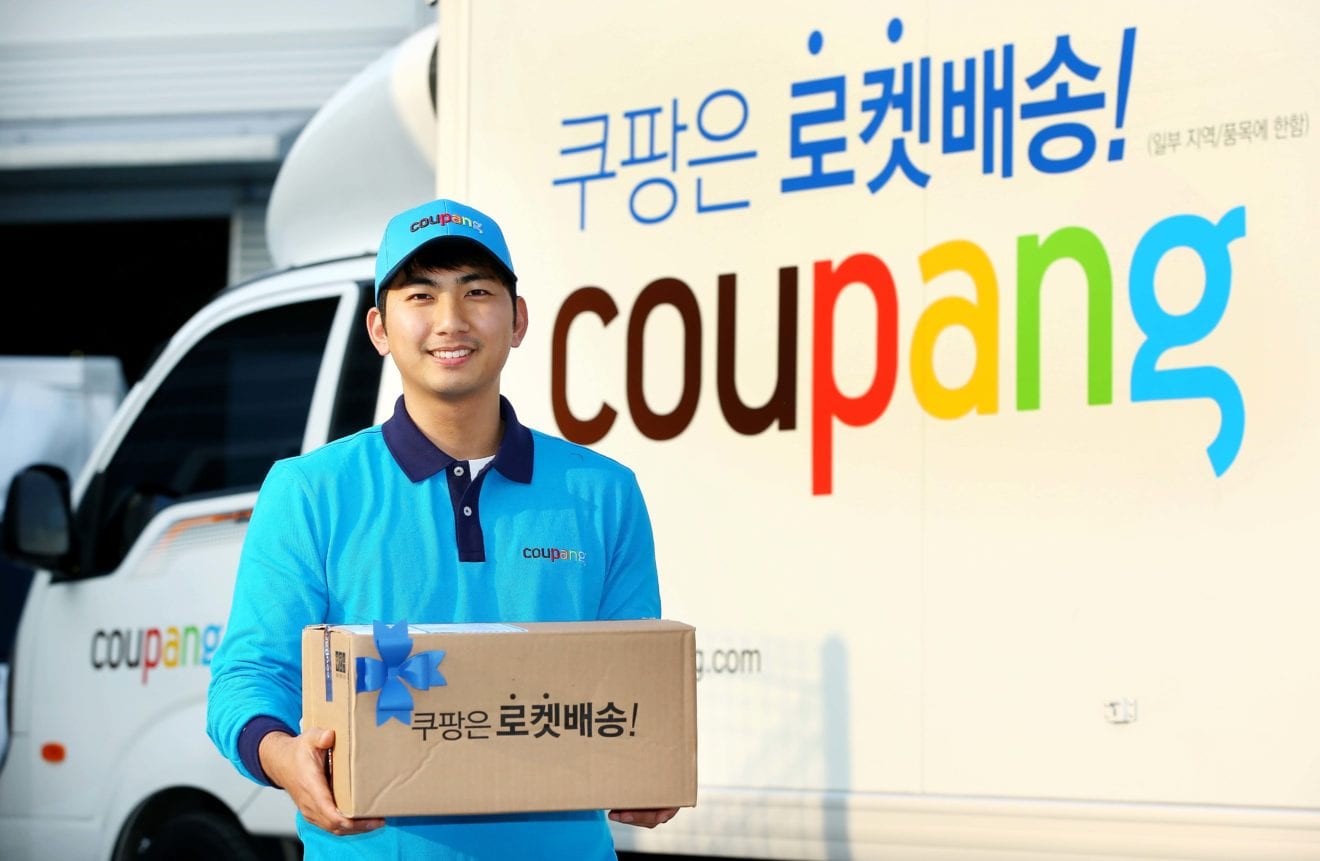
    Coupang has decided to withdraw its e-commerce business from Japan, 21 months after it began offering its online delivery service there, a company official said Sunday.

    “After testing our service as a pilot version, we have decided to withdraw our business from Japan,” a Coupang Japan official said.

    The Japanese daily, Nikkei, reported Saturday that Korea’s largest e-commerce firm will terminate its delivery service for fresh food and daily necessities in Meguro and Setagaya, Tokyo, on March 21.

    The company has been operating a quick commerce service that delivers online customer purchases within 10 minutes in the two cities.

    It has been selling nearly 5,000 grocery items on its shopping platform in partnership with local department store, Takashimaya and the dollar-store, Daiso.

    However, local consumers find Coupang’s service less attractive because Japan already has a strong convenience store business culture.

    Also, Japan has, by far, the highest senior population in the world and many of them are not used to shopping for groceries online. About 29.1 percent of its people are over 65 years old, according to Japan’s Ministry of Internal Affairs and Communications’ data, which was released in September 2022.

    Instead, Coupang said it will focus its businesses on Korea and Taiwan.

    The e-commerce firm introduced its Rocket Delivery service for Taiwanese customers last October. It provides local consumers the choice of buying hundreds of Korean items online through the direct-purchase service.

    Taiwan has a high population density and is an ideal environment to run an e-commerce business. Taiwanese consumers are also very interested in Korean products due to the influence of Korean popular culture.

    Coupang headquarters in Seoul confirmed the withdrawal of its business from Japan, but declined to comment further on the issue.

    Meanwhile, Coupang achieved record-high sales of 26 trillion won ($19.6 billion) last year. In the third quarter of 2022, the company turned out a surplus for the first time in eight years with its Rocket Delivery service.
  • South Korea’s first Five Guys store to open at the end of June in Gangnam

    South Korea’s first Five Guys store to open at the end of June in Gangnam

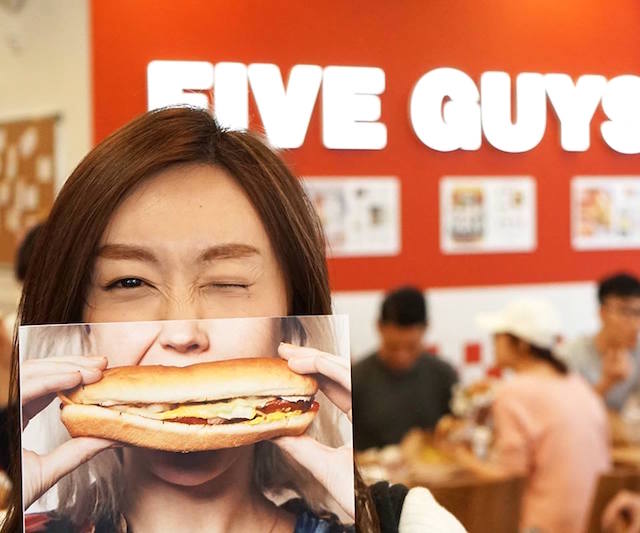
    South Korea’s first Five Guys burger restaurant is set to open in Gangnam, southern Seoul, by late June, its operator said Monday.

    The store, set to open in the bustling commercial district near Gangnam Station, will have up to 150 seats, according to Galleria Department Store owned by Hanwha Solutions.

    Established in 1986 as a Virginia-based family business, Five Guys is famous for large quantities, free peanuts and flexible options that give customers more than 250,000 possible ways to order.

    The operator said it plans to additionally open more than 15 Five Guys stores in South Korea in the next five years.

  • South Korean restaurants feel the pinch of surging delivery costs

    South Korean restaurants feel the pinch of surging delivery costs

    Higher demand for food delivery workers has ramped up the industry’s labor cost. The rapid growth of South Korea’s food delivery market during the COVID-19 pandemic has inadvertently caused a sharp rise in delivery fees, leaving small business owners and consumers struggling to cope with the added costs, Korea Bizwire reported.

    According to a government-issued report, the number of domestic delivery workers in South Korea has doubled in just three years, reaching 237,100 in the first half of 2022.

    Amidst surging demand for food delivery services, delivery companies have been struggling to secure enough delivery workers to meet the demand, compelling them to offer increasingly attractive pay packages. The higher cost of labor has been passed on to consumers through higher delivery fees.

    Companies such as Baemin and Coupang Eats paid delivery workers an additional fee of $1.54 (KRW2,000) to $1.92 (KRW2,500) per delivery in 2021 to secure their services. Some also offered prizes such as camping cars or pure gold.

    Popular delivery apps such as Baedal Minjok and Coupang Eats said they have had to raise their brokerage and delivery fees in response to rising labor costs.

    Consumers are paying almost the same amount for delivery as their food, with the average delivery tip based on the maximum distance being $3.84 (KRW5,000) in February. The average amount for Baemin delivery tips was higher at $4.46 (KRW5,810).

  • JD Sports to quit South Korean after five years

    JD Sports to quit South Korean after five years

    UK activewear label JD Sports is set to withdraw from South Korea after five years of operation, according to Edaily.

    The retailer was reported to have experienced a deepening deficit since the Covid-19 pandemic, which led to the decision. The source said JD Sports Korea had notified all employees of the exit plan.

    JD Sports entered South Korea in 2017 through a joint venture deal with South Korean footwear company Shoemarker. The first JD Sports store was opened in April 2018. Currently, the company operates 14 directly managed stores nationwide, including at Lotte World Tower in Jamsil, Seoul and Starfield Goyang.

    Meanwhile, the UK retailer has recently been the target of a cyber attack that resulted in unauthorised access to a system containing customer data relating to online orders between November 2018 and October 2020. The affected JD Sports group brands are JD, Size?, Millets, Blacks, Scotts and MilletSport.

    Earlier this year, British retailer Frasers Group bought shares in JD Sports for about US$57.7 million, as the Mike Ashley-owned company continues its drive into a more premium market.

  • Orchestra Private Equity to acquire KFC Korea for 60 billion won

    Orchestra Private Equity to acquire KFC Korea for 60 billion won

    Orchestra Private Equity, a private equity firm based in Singapore, has signed a stock purchase agreement to acquire chicken franchise KFC Korea, according to industry sources on Friday.

    Under the deal signed on Thursday, Orchestra PE will purchase a 100 percent stake in KFC Korea from KG Group, a chemical-to-steel company based in Seoul.

    The transaction has an estimated worth of 60 billion won ($48.3 million) to 70 billion won.

    KFC Korea has been on sale for a year by KG Group which took over the fast food chain in 2017 from another private equity firm CVC Capital Partners.

    To get better control over the fried chicken chain after the acquisition, Orchestra PE signed a separate contract with Yum! Brands, the American operator of KFC to alter its operating system from direct management to a franchise system.

    According to market observers, KFC has struggled to expand its presence in the country due to failure in localization as all decisions had to be made only after consulting with the American headquarters.

  • South Korean TV brands dominate Vietnam market

    South Korean TV brands dominate Vietnam market

    South Korean TV manufacturers Samsung and LG account for more than 50% of Vietnam’s market share, ranking first and third place respectively.

    Samsung leads with a 35-40.5% market share each month between October last year and this year, according to Thanh Nien newspaper quoted a report by German market research company GfK.

    Japan’s Sony followed at 15-19.8%, and South Korea’s LG came in the third place at 14.1-16.1%.

    Chinese brand TCL came in fourth place, followed by Thailand’s Casper, China’s Mi and CooCaa.

    Market analysts have said that Samsung and LG in recent years have gradually been gaining the trust of Vietnamese users who traditionally favor Sony.

    Other Japanese brands, such as Panasonic, Toshiba and Sharp, have been struggling to compete in the TV segment in Vietnam and have stopped assembling their TVs in the country.

  • Chinese tea chain Mixue expands into South Korea and Japan

    Chinese tea chain Mixue expands into South Korea and Japan

    Mixue, a Chinese tea-based beverages brand that is set to list on the main board of the Shenzhen Stock Exchange, has recently entered the South Korean and Japanese markets.

    In the beginning of November, an account named “MIXUE.Japa” became active on Xiaohongshu, a lifestyle-sharing Chinese social media platform, where it released a brief opening notice and site selection of its first store in Japan. The location is Omotesandō, Tokyo, a business district as popular as Harajuku and Shibuya, focusing on high-end fashion and creative clothing.

    According to Chinese web users living in Omotesandō, this high-end location isn’t concentrated with Chinese people, and it seems to be inconsistent with the low-cost style of Mixue. However, MIXUE.Japan quickly said in the comment area that besides Tokyo, it will expand to Kyoto and other places in the future.

    The first store in South Korea of Mixue officially opened at the end of October. It is located near Chung-Ang University, where local students and Chinese students often gather. In the first three days of opening, attracted by free ice cream, the store was crowded with customers.

    Many Chinese students posted pictures of products from the store on social media. The types of drinks are basically the same as those in China, but the prices are slightly higher. Lemonade is around 8 yuan ($1.14), which is similar to the price of a bottle of water in Korea, and the most expensive drink costs less than 16 yuan. The store was opened by Chinese people, and most of the employees in the store are also Chinese, so ordering in Mandarin is possible.

    Another Chinese milk tea brand called Gongcha has opened over 700 stores in South Korea, with a price range between 23 yuan and 42 yuan. Other milk tea brands, such as COCO, Tiger Sugar and Guming, have also expanded their stores to South Korea, and their product prices are much higher than those in China.

    Entering the Japanese and South Korean markets for the first time, Mixue has experienced imperfections in its operations. Due to the long journey to purchase raw materials from China and inconvenient logistics, Mixue was often out of stock after opening, and a large number of packages in the stores are still in Chinese. MIXUE.Japan’s short promotional video was also criticized by social media users because the translation was not in place.

    Established in 1997, Mixue opened its first overseas store in Hanoi, Vietnam in 2018. By the end of March, 2022, Mixue had opened 249 stores in the country, with a total revenue of 9,290,400 yuan and a net profit of -322,000 yuan. The brand runs 317 stores in Indonesia, with an operating income of 25.4108 million yuan and a net profit of 2,235,500 yuan.

  • AirAsia X says it’s back in profit

    AirAsia X says it’s back in profit

    AirAsia X (AAX) said it posted a quarterly net profit of RM25.1 million (US$5.6 million) compared to a net loss of RM652.5 million in the preceding quarter. Revenue was slightly lower at RM100.1 million as compared to RM107.2 million during the period ending 30 June 2022 (4Q22) on the back of a reduction in revenue from the freight services segment due to normalized scheduled flight operations.

    In other segments, recovery across all key metrics has significantly improved as scheduled passenger and charter flights as well as ancillary revenues, have demonstrated a strong recovery compared to the preceding quarter. For 5Q22, the Company posted earnings before interest, taxes, depreciation, and amortization (EBITDA) of RM25.4 million, while profit before tax for the period stood at RM23.8 million.

    Operationally, the Company reported Passenger Load Factor (PLF) was recorded at 73% during the quarter – less than ten percentage points short of its pre-COVID-19 PLF of 81% in 2019. The Company carried a total of 80,385 passengers during the period under review, compared to 8,892 passengers from April – June 2022. Seat capacity grew to 110,615 during the quarter from 27,521 in the preceding quarter as additional markets and frequencies were introduced in 5Q22.

    During the period under review, the total number of sectors flown increased to 291 sectors from 226 sectors in 4Q22. Following its return to scheduled services in April 2022, the Company has made notable progress in its network recovery – adding Sydney and two new dense-short-haul routes to Kota Kinabalu and Kuching to its network in September 2022. AAX also introduced increased frequency to existing markets in Seoul and Delhi to cater to strong pent-up demand.

    In terms of balance sheet and cash flow, the Company charted a cash balance of RM79.5 million for the period ending 30 September 2022 – an increase of beyond 100% as compared to RM25.1 million in the preceding quarter. This was achieved predominantly on the back of a V-shaped air travel revival supporting the resumption of scheduled passenger flights to many of its most popular and profitable destinations, along with charter and cargo flights.

    AirAsia X Malaysia CEO Benyamin Ismail said: “AAX is now well on track in its recovery path even as the airline is compelled to operate in a challenging operational environment dictated by high fuel prices and a weakened Malaysian Ringgit against the US Dollar. While we are cautious of the strenuous operating conditions, we remain confident that the recovery of the Company is on the horizon, if not already within our reach. In the previous quarter we resumed our scheduled passenger flights to Seoul and Delhi, and are pleased to report that we have also resumed our services to Sydney and introduced additional frequencies to Seoul and Delhi in 5Q22.

    Due to high demand, AAX had also commenced operations to dense, short-haul routes during the quarter where demand has exceeded currently available aircraft capacity; namely Kota Kinabalu and Kuching. At the beginning of 5Q22, AAX was charting three flights per week and this surged to 23 flights per week by the end of the period under review.”

  • Popeyes to return to South Korea

    Popeyes to return to South Korea

    American fried chicken restaurant chain Popeyes is returning to the Korean market after pulling the plug on its business here in December 2020.

    Its operator Restaurant Brands International (RBI) confirmed Monday it has signed an exclusive master franchise contract with its new partner NLC, a subsidiary of deep-sea fishery firm Silla. It will open its first store under NLC management by the end of this year.

    “We are thrilled to introduce Popeyes’ unique Louisiana-style chicken and various food items in Korea with NLC, a subsidiary of Silla,” Popeyes Louisiana Kitchen President David Shear said. “We are building a partnership with NLC based on strong trust and we will look forward to our future journey together.”

    RBI thought hard about bringing Popeyes back to Seoul because it has already failed once here. Silla is said to have convinced RBI with its distinguished strategy for Popeyes in an already saturated fast food restaurant market.

    NLC is confident about bringing local customers back to Popeyes with its representative Cajun chicken.

    “Chicken is one of the most loved food categories in Korea and we are proud to have brought back Popeyes, a globally well-known brand. We also believe our aggressive expansion of the fried chicken restaurant chain can greatly contribute to the country’s economy by creating new jobs,” an NLC official said.

    The Popeyes brand was first launched in New Orleans in 1972. It is one of the world’s largest chicken restaurant franchises, operating over 3,400 branches in more than 25 countries. It has been competing with global fast food chains like McDonald’s, Burger King and KFC with its New Orleans-style food including spicy chicken, chicken tenders and fried shrimp.

    In Korea, TS Food & System (TS F&S), an affiliate of TS Corporation, had been operating Popeyes with its master franchise contract signed in 1994 and opened nearly 200 restaurants here.

    However, it fell behind other chicken burger chains such as Mom’s Touch after poor business performance that had been afflicting them for a while, the contract with TS F&S was terminated as of the end of 2020.

    The brand has since been seeking a new local partner to reenter the Korean market. Daewoo Development Company – Engineering & Construction was one of the candidates that RBI was in touch with.

    Apart from Korea, Popeyes has successfully expanded its business to countries such as Spain, Switzerland, China, Brazil, Sri Lanka and the Philippines over the past few years.

    Last year, it opened restaurants in the United Kingdom, Mexico, Saudi Arabia, Romania and India.

  • Coupang Swings to Profit in Q3, the First Since 2014

    Coupang Swings to Profit in Q3, the First Since 2014

    E-commerce giant Coupang said Thursday it swung to the black in the third quarter for the first time since 2014, when it introduced its ultra-fast delivery service, Rocket Delivery.

    Net income came to $90.7 million in the July-September period, compared with a net loss of $324 million during the same period of last year, the New York-listed e-commerce titan said in a regulatory filing.

    Coupang’s operating profit came to $77.4 million, marking the first positive figure since 2014. The e-commerce giant logged an operating loss of $67.14 million in the previous quarter.

    Sales grew 10 percent on-year to $5.1 billion in the third quarter.

    Coupang said sales of its product commerce division, which includes its Rocket Delivery service, also advanced 10 percent from a year earlier to $49.5 billion.

    The number of active customers inched up on-year by 7 percent, though the increase in spending per customer was slightly lower at 3 percent.

    The top line of its new business areas, including the food delivery service Coupang Eats and video streaming service Coupang Play, inched down 6 percent from a year earlier to $154.2 million.

    The company attributed its first net profit and operating income since 2014 to improved profitability, stemming from its continued investments in tech and efforts to optimize supply chain and business processes.

    The e-commerce behemoth said its adjusted earnings before interest, tax, depreciation and amortization (EBITDA) came to $195 million, compared with a deficit of $207.4 million last year.

    Coupang made its landmark debut on the New York stock market last year in an effort to expand its global presence.

  • Bonchon stays in the Korean fried chicken game in Vietnam

    Bonchon stays in the Korean fried chicken game in Vietnam

    Bonchon, the global restaurant concept known for its Korean fried chicken, celebrates a year with market expansion, sales growth, and a new fast-casual model.

    Despite continued industry challenges due to the pandemic, Bonchon retained its strong year-to-date sales performance. In October, the company registered a 76% same-store sales increase compared to 2021. Bonchon has 15% same-store sales as of Dec. 25, 2021.

    “Sales growth has steadily increased due to strategic enhancements in operations, supply chain, and technological innovation. These strategic shifts have not only allowed Bonchon to build our revenue even further, but also to continue expanding our footprint with new openings across Vietnam,” said Bonchon Vietnam CEO, Mark Kim.

    Innovation of the store design and fine-tuning of the operating system also greatly contributed to Bonchon Vietnam’s performance.

    The store’s innovation in terms of design boasts advantages in brand identity and introduces the image of our Bonchon stores to a younger, trendier customer base. In addition, simplified adjustment and focus on important factors in the operating system have enhanced service quality and customer experience across Bonchon stores nationwide.

    Moreover, with the ability to enter the zeitgeist and respond quickly to market sensitivities, Bonchon Vietnam stayed in the game of the door-to-door delivery era by working closely with home delivery units. This particular delivery service adjustment brought about a significant source of revenue, accounting for 40% of Bonchon Vietnam’s monthly revenue in 2022.

    Additional franchise support has been driven by the integration of newly acquired experienced team members and field business consultants who guide best practices, customer service, food quality, and menu strategy.

    “In the next five years, we will be implementing ongoing strategic shifts in operations, the supply chain, and technological innovation to remain on the current growth trajectory,” Kim added.

    Bonchon is known for its signature made-to-order Korean fried chicken that is hand battered and double-fried to achieve its signature, crave-worthy crunch, and proprietary sauces crafted in the Bonchon global kitchen in Busan. Every piece of chicken is hand brushed to make each bite perfectly flavorful. Bonchon also offers an authentic Korean fusion menu with Bibimbap, Japchae, Bulgogi, and more.

    Born in Busan, South Korea in 2002, Bonchon’s founder, Jinduk Seo, dreamed of sharing his favorite flavors with the world. Just four short years later, in 2006, Bonchon went on to establish itself in the U.S. The global franchise has been spreading its reach around the world ever since with a notable presence spanning nine countries with more than 400 locations. With no indication of slowing down, Bonchon has recently confirmed new development agreements in France and Australia.

    In 2019, the brand continued to expand to Vietnam. In April 2022, Bonchon celebrated the opening of its ninth store and is preparing to welcome its 10th and 11th this November.

  • South Korean chain GoPizza bags $25 million in series C funding

    South Korean chain GoPizza bags $25 million in series C funding

    South Korea-based pizza chain GoPizza has bagged US$25 million in a series C funding round to fuel its expansion plan in India.

    The round was co-led by GS Ventures, CJ Investment, Mirae Asset Securities, NCore Ventures, Woori Bank, Capstone Partners, Big Basin Capital, DS Asset Management, and Pureun Investment.

    “The funding raised will allow us to massively scale our operations across the country and further cement our position in the Indian market…,” said Mahesh Reddy, CEO at GoPizza India. “Our plan is to launch 100 stores by next year.”

    The brand currently has 15 stores in the country and plans to increase its store number to 25 by the end of the year. Reddy added the fund will also be used to implement technologies in all outlets in India.

    “India is a key market for us and a majority of the investment will be directed to the Indian market,” said Jae Won Lim, founder and CEO of GoPizza.

    Known for its one-person, oval-shaped, fire-baked pizza with quick serving speed and affordable price, GoPizza operates 160 outlets across South Korea, Singapore, Indonesia, India, and Hong Kong.

    The pizza chain also aims to expand into new markets, including Thailand, Vietnam, Malaysia and the US.
  • Secondhand market emerges as battlefield for South Korean retailers

    Secondhand market emerges as battlefield for South Korean retailers

    South Korea’s retail giants are invigorating efforts to dominate the second-hand transaction market, and this focus is expected to accelerate further with Naver Corp poised to make an entry.

    The internet portal giant is reviewing the idea that its recently acquired Poshmark Inc., a US social commerce platform specializing in secondhand apparel trade, could step into the South Korean market, according to industry sources.

    Once the equity acquisition is completed in April next year, Poshmark is expected to become an independently operated Naver subsidiary.

    If Naver Shopping, the Naver’s online shopping site and Coupang Inc.’s only rival in the e-commerce market, unites forces with Poshmark, it would create a huge ripple effect.

    Other major retailers are also making bigger forays into the secondhand market.

    Lotte Group, for instance, announced that it would enable a non-face-to-face pickup service for direct secondhand transactions through the convenience store chain 7-Eleven, which is currently operated by Lotte’s affiliate Korea Seven Co.

    After buying items at the secondhand marketplace platform Joonggonara, which was acquired by the group last year, customers will be able to take delivery of the items at 7-Eleven convenience stores.

    Shinsegae Group also invested in the secondhand transaction app Bungaejangter via its venture capital subsidiary in January.

    Bungaejangter opened an online store at SSG.com, the online mall arm of Shinsegae, and provides resale services with a focus on secondhand luxury items.

    According to the Hana Financial Management Research Institute, the size of the nation’s secondhand market jumped from about 4 trillion won (US$2.77 billion) in 2008 to 20 trillion won in 2020.

  • South Korean conglomerate Naver acquires fashion platform Poshmark

    South Korean conglomerate Naver acquires fashion platform Poshmark

    Naver, the South Korean search giant, announced it plans to acquire secondhand apparel marketplace Poshmark for $1.2 billion in cash. The deal values publicly traded Poshmark’s shares at $17.90 — a 15% premium over today’s closing price — and the companies expect it to close by Q1 2023, subject to approval by Poshmark stockholders and “the satisfaction of certain other customary closing conditions.”

    Assuming the transaction goes through, Poshmark will become a standalone subsidiary of Naver led by CEO Manish Chandra and Poshmark’s current management team. It’ll continue to operate under its existing brand, Naver says, and maintain its staff, user base and headquarters in Redwood City, California.

    In a press release, Naver and Poshmark lay out several arguments as to why the deal makes sense for both parties. By acquiring Poshmark, Naver plans to combine the service’s growing social shopping platform, where users buy and sell used apparel, with its “technological prowess” and existing communities, like the online forum Naver Café. As for Poshmark, it stands to benefit from Naver’s image recognition and search technologies, which Naver says will allow the shopping platform to offer new discovery and recommendation experiences that let users find apparel by searching colors, designs and materials and identify where to find products by scanning clothes using their smartphone cameras.

    Naver also touts its robust ad-serving and payments infrastructure, averring that Poshmark will be able to leverage it to better analyze sales statistics and serve international customers. The long-term plan is to, with Naver’s backing, grow Poshmark’s business into additional developed markets in Asia and elsewhere where Naver has significant holdings — in part by integrating some of Naver’s live shopping services with the Poshmark platform. At the same time, Poshmark will help Naver establish a stronger U.S. foothold inclusive of the stateside properties the tech giant already owns, like digital comics portal Webtoon Entertainment and online story platform Wattpad.

    Naver optimistically predicts the acquisition could grow Poshmark’s annual revenue “beyond” 20% and save the company $30 million in annual run rate within two years. That’s doubtless taking into account expansion in the market for online “re-commerce,” which is estimated at $80 billion in the U.S. alone and is expected to grow by 20% annually to $130 billion by 2025, according to Activate Consulting data cited by Naver.

    Poshmark CEO Manish Chandra said in a press release:The opportunity to join forces with Naver — one of the world’s leading and most innovative and successful internet companies — is a testament to the strength of our brand, operating model and what we’ve built over the last decade with our talented team and amazing community. Our industry continues to evolve at a rapid pace, and we are excited to continue to lead the future of shopping by providing our community with an unparalleled experience that is simple, social, fun and sustainable. This is a highly compelling opportunity for our employees, who will benefit from being part of a larger, global organization with shared values and complementary strengths. This transaction also delivers significant and immediate value to our shareholders. Longer term, as part of Naver, we will benefit from their financial resources, significant technology capabilities and leading presence across Asia to expand our platform, elevate our product and user experiences and enter new and large markets. I look forward to partnering with Naver as we take our company into its next phase of growth.

    Naver CEO Choi Soo-Yeon said in the same release:The combination will create the strongest platform for powering communities and re-fashioning commerce. Poshmark is the definitive brand for fashion in the U.S. that provides a social network for buying and selling apparel. Naver’s leading technology in search, AI recommendation and e-commerce tools will help power the next phase of Poshmark’s global growth. Poshmark is a natural fit for our business — our two companies share a common set of values and vision around content, community and empowerment. Bringing Naver and Poshmark together will immediately put us at the forefront of creating a new, socially responsible and sustainable shopping experience designed around sellers of all sizes and interests — from individual and influencer sellers to professional sellers, brands and specialty boutiques — and a large, loyal and highly engaged social community. We are excited to work closely with Manish and his talented team to create lasting value for all our stakeholders.

    Poshmark’s exit comes over a decade after its founding in 2011. Chandra — alongside Tracy Sun, Gautam Golwala and Chetan Pungaliya — started the company in Chandra’s garage, funding it partially with the proceeds from the sales of Chandra’s previous company, social shopping startup Kaboodle, to Hearst. They settled on a simple business model: Akin to eBay, users pay Poshmark a fee when they make a sale.

    Prior to its listing on the Nasdaq at a valuation of over $3 billion (and reaching as high as $7 billion), Poshmark raised more than $160 million in venture capital from VC firms including Temasek, Menlo Ventures, GGV Capital and Mayfield.

    Poshmark claims to have over 80 million registered users. But despite that large potential customer base, the company has performed unpredictably in recent years, reporting a loss of $44.4 million for 2021 after raking in a $25.2 million profit in 2020.

    Etsy acquired fashion resale app Depop for $1.62 billion last year, a startup which competed with Poshmark. Meanwhile, shares of The RealReal are down 93% from its IPO in 2019, while ThredUp, which went public two months after Poshmark, has fallen 87%.

  • South Korea’s franchise BHC Chicken to enter Malaysia and Singapore

    South Korea’s franchise BHC Chicken to enter Malaysia and Singapore

    South Korea’s second-largest chicken franchise by sales, bhc Group, said Tuesday it will open its third store in Malaysia next month as part of its strategy to expand into Southeast Asia.

    The new restaurant, which is set to open in a shopping complex located inside the capital of Kuala Lumpur, will be operated by a local logistics company under a master franchise agreement, it said.

    This is the third overseas restaurant by the South Korean chicken franchise company. The group operates two bhc chicken restaurants in Hong Kong. The chicken franchise also said it is in talks with a retail company in Singapore to open a bhc chicken restaurant in the city-state by April next year.

    “With our bhc chicken taking the lead, our ultimate goal is to promote Korean food and culture globally by bringing our various restaurant brands to other countries,” an official from the company said.

    Bhc operates a host of restaurant brands including the fried chicken franchise bhc chicken, Korean barbecue franchise Chango 43 and Outback Steakhouse.

    The company is also the South Korean operator of San Francisco-based Super Duper burgers, which is set to open the first Seoul store in October.