Tag: Korea

  • SK Telecom to Spearhead Global Standardization of Quantum Cryptography Technologies

    SK Telecom to Spearhead Global Standardization of Quantum Cryptography Technologies

    SK Telecom announced that its two technologies related to the control and interworking of quantum cryptography communication networks were adopted as new work items at the ITU-T meeting held in Geneva, Switzerland.

    The South Korean telecom service provider said in a press release that these latest solutions will be given international certification standards through its talks among member countries of the ITU-T.

    SK Telecom’s two technologies chosen as work items are: Quantum Key Distribution Network Interworking – Software Defined Networking Control; and Framework of Quantum Key Distribution Network Federation.

    The company said these latest innovations serve as an important tool for the popularization of quantum cryptography communication technologies.

    One of these technologies, the Software Defined Networking Control System for Interworking of Quantum Key Distribution Networks, enables telecommunication operators to run their existing communication networks and QKD networks holistically and efficiently.

    Meanwhile, the company compares the Quantum Key Distribution Network Federation to international roaming between mobile operators. This technology enables the delivery of quantum-safe communication services no matter whose QKD network they are on by “supporting interworking/federation between QKD networks of different service providers.”

    SKT’s Chief Development Officer Ha Min-yong, said, “The approval of these two items by ITU-T carries a significant meaning as they will serve a pivotal role in accelerating the adoption of quantum cryptography communication throughout the globe.”

    He added, “We will continue to drive the growth of the quantum ecosystem by taking an active part in the international standardization of quantum technologies and developing attractive services and business cases.”

    Furthermore, SKT has also employed projects for the Ministry of Science and ICT, in partnership with the SK Broadband consortium and Swiss-based firm ID Quantique. These projects focus on creating pilot QKD infrastructure and advancing application services for 17 different institutions from the public, medical and industrial sectors.
  • World’s first Nike Style store opens in Seoul

    World’s first Nike Style store opens in Seoul

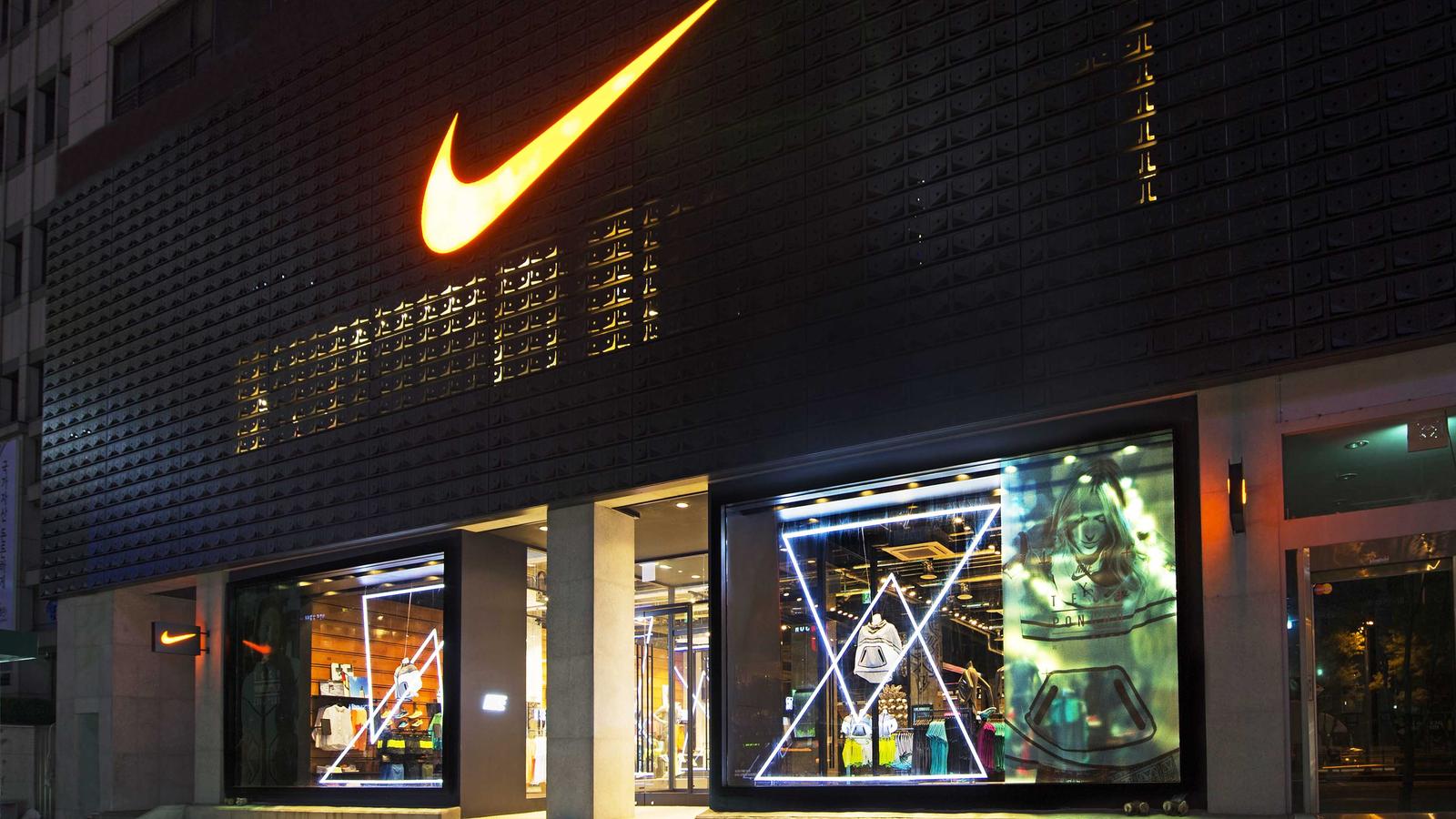
    Nike has introduced its latest retail concept, Nike Style, with the first store opened in South Korea, to be followed by more across multiple international markets.

    The Nike Style concept store is located in the bustling Hongdae neighbourhood, which is known for its art and fashion culture. Gender-agnostic zones are featured throughout the store for fleece, tops, footwear, accessories, and other style-led collections. The new retail concept is expected to “expand the definition of sport” that blurs the line between physical and digital.

    The store houses a content studio with customisable backdrops for local creatives, product experts and shoppers to create content for social media. Customers can scan QR codes for AR experiences related to product innovation and even the surrounding art installations. The store also offers Nike By You workshops and Snkrs Lounge events for its members.

    “The Hongdae neighbourhood holds a strong relationship with the sneaker and neighbourhood-retail community,” the company said in a statement. “With the Style retail concept, Nike helps broaden the aperture of sports retail culture by continuing to blend physical and digital experiences.”

    A second Nike Style store is set to open its doors in Shanghai later this year, with the concept to be expanded into other countries in the future. Nike Style is the latest Nike’s concept, following the House of Innovation, Nike Live and recently Nike Rise.

    The launch of Nike Style in Seoul follows the opening of a 24,000sqft Nike Rise store in Seoul last year, the first of its kind in South Korea.

  • Samsung starts building 3nm smartphone chips in Korea

    Samsung starts building 3nm smartphone chips in Korea

    We’re slowly moving toward the size limitations of our Universe but before we reach that Planck volume, there’s still some wiggle room. This means smaller, faster, and more efficient chips in our smartphones of tomorrow.

    Let’s leave quantum physics behind, and go straight to the news (feel free to discuss Planck constants in the comment section below). After TSMC published its roadmap, shedding light on when we can expect 3nm and 2nm chips, now Samsung has announced the production start of its 3nm semiconductor chips in Hwaseong factory in South Korea.

    Samsung is moving to a new architecture, swapping FinFET (fin field-effect transistor) for GAA (Gate All Around). And if you’re worried that more physics is coming your way, just breathe. GAA offers several advantages over FinFET – the main one being higher power efficiency.

    Another new technology involved in Samsung’s 3nm manufacturing node is the nanosheet transistor manufacturing. It replaces the nanowire technology, again boosting efficiency and also performance in this case. Using nanosheets gives the ability to very easily adjust this efficiency and performance parameters by simply altering the size of the nanosheet.

    Samsung is quoting some impressive numbers, comparing the new 3nm node with the old 5nm manufacturing process. The new chips should come with 23% improved performance, a 45% reduction in power usage, and an area reduction of 16%, and this is just the first generation of 3nm silicon.

    The second generation will bring a hefty 50% increase in power efficiency, 30% better performance, and 35% less area. Here’s a little inspirational quote from Dr. Siyoung Choi, President and Head of Foundry Business at Samsung Electronics:

    “Samsung has grown rapidly as we continue to demonstrate leadership in applying next-generation technologies to manufacturing, such as foundry industry’s first High-K Metal Gate, FinFET, as well as EUV. We seek to continue this leadership with the world’s first 3nm process with the MBCFETTM. We will continue active innovation in competitive technology development and build processes that help expedite achieving maturity of technology.”

    The Korean company is also working to allow clients to design their chips faster and easier. Samsung’s SAFE ((Samsung Advanced Foundry Ecosystem) will be taking care of partners who want to design their 3nm chips using the new technology.
    The first 3nm smartphone processor leaving the factory will most likely be the next generation Exynos 2300 (S5E9935 codename Quadra). The jump to GAA and 3nm could rehabilitate the Exynos processors, which are not very popular among smartphone enthusiasts, and are lagging behind their Qualcomm counterparts. Samsung teamed up with AMD to try and turn things around (the Exynos 2200 is armed with the new Xclipse GPU based on AMD RDNA 2 architecture) but this partnership has yielded mixed results so far.
    With TSMC hiking the prices of its manufacturing processes, it’s also very interesting to see how would Samsung play its cards on that front. If the new 3nm node turns out to be cheaper at Samsung’s factories, it can swing the pendulum once again. On the other hand, don’t expect the next Galaxy S23 with Exynos onboard to be cheaper than the Qualcomm variant, as it won’t make any marketing sense.
  • McDonald’s eyes selling its South Korea unit

    McDonald’s eyes selling its South Korea unit

    McDonald’s Korea, the local unit wholly owned by the US fast-food giant, is seeking a new owner — joining the latest burger chain sales rush here.

    The company confirmed Friday that its US headquarters is selling its entire stake in the Korean unit as well as its business license after its first failed attempt six years ago.

    According to news reports, Mirae Asset Securities, the deal’s lead manager, plans to send letters as early as next month to invite potential bidders.

    With the addition of McDonald’s Korea, the largest fast-food chain by revenue here, four out of six major burger franchises — including Burger King, KFC and Mom’s Touch — are looking for new owners.

    Hong Kong-based Affinity Equity Partners is selling Burger King Korea, along with the burger chain’s Japanese unit. Meanwhile, Korean chemicals conglomerate KG Group is seeking an exit after its five-year ownership of KFC Korea. Mom’s Touch, a home-grown chicken burger chain owned by private equity firm Korea F&B Holding, recently delisted from the nation’s second bourse Kosdaq in a move to search for a new owner.

    Unlike the four, the remaining Lotteria and No Brand Burger are subsidiaries under retail giants Lotte and Shinsegae, respectively.

    The valuation of McDonald’s Korea is yet to be estimated, but market forecasts put it much higher than 2016’s 300 billion-500 billion won ($234 million-$469 million). Crosstown rival Burger King is currently valued at around 1 trillion won.

    US private equity giant Carlyle Group is cited as one of the potential buyers of McDonald’s Korea. In 2016, when the company was put up for sale, Carlyle created a consortium with Maeil Dairies — the nation’s leading dairy company — but later backed out from the deal. After its failed attempt to take over the Korean unit, it acquired the Chinese and Hong Kong branches in 2017.

    Along with the deal price, the US headquarters’ push to maintain its control over the Korean unit even after an exit could become a key factor in the acquisition talks. In 2016, the US head office insisted that it resume quality control of burger products and receive royalty payments from McDonald’s Korea, which evidently became another deal breaker.

    According to data from the Financial Supervisory Service, the Korean unit has paid 54.3 billion won in 2021 and 50.1 billion won in 2020 in commission payments for the US headquarters.

    Industry watchers say growing demand for premium burgers has led to heated competition in the market and an influx of newcomers. The food unit of Daewoo Development recently launched Good Stuff Eatery, a handcrafted burger chain frequented by former US President Barack Obama. BHC Group and Hanwha Solutions are poised to open Korean branches of Super Duper Burgers and Five Guys this year.

    As of 2021, McDonald’s Korea operates 404 stores nationwide. It posted 867 billion won in sales, up 9.7 percent from a year earlier, while logging 34.9 billion won in net losses.

  • Korean chicken chain Mom’s Touch seeks investors

    Korean chicken chain Mom’s Touch seeks investors

    South Korean chicken chain, Mom’s Touch, is seeking a new owner after voluntarily delisting from the Kosdaq stock market, according to The Korea Herald.

    KL & Partners’ investment arm, Korea F&B Holdings, which is the chain’s largest shareholder, proposed to purchase shares for the next six months in order to protect minority investors.

    As of the first quarter of this year, Mom’s Touch has 1352 stores across its home country. The company’s value is estimated at about US$804 million – nearly three times the amount Korea F&B Holdings invested to acquire the chain in 2019.

    The chain expanded to the US late last year with the ambition to open 100 stores in the country by 2025. On the other hand, Mom’s Touch Singapore, operated by No Signboard Holdings’ wholly-owned subsidiary Hawker QSR, ceased its operations at all outlets last February.

    Meanwhile, its rival, Popeyes, is making a return to South Korea through an exclusive master franchise agreement with Silla Group, after exiting the country in 2020. The chain will open its first store by the end of this year.

  • South Korea’s retail sales rebounded in February

    South Korea’s retail sales rebounded in February

    Sales at South Korea’s top department stores rebounded sharply in February from the previous month, government estimates showed on Tuesday, reflecting this year’s change of timing for the Lunar New Year holiday.

    Combined sales last month at department stores run by Hyundai Department Store, Lotte Shopping and Shinsegae Co rose 7.1 percent from a year ago, the finance ministry said.

    This was the fastest gain for department store sales since a 10.5 percent rise seen in August last year and compared to a 11.0 percent drop in January, which was the steepest contraction on record.

    Retail numbers are usually distorted at the beginning of the year as the Lunar New Year holiday, when consumers tend to splurge, can fall either in January or February. This year the holiday was in February while it was in January last year.

    Sales at the country’s top discount stores also showed a sharp gain in February, jumping 30.5 percent on-year and bouncing back from a 18.3 percent drop in January.

    The January decline was the sharpest fall seen since February 2014.

    Meanwhile, the same data showed annual sales of locally produced automobiles last month slipped 3.8 percent, undermining a 3.9 percent gain in January.

    Gasoline sales by volume last month rose 12.5 percent in annual terms, rising for a third straight month and picking up the pace from a 5.3 percent rise in January the finance ministry data showed.

  • Diptyque unveils its largest flagship yet, in South Korea

    Diptyque unveils its largest flagship yet, in South Korea

    Diptyque’s new flagship store in Seoul is its largest yet, anywhere in the world, reflecting its confidence in the South Korean perfume market which is showing rapid growth.  Located in the upscale shopping street Garorugil, the Diptyque flagship’s design was inspired by the French brand’s original space on 34th Avenue Saint-Germain in Paris, resembling a cozy apartment with a dining room, kitchen, living room and bathroom.  The ground floor houses Diptyque’s full collection of

    The ground floor houses Diptyque’s full collection of perfumes and home fragrances, including limited editions and boutique-exclusive products. The 260sqm store offers customization services such as engraving, perfume message ribbon, embossing, and candle message capsules.

    A large marble staircase leads to the upper floor, which was designed with a layout of an up-market Paris apartment. While the cozy living room is decorated with a counter “reminiscent of a herbalist”, the kitchen is inspired by the one in the “magnificent private residence of Moise de Camondo” built in the 18th-century style, a space for olfactory experiments and workshop.

    The living room is a space where customers can rest and see artwork and decoration items that pay a tribute to the craftsmanship of Korea. The bathroom features a black and white checkered tiled floor and a large retro-styled bathtub. The room is highlighted with traditional Korean pottery.

    Diptyque said it has seen double-digit sales growth in South Korea annually since Shinsegae International secured the domestic sales rights in 2017. According to Euromonitor, South Korea’s perfume market reached US$491.6 million in 2019 and is expected to exceed $532 million next year.

  • Korea Seven’s takeover of rival Ministop cleared by regulator

    Korea Seven’s takeover of rival Ministop cleared by regulator

    South Korea’s antitrust regulator said Tuesday it has decided to approve a deal by Korea Seven Co., the operator of 7-Eleven convenience stores, to buy its smaller rival Ministop Korea Co.

    In January, the country’s retail giant Lotte inked a deal to acquire a 100 percent stake in Ministop Korea for 313.3 billion won (US$257 million). Korea Seven, an affiliate of Lotte, eventually bought Ministop Korea.

    The Fair Trade Commission (FTC) said it has given the green light to the deal, saying that the takeover is not expected to hamper market competition.

    South Korea’s convenience store market has been dominated by BGF Retail’s CU and GS Group’s GS25, with 7-Eleven, Shinsegae Group’s Emart 24 and Ministop being minor players.

    The FTC said its approval is expected to spur three-way competition in the market as the takeover will help Korea Seven cement its market status as the No. 3 player.

    Korea Seven operates around 11,170 convenience stores across the country.

    Ministop is an affiliate of the Japanese retail group Aeon Group and opened its Korean operation in 1990 via a business tie-up with South Korea’s leading food maker Daesang. Ministop Korea runs around 2,600 convenience stores.

  • Lotte Group acquires Ministop South Korea

    Lotte Group acquires Ministop South Korea

    South Korea’s Lotte Group has agreed to acquire a 100% stake in Ministop Korea for 313.4 billion won ($263 million), the country’s fifth-largest convenience store chain, from Japan’s Aeon Co., Lotte said on Jan. 21.

    With the purchase in cash, Lotte’s convenience store operator 7-Eleven will be able to take on the two sector leaders —  CJ Group’s CU and GS Group’s GS 25, while further widening the gap with fourth-ranked Shinsegae’s E-Mart 24.

    “Competition is heating up in the quick commerce market for short-distance services, based on convenience stores,” said an official of the group’s holding company Lotte Corp.

    “We are now adding Ministop Korea’s 2,600 stores and 12 logistics centers to the list of our stores, which will expand our points of customer contact in the near term.”

    Lotte’s 7-Eleven runs 10,500 outlets nationwide. By comparison, CU boasts 14,900 stores, trailed by second-ranked GS 25 with 14,600 stores.

  • Apple gives in to Korea’s law and allows outside payments to developers

    Apple gives in to Korea’s law and allows outside payments to developers

    The first of its kind, a law preventing app market operators—the likes of Apple and Google—from necessitating app developers to use specific payment systems were imposed by Korea’s National Assembly in September 2021. Today, on January 11, 2022, Apple has agreed to the regulation and will allow payment systems different from its own in the App Store.

    Apple did not say the exact fee it will be charging app developers for using an outside payment system, but it did say it will be lower than that for its own, which is 30 percent. The exact commission rate for outside payments and the date on which it will be implemented will be determined after discussions with Korea’s ICT regulator are finished, said the tech giant.

    Google agreed to the new regulation a bit earlier, back on December 18. It charges 26 percent for outside payments. It’s expected that Apple will decide on a similar percentage as well.

    While this might seem like a huge win for app developers, and it is a win, some industry officials are concerned about whether there will be any substantial effects. One such official said that, in actuality, it is much easier and more convenient for developers to use the payment systems that Apple or Google offer, for example, than to do that with outside ones.

    A good example of that is the payment system of Korea’s own One Store market operator. Even though it charges only 5 percent commission for using outside payment methods and 20 percent for its in-house one, developers choose to use the latter.

    The regulation, therefore, does not help app developers at all. It will only end up burdening app users because app developers will reflect commissions charged for payment systems at the prices of their apps. But this is the furthest a government can regulate, given that most countries operate under a capitalist system.

    No matter how effective things turn out to be, the successful implementation of the regulation itself is enough of a big step on its own. It is the first domino to be pushed and could likely be the one to set a chain reaction across other countries that will try and achieve the same goal in their way.

  • Starbucks store in Korea is dedicated to disability inclusion

    Starbucks store in Korea is dedicated to disability inclusion

    Starbucks Korea has added a new location to its chain of Community Stores in the country, reaffirming its commitment to diversity, equity and inclusion.

    The store is Starbucks Korea’s first to focus on a design that creates an inclusive space and what the retailer describes as impactful programming to support members of the disability community in Seoul.

    A portion of proceeds from sales through the store will go to support the local nonprofit Heart Heart Foundation, which advocates for inclusion and awareness of people with disabilities, and support for local artists from the disabled community.

    “It is very meaningful that our store, which is an inclusive space for all, has been dedicated as a new Community Store for inclusion, furthering disability-inclusion awareness in Korea,” said Elena, assistant store manager, who is hard of hearing.

    “I feel very proud as a partner. I hope to create meaningful opportunities to build connections through the many activities we will be launching at our store.”

    Since the opening of the store, Starbucks has employed new partners with disabilities under the partnership with the Korea Employment Promotion Agency for the Disabled.

  • Flash Coffee opens Outlets in South Korea

    Flash Coffee opens Outlets in South Korea

    Flash Coffee has launched its first two South Korea stores in Seoul’s Gangnam district as part of its expansion in Asia, with two more stores scheduled to open before the year ends.

    The launch marks the brand’s sixth market in the region, after Singapore, Indonesia, Thailand, Hong Kong, and Taiwan. Spanning two stories, the new Flash Coffee flagship store is located at Sinsa, while the other store is opened in Yeoksam.

    “South Korea is filled with coffee enthusiasts and our coffee consumption rate ranks within the top 10 in the world,” said Un Koh, MD of Flash Coffee South Korea.

    “We are confident that our high-quality beverages crafted by award-winning baristas at Flash Coffee will appeal to South Korean coffee lovers.

    “Our goal is to make our specialty coffee accessible to all, so for those who’ve not come across Flash Coffee yet, you will find us brewing very soon in a location near you.”

    The two new stores opening later this year will be located in Apgujeong and Yangjae. After South Korea, Flash Coffee aims to set foot into Japan with its first store in Tokyo., having recently appointed Shu Matsuo Post as its MD in Japan.

    Flash Coffee currently operates more than 200 locations across Asia.

  • 7-Eleven introduces autonomous delivery robot in Seoul

    7-Eleven introduces autonomous delivery robot in Seoul

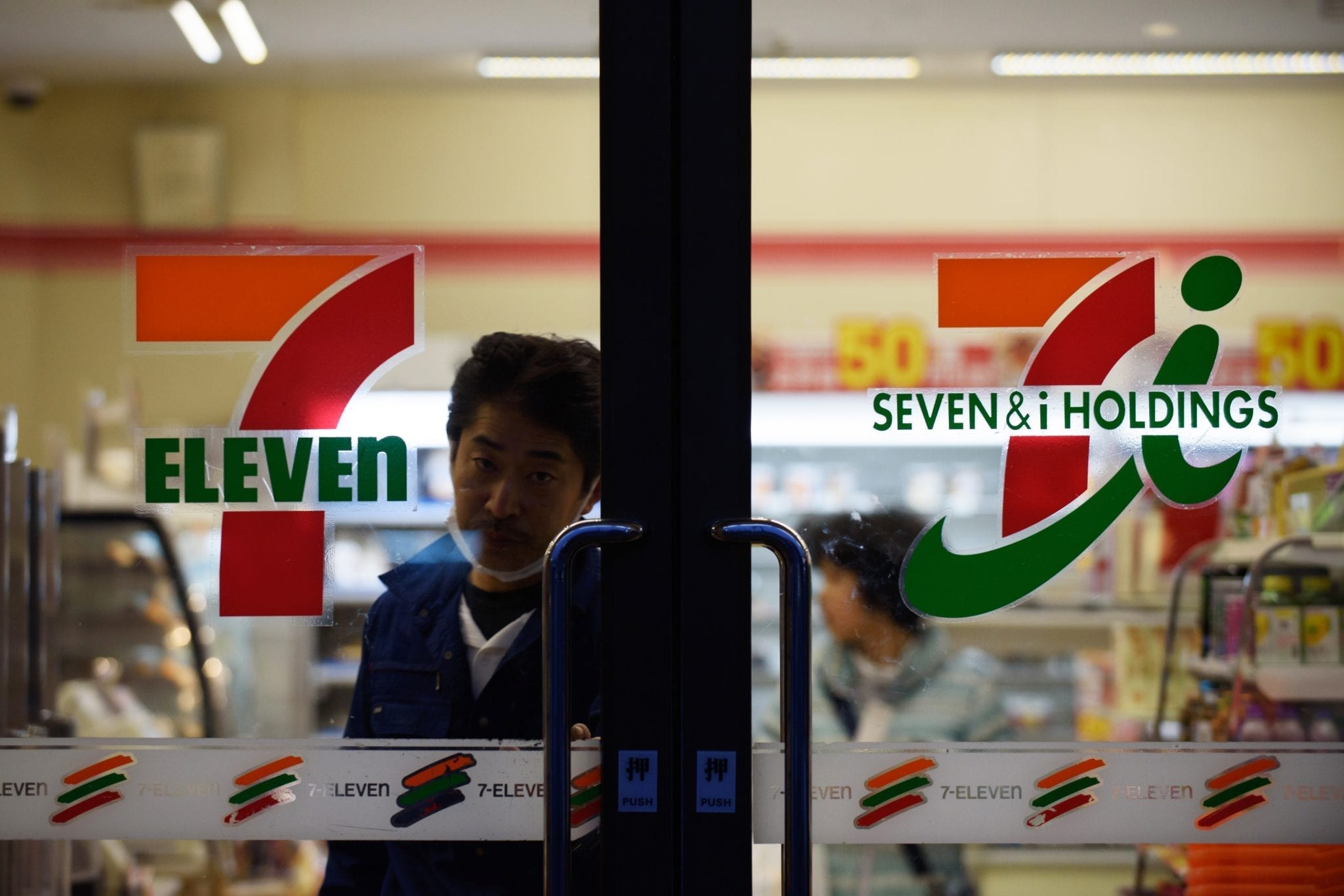
    Korea Seven, which operates 7-Eleven stores in South Korea, has partnered with Neubility, a South Korean autonomous robot startup, to commercialize autonomous robots for short-range delivery.

    Most large convenience store chains in South Korea offer delivery to customers via third-party food delivery apps. For example, the popular Yogiyo food delivery app delivers groceries and other products from CU and GS25 chains. Typically, third-party delivery services receive about $3.51 per delivery.

    The domestic food-delivery services market hit $19.8 billion last year, according to the South Korean Fair Trade Commission.

    Korea Seven’s agreement with Neubility calls for it to commercialize the autonomous robot Neubie in Seoul and surrounding areas by the end of this year. Neubie robots can navigate deliveries in urban areas in any weather conditions.

    However, it can be difficult for these robots to operate in the Gangnam district because the numerous skyscrapers could block the satellite signals needed for the robot’s GPS system. To overcome this, Neubie robots have cameras and sensors in addition to GPS, so they are more adaptable for those areas.

    “The two companies will cooperate to build a model for [a] next-generation delivery service that brings convenience to store management as well as increased profits,” said Choi Kyung-ho, CEO of 7-Eleven in South Korea.

    Elsewhere in Asia, 7-Eleven Japan this week announced plans to launch national delivery services by 2026. The country’s top c-store chain will mobilize its national network for last-mile delivery to take on Amazon.

  • South Korean retailer CJ Olive Young to raise US$1 billion in local IPO

    South Korean retailer CJ Olive Young to raise US$1 billion in local IPO

    South Korean health and beauty chain CJ Olive Young is looking to raise around US$1 billion in an initial public offering, as the company seeks to tap a booming market for new listings.

    The listing, which two sources aware of the matter say is set to take place early next year, comes as Korean IPOs have raised $21.4 billion so far this year, almost seven times the amount raised a year earlier, according to Refinitiv data.

    CJ Olive Young has appointed Mirae Asset Securities and Morgan Stanley as the main underwriters on the transaction while KB Securities and Credit Suisse will act as co-underwriters, a spokesperson told Reuters.

    A $1 billion fundraising, slated for early next year, would be double the amount the company was expected to raise, according to some bankers.

    Mirae Asset Securities, Credit Suisse and Morgan Stanley declined to comment to Reuters. KB Securities did not immediately respond to a request for comment.

    CJ Olive Young has about 1200 stores across South Korea, and delivers its products through a global distribution platform to 150 countries, according to its website.

    It reported an operating profit of $84.4 million last year, the company’s filing showed. The largest shareholder is CJ Corp with a 55.24-per-cent stake as of December.

    So far this year, 92 companies have listed in Korea compared with 59 last year, driven by robust retail demand, Refinitiv data shows.

    E-commerce firm Coupang Inc raised $4.5 billion when it was listed in New York in March, while video-game developer Krafton Inc raised $3.7 billion in its July listing in Seoul.

  • Korean lawmaker says Apple and Google need to do more to comply with new law

    Korean lawmaker says Apple and Google need to do more to comply with new law

    Apple and Google are both failing to fully comply with South Korean legislation that prevents app store operators from forcing developers to use their own payment platforms. As you already know, Apple and Google, with the App Store and Play Store respectively, forced developers to route all in-app payments through their own systems to collect as much as a 30% slice of in-app payments.

    When legislation in South Korea passed, it became the first country to pass a law in an attempt to block the tech giants from imposing this “tax” on developers. An official at the Korea Communications Commission (KCC) said that tomorrow (Wednesday), South Korea will reveal what changes tech firms will need to follow in order to comply with the legislation.

    Korean lawmaker Jo Seoung-lae is the person who directed an amendment to the Telecommunication Business Act in August in an attempt to prevent Apple and Google from taking a cut of in-app payments. While the law went into effect in September, the Korea Communications Commission (KCC) still has to announce what tech firms have to do to be considered in compliance with the law.

    Google said that it would allow third-party payment processing systems to run Play Store charges in South Korea. But the Alphabet subsidiary also said that it would reduce the cut that it takes by four percentage points when such a platform is used instead. Apple told the South Korean government that it was already complying with the law and that no changes had to be made.

    Jo, the South Korean lawmaker who helped get the legislation passed, said, “Frankly, we are not satisfied… Apple’s claim that it’s already complying is nonsensical. Excessive fees take away developers’ chances for innovation … parliament is to be closely informed as the government drafts detailed regulations to make sure there is accountability.”

    Epic Games CEO Tim Sweeney, who dared to take on Apple and Google by including a link to Epic’s own payment system inside the app for its popular Fortnite game, is a vocal critic of both tech firms. Fortnite ended up getting kicked out of both the App Store and the Google Play Store. The executive said, “This is the first legislation worldwide with the chance to transform the market from a duopoly with Apple and Google.

    But Sweeney won’t be pleased just being able to promote third-party payment platforms in the App Store and Google Play Store. He wants Apple and Google blocked from charging any fees to developers promoting third-party payment platforms. This is what Google is doing in South Korea and “ruins the point of competition,” the CEO says.

    The KCC is preparing the details of an ordinance that will be reported to a parliamentary committee tomorrow according to KCC Vice-Chairman Kim Hyun. At this stage though, it is not clear what penalties tech firms like Apple and Google will face if they do not follow the law. An early draft called for a penalty of up to “2% of revenue” for app store operators who fail to abide by the law.

    But that penalty is certainly not clear. Is it based on global revenue, in-country revenue, or app store revenue? The wording here can be the difference between a stiff but affordable fine, and a hefty payment that actually takes a bite out of a company’s financials. Still, no matter what the fine is based on, Apple and Google are big enough that any fine won’t feel like anything more than a mosquito bite.

    That is the point of Meghan DiMuzio, executive director of advisory group Coalition for App Fairness who says, “We’ve seen in other jurisdictions that these monetary penalties actually don’t deter companies like Apple and Google because to them, it’s a drop in the bucket.”