Tag: Korea

  • South Korean convenience stores wind back 24-hour service

    South Korean convenience stores wind back 24-hour service

    South Korean convenience-store owners are canceling 24-service as minimum wage rise has eroded profits.

    Last year, president Moon Jae-in launched a campaign to raise the hourly minimum wage by 29 percent over two years. With night-shift employees earning time-and-a-half pay, franchisees have been struggling to pay part-time staff during the small hours.

    Not all stores traded around the clock when Shinsegae group launched the Emart convenience-store chan in 2014. Three Korean c-store giants, GS Retail, BGF Retail and Lotte Group, now allow its franchisees to close stores at night if the outlets lose money overnight for three months.

    In a market with the highest rate of c-stores per capita, South Korean convenience-store owners are shifting their focus to automated, unmanned stores. Emart is trialing a cashier-free store in Seoul with more than 30 cameras installed. Payments are made with credit card information stored in advance. Meanwhile, Lotte operates 17 unmanned outlets where products are scanned and identified by its shapes.

    Last year, many 7-Eleven and Familymart stores in Japan had to overturn its 24-hour operations as they were suffering from the labor shortage.

  • Microsoft takes action against hackers from North Korea

    Microsoft takes action against hackers from North Korea

    In a recent blog post on the Microsoft website, the company detailed steps it has taken to take legal action against a cybercrime group and protect customer information.

    The security threat came from a group known as Thallium, which reportedly is based in North Korea. The group used a technique called ‘spear phishing’ to steal sensitive information, in which the group replicated the form and design of a genuine Microsoft security email while embedding dangerous links that, when clicked, would allow the group to extract sensitive account information.

    According to the Washington-based firm, the threat was focused on users affiliated with the government, universities, human rights groups, and other organizations, with most of the victims concentrated in the US, Japan, and South Korea.

    The particularly dangerous part of the scheme is that once Thallium takes control of an account in this way, it is possible for it to set up automatic forwarding in a way that gives the group access to any new emails the victim receives, even after the password is reset.

    The cybercrime group was able to use this method by using domains such as “rniscoroft.com”, which uses the combination of ‘r’ and ‘n’ to facsimile the authentic Microsoft domain. Thus, the Windows company filed a court case and was able to take control of 50 such domains in order to stop the attacks.

    Microsoft states that this is the fourth nation-state cybercrime group they have taken legal action against. The security threat has hopefully now been neutralized, but users are advised to be wary of suspicious emails and always check carefully before clicking email links or entering sensitive information.

  • Robots replace staff in South Korean chain Genesis BBQ

    Robots replace staff in South Korean chain Genesis BBQ

    Genesis BBQ, a major South Korean fried-chicken chain, opened a new ‘smart store’ in Seoul’s Songpa District this month.

    There are no employees to take orders at the store. Instead, there are tablet PCs on each table that are used to order food.

    The food made in the kitchen is then served by food bots, self-driving robots that deliver the food to the customers.

    A map of the store is programmed into the food bots, which deliver food to each table based on pre-mapped destinations included in the program.

  • South Korea boasts of hitting almost four million 5G subscribers

    South Korea boasts of hitting almost four million 5G subscribers

    The Ministry of Science and ICT in South Korea reports the country is close to hitting the milestone of four million 5G subscribers.

    While it’s often debated whether South Korea or the US was first to launch a commercially available 5G network, both countries were among the first.

    This leadership makes South Korea closely watched by industry observers for how their 5G rollout is progressing, including the pace of adoption.

    5G adoption is happening fast in South Korea. As of October, the ministry reports that 5G networks across the country had 3.98 million subscribers.

    In September, the ministry says 516,000 more people subscribed to 5G services. In fact, a minimum of half a million new 5G subscribers have been added every month since networks launched in April.

    If that pace continued throughout October and November, it’s likely the four million 5G subscribers milestone has already been exceeded. While Christmas in South Korea isn’t as present-oriented as in the West, the holiday may also provide some further uptick in adoption in December.

    To date, the highest rise in subscribers was in August when Samsung launched its Galaxy Note 10 5G smartphone.

    SK Telecom has the most 5G subscribers with 1.77 million, followed by KT’s 1.21 million and LG Uplus’ 1 million.

    Traffic growth has also been substantial. In October, the ministry notes a total of 105,000 terabytes of traffic was recorded on 5G networks. Users consumed an average of 28 gigabytes of data that month.

    In a bid to handle the exploding amount of traffic, South Korea plans to double 5G spectrum allocation by 2026.

    While 5G networks in South Korea are currently not standalone and use 3.5GHz spectrum, the country plans to develop standalone 2.8GHz spectrums early next year.

  • South Korean cosmetics exports soars

    South Korean cosmetics exports soars

    South Korea is aiming to become the third-largest cosmetics exporter in the world by 2022. The move will be made through extensive investment in research and development and concerted marketing efforts, the government said Thursday.

    “The goal is to ship out more than KRW9 trillion (US$7.6 billion) worth of cosmetic products annually and have at least seven of the world’s top 100 makeup companies, from four at present,” the ministry said.

    It added that another goal is to have 276 local cosmetics companies with annual sales exceeding KRW5 billion ($4.2 million) in the target year, up from 150 now. Such growth will contribute to the creation of 73,000 new jobs in the sector.

    On the research and development front, Seoul will provide small-and-medium enterprises with KRW7.7 billion ($6.5 million) in support next year, with KRW20-30 billion ($16.86–25.3 million) to be injected in this field from next year onward.

    In regard to marketing, the ministry said more emphasis will be placed on the vast Southeast Asian market, where South Korean products are in high demand. The Southeast Asian market is attractive as it can generate overseas sales that have taken a hit after South Korean relations with China snagged since Seoul deployed the US Terminal High Altitude Area Defense (THAAD) on its soil in early 2017.

    However, as more Chinese consumers are taking an interest in the components contained in cosmetic products, South Korean cosmetic brands are infiltrating the Chinese market using their reputation for using ‘good recipes’.

    Venndata, a Chinese market research agency, reported that 45 percent of Chinese consumers were found to purchase cosmetics after carefully looking into the components. This trend is leading more Chinese consumers to buy products from South Korean cosmetic brands, which are renowned for using natural components to make their products.

    Trade data showed that in 2014, South Korea’s cosmetics exports stood at just $1.8 billion, but this has risen to $6.3 billion last year, placing it in fourth in the world overall.

    Its main overseas markets are China, Hong Kong, the US, Japan, Vietnam and Thailand, with total numbers of makeup manufacturing companies and retailers standing at 12,000.

  • SkinCeuticals launches into Asian travel-retail market

    SkinCeuticals launches into Asian travel-retail market

    L’Oreal Travel Retail Asia Pacific has launched US-based professional skincare brand SkinCeuticals into the Asian travel-retail market.

    Together with China Duty-Free Group, L’Oreal opened a pop-up store in Haitang Bay Duty-Free Shopping Center in Sanya to highlight the launch.

    SkinCeuticals joins dermo-cosmetics brands La Roche-Posay and Vichy, strengthening L’Oreal Travel Retail Asia Pacific’s brand portfolio.

    “Through our exclusive collaboration with China Duty-Free Group, we are thrilled that SkinCeuticals is at last launched in travel retail,” said Emmanuel Goulin, MD of L’Oreal Travel Retail Asia Pacific.

    “The dermo-cosmetics market continues to be buoyant, and … the addition of SkinCeuticals to our brand portfolio further ensures we have a powerful range of brands to offer beauty for all travelers,” he said.

    Terry Chua, VP of central merchandising division at China Duty Free Group, said the launch demonstrated the company’s deepened strategic partnership with L’Oreal Travel Retail Asia Pacific.

    At the Sanya pop up, visitors were invited to learn about the brand through immersive spaces, such as an anti-oxidation lab and an interactive game wall for a close-up experience of the advanced anti-oxidation technology. At the event, SkinCeuticals experts at the Digital Orchard demonstrated the antioxidant “apple test”, and professional skin diagnosis and skincare express facial treatment by SkinCeuticals experts.

    SkinCeuticals has also launched at Shanghai Pudong Airport Terminal S1, and will open at Beijing Capital International Airport by early 2020.

  • K-beauty companies fined for Instagram promotions

    K-beauty companies fined for Instagram promotions

    Several major K-beauty companies were found guilty of misinforming consumers after paying influencers on social networks like Instagram to promote their products.

    South Korea’s Fair Trade Commission (FTC) ordered seven companies including AmorePacific, LG Household and Health Care and L’Oreal Korea to pay 269 million won (US$228,740) in fines.

    The K-beauty companies paid influencers on social media 1.1 billion won (US$936,000) in cash and products in exchange for promoting their products on Instagram. They gave the influencers specific instructions on what hashtags to use as well as the angles for photoshoots.

    However, as many as 4177 sponsored posts went on Instagram without any information about the sponsorship arrangement.

    The FTC obligates companies to disclose all information on recommendations, guaranties, and others that contain economic interest that may impact the level of trust.

    The commission says it plans to revise current instructions to reflect today’s practices on social networks and include provisions that clearly inform consumers on whether a post is sponsored.

  • Korean retail giants expect improved profits next year

    Korean retail giants expect improved profits next year

    After a tough year, South Korean retail giants are tipped to log a modest improvement in their earnings next year on the back of improved business conditions and cost-cutting efforts, industry sources say.

    This year has been the toughest ever for two homegrown South Korean retail giants, Emart and Lotte Shopping, as they struggled to battle with e-commerce giants such as Coupang and TMON, which launched aggressive promotion and free delivery services to woo more customers.

    Hit by increased competition and an economic slowdown, Emart, the country’s No 1 retailer, suffered a 40.3 percent year-on-year fall in its third-quarter operating income to 116.2 billion won (US$98.8 million).

    Analysts said Emart will be on a roll next year, as the company’s efforts to improve margins have started to bear fruits since the third quarter, according to IBK analyst Lee Myung-hee. The brokerage estimated an 18 percent on-year rise in sales for 2020 and a 60 percent jump in operating profit.

    Emart saw the number of its underperforming or loss-making offline stores fall to 141 this year, down from 147 in 2016. The company also expanded shipping infrastructure for its online-only retail corporation SSG.com, launched on March 1, in a bid to win back customers from e-commerce operators.

    To bolster its delivery services, Emart also plans to open its third pick-and-packing station in Gimpo, 29 km west of Seoul, by the end of the year. The company currently runs two facilities, one in Gimpo and another in Yongin, 49km south of Seoul.

    Lotte Shopping, the operator of the supermarket chain Lotte Mart, also suffered a sharp fall in its third-quarter earnings because of poor performance by its supermarket chain. Lotte Mart takes up about 30 percent of its business portfolio.

    Lotte Shopping’s July-September operating income stood at 87.6 billion won, falling 56 percent on-year. The earnings shock came due to the nationwide boycotting of Lotte’s products since July, triggered by trade tensions between Korea and Japan.

    But the market consensus is that the discount store chain’s quarterly operating profit will go up thanks to reduced costs stemming from layoffs of contract workers.

    Ju Young-hoon, an analyst at Eugene Securities, forecast a 2.9 per-cent year-on-year gain in Lotte Mart’s annual sales for next year, compared to a 1.3-per-cent decline this year.

  • Uniqlo Korea sparks controversy

    Uniqlo Korea sparks controversy

    Uniqlo Korea has sparked yet another round of controversy, this time by distributing free Heattech shirts as part of a new marketing offensive.

    The Japanese apparel company, as part of its 15th Anniversary promotional event, is giving away 100,000 heat-tech shirts on a first-come, first-served basis to all customers purchasing a product, regardless of the price, at Uniqlo Korea offline stores.

    Since the promotion can end early if daily quotas are reached, it wasn’t difficult to find people lining up at stores early in the morning, causing an uproar on South Korean social media.

    Despite the negative reaction, Uniqlo distributed a press release to promote the giveaway, demonstrating its intention to address the public head-on by turning it into ‘noise marketing’.

    South Koreans are increasingly divided over the issue as social figures are joining the debate.

    “The number of customers at Uniqlo soared ever since the giveaway, despite the fact they can’t choose the size or color of the shirt,” said Prof Seo Kyung-duk from Sungshin Women’s University, a Korean PR activist.

    “Why do we have to go there, out of all places, to get free clothes?”

    In contrast, others implicitly argue that, while they respect one’s own belief, the boycott movement should not be forced on anyone.

    The fact that Uniqlo products are being sold online, while offline stores are empty, shows there is a large population of so-called ‘shy Uniqlo’, ‘shy Japan’ consumers in the country.

    Uniqlo Korea sales have plunged in recent months due to an ongoing boycott of Japanese brands and retail networks relating to a lack of apology over the occupation of Korea during the Second World War.

  • Ediya Coffee opens 3000th store in Korea

    Ediya Coffee opens 3000th store in Korea

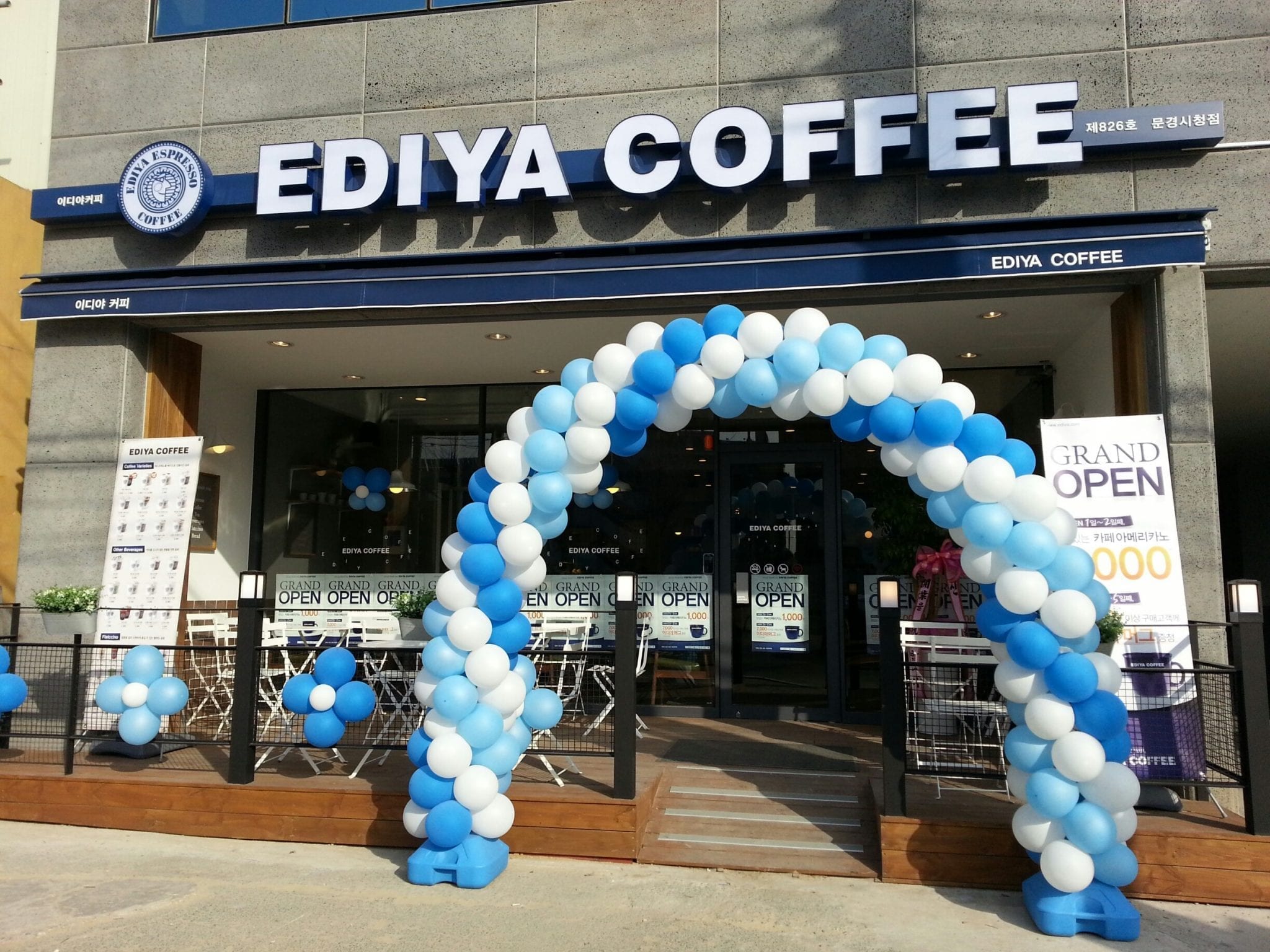
    South Korean coffee chain Ediya Coffee has opened its 3000th store.

    The new Daejeon outlet is a significant milestone for the local franchise, matched only by competing for cafe and bakery Paris Baguette. Ediya has opened 300 locations each year for the past six, and has been steadily expanding since launching in Seoul in 2001.

    The firm recently appointed two vice presidents to manage the rapid expansion: Kim Nam-yeob, previously at Hyundai, and Shin Yoo-ho, who was working for Paris Baguette owner SPC Group.

    The coffee brand is named after an Ethiopean empire where the original coffee plant was discovered.

  • Hanssem opens Nexus flagship in Seoul

    Hanssem opens Nexus flagship in Seoul

    South Korean furniture maker Hanssem affiliate Nexus has launched a new flagship store in Seoul.

    The 3300sqft store targets Korea’s burgeoning luxury lifestyle consumership from its location in Nonhyun-dong, retailing 16 ultra-luxury and exclusively imported European brands. It also offers consulting services by professional decorators and interior designers.

    “It is time for us to export our interior design ability, just like we grew from a fashion importer to exporter,” said Hanssem Nexus CEO Lee Young-sik.

  • Luxury labels increase focus on burgeoning Korean market

    Luxury labels increase focus on burgeoning Korean market

    South Korean consumers’ love for luxury labels is encouraging high-end brands to take bold, innovative moves into the market, opening pop-up stores and staging world-exclusive fashion shows.

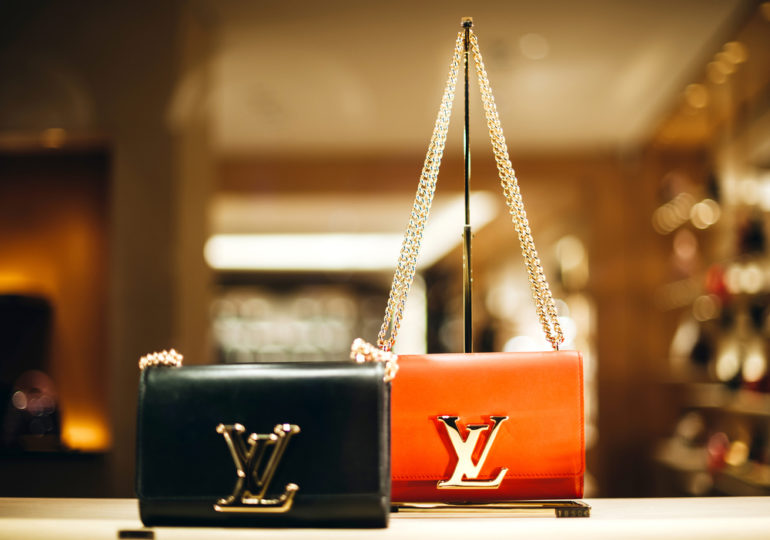
    Louis Vuitton, listed by Forbes as the most powerful luxury brand, opened a new flagship boutique in Seoul late last month, a unique building designed by renowned architects Frank Gehry and Peter Marino and located in the high-end Cheongdam neighborhood in Gangnam. Bernard Arnault, chairman of the French luxury goods conglomerate LVMH, which has Louis Vuitton under its wing, attended the opening ceremony of the store during his third visit to South Korea in the last three years.

    In April, Louis Vuitton opened a pop-up store for its signature Twist bags in collaboration with Hyundai Vinyl and Plastic in Seoul. It was Louis Vuitton’s second single-theme pop-up store, following its Archlight sneakers pop-up launched in New York in 2017.

    In July, Louis Vuitton also teamed up with one of the country’s leading department stores, Shinsegae Department Store, to open its first Asian pop-up space at its Gangnam outlet in southern Seoul entirely devoted to handbags. A limited number of the items were exclusively sold at the store.

    The French luxury house has since showcased a series of pop-up stores at department stores in Seoul and the surrounding Gyeonggi Province, offering South Korean consumers the exclusive advance opportunity to buy select items from next year’s collection.

    “In the past, I usually purchased bags when I visited Paris as the latest items from the collection were first available there,” Kim Min-kyung, a 36-year-old VIP customer at a local department store, said.

    “Now, the latest collection items can be purchased here even in advance.”

    The luxury goods market in South Korea was valued at 14.2 trillion won (US$12.1 billion) last year, up from 11.46 trillion won in 2014, according to market research company Euromonitor International. It is also the fourth fastest-growing luxury goods market in the world behind India, Malaysia, and Indonesia.

    Multiple sets of industry data show sales of major luxury brands grew between 20 and 30 percent in the country last year, compared with an average of 2-per-cent growth for local department stores.

    South Korea’s luxury-handbag market was valued at 3.2 trillion won in 2017, making it the world’s fourth-largest following the US, China and Japan. It also outpaced France, the home of international powerhouses such as Louis Vuitton and Chanel.

    High-end jewelry and fashion brands have also held a series of world-exclusive launching events and fashion shows in Seoul. In April, Italian luxury brand Fendi, also part of LVMH, debuted its lively, street-style fashion collection “Roma Amor” at a Lotte Department Store outlet. It was the first time that Fendi has launched a new collection in Seoul.

    “The global luxury brand’s launch of a new collection in Seoul illustrates the growth of consumption power among Korean millennials,” Kim Hye-ra, a luxury department chief at Lotte Department Store, said.

    The millennial generation, consumers born between 1980 and 1994, approaches shopping differently from older people, whose top priority in consumption is satisfaction.

    In an apparent move to target the spending power of younger consumers, French luxury house Chanel revealed its exclusive Urban Capsule Collection in collaboration with US pop star Pharrell Williams earlier this year. The collection, vibrant and far from the conventional classics, has been popular among the younger generation.

    “Consumption of luxury goods, most noticeably among the so-called millennial generation, has constantly increased despite a slowdown in the economy,” said Ha In-hwan, an analyst at Meritz Securities, adding that international brands are accelerating their push into the country as the market is expected to show continued growth.

    Some luxury labels have recently taken further steps by opening branches there in an apparent move to directly target South Korean consumers without going through local importers or distributors that are mostly operated by the country’s major conglomerates.

    British-based luxury-handbag maker Mulberry recently took full ownership of its South Korean business by buying Mulberry Korea from local partner SHK. As part of a wider Asian development strategy, Mulberry made an additional investment of 1.3 million pounds.

    “Over the last 18 months, we have recruited a new management team and taken day-to-day control of the business in South Korea, an important market for luxury goods where the Mulberry brand has significant growth potential,” CEO Thierry Andretta said in a press release.

    Luxury fashion and perfume house Givenchy also recently terminated its distribution contract with Shinsegae International, part of the country’s largest retail conglomerate, Shinsegae to operate its own branch there.

    Givenchy Korea, under the leadership of Ramon Ros Parellada, has reportedly hired nearly 100 employees to kick off its own business. The company recently opened its first outlet in South Korea — its second in Asia — in Seoul, entirely dedicated to its kids collection.

    Delvaux, a Belgian luxury goods maker, also launched a branch in the country, its sixth overseas store. The brand, known for its delicate yet very expensive handbags, has recently pushed a local expansion by opening boutique stores.

    “The decision (to operate a South Korean branch) is to bring a unique experience to Korean consumers who can truly value good products,” Delvaux said.

    Market watchers think that global luxury labels will continue to rush into South Korea, as the country serves as a testbed for the Asian market. Also, the market offers a convenient and attractive shopping environment for Chinese customers, who account for almost a third of global spending in the luxury market.

    “Sales of major European luxury brands in the Asian market have shown steep growth this year despite a slowdown in other parts of the world,” said Kim Jae-im, an analyst at Hana Financial Investment.
  • Lotte steers Rezolve to South Korea

    Lotte steers Rezolve to South Korea

    South Korean retail conglomerate Lotte is bringing London mobile shopping tech startup Rezolve into its market.

    The Korean firm will incorporate the startup’s IT product, which allows customers to take advantage of deals in print by scanning them with their mobile devices in Lotte’s supermarket app. Lotte earns a large proportion of its supermarket revenues – last year valued at KRW17.8 billion (US$15.3 million) – via its printed promotional brochures.

    “Rezolve provides a way for consumers to deepen their engagement with their favourite brands and Lotte Corporation, being one of the world’s largest conglomerates spanning food and beverage to department stores to hotels and theme parks, the possibilities of what can be achieved through Rezolve and a smartphone are endless,” Rezolve’s CEO and founder Dan Wagner told City AM in London.

    “Mobile devices have become the go-to method for people to explore and connect with brands and Rezolve is rapidly becoming the standard for the world’s leading companies.”

    The deal is Rezolve’s largest yet, compared with the firm’s existing operations in China, India and Taiwan. Sainsbury CEO Justin King is currently poised to join Rezolve’s board as an advisor.

  • South Korea’s coffee shop boom – 1 in 10 are losing money

    South Korea’s coffee shop boom – 1 in 10 are losing money

    The number of coffee shops in South Korea continues to grow. More than 71,000 coffee shops are now operating nationwide, with 14,000 openingsz last year alone.

    According to a report by KB Financial Group Management Research Institute, the increase in the number of coffee shops is because the number of new shops opening has dramatically outpaced the number of shop closures.

    In 2009, 27,000 new shops were opened and 4000 closed. On the other hand, 14,000 opened last year and 9000 closed.

    Meanwhile, 11 percent of local coffee shops were found to be operating in the red. This rate is higher than the 4.8 percent of restaurants that are also unprofitable.

  • Louis Vuitton flagship opens in Seoul

    Louis Vuitton flagship opens in Seoul

    The new Louis Vuitton Seoul flagship store has opened, its design collaboration with renowned architects Frank Gehry and Peter Marino.

    Located on Cheongdam-dong Avenue in the Gangnam district, Louis Vuitton Maison Seoul features Korean culture-inspired elements, including the Hwaseong Fortress, the swooping movements and white costumes of the traditional Dongnae Hakchum crane dance while maintaining the Gehry-designed curved glass structure inspired by the Fondation Louis Vuitton in Paris.

    “What struck me when I first visited Seoul about 25 years ago, was the relationship between the architecture and the natural landscape. I still remember clearly the powerful impressions I had stepping from the garden of Jongmyo Shrine,” said Frank Gehry. “I am delighted to have designed Louis Vuitton Maison Seoul, reflecting the traditional values of the Korean culture.”

    Designed by Marino, the interior of the store is divided into different areas. The basement and first floor are used as ‘retail universes’, offering mens and womens collections including ready-to-wear, leather goods and accessories.

    The next upper floors feature a private space and an enclosed terrace for intimate dinners and events or exclusive appointments. The top floor is an exhibition zone called Espace Louis Vuitton Seoul, displaying eight emblematic sculptures by Giacometti, that belong to the Collection, including L’homme qui chavire (1950) and Grande Femme II (1960).

    “The interior spaces were designed with a ‘Miesian’ rigour to more strongly emphasise the billowing energetic sculptural quality of Gehry’s exterior,” said Marino.

    “The interior stone flows in from the exterior. The dynamism of the rectangular volumes cleanly contrasts with the baroque glass shields of the building.”