Tag: Korea

  • CU convenience store chain to open in Vietnam

    CU convenience store chain to open in Vietnam

    South Korea’s CU convenience store chain will expand its footprint to Vietnam, its second international market after Mongolia.

    BGF Retail, the operator of CU, signed a master franchise agreement with CUVN, a Vietnam-based convenience store operator, on Tuesday. CUVN will be in charge of investment and operations in Vietnam market as BGF Retail contributes its brand and business background.

    BGF Retail and CUVN plan to open their first store in Vietnam by June next year.

    Park Jae-koo, CEO of BGF Retail, said the company will continue to expand internationally making forays into growing emerging markets.

    With the new expansion, the South Korean convenience store operator expects to gain a strong position in the Southeast Asian market as Vietnam’s economy has witnessed significant growth during recent years.

    Rival network GS25 has already launched in Vietnam, opening stores in Ho Chi Minh City.

  • The Best K-Drama Shows of 2019

    The Best K-Drama Shows of 2019

    Do you live for the drama? Then you’ve probably heard about some of the names in this article. Even if you have been living or traveling to countries such as China where Netflix geo-restricts their content, you have no excuse for missing out. You can easily fix the issue by using one of the best VPN for China to unblock restricted websites. These K-dramas bring back everyone’s favorite actors on screen in 2019. They can go from funny or sappy to heartbreaking in the blink of an eye. We have put together below a list of the best K-dramas of the year:

    Chief of Staff

    Chief of Staff is very similar to Netflix original series House of Cards. Chief of staff, Jang Tae-jun leads the game from the shadows while trying to rise to the top. The drama is right at home here, as there’s manipulation, criminal activity, scheming, illicit affairs, and of course lots of lying

    Sky Castle

    Sky Castle is a series that follows the story of four women part of the high-class South Korean society. The drama is created by the fact that these wealthy parents try to control every aspect of their children’s lives. Of course, they must face the consequences. One of the mothers is obsessing with getting her daughter enrolled in this elite university. She is willing to do whatever it takes to accomplish this mission. If you enjoy a soapy drama with a hint of comedy and romance, Sky Castle is definitely for you.

    Doctor Prisoner

    This K-drama follows the story of a skilled doctor (Namkoong Min) who has to work in prison after a malpractice incident costs him his hospital job. His ultimate goal is to get revenge on those who outed him and become the prison’s chief doctor. Kim Byung Chul and Choi Won Young from Sky Castle are also part of the cast.

    The Last Empress

    If you are the kind of person who enjoys the stress and often shouts at the screen at characters who can’t even hear you, this 52 episodes drama is perfect for you. However, it is not for the weak of heart. The action is set in an alternative reality in which South Korea is a constitutional monarchy. If you like a neat plot, things might get confusing. A musical actress marries the Emperor but ends up falling in love with the bodyguard. Meanwhile, a mysterious murder threatens the stability of the monarchy. How’s that for drama?

    The Fiery Priest

    The Fiery Priest is an action-packed crime show about a priest who can’t control his anger, some bad guys, a foolish detective, and a bad prosecutor. The 40-episode drama takes place in a wicked city where the leads investigate the murder of an older priest. Besides all the action and suspense, you are also at risk to laugh out loud.

    Angel’s Last Mission: Love

    This premiered KBS drama is about an angel who likes to get in trouble. While completing his duties on earth, he falls in love with Lee Yeon-Seo, a former ballerina. Dan becomes her guardian angel and tries to help her find true love, but ends up falling in love with her. This drama is filled with dancing, music and an intriguing story. K-pop fans will recognize the lead character, L (Kim Myung-soo) from the boy band Infinite.

    Arthdal Chronicles

    Arthdal Chronicles is an epic Netflix series about the dramatic power struggles that take place in a mythical ancient land. If you are a fan of drama and fantasy, this is the kind of thing you would appreciate. The cast doesn’t disappoint, featuring Song Joong-ki, Jang Dong-gun, and Kim Ji-won.

    My Fellow Citizens

    Choi Si-won, a member of Super Junior, returns this year on the big screen in the K-drama My Fellow Citizens.  His character, Yang Jung Kook is a conman who falls in love with a woman who hides a secret. Both were going through a hard time, so they find comfort in each other’s arms. She finally decides to confess her true identity on their wedding day. Warning, drama alert!

    My First First Love

    If you love binge-watching dramas, this is the right movie for you! You can find it streaming on Netflix now. This coming-of-age story follows the story of five college students sharing the same roof, so it’s pretty obvious things are going to get messy. The love triangle brings enough drama to keep you hooked. We also love seeing Ji Soo and Jinyoung together on the screen.

    Touch Your Heart

    Touch Your Heart is a really fun drama to watch. The action is set in a law firm where an actress caught in a scandal works as a secretary for a moody attorney. The reason why she does the job is to land a part in a famous writer’s drama. The leading actors have great chemistry, as they’ve played together in Goblin, another drama. Also, it’s another love story that takes place in the workplace.


  • South Korean retailers are fighting the e-commerce

    South Korean retailers are fighting the e-commerce

    Cornered by a low-price offensive from online sellers, South Korean retailers are striking back with a so-called ‘malling’ strategy.

    ‘Malling’ refers to all leisure activities at the mall, including shopping, dining, and watching movies or experiencing other forms of entertainment.

    Retail stores are focusing on children. The logic is that if they create a space where children can play, it will motivate parents to come and be more willing to spend money.

    Lotte Mall Suji, which opened in Yongin, Gyeonggi Province last Thursday, features South Korea’s very first indoor ice rink inside a shopping mall. The mall offers various leisure activities, including rock climbing, and 1100sqm kids park.

    Shinsegae Premium Outlet in Paju, which reopened on Sunday following renovations, now has a 530sqm kids’ cafe and the region’s largest fashion zone for children.

    South Korean retailers are also introducing a variety of attractions to draw in diverse groups of customers.

    Starfield Bucheon has recently set up an academy for young mothers, offering programs for childcare as well as other courses for all adults on various hobbies and self-development.

    Shinsegae Premium Outlet in Paju plans to come up with a more diverse set of interpretation services for foreigners. On top of Chinese and English, it plans to add Thai, Mongolian, and Tagalog to attract more customers.

    Parking space is another critical factor for retail stores as they want customers to spend time at malls without having to worry about parking or other traffic needs. Lotte Mall Suji comes with a parking lot across basement floors 2 to 6 with a capacity to accommodate 1700 cars.

    Starfield Bucheon has a parking lot stretching from basement floor 5 to the 9th floor above ground, capable of accommodating as many as 1900 cars.

    Shinsegae Premium Outlet in Paju, located on the outskirts of the city that allows for a size much larger than Starfield Bucheon and Lotte Mall Suji, chose to focus on dining, doubling the number of restaurants to accommodate many popular cuisines.

  • Uniqlo hitted by South Korean consumer boycott

    Uniqlo hitted by South Korean consumer boycott

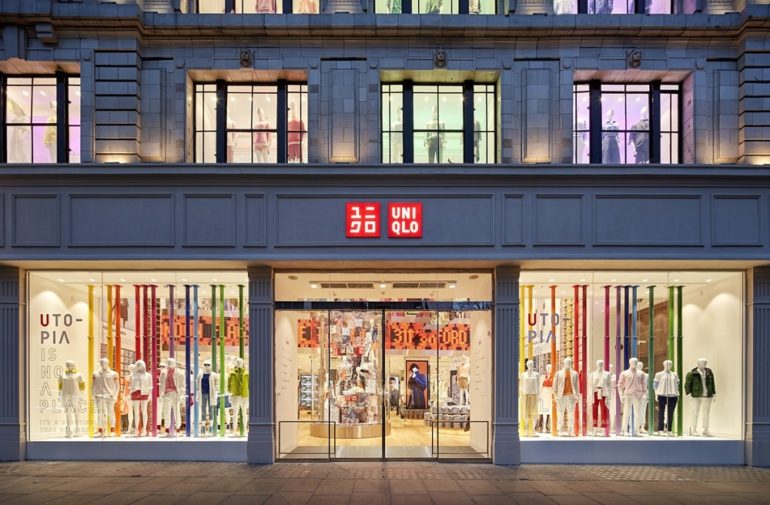
    Fast-fashion chain Uniqlo is suffering from the South Korean consumer boycott of Japanese goods.

    “We can confirm that there has been an impact on the sales in Korea,” a spokeswoman for Uniqlo owner Fast Retailing told Reuters. She declined to release any figures, however.

    The two countries are involved in a diplomatic row relating to disagreements over the compensation for forced laborers during Japan’s occupation of Korea during the second world war. That dispute has spilled over into the populations with Japanese products in South Korea being boycotted by shoppers as a form of protest.

    Uniqlo has nearly 200 stores in South Korea, selling around US$1.3 billion worth of clothing annually, equal to about 6.6 percent of its total sales. The South Korean consumer boycott may lead to delays in new stores opening if it continues

  • South Korean online shoppers still see brick-and-mortar as crucial

    South Korean online shoppers still see brick-and-mortar as crucial

    South Korean online shoppers still see offline stores as a crucial part of shopping, a recent study has shown.

    Furthermore, despite the widely held belief that consumers will engage in online shopping during lunch breaks, or before they go to bed, the study has also revealed that many shop during work hours.

    DMC Media, a South Korean media lab, reported stark differences in perception between the industry and consumers.

    Among consumers with the shopping experience in the last six months, 73.2 percent collected shopping information at offline stores, ranking second after mobile shopping (81 percent).

    About three in four consumers use offline stores rather than the web, indicating shoppers still have a desire to look at products before they buy.

    While offline stores are falling behind in the competition with e-commerce, online consumers are still acquiring shopping information through offline stores, which may indicate a path towards finding a breakthrough.

    In contrast, online marketers have been underestimating the importance of offline stores at 30.7 percent.

    Online marketers’ views differ on the time frame when most consumers engage in online shopping. While many believed consumers would not engage in online shopping during working hours (9am to 6pm), the study showed consumers consistently devote time to online shopping after 9am (15.4 percent) and online shopping activity peaks between 6pm and 9pm (46.9 percent), which shows most consumers engage in shopping activities regardless of time and work.

    When choosing an online shopping mall, consumers consider the price (29.4 percent) and product quality (23.4 percent). Coupons are a factor for 9.4 percent of consumers.

    The study also found that consumers click less on the advertisements posted on Instagram, Facebook, and other social networks (50.7 percent) than those linking to a portal website (69.1 percent).

    “Making a strong impression on consumers at offline stores through special programs will not only raise short-term profits but also increase brand loyalty and encourage them to come back,” said the DMC Media research team.

  • Starbucks Korea profit up with 28 percent

    Starbucks Korea profit up with 28 percent

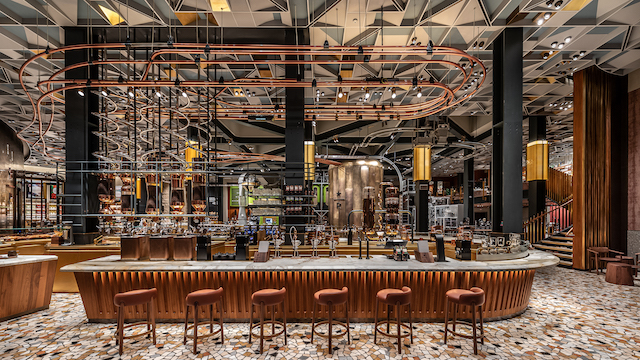
    Starbucks Korea has reported a 28-per-cent year-on-year jump in its operating profit in the first half of the year amid rising appetite for premium coffee, discount store chain E-Mart said Tuesday.

    From January to June, the US coffee giant posted an operating profit of 74.7 billion won (US$61 million) in Korea, up from 58.3 billion won in the year-ago period, according to E-Mart’s first-half earnings results.

    E-Mart, the country’s biggest discount store chain operated by Shinsegae Group, holds a 50-per-cent stake in Starbucks Korea, with the other 50 per cent controlled by Starbucks US.

    South Korea is one of the fastest-growing premium coffee markets, and Starbucks expects further growth in this country.

    Sales also jumped 25 per cent to 887.7 billion won in the first half from 709 billion won a year earlier, the data showed. Net earnings were not available.

    Starbucks, which entered Korea in 1999, currently operates 1308 stores, including 50 upscale Starbucks Reserve outlets, in Asia’s fourth-largest economy.

    Starbucks Korea earned 1.5 trillion won in sales last year, up 20 per cent from 1.28 trillion won a year earlier.

  • South Korean Beauty chains stop selling DHC products after Youtube commercial

    South Korean Beauty chains stop selling DHC products after Youtube commercial

    South Korean health-and-beauty stores have suspended sales of products from Japanese beauty firm DHC Corp, after the company made offensive remarks about Koreans.

    The products are being withdrawn from shelves of retailers in yet another chapter of a growing diplomatic row between the two countries.

    Since entering South Korea in 2002, DHC has gained popularity with cleansing oils and other products and has entered local H&B stores and online malls.

    However, DHC has been embroiled in controversy after saying on its television network subsidiary that “South Korea is a hot-tempered country, and the boycott will not last long”’, and using the word ‘Joseonjing’, a disparaging expression for Korean people, saying that South Koreans were not able to text Chinese characters.

    Olive Young, a leading health-and-beauty chain, said it stopped selling DHC Corp products at its online store on Monday morning.

    Olive Young also ordered its 1200 brick-and-mortar branches to move the display locations of DHC products, following guidelines to minimize consumer exposure to the Japanese company’s wares.

    As DHC’s subsidiary, “DHC Television,” was found to have aired YouTube content with hateful comments on South Korea, the move is attributed to worsening public sentiment, including a boycott among Korean consumers.

    “Because of realistic problems such as contract relations with partners, we are first giving guidelines such as changing the location of displays in the store and temporarily suspending sales at online malls and reviewing various measures,” an official at Olive Young said.

    Lalavla, South Korea’s second-largest health-and-beauty chain, operated by GS Retail Co, has also decided to stop selling some 20 DHC products at online malls and 150 offline stores.

    The location of the remaining stock will be relocated to a less visible location.

    LOHB’s, run by retail giant Lotte Group, also suspended sales of DHC products at its online mall on Monday and stopped stocking DHC products at about 130 offline stores nationwide.

  • PayPal-Backed Korean Fintech Raises $64 Million

    PayPal-Backed Korean Fintech Raises $64 Million

    South Korean fintech unicorn, Viva Republica, raised $64 million for its financial service platform Toss pushing the firm’s total value to $2.2 billion.

    The Seoul-based fintech has raised a total of $250 million, including $80 million in the December round, and new funding joins prominent existing investors such Singapore’s GIC and Sequoia Capital.

    Viva Republic was founded in 2013 and launched Toss in 2015 as a P2P money transfer service. It has since grown the platform to include various other financial services including banker, money transfer, credit score management and more. It currently boasts 13 million registered users with more than $42 billion of translation processed.

    This funding round was led by newly established Aspex Management (founded in 2018) which specializes in Asian equity investments in industries and firms with long-term structural tailwinds.

    We like the large addressable market financial services offer and the unique leading position Toss occupies amongst mobile consumers, said Hermes Li, founder and CIO of Aspex Management.

  • Blue Bottle Coffee’s industrial-style flagship opens in Seoul

    Blue Bottle Coffee’s industrial-style flagship opens in Seoul

    Blue Bottle Coffee’s first South Korean cafe which opened in Seoul’s artsy Seongsu neighborhood earlier this year, features an industrial-style design with steel surfaces and red-brick fixtures.

    The cafe was designed by Schemata Architects, which has already created several of the brand’s branches in Tokyo, Japan.

    South Korea is the second international market for the US coffee company, which opened its first Tokyo cafe in 2015, inspired by the hospitality of traditional Japanese kissaten (coffee house) culture.

    In the new three-floor, 14,000sqft Seongsu location, each level is dedicated to a different use. The cafe has been designated to the basement – a decision made by the practice after seeing that the ground floor overlooked a busy road often blocked with traffic.

    “Having the cafe in the basement provides a calm and peaceful space away from the bustle on the ground,” the design team explained to Dezeen.

    At its centre is a huge stainless-steel service counter, above which a section of the ceiling has been cut away to provide views to the upper floor.

    Large stacks of red bricks – a material typically used to clad the facades of buildings in Seongsu – have been dotted throughout the space, where brand merchandise like packets of coffee and mugs can be displayed.

    “As a mark of respect for [Seongsu’s] history, we decided to also use brick inside the building,” explained the practice.

    A short set of stairs leads down to a lowered seating area that’s dressed with timber tables and chairs, as well as a couple of long beige sofas.

    The ground level hosts a roastery, a storage room for coffee beans and an area dedicated to cupping: the practice of observing the taste and aroma of brewed coffee. It is all fronted by glass allowing pedestrians outside to see the coffee-making process.

    “The basic design rules for Blue Bottle Coffee cafes remained the same in this project, which is to use a limited number of materials to create a space with a sense of unity and to create a flat relationship between the customers and the staff over the counter,” the practice’s founder, Jo Nagasaka said.

  • South Koreans start boycotting Japanese retail goods

    South Koreans start boycotting Japanese retail goods

    As a South Korean consumer boycott of Japanese goods gains momentum, consumers are starting to share information on new and upcoming Japanese retailers coming to the country.

    The intention, reports Korea Bizwire, is to include the retail brands on the boycott list and hurt sales as soon as the stores open. Among them, Japanese brands GU and Muji are being mentioned online as possible targets.

    GU is Uniqlo’s sister brand, owned by Fast Retailing. It plans to open its second and third stores in Yongin, Gyeonggi Province and Seoul’s Times Square Mall by early next month.

    Netizens are posting articles that emphasize the relationship between Uniqlo and GU as well as FRL Korea, which currently operates the Uniqlo Korea business.

    Discord between the two countries dates back to Japan’s colonial occupation of the Korean Peninsula before and during the Second World War and controversy over forced labor and sexual slavery. It expanded into a diplomatic crisis last week when Japan threatened to throttle exports of materials essential to South Korean industries.

    Last weekend, thousands of protestors marched in Seoul, accusing Japan of an “economic invasion”. The boycott campaign against Japanese retailers has stemmed from there.

    South Korea’s Lotte Shopping and Japan’s Fast Retailing invested US$19.7 million to establish FRL Korea, owning 49 percent and 51 per cent of the company’s shares, respectively.

    That business partnership is being subject to public criticism for taking the lead in importing Japanese goods into South Korea after GU set up its flagship store at Jamsil’s Lotte World Mall and its second franchise at Lotte Mall in Yongin.

    Muji, one of the best-known Japanese brands on the boycott list, is planning to renovate its store in Times Square Mall later this month.

    The news is being shared on social media, and many netizens are already calling for a boycott of the new store.

    GU and Muji have no current plans to suspend expansion or shut down stores already in operation. However, experts who spoke to Korea Bizwire agree that the new stores won’t be able to attract customers through the ‘grand opening’ effect unless the boycott movement subsides.

  • Aesop store in Seoul features reclaimed red bricks

    Aesop store in Seoul features reclaimed red bricks

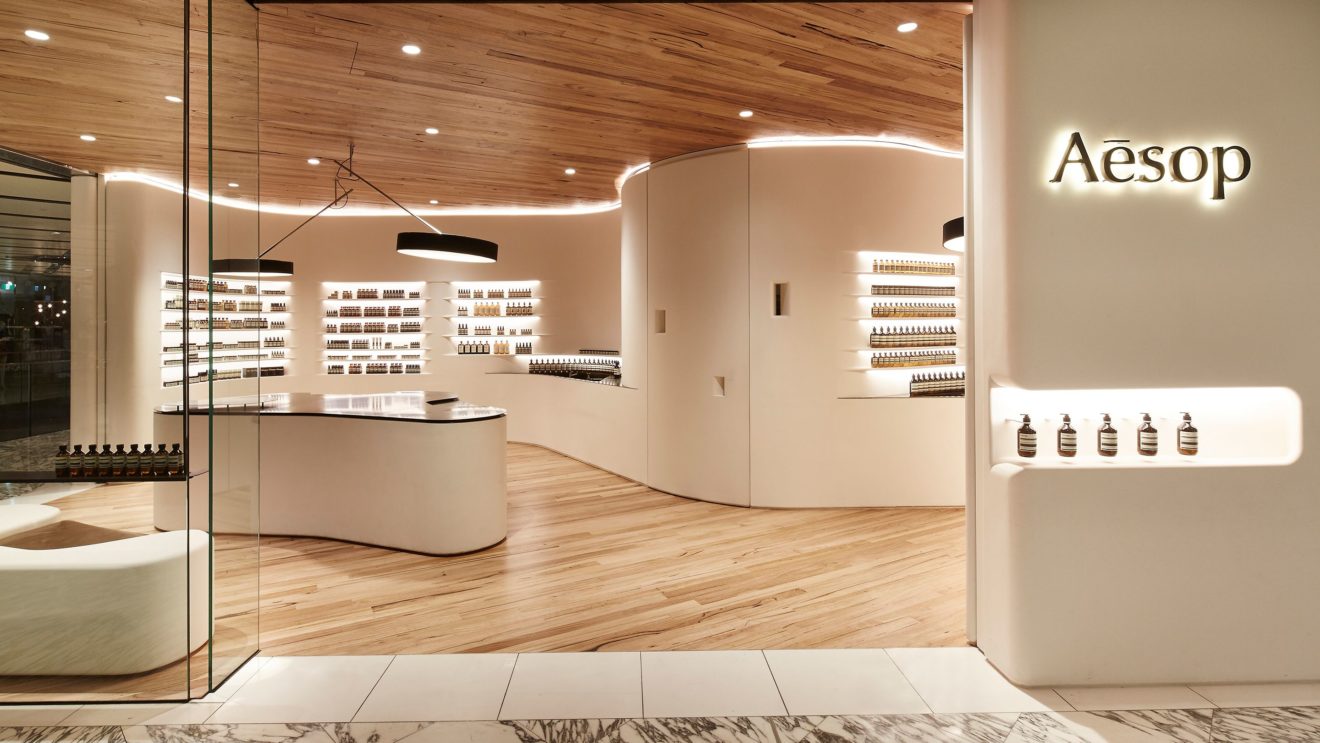
    Luxury skincare brand Aesop has opened a distinctive store in south-central Seoul designed by Hong Kong designers Mlkk Studio.

    The designers laid out the two-level Aesop store in Seoul using reclaimed red bricks to fashion within the building’s slate-grey brick facade to create a warm and inviting shop interior. It is intended to provide a cozy retreat for shoppers, especially during the cold winter months.

    “It gave an exciting opportunity to do something just the opposite with the same material,” said an Mlkk Studio spokesperson. “The choice of material also creates a dialogue with the architecture and effortlessly blends the interior and the exterior … The bricks add color variety and enrich the sense of time and history of the space.”

    The bricks are also used in the store’s service counter and for a sink where customers can try out the products. Two arched cubby holes with copper shelving are built into the rear wall, resembling traditional Korean kilns.

    The Aesop store in Seoul is one of many stores by the brand profiled on design site Dezeen.

  • South Koreans boycott Japanese products

    South Koreans boycott Japanese products

    A boycott campaign against Japanese products and services is becoming a nationwide movement and extending into travel.

    The boycott started after Japan imposed trade restrictions against South Korea. Amid the boycott, a series of statistics show that the number of reservations for trips to Japan has dropped significantly.

    Hana Tour, the nation’s leading travel agency, reports that the number of new reservations for three-day trips to Japan from July 8 to 10 dropped to an average of 400 per day.

    The figure is down one-third, considering the average number of people booking a new trip to Japan through the company is around 1200 per day.

    However, Hana Tour reported that the number of cancellations, where customers retrack their reservation, remained the same.

    “Up until last week, the number of customers making reservations to Japan was similar, but this week the number declined sharply,” a Hana Tour official said.

    Another travel agency, which requested anonymity, also said that reservations for trips to Japan had been declining compared to typical levels since late last week.

    Those who considered travelling to Japan for the summer vacation season are changing their destinations to other countries. The decision is part of the aftermath of the boycott, a travel industry source said.

    “However, those who had booked trips to Japan in advance seem to be reluctant to cancel because of the huge burden of cancellation fees,” added the source.

  • Amorepacific opens Sulwhasoo Universe at Hainan

    Amorepacific opens Sulwhasoo Universe at Hainan

    Korean beauty firm Amorepacific has launched a new pop-up store, “Sulwhasoo Universe”.

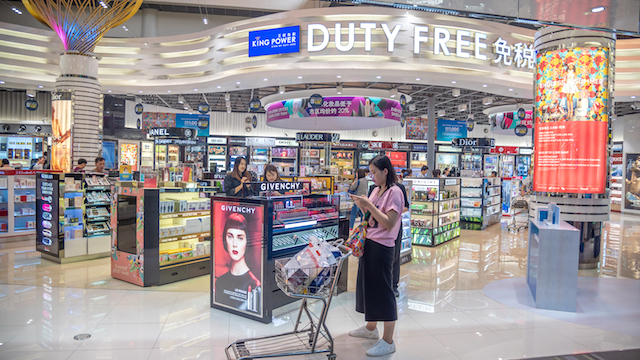
    The firm hosted an event at the China Duty Free Group (CDFG) Sanya International Duty-Free Shopping Complex – the world’s largest duty-free store – to celebrate the opening on July 6. The event also served to mark with the 40th year anniversary of CDFG.

    Sulwhasoo Universe is a global pop-up store campaign to mark the launch of the Sulwhasoo First Care Activating Serum EX “Star Collection”. The brand opened its first pop-up store in Korea on May 15, following it up with a string of other stores in eleven major cities around the world.

    Open until July 31, the Sulwhasoo Universe pop-up store presents content based on an observatory-inspired concept to deliver a brand story behind the serum, a signature Sulwhasoo product.

  • South Korean duty-free operators chasing another boom

    South Korean duty-free operators chasing another boom

    After years of struggle in the face of a decline in Chinese tourists and increased competition, South Korean duty-free operators are in search of a more stable and sustainable business portfolio — to reduce their reliance on Chinese visitors and generate decent profits.

    The country’s duty-free business has raked in huge revenues on the back of soaring tourists, mostly from China.

    But a diplomatic row between Seoul and Beijing over a missile defense system in 2017 and regulatory changes vividly underscored the need for leading duty-free operators — Lotte Duty Free and Shilla Duty Free — to accelerate their overseas push.

    Sales at local duty-free stores continued to show solid growth in the past few years, reaching their highest-ever of US$17.23 billion last year, with an annual growth of 23 per cent over the past two years, according to data from the Korea Duty Free Shops Association.

    The spectacular result comes even when the number of Chinese package tour travellers to South Korea continued to drop after the travel ban imposed by Beijing in 2017 in protest against Seoul’s hosting of a US missile defense system.

    The number of Chinese who arrived in South Korea peaked at 8.07 million in 2016 but shrank to 4.16 million a year later, according to the state-run Korea Tourism Organization (KTO).

    The number, however, rebounded last year rising 14.9 per cent to 4.78 million, accounting for 31.2 per cent of 15.34 million foreign visitors to the country, which marks a 14.9 percentage-point rise from the previous year.

    Market watchers said the robust growth in their sales was mostly attributable to Chinese vendors or individual Chinese merchants who buy their duty-free purchases, such as cosmetic products, in large quantities and sell them back at their home.

    But commissions doled out to the sellers, who also work with travel agents to bring in big-spending tour package groups, have been excessive, eating into the profits of South Korean duty-free operators.

    The local duty-free market’s dependence on foreign tourists continued to increase with sales from foreigners accounting for 83 per cent of the total market last year, according to separate data. The figure for downtown duty-free outlets is even higher at 90 per cent.

    “It is difficult to just paint a rosy picture for duty-free operators given excessive marketing costs, such as commission fees that are needed to maintain a certain level of Chinese customers,” said Cha Jae-heon, an analyst at DB Financial Investment Co.

    Competition to bring in individual merchants and group travellers may intensify as more duty-free outlets are set to open in Seoul and other parts of the country later this year.

    The number of downtown duty-free outlets in Seoul more than doubled from six in 2015 to 13 last year. Earlier this month, the government said it will also issue five additional licenses to local retail conglomerates.

    Against this backdrop, market leader Lotte Duty Free, the travel retail division of Lotte Hotel Co, has been actively tapping into overseas markets by opening the first outpost in Jakarta, Indonesia, in 2013.

    Lotte Duty Free now operates 12 outlets in seven countries, including South Korea, and is set to increase the number to 22 in eight countries, including a new store in downtown Danang, Vietnam, and another at Hanoi International Airport that are set to open in the latter half of the year.

    The duty-free operator said it expects to meet its annual overseas sales target of 700 billion won (US$596 million) this year on the back of robust performances at its overseas operations, most noticeably in Vietnam.

    Lotte Duty Free aims to reap 1 trillion won in annual revenue from its offshore business in 2020 and plans to tap into new lucrative markets, such as Japan.

    “What sets Lotte Duty Free apart is that industry rivals are mostly focused on airport duty-free businesses, while we aim to dominate the market where there are no downtown duty-free stores,” said Park Sang-seob, a Lotte Duty Free official.

    The company also opened stores in Australia and New Zealand in March becoming the first South Korean duty-free operator to make inroads into the Oceania region. It signed an agreement with Melbourne-based JR Duty Free to run four retail outlets in Australia and one in New Zealand.

    Shilla Duty Free, the country’s second-biggest travel retailer under Hotel Shilla Co, currently operates five outlets in Singapore, Hong Kong, Macao, Thailand and Japan, as part of its strategy to balance its over reliance on the local market.

    The company already achieved annual sales of over 1 trillion won in its offshore business last year, accounting for over 20 per cent of the total revenue. The figure is also more than a twofold jump from 500 billion won in 2016.

    Its offshore business also climbed into the black in the first quarter of the year for the first time, partly on the back of stellar performance in major gateways of Asian countries.

    “The figure shows Shilla Duty Free’s reputation as an Asian travel retail powerhouse,” said Ha Joo-ho, an official at Hotel Shilla.

    “We are highly focused on our overseas push so that our sales are less affected even when there are fewer travellers from China.”

    The company said it will continue to bolster its duty-free business to make it the third-largest player around the globe by 2022, trailing Swiss-based travel retailer Dufry AG and France-based Lagardere Travel Retail.

  • South Korean love hotels business booming and expanding

    South Korean love hotels business booming and expanding

    Yanolja’s gentrification of South Korean love hotels has brought the company a valuation of more than $1 billion from investors keen to capitalise on the globalisation of a novel approach to short-stay accommodation, its chief executive told Reuters.

    The budget hotel and online booking platform operator reached the valuation having secured $180 million from US peer Booking Holdings Inc and Singapore sovereign wealth fund GIC Pte Ltd, Yanolja confirmed on Tuesday.

    It aims to conduct an initial public offering (IPO) as early as next year, CEO Kim Jong-yoon said in an earlier interview.

    “I can proudly say we transformed the industry,” he said.

    Yanolja’s emergence coincides with a time of flux among hoteliers, as legislators are at loggerheads with market disruptors such as Airbnb Inc – through which private home owners can let rooms for short-term stay – while a government campaign to reduce working hours promises to free up more leisure time for short breaks.

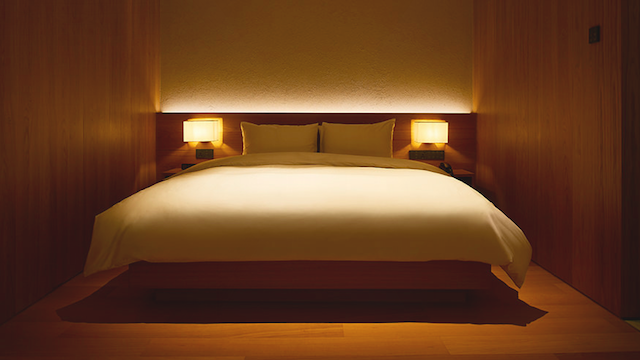
    Love hotels have occupied a peculiar space in the broader market, offering privacy for as little as a few hours at minimal cost for, for instance, young couples living with their parents.

    Popular association with extramarital affairs, prostitution and hidden cameras, however, has sullied their reputation, exacerbated by their often garish decor and low-key lighting.

    Yanolja – meaning “Hey, let’s play” – sought to dispel any stigma with its bright, modern franchised love hotels, targeting millennial couples but also budget tourists seeking short-term accommodation.

    “Previously, many people were not able to go to love hotels out of embarrassment,” Kim said. “But we’ve drawn in guests even for travel. That’s the biggest change.”

    The firm, which began as an online search portal for love hotels, also lists hotel, pension and guest house rooms on its website at prices ranging from 50,000 won ($41.86) a night at budget hotel Ben-Hur to 200,000 won at five-star Hyatt.

    It has entered a strategic partnership with Booking whereby the latter’s Agoda brand can list Yanolja accommodation, while Yanolja customers will be able to book worldwide through Agoda and other Booking brands, Yanolja said in a Tuesday statement.

    Booking and GIC were not immediately available for comment.

    “It’s a unique example which breaks away from the traditional notion of love hotels,” said tourism professor Lee Hoon at Hanyang University in Seoul.

    “But the domestic market is not big enough. Yanolja can survive only if it goes global and scales up,” Lee said.

    Yanolja aims to expand in hotels in Southeast Asia where it invested $15 million in ZEN Rooms last year, bringing it into competition with Indian budget hotel operator Oyo, backed by Airbnb and Japan’s SoftBank Group Corp.

    “We are very keen to go global,” said Kim.

    Yanolja was founded in 2005 by former love hotel housekeeper and valet Lee Su-jin, whose search portal evolved into an advertising platform for love hotel operators seeking to replace customers lost after the 2004 passing of an anti-prostitution law.

    A decade later, Yanolja claimed to be the first company to offer a reservation platform for mobile phones for its own and others’ love hotels, a major shift in an industry which relied on walk-in customers.

    The platform allowed it to expand its target guests to shoe-string travellers from home and abroad, in a country where Airbnb-type options are limited to foreign guests. Listings later ballooned as hoteliers turned to Yanolja to fill rooms after a political dispute caused a drop in Chinese demand.

    South Korea’s online travel sales nearly doubled in five years through 2018 to $21.8 billion, showed Euromonitor data provided to Reuters. Sales by mobile made up nearly half of the total, the third-biggest proportion globally, Euromonitor said.

    Yanolja’s revenue nearly doubled to 188.5 billion won last year, from a year earlier, but the firm is still losing money on a consolidated basis, said CEO Kim. It aims to sell shares in an IPO by 2022 at the latest, he said.

    Yanolja plans to increase offerings and raise efficiency through technology such as artificial intelligence and the internet of things, in a hotel industry Kim deemed conservative.