Tag: Korea

  • SK Broadband agrees to merge with t-broad

    SK Broadband agrees to merge with t-broad

    South Korea’s SK Telecom has arranged to merge its fixed broadband subsidiary SK Broadband with the nation’s second largest cable TV operator t-broad to help both companies weather rapid changes in the pay TV market.

    Under the proposed merger, which still requires government approval, SK Telecom would take a 74.4% stake in the combined company.

    Meanwhile t-broad’s parent company Taekwang Industrial would take a 16.8% stake in the company, with the remaining held by financial investors, treasury stock and others.

    The merger ratio has been set at 75:25 based on corporate valuation analysis, the companies said. The two companies have also attracted additional investment of 400 billion won from financial investor MiraeAssetDaewoo.

    As of June 2018, t-broad had around 3.14 million subscribers. Adding SK Broadband’s IPTV subscriber base of 4.54 million recorded at the same period, the combined entity would become a media company with around 8 million subscribers.

    But the two companies could face difficulty securing competition regulatory approval for the merger due to this figure.

  • LG Aledgly stopping flagship smartphone production in Korea

    LG Aledgly stopping flagship smartphone production in Korea

    LG’s smartphone business has been struggling for quite some time, but the company is still hopeful of turning a profit. At this point, a sudden uptake in smartphone sales seems unlikely so LG has recently focused on cost-cutting measures, one of which seems to be suspending smartphone production in its home country.

    LG is planning to shift its current Korean smartphone production over to a plant in Vietnam with the objective of helping “turn around the money-losing smartphones division.”

    Currently, LG’s smartphone production plan in South Korea focuses primarily on the production of flagship smartphones. It’s unclear if mid-range and low-end smartphones are also made at the plant, but the production output currently accounts for between 10% and 20% of LG’s total smartphone production.

    LG still has production bases in Brazil, China, India, and Vietnam so this latest development certainly doesn’t mean it’s the end of the road for the South Korean brand. Nevertheless, the company continues to experience declining sales and could soon lose its third-place position in the US to Motorola. And as history has shown us with Sony, it’s almost impossible to achieve profitability without some sort of growth, not matter how much effort is put into cost-cutting.

  • South Korean E-Commerce Under Pressure

    South Korean E-Commerce Under Pressure

    Mounting losses in the South Korean e-commerce industry are calling local business models into question. Competitive pricing and fast delivery capacities have made the industry an ascendant phenomenon in the territory, with the purchase of a whole spectrum of consumables now possible via mobile phone. The industry hit a record high of KRW111.8 trillion (US$98.4 billion) in transactions last year, putting the economy among the top five e-commerce markets worldwide.

    But gigantic operational losses have emerged out of stiff competition on price and logistics set-up costs. Korea’s top e-commerce firm Coupang shattered its own records with KRW4.42 trillion ($3.8 billion) in sales last year, but made a staggering KRW1.1 trillion ($950 million) operational loss.

    While Coupang’s deficits have been widening for nine years, CEO Kim Beom-seok stubbornly insists the losses are planned and says investment will continue.

    “We have pushed for massive investment to impress our customers,” said Kim, “and will continue to aggressively invest in technology and infrastructure.”

    The firm has single-handedly changed the outlook for South Korean retail and put brick-and-mortar operators on red alert – but has yet to prove profitable.

    Rival operator Tmon faces a similar issue, with its KRW492 billion ($425 million) sales last year sad-tromboned by KRW125.5 billion (108.4 million) in operating losses that have been accumulating since the year 2000, now standing at KRW770 billion (665.5 million) in total. The firm’s latest nose dive was attributed to “investment in core technologies”.

    “Customers frequently visited our app on expectations for new products and promotions changing every hour, which raised their royalty and created a virtuous cycle,” said Tmon CEO Lee Jae-hu. “We will continue efforts to strengthen the market position and seek ways to improve profitability this year.”

  • Apple’s 5G iPhone Using Samsung Modems to be released in 2020

    Apple’s 5G iPhone Using Samsung Modems to be released in 2020

    In one fell swoop, Apple cut the Gordian knot of 5G modem supply and it is smooth sailing from here, as it paid Qualcomm undisclosed amount to settle the patent litigation and secure a multi-year contract for 5G iPhones.

    “It’s personal. I don’t see anybody who can bridge this gap,” tipped the WSJ recently about Apple and Qualcomm CEOs relationship but the big boys ironed out their differences quickly. Apple could have tried Intel, Samsung or Huawei, but each of those choices comes with drawbacks.

    Intel threw in the towel on 5G modem development when it learned that Qualcomm resolved its patent issues with Apple, while America’s homeland security institutions would balk at Huawei’s involvement due to geopolitical considerations. Despite all rumors, Huawei company reps said during its Analyst Summit 2019 yesterday that they have “no communication with Apple on 5G modems.”

    Samsung, on the other hand, simply can’t make enough of its own 5G modems to exclusively supply huge customer like Apple. It recently declined Apple’s advances for its Exynos 5100 5G modem. Not only does the company need its production for the Galaxy S10 5G that is now shipping, but it could very well need it for the Note 10 Pro, too, and others down the line.  According to one “electronics industry official” there:

    Apple inquired about the supply of 5G modem chip from Samsung Electronics System LSI division. However, we know that Samsung Electronics System LSI answered that the supply volume of its smartphone 5G modem chip is insufficient.

    Well, the most renowned Apple supply chain analyst, Ming-Chi Kuo of TF International Securities, has spoken, and Apple will seemingly hedge its Qualcomm bets with Samsung as a side dish. If you are wondering why, Apple is most likely planning to use the more advanced Qualcomm modems in placed where mmWave spectrum 5G networks are being established, while Samsung’s likely cheaper solution will remain for the sub-6 GHz crowd.

    Apart from all these juicy dual supplier predictions, Ming-Chi Kuo is advocating for a fall 2020 release date of the future 5G iPhones. That’s the same timeframe as before but this time around, Apple is in a position to use the best that the 5G market can offer without triggering the NSA, CIA and other three-letter agencies’ wrath.

    South Korea just launched its nationwide 5G network, with the Galaxy S10 5G being its poster child. Upon the phone’s release there, Korea will have all of its largest networks offering 5G plans. In fact, Korea Telecom announced three 5G price tiers. Among those, there is a “Super Plan” that offers truly unlimited 5G data without speed caps, and this one will go for the equivalent of $70, a pretty good price no matter how you slice it. In fact, the Super 5G Plan is somewhat cheaper than the current unlimited 4G LTE plans in Korea, so the 5G future seems bright, and we are expecting more and more 5G handsets to enter the fray this year, especially towards the tail end of 2019.

    A true nationwide shift to 5G networks is not happening this year in the US anyway, so iPhone users won’t be missing all that much until then. Next year, however, most of the flagship phones of the spring season will probably have some sort of 5G connectivity support, be it with a Qualcomm, Samsung or Huawei modem, and Apple could feel the pinch in that regard.

    Had Apple gone alone in developing a 5G modem, either by acquiring Intel’s wireless modem assets, or starting from scratch, it would have taken it years to reach a sufficiently good unit that is worthy to put in millions of iPhones. Wireless connectivity modems are perhaps the most complex of chips in a phone, and 5G ones require so much filters and software control to avoid interference and still be backwards compatible that this option would have meant either a lot of extra expenses for Apple in order to deliver a 5G iPhone in 2020, or falling behind the competition by launching one that is a cycle or two behind.

    “Apple knows our phone number, we are still in San Diego,” tipped Qualcomm recently, giving a glimmer of 5G hope, and patching thing up with Qualcomm turned to be the smartest solution, just as we expected. There you have it – Apple resolves the bad blood between the companies, Qualcomm is likely to assist it with the 5G push, and Samsung will be its sidekick. The 5G future is so bright, we have to wear shades. According to Kuo, the launch of the 5G iPhone is expected to unleash a big upgrade cycle for Apple, and he upped his forecast for iPhones sold in 2020 to the whopping 200 million, from the current 190 million prognosis.
  • Sephora heads to Seoul, Korea

    Sephora heads to Seoul, Korea

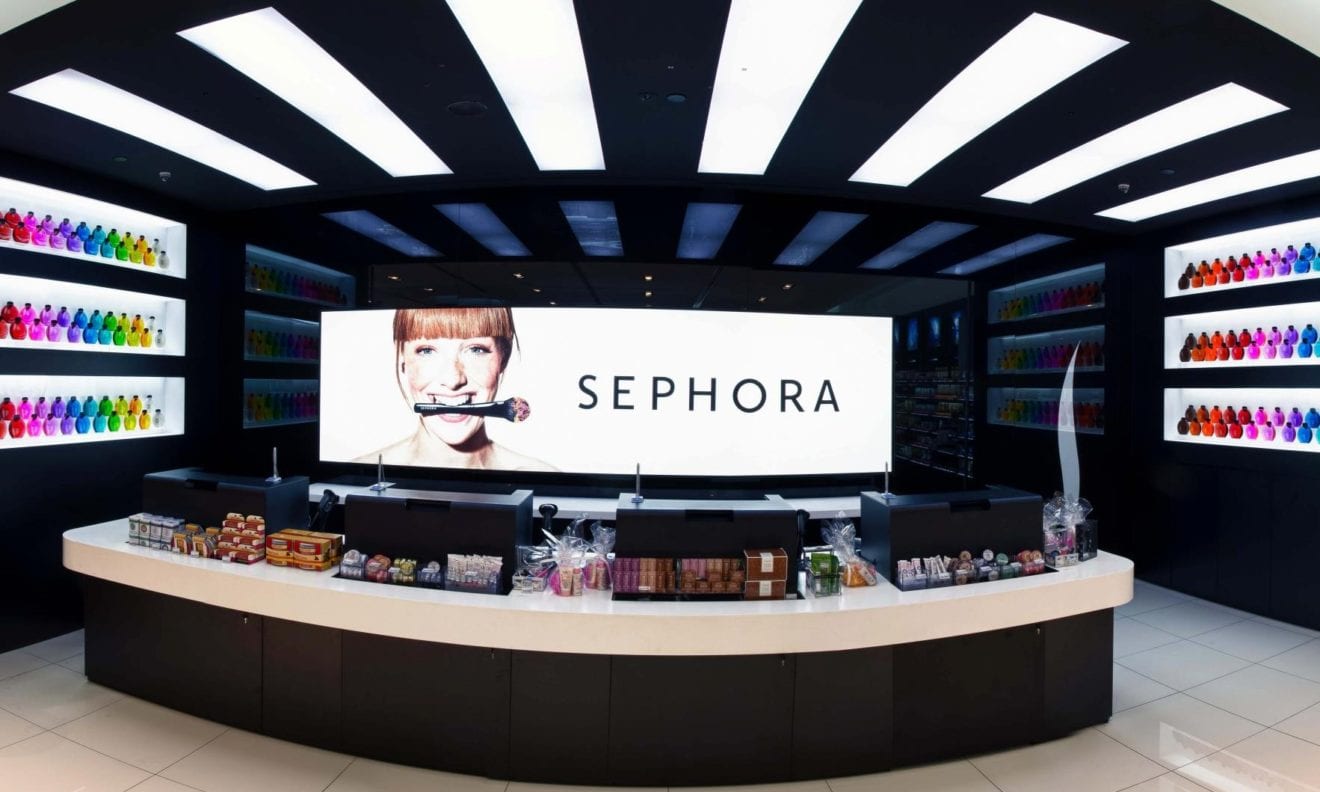
    LVMH-owned cosmetics retailer Sephora will launch its first outlet in South Korea this October.

    The first Sephora South Korea retail space will take up 547sqft in Gangnam, featuring hundreds of brands as well as home-brand products under the Sephora label.

    “Sephora will contribute to expanding the local beauty market by proposing a new standard,” said Sephora Korea CEO Kim Dong-ju.

    The Sephora South Korea store will be the first of six planned to be trading by next year, along with an online store.

    Sephora operates more than 3000 outlets worldwide and has a strong presence in Asia. It also plans to make a return to Hong Kong soon, opening in space at IFC mall.

  • South Korean bank launches hand palm recognition verification

    South Korean bank launches hand palm recognition verification

    A South Korean bank has launched a service allowing customers to use palm recognition to withdraw cash – a likely precursor to similar technology becoming available in retail stores.

    KB Kookmin Bank says by using palm prints, customers no longer have to use a bankbook, stamp or password.

    The bank explained that palm vein recognition is safer and more precise than other biometric identification methods such as fingerprint or iris recognition. It believes the service will appeal to older customers who often have difficulty recalling passwords.

    According to a report, using palm recognition is also quicker than current means. Palm vein patterns differ by individual, allowing the scanner to correctly identify the customer.

    Similar palm-vein scanners are already being used at automated teller machines (ATM) from major banks worldwide, including Barclays in the UK and Ogaki Kyoritsu Bank in Japan.

    To prevent biometric information from leaking, the bank will encrypt the vein pattern database and work with the Korea Financial Telecommunications and Clearings Institute to store the information. The data will be disassembled into multiple blocks when stored, and reassembled when used for transactions.

    KB Kookmin Bank expects that the new palm-recognition service will particularly benefit senior customers who often have a hard time remembering passwords.

  • Greater China and South Korea drive Massive Uniqlo sales

    Greater China and South Korea drive Massive Uniqlo sales

    Heavy discounting necessary to offload winter stock has hit Uniqlo sales. Parent Fast Retailing has struggled with a shortage of popular winter items in the past, and overcompensated last winter by ordering too much inventory ahead of what proved to be an unusually warm season.

    As a result, the Japanese retailer’s first-quarter profit took a hit which in turn impacted of first-half results issued yesterday.

    The company reported declines in both revenue and profit in the first half of the current financial year, with revenue totaling ¥491.3 billion, (US$4.397 billion) down 5 per cent from the previous corresponding period, and operating profit totaling ¥67.7 billion ($606 million), down 23.7 per cent from the previous year. Same-store sales fell 9 per cent, however online sales, which now account for 9.9 per cent of Uniqlo sales in Japan and 20 per cent in China, rose 30.3 per cent.

    The weak first quarter for Uniqlo sales was in part compensated for by a double-digit increase in sales and profit in China, which helped the brand turn in a better-than-expected rise in operating profit to ¥68 billion ($609 million) for the three months to February.

    The company said it now expects an operating profit of ¥260 billion for the financial year through August, compared to its previous forecast of  ¥270 billion in January. The revised outlook would still be a record high and represent a 10 per cent year-on-year rise.

    Uniqlo re-stated its medium-term vision of becoming the world’s number one apparel retailer.

    “In pursuit of this aim, we are focusing our efforts on expanding Uniqlo International and our GU casual fashion brand,” said Tadashi Yanai, chairman, president and CEO of Uniqlo. “We continue to increase Uniqlo store numbers in each country in which we operate, and open global flagship stores and large-format stores in major cities around the world to further develop Uniqlo as a global brand.”

    He said that within the company’s international division, Greater China and Southeast Asia are entering “a new stage of growth as key drivers of operational expansion”.

    Uniqlo Greater China generated double-digit growth in both revenue and profit in the first half of the year despite the dampening effect of the mild winter weather.

    “Within that region, our operation in Mainland China continued to report strong growth in revenue and profit of approximately 20 per cent year on year. Uniqlo South Korea also reported increases in both revenue and profit. Uniqlo Southeast Asia & Oceania generated significant rises in both revenue and profit thanks to strong increases in same-store sales in every single one of the region’s markets.

    Meanwhile, the company plans to open more GU stores in Japan, while expanding the brand’s international presence, primarily in Greater China and South Korea.

  • Korean GS25 launches shared-bike charging service

    Korean GS25 launches shared-bike charging service

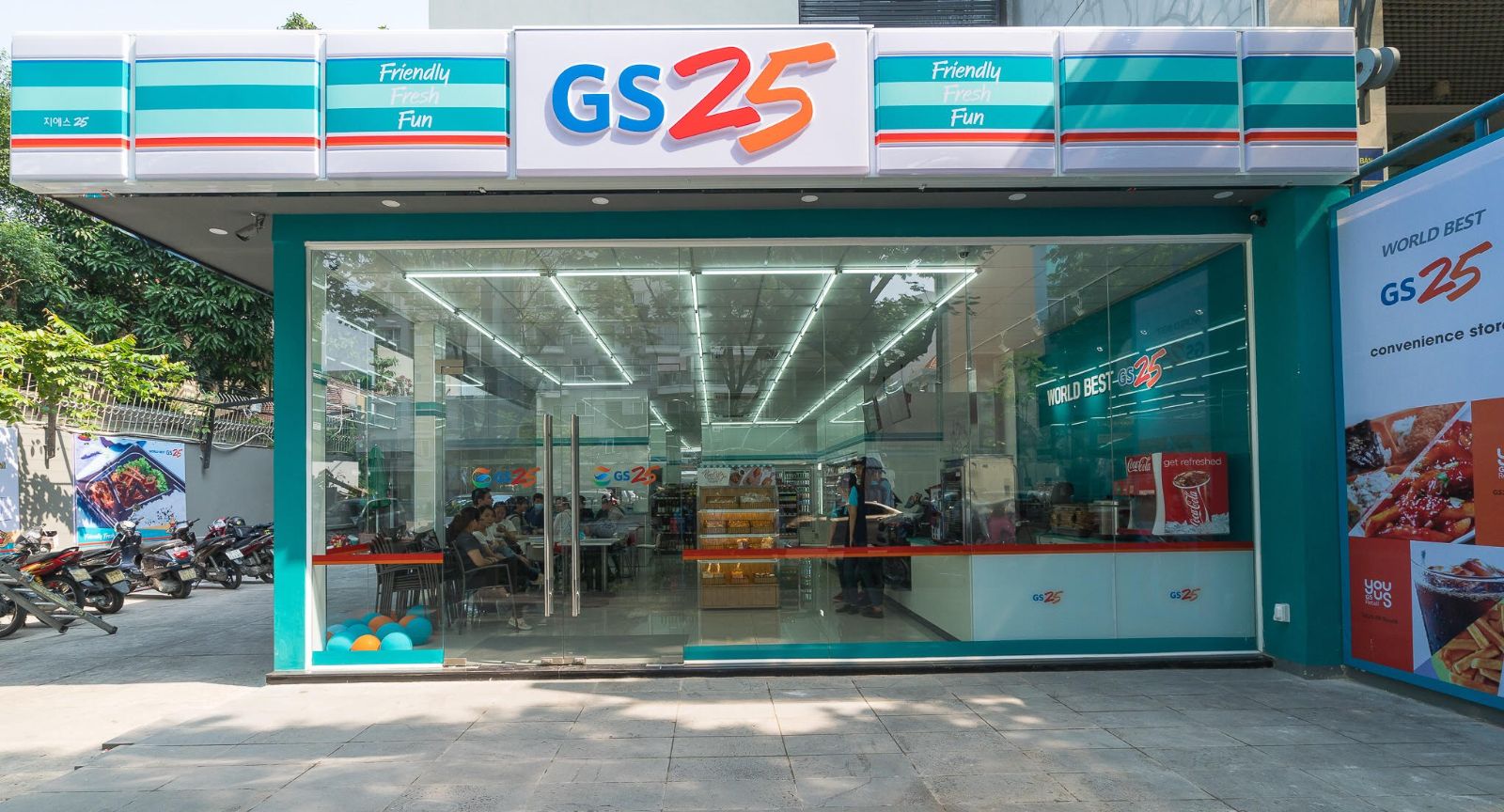
    Starting June, customers of South Korean GS25 convenience stores will be able to charge shared electric bicycles or kickboards.

    GS25 announced on Wednesday that it will set up an electric bicycle and kickboard charging service facility at its stores in partnership with the shared micro-mobility integrated platform “GoGoSing.”

    Under the terms of the deal, GoGoSing will operate 800 shared electric kickboards and shared electric bikes in Gangnam District in Seoul and Pangyo in Gyeonggi Province, while GS25 will set up charging facilities at stores in nearby areas.

    Customers will be able to use an electric kickboard and return it to a nearby GS25 store, and if they need to charge their device, they will also be able to exchange or charge batteries at the stores.

    GS25 expects that this will help convenience stores to move away from their focus on simply selling products and serve as a hub for charging various shared devices, as well as attracting new customers.

    GS Retail has introduced charging facilities for electric vehicles at 45 locales at present, and will offer delivery services for convenience store products since starting from April, in tandem with the delivery application Yogiyo.

  • South Korean online retail sales show steep climb

    South Korean online retail sales show steep climb

    South Korean online sales posted double-digit growth in February, underpinned by soaring demand for air purifiers.

    The spike in demand was caused by an instance of fine-dust pollution that hit Korea during the month.

    The findings were published in a Ministry of Trade, Industry and Energy report last Thursday that registered a 12 per cent advance in online retail sales compared with the same period last year.

    Home appliances sales, encompassing air purifiers, grew 62.2 per cent over the course of the month.

    The February figures contrasted with a 0.4 per cent dip in revenue by both online and offline major retailers and a 7.1 per cent decline in offline sales. Discount outlet sales also dropped by 13.7 per cent.

  • Chanel Opens Flagship Store in Seoul

    Chanel Opens Flagship Store in Seoul

    A new Chanel South Korea flagship has opened in Seoul.

    The Cheongdam-dong boutique opening provided the opportunity for the brand to unveil its latest ready-to-wear collection alongside its capsule accessories collaboration with musician Pharrell Williams, who performed at the event.

    The capsule collection is a bright combination of pop music and street-art motifs, and is currently selling at the new Seoul store, pending global release on April 4.

  • Kia Showcasted Three Concept Cars At The Seoul Motor Show

    Kia Showcasted Three Concept Cars At The Seoul Motor Show

    Kia Motors is all set to reveal a trio of new concepts at the 2019 Seoul Motor Show and they will preview the brand’s future design direction. Two of the three concepts make their international debut in Seoul, with the rugged Kia Masterpiece Concept which shows off a large SUV body with a luxurious, high-tech cabin. The Masterpiece is accompanied by the Kia Signature which is essentially the SP concept that the company showcased at the 2018 Auto Expo and finally the Imagine by Kia concept car which is an all-electric sports sedan which embodies Kia’s desire to create exciting low-emissions passenger cars.

    Each of the cars illustrate different elements of the brand’s future model strategy. The Kia Masterpiece concept makes its first public appearance, with a rugged and robust large SUV. The Masterpiece hints at how the brand could adapt its latest designs and features for the large off-road SUV segment. It sees sculpted bodywork and bold lines and it combines a purposeful SUV stance and raised body, and an all-wheel drive system. The front of the car features Kia’s new tiger nose grille, extended outwards across the whole front section of the concept, with no clear boundaries between grille and LED headlamps. The design of the front of the car is echoed in the rear of the car, with signature lines at both ends of the vehicle giving the car a consistent design all round.

    The Signature Concept is the made its international debut at the India’s Auto Expo 2018 in Delhi. Driven by advanced technology, the Kia SP Concept hints at the company’s plans to introduce a new small SUV for its global markets as well. The SP Concept gets a wide grille and long hood at the front, and a rear design which emphasises stability with wide rear lamps and body lines, the Signature stands out on the road. At the front, its lamps are connected to the ‘tiger nose’ grille, with integrated daytime running lamps. Its strong shoulder line, with a glasshouse which tapers towards the rear of the car, lends the compact SUV an air of understated sportiness. The exterior is completed with a series of distinct styling features, contributing to the car’s contemporary, technical design. These include thin LED lamps at the front and rear, sharp lines pressed into the bodywork, and precise metallic details. Of course the production ready version will be revealed later this year.

    Finally, it’s the Imagine by Kia concept which was revealed at the 2019 Geneva International Motor Show, but it’ll now make its Asian debut. The fully-electric sports sedan concept has been designed at Kia’s European design center in Frankfurt, Germany. This concept is Kia’s first pure electric four-door passenger car. The Imagine by Kia concept represents a more progressive Kia design language for the future, with intelligent reinterpretations of existing Kia motifs and a bodywork characterized by a blend of tautly-drawn sheet metal, crisp lines, and efficient aerodynamics.

    The design team has exploited the chassis architecture of the powertrain’s all-electric layout to maximise cabin space and create an airy and spacious interior. The concept features 21 individual ultra high-resolution screens. While not immediately destined for production, the Imagine by Kia concept hints at interior and exterior design elements that could be adapted for future production models from the brand.

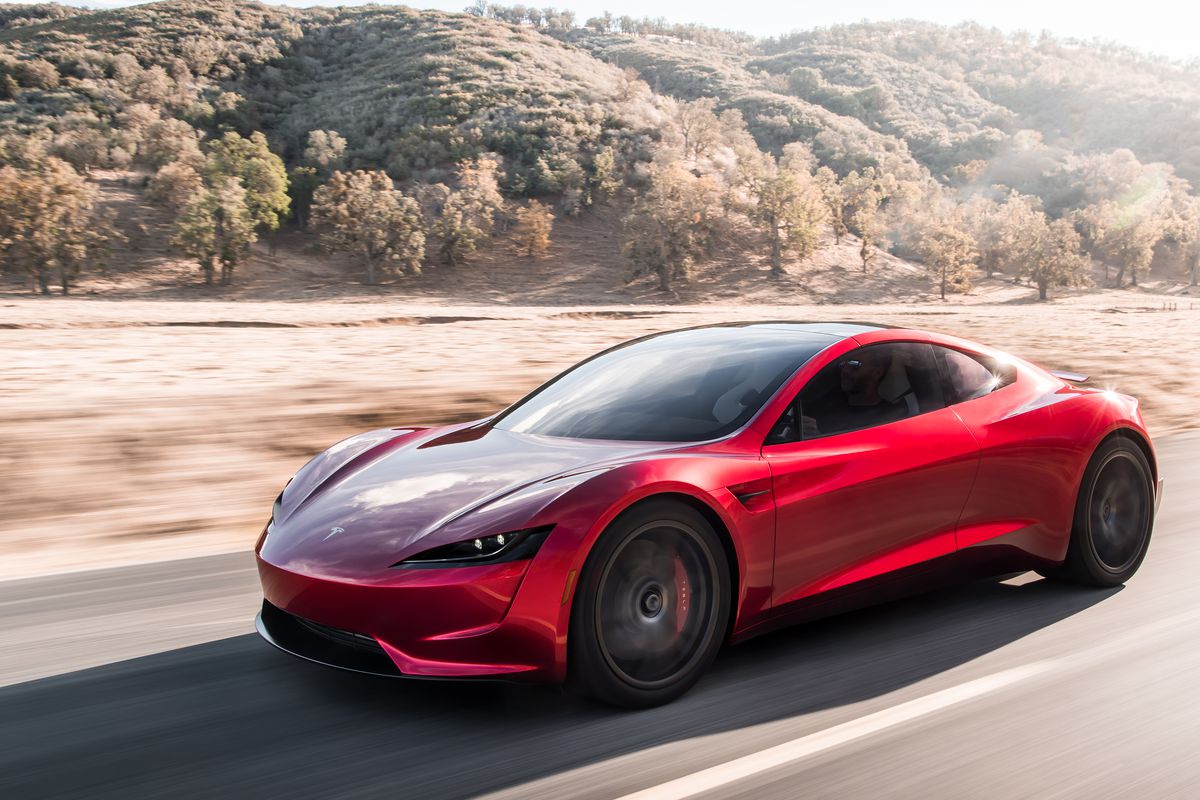
  • Tesla Supplier Agrees To Buy GM’s South Korean Plant

    Tesla Supplier Agrees To Buy GM’s South Korean Plant

    A South Korean supplier of Tesla Inc said on Friday it had agreed to buy a shuttered auto factory from General Motors’ local unit to start contract manufacturing of electric vehicles. The deal comes after GM closed one of its four South Korean plants in late May and let go thousands of workers, as part of a global restructuring drive which culminated in a major financial support package from the South Korean government. GM did not disclose the sales price of the Gunsan factory, but auto parts maker Myongshin said it would buy the land and buildings of the GM facility for 113 billion won ($99.5 million)on June 28.

    Myongshin, also a Hyundai Motor supplier, is part of a consortium which would initially spend a total of 200 billion won on the factory to produce 50,000 EVs starting 2021 and 150,000 EVs in 2025, according to a statement by a provincial government.

    “We aim to close this deal as soon as possible to ensure that there will be ongoing economic activity,” GM Korea said in a statement.

    The consortium was in talks with an unidentified global automaker to manufacture electric vehicles at the facility, a source with direct knowledge of the matter earlier told Reuters, adding that it was not Tesla.The plant could take advantage of South Korea’s free trade deal with the United States and Europe, as well as the country’s electric car supply chain, he said.

    The electric car factory would create 900 jobs and another 2,000 at suppliers and other firms, the North Jeolla Province government said.

    GM’s loss-making South Korean operation used to be a key manufacturing base for the company in Asia but it has been hit hard by the U.S. automaker’s exit from Europe, a major export market. GM executives have also complained about labor costs and disputes.

  • Hyundai Venue Subcompact SUV India Debut

    Hyundai Venue Subcompact SUV India Debut

    Hyundai India will be entering the subcompact SUV segment later this year with an all-new offering. The company recently confirmed that the new model will be called the Hyundai Venue upon launch, carandbike can now confirm that the new SUV will be unveiled on April 17, 2019. The Venue is a Maruti Suzuki Vitara Brezza, Ford EcoSport and the Mahindra XUV300 rival, and will be positioned below the Hyundai Creta in the automaker’s line-up. Interestingly, the India unveil coincides with the world debut that is slated to take place at the New York Auto Show. The Venue nameplate is also what the subcompact SUV will be called globally, and not Styx as it was previously perceived.

    Hyundai says the Venue subcompact SUV will come loaded with features because the big USP of this car to stay connected with the rest of the world. The Korean giant is generous with its vehicles on the feature front and we do expect to see some segment first tech including wireless charging and possibly ventilated seats too. The car was also spotted on a number of occasions recently, revealing what to expect on the design front.

    The boxy proportions of the test mule promise a small yet imposing design on the Hyundai Venue, and will come with an upright cascading grille, along with led daytime running lights that are positioned above the headlamp assembly. The fog lamp housing is rectangular and the car gets dual-tone alloy wheels that lend a nice stance.

    Expect to see wide wheel arches, lower body cladding and large glasshouse area, with the latter bringing more light into the cabin. Under the hood, the Hyundai Venue is expected to be offered with 1.2-litre and a 1.5-litre petrol and diesel engines. Transmission options will include a manual, while an automatic is also likely.

  • AS Watson South Korea health and beauty launched

    AS Watson South Korea health and beauty launched

    Hong Kong-based AS Watson has chosen its part-owned German subsidiary Rossmann for its next Asian market debut, South Korea. The German drug-store brand has confirmed it will begin selling products in South Korea on May 1, shipping direct from Germany. It will sell online only. Dirk Rossmann GmbH, named after its founder, is 40 per cent-owned by AS Watson, but the Hong Kong company includes its store network in its fast-growing tally of stores. The company opened its 15,000th store in Kuala Lumpur this week and is currently expanding internationally at a rate of one new store every seven hours.

    A joint venture between AS Watson and Rossmann operates more than 3100 stores in Germany, Poland, Czech Republic, Hungary and Albania. According to a report, the company plans to make “full-scale inroads into the domestic health and beauty market” through Rossmann Korea.

    It will adopt a direct-to-market business model, rather than stock goods in existing retail chains.

    An AS Watson spokesperson told Inside Retail ASia that Rossmann’s Own Brand products are famous not only in countries where they operate a retail network, but also in Eastern Europe where they are distributed in Watsons stores, and in Switzerland where they are distributed in a local supermarket chain. Online, Rossmann sells in China.

    Rossmann chose South Korea as its first Asian market “as Korean consumers were a match with the company’s meticulousness and strictness on their products, where both parties value safe, good quality products offered at reasonable prices”.

    “For South Korea, Rossmann will be launching via online platforms about 100 SKUs of its own products in body and skin care, baby care, and organic food,” the AS Watson spokesperson told.

    According to a Rossmann spokesperson, Korean consumers will experience reliable goods and services through official fast-paced shopping malls. “Rossmann will do its best to help more people make direct transactions with ease.”

    The brand will host quiz events on its Instagram and Facebook pages until April 8 and promotions include prizes of Starbucks coupons and Rossman Korea goods such as water bottles and umbrellas for winners.

    The Rossman family own 60 per cent of the business, which is headquartered in the German town of Burgwedel near Hanover.

  • SK Telecom streams AR dragon in Korean stadium

    SK Telecom streams AR dragon in Korean stadium

    SK Telecom has announced it has used augmented reality to simulate a fire-breathing dragon at a sports stadium as part of its ongoing development of new 5G-powered services.

    Using augmented reality technology, the large fire-breathing wyvern was streamed flying around the SK Happy Dream Park during the opening day of the Korea Baseball Organization.

    The dragon was streamed both to the LED baseball scoreboard installed at the stadium and via sports broadcasting channels for fans watching the game on TV and smartphones.

    To achieve large scale augmented reality streaming, SK Telecom used its self-developed augmented and virtual reality technologies including the eSpace and T real Platform solutions.

    The demonstration arose from SK Telecom’s focus on the development of 5G-based services to support its commercial network, which launched in December last year. Augmented and virtual reality are a key area of focus for the company.