Tag: Korea

  • Shilla Duty Free recruits Asia’s top social media influencers to pitch K-beauty

    Shilla Duty Free recruits Asia’s top social media influencers to pitch K-beauty

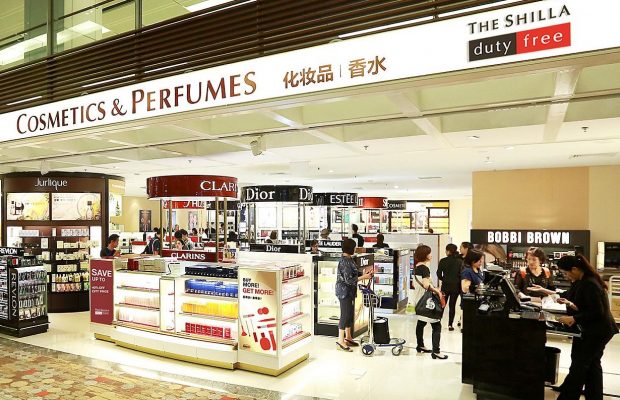
    South Korean Hotel Shilla has recruited five social media influencers across Asian countries to hype K-beauty products through Shilla Duty Free stores. The company said that it will work with top influencers from China, Japan, Vietnam, Malaysia, and Thailand on its “Beauty&You” project to guide customers on how to shop at travel retail online stores via social media platforms.

    Social media influencers with access to a large audience can endorse opinions about products and services, which eventually leads to promote sales.

    Those influencers who have partnered up with Shilla Duty Free reportedly have more than 1.7 million followers worldwide in total. They will work with the travel retailer to guide customers on how to use Shilla Duty Free online store as well as show the latest makeup trends using Korean cosmetics products via their social media channels.

    The company expects its partnership with the top influencers to bolster its brand awareness across the world on top of expanding its share in online travel retail market.

    Currently, its online duty-free shop is available in four languages – Korean, Chinese, Japanese, and English. It also has offline outlets overseas in international airports of Singapore, Hong Kong, and Macao as well as downtown Tokyo and Phuket.

  • London National Gallery opened first Delicious Art cafe in South Korea

    London National Gallery opened first Delicious Art cafe in South Korea

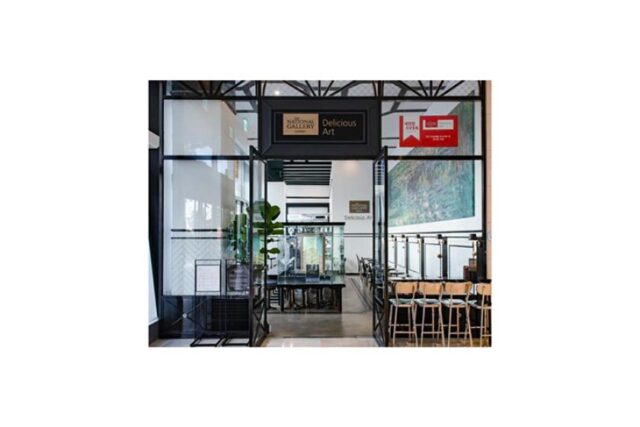
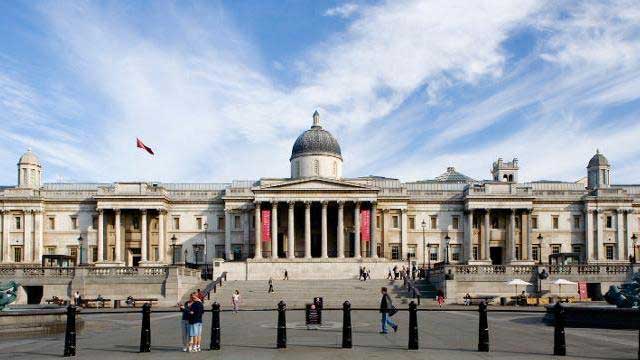
    The National Gallery Company has launched its first overseas cafe in Seoul. The cafe, “Delicious Art”, has opened at Lotte World Mall, designed with features to reflect London’s National Gallery building, along with replicas of famous artworks.

    “This is a very exciting project opening the first Delicious Art international cafe in South Korea,” said The National Gallery Company’s buying and merchandising director Judith Mather.

    “This is great for the global reach of the Delicious Art brand and the National Gallery, London. I am looking forward to opening other cafes in the region in 2019.”

    A second Delicious Art Cafe is expected to open in February at the L7 Hotel Myeongdong.

  • Incheon Airport breaks record with 2018 sales

    Incheon Airport breaks record with 2018 sales

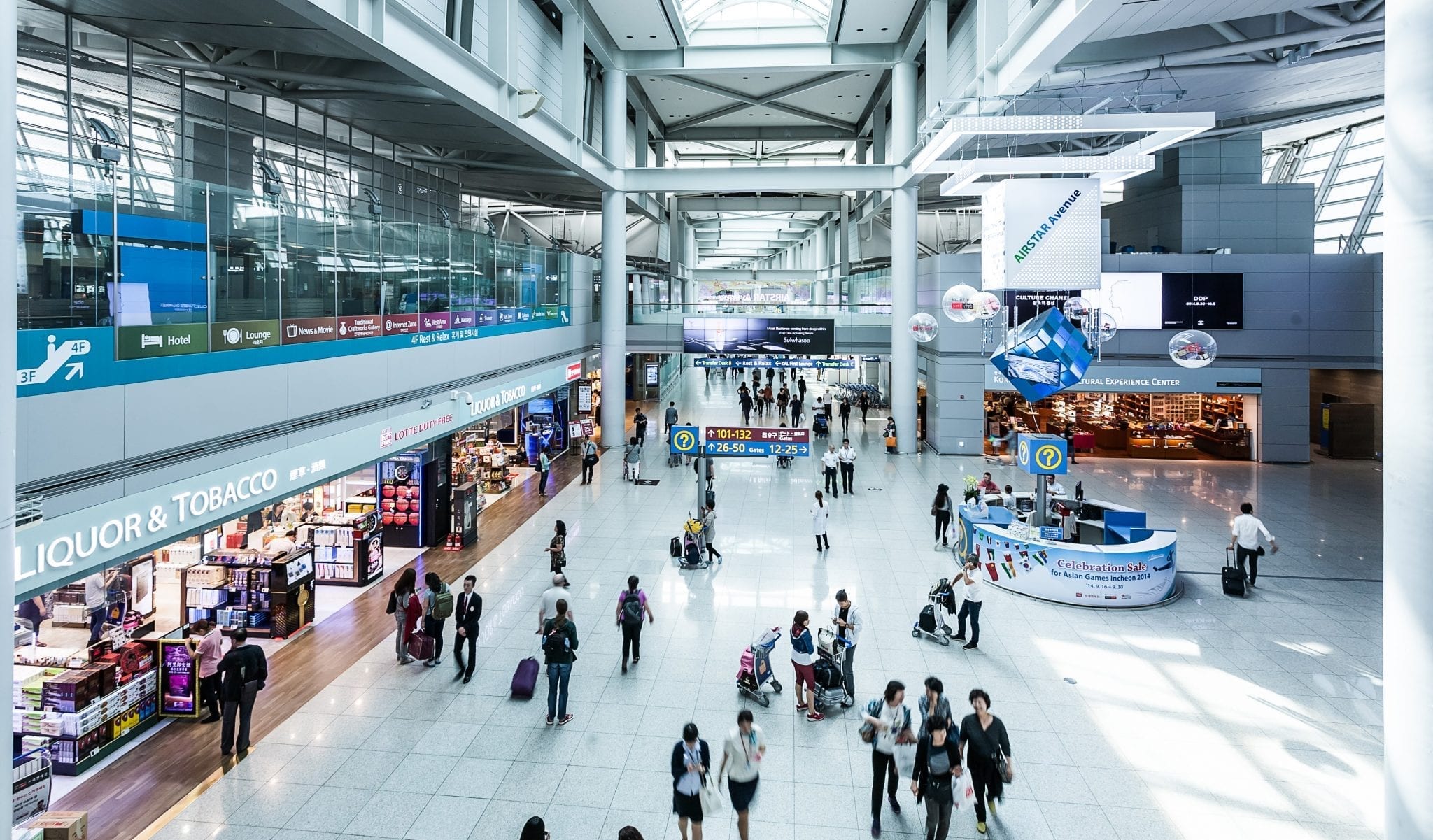
    Incheon International Airport announced record annual sales of US$2.4 billion for 2018, beating the previous record set in 2017. The performance ranks Incheon as the world’s number one airport for duty free sales in 2018, ahead of Dubai International. The latter’s anchor retailer, Dubai Duty Free, posted 2018 sales of US$2.015 billion. Sales rose 14.8% year-on-year, driven by the successful opening of Terminal 2 in 2018 and increased passenger traffic from the 2018 PyeongChang Winter Olympics. Departing passenger traffic rose 9.9% in the year, Incheon International Airport Corporation told The Moodie Davitt Report. A total of 67.7 million passengers used the airport in 2018, including 33.9 million arriving and 33.8 million departing.

    Cosmetics & perfumes continued as the leading product category with a 40% share of the mix and US$953 million in sales. Liquor and tobacco combined took second place with US$540 million (23%).

    Incheon International Airport Corporation (IIAC) said that the 2019 introduction of arrivals duty free shopping will boost the shopping offer.

    “With the introduction of the first arrival duty free in Korea, Incheon Airport will strengthen its competitiveness as the leading airport of the industry, satisfying customers through an advanced shopping environment,” IAAC commented.

    IIAC noted the retail performance of T2, which opened in January 2018. The terminal boasts outstanding beauty, liquor and tobacco flagship stores that feature exceptional design and digital and experiential components, the corporation said. Luxury boutiques such as Chanel and Valentino also played a role in the record-breaking performance.

    T1 performance was boosted by the addition of new retailers, Shinsegae Duty Free and Grand Duty Free. Both had minimised store closure periods during their respective handovers, IIAC said.

    Despite the collapse in Chinese tourism to South Korea from March 2017 driven by the THAAD row with China, duty free sales have maintained their upward curve throughout the ensuing period. Even in 2017, the nadir of the crisis, Incheon posted a 4.1% rise in duty free sales (admittedly well behind a 7.6% passenger increase).

    While Chinese tourism numbers are still well short of 2016 levels (-41.6% for the first 11 months of 2018), spending by daigou traders spurred the Korean duty free market to new heights last year. Incheon, while having a more balanced passenger spending profile than the overwhelmingly Chinese-dominated downtown stores, still benefited from that trend.

    What happens in 2019 following China’s introduction this month of a new e-commerce designed to crack down on daigou imports? That’s the question on everyone’s lips in Korean (and Asian) travel retail. Incheon International Airport Corporation will hope that a combination of a steady recovery in traditional Chinese tourism, daigou ingenuity in getting around the rules, and strong Japanese and Korean business will maintain the upward trajectory. The imminent introduction of the country’s first arrivals shops will help too.

    Higher sales in 2018 did not, of course, equate to higher profitability for the country’s duty free retailers, hurt by the high costs of attracting daigou shoppers. For Incheon International Airport, however, safely wrapped up in the safe haven of steep minimum annual guarantees, 2018 will go down as a stellar year.

  • Shinsegae to sell Yunjac cosmetics at duty free

    Shinsegae to sell Yunjac cosmetics at duty free

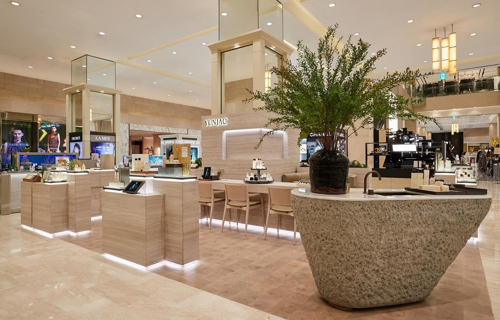
    South Korean retail giant Shinsegae is launching an independent Yunjac cosmetics store at its Myeongdong duty free outlet. The cosmetics shop, which will open on February 2, retails Asian herb-based skincare products. Launched in October last year, it is Shinsegae’s first in-house cosmetics brand, targeting Chinese millennials. A statement from the company said the opening is ahead of schedule thanks to unexpectedly high demand, with sales exceeding last year’s expectations by a factor of four.

    Three Shinsegae Department Store branches currently host a Yunjac outlet, with more stores planned to open within Korea and abroad shortly. It is targeting sales of KRW100 billion (US$89 million) by next year.

  • Jaguar’s first electric car roars into Korea

    Jaguar’s first electric car roars into Korea

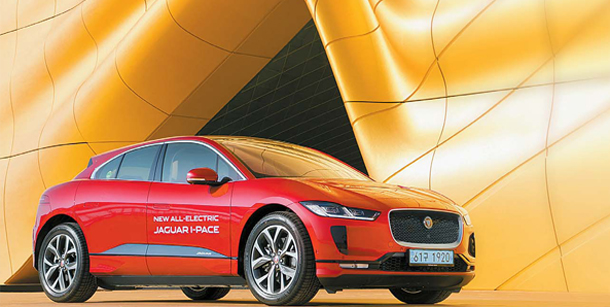
    Luxury carmaker Jaguar introduced the I-Pace, its first electric vehicle (EV), to the Korean market Monday at the Paradise City hotel in Incheon, joining a growing number of EV automakers in the country. The luxury brand’s all-electric sport-utility vehicle (SUV) sports an electric powertrain that produces up to 400 horsepower and a 333-kilometer (207-mile) driving range.

    “The I-Pace is a high-performance electric car that has battery and electric motor technology developed from our experience in electric motor sports Formula E,” said Baek Jung-hyun, CEO of Jaguar Land Rover Korea. “Jaguar will lead the future of premium electric cars through the I-Pace.”

    The vehicle, originally unveiled in the global market early last year, was delayed for launch in Korea due to the certification process, according to Jaguar Land Rover Korea.

    The automaker has prepared charging infrastructure for the product’s launch, installing 52 charging stations in 26 of its showrooms. The company has also installed 52 chargers and 26 fast-charging stations in its service centers.

    The fast-charging stations can charge vehicles to up to 80 percent in just 40 minutes.

    For maintenance, the carmaker promised to establish 10 new service centers so that there will be a total of 37 by the end of this year.

    Jaguar Land Rover Korea is also promising an eight-year or 160,000-kilometer warranty for its battery system and will install home-charging systems for free for those customers who receive their vehicles by March 31 this year.

    The luxury brand’s all-electric car enters the budding local EV market that has seen rapid growth over recent years.

    A total of 21,375 EVs were sold between January and September last year, up from 13,826 sold in 2017. The Ministry of Environment plans to have 350,000 EVs and 10,000 fast-charging stations in the country by 2022.

    Jaguar’s newest offering joins the short list of electric SUVs in Korea, which include Tesla’s Model X and Hyundai Motor’s subcompact SUV Kona EV, both released last year in the local market.

    The I-Pace will be sold from Jan. 23 with a starting price of 110.4 million won ($98,300) that climbs to 128 million won for its highest trim, the EV400 First Edition.

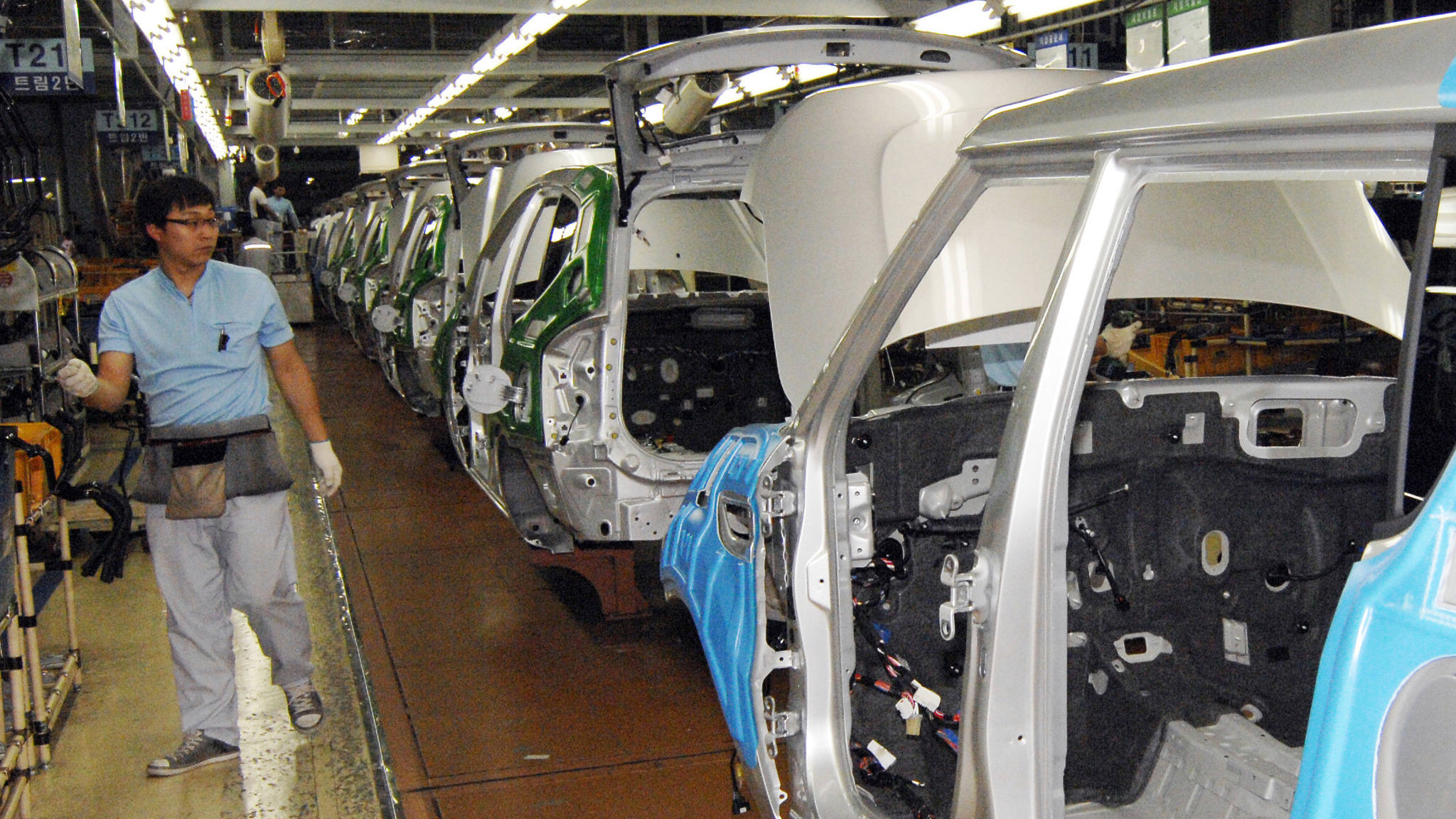
  • Hyundai Motor now ready for big races

    Hyundai Motor now ready for big races

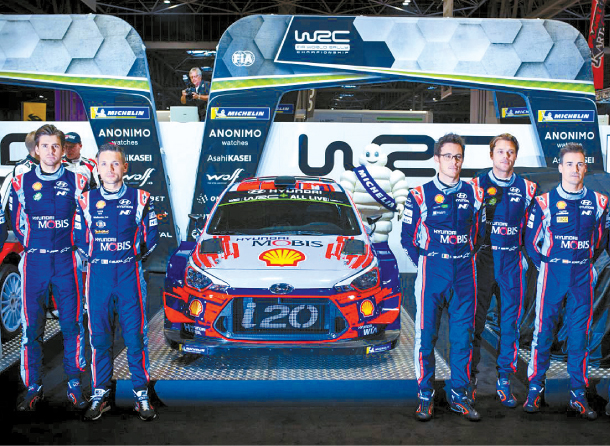
    Hyundai Motor finalized its driver lineup for this year’s major motorsport competitions, the company said Monday.  The automaker said its target this year is to win championship titles at the World Rally Championship (WRC) and the World Touring Car Cup (WTCR). In WRC events, the carmaker participates with its own team. In WTCR events, it supplies its cars to professional racing teams.

    For the WRC, the company said last year’s vice champions Thierry Neuville and Nicolas Gilsoul – a team of driver and co-driver – will be joined by Norwegian crew Andreas Mikkelsen and Anders Jaeger in all events. This year’s WRC has a total of 14 rounds. A composite score in those events will decide the winner.

    Dani Sordo and Carlos del Barrio will take part in eight events starting at Rally Mexico.

    Nine-time WRC champions Sebastien Loeb and co-driver Daniel Elena, who joined the Hyundai team from last month on a two-year contract, will take part in six rounds.

    “I am pleased to be joining such a great lineup of crews,” Loeb said. “It is clear to me that the car was a competitive package in 2018, which enabled the team to fight for the championship titles right to the very end.”

    Hyundai Motor’s team – named Hyundai Shell Mobis – came in second at last year’s WRC using an i20 coupe WRC vehicle.

    The automaker also announced four drivers who will participate at this year’s WTCR event with Hyundai’s i30 N TCR racing car. The carmaker races in the Customer Motorsports category with competitors that include Audi, Volkswagen and Ford.

    Hyundai’s customer team consists of four drivers, each driving on their own. Last year’s champion Gabriele Tarquini and fourth place driver Norbert Michelisz are driving Hyundai cars once again. Augusto Farfus and Nick Catsburg are newcomers.

    Hyundai Motor has been active in motorsport events as it has a positive influence on European sales thanks to a huge popularity of motorsports with European customers. In the long run, the carmaker hopes to upgrade its image from a value-for-money carmaker to a company known for high-performance cars.

  • Samsung to introduce S10 on Feb. 20

    Samsung to introduce S10 on Feb. 20

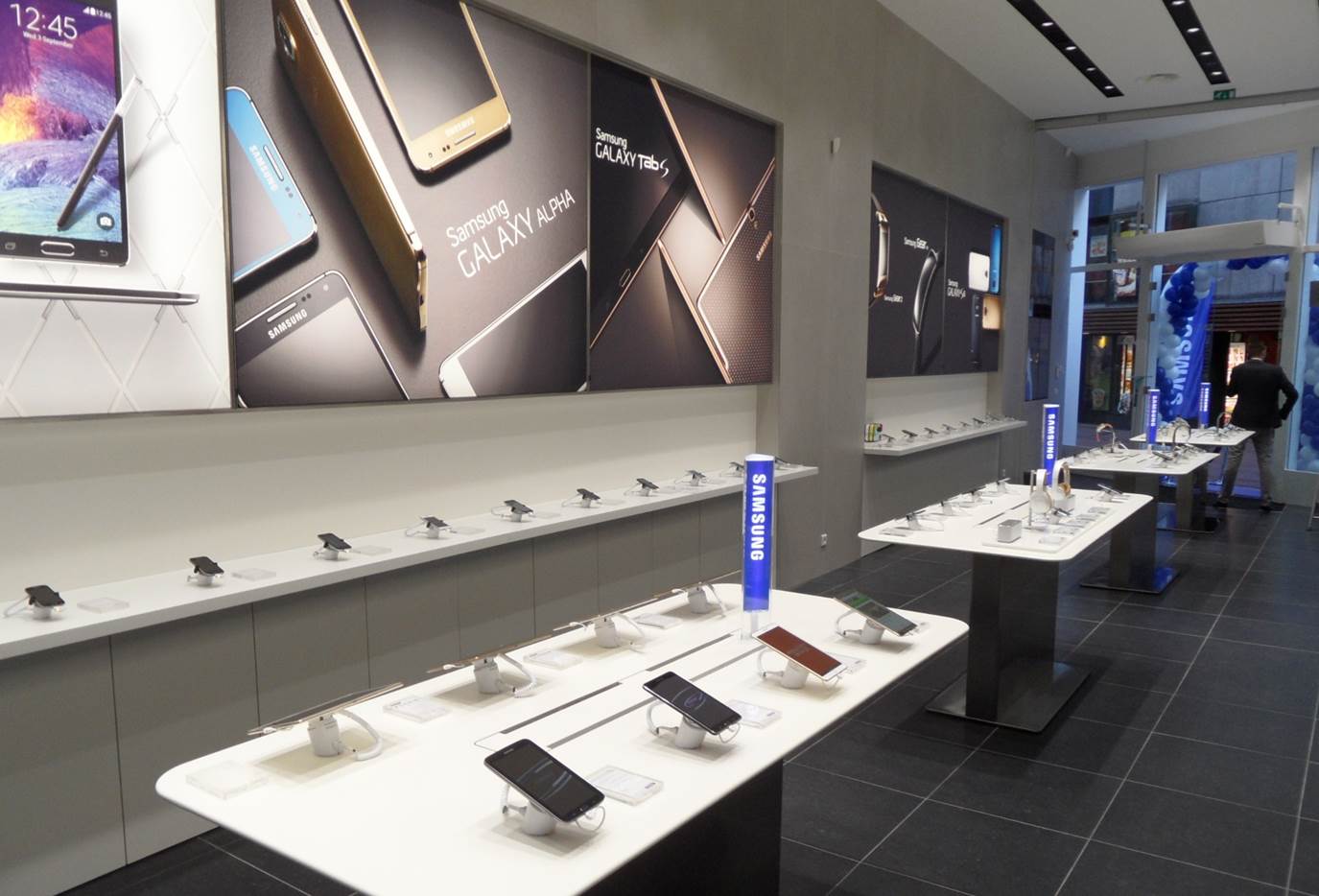
    Samsung Electronics on Friday sent out invitations to its next unpacking event, where it is widely expected to unveil the next model in its Galaxy S smartphone series, the S10. The event is taking place on Feb. 20 at 11 a.m. at the Bill Graham Civic Auditorium in San Francisco. Samsung noted that it will “unveil new devices that promise to usher in new Galaxy experiences based on 10 years of innovations” in a press release, without detailing what phones will be showcased.

    The major question is whether the phone maker will unveil details of the foldable phone that it has been developing for the last few years. According to an article by the Wall Street Journal, the tech company plans to show a “fully functional foldable-screen handset” during the unpacking event. Samsung declined to confirm the claim.

    There is a possibility that the model could be briefly shown, like at the Samsung Developer Conference in November last year. A proof-of-concept version of its foldable phone was briefly introduced on stage at the event. The phone is often referred to as the “Galaxy Fold” and “Galaxy F,” but the electronics giant has yet to confirm the actual name for the highly anticipated product.

    Some leaders of Samsung’s mobile carrier partners said they have already seen the company’s foldable phones in closed door meetings at the Consumer Electronics Show that ended Friday.

    SK Telecom CEO Park Jung-ho said during his press briefing at the electronics exhibition that “Samsung did not open up the foldable phone to general visitors, but showed the phone to me,” adding “the phone is in good shape.”

    Park said the phone will be able to offer an improved media consumption experience.

    LG U+ CEO Ha Hyun-hwoi also said he had seen two foldable phones during his visit to CES booths, though he did not say whether they were from Samsung. Ha said they come in “various shapes” and added that they seem to be “early stage phones that will enable customers to experience various video and gaming contents newly offered on the 5G network.”

    Some other media reports, however, suggest Samsung may only show off three variants of its Galaxy S10 and hold off on its foldable phones until the Mobile World Congress (MWC) in Barcelona, which kicks off five days after the unboxing event.

    The Galaxy S10 is expected to come in a basic 6.1-inch screen version, a plus model with a larger 6.44-inch screen and a budget model with a 5.8-inch screen. A fourth variant equipped with 5G connectivity is expected to hit the market later in the year. The 5G-connected model is rumored to come with four cameras on the back.

    The Korean electronics giant unveiled its latest Galaxy S series a day before the massive mobile trade show held in Spain, but this year’s event comes about a week earlier than usual.

    It may be a move to put the spotlight on its S10 models for a few days before they get drowned out by stories about the foldable model they may intend to show off at MWC.

    The unpacking event in San Francisco, where its rival Apple is based, is expected to attract 3,000 people from global companies and the media, according to Samsung. A localized unpacking event will also be held simultaneously in London.

    Attracting global attention by coming up with an innovative design and feature upgrades is crucial for Samsung, which reported a sharp decline in earnings in the fourth quarter last year.

    Its operating profit in the October-December quarter fell 28.71 percent on year to 10.8 trillion won ($9.6 billion), according to a tentative earnings report the company released earlier this month.

  • LG teams up with Google to develop VR offerings

    LG teams up with Google to develop VR offerings

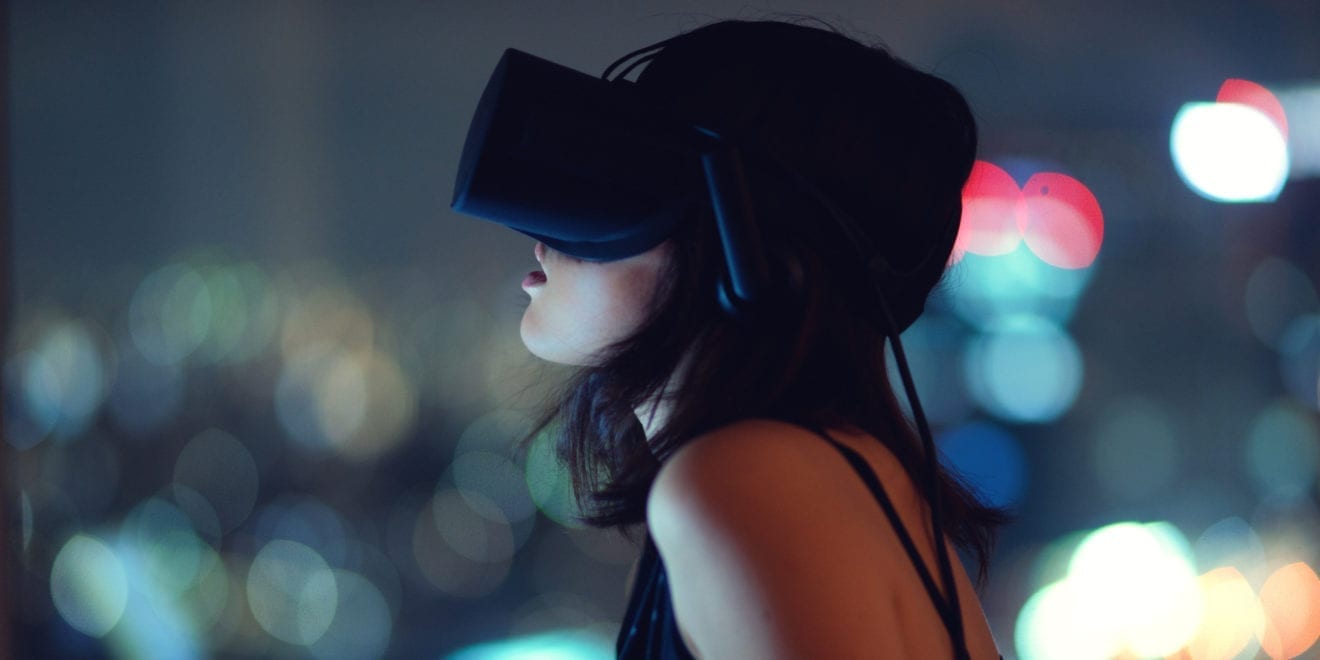
    LG U+ is partnering with Google to produce three-dimensional (3-D) virtual reality (VR) video, the company said Friday. Ha Hyun-hwoi, CEO of the mobile carrier, said augmented reality (AR) and virtual reality offerings demonstrate to customers the potential of next-generation 5G networks. He made the comments during a press briefing Wednesday at the Consumer Electronics Show in Las Vegas.

    He added that LG U+ is determined to become the leading player in AR and VR, and the partnership with Google is a stepping stone in achieving that goal.

    According to LG U+, the smallest mobile carrier in the country, with 3-D VR video, viewers feel they are actually at a sports stadium or a performance hall. The technology requires 10 times the bandwidth when compared with two-dimensional high-definition videos, which is why the faster and higher-capacity 5G network is crucial to the mass production and distribution of VR video, LG said.

    The two companies will first establish an equally-invested fund and develop 3-D VR video in the first half of this year. LG U+ will take charge of design and production. The mobile carrier will also have rights to local market distribution. Google’s YouTube will own retail rights globally. The Korean company said its collaboration with Google will continue following the development of pilot material.

    The first offerings will be centered on videos of globally-popular K-pop stars. A tour around K-pop star homes, following the star for the whole day and backstage tours are some of the ideas suggested so far, LG said.

    The video will run exclusively on YouTube and LG U+’s over-the-top (OTT) VR content platform. OTT refers to streaming entertainment that is delivered directly to users over the internet without going through intermediaries, like television.

    The move by LG U+ comes after SK Telecom inked partnerships earlier this month with three local broadcasters – KBS, MBC, and SBS – to create an OTT media service that can counter Netflix.

    It also announced during CES a partnership with Sinclair Broadcast Group to cooperate on media technologies.

    Ha said dependence on OTT will grow together with the commercialization of 5G and that SK Telecom has made a “good choice in partnering with local broadcasters.”

    LG U+ plans to fight competition with its partnership with Google as well as Netflix. Under an agreement reached in November last year, Netflix programing is aired exclusively through LG’s internet protocol TV platform.

  • LG claims to have wowed the industry at Vegas’ CES

    LG claims to have wowed the industry at Vegas’ CES

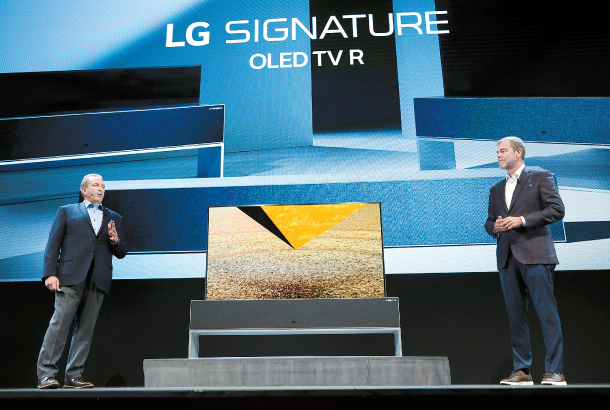
    LG Electronics, one of the leading home appliance manufacturers in the world, said Sunday it received a total of 132 awards at this year’s Consumer Electronics Show (CES) in Las Vegas. It said its products received the coveted CES top innovation title announced by the Consumer Technology Association. LG, which has been a major player in big-screen TVs and is a global leader in the field of organic light-emitting diode (OLED) screens, unveiled the world’s first mass production-capable rollable TV at the gathering that ran from Tuesday through Friday.

    The LG Signature OLED TV R received considerable attention, with Engadget, a multilingual blog network and the official award partner at CES, naming it Best TV Product.

    The innovative TV that allows the big OLED screen to vanish into a long box with embedded speakers was also noted by some 50 media outlets, such as the Wall Street Journal and Cnet.

    The company said its 8K resolution OLED TV and Super Ultra HD TV, as well as an artificial intelligence-equipped TV set, were praised by tech experts from around the world.

    Media outlets and online publications like USA Today and TechRadar, also gave LG HomeBrew, a craft beer making machine, their highest awards, while the waterfall OLED display at the entrance of the company’s booth – made up of 260 flexible panels – won recognition from numerous international IT outlets.

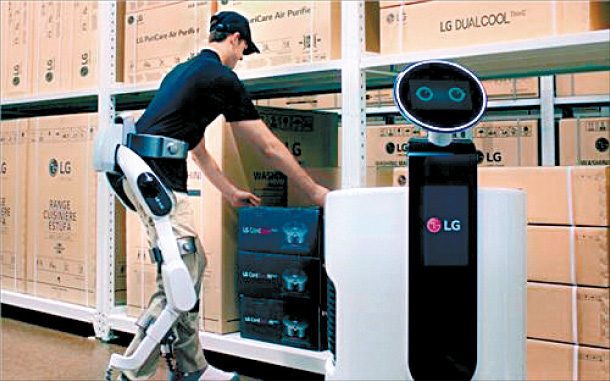
    Beside such products, the company’s LG SuitBot, an exoskeleton that can help physical laborers, and Styler, a clothing care system, received praise at this year’s CES.

    Song Dae-hyun, who heads LG’s home appliance business, said in a press conference over the weekend that the company is aiming expand its presence in the United States through the marketing of premium products.

    He said in the built-in appliance market in North America, LG is targeting high income earners.

    “If LG competes in mid-range consumer appliances, it will struggle and not turn a lot of profit so it makes sense to shift to premium products,” the senior executive said.

    He said that, in particular, the U.S. market is attractive because it has considerable growth potential.

    The executive said to better engage prospective clients, LG opened its first overseas Signature Kitchen Suite showroom in California’s Napa Valley.

    The Experience and Design Center is the second of its kind after one in southern Seoul, with another to be built in New Jersey.

    Unlike other countries, the United States has always been a so-called builder’s market with the customer having greater say in what kind of appliances go into a home, making it ideal for high-end products.

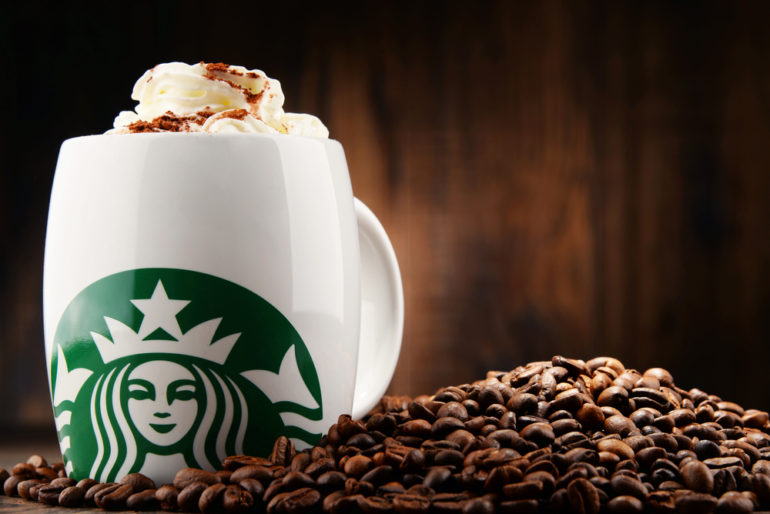
  • Starbucks’ Lucky Bags entice customers in Korea

    Starbucks’ Lucky Bags entice customers in Korea

    Lee Min-joo, a 43-year-old cram school teacher, made it a point to be at the Starbucks outlet near her house last Thursday at 6 a.m. She wasn’t there for the coffee – she was waiting to buy a limited edition “Lucky Bag.” Lee said she has bought Starbucks Lucky Bags for nine years in a row. She confessed that two years ago, she was in line at 5:30 a.m.

    “I am a collector of diverse Starbucks products,” Lee said. “And I always get curious as to what’s in the bag.”

    This year, Starbucks’ Lucky Bags are bigger than ever.

    Lucky Bags were the most-searched term on the internet in Korea last Thursday and social media was abuzz with people posting pictures of the products they got in their Lucky Bags.

    Four stores near Seosomun, central Seoul, were sold out before 10 a.m.
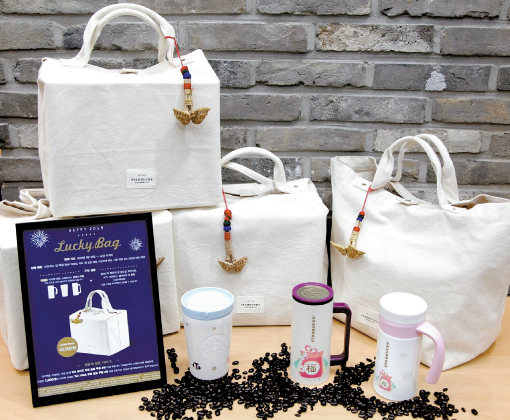
    Lucky Bags are mystery bags sold at a given price, 63,000 won ($56) this year. The products contained in the bags are unknown to the customers who buy them. The value of the goods inside exceed the selling price.

    Starbucks introduced its Lucky Bags in 2007 and they have become the chain’s unique annual New Year’s ritual in Korea and Japan.

    One of the reasons Starbucks’ Lucky Bags sell out so quickly is their limited supply.

    The total number of Lucky Bags prepared in Korea is 17,000 and each store only get 15 or so -there are over 1,200 Starbucks in Korea.

    In 2016 the bags sold out in just five hours nationwide. In 2017, that time was shaved down to 4 hours and 40 minutes.

    Each customer is only allowed to buy one Lucky Bag.

    Lucky Bag devotees have now become a tribe with their own nickname. They call themselves “Sudeok,” which combines the first Korean syllable of the chain’s name as pronounced by Koreans, “Su,” with “deok,” a shortened version of deokhoo, Korea’s own version of otaku, Japan’s term for a person with obsessive interests.

    The Sudeoks who purchase Lucky Bags even swap items to get the items they really want.

    In 2007, the Lucky Bags were sold for 28,000 won and the price has continued to climb. The value of the things inside is said to be more than 100,000 won.

    The bags often have tumblers, water bottles and coffee mugs, as well as gift coupons. This year, 1,000 Lucky Bags contained four additional free coupons.

    “It’s a good marketing strategy that combines a limited edition appeal and the emotional appeal of winning a jackpot,” said Lee June-young, a professor who studies consumer trends at Sangmyung University.

    But not every Lucky Bag fan is satisfied with their haul.

    On social media, one disappointed fan posted a message reading, “It is not a Lucky Bag, it is an unlucky bag.” Another wrote, “The only lucky one is Starbucks.”

    “I have been buying the Lucky Bags for three years, but this year I decided not to because of the 60,000 won price tag,” said Lee Hyun-jeong, a 29-year-old office worker.
  • Hyundai Motor introduces Kona Iron Man edition

    Hyundai Motor introduces Kona Iron Man edition

    Hyundai Motor said Friday that it will begin sales of its limited Kona Iron Man Edition in the Korean market from Jan. 23. The superhero edition of the SUV was developed over two years with Marvel and is the first production car to feature Marvel characters. The vehicle includes headlamps similar to the Iron Man helmet’s visor, a Marvel logo on its hood and design features from the superhero’s suit.

    According to the carmaker, the new limited edition comes in matte metallic grey, inspired by Iron Man’s original suit featured in a 1963 Marvel Comics series.

    The edition sports a 1.6-liter turbocharged engine and a seven-speed dual-clutch transmission.

    Of the total 7,000 Iron Man edition Kona’s to be sold globally, 1,700 of the units are in Korea.

    For local buyers, the limited-edition model will cost 29.45 million won ($26,420).

  • Korean start-ups also shine at CES in Las Vegas

    Korean start-ups also shine at CES in Las Vegas

    Industry big boys aren’t the only companies exhibiting at this year’s Consumer Electronics Show (CES). Over 1,200 start-ups have set up at the event’s Eureka Park, reserved for smaller companies, to capture the attention of consumers and possibly become the next unicorn (a start-up valued at over $1 billion).

    Of the start-up companies from Korea, those that developed through the “Israeli start-up” model have grabbed the most attention from the media. The model refers to companies with a weak capital base that grows with investment from other IT companies or venture capital firms. Many Korean start-ups that took part in CES this year got investments from IT giants such as Naver or Kakao.

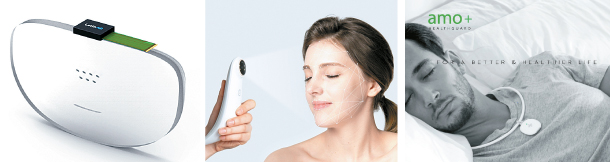
    Augmented reality (AR) and virtual reality (VR) company LetinAR is one of the hottest start-ups. LetinAR produces smart glass lenses that makes use of “Pin Mirror” technology. The company incorporates the pinhole effect, which makes vision clearer by looking through a small hole, and applies it for use in VR and AR.

    LetinAR also created a lens that provides vision of up to 80 degrees. While humans can see up to 150 degrees, existing products are typically limited to 50 degrees.

    “The 80-degree vision is like looking at a 120-inch TV from a meter away [3.28 feet],” said Choi Kyung-on, a director at the company. “If our product becomes commercialized … we will be able to release smart glasses the size of large conventional glasses within three years.”

    While smart glasses got a lot of headline in 2013 with the introduction of Google Glass, the product failed due to the difficulty of developing a lens with a wide-viewing angle.

    Meanwhile, beauty artificial intelligence (AI) start-up lululab won the CES Innovation Award in the biotech sector for its AI skin care assistant Lumini.

    The device analyzes skin conditions such as its wrinkles and pores and provides product information and recommendations personalized for a user.

    “[Users] can use personalized AI skin analysis service without the help of a store employee,” explained Choe Yong-joon, CEO of lululab.

    The company was born in Samsung Electronics’ start-up incubator, C-Lab.

    AMO Lab is another promising start-up from Korea. The company, which got investment from Naver last September, specializes in products that improve users’ quality of sleep.

    The company recently developed AMO+, a device worn like a necklace, which sends out minute electrical signals to the body to improve sleep.

    According to recent test results, users’ parasympathetic nervous systems became active when wearing the device.

    “We are currently discussing collaboration with U.S. and European companies after prototype development,” said Kim Min-kyu, CEO of AMO Lab.

    WELT, another alumnus of Samsung’s C-Lab, gained attention for releasing a smart belt in collaboration with French luxury brand S.T. Dupont. WELT’s smart belt can be used for two months with a single charge and provides basic health information.

  • LG and Naver are teaming up to make robots better

    LG and Naver are teaming up to make robots better

    LG Electronics and Naver are cooperating on the development of robotic capabilities.

    Their first project will use Naver’s mapping and navigation technology to improve the functionality of LG’s CLOi GuideBot.

    LG’s guiding robot is currently in operation at Incheon International Airport. It escorts travelers to certain destinations within the facility.

    Naver Labs, the research and development arm of the Korean internet portal company, said its eXtended Definition & Dimension Map (xDM) solution will enable LG robots to self-drive indoors even when equipped with low-end sensors.

    The solution integrates Naver’s mapping, navigation and positioning technology to support various location-based services, such as augmented-reality walking navigation and autonomous driving, according to the company. Naver hopes to improve this by using big data collected by LG robots.

    The two companies said they will gradually expand collaboration to other areas of robot development after the first project. The agreement was reached during the Consumer Electronics Show (CES) in Las Vegas and announced Thursday. Both LG and Naver demonstrated their latest robot technologies at the exhibition.

    “One of our biggest achievements during CES was to reach an agreement with LG,” said Seok Sang-ok, head of the robotics team at Naver Labs. “With LG, we will find ways to develop technologies that improve lives.”

    LG has already announced other deals at CES, including a plan to work with Microsoft on autonomous car technology development and an agreement with Apple to source television programming.

  • Samsung ranks second in 2018 U.S. patent grants

    Samsung ranks second in 2018 U.S. patent grants

    Samsung Electronics grabbed the No. 2 spot in U.S. patent grants among global corporate giants in 2018, industry data showed Thursday. Samsung Electronics, the world’s top smartphone and memory chip maker, received 5,850 U.S. patent grants last year, up 13 from the previous year, according to the data from IFI Claims Patent Services, provider of a top global patent data platform.

    IBM topped the list with 9,100 grants, up 1 percent from a year earlier, maintaining the U.S. company’s position as top patent leader for a 26th consecutive year.

    Canon followed Samsung with 3,056. Intel came next with 2,735 then LG Electronics with 2,474. All registered declines from a year earlier.

    Other Korean firms included Samsung Display, which ranked 14th with 1,948 grants. Hyundai Motor placed 19th with 1,369.

    Last year, U.S. patent grants totaled 308,853, down 3.5 percent from the previous year.

    By country, the United States took up the largest share, at 46 percent, followed by Japan with 16 percent, Korea with 6.5 percent, Germany with 5 percent and China 4 percent.

    China was the only major patenting country to report an on-year increase in the 2018 patent grants.

  • Korea’s Beyond Closet confirms strong potential at Pitti Uomo

    Korea’s Beyond Closet confirms strong potential at Pitti Uomo

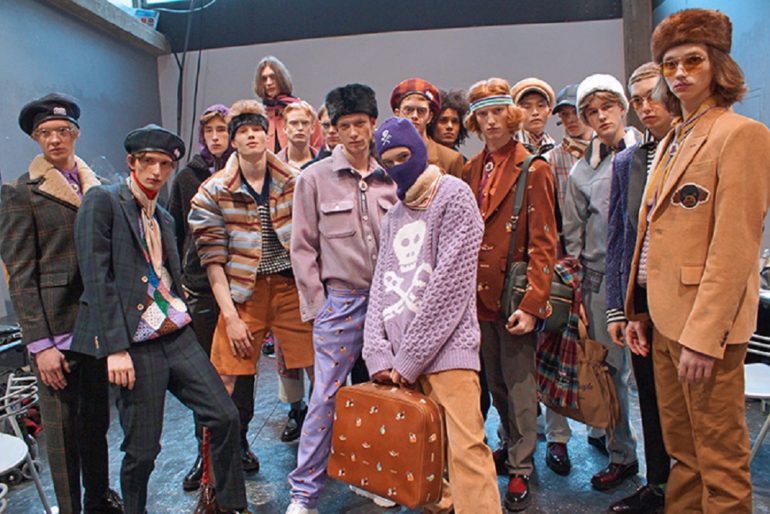
    Korean label Beyond Closet, showing for the third time at Pitti Uomo for the ‘Concept Korea’ project, won over the audience with a stylish, highly colourful catwalk show.bThis season perhaps even more so than in the past, Beyond Closet’s self-taught designer Taeyong Ko proved he is truly well-versed in his craft. It is surely not by chance that his menswear label, whose style is defined as “classic, with a twist,” managed to double its multibrand clients from one season to the next, growing from 15 to 30, chiefly in South Korea.

    Taeyong Ko, who in his younger years was a swimming enthusiast, and cut his fashion teeth working in a clothes shop, has managed to create a highly distinctive, recognisable style through a classic wardrobe with a preppy vibe, infused with a touch of slightly humorous extravagance that is never excessive.

    Taeyong Ko’s main strength is his ability to subtly blend genres and to create looks that are as original as they are attractive. His style is all about the way he plays with the accessories and the details which spice up Beyond Closet’s looks, as well as how he mixes and matches materials and registers. As he quipped backstage: “I dress men whose uniqueness lies in their own style.”

    The show’s setting was reminiscent of a military encampment, with tents erected in a desert-like environment, and you could hear a motorbike revving up as the first models strutted out on the catwalk to the notes of Lou Reed’s ‘Walk on the Wild Side’. Trousers gathered at the ankles, woollen check shirts and oversize parkas alternated with Price of Wales suits and navy-style looks, a nod to the theme chosen by Taeyong Ko this season, translating into sailor-style pea-jackets with golden buttons worn over striped tops, small scarves knotted around the models’ necks.

    The mood was both relaxed and elegant, as in the case of the dandy ambling around in tracksuit bottoms and furry mules, sporting a classic tweed jacket, or in tartan trousers and a navy-style cardigan.

    There was an emphasis on snug, ultra-warm items for protection against the cold, like plush coats and boiled-wool tops, fleece sweaters worn under jackets, oversize turtlenecks and curly-wool tracksuit bottoms, not to mention sundry jackets with generous collars and lapels, all strictly fur-lined, and an assortment of quilted trousers and jackets, featuring colourful patchwork fabrics in menswear’s classic printed motifs, like checks and houndstooth patterns.

    The whole collection is made even sharper by the great attention paid to details and colour combinations. For example, the back of a khaki jacket is embellished with a vertical string of golden buttons. Elsewhere, in the guise of knee or elbow pads, Taeyong Ko opted for a kind of rectangular fitted panel, while some of his grey felt shirts featured ample pockets in brightly coloured nylon fleece, gloves in bright yellow leather were matched with a Prince of Wales checks look, and royal blue or velvet flaps livened up a classic trench coat.

    The designer also played with layering and trompe l’oeil effects, as with the Teddy-style sweater whose back morphs into a grey nylon jacket, or the pinstripe jacket which strays into baseball kit territory, sporting the number 27 on the reverse side. Other examples are the overcoat which unexpectedly turns into a wind-breaker or the jacket which becomes an orange waxed top.