Tag: Korea

  • Number of AI speakers in Korea to hit 8 million

    Number of AI speakers in Korea to hit 8 million

    The number of artificial intelligence (AI) speakers in Korea is expected to reach the 8 million mark in the new year as the devices gain popularity, a report by a local digital media lab said Sunday. According to the findings by KT Group affiliate Nasmedia, some 40 percent of the country’s 20 million households will likely have an AI speaker in 2019. The numbers represent a sharp increase from just 1 million units supplied in 2017 and the nearly 3 million that have reached the market this year.

    “The rise in demand comes from greater choice in terms of the products being offered, as well as more upgraded features that have made the AI speakers more attractive to ordinary consumers,” the 2019 digital media and marketing forecast report claimed.

    It added that greater competition among manufacturers to secure the growing market is fueling the spread of such smart devices.

    Korean companies – such as SK Telecom, KT, Naver and Kakao – have all rushed to release new AI speakers.

    Nasmedia said that, in particular, there has been considerable competition in the area of children-related content and audio shopping services with companies vying with one another to “lock” customers into their ecosystem.

    The speakers have been marketed as personal home assistants for adults and even as private tutors for small kids.

  • WeWork to hold big pitch contest

    WeWork to hold big pitch contest

    WeWork in Korea will hold the Creator Awards, a regional pitch competition, in partnership with the Seoul city government next February. It is the first time the global office-sharing company is hosting the competition with a city government. Seoul is expected to help in the event’s promotion.

    On Wednesday, WeWork announced the date and location for the Seoul Creator Awards, saying it will be held Feb. 28 at Dongdaemun Design Plaza, eastern Seoul.

    The award categories are performing arts, non-profit and business venture. Both WeWork and non-WeWork members can apply to participate in the competition, with a Jan. 10 deadline for submissions.

    In the performing arts and nonprofit categories, winners will be awarded up to $72,000. The entrepreneur award will top out at $360,000.

    ”We are all looking forward to be blown away by the innovative ideas and projects of enthusiastic creators at the Seoul Creator Awards that will make a real difference in the world,” said Matthew Shampine, general manager of WeWork in Korea.

    WeWork opened seven new locations in Korea this year and now has 11 buildings in the country. As of this month, it is an office provider to 1,500 companies in Korea. WeWork’s local team is growing rapidly, rising from 30 employees at the beginning of the year to around 160 today.

    “In 2019, we will continue to open new locations, such as WeWork Seomyeon [in Busan] and WeWork Hongdae, accelerating our expansion into new areas across Korea,” Shampine added.

  • Samsung to take eight C-Lab start-ups to CES

    Samsung to take eight C-Lab start-ups to CES

    Samsung Electronics will introduce eight in-house artificial intelligence (AI) start-ups at the Consumer Electronics Show (CES) 2019 to take place next month in Los Angeles, the company said Wednesday. All eight start-ups are under Samsung’s C-Lab, an in-house incubating program that allows employees to embark on a one-year project to realize a business idea. Samsung will organize an independent booth to present their products and services at the four-day exhibition scheduled to take off on Jan. 9.

    All eight of the projects use AI as a core part of their business.

    For example, the mobile app SnailSound uses AI technology to remove background noise and provide clear human voices in a tailored way based on the app’s test results of the user’s hearing abilities.

    Another app called Medeo uses AI to select the best shots in a video while it is being shot.

    Prismit is an AI-based news app that shows news articles of the same topic automatically aligned in the form of a timeline.

    The list also includes Girin Monitor Stand, which helps to correct posture while sitting in front of computer screens, and the Alight desk light, which adjusts light in the best way to enhance one’s concentration.

    The Perfume Blender suggests the best perfume recipe based on a user’s preferences and also comes with a device to make the personalized perfume.

    As well as the eight in-house start-ups that are currently working under Samsung’s C-Lab, eight groups that have already graduated from the scheme will take part in CES 2019 to set up booths of their own.

    Among them, three have earned awards from this year’s CES. Since the program’s launch in 2012, C-Lab has produced 36 spin-offs that now conduct business as start-ups outside of Samsung.

  • Ramyeon Korea set to cross the $400 million export mark

    Ramyeon Korea set to cross the $400 million export mark

    Exports of ramyeon are sure to exceed $400 million this year, a state food agency reported Wednesday. Shipments of ramyeon totaled $385 million as of the end of November, up 11.2 percent from the same period last year, according to Korea Agro-Fisheries & Food Trade.

    The figure is already more than the total for 2018. Given the sum so far, the monthly average exports are $35 million, suggesting that exports will $400 million by end of this year. South Korea broke the previous threshold of $300 million just last year.

    Ramyeon remains popular in the United States and in Southeast Asia, while China’s boycott of Korean products due diplomatic disagreements has weakened, according to the agency.

    Related data showed Korea exported $8.56 billion worth of agricultural and fisheries products in the first 11 months of the year, a gain of 2.6 percent from last year.

    By country, exports to Japan were the highest, at $1.94 billion, followed by $1.38 billion to China, $980 million to the United States and $530 million to Vietnam.

    The figures indicate a 0.3 percent fall for Japan but increases of 1.2 percent for China, 0.2 percent for the United States and 1 percent for Vietnam.

    Exports of farm and livestock products rose 2.4 percent to $6.37 billion, and those of fisheries goods were up 3.1 percent to $2.2 billion.

  • Chinese QR payments booming

    Chinese QR payments booming

    Nuwemaru Street in Yeon-dong, Jeju City, was known as Baojian street until it was renamed in April. The street had been called Baojian from 2011 when the Chinese pharmaceutical company of the same name sent 12,000 employees to the southern tourist island as a reward.

    Despite the sharp drop of visitors since 2017 – when tensions between the two countries peaked with the deployment of a U.S. missile defense system – it still looks very much like Chinese territory today, with many store signs in Chinese.

    Upon closer examination of the shopfronts, Chinese QR codes are also evident.

    The QR codes for Chinese mobile payment services have gained popularity on the Korean tourist island over the last couple of years. Even a restaurant selling seollongtang – Korean beef-broth soup – in the middle of the street has a QR code for Chinese mobile payments.

    “Half the Chinese visitors use Alipay or WeChat pay,” said a store clerk of one of the cosmetic stores on the street.

    Currently 1,000 stores on Jeju accept Chinese QR mobile payments. The Jeju government said it was promoting the use of Chinese mobile payments in hopes of attracting more Chinese tourists.

    On Dec. 10, it signed a memorandum of understanding with the China’s Tencent, which operates WeChat, to attract more Chinese visitors to the island.

    One part of the agreement calls for tourism promotions on the WeChat platform, including discount events, while a blog will be run to introduce the island to potential visitors from China.

    The Jeju government and the tech company also agreed to share information on the consumption patterns of Chinese tourists who made payments through WeChat pay.

    Seven top officials from Tencent attended the signing ceremony, including company vice president Zhang Ying. During the ceremony, Zhang said that the only thing he carried with him when coming to Korea was his smartphone, demonstrating that he didn’t need cash or a credit card as long as he had WeChat Pay.

    “Once WeChat Pay is available at traditional markets in Jeju, it will be a great help in promoting traditional Korean culture and goods to Chinese tourists,” said Yoon Chang-ho, head of tourism and marketing at the Jeju government.

    According to convenience store CU, in the first half of 2018 87.2 percent of Chinese tourists used mobile payments when making electronic purchases at CU outlets in Korea. Only 12.8 percent used credit cards. In 2016, 65 percent used credit cards.

    Many institutions are accepting Chinese QR code mobile payments.

    Starting in September, Hanyang University will accept tuition fees via WeChat Pay. The program is being developed with Shinhan Bank. Roughly 900 or so convenience stores and restaurants at train stations in Korea have started accepting WeChat payments.

    One of the reasons Korean businesses are willing to accept mobile phone payment systems is because people tend to spend more when using them. When they buy something by simply waving their phone, they feel as though they are spending less.

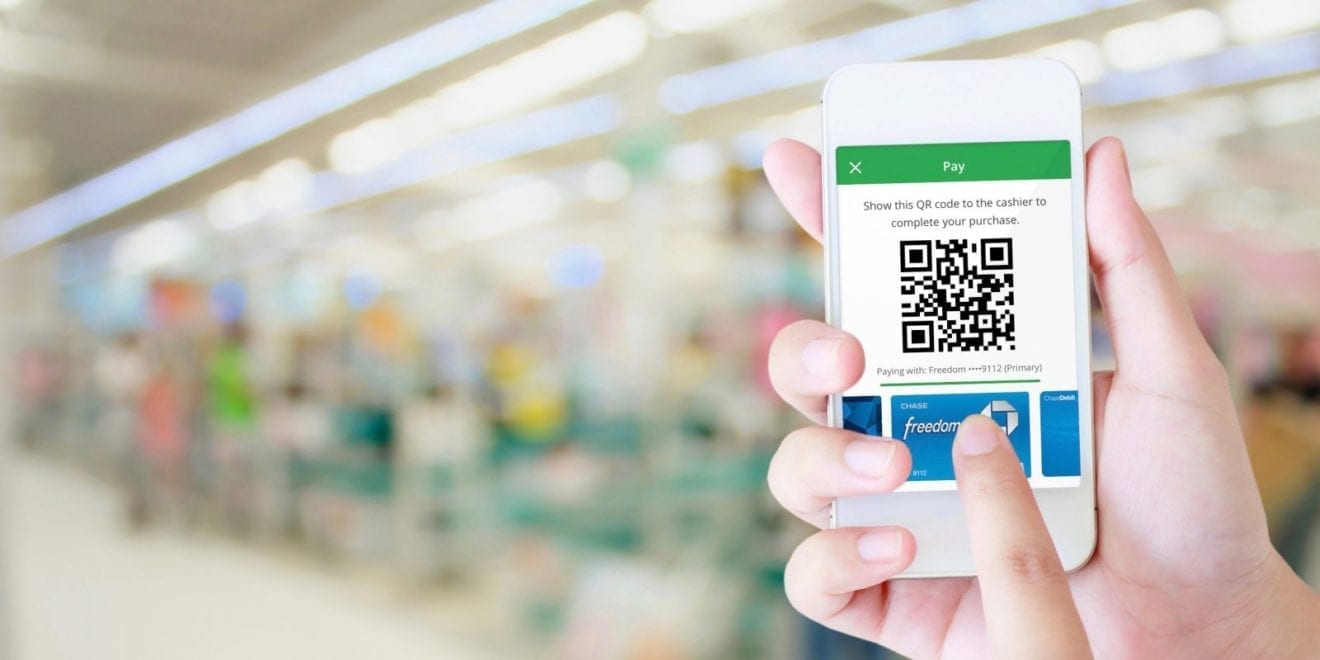
    To make a payment, a customer places the store’s QR code – similar to a bar code – in front of their phone camera for 10 to 20 seconds.

    Chinese QR code mobile payment systems are not only used in Asian countries, such as Korea, Vietnam and Thailand. They are also being used in other places visited by Chinese tourists, such as the United States and Europe. These payment systems are even accepted at Amsterdam Airport Schiphol in the Netherlands.

    Roughly 78 percent of Chinese are said to use these payment systems, while only 21 percent use either credit cards or cash.

    While visiting a small restaurant in China late last year, President Moon Jae-in was surprised at the convenience of QR-code payments.

    One reason the QR-code payment system has rapidly grown in China is the country’s lack of a telecommunication infrastructure needed for credit-card processing. The QR code system doesn’t require a credit card terminal, which makes it cost effective and convenient.

    Although WeChat Pay joined the game late compared to Alibaba, it currently has 40 percent of the Chinese mobile-payment market, while Alipay has 54 percent. WeChat may overtake Alipay because of the popularity of its mobile messenger.

    Not all commercial districts in Korea accept the Chinese mobile payment systems. One such place is Myeong-dong, which attracts huge numbers of Chinese tourists. The street vendors in Myeong-dong only accept cash.

    Some critics question the growth of the Chinese payment systems. One concern is that since the networks are Chinese, it may be hard to track down the payment records, and that could lead to tax evasion.

    A person who has been installing Chinese mobile payment systems for years said this is not true as the payments made in Korean stores are deposited in local accounts, and the Korean stores have to report the payments to the Korean financial authorities.

    Loopholes do exist. If a Chinese company decides to open a branch and use a payment terminal from China, it would bypass the local institutions, making it difficult for Korean authorities to keep track of the payments.

    Because of such problems, the Vietnamese government in June banned the use of Alipay and WeChat Pay. It found that some money spent domestically by tourists did not go through local financial institutions.

    In 2016, the tax evasion question became an issue in Thailand as well. The Thai government at the time found that Chinese businesses were evading taxes through mobile payment systems. Several travel agencies were penalized.

    Some cases have been reported in Korea. In 2016, a plastic surgeon in Nonhyeon-dong, Gangnam, only accepted cash or credit cards from his Chinese patients, and the credit cards were processed using a Chinese terminal. More than 70 percent of the revenue was from Chinese patients. The hospital was found to have evaded more than 10 billion won ($8.9 million) in taxes.

    Overseas customers also present a problem. According to Korea Custom Service, more foreigners are buying goods directly from Korean online shopping malls. In 2013, 67,000 purchases were made in this way, but that figure has surged to more than 7 million.

    Chinese customers were the top purchasers and were especially big on Korean cosmetics. Last year about 2 trillion won worth of Korean cosmetics were purchased directly online by foreign buyers. That’s 10 times the 203.5 billion won worth of cosmetics purchased directly online in 2014.

    With the growing popularity of direct purchases, many online shopping malls have started accepting mobile payment systems. Since 2015, Alipay has been supporting Korean SME exporters in terms of payments and logistics.

    This could result in Korean exporters evading taxes.

    “There is major tax evasion going on with the significant increase of foreigners buying Korean goods directly online thanks to the Korean Wave,” said Lee Hye-hoon, then ruling Saenuri Party lawmaker, during the National Assembly’s audit on the Korean National Tax Service in October 2016. “We need to take action.”

  • Vietnam’s four major transport projects on track for completion next year

    Vietnam’s four major transport projects on track for completion next year

    Vietnam is set to complete four infrastructure projects next year, some of them after long delays lasting several years.

    Hanoi’s first metro line 

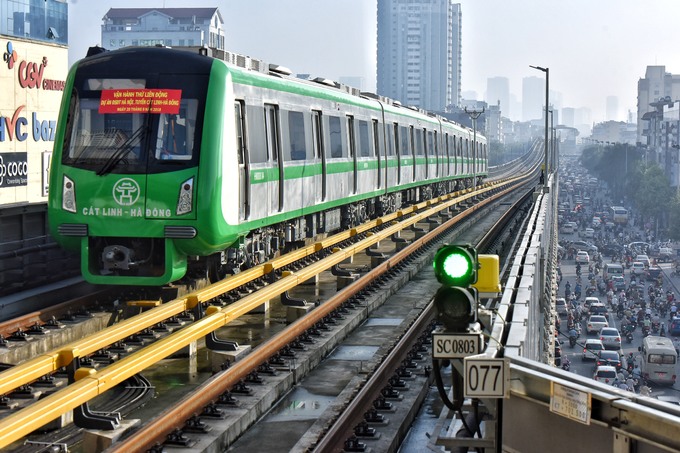
    The 13-kilometer Cat Linh – Ha Dong metro line is expected to open commercial operations before the Tet Lunar New Year holiday starting February 2, 2019.

    All 13 trains on the route are being trial run every day now, running from Cat Linh Station in downtown Dong Da District to the Yen Nghia Station in the south-west Ha Dong District.The 13-kilometer Cat Linh – Ha Dong metro line is expected to open commercial operations before the Tet Lunar New Year holiday starting February 2, 2019.

    Each train has four coaches, with a total capacity of 1,000 passengers. The stainless steel coaches are approximately 19 meters long. The trains now run at 30-35 kilometers an hour, even though they are designed to reach speeds of 65 kilometers an hour. A complete trip takes about 30 minutes.

    Work on the project is 96 percent complete, officials say, adding that the terminals and depots are “83 percent equipped.”

    Construction of the Cat Linh-Ha Dong elevated railway started in October 2011 and was originally scheduled for completion in 2013. But several hurdles, including loan disbursement issues with China that were only resolved last December, have been stalling the project for years.

    The original cost estimate of $552.86 million has also ballooned to more than $868 million, including $670 million in loans from China.

    Bac Giang – Lang Son expressway

    The expressway connecting Bac Giang Province north-east of Hanoi to the northern Lang Son Province bordering China is expected to be completed next December.

    The four-lane expressway runs 64 kilometers. A 110-kilometer stretch of the existing National Route 1A connecting the two provinces will also be upgraded to be part of the expressway.

    The total project cost has been estimated at VND12.19 trillion ($523.67 million).

    Most of the expressway has been completed. Next year, operators will finish laying asphalt and installing road signs and lights.

    Work on the expressway started in October 2015 and was scheduled for completion last year. However, the  Ministry of Transport had to select a new investor for the project after the original one was found wanting.

    The Bac Giang – Lang Son expressway is part of the Hanoi – Lang Son expressway, connecting the capital with the Huu Nghi International Border Gate in Lang Son Province.

    Cu Mong Tunnels 

    The Cu Mong Pass, lies mostly in Binh Dinh and partly in Phu Yen, is one of the most dangerous passes in Vietnam. The new tunnels are expected to reduce the number of dangerous traffic accidents that the pass has become infamous for. They would also reduce travel time between the two provinces.The Cu Mong tunnels, connecting the southern provinces of Binh Dinh and Phu Yen, are expected to open on January 21, allowing all vehicles to go through free of charge during the February 2-10 Tet holiday.

    The two tunnels are 2.6 kilometers long and 30 meters apart and have a 4-kilometer lead-in road. The tunnels allow a maximum speed of 80 kilometers an hour. For an unspecified first period, only one tunnel will be operated. For now, the second one will be reserved for use in emergencies.

    The tunnels have a total capital of almost VND4 trillion ($171.82 million). Construction started in September 2015.

    Vam Cong Bridge in the Mekong Delta Region

    This is the second bridge over the Hau River after the Can Tho Bridge, which is 48 kilometers away. It is part of the route connecting Can Tho with An Giang Province, built to boost the socio-economic development of the Mekong Delta region.The bridge, which connects the southern province of Dong Thap with Can Tho City, is expected to be operational by next July.

    The bridge was supposed to be completed by November 2017, but authorities found out that a horizonal beam had a crack four centimeters wide and two meters long.

    The Ministry of Transport ordered repairs, and so far 26 out of 38 steps for this process has been completed.

    The bridge’s budget of $270 million was sourced through official development assistance from South Korea and Vietnam’s counterpart funds.

  • Korea’s car take top safety awards

    Korea’s car take top safety awards

    Vehicles from Hyundai Motor and Kia Motors were awarded three top safety prizes in the Ministry of Land, Infrastructure and Transport’s 2018 Korean New Car Assessment Program (Kncap) on Wednesday in a ceremony held at the InterContinental Seoul Coex in southern Seoul.

    Hyundai Motor’s hydrogen-powered sport-utility vehicle (SUV) Nexo, mid-sized sedan Genesis G70 and Kia Motors’ large-sized sedan, the K9, were awarded top Kncap prizes in their size segments.

    Vehicles were tested in three key areas – collision, pedestrian and accident prevention safety. The program assessed 11 vehicles this year, including four imported models.

    Hyundai’s eco-friendly vehicle, the Nexo, received perfect scores in front and side collision safety, pedestrian leg protection and advanced driver assistance system to not only win the top safety prize in its segment but also to win two other special awards: the top safety eco-friendly vehicle award and the top children’s safety award.

    Hyundai Motor said that the automaker conducted a variety of tests on the hydrogen-powered Nexo to ensure the safety of its high-pressure hydrogen tank such as shooting it with a bullet along with other fire-safety tests.

    Kia Motors’ flagship large-sized sedan, the K9, also scored top marks to receive a special award in top accident prevention on top of its top award for segment size.

    Meanwhile, the Genesis G70, awarded the top prize in the mid-sized sedan segment, ensures pedestrian safety with an active hood system that automatically lifts the hood of the vehicle if it collides with a pedestrian.

  • Hanwha Galleria Timeworld to sell luxury stuffs

    Hanwha Galleria Timeworld to sell luxury stuffs

    Department store operator Hanwha Galleria Timeworld is opening its second Galleria Luxury Hall next year. In benchmarking its first main store in southeastern Seoul, the owners are seeking to draw luxury French and Italian brands to trade alongside fine dining F&B operators. The store’s facade will undergo renovations with the aim of becoming a landmark building.

    A statement from Hanwha Galleria claimed the Timeworld branch is seen as the top department store in the area since its acquisition in 2000. Within the past decade, the firm has seen 7 per cent annual growth on average in sales.

  • Hyundai Department Store offers higher price rice

    Hyundai Department Store offers higher price rice

    Hyundai Department Store is hoping to cash in on Korea’s growing preference for premium rice with Hyundai Rice House, its new chain rice stores. Hyundai Rice House, which opened inside four existing Hyundai Department Stores on Wednesday, offers around 20 different types of high-quality rice unfamiliar to the average rice eater, such as Youngho Jinmi and Golden Queen No. 3.

    Despite changing tastes in Korea that are seeing a growing preference for Western food and an overall decrease in demand for rice, premium rice is growing in popularity.

    Hyundai Department Store reported a 3.1 percent decrease in its rice sales growth figures through November this year compared to the previous year, but sales of premium rice such as Koshihikari and Hitomebore have increased by 15.7 percent over the same period.

    Hyundai is pulling out all the stops to satisfy Korea’s budding rice connoisseurs, and the new stores will also sell bags of rice that contain different varieties mixed together in combinations chosen by a “rice sommelier.”

    The expert, accredited by the Corporation of Rice-Cooking of Japan, will also visit stores once every month to conduct “rice taste consulting” for customers to help them find rice that best suits their tastes and nutritional needs.

    The department store is also going to stock more small bags of rice to address the increase in one or two-person households in the country.

    Hyundai will continue to increase its rice lineup next year by introducing other Korean regional specialties produced only in small quantities.

    “[We] planned Hyundai Rice House to target customers who want to eat well even for one meal as the convenience food market continues to expand with the increase of one and two-person households,” said a Hyundai Department Store official.

    Customers will have to shell out more cash for the pricey rice as the average cost is 15 to 25 percent higher than the existing rice sold at the department store.

    The specialty store is located at Hyundai Department Store’s branches in Mok-dong, western Seoul; Pangyo, Gyeonggi; Ulsan and Busan.

  • LG U+ CEO says Huawei gear is not a risk

    LG U+ CEO says Huawei gear is not a risk

    LG U+ CEO and Vice Chairman Ha Hyun-hwoi has made it clear that the carrier does not think there are any security threats related to its use of Huawei equipment in its 5G infrastructure. Ha made the statement during a year-end press briefing on Wednesday in Yongsan District, central Seoul, rebuffing claims by some lawmakers that there is a risk of security leaks through the use of the Chinese tech giant’s equipment in the network. LG U+ currently partners with Huawei as well as Samsung Electronics, Ericsson and Nokia for its 5G infrastructure.

    According to Ha, the Chinese IT company has already applied for security certification of its 5G network equipment from an international certifying body in Spain. The CEO added the public will be able to see how secure the equipment is once the evaluations are complete next year.

    “Security concerns apply to every equipment vendor we partner with, not only Huawei, and we need to thoroughly verify all the equipment [we use] is secure,” Ha said. “There are roughly 170 countries that are already using Huawei’s network equipment, and there hasn’t been any security problems reported so far.”

    Locally, Huawei has set up equipment that abides by over 70 security guidelines set by the Korea Internet & Security Agency, according to LG U+.

    The main reason for the carrier taking the risk of using the controversial equipment is because 5G infrastructure needs to be built in conjunction with the existing network equipment for 4G long term evolution (LTE), some of which LG U+ also bought from Huawei. Ha said price, technological competitiveness and the ability to deliver the equipment in a timely manner were also considered when choosing the vendor.

    LG U+ has built 5,500 base stations to service the next-generation 5G network as of Wednesday, while its local competitors have reportedly established less than 1,000 5G base stations.

    On why the mobile carrier is rushing to establish its 5G infrastructure, Ha said, “It is important to have a head start to have a competitive edge in [5G] services considering the quality tests we need to go through before March [when the high-speed network is commercialized for smartphones].”

    Ha said the company invested roughly 4 trillion won ($3.6 billion) to set up its 5G infrastructure, including at 5G spectrum auctions.

    The company said it hopes to take up a larger share of the market, which is dominated by SK Telecom, with 50 percent, and KT, with 30 percent.

    “In July 2011, when we first began the LTE service, our local market share was 17.7 percent, but the share increased to 21.2 percent over time as of the end of October,” LG U+ said in statement. “We think next year could be the best time to shake up the competing structure.”

    The carrier is preparing a 5G-based smart factory service with its affiliates LG Electronics and IT service company LG CNS, targeting enterprise customers. For individual customers, LG U+ is focusing on augmented reality and virtual reality content that can offer an immersive experience of watching sports games and K-pop concerts at home.

    The CEO also commented on speculations that the carrier will acquire paid TV service operator CJ Hello. Ha said it has opened up its options to cable TV operators other than CJ Hello and plans to finalize the deal within the first half of next year. Industry sources, however, still say negotiations between the two parties have nearly come to a close and final results are likely to come out around March.

  • LG sets up lab to conduct appliance technology research

    LG sets up lab to conduct appliance technology research

    LG has established a new research laboratory committed to advances in fridge, oven and other home-appliance technologies. LG Electronics opened the 6,760-square-foot Food Research Institute on Monday at Changwon, South Gyeongsang. At the center, researchers will develop technologies that can be applied to the company’s home appliances, such as refrigerators, kimchi and other specialty food fridges, ovens and electric stove tops.

    Food preservation, the fermentation of kimchi and food preparation will be some of the focuses.

    The company said researchers will work closely with academics from Seoul National University and Konkuk University, as well as experts from government and private agencies, such as the Rural Development Administration, the Korea Food Research Institute and the World Institute of Kimchi.

    LG Electronics often mentions advanced technologies in its marketing materials, using the technology to set itself apart from competitors.

    According to the company, LG refrigerators run on inverter linear compressors, which are 18 percent more energy efficient and create less noise than comparable gas compressors. Its kimchi refrigerators maintain temperatures of 6.5 degrees Celsius (43.7 degrees Fahrenheit), the optimal level for kimchi. At that temperature, the growth of a lactic-acid bacteria that creates a sour taste is suppressed. LG’s electric stove tops can cook food up to 2.3 times faster than gas ranges, the company boasts.

    The facility at Changwon is not the first research lab established by the company to further develop its home appliances. In February, LG Electronics opened a water research lab committed to the making of better water purifiers. In October, it opened a center dedicated to air science to advance its air purification technologies.

    “We will continue investing in research and development related to food, water and air technologies,” said Song Dae-hyun, head of LG Electronics’ Home Appliance & Air Solutions.

  • BTS adds 4 trillion won to the Korean economy

    BTS adds 4 trillion won to the Korean economy

    Popular boy band BTS’s annual economic value is estimated at over 4 trillion won ($3.5 billion), making it more lucrative than a medium-sized company. The group’s annual production inducement effect, which refers to the value generated in related industries, is estimated at around 4.1 trillion won, according to a report by Hyundai Research Institute (HRI) released Monday.

    “BTS was the first Korean artist to place at No. 10 on the Billboard Hot 100 and reach No. 1 on the Billboard 200,” read the report. “The group’s rising fame and popularity can be observed in the explosively growing number of Google searches and YouTube video counts after 2017.”

    “Expecting such growth in popularity to have a positive effect on the Korean economy, we wanted to estimate the impact of BTS’s popularity on the domestic economy by assessing foreign tourists and consumer exports.”

    Research findings revealed that the HRI’s assumptions were correct. According to the report, BTS is responsible for attracting at least 796,000 foreign tourists annually to Korea since their debut in 2013. The report also credits the group for increasing sales of related exports by $1.1 billion every year, including $233.98 million worth of clothing, $426.64 million worth of cosmetics and $456.49 million worth of foodstuffs.

    BTS’s estimated annual economic value of 4.1 trillion won is 26 times larger than the average medium-sized company in Korea, which earned just 159 billion won in 2016 according to the report.

    The HRI report also discussed the factors believed to be behind the success of the group.

    “All BTS members participate in the songwriting and composing, often writing from their own perspective the concerns of young adults in their teens and twenties, and listeners are able to sympathize with them regardless of their nationality,“ read the report. “BTS’s albums and concerts are also structured in a way that has a narrative, which helps attract the attention of fans and raise their expectations for upcoming albums and concerts as well.”

    Other factors mentioned include active communication with BTS fans – known as ARMY – through social media and the fans’ strong support.

    BTS is expected to produce an accumulated total of 41.8 trillion won in economic value between 2014 and 2023 if it maintains its average popularity level of the last five years.

    “In order to maximize the economic impact of Hallyu [Korean wave], it’s necessary to develop and promote domestic tourism through dramas, movies and videos and raise demand from foreign tourists,” the report concluded.

  • Cafe opens in century-old Seoul house

    Cafe opens in century-old Seoul house

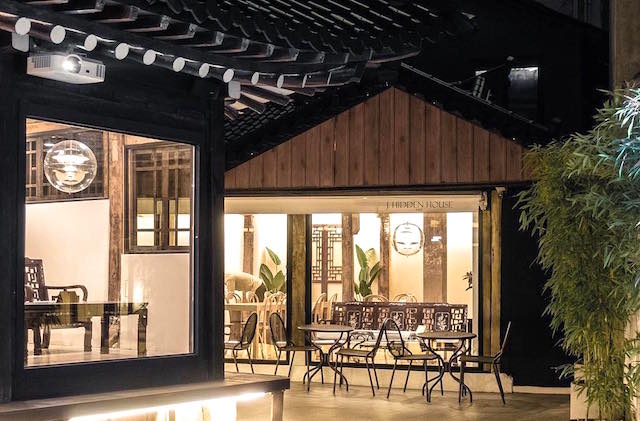
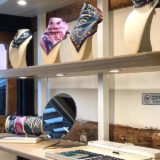
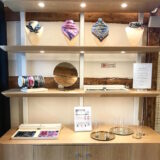
    A heritage cafe has been built into the hereditary foundations of a century-old South Korean courtyard house (hanok) in Seoul. J Hidden House cafe opened its doors in the fashion and shopping mecca of Dongdaemun this month, following Seoul’s continued efforts to develop as a trend-setting, global tourist destination. Situated within a spacious 300sqm secluded enclave housing a zen-bamboo garden, the venue blends traditional and modern design and is one of the largest hanoks open to the public today within the traditional inner district of the Chosen dynasty’s (1392–1897) capital, Hanseong – modern Seoul

    From a bespoke eight-metre wet bar set in Italian terrazzo tile, J Hidden House offers curated coffees, teas and refreshments, as well as a tailored menu of bakeries and spirits cultivated by Korean food and beverage companies.

    J Hidden House’s proprietor Grace Jun said Seoul has become a destination for the world to visit and Korea’s rich culture has so much to offer.

    “This establishment is a fusion of our country’s traditional heritage and dynamic modernisation by coupling a cutting-edge modernity within the protected, mindful walls of a ‘hidden’ hanok that was built before the Korean war and has stood the test of time. Our aim is to provide locals and tourists from around the world with a location and a curated food and beverage offering on calibre with any destination cafe in the world, while offering what is uniquely and proudly Korean.”

    Located in an exclusive “hidden” but immediately accessible location in downtown Seoul, the destination offers a vision of an earlier and more tranquil age despite being centrally situated in Dongdaemun, one of city’s busiest commercial districts and a major tourist destination for shopping and historical sightseeing.

    According to the Korea Tourism Organization, visitors to Korea in the first half of this year increased by 6.9 per cent year on year to 7.22 million. When excluding Chinese visitors, the number of tourists increased 12.2 per cent year on year to 5.05 million people, the largest-ever recorded number of inbound tourists to date.

    View the gallery for photos (4 images) :


  • LG U+ 5G pass self-drive test on expressway

    LG U+ 5G pass self-drive test on expressway

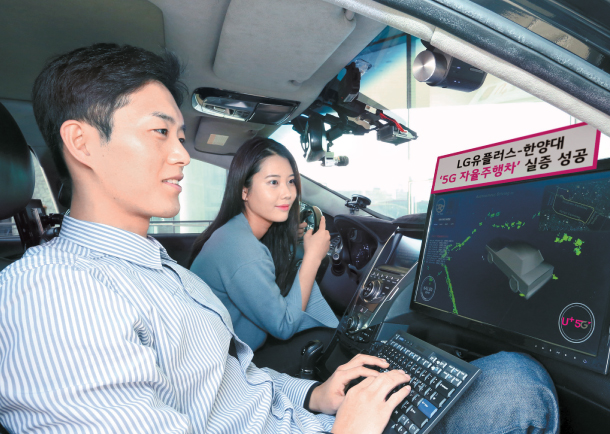
    LG U+ has successfully tested a 5G-powered self-driving vehicle on an expressway for the first time. The mobile carrier announced Tuesday that a self-driving car developed by Hanyang University successfully drove on LG U+’s 5G network for 25 minutes across seven kilometers (4.35 miles) of busy city roads including the Gangbyeon Expressway and Olympic Expressway.

    A low latency video transmitter developed by LG U+ delivered real-time footage of the test drive to Hanyang University. Two cameras attached to the self-driving vehicle recorded the front and rear of the car.

    During the test drive, the vehicle had to react to certain scenarios such as avoiding obstacles and changing course. The vehicle was also tested to see how it reacts to new traffic information such as a blocked parking lot entrance.

    The vehicle was remote controllable, offering added safety measures in case of emergency.

    It was the first time that a self-driving car has completed a test drive on such a scale on an expressway or high-speed road in Korea, according to the company.

    “Self-driving cars that run on the 5G network will make important contributions to solving social problems like traffic volume and accidents,” said Sunwoo Myung-ho, who teaches automotive engineering at Hanyang University.

    “It’s significant that we were able to produce substantial results with self-driving cars through cooperation between industry and academia,” said Kang Jong-oh, who manages future technologies at LG U+. “We will continue to invest our efforts into developing self-driving car technology through cooperation between mobile carriers and the auto industry.”

    LG U+ will continue to work with Hanyang University to polish its 5G-based self-driving car technology.

    Competitors SK Telecom and KT are also actively investing in self-driving technology. KT, for example, successfully tested a self-driving bus at Incheon International Airport last month.

  • Amorepacific boosts business expansion in the Philippines

    Amorepacific boosts business expansion in the Philippines

    South Korean cosmetics giant Amorepacific is ramping up its Asean expansion, opening the first Innisfree and Laneige Philippines stores. Amorepacific established Amorepacific Philippines in Metro Manila in August and has since opened the first Innisfree store, in Manila’s SM Mall of Asia.

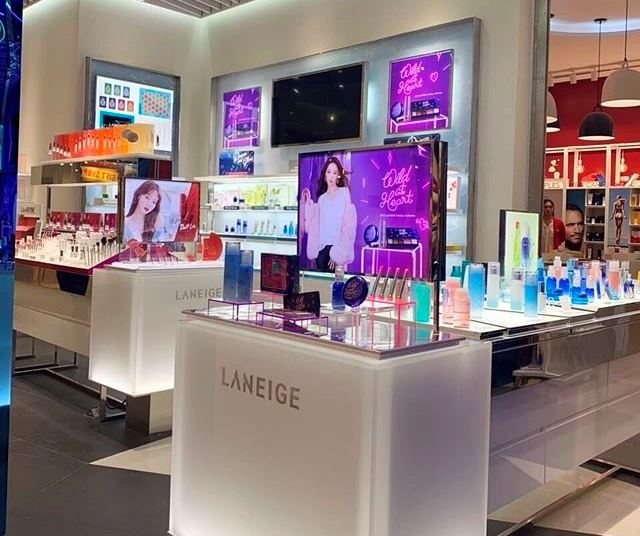
    This week the company opened its first Laneige Philippines store, at SM Makati Department Store.

    Laneige has also launched on the nation’s largest e-commerce channels in the Philippines including Lazada.

    The upmarket Laneige brand will expand through both online and offline channels through next year, Amorepacific said in a statement.

    The company says the Philippines offers great growth potential, with its population of more than 107 million. It is particularly targeting the premium beauty market which is growing quickly there, along with the broader popularity of K-beauty.

    “By expanding into this promising market, Amorepacific aims to strengthen its presence in the Asean region, which is one of the important strategic business regions for the company,” the statement said.

    Amorepacific has already launched in Singapore, Malaysia, Thailand, Vietnam and Indonesia.

    “We are glad to finally make our way into the Philippines market and respond to its increasing need for our brands,” said Robin Na, head of Amorepacific Asean regional headquarters. “Through our differentiated, innovative products and premium brands, we will spread Asian beauty across the Philippines and satisfy the local customers.”