Tag: Korea

  • Lotteria burgers get 2.2% more expensive

    Lotteria burgers get 2.2% more expensive

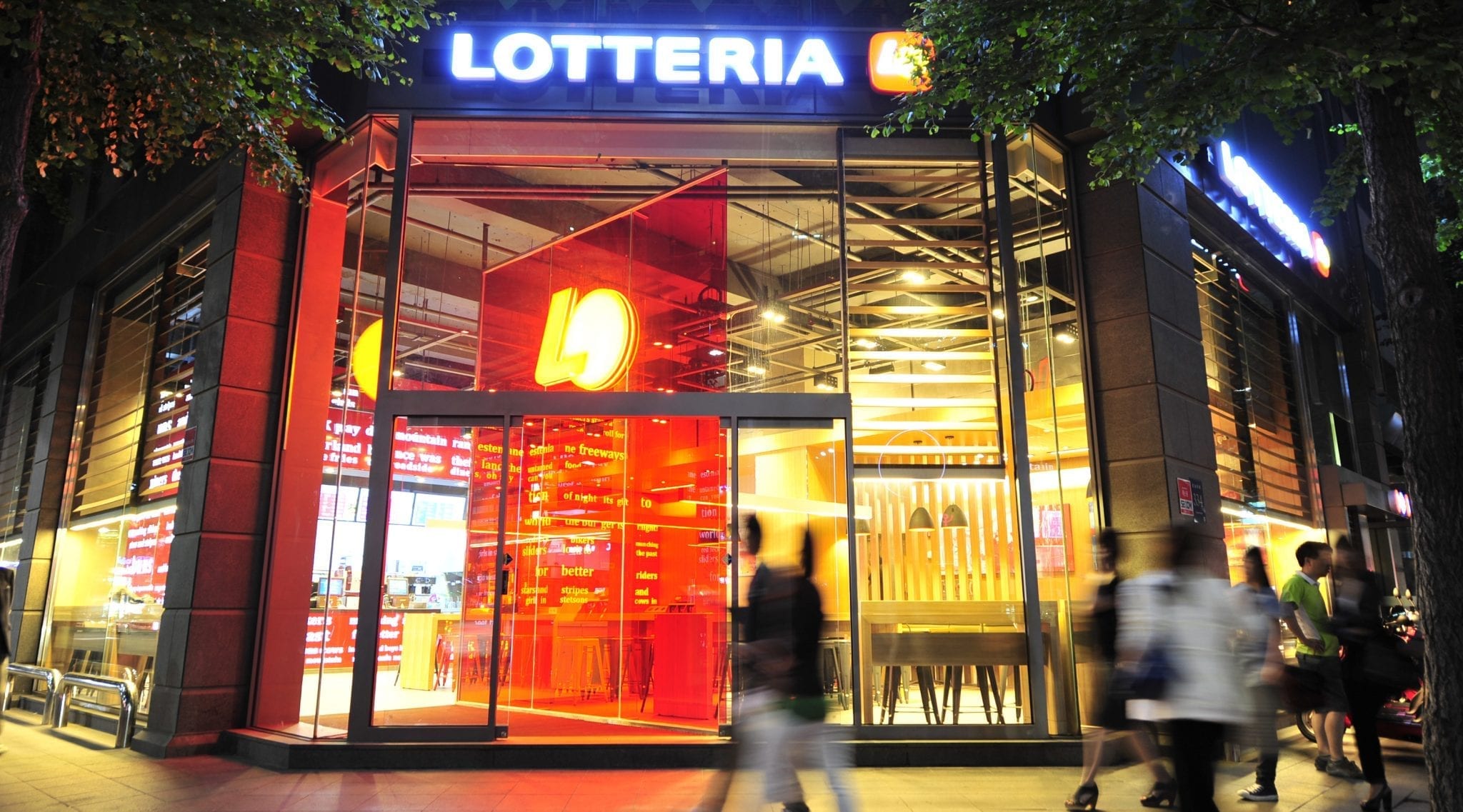
    Lotteria is raising burger prices. The fast food franchise announced Wednesday that it was going to raise the price of 11 of its burgers by an average of 2.2 percent. Its Teri Burger, for example, will now cost 2,300 won ($2.04), up from the original 2,000 won. The price of the Classic Cheese Burger will rise from 4,000 won to 4,200 won.

    “We have decided to increase prices due to economic factors, but hope to offer customers higher quality and service,” read a statement from the franchise.

    Cafe franchise Angel-in-us Coffee also announced it would raise prices of 17 of its beverages by an average of 2.7 percent, or 200 won. Both Lotteria and the cafe chain are operated by Lotte GRS, the food business subsidiary of Lotte Group.

    Angel-in-us cited higher prices of ingredients – like coffee beans and milk, as well as higher labor costs – for the beverage price hike.

  • South Korea’s Kookmin Bank licensed to open Vietnam branch

    South Korea’s Kookmin Bank licensed to open Vietnam branch

    The State Bank of Vietnam has licensed South Korea’s Kookmin Bank to open a branch in Hanoi, the government said on Tuesday. The branch has a chartered capital of $35 million and the contract runs for 99 years, the government said in a statement.

    South Korea is the largest source of foreign direct investment in Vietnam and the Southeast Asian country’s second largest trading partner.

  • Emart goes digital in high-tech Uiwang store

    Emart goes digital in high-tech Uiwang store

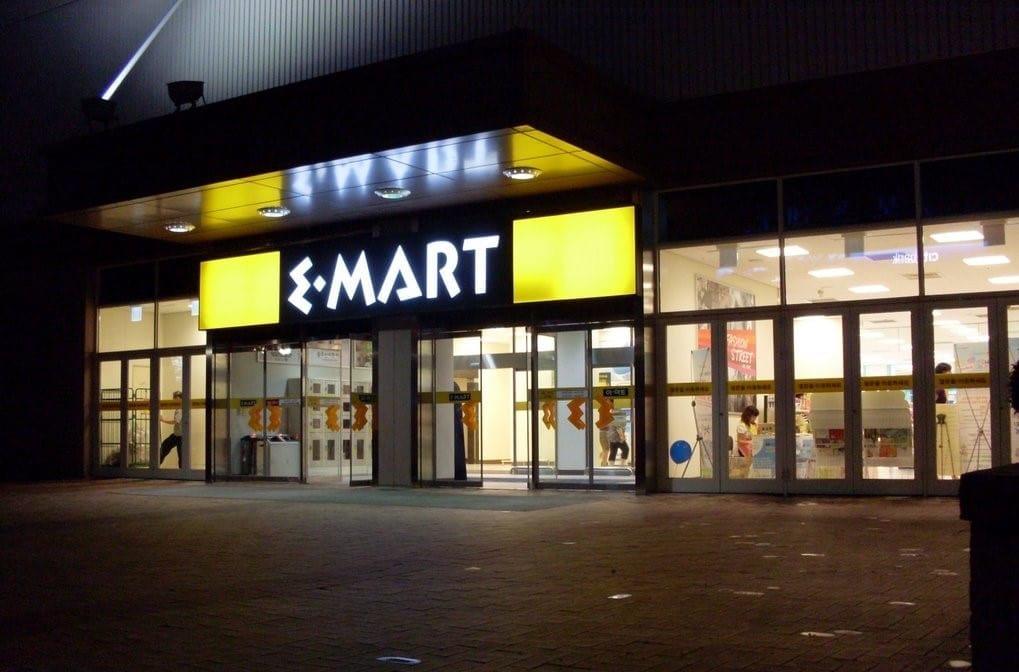
    Emart is going fully digital with its brand new Uiwang branch that will open in Gyeonggi tomorrow. Innovative features of the Uiwang branch – the first Emart store to open in 30 months – include digital displays instead of paper signs and guide robots that can escort customers to desired products. The Uiwang store will span 9,917 square meters (106,745 square feet) across two basement floors in a commercial building.

    “We will introduce a revolutionary format of offline stores that breaks away from tradition in order to meet the challenges of our fast-changing era,” read an Emart report.

    Going paper-free is a big change that Emart hopes will both appeal to customers and help management.

    Price labels will be digitalized and controlled by a central server in the Uiwang branch, allowing store managers to display and change prices with unprecedented ease and speed. The new store will also install digital signage, or electronic displays, alongside elevators, moving walkways and cashiers instead of paper posters for advertisement and notices.

    “By minimizing paper usage, we can provide consumers with a unique shopping experience while practicing green management and boosting productivity,“ read the Emart report.

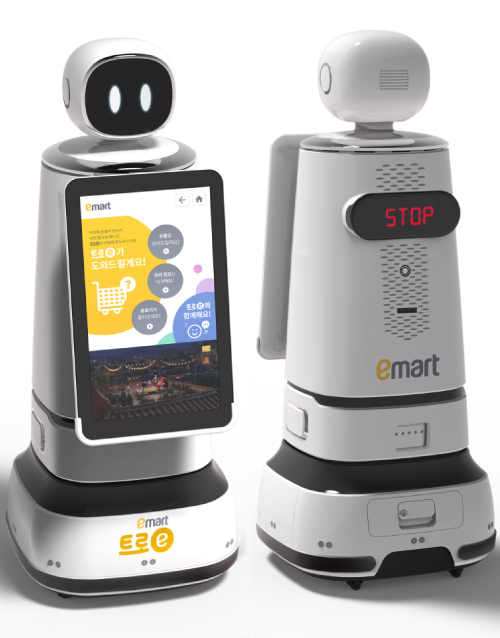
    The new Uiwang store will also be home to Tro.e, an autonomous robot equipped with a 27-inch touch screen that is capable of guiding consumers to desired products and making casual conversation. Like Pepper, a robot the company employed earlier this year at its Seongsu branch in eastern Seoul, Tro.e will only be available for a limited time on a test run at Uiwang.

    Emart developed Tro.e, named after the Swedish word tro, which means trust, together with Future Robot, one of the official robot providers for the PyeongChang Winter Olympics.

    The grocery section of the new store will only be located on the lower floor of the store, while the upper floor will host a variety of affiliated shops including Electro Mart, Pierrot Shopping, Daiz, Boots and a Kakao Friends Store.

    Emart will open a 660-square-meter “Culture Lounge” for customers to read books and purchase beverages.

    “We will continue striving to offer consumers a unique shopping experience with our distinctive products and digital shopping environment,” said a senior manager in charge of development at Emart.

  • Huawei’s woes in U.S. give pause to Korea, too

    Huawei’s woes in U.S. give pause to Korea, too

    The arrest of Huawei’s Chief Financial Officer Meng Wanzhou in Canada has triggered alarms in the Korean telecommunications industry, especially after LG U+ moved onto a fifth-generation (5G) network this month that uses Huawei network devices.

    The Chinese telecommunications giant has maintained a sizeable influence since it first entered the Korean market in 2002. While it was originally focused on the cable infrastructure business, Huawei moved on to offering wireless telecommunications devices in 2007 as local telecommunications companies introduced third-generation wide-band code-division multiple access services.

    In 2013, Huawei received orders for fourth-generation 4G long-term evolution (LTE) wireless base stations from LG U+ for services in Seoul, Incheon, and areas in Gyeonggi and Gangwon.

    The 5G equipment market in Korea is estimated to be worth 10 trillion won ($8.89 billion).

    While Huawei is a leading supplier to the telecommunication industry, concerns about the security of its devices has held the company back. Only LG U+ decided to use Huawei equipment for 5G. Huawei has claimed that it had no such security problems in the 170 countries that it operates in and would follow inspection requests by the Korean government.

    LG U+ signed a deal with Huawei to introduce around 30,000 base stations in the Seoul, Incheon, and the Gyeonggi and Gangwon regions by next March. The deal is reportedly worth around 300 billion won, not including maintenance fees.

    The decision by Korea’s smallest telecommunications company made business sense as it used Huawei equipment for its 4G network.

    Huawei’s equipment, however, will not be installed in areas occupied by United States Forces Korea (USFK) such as in Pyeongtaek, Dongducheon, Yongin in Gyeonggi. The U.S. government has requested that Huawei equipment not be used out of concerns about a Chinese cyberattack. USFK has been suspicious about Huawei equipment. When LG U+ chose Huawei equipment for its 4G network, around 10,000 USFK soldiers switched carriers.

    The current situation has left LG U+ in a difficult position. Its deal with Huawei is already inked, and the 5G service works in sync with the existing 4G system, so it is impossible for the company to simply not use Huawei equipment.

    The recent banning of Huawei equipment by Britain, Australia, Canada, New Zealand and Japan, along with growing worries in Korea, places more pressure on the telecommunications unit.

    A senior LG U+ official expressed frustration at the current situation and the Korean government’s inaction.

    “Our government is just trying to not upset either China or the United States,” said the official. “Shouldn’t the government come forward and clear things up?”

    Meanwhile, the government maintains its stance that the selection of telecommunications equipment is an issue for companies to decide.

    “Inspecting security is the responsibility of the business operator. It is not appropriate for the government to take part in an area that a company should make a decision on,” said Park Jun-guk, an official at the Cyber Security Industry Bureau in the Ministry of Science and ICT.

    “[We] will, however, strengthen security inspections in the form of a technology advisory conference.”

    While 5G has stirred controversy, Huawei has an even stronger presence in the country with its cable and optical transmission equipment businesses. In the cable business, all three telecommunications companies, SK Telecom, KT and LG U+, are customers of Huawei.

    Huawei has also won orders from Koscom, a state-run financial IT solution company, and from electric utility Kepco.

    Last month, the Chinese company won an order with KT to connect the sales network of the National Agricultural Cooperative Federation and the National Livestock Cooperatives Federation worth around 120 billion won.

    According to market researcher IHS Markit, Huawei is the biggest global telecommunications equipment maker, with a market share of 22 percent. While Samsung Electronics holds a strong position in the Korean market, a 45 percent market share, it commands a paltry 4 percent share of the global market.
  • Tourists from China are back to Korea, but not like before

    Tourists from China are back to Korea, but not like before

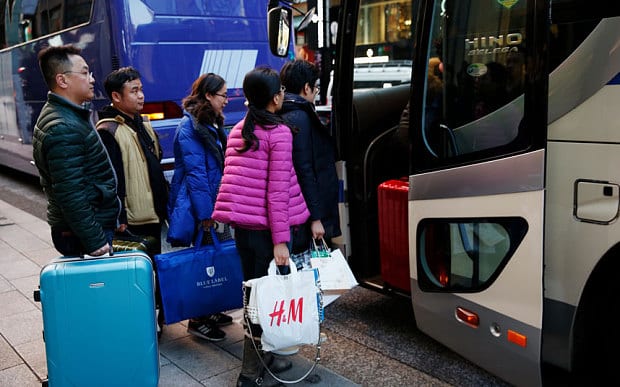
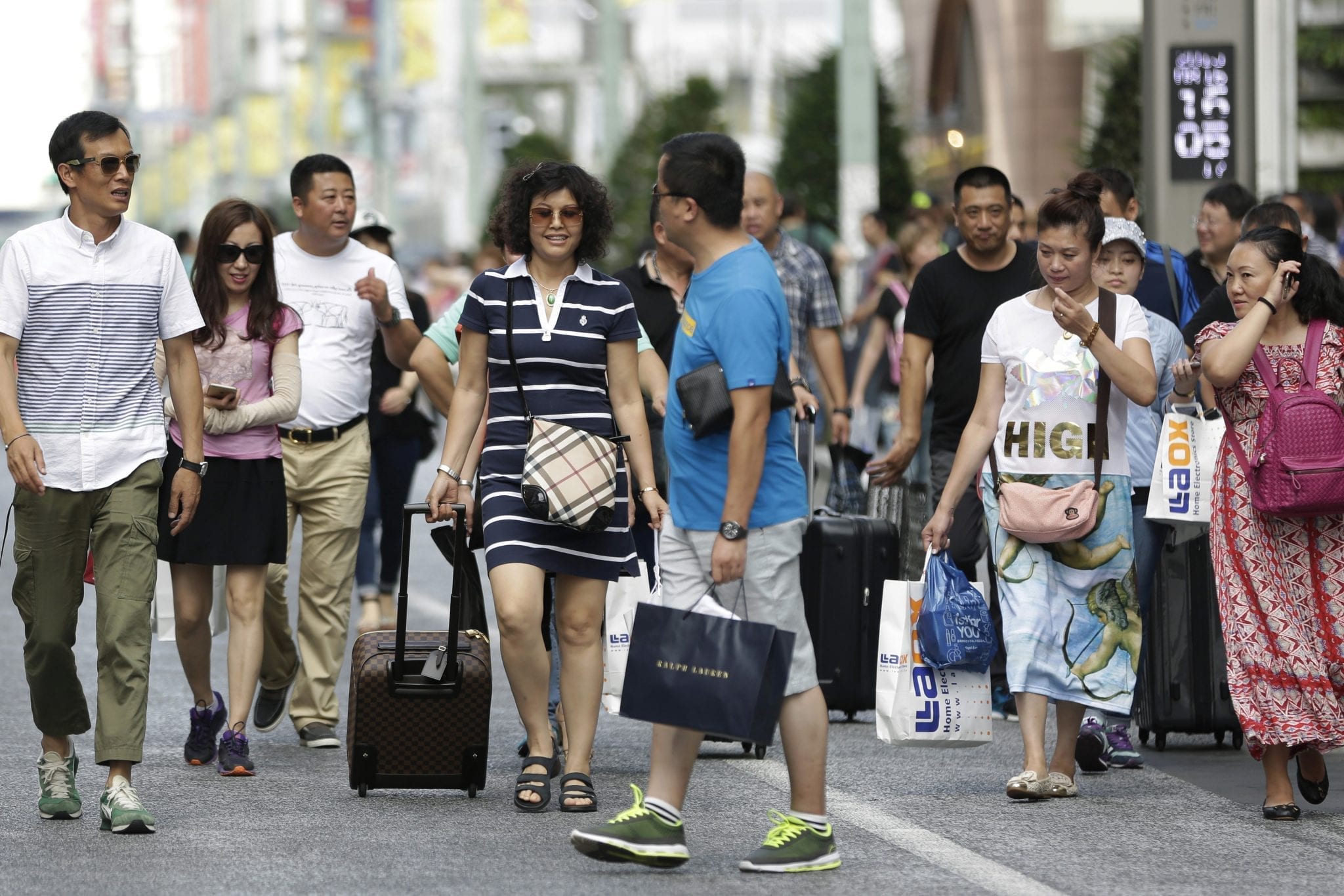
    Chinese group tours, which helped fuel local retail sector growth in recent years, have yet to make a full comeback despite the easing of restrictions by Beijing, Korean duty-free store operators said on Sunday. The assessment came as official data from the Bank of Korea showed that 475,000 Chinese nationals visited the country in October, up 37.6 percent from a year earlier.

    Local tax-exempted outlet operators like Lotte Duty Free and Shilla Duty Free, as well as the umbrella Korea Duty Free Shops Association (KDFA), said that most Chinese customers were individual travelers and so-called “daigongs,” rather than “youkers,” or group travelers.

    Daigongs are small-scale merchants who buy products here on behalf of customers back home.

    Chinese authorities clamped down on group tours to Korea in March 2017 after Seoul allowed the deployment of a U.S. anti-missile defense system on its soil, despite objections from Beijing. China has since partially lifted restrictions, but the number of group tours has not returned to past levels.

    Lotte said that it had almost no youkers, who enter the country on a group visa, and that most shoppers were individual travelers or small merchants.

    It said that before the frictions caused by the U.S. Terminal High Altitude Area Defense’s deployment, there were 7,000 to 8,000 youkers daily at its main duty free store in downtown Seoul. This dropped to around 2,000 after the uproar and then to zero.

    Shilla said it did receive 820 youkers in October.

  • Kakao’s carpooling app goes live in beta test

    Kakao’s carpooling app goes live in beta test

    Kakao’s carpooling service was introduced Friday for beta testing and will be officially rolled out Dec. 17. The start of the service comes after months of battling fierce opposition from local taxi services. They staged a strike on Oct. 18, two days after the IT company started accepting applications from carpool drivers.

    With the beta service, the Kakao T mobile app, a platform for all of Kakao’s mobility services from taxi hailing to navigation, was upgraded to enable the “Carpool” button on its main screen. The beta service will not be accessible to everybody.

    “The beta service is aimed at increasing the stability of the technology and collecting opinions,” Kakao said in a statement. “For that reason, it will only be offered to some users.”

    The selection of testers will be random and independent of age and location. Anyone upgrading the Kakao T app Friday will see the new “Carpool” button, but only the selected users will be able to input words in the destination box. Those who weren’t selected will see an image with the words “This service will launch soon.”

    The base fare is set at 3,000 won ($2.68) for the first 2 kilometers (1.24 miles), the same as for regular taxis. After that point, the fare will increase proportional to the driving time and distance. The company did not disclose details, but a spokesman said the cost will be equivalent to around 70 to 80 percent of regular taxi fares.

    Kakao’s carpool drivers are allowed to offer carpooling services twice a day at any time of the day. The twice-a-day rule is due to the domestic law that limits carpooling to commuting purposes. More than 50,000 drivers who met Kakao’s requirements have been selected so far.

    A government-led task force composed of lawmakers from the ruling Democratic Party, public officials and taxi companies met Friday to discuss carpooling. Executives from Kakao Mobility, the affiliate in charge of the IT company’s transportation services, decided to launch the same day,

    Kakao acquired the Luxi carpooling app in February and completed preparations for its service later in the year.

    The official launch was postponed previously as the task force failed to reach an agreement on the service’s details, including the fare and limits on use. During a task force meeting held Thursday, some government officials opposed Kakao’s request to release the service that same day, demanding more time to find common ground.

    Korea has been a difficult place for carpooling. Uber closed down its service in 2014, and Seoul’s local government questioned the legality of carpooling app Poolus in 2017.

  • South Koreans spending more on Chinese online stores

    South Koreans spending more on Chinese online stores

    South Koreans are spending more at Chinese online stores, according to credit-card spending data. Purchase records from November 1-26, compiled by the big data centre at Shinhan Card, showed a 9.8 per cent increase from last year in the value of goods bought from overseas internet sites. The number of transactions was up 16.6 per cent year on year.

    Chinese online stores outperformed rivals from other countries. AliExpress took 9.5 per cent of the purchases, up from 6 per cent in 2016 and 6.1 per cent last year. It ranked second after Amazon’s 16.3 per cent.

    Taobao, another Chinese Internet shopping site, grew from 2.3 per cent in 2016 to 3.3 per cent last year and to 4.4 per cent this year, raising it to the third most-used overseas online marketplace. Alibaba made it to the top 10 for the first time this year with 1 per cent.

    The shift is stark when comparing the purchases during Black Friday in the US and Singles Day in China. This year, overseas shopping during Singles Day rose 35 per cent. Black Friday purchases stopped at a 9 per cent gain.

    Data showed 70.8 per cent of purchases during Singles’ Day were for goods priced up to 50,000 won (US$44.32). Shoppers in their 30s and 40s remained the biggest clients, but the number of those in their 20s increased 1.9 percentage points from last year.

  • For first few years, Koreans will be biggest users of 5G

    For first few years, Koreans will be biggest users of 5G

    Korea is forecasted to have the highest proportion of fifth-generation (5G) smartphone usage in the world over the next couple of years, a market tracker said on Sunday. According to Strategy Analytics’ Service Provider Group, the adoption rate of 5G smartphones in Korea is expected to reach 5.5 percent in 2019 and 10.9 percent in 2020, which will be the highest level among major global nations.

    The estimate is based on the fact that Korea is to commercialize 5G services next March, making it the first country in the world to do so, with tech giant Samsung Electronics planning to release a model featuring the high-end technology, the market tracker said.

    By 2020, 5G will account for 4.7 percent of total market share in the United States, 5.2 percent in Japan and 2.8 percent in China, Strategy Analytics said, adding that its penetration rate would increase after that date in line with the broader establishment of the network.

    In 2021, the adoption rate of 5G smartphones is expected to begin to surge in major countries, with numbers hitting 27 percent in the United States, followed by 21.3 percent in South Korea, 19.7 percent in Japan and 8.5 percent in China.

    “The 5G standard will become the mainstream of the global network industry in years to come,” said an industry insider.

  • Which tourists spend the most overseas?

    Which tourists spend the most overseas?

    Overseas spending by South Korean tourists ranks among the top of advanced economies, research data showed on December 5. Figures provided by the Korea Economic Research Institute, affiliated with the Federation of Korean Industries, put the proportion for South Korea at minus 1.9 percent in 2016, ranking it the fifth highest among 32 member states of the Organization for Economic Cooperation and Development (OECD).

    The institute derived the proportion by subtracting overseas expenditures by South Koreans from foreigners’ spending in South Korea and measured the sum’s ratio against household spending.

    Higher numbers in the negative means that local citizens spent more abroad that what inbound foreigners spent.

    Results showed Norway topped the list with minus 4.3 percent, followed by Lithuania (minus 2.7 percent), Belgium (minus 2.5 percent) and Germany (2.3 percent).

    In the case of Japan, the number turned positive in 2014 and came to 0.6 percent in 2016.

    “The outflow of spending is the result of choices by local and foreign consumers of tourism services,” the institute said. “It indicates weaknesses in the competitiveness of the domestic tourism industry.”

    The institute cited a report last year from the World Economic Forum that said South Korea’s competitiveness in prices fell from 84th in 2007 to 88th in 2017.

    “(This) was one of the important elements that undermined South Korea’s competitiveness in the tourism business,” it said.

  • E-mart US buys supermarket operator

    E-mart US buys supermarket operator

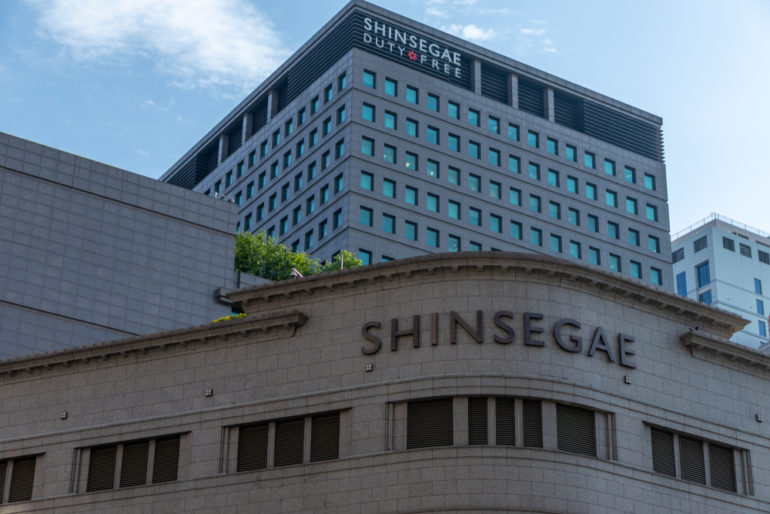
    South Korean discount retail chain E-mart is acquiring US food retailer Good Food Holdings for US$270 million. A subsidiary of retail conglomerate Shinsegae, the E-mart US acquisition intends to stabilise and expand its operations in North America. It is the company’s first acquisition of an overseas firm.

    Good Food operates 24 stores across the American West under three brands: Bristol Farms, Lazy Acres and Metropolitan Market. Its original executive board will be retained by E-mart.

    Good Food Holdings employs 3100 people and brings in average sales of KRW 670 billion ($596.75 million) per annum. E-mart plans to open a premium store-restaurant in Los Angeles next year called PK Market.

  • Cavalli appoints new General Manager Asia Pacific & China

    Cavalli appoints new General Manager Asia Pacific & China

    Founded in the Seventies, when fashion designer and entrepreneur Roberto Cavalli launched the brand, the label has recently seen a rapid growth in the region. Effective from 1st December Ivan Perra reports directly to the CEO regarding the region. Prior to this new role, Ivan Perra was Business Development Director APAC leading both wholesale and retail expansion in the region.

    Ivan has spent 12 years in the region.  He started his career in Retail for Kartell opening and managing the first 2 stores in HK in 2006; to later move to Lanificio F.lli Cerruti dal 1881 as Regional Sales Manager (APAC and North Asia) with focus on B2B and MtM markets.

    After 6 years in Cerruti Ivan took over a new challenge as Area Manager of Cote&Ciel (Parisian premium accessory brand) starting retail and wholesale development for the brand in Asia that now counts more than 10 mono-brand boutiques among Hong Kong, Macau, Thailand, Japan and China.

    Before joining Roberto Cavalli Ivan spent 3 years in charge of Business Development for the French Maison Kenzo (LVMH group) opening over 70 mono-brand stores in the region and in charge of over 120 POS.

    Ivan takes up this new role with a series of brand activations in the pipeline to strengthen the brand positioning in the region.


  • Shinsegae International Opens Select Shop for S. Korean Designer

    Shinsegae International Opens Select Shop for S. Korean Designer

    South Korean retailer Shinsegae International aims to promote South Korean designer brands through a new online store. The company says ‘Select Shop’ will specialise in South Korean designer brands, on its S.I.Village online shopping portal. Select Shop accommodates 30 designer brands for clothing, bags, and footwear.

    “Select Shop will serve as a new channel for South Korean designers as well as for young and sensational new brands, which will also boost the competitiveness of our online shopping mall,” said a Shinsegae International spokesperson.

    Shinsegae International said S.I.Village’s high-end reputation is what encouraged many of the designers to join Select Shop.

    To mark the grand opening, Select Shop will provide discounts of 5 to 20 per cent on all member products and will give away movie tickets to the first 300 customers to make a purchase on Select Shop.

    The website will also be the exclusive distributor for 99 T-shirts designed in collaboration with 99%IS by Bajowoo.

  • Pop-up store Nature Republic opened in Italy

    Pop-up store Nature Republic opened in Italy

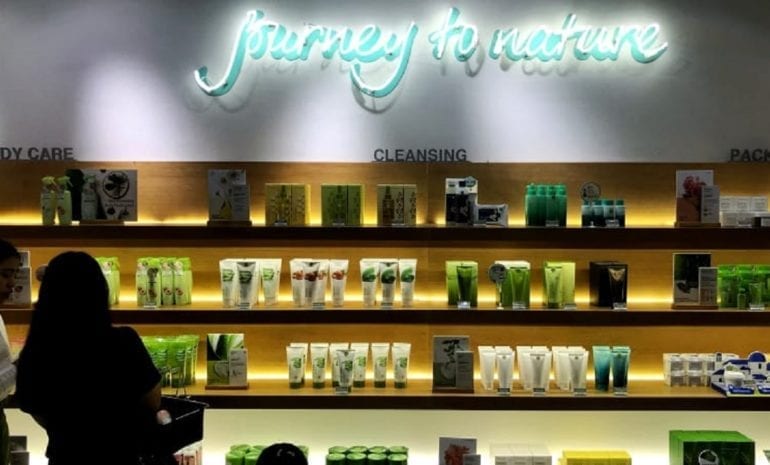
    South Korean cosmetics firm Nature Republic has opened four pop-up stores in Italy. The brand’s entry into the Italian market has seen the pop-ups emerge within Italy’s Coin department stores in Rome, Milan, Torino and Bari. Heritage brand Coin is the largest department store chain in the country in terms of outlets, and focuses on apparel, beauty and home decoration products.

    Nature Republic will leverage its foray into Italy as a launch pad for further expansion throughout Europe, where enthusiasm for Korean beauty products is growing. It has been registering its cosmetics products in the territory for the past two years.

    The firm now operates in 19 countries worldwide. The Italian cosmetics market brings in roughly €10 billion (US$11.4 billion) in annual revenues.

  • Starfield Korea opens dog lounges for shoppers

    Starfield Korea opens dog lounges for shoppers

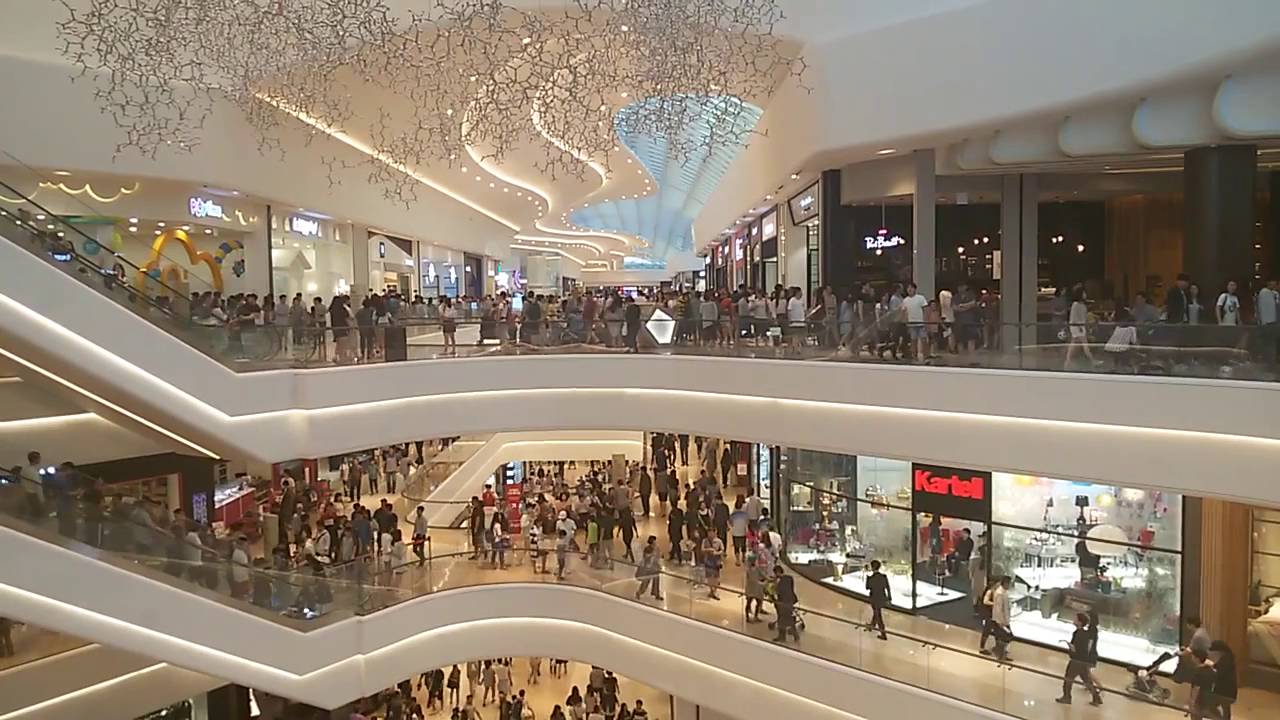
    Starfield, a shopping and theme park franchise operated by South Korean retail giant Shinsegae Group, has opened the country’s first ‘dog lounges’ for customers and their pets. The dog lounges offer specially designed sofas for pets as well as their owners, restrooms for pets, and dog hooks where customers can temporarily leave their pets when they have to go to the restroom themselves.

    The lounge also provides separate resting areas for customers and pets divided by a glass wall. Resting areas for pets have house-shaped sofas, authentic grass floors and restrooms.

    “Starfield was South Korea’s first shopping mall chain to allow pets, but we were always aware of the lack of convenience facilities for customers and pets,” said Choi Jae-kyun, operations manager at Shinsegae Property.

    “Now, we can proudly present ourselves as a pet-friendly shopping mall that both customers and pets can enjoy.”

  • Samsung Electronics gives stability a try

    Samsung Electronics gives stability a try

    The CEOs of Samsung Electronics semiconductors, smartphones and consumer electronics divisions all kept their jobs in the company’s annual corporate reshuffle announced Thursday. Kim Ki-nam, head of Samsung’s device solutions division, which includes semiconductors, retained his position but has been promoted from president to vice chairman. Samsung’s semiconductor business has seen operating profit grow for the past 11 quarters as of September.

    The other two division heads – Koh Dong-jin of IT and mobile communications and Kim Hyun-suk of consumer electronics – were reappointed as CEOs and will retain their current president job titles.

    Roh Tae-moon of the IT & mobile communications division was promoted from vice president to president and will continue to head the smartphone development team. Roh has been at the core of technology development for Samsung’s Galaxy smartphone brand since the range was first introduced.

    For a company well known for rapidly exchanging executives based on performance, the minor superficial changes at the top made this year suggest that Samsung is shifting instead to put more weight on stability rather than expansion next year.

    The company already went through a major generation change last year when it laid off older executives to replace them with younger ones. A total of 14 top executives were reshuffled at the time. Samsung said in a statement on Thursday that it “re-appointed business executives from last year to realize ‘innovation within stability.’”

    The drive for stability also comes at a time when Samsung faces several uncertain factors that analysts say will halt this year’s rally of record profits. The global chip market, which has been on an unusually long supercycle over the last few years, is anticipated to slow down in 2019.

    Outlooks on the global economy are also grim due to the remaining risk of the United States and China continuing their trade war.

    Samsung also stuck to its performance-based HR strategy by heavily compensating executives and managers in the device solutions division, including CEO Kim Ki-nam.

    Kim has been heading the semiconductor business at Samsung since December 2014. Under his lead, the company celebrated the last two years as the No. 1 chip manufacturer in the world. Chips were also a major contributor to Samsung’s record-high quarterly profits this year.

    Kim wasn’t the only one to be rewarded. Among a total of 158 senior executives promoted at Samsung, including those below president, 80 were from his division.

    Samsung employees in the device solutions division will receive bonuses between 300 to 500 percent of annual wages. Even external partners and suppliers for the division will reap incentives this year of up to 89.7 billion won ($79.8 million) in total.

    Meanwhile, this was the first time in three years that Samsung Electronics has released annual reshuffle results at the year’s end – a sign that Samsung is getting back on its feet after Vice President Lee Jae-yong’s return from prison in February.

    There were no annual reshuffles at all in 2016 when Lee was investigated for bribery charges regarding former President Park Geun-hye. It was only in October last year that the company announced a reshuffle plan among top executives.

    Other Samsung affiliates announced annual reshuffle results on Thursday. Samsung C&T Vice President Kim Myeong-soo was promoted to president. He was in charge of the task force in charge of improving competitiveness in engineering, procurement and construction.

    Vice Chairman Lee’s sister Lee Seo-hyun was appointed as chairman of the Samsung Foundation, which conducts social welfare projects. She was formerly president of the fashion division at Samsung C&T.