Tag: Lazada

  • Lazada to join Tmall.com for 2017 Asean expansion

    Lazada to join Tmall.com for 2017 Asean expansion

    Lazada, a leading e-commerce platform in Southeast Asia owned by Alibaba Group, is gearing up to tap into the burgeoning cross-border e-commerce market next year, in a move set to create greater opportunities for small and medium-sized enterprises in Asean and China.

    The company will join forces with Alibaba’s Tmall.com platform and its logistics and payment systems to drive the market, said Alessandro Piscini, chief executive of Lazada Thailand.

    Global marketing research firm Nielsen forecasts that Thailand’s online retail e-commerce market, excluding online travel, will reach US$3 billion by 2020, up from $1 billion in 2015.

    Online retail e-commerce market in Southeast Asia is expected to value at $20 billion in 2020, up from $5 billion last year.

    The e-commerce market will be driven mainly by middle-income earners and the growing number of internet users, according to Nielsen.

    The number of internet users in Thailand is projected to exceed 50 million by 2020, up from 40 million in 2015.

    Mr Piscini said the synergy between Alibaba and Lazada can be used to support local retailers and manufacturers in expanding to cross-border markets successfully.

    Chinese retailers and manufacturers will also be able sell their products in Thailand through Lazada’s website.

    Lazada also plans to work with Ant Financial, the Alibaba affiliate that runs Alipay and other financial services in China, to facilitate online payment service to local retailers and merchants, Mr Piscini said.

    He explained Lazada plans to combine its six websites in Southeast Asia into a single website within two years, and continue sales through one retail e-commerce channel.

    Lazada Thailand’s marketplace platform accounts for 85% of sales revenue, with the remaining 15% from its own marketplace platform selling products from its own website.

    To help local merchants and retailers boost their sales, Lazada will conduct an online festival from Nov 11 to Dec 12.

    “We expect sales volume at this year’s event to be 3-5 times higher than last year’s event,” said Mr Piscini.

    Lazada has expanded the range of products sold at its marketplace to over 2 million items.

    Its best-selling products include cosmetics, fashionable clothes and IT gadgets. “We are focusing more on the high-growth product segments like auto accessories and pet care products,” said Mr Piscini.

  • Alibaba sales soar on international expansion

    Alibaba sales soar on international expansion

    Alibaba sales have soared in the first quarter of its new fiscal year, with overall revenue growth pushing even higher than last quarter’s stellar result.

    Streaming entertainment and cloud computing boosted the business, driving revenue up 59 per cent in the June quarter to 32.15 billion yuan (US$4.8 billion).

    In a contrast to the last reporting period, it is international that has shown the most growth, with revenues rising by 123 per cent. Although this figure is aided by the consolidation of the Lazada business, it is also the result of some good numbers from AliExpress.

    That said, China retail remains the largest part of the group, accounting for just over 73 per cent of revenues. Here performance was strong, with revenues rising by 49 per cent – partly thanks to a combination of the addition of 11 million more active buyers and higher average transaction values over the prior quarter. A sharp increase in marketing spend by those brands and merchants using Alibaba’s various sites also made a significant contribution to the hike in revenues.

    Alibaba’s role as a facilitator for Western brands wanting to sell into China continues to be the company’s main commercial advantage. Its ability to work closely with those merchants to improve performance will benefit the revenue streams of both parties, as well as creating a more attractive and compelling offer for consumers.

    Despite its success at home, Alibaba has struggled to gain traction in already established markets like the US. While this was once a stated ambition, and perhaps remains a long term goal, it is off the agenda for the short term. This is the correct strategy: chasing lower margin, profit eroding international gains for the sake of vanity makes little sense.

    That said, this does not mean that Alibaba’s international ambitions are entirely on hold – as the latest results show. Tactically, Alibaba has decided to focus on high growth markets where commerce is more embryonic. The acquisition of a controlling interest in Lazada, the Southeast Asian eCommerce group, is testament to this.

    While Lazada has grown into a sizeable business, it has a number of challenges including on the delivery, payment and fulfilment front, where it has struggled to optimise the offering. Alibaba, through its expertise and financial muscle, should be able to remedy this. It will also, over the medium term, strengthen the international brands available making the site more compelling and interesting for shoppers.

    The Lazada model represents the approach Alibaba is likely to take to international growth and expansion, and this will yield good long term results.

    With both international and domestic sales forging ahead, and with new areas like cloud computing making a better contribution, Alibaba is firmly on an upward trajectory.

  • China Post, Lazada Ink Strategic Agreement to Enhance Cross-border Logistics Solutions

    China Post, Lazada Ink Strategic Agreement to Enhance Cross-border Logistics Solutions

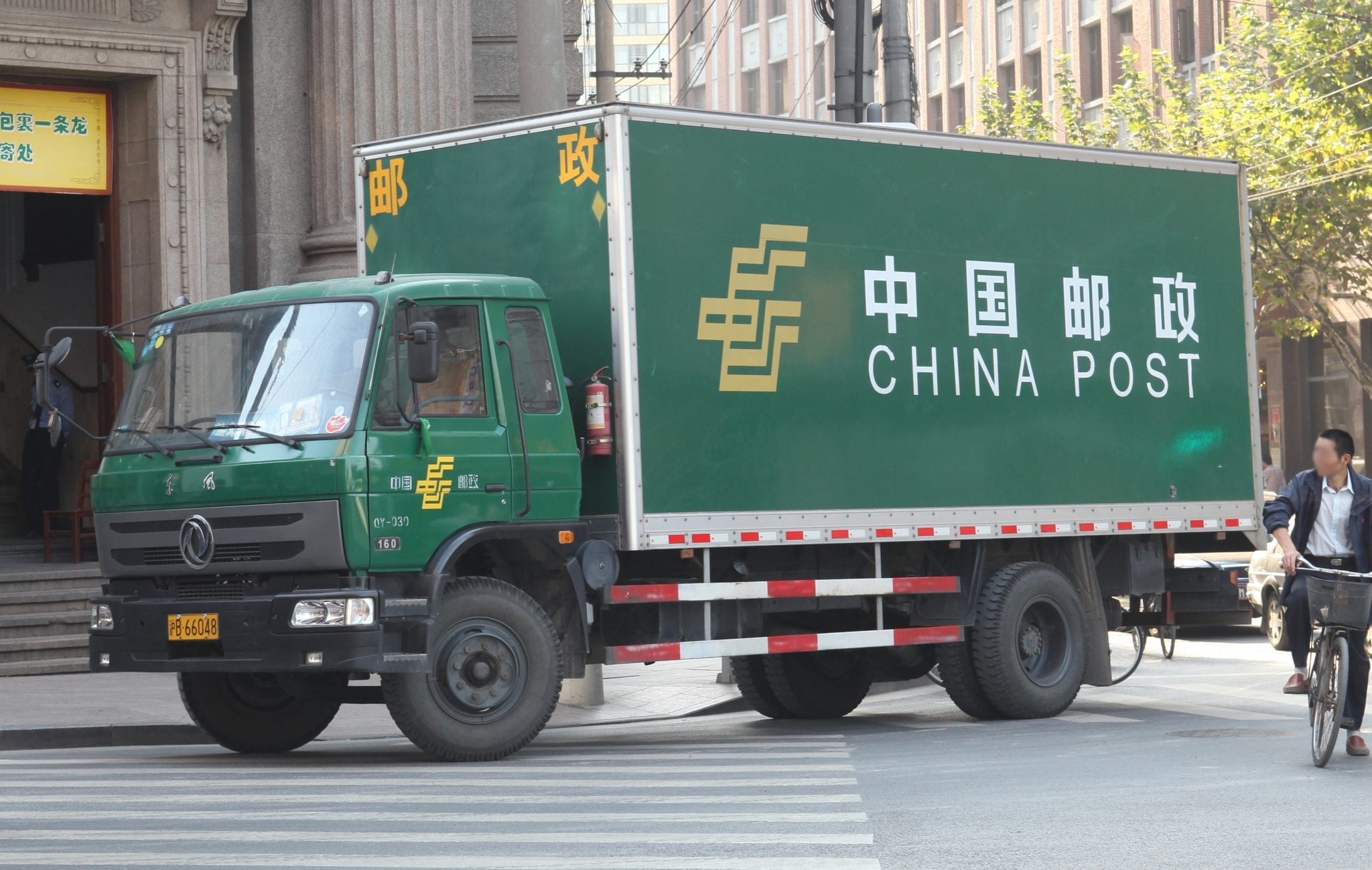
    China Post Group, China’s state-owned postal service provider, and Lazada Group, the leading online shopping and selling destination in Southeast Asia , have signed a strategic agreement to enhance cross-border logistics solutions for Chinese sellers on the Lazada platform.

    The areas of collaboration include enhancing current delivery options for merchants selling small and light items, and developing financial solutions such as micro-credit loans and online payment options for logistics fees. Both organizations have also expressed interest to collaborate with cross-border warehousing solutions, logistics-related education and training, and seller on-boarding in the longer term.

  • Thailand retail growth predicted at 6%

    Thailand retail growth predicted at 6%

    Thailand’s retail market is expected to grow at a compound annual growth rate (CAGR) of more than 6 per cent from now until 2020.

    This was revealed in the latest market study by global technology research and advisory company Technavio.

    Its research report, Thailand Retail Market 2016-2020, offers an analysis of the market in terms of revenue and emerging trends, as well as forecasts for six major product segments – grocery, apparel and footwear, beauty and personal care, personal accessories, home and garden, and consumer electronics.

    Grocery

    Valued at US$103 billion last year, the grocery market in Thailand is forecast to reach $145 billion by 2020, growing at a CAGR of 6.92 per cent. The segment is largely driven by the modern retail sector, while increasing urbanisation and changing consumer lifestyles are playing a significant role in the market’s development.

    Supermarkets and convenience stores have shown the fastest year-on-year growth rates with 9.5 and 10.5 per cent respectively last year.

    “Even though hypermarkets offer attractive prices, consumers are increasingly preferring supermarkets for the convenience factor and the availability of a wide product range,” says Technavio lead retail goods expert Poonam Saini. “Unlike supermarkets, which are in urban zones, hypermarkets are generally in bordering areas, catering almost exclusively to nearby consumers.”

    Apparel and footwear

    The second-largest market segment last year, apparel and footwear is expected to reach $9.19 billion by 2020, growing at a CAGR of more than 3 per cent.

    Several foreign companies are competing with local companies in the segment, says the report. International brands have fair penetration rates, offering stylish designs and a wide product range through modern retail stores. Local brands have also been successful with their long-established presence along with customer loyalty and trust.

    “The popularity of the online channel is growing, and players are actively using social media sites such as Facebook and Instagram for promotional campaigns and marketing activities,” says Poonam.

    “Websites such as Zalora.com are becoming popular for apparel and footwear products, as these sites offer promotions and discounts.”

    Beauty and personal care

    One of the fastest-growing segments, beauty and personal care (BPC) is having more than 3 per cent CAGR and is expected to reach $5.53 billion by 2020. A continuous exposure to western beauty and grooming trends has helped maintain the growth of the market over the past few years.

    International BPC companies have a nearly 50 per cent share of the market, with comprehensive product portfolios and innovative products. Thai retailers are expanding and attracting new consumers, says the report, citing cosmetics brand Sephora, which opened two new stores in 2014 after entering the market late the previous year.

    Top vendors

    Technavio’s research analysts name five top vendors for Thailand in the report.

    Topping the list are supermarket Big C and retail conglomerate Central Group. Then follow CP All, which has a chain of 7-Eleven stores, and homewares stores Global House and Home.

    Other prominent vendors in the market are Adidas, Aeon, Isetan Mitsukoshi Holdings, Lazada, Nike, Sephora, Seven & I Holdings, Tesco, The Mall Group and WearYouWant.

    Technavio develops more than 2000 reports every year, covering more than 500 technologies across 80 countries. It has about 300 analysts globally.

  • Lazada opens m-commerce tech hub in Thailand

    Lazada opens m-commerce tech hub in Thailand

    Southeast Asian e-commerce company Lazada Group has opened a tech hub in Bangkok, Thailand to drive strategic mobile development initiatives.

    The Lazada Tech Hub in Thailand will focus on advancing the design and engineering of Lazada’s mobile shopping and selling sites and apps for Southeast Asia.

    With almost 30 million app downloads and more than 60% of its GMV represented by mobile sales by the end of December 2015, Lazada Group has been investing in m-commerce through new app and mobile site initiatives.

    In the next few months, Lazada Tech Hub aims to hire more than 50 staff, including iOS and Android developers, Go Programming Language developers, and Quality Assurance automation engineers. The tech hub team will operate from EmQuartier in Central Business District Bangkok.

    Lazada Group opened its first tech hub in Ho Chi Minh, Vietnam in November 2012. A second tech hub was opened in Moscow, Russia in February 2015. Together, the three tech hubs are dedicated to driving product engineering and technology infrastructure.

    “Mobile innovation is a discipline any serious online player must build, and having the best talent is critical to designing products and solutions that are not only intuitive but improve the quality of experience and life for our consumers and sellers,” Lazada CTO for operations Ifor Evans said.

    “We believe that Thailand attracts a highly-skilled talent pool. And, as the leading shopping and selling destination, Lazada is both enviably-positioned and committed to raising the bar for mobile and tech development in the region.”

  • Vietnam electronics retailer Nguyen Kim buys Zalora’s local operations

    Vietnam electronics retailer Nguyen Kim buys Zalora’s local operations

    Zalora, one of Southeast Asia’s biggest online fashion marketplaces, has completed a deal to sell its Vietnamese operations electronics retailer Nguyen Kim, reported Sunday, quoting Zalora Group.
    The subsidiary of Germany’s Rocket Internet has also sold its unit in Thailand to Thai retail giant Central Group, the website said, adding that the value of the deals has not been revealed.
    Last month news website TechCrunch cited multiple sources as saying that Central Group would acquire them for US$10 million each.

    Central owns a 49 percent stake in Nguyen Kim, which has 21 stores around Vietnam, through its subsidiary Power Buy.

    The selloff in Vietnam and Thailand is part of Rocket’s efforts to reduce costs and focus on other markets where Zalora has a better chance to make profits, according to TechCrunch.

    With a presence in 11 countries across the Asia Pacific, including Australia and Indonesia, Zalora’s revenues rose 78 percent last year to around $234 million, but its net loss increased 36 percent to $105 million, it said.
    Last month, the German company, which has been struggling to cash on the Southeast Asian market, sold more than half of its stake in Lazada, which it founded in 2012 to target the regional e-commerce market, to China’s Alibaba for $137 million. Rocket retains an 8.8 percent stake.
    In December Rocket sold off food ordering website Food Panda for an undisclosed price to local competitor Vietnammm after three years of operations, citing financial issues.
  • ChoDienTu Vietnam beats Lazada in funding race

    ChoDienTu Vietnam beats Lazada in funding race

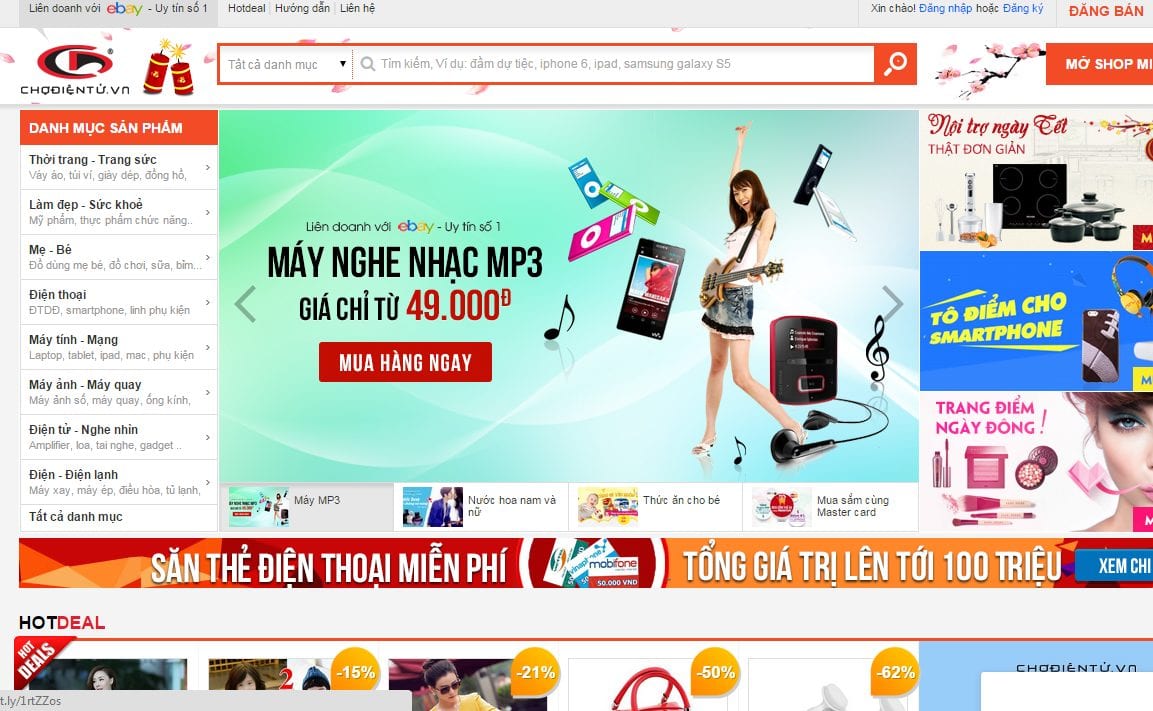
    Vietnam’s first eCommerce marketplace, ChoDienTu.vn, ranked second in sales revenue last year to Lazada in the local market – yet its total funding is 50 times smaller.

    “ChoDienTu.vn has chosen an in-depth strategy of silently investing into infrastructure services to create long-term values and improve service quality to buyers and sellers,” says chairman Nguyen Hoa Binh of the PeaceSoft-group, which owns ChoDienTu. Its second-place ranking was announced in the latest eCommerce report of the Vietnam eCommerce and Information Technology Agency (Vecita).

    “In the face of eCommerce fever in the past few years, many deep-pocketed players have been giving big discounts and promotions to buy growth, then shutting down after losing millions of dollars because of an inefficient burn rate,” says Binh.

    Over the past six years, PeaceSoft-group has grown into a multi-services ecosystem encompassing NganLuong.vn online payment platform, eBay.vn cross-border buying platform and ShipChung.vn shipping and cash-on-delivery platform. It has also formed a strategic partnership with the country’s first warehousing and fulfilment platform BoxMe.vn.

    Addressing the potential threat posed by Alibaba’s acquisition of Lazada in Southeast Asia, Binh’s reaction was: “With our so-called ‘people’s fight’ strategy, if Alibaba is the crocodile in the Yangtze River, then we will be a school of piranhas to fairly compete as they come to Vietnam.”

    PeaceTech, a subsidiary of PeaceSoft-group, is a joint venture with eBay with majority control in the hands of veteran Vietnamese technopreneurs.

    “Over the past 11 years, total funding into ChoDienTu has been estimated as much as 50 times less than that spent by our number-one competitor, Lazada.vn, over a far shorter period,” says Binh.

    “This means eCommerce does not necessarily need as much money as people may think, but the most critical thing is to have a team of people with a really in-depth local understanding.”

  • Deals just got personal

    Deals just got personal

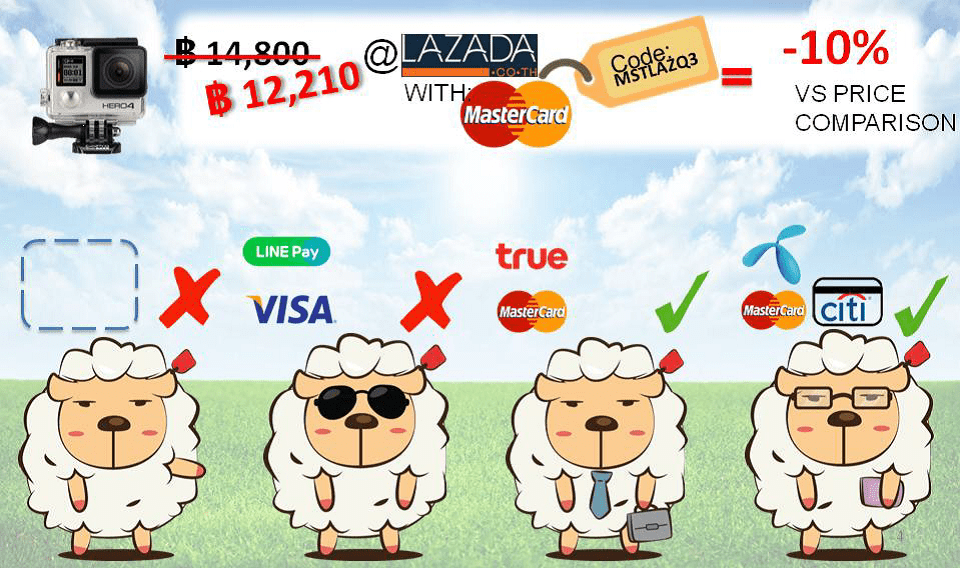
    A GoPro costs the same for everyone? Wrong. Having a MasterCard might easily save a shopper additional 50 dollars on the best price. Because with many big online-shops like Lazada, that MasterCard allows the shopper to use special coupon codes for an extra discount.

    “In the last 6 months, we have slowly seen the death of the one big “blockbuster deal” for everyone.”, explains Dealsheep co-founder David Appold. “More and more, the best deals and promotions are restricted: You can only get them if you fulfill certain conditions.” Needing a master card is just one possibility; extra savings might also hinge on whether you have phone provider A rather than phone provider B, an account with a specific bank, or having installed payment apps like LINE Pay on your phone.

    ds 2

    Online shopping used to be so simple: Price comparison found best deal for everyone.

    The downside: Finding the best deal has become a lot more complex. “Instead of just comparing the prices at different shops, shoppers now need to take into account which promotions and coupon codes they can and cannot use.”, said Pomme Upaiboon, co-founder and head deal hunter at dealsheep.com.

    But people are unique and so is the “best deal”: It might look different from one person to the next.

    The startup’s solution: Help users figure out which deals are available to them personally. “The best and cheapest deal does not help you, if you do not actually have meet the conditions for buying it.”, added Ms. Upaiboon. “So we figured we should give our users an easy way to see which deals work for them.”

    “For the user it is actually quite simple.”, explained Mr. Appold. “They set up what we call their ‘privilege portfolio” on our platform: The credit cards, bank accounts, and phone providers they have. That takes around 30 seconds.

    From then on, we do the rest and know exactly which deal works for the user and can tell him or her which discount coupon code and shop is the cheapest for the product they want. Of course, we do not need their actual credit card numbers and other personal information. All we need to know is whether they have that MasterCard or dtac phone or not, because that is what determines which coupon codes work for them.”

    Keeping track of all relevant coupon codes and their conditions can be overwhelming.

    The startup first premiered the new feature during the Mobile Challenge Asia Pacific (MCAP) held on Hawaii, USA, where the team represented Thailand. Since then the team has refined the feature which appears to be new-to-the-world and has so far not even been attempted by more mature players in the deal hunting and coupon code space in the US and elsewhere. Dealsheep plans to go live with the deal personalization within May.

  • Tesco Lotus speeds expansion

    Tesco Lotus speeds expansion

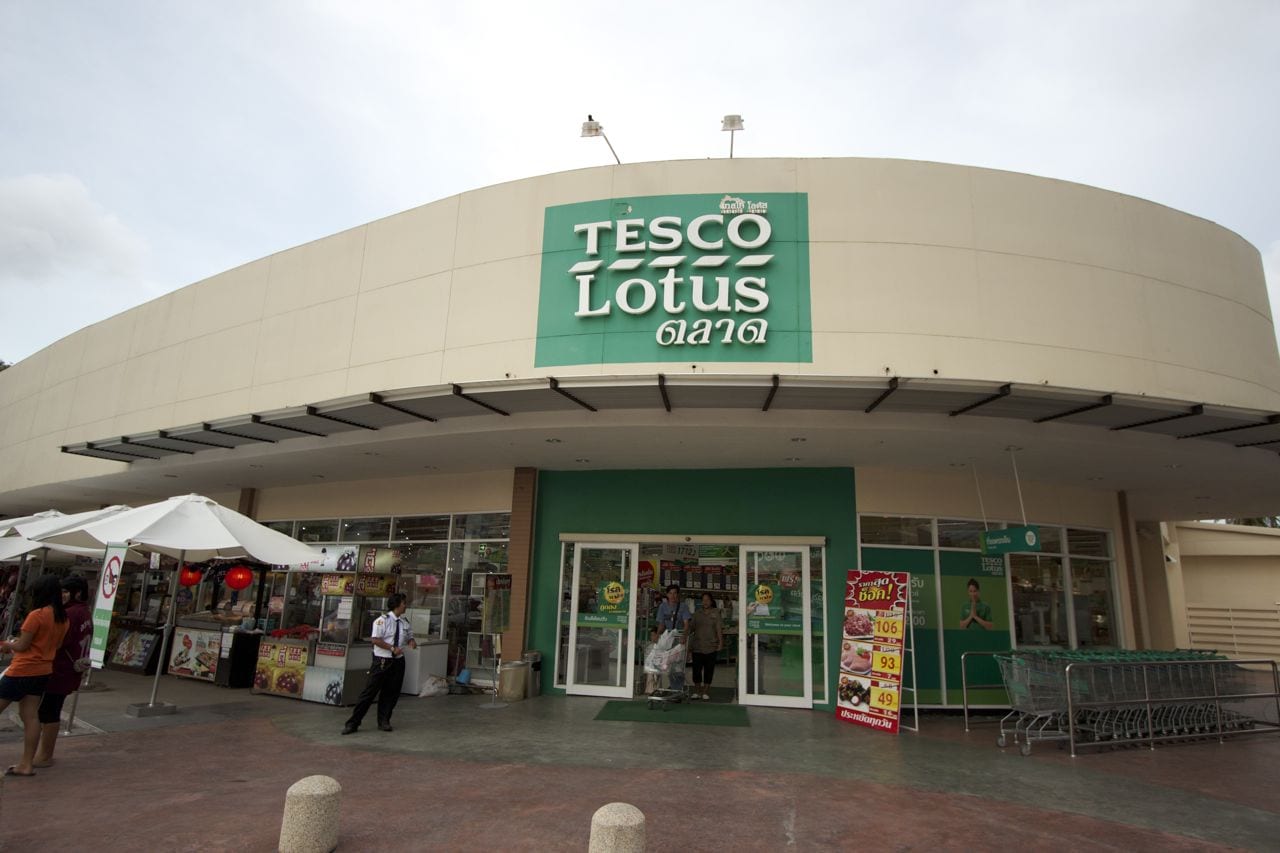
    Thai retail chain Tesco Lotus plans to continue expanding with at least 65 new stores this year, despite the market being sluggish.

    “We saw a small improvement in the market in terms of local consumption, but we are optimistic the Thai market is still promising as it is the second-largest unit outside the UK,” CEO John Christie said in an interview with The Nation.

    He says the company will also work on enhancing the customer shopping experience and improving online outlets.

    Tesco Lotus opened 65 stores last year, and is looking for opportunity in medium-size provinces new to the brand. Smaller stores will be opened in Bangkok, while large ones will be opened in the provinces, and the company aims to employ at least 3000 more staff.

    Eighteen stores will be renovated, aiming to enhance the shopping experience particularly for children and family groups. The company hopes it will have more visitors than last year’s 15 million, which was 2 million more than the previous year.

    Also, Tesco Lotus plans to continue developing its online shopping platform with its partners this year.

    “We are now offering more than 8000 non-food products via Lazada,” said Christie. These include electronic devices, and beauty and healthcare products.

    And in co-operation with government agencies and local communities, the company plans to launch 22 Pracha Rath projects across Thailand so it can buy more farm products. It is planning 150,000 tonnes in purchases this year, up from 100,000 tonnes last year.

    There are 12 communities in the Pracha Rath scheme, which aims to promote the development of innovative products, human resources, and research and development in 10 business sectors, including logistics, food processing and innovative agriculture.

  • Alibaba entry stirs up Thai e-commerce

    The recent acquisition of Lazada Group by Chinese e-commerce giant Alibaba Group poses a challenge to local online product manufacturers and retailers who anticipate a potential flood of Chinese-made products.

    The move by Alibaba is expected to shake up Thailand’s e-commerce market. It’s also putting more pressure on other e-commerce companies.

    “The number of business-to-consumer e-commerce companies is likely to fall to only two to three over the next three years, down from five, because of fierce competition,” said Punnamas Vichitkulwongsa, chief executive of Ascend Group, a subsidiary of CP Group that operates the iTruemart and weloveshopping websites.

    “But the entry of Alibaba will spur competition in the local e-commerce market, which is likely to benefit Thai consumers and the industry,” he said.

    There are usually two dominant e-commerce players in a country, said Ms Punnamas.

    Pawoot Pongvitayapanu, president of the Thai E-Commerce Association and founder of Tarad.com, said if Alibaba continued using Lazada’s subsidised promotion strategy, the Chinese firm could become a dominant player in Thailand’s e-commerce ecosystem as it has its own payment and logistics systems for websites.

    However, local online product manufacturers, especially those that make IT accessories, consumer electronics and fashion items, will face a greater challenge from cheap Chinese products.

    Paul Srivorakul, group chief executive of aCommerce, believes Alibaba’s entry will create an innovative e-commerce market in Thailand, attracting more foreign investors.

    He expects more mergers and acquisitions in the local e-commerce industry next year as a result.

    Santit Jirawongkraisorn, co-founder of Lalamove Thailand, a Hong Kong-based on-demand delivery app provider, said existing e-commerce companies in Thailand would face intense competition from Alibaba’s presence. But the increased competition can drive consumer gains and promote the overall e-commerce market, he said.

    Alessandro Piscini, chief executive of Lazada Thailand, said Alibaba’s investment reflected the huge potential it saw in e-commerce for the region and the role it expected Lazada to play in the local markets.

    The partnership will bring significant synergies that enhance the online experience for both buyers and sellers in Thailand, he said.

    In a related development, PwC Thailand released its latest report on Global Total Retail 2016: They say they want a revolution which polled some 23,000 online shoppers in 25 countries to track retail consumer trends, including mobile shopping and social media influence.

    The report revealed that 51% of online shoppers in Thailand said they purchase goods directly via a social media channel, outpacing India (32%), Malaysia (31%), and China (27%).

    Fifty-three percent of Thai online shoppers said that customer reviews influenced their buying behaviour.

    The survey also showed that social media influenced 78% of shoppers globally, up from 68% in a similar study last year, with 92% of emerging market shoppers buying products based on social media recommendations.

  • Zalora Thailand and Vietnam to be offloaded

    Zalora Thailand and Vietnam to be offloaded

    Rocket Internet is selling its Zalora Thailand and Vietnam eCommerce fashion sites.

    This follows the Alibaba Group investing in Rocket Internet’s Lazada, valued at US$1.5 billion. Zalora, which raised more than $250 million, was once on an equal footing with Lazada, according toTechCrunch.

    Southeast Asia did not have service from Amazon or eBay when Rocket started Lazada and Zalora in 2012, but the two outlets have posted heavy losses and experienced slow market growth.

    Zalora, part of the Global Fashion Group (GFG), covers 11 countries across Asia Pacific, including Australia, Indonesia and Taiwan. While its revenue rose 78 per cent to US$234 million last year, its net loss blew out 36 per cent to $105 million.

    Meanwhile, Rocket has announced a new strategy that takes it back to its roots, launching early-stage startups. It sold India-based Fab Furnish this month and Foodpanda Vietnam last year, and is said to be seeking buyers for Foodpanda India and eCommerce site Jabong.

  • Lazada Philippines Celebrates 4th Birthday with 7 Million Visits

    Lazada Philippines Celebrates 4th Birthday with 7 Million Visits

    March marks another year for ecommerce site leader, Lazada Philippines (www.lazada.com.ph). The country’s leading one-stop shopping and selling destination, capped its 4th anniversary with a Birthday Sale last March 15 – 18, 2016.

    Lazada sent online shoppers into a frenzy starting midnight of March 15 with product deals and flash sales up to 90% off. The Philippines alone recorded almost 7 million visits all throughout the sale – 8 times higher than average traffic of one of the biggest shopping malls in the Philippines.

    laz 1

    The campaign was participated in by more than 2,300 SME merchants and more than thirty local and international brand partners – all with special sale offers to online shoppers. Birthday sale top categories included Mobiles & Tablets, Health & Beauty and Home & Living where 6,000 mobile phones, 2,000 bluetooth smart watches and 1,500 hair straighteners were sold. Lazada also sold over 4,500 packs of diapers, a strong indication that Filipino parents are embracing the convenience of online shopping.

    laz3


    95% of ordered items were shipped within 24 hours to half a million customers who placed their orders across all Lazada countries. A large bulk of orders came from Metro Manila, Cebu, and Cavite respectively. Orders were also recorded to have reached the Dinagat Islands, Sultan Kudarat and the Mountain Province. The Lazada Mobile App brought in more than 50% of purchases proving the shift towards the use of smartphones and tablets in day to day transactions of Filipinos.

    With the huge uptake on mobile app shopping during the Birthday Sale, Lazada is launching another app-exclusive sale from April 7 – 10, offering discounts up to 80% off across a wide assortment of product categories. Top categories, brand deals and flash sales will also be available exclusively on the mobile app.

    laz 2

  • Microsoft Store opens in Lazada Thailand

    Microsoft Store opens in Lazada Thailand

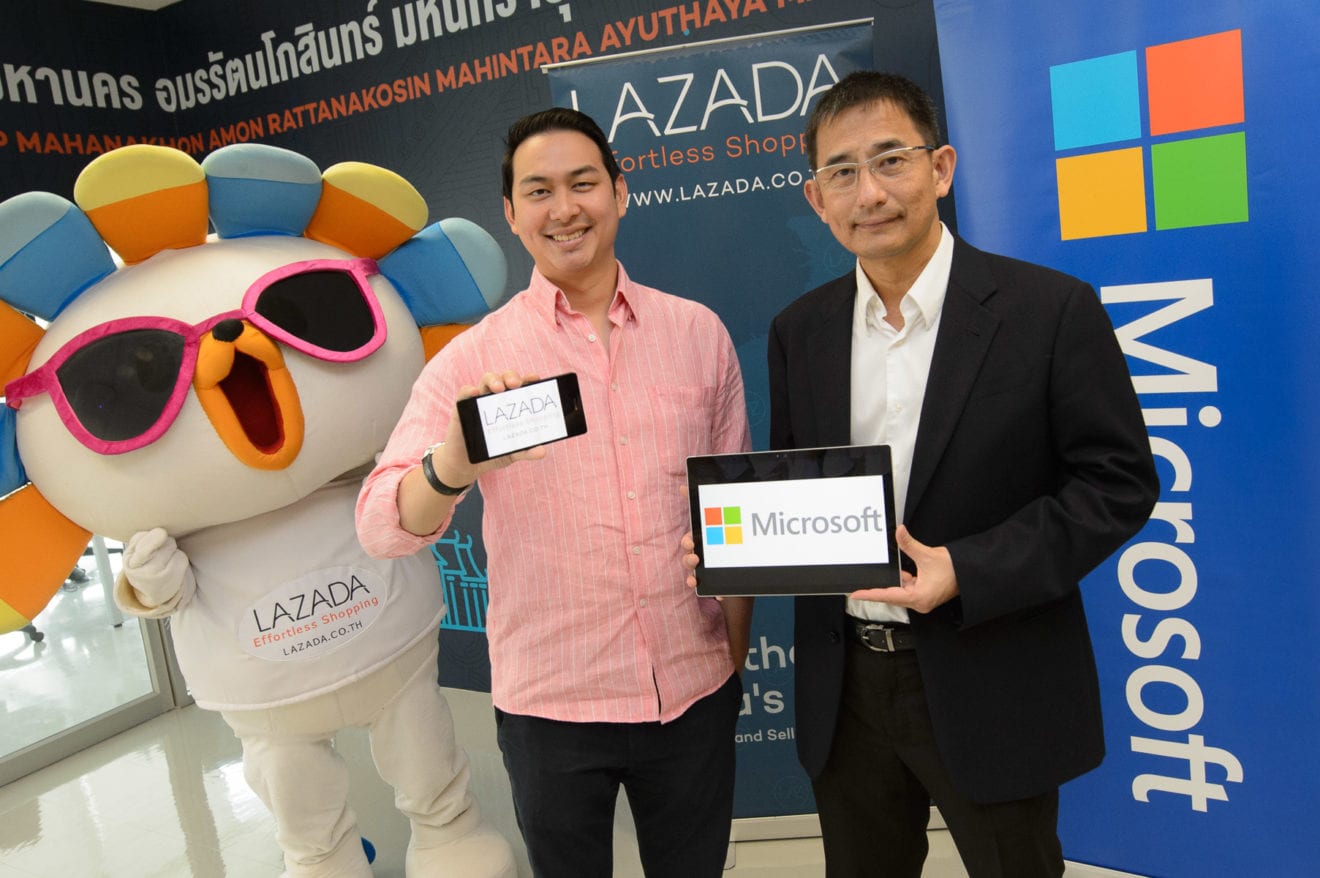
    Microsoft Thailand recently announced the official launch of its Microsoft Online Store on Lazada Thailand.

    The store is envisioned to be a one-stop shop for Microsoft’s products and a destination for exclusive offers and deals, giving Thai consumers access to the full lineup of devices, software, and services, including Surface, Lumia smartphones, Windows 10-powered laptops, tablets, and 2-in-1 devices, various hardware accessories, and the Office productivity suite.

    Following a similar partnership between Microsoft and Lazada in Malaysia last year, Thailand becomes the second country in the region to welcome the Microsoft Online Store on the Lazada platform.

    “The launch of the Microsoft Online Store on Lazada is an important milestone for Microsoft Thailand as the explosion of social and mobile technology has enabled the era of online shopping in Thailand,” said Orapong Thien-Ngern, General Manager, Microsoft Thailand. “Partnering with Lazada gives Microsoft an opportunity to build on our customer-centric approach and deliver our products and services to Thai customers via a platform that is already familiar to them.”

    The Microsoft Online Store opening comes just days before Lazada celebrated its fourth anniversary in Thailand. Lazada has seen rapid growth in the country since its launch in March 2012.

    “We are delighted that Microsoft is launching its online store with Lazada. Together with Microsoft, we are making exciting, aspirational innovative products accessible to more consumers in Thailand,” said Tarin Thaniyavarn, Chief Commercial Officer, Lazada Thailand.

  • Henry Sy, Lazada team up for Philippine online retail business

    Henry Sy, Lazada team up for Philippine online retail business

    Billionaire Henry Sy, owner of the largest Philippine builder and retailer, has partnered with an online retailer backed by Germany’s Rocket Internet SE to target the rising number of consumers in the Southeast Asian nation who shop using the Internet.

    SM Investments Corp, Sy’s holding company, has reached an agreement to use the platform of the Philippine unit of Rocket Internet’s Lazada to sell online merchandise from toys to clothes, Teresita Sy-Coson, a daughter of the billionaire owner and vice chairwoman of the company, said in an interview. SM will initially sell light-to-carry non-food items through Lazada that eventually could include home furnishings and appliances, she said.

    “This strategic alliance with Lazada will further enhance our online store,” Sy-Coson said. “It’s a very good match: Lazada has its expertise and we also have our own expertise.”

    SM Investments, operator of the country’s biggest chain of retail stores and owner of the nation’s largest shopping mall builder, faces intensifying competition as rivals from Robinsons Retail Holdings to Puregold Price Club expand their network. Internet access and the use of smartphones have also been rising, encouraging EBay Inc, Alibaba Group Holdings and Amazon.com to tap local online shoppers.

    More Filipinos are accessing the Internet, including on mobile devices. About 40% of the Philippine’s population of more than 100mn were Internet users in 2012, up from 5.2% in 2004, according to the World Bank. The Philippines had about 118mn mobile phone subscribers at end-2015.

    SM Investments’ alliance with Lazada comes two years after Sy-Coson said in a Bloomberg interview in February 2014 that the group has been testing e-commerce websites and targets a full-scale online operation by 2016. The SM Group currently has websites that sell toys and home appliances as well as vouchers that give customers as much as 50% discount in purchasing selected merchandise from its department stores and supermarkets.

    The Philippine e-commerce market is forecast to grow at a compounded annual growth rate of 101.4% from 2013 through to 2018, according to a 2014 report by Ken Research. The online retail market, a component of e-commerce, is projected to rise 189.2% over the same period, it said.

    Lazada, which began its Philippine operations in 2012, led Internet retailing in the country in 2015 with a 20% market share as it met rising Filipino interests for gadgets and electronic appliances from smartphones, tablets to home theatre systems at prices that were a “huge” discount, according to a Euromonitor International January 2016 report.

    Lazada.com.ph, which has 7,000 merchants, is the country’s sixth most popular website and ranks 14th globally among online merchant websites, according to Inanc Balci, chief executive at Lazada’s Philippine operations. He said the Filipino shopping pattern has evolved with 60% of their customers buying goods through mobile Internet.

    Lazada Group is a privately owned e-commerce company founded in 2011 by Rocket Internet with the goal of building Southeast Asia’s Amazon.com. Aside from the Philippines, it operates sites in Indonesia, Malaysia, Singapore, Thailand and Vietnam. Singapore’s Temasek Holdings is among its large shareholders, according to Rocket Internet’s website.

    SM Investments’ retail operations, which include department stores, grocers, supermarkets and convenience stores, posted a 17% growth in profit to 6.8bn pesos last year on a 7% increase in sales. SM Prime Holdings, its shopping mall venture, had a 14% increase in recurring profit to 20.9bn pesos.

    “The retail business is evolving,” Sy-Coson said. “It is important for a retailer to go online and it’s the right move to go with Lazada.”

  • Lazada Philippines Celebrates 4th Anniversary

    Lazada Philippines Celebrates 4th Anniversary

    Lazada, the leading online shopping and selling destination in Southeast Asia is celebrating its 4th anniversary with a 4-day Birthday Sale from March 15-18.

    The Birthday Sale will treat shoppers to a range of deals of up to 90% across a wide selection of categories featuring Home and Living, Travel and Luggage, and Consumer Electronics.  Well-known brand partners including Samsung, Microsoft, Tosot, Unilever, Nestle, and Belo will also participate in the sale offering special promotions throughout the celebration.

     image002 

    Birthday blowout highlights include:

    ·         Hourly Flash Deals

    ·         Php 4 Sale

    ·         Jackpot games for additional discounts

    ·         Facebook & Instagram games where customers have a chance to win a TV and smart phones

    ·         A chance to win a trip to Dubai for two with every Cherry Mobile purchase  

    Brand ambassadors LA Aguinaldo and Kelsey Merritt, who personify Lazada’s fun and effortless vibe, will join the country’s largest online party.  

    Birthday Milestones  

    Where Customers go, Lazada goes

    Since its launch in 2012, Lazada PH has experienced rapid growth. “We delight in witnessing how Filipinos’ shopping habits have evolved, as we commit to give customers more options to make the most out of their busy lifestyles. 60% of Lazada customers already shop via mobile – a clear indication of how Lazada has successfully adapted to modern Filipino digital habits. We collaborate closely with the biggest brands to offer the best assortment and prices, which has made Lazada a primary destination for every shopper,” said Lazada PH CEO Inanc Balci.  

    Empowering a growing SME segment

    Balci stressed Lazada’s commitment to helping SMEs tap wider markets. “In our four years of operations in the Philippines we have seen tremendous opportunity for SME’s in the e-commerce industry. We currently have 7,000 merchants onboard, and continue to make enhancements in our sellers’ platform to encourage more entrepreneurs to sell online. We commit to provide logistics capabilities to make selling more effortless for our merchants.”  

    More products, more places, more birthdays to come

    “Looking ahead, Lazada Philippines will continue to focus on increasing our product assortment, expand our logistics infrastructure and introduce payment solutions to further enhance the effortless shopping experience for our customers,” Inanc added.

    Future Plans

    Lazada PH has recently unveiled the new site 30-sqm Fulfillment Center in Cabuyao, Laguna which will for be completed by end-year.  The center, which is double the capacity of the current warehouse, will have automated features for inventory, selection, parcel movement and dimensional weight measurement.

    Lazada Express, the in-house delivery arm is and modernizing the Sortation Center and opening 20 hubs throughout the country to increase delivery footprint and reach.

    And as part of Lazada’s commitment to make shopping more effortless for everyone, an express delivery option will be launched in Metro areas for rush deliveries.