Tag: lifestyle

  • Tourists from China are back to Korea, but not like before

    Tourists from China are back to Korea, but not like before

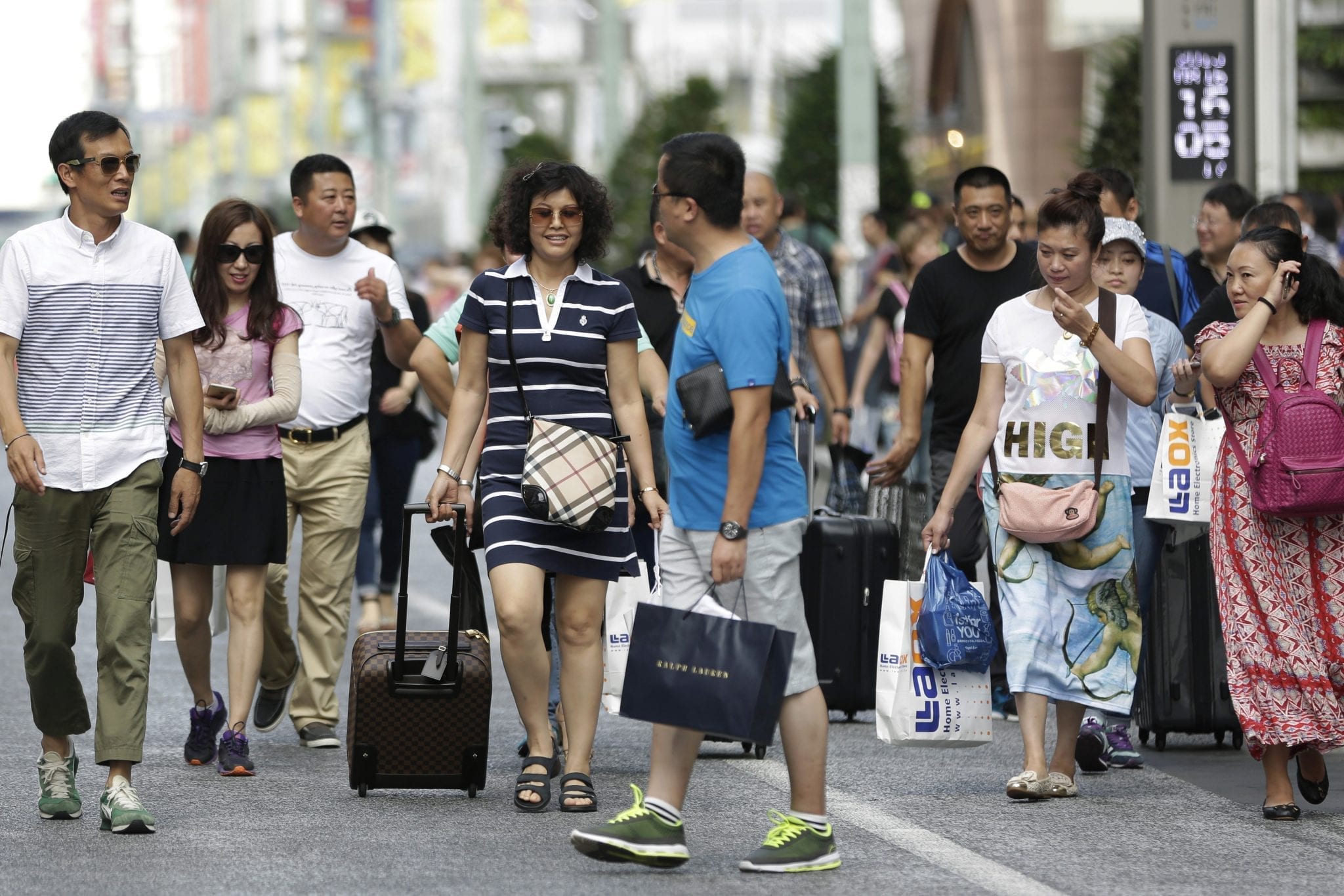
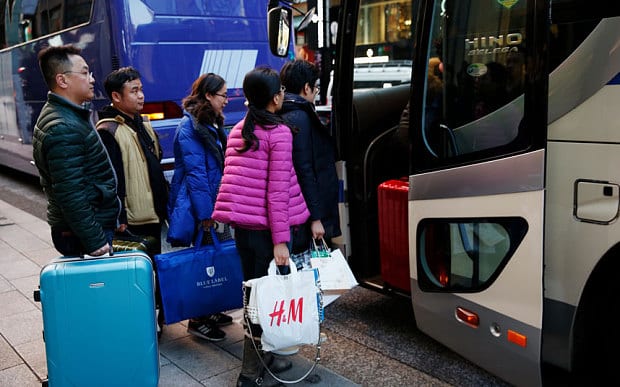
    Chinese group tours, which helped fuel local retail sector growth in recent years, have yet to make a full comeback despite the easing of restrictions by Beijing, Korean duty-free store operators said on Sunday. The assessment came as official data from the Bank of Korea showed that 475,000 Chinese nationals visited the country in October, up 37.6 percent from a year earlier.

    Local tax-exempted outlet operators like Lotte Duty Free and Shilla Duty Free, as well as the umbrella Korea Duty Free Shops Association (KDFA), said that most Chinese customers were individual travelers and so-called “daigongs,” rather than “youkers,” or group travelers.

    Daigongs are small-scale merchants who buy products here on behalf of customers back home.

    Chinese authorities clamped down on group tours to Korea in March 2017 after Seoul allowed the deployment of a U.S. anti-missile defense system on its soil, despite objections from Beijing. China has since partially lifted restrictions, but the number of group tours has not returned to past levels.

    Lotte said that it had almost no youkers, who enter the country on a group visa, and that most shoppers were individual travelers or small merchants.

    It said that before the frictions caused by the U.S. Terminal High Altitude Area Defense’s deployment, there were 7,000 to 8,000 youkers daily at its main duty free store in downtown Seoul. This dropped to around 2,000 after the uproar and then to zero.

    Shilla said it did receive 820 youkers in October.
  • New Hanoi taxi merger to fight Grab on the streets

    New Hanoi taxi merger to fight Grab on the streets

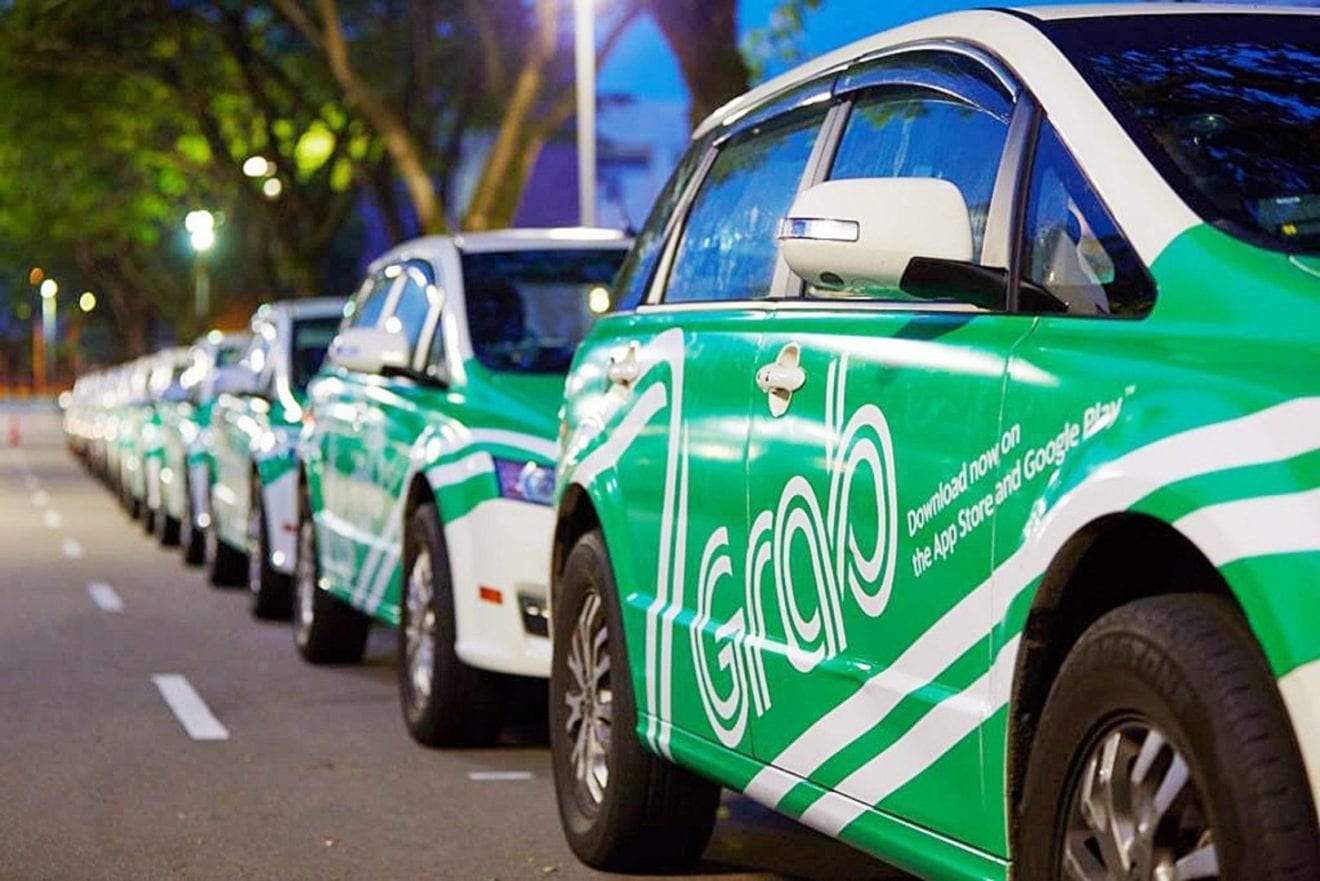
    Three Hanoi operators have banded together to create the largest taxi business in the capital and compete with Grab. The union, named G7 Taxi, has been able to undercut the fares of Grab, at least over short distances, and it may be looking to bring still more players into its group.

    G7 was formed in October by Thanh Cong, Ba Sao, and Sao Hanoi. Together, they have about 3,000 cars, accounting for around 20 percent of taxis in the Hanoi area.

    The G7 base fare is VND9,900 (43 U.S. cents) for the first one km, while Grab charges VND20,000 (86 U.S. cents) for the first two km.

    The entrance of the new brand is expected to increase competition between traditional taxis and raid hailing firms like Grab.

    Earlier, Nguyen Cong Hung, chairman of the Hanoi Taxi Association, had said: “Traditional taxis, each with their own app, are now trying to compete with Grab. But we are divided, therefore we need to unite.”

    Before Thanh Cong, Ba Sao, and Sao Hanoi teamed up, annual sales at the three companies had declined by 10-15 percent on average over the past few years.

    The number of taxi companies in Hanoi has also fallen down to 70 taxi now, from 115 in 2010.

    Joining the fight

    The taxi trio is not alone in pushing back against the ride-hailing industry.

    In March, southern taxi firms ComfortDelgro Savico and Vinataxi had merged with the same purpose.

    Vinataxi, the third largest taxi firm in HCMC, was confident the merger would increase its growth six-fold this year.

    Mai Linh, Vietnam’s No. 1 taxi operator, has developed a smartphone app similar to that of Grab. Meanwhile, second-ranked Vinasun has launched a ride-hailing service using Facebook’s Messenger app, enabling customers to hail cars and make complaints and requests directly, much like Grab.

    But Grab, the dominant player in the ride-hailing business in Vietnam, is also working on strategies to compete better with local taxi firms.

    Several months ago, it introduced Grab for Business in Vietnam, a service that helps a company track the trips its employees make to limit unnecessary trips and control expenses.

    Grab is also deploying various policies to attract drivers by offering bonuses and opening stops with free wifi and coffee.

  • AuMake enters into agreement with JD Worldwide

    AuMake enters into agreement with JD Worldwide

    AuMake International Limited has joined forces with JD Worldwide, a division of Chinese e-commerce giant JD.com, to create a new omnichannel platform for Australian and New Zealand brands to reach Chinese customers. The strategic agreement, which was signed in Sydney on Tuesday, will see JD combine its online and logistics capability in China with AuMake’s retail store and brand building capabilities in Australia.

    The partnership mirrors a similar agreement between Alibaba’s Tmall and Chemist Warehouse, the companies noted in a statement.

    The agreement builds on the booming daigou industry in Australia and New Zealand, where personal shoppers, often Chinese students or tourists, buy and ship products on behalf of family, friends and other clients in China.

    AuMake over the past two years has expanded its chain of retail stores catering to daigou shoppers with relevant products and services.

    Under the agreement, AuMake will become JD’s exclusive retail store partner in Australia and New Zealand and connect existing and future store customers to its online flagship on JD’s cross-border platform, JD Worldwide.

    JD, under the agreement, will fully support AuMake’s online flagship, with an initial sales target of 10 million RMB ($2 million) per month, and provide access to its warehouse and dispatch logistics network in China.

    The companies will also work together to incubate and develop new brands to be exclusively sold on the JD Worldwide platform and in AuMake retail stores.

    AuMake executive chairman Keong Chan called the agreement a “company-changing event”.

    “This is a company changing event for AuMake and confirms the value that we have created so far via our retail store distribution network in Sydney,” he said.

    “Under this collaboration with JD Worldwide, AuMake will now be able to reach hundreds of millions of customers in China with new brands and products, including brands and products owned by AuMake.”

    Keong added that he believes AuMake and JD together can fundamentally change the way in which Australian and New Zealand products reach the Chinese market.

  • Kakao’s carpooling app goes live in beta test

    Kakao’s carpooling app goes live in beta test

    Kakao’s carpooling service was introduced Friday for beta testing and will be officially rolled out Dec. 17. The start of the service comes after months of battling fierce opposition from local taxi services. They staged a strike on Oct. 18, two days after the IT company started accepting applications from carpool drivers.

    With the beta service, the Kakao T mobile app, a platform for all of Kakao’s mobility services from taxi hailing to navigation, was upgraded to enable the “Carpool” button on its main screen. The beta service will not be accessible to everybody.

    “The beta service is aimed at increasing the stability of the technology and collecting opinions,” Kakao said in a statement. “For that reason, it will only be offered to some users.”

    The selection of testers will be random and independent of age and location. Anyone upgrading the Kakao T app Friday will see the new “Carpool” button, but only the selected users will be able to input words in the destination box. Those who weren’t selected will see an image with the words “This service will launch soon.”

    The base fare is set at 3,000 won ($2.68) for the first 2 kilometers (1.24 miles), the same as for regular taxis. After that point, the fare will increase proportional to the driving time and distance. The company did not disclose details, but a spokesman said the cost will be equivalent to around 70 to 80 percent of regular taxi fares.

    Kakao’s carpool drivers are allowed to offer carpooling services twice a day at any time of the day. The twice-a-day rule is due to the domestic law that limits carpooling to commuting purposes. More than 50,000 drivers who met Kakao’s requirements have been selected so far.

    A government-led task force composed of lawmakers from the ruling Democratic Party, public officials and taxi companies met Friday to discuss carpooling. Executives from Kakao Mobility, the affiliate in charge of the IT company’s transportation services, decided to launch the same day,

    Kakao acquired the Luxi carpooling app in February and completed preparations for its service later in the year.

    The official launch was postponed previously as the task force failed to reach an agreement on the service’s details, including the fare and limits on use. During a task force meeting held Thursday, some government officials opposed Kakao’s request to release the service that same day, demanding more time to find common ground.

    Korea has been a difficult place for carpooling. Uber closed down its service in 2014, and Seoul’s local government questioned the legality of carpooling app Poolus in 2017.

  • AirAsia’s Vietnam venture set to fly in August

    AirAsia’s Vietnam venture set to fly in August

    A new Vietnam-based airline set up by Malaysian budget carrier AirAsia and a local company is expected to fly by next August. Tran Trong Kien, CEO of Hanoi-based resort ooperator Thien Minh Group, AirAsia’s partner, said that applications for aviation licenses would be made next February and likely obtained in six months.

    Vietnam will become the newest market for AirAsia, the largest low-cost carrier in Southeast Asia, which has affiliates in India, Indonesia, Malaysia, the Philippines, and Thailand.

    Kien said Prime Minister Nguyen Xuan Phuc had expressed support for the airline, which has yet to be named.

    The airline plans to deploy five or six Airbus SE A320 and A321 aircraft on domestic and regional routes, and expand the fleet to 30 within three years, he added.

    Last week Thien Minh Group signed a memorandum of understanding with AirAsia for setting up the new airline with a capital of VND1 trillion ($44 million).

    AirAsia will hold a 30 percent stake in it, and Thien Minh, 70 percent.

    The new airline would be a direct competitor to Vietnam’s budget carriers Vietjet Aviation and Jetstar Pacific, according to industry insiders.

    Vietnam Airlines is currently the biggest airline in terms of passengers carried.

    Bamboo Airways, owned by private corporation FLC, last month received a license and expects to make its maiden flight on December 29. It is allowed to operate 10 aircraft on domestic and international routes.

    There are five carriers in Vietnam: Vietnam Airlines, Vietjet Air, Bamboo Airways, Jetstar Pacific and VASCO. Vietnam Airlines owns VASCO and has a 70 percent stake in Jetstar Pacific.

    Vietnam received 14.12 million foreigners in the first 11 months of the year, up 21.3 per cent year-on-year, according to the General Statistics Office. Eighty percent of foreign tourists arrive by air.

    Vietnam’s aviation market has averaged 17.4 percentage growth in the past decade, far higher than the 7.9 percent rate for the Asia-Pacific, according to the International Air Transport Association.

    AirAsia almost struck a deal with Vietjet, but in 2010 the deal collapsed.

  • South Koreans spending more on Chinese online stores

    South Koreans spending more on Chinese online stores

    South Koreans are spending more at Chinese online stores, according to credit-card spending data. Purchase records from November 1-26, compiled by the big data centre at Shinhan Card, showed a 9.8 per cent increase from last year in the value of goods bought from overseas internet sites. The number of transactions was up 16.6 per cent year on year.

    Chinese online stores outperformed rivals from other countries. AliExpress took 9.5 per cent of the purchases, up from 6 per cent in 2016 and 6.1 per cent last year. It ranked second after Amazon’s 16.3 per cent.

    Taobao, another Chinese Internet shopping site, grew from 2.3 per cent in 2016 to 3.3 per cent last year and to 4.4 per cent this year, raising it to the third most-used overseas online marketplace. Alibaba made it to the top 10 for the first time this year with 1 per cent.

    The shift is stark when comparing the purchases during Black Friday in the US and Singles Day in China. This year, overseas shopping during Singles Day rose 35 per cent. Black Friday purchases stopped at a 9 per cent gain.

    Data showed 70.8 per cent of purchases during Singles’ Day were for goods priced up to 50,000 won (US$44.32). Shoppers in their 30s and 40s remained the biggest clients, but the number of those in their 20s increased 1.9 percentage points from last year.

  • BreadTalk to open 1st Din Tai Fung restaurant in London by end-2018

    BreadTalk to open 1st Din Tai Fung restaurant in London by end-2018

    Taiwanese dumpling chain Din Tai Fung has opened in Covent Garden, London. The new 8000sqft Din Tai Fung London eatery is the franchise’s 153rd globally, and is the first of at least two outlets planned for the city. A second store is planned for Centre Point next year.

    The Din Tai Fung London store has been launched by Taster Food UK in partnership with Singapore-based BreadTalk Group.

    BreadTalk Group CEO Henry Chu said: “The group will leverage on our experience of operating Din Tai Fung in Singapore and Thailand, and the strength of our overseas partners to continue the tradition of delivering an authentic Taiwanese dining experience to Londoners.”

    Brand founder and chairman George Quek commented that there is potential to open 20 Din Tai Fung outlets in Britain, serving as a starting point for further expansion into Europe.

    Din Tai Fung has already opened in Australia, China, Hong Kong, Indonesia, Japan, Malaysia, Philippines, South Korea, the US and the UAE. It was recognised by the New York Times in 1993 as one of the world’s top 10 restaurants.

  • Steve Madden has launched in Malaysia

    Steve Madden has launched in Malaysia

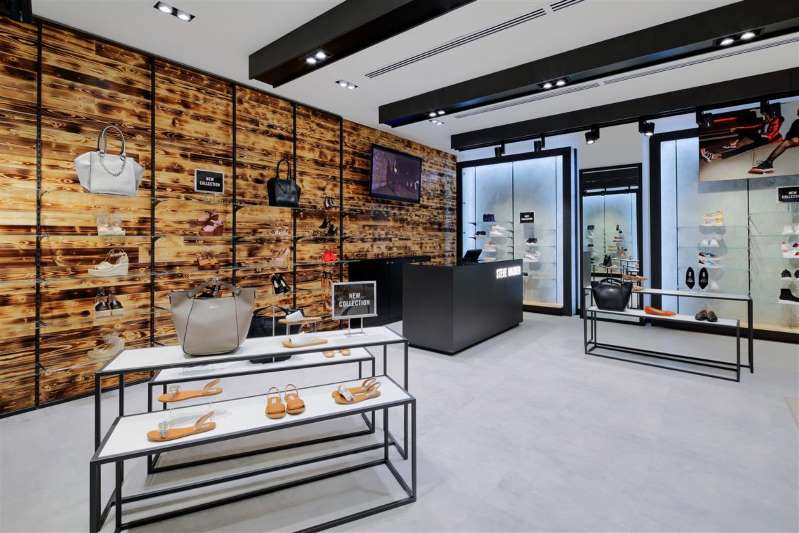
    American footwear brand Steve Madden has opened its first store in Malaysia. The new location at Mid Valley Megamall in Kuala Lumpur is the second Steve Madden store launched by the brand’s retail partner Valiram after the first opening in Takashi­maya Singapore.

    A statement from the brand that describes the new store’s aesthetic as “distilled urban” reads: “Making use of several materials, the intention is to stage the stars – shoes and accessories – in a way that allows each of them to tell their style story.”

    Featured in store is the brand’s Holiday 2018 collection for women, as well as its signature rock-n-roll-inspired shoes and leather goods.

  • ShoppRe online portal targets Indians living abroad

    ShoppRe online portal targets Indians living abroad

    International shipping and consolidation company ShoppRe.com is setting up in Dubai with a series of marketing campaigns. The shopping portal optimises cross-border e-commerce from India, acting as a bridge between people living abroad and Indian shopping sites such as Flipkart and Myntra.

    According to the site’s founders, most Indian sellers do not offer international shipping and several Indian websites do not accept international card payments.

    ShoppRe’s brand ambassadors, actress Priyamani and her husband Mustufa Raj, kick-started the official launch in Dubai by releasing the new ad campaign.

    “I can totally relate to people who have just shifted abroad and badly miss shopping from India. ShoppRe makes it possible to have your favorite Indian goods delivered right to your doorsteps,” said Priyamani.

    The firm’s major investor V A Hassan said: “I have been in Dubai for more than four decades. I have seen the huge demand for Indian products like fashion, food, etc, which are popular everywhere, but not easily accessible or are extremely overpriced”.

    ShoppRe was founded in October 2016 and has fulfilled orders worth INR 40 million (US$565,200) for more than 15,000 customers, including both Indian and non-Indian consumers. It has shipped products to more than 80 countries.

  • Kering leads the way to gender diversity

    Kering leads the way to gender diversity

    French luxury goods giant Kering has received a prize for its high level of female representation on its board. The company has made gender equality one of its corporate priority and has, this week, been chosen to receive the “Most Feminine Board of Directors” award.

    Handed out by the European Women on Boards along with Ethics & Boards, Kering was selected among the 200 largest companies of the Stoxx Europe 600 index based on the percentage of women on the boards as well as the presence of women serving as chief executive officer or chair of the executive board.

    The company, which owns a range of high-end labels including Saint Laurent, Bottega Veneta and Pomellato, launched a leadership and diversity program in 2010 with the aim of increasing access for women to leadership positions.

    Kering has also committed to reaching gender parity and pay equality at all levels by 2025.

    French companies are leading the way on gender diversity and Kering is a great model setting an example for the rest of the world to follow.

    Indeed, more than half of the group’s managers are women while they constitute 64% percent of the board and 33% of its executive committee.

    François-Henri Pinault, Kering’s CEO, also announced that the company would be doubling the budget of the Kering Foundation, aimed at tackling violence against women.

    Kering is also partnering with Michelle Obama for the French leg of her blockbuster tour for her memoir titled “Becoming.”

  • Japan Foods in regional tie-up with Minor Singapore

    Japan Foods in regional tie-up with Minor Singapore

    Japan Foods has entered a joint venture with Minor Singapore to support each other’s operations in Japan, Thailand and China. Japan Foods is to operate the partners’ Thai restaurants in Japan and support Japanese cuisine operations. Minor Singapore will meanwhile run Japanese outlets in Thailand and China, supporting the preparation of Thai cuisine.
    The JV is being funded by a combined shareholder loan of $2.3 million to be disbursed equally for working capital. Japan Foods will fund its half of the loan with internal cash resources.

    Japan Foods executive chairman and CEO Takahashi Kenichi said he believes the expanded network will “make us more attractive as a franchise partner to Japanese brand owners who may be looking to expand beyond their local market”.

    Minor Singapore executive chairman and CEO Dellen Soh said the partnering firms “share many synergies, including strong brand portfolios and good operating track records”.

  • Alibaba to open e-commerce hub in Belgium

    Alibaba to open e-commerce hub in Belgium

    Alibaba Group Holding Ltd has signed an agreement with the Belgium government to launch an e-commerce trade hub, which will include investments in logistics infrastructure. The project is part of Alibaba’s Electronic World Trade Platform (eWTP), and Belgium is the first European country to join the project following similar agreements in Malaysia and Rwanda.

    Alibaba’s logistics arm, Cainiao, will lease a 220,000 square meter logistics port at Belgium’s Liege airport as part of the deal and invest an initial 75 million euros ($85 million) in the project set to begin operations in 2021, it said.

    “We strongly believe that under the eWTP, we will open up the huge potential for European businesses to reap the benefits of global cross-border trade, especially into the China market,” Alibaba CEO Daniel Zhang said in a statement.

    Alibaba’s eWTP is designed to help countries reduce trade barriers for e-commerce trade, including lowering or eliminating tariffs and speeding up customs clearance.

    The company has previously said the project is designed to “compliment” the World Trade Organization (WTO).

    Alibaba is expanding the project to Europe amid wider trade tensions, which have forced the firm to back down from efforts to tap U.S. sellers.

    Recently, Alibaba Chairman Jack Ma said previous plans to create a million jobs in the United States had been put on ice due to trade tensions, according to Chinese state media.

  • What is Amazon’s Japan bestseller fashion?

    What is Amazon’s Japan bestseller fashion?

    Amazon Japan has revealed its most popular items sold on the online retailer’s platform in the last twelve months, with basics and sportswear taking the top spot in both fashion and accessories, and footwear categories. According to the ‘Amazon Ranking Grand Prize 2018’, the United Athle 5.6 Ounce High Quality T-shirt took first place in the clothing and accessories category. In a classic design, the affordable fashion item was followed in popularity by the brand’s crew neck t-shirt, which came in second place.

    Looking at the top 20 apparel brands, Champion gained five spots in the report, while in the womenswear section, casual tops by And It_ sat high in the rankings.

    Asics’ running shoes won both first and second place in footwear, while Anello’s poly-canvas mini bag proved popular in the bag category.

    In watches, Casio’s G-Shock shock-resistant smart-watch continued to gain popularity, with the Casio brand featuring 11 times in the Amazon Japan top 20. In the jewellery ranking, products by Tiffany & Co. gained in popularity too, said the report.

    The “Amazon Ranking Grand Prize 2018” ranked the U.S. e-commerce giant site’s most popular products by category for the period beginning in November 13, 2017, and ending on October 31, 2018.

    In the last twelve months, retail expenditure has continued to grow in Japan.

    In September, the archipelago nation recorded its 11th consecutive month of retail revenue growth, with sales up 2.1% on the same period last year, according to data by the Japanese trade ministry.

    Specifically, online shopping is at the forefront of this drive with the Japanese love for online shopping helped by the trend to online shop using mobile phones.

    In the latest Criteo survey, mobile devices accounted for 55% of all EC transactions in Japan, up 4 points on the year.

    Transactions through smartphones increased 9%, and tablets 3%, but purchases by PC were down 9%, said the report.

  • Ikea China biggest project revealed

    Ikea China biggest project revealed

    Swedish furniture group Ikea will build a US$1.2 billion, 430,000sqm shopping complex in Shanghai, to be completed by 2022. The new Ikea China centre will house an Ikea store and an additional 120,000sqm in retail area, hosting more than 300 businesses. It will also include 60,000sqm of office space.

    The move represents the largest single investment the firm has made in one location, and is its sixth complex to be announced or built in China. It will be constructed near the Hongqiao airport as the Shanghai Linkong Project.

    Ikea has completed three Livat-branded shopping centres in China, and has 26 stores across the country. Two other shopping center projects have been announced within the territory.

  • Which tourists spend the most overseas?

    Which tourists spend the most overseas?

    Overseas spending by South Korean tourists ranks among the top of advanced economies, research data showed on December 5. Figures provided by the Korea Economic Research Institute, affiliated with the Federation of Korean Industries, put the proportion for South Korea at minus 1.9 percent in 2016, ranking it the fifth highest among 32 member states of the Organization for Economic Cooperation and Development (OECD).

    The institute derived the proportion by subtracting overseas expenditures by South Koreans from foreigners’ spending in South Korea and measured the sum’s ratio against household spending.

    Higher numbers in the negative means that local citizens spent more abroad that what inbound foreigners spent.

    Results showed Norway topped the list with minus 4.3 percent, followed by Lithuania (minus 2.7 percent), Belgium (minus 2.5 percent) and Germany (2.3 percent).

    In the case of Japan, the number turned positive in 2014 and came to 0.6 percent in 2016.

    “The outflow of spending is the result of choices by local and foreign consumers of tourism services,” the institute said. “It indicates weaknesses in the competitiveness of the domestic tourism industry.”

    The institute cited a report last year from the World Economic Forum that said South Korea’s competitiveness in prices fell from 84th in 2007 to 88th in 2017.

    “(This) was one of the important elements that undermined South Korea’s competitiveness in the tourism business,” it said.