Tag: luxury

  • Pandora sales declining, relies on China

    Pandora sales declining, relies on China

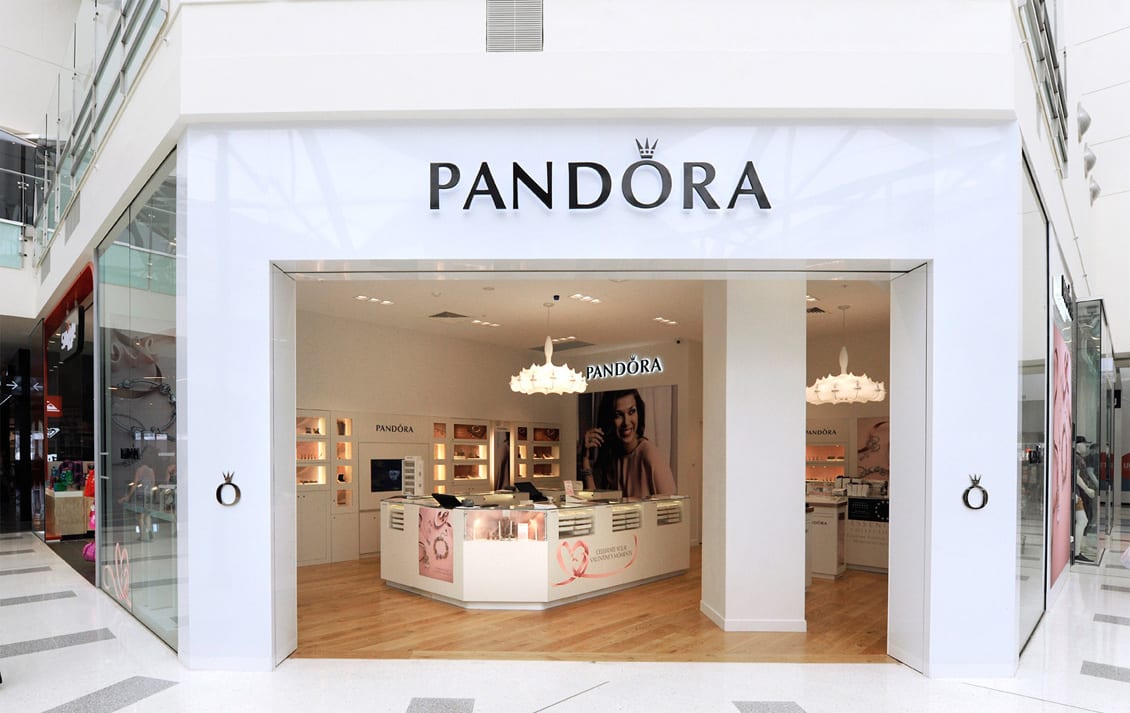
    Jewellery retailer Pandora is looking to China, India and Latin America to arrest a decline in global sales. The Danish company has unveiled an initiative that it hopes will reignite sustainable revenue growth, Programme Now, after group revenue dropped 3 per cent in the third quarter of this year.

    Under the program, Pandora will significantly reduce its franchise acquisitions and scale back new store openings. For the stores it does open, it will concentrate on growth markets, such as China, India and Latin America. It hopes the move will grow like-for-like sales, if not total sales.

    To achieve this, the business plans to enhance its marketing, personalisation, digital and e-commerce capabilities, as well as the in-store customer experience.

    Pandora also noted that part of its success moving forward lies in execution in all parts of the value chain, as well as more closely coordinating parts of the business to work in tandem, to reduce costs.

    The implementation of the program, as well as the weak third-quarter results, however, have led the company to revise its full-year earnings guidance. It has cut its annual revenue forecast from between 4 and 7 per cent to between 2 and 4 per cent, or DKK 1.2 billion to DKK 1.4 billion (US$184 million to $214 million).

    “The third quarter results were unsatisfactory and we adjust our full year guidance,” Pandora CFO Anders Boyer said.

    “We have taken the first major step in the programme today by changing our network expansion plan. We have confidence in a strong future for Pandora and will use this year and next to reset the business.”

    Pandora expects revenue and total like-for-like growth to be impacted through to 2020 by the planned reduction of mark-downs, though this is likely to cause a margin neutral result on the group level.

  • Jins store opened a spectacular store in Shanghai World

    Jins store opened a spectacular store in Shanghai World

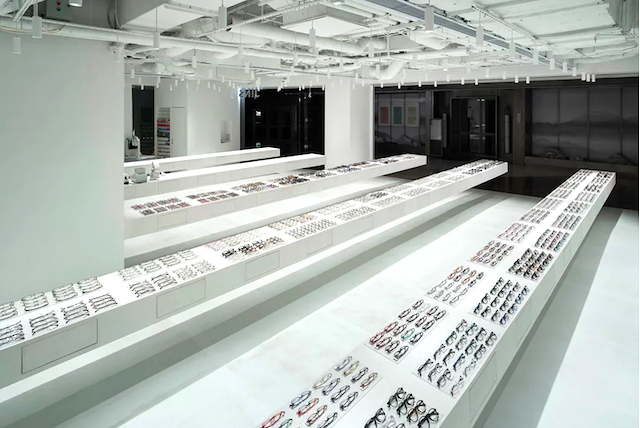
    Japanese eyewear brand Jins has opened a striking new store in the Shanghai World Financial Center. The Jins store was designed by Tokyo-based architect Junya Ishigami without any external entrance and features concrete counters that appear to float in the air, set against a stark, industrial setting, sporting hundreds of fashionable glasses frames. The counters are supported by heavy H-beams attached to a bowed steel sheet that covers the shop floor.

    The store is lit by strong 4000-Kelvin suspended luminaires that bring the bare walls into stark contrast. Ishigami commented, “I wanted to make a void space within a shopping mall.”

    Jins traditionally hires independent designers to fit out its retail areas.

    Jins founder and CEO Hitoshi Tanaka said: “I prefer working with architects on a space because they make more of an impact.”

  • New iPhones sell slowly in Korea

    New iPhones sell slowly in Korea

    A week after Apple introduced its latest iPhone series at stores in Korea, sales are only about 60 percent of those reported for the previous lineup over the same period of time. According to estimates compiled by local mobile carriers, a total of 170,000 iPhone XS, XS Max and XR models were purchased between Nov. 2 and Nov. 7. A total of 280,000 iPhones 8 and X models were sold in the first week of their release in November 2017. Sales of the two models began three weeks apart.

    Industry watchers assumed that Apple’s simultaneous release of the three models was designed to garner greater attention and boost sales in the early days.

    However, figures so far show that the latest iPhones are selling more slowly than earlier models.

    “It’s not doing that great,” said an employee at a brick-and-mortar phone shop in central Seoul on Friday when asked if the new iPhones are popular.

    “There’s the expensive price tag, but it also has to do with the fact that there aren’t dramatic function upgrades. To be honest, even I can’t really notice a big difference between the iPhone X and XS. Maybe the next series will come with more innovative features – we’ll see.”

    Price became an issue as soon as Apple introduced the new models. In Korea, the 512-gigabyte iPhone XS Max sells for nearly 1.97 million won ($1,745), while the 256-gigabyte XS retails at 1.56 million won.

    Even the budget XR model is priced slightly below one million won.

    Despite the price concerns, presales have been reasonably strong. SK Telecom, KT and LG U+ took orders between Oct. 26 and Nov. 1.

    Presales results for the three new models differed per company, but the general assessment was that demand was similar or stronger than for previous generation iPhones.

    Presale results don’t necessarily indicate success. Customers who preorder iPhones in Korea, even before actually touching the product, are likely to be loyal Apple fans.

    “The thing about Apple maniacs is that they will get their hands on the next iPhone no matter what,” said a source from one of the mobile carriers.

    “But success doesn’t just come from them. The general public, especially those switching between smartphone brands, should be attracted to buying it, too. The new iPhone seems to be failing in that respect this time.”

    Up until a few years ago, a few manufacturers like Apple and Samsung dominated the smartphone market. Customers nowadays have a much wider ranges of options in terms of price and style.

    Over the last decade, smartphone technology has advanced so much that even budget models priced at half that of the latest iPhones come with high-tech functions, such as face unlock.

    From Apple’s side, there are signs that the company is well aware of the slower demand.

    Japan’s Nikkei Asian Review reported on Monday that Apple told smartphone assemblers Foxconn and Pegatron to halt plans to bring on additional lines for iPhone XR production. All companies involved declined to comment.

  • Bangkok’s IconSiam launches tonight

    Bangkok’s IconSiam launches tonight

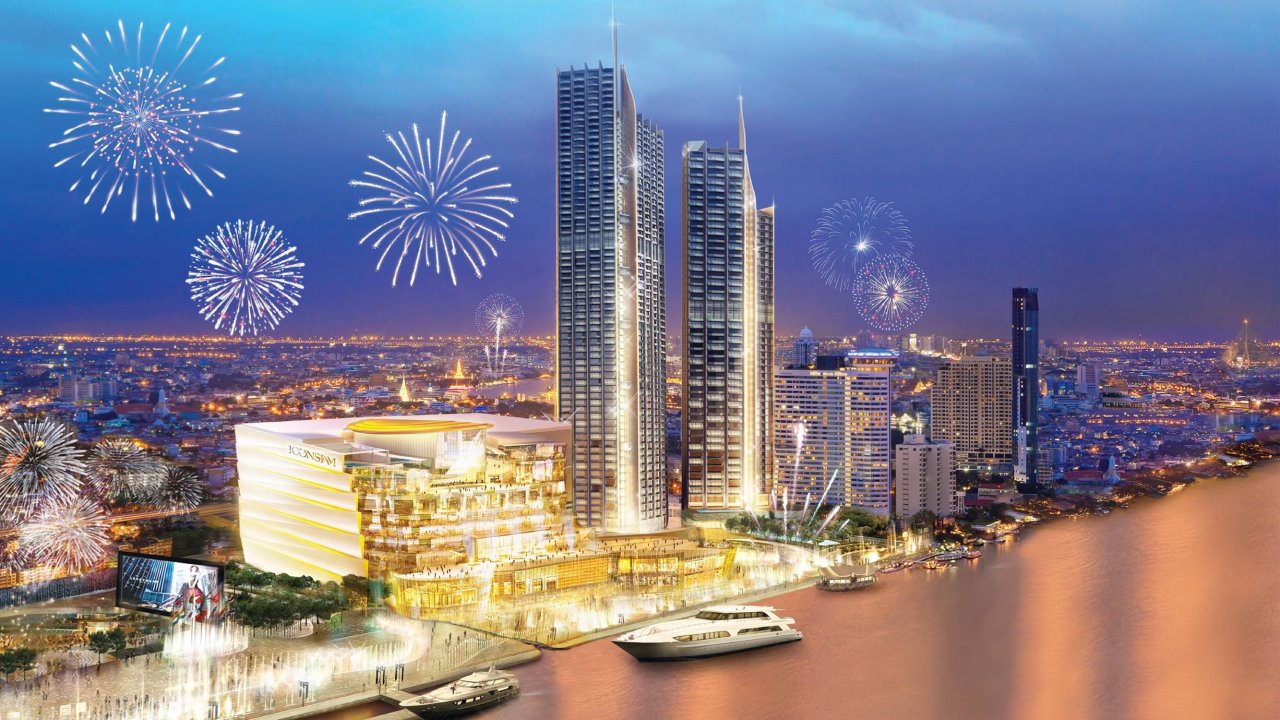
    Six years in design and construction, Bangkok’s US$1.6 billion IconSiam development will finally be officially launched tonight before opening its doors to the public tomorrow morning. With 500 stores, more than 100 restaurants and 14 cinema screens, a luxury apartment tower and a Mandarin Oriental hotel, the ambitious development is probably the most significant addition to Asia’s retail landscape in decades.

    Tonight, 10,000 businesspeople, retailers, media and guests have been invited to an opening ceremony which kicks off a weekend of festivities costing US$30 million. A fleet of 1500 drones organised by Intel will take to the sky above the Chao Phraya River and a “famous US singer” whose identity is being kept a closely guarded secret, will perform on stage somewhere along the 400-metre riverfront promenade of the building.

    Tickets to the invitation-only event, which also features a raft of Asian entertainers, fireworks, light and water shows, have been trading online for 10,000 THB (US$300), despite never being sold in the first place.

    Tomorrow, thousands of Thais are expected to visit the 750,000sqm venue, with stores offering rewards for early customers – like H&M issuing a 20,000 THB voucher to its first – and Apple is expected to draw long queues for its first official retail outlet in Thailand.

    About 80 per cent of the stores at IconSiam will be open for business tomorrow, the balance opening in ensuing weeks as fitouts are completed and approved by offshore head offices. But the project is still not complete. Several stories above the retail and dining area remain under construction, scheduled to open in July. They will house a world-class 6500sqm River Museum, a 3000-seat concert hall and other community facilities.

    Defining IconSiam is not easy.

    “It’s not a mall. It’s not a mixed use project,” IconSiam MD Supoj Chaiwatsirikul said last night. “It’s a destination.”

    The story of how IconSiam investors acquired the 8.8 hectare riverfront site gives an insight into how the project evolved into much more than a shopping centre. The owners of the land had been approached many times over the years, including by cashed up foreign developers. But they wouldn’t sell – until Siam Piwat CEO Chadatip Chutrakul talked to them, promising to create something that could showcase Thai culture and history to the world and be something all Thais could be proud of.

    Since then, IconSiam’s operational team have worked with Thais literally the length and breadth of the country to involve them in the project. Artworks and sculptures have been selected from 100 artists, mostly Thai, to appear throughout the complex, a 1.6 hectare space called SookSiam (“a city of Thai happiness”) will feature products and cultural heritage of the nation’s four regions, showcasing their handicrafts, performing arts, food, beverages “and local wisdom” in a single destination promised as “immersive, emotional and entertaining”.

    “IconSiam inaugurates a globally innovative model for destination development that moves the project away from being a mall or a mixed-use complex to being an inspiring destination,” explains Chutrakul.

    “It’s a place to regenerate and refresh, to be inspired and seek new ideas, and a place to discover the best of Thailand and the best on offer from around the world.”

    Unprecedented coordination has taken place with city and government authorities to enhance the transport system surrounding the site. A new skytrain track – aptly called the Gold Line – is under construction linking two other rail routes and which ultimately will make it a 20-minute railway journey from downtown Bangkok to the river. The company has built its own wharf in front of the building and worked to enhance a network of 73 river piers making it easier to reach the venue. Some 45,000 Thais travel along the river using public transport every day and they are starting to find that more convenient than ever.

    Work is continuing with landowners and hotel properties along the waterfront to create a public walkway, opening up the riverfront to the people for the first time in centuries.

    SiamPiwat’s Siam Paragon shopping centre which, when neighbouring properties Siam Center and Siam Discovery are added, create the city’s largest single shopping destination, attracts about 250,000 visitors on a typical weekend day. The company expects IconSiam to draw as many as 400,000 once the project is fully operational. About 60 per cent of those will be Thais, the balance tourists, although it is obvious from the size and scale of the luxury duplexes facing the river – bearing brand names including Louis Vuitton, Gucci, Cartier and Hermes – that the ratio will be quite different zone-by-zone: This part of the project is very clearly designed to appeal to the growing legions of Chinese tourists heading to Thailand.

    Another key retail drawcard of IconSiam will be the country’s first Takashimaya department store spread over several levels and including a comprehensive food and grocery offer as well as fashion and accessories.

  • DFS Group Launches “GIVE JOY” Holiday Gifting Campaign For 2018

    DFS Group Launches “GIVE JOY” Holiday Gifting Campaign For 2018

    DFS Group, the world’s leading luxury travel retailer, is launching its 2018 seasonal gifting campaign, “Give Joy”, to celebrate the spirit of the festive season and the gift of giving. From November 15, 2018 to January 1, 2019, customers will be able to add unique touches to exclusive products available at DFS’ first ever ‘Personalization Gift Shop’ concept. Boasting an assortment of specially curated luxury gifts, alongside an array of dedicated brand pop-ups, branded personalization stations and personalization services, the concept is designed to delight DFS’ discerning traveling customers and enhance their festive shopping experience in 13 T Galleria and airport locations worldwide.

    DFS is also launching the latest edition of its annual and much-anticipated “Give Joy” Holiday Gift Guide, offering customers a curated selection of personalized products. This year, the Holiday Gift Guide features DFS’ own employees as gifting experts, sharing their advice with customers on how to bring the festive season alive through the joy of giving. Showcasing an extensive selection of 143 incredible gifts from 108 world-famous brands across all of DFS’ luxury categories – from Fashion and Accessories and Beauty and Fragrance to Watches and Jewelry, Spirits, Wine and Food – shoppers will be spoiled for choice to treat their loves ones and themselves to something special.

    A stellar line-up of brands will also feature in DFS’ exclusive pop-ups during the “Give Joy” campaign:

    • Dior will host a special ‘Charms Bar’ offering customers the chance to create their own couture-inspired lucky charms accessory with a choice of four colors of ribbon and eight iconic Dior gold lucky charms.
    • MoĂ«t Hennessy will offer customers the opportunity to use elevated technology to write a tailored message in golden ink on champagne bottles on the spot.
    • Jo Malone London will offer a photograph transfer service on a beautiful Jo Malone classic gift box. Customers can choose from a personal favorite or an iconic city photograph, making it the perfect personalized gift for this holiday season.

    The exquisitely decorated Personalization Gift Shop will feature a life-size gift box, bringing an exclusive and enticing experience to DFS customers with personalization and the gift of giving. Holiday ribbons available in gold, silver and red and made especially for DFS allow customers to personalize their gifts with special greeting messages in six languages; superb leather goods can be made unique with on-the-spot monogramming; and t-shirts and tote bags can be adorned with limited-edition emoji iron-on patches so that customers can mix and match to create one-of-a-kind designs.

    “We’re excited to bring a sense of fun and individuality to our customers this festive season with our exclusive pop-up gift shops, offering a wonderful array of products from some of the best brands in the world,” said Ariel Gentzbourger, DFS Group Executive Vice President Merchandising. “We hope to enhance the pleasure of giving by offering our customers many ways to delight their friends and family, making the shopping experience a joy in itself.”

    Full serviced DFS’ Personalization Gift Shops will be available in the following locations:

    T Galleria by DFS, Hawaii, T Galleria by DFS, Okinawa, T Galleria by DFS, Guam, T Galleria by DFS, Saipan, T Galleria by DFS, Singapore, T Galleria by DFS, Angkor, T Galleria by DFS, Sydney, T Galleria by DFS, Bali,T Galleria by DFS, Hong Kong, Canton Road, and T Galleria by DFS, Macau, City of Dreams.

  • Marie France Van Damme opens first store in the Middle East

    Marie France Van Damme opens first store in the Middle East

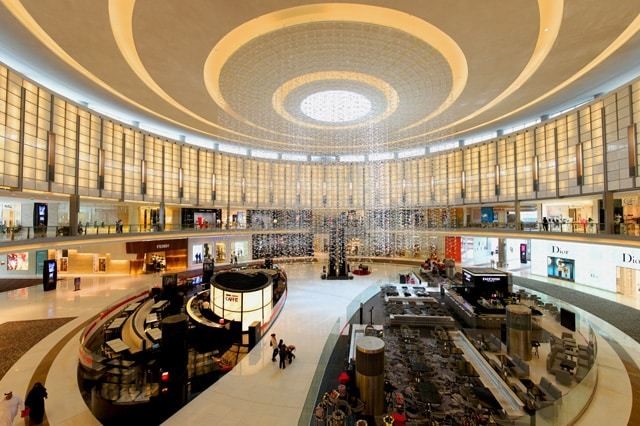
    Marie France Van Damme, the Hong Kong-based designer known for her globally influenced line of luxury resort, swim, and ready-to-wear, continues to expand her presence worldwide with the opening of the brand’s first store in the Middle East in November 2018 in Dubai, its thirteenth boutique worldwide. With boutiques in some of the world’s most iconic luxury travel and shopping capitals, Marie France Van Damme’s new store will be located in downtown Dubai in the exclusive Dubai Mall, the world’s largest luxury shopping destination.

    Situated within Fashion Avenue of The Dubai Mall (Financial Center Rd, Dubai, United Arab Emirates) a section that’s home to more than 200 luxury shops including Cartier, Chanel, and Valentino, the new 1000 square-foot boutique will offer Marie France Van Damme’s extensive luxury resort, Beach Bridal, and ready to wear lines and range of accessories, including evening dresses, resort wear, and caftans.

    As Marie France Van Damme only introduces limited productions of her collections each season, each store in itself is unique, with exclusive items at each location you won’t find anywhere else. With a focus on exclusive pieces inspired by the Dubai lifestyle, the new boutique will offer the best of both worlds: luxe day resort wear and chic evening wear.

    Made for Dubai and the elegant, modern Middle Eastern lifestyle, Marie France Van Damme’s striking collections are a return to the glamorous roots of resort wear with a muted palette of silver and gold, hand embroidery and opulent fabrics, from French lace to metallic-toned Italian weaves and featherweight Chinese silks. Signature pieces such as the Boubou caftan provide instant glamour. New this season is an exclusive “Black Gold Rose” jacquard collection of delicate evening dresses crafted in the softest crinkle silk chiffon; and short jackets, and skirts designed to be layered with long metallic blouses and worn from city to resort and from day to night, a perfect mix-and-match wardrobe.

    Collections are not distinguished by season, but relevance. Whether it’s evening wear or day dress; a silk caftan, city pajama or swimwear, Marie France Van Damme’s philosophy remains the same: “What you wear should always give you glamour. Glamour without the fuss and bother,” says Marie France Van Damme.

    “We are excited to open our first boutique in the Middle East in The Dubai Mall,” says Marie France Van Damme. “I could not have imagined a better location to provide our clients with an exceptional atmosphere in one of the most beautiful shopping destinations in the world. We have many clients in Dubai including those who travel to here to shop. Like me, our customer travels around the world, and she needs to find things that will look beautiful day as well as night. Our collection was made for Dubai and the elegant, modern Middle Eastern lifestyle, from day to evening, poolside to dinner.”

    The new boutique will incorporate Marie France Van Damme’s signature aesthetic, which blends subtle Asian influences and elegant simplicity with marble floors, teak wood, bronze panels, and embossed crocodile leathers with textiles and finishes that can be found in the designer’s home as well as her flagships in Hong Kong and London.

    Marie France Van Damme will join The Dubai Mall’s 3.77 million square feet of leasable space and 1,300 retail outlets, including Galeries Lafayette, Cartier, Chanel, Valentino, Balenciaga, Gucci, Lanvin, Saint Laurent, and many more. The Dubai Mall, a luxury shopping destination that welcomes 80 million visitors each year, also has dining, entertainment, and leisure attractions including the Dubai Aquarium & Underwater Zoo, the Olympic-sized Dubai Ice Rink, and adjoining five-star hotels, including the Armani Hotel Dubai. In addition to Fashion Avenue, there is also The Souk, the open-air walkway The Village, and more.

    Marie France Van Damme has rapidly expanded since its inception in 2011 to include an impressive range of ready-to-wear, resort wear, swimwear, sunglasses, perfume, and candles. The designer just announced her twelfth boutique opening this October at the Wynn Las Vegas. She recently opened her eleventh boutique in Miami at Bal Harbour Shops and a store in Marrakech at La Mamounia in January 2018, a Los Angeles boutique in September 2017 at the Peninsula Beverly Hills, a boutique in Bangkok’s luxury shopping and entertainment complex Gaysorn Village in 2017, and her seventh store in December 2016 in Hong Kong’s prestigious Elements shopping mall, which is Marie France Van Damme’s second Hong Kong store. The company opened its very first store in Hong Kong’s acclaimed International Finance Centre (IFC) mall in September 2013. Five years later, Marie France Van Damme has twelve stores worldwide, proving that small curated stores are still very relevant. The company currently has 100 retail locations in some of the world’s most desirable shopping destinations.

  • Ralph Lauren results concerning even after its anniversary celebration

    Ralph Lauren results concerning even after its anniversary celebration

    As Ralph Lauren pulls out all the stops to celebrate its 50th anniversary, its second-quarter results do not reflect the upbeat note of the festivities. Indeed, if anything the Ralph Lauren results are rather anemic and are characteristic of a brand that is still not entirely confident about its place in the fashion world or its future direction.

    While growth of 1.6 per cent in overall revenue and a 1.4 per cent uplift in North America are positive, the decline of 0.8 per cent in Europe is disappointing as is the flat comparable-sales result. This mixed bag shows that the brand is only firing gently on some cylinders rather than powering ahead.

    While in growth, Ralph Lauren’s North American division is still underperforming. The relatively flat revenue result, which is underpinned by an anemic 1 per cent increase in comparable sales, comes against the backdrop of a robust consumer economy where spend on luxury and higher-end goods is increasing. It has also been delivered at a time of elevated marketing spend. That Ralph Lauren could not engineer a better performance underlines the fact that the brand has a lot more work to do to connect and resonate with consumers.

    One of the unresolved issues at Ralph Lauren is in having a clear brand proposition that is carefully targeted at customers. While numbers show that general brand perception of Ralph Lauren has improved over the past year, the number of people agreeing that it, or its sub-brands, are ‘made for people like them’ has remained flat. This is worrying and underlines that there is still a lot of repositioning and redefining required before Ralph Lauren can deliver better numbers.

    None of this should suggest the company has been inactive or passive; it has not. With the Polo brand, for example, a lot of new items have been introduced and products have been enhanced with embellishments such as embroidery and added functionality. These have helped to drive some better numbers and suggest that the company is innovating, but the improvements are hampered by a lack of progress on overall brand perception, especially among younger shoppers. It will clearly take time for the various changes to drive overall perception.

    One area of progress is on the digital side of the business, where comparable sales in North America rose by 9 per cent. While this is below the overall rate of growth for online luxury, it is a sign of progress and is a reflection of the various investments Ralph Lauren has made in its digital channels – including the marketing efforts on social media. Ralph Lauren now needs to apply this thinking to driving traffic in stores, where North American sales fell by 1 per cent on a comparable basis.

    Outside of North America, performance in Europe was poor. While total revenue fell by 0.8 per cent, comparable sales slipped by 4 per cent. Part of this is down to inventory issues at outlet stores and part is the result of lower consumer confidence in key markets like the UK. Even so, it is disappointing given the various investments, including in digital, that Ralph Lauren has made in the region.

    Overall, Ralph Lauren is gently moving in the right direction. However, the brand vision remains rather murky. It needs to be simplified and retooled so that it is clear and compelling. A young brand like Maine’s Kiel James Patrick is the perfect example of a well-curated and authentic lifestyle label that Ralph Lauren needs to emulate. Ralph Lauren has yet to prove it is up to this task.

  • New president for Issey Miyake appointed

    New president for Issey Miyake appointed

    Japanese luxury label Issey Miyake has appointed a new company president, following the internal promotion of Takahiko Ise to the top spot. Previously the fashion brand’s head of production, Ise replaces former president Masakatsu Nagatani, who will remain in the company as an advisor.

    The change over was effective since October 1, according to Japanese media reports.

    Ise came to work for Issey Miyake in the early eighties and has continued to establish a flourishing career in planning and production.

    The fashion veteran spent the past 30-plus years working across Issey Miyake lines such as Pleats Please Issey Miyake, Me Issey Miyake, Homme Plissé Issey Miyake and Bao Bao Issey Miyake.

    Ise’s promotion, which coincides with the appointments of Koji Usui and Keisuke Harukiya as managing directors, signals a shift in focus for Issey Miyake.

    The Tokyo-based label, renowned for its experimentation with fabrics and textile innovation, remains focused on technology to an even sharper degree moving forward, with strategies set on innovation, new technology and proprietary techniques.

    Founded by Hiriohima-born Issey Miyake in 1971,the company’s overall creative direction has been led by designer Yoshiyuki Miyamae and his team since 2012.

    Issey Miyake has approximately ten flagship stores globally, with three in its local Tokyo (Shibuya, Chuo and Minato), as well as a store in Osaka and one in Hyogo.

    International stores can be found in Paris, London, New York and Milan and Zurich.

  • Jimmy Choo takes trademark action against Chu

    Jimmy Choo takes trademark action against Chu

    Jimmy Choo is taking a preemptive strike at some potential competition. Xianjie Zhu, a 19-year-old from Guangdong Province in China, goes by Jerry Chu at Central Saint Martins, where he’s a fashion student specialising in menswear.

    Last year, at the recommendation of his father, he applied to register his English name in Beijing in case he decided to use it to start a clothing line in the future. With two years left of school, Chu had not yet given starting a line any serious thought, he said.

    Last week, the footwear and accessories brand Jimmy Choo filed a request to invalidate Chu’s trademark, arguing that the similarities between the names Jimmy Choo and Jerry Chu would cause confusion in the market.

    The company cited previous trademarks it has successfully invalidated, for trademarks including Jenny Choo and Ray Choo.

    Susan Scafidi, founder and director of the Fashion Law Institute at Fordham University’s School of Law, said these disputes are common — so much so that she always urges young designers not to name their businesses after themselves.

    “Designers with common names in particular often have to engage in protracted legal disputes with companies who already own the same or similar names,” she said.

    But fashion consumers today are accustomed to distinguishing between namesake labels with similar names, such as Alexander Wang and Vera Wang, said Scafidi, and there is hope for independent designers.

    Last month, Thaddeus O’Neil, the surf-inspired menswear label, reached a settlement with surfwear brand O’Neill after more than four years of legal disputes between the two companies.

    Scafidi explained that a significant difference between those disputes and Jerry Chu’s situation is that in the US, trademarks must be used in commerce in order to be valid. Having an active business can also help demonstrate that a brand with a similar name is not producing similar products or “trademark squatting” in order to get a payout from a larger brand. Brands with global name recognition like Jimmy Choo are especially vigilant about trademark protection.

    “Jimmy Choo may well have assumed that the Jerry Chu registration was just another attempt to trade on the established Jimmy Choo name, since soundalike registrations are a particular problem in countries like China, whose primary writing system uses characters rather than letters,” said Scafidi.

    Chu and his lawyers will wait to see what the trademark committee decides, he said, hoping that the situation can be resolved quickly.

    The student posted the legal papers on Instagram this week, catching the attention of fashion’s social media watch dogs, Diet Prada, who echoed his frustration and spread the word.

    “I’m surprised so many people would care about me, an independent designer, a student,” he said.

  • Chanel’s recipe for success revealed

    Chanel’s recipe for success revealed

    Last month, Chanel reported its financials for the first time in its 108-year history, lifting the company’s traditional veil of secrecy, in part, to quash speculation that it could be acquired. The disclosure revealed that the French luxury giant generated $9.6 billion in sales last year – just a shade behind LVMH cash cow Louis Vuitton.

    What’s no secret, though, is that Chanel holds immense allure to shoppers.

    In fact, it is one of the most desirable luxury fashion brand in the world fueled by the perception that it is amongst the most exclusive brands of all.

    This is paradoxical when one considers that Chanel is also one of the most accessible luxury brands, as measured by pricing.

    In fact, it has some of the lowest entry-level price points in the business, courtesy of its beauty products. Cosmetics and fragrances allow the middle class to get a whiff of the lifestyles embodied by Chanel’s couture and prĂȘt-Ă -porter offerings.

    Indeed, Chanel is a master of category segregation.

    This strategy involves confining iconic, core category products to high-end price ranges, while deftly positioning other product categories (lipsticks, for example) at lower price points to address aspirational customers.

    Such segregation has allowed the house to maintain its air of exclusivity.

    It may sound like a simple strategy, but it has helped make Chanel by far the biggest luxury goods mega-brand in retail equivalent terms, and only marginally smaller than Louis Vuittonin reported sales.

    Critical to this success has been Chanel’s leading position in beauty, a category that is heavily dependent on multi-brand wholesale distribution.

    While there are some disadvantages to wholesale distribution, from smaller margins to less control over brand experience, leveraging wholesale also means the company can have a relatively compact retail network.

    Chanel had 338 stores in 2017, or nearly 30 percent fewer than Louis Vuitton.

    As for profitability, Chanel reported an earnings before interest and taxes, or EBIT, margin of 28 percent, compared to 40 percent at Louis Vuitton.

    This suggests Chanel has much room to push its profit margins higher, especially considering its sheer scale and the economics of beauty.

    Chanel seems to be vastly outspending its peers on marketing support and communication, boosting its profile on both traditional and social media.

    All this, and a traditional focus on organic growth rather than acquisitions, means the group boasts returns on invested capital that approach those of HermÚs.

    This is despite selling, general and administrative expenses equivalent to nearly half of Chanel’s sales as opposed to roughly a third at Hermùs.

    Again, this suggests there is room to rise further.

    When Chanel announced its financials last month, the company said it did so to dispel the notion that it would ever be up for sale.

    While the size of the company means only very large — and ambitious — players might be able to pull off such a deal, that still leaves potential contenders should it ever decide to open its doors.

  • Hugo Boss Singapore flagship opens

    Hugo Boss Singapore flagship opens

    International fashion brand Hugo has launched a standalone flagship in Singapore. The Ion Orchard store showcases the brand’s latest Autumn/Winter 2018 collection in a 146sqm retail space. A promotional Hugo Reversed personalised t-shirt will be available in store for a limited time.

    The brand’s new expansion into the Singapore market is not expected to be aggressive, with a focus on sustainable growth and a gradual development of its casualwear line and affordable offerings.

    The firm has recently merged its labels into a core Hugo Boss branding in response to increasing competition in the industry.

  • Phase Eight opens store in MOKO Hong Kong

    Phase Eight opens store in MOKO Hong Kong

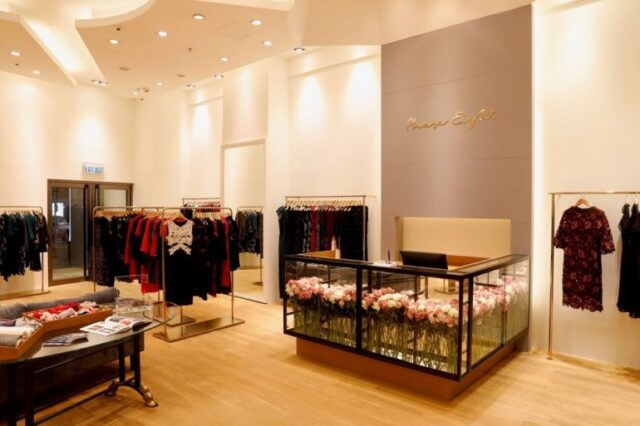
    Phase Eight, the British womenswear brand, in partnership with Rue Madame Fashion Group (RMFG), opens a new store on 21st October. It is in Hong Kong’s premium lifestyle hub, MOKO where the brand decided to establish its 8th store.

    To extend the core principle of Phase Eight, the store offers design-lead personal shopping experiences to customers with professional tips.

    A private yet cosy lounge allows customers to shop in relax and comfortable environment.

    Spread over 1533 square feet, the new store featured a brand new retail concept in MOKO, offering a modern and minimal aesthetic, to create an inviting and relaxing shopping space.

  • Why is Kering buying its shares back?

    Why is Kering buying its shares back?

    Kering, which owns Gucci, Saint Laurent and Balenciaga, said it planned to buy back up to 1 percent of its share capital over a 12-month period. According to the luxury-goods group, the total amount of the share buyback agreement would not exceed €300 million (about $342 million) and the price would not exceed €480 per share.

    A stock buyback, also known as a share repurchase, occurs when a company buys back its shares from the marketplace. This means that by paying shareholders the market value per share, a company like Kering can reabsorb a portion of its ownership that was previously distributed among public and private investors.

    But what are the reasons for this?

    Each share represents a small stake in the ownership of the company. There can be several reasons for a share buyback, such as preserving stock price, but in Kering’s case, the move suggests that the company’s senior management is confident about the business and believes its shares are undervalued.

    Undervaluation can occur for multiple reasons. Kering’s management may believe the business is undervalued due to investors’ jittery sentiment around the China market and their ability to see potential in the company’s long term performance.

    Shares in Kering hit a record high of around €522 in June, but dipped in the past three months over worries that white-hot megabrand Gucci was running out of steam.

    The stock rose again in late October after the group reported a better-than-expected rise in third-quarter revenue.

    Sales growth for the conglomerate had been expected to slow from 31.5 percent a quarter earlier to the 22.5 percent rise forecast in a poll of analysts by Inquiry Financial.

    But Gucci sales proved stronger than expected.

    Buying back shares is also a common way for companies sitting on big cash piles to do something about it, and the ideal time is usually after a drop in the stock price.

    It wasn’t Kering’s stocks alone that fell earlier this month.

    Shares in European luxury-goods companies including French rival LVMH sunk, with analysts citing concerns over a consumer slowdown in China, its single biggest market.

    Part of this is due to a crackdown by customs officials, which limits the amount individual Chinese travellers can bring back from abroad.

    “In the most recent weeks, Kering has suffered more than its fair share of pain on the back of the luxury sector downward adjustment following concerns on Chinese consumer confidence,” said Luca Solca, head of luxury goods at BNP Exane Paribas.

    “This has come as investors wanting to reduce exposure to the sector have chosen to lock in gains in stocks that had performed the most, like Kering.”

    Since Chinese consumers account for 32 percent of the worldwide total of luxury sales and about one third of them shop overseas, this is a worry for brands.

    In addition, there is the continued issue of daigou (grey market shopping agents) and the fact that China’s economy is growing at its slowest pace since the financial crisis.

    Gucci president and chief executive Marco Bizzarri acknowledged these challenges.

    “I control what I can control,” he said.

    “Currency fluctuations, traffic flows, daigou duties. It is something we cannot control as a company, so as a CEO I need to control what I can. I hope that Chinese customers are now going to spend more in China, so we’ll do our best to increase their shopping experience here.”

    Jean-Marc Duplaix, Kering’s financial director, said during Kering’s third-quarter earnings call, which came after luxury stocks fell, that the company was seeing an improvement in the retention of Chinese millennial customers and demand had not dipped.

    “In terms of spending power, the situation is still quite sound in China,” he said. “All the events especially in China we had in September or in October, we saw quite good figures. I think that underlying trends are still very, very, very solid.”

    Earlier this year, Bizzarri said that Gucci’s eventual target is to achieve €10 billion ($11.6 billion) in annual revenue.

    “We don’t expect short-term growth issues at Gucci, and anticipate more positive surprises on operating leverage,” said Solca.
  • DKSH adds 3 brands in path to double Thai luxury

    DKSH adds 3 brands in path to double Thai luxury

    Market expansion service provider DKSH Thailand has announced plans to double the scale of its Thai luxury and lifestyle business within two years. The firm has picked up three international brands this year, with another Italian lifestyle brand to be added to its portfolio next year.

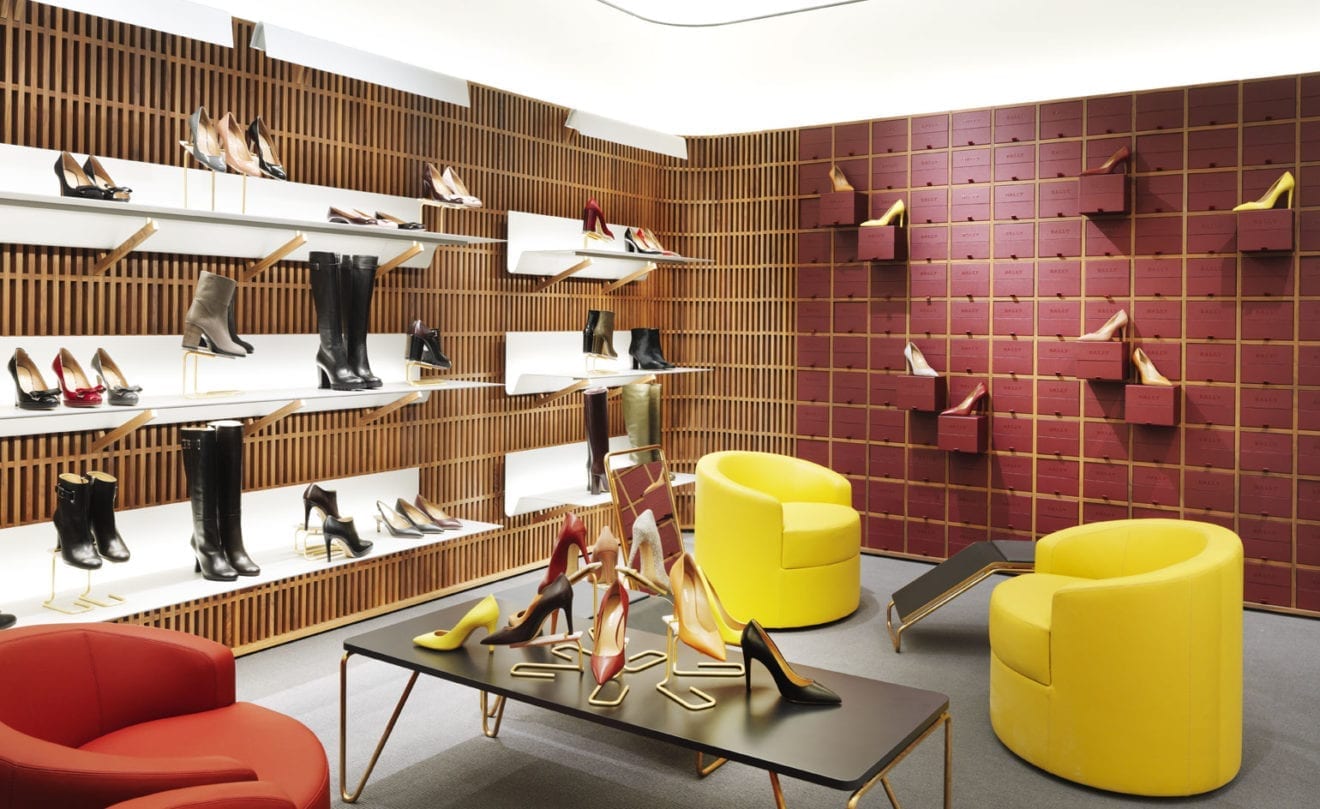
    Included in the expansion is a THB30 million (US$913,800) investment in a new 200sqm flagship Bally store in Thailand, opening at Iconsiam on Friday (November 9).

    DKSH regional VP of luxury and lifestyle business Franck Giacobini said luxury and lifestyle is picking up again and sales are strong.

    “DKSH’s luxury and lifestyle business in Thailand will strengthen in the next few years because the country has a young population with high spending power.”

    He added that DKSH will allocate a huge investment to the Thai market, considering the country’s high-end retail complexes and strong tourism.

    President of DKSH Thailand Douglas Humphrey added: “DKSH has been in Thailand for over a century. Our consumer product business in Thailand is the biggest market for the DKSH network globally. We will continue to invest here in terms of people, capability and supply chain in the coming years.”

  • Richemont to buy Buccellati from Chinese owner

    Richemont to buy Buccellati from Chinese owner

    Richemont group is in talks to buy Italian jewellery brand Buccellati from its new Chinese owner, according to reports from the Italian press this week. The italian press has reported the Milanese brand was being negotiated for sale with Richemont.

    The deal had apparently hit problems due to restrictions from the Chinese government regarding investments from overseas.

    Qatari investment vehicle Mayhoola was also interested.

    Bank of America Merrill Lynch was reportedly working on the sale.

    China’s Gansu Gangtai acquired Buccellati from its previous owners Clessidra in 2017, for a reported 270 million euros ($313 million), including debt.

    The news follows reports earlier in the year that Gansu Gantai planned to invest some 200 million euros to develop Buccellati.

    Richemont, which owns Cartier, among other jewellery and watch brands, was previously in talks with former Buccellati owner Clessidra, in 2016 to purchase the high-end jewellery brand.

    Both Richemont and Gansu Gangtai declined commentary on the matter.

    Founded in 1919 by the Buccellati family, the Italian jeweller was sold in 2013 to Italian investment fund Clessidra.

    In August 2017, Chinese group Gansu Gangtai Holding acquired an 85% stake.

    It has opened six stores in China alone this year, with a Beijing flagship store slated to open this month.

    Buccellati currently operates 49 namesake retail outlets between stores, retail corners and shops-in-shop, and is also distributed via 150 multi-brand retailers.