Tag: luxury

  • Ferrari Signs Deal With Tech Firm Velas To Create Digital Products For Fans

    Ferrari Signs Deal With Tech Firm Velas To Create Digital Products For Fans

    Ferrari has signed a multi-year accord with Swiss technology firm Velas Network to create digital content for its fans, the luxury sports car maker said on Monday.

    From next season, Velas, a provider of digital products and services, will become a partner of Ferrari’s Formula 1 racing team.

    “In addition, Velas will be Title Sponsor of the Ferrari Esports Series, the online mono-brand series of the Prancing Horse, and of the Esports team that will compete in the F1 Esports Series, the official digital championship competed in by all teams participating in the FIA Formula 1 World Championship,” Ferrari said in a statement.

    Velas is a leading provider of blockchain technology and non-fungible tokens (NFTs), cryptographic assets stored on a blockchain that have an identification code that makes them unique and has gained popularity as a way to sell digital art.

  • Prada sees second-hand fashion as opportunity, weighs partnerships

    Prada sees second-hand fashion as opportunity, weighs partnerships

    Italian fashion group Prada sees opportunity in the booming second-hand fashion sector which it can develop both in-house and through partnerships, marketing chief and heir designate Lorenzo Bertelli said.

    The market for pre-owned chic bags and clothes has surged over the last three years, driven by younger, more environmentally conscious shoppers looking for affordable high-end goods.

    It is expected to reach 33 billion euros ($37.2 billion) in size this year after growing by 65% between 2017 and 2021, according to consultancy Bain. This compares with 12% growth for brand new luxury goods.

    Some rival luxury companies are already exploring the sector. Earlier this year, French conglomerate Kering took a 5% stake in Vestiaire Collective, a leading platform for second-hand clothes and handbags. Kering’s star brand Gucci also formed a partnership with U.S.-based resale platform The RealReal last year.

    “Second hand is a strategy we have been investigating for more than a year,” Lorenzo Bertelli, the eldest son of co-Chief Executives Patrizio Bertelli and Miuccia Prada, and the future brand leader, said in an interview.

    “I cannot disclose too much but for sure second-hand is there. We will take it as an opportunity.

    “It can be a partnership with a player or it can be something more in-house, or both of them, a sort of hybrid solution like for e-commerce,” he said.

    The heir to Prada’s empire, who said he wants to keep the family-controlled group independent when he takes the reins in a few years, doesn’t seem fazed by the future challenges of the ever-changing luxury sector.

    “Rallying and sport, in general, taught me a lot. (It) teaches you to never give up and also a lot of humility, in the sense that you have to learn,” he said. “Sometimes sport is cruel when you want to measure yourself.”

  • Canada Goose names new Asia-Pacific president

    Canada Goose names new Asia-Pacific president

    Canada Goose has appointed Paul Cadman as its new president for the Asia-Pacific region.

    In his new role, Cadman will oversee the business’ activities including commercial, financial, and marketing across Apac markets, including Greater China, Japan, South Korea, Australia, and New Zealand.

    “Paul is a trusted brand advisor, having consulted for us for years,” said Dani Reiss, president, and CEO of Canada Goose. “His extensive knowledge in the luxury sector and his deep experience in developing brands across the region has provided our team with a valuable perspective.”

    Cadman has more than 30 years of strategic luxury goods experience and held leadership positions with global brands, including Salvatore Ferragamo, Asprey & Garrard, Bvlgari, and Estee Lauder.

    “Paul’s experience, entrepreneurial nature, and regionally-specific industry knowledge make him the best fit for the role as we strengthen our brand presence and further execute against our long-term growth strategy,” said Reiss.

    Cadman also founded PMC Global Hong Kong, a strategic management and business consultancy focused on the luxury goods industry.

    The appointment is in line with Canada Goose’s strategy to deepen its influence in the Apac region, including its recent store openings in Harbin, Nanjing, Ningbo, Beijing, Taipei, and Macau.

  • Demand for luxury goods increased despite higher retail prices

    Demand for luxury goods increased despite higher retail prices

    Demand for luxury goods is continuing to grow in South Korea, despite price hikes and the Covid-19 pandemic.

    Chanel, a high-end fashion house, has already raised prices in the market twice this year.

    The French luxury brand raised the price of the Classic Flap Bag Medium from 8.64 million won (US$7,600) to 9.71 million won, and the price of the Classic Flap Bag Large from 9.42 million won to 10.49 million won on Thursday. Prices of other products, including Boy Chanel, also rose by a similar rate.

    Despite the increases, customers are flocking to Chanel boutiques at department stores throughout the country, lining up ahead of opening hours.

    While some customers complain about a constant rise in prices, the popularity of luxury goods continues to grow.

    Between May 1 and June 29, sales of luxury goods at Lotte Department Store jumped by 37 percent compared to last year. Sales of luxury goods at Hyundai and Shinsegae Department Stores rose by 54.1 percent and 38.8 percent, respectively.

    “Prices increases for already expensive products give off the impression of rarity and something that only a few can afford, which eventually boosts demand,” said Lee Eun-hee, a consumer studies professor at Inha University.

    “Customers are willing to spend more to buy them.

    “Ownership of luxury goods is seen as a competition among many to demonstrate the ability of an individual, a means to justify discrimination among people,” Lee warned.

  • Burberry CEO resigns to lead rival luxury retailer

    Burberry CEO resigns to lead rival luxury retailer

    Marco Gobbetti is to give up his role as CEO of Burberry after leading the brand and business for almost five years.

    According to a report, Gobbetti will return home to Italy to lead rival luxury goods group Ferragamo.

    Gobbetti will stay with Burberry until the end of this year while the company searches for a successor, and to ensure an orderly transition.

    “Gobbetti has had a transformative impact and established a clearly defined purpose and strategy, an outstanding team, and strong brand momentum,” said Gerry Murphy, chairman of Burberry. “The board and I are naturally disappointed by Marco’s decision but we understand and fully respect his desire to return to Italy after nearly 20 years abroad”.

    Gobbetti became CEO and joined Burberry’s board in 2017, succeeding Christopher Bailey who left the group the following year. Prior to Burberry, Gobbetti was chief executive of Moschino and Givenchy before holding executive positions at French brand Celine in 2008.

    “With Burberry re-energised and firmly set on a path to strong growth, I feel that now is the right time for me to step down,” said Gobbetti. “I would like to thank my colleagues as well as Gerry and the board for their partnership.

    “I am fully committed to supporting them through the transition and I have every confidence that the creativity and strong values that define Burberry will continue to drive the company’s future success.”

  • UBS Director’s Luxury Hong Kong Hideaway

    UBS Director’s Luxury Hong Kong Hideaway

    A board job at the Swiss wealth giant is a lucrative gig, but probably not lead to ultra-high net worth riches. Or at least not rich enough to purchase one of Hong Kong’s priciest manses, as Fred Hu just did.

    Hu plopped down HK$428 million ($55 million) for a 4,755-square foot home on Tai Tam Road in Hong Kong, according to Land Registry Records. This is just shy of an anonymous Chinese buyer who set a record when putting down HK$459 million in February for a home in the territory.

    Hu is a heavyweight who left Goldman Sachs, where he was a partner and oversaw the U.S. investment bank’s activities in China, to launch his own private equity firm, Primavera, in 2010. Primavera has $2.9 billion in assets under management, according to «Bloomberg».

    In 2018, Swiss wealth manager UBS snagged Hu as a director, where he is part of succession planning as a member of a governance and nominations committee, as well as part of risk oversight.

    Hu also sits on the boards of Ant Group, Hong Kong’s stock exchange, and ICBC, a Chinese lender which is the world’s largest by assets. A fund managed by Hu’s Primavera was spotlighted last year for allegedly selling heavily discounted Ant Group shares to Hu’s siblings – underscoring the perils of rapid wealth growth in Asia.

    As for Hu’s pay at UBS: he takes home 600,000 Swiss francs ($670,000) annually, 50 percent of which is in shares of the Swiss bank.

  • Global luxury sales could return to pre-Covid levels this year, Bain says

    Global luxury sales could return to pre-Covid levels this year, Bain says

    The luxury goods sector could shrug off the hit from the coronavirus crisis as early as this year as Chinese and US shoppers help sales recover to pre-pandemic levels, consultancy Bain said on Monday.

    Bain now sees a 30 percent probability that sales of high-end handbags, clothes and jewelry will return to or exceed their 2019 level of US$340 billion this year, depending on how quickly vaccines are rolled out and tourism picks up.

    Its more likely scenario is for a full rebound in 2022, which would still imply a faster convalescence than Bain predicted in November, when it said the sector may have to wait until 2023 to put the crisis squarely behind it.

    Luxury goods sales fell by 23 percent to $264 billion last year, the largest-ever drop and the first decline since 2009, as the pandemic forced shop closures and brought international tourism to a virtual halt.

    But the crisis does not seem to have had a lasting impact on consumers’ appetite and spending power for high-end wares.

    Soaring sales in China, the biggest market for luxury goods, and a stronger-than-expected US rebound thanks to a big stimulus program have helped revenues bounce back sharply in the first quarter of 2021.

    “The US market has been the unexpected bright spot,” Bain said. By contrast, Europe is lagging behind, hampered by a slower vaccination campaign and restrictions on tourism.

    The speed of the recovery has been uneven. The industry’s biggest groups such as LVMH, Hermes, and Kering are already above their 2019 levels, while smaller labels like Ferragamo and Tod’s still have to catch up.

    The crisis has forced brands traditionally more reluctant to sell online to fully embrace e-commerce, which is set to become the leading channel for luxury purchases in the next few years.

    Bain said that as people moved to countryside homes and worked remotely, sales in second-tier cities often went better than in big luxury capitals like New York or Milan – a factor brand will have to consider as they review their footprint.

    And while handbags, leather goods and jewelry have been driving the recovery, spending on clothes, makeup and perfumes is expected to pick up too as lockdowns ease and people resume going out.

  • Luxury Brand Genesis Gears Up To Make Its Foray Into The European Market

    Luxury Brand Genesis Gears Up To Make Its Foray Into The European Market

    Last year in September, Hyundai Group’s premium car brand- Genesis hired Dominique Boesch as its first Managing Director for the European market and now the company is all set to make its foray into the market. Genesis took to Twitter through its European handle to share the news and the tweet read, “The Genesis journey continues. All roads lead to Europe. Get ready to join us on this thrilling new adventure.”

    Dominique Boesch had joined Genesis from Audi AG where he held the role of Sales Director in France before serving as Managing Director in Korea, Japan, and China, respectively, over his twenty-year tenure. After more than 10 years in Asia, Boesch returned to headquarters as head of European sales, and, most recently, he was leading the brand’s future Global Retail Strategy.

    In Europe, Genesis will go against the likes of Mercedes-Benz, BMW, Audi, and Jaguar Land Rover among others. Genesis hasn’t revealed any plans about its product line-up or models it will launch initially to start its operations with. It also showcased the electrified G80 at Auto Shanghai 2021 and it will be the brand’s first EV. It will go on sale alongside the conventional G80, GV70 crossover, and the GV80 SUV in the global markets, and the same is expected even in Europe.

  • How luxury brands embraced WhatsApp during lockdowns

    How luxury brands embraced WhatsApp during lockdowns

    As Italy entered a new coronavirus lockdown and shut shops in March, Genoa-based jeweller Gismondi 1754 turned to messaging service WhatsApp to sell a 300,000 euro diamond ring to a wealthy Swiss client.

    At the same time, sales assistants at luxury puffer jacket brand Moncler were arranging gourmet dinner deliveries to customers homes so they could dine in style while watching a video streaming of the brand’s latest collection.

    The pandemic has forced luxury goods companies to use social media, video and virtual showrooms to woo their wealthy customers in Europe and keep them shopping at a time when tourists, especially from China, have been absent for more than a year.

    Retailers reopened in Britain and most of Italy on Monday, but they remain shut in France and access is restricted in Germany, where in Berlin, for example, a negative COVID test is required to go into most shops.

    Senior executives in the industry said this trend of selling outside the traditional store network, while not replacing the need for physical shops, is here to stay.

    “We are learning that we can also have a high level of service with a low level of physical contact,” Moncler’s boss Remo Ruffini told Reuters. “Distant sales are a new frontier, something in the middle between e-commerce and a traditional store.”

    Analysts say that lockdowns and “staycationing” mean that wealthy Europeans have money to spend that they are not splurging on fancy hotels or Michelin starred restaurants.

    High-end labels such as Hermes, which used to be more reticent to sell online, have had to fully embrace e-commerce. Online revenues for the industry have doubled to nearly 20% of sales in the past year alone, based on analyst estimates. Boston Consulting Group expects that percentage to rise to 25% by 2023

    Luxury labels have also invested in transforming store assistants into personal shoppers who pamper their VICs – very important clients – by sending them products at home and keep in touch regularly. Most brands now stream products on social media and show customers specific product videos.

    Before the pandemic, Gismondi would not have sold a 300,000 euros, 10-carat diamond ring without showing it to the client in person. “I was on the phone chatting with the lady who is buying it, and it came up that this was the dream of a lifetime for her,” Massimo Gismondi, chief executive of the jewelry group, said.

    From that moment, an exchange started with the lady via WhatsApp and video calls to find the perfect design for the ring that will be delivered to her home.

    “People are craving for leisure, for returning to savor life and spending,” Gismondi told Reuters.

    French luxury group LVMH’s star label Louis Vuitton in addition to online sales has started taking its shops to wealthy clients’ doorsteps in the United States.

    The “LV by Appointment” campaign essentially brings a tailor-made shop on wheels to the customer, curated with a personalized selection of pieces – from leather goods to watches and perfumes – for those who opt for the service.

    LVMH, the first to report results for the first quarter, set a very bullish tone for the industry. Revenues bounced back strongly, with its fashion and leather goods division surging 52% – double analysts’ forecasts. Sales in Europe remained in negative territory, but the 9% decline was a major improvement from the minus 24% seen in the fourth quarter.

    Luxury brands have had a strong recovery in China since shops began to reopen there last spring. But in Europe and the United States finding new ways to connect with customers has helped them to mitigate last year’s sales declines.

    Analysts say that improving sales in those two regions should also help revenues this year. Sales in Europe and the United States accounted for 60% of the total in 2019, and should come in at just under 50% by 2025, consultancy Bain said.

    Francois-Henri Pinault, CEO of Gucci owner Kering, said in February that the group’s revenues from “distant sales” – or sales outside its global store network – had risen sharply last year. The group had trained 400 sales assistants in 16 countries for this purpose, he said.

    One source at an Italian luxury fashion label said typically a brand’s marketing department will provide a list of clients to contact, based on what they have bought over the previous year.

    The sales assistants then phone customers, show them the latest arrivals via video chat, and send them clothes or shoes to try on.

    “You create a strong relationship between the salespeople and the customer,” Prada’s CEO Patrizio Bertelli told Reuters.

    “We have gone from the shop assistant that simply shows you a product to someone who also does a bit of marketing, knows customers, their taste and their habits, reaches out to them, and sends them stuff home.”

    A Milan-based PR executive who spends on average 40,000 euros ($47,552.00) a year in Prada’s stores said that since last year Prada has regularly sent her videos about its clothes.

    “If there is something I like they send it home. They know my size and if in doubt they send more than one size. I buy what I like and I send back the rest,” she said.

    Over the past year, cashmere sweater label Brunello Cucinelli has been organizing video calls with 30-40 customers at once to keep them engaged.

    “It allows us to have a dialogue with a number of people which, if we had to arrange a physical appointment, would take us perhaps 3-4 years,” the brand’s co-CEO, Luca Lisandroni, told Reuters. He also said that brands should not become too insistent in trying to sell their wares.

    “Some people like being contacted and stimulated, others don’t want to be solicited too much,” he said.

  • Some luxury brands thriving in Korea despite pandemic

    Some luxury brands thriving in Korea despite pandemic

    Expensive luxury brands are racking up strong sales in South Korea, despite the coronavirus outbreak.

    Consumers, denied overseas travel, have resorted to spending on luxury goods instead, gaining popularity among the MZ Generation (millennials and Generation Z) in particular.

    The Financial Supervisory Service reported that Christian Dior Couture Korea Co, the South Korean branch of French luxury brand Christian Dior, generated operating profits of 104.7 billion won (US$93.6 million) last year, 2.4 times more than the previous year.

    The company reported 328.5 billion won in sales and 77.7 billion won in net income, up by 75.8 percent and 253.4 percent, respectively.

    Moncler Korea, the operator of the puffer jacket brand Moncler, generated 31.7 billion won in operating profits and 23.1 billion won in net income last year, up by 57.4 percent and 59 percent from the previous year.

    The Ministry of Trade, Industry, and Energy reported that last year’s luxury sales at major department stores jumped by more than 15 percent from the previous year.

    Out of all products sold at department stores, only products from famous foreign brands and household goods saw a rise in sales.

    There are other high-end brands, however, that failed to demonstrate better performance.

    Ferragamo Korea, the South Korean branch for the luxury shoes brand Salvatore Ferragamo, reported 4.5 billion won in operating profits last year, a drop of more than 50 percent from the previous year.

    The company generated 105.6 billion won in sales and 3.5 billion won in net income, dropping by 29.7 percent and 56.9 percent.

  • US luxury jeweller Hoorsenbuhs opens first overseas store in Japan

    US luxury jeweller Hoorsenbuhs opens first overseas store in Japan

    Los Angeles-based fine jewelry and lifestyle brand Hoorsenbuhs opened its first overseas store at the Ginza Six mall in Tokyo, Japan on Friday, March 5th.

    The 1,050 square foot space in Tokyo comes to life through the eyes of founder Robert Keith. For the store, Keith designed custom chairs, tables, lights, and jewelry cases featuring the brand’s signature tri-link chain motif. Artist Damien Hirst is among the brand’s most notable collectors and collaborators. Celebrity fans of the largely-unisex handmade jewelry collection include Brad Pitt, Gwyneth Paltrow, and Lenny Kravitz.

    To celebrate the opening, the brand will offer exclusive, one-of-a-kind pieces of jewelry, apparel, eyewear, and lifestyle goods at the new boutique.

    “We’ve built a very strong and successful retail business in Japan, since our first partnership in 2011, including Ron Herman, Umeda Hankyu, and Isetan,” said Kether Parker, brand director. “The opening of our first Hoorsenbuhs store at G6 will be a destination for our extremely loyal customer base to discover and immerse themselves in all things Hoorsenbuhs.”

  • Ferragamo flags China-driven sales rise after massive loss last year

    Ferragamo flags China-driven sales rise after massive loss last year

    Italian luxury goods group Salvatore Ferragamo said on Tuesday that China and e-commerce had boosted sales in the year so far after the COVID-19 pandemic pushed the firm to its first full-year operating loss since it listed in Milan 10 years ago.

    Deputy Executive Chairman Michele Norsa, a long-time executive brought back by the Ferragamo family last year to steer the group through the pandemic and a brand revamp, told analysts in a call that he expected sales in China to keep growing by a double-digit percentage.

    The coronavirus emergency has hit Ferragamo hard because it is geared towards traveler spending, with many shops in airports. It has also compounded the challenge of rejuvenating a brand famous for shoes worn by Hollywood stars such as Audrey Hepburn.

    Overall sales fell 33% in 2020, one of the worst performances in an industry grappling with shop closures intended to curb the pandemic as well as a lack of tourists and travelers in general.

    Several sources told Reuters late last year that the majority owners had held informal talks with investors about selling a minority stake in their holding firm. The company denied at the time that the family planned to sell a stake or had met investors.

    Asia accounting for more than half of group revenues in 2020, when turnover in the region fell 25.5%.

    The Florence-based firm said the first nine weeks of 2021 had seen a positive trend in its retail network and an 86% jump in digital sales. China and Korea are both performing strongly, it said.

    Earnings before interests and taxes (EBIT) slumped to a 62 million euro ($74 million) loss in 2020, due also to impairment charges on assets and broadly in line with analysts’ expectations. In 2019, Ferragamo made a 150 million euro profit.

    Chief Executive Micaela Le Divelec’s term expires in April, and there is speculation that management may be overhauled.

    Two sources close to the matter said on Tuesday the situation was still uncertain in that respect.

    Norsa told analysts he could not comment on possible management changes, and that a “normal process” was taking place “in continuity and harmony” ahead of the annual meeting to appoint a new board of directors.

  • Kering invests in resale platform Vestiaire Collective

    Kering invests in resale platform Vestiaire Collective

    French luxury group Kering has taken a 5 percent stake in Vestiaire Collective, a leading platform for second-hand clothes and handbags, betting that the booming resale market will help it woo younger and more environmentally conscious shoppers.

    The purchase is part of a 178 million euro (US$215 million) financing round announced on Monday which valued Vestiaire Collective at more than US$1 billion, the companies said.

    U.S. investment firm Tiger Global Management also invested in the platform, while existing shareholders including Vogue publisher Conde Nast and French private equity firm Eurazeo put more money in.

    The pre-owned fashion market has enjoyed rapid growth over the last three years, with a further acceleration during the coronavirus pandemic, thanks to younger shoppers’ heightened focus on sustainability and also homebound consumers looking for good deals on second-hand clothes.

    “There is a real shift happening that is going to shape the future of the fashion industry, and as a leader, in the sector, we want to shape that trend,” Kering’s digital chief Gregory Boutte told reporters.

    The proportion of secondhand pieces in closets is predicted to grow from 21% in 2021 to 27% in 2023, with the value of the sector estimated to be worth over $60 billion by 2025, the companies said in a statement. Paris-based Vestiaire Collective said its transaction volume doubled in 2020.

    Luxury groups have traditionally been wary of secondhand sellers, which weaken their control over the distribution and pricing of their brands and, according to critics, can help spread counterfeit goods. But that is changing, and Kering’s star brand Gucci last year announced a partnership with U.S.-based resale platform The RealReal.

  • Luxury Hong Kong Apartment Breaks Sale Record

    Luxury Hong Kong Apartment Breaks Sale Record

    Located in Hong Kong’s exclusive Mid-Levels neighborhood, the apartment is Asia’s priciest, according to «Bloomberg.»

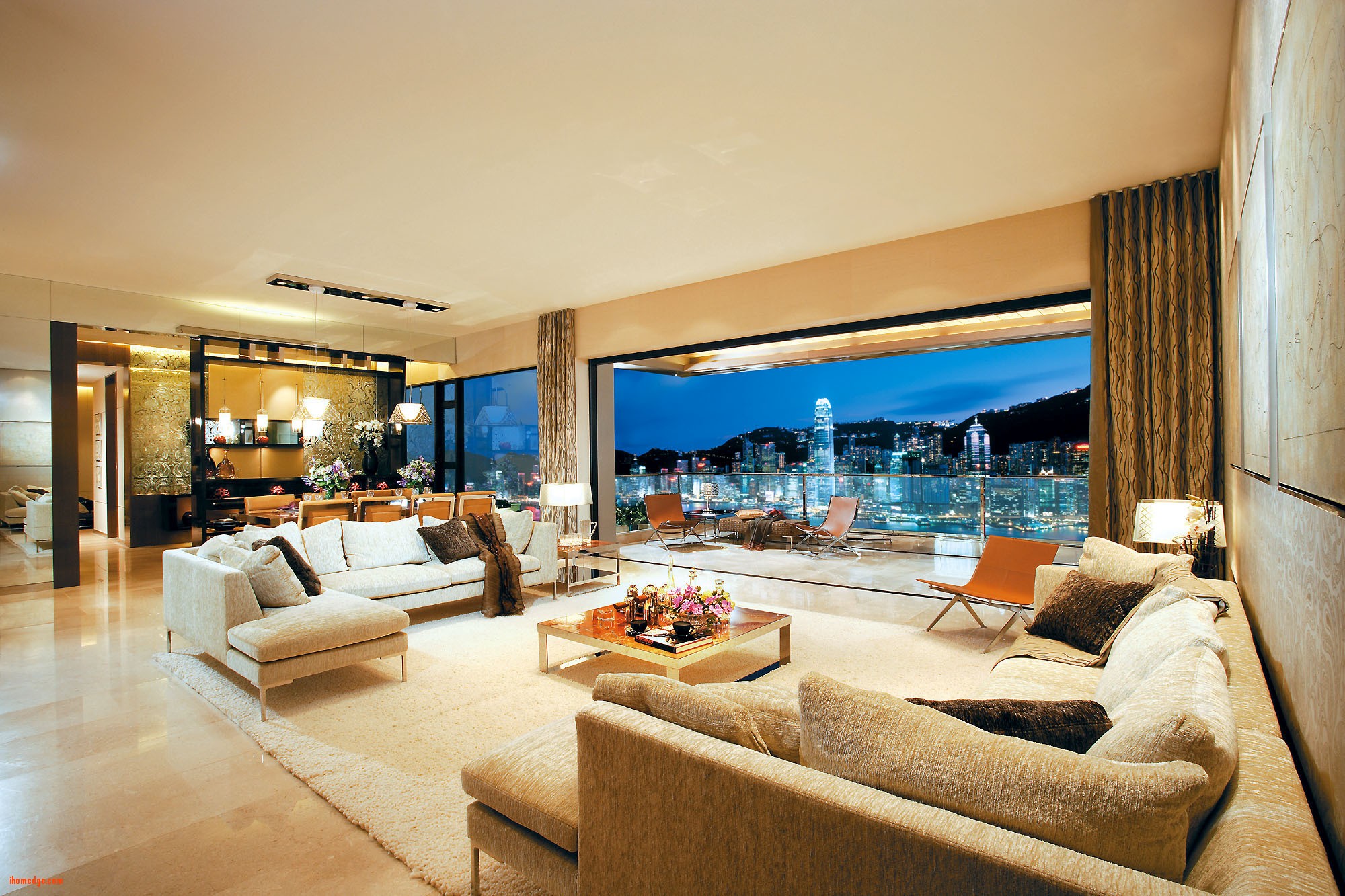
    A 3,378 square foot penthouse at the 21 Borrett Road development was sold on Monday for HKD $459,408,000 ($59,258,165) to an unnamed buyer, according to transaction details published by the developer.

    The apartment on the 23rd floor also comes with its own swimming pool and three parking lots, according to its prospectus. The first phase of sales at the development, which was delayed from 2019, includes 15 units measuring between 2,075 and 3,378 square feet.

    Developer CK Asset Holdings, which is run by tycoon Victor Li, delayed sales of the project amid social unrest in the special administrative region, and the luxury property market has been reeling from the fourth wave of Covid-19 infections and economic downturn, according to Hong Kong daily The Standard.

    The sale of the apartment, which broke the record made by another luxury development in Mount Nicholson in 2017, could be a sign that the local property market is looking up.

  • Italian fashion brand Kampos launches in Korea

    Italian fashion brand Kampos launches in Korea

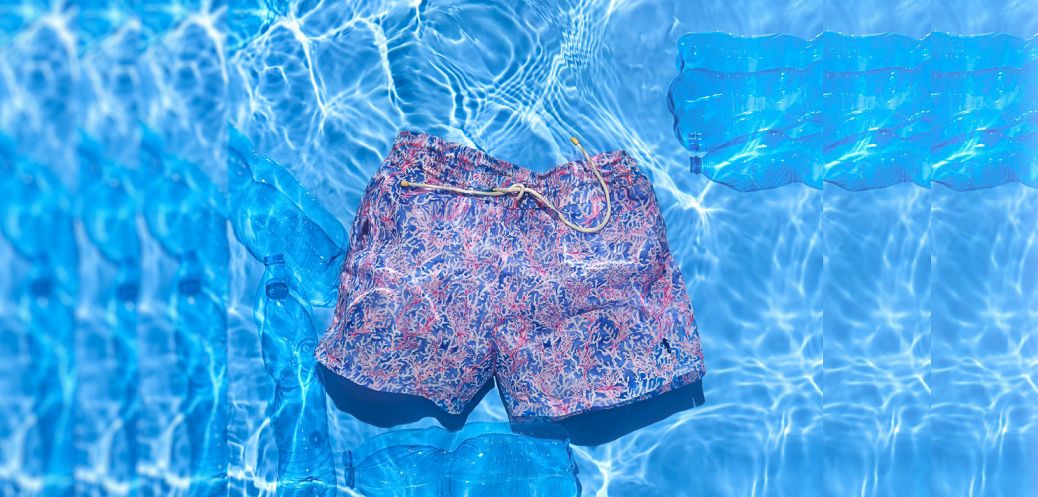
    Kampos, the ultimate Italian brand promoting luxury with integrity, is expanding overseas by entering the South Korean market.

    The brand has recently signed a partnership with a local distributor, Sanghyun Yu, based in the capital, Seoul, and has already established Kampos South Korea Ltd. As part of the strategy, the brand has just launched its South Korean website.

    When we ask the reason of this expansion to Alessandro Vergano, Founder & CEO of Kampos he declares: ”This international move is more than a business decision; it is a strategic and meaningful move to strengthen our sustainable mission. We are determined to transform the way of consumption by challenging the luxury industry’s norms, inspiring change, and reducing marine waste.” He adds: ”Sharing our message at an international has become obvious as we understand the need to reach further international customer profiles outside Europe. We believe South Korea is full of opportunities and we are thrilled to collaborate with Sanghyun Yu”.

    Sanghyun Yu is a well-recognized local distributor in South Korea with strong expertise in the market and luxury goods. ”I am extremely excited to be part of the Kampos journey. I believe in sustainability as the next big trend in South Korea. The younger generation wants to shop and hear about sustainable luxury brands. Today, there is a big market gap as we don’t give them access to those international changemakers. I’m determined to turn this gap into an opportunity by supporting Kampos”.