Tag: Malaysia

  • Malaysian Exporters Set Sights on Chinese Durian Lovers at Exciting Beijing Fruit Festival

    Malaysian Exporters Set Sights on Chinese Durian Lovers at Exciting Beijing Fruit Festival

    A vibrant Malaysian fruit festival in Beijing showcased the beloved durian, generating estimated revenues between CNY3 million and CNY5 million (approximately US$416,000 to US$693,000) for 50 participating exporters. This exciting three-day event, which wrapped up on Sunday, marked the third consecutive year of Malaysian traders presenting their agricultural offerings to Chinese consumers, as reported by the state-owned newspaper Bernama.

    This year’s event put a special emphasis on durian varieties, notably the coveted Musang King and Black Thorn. Attendees were treated to a visual feast with over 150 kilograms of Musang King and 60 kilograms of Black Thorn durians on display, alongside delightful selections of 120 kilograms of pineapples and 80 kilograms of mangosteens.

    Malaysian Ambassador to China, Datuk Norman Muhamad, expressed his pride in seeing durian, hailed as the country’s “national treasure,” take center stage. He noted that last year, Malaysia’s durian exports to China totaled CNY40.17 million (around US$5.5 million) and emphasized China’s status as Malaysia’s largest trading partner for 16 consecutive years. “This time, we are not selling. We are here to promote, educate, and raise awareness about the uniqueness of Malaysian tropical fruits,” he stated.

    Loh Wee Keng, the chairman of the Malaysia Chamber of Commerce and Industry in China, shared optimistic projections that durian exports to China could rise by 15% to 20% this year. This growth comes despite facing weather-related challenges, fueled by robust consumer demand.

    As the world’s largest durian market, China primarily sources this cherished fruit from Thailand and Vietnam, but countries like Malaysia, the Philippines, and Cambodia are increasingly stepping up their export efforts. It seems like everyone wants a slice of the lucrative durian pie!

    Questions & Answers

    What was the revenue expected from the Malaysian fruit festival in Beijing?
    The festival was estimated to generate between CNY3 million and CNY5 million (around US$416,000 to US$693,000).

    Which durian varieties were showcased at the event?
    The spotlight was on Malaysia’s renowned Musang King and Black Thorn durians.

    How significant is China for Malaysian durian exports?
    China has been Malaysia’s largest trading partner for 16 years, with total exports reaching CNY40.17 million (approximately US$5.5 million) last year.

  • Malaysia’s Anti-Corruption Agency Launches Investigation into Land Dispute Over 1,000 Felled Durian Trees

    Malaysia’s Anti-Corruption Agency Launches Investigation into Land Dispute Over 1,000 Felled Durian Trees

    The Malaysian Anti-Corruption Commission (MACC) is intensifying its investigation into a significant land dispute in Pahang’s Raub district, aiming to collect vital documents and witness accounts. The agency confirmed last Friday that several individuals involved in the cultivation of the disputed lands have already been identified.

    Government’s Bold Move Against Illegal Farms

    The clash over land rights erupted on April 8, when government authorities took decisive action by cutting down approximately 200 durian trees, claiming they were planted on illegally occupied land. This action was part of “Op Sekat 3.0,” a state-led initiative that ran from April 8 to May 3, targeting unauthorized durian farms. Following this operation, more than 1,000 trees—many of them the highly prized Musang King variety—met the same fate, sparking a wave of controversy, as reported by local media.

    The timing of the MACC’s press release couldn’t have been more poignant. It followed a visit by the Sultan of Pahang, Al-Sultan Abdullah Ri’ayatuddin Al-Mustafa Billah Shah, to one of the former illegal orchards last Thursday, a moment captured in a Facebook video. During this visit, the Sultan met with officials from the Raub Land and District Office to discuss the chronic issue of land encroachment. His reaction to discovering that a staggering 10,521 hectares—about the size of 14,700 football fields—had been unlawfully occupied was one of sheer astonishment, according to national news agency Bernama.

    Farmers Fight Back Amid Growing Discontent

    The government’s actions have ignited protests from farmers, who expressed their dissent by blocking access routes and displaying banners lamenting the loss of their established crops, as reported by Free Malaysia Today. The Save Musang King Alliance, which advocates for the farmers, has pointed to a court ruling from May that allegedly prohibited the government from destroying these farms. In a tit-for-tat, authorities have maintained that no court order was breached and confirmed their legal right to clear the land.

    Interestingly, this crackdown has found support among local NGOs and residents who argue that the issue of illegal land use has persisted for far too long and necessitates immediate attention. Tengku Zulpuri, a former Raub member of parliament, noted that the existence of these illegal farms has been an “open secret” for over three decades, adding a layer of intrigue to the ongoing situation.

    Tan Sri Azam Baki, the chief commissioner of MACC, shared that the ongoing investigation is delving deep, not only into governance issues but also into how these land-clearing activities occurred without proper oversight from relevant authorities. Last month, the agency compiled a list of individuals linked to the Pahang land dispute, including several former officials. “Given that the case dates back around ten years or more, some of the officials involved have since retired,” Azam added, hinting at the complexity of accountability in this long-standing issue.

    As the saga unfolds, it leaves us pondering just how deep the roots of corruption may run in this verdant landscape.

    Questions & Answers

    What sparked the land dispute in Pahang’s Raub district?
    The dispute began on April 8, when the government cut down around 200 durian trees believed to be planted on illegally occupied land, as part of a state-led operation targeting unauthorized farms.

    How have farmers reacted to the government’s actions?
    Farmers have reacted strongly, protesting by blocking access routes and voicing their grievances about the destruction of their crops. Their representation, the Save Musang King Alliance, argues that a court ruling prohibited such demolitions.

    What is MACC looking into during the investigation?
    The MACC is investigating governance issues related to the land dispute and examining how land-clearing activities could proceed without proper intervention from the relevant authorities.

  • Understanding the Controversy: 1,000 Durian Trees Cut Down in Malaysia

    Understanding the Controversy: 1,000 Durian Trees Cut Down in Malaysia

    In a significant clash between agricultural stakeholders and the Pahang state government, the destruction of durian trees in Raub town has ignited a heated dispute. This incident, centered on claims of illegal land use, has drawn widespread attention, raising critical questions about land rights and consumer trends in Malaysia’s lucrative durian market.

    Government Action Sparks Outcry
    On April 8, the Malaysian government initiated a controversial operation that saw the cutting down of approximately 200 durian trees, which officials claimed were planted illegally on state-controlled land. The situation escalated, with reports indicating that over 1,000 trees were eventually felled in a move to reclaim the disputed land. The Pahang authorities assert that the farmers’ legal attempts to retain their orchards were rejected by an appeal court in May 2024, affirming the government’s stance.

    Farmers Rally Against Destruction
    In response to the aggressive enforcement, the Save Musang King Alliance, representing the affected farmers, organized protests to halt the tree-cutting efforts. Local reports depict citizens actively blocking government access to the farms, brandishing banners to protect the prized durian trees. Chow Yu Hui, the alliance’s chairman and a member of parliament, emphasized their commitment to stopping further destruction, stating, “Today, the farmers’ legal team sent an official letter to the Pahang government demanding an immediate halt to the tree-cutting.”

    The Value of Durian Trees
    The felled trees primarily belong to the Musang King variety, renowned for its distinctive flavor and premium market price, fetching up to $15 per kilogram. In contrast, alternative varieties like the Ri6 from Vietnam and Thailand’s Monthong do not command the same premium. The Royal Pahang Durian Group, currently leasing the land, has proposed a deal to farmers, offering $9.50 per kilogram, which is significantly lower than the prevailing market rates. Amidst these negotiations, many farmers insist that they have cultivated the land since 1974.

    Government Under Scrutiny
    The issue has not only escalated tensions between farmers and the government but has also attracted the attention of the Malaysian Anti-Corruption Commission (MACC). Investigations are underway to determine whether any current or former officials played a role in this land dispute, which has historical roots extending over a decade. As stated by MACC chief commissioner Tan Sri Azam Baki, “We already have a list of officials involved, although many have since retired.”

    Economic Significance of Durian
    The durian serves as a key player in Malaysia’s export market, particularly to China, which received $212 million worth of fresh durian last year, following a bilateral trade protocol. The Malaysia Chamber of Commerce and Industry anticipates a 15-20% increase in durian exports to China this year, propelled by growing consumer demand for the Musang King variety. Despite attempts to cultivate this fruit in China, local standards reportedly do not meet those of Malaysian-grown durians, leading to a sustained demand for the original.

    Conclusion
    This ongoing dispute underscores the complexities facing Malaysia’s agricultural landscape. With substantial economic implications for both local farmers and the national export market, the resolution of the Raub durian tree controversy could reshape the future of Malaysia’s retail and agricultural sectors.

    Questions & Answers

    1. What sparked the tree-cutting controversy in Pahang? The controversy began when the Malaysian government cut down around 200 durian trees, contending they were planted illegally on state-controlled land. This action led to widespread protests from farmers who claimed they held legitimate rights over the land.
    2. How have farmers responded to the government’s actions? Farmers, represented by the Save Musang King Alliance, organized protests to block access to their orchards and have formally requested the government to stop further tree-cutting activities to protect their crops.
    3. What is the economic impact of durians on Malaysia? Durian is a significant export fruit for Malaysia, especially to China, with exports valued at $212 million last year. Increased consumer demand for the Musang King variety could lead to a 15-20% rise in exports, underscoring the fruit’s importance to the Malaysian economy.
  • Zus Coffee Aims for 200 New Outlets Across Southeast Asia in 2023

    Zus Coffee Aims for 200 New Outlets Across Southeast Asia in 2023

    Zus Coffee Eyes Major Expansion with 200 New Outlets in Southeast Asia

    Company Targets Multi-National Growth in 2024

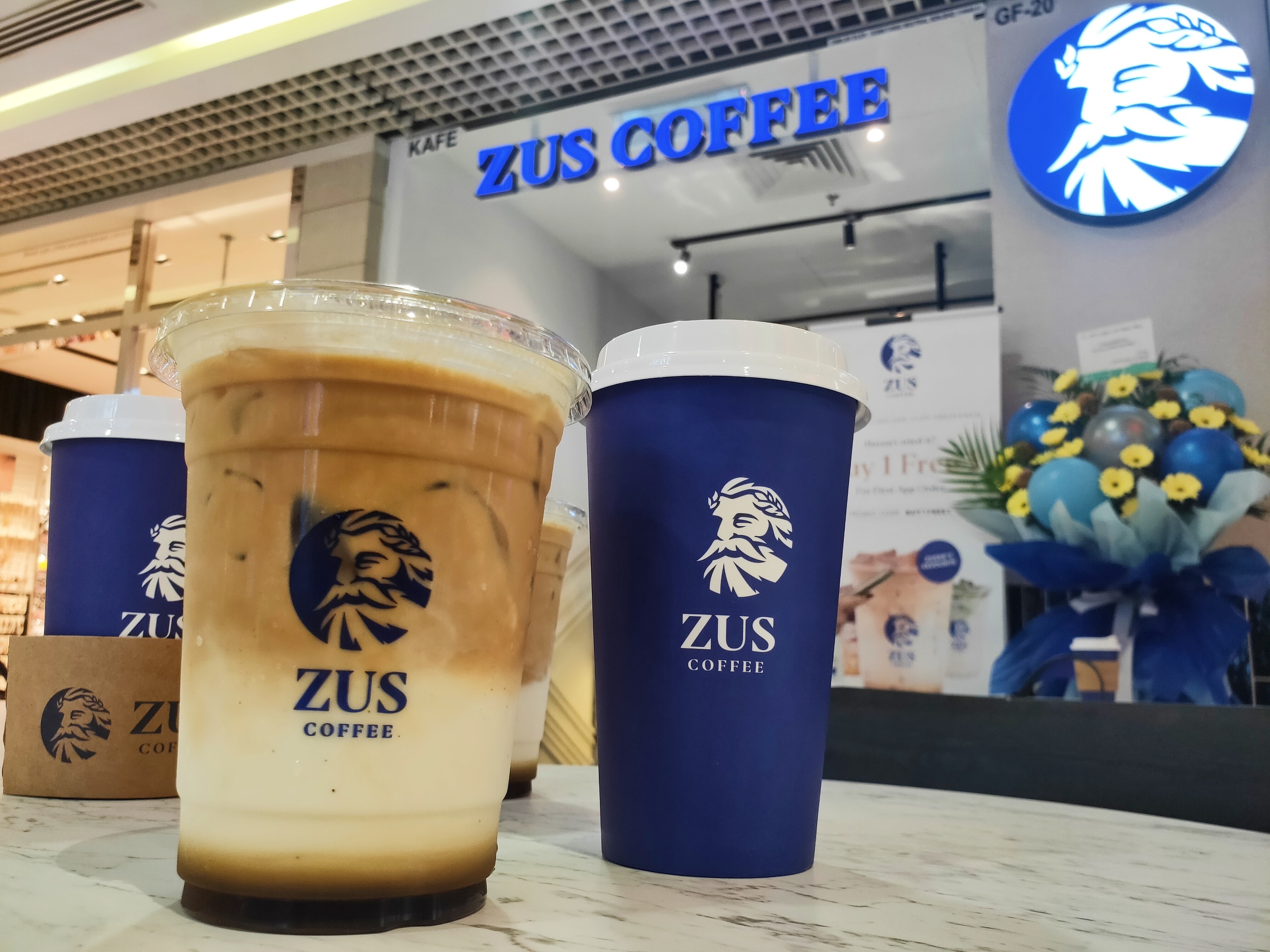
    Malaysia’s prominent coffee chain, Zus Coffee, is set to make a significant impact on the Southeast Asian market by launching 200 new outlets this year. In an exclusive interview with Bloomberg, CEO Venon Tian detailed the ambitious expansion plans that include new locations in Malaysia, the Philippines, Singapore, Thailand, and Indonesia.

    Strategic Store Launches Across the Region

    The expansion strategy involves opening at least 107 new stores in Malaysia, 80 in the Philippines, and 6 in Singapore, alongside penetrating the Thai and Indonesian markets for the first time. This move reflects Zus Coffee’s robust growth trajectory and its ambition to solidify its position as a major player in the region’s coffee retail sector.

    Surpassing the Competition

    Since its inception in 2019, Zus Coffee has experienced remarkable success, recently surpassing Starbucks to become Malaysia’s leading coffee chain. With 743 outlets, Zus has significantly outpaced Starbucks, which operates 320 locations in the country. Zus Coffee also boasts 120 outlets in the Philippines, underlining its strong regional presence.

    Rewarding Taste with Value

    In its most recent financial report, Zus Coffee revealed a substantial threefold increase in net income, reaching RM37 million (approximately US$8.4 million) in 2024. This impressive growth can be attributed to the brand’s focus on market-specific flavors, such as palm sugar-infused drinks in Malaysia and unique purple yam coffee in the Philippines.

    Innovation Meets Accessibility

    Transitioning from a delivery-focused kiosk to a widespread coffee retailer, Zus Coffee has enhanced its sales strategy, with around 70% of sales now derived from online channels, including delivery and pickup options. The brand’s tech-driven approach and efficient store construction allow it to offer coffee at prices over 20% lower than Starbucks, amplifying its appeal to a diverse customer base.

    Tian emphasizes the brand’s mission: “It’s about how we make quality coffee accessible to most people,” which resonates through its mid-range pricing strategy that sits between RM5 at convenience stores and RM11 at premium outlets.

    As Zus Coffee embarks on this ambitious expansion, the potential impact on the retail sector is significant. With increasing consumer trends toward affordability and localized flavors, Zus is poised to reshape the coffee landscape in Southeast Asia, providing fresh competition that prioritizes quality and accessibility.

  • 1,000 Durian Trees Cut Down in Malaysia: Explore the Controversy Behind It

    1,000 Durian Trees Cut Down in Malaysia: Explore the Controversy Behind It

    Protests Erupt Among Durian Farmers in Malaysia Over Tree Destruction

    Farmers Rally Against Government Actions in Pahang State

    In a significant clash between agriculture and policy, durian farmers in Pahang State, Malaysia, are voicing their frustrations after the government initiated the cutting down of over 1,000 durian trees. This controversial decision has mobilized farmers to block roads and display protest banners, marking a pivotal moment in local agricultural resistance.

    Farmers Demand Accountability for Tree Removal

    The destruction of these durian trees, some of which have taken decades to mature, has sparked outrage among local farmers who rely on the fruit as a primary source of income. Many farmers are questioning the government’s motives, arguing that the long-term investment in these trees is being disregarded without consideration for their livelihoods.

    The Economic Impact of Durian Trees

    Durian, often referred to as the “king of fruits,” holds significant cultural and economic value in Malaysia. As consumer demand for durians continues to surge both domestically and internationally, the removal of these trees could have lasting effects on the local economy. Farmers are urging officials to reconsider the decision, emphasizing the need for sustainable agricultural policies that support farmer interests.

    Consumer Trends and Agricultural Policy

    As consumer trends increasingly lean towards sustainability and local sourcing, the current situation presents an opportunity for the government to reevaluate its policies regarding agriculture. Consumers are more aware than ever of the origins of their food, and ensuring the longevity of durian farming could align with rising consumer demand for ethically sourced products.

    Potential Consequences for the Retail Sector

    The farmers’ protest highlights a crucial intersection between agricultural practices and retail dynamics in Malaysia. Should the government persist with the tree removals, the resulting decline in durian production could not only impact local farmers but also reverberate through the retail sector, affecting pricing and availability of this sought-after fruit. As discussions unfold, the outcome of this situation will likely serve as a benchmark for future agricultural policies and consumer engagement within Malaysia’s vibrant retail market.

    The unfolding protests serve as a reminder of the delicate balance between economic development and agricultural sustainability, emphasizing the importance of community involvement in policy-making to ensure a prosperous future for both farmers and consumers alike.

  • Malaysia’s Land Dispute: 1,000 Chopped Durian Trees Linked to Ex-Officials

    Malaysia’s Land Dispute: 1,000 Chopped Durian Trees Linked to Ex-Officials

    An alarming land dispute in Pahang, Malaysia, has drawn significant attention as investigations reveal connections to multiple former officials. This dispute has culminated in the removal of over 1,000 durian trees, with the Malaysian Anti-Corruption Commission (MACC) leading the inquiry. So far, no arrests have been made in relation to this case.

    Details of the Land Dispute

    The conflict, rooted in land ownership claims, ignited on April 8 when government authorities felled approximately 200 durian trees, deeming them to have been cultivated on illegal land. Within days, this destruction escalated to involve more than 1,000 trees, many of which belonged to the highly sought-after Musang King variety. Farmers, rallying under the Save Musang King Alliance, contested these actions, citing a court order issued last May that allegedly prohibited the government from demolishing their farms.

    Investigative Progress and Findings

    Tan Sri Azam Baki, the chief commissioner of the MACC, stated that the investigation not only addresses governance issues but also scrutinizes how land clearing operations proceeded without proper oversight. He noted that a list of implicated individuals has been compiled, with some officials being retired for over a decade. “Some settlers claim they have been working the land since 1974, but we have also found trees only eight or nine years old, indicating recent encroachment,” he remarked, highlighting discrepancies in claims about land tenure.

    Implications for the Retail Sector and Consumers

    The ongoing developments surrounding the land dispute could have ripple effects on the durian market, a key sector in Malaysia’s economy. As consumer demand for durian products continues to rise, the outcome of this investigation may influence production capabilities and market prices. Retailers and consumers alike should monitor these developments closely, as they may shape the future of this highly valued crop.

  • Malaysia’s largest coffee chain Zus Coffee targets 200 Southeast Asian outlets this year

    Malaysia’s largest coffee chain Zus Coffee targets 200 Southeast Asian outlets this year

    Malaysia’s largest coffee chain, Zus Coffee, plans to launch 200 new outlets in Southeast Asia this year, according to CEO Venon Tian in an interview with Bloomberg.

    Zuspresso, the operator of the Zus brand, is targeting at least 107 new stores in Malaysia, 80 in the Philippines, and six in Singapore. It also eyes to set up the first stores in Thailand and Indonesia this year.

    Last year, Zus surpassed Starbucks as Malaysia’s top coffee chain after five years of operation, with 743 outlets compared to Starbucks’ 320.

    It also manages 120 stores in the Philippines.

    Zus reported a threefold increase in net income to RM37 million (US$8.4 million) in 2024, reflecting its rapid growth.

    Tian attributed the company’s success to its market-specific flavors, such as palm sugar-flavored drinks in Malaysia and purple yam-flavored coffee in the Philippines.

    Zus, which started out as a kiosk focusing on coffee delivery in 2019, now sees about 70% sales coming from online channels, including deliveries and pickups.

    Its tech-driven approach and cost-efficient store construction have enabled it to offer coffee over 20%cheaper than Starbucks, boosting its widespread appeal in Malaysia.

    Zus drinks are price in the mid-range in Malaysia, between the RM5 price tag of convenience stores and RM11 of premium stores.

    “It’s about how we make quality coffee accessible to most people,” Tian said.

  • Enhancing User Experience with 5.5G in Malaysia

    Enhancing User Experience with 5.5G in Malaysia

    Malaysia’s 5G journey officially began with a bold push from the government and industry stakeholders to establish a robust and high-speed 5G infrastructure.

    Digital Nasional Berhad (DNB), the government-backed entity tasked with rolling out the 5G network in Malaysia, has been at the forefront of this initiative. The Malaysian government entrusted DNB with the responsibility of rolling out the infrastructure through a shared network model, aiming to foster equitable 5G access nationwide.

    By the end of 2022, DNB had deployed 3,900 5G sites, achieving nearly 50% coverage of the population in major urban areas. This ambitious rollout aimed to cover 80% of populated areas by 2024. Despite ongoing debates regarding DNB’s governance and transparency, it remains at the forefront of Malaysia’s efforts to transform its telecommunications infrastructure. The rollout of 5G services has sparked collaboration with major telecom players, including CelcomDigi, which became a key equity holder.

    As the technology evolves, it’s clear that 5G is not a one-stop destination but a steppingstone toward even more advanced networks. 5.5G—a bridging technology between 5G and 6G—is set to enhance user experience across Malaysia.

    In 2023, Digital Nasional Berhad (DNB), Telekom Malaysia (TM), and ZTE collaborated to create a pivotal launchpad for the development of 5.5G, conducting the world’s fastest 28 Gbps 5G mmWave live trial. This achievement also marked the deployment of Malaysia’s first 5G standalone (5G SA) core, laying the foundation for 5.5G advancement in Malaysia.

    In 2024, ZTE continued to push the boundaries of 5G innovation by showcasing its latest developments at the ‘Unfolding the Intelligent Future 2024’ event in Kuala Lumpur. During the event, the company set the fastest 5.5G live trial record. The 5.5G setup leveraged ZTE’s mmWave Active Antenna Unit (AAU), reinforcing Malaysia’s position as a leader in next-generation telecommunications.

    One of the first significant milestones for 5.5G in Malaysia came in the form of a successful trial by Maxis and Huawei, showcasing the potential of 5.5G technology in the Southeast Asian market. This trial, conducted in late 2024, was not only Malaysia’s first 5.5G demonstration but also the first in the region. The collaboration between Maxis and Huawei aimed to demonstrate how 5.5G can significantly enhance user experience by delivering faster data speeds, lower latency, and more reliable connections.

    During the trial, the teams successfully showcased a wide range of potential 5.5G use cases, including ultra-high-definition (UHD) video streaming, augmented reality (AR) and virtual reality (VR) applications, as well as immersive 3D content. These technologies, which rely on massive data throughput and low latency, are expected to benefit greatly from the enhanced capabilities of 5.5G networks, providing a glimpse into the future of entertainment, education, and virtual communication in Malaysia.

    The trial further demonstrated that 5.5G could enhance existing 5G infrastructure, enabling more efficient spectrum usage and supporting higher numbers of connected devices, a key requirement as the number of Internet of Things (IoT) devices continues to grow exponentially.

    Looking ahead to 2025, Malaysia’s 5.5G landscape is set to evolve further with Ericsson’s launch of 5G-Advanced in the country, following its successful deployment in Singapore. As one of the leading providers of 5G and 5.5G technologies, Ericsson’s contribution has been instrumental in helping Malaysia achieve its goal of becoming a regional leader in digital transformation.

    DNB’s ongoing efforts to roll out 5G infrastructure have provided a solid foundation for 5.5G development, enabling smoother transitions to next-generation technologies. The agency is also working on enhancing the capabilities of the existing 5G infrastructure by integrating 5.5G enhancements, such as ultra-reliable low-latency communications (URLLC), network slicing, and massive machine-type communications (mMTC). These features will improve the user experience by reducing network congestion, increasing reliability, and enabling the seamless connection of a wide range of devices.

    5.5G networks are set to bring several advancements over the current 5G technology, offering faster speeds, lower latency, and improved capacity. With speeds up to 100 times faster than 5G, 5.5G will enable ultra-high-definition video streaming, immersive gaming, and data-heavy applications like 3D holograms and AR/VR. Latency will be reduced to just 1 ms, which is essential for real-time data processing and enhanced user experience. Smart cities will also benefit from real-time traffic management and AI-powered surveillance (supported by 5.5G technology), improving user experience across multiple facets of daily life.

    While 5.5G is still in its nascent stages, several initiatives are already underway in Malaysia to lay the groundwork for its widespread adoption. Building on their partnership, Maxis and Huawei established a 5G-Advanced Joint Innovation Center in mid-2024. This center focuses on exploring innovations in gigabit capacity to support mobile network expansions and 5G/5.5G technologies.

    Industry regulators and stakeholders in Malaysia are already discussing the implementation of key 5.5G features such as ultra-low latency and enhanced mobile broadband (eMBB). These discussions are crucial for ensuring that Malaysia’s 5.5G network is optimized for the diverse needs of both businesses and consumers.

    The future of 5.5G in Malaysia looks promising. The Malaysian government and telecommunications industry stakeholders have set ambitious goals to make the country a leader in digital transformation, and 5.5G will play a key role in achieving these objectives. Additionally, the integration of 5.5G will be pivotal in Malaysia’s ongoing efforts to foster a digital economy. As industries increasingly adopt digital solutions, the enhanced speed, capacity, and reliability offered by 5.5G networks will be critical in supporting Malaysia’s growing tech ecosystem.

    The future of mobile connectivity is bright, and Malaysia is poised to lead the charge. As 5.5G collaboration between global technology providers continues to evolve, consumers, businesses, and industries can look forward to enhanced multifaceted experiences.
  • U Mobile, CIMB Sign MoU to Support 5G Network Rollout

    U Mobile, CIMB Sign MoU to Support 5G Network Rollout

    U Mobile CEO, Wong Heang Tuck, highlighted the company’s enthusiasm for this strategic partnership with CIMB for the 5G rollout, emphasizing CIMB’s shared commitment to innovation and digital growth. He noted that the financial support would enable a fast, cost-effective deployment, benefiting businesses, consumers, and the public sector.

    Chu Kok Wei, CEO of Group Wholesale Banking, CIMB Group, said, “In line with our shared goal of nation building, CIMB is pleased to support U Mobile in its efforts to connect Malaysians and spur digital innovation through the power of 5G. CIMB is also ready to offer a holistic range of bespoke products and services apart from financing, extending to diverse areas including investment banking and treasury that will spark further innovation and accelerate growth both for U Mobile and Malaysia.”

    Both Tuck and Wei signed the MoU at U Mobile’s Corporate Offices in Berjaya Times Square. The ceremony was attended by U Mobile CFO, Sandy Tsang, and Denise Wong, Head of Corporate Coverage Malaysia at CIMB Group.

    This MoU builds on a longstanding financial relationship between the two companies, including CIMB’s participation in a MYR 1.2 billion facility for U Mobile in 2021, which was increased to MYR 1.4 billion in 2023.

  • IFC and Partners Invest USD 900 Million in Malaysia Data Center

    IFC and Partners Invest USD 900 Million in Malaysia Data Center

    The consortium, which includes DBS, Deutsche Bank, Global Infrastructure Partners (BlackRock subsidiary), HSBC, ING, and Natixis CIB, joined IFC in funding the first phase of the project in Johor Bahru. This initial 98-megawatt facility is part of a larger 72.5-acre campus that aims to deliver 300 megawatts of critical IT capacity upon completion. Once operational, the campus is expected to become one of the largest and most advanced data centers in the Asia Pacific, addressing the region’s surging demand for data processing capabilities.

    In May, 2024, the IFC initially announced a USD 150 million financing package for the project, which included a USD 50 million bridge loan that proved to be instrumental in advancing the development and attracting additional funding from the consortium. The IFC has now committed its second tranche (totaling USD 100 million) as part of this latest financing round, marking a significant milestone in the project’s development.

    “Our Johor campus is a landmark development for Yondr and will become an important part of Asia’s infrastructure as demand for capacity continues to grow in the region, driven by the acceleration of artificial intelligence (AI) and digital services,” said Chester Reid, Chief Financial Officer at Yondr. “Our success in securing a substantial loan facility to help complete the first phase of this campus highlights trust in the Yondr brand from leading financial institutions, following a number of major project milestones we have delivered this year in Europe and North America.”

    The hyperscale data center campus in Johor Bahru will be certified under the Excellence in Design for Greater Efficiencies (EDGE) program—the IFC’s flagship green building certification system. The certification highlights the project’s commitment to resource efficiency and sustainable design.

    The IFC served as the mandated lead arranger (MLA) for the financing package, with DBS, Deutsche Bank, HSBC, ING, and Natixis CIB also acting as MLAs, underwriters, and bookrunners.

    This marks IFC’s third investment in Malaysia since establishing its operations in the country in 2023.

    Judith Green, the World Bank Group’s Country Manager for Malaysia, is satisfied with the IFC’s commitment to a second tranche of financing for Yondr’s data center campus in Malaysia, stating, “This project will not only help to accelerate the digital transformation of the wider Asia-Pacific region, but also serves as a strong example of how IFC’s tailored financing solutions can de-risk projects and drive private-sector investment into emerging markets.”

  • How ZUS Coffee become Malaysia’s largest coffee chain in 4 years

    How ZUS Coffee become Malaysia’s largest coffee chain in 4 years

    ZUS Coffee, a Malaysian firm that began as a small kiosk in Kuala Lumpur, took just over four years to become the biggest coffee chain operator in the country.

    The firm quickly expanded to surpass U.S. giant Starbucks in a market with over 3,300 branded coffee outlets, a figure expected to grow 4-5% this year, according to global coffee industry research platform World Coffee Portal.

    It launched at the end of 2019 with a 200-square-foot (18-square-meter) kiosk in the Kuala Lumpur City Center area.

    The brand positioned itself in the mid-priced segment, which was largely untapped at the time, aiming to make specialty coffee a daily necessity rather than a luxury.

    One of its main draws is its frequently updated menu, which features unique drinks like the Ice Shaken Osmanthus Orange Espresso, Sakura Rose Frappe, and Cheese Crème Latté.

    But this was not the only factor setting it apart from other options in Malaysia’s coffee market as it is also known for its tech-driven approach.

    The company digitized its operations and had an app at launch that facilitates online ordering, pick-up and delivery, with the aim to shake up the market by focusing on digital orders and fast service.

    The app also collects data on customers’ tastes and preferences, which is used to develop new products or improve existing items.

    The company had a rough start as cashless payments and online coffee ordering were slow to catch on in Malaysia.

    However, the Covid-19 pandemic hit a few months after the startup launched, transforming the local coffee landscape. Delivery services and contactless payments quickly became standard, making ZUS’ focus on technology highly successful.

    “We became profitable just 10 months after we launched. Timing was crucial – it is not just the product or the team, but being in the right place at the right time,” Venon Tian, the firm’s COO and co-founder, told Nikkei Asia.

    Tian’s ambitious plans for his business would see it challenge international brands in the local market.

    “Hopefully we will be able to surpass the bigger boys in town soon and be something for Malaysians to be proud of as well,” Tian told The CEO Magazine in 2022, when the chain had just over 150 stores.

    As its popularity and presence grew over the years, the firm became the largest coffee chain operator in Malaysia. It has 566 stores as of September 2024, surpassing Starbucks, which is in second place with 411 outlets.

    Its revenues jumped from 15.7 million ringgit (US$3.5 million) in 2021 to over 200 million ringgit in the fiscal year ending June 30, 2023, while its net profit surged from 134,000 ringgit to 10.2 million ringgit during the same period.

    The chain is now looking to expand into the international market. It has already opened more than 40 stores in the Philippines since entering the market last year after Filipino billionaire Frank Lao acquired a 30% stake in the company.

    It opened its first store in Singapore in October and launched in Brunei late last month with an outlet at the Setia Point shopping center in the capital city of Bandar Seri Begawan.

    Tian said at a conference hosted by Tech in Asia earlier this year that ZUS would be expanding to Pakistan by the first half of 2025. He expects its revenues and net profit to reach 600 million ringgit and 30 million ringgit, respectively, this year.

    He told Nikkei Asia that the firm aims to become a “national champion,” comparing it to Malaysian airline AirAsia. “Who knows, we could be the AirAsia of coffee – a Southeast Asian brand recognized globally.”

  • Milk tea chain Chagee sparks outcry in Malaysia over alleged lucky draw tampering

    Milk tea chain Chagee sparks outcry in Malaysia over alleged lucky draw tampering

    Chinese milk tea chain Chagee has sparked anger among many Malaysian internet users by demanding them to remove videos allegedly showing their employees tampering with a lucky draw.

    The chain last week attracted large crowds at its over 100 outlets in Malaysia by offering luxury prizes such as handbags from Louis Vuitton and Gucci and Apple smartphones.

    Customers were required to find coupons hidden inside Chagee cups to determine if they had won.

    But on Monday an online video went viral, showing a staff member going through the empty cups and putting aside the ones with the top prizes, according to the South China Morning Post.

    People alleged that the staff’s action indicated that the lucky draw was rigged.

    Chagee responded by telling social media users to remove the video “immediately”, which further fueled public outrage.

    “Chagee asked delete the video or else I will be cited for legal action,” X user Naquib said in a post seen by almost 6 million people.

    The chain’s Malaysia social media page was seen with hundreds of comments, with some calling to boycott the brand, same as they had done earlier with other U.S. chains such as Starbucks or McDonald’s for believing that they were connected to Israel in the Middle East conflict.

    Facing backlash, the milk tea chain decided to apologize to defuse the tension, saying that it “deeply regret any negative experience” over the incident.

    It said the behavior shown did not reflect the standards that the brand holds itself to. “We are currently conducting a detailed investigation to better understand the situation and, if necessary, will take appropriate action in line with our values,” Chagee said in a statement.

    It changed the lucky draw mechanism to using QR codes instead of physical coupons.

    Established in Yunnan, China, in 2017, Chagee has experienced rapid growth in Malaysia, thriving despite stiff competition from Taiwanese brands like Chatime, Gong Cha, and local favorite Tealive.

  • Telekom Malaysia Launches AI-Driven Singing Platform

    Telekom Malaysia Launches AI-Driven Singing Platform

    Launched as part of the “Sejuta Suara, Satu Ritma, Jiwa Merdeka” campaign for Hari Kebangsaan and Hari Malaysia 2024, this groundbreaking platform leverages advanced AI technology to celebrate and highlight the country’s rich linguistic diversity.

    By leveraging AI for automated lip-syncing and voice cloning, TM has created an immersive experience that lets Malaysians sing in their preferred languages or dialects with remarkable realism and ease.

    The platform is driven by a collaboration of seven advanced AI and API systems, all of which are integrated to provide a seamless and intuitive user experience. Powered by Credence, TM’s cloud and digital solutions division, this innovative technology highlights TM’s dedication to advancing digital capabilities and pushing the limits of what technology can achieve.

    Amar Huzaimi Md Deris, TM’s Group Chief Executive Officer, said, “This initiative highlights how AI can be harnessed to celebrate and preserve Malaysia’s rich linguistic diversity.  It gives Malaysians a new way to connect with each other and transform the iconic patriotic anthem into a unifying force for the nation. By leveraging advanced AI technology to promote our unique linguistic heritage, we contribute to national integration, digital inclusion, cultural preservation while fostering stronger unity and a digitally savvy society.”

    Amar highlighted TM’s dedication to making advanced technologies accessible to all Malaysians as it works towards its goal of becoming a Digital Powerhouse by 2030.

  • Levi’s to fuel growth ambitions with Suria KLCC Malaysia store reopening

    Levi’s to fuel growth ambitions with Suria KLCC Malaysia store reopening

    Levi’s has reopened its expanded store at Suria KLCC, Malaysia. Spanning 393sqm, this is the brand’s largest flagship in Southeast Asia and part of its direct-to-consumer expansion strategy in the region.

    The new store features the brand’s signature NextGen Indigo format, designed to deliver an immersive shopping experience, with modern touches like LED portal entry and elevated style lounges.

    It will offer various collections including Levi’s Vintage Clothing, the Made in Japan line, and climate-adaptive offerings such as the Performance Cool range.

    Levi’s also partnered with local artists to offer unique, Malaysia-inspired personalisation options. For the reopening, the brand worked with street artist Cloakwork to design exclusive heat press patches that celebrate local heritage.

    In addition, the Suria KLCC outlet has its very own Tailor Shop, offering consumers the option to personalise and customise their apparel.

    Nuholt Huisamen, MD of East Asia Pacific, Levi Strauss and Co, said strengthening its presence in Southeast Asia is crucial for the brand’s growth ambitions.

    “Our ambition is to become a $10 billion company and a world-class retailer, and our international business will play an integral role in helping us to achieve this,” said Huisamen.

    “Southeast Asia – and the broader East Asia Pacific region – holds immense potential for us, with many markets leading the way in creating fashion trends that are quickly picked up globally.”

  • Export permit hurdles for Malaysia’s fresh durian shipment to China

    Export permit hurdles for Malaysia’s fresh durian shipment to China

    Malaysia is preparing to deliver its first shipment of fresh durians to China, but obtaining approved permits might be difficult for exporters and farmers.

    Malaysia was granted permission to export fresh durians to China under a phytosanitary protocol signed on June 19 during Chinese Premier Li Qiang’s visit to the country.

    However, while the protocol gave the country the green light to export fresh durians, the actual export date was not confirmed, according to Malaysia’s national news agency. Earlier this month, Malaysia’s Agriculture Department director general, Nor Sam Alwi, noted the country is preparing to deliver the first 1,000 tons of fresh premium durians to China, but the export agreement has yet to be finalized.

    “We expect (it exported in) October but everything depends on the speed and approval from the General Administration of Customs of the People’s Republic of China (GACC)

    While Malaysian farmers are eager to capitalize on the durian market, they must wait until September for their applications for approved permits to be reviewed by China’s customs.

    But getting a permit is not just about waiting, as farmers and exporters must also meet the strict requirements set by China.

    “China requires a certain quantity and quality before accepting the fruits,” Food Security and Cooperative Development Committee chairman Fahmi Zainol said. “There needs to be enough quantity of the same ‘brand’ (type) of the fruit, but Penang farmers who have a mixed variety of durian species face difficulties in fulfilling this (requirement).”

    Durian farmer Tan Chee Keat, who has been exporting fresh durians to China for eight years under a special approval, added that they must also adhere to GACC’s many protocols and fulfill hazard analysis and critical control point procedures for food safety management.

    “It is not easy and not many farms here can do so.”

    Malaysian durian expert Lim Chin Khee said that the country’s current production of fresh durians is sufficient to export to China, but maintaining the fruit’s quality, especially during transport, might be a challenge.

    “Ensuring the freshness of durians during transport requires robust cold chain logistics infrastructure, which may necessitate significant investment and coordination,” he noted.

    Abdul Rashid Bahri, director general of Malaysia’s Federal Agricultural Marketing Authority, said that approximately 70 packing centers across the nation are currently under review by the Agriculture and Food Security Ministry.

    Additionally, over 200 durian farms that meet national agricultural standards are seeking to undergo the auditing process to become eligible for export, he added.

    Before the signing of the protocol, Malaysia had been selling durians as pulp, paste, and frozen whole fruit to China.

    Last year, it exported RM1.19 billion (US$252.2 million) worth of durian to China, making the country its key market.