Tag: Malaysia

  • Convenience stores: Staying relevant in harsh times

    Convenience stores: Staying relevant in harsh times

    For Malaysian consumers, the last couple of years have been a mercurial ride with the implementation of the Goods and Services Tax (GST) and the subsequent effects of it as well as other global and domestic events which have rippled through prices of goods and services.

    As cost of goods and services gradually increases, most consumers have cut down their spending, to save on essentials.

    Softening consumer confidence have also taken a toll on businesses. In particular, the retail sector was affected more significantly by lower consumer confidence.

    Nevertheless, at the start of 2016, statistics and reports have shown that consumer confidence in Malaysia are slowly recovering and there are signs of of it stabilising.

    According to Nielsen Global Survey of Consumer Confidence and Spending Intentions, the Malaysian consumer confidence remain stable at the start of the first quarter of 2016 with 79 percentage points (pp), dipping one point from previous quarter).

    Globally, the report showed that Malaysia held on to its ranking as 36 most confident country in the first quarter (1Q) 2016 (unchanged from last quarter). Of note, the average global consumer confidence is 98 pp (one pp from previous quarter). Consumer confidence levels above and below a baseline of 100 indicate degrees of optimism and pessimism.

    However, while there are signs pointing towards improvements in consumer sentiments in Malaysia, analysts and industry observers are still cautiously optimistic on consumer trends.

    SOURCE: Nielsen Global Survey of Consumer Confidence and Spending Intentions 1Q16

    SOURCE: Nielsen Global Survey of Consumer Confidence and Spending Intentions 1Q16

    Richard Hall, country manager of Nielsen Malaysia, pointed out in a statement, “With no real changes in the economic outlook, Malaysians’ confidence remains low and we see that this trend will continue to be the case until the pressure on the ringgit ease.

    “Only when the pressure of the ringgit improves, can consumers start to feel the burden of their day-to-day spending lessen.”

    Nielsen noted that while the nation’s fiscal status (52 per cent compared to 50 per cent in prior quarter) continues to top the list of major concerns among Malaysian consumers, nearly a quarter of the respondents have cited that job security is now their second top worry (22 per cent).

    “Recessionary sentiments among Malaysians continue to remain high (84 per cent, unchanged from last quarter) with only one in five respondents feeling positive that the country will be out of an economic recession in the coming 12 months (22 per cent, unchanged from prior quarter),” the survey reported.

    The survey also revealed that consumers in Malaysia would continue to reduce household spending even when economic conditions would improve with nearly nine in 10 Malaysian consumers changing their spending habits in the past year to improve saving (88 per cent).

    It said, the top three areas where consumers in Malaysia would continue to cut back even when economic conditions do improve are spending less on new clothes (65 per cent), reducing out of home  entertainment (56 per cent) and switching to cheaper grocery brands (51 per cent).

    “Despite the fact that none of the economic key performance indexes (KPI) indicate that the country is in a recession, consumers continue to believe that the current situation and the future for the country is not positive.

    “To change this attitude will require a step change in the current environment,” Hall observed.

    Affin Hwang Investment Bank Bhd’s research arm (Affin Hwang Capital) in a recent report highlighted  the main themes affecting consumerism include the implementation of GST and the weakened ringgit against the US dollar.

    “While the consumer sentiment is at its all-time low with consumers mainly worried about the higher costs of living, income levels and the economy, several macroeconomic indicators are pointing towards an improvement,” it pointed out.

    “Consumers have been hit by higher costs of living, with headline inflation spiking to a high of 4.2 per cent year-on-year (y-o-y) as of February 2016.

    “Both Malaysian Institute of Economic Research (MIER) and Nielsen surveys highlight job security and income worries as key concerns among consumers, in addition to the current state of the economy,” it said.

    In a separate report, the research arm of TA Securities Holdings Bhd (TA Securities) expected consumer sentiment to remain weak in 2Q and continue to remain flattish throughout the year.

    However, it pointed out that consumer sentiment level, according to MIER, have rebounded by 9.1 points, suggesting that consumers have adjusted their spending pattern to take into account the impact of GST their purchasing activities.

    “Coupled with financial aids given by the government through BR1M, reduction in employees’ EPF contribution, and increase in minimum wage for private and public sectors workers that will be implemented on July 1 this year, could lessen the impact of demand slowdown,” it added.


    Grocery retail retains growth despite headwinds

    A closer look into the consumer sector shows that while consumer sentiments is expected to remain subdued in the near-term, Malaysian consumers’ purchasing power is improving in certain categories.

    According to Nielsen, consumer purchasing power in the Fast Moving Consumer Goods (FMCG) category gained traction in 1Q of 2016 versus the same quarter in the prior year (4.7 per cent).

    It added, all FMCG super categories registered a healthier growth lead by beverage (8.8 per cent), grocery (4.3 per cent), household (3.9 per cent), health & wellness (2.7 per cent), snack & confectionary (two per cent) and personal care (1.7 per cent).

    “In spite of the FMCG industry having a strong start to last year due to the GST introduction in April 2015, we have been pleasantly surprised to see the majority of categories still in growth, with the modern trade leading the way.

    “While there has negative sentiments surrounding the increasing cost of living, consumers still need to buy groceries and it looks like they are not necessarily down trading their purchasing decisions,” Hall noted.

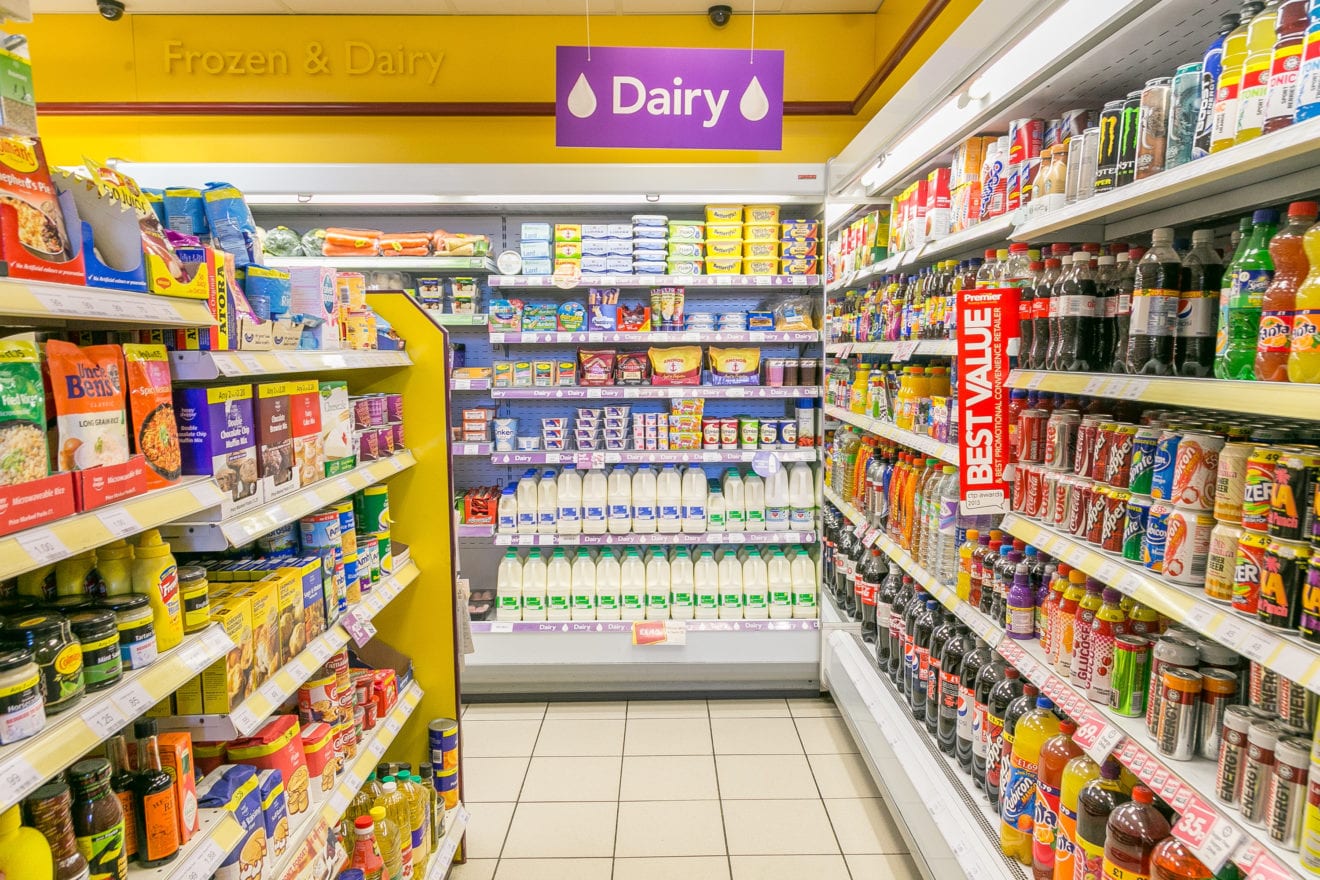
    In Malaysia, while hypermarkets still dominate the general FMCG or grocery markets, there are growth opportunities for convenience stores given that demand still remains strong for FMCG or grocery goods.

    In a report, the research arm of DBS Bank Ltd (DBS Group Research) pointed out, “There is room for Malaysia to grow its convenience stores as the number of convenience stores per one million total population lags behind Indonesia, Singapore and Thailand.

    “However, it leads Asean-5 in supermarket and hypermarket outlets-to-population ratio. Among the three main modern grocery retail formats, convenience stores registered the fastest growth from 2009 to 2014 at 17 per cent compounded annual growth rate (CAGR),” it said.

    It also noted that convenient stores offer products and services that are within reach of consumers compared to supermarkets and hypermarkets.

    “The layout of many Malaysia towns tends to be spaced out and it is common for people to commute in cars. As such, there are many big box hypermarket developments in Malaysia.

    “Hypermarkets are seen as a convenient place with a wide selection of products for consumers to visit. Supermarkets in suburban neighbourhoods play the role of supplementing hypermarkets, while convenience stores offer 24-hour service.

    It also pointed out that generally, purchasing habits for consumers in Asia have also shifted with convenience as a key factor in their purchasing habits.

    “Formats penetrate Asean food consumption in different manners. Supermarkets will always be a key feature in malls located in densely populated cities.

    “Convenience stores are strong in penetrating every corner of cities and in obscure locations outside them. Hypermarkets are capable of capturing consumption in more spaced-out locations with high automobile accessibility.

    “With modern and traditional grocery retailers situated in cities and neighbourhoods, it is convenient for consumers to pick up grocery items physically and even on the move,” it said.

    Convenience store retailers are likely to sustain growth, given their aggressive outlet expansion to meet demand for convenience, DBS Group Research observed.

    With that, BizHive takes a look at some of Malaysia’s top convenience store retailers.


    7-Eleven the ‘go-to’ convenience store

    Since its listing on Bursa Malaysia in 2014, 7-Eleven Malaysia Bhd (SEM) has grown by leaps and bound across the nation.

    With a market share of 82 per cent of the standalone convenience store segment as of March 2014, SEM, which manages the 7-Eleven convenience store chain in Malaysia, is the largest convenience store operator in the nation.

    TA03438

    As of Dec 31, 2015, SEM has a total of 1,944 stores serving more than 900,000 customers per day. According to its 2015 Annual Report, 1,793 or 92.2 per cent of its stores are corporate-owned while 7.8 per cent are operated by franchises.

    “Sales and profits both delievered impressive results despite the difficult retail market environment which was significantly impacted by the introduction of GST for the first time on April 1, 2015.

    “On top of this, consumer confidence was measured at a 10-year low level in 3Q15 which also subsequently impact consumers spending behaviour,” said Shalet Marian, independent none-executive/chairman of SEM, in her chairman’s statement from its 2015 Annual Report.

    “Despite the earlier mentioned headwinds in the the total FMCG retail market in 2015, the company has recorded a strong six per cent growth rate in total sales compared to the previous year.

    “Total sales amounted to RM2.006 billion although our same store sales showed marginal decline of 3.6 per cent as a result of the GST impact on sales values.”

    This year, according to previous news report, SEM expects to spend between RM85 million and RM90 million as part of its expansion plan which includes the opening of 200 new stores this year.

    SEM chief executive officer Gary Brown was quoted as saying that this expansion would see more outlets in Klang Valley, the east coast, as well as Penang, Johor and Melaka.

    “We will continue to invest in new stores and building our network. The investment also included refurbishment of our existing 200 stores this year,” he said to reporters after the group’s AGM.

    He was quoted as saying that the company had also set aside major capital expenditure to continue to upgrade its new information technology (IT) system.

    “The new IT system project which started in 2014 costing RM66 million is expected for completion by the middle of this year,” said Brown.

    Marian added, “Our plan is to continue to bring 7-Eleven true convenience to more and more customers in Malaysia and as such we expect to expand our store network by approximately 200 new stores in 2016.”

    In 2015, SEM had opened 199 new stores nationwide. As at December 31, 2015, the group has total cash reserves of RM126 million.

    Meanwhile, on SEM’s performance in 1Q16, the research arm of Maybank Investment Bank Bhd (Maybank IB Research) noted that its results were in line with expectations but the research house remains cautious of its earnings outlook.

    “We continue to expect new store openings and better contribution from its refurbished stores to help drive growth.

    “As a recap, for 2016 and beyond, we understand that SEM targets to open 200 stores per annum. Nonetheless, we remain cautious on its near term earnings as it will be facing some near term headwinds such as the minimum wage hike come July 1, 2016.

    “In the longer term however, we expect SEM to eventually pass the higher cost through to consumers via higher merchandise prices,” it opined.

    Aside from that, recently, SEM had signed a memorandum of understanding with Brahim’s SATS Food Services Sdn Bhd (BSFS), a 51 per cent owned subsidiary of Brahim’s Holdings Bhd (BHB).

    This will expose Brahim’s to a wider market via SEM’s close to 2,000 stores network all across Malaysia, which is in line with the objective of the strategic partnership between BHB and SATS Ltd (SATS) to venture into non-airline business in Malaysia.

    Analysts believe that this is a synergistic partnership as it could benefit both parties which are currently faced but headwinds in the consumer sector.

    “We understand that some convenience store players domestically has been facing some supply chain issues (such as product quality, consistency and choices) mainly due to dependence on multiple fresh food suppliers and scale and reach of the existing food suppliers.

    “Therefore, collaboration with a sizeable party could benefit SEM in the longer term in terms of cost efficiencies and consistency of product quality/choices while not having to move away from its core competence of managing convenience stores.

    “To note that fresh food and services as a percentage of merchandise sales has been fairly stable, at est. 10 per cent,” Maybank IB Research opined.

    Under this MoU, BSFS is expected to provide packaged ready to eat (RTE) meals such as panini sandwiches, the ever popular nasi lemak and fried rice that would be branded under 7-Eleven’s proprietary food service brand of  ‘Fresh to Go’.

    Looking ahead, Marian said, “Despite the current uncertainty and consumer confidence issues which impact our customers and their spending behaviour, I am confident about the growth prospects of our company as we are resilient and have positioned ourselves to maintain our market leadership position not just in 2016 but for the years beyond.”

    Bison: Malaysia’s largest home-grown retailer

    Incorporated in 2013 as Prempac Sdn Bhd and converted into a public limited company in 2015, Bison Consolidated Sdn Bhd (Bison) was successfully listed on Bursa Malaysia earlier this year in March.

    The research arm of CIMB Investment Bank Bhd (CIMB Research) cited Bison as Malaysia’s largest home-grown convenience store operator and has an estimated total market share of 8.6 per cent in 2015, with up to 255 outlets (including eight, WHSmith outlets).

    TA03439

    Through its subsidiaries, the group provides unique offerings under its main trade name ‘myNews.com’ a press and convenience retailing business.

    According to its initial public offering (IPO) prospectus, Bison also operates other outlets under the trade names of ‘newsplus’ ‘MAGBiT’, and THE FRONT PAGE’ as well as under the trade name of ‘WHSmith’ through its join venture with WH Smith Travel, an indirect wholly-owned subsidiary of UK-based WH Smith Plc.

    While it was incorporated in 2013, Bison’s conception can be tracked back to 1996 with the establishment of Bison’s first newsstand outlet under the brand name ‘MAGBiT’.

    CIMB Research highlighted that over the last few years, Bison has been registering positive and consistent revenue and core net profit growth, with a two-year compounded annual growth rate (CAGR) of 17.4 per cent and 7.5 per cent, respectively.

    “The double-digit revenue growth was mainly driven by higher merchandise sales, consumer services and advertising and promotion, which were boosted by the growth in the number of stores for the group,” it added.

    The research team also noted that for the past three years, Bison?s gross profit margin has expanded from 33.3 per cent in FY13 to 34.2 per cent in FY15.

    “The consistently better margins can be attributed to the increase in revenue from its consumer services as well as its advertising and promotion revenue, which carry no cost components due to its nature as fee income,” it said.

    In Malaysia, the retail convenience store sector has been viewed as largely underpenetrated.

    According to a study by Smith Zander, Malaysia’s retail convenience store penetration rate is 135 stores per million people, far below that of more developed countries in the Asian region, such as Singapore (162 stores/million people), Hong Kong (190 stores/million people), Japan (407 stores/million people), Taiwan (419 stores/million people) and South Korea (485 stores/million people).

    As such, CIMB Research believes that this industry still has plenty of potential to play catch-up.

    “Given Bison’s established and well-known presence in the domestic retail convenience store industry, management believes that the group is well positioned to capture the significant growth opportunities available,” it added.

    “With an estimated market share of 8.6 per cent (in terms of total number of outlets in 2015), Bison is the second-largest retail convenience store industry player in Malaysia.

    “Even though the retail convenience store scene remains highly competitive, we are not overly concerned as Bison has an extensive and strategic store network compared to the smaller players, which mostly hold less than one per cent of the market share (based on the latest publicly-available data collated by Smith Zander),” it commented.

    While Bison, like every other retailer, faces headwinds such as weak consumer sentiments, the research team said the group would be able to withstand these challenges as most of its earnings are derived from its merchandise sales which are mostly generated from food and beverages and small ticket items.

    It also noted that the group could benefit from its commission-based income from consumer services and advertising and promotions.

    It further pointed out that despite the overall weaker market conditions, Bison had managed to generate a healthy net profit growth of 7.4 and 7.5 per cent y-o-y in FY14 and FY15, respectively.

    Overall, CIMB Research forecast Bison to deliver a two-year profit CAGR of 31.1 per cent against 25.5 per cent revenue CAGR, based on the group’s net profit of RM13.5 million recorded in FY15.

    “We are forecasting for turnover to be fuelled by a conservative SSSG of 1.4 per cent over the next two years (in line with the historical three-year SSSG CAGR of 1.4 per cent) on the back of the group’s expansion plans for its outlets and increased income from its advertising and promotion as well as consumer services.

    “Our SSSG assumption has also factored in the potentially softer consumer spending backdrop amid concerns of mounting prices and a gloomier job outlook.

    “We highlight that despite the implementation of GST in April 2015 and rising living costs, the group still managed to chalk up commendable 19.3 per cent y-o-y growth for its FY15 revenue.”


    FamilyMart enters the fray

    The FamilyMart brand of convenience store, owned and founded by Japanese-based FamilyMart Co Ltd, has over 17,540 stores in seven countries worldwide, as at March 31, 2016.

    Ranked as the second largest convenience store chain in the world, the convenience store focuses on retailing convenience products, with emphasis on ‘nakashoku’ or ready-to-eat/take-out food and beverages.

    Earlier this year, FamilyMart as well as QL Resources Bhd’s (QL Resources) wholly owned subsidiary, Maxincome Resources Sdn Bhd have announced earlier this year that they will be bringing in the popular brand into Malaysia to serve the rising demand of consumers here.

    To note, Maxincome Resources has signed an area franchise agreement with FamilyMart which grants QL Resources via Maxincome Resources, the exclusive master franchisee rights to develop and operate FamilyMart convenience stores in Malaysia for 20 years, renewable for subsequent periods at the option of the Master Franchisee.

    With this agreement, QL Resources anticipates to open the first FamilyMart in Malaysia by December 2016.

    “FamilyMart Co Ltd’s philosophy and values resonate with QL Resources’ mission of providing nourishing agro-based products for the benefit of all. Their emphasis of delivering quality food is also a value that QL Resources, as a food company values and sees synergy in.

    “In addition to this synergistic effect, this expansion is a long-term investment which also opens up bigger growth opportunities in the consumer market for the group. It fits into our strategy of strengthening and expanding integration of the group’s value chain,” said QL Resources.

    Basing their target on the track record of FamilyMart stores in other countries, QL Resources aims to have 300 FamilyMart stores in Malaysia in five years.

    This development came as a surprise for analysts as the convenience store market in Malaysia has thriving competition with the presence of the dominant 7-Eleven chain as well as Bison’s retail convenience stores.

    However, analysts believe QL Resources’ foray into the convenience store sector as well as its experience as a food producer makes this franchise beneficial for the company.

    AllianceDBS Research Sdn Bhd (AllianceDBS) in a recent report, highlighted that the focus on read-to-eat food and beverage might bring synergistic benefits to QL Resources’ surimi-based products, snack foods, and processed poultry product businesses.

    “The strong FamilyMart brand name is also a positive factor – it already has a strong presence in neighbouring country Thailand with circa 1,200 stores. This venture will lengthen the value chain of QL Resources’ agro-food operations, and offers the chance to deliver another steady cash generation business if QL Resources manages to secure strategic locations for its outlets,” it opined.

    The research arm of Public Investment Bank Bhd (PublicInvest Research) also believed that through this convenience store concept, QL Resources would have the direct channel to consumers versus its current reach mainly to distributors.

    “With its manufacturing capabilities to support the food service industry coupled with product development, we believe QL Resources’ food brands can grow further on the platform of FamilyMart and potentially to other markets with FamilyMart’s presence,” it commented.

    The research team also pointed out that through reviews, the hroup had identified key factors that reveal more emphasis on lifestyle and quality preferences whilst having the convenience factor.

    These include consumer trends which sees rising importance in product quality and convenience, the rise in urbanisation to 80 to 85 per cent by 2027, young demographics with the median age at 27 to 28 years, Malaysia’s target of a GNI per capita of US$15,690 by 2020 and the 11th Malaysia Plan which aims to strengthen infrastructure thus the expenditure on public transport would serve only to create convenient store business opportunities.

    Overall, it said, “The FamilyMart contributions will only begin to bear fruit in the longer-term due to its initial expected six to seven year gestation period. In the medium term however, this move would only serve to enhance its branding recognition which could boost sales for its products.”

    AllianceDBS Research also believed that the earnings impact on FY16 to FY17F would likely be negligible given the expected number of store openings in the near term and the necessary gestation period.

    All in, there is a global drive towards convenience channels in Asia with more consumers opting for an easier and more convenient way to shop for their groceries.

    As the consumer sector slowly begins to stabilise from the support of the government and Malaysia’s recovering economy, the retail convenience store sector would likely see more room for growth in the country.

     

  • ‘Energy drink’ for your mobile phone

    ‘Energy drink’ for your mobile phone

    EVER get that sinking feeling when the last of the battery drains from your mobile phone while in the middle of something? What makes it worse is that you haven’t got your power bank with you, and there’s not a plug point in sight! Now, a cute-looking product called MoBeeGo – a one-time mobile phone charger may just be the answer you have been waiting for.

    The cute black and yellow miniature barrels are able to juice up your dying mobile phones for another four hours maximum. Produced by NASDAQ-listed Life Clips Inc, MoBeeGo is an innovative one-time charger that does not require any pre-charging nor the use of cumbersome cords. Brought in to Malaysia by Kelvin Hun and Edric Foong, the founders of Veloster Technology, a local company that specialises in cutting-edge devices and technological gadgets, MoBeeGo is designed with two elements.

    One is a re-usable ultra-compact adapter – there are separate ones available for Google Android and Apple iOs smartphones – that connects to the phone’s charging outlet. The second element is the battery can (shaped to look like a can of an energy drink) or charging unit, which is mounted onto the adapter that attaches to the phone. The charger is tiny and can be easily stored in pockets, purses, and bags. The battery has a 10-year shelf life, enabling consumers to keep them on hand for prolonged periods.

    According to Hun, the battery is hardy enough to withstand extreme temperatures of up to minus 12 and still be able to function well. That’s certainly good news for those planning to travel to cold places this winter. He also added that MoBeeGo is intended to offer convenience and safety, and to be an immediate solution to complement the busy lifestyle of today’s mobile consumers who often carry multiple devices at a time. “With today’s busy lifestyle, we rely heavily on our mobile devices to keep us connected to the world around us.

    Whether we are searching for places to eat on our mobile or playing games during our commute, today’s mobile apps consume lot of power from your devices. The problem lies in trying to squeeze a full day’s worth of power into such mobile devices. Hence, MoBeeGo is designed with ease of use in mind and lets you charge instantly when you need it – anytime and anywhere,” said Hun. The charger and battery is easily available from local stores from next week onwards.

    In the meantime, Veloster Technology is planning to further expand the network of stores where MoBeeGo can be made available. “We are thrilled to have myNEWS as the first convenience retail chain for our award-winning charger. We look forward to expanding our distribution network to even more stores and new markets such as check-out counters in pharmacies, grocery stores, cafes, magazine kiosks, shopping malls, airports and other places where people shop in the near future. So the next time you are running low on battery, just grab a can from the stores, plug it in and go!” said Hun.

    MoBeeGo batteries are recyclable. MoBeeGo is currently sold in 14 countries including Canada, United Kingdom, Malaysia, France and Russia. It recently received an Honourable Mention on the Red Dot Design Award: Product Design this year. The Red Dot Design Award is an international product design and communication design prize awarded by the Design Zentrum Nordrhein Westfalen in Essen, Germany.

  • Lulu opens new hypermarket in Malaysia

    Lulu opens new hypermarket in Malaysia


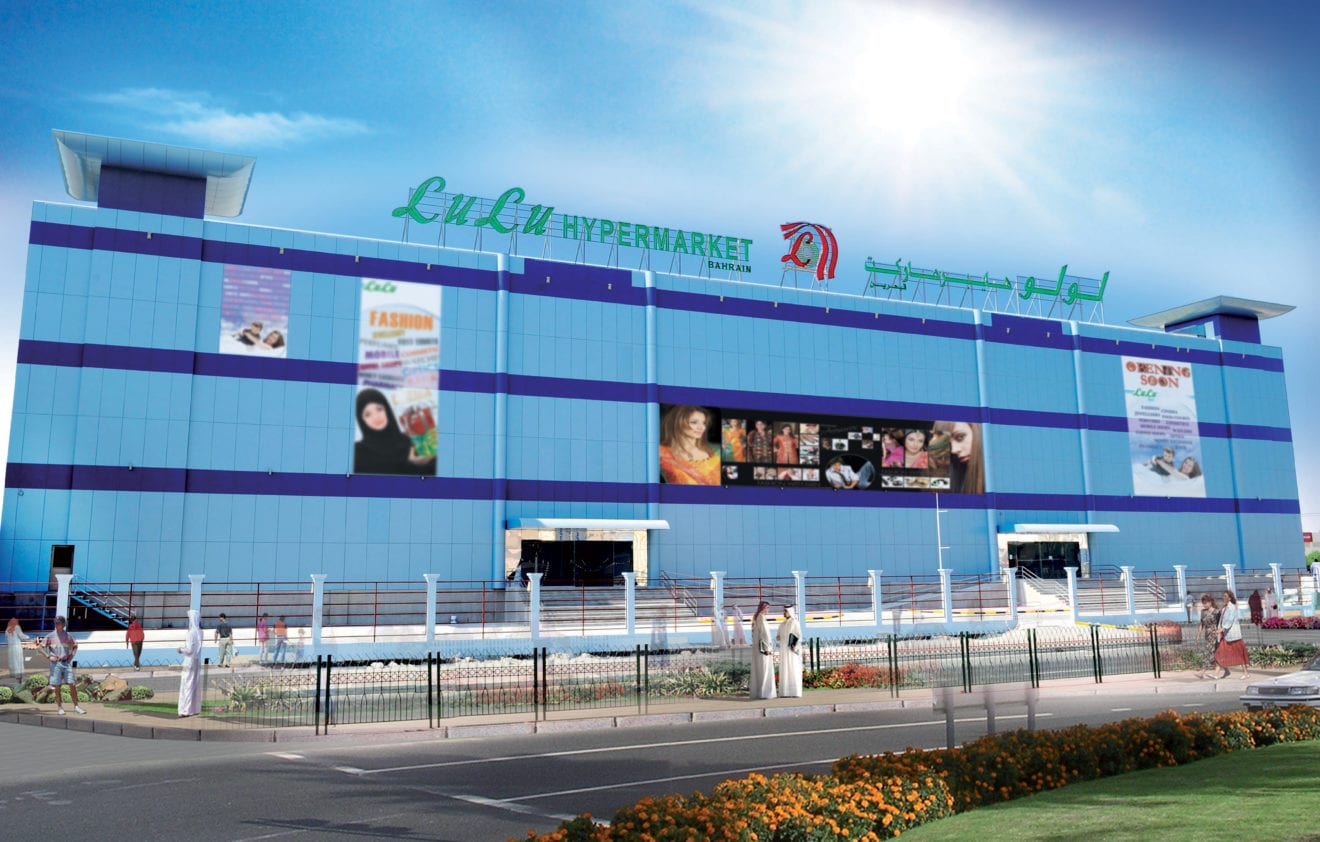
    UAE-based retail major Lulu Group has opened its first hypermarket in Kuala Lumpur, Malaysia, as part of its plans to further consolidate its retail presence in the Far Eastern region.

    The 250,000 sq ft hypermarket was inaugurated by the Malaysian Prime Minister Datuk Sri Najib Tun Razak in the presence of Dato Sri Dr Ahmed Zahid Hamidi, Deputy Prime Minister, Minister of Agriculture and other government  officials.

    Lulu had recently announced its plans to set up 10 hypermarkets in Malaysia over the next five years at an investment of $300 million.

    The new hypermarket is ideally located in the CapSqaure, Jalan Munshi area of Kuala Lumpur is expected to be one of its kind in the country and will attract large segment of population from all walks of life with its attractive product offers and range.

    It is spread in three levels and combines everything from grocery and supermarkets products to fashion, household and latest electronics and gadgets, said a statement from the retailer.

    Hot food from around the world, fresh seafood and locally grown produce are some of the key highlights in the supermarket area, it stated.

    Speaking at the launch, Najeeb Razak said: “We are very pleased to welcome Lulu brand to Malaysia as this will pave way for more international brands to come and invest in the country. I am also hopeful that Lulu will surely open many more hypermarkets and malls not only in Kuala Lumpur but also in other parts of Malaysia.”

    Yusuff Ali MA, the chairman, said: “With an initial investment of $300 million in the first phase, we plan to open 10 hypermarkets by the end of 2021 and a central logistics and warehousing facility in Malaysia. These projects are likely to generate more than 5,000 job opportunities for Malaysians.”

    “We also plan to set up contract farming to ensure continuous supply of high quality products and to support the Malaysian agriculture sector,” he added.

    Apart from the hypermarkets, Yusuffali also announced the group’s plan to invest another $500 million in setting up the largest shopping mall in Malaysia.

    “Today the whole world knows about Malaysia’s economic stability, investor friendly approach, liberalized policies and world-class infrastructure and we are confident about our success here and our hypermarkets encompass both supermarket and department store formats and we intend to bring a whole new world of shopping to the residents of Malaysia.”

    He added that other hypermarkets would be opening in Kota Baru (Kelantan), Shah Alam (Selangor), Johar Baru, Bangi, Ipoh (Perak), Malacca, Penang and Kuala Terengganu.

    One of the largest retail chain in the Middle East, Lulu currently operates 126 stores across the GCC, Egypt, India, Indonesia and employs more than 38,000 people from different nationalities.

  • Pablo Malaysia to launch in October

    Pablo Malaysia to launch in October

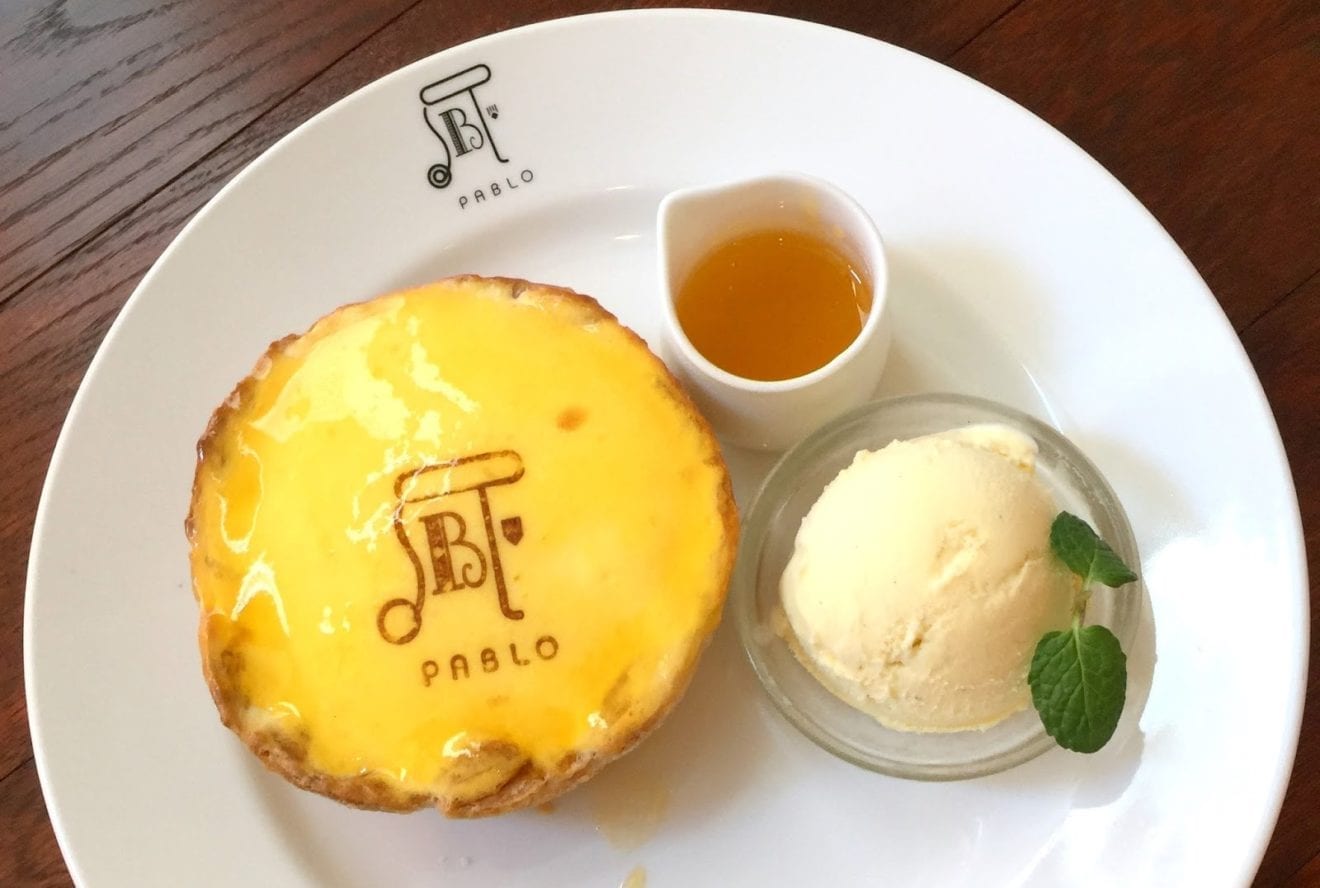
    Japan’s Pablo cheese tart chain will open its first store in Malaysia in October.

    Pablo Malaysia will make its debut with a flagship outlet inside 1 Utama shopping centre in Petaling Jaya with more cafes expected in other shopping centre in the Klang Valley later.

    Pablo Cheesetart Malaysia

    The Osaka-founded company is renowned for large size cheese tarts – generally 20cm in diameter, with a soft core. They’re sold in ‘rare’ or ‘medium’ format, which refers to the texture of the cheese filling.

    Flavours include apricot jam, matcha and chocolate glazes, with seasonal variants changed monthly.

    In March, Pablo Japan introduced mini versions of the cheese tarts measuring 6.5 centimetres with a shortcrust shell, sold in plain, chocolate, strawberry and matcha.

    Pablo has already opened outlets in Taiwan and South Korea and is headed for Singapore, also.

  • Foreign direct investments rise to RM12.8b in first quarter

    Foreign direct investments rise to RM12.8b in first quarter

    Despite a weaker global environment, Malaysia remains a competitive investment location for foreign investors, with an increase of 28% in this quarter, says minister Mustapa Mohamed.

    In the first quarter (Q1) of 2016, Malaysia recorded RM37.3 billion of approved investments in the services, manufacturing and primary sectors.

    These investments involved 1,271 projects and will create 39,990 employment opportunities.

    “Despite a weaker global environment, Malaysia remains a competitive investment location for foreign investors, with an increase of 28% in this quarter.

    “Year-on-year, FDI (foreign direct investments) increased to RM12.8 billion in Q1 2016 from RM10.0 billion in the corresponding period of 2015.

    “Domestic investments led with RM24.5 billion or 65.7% of total approved investments in Q1 2016,” said International Trade and Industry Minister Mustapa Mohamed today.

    “Taking into account the two lumpy projects approved in last year’s Q1 i.e. PRPC’s project in Johor and LNG9’s project in Sarawak, Q1 2016 showed a decrease from RM69.8 billion in comparison as these two projects alone amounted to RM35.3 billion.

    “ I would like to highlight that without the two big projects, Q1 2016 actually shows an overall increase of 8.1% from RM34.5 billion last year,” the minister added.

    Services sector

    The services sector attracted the largest portion of approved investments in the first three months of 2016, amounting to RM27.6 billion. A total of 1,088 services projects were approved, creating 20,200 employment opportunities, the largest potential employer in the economy.

    “Foreign investment in the services sector surged by 112.1% from RM3.3 billion in Q1 2015 to RM7.0 billion in the same period this year.

    “We are seeing more foreign participation in distributive trade, education services, global establishments, financial services and real estate sub-sectors,” explained Mustapa.

    Distributive trade saw an increase of 992% of foreign participation from RM101.5 million in Q1 last year to RM1,108.7 million in Q1 2016.

    The increased investments from regional and international retailers have boosted Malaysia’s ranking to third position in the 2016 Global Retail Development Index (GRDI) by A T Kearney.

    For the education sub-sector, the increase of 672.7% of foreign investments from RM19.3 million in Q1 2015 to RM149.2 million in Q1 2016 reflects Malaysia’s success in accelerating the process in making the country a regional education hub of excellence.

    The private education sector will complement the government’s efforts in providing access to quality education to the people.

    As to date, there are 501 private higher institutions that offer a wide range of disciplines at every level of education, including short-term and professional courses certificate, diploma, degree and post-graduate degree qualifications.

    Global establishments and end-to-end global supply chain management services are fast becoming important components in the Malaysian economic backbone.

    In Q1 2016, the Malaysian Investment Development Authority (Mida) approved a total of 60 global establishments with investments of RM5.6 billion.

    The lion share of these was from six principal hub projects with total investments worth RM5.5 billion. These investments were in the industries of aerospace, electronic & electrical (E&E), food & beverage as well as resource-based industries.

    The principal hub initiative is among the high value-added services that are currently promoted by Malaysia.

    Manufacturing sector

    Investments in the manufacturing sector for January-March 2016 totalled RM8.9 billion from 170 projects. The approved manufacturing projects are expected to generate about 19,650 employment opportunities.

    “Despite the decrease in investments in this sector for the first quarter of this year, it is noteworthy that Malaysia has attracted significant investments in the transport equipment industry, with a spike of 1,584% from RM40.1 billion in Q1 2015 to RM675.7 billion in Q1 2016.

    Other industries which recorded high growth rates were paper, printing & publishing (944.0%), food (550.0%), leather & leather products (162.3%), chemical & chemical products (159.1%), scientific & measuring equipment (78.8%), and rubber products (57.1%).

    Regardless of a lower investment value in Q1 2016, the E&E industry emerged as the main contributor to the total approved investments in the manufacturing sector compared to the corresponding period last year.
    Most of the high quality projects in E&E are concentrated in solar, fabricated wafers and semiconductor devices.

    Primary sector

    Malaysia continued to register a lower investment in the primary sector due to the challenges in global crude oil prices. Investments in this sector recorded a total of RM874.9 million in Q1 2016.

    The mining subsector led with approved investments of RM692.2 million, mainly from oil and gas exploration activities.

    Approved investments in the plantation and commodities subsector totaled RM129.0 million. In Q1 2016, a total of RM53.7 million investment was approved in the agriculture subsector.


  • McDonald’s Malaysia embraces Ramadan spirit

    McDonald’s Malaysia embraces Ramadan spirit

    McDonald’s Malaysia is marking Ramadan with a series of activities to commemorate the holy month of self-reflection and spiritual rejuvenation.

    For the third year running, the group is sponsoring McChicken burgers and apple pies once a week to 91 mosques across the nation for after-prayer meals (moreh). This time it is extending the sponsorship to the mosques of 15 universities.

    “In our 34 years in Malaysia, McDonald’s has seen that Ramadan brings out the best in us,” says MD Azmir Jaafar.

    Meanwhile, the group is offering 30,000 sets of dates and drinking water free to commuters during rush hour at five Putra LRT stations twice a week. Also, more than 100 children in need will be treated to an evening of festive cheer including a shopping spree for baju raya and school necessities, as well as an Iftar dinner.

    Ronald McDonald House Charities (RMHC) will be sponsoring the breaking-of-fast dinner at Hotel Vistana Kuantan, and also be making a donation of RM5000 (US$1215) to children’s homes. In turn, McDonald’s Kuantan will be handing out duit raya to the children while township developer Kotasas will foot the baju raya bill.

    Furthermore, McDonald’s and RMHC will join again to celebrate Ramadan at Pusat Lambaian Kasih in Kuala Lumpur next week. RMHC will contribute RM6000 to the charity home and McDonald’s employees will volunteer to spend quality time and break fast with the children.

    In Malaysia, McDonald’s serves more than 13.5 million customers a month at more than 260 restaurants.

  • H&M collaborates with Caitlyn Jenner for its newest athleisure range

    H&M collaborates with Caitlyn Jenner for its newest athleisure range

    A new H&M athleisure wear range is to be launched in July, developed with input from the Swedish Olympic team and fronted by personalities including Caitlyn Jenner.

    The launch of For Every Victory makes H&M one of the first major multinational fashion brands to make a serious foray into the booming athleisure wear market, to date dominated by fast-growing specialist brands including Lululemon, UnderArmour and 2XU.

    H&M -For Every Victory

    H&M For Every Victory – described by the H&M as “high fashion performance sportswear made to inspire” has been developed with input from the Swedish Olympic team, and the campaign is fronted by inspirational personalities who have all achieved their own victories, whether in sport or life.

    H&M -For Every Victory 1

    The athletes advised on design, performance and wearability. H&M also designed outfits for the Swedish Olympic and Paralympic team for Rio 2016, including the opening ceremony uniform, selected competition pieces and the prize ceremony outfits.

    “This is a collection about performance with great style and the input of the Swedish Olympic team has been invaluable in the creation process,” said Pernilla Wohlfahrt, design and creative director at H&M. “The result is high fashion technical sports pieces for everyone to wear.”

    The For Every Victory collection has a similar visual expression and technical knowledge to the Swedish Olympic team collection, with its own colour palette in black, grey, dusty pink and gold. It is centered on performance T-shirts, running shorts and leggings, as well as sports bras for women.

    H&M -For Every Victory 3

    The quick-drying, breathable materials help to optimise performance and recycled polyesters prove that high-function sportswear can also be conscious and more sustainable − all showing that there’s no compromise on either fashion or performance.

    H&M -Olympic collection

    Among the personalities fronting the new range are Caitlyn Jenner with her Olympic gold medal in the decathlon; Chelsea Werner, a gymnast who has never let Down Syndrome halt her progress; surfer Mike Coots who still takes to his board even though he lost his leg in a shark attack and boxer Namibia Flores who has fought against prejudice to pursue her dreams.

    The new range and brand will be launched globally on July 21.

  • BFood sales rise despite consumer caution

    BFood sales rise despite consumer caution

    Malaysian food outlet group Berjaya Food (BFood) has had an 8 per cent rise in revenue to RM139.05 million (US$34.03 million) for its fourth quarter, ended April 30.

    BFood, which runs Jollibean, Kenny Rogers Roasters (KRR) and Starbucks outlets, says the increase is mainly because of higher sales in existing cafes along with income from new cafes.

    The group’s pre-tax profit dropped to RM7.67 million from RM10.06 million in the same quarter last year, mainly because of a lower contribution from KKR outlets as Malaysian consumers have been more cautious about spending after the implementation of the GST tax, plus the steep depreciation of the ringgit, affecting the profit margin of Berjaya Starbucks Coffee Company (BStarbucks).

    As well as this, during the quarter about RM600,000 was paid to Royal Malaysian Customs Department by BStarbucks for additional import duty and sales tax on purchases from its principal over the past few years.

    For the financial year, the group’s revenue grew 47 per cent to RM554.15 million from RM376.78 million the previous year. The higher revenue was mainly because of the full effect of consolidating BStarbucks, which became a subsidiary the previous financial year.

    With the weak consumer sentiment brought on by the introduction of the GST and various other factors, BFood will be working in a challenging environment in the next financial year, says the group. Nevertheless, it expects BStarbucks to maintain its revenue growth momentum.

  • ShopBack, Budimas, Kechara, NKF, and World Vision Launch #ShopBackGiveBack

    ShopBack, Budimas, Kechara, NKF, and World Vision Launch #ShopBackGiveBack

    ShopBack Malaysia, the top online Cashback site in the country, announces the launch of its inaugural #ShopBackGiveBack initiative today.  Shoppers are now able to channel the Cashback they get from online purchases to four non-profit organisations – Kechara Soup Kitchen (KSK), The Budimas Charitable Foundation (Budimas), The National Kidney Foundation (NKF) of Malaysia, and World Vision Malaysia, to support their projects.

    Each charity organisation is committed to a different cause. For instance, KSK offers the homeless and urban poor vegetarian food, basic medical, as well as job matching and welfare assistance; while Budimas devotes efforts to improving the children’s lives through education, better living environment and food supplies.

    Moreover, NKF Malaysia subsidises dialysis treatment for kidney failure patients; and World Vision Malaysia will dedicate funds toward their work on clean water and healthcare programmes, which will help over 16,000 people in 7 countries.

    To relieve burdens of underprivileged groups, #ShopBackGiveBack enables users to gain incentives in the form of Cashback via their travel, F&B, IT, beauty, healthcare, household and groceries purchases, and then donate it to charity organisations without forking out extra.

     Every effort helps to build a better future

     “The act of giving is embedded in ShopBack’s DNA as the core of our business involves giving Cashback to the online shoppers. Although we are a startup and may have certain resource constraints compared to bigger corporations, we are keen to help and contribute to the best of our capability,” said Gil Carmo, Country Head of ShopBack Malaysia.

    “We believe any effort that we can make today, will create a difference to someone’s world tomorrow. Every kind action counts. This is the same message that we wish to convey to every shopper. We sincerely welcome like-minded companies to join and support #ShopBackGiveBack,” Gil added.

    Established in February 2015, ShopBack Malaysia collaborates with over 500 international and online e-retailers such as Groupon, Lazada, Agoda, TaoBao, Hermo, HappyFresh, Taobao, Zalora and more to incentivise shoppers with up to 30% hard cash whenever they make a purchase online.

    Currently, there are more than 280,000 Malaysians benefiting from ShopBack’s daily Cashback offer and promotions. Anyone can sign up for free and cash out their Cashback once it exceeds RM10, or opt to transfer their extra savings to help the needy through #ShopBackGiveBack.


  • Malaysia retail sales fall

    Malaysia retail sales fall

    While Malaysia retail sales for the first quarter have taken a tumble, a decline was on the cards following the introduction of GST on April 1 last year.

    This boosted sales of big-ticket items in last year’s first quarter, and a year after the introduction of the tax consumers are still holding back on spending, according to a report by retail consulting firm Retail Group Malaysia.

    “Further increases in the cost of living in the near future will worsen the situation,” says the report, which shows a 4.4 per cent fall in sales for the retail industry in the quarter compared to 4.6 per cent growth a year earlier.

    As well as the high pre-GST sales last year, weak Chinese New Year sales in February led to the dramatic comparison. While negative first-quarter growth was expected, the results were below the industry expectation of a 4 per cent drop, says the report, based on interviews with members of the Malaysian Retailers Association (MRA).

    Further undermining Malaysian consumer spending power has been a gradual increase in the prices of retail goods and services this year, partly attributable to the weak ringgit.
    “Retailers continued to depend on heavy price discounts,” says the report. “As a result, their profits were eroded.”

    During the first quarter, the only sub-sector not to record a decline in business was “Other Specialty Retail Stores”. The “Department Store cum Supermarket” sub-sector had negative growth rate of 7.3 per cent – the worst performance among the retail sub-sectors. Supermarkets and hypermarkets had their fourth consecutive negative quarter with a 4.2 per cent dip.

    Retail Group Malaysia says MRA members expect their businesses to return to black during the second quarter of this year with an average growth rate of 9.9 per cent. The estimated growth rates for the third and fourth quarters are 5 and 5.5 per cent.

  • Malaysia’s Axiata Digital invests $16 mn in e-commerce enabler StoreKing

    Malaysia’s Axiata Digital invests $16 mn in e-commerce enabler StoreKing

    Malaysian telecom operator Axiata Group Berhad has invested $16 million in Bangalore-based StoreKing, an e-commerce startup that helps retailers to sell products in small towns, through wholly owned unit Axiata Digital.

    This is Axiata Digital’s first investment in India, StoreKing said in a statement.

    Axiata Group, however, is not new to India; it owns about 20% of Indian telecom operator Idea Cellular Ltd.

    StoreKing, run by LocalCube Commerce Pvt. Ltd, ties up with retail store owners in small towns to provide self-service shopping experience to rural shoppers via its digital kiosks.

    The company had earlier raised $6 million from Luxembourg-headquartered venture capital firm Mangrove Capital Partners. Mangrove Capital is an early-stage investor in internet and software startups, and counts voice chat app Skype and instant messaging aggregator Nimbuzz among its past portfolio companies.

    StoreKing has roughly 16,000 mobile kiosks across south India, and delivers about 150,000 orders every month. The startup plans to reach 100,000 retailers by 2017 and up to 250,000 by 2019. It also plans to expand to Axiata’s markets in the near future.

    “StoreKing has created a platform that solves the fundamental constraints in our markets with last-mile logistics and payments, while building trust amongst mass-market consumers. It is pivotal in bringing the rest of our consumers into the digital sphere,” said Mohd Khairil Abdullah, CEO, Axiata Digital.

    The Bangalore-based startup was founded in 2012 by Sridhar Gundaiah, a computer science engineer who previously worked with online travel agency Via.com, and Govardhan Krishnappa, who previously worked with Via Adz and MACS Infosolution. Gundaiah had also founded a location-based startup Yulop and in the past worked at Yellow Tag and EDS.

  • Malaysia’s Ebizu raises $3m from Singaporean investors

    Malaysia’s Ebizu raises $3m from Singaporean investors

    Malaysia-based retail advertising and intelligence technology provider, Ebizu Sdn Bhd, has secured a round of Series A investment amounting to $3 million from undisclosed Singapore investors to fuel its regional expansion plans.

    Ebizu’s operations has grown to a team of 130 people spread across offices in Malaysia, Singapore and Indonesia.

    Established in 2013, Ebizu, an O2O (Online to Offline) solutions provider which specializes in retail advertising and location intelligence, has expanded within the Southeast Asia region. Co-founder Rohit Maheswaran said, the company has been aggressively enhancing its solution as well as expanding its beacon and retailer network in the past five months. “Behind all these, negotiations for investments were being conducted and we were glad to see so many interested parties. This round of  funding will help us maintain the intensity of our growth,” he said.

    “We emphasise on helping physical retailers and brands reach out and engage with their consumers, our product is evolving to become more data driven, so that merchants and brands can acquire and retain customers with more precision,” Maheswaran said.

    He added that Ebizu’s brand new geo-behavioural intelligence and insights platform will help advertisers target online and offline ads better. Seeing the accelerated growth in digital ad spend and mobile advertising, Ebizu was formed to bridge the gap between brick and mortar retailers and mobile technology utilization.

    The company’s integrated retail solutions empower the offline retailers with knowledge of the customer’s journey, enabling retailers to reach and engage shoppers’ on-the- go with promotions, vouchers and loyalty campaigns, engaging them at the right time and optimizing sale conversions.

    Currently, Ebizu’s merchant network consists of 1,900 retail outlets with the target of 5,000 to be reached by the end of 2016. It also has around 5,000 geofenced points of interest and 10,000 BLE beacons installed across Malaysia and Indonesia, at the moment, with hopes to grow that network to 25,000 by year end.

    At the end of last year, it was named the 2015 Asia Pacific BLE (Bluetooth Low Energy) in Connected Retail Company of the year by Frost & Sullivan.

  • KFit Holdings moves into Indonesia with Groupon

    KFit Holdings moves into Indonesia with Groupon

    Malaysian health and fitness company KFit Holdings is about to enter the Indonesian market after signing a deal to acquire eCommerce company Groupon Indonesia.

    For an undisclosed amount, the acquisition will see KFit enter Indonesia with Groupon as a wholly owned subsidiary. The transaction is expected to be completed in the third quarter of this year.

    Groupon Indonesia has more than 1 million subscribers and 15,000-plus local merchants.

    “The combination of Groupon Indonesia’s established presence and KFit’s experience in building a mobile-first platform will propel us in a high-growth local commerce market, further accelerated by increasing mobile penetration,” says KFit CEO/founder Joel Neoh.

    “While KFit will continue to focus on health and fitness services, this presents a strategic direction for us to enhance and broaden our offerings. In the long run, this acquisition will provide us with a strong platform for growth in Southeast Asia.”

    KFit is an online subscription platform that provides users access to fitness studios, classes and gyms in various cities across Asia. Since its launch last year, it has extended its offering to include beauty and wellness, and launched its pay-per-use KFitGo. In the past six months, KFit users have reserved more than 400,000 activities. Today, one reservation is made every minute on the KFit platform.

    KFit founder Joel Neoh also founded Groupon Malaysia, in 2011, going on to head Groupon Asia-Pacific.

  • Central Pattana plans to enter Malaysia

    Central Pattana plans to enter Malaysia

    Shopping mall developer Central Pattana, which runs 29 malls in Thailand, plans to open its first foreign outlet in Malaysia in 2018.

    It will work through a joint venture with a Malaysian company in which it holds a 60 per cent stake. The new mall, under the Central brand, will be in Shah Alam, west of Kuala Lumpur.

    To be built on about 44,000 sqm of land, the mall will have a net leasable area of 89,700 sqm, and cost about 8.3 billion baht (US$232 million) to build.

    Senior executive VP Naparat Sriwanvit says Central Pattana plans to open 15 malls by 2020, three of them outside Thailand. Indonesia and Vietnam have been listed as potential targets because of their large populations and rising incomes.

    As with Malaysia, the company plans to enter other markets through joint ventures with local partners.

    Naparat says the Thai market is still promising, with room for expansion in the suburban areas of Bangkok and the provinces. The company plans to open a 1.9 billion baht mall in the southern city of Nakhon Si Thammarat at the end of next month, as well as two other locations outside Bangkok next year.

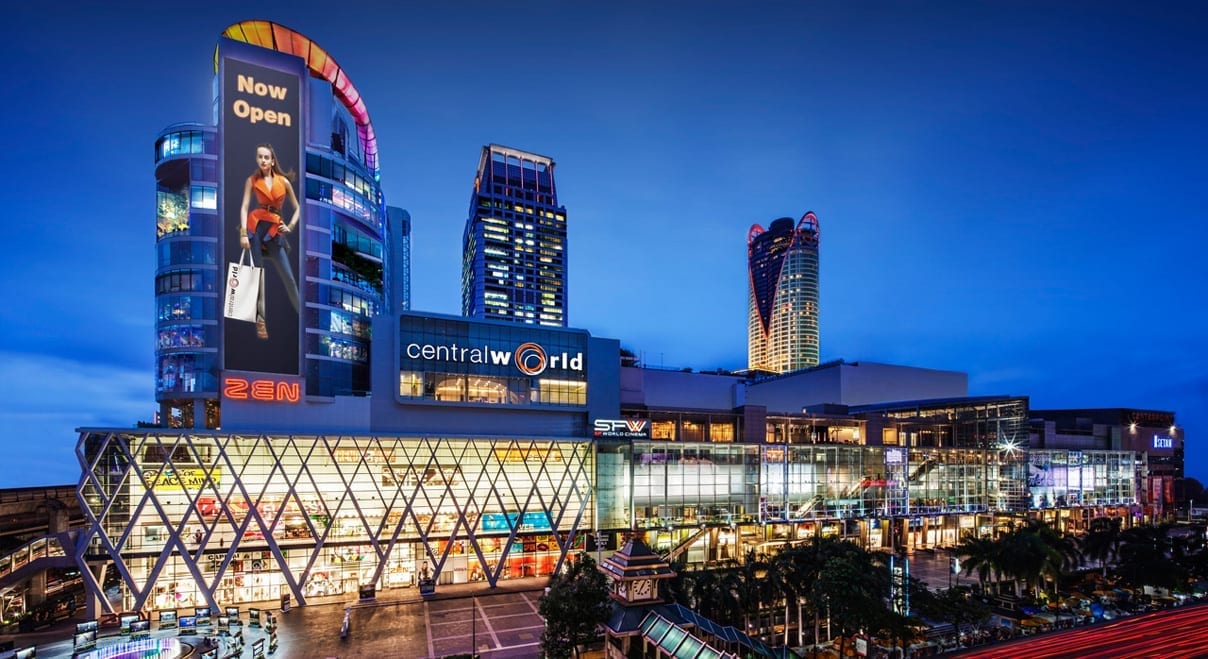
    Central Pattana, with CentralWorld mall in central Bangkok as its flagship, saw its net profit rise 7 per cent last year.

  • Southeast Asian economies lure Alibaba

    Southeast Asian economies lure Alibaba

    Southeast Asian economies are reaching a stage similar to China’s at the end of the last decade, when eCommerce began to take off, according to Alibaba Group executive vice-chairman Joseph Tsai.

    “I don’t blame you guys for having some degree of excitement about Southeast Asia when you look at the economies here,” he has told a Singapore conference staged by Google and local sovereign wealth fund Temasek.

    For example, he said, the per-capita GDP of Indonesia, the world’s fourth most-populous country, was about $2900. “That’s roughly the same as China’s per-capita GDP in 2009 and into 2010, a period when Alibaba’s C2C marketplace Taobao began to soar, adding about $50 billion in gross merchandise volume.”

    This was one reason Alibaba had invested about $1 billion in Singapore-based Lazada Group last month. Launched in 2012, Lazada now has shopping websites in Indonesia, Malaysia, the Philippines, Singapore, Thailand and Vietnam. It began by selling inventory to customers from its own warehouses but now also runs marketplaces for third-party sellers, as well as using its own logistics networks for deliveries.

    “We’re very excited about our investment in Lazada,” Tsai said. “It is starting from a very small base, but the potential is very, very big.”

    By adding marketplaces in Southeast Asia, Alibaba can offer merchants already selling on its platforms a chance to sell into new markets. “It’s very, very helpful to be able to present something that is more of a geographically diverse platform,” Tsai said. Online healthcare and fintech companies such as Alibaba-affiliate Ant Financial, poised for rapid growth in China, could expand their services to Southeast Asia.

    Tsai said he sees promise in the wide use of the mobile internet in Southeast Asia, a trend that typically gives rise to greater engagement and more purchases by online shoppers.