Retail News CRM

Tag: malls

  • Tata subsidiary sells two giant Indian malls

    Tata subsidiary sells two giant Indian malls

    Two giant Indian malls, in Nagpur and Amritsar, have been snapped up by Virtuous Retail South Asia for US$100 million.

    The 1 million sqft Amritsar centre and 700,000 sqft Nagpur property were bought from Tata Realty and Infrastructure’s Trilium shopping mall portfolio, according to a report on Livemint. Virtuous, which is building a portfolio of Indian malls, is the retail development subsidiary of investment company The Xander Group. The company also recently acquired a 20-acre site from Raymond Limited in Thane, near Mumbai, where it plans to develop a mall.

    “This has been a year of active investments for us to broaden our shopping centre portfolio,” said Sid Yog, VRSA’s founder and chairman told Livemint. “Going forward, we would also explore acquisition opportunities in Kolkata and Hyderabad and add properties to the cities we are already present in.

    “We believe even gateway regional cities like Nagpur and Amritsar have significant population and retail consumption to make them attractive for us.”.

    VRSA now has more than 13 million sqft of Indian malls operating or under development across Delhi-National Capital Region(NCR), Mumbai, Bengaluru and Chennai along with smaller cities such as Surat, Mohali, Amritsar and Nagpur.

    The company says it plans to renovate and rebrand the newly acquired Indian malls.

    Meanwhile, Sanjay Dutt, MD and CEO of Trilium says the sale reflects the company’s strategy of exiting tier 2 and 3 cities.

  • SM Markets launches 24-seven shopping in 29 stores

    SM Markets launches 24-seven shopping in 29 stores

    Selected SM Markets stores in the Philippines are to open 24 hours a day to take advantage of the holiday buying surge.

    The Filipino food retailer said shoppers, especially night workers and those leaving holiday shopping to the last-minute, will now be able to shop at its 29 stores even during the wee hours.

    “Morning people can finish their groceries even before getting ready for work and those who hate crowds can now choose to shop at later hours for their convenience,” added SM markets.

    The 24-hour shopping has kicked off at SM Hypermarket located at SM Mall of Asia, which will be open around the clock until December 30 except for on Christmas Day.

    And from December 16 until 23, SM Hypermarket stores in Fairview, North Edsa, Pasig, Marketmall, Jazz, Las Pinas, Sucat, Lopez, Bicutan, Clark, Taytay, Novaliches, Monumento, Cainta, Antipolo and Cherry Congressional will also start operating 24 hours a day. Those stores will also trade nonstop from December 28-30.

    The complete list of 29 stores is available here.

    SM Markets has more than 300 stores nationwide across SM Supermarket, SM Hypermarket and Savemore brands.

  • Shopping malls in the Philippines popularity on the rise

    Shopping malls in the Philippines popularity on the rise

    Shopping malls in the Philippines are bucking international trends and are trading stronger than ever, says retail technology expert Nikki Baird.

    Their secret, she says, is that they offer a wider range of experiences to customers.

    “Shopping malls in the Philippines are all-in-one destinations that not only provide shopping, dining, and entertainment but also offer community events, access to government and utility services, and even places of worship,” Baird told the recent National Retail Conference and Expo in Manila.

    But, she warned, neither mall operators or their retail tenants in the Philippines can afford to be complacent because the industry is constantly changing.

    “The rise of e-commerce, evolving consumer tastes, dynamic competition, and other developments in the global retail landscape challenge Philippine retailers to pursue innovations in both brick-and-mortar and digital stores.”

    Baird, VP of retail innovation at Aptos, a retail technology solutions provider, said global store-innovation trends are showing how retailers are responding to consumers’ emerging needs and demands.

    “The global shift in consumer behavior puts pressure on retailers around the world to rethink their customers’ journey and experience in their online and offline stores,” said Baird. “In response to this, brands are embracing digital and behavioral innovations to deepen customer relationships, provide in-store services, use stores as fulfillment centers, harness rich customer data, host in-store events, and offer store-only exclusives.”

    With retail sales forecast to almost double in Southeast Asia to US$1.38 trillion in 2025 from $720 billion last year, the importance of connecting digital — where consumer shopping begins — to the retail store will only increase in the Philippines. To prepare for this growth, retailers are investing in in-store innovations and technologies to ensure each store offers optimal customer service and the right inventory to meet the personalized tastes and needs of every shopper.

    “Filipino retailers need to increasingly merge their brick-and-mortar and digital touchpoints to ensure the most seamless experience for the consumer and the most productive and profitable use of inventory across their network,” added Zaki Hassan, regional VP for Asia Pacific at Aptos.

    Aptos works with more than 1000 retail brands across 65 countries.

  • Aeon to invest US$119 million on new Malaysian Malls

    Aeon to invest US$119 million on new Malaysian Malls

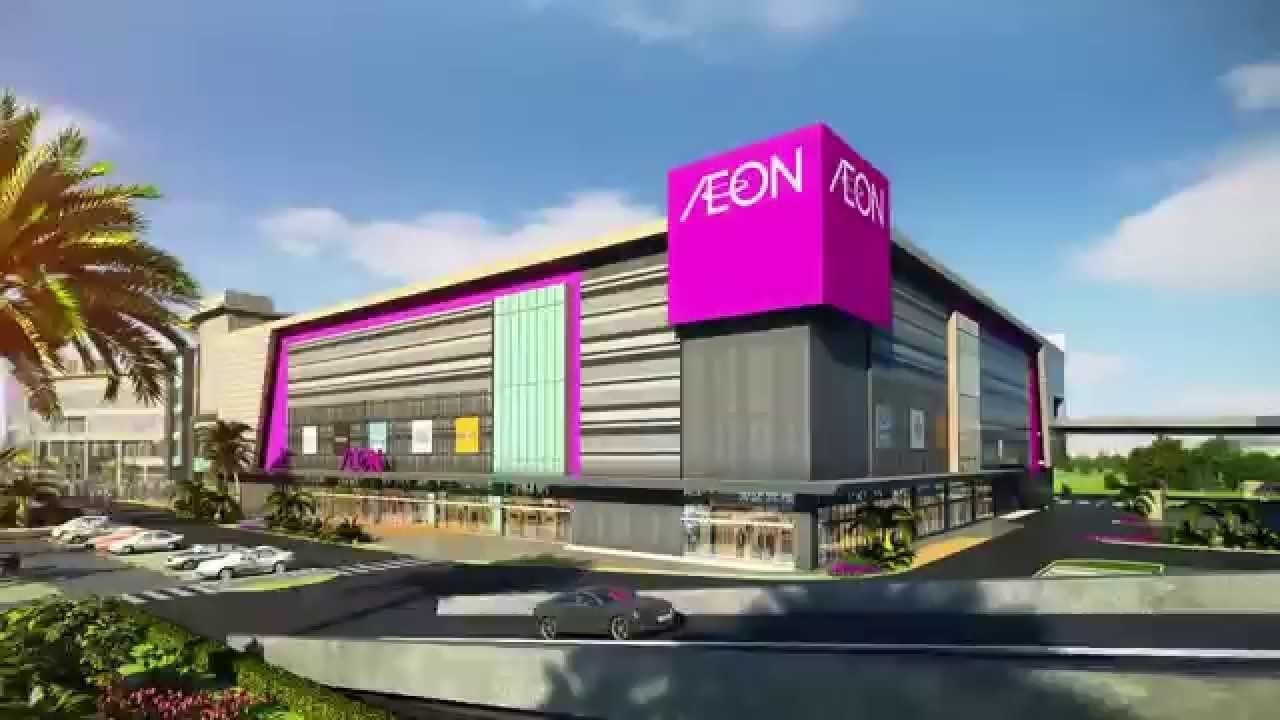
    Aeon Malaysia will spend around RM500 million (US$119.2 million) this financial year on mall renovations and new openings.

    The figure is less than the Japanese retailer’s spend last year and reflects a more focused approach on portfolio consolidation and refurbishments.

    The retailer currently operates 28 Aeon malls and 34 outlets. It is intending to open its next mall in Nilai, Negeri Sembilan this year, as well as renovating its Aeon Taman Maluri mall in KL. It will also invest in upgrades to selected Daiso and Wellness pharmacy stores.

    Aeon Malaysia’s net profit rose to RM32.64 million (US$7.8 million) in the first quarter to March 31, up from RM27.94 million in the same period last year, mainly driven by higher retail revenue and margin.

    Aeon MD Shinobu Washizawa admitted that the firm’s tighter focus serves reflects an expected weak performance this year as consumer activity remains subdued. The company has also been absorbing new costs related to the implementation of sales and services tax last year.

    “It will be a challenging year. But we are working on controlling our costs and increase operational efficiencies,” he said.

  • Sunways Malls Welcomes the Cashless Revolution

    Sunways Malls Welcomes the Cashless Revolution

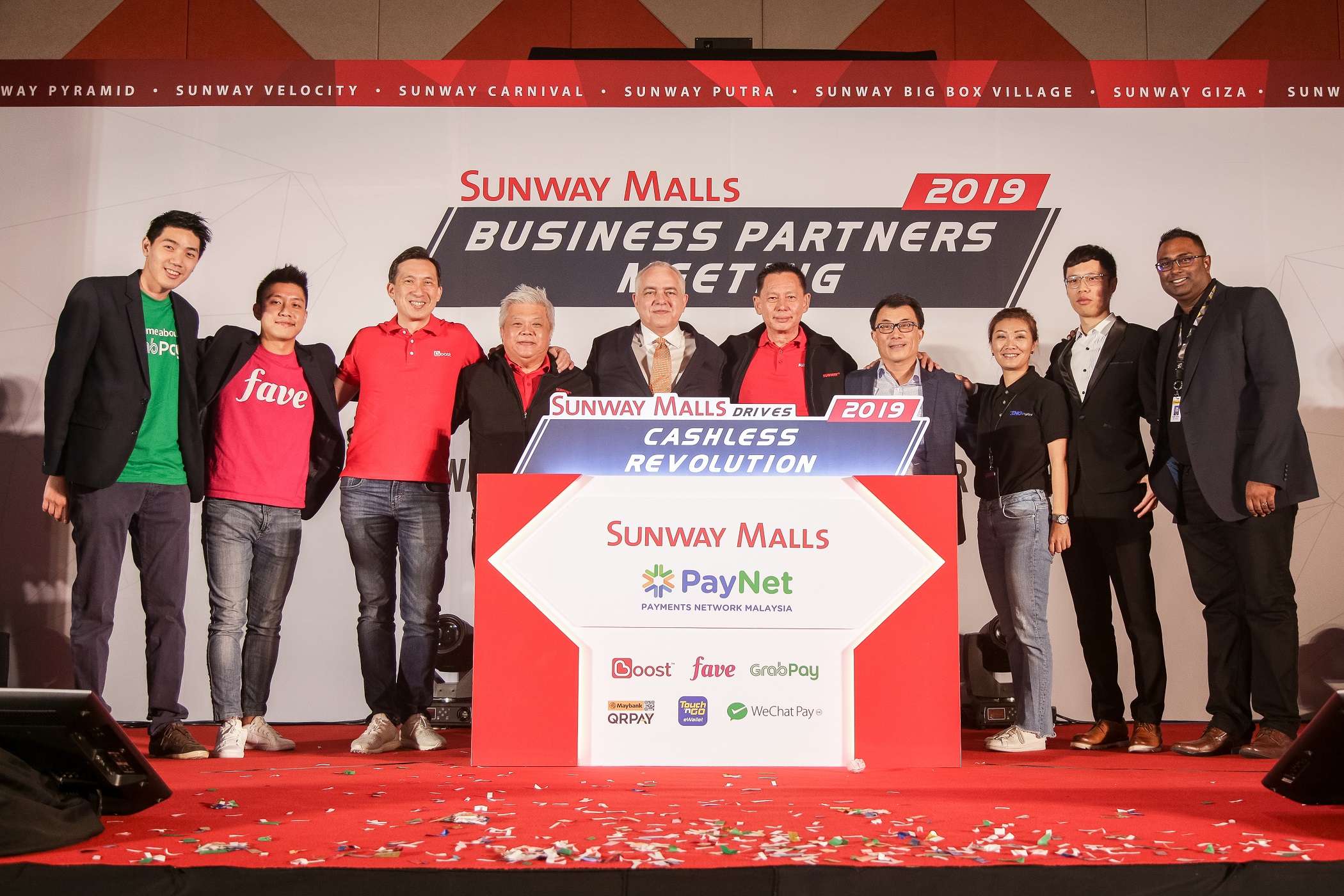
    Ever since Bank Negara embarked on a 10-year roadmap to move towards a cashless society, the ever growing trend of cashless transactions has been increasing and is popular amongst the Gen-Y and Millennial Generation. Sunway Malls took the initiative to bring in leading e-wallet companies such as Boost, FavePay, GrabPay, Maybank QRPay, Touch ‘n Go Pay, and WeChat Pay for exclusive face-to-face sessions with retailers at a closed door conference held at Sunway Pyramid Convention Centre.

    No longer do you need to carry around cash and credit cards as your mobile phone can do the paying! Numerous e-payment players in the market have emerged and is providing shoppers with better deals and convenience.

    Benefits of e-payment:

    • Enhances shopper experience
    • Increased sales
    • Quick and convenient

    “As the payment market continues to evolve, it is imperative that we stay abreast with development of cashless payment to cater to new consumer demands”, said H.C Chan, Chief Executive Officer of Sunway Malls & Theme Parks.

    Retailers who attended the conference were treated to a detailed and in-depth look at how cashless transactions would benefit their business and increase their sales through intimate small group discussions with the five e-wallet companies. To date, close to 35% of retailers across Sunway Malls are using some sort of e-wallet payment at their outlets and the malls hopes to increase this number to cater to the ever growing trend of cashless payments.

    The conference keynote was presented by Mr. Peter Schiesser, Group Chief Executive Officer of Payment Networks Malaysia (PayNet), Malaysia’s premier payments network and central infrastructure for financial markets. Mr. Deep Chowdhury, Client Service Director (Consumer Insights) from Nielsen Malaysia spoke on the topic of ‘Cash or Cashless? Malaysia’s Payment Landscape’ and shared insights on current Malaysian purchasing and spending behaviour in the retail industry and beyond.

    Over 350 brands attended the conference which was also Sunway Malls’ annual Business Partner Meeting to receive the latest updates on the current market outlook and upcoming plans for each mall.

    Sunway Malls is gearing to be amongst Malaysia’s largest mall owner-operator as existing projects and those in the pipeline now stand at 7.7 million sqft NLA and that figure is planned to be increased to 10.2 million sqft NLA by 2020.

    The malls are:-

    Sunway Pyramid, Bandar Sunway

    Sunway Velocity Mall, Cheras, Kuala Lumpur

    Sunway Big Box Village, Johor Bahru (opening 2019)

    Sunway Putra Mall, Kuala Lumpur

    Sunway Carnival Mall, Penang

    Sunway Citrine Hub, Johor Bahru

    Sunway Giza, Kota Damansara

  • Malaysia’s KIP Group plans a few new malls

    Malaysia’s KIP Group plans a few new malls

    Malaysia’s KIP Group will establish three new malls within the coming three years, according to CEO Valerie Ong.

    The new locations in Raub, Kuantan and Sungai Petani will involve RM150 million (US$36.7 million) in gross development costs and cater to middle-mass-market demand. They are being located in growing markets where consumers still prefer physical buying over online purchases.

    “This means we will have a total of 12 shopping malls in our portfolio, including the six properties that had been injected to our listed entity, KIP Reit”, Ong said at the launch of the firm’s ninth shopping mall at Desa Coalfield Sungai Buloh.

    KIP Griup’s portfolio includes a shopping mall in Bangi and five KIP Marts in Tampoi, Kota Tinggi, Masai, Senawang and Malacca. It has also acquired Aeon Mall Kinta City, Ipoh in a RM208 million ($50.9 million) deal.

    According to Ong, Malaysia’s retail sector is expected to grow by 4.5 per cent to RM109 billion this year. She added that the Desa Coalfield mall has already achieved an 80 per cent occupancy rate in advance of its scheduled opening later this year.

  • Sands China mall sales increase when land-based visitors return

    Sands China mall sales increase when land-based visitors return

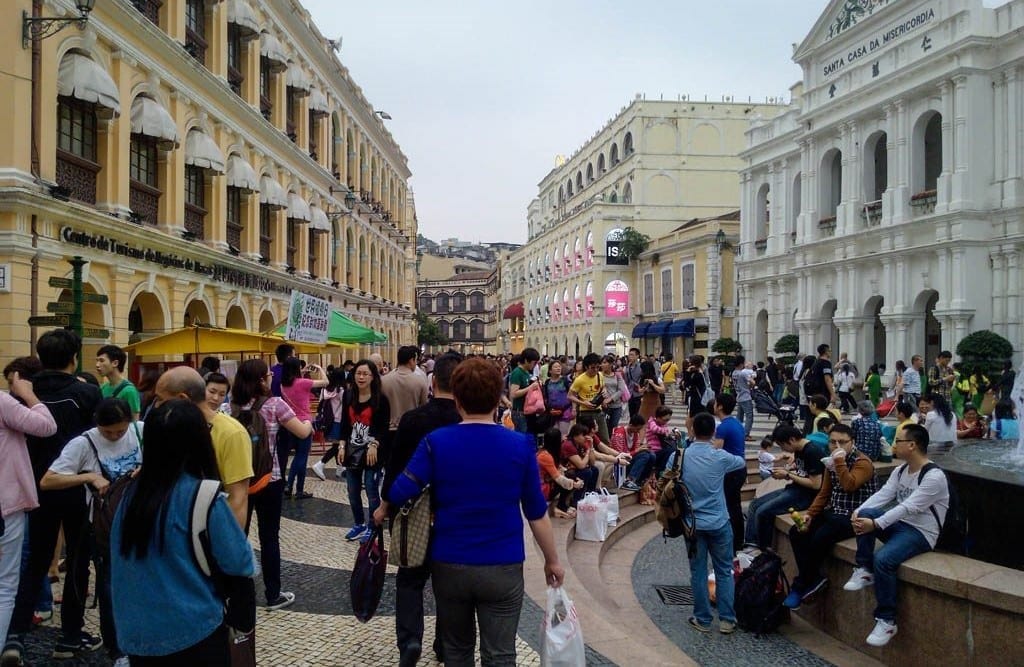
    Sands China mall revenue rose 5.8 per cent last year as Mainland China visitor numbers rebounded. Sands China owns The Venetian Macao, Sands Cotai Central, The Parisian Macao and The Plaza Macao shopping centres which boast a combined 1.87 million sqft of retail-mall space. They form a key part of the company’s giant gaming and resorts business in the territory, which combined posted US$8.67 billion in sales last year, up more than 14 per cent, and achieved a post-tax profit of $1.87 billion, up 17 per cent.

    The company says mall revenues for the year increased 5.8 per cent overall to $507 million, compared to $479 million the previous year.

    The increase was primarily driven by higher turnover fees from Shoppes at Four Seasons, Shoppes at Venetian and Shoppes at Cotai Central, and from additional retail space becoming available at Cotai Central.

    The strongest-performing mall complex was the smallest of the four, The Plaza Macao, which has the 241,548sqft gross leasable area (GLA). It achieved 99 per cent occupancy with a base rent of $460 per sqft and tenant sales of $4373 per sqft, contributing $145 million in revenue, up 10.7 per cent year on year.

    The weakest-performing mall was The Parisian Macao, with 89.8 per cent occupancy of its 295,915sqft GLA. Base rent per sqft was $156 and tenant sales per sqft $649. Revenue there fell 13.6 per cent year on year to just $57 million.

    The company’s largest Macau property, and its first, The Venetian Macao, has 813,376sqft of GLA. It achieved total mall revenues of $233 million last year – up 6.4 per cent – with 90.3 per cent occupancy, a base rent of $263 and tenant sales of $1746.

    Sands Cotai Central, with 519,681sqft GLA, achieved $69 million in revenue – up 9.5 per cent – and achieved 91.5 per cent occupancy. Base rent was $108 and tenant sales $892.

    Sands China said its food and beverage revenues rose 4.1 per cent last year to $304 million, driven primarily by increased foot traffic.

    Chairman Sheldon G Adelson said Macao’s development and evolution as Asia’s leading tourism destination accelerated during the year, with market-wide visitation from China reaching a record 25.2 million visits, an increase of 14 per cent compared to last year.

  • Hong Kong’s Link REIT Buys Shenzhen Mall for RMB 6.6B

    Hong Kong’s Link REIT Buys Shenzhen Mall for RMB 6.6B

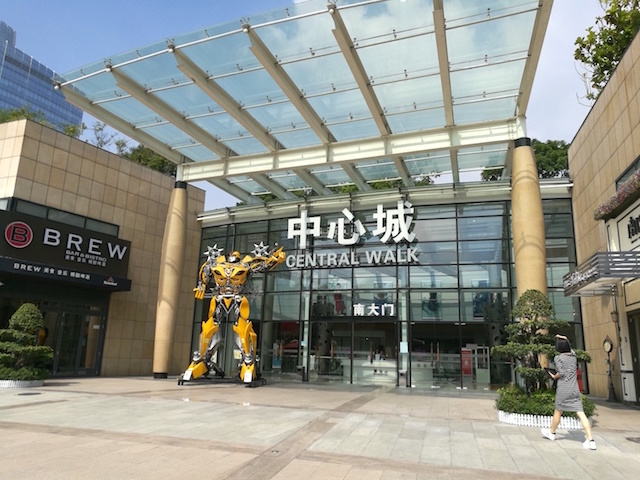
    Link Asset Management has bought the Centralwalk shopping mall in Shenzhen’s CBD via its real estate investment trust. The RMB6.6 billion (US$981.9 million) transaction marks Link REIT’s first acquisition in Shenzhen, the second in the Greater Bay Area and its fifth in Mainland China, all in tier-one cities. Centralwalk is a five-storey retail centre in Shenzhen’s Futian District, home to the South China head offices of Fortune 500 companies, multinational corporations and leading domestic firms. The property sits atop two subway lines, providing a 14-minute link to Hong Kong and less than an hour to most parts of the Pearl River Delta region.

    “The acquisition marks another milestone in our expansion in China,” said Link CEO George Hongchoy.

    “Centralwalk is seated in the heart of the city’s booming commercial hub. It is strategically located at the juncture of two popular subway lines in Shenzhen and within a five-minute walk from the Futian high speed rail station. We see enormous upside potential in this asset as we will apply our expertise in asset enhancement and placemaking to attract footfall to this mall, unleashing its potential as a leisure and entertainment landmark in Shenzhen.”

    Upon settlement of the transaction next month, Link REIT will control approximately 5 million sqft of retail and office space in four tier-one cities on the Mainland: Beijing, Shanghai, Guangzhou and Shenzhen, with Mainland Chinese assets representing about 13.1 per cent of Link’s total asset value.

    “The acquisition will enable us to capture the exponential growth spurred by the high speed rail link and the Greater Bay Area development,” Hongchoy added. “With diversification of markets, we continue to play to our strengths to offer investors steady income and long-term growth opportunities.”

    Centralwalk has a retail floor area of about 903,100sqft, and its retail occupancy currently stands at around 100 per cent. It has a gross monthly passing income of RMB 23.8 million as at December last year.

    The property houses a wide variety of familiar brands and a dynamic mix of retailers, covering food and beverage, fashion, accessories, education, lifestyle, health and beauty, a supermarket and a cinema.

    Link is anticipating the opportunity to enhance the property’s rental reversion and performance through trade-mix and tenant-mix upgrade, given that retail tenancies expiring in 2019, 2020 and 2021 represent approximately 25.5 per cent, 24.8 per cent and 18.0 per cent respectively.

  • World’s first digital mall launched in India by Digital Mall of Asia

    World’s first digital mall launched in India by Digital Mall of Asia

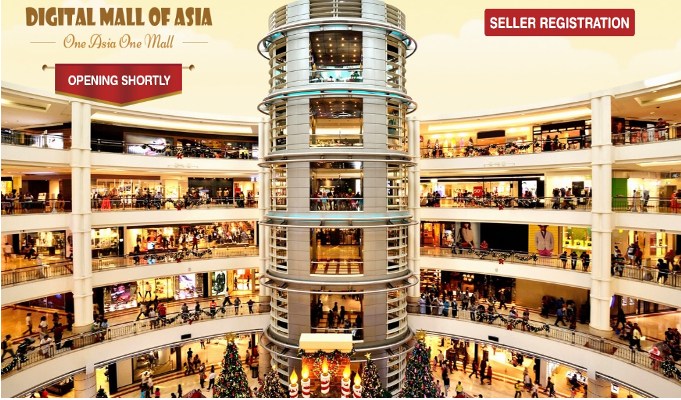
    In a revolutionary development that could potentially redefine the global retail and e-commerce industries, Digital Mall of Asia (DMA), a first-of-its-kind digital e-commerce platform merging the real estate and the digital spaces, has announced the launch of its Noida mall. The launch took place at the company’s registered office in the Film City, Noida, setting an unprecedented example of how online portals and brick-and-mortar retailers can transcend the digital-physical divide to optimize their consumer outreach and revenue generation.

    An initiative by Yokeasia Malls Pvt. Ltd., DMA is a disruptive innovation by an Indian organization recreating the experience of a physical mall in the digital space. In an industry where most of the key names are being run or backed by foreign players, this unique and disruptively innovative initiative by Yokeasia Malls has the potential to put the novelties of Digital India on the world map.

    The Need

    The launch of DMA Noida addresses the challenges that retailers often face and empowers them to maximize their business footprint with innovative digital offerings and an unmatched value proposition. DMA operates on a zero commission model; retailers at DMA don’t have to pay anything apart from the rent, a major revolution in a space where all the major E-commerce players charge somewhere between 5-35 percent of the revenue. Moreover, the organization will provide an immediate settlement of all payments received, ensuring complete transparency and reliability. It is also working towards completely eradicating the issue of the sale of counterfeit or fake merchandise. These unique features, apart from its focus on digital innovation, makes DMA a powerful and pioneering presence in the e-commerce space, both in India and on a global level.

    The Solution

    Going beyond the concept of a typical e-commerce portal, DMA’s Noida mall will have 11 towers with 10 floors each, adding up to a total of more than 5,000 shops and an available inventory currently worth approximately Rs 500 crore. The mall will incorporate visual and sensory elements to offer an immersive, stimulating environment and will have dedicated towers for different categories such as men, women, kids, electronics, home and kitchen, education, financial services, food court, hypermarket, digiplex, and online nightclub. Fundamentally, DMA Noida has all the elements that make up a physical mall, albeit virtually.

    The Value Addition

    By creating a new ‘digital asset’ class providing attractive returns, DMA also envisions to transform the general perception towards the term ‘investment’ while ensuring security, profit, and convenience for investors. The shops in the Noida mall are available for both sale (to investors) and rental (to retailers), whereas the shops in the rest of the 20 cities are available only to rent at present.

    Commenting on the launch and the idea behind, Rishabh Mehra, Managing Director and CEO – Digital Mall of Asia, remarked, “We, at Digital Mall of Asia, are beyond ecstatic to launch our Noida mall and we are certain of its potential to bring about a revolution in the digital and retail space worldwide. This project is aimed at serving many purposes, from an industry-wide transformation to retailer empowerment through our zero-commission model. But most importantly, DMA is our effort against data colonization. I wholeheartedly agree with Mr Mukesh Ambani’s stance on how India’s data must be owned by Indians, and not controlled by global corporations. In this era of data-driven revolution, we hope that DMA’s disruptive innovation sets an example for our contemporaries to follow through and bring the ownership of Indian data back to where it belongs – in our own hands.”

    The launch in Noida also marks DMA’s first step towards a pan-India launch in 20 cities including New Delhi, Mumbai, Bengaluru, Pune, Chandigarh, Jaipur, Lucknow, Coimbatore etc. After a pan-India expansion, DMA plans to expand its operations across the Asian market and has already begun the process of seller registration in China, Japan, South Korea, Malaysia, Thailand, Indonesia, and Singapore.

  • F&B outlets get bigger bite in shopping malls Malaysia

    F&B outlets get bigger bite in shopping malls Malaysia

    Shopping malls are now allocating a higher percentage of their tenant mix (more space) to food & beverage (F&B) retailers, partly because competition from online platforms has impacted other types of retailers such as fashion, according to a market research and consulting firm. “Traditionally, F&B made up less than 20% of a mall’s tenant mix, but can go up to 40% nowadays,” Stratos Consulting Group Sdn Bhd managing director Tina Leong said.

    She said with the tenant mix now consisting of more F&B, this means that malls will need to design or renovate in such a way as to cater to the specific technical requirements that F&B retailers have, for example provisions for water, grease traps, storage, waste disposal and daily delivery.

    “F&B as a segment itself has become the anchor for some malls,” said Leong.

    She said malls that have a high F&B tenant mix include the refurbished 3 Damansara (formerly Tropicana City Mall), which now has more F&B compared to before. Similarly, Paradigm Mall in Petaling Jaya has refurbished its lower ground floor, which now consists of more F&B than previously.

    Sunway Velocity Mall general manager centre management Danny Lee said F&B makes up 27% of the mall’s tenant mix currently, and that it is targeting to have F&B reach 30%.

    “Naturally, F&B is doing better compared to others,” Lee said.

    Meanwhile, Leong noted that having more or certain types of F&B can also be part of experiential retailing.

    “For example, people nowadays, especially millennials, appreciate and are willing to spend on meals or drinks with friends and family, within nicer ambience restaurants or cafes, due to the memorable experiences this create.”

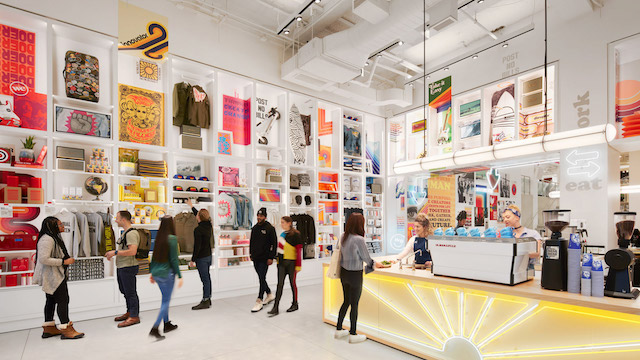
    She said to continue to draw shoppers (rather than them shopping online), more shopping malls are looking at creating engaging “experiences” for their customers. Experiential shopping simply means making the physical act of spending money more than simply handing over cash in exchange for goods and services.

    “More grocery stores are incorporating food and wine bars where people can enjoy a meal or a drink as well as a social experience before or instead of shopping,” said Leong, adding that some retailers have also integrated augmented reality into their stores, for example Starbucks Reserve Roastery in Shanghai and US-based fashion brand Reformation.

    Examples of experiential shopping are malls that have attractively themed or landscaped spots on every floor, where one can stop to take photographs with their friends or family, such as Aeon Mall Kuching. Some community malls in Bangkok, Thailand, have incorporated spaces for pet parks, children’s sand pits and jogging tracks.

    “Another recently opened mall, Kiara 163 in Mont Kiara, has incorporated the ‘experiential’ element into their mall design, with a central garden and water features for people to relax. Apart from design features, other ways of creating memorable shopper experiences are through interesting or unique events, activities, decorations, pop-up stores, technological innovations and customer service,” explained Leong.

    She said some of the major major malls have been doing this all along, such as Suria KLCC and Pavilion Kuala Lumpur that usually have attractive and unique festive decorations.

    “What is different is that nowadays, the customer experience aspect is becoming a focal point. It has become more important as malls and retailers try to attract and retain shoppers in the midst of competing options such as online shopping,” said Leong.

  • Retail meets art in HK for Chinese New Year

    Retail meets art in HK for Chinese New Year

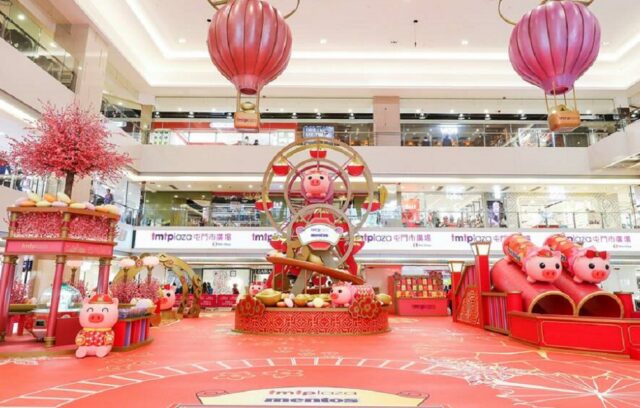
    Next week it Chinese New Year. It officially begins on February 5th, 2019, and ends on February 19th. This year will be the year of the Pig. It is the most important festival for Chinese people, so the city is fully decorated with festive installations. The retail world celebrates it with decorations and promotions. In Hong Kong, all shopping malls have already unveiled their gigantic installations.

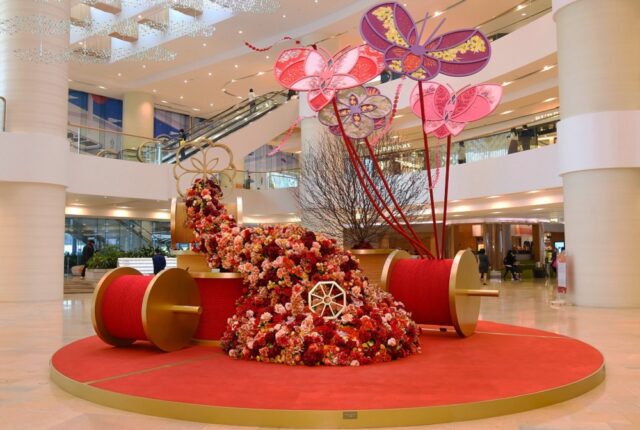
    In the financial heart of the city,  the floral pinwheels have turned IFC into the Garden of Fortune.

    Dedicated to providing memorable and engaging experiences for guests beyond shopping and dining, the Chinese New Year is no exception for IFC mall as it presents The Garden of Fortune, a splendid installation featuring pinwheels to welcome good fortune and embrace new changes along with incorporating floral elements for a contemporary spin.

    From 26 January to 17 February 2019, shoppers can visit the interactive display and enjoy music performances to ring into an auspicious new year.

    Pinwheels have long been a symbol of luck with fascinating roots in Chinese culture. Traditionally associated with welcoming wealth, pinwheels are constructed using a variety of bright colors to greet the god of fortune, which are believed to bring prosperity and blessings to both homes and businesses. Playing on the Chinese tradition that pinwheels attract good luck, The Garden of Fortune is embellished with this auspicious symbol.

    The pinwheels are designed in the shape of peach blossoms, peonies and begonias – flowers that represent prosperity and fortune in Chinese culture – to empower guests with positive vibes as they walk through the Garden of Fortune.

    Upon entering the installation, guests are invited to play an interactive pinwheel game to start the new year with blessings to share and bestow upon friends and loved ones. ifc mall has collaborated with young local calligrapher, Rita Lee, to create downloadable “fai chuns” to share with family and friends after completing the game.

    Lee started learning Chinese calligraphy at the age of 6 and has nurtured her talent with over 20 years of experience. She is known for blending different styles to create art that balances the tradition of Chinese calligraphy with contemporary flair. “I’m excited about this partnership with ifc mall as it allows me to use my craft to extend blessings to all Hong Kongers who visit the Garden of Fortune,” says Lee. “The installation’s fusion of traditional pinwheels with modern floral elements also reflects the same juxtaposition in my style of calligraphy.”

    Pacific Place has built “Where Fortune Takes Flight” to welcome the Chinese New Year 2019. Queenie said that her design ideas come from the traditional Chinese New Year Candy box and chocolate from her childhood. Thus, they became the patterns of the kites, flying in the shopping mall. Queenie used vibrant colors and energetic brush strokes to draw on the kites, symbolizing a colorful and fruitful new year.An exquisite spring garden filled with blossoming flowers and over 60 flying kites, symbolising “Where Fortune Takes Flight”. Exclusively designed by Queenie Law, the kites soar to the highest heights and spread Chinese blessings throughout the mall and into the new year ahead.

    In Tsim Sha Tsui, Harbour City will welcome the Year of the Pig with the “HAPPIG New Year” celebration, featuring a seven-metre tall gigantic “Wishing Treasure Bowl” at Ocean Terminal Forecourt from 25 Jan to 19 Feb 2019.

    The treasure bowl is structured with multiple frames, on which colorful ropes were tied delicately to create geometrical festive patterns from cherry blossoms to gold coins.

    The contemporary design is a stylish take on the Chinese New Year classic, wishing everyone joy and fortune for the Year of the Pig.

    Newly introduced this year is an interactive wishing experience, inviting visitors to win a lucky pouch by taking part in a mini game and donating HK$20 near the“Wishing Treasure Bowl” installation.

    Each lucky pouch contains a Good Fortune Card with predictions for the coming year, and a “Wishing Gold Coin” which can be deposited into “Make a Wish Piggy Bank” for making a wish. The coin will roll through a lucky tunnel connecting the piggy bank to the gigantic “Wishing Treasure Bowl”, bringing fortunate blessings to everyone for the New Year.


  • Design Orchard mall to open end of the month

    Design Orchard mall to open end of the month

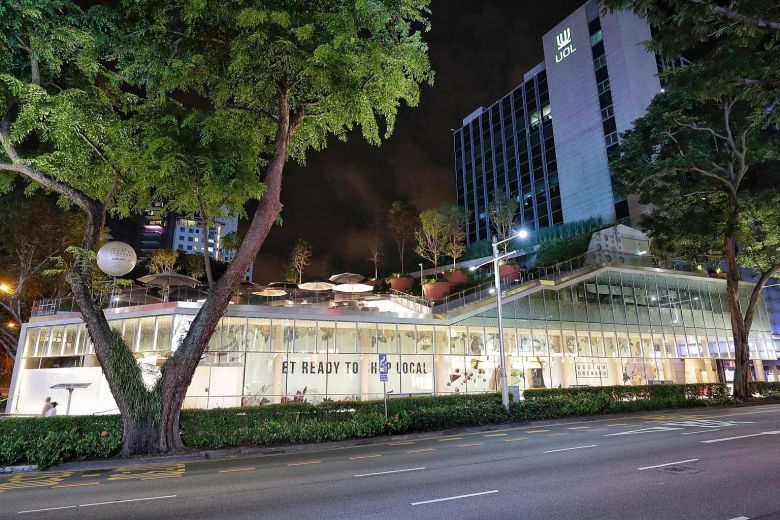
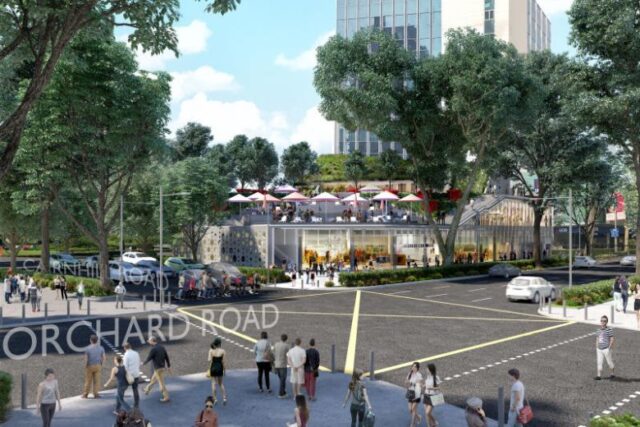
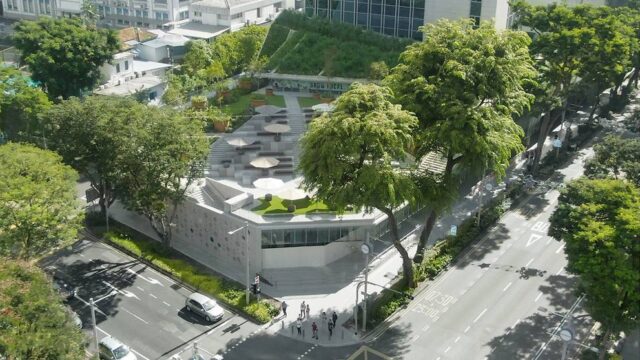
    Design Orchard mall is set to open on January 25 hosting 61 homegrown labels. The new Orchard Road mall, a joint venture between the Singapore Tourism Board (STB), JTC Corporation and Enterprise Singapore, is conceived of as a home and exhibition space for local design work. It features a 9000sqft first-floor retail showcase, second floor incubation spaces, and a rooftop events area. The first level is currently leased to local retailer Naiise.

    Featured supports for local designers include co-working spaces provided by Taff – equipped with professional sewing equipment, a fabric library and collaboration and networking opportunities with industry players – and a mentorship program from Naiise covering marketing and merchandising.

    “Singapore is home to many global brands,” explained STB’s director of retail and dining Ranita Sundra, of the rational behind Design Orchard mall.

    “As these brands become more ubiquitous, we noticed that more people are drawn to local products with a Singapore story. Design Orchard is thus an exciting opportunity for us to profile the best of Singapore talent under one roof.”

    “We hope that it will inspire local talents to join the community, where they can develop and grow their brands with access to mentors, programmes and facilities in a vibrant space along Orchard Road,” added director of products at JTC Wee Pei Yean.

  • Malaysian mall introduces metal straws for shoppers

    Malaysian mall introduces metal straws for shoppers

    Malaysia’s Sunway Malls is introducing metal straws in a move to help eliminate single-use plastic straws from its property. The decision, made in alignment with the United Nations’ Sustainable Development Goals and the government’s decision to ban plastic straws in the Federal Territories in Malaysia, has introduced metal straws. Many of Sunway’s tenants are moving forward with alternative straw materials too – biodegradable paper straws are available at some outlets, while others have decided to remove plastic straws altogether and some are also rewarding customers who bring their own straws.

    Sunway shoppers who spend RM100 (US$24) in two receipts will be eligible to collect their personal metal straws from the concierge counters of each participating mall.

    “At Sunway Malls, we are excited to introduce metal straws, which will be available to shoppers with a very minimal spend,” said Sunway Malls COO Kevin Tan. “We were one of the first malls to introduce the Bring Your Own Bag (BYOB) campaign in 2017. With metal straws, we hope to instill a greater sense of responsibility and sustainability towards the environment through a conscious effort of reducing daily plastic consumption in our shoppers lives,” he said.

    “As a landmark mall in our community, this is part of our continuous effort for the betterment of the future and hope that our shoppers will also see the value in this campaign. A little change goes a long way.”

  • E-Land’s owners step down from management

    E-Land’s owners step down from management

    Owner family members of fashion conglomerate E-Land Group stepped down from management on Thursday, handing over the helm to younger executives internally promoted to leadership roles. The move comes in an effort to rejuvenate its governance structure to strengthen the role of the board of directors of each affiliate and enhance their autonomy when it comes to making business decisions.

    Founder Park Sung-su, 65, will step down from the day-to-day management of the group while remaining chairman. He will focus on nurturing next-generation leaders and developing new businesses instead of being directly involved in the management of subsidiaries.

    “In the past, our chairman made a lot of important decisions across the group, but since late 2016, we’ve been making preparations to give more autonomy to affiliates and develop their capacity to make business decisions on their own,” said an E-Land spokesman.

    Park’s younger sister Park Sung-kyung, 62, also stepped down from her position as vice chairwoman of the group. Having worked at E-Land for more than 12 years, Park has led the group when it comes to external affairs in the last few years. She also managed E-Land’s global operations, including in China.

    Stepping aside from management, Park Sung-kyung will chair the board of directors of the E-Land Welfare Foundation, which pursues charity activities inside the group.

    To fill the void, two vice chairmen were appointed. Former E-Land Retail CEO Choi Jong-rang has been promoted to vice chairman of the retail subsidiary, which operates NewCore department stores as well as popular shoe brand Shoopen. Kim Il-kyu has also been newly appointed as vice chairman of E-Land World, which manages the group’s key clothing brands.

    E-Land also promoted a handful of top executives in their 30s and 40s to head up their respective business divisions.

    Choi Wan-sik was promoted to CEO of E-Land World’s fashion division. Choi previously gained recognition for his performance as the director of Spao.

    At E-Land Park, which manages the group’s resorts and restaurant chains, 35-year-old Kim Wan-sik took over the reins as the subsidiary’s head of restaurants, which includes buffet franchises Ashley and Pizza Mall.

  • China’s first ‘Audio Library’ in a shopping mall opened

    China’s first ‘Audio Library’ in a shopping mall opened

    In the age of digitalization, shopping malls have evolved from a place for consumption to the “Third Space” in people’s everyday lives. Shopping malls provide a comfortable and relaxing environment with humanitarian touches by truly connecting with customers. CityOn.Xi’an has recently collaborated with the nationwide famous audio sharing platform Himalaya to build China’s first ‘Audio Library’ in a shopping mall, enabling customers to enjoy a literary cultural experience while shopping.

    As a well-known audio sharing platform in China, Himalaya currently has 480,000,000 mobile users and its market value grew 1,000 times since its establishment five years ago. As a typical unicorn company, the Xi’an Municipal People’s Government signed a strategic agreement with Himalaya in 2018, in which the ‘Audio Library’ created by CityOn.Xi’an and Himalaya has brought the consumption culture in Xi’an to the next level.

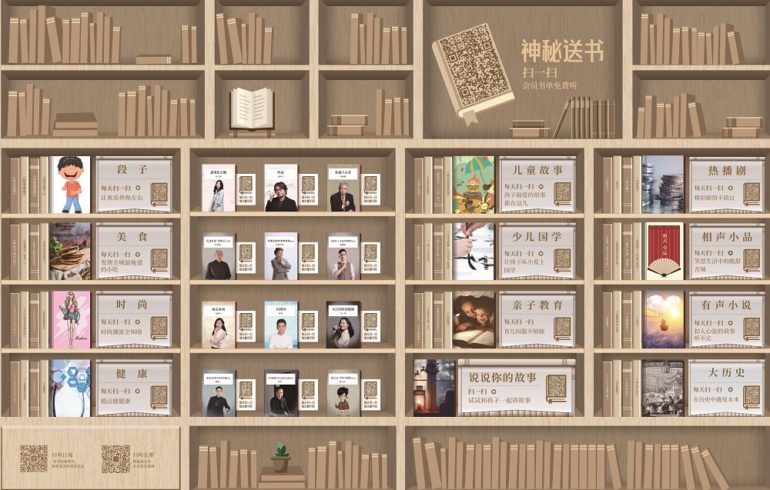
    CityOn.Xi’an creates a real-life library setting through its infrastructure development. Customers just need to scan the QR code upon entrance of the audio library, and they can gain access to Himalaya’s different free audio book channels created exclusively for CityOn.Xi’an customers. The wide variety of selection includes literature, education, food and beverage, travel, fiction, etc. allowing customers to enjoy extraordinary audio entertainment as they shop or dine.

    In addition, the best-seller reads that are popular among young customers that would normally require payment such as ‘Ma Dong’s Career Plan B’ or ‘Kevin Tsoi’s 201st EQ Lesson’ are free to listen for customers in CityOn.Xi’an. To provide a better interactive experience, CityOn and Himalaya exclusively created ‘audio card’, where customers at CityOn.Xi’an can design and customize their own audio greeting cards to send blessings to their loved ones just through a scan of the QR code.

    CityOn.Xi’an’s extensive collaboration extends beyond offline to online, where customers are offered a brand-new way to receive messages from the mall. CityOn.Xi’an utilizes Himalaya’s platform to create an exclusive radio channel for CityOn.Xian, enabling customers to receive messages, member benefits, brand details, and customer service information immediately. Customers can either use offline QR code scan or manual search on Himalaya APP to gain first hand information on the happenings of CityOn.Xi’an.

    The breakthrough approach completely transforms communication between a shopping mall and customers, where message delivery is now easier and livelier.

    CityOn.Xi’an’s General Manager Xu Jing Dong said, “CityOn.Xi’an has always been at the forefront of new retail and has achieved numerous firsts in the nation. For example, CityOn.Xi’an innovatively implemented APP technology in a wide variety of services, such as launching the world’s first offline experience store for DiDi, China’s first SF Express delivery customer service store, and the first to have a smart electric bike stop, motorcycle charging facility, and Ponycar flagship store in China’s north-west region.

    These O2O collaborations have brought CityOn.Xi’an and customers closer together, successfully converting online traffic to offline footfall and achieved record-breaking performance in customer traffic and sales.

    ‘Audio Library’ represents CityOn.Xi’an’s mission of being customer-centric and innovative, striving to be the commercial landmark of Xi’an and the whole of China’s north-west region. The collaboration truly reflects CityOn.Xi’an’s commitment and effort in bringing outstanding retail experience to customers through partnerships with different third parties, and to set the benchmark of customer service in the industry.