Tag: Mobile

  • AirAsia introduces its own mobile wallet, BigPay

    AirAsia introduces its own mobile wallet, BigPay

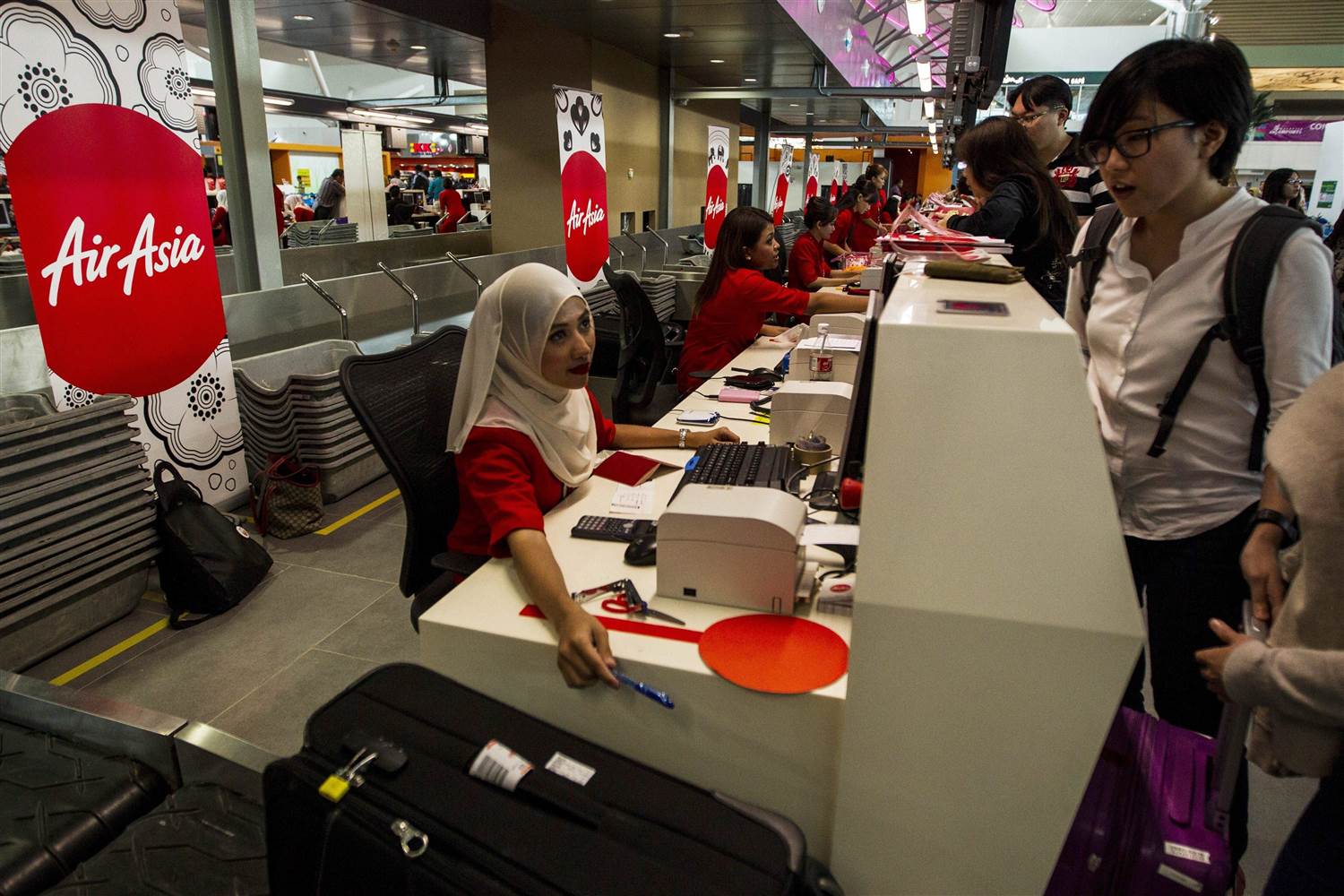
    AirAsia has joined the ranks of digital wallet providers with its own app, BigPay

    AirAsia Bhd Group chief executive officer Tan Sri Tony Fernandes announced the service on Twitter, saying it was part of AirAsia’s digital strategy.

    “One day this product will be worth more than @AirAsia. Many features being rolled out. Soon no more cash on AirAsia,” he said.

    He added that the BigPay electronic wallet would eventually offer foreign exchange remittances and possibly even money lending to AirAsia’s database of 63 million names.

    According to the BigPay’s Google Play page, the app was linked to Mastercard and could be topped up from their debit or credit cards.

    The app is said to be accepted at over 30 million merchants that accept Mastercard globally, plus users would earn AirAsia BIG loyalty points when they spend and get zero processing fees when booking a flight with the airline.

    The app’s page also assured that it was regulated by Bank Negara Malaysia and had the latest security protocols including fingerprint and facial recognition to verify the user’s identity.

    BigPay is available on Google Play store and the Apple App store.

  • Mobile now preferred channel for Citi APAC clients

    Mobile now preferred channel for Citi APAC clients

    Citi has announced that mobile banking has become the preferred channel for its consumer clients in Asia Pacific.

    The bank said that during 2017 mobile banking overtook other digital channels to become the preferred channel used by Citi’s Asia Pacific clients. Mobile use at Citi has surged by 48% in the last 12 months, making it the fastest growing digital channel at Citi.

    Digital is also growing rapidly as a source of new business at Citi. Digital acquisition in Citi’s Credit Cards and Loans business grew 57% year-on-year, and digital lending now accounts for 40% of total consumer loans fulfilled by Citi in the region.

    This growth has been underpinned by Citi’s digital investments and growth in partnerships on leading digital ecosystems.

    “At Citi our goal is to deliver remarkable banking experiences to our clients wherever they are. We have been transforming our business to be simpler, faster, scalable and digital. The growth we are seeing in mobile and digital underlines the progress we are making in being increasingly relevant where are clients need us to be,” Citi said head of global consumer banking Asia Pacific and EMEA Anand Selva said

    Citi has digital credit card partnerships with leading players in the region including Amazon, Grab, Lazada, Expedia, and Airbnb. Citi also recently partnered with Facebook to launch its first banking chatbot on the Facebook Messenger platform in Singapore. Giving customers real-time information on their accounts, transaction details and rewards points balances, Citi’s chatbot will be rolled out across the region over the next few months.

    The bank is already active in a number of leading social messaging platforms in Asia Pacific including WeChat in China and LINE in Thailand. Citi also recently reached a major milestone with three million customers having registered to use its voice biometric authentication.

    Across the region, Citi’s digital banking channels and servicing capabilities continue to see strong growth in customer engagement.

    The Asia Pacific Global Consumer Bank’s focus on transforming its business continues to yield positive results. For the third quarter of 2017, the business reported a 5% increase in revenue year-on-year to $1.87 billion, representing its fifth consecutive quarter of revenue growth in the region and making it the fastest growing consumer business for Citi globally.

    A total of 17 out of Citi’s 19 Consumer Banking markets globally are now located in the Asia Pacific and Europe, Middle East and Africa (EMEA) regions.

  • Ooredoo launches 1.2Gbps mobile speeds

    Ooredoo launches 1.2Gbps mobile speeds

    Qatar-based Ooredoo has announced it has broken the 1Gbps speed barrier using commercial smartphones and a live network.

    The company said the company has made speeds of up to 1.2Gbps commercially available to customers in Qatar as it works to be one of the earliest adopters of 5G technology.

    Tests conducted on live sites across Ooredoo’s network achieved speeds exceeding 1Gbps.

    As well as its consumer operations, Ooredoo revealed that Qatar Airways has arranged become the first corporate 5G customer.

    When launched, Ooredoo’s 5G connected corporate commercial services will provide an alternative to wired networks for corporate customers in hard to reach or remote areas.

    In November, Ooredoo completed testing of massive multiple-input multiple output (Massive MIMO) technology in partnership with the airline.

    “Ooredoo will continue to invest heavily in our networks to make sure that everyone across our global footprint can enjoy the internet and its life enhancing benefits,” Ooredoo Qatar CEO Waleed Al Sayed said.

    “There is no doubt that 5G services will have a huge impact on businesses and people, unlocking speeds for seamless browsing, next-generation business applications, and more. We are committed to being one of the first operators globally to make this service commercially available to our customers.”

  • APAC leading global online payments boom

    APAC leading global online payments boom

    Asia Pacific is at the forefront of a global trend toward increasing complexity in the online payments market, according to research from payments company Worldpay.

    The research found that consumers across APAC increasingly prefer to pay online via alternative payment methods such as e-wallets, bank transfers and cash on delivery. The annual Global Payments Report states that the Asia Pacific e-commerce market will grow by an average of 12% annually, and is set to be worth $2.1 trillion by 2021.

    Alternative payments are cementing their place at the heart of online shopping in this region – echoing a global trend toward fragmentation in online payments, as options like mobile wallets, pre-paid cards and bank transfers continue to steal market share from more traditional payment methods like credit and debit cards.

    The report found that in China – the world’s largest e-commerce market – most consumers prefer to pay with an e-wallet such as Alipay, Tenpay or WeChat Pay. E-wallets now account for 62% market share in China. Meanwhile credit cards are currently the second most popular payment method for online shoppers (10%), and bank transfers are set to overtake credit cards by 2021, increasing their market share to 14%.

    This growing preference for alternative payments can be seen amongst online Asian shoppers:

    • In Hong Kong, e-wallets are catching up to credit cards, and are set to make up more than a quarter of the online payments market (28%) by 2021.
    • In Singapore, while credit cards are overwhelmingly the payment method of choice in 2017 (66% market share), by 2021 both bank transfers and e-wallets are set to nearly double in share; from 11% to 21% and 13% to 21%, respectively.
    • In Australia, bank transfers are set to overtake credit cards by 2021, increasing 23.3 percentage points to become the most popular payment method, with a whopping 43% of the market.
    • In India, e-wallets (26%) and bank transfers (24%) are already the most popular payment methods, and by 2021 credit cards are expected to decline from 12% to 8% market share.

    Phil Pomford, general manager for Asia Pacific at Worldpay, commented that consumers are leading the charge in demanding more opportunities to use alternative payment methods online.

    “While there are significant variations in how consumers in different Asian markets prefer to pay, a constant is that they are shifting away from more traditional options like credit and debit cards, and instead choosing e-wallets, bank transfers and cash on delivery,” he explained.

  • Vietnam’s Mobile World plans pharmacy chain

    Vietnam’s Mobile World plans pharmacy chain

    Vietnam’s Mobile World is recruiting pharmacists, with a plan to expand into pharmacy retailing.

    In a job ad on Pharmalink, Mobile World is seeking experienced pharmacists to set up business, train employees and help operate a pharmacy chain.

    Mobile World’s representative confirmed its plan to test new business model without revealing the numbers of stores to be set up.

    In shareholders’ meeting in March, Mobile World’s president Ngo Duc Tai shared the group’s expansion plan by merger and acquisition (M&A) deals in groceries, pharmacy and others, with a budget of US$110 million.

    Ngo revealed that in upcoming years, the group might test medicine retailing via M&A with some pharmacy chains which already has 10-15 stores, and would expand to 500 stores.

    In August, Mobile World finished its first M&A deal with Tran Anh electronics chain.

  • HSBC debuts mobile stock app

    HSBC debuts mobile stock app

    HSBC has introduced a new stock trading mobile app for both Android and iOS to help Hong Kong customers more easily trade Hong Kong, China A and US stocks.

    The HSBC HK Easy Invest standalone stock trading app includes new features including a one-screen quick buy function, interactive charts, a sector heat map and tailored news.

    Customers can access the app using their existing HSBC Personal Internet Banking Details or Touch ID fingerprint authentication for Apple users. The app also employs several industry-standard security measures for further protection.

    To promote the new app, HSBC is offering new users a HK$100 brokerage fee rebate on customers’ first trade using the system until November 30.

    “With changing customer behaviour and increasing demand for faster and more convenient banking services, we are expanding our digital capabilities to better meet customers’ needs,” HSBC head of retail banking and wealth management for Hong Kong Greg Hingston said.

    “HSBC HK Easy Invest is a smart and powerful tool that is easy to use, fast and secure, helping us support our customers as they manage their wealth.”

  • PayMaya, Smart boost rollout of QR code payments

    PayMaya, Smart boost rollout of QR code payments

    After it introduced the first Quick Response (QR) code payments via app in the Philippines last May, PayMaya Philippines has announced that the scan-to-pay technology is now available across the country, with Smart Stores and select merchants in key cities allowing consumers to conveniently pay by simply scanning QR codes through their PayMaya app.

    Smart subscribers have a new means to transact with their accounts as Smart Stores all over the country are equipped with PayMaya QR technology. PayMaya is also enabling merchants in communities starting with canteens in partner schools like STI and commercial establishments in cashless cities such as Muntinlupa and Malabon. Similarly, PayMaya is also tapping popular merchants in SmartSpots already enabled by WiFi connectivity in key cities such as Baguio, Cebu and Davao.

    In the near future, payments enabled by PayMaya will also be accepted online and in-store in popular food chains, supermarkets and malls such as McDonald’s, Army Navy, Domino’s Pizza and Gaisano Supermarkets, among others.

    To further bring the technology to more users, Smart and PayMaya are also set to equip Smart retail partners down to the sari-sari store level with the payment technology.

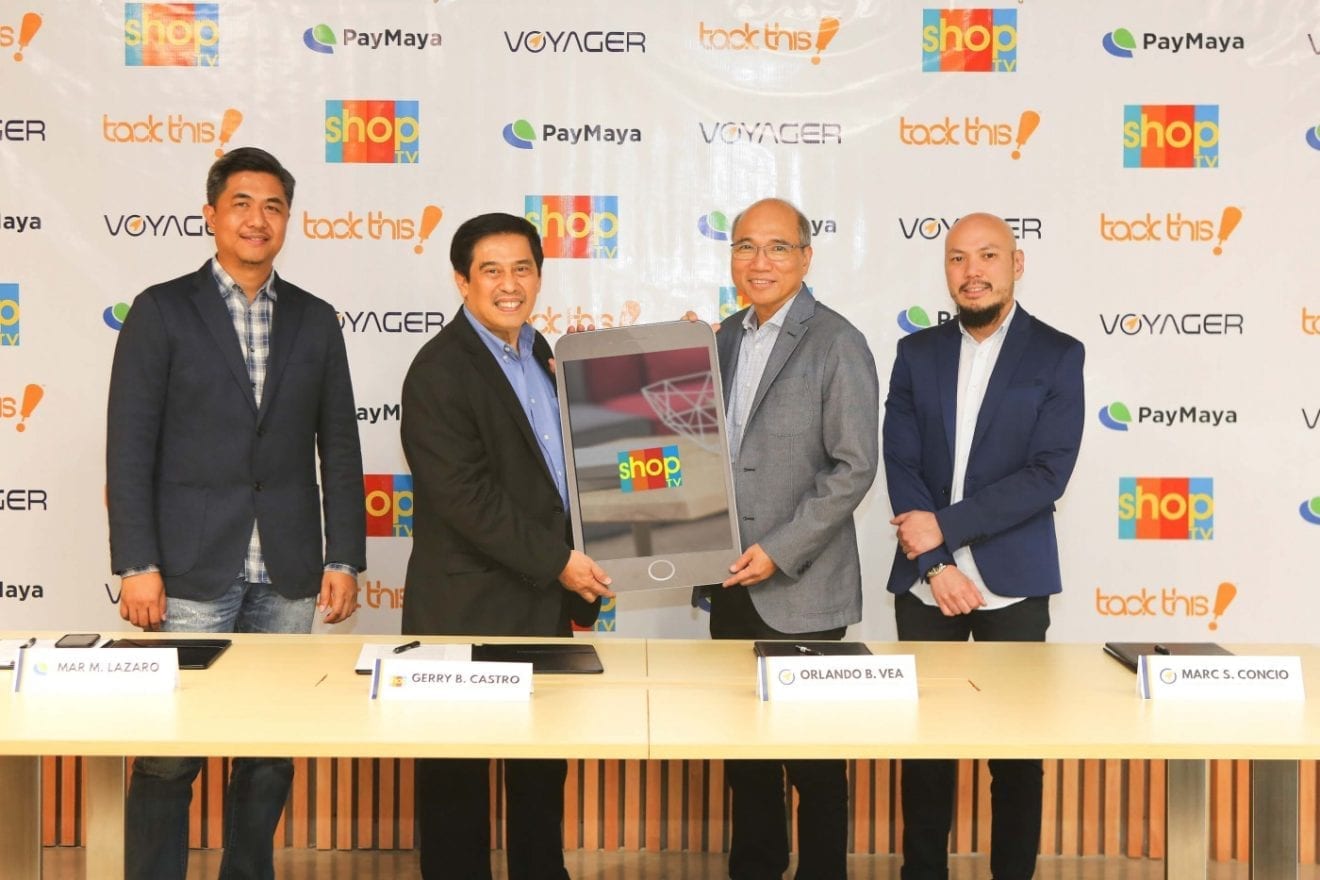
    “As PayMaya continues to grow nationwide, we take a giant step for our customers by making QR code payments available to all kinds of merchants. PayMaya is the leading digital payments wallet and on the merchant side, this will reinforce our position as the top mobile payments acquirer in the country,” said Orlando Vea, president and CEO, PayMaya Philippines and Voyager Innovations.

    “Convenient and secure cashless transactions complete the digital life experience of people and communities. Equipping our Smart Stores, partner merchants and retailers with PayMaya’s innovative platforms is a step in making our vision a reality,” said Eric Alberto, chief revenue officer, PLDT and Smart.

    Existing technology, new use cases, right conditions

    QR code technology has been in use for quite some time with many applications already in the market. However, wide adoption for payments had been previously hampered by various factors, such as lower smartphone and internet usage.

    The technology has now taken off around the world, with payment providers in various countries introducing use cases for adoption. Globally, Tencent’s WeChat app is the leader with close to a billion active users, most of them residing in China. Similar to PayMaya, every time their app is downloaded, so too is a QR code reader as the feature has already been integrated.

    In the Philippines, the growing smartphone and internet penetration is now being complemented by digital payments adoption, pioneered by PayMaya. It has made payments integration capability via QR codes available and is now accelerating consumer acceptance, as it further builds up and reinforces the payment ecosystem and infrastructure across the country.

    It takes a village to make ‘cashless’ work

    “For any kind of digital payments technology to be widely adopted, it is important to foster the right conditions and build the ecosystem. PayMaya is already leading the market toward this direction. Along with the strongest network of PLDT and Smart, we are seeing digital financial inclusion in action,” said Manuel V. Pangilinan, chairman of PLDT, Smart, Voyager Innovations and PayMaya Philippines.

    PayMaya Philippines is the digital financial services arm of PLDT and Smart’s Voyager Innovations. Its PayMaya wallet, accessible via mobile app and Facebook Messenger (@PayMayaOfficial) that comes with a virtual and physical Visa or MasterCard, is now the preferred prepaid payment by the millennial market.

    Any mobile subscriber can simply download the PayMaya app from the Play Store or the App Store and load up their wallet at any of the more than 15,000 reloading stations nationwide, which include SM Business Centers, Robinsons Department Stores Business Centers and 7-Eleven, Petron stations along NLEX and Ministop outlets with Touchpay Kiosks, UnionBank ATMs, Shopwise, Wellcome, 2Go outlets, Smart Padala centers, Palawan Pawnshop and online banking via BDO and UnionBank.

    PayMaya is also the platform of choice of local governments, enterprises and schools for disbursements and ID-plus payments cards.

    PayMaya-enabled ID-plus payment cards are being used by Balanga City, Malabon City, Malolos City, Muntinlupa City, Catbalogan City and Tacloban City, as well as by schools such as STI.

    Meanwhile, PayMaya Business, the company’s system solutions provider that allows businesses to receive online and card payments anytime, anywhere, is now the top mobile payments acquirer powering companies such as Cebu Pacific, Lazada, Meralco, Metro Pacific Tollways, Philippine Airlines, Smart, and Zalora, as well as numerous other merchants.

    Completing the cashless ecosystem is Smart Padala’s largest money-in/money-out remittance network.
  • MPT has Myanmar’s fastest mobile speeds

    MPT has Myanmar’s fastest mobile speeds

    Myanmar’s MPT has the fastest internet speeds among the nation’s major mobile operators, according to a new report from Ookla’s Speedtest service.

    An analysis of the results of user-initiated tests over the Speedtest Android and iOS mobile apps indicates that MPT had an overall speed score of 11.45 during the first half of the year.

    The speed score is calculated by factoring in both a user’s download and upload speeds, with the former contributing to 90% of the final score and the latter constituting the remaining 10%.

    MPT had average download speeds of 12.41Mbps for the period covered in the report, and average upload speeds of 7.47Mbps.

    MPT is expanding its mobile network in collaboration with Japanese partners KDDI and Sumitomo.

    The operator’s closest rival, Telenor Myanmar, achieved a speed score of 10.51, based on download speeds of 10.97Mbps and upload speeds of 6.46Mbps. Ooredoo achieved a score of 6.23 with download speeds of 6.61Mbps and upload speeds of 2.87Mbps.

    Over the six month period, Myanmar’s average mobile download speeds reached 12.03Mbps and upload speeds reached 7.4Mbps after a sharp jump in both averages between April to June.

  • SIA, Grab integrate mobile apps

    SIA, Grab integrate mobile apps

    Singapore Airlines (SIA) and Grab have integrated their respective mobile apps to offer enhanced convenience to travelers.

    The partnership will benefit customers who are travelling to the airport in six countries across Southeast Asia – Indonesia, Malaysia, the Philippines, Singapore, Thailand and Vietnam.

    SIA customers can now book Grab rides through the SingaporeAir mobile app. Customers using the app will see an option to book a Grab ride to the airport seven days before their scheduled flight.

    Selecting this option will direct customers to the Grab app, where they can choose to order a Grab ride to the airport on-demand or in advance. The airport will be automatically listed as the destination, so the user simply fills in the pick-up point and desired time.

    The first 5,000 customers will receive GrabPay Credits worth S$10 ($7.38) in their Grab account for bookings made through the SingaporeAir mobile app for Grab rides in Singapore.

    “We are constantly seeking to enhance our SingaporeAir mobile app and KrisFlyer program to ensure that we provide more benefits to our customers,” said Campbell Wilson, SIA SVP for sales and marketing.

    Jason Thompson, head of GrabPay, said that with GrabRewards, a dollar spent on Grab is more valuable than a dollar spent in cash. “By integrating Grab’s and SIA’s loyalty programs, customers can look forward to using their points when they plan for their next holiday.”

  • South Korean shoppers set new mobile spending record

    South Korean shoppers set new mobile spending record

    South Korean shoppers set a new record for the volume of purchases made through mobile devices during September.

    Government data says mobile transactions through smartphones and tablets reached a new high of 4.04 trillion won (US$3.5 billion) in August, up 29.5 per cent from a year earlier.  Statistics Korea says the trend is being fuelled by the growing amount of time consumers are spending on their handsets.

    Mobile transactions accounted for 61.9 per cent of all online purchases made during the month.

    Shopping by mobile phone in South Korea has been on a steep rise for years as smart devices are widening their presence in the world’s most-wired country. They are rapidly replacing computers as a means of conducting online transactions.

    Mobile bookings for travel and movie tickets surged 35.5 per cent in August from a year earlier to a record 755.8 billion won in the summer vacation season, while South Korean shoppers spent 344.8 billion won on cosmetics during the month, up 20.7 per cent.

    Food delivery services increased 38.2 per cent year-on-year to 610.3 billion won last month, while 381 billion won worth of electronic goods was sold through smartphones, up 18.3 per cent from a year earlier.

  • ANZ markets outpaced in mobile shopping

    ANZ markets outpaced in mobile shopping

    Growth in online shopping in Australia and New Zealand is much slower compared to some emerging markets in the Asia Pacific region, according to the recent Mastercard Mobile Shopping Survey.

    Emerging markets in Asia Pacific have recorded high year-on-year growth in mobile shopping, outpacing their more developed counterparts. India, at 75 per cent, has retained its crown as the region’s top mobile shoppers for the second consecutive year; China, at 71.4 per cent, remains a close second.

    The Philippines (53.5 per cent) and Malaysia (55.6 per cent) have the highest year-on-year growth in mobile shopping, recording increases of 12.6 per cent and 10.1 per cent respectively.

    While the Philippines, Malaysia, China and India have recorded growth in mobile spending, the more advanced markets like Japan (31 per cent), Australia (26 per cent), and New Zealand (26 per cent) are keeping their mobile purse strings tight, the study showed.

    The study also revealed Asia Pacific’s penchant for mobile shopping has also fueled a steady increase in digital wallet adoption, with more than one in five consumers (22.3 per cent) using such payment methods. The region’s consumers are also embracing QR code payments. Over one in ten consumers use QR code payments with the most avid users hailing from China (42.6 per cent) by a wide margin.

    “Consumers in many of Asia Pacific’s emerging markets are mobile-first users, having leapfrogged the traditional payment evolution,” said Benjamin Gilbey, senior vice president, Digital Payments and Labs, Asia Pacific, Mastercard. “Their governments are making significant efforts to push the development of the e- and m-commerce landscape as well as its supporting infrastructure, which has in part contributed to the growth we’ve seen in the latest survey results.”

    Gilbey said today’s consumers have shifted from simply being one-device users to one-app users as they demand more seamless payment experiences.

    The Mastercard Mobile Shopping Survey, which was carried out across fourteen markets in Asia Pacific (Australia, China, Hong Kong, India, Indonesia, Japan, Malaysia, New Zealand, Philippines, Singapore, South Korea, Taiwan, Thailand & Vietnam) where total of 8,738 consumers aged 18-64 were polled online, revealed that majority of consumers across the region (53.6 per cent) cite convenience as a key reason for shopping on their mobile devices, particularly those in China (70.9 per cent), Thailand (60.8 per cent) and Taiwan (59.2 per cent). Contrary to the rest of the region, majority of consumers in Malaysia cited the ability to shop on the go as a key reason, as opposed to convenience.

    Clothing and fashion accessories (34.9 per cent), personal care and beauty products (21 per cent) and movie tickets (20.2 per cent) are the top purchases made by Asia Pacific’s mobile shoppers, the study showed. This was not the case, however, for mobile shoppers in Japan, New Zealand and Taiwan, whose top purchases include books, CDs and DVDs; toys and gifts; and personal and beauty care products, respectively.

    Preferences for in-store shopping continues its steady decline across Asia Pacific, dropping to 45.9 per cent from 48.6 per cent two years ago.

  • Mobile phone insurance market to hit $27b by 2020

    Mobile phone insurance market to hit $27b by 2020

    The global mobile phone insurance market is on track to grow to over $27 billion in revenue by the end of 2020, research from SNS Telecom indicates.

    The telecoms market research company estimates that the global market will account for $20.5 billion by the end of this year, and is in line to grow at a CAGR of around 10% over the next three.

    An SNS Research report notes that most major mobile operators, insurance specialists, device OEMs, retailers and even banks now offer insurance plans that specifically cover theft, loss, malfunctions and damage of mobile phones, with a particular focus on smartphones.

    Many policies also combine with enhanced technical support and additional protection features such as secure cloud-based data backup facilities to give consumers additional peace of mind.

    In light of the findings, smartphone insurance could be an additional avenue for mobile operators struggling with the continued erosion of their once-core voice and data revenue streams in the face of OTT substitution.

  • OCBC Bank Launches Mobile Keyboard to Enable Cashless Payments

    OCBC Bank Launches Mobile Keyboard to Enable Cashless Payments

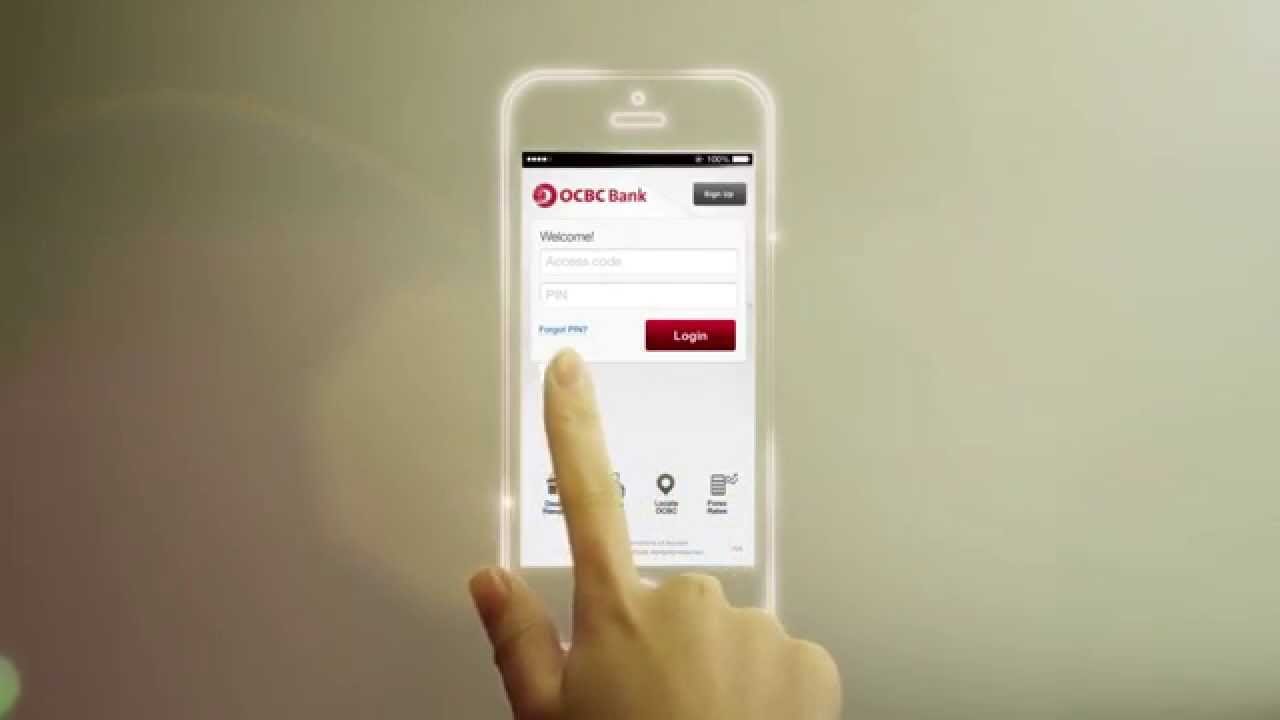
    OCBC Bank has launched a mobile keyboard that allows customers to make peer-to-peer payments without having to exit their current mobile applications. The OCBC Keyboard can be used within any mobile app or browser – for instance, within Facebook, Whatsapp, Instagram or Chrome – to send money instantly to anyone with a bank account in Singapore, including those who have not yet registered for PayNow. The payment rides on the OCBC Pay Anyone e-payment service and can be done using just the recipient’s mobile number.

    The OCBC Keyboard follows on the heels of OCBC Bank’s launch of e-payments integrated with Apple’s Siri and iMessage for iPhone users in 2016, enabling customers to make instant funds transfers with a voice command to Siri or within the iMessage app while engaged in a chat. With the OCBC Keyboard, the convenience of making an e-payment is extended to any app on Android devices running the Android 4.4 KitKat operating system or better. Payments are completely secure as they are authenticated with the sender’s mobile banking credentials.

    Making a payment via OCBC Keyboard

    Imagine being able to make an e-payment as easily as sending an “emoji” to a friend while chatting on Whatsapp, or while negotiating with a potential seller on the Carousell app. Users can automatically access the OCBC Keyboard on any app on their mobile phones once they have updated the OCBC Mobile Banking app to the latest version. They will need to perform a simple one-time set up to enable the OCBC Keyboard and make it the default keyboard on their phone.

    To send money, users simply tap on the OCBC Pay Anyone icon on the keyboard without exiting or switching from their current app activity.Once they select a recipient from their contact list – which is automatically synced with the keyboard – they will be guided to complete the transfer using OCBC Pay Anyone within the keyboard. Once payment is complete, the user can continue accessing the original app.

    Boosting cashless payments

    In alignment with Singapore’s Smart Nation agenda and its drive to go cashless, the OCBC Keyboard is the latest in a series of OCBC Pay Anyone e-payment services that OCBC Bank has introduced to encourage customers to embrace the move away from cash.

    The adoption of the recently launched PayNow service amongst OCBC Bank customers has been exceptionally strong, with over 200,000 signups to date. E-payments done via the OCBC Pay Anyone service have increased 35 per cent since the launch of PayNow, and one in every two PayNow transactions is via OCBC Pay Anyone.

    Mr Aditya Gupta, OCBC Bank’s Head of E-Business Singapore, said: “With OCBC Keyboard, we are embedding payments in our customers’ lives and making it completely frictionless for them to pay while they go about everyday tasks like chatting on Whatsapp, sending emails, buying items on Carousell or browsing the Internet. I’m confident that this added convenience will exponentially increase the adoption and usage of e-payments, including PayNow transfers. We will continue to push the boundaries on e-payments and move the needle in driving Singapore towards becoming cashless.”

    Evolution of OCBC Pay Anyone

    Launched in 2014, OCBC Pay Anyone was the first peer-to-peer mobile payment service offered by any bank in Singapore that enabled customers to make a payment directly into a recipient’s bank account using just a mobile number, email address or Facebook, without having to perform transaction signing using a security token or to add the recipient as a “payee”.

    In September 2016, the daily transfer limit on OCBC Pay Anyone was increased from $100 to $1,000, bringing greater convenience to customers and allowing payments for bigger-ticket items. In October 2016, OCBC Bank further enhanced OCBC Pay Anyone by enabling transactions using Apple’s Siri voice command feature and directly within iMessage.

    In May this year, OCBC Bank launched its first standalone mobile payments app – the OCBC Pay Anyone app – which now consolidates all OCBC Pay Anyone e-payment services into a one-stop shop for customers’ convenience: Peer-to-peer QR code payments via PayNow, QR code payments to NETS merchants, peer-to-peer e-payments and the integration of OCBC Pay Anyone with Apple iPhone’s Siri and iMessage.

    Enabling the OCBC Keyboard for e-payments

    The OCBC Keyboard is available to all OCBC Bank customers using Android 4.4 KitKat devices with the latest OCBC Mobile Banking app. The app can be downloaded from the Google Play Store.

    Customers can enable OCBC Keyboard by following these steps:

    • Tap ‘Pay now’ in the OCBC Mobile Banking app or ‘Send Money’ in the OCBC Pay Anyone app for a tutorial on setting up the keyboard
    • Users will be guided to turn on OCBC Keyboard in Settings and make OCBC Keyboard the default keyboard

    The OCBC Keyboard is now ready to be used as the primary keyboard.

    Making a payment using the OCBC Keyboard

    • Switch to the OCBC Keyboard if it is not the primary keyboard in use
    • Tap on the OCBC Pay Anyone icon on the keyboard to start payment
    • Select the contact you wish to pay to
    • Enter your online banking access code and PIN
    • Select the account to send money from. This step is automatically skipped if you have only one account.
    • Enter the amount to send
    • Create a six-digit passcode to be given to a non-PayNow registered recipient. If the recipient is PayNow-registered, no passcode is required. Confirm the recipient’s name and mobile number on the review screen to proceed.
    • Authenticate payment with a One-Time-Password

    You can then return seamlessly to what you were previously doing on your mobile device. PayNow-registered recipients will receive the payment directly into their bank accounts. If the recipient is not PayNow-registered, they will receive an SMS link. Share the passcode with them to collect the money.


  • Card spending up, delinquency down – Monetary Authority of Macao

    Card spending up, delinquency down – Monetary Authority of Macao

    While credit-card spending has increased in Macau, the delinquency rate (amounts overdue for more than three months) has eased, Monetary Authority of Macao data shows.

    Total credit-card turnover reached MOP4.9 billion (US$608 million) in the second quarter, up 2.1 per cent quarter to quarter and 8.9 per cent year on year.

    Local cash advance turnover reached MOP225.2 million, nearly 4.6 per cent of total card turnover.

    Credit card repayments, including interest and fees, totalled about MOP4.8 billion – down 6.6 per cent from the first quarter but up 8.1 per cent from the same period last year. The ratio of overdue amounts remained low, dropping to 1.37 per cent at the end of June, down from 1.46 per cent at the end of the previous quarter.

    With more dual- and triple-currency cards, the total number of personal credit cards in circulation was 1,134,044 at the end of June. This was an increase of 3.7 per cent over the previous quarter earlier or 12.3 per cent year on year.

    Pataca (MOP) cards rose by 11.4 per cent to 796,992, Hong Kong dollar (HKD) cards increased by 10.2 per cent to 94,725 while renminbi (RMB) cards grew by 16.2 per cent to 242,327.

    Banks had granted about MOP27.3 billion in card limits by the end of the quarter, up 3.6 per cent since the end of March and a 15.5 per cent increase from a year earlier.

    Credit-card receivables amounted to MOP2.5 billion, of which rollover reached MOP751.7 million, nearly 30.5 per cent of receivables.

  • Singapore consumers need mobile data

    Singapore consumers need mobile data

    Half of Singapore consumers would only be able to only last one day without using mobile data, according to a survey commissioned by MVNO Circles.Life

    The survey of over 900 respondents also discovered that many Singapore consumers are data deprived, with 2 in 3 saying that they need at least 6GB of mobile data per month to not worry about busting their mobile data limits. The industry average is between 3.5GB to 4GB of mobile data usage a month.

    “Findings of the survey are consistent with our internal market research, where we have discovered that consumers in Singapore needed more data, but did not have affordable access to it,” commented Rameez Ansar, co-founder and director of Circles.Life.

    “After we launched our 20GB for S$20 data Data Plus option in March, we saw a huge spike in the data usage of our subscribers to the current average of 8GB per month, more than double of the current industry usage. Singapore consumers are hungry for more mobile data and we expect that demand to grow as a nation.”

    The Circles.Life Annual Mobile Data Usage Survey 2017 was conducted by survey research firm, Survey Sampling International (SSI) of Singaporeans between 16 to 54 years old.

    The survey also revealed that many users were frustrated with their current mobile data limits and 9 in 10 felt frustrated when they reached their month data limits.

    In addition, 1 in 2 Singapore consumers have exceeded their monthly mobile data limits at least once in the last six months and of these, 24% exceeded their mobile data limits by at least 3GB.

    Survey respondents indicated that their most frequently used mobile app used each day was Whatsapp, followed by Facebook and YouTube. Dating apps were the least frequently used mobile apps.

    In conjunction with National Day 2017, Circles.Life is offering a free upgrade to its no-contract mobile plan for new subscribers. New subscribers joining in August will enjoy the 20GB for S$20 Data Plus option for free for the month of August.