Tag: Mobile

  • Facebook shares hit record high as mobile ad sales soar

    Facebook shares hit record high as mobile ad sales soar

    And within weeks, Facebook is expected to start a video service that will include scripted shows, a sharp change for a business built on user-generated content.

    Facebook Inc’s mobile advertising business grew by more than 50 percent in the second quarter, the company said in its earnings report on Wednesday, as the social network continued to establish itself as the venue of choice for an ever-growing array of online advertisers.

    Shares in Facebook, owner of four of the most popular mobile services in the world, rose more than 4 percent to about $173 in after-hours trading. Through Wednesday’s close, the stock price had climbed nearly 44 percent this year.

    Facebook, which now has more than 2 billion regular users, has been squeezing more ads into its Facebook News Feed while adding more ads to its photo-sharing app Instagram, which has more than 700 million users.

    With money cascading from those two services, Chief Executive Mark Zuckerberg said the company was turning attention to monetizing its two messaging services, Messenger and WhatsApp, which have more than 1 billion users each.

    “I want to see us move a little faster here but I’m confident that we’re going to get this right over the long term,” Zuckerberg said in a conference call with analysts.

    The company also is accelerating its push into video, an effort aimed at taking advertising dollars from the television industry and increasing the time people spend on Facebook.

    Within weeks, Facebook is expected to start a video service that will include scripted shows, a sharp change for a business built on user-generated content.

    Zuckerberg said video would be a significant driver of Facebook’s business in the next two to three years.

    With those possibilities still on the horizon, Facebook said total revenue rose 44.8 percent to $9.32 billion in the second quarter of the year. That beat the average forecast of $9.20 billion among analysts tracked by Thomson Reuters I/B/E/S.

    Growth was even steeper in mobile advertising, which increased to nearly $8 billion.

    “In mobile we’re continuing to see great strengths,” Facebook Chief Financial Officer David Wehner said in a phone interview with Reuters. “We’re seeing more and more ad dollars getting allocated to mobile, and we think that trend will continue.”

    “KILLING IT ON MOBILE”

    Mobile ad revenue accounted for 87 percent of the company’s total advertising revenue of $9.16 billion in the latest quarter, up from 84 percent a year earlier.

    “They’re killing it on mobile,” Needham & Co analyst Laura Martin said, referring to Facebook’s suite of apps. “They are the de facto mobile advertising monopolies and that’s a really big deal.”

    Martin said she sees no weaknesses in Facebook’s business.

    Facebook and Alphabet Inc own half of the online advertising market worldwide, and Facebook’s revenue growth this quarter outshone Alphabet, the owner of YouTube and Google.

    Alphabet on Monday reported a 21 percent increase in quarterly revenue, although it started the quarter from a larger base than Facebook did.

    Facebook has not said how much of its revenue is attributable to its Instagram unit, although the photo-sharing app has become a greater focus of its business.

    “Clearly, the biggest driver of growth is, overall, Facebook News Feed,” Wehner said. “Instagram is making a contribution and an increasing contribution.”

    But investors want Facebook to find additional revenue streams because the company has warned it is hitting maximum ad load in the News Feed, potentially slowing its overall growth.

    So far that has not happened.

    “They kept warning about ad load, but the ad load continues to be strong,” said Ivan Feinseth, research director at Tigress Financial Partners. “I still think ad revenue will grow, because more advertisers are adapting to this platform because there are so many people out there.”

    The popularity of Instagram also has put pressure on Snapchat, the app owned by Snap Inc. Instagram has added features similar to Snapchat’s and Snap’s stock on Wednesday closed at an all-time low of $13.40.

    Facebook said about 2.01 billion people were using its service monthly as of June 30, up 17 percent from a year earlier.

  • Prepare for a mobile payment revolution among Chinese travelling shoppers

    Prepare for a mobile payment revolution among Chinese travelling shoppers

    Mobile payments will soon overtake cash and credit cards as the preferred payment choice for Chinese travellers shopping abroad, according to a new survey.

    Mobile payments specialist Cancan and financial research authority Kapronasia have published a global study, 2017 Mobile Payment Survey: Chinese Consumers Abroad, covering the impact of Asian mobile payment solutions at point-of-sale worldwide. Over 1,000  Chinese consumers and more than 60 C-level decision-makers from global merchant companies were surveyed.

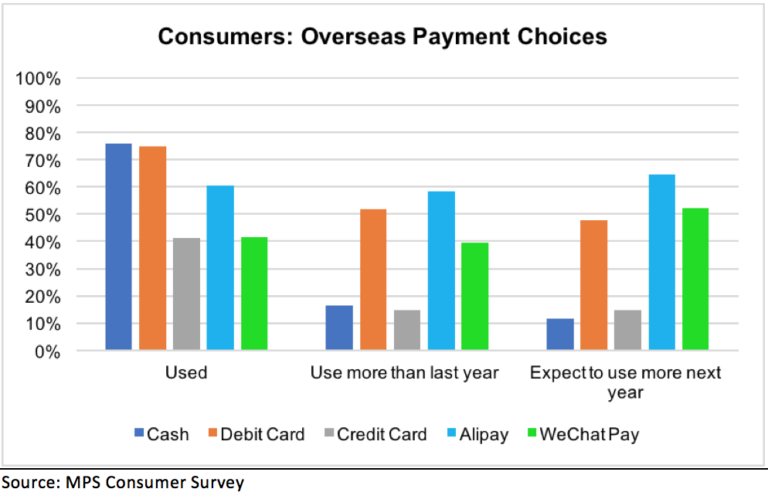
    Among the key findings, the study found that Mainland Chinese consumers expect to spend more with mobile payments such as Alipay and WeChat Pay this year and next year than in 2016 when travelling abroad.

    Most Chinese travellers spent in the range of either US$393–US$786 or US$1,179–US$1,572 for retail purchases on their most recent overseas trip, the report found, while 5.7% spent more than US$6,288.

    Some 67% of respondents reported that they use mobile payments overseas. When consumers were asked about their primary method of payment while overseas, mobile payments represented about 41% of overseas consumption.

    Nearly half of the consumers surveyed made between 10-30% of their overseas shopping purchases with QR code-based mobile payment methods; one third of consumers paid over 50% of their purchases in China with mobile.

    chinese travellers mobile payments survey - Retail in Asia

    Fashion and cosmetics/skincare are among the categories consumers were most likely to purchase with mobile payment.

    The survey found that transaction convenience and the ability to track purchases in real time were the primary reasons for using mobile payments. Not needing to carry cash and credit cards was also appreciated. “You can easily spend days in China without opening your wallet, and consumers expect that too when they are shopping overseas,” the report said.

    The main reasons for not using mobile payments were merchants not offering the facility, as well as consumers’ ignorance that it was possible to use mobile payments when merchants do offer it.

    Alipay, WeChat Pay and Apple Pay are the most popular mobile payment methods. Over 75% of the surveyed merchants accepted Alipay. Over one third of merchants who do accept mobile payments indicated that it contributed to at least 3% or more of their global sales, with some experiencing a share as high as 15-25%.

    Although customer demand is primarily driving merchant adoption of mobile payment (over 80% of respondents agreed that they were reacting to customer demand), retailers also appreciate the speed of transaction and many desire to be seen to be “ahead of the game”.

    Cancan Managing Director Candice Koo: “Global merchants can profit from the mobile payments revolution storming out of the Far East, but they need to focus on the Chinese consumer”.

    “If the overseas market continues to mirror China’s mobile payment growth and development, this will likely change over time. Loyalty and points programmes in mainland China were slow to take off but are now informing an increasing number of merchant’s digital strategy, many of whom all have domestic WeChat official platforms.”

    Cancan and Kapronasia concluded that as well as there being continued growth in mobile spending, there will also be a change in what consumers buy using mobile payments.

    “Although they started out being used for smaller value purchases, mobile payments are increasingly being used for higher value and luxury items,” the report said. “The average transaction value on Alipay went from US$82 in 2015 to nearly US$100 in 2016, an increase of +22%.

    “The implications for overseas merchants are pretty clear: mobile payments have become a way of life for many Chinese and Asians and their habits are extending overseas.”

  • Asian Retailers use mobile engagement to grow sales

    Asian Retailers use mobile engagement to grow sales

    Mobile devices have become an essential tool for retailers across Asia looking for more effective ways to engage their customers. Whether using a smartphone or tablet, and whether comparing products and prices, reading product reviews, or making purchases, consumers’ always-on mobile devices are now a pivotal feature of the retail experience. Mobile is now the logical centrepiece for enhanced customer engagement.

    A recent global study by Nielsen found that Asia Pacific leads the way when it comes to mobile shopping, with use above the global average for every mobile shopping activity.

    Customers are engaging more of the in-store experience on their mobile devices, with Nielsen finding that more than half of shoppers use their mobile device when shopping to compare prices or look up product information.

    Progressive retailers are embracing cross-channel engagement strategies, which extend the physical contact that customers have with the store into all possible digital touch points. 

    Two of the main ways that retailers across Asia are using mobiles to engage their customers are for promotional offers to drive sales, and for after sales support and feedback capture to continuously improve the customer experience.

    Driving sales

    Based on customer preferences and purchase history, retailers may send rich, on-brand offers to customers, refined by attributes like market segment, location or social media interaction. These can include text updates announcing upcoming sales as well as discount codes sent directly to native apps or rich messages within the phone browser. Geolocation allows timely, contextual offers to be sent to customers when they are actually in-store, prompting high, immediate redemption rates.

    Nielsen found that almost half of shoppers use their device to look for coupons or deals (44%), make better shopping decisions (42%) or make shopping trips quicker or more efficient (41%).

    Mobile messaging allows an unprecedented level of real-time contact with customers and it’s vital to maintain trust and add value when communicating this way. Giving customers the ability to opt in and out of contact, as well as setting their personal preferences ensures that contact is both welcome and relevant. 

    Customer satisfaction

    Given the general preference for rapid, easily accessed communication, SMS is a viable initial channel for customer service, lowering costs, and keeping contact concise and focused.

    More complex conversations can readily be facilitated by seamlessly pivoting from SMS into mobile web, app, phone or email, allowing customers to engage further via their preferred contact paths when it suits them. This provides immediate options for customers to feed back negative responses for action, reducing risk of social media venting, and brand impact.

    Best practice mobile engagement insights

    There are a few elements that all retailers should consider when designing effective mobile management to grow sales and improve customer service.

    1. Multi-channel communication – send messages to customers in the way that suits them, whether that’s voice, SMS, push, social media, rich messages or email, to improve the rates of delivery. Knowing that customers will almost always have their mobiles close allows retailers to provide messages on all these channels
    2. Geolocation – GPS-enabled smartphone applications allow users to share real-time location information, with relevant data and offers matching the customer’s location.
    3. Automated and integrated messages – incorporating messaging systems with other customer facing and internal technologies such as CRM, marketing and billing systems reduces the need for manual intervention, providing a range of automated, high value communications options, including: customer surveys for generating instantaneous feedback; voucher and barcode downloads; loyalty program offers; time based offers; multilingual support options; and mobile catalogues. 
    4. Consolidate and simplify communications – combining communications streams into a single platform, provides a single view of the customer engagement, regardless of their preferred medium or location, while vastly reducing cost and complexity of managing diverse communications tools.
  • LG G6+ launched with bigger RAM and storage, will debut in South Korea

    LG G6+ launched with bigger RAM and storage, will debut in South Korea

    LG has launched a new variant of its widely-appealing G6 with bigger RAM and storage. The new LG G6+ was announced alongside a slew of upgrades to the G6.

    Specs wise, the LG G6+ more or less has the same features seen on G6. You have a 5.7-inch QHD+ display and a Snapdragon 821 processor, with the same 3,300 mAh battery with Quick Charge 3.0 support and Qi wireless charging.

    The processor however is paired with a bigger 6GB RAM and 128GB storage. If you recall, the base model had launched with a 4GB of RAM and 32GB storage. As for software, the device will run Android 7.0 Nougat with LG UX 6.0 out of the box.

    On the optics front, LG has not expanded the sensors, but retains the same dual 13MP cameras at the back and 5MP front shooter. When the LG G6 launched, it was the world’s first smartphone to support Dolby Vision. On LG G6+ as well users will enjoy the same.

    According to reports, the LG G6+ will be priced at KRW 999,800 ($892). LG is yet to make any official announcement on the pricing or release date. However, we know this for sure that it would first retail in South Korea after which it will debut in other markets. LG G6+ will be available in choices like Optical Astro Black, Optical Terra Gold, and Optical Marine Blue.

    As for the existing owners of the LG G6, there are some new updates on the software front. A new firmware update brings the Face Print feature that will allow users to unlock their device through facial recognition functionality. Also, a new featured called Low Power Consumption was added to optimize battery usage. The LG G6 has been among the biggest releases of the year so far.

  • Nokia demonstrates XGS-PON for mobile fronthaul

    Nokia demonstrates XGS-PON for mobile fronthaul

    Nokia Bell Labs has announced the first successful demonstration of ultra-low latency 10G passive optical networks (PON) for mobile fronthaul.

    In the demonstration, Nokia Bell Labs showed how it is possible to use a commercial next-generation PON to transport ultra-low latency CPRI streams via a standard single fiber running between the Baseband Unit (BBU) and the Remote Radio Head (RRH).

    The proof-of-concept demonstration indicates how existing fiber networks can be used to cost-effectively transport mobile traffic, which could accelerate the transition to 5G.

    The trial used XGS-PON technology that runs on existing fiber access networks and allows operators to use GPON platforms to deliver high-capacity services.

    “This is an important milestone in the industry and in the advancement of 5G, showing for the first time how a PON network can effectively be used to support very high capacity, low latency applications,” Nokia Bell Labs head of access research Peter Vetter said.

    “It demonstrates the flexibility of PON to support traditional CPRI and evolving mobile specifications, such as fronthaul over simpler native Ethernets, and validates the readiness of PON for the 5G era.”

  • Over 1m new mobile internet subs to be added daily

    Over 1m new mobile internet subs to be added daily

    The telecoms industry is on track to attract more than 1 million new mobile internet subscribers per day between now and 2022, according to the latest Ericsson Mobility Report.

    The report predicts that there will be 2.6 billion new mobile broadband subscribers added through 2022, with LTE set to become the dominant access technology in 2018, making it the fastest growing mobile technology in history.

    Ericsson noted that it has taken just five years for LTE to cover 2.5 billion people, compared to eight years for 3G. There were 250 million new LTE subscriptions added in the first quarter of 2017 alone.

    Total traffic over mobile networks meanwhile grew 70% over the 12 months ending in Q1 – the fastest year-on-year mobile data growth globally since 2013 – and is set to increase to eight times its current level by 2022, the report predicts. Recent growth has been driven by explosive increases in consumption in India.

    Global growth in demand for mobile data will also drive 5G deployment. The report predicts that there will be more than 500 million 5G subscriptions globally by 2022, not including IoT connections. By this time, 5G is expected to cover around 15% of the world’s population.

  • Cashing in on mobile payment

    Cashing in on mobile payment

    Eight years ago, Starbucks developed an app for mobile payments. Today, it is still held up as the gold standard in the US. In Asia’s rapidly developing market, where mobile payment is almost a decade ahead of the West, things are quite different.

    In China, you can mobile pay for everything, from cab fares to a utility bill. In 2015, WeChat registered more financial transactions in a day than PayPal did in 12 months. It is not just China that is adopting the trend – mobile payment is also making massive inroads in South-east Asia as shopping apps gain popularity.

    In Singapore, there are 30,000 retail points accepting contactless payment methods, such as Apple Pay, Android Pay and Samsung Pay. In Indonesia, the most populous country in the region with 250 million people, most of the big traditional retailers are unveiling e-commerce plans of their own.

    In a recent GfK study, The Connected Asian Consumer, consumers here and in Indonesia reported fairly high usage of shopping apps (37 per cent and 35 per cent, respectively).

    This growth is fuelled by affordable smartphones, a massive young and tech-savvy population as well as efforts by governments and telco operators to expand and improve high-speed wireless networks.

    It is only a matter of time before mobile payment goes mainstream.

    Unfortunately for traditional retailers, the age of e-commerce also produced a new consumer – we like to call them the “connected consumer” – and their behaviours are shaping the future of retail.

    In the GfK FutureBuy survey last year of 20,000 consumers in 20 markets, it was found that shoppers are becoming less loyal to any one retailer.

    Almost half (46 per cent) of all consumers (aged 14 to 65) stated that they are less loyal when shopping. This figure rises among the youngest consumers – to 53 per cent of Gen Y (aged 18 to 29) and 58 per cent of Gen Z (aged 14 to 17).

    For retailers who understand the connected consumer, there are opportunities to stay ahead of the competition – and mobile payment is a huge part of it.

    Despite becoming less loyal, many connected consumers expect an omni-channel shopping experience, where they interact with a brand. Connected consumers in Asia-Pacific seek the best of both worlds.

    For example, shoppers in China are the most likely to embrace omni-channel shopping – 71 per cent shop both online and in-store, while Australian shoppers are the most likely to shun online shopping (62 per cent shop exclusively in-store).

    In contrast, Indians lead the way in online shopping with 23 per cent shopping the category exclusively online.

    NEW REALITY

    Therefore, it is important for retailers to understand the new reality of the omni-channel consumer and know that the “whatever, whenever” culture demands that user experience is seamless across all devices.

    If retailers do not understand this, customers will simply delete their app and move on.

    At the same time, using analytics, retailers can receive customer data to offer more personalised services. In turn, this presents an opportunity to generate long-term relationships.

    But it is important to note that not all connected consumers are the same.

    For example, older consumers are not as comfortable with sharing personal information as younger consumers.

    Understanding the shopper’s purchase journey is easier these days, with research offering detailed information on the route shoppers take when making a purchase as well as ways in which online and offline touchpoints influence their decisions.

    We believe that brands that understand, respect and protect the consumers’ individual boundaries will earn their loyalty.

    As mobile payments continue to grow in Asia-Pacific, businesses in sectors such as financial services, cybersecurity and telecommunications stand to gain, and they can evolve to support the changing landscape.

    Loyalty is great, but to really retain customers in today’s omni-channel space, the shopping experience is equally important.

    To connected consumers, simplicity and convenience is paramount. Not only do they expect everything quickly, they also lose their patience faster.

    For large retailers, mobile payment offers the opportunity to segment and target consumers much more effectively, with highly-personalised offers.

    Discounts and offers can be integrated into mobile payment, replacing the need for physical coupons and entering information into a terminal.

    Connected consumers will wave goodbye to the traditional checkout queue and benefit from customised rewards.

    Mobile payment also offers a chance for small retailers to move into a new era of retailing. Freed from high transaction fees and with new ways to connect with consumers, they can embark on the kind of personalisation and targeting that is usually the privilege of larger players.

    With e-commerce here to stay, there is plenty of potential for retail businesses to leverage research intelligence to adequately design and develop strategies to target this group of consumers.

  • Korea’s Mobile shopping soars to record levels

    Korea’s Mobile shopping soars to record levels

    Purchases made through mobile devices like smartphones accounted for record-high levels of all products traded online in April, government data showed.

    Mobile transactions through smartphones and tablets reached 3.68 trillion won (US$3.28 billion) in April, surging 42.2 percent from a year earlier, according to the data by Statistics Korea. The amount was equal to 60.6 percent of all online purchases made in the cited month, which reached 6.08 trillion won, and outpaced the earlier record of 59 percent set in March.

    Mobile purchases in Korea have been on a steep rise for years as a growing number of people are spending more on their smart devices. The percentage of mobile transactions within total online sales was in the 40 percent range in 2015 and went up to the 50 percent level in 2016 before rising to the 60 percent range this year.

    Industry watchers said the increase is attributable to mobile shopping industry that launched aggressive marketing with ‘easy payment’.
    SK Planet Co., the operator of leading e-commerce site 11st offers customized products through ‘Digital Concierge’, which is a consultation service for digital appliances in applications (apps).

    The e-mart mall is equipped with a scanning function to support the mobile viewing of product information, shipping, and sending gifts, as well as the “”always-bought”” corner optimized for shopping malls.
    At the same time, the monthly value of mobile transactions has also been on a roll, reaching an all-time high of 3.74 trillion won in March this year.

    In April, mobile bookings for travel and movie tickets soared 32.9 percent from a year earlier to 509.6 billion won, while mobile sales and deliveries of foodstuffs shot up 68.8 percent to 547.5 billion won. Sales of clothing surged 40.1 percent to 439.8 billion won, while 300.8 billion won worth of cosmetics were sold through smartphones, up 37.2 percent.

  • Who What Wear enters mobile arena with new ‘Shop app’

    Who What Wear enters mobile arena with new ‘Shop app’

    Who What Wear launched on Wednesday Shop/Who What Wear, a new shopping app that offers consumers access to retailers and curated products.

    Shop/Who What Wear features a universal shopping cart, auto-added discount codes, and expedited shipping, as well as a product assortment that mixes high and low price points.

    In addition, the app’s editorial direction has attracted brands such as Gucci, Target and Reformation, all of which have never participated in a third-party shopping app, as well as 30 retailers including Barneys, Neiman Marcus, Urban Outfitters and Moda Operandi.

    “Who What Wear has an audience of more than 14 million who come to us for trend roundups, celebrity style inspiration, and market guides,” says Katherine Power, co-founder and CEO of CMG (the parent company of Who What Wear). “SHOP/WHO WHAT WEAR is the perfect complement to our editorial content because it completes the natural progression from seeking fashion inspiration to making a purchase in an easy and curated way.”

    The 100% shoppable online destination is launching its new app a few months after holding its own first see-now-buy-now fashion show during NYFW in February, during which online viewers could shop in real time.

    The Clique Media Group owned website also launched in 2016 a clothing and accessories line exclusively at Target.

    The Shop/Who What Wear app is available to download now on iOS.

  • YouAppi expands offices in Indonesia, the Philippines and Thailand

    YouAppi expands offices in Indonesia, the Philippines and Thailand

    YouAppi, a leading mobile growth marketing platform for premium mobile brands, today announced the expansion of the company’s Indonesia office led by Southeast Asia Country Manager Anna Mareta.

    YouAppi, founded in 2011, is a leading global growth marketing platform, enabling marketers to find the right mobile users at the right price. From brand awareness to user acquisition, brand and rewarded video, and re-engagement of inactive users, all with advanced anti-fraud functionality, YouAppi’s OneRun provides an all-inclusive mobile growth solution.

    YouAppi has been working with Indonesian marketers, agencies and publishers since early 2016, and now, with an expanded local office in Jakarta, the company will exceed expectations by an even greater amount in supporting the needs of local partners in the region.

    Anna Mareta, YouAppi’s Southeast Asia Country Manager, will lead YouAppi’s Indonesia office. She joined YouAppi in April 2016 from Adknowledge Asia Pacific. Anna’s team will also manage YouAppi’s activities in Southeast Asia, including Indonesia, Malaysia, the Philippines, Singapore, Thailand and Vietnam.

    The 700% growth rate achieved in 2016 in Southeast Asia has made the region one of YouAppi’s leading global markets in terms of app installs, made possible by premium global, Asian and Indonesian marketers. Clients in Southeast Asia include Blanja, a marketplace joint venture between eBay and Telkom Indonesia, Hooq, a video on demand streaming service backed by Sony Pictures Entertainment, Warner Bros. and Singtel, and Tokopedia, a marketplace backed by SoftBank and Sequoia Capital. Other YouAppi clients in Southeast Asia are in telecommunications, utilities, entertainment, news and other categories. YouAppi also works with leading publishers in Southeast Asia including PicMix and 8Elements.

    “Streaming service Hooq turned to YouAppi seeking qualified Android users in Indonesia, establishing a high registration rate as the target KPI for the campaign. Tapping into YouAppi’s extensive direct inventory sources utilizing OneRun’s predictive algorithms and machine learning technology, the company was able to exceed Hooq’s KPI and deliver a 130% achievement ratio,” said Sandro Simanjuntak, Head of Digital Marketing Hooq Indonesia.

    “YouAppi fulfilled our KPI, which enabled us to stay the #1 Shopping app in Indonesia on Google Play while also providing collaborative & passionate success management,” said Ignasius Igor Rendy, Internet Marketing Lead, Tokopedia.

    “What attracted me to YouAppi is the company’s commitment to Asia in general, and to me and my team in Indonesia specifically,” said Anna Mareta, the Country Manager for YouAppi Indonesia. “From a superior technology platform – YouAppi’s OneRun – to technology, media and support teams around the globe ready to answer any question 24 x 7, 365 days a year, YouAppi is the growth marketing solution for Asia.”

    “With Southeast Asia being one of YouAppi’s strongest global markets in terms of user installs, I’m thrilled with the work Anna has done, which is why we’ve expanded her team to better support this important market for YouAppi,” said Moshe Vaknin, CEO & co-founder, YouAppi. “We began 2016 by committing to Asia, and after generating over 700% growth last year, we’re supporting our commitment by re-investing revenue generated in Southeast Asia to grow our team.”

    By improving the mobile experience for marketers and publishers around the world, YouAppi is enjoying strong global revenue growth driven by the company’s success in Asia. Proof of the company’s success can be found in the 16,700 campaigns run for 485 leading advertisers via 110 billion monthly impressions served around the world over the last four years. YouAppi’s OneRun Platform offers one single point to streamline mobile media buying, combining the power of machine learning with the company’s proprietary predictive algorithms, which analyze over 250 terabytes of data every day.

  • How China’s rich use mobile to boost their individualism

    How China’s rich use mobile to boost their individualism

    With 78 percent of affluent Chinese consumers purchasing high-end goods on mobile devices, luxury marketers must amplify their online efforts to further facilitate mobile conversions, according to a new report from Emerging Insider.

    Emerging Insider’s “The Purchasing Habits of China’s Affluent Population” report found that as consumers’ comfort with mobile commerce has grown, digital marketing has become influential in the path to purchase and is likely to gain momentum. Of the affluent Chinese surveyed, Emerging Insider found that 22 percent said seeing an advertisement led to making a purchase, while 36 percent saw an item of interest via a social media influencer.

    Emerging Insider surveyed 700 affluent Chinese consumers with a household income greater than 600,000 RMB, or about US$87,000 at current exchange, for its report.

    A matter of status
    Per the report, 65 percent of affluent consumers in China rarely make a purchase in-store without reviewing a product online before a physical visit. Mobile use in China has enabled this behavior.

    “A massive population with a high proportion of millennial and Gen Z inhabitants, coupled with a rise in the number of middle class households, drove the market to embrace mobile rapidly,” Weiner said. “As this was developing, the retail sector in China was at a weak point, which meant that mobile commerce opened doors to goods that could not be found in brick and mortar stores.

    “Rampant social media usage and early adoption of e-commerce/social platforms such as Baidu, Alibaba, and Tencent also played a role in shifting behaviors toward a mobile-first ecosystem.”

    The practice of conducting online research prior to visiting a retail location has been steadily growing for a number of years and has redefined the role of storefronts. This online research behavior has also lent itself to the Chinese consumers’ preference of traveling abroad to make high-end purchases.

    Though pricing and duty tax is a consideration, making a purchase abroad elevates personal status and many Chinese consumers feel that outward appearance and individual sense of style is a reflection of one’s station in life.

    Also, Emerging Insider’s survey found that although Chinese consumers feel “Made in China” clothing may fit better, those produced in France, Italy, or the United States look better. Seventy-six percent of respondents prefer foreign brands to those with a Made in China label and 36 percent felt that goods made elsewhere are a “matter of status” not applicable to local items.

    Choice is also a driver of affluent Chinese buying abroad, a quarter of respondents feel that there is a greater selection outside of China, and 20 percent believe those goods are of better quality.

    Advertising also comes into play in terms of Chinese consumers’ sense of style. Twenty percent of respondents have become privy to new trends via advertisements, but 24 percent and 26 percent were inspired by social media or peers, respectively.

    Increasingly, China has seen a rise of individualism with 61 percent of respondents preferring distinct goods from boutique labels instead of the wares of well-known brands. Making limited-edition products available in select markets is one tactic luxury brands can leverage to speak to Chinese consumers’ interest in buying high-end goods abroad and their growing preference of unique personal items.

  • Biometrics to authenticate 2b m-payments this year

    Biometrics to authenticate 2b m-payments this year

    A new report by Juniper Research predicts the number of mobile payments authenticated by biometrics will climb to to nearly 2 billion this year, up from just over 600 million in 2016.

    The new research found that while Apple Pay had provided the catalyst for initial growth, other leading wallets including Android Pay and Samsung Pay were increasingly offering biometric solutions for authentication.

    Furthermore, the size of the opportunity has been boosted by the greater availability of fingerprint sensors. Juniper estimates around 60% of smartphone models are expected to ship with such sensors this year, with many Chinese vendors incorporating them into mid-range models.

    The research emphasized the increasing momentum behind alternative biometric solutions. It recognized Mastercard as an early leader in this space through its Identity Check Mobile capability, due to go live in the latter part of 2017. Informally known as “selfie pay”, this allows users to scan their fingerprints and/or take selfies to validate their identities and thereby make payments.

    Meanwhile, it expected to see strong adoption of the authentication app recently unveiled by India’s identification authority, through which merchants can verify a customer’s ID via either fingerprint or iris scan. Indeed, since the biometric data is linked to a bank account, the process acts as both authentication and transaction enabler.

    However, the research argued that the key challenge for service providers would be striking the right balance between end-user convenience and solution security.

    Research author Dr Windsor Holden pointed out that “typically, the more secure the solution, the more time-consuming the authentication process. It is essential to offer a range of verification options allowing clients to determine what level of security is required for a given authentication.”

  • Online shoppers use mobile phones more than computers

    Online shoppers use mobile phones more than computers

    Nearly 54 percent of online shoppers visited trading websites on mobile phones, higher than those accessing by desktop.

    The data was created from a survey of more than 27,000 client websites of Bizweb, an online commercial solutions platform.

    The results showed that 53.8 per cent of online shoppers visited trading websites on mobile phones, higher than those accessing by desktop (41.3 per cent), with the rest using tablets.

    For mobile phones, iPhone was the most popular device, accounting for more than 30 per cent.

    Mobile phones have become popular tools for shopping, meaning businesses and shop owners risk losing more than half of potential customers if the do not ultilise this channel, heard the meeting.

    In order to avert the situation, businesses need strategies to maximise sale opportunities on mobile channels, said Tran Trong Tuyen, CEO of DKT Technology JSC.

    Pham Thong, marketing director of Lazada Viet Nam, said that revenue from orders on mobile phones accounted for 70 per cent of Lazada’s orders.

    Thong said that there has been a shift of consumer habits. “The majority of young people are accessing the Internet by mobile phones”.

    Therefore, the development of e-commerce on mobile phones was indispensable, opening up opportunities for enterprises, said Thong.

    However, the Lazada representative also pointed out challenges that businesses might encounter such as services, tools and even the knowledge of the salesman about trading on mobiles.

    “Therefore, to succeed when selling on phones, businesses need to invest and have appropriate strategies for development,” he advised.

  • Mobile security a top priority for SEA businesses

    Mobile security a top priority for SEA businesses

    Employee device security and customer experience are top priorities in Southeast Asia for both businesses and IT leaders, a new study indicates.

    The commissioned study on workforce transformation, conducted by Forrester Consulting on behalf of Dell, investigated the key challenges and drivers that businesses are facing in the adoption of workforce enablement technology.

    According to the survey, 81% of respondents are concerned about the legal liability issues arising from Bring Your Own Device (BYOD) policies, while 44% said that organization-wide breaches originate from employee devices.

    The complexity of the IT environment due to diverse devices, coupled with growing sophistication of security threats, outdated security policies and easy information access have made endpoint devices increasingly vulnerable.

    Employees want to work from multiple locations and use several different devices, including their personal devices, at work. Thus, they are demanding faster refresh cycles, enhanced user experience and corporate support for all their devices.

    However, organizations face challenges managing their overall PC lifecycle with 53% of respondents citing complexity from vendor management as an inhibitor for effective management. Meanwhile, the growing sophistication of threats has made old workforce technology vulnerable. 53% of respondents cited that the frequency of security PC breaches is a top concern for firms.

    “The workforce of today is a highly interconnected one with new technologies empowering people to perform at their best. IT and business leaders are embarking on a workforce transformation strategy as they need to equip their workforce with the right devices and software to optimize productivity,” Dell GM of client solutions for South Asia and Korea Rakesh Mandal said.

    “Employee experience is a critical factor in boosting financial revenue and enhancing customer revenue – a continuing priority for Southeast Asia companies as they move into the new age digital economy.”

  • McDonald’s Indonesia to launch mobile app in Q4

    McDonald’s Indonesia to launch mobile app in Q4

    McDonald’s Indonesia celebrates its 25th anniversary this year. The franchise of US-based fast food giant McDonald’s will launch a mobile application to serve customers amid growing technology development.

    Fast food giant McDonald’s Indonesia will launch a mobile application for food orders in the fourth quarter of this year to tap the growing smartphone market and keep up with the shifting customer behavior, a senior company employee said on Thursday.

    Customers can currently order food for delivery through the McDonald’s website, said Michael Hartono, McDonald’s Indonesia’s marketing and communication director.

    The food chain said that a mobile application would give customers easier access to order food order amid growing technology use and development in Indonesia.

    “We are currently developing the application and hope to launch it by the fourth quarter of 2016,” Michael said during an event in Jakarta on Thursday.

    Once it is launched, customers can download the app and click on the menu when they want to place an order, he added.

    McDonalds recorded a stable performance in 2015 amid the global economic slowdown affecting commodity prices and people’s purchasing power, Michael said without giving further details.

    McDonald’s plans to open 15 stand-alone outlets across the country, adding to its 168 outlets in Indonesia.

    The fast food giant aims to record 15 percent sales growth this year, Michael said.

    McDonald’s Indonesia operates under PT Rekso Nasional Food, which holds the franchise license in Indonesia for McDonald’s.

    Free Egg McMuffin

    McDonald’s will give away 1,000 Egg McMuffins at stand-alone stores across Indonesia on March 7 from 6:30 a.m. to 10 a.m. as part of a promotional campaign. They can be obtained at outlet counters or drive-thrus, Michael said on Thursday. A 50 percent discount will also be given on coffee and hash browns during breakfast.

    During what the company calls National Breakfast Day, held since 2013 on the first Monday of March, free souvenirs, such as T-shirts, will be given to selected customers.

    As this year’s event coincides with McDonald’s 25th anniversary, the company will also give free Egg McMuffins to public institutions, such as schools, police posts, firefighters and hospitals.

    Customers at the event could receive discount vouchers for the following day’s meal, Michael added.