Tag: Mobile

  • Mobile operators should embrace LTE Broadcast now

    Mobile operators should embrace LTE Broadcast now

    Mobile operators, especially those with multi-screen assets and ambitions of providing superior mobile video and data experiences to customers, should adopt eMBMS, or LTE Broadcast, more aggressively, says a new report by Strategy Analytics.

    Accessing mobile TV services, particularly live events, over the mobile network will only increase in future as competition drives larger data bundles to 4G users, the research firm predicts.

    To meet growing mobile video demand while maintaining performance for all users mobile operators must embrace LTE Broadcast to drive support from smartphone vendors such as Apple.

    The LTE Broadcast market has changed from optimism to caution in the last two years. No other mobile operators have launched commercial LTE Broadcast service since Verizon Wireless did so in 2015.

    Strategy Analytics believes two main impediments are holding momentum for LTE Broadcast back — the lack of a reliable monetization model and weak mobile device support.

    “Although LTE Broadcast is the best tool to deliver the same content simultaneously to multiple users using the broadcast channels, therefore ideal for covering live events, for example, sports or concerts, live video alone is not enough to make a paid for service,” says Wei Shi, analyst of wireless media strategies at Strategy Analytics .

    “However, the cost saved from offloading the traffic data, largely generated by mobile video consumption, from unicast to multicast will justify operators’ limited investment to upgrade the network,” adds Wei. “In addition to packaging LTE Broadcast as part of operators’ service portfolios, there are other non-live video opportunities for the technology, for example, batch software updates, public information dissemination, and supplementing terrestrial broadcasting.”

    Out of the 26,000 models tracked by Strategy Analytics’ SpecTRAX, more than 1,000 are using eMBMS capable chipsets, though very few devices are shipped with the feature enabled. None of the iPhone models, which account for a combined 15% of smartphone installed base, supports eMBMS.

    The launching and expanding of LTE Broadcast Alliance in 2016 is a positive sign that the industry, led by a group of leading operators and technology companies, is actively addressing the device support issue.

    “Leading mobile device makers have not rushed to equip a large number of their phones and tablets with the LTE Broadcast feature, the most obvious absence being Apple’s iPhones and iPads,” adds Nitesh Patel, the firm’s director of Wireless Media Strategies.

    “One of the main objectives of the Alliance is to shore up the mobile device support for LTE Broadcast. More important than the publicity, operators should take the lead to break the ‘no business therefore no device, no device therefore no business’ cycle,” notes Patel.

    “By embracing LTE Broadcast more seriously, operators will send a clear signal to the device makers, including Apple, that it is time they should bring the feature to a broader portfolio of their products.”

  • Videocon to complete mobile market exit on Feb 15

    Videocon to complete mobile market exit on Feb 15

    India’s Videocon will complete its withdrawal from the mobile market next month, shutting down its network in its one remaining telecoms circle on February 15.

    Videocon’s 3 million remaining customers in the Punjab area have been asked to switch to a new provider to avoid losing connectivity.

    The operator’s licenses and spectrum in 17 circles were revoked following the 2G spectrum scandal in 2012, which involved a former telecoms minister allegedly granting favorable treatment to preferred operators during the allocation. A court revoked 122 telecoms licenses in the wake of the scandal.

    Videocon subsequently bid for and won back spectrum in six circles, but last year the company sold these spectrum assets to Bharti Airtel and pulled out of the mobile market in these areas, leaving Punjab as its last remaining mobile operation.

    But Videocon’s mobile license in Punjab is due to expire shortly, after the company was denied permission to have the license validity extended until 2027.

    According to the report, Videocon has decided to exit the mobile sector due to the high cost of mobile spectrum in light of its recent experiences.

    The company is concentrating on businesses including broadband, surveillance and security as well as enterprise services.

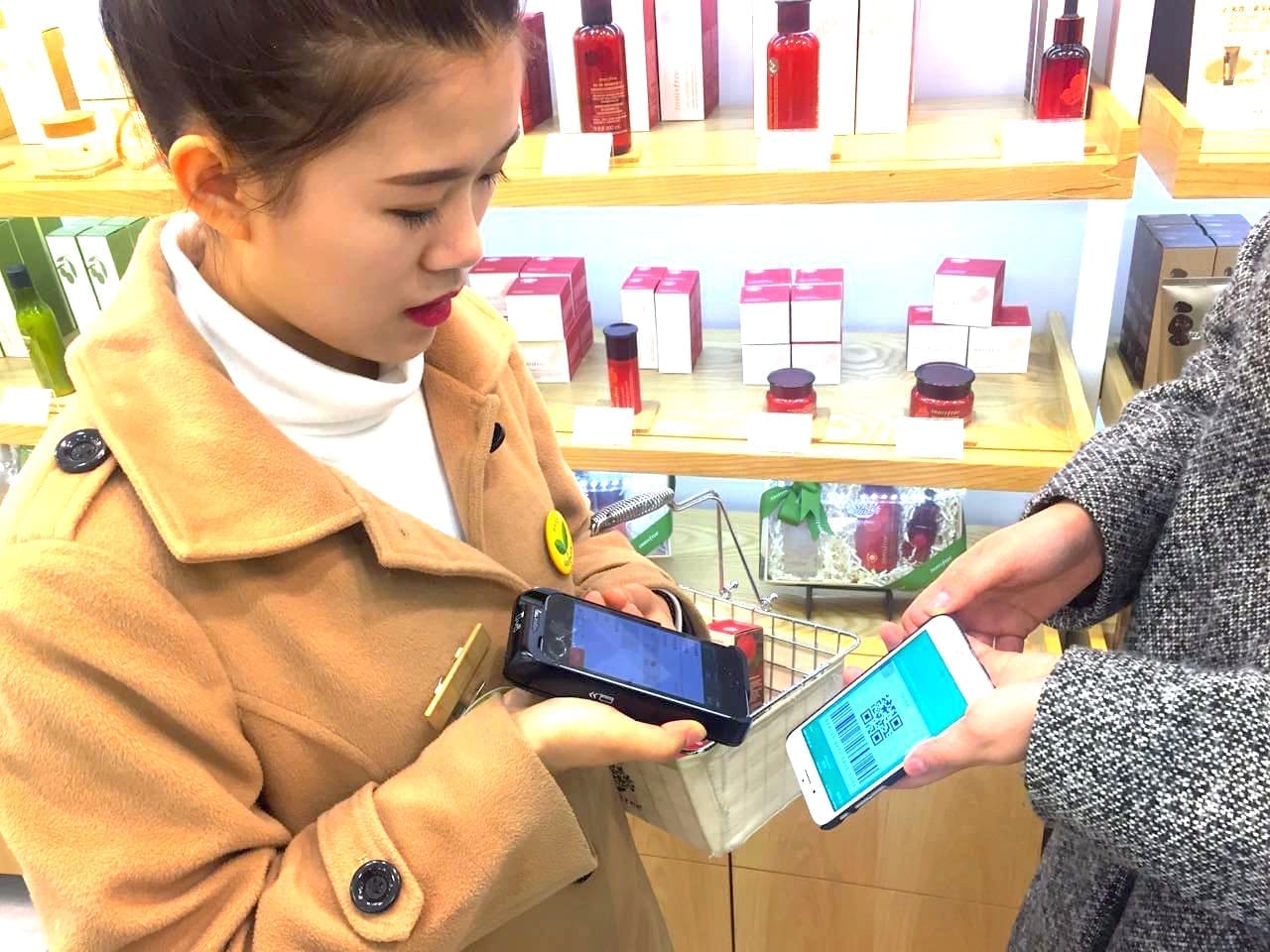
  • Innisfree collaborates with POSPi and Bank of China to launch mobile payment in China

    Innisfree collaborates with POSPi and Bank of China to launch mobile payment in China

    Mintel reports that in 2017, brands will be looking for innovative ways to use data to proactively assist consumers in all aspects of the sales journey to optimise customer service.

    The trio hopes that by adopting the innovative concept and technology, it will enable them to provide a personalised, more engaged and more convenient service to maximise the customer experience.

    Digital growth

    Innisfree, which promotes green sustainability and eco-friendliness, has ploughed resources into presenting its brand as a progressive, authentic and digitally-savvy leading destination.

    To date, it is the natural beauty name’s entry into the Chinese beauty arena that has proved the most lucrative step for the company. Since its expansion into the Chinese market in 2011, it has gone on to open 300 outlets and achieved an annual sales revenue of RMB 5.7 bn (€776 mn).

    “Innisfree, as one of the fastest growing brands under AmorePacific, has inherited the spirit of innovation and achieved a geometric growth over the past 4 years, especially in the Chinese market,” said Cai Jianren, General Manager of Innisfree.

    Celebrating its 17th birthday this year, Innisfree has an e-commerce site to help build brand awareness throughout APAC, secure a global following and increase sales by connecting online marketing efforts with an offline presence.

    With stores located throughout the APAC region, including South Korea, Hong Kong, China, Japan, Taiwan, India, Singapore, Malaysia, and Vietnam, Innisfree has positioned itself as a strong adopter of the online-to-offline (o2o) commerce trend.

    On-the-go service

    “The application of mobile POS allows us to offer a personalised service to our customers at retail stores. Each of our salespersons is now equipped with a mobile POS which has successfully eliminated queuing and empowered them to respond to customer’s various requests anywhere, anytime on the floor,” Jianren added.

    Based in Shanghai, POSPi, researches and develops mobile retail technology solutions to help brands move into a smart and intuitive retail environment.

    Feng Yanrong, Senior Manager of Bank of China, highlighted the impact this collaboration is expected to have on the business landscape: “This project marks a new step of Bank of China in the field of mobile POS, which will help multinational retailers enter the smart retail era.”

  • Easy Pass users can now top up with MasterCard via “easyBills”

    Easy Pass users can now top up with MasterCard via “easyBills”

    2C2P, Expressway Authority of Thailand (EXAT) and MasterCard have partnered to launch a new top-up channel for Electronic Toll Collection System for Easy Pass users in Thailand. Easy Pass users can now top up their cards easily with their MasterCard via easyBills’ mobile application or its website (www.easyBills.in.th), without having to pre-register their cards with the respective issuing banks. They will enjoy benefits including points accumulation upon card usage, extended due dates for payments made through the credit card, convenient storage of their favorite billers for repeat usage and checking their historical transactions, as well as the ability to set bill alerts on their calendar.  A thousand gift cards worth 500 baht each will be given away to the top 1,000 MasterCard cardholders who accumulate the highest Easy Pass top-up value via easyBills from now till 28 February 2017.

    Mr. Piyachart Ratanaprasartporn, Chief Executive Officer of 2C2P (Thailand) Co., Ltd., said:  “easyBills is an innovative payment service catered to digital users who are familiar with the online platform. The collaboration marks the first time that Easy Pass users can easily and conveniently top up their cards without cash, using their MasterCard without pre-registering with their banks, simply by downloading and using the easyBills mobile application on either iOS or Android, or by visiting easyBills’ website.”

    “easyBills helps consumers pay their bills easily, bringing convenience to everyone. It is equipped with special features that enable users to store their favorite billers for future usage, store their credit card details securely for future payments with 2C2P’s PCIDSS Level 1 certification and set biller alerts on their calendar to remind them of the payment due. Users will receive their payment confirmation via their emails,” Mr. Piyachart added. 

    Mr. Antonio Corro, Country Manager for Thailand & Myanmar, MasterCard, said, “MasterCard is very pleased to join our partners to increase convenience to our customers. They can now top up their Easy Pass card through the easyBills mobile application and website, with their MasterCard that is issued by all the banks in Thailand. They can be assured that all the online transactions are secure, while enjoying the privileges from using MasterCard. We believe this service will pave the way for Thailand to become a cashless society soon.”

    Mr.Narong Gieddech, Governor of Expressway Authority of Thailand (EXAT) said: “Since 2010 we have provided our service for the Electronic Toll Collection (ETC) system;  there are 1.3 million Easy Pass card users. We are excited to join hands with MasterCard and 2C2P who developed easyBills. easyBills’ application and website will be the 12th top-up channel for Easy Pass. This service will be bolstered by Thailand’s National e-Payment system, which the government is set to launch to transform Thailand into a cashless society.”

    easyBills “Pay Bill Easily…Get More Easier”, is developed by 2C2P in collaboration with MasterCard. Through this service, cardholders can pay utility bills, such as electricity, water supply, telephone, mobile phone top-up and e-wallet, as well as for insurance premium, online products, games, books and several other bills all in one app, anywhere anytime. Most importantly, security meets the international standard of 3D Secure.

    There will be a giveaway of a thousand Tesco Lotus gift cards worth 500 baht each. The prizes will be awarded to the top 1,000 MasterCard cardholders who accumulate the highest top-up value on their Easy Pass via easyBills from now until February 28, 2017.

  • M1, StarHub may share more mobile infrastructure

    M1, StarHub may share more mobile infrastructure

    Singapore’s M1 and StarHub are considering expanding their mobile infrastructure sharing arrangements to gain a greater competitive edge against new market entrant TPG Telecom.

    The companies announced they have signed a memorandum of understanding covering the evaluation of potential further collaboration in network infrastructure sharing.

    M1 and StarHub have been sharing infrastructure including combined antenna systems, in-building fiber and tunnel cables for many years.

    Now the operators are exploring a deeper collaboration focused on sharing radio access network, backhaul and access assets.

    The collaboration is aimed at enabling both operators to optimize the use of a number of network elements while improving coverage and capacity for customers. The companies plan to continue to manage network traffic independently.

    StarHub CEO Tan Tong Hai said pooling network resources will allow both operators to roll out more cost effective next-generation networks to manage the exponential growth in demand for mobile data.

    “We are cooperating to bring the Singapore infocomm industry to the next level, to compete not on pure infrastructure ownership, but at a higher level of customer service and innovative value creation,” he said.

    “Sharing mobile network radio elements with M1, but keeping our individual mobile core networks, will allow StarHub to provide better mobile service (in particular, mobile coverage) and still be able to differentiate ourselves.”

    M1 CEO Karen Kooi added that the agreement could lower both operators’ operational and capital expenditures, allowing them to invest in the future technologies needed to keep Singapore at the forefront of the ICT industry.

    Singapore recently granted a fourth mobile license to TPG Telecom, after the Australian fixed line operator won a new entrant spectrum auction with a bid of S$105 million ($72.8 million).

    The terms of the allocation call for TPG to provide nationwide street level 4G coverage within 18 months of the license coming into effect, meaning the company will soon be a competitive threat for StarHub, M1 and incumbent Singtel.

  • Mobile fuelling growth in Asia’s startup scene

    Mobile fuelling growth in Asia’s startup scene

    Mobile connectivity is fueling growth in Asia’s startup scene, a survey from Telenor Group shows.

    The survey covered technology buffs to better understand key startup trends for 2017 and the challenges and views of entrepreneurs in Asia.

    The survey was conducted over Facebook and LinkedIn with 215 respondents aged 15 to over 55 years old from Bangladesh, India, Malaysia, Myanmar, Pakistan, Singapore, Thailand and other Asian countries.

    To gauge the interests and personalities of the survey respondents, each person was assigned the type of startup they were most likely to create in 2017, based on pattern of their responses. 38% of respondents were found to be the most likely to create an IoT startup in 2017, significantly outnumbering the number who would establish medtech startups (22%), on-demand startups (14%), enterprise startups (11%) and fintech startups (10%).

    With a potential market of 34 billion devices expected to be connected to the internet by 2020, and nearly US$6 trillion to be spent over the next five years, it appears Asia’s entrepreneurs are well aware of the potential opportunities offered by the Internet of Things.

    In addition to these 2017 startup trend insights, the survey findings also hint at what Asian entrepreneurs think it takes to succeed in the tough startup world. More than a third of respondents (36%) believe that cybersecurity and data privacy is their number one priority, and keeping their customers’ data safe and secure is the biggest challenge facing Asian startups.

    One in 4 also admitted that the lack of business management skills and experience is another major obstacle, and having access to expert guidance would be an important growth factor. Another 16% say they are hampered by public policy frameworks and environments that are not conducive to startups, while 14% say that sustained funding across all stages of startup development would be important. Fewer than 1 in 10 were seen as were concerned with the challenge of expanding into other markets in the region.

  • Mobile Research Starts The Purchase Cycle; 78% Buy Within The Day

    Mobile Research Starts The Purchase Cycle; 78% Buy Within The Day

    Once a consumer starts researching products on their smartphone, the actual purchase of a product is pretty close behind.

    In the U.S., the final purchase is most likely to occur in a physical store, which is not the case in some other countries.

    While different countries have varying degrees of penetration, the smartphone is considered the most important device for retail research by almost a third (30%) of all retail shoppers, according to a new report.

    The Global Mobile Path to Purchase study was conducted by xAD and Millward Brown and examined shopping behaviors in five countries (U.S., U.K., Germany, China and Japan).

    The importance of the smartphone as a research tool for retail purchase varies by country, with the device taking on more importance than desktops in China. Here’s the breakdown of where mobile is the most important device for shopping:

    • 50% — China
    • 44% — Japan
    • 32% — United Kingdom
    • 31% — United States
    • 29% — Germany

    There are a wide range of items that people are shopping for on phones. Consumers in Japan and China use phones for grocery shopping way ahead of other countries. In China, 88% of consumers use phones for grocery shopping, and 63% of consumers in Japan.

    By contrast, just over half (57%) of U.S. consumers use their phones for grocery shopping, with clothing and apparel talking the top spot. Here’s what consumers in the U.S. use their phones for when shopping:

    • 58% — Clothing and apparel
    • 57% — Grocery
    • 41% — Electronics
    • 39% — Home goods and improvement
    • 37% — Beauty and wellness
    • 31% — Games and entertainment
    • 23% — Sports and leisure

    While more consumers in Japan make purchases on their phones, U.S. shoppers head to the store for that final purchase. For example, 67% of consumers in the U.S. make a trip to the store to complement their mobile research compared to fewer than half (45%) in Japan.

    The real key in all of this is that once consumers start researching on their phones they are in the market to make a purchase relatively soon. Mobile research is the beginning of the intent to purchase cycle.

    Chinese and U.S. consumers are the quickest to convert, while Japanese consumers tend to take a bit more time. When shoppers start their mobile researching, here’s the breakdown of how many make a purchase within the day or sooner:

    • 86% — China
    • 78% — United States
    • 78% — United Kingdom
    • 73% — Germany
    • 49% — Japan

    After they begin their mobile research, more than half (54%) of U.S. consumers end up making the purchase in a physical store. In China and the U.K., more consumers make their final purchase via mobile rather than in person or via desktop.

    This may be a factor in the adoption of mobile payments, at least in stores.

    In the U.S., in-store mobile payments account for only 2% of all retail transactions, according to new research form GfK.  In China, it accounts for 24% of transactions.

    Shoppers in the U.S. may pass on mobile payments and prefer to make most of their purchases in a physical store, but that does not leave mobile out of the process.

    Smartphones are used all the way to the final purchase, for comparing products and checking prices of competitors. The consumer may end up buying at the store, but they likely used their smartphone to determine the product, the store and the timing of the buy.

  • Viettel pioneers free roaming in Cambodia, Laos, Vietnam

    Viettel pioneers free roaming in Cambodia, Laos, Vietnam

    Vietnam’s state-owned telecom Viettel will eliminate overseas roaming charges between its operators in Vietnam, Laos, and Cambodia from January 2017.

    “Users of Metfone in Cambodia, Unitel in Laos and Viettel in Vietnam will be charged at the local mobile fee when they make cross-border calls to each other,” said Nguyen Manh Hung, Viettel’s managing director, who regards the three countries as an economic and cultural bloc.

    Discussions about free roaming services started years ago in Australia, Europe, and New Zealand, but without bearing fruit. Free roaming within the Association of Southeast Asian Nations has also been discussed by regional ministers since 2013.

    Viettel has well-established infrastructure in the three countries, and is the first telecom to launch such a service within a regional economic bloc, promising cheaper cross-border rates for calls and data.

    In a statement released on Thursday, Viettel said it expected its individual operators to lose some revenue initially with the reduced charges, but provided no figures. The figure could be 2% according to one Europe model in 2013. Viettel expects users to become more active when they travel if they can continue paying domestic rates.

    Military-run Viettel posted revenue of $9.7 billion in 2015 with 13% year-on-year growth, and profits up 8% to $2 billion.

    As of September 2016, Viettel had 90 million customers, of which 26 million were in nine overseas markets: Burundi, Cambodia, Cameroon, Haiti, Laos, Mozambique, Peru, Tanzania, and Timor Leste. Viettel has targeted 25 countries by 2020.

    Cambodia and Laos were Viettel’s first foreign ventures, and remain its most profitable. By August, Unitel in Laos had $1 billion in accumulated revenue over seven years and aggregate profit of $300 million. Unitel has a brand value of $132 million, making it one of the 30 most valuable in the region and top in Laos, according to a report by UK-based Brand Finance in April. The company currently has more than 2.5 million customers. It accounts for 47% of Laos’s mobile market and 35% of the broadband market.

    Metfone in Cambodia has a brand value of $94 million and is the leading mobile service provider in the country with 5.5 million customers and 37% market share. It recorded $256 million in revenue last year.

    Viettel already operates in East Timor, and is about to launch in Myanmar with a $1.5 billion commitment and two local partnerships. It is also believed to be negotiating its entry into Indonesia.

  • CIMB launches mobile wallet app for cashless payments

    CIMB launches mobile wallet app for cashless payments

    CIMB Bank Bhd has launched a lifestyle mobile application, CIMB Pay that provides combine secure cashless payments with deals and offers.

    This enables the bank’s seven million customers to experience faster, easier and more secure payments at over 1,800 contactless terminal-enabled merchants nationwide as well as search nearby location-based real-time deals.

    Group consumer banking chief executive officer Samir Gupta said the launch of CIMB Pay further strengthens its suite of digital offering, reaffirming CIMB’s position as a customer-centric bank with cutting-edge technology in the region.

    “We are proud that CIMB Pay is the first mobile wallet app that enables consumers to not only make cashless payments, but also allows them to take advantage of lifestyle deals.

    “Combined with the ability to store cards issued by both Mastercard and Visa, CIMB Pay is the leader among similar apps,” Gupta said in a statement, adding the initiative also supports Bank Negara’s move to go cashless.

    On the app’s security features, Gupta noted that security and privacy are at the core of CIMB Pay and that all card details were tokenised with no information stored on the devices.

    “Users will also be required to authenticate transactions either using the mobile fingerprint or a six digit PIN,” he added.

    In the meantime, Gupta said more functionalities will be added onto CIMB Pay in the first quarter of 2017, including simplified online payment and express checkout solutions powered by Mastercard’s Masterpass.

    With Masterpass, shoppers will be able to use their CIMB Mastercard debit or credit card along with the shipping information saved on the mobile app to complete online transactions.

    Customers can make payments by simply tapping their phone on any contactless terminal based on Near Field Communication technology.

    The app also has an in-built notification system that alerts customers on nearby contactless terminals and flash deals.

    CIMB Pay can be downloaded on Google Play for NFC-enabled smartphones running on Android 4.4 and above.

  • Singapore shoppers want cross-channel options more than new-age services

    Singapore shoppers want cross-channel options more than new-age services


    When it comes to Christmas shopping, Singaporeans prefer retailers with a physical store, coupled with both e-commerce and mobile app. Singapore shoppers want cross channel options more than new age services like digital wallets and augmented reality store experiences, according to the SAP Hybris Singapore Christmas Shopper survey.

    More than 1,000 consumers in Singapore were surveyed to uncover their Christmas shopping habits.

    When it comes to Christmas shopping, 68 percent of respondents said they prefer retailers with a physical store coupled with both e-commerce and mobile app, enterprise application software provider SAP said in a press statement on 8 December 2016.

    In addition, 54 percent prefer those who offer self-pickup services at a physical store.

    According to the results, 65 percent of respondents stated that retailers can improve their Christmas shopping experience by offering free shipping.

    “Singaporeans are amongst the most tech-savvy spenders in Asia, and no strangers to e-commerce,” said Nicholas Kontopoulos, Global Vice President of Fast Growth Markets for SAP Hybris in the Asia Pacific region. “Despite that and reports of Singapore’s continuously challenging retail landscape, the brick and mortar stores are definitely not dead.

    “In fact, the SAP Hybris survey found that 39 percent of Singaporeans still enjoy browsing through stores. This [shows that] Singapore is a truly multi-channel market, where most consumers are using a combination of devices in their online and offline shopping. In the future, offline and online shopping are no longer two separate business models. Singaporeans are demanding a seamless omnichannel shopping experience,” Kontopoulos concluded.

  • Samsung Pay, partner banks launch offers for Thai customers

    Samsung Pay, partner banks launch offers for Thai customers

    Samsung Pay and its financial partners have introduced exclusive offers for customers who make payments using a partnered credit card via Samsung Pay, The Nation reports. The offers are provide in partnership with Citibank, Kasikornbank, KTC, and SCB.

    Citibank card owners will have access to 5-fold reward point increase for every payment transaction of THB 1,000 or more. Kasikornbank card users will receive THB 100 cash back on every payment of THB 100. KTC card holders will receive 5 percent cash back with special privileges from participating shops, while SCB users will get THB 100 cash back for payments of THB 200.

    Samsung Pay went live in Thailand on 27 October. The platform enables customers to use their smartphone as credit cards. Supported payment gateways and credit cards for Thai users are Visa and MasterCard issued by six financial institutions namely Bank of Ayudhya, Citibank, KasikornBank, KTC, Siam Commercial Bank, and soon Bangkok Bank.

    In Thailand, Samsung Pay is compatible with the Galaxy S7, Galaxy S7 edge, Galaxy S6 edge+, Galaxy Note 5, Galaxy A7 (2016) and Galaxy A5 (2016) smartphones.

  • 2C2P to Work with Diners Club International to Increase Acceptance

    2C2P to Work with Diners Club International to Increase Acceptance

    2C2P, the leading Southeast Asian (SEA) payments services company, and Diners Club International, a subsidiary of Discover Financial Services and part of the Discover Global Network, announced that 2C2P is a global acquirer for all cards running on the Discover Global Network. 2C2P’s SEA merchants can now tap Diners Club International, Discover and other Discover Global Network cards as an additional payment method. 2C2P will increase acceptance in the SEA region allowing Discover Global Network cardholders to use their cards at an increased number of merchants in the region. 

    2C2P will provide its merchants with single-source electronic payment services for the acceptance of Discover Global Network, which includes Discover cards from the United States, Diners Club International as well as its affiliate cards such as BC Global Card from South Korea, Elo Card from Brazil and RuPay from India.

    Aung Kyaw Moe, founder and Group CEO of 2C2P, said: “With the rise in global online retail and tourism, this agreement opens up key international travel and entertainment markets such as Asia, Europe and the U.S. to our Southeast Asian merchants. Cardholders from Discover Global Network can now enjoy payments access to the region’s travel, transport, tourism, retail and e-commerce brands.”

    “Discover Global Network continues to increase our merchant acceptance footprint in Southeast Asia through working with companies such as 2C2P because this region has an increasing number of Discover Global Network cardholders as a result of our Diners Club and RuPay networks,” said Ricardo Leite, vice president, Discover Global Network. “2C2P specializes in e-commerce travel merchants, an important sector to our cardholders.”

    McKinsey estimates the annual revenue of the global payments market is expected to increase by six percent from 2015 to 2020, exceeding US$2 trillion by 2020. The Asia Pacific region, including China, accounts for approximately 55 percent of the industry’s revenue growth worldwide. 

    Discover Global Network is the third largest payments network in the world1. With over 39 million merchant acceptance locations and 1.9 million ATM and cash access locations across 185 countries and territories, Discover Global Network includes Discover, Diners Club International, PULSE and affiliated networks.

    “2C2P continues to look for market-leading partners around the world, to deploy its best-in-class online payments processing solutions and make it easier for consumers to transact with the payment instrument of their choice,” added Aung.

  • Singapore’s cellcos to adopt Mobile Connect

    Singapore’s cellcos to adopt Mobile Connect

    Singapore’s mobile operators M1, Singtel and StarHub have agreed to adopt the GSMA’s Mobile Connect authentication standard for universal secure mobile-based authentication.

    The three operators are building a unified platform to enable integration with online service providers using a common API.

    Once implemented, the functionality will allow Singapore consumers to create a universal trusted digital identity for access to compatible telecoms, banking, e-commerce, entertainment and travel services.

    For online transactions that require greater levels of security, consumers will also be provided with a unique personal code.

    GSMA research indicates that 87% of consumers leave a website when asked to register, and many face difficulties remembering a growing list of usernames and passwords, with 40% using a forgot password feature monthly.

    Implementing the single sign-on functionality therefore also benefits online service providers, which the research suggests stand to improve page views by 67% and likelihood to purchase by 48%.

    The first online services that support the operators’ new authentication function are expected to launch in the second half of next year.

    The GSMA’s Mobile Connect is currently available in 22 countries, including China, Indonesia, Malaysia, Bangladesh and Sri Lanka.

  • GoSwiff Partners UnionPay International to Increase Mobile Transactions in Thailand

    GoSwiff Partners UnionPay International to Increase Mobile Transactions in Thailand

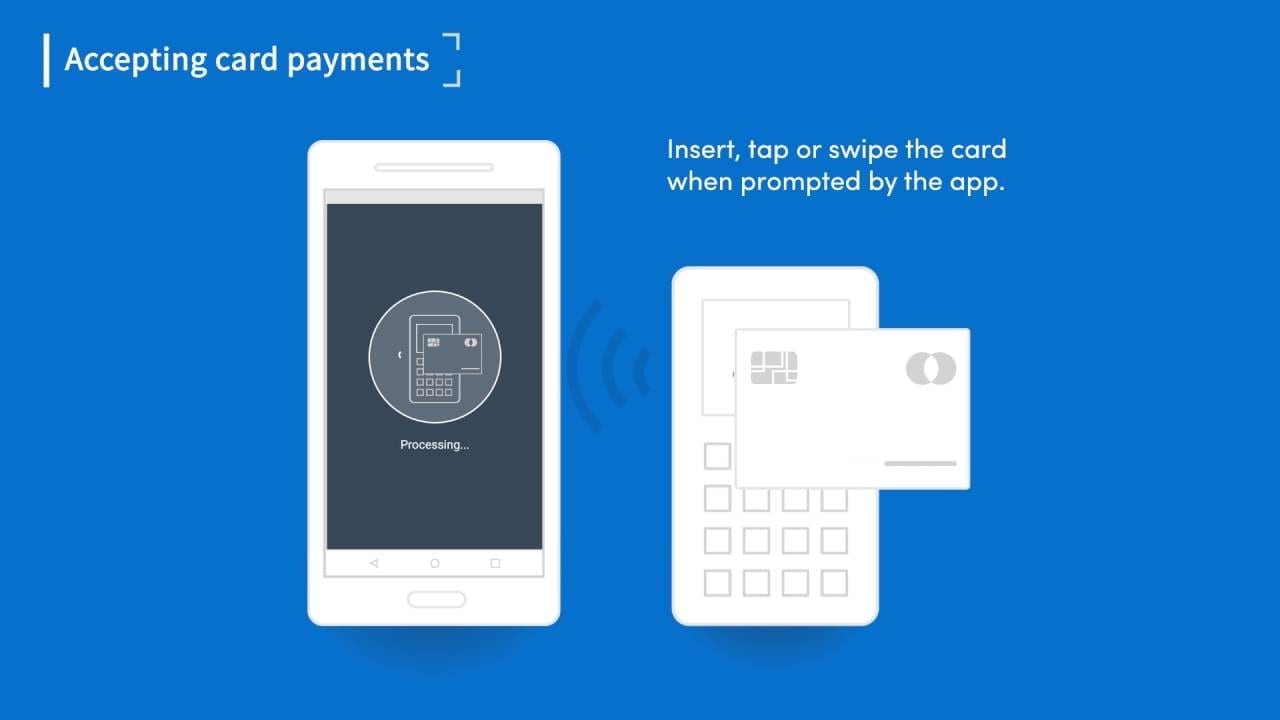
    GoSwiff, a global leader in digital payments, announced a partnership with UnionPay International (UPI), a global payment network, to enable merchants on Nimmanahaeminda Road in Chiang Mai to accept UnionPay cards. Using GoSwiff’s mobile point of sale (mPOS) solution, micro merchants can now accept and process secure PIN-based card transactions in Thailand.

    Merchants and shoppers on Nimmanahaeminda Road, a street popular with both locals and tourists visiting Chiang Mai, will reap significant advantages with the launch of mPOS. Merchants will benefit from the convenience of digital payments, while consumers can pay with their UnionPay cards, minimizing foreign exchange costs from ATM withdrawals and reducing the risk of carrying cash. All the banks within the UPI network can now connect to mPOS, and leverage NFC, HCE and PIN payments for the first time in Thailand.

     “We see great benefits in this partnership with GoSwiff in the Thai market,” said Wenhui Yang, General Manager, UnionPay International, Southeast Asia. “We are not only enabling small merchants to accept micro-payments securely, but also supporting our customers who prefer to pay with cards. With the help of our contactless mobile payment solution, we are confident this will lead to a wider adoption of cashless payments in Thailand and Southeast Asia alike.”

    On Nimmanahaeminda Road, small and mobile merchant stalls are not able yet to provide PIN-based card acceptance through regular electronic data capture platforms. There are constraints on telephone and electricity lines and investment requirements on the bank’s side.

    “Thailand has seen an enormous increase in mobile payment acceptance in recent years thanks to the very active approach from the banks to roll out mPOS services to their clients. The Bank of Thailand has encouraged all debit cards to include a PIN code, which will create even more interest from the merchants to use mPOS”, said Svyatoslav Garal, Head of Asia Pacific and CIS, GoSwiff. “We have implemented mobile payment solutions for banks and Mobile Network Operators across the globe and boosted electronic payments in the emerging markets. The payment ecosystem greatly benefits from our mPOS solution with UnionPay, as well as the expansion of payment acceptance locations, especially in countries where the card penetration is increasing.”

  • Huawei announces mobile app X Labs

    Huawei announces mobile app X Labs

    Huawei has announced a new research platform that aims to bring together operators, technology providers and vertical industry partners to explore future use cases for mobile applications.

    The X Labs initiative will aim to encourage mobile operators to build application-centric networks and help establish an open industry ecosystem.

    The research platform is designed to explore three areas of mobile communications – people, verticals and the household, Huawei said. The mLab focuses on creating immersive user experiences for emerging mobile applications including live video, VR and AR.

    A second lab, vLab, focuses on ways mobile technology can enable digital transformation across all industries. The third is hLab, which will concentrate on connecting more households with smart home applications utilizing broadband connections.

    During a keynote speech announcing the initiative, Huawei rotating CEO Ken Hu said mobile applications are reshaping everything in the world.

    “I firmly believe that in the future, all services will be delivered through mobile applications,” he said. “I would say that we are living in a wild world of mobile applications.”

    Hu noted that when Apple’s App Store launched eight years ago, it had just 500 apps. It took just six years for that number to reach 1 million, and this figure doubled in another two years. Android app stores have even more apps – around 5 million.

    “At Huawei, we aim to support and enable the mobile ecosystem. We have made a lot of progress, and we want to do more,” he said.