Tag: Myanmar

  • Thai e-wallet platform provider joins hands with Myanmar retailer.

    Thai e-wallet platform provider joins hands with Myanmar retailer.

    A joint venture agreement between them was signed during a Myanmar-Thailand cooperation mission presided over by Myanmar State Counsellor Aung San Suu Kyi and Deputy Prime Minister of Thailand Dr Somkid Jatusripitak in Nay Pyi Taw yesterday.

    The joint venture will leverage the strengths of both parties to launch various innovative fintech services such as payment platform, loyalty, e-gift platform and closed- and open-loop e-wallets for Myanmar’s population of 51 million. The joint venture is a key stepping stone for T2P to expand its services beyond its home country Thailand and for City Mart to offer new products through its existing retail platform.

  • Diebold Nixdorf establishes direct presence in Myanmar

    Diebold Nixdorf establishes direct presence in Myanmar

    Diebold Nixdorf, a leading innovation partner for nearly all of the world’s top 100 financial institutions and a majority of the top 25 global retailers, today announced the opening of an office in Yangon, Myanmar, creating a direct presence in the country for the newly combined company.

    Previously, Diebold Nixdorf had been operating in Myanmar through third-party business partners, supporting local banks with their self-service technology needs for many years.Six months into the implementation of the new government’s economic policy, digitization of the banking and financial system in Myanmar is making headways. Success stories of mobile money transfers and airtime top-ups suggest Myanmar banking and retail sectors are ready to migrate to digital channels. But as Myanmar treads the path between the physical and digital worlds, cash remains king as the main mode of payment, though in improved and more versatile ways.

    As of 2015, the total number of automated teller machines (ATMs) in Myanmar is approximately 1,780. The figure of 21% is a CAGR for growth between end-2015 and end-2021, according to strategic research and consulting firm RBR.

    With a population of nearly 54 million people, Myanmar has huge growth potential in the banking sector as it expands its services outside of Yangon to more rural areas where it is estimated that more than 95 percent of the population is unbanked. Diebold Nixdorf has worked with a number of banks in other countries across the Asia Pacific region to help them reduce the number of unbanked consumers and bring more customers on board. For example, in India the company has helped a number of local banks by providing low-energy ATMs which can work beyond the limited daily power and maintain them through its extensive services and logistics network. Diebold Nixdorf, which has already a team of 30 service staff in Myanmar, can help banks address these needs.

    Now, by establishing an in-country presence the company can cater to the growing needs of Myanmar banks as they expand their products and services in and beyond the main cities. In addition, Diebold Nixdorf plans to help established or new retailers who wish to enter the Myanmar market with its automation, omni-channel and lifecycle management solutions.

    Neil Emerson, Diebold Nixdorf senior vice president and managing director, Asia Pacific, said, “We’re delighted to be expanding our operations in Myanmar. By establishing a local office in the country it will help us build a closer relationship with our customers and serve them better. We continue to drive innovation in both banking and retail technology and services to meet Myanmar’s unique market requirements.”

    Piers Leach, country manager, Myanmar commented, “We have seen a significant growth in the banking industry in Myanmar over the last few years and we have already been a long and established partner for most of the country’s leading commercial banks. We are excited to more effectively grow our partnership with clients with a new, direct presence in the country.”

  • German tech firm opens in Myanmar

    German tech firm opens in Myanmar

    Neil Emerson, the firm’s senior vice president and managing director for Asia Pacific, said that its customers’ positive feedback and satisfaction drove them to establish an on-the-ground presence in Myanmar.

    Previously, the firm had been operating in Myanmar through third-party business partners, supporting local banks with their self-service technology needs for many years.

    “Our intention is to work with the Myanmar community and become a trusted partner. That is really important to us,” he said.

    “Our local office will enable us to build a closer relationship with our customers and serve them better. We continue to drive innovation in both banking and retail technology and services to meet Myanmar’s unique market requirements … Myanmar banks really aim to expand to support their customers. We are willing to support them by having our presence here.”

    Emerson said that the firm could cater to the growing needs of Myanmar banks as they expand their products and services in and beyond major cities. The firm also plans to help established or new retailers who wish to enter the Myanmar market with its automation, omni-channel and lifecycle management solutions.

    Piers Leach, country manager for Myanmar, was proud to say that the firm is the market leader in Myanmar’s ATM (automated teller machine) network.

    To date, the firm has acquired 70 per cent market shares, providing its services to nearly 1,700 ATMs across the country. All the leading private banks including KBZ, Aya, CB, AGD and UAB have become its customers.

    Big contract

    Last month, CB bank signed an extensive contract with the firm for systems, software and services to expand its self-service cash offerings beyond Yangon. The bank operates one of the largest ATM networks in the country and aims to double its size of ATM network in 180 branches across the country. The bank will add 500 new ATMs and cash recyclers to its current network of 500 terminals supplied by the firm.

    Leach said that the firm aims at providing its technology to all the banks in Myanmar – private and state-owned.

    They are also looking at the retail sector including shopping malls, convenience stores, grocery shops and gas stations. The firm already has a team of 30 service staff in Myanmar, and will expand its workforce over time.

    “We have seen a significant growth in the banking industry in Myanmar over the last few years, and we have already been a long and established partner for most of the country’s leading commercial banks.

    “We are excited to more effectively grow our partnership with clients with a new, direct presence in the country,” he said.

    Leach does not consider Myanmar’s infrastructure as a challenge.

    “Network connection is improving over time in Myanmar. We have seen a lot of progress with regard to network connection. So, we do not see it as a problem,” he said.

    Biswajit Jha, vice president and managing director for Asean, shared a similar view.

    “It depends on how you look at it – whether it is a challenge or an opportunity. We see it as an |opportunity. Today, everybody has a smart phone in Myanmar, and infrastructure is developing very rapidly.

    You have to come across the learning phase for smooth transition to cashless society,” he said.

    “Everything is about convenience. If it is convenient to you, you would go for that,” added Jha.

    Sachin Handoo, senior director for Indochina and South Asia, said that a stable power supply should be provided to ensure that equipments are running properly.

  • Wyndham Opens Tryp Hotel in Yangon, Myanmar

    Wyndham Opens Tryp Hotel in Yangon, Myanmar

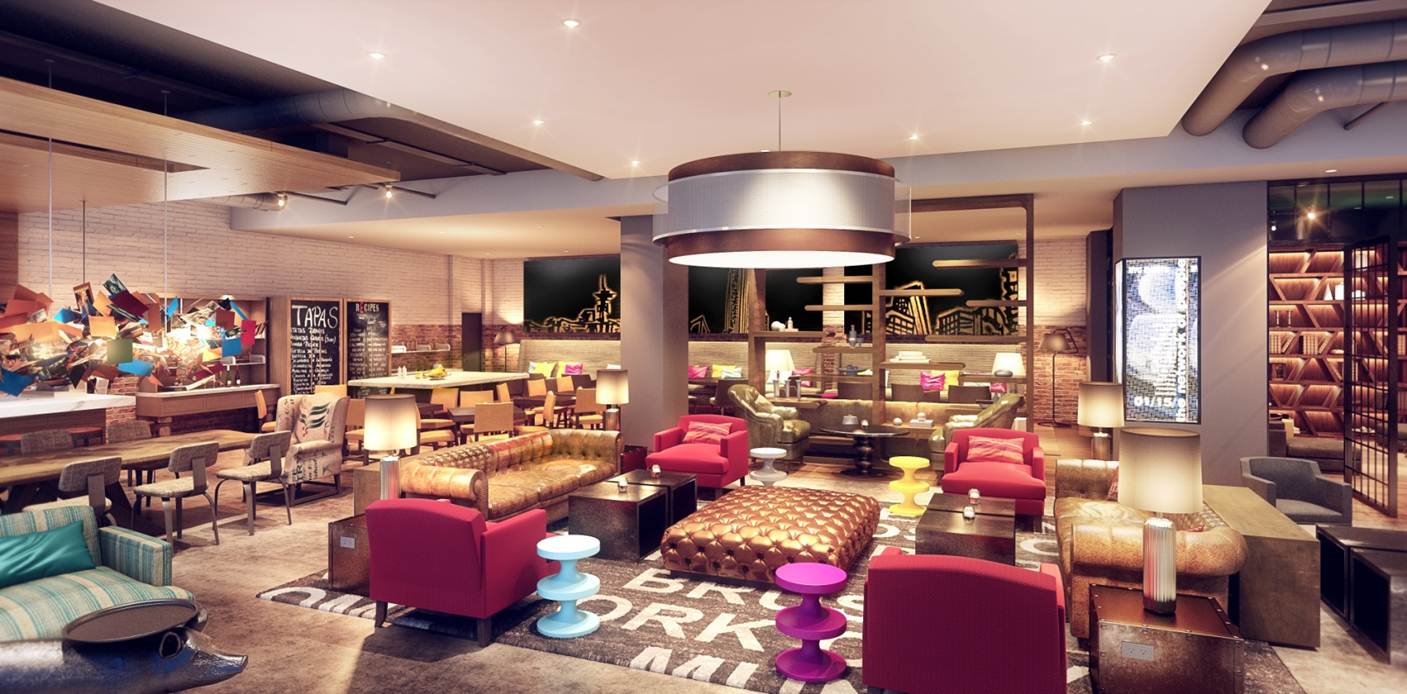
    Wyndham has expanded its Tryp brand to Myanmar, formerly known as Burma, with the opening of a new-construction hotel in Yangon, Myanmar.

    The 60-room Tryp Yangon is Wyndham’s inaugural hotel to open in the country.

    Tryp Yangon is located in the heart of Yangon’s Mayangone Township less than five minutes from Myanmar Plaza, which offers upscale retail and dining options, and is a short stroll from many of the city’s glittering golden temples, including the majestic 34-meter-high Kabar Aye Pagoda and the vast Inya Lake.

    “Myanmar is quickly becoming a must-see destination for international travellers with nearly eight million arrivals in 2015 thanks to an influx of foreign investment and Yangon’s expanded international airport,” said Mr Barry Robinson, President and Managing Director of Wyndham Hotel Group South East Asia and Pacific Rim. “The country’s travel and tourism sector is primed to spike even higher as people seek out new business opportunities, setting the stage for increased hotel demand in Yangon. Tryp by Wyndham’s unique urban flair will help visitors uncover the side of Yangon not in guidebooks, putting the city in a new light for visitors who want to experience it like a local.”

    Tryp Yangon features a restaurant and a lounge bar for evening cocktails as well as free Wi-Fi for guests to stay connected.

    The hotel is operating under a franchise agreement with developer Dragon Mountain Holding Co. Ltd. and is managed by Kosmopolitan Hospitality, a hotel management company headquartered in Bangkok, Thailand.

    Mr Glenn DeSouza, Chief Executive Officer of Kosmopolitan Hospitality, said, “The opening of Tryp Yangon will invigorate Yangon’s hospitality landscape with its edgy concept and high speed internet connectivity. Along with the exceptional service expected from one of the world’s most renowned international brands, the hotel is poised to be a favourite among regional and international travellers.”

    Wyndham Hotel Group plans to expand the Tryp by Wyndham brand to other key Asia Pacific destinations within the next 12 months. The brand currently has more than 110 hotels globally, each curating a unique experience that reflects its location.

  • TRYP by Wyndham headed for Yangon, Myanmar

    TRYP by Wyndham headed for Yangon, Myanmar

    TRYP by Wyndham has arrived on the shores of south-east Asia with the opening of a new-construction hotel in Yangon, Myanmar. The 60-room TRYP Yangon is Wyndham’s inaugural hotel to open in Myanmar.

    TRYP by Wyndham celebrates the spirit of the urban traveller by offering an insider’s look at a city.

    Hotels can be found in the heart of the world’s most exciting cities – the ones on every travel bucket list – like Abu Dhabi, Brisbane, Barcelona, New York City, Paris, and Sao Paulo.

    The brand’s urban flair energises travellers with an inimitable style and helps travellers find the best ways to tap directly into the pulse of the city.

    “Myanmar is quickly becoming a must-see destination for international travellers with nearly eight million arrivals in 2015 thanks to an influx of foreign investment and Yangon’s expanded international airport,” said Barry Robinson, president, Wyndham Hotel Group south-east Asia and Pacific Rim.

    “The country’s travel and tourism sector is primed to spike even higher as people seek out new business opportunities, setting the stage for increased hotel demand in Yangon.

    “TRYP by Wyndham’s unique urban flair will help visitors uncover the side of Yangon not in guidebooks, putting the city in a new light for visitors who want to experience it like a local.”

    Set in the heart of Yangon’s lively Mayangone Township, TRYP Yangon offers a restaurant and a lounge bar for evening cocktails in a dynamic social setting, as well as free Wi-Fi for guests to stay connected with friends and family.

    Sixty design-driven guest rooms feature a mix of patterns, textures and unexpected contrasts inspired by Myanmar’s longstanding culture and traditions.

    Art fixtures include kaleidoscopic landscapes of farmers toiling in farmlands and rice paddies, a nod to the country’s agrarian heritage.

    TRYP Yangon is located less than five minutes from Myanmar Plaza, which offers upscale retail and dining options, and is a short stroll from many of the city’s glittering golden temples, including the majestic 34-meter-high Kabar Aye Pagoda and the vast Inya Lake.

  • CB Bank pursues self-service banking in Myanmar

    CB Bank pursues self-service banking in Myanmar

    Cash remains the primary payment method in many parts of Southeast Asia. In Myanmar, competition to provide cash services is intense.

    Vikram Kumar, country manager for Myanmar at the International Finance Corporation, the private arm of the World Bank Group, recently told that domestic banks in Myanmar are under pressure “to prepare themselves to cope with the demands placed on them by the expected pace of economic growth. As a consequence, most banks have upgraded or are in the process of upgrading their technology capacity.”

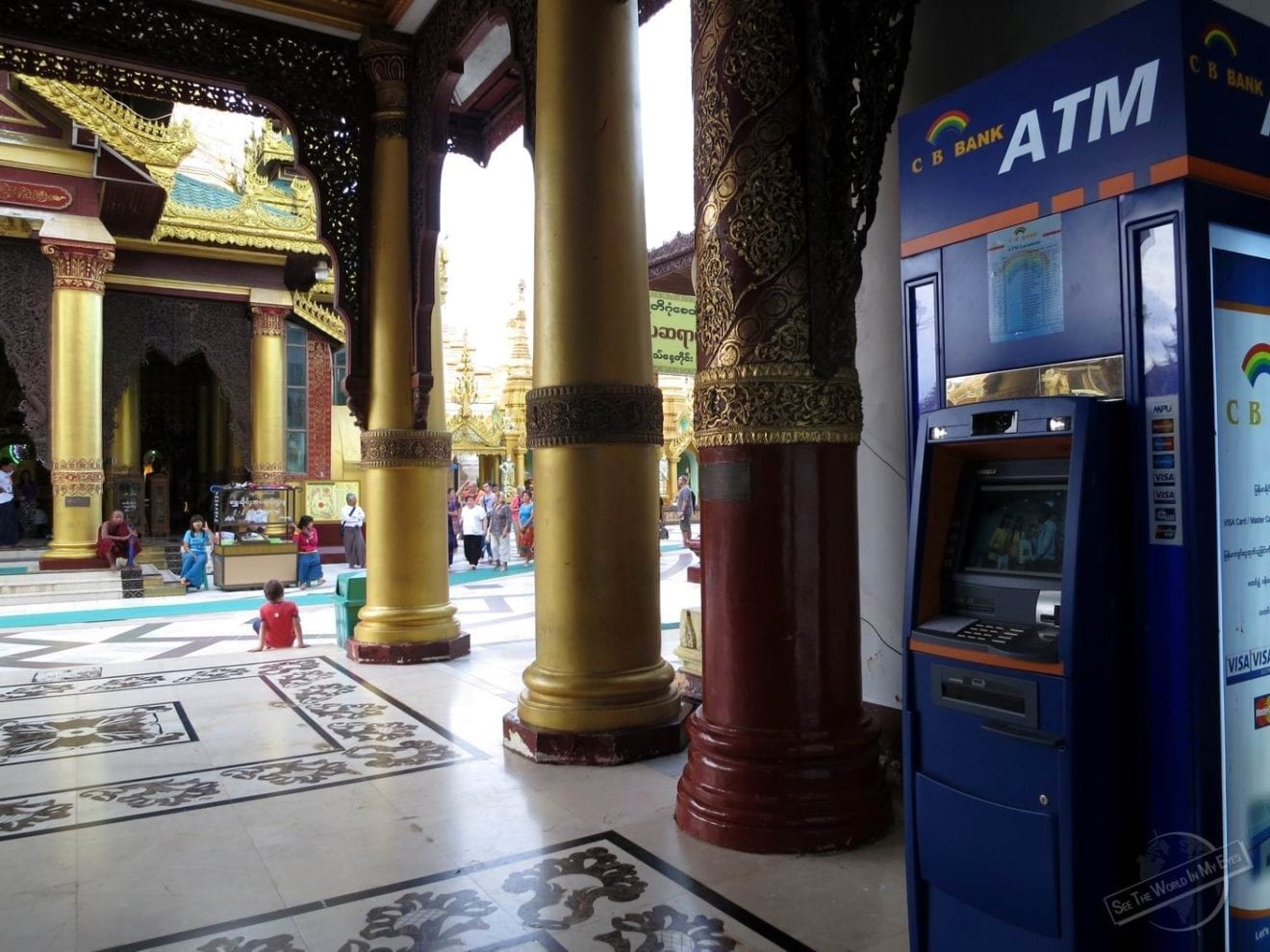
    Myanmar’s Co-Operative Bank Limited (CB Bank) is the latest to upgrade its banking infrastructure. Sometime earlier the bank upgraded all its existing ATMs to more secure EMV chip card technology and obtain EMV certification with both VISA and MasterCard.

    More recently, the bank ordered 500 new ATMs and cash recyclers as part of a more extensive contract for systems, software and services to expand its self-service cash offerings beyond the country’s main commercial hub Yangon.

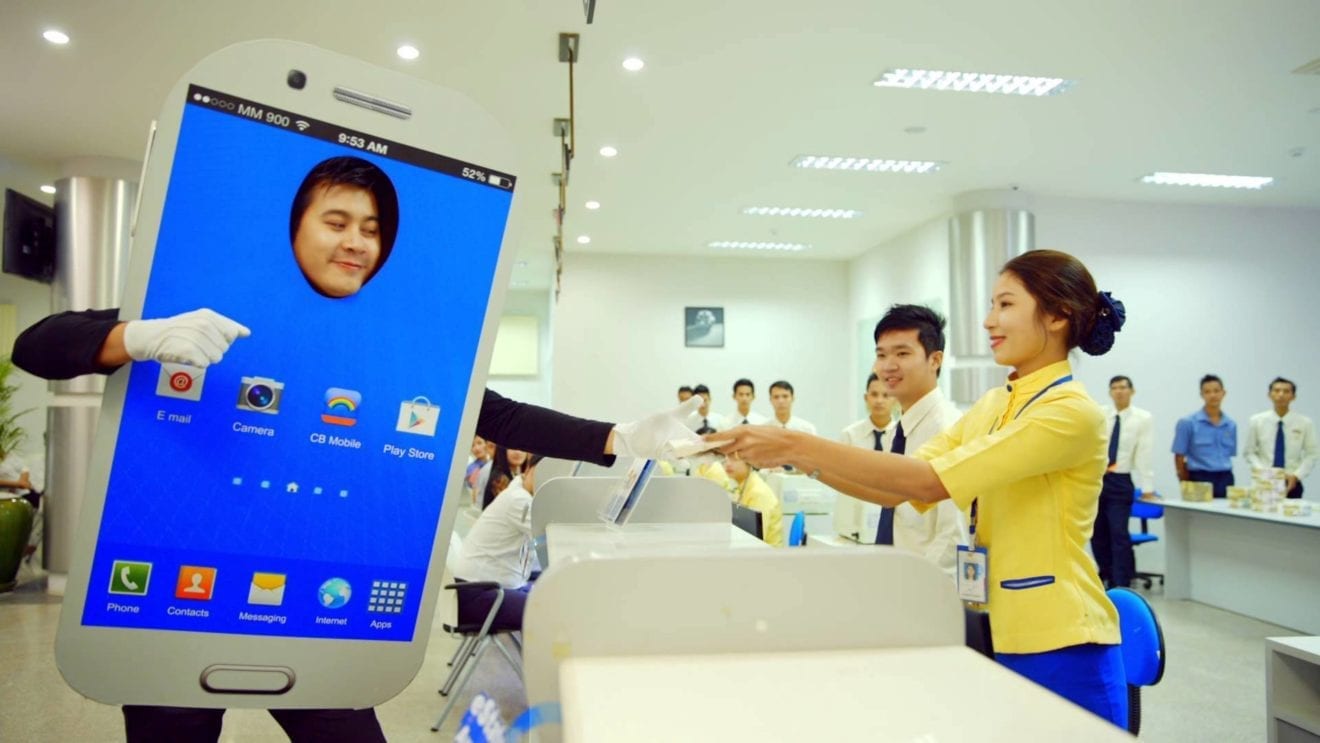
    Diebold Nixdorf is also assisting CB Bank with the implementation of cardless cash withdrawals at ATMs. Bank customers will be able to use their mobile devices to generate a one-time PIN to activate a withdrawal at an ATM either for themselves or for a third party without requiring a bankcard.

    The technology provides an innovative person-to-person payment service to consumers especially in developing markets, and underscores Diebold Nixdorf’s commitment to drive connected commerce and help bridge the digital and physical worlds.

    CB Bank has grander ambitions beyond just upgrading its infrastructure. According to U Kyaw Lynn, CEO and Executive Vice Chairman, at CB Bank, the bank aims to become one of Myanmar’s top banks offering secure, innovative and convenient cash services across our branch, online and mobile channels.

    The rollout will mean a total of 1,000 advanced cash systems across a network of 180 CB Bank branches. Completion is expected to be by the end of 2017.

  • CB Bank in Myanmar rolls out cardless cash withdrawal and P2P payment services

    CB Bank in Myanmar rolls out cardless cash withdrawal and P2P payment services

    Recently, Diebold Nixdorf helped CB Bank migrate all its ATMs to more secure EMV chip card technology and obtain EMV certification with both VISA and MasterCard. EMV is a technical standard for smart payment cards introduced by Europay, Mastercard and VISA.

    Diebold Nixdorf is also assisting CB Bank with the implementation of cardless cash withdrawals at ATMs. The solution allows bank customers to use their mobile devices to generate a one-time PIN to activate a withdrawal at an ATM either for themselves or for a third party without requiring a bankcard. The technology provides an innovative person-to-person payment service to consumers especially in developing markets, and underscores Diebold Nixdorf’s commitment to drive connected commerce and help bridge the digital and physical worlds.

    “Diebold Nixdorf was awarded the contract due to its superior product quality, flexible software and ability to offer field service for both hardware and software within the country,” said U Kyaw Lynn, CEO and Executive Vice Chairman, at CB Bank. “With the help of their advanced technology and services provided, we aim to become one of Myanmar’s top banks offering secure, innovative and convenient cash services across our branch, online and mobile channels.”

    Diebold Nixdorf’s Myanmar partner, Kaytumadi iSolutions, will localize product features and begin installing the new systems at the start of next year. The rollout is scheduled for completion by the end of 2017.

    Diebold Nixdorf will service the entire 1,000-strong fleet of advanced cash systems in CB Bank’s network of 180 branches.

    “Together with our local partner, we are enabling CB Bank to extend the reach of its self-service offerings and win a greater share of Myanmar’s growing market for cash services,” said Neil Emerson, Senior Vice President & Managing Director, Asia Pacific, at Diebold Nixdorf.

    Demand for cash is strong in Myanmar. Cash is the main mode of payment in the southeastern Asia country of more than 53 million people. Competition to provide cash services is also fierce. CB Bank already operates one of the largest ATM networks in the country and aims to expand its market position even further by doubling the number of terminals in its self-service network.

    CB Bank benefits from its IT partner’s wealth of local experience in Myanmar. Diebold Nixdorf, which has been delivering solutions to CB Bank since 2012, is a major supplier of cash-handling technology and services to all major banks in the country and across the Asia-Pacific region.

  • India, Myanmar top Consumer Confidence rankings

    India, Myanmar top Consumer Confidence rankings

    India tops the Mastercard Index of Consumer Confidence rankings as the most optimistic market in Asia Pacific, with Myanmar, Vietnam, Philippines and Bangladesh rounding off the top five.

    Overall, consumer confidence in Asia Pacific continues to hold steady, showing stability (within plus or minus five points from the previous survey) in nine out of 17 markets. With an increase of 1.2 points in the overall score from the first half of 2016 to 60.9 points in the second half, Asia Pacific sits just above the 60 point optimistic mark.

    However, the overall stability masks some significant movements across five markets in the region compared to the previous six months. Hong Kong, Thailand and Bangladesh saw more than 10 point improvements, while Malaysia and Taiwan saw more than 10 point decreases.

    Bangladesh recorded the largest gain of 11.2 points to 82.8 points – a significant improvement in overall consumer confidence compared to the first half of 2016 where it saw a relatively smaller increase of 4.2 points. Bangladesh’s increase in score was backed by an improvement in all components, the largest coming from heightened expectations in stock market movements (+24.6 points). Both Thailand and Hong Kong also saw a large improvement of 10.1 points, putting Thailand in optimistic territory and Hong Kong in neutral territory.

    On the other hand, eight of the 17 markets saw a deterioration in confidence levels. The biggest decline in optimism levels was observed in Taiwan, followed by Malaysia, and Myanmar. According to the survey, prospects for the stock market was the key driver of the decline.

    Between November and December 2016, 8723 respondents, aged 18 to 64 in 17 Asia Pacific markets, were asked to give a six-month outlook on five economic factors including the economy, employment prospects, regular income prospects, the stock market and their quality of life. The Index is calculated on a scale of 0 to 100, with zero as the most pessimistic, 100 as the most optimistic and between 40 and 60 as neutral.

  • Myanmar’s fourth cellco to use the brand name Mytel

    Myanmar’s fourth cellco to use the brand name Mytel

    Myanmar’s newly-licensed fourth mobile operator will use the brand name Mytel, and will aim to differentiate by targeting rural areas and competing on price.

    The joint venture between Vietnam’s Viettel, the consortium of local ICT companies that make up Myanmar National Telecom Holding Public and Star High Public Company was awarded a telecoms license last week.

    The new company’s external relations officer as stating that Mytel will make use of the telecoms assets used by Star High Public Company’s state-owned parent company Myanmar Economic Corporation (MEC). MEC owns MECtel, a state operator with access to extensive tower and fiber assets.

    Mytel also plans to utilize capacity on the Asia-Africa-Europe 1 (AAE-1) subsea cable, which lands in Myanmar. According to the report, state operator MPT acts as a co-landing party for the connection but does not participate directly in the project.

    The operator plans to offer 2G, 3G and 4G services with a focus on extending coverage in rural areas, and offering services at a lower price than rivals Telenor Myanmar, Uninor Myanmar and the joint venture between MPT and KDDI.

  • Viettel-led consortium gets Myanmar telecoms license

    Viettel-led consortium gets Myanmar telecoms license

    Myanmar has formally awarded its fourth and final nationwide telecoms license to a joint venture consisting of Vietnamese military-run operator Viettel and local ICT companies.

    The consortium has been awarded a 15-year license to offer nationwide services in a move sure to heat up competition in the burgeoning market.

    The joint venture will be named Myanmar National Tele & Communications, and will compete against existing operators Telenor Myanmar, Ooredoo Myanmar and the joint venture between Myanmar Post and Telecom and Japan’s KDDI.

    Viettel was selected as the foreign partner for the new telecoms consortium in March last year, but the license has only now been allocated.

    Under the terms of the consortium agreement, Viettel will hold a 49% stake, while local companies Myanmar National Telecom Holding Public and Star High Public Company will own 23% and 28% respectively. Viettel has committing to investing around $1.5 billion in Myanmar’s telecoms sector.

    The report cites Myanmar’s Minister for Transport and Communications Thant Sin Maung as stating that the new operator “will help advance telecommunication in townships, rural mountain towns and will contribute to improving transportation, healthcare and education necessary for the people living in rural areas.”

  • 1-Net, Burst plan Singapore-Myanmar DC corridor

    1-Net, Burst plan Singapore-Myanmar DC corridor

    1-Net and Burst Networks are collaborating to develop network connectivity between 1-Net’s data center in Singapore and Burst’s data center in Myanmar.

    The two data centers will be connected by a network operated by Campana Group consisting of two subsea and terrestrial routes.

    “This high-speed data center corridor is unprecedented and will support many value-added services on this platform. With this seamless connection and one network model both Burst and 1-Net are able to achieve the lowest latency and highest quality link for their customers,” Campana Group CEO Dr Myo Ohn said.

    Burst will also serve as Myanmar’s first Internet Exchange, connecting international networks to local operators and ISPs.  This exchange known as “Burst Connectivity Hub” will also support a Transmission Facility designed to host satellite and cable termination facilities and fully redundant systems as well as C-Band and Ka-Band satellite facilities.

    The projects form part of a wider agreement for 1-Net to provide operational support for Burst Networks’ Uptime Institute certified Tier IV data center at Thilawa Special Economic Zone (SEZ) on the outskirts of Yangon, the largest city in Myanmar.

    The aim is to support Burst Networks by providing the highest level of data center security, network best practices and reliability when they deliver their services to their clients’ mission-critical operations.

    “We are glad to work with Burst Networks to support their data center operations in Myanmar. It is 1-Net’s inaugural collaboration in Myanmar and we see the immense potential for data center business in this emerging market,” 1-Net Singapore managing director Wong Ka Vin said.

  • KBZ and Kasikorn Banks Introduce Remittance Services in Rangoon

    KBZ and Kasikorn Banks Introduce Remittance Services in Rangoon

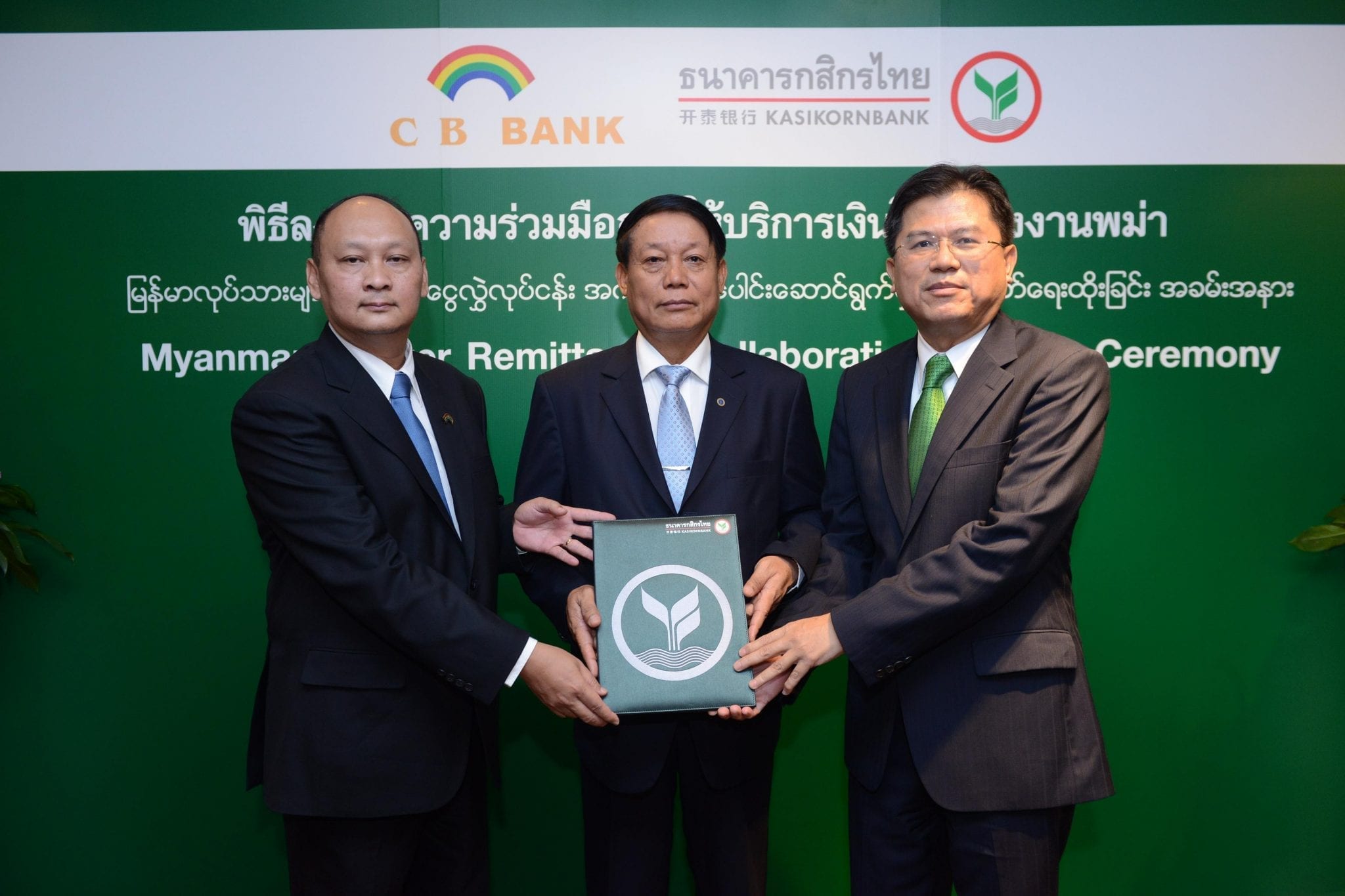
    Burma’s Kanbawza Bank (KBZ) signed a memorandum of understanding with Thailand’s Kasikorn Bank in Rangoon on Wednesday to introduce remittance services for migrant workers in both countries.

    Worawut Wesaratchakit, senior vice president of Kasikorn Bank, told the Irrawaddy that the remittance service was expected to begin during the first quarter of 2017 as further details needed to be discussed.

    “Most migrants have to go to bank branches to send money, which is not convenient. They use agents, which is unregulated, unsafe, and costs at least 10 percent of the money being sent,” he said.

    He added that the new service would be easier and cheaper than the one currently used by agents.

    There are an estimated 3 million Burmese migrant workers in Thailand.

    Many of those workers currently use informal channels to send money home, bank officials said.

    U Win Lwin, managing director of KBZ’s international banking division, said the new service will pose less risk for migrant workers.

    “By partnering with Kasikorn Bank, we can ensure the protection of people’s remittances,” he said.

    The transfers will be arranged via a mobile application. According to Kasikorn Bank, senders will be able to monitor transfers and clearly see when the money reaches the receiver’s account.

    The service will be linked to the full features of KBZ’s online banking system and a savings scheme as well.

    One of the largest private commercial banks in Burma, KBZ Bank was established in 1994 in the Shan State capital, Taunggyi. International representative offices have opened in Thailand and Singapore currently. KBZ opened a representative office in Bangkok in May.

    Thailand’s Kasikorn Bank was founded in 1945 and operates more than 1,000 branches across Thailand and 16 overseas offices.

  • Dusit International signs flagship project in Myanmar

    Dusit International signs flagship project in Myanmar

    Leading global hospitality company Dusit International has signed a management agreement with Myanmar V-Pile Group to operate the Dusit Thani Yangon, according to a statement on 13 December.

    Located just 15 minutes by car from Yangon International Airport, and approximately 20 minutes’ drive from the city’s main tourist attraction, the Shwedagon Pagoda, the new property sits at the heart of land earmarked by the Myanmar government to become the former capital’s new Central Business District.

    Dusit Thani Yangon will be positioned as a five-star corporate and MICE city hotel within a pioneering mixed-use development incorporating a convention centre, offices, retail and residential units. The hotel will comprise 338 rooms and feature one all-day-dining restaurant, one specialty Thai restaurant, and one rooftop restaurant and bar. Meeting facilities will include a 400-seat ballroom with adjoining conference rooms. Guests will also have access to a swimming pool, spa and gym.

    Ms Suphajee Suthumpun, Group CEO of Dusit International, said: “Myanmar is a fast-emerging market and we are delighted to partner with Myanmar V-Pile Group for this very special project. Being one of the first five-star corporate and MICE city hotels within Yangon’s new Central Business District gives us a great opportunity to showcase our unique brand of gracious Thai hospitality in one of the ASEAN Economic Community’s largely untapped markets. This should set us up perfectly for further expansion within the country, including key destinations such as Bagan, Mandalay, and Inle Lake, as well as throughout Southeast Asia in general, where we already have over 20 properties in the pipeline.”

    Dr Sone Han, Chairman of Myanmar V-Pile Group, said, “As Myanmar is the last frontier market in Asia, and the hotel and tourism industry is growing very fast, our group is very excited to commence our first phase of the Secondary Central Business District (Mindhama) project, which will include the five-star Dusit Thani Yangon together with the new, international standard Myanmar Convention Centre. We are delighted to partner with Dusit International, and we believe that Dusit Thani Yangon will very much work in synergy with our Second CBD project while delighting visitors with the gracious hospitality for which Dusit is renowned.”


  • Myanmar smartphone shipments up to 26% YoY

    Myanmar smartphone shipments up to 26% YoY

    According to the latest International Data Corporation’s (IDC) Asia/Pacific Quarterly Mobile Phone Tracker, a total of 2.5 million smartphones were shipped to Myanmar in 2016Q3, reflecting a 26% (year-on-year) YoY growth, IDC said in a statement on 25 December. This has been the strongest YoY growth seen in Myanmar’s budding smartphone market since 2015Q3. Sequentially, shipments declined 10% from 2.7 million in 2016Q2 as soft retail sales and the typhoon season negatively impacted smartphone buying in the country.

    “Despite years of hypergrowth in Myanmar’s emerging smartphone market, channels are now starting to lament about a looming slowdown as retail sales show signs of softening, causing inventory buildup across the board,” says Jerome Dominguez, Market Analyst for Mobile Devices, IDC Asia/Pacific.

    IDC maintains a positive outlook for Myanmar’s smartphone market in 2017, although growth is expected to be tamer compared to previous years.

    “IDC expects Myanmar’s smartphone market to grow by 9% this 2017 off the back of relatively low smartphone penetration rate and rising disposable income. This is already a lowered forecast to account for the slower consumer market and political instability in some parts of Myanmar,” adds Dominguez.

    Myanmar’s projected growth for smartphones in 2017 still stands higher than the 6% growth expected in the whole ASEAN region for next year.

    Myanmar Smartphone Vendor and Market Highlights, 2016Q3

    Samsung continued to keep its lead, owing it largely to the good reception of its budget-friendly J-series. Huawei came in at 2nd place and while finishing with a flat quarter, its sales and distribution were still going strong across Myanmar. Vivo spiked last quarter, coming in at 3rd place as it further penetrated tier 2 and tier 3 cities. Xiaomi dropped to the 4th spot although its volume remained high and consumer response stayed positive as it continued to offer smartphones perceived as good value for money. OPPO held the 5th place, maintaining its stronghold in the urban sites of Yangon and Mandalay although its overall shipments dropped quarter-on quarter (QoQ) due to inventory build-up.

    As with many developing countries, low-cost smartphones continue to thrive in Myanmar. In 2016Q3, 89% of smartphone shipments to the country fall below US$225. “Smartphones priced at US$50<US$150 still holds the sweet spot among Myanmar consumers. However, handsets in the US$150<US$250 price band are also on a growth track due to the influx of mid-range handsets from Chinese vendor Vivo,” adds Dominguez.

    Despite being a budget market for devices, Myanmar’s feature phone market remains very small, unlike other emerging markets, accounting for only 20% of total mobile phone shipments in 2016Q3. “Channels in Myanmar are not expecting the feature phone market to pick up anytime soon based on the rather progressive device adoption in the country, where most consumers would typically opt for a smartphone as their first mobile phone,” states Dominguez.

    In terms of screen size preference, smartphones in the <4.5“segment are now starting to diminish as Myanmar consumers go for larger screen sizes. 5” <5.5” handsets continue to gain traction, growing 44% YoY. Phablets (5.5” <6.99”) also saw a huge annual growth of 160% last 2016Q3, particularly driven by the rise in the 5.5”<6” segment. Huawei and Vivo lead the 5” <5.5” band while Xiaomi and Samsung reign supreme in the phablet category. “Myanmar’s increasing appetite for bigger screens is driven by the rising popularity of content consumption on social media, particularly on Facebook,” says Dominguez.

    4G LTE has just been recently introduced to Myanmar but as of October 2016, all 3 telcos have already been able to roll out 4G LTE services. Concurrently, 4G-capable devices have also shown a spike in 2016Q3, growing 41% QoQ, with market leaders Samsung, Huawei, and Xiaomi leading the wave. “IDC has raised its 4G smartphone shipment forecast in Myanmar for 2017 to account for the positive uptake of 4G smartphones in the country and vendor direction to focus on this air interface moving forward,” says Dominguez.

  • Myanmar needs to stub out growing tobacco usage

    Myanmar needs to stub out growing tobacco usage

    Myanmar is experiencing tremendous economic growth. With a young, growing population and a liberalised economy, it has been slated as one of 20 ‘markets of the future’ that will offer the most opportunities for consumer goods companies.

    Tobacco has been identified as one of Myanmar’s top 20 key industries. Its market size is worth an estimated US$450 million — up there with dairy products and dried processed foods. The compound annual growth rate from 2013–18 for tobacco is 16 per cent, overtaking apparel (14 per cent) and consumer appliances and electronics (15 per cent).

    With market liberalisation, British American Tobacco (BAT) re-entered Myanmar in 2013 a decade after it exited the country. When re-establishing itself in the country, it announced that it will invest US$50 million in a tobacco manufacturing factory. BAT already has a significant 22 per cent market share in the growing cigarette market.

    Myanmar currently has over 6 million smokers. Like other Asian countries, a high percentage — 44 per cent — of adult men smoke. This number is set to increase given the growing adolescent smoking population.

    In 2010 cigarette sales in Myanmar were about 13 billion sticks, but these sales are projected to almost double to 25 billion sticks in 2018. Myanmar’s projection is the highest increase among all ASEAN countries. This is bad news for the public health system given that Myanmar already has more than 70,000 tobacco-related deaths annually. Myanmar also has the lowest Human Development Index among Asian countries with a global ranking of 148 out of 188 and public health expenditure is a low 1.8 per cent of GDP.

    Myanmar is a typical developing country in that the bulk of smokers are from the lower-income category. Cigarettes are also extremely cheap in Myanmar and within easy reach for the poor. The most popular pack of cigarettes costs only US$0.57. A survey on smoking indicates that about 40 per cent of Myanmar’s youths can purchase cigarettes from a store. Even more worrying is that 15 per cent of non-smoking youths have indicated that they intend to start smoking next year — again the highest percentage in the ASEAN region.

    Myanmar has some basic tobacco control measures in place to address the problem. Since ratifying the global tobacco treaty in 2004 — the WHO Framework Convention on Tobacco Control (FCTC) — the country has passed legislation banning all tobacco advertising and making public places smoke-free, but there is still plenty of room for improvement.

    Myanmar needs to further increase taxes on tobacco products and put it out of reach for the poor and youths. While tobacco advertising and promotions are banned, there are loop holes that can be exploited. Myanmar faces sleek marketing tactics from transnational tobacco companies who take advantage of government officials’ inexperience.

    For example, in 2016 Myanmar passed legislation requiring a 75 per cent pictorial health warning on tobacco packs, making it the second largest health warning in the region after Thailand’s 85 per cent. Japan Tobacco International placed an ‘announcement’ in a major newspaper (Myanmar Times) in October on how it will be complying with the Health Ministry’s requirements. The announcement showed photos of all its packs with and without the pictorial health warnings —  an outright advertisement for its brands.

    Penalties for violations are miniscule for wealthy tobacco companies. Even if authorities act against a company for non-compliance of pictorial health warnings, the fine is a paltry US$7.95 for the first offence.

    This is where civil society groups come into play, they should play a more prominent role in exposing the unethical and exploitative practices of transnational tobacco companies operating in Myanmar.

    It is important for Myanmar to keep abreast of ASEAN countries’ achievements on tobacco control measures. Most countries have already banned advertising at points of sale. Brunei, Thailand and Singapore have banned pack displays at retail outlets. These are the next steps for tobacco control in Myanmar.

    But Myanmar lacks the resources needed for enforcement — particularly staff. It is the only country in the ASEAN region that has not committed national funds for tobacco control efforts. Strengthening tobacco control measures and allocating more resources to enforcement will send a strong message to the public and private sector that the government is serious about protecting public health from the ravages of tobacco.