Tag: New Zealand

  • New Zealand cellcos propose joint rural expansion program

    New Zealand cellcos propose joint rural expansion program

    New Zealand’s mobile operators Spark, Vodafone New Zealand and 2degrees have submitted a joint proposal to improve rural broadband and mobile infrastructure under two government programs.

    The operators have applied to be selected for the Rural Broadband Initiative Extension and Mobile Black Spot Fund programs.

    If selected, the companies have committed to investing “hundreds of millions of dollars” in the project, including NZ$75 million to deploy the infrastructure, as well as opex costs, spectrum and other resources.

    The operators said their proposed expenditure would more than match the government’s own planned NZ$150 million ($104.6 million) contribution to the program, which would come from the Telecommunications Development Levy.

    Under the proposal, the partners would roll out around 500 new cell sites providing a 25% increase in land coverage across New Zealand, providing access to fast broadband for thousands of rural households and businesses and extending mobile coverage to more than 1,200km of state highways.

    “Rural New Zealand is a key driver of our country’s economic growth and productivity and for these sectors to remain competitive they need fast broadband and mobile coverage – not just in offices, but on farms, in schools, and on the roads,” Vodafone NZ CEO Russell Stanners said.

    “The combination of the Government’s RBI funding and this investment by the three mobile network operators presents a once in a generation opportunity to deliver both competitive ultra-fast broadband and world class 4G mobile infrastructure to areas of New Zealand that today have neither.”

  • New Zealand’s Chorus extends managed services deal with Nokia

    New Zealand’s Chorus extends managed services deal with Nokia

    New Zealand infrastructure provided Chorus has extended its managed services agreement with Nokia for another three years.

    With the contract extension, Nokia will remain the operator’s sole managed services partner.

    The contract is based on Nokia providing fully managed end-to-end operations services aimed at improving the customer experience, operational efficiency and the quality of Chorus’ nationwide fixed line network.

    The initial managed services contract was signed in 2014. Under the agreement, Nokia is providing real-time end-to-end operations and network management from its Global Delivery Center in India.

    “Our decision to extend the existing agreement reflects our satisfaction with Nokia operations and support services,” Chorus CTO Ewen Powell said.

    “We need a partner that understands our business and can deliver simplicity over complexity, helping us launch innovative offerings to our partners and their customers while improving the overall reliability of our networks. Nokia has proven its capabilities to do that, so the extension was very straight forward.”

    Chorus was spun out of the infrastructure arm of former state-owned operator Telecom New Zealand as part of the demerger agreement that was a condition of its participation in New Zealand’s Ultrafast Broadband (UFB) state broadband project. The retail division was spun out into what is now called Spark.

    Chorus owns the majority of telephone lines and exchange equipment in New Zealand and is responsible for building around 70% of the UFB.

  • Vodafone New Zealand’s merger with SKY TV rejected

    Vodafone New Zealand’s merger with SKY TV rejected

    New Zealand regulator the Commerce Commission has declined to approve the proposed merger between Vodafone New Zealand and SKY Network Television on competition grounds.

    The commission held that a merger between the companies would negatively impact competition in the premium sports content market.

    “The proposed merger would have created a strong vertically integrated pay-TV and full service telecommunications provider in New Zealand owning all premium sports content,” Commerce Commission chair Dr Mark Berry said.

    “We acknowledge that this could result in more attractive offers for Sky combined with broadband and/or mobile being available to consumers in the immediate future…[but] the evidence before us suggests that the potential popularity of the merged entity’s offers could result in competitors losing or failing to achieve scale to the point that they would reduce investment or innovation in broadband and mobile markets in the future.”

    The Commerce Commission said it had particular concerns that the merger could impact the competiveness of key third players in these markets such as 2degrees and Vocus.

    “This is also against a backdrop of fibre being rolled out, making it an opportune time for the merged entity to entice consumers to a new offer,” Berry said.

    “If significant switching occurred, the merged entity could, in time, have the ability to price less advantageously than without the merger or to reduce the quality of its service. Given we are not satisfied that we can say that competition is unlikely to be substantially lessened by the proposed merger, we must decline clearance.”

    In a terse statement, Vodafone New Zealand acknowledged the regulator’s decision but made no further comment.

    Under the proposed merger, Vodafone Group would have taken up to a 51% stake in Sky TV, which itself would acquire up to 100% of Vodafone New Zealand. The merged entity would have been controlled by Vodafone Group.

  • CenturyLink launches ‘integrated big data’ for global firms

    CenturyLink launches ‘integrated big data’ for global firms

    CenturyLink has launched CenturyLink Big Data as a Service (BDaaS) with Managed Cloudera, a new managed service offering.

    The company said the new offering combines CenturyLink’s expertise in data and advanced analytics, network, cloud and application services with the highly secure Apache Hadoop-based data management and analytics platform from Cloudera.

    This managed service delivers data integration and analytics consulting to help customers deliver use cases for increasing sales, streamlining operations, improving customer engagement and gaining competitive advantage.

    Many organizations lack the in-house resources, expertise and strategy needed to successfully leverage their big data, especially as the Internet of Things (IoT) places more demands on their IT infrastructure.

    CenturyLink BDaaS, led by specialized consulting from the company’s team of big data experts, delivers a comprehensive managed service backed by infrastructure that can handle data-intensive workloads, including surges. This enables rapid analysis of large and complex data sets, the company said.

    CenturyLink BDaaS is enhanced by adding data and advanced analytics consulting services supported by a deep bench of Cloudera-certified data scientists and Cloudera Hadoop solution administrators, developers and architects. The solution, bolstered by CenturyLink’s global high-speed network connectivity, provides storage, processing, and management components deployed on CenturyLink Cloud Bare Metal servers.

    As a preferred Cloudera partner, this new BDaaS solution on Cloudera Enterprise furthers CenturyLink’s commitment to its recently expanded strategic alliance with Cloudera.

  • T2 Singapore launches with kaya toast brew

    T2 Singapore launches with kaya toast brew

    For its first outlet in Asia, Australian tea chain T2 Singapore has launched with a new brew that pays homage to local breakfast staple kaya toast.

    Its Singapore Breakfast tea is a blend of pu’er (Chinese fermented tea), green tea, coconut flakes and roasted rice. It is among more than 150 types of teas at the new store, in the 313@Somerset mall.

    T2 CEO Nicky Sparshott says Singapore was picked for the company’s Asian debut because of its “strong tea-drinking culture with multicultural influences, from black tea dating back to the colonial period to Asian tea beverages such as teh tarik – Malay for pulled tea – and green tea”.

    Covering 550 sqft (51 sqm), the store offers myriad teas, from black, green and white to rooibos, and herbal and fruit-based tisanes.

    Bestsellers for the company include French Earl Grey, which has bergamot-infused black tea perfumed with rose and sunflower petals and hibiscus; Green Rose, green tea paired with mango, papaya and rose petals; and Fruitalicious tisane, a blend of cranberries, blueberries, dragon fruit and goji berries.

    t2-tea-c

    Singapore has been among T2’s top five markets in online sales over the past two years, and Sparshott hopes the country’s reputation as a tourism hub can expose the tea company to visitors in Asia.

    “Infinite possibilities”

    “Tea has moved from being a beverage for old people to having infinite possibilities … there is an appetite for new invention in teas,” she says.

    Like its more than 75 outlets in Australia, New Zealand, the UK and the US, the T2 shop in Singapore has black floor-to-ceiling shelves lined with brightly coloured tea boxes, tea pots, cups and accessories. Taking centre stage is an island brew bar with tea-making apparatus, where six types of hot and iced tea beverages are brewed daily for customers to sample.

    Sparshott says customers can also attend regular tea masterclasses and tea-blending sessions through the tea community group T2 Society, which is free to join.

    She says T2 intends to open another three or four outlets in Singapore in the coming year.

    Started in Melbourne in 1996, T2 was acquired by Unilever in 2013, which owns such tea brands as Lipton.

    Other tea boutiques in Singapore include the TWG Tea chain and The 1872 Clipper Tea Company, which opened a tea retail shop-cum-bar in Ion Orchard last April.

  • New Zealand’s Chorus appoints Kate McKenzie as CEO

    New Zealand’s Chorus appoints Kate McKenzie as CEO

    New Zealand telecoms operator Chorus has appointed Kate McKenzie as its new CEO, replacing Mark Ratcliffe from February 2017.

    A highly regarded and experienced telco executive, McKenzie will oversee the rollout of Chorus’ Ultra-Fast Broadband and will focus on customer experience moving forward.

    “I have admired Chorus’ roll out of very high quality broadband infrastructure and I look forward to playing my part in working with the rest of the telecommunications sector to make it as easy as possible for our customers to enjoy the benefits of this nation-wide upgrade and all of the social and economic benefits that will deliver,” McKenzie said

    Before joining Chorus, McKenzie was most recently chief operating officer of Telstra,  responsible for the Australian incumbent’s field services, IT and network architecture and operations. She joined Telstra in 2004 and held a range of senior executive roles in strategy, marketing, products and wholesale over the past 12 years.

    McKenzie stepped down from Telstra in July,  following a series of network outages facing the telco this year. Earlier this month Telstra appointed former Juniper Networks CFOO and COO Robyn Denholm as its new COO.

    Prior to joining Telstra, Kate was a CEO in the NSW Government of the Departments of Commerce, Industrial Relations and the Workcover Authority. She worked in the Cabinet Office on the development and implementation of competition policy, energy reform, privatization and a range of complex Commonwealth/State negotiations.

    Commenting on McKenzie’s appointment, Chorus chairman Patrick Strange said, “The board is very pleased that Kate has agreed to lead Chorus. She is one of the most highly rated telecommunications executives in the region.  We believe the combination of Kate’s clear leadership qualities and her broad range of relevant experience made her the standout choice in a field of high quality candidates.”

  • Spark deploys 200G OTN technology

    Spark deploys 200G OTN technology

    New Zealand’s largest operator Spark has deployed the market’s first 200G per wavelength production fiber link using equipment from Nokia.

    The operator’s new 200Gbps network link connects its core network with the global gateway, and will co-exist with Spark’s existing 10G and 100G channels.

    Spark general manager of networks Colin Brown said the upgrade is aimed at meeting massive growth in demand for bandwidth in an increasingly digital world.

    “Nokia has helped Spark NZ reach a new milestone with our world-class optical transport network, achieving our vision of a data-driven future for New Zealand and underpinning an integrated network including fiber, 3G, 4G, 4.5G, wireless broadband and Wi-Fi,” he said.

    Spark is using Nokia’s optical transport network technology. The vendor said it has now shipped its 200G solution to more than 88 customers worldwide, and demand is growing rapidly as operators see the benefits of 200G 8x quadrature amplitude modulation (8QAM).

    “Like many operators, Spark has faced relentless growth in bandwidth demand, largely driven by an increase in video streaming by business and consumer users,” Nokia head of Oceania Ray Owen said.

    “By taking a flexible approach to this challenge with New Zealand’s first 200Gbps fiber link, together with Nokia, Spark is well placed to meet continued demand growth while meeting existing user expectations.”

  • New Zealand’s Spark warned off marketing Gigabit plans

    New Zealand’s Spark warned off marketing Gigabit plans

    New Zealand operator Spark has been cautioned against advertising its high-speed fiber services as “gigabit” plans by competition regulator the Commerce Commission.

    The ISP launched its fastest fiber service yesterday, labeling it “Ultra Fast Fibre MAX” instead of the planned Gigabit name.

    The Commerce Commission held that advertising the service as a Gigabit speed would mislead consumers into expecting speeds of 1,000Mbps, whereas the Spark service will deliver speeds of between 700Mbps and 900Mbps.

    As well as Spark, the Commission also plans to get into contact with other ISPs making similar claims, noting that it has received enough consumer complaints to deem the action necessary.

    The Commission hasn’t made a formal ruling, but said Spark had recognized the concerns the regulator had raised and decided to take action accordingly.

    But the Telecommunications Users Association has criticized the decision as being “pedantic”, noting that other markets advertise similar-speed plans as Gigabit services, and that technical constraints will mean services always fall below their full potential speeds.

  • Record demand for New Zealand avocados in Korea

    Record demand for New Zealand avocados in Korea

    The death of Thailand’s long-serving monarch may be affecting the buying behaviours of Thai consumers but export group leader AVOCO says any shortfall of New Zealand fruit sold will be more than made up in AVOCO’s other markets.

    Thailand is in official mourning following the death of King Bhumjbol Adulyadej on October 13. Popular tourism events have been cancelled and entertainment has been banned for 30 days as Thai people closely observe this period as a sign of respect to the 88-year-old monarch who ruled for seven decades. With fewer people dining out and industries temporarily shutting down, export activity to Thailand has slowed, says AVOCO and AVANZA’s market manager for Thailand, Carwyn Williams.

    “Sales have definitely changed and we are keeping a close eye on what impact this event will continue to have on avocado export volumes to Thailand,” says Mr Williams. “Correspondence has been difficult as business takes a back seat for Thai people during this time. This illustrates the importance of having a diverse range of export markets and the silver lining for us is that we can direct more fruit to our strong performing Korean market.”

    Shipments of New Zealand avocados to South Korea have reached an industry high with 209,000 trays planned for export this season. Worth about $6 million to the total industry, it is three times the volume exported last year.

    The greater volume reflects the industry’s larger national crop in 2016-17 but more importantly the work AVOCO has put in, under its AVANZA brand name, to promote New Zealand avocados and drive consumption in Asia.

    After a short crop of 2.5 million trays last season, about 5.1 million trays will be exported in 2016-17 – exceeding the previous record of 4.5 million trays two years ago.

    AVOCO will handle the bulk of New Zealand’s crop and this season will export about 3.1 million trays, with 83% destined for Australia. The remaining 17% will be sent to various Asian markets, including Japan, Thailand, Singapore, India and Korea and marketed under the AVANZA brand.

    AVANZA is responsible for 85% of all NZ exports to Korea this season, shipping more than 7000 trays a week over a 25-week supply window. Compare that to last year when AVANZA’s total contribution was just over 65,000 trays.

    Changing diets and promotion of avocados as a healthy food option means the superfood is in demand more than ever in Korea, which has a population of 50 million people. Korean imports of avocados between January and August this year from all origins, including Mexico and the US, was 347,000 trays – an 83% increase on avocado imports during the same eight month period in 2015.

    It’s likely New Zealand avocados will make up about half of all avocado imports this year to Korea where AVANZA market manager Martin Napper says retail and wholesale buyers can’t get enough of the fruit.

    “Korea has been a rapidly growing market for avocados. Two years ago, New Zealand shipped close to 72,000 trays to Korea – anymore and the market could tip over very quickly. But this year, we’ve received unprecedented interest. Avocados have just hit a nerve.”

    Korea, unlike other Asian markets, prefers large size fruit, which gives AVOCO a valuable supply avenue outside Australia for fruit above a certain size profile. The larger size premium fruit (16/18/20/24ct) is retailing for NZ$4 per piece this season which Mr Napper considers to be a “reasonable price point”, given the nature of the product and the inclusion of duties.

    New Zealand’s Free Trade Agreement ratified with Korea in September last year saw the 30% tariff on New Zealand avocados drop to 24% at January 1. The tariff drops 3% annually until it is eliminated in 2024. Mr Napper says that while the duty is still a hindrance to AVANZA, currently accounting for up to US$10 for every bulk carton shipped to Korea, demand for avocados continues unabated.

    “There’s recognition that healthy food items command a premium price and consumers are prepared to pay that.”

    While other New Zealand exporters have shipped fruit to Korea in small volumes in recent years, AVANZA has led the way in developing the market, partnering with similarly health-focussed brands at retail events designed to raise awareness about the health benefits and versatility of New Zealand avocados. This year, they’ve partnered with Korea’s second largest dairy company, Maeil Dairies, to cross-promote smoothies using avocados and soya milk. By the season’s end, Koreans will have taken part in more than 1000 in-store demonstrations promoting AVANZA avocados since 2014.

    AVANZA has also collaborated in the market with the Avocado Industry Council which has helped to promote New Zealand avocados on a website designed specifically for a Korean audience. The NZAIC Korean website offers recipe ideas and fruit handling information to inspire and educate the Korean consumer. It has also engaged Korean celebrity chef Hong Shin Ae to front tasting events and meal demonstrations using avocados.

    “The AIC has also undertaken social media research to better understand the buyer behaviours of consumers throughout Asia. That information is fed back to us to tailor our own marketing strategies to reach our targeted consumer, which in Korea is a woman, aged 20-45. She values health and beauty and makes all the household buying decisions.”

    Additionally, AVANZA has made efforts to educate retailers handling the fruit. Technical consultants Colin Partridge and Jerome Hardy have visited Korean retailers to instruct them on techniques to ripen fruit correctly which have been critical to boosting sales. Supermarkets have been encouraged to put ripe, ready-to-eat fruit on display alongside hard, green fruit – a strategy that can result in a 300% increase in sales because people buy more often and consume the day of purchase.

    “Displaying ripe fruit is a step forward by retailers who would never have done that even two years ago due to perceived wastage. But they recognise now that avocado is an important retail category for them and any wastage will be more than offset by increased sales,” says Mr Napper.

    “It’s one of the experiences we’ve taken out of our market presence in Japan where New Zealand avocados are more established. We’ve noticed the difference these strategies have but timing is everything and Korean retailers are recognising now that avocados are a growth category for them and they’re worth the investment.”

    Nearly 800 avocado growers across Northland and the Bay of Plenty supply AVOCO. Harvesting got underway in the Far North in late-August and will continue until February.

  • New Zealand cellcos to blacklist Note7’s next week

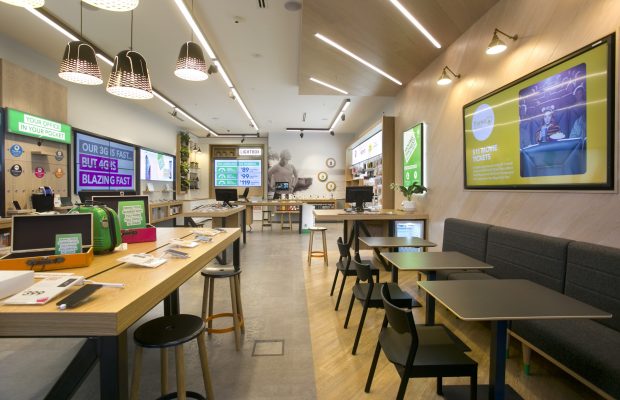
    New Zealand cellcos to blacklist Note7’s next week

    New Zealand’s mobile operators have hammered a nail into the coffin of Samsung’s discontinued Galaxy Note7 smartphones, arranging to blacklist use of the device across all of their mobile networks.

    Industry body the New Zealand Telecommunications Forum (TCF) is working with Samsung to cut off access to Note7 owners from November 18.

    After this date, the devices will not be able to be used across any New Zealand mobile network, although Wi-Fi services will still be available.

    TCF CEO Geoff Thorn said the blacklisting represents an additional safety measure by the nation’s mobile operators.

    “Numerous attempts by all providers have been made to contact owners and ask them to bring the phones in for replacement or refund, this action should further aid the return of the remaining handsets,” he said.

    The blacklisting marks and attempt by operators to coerce the hold-outs to take advantage of the global recall of the device and be refunded or swap their handsets with a Galaxy S7 or S7 Edge.

    Samsung permanently ended production of Note7 smartphones last month after reports that even some devices that had been replaced in the September recallhad suffered from the same overheating battery problem that led to a handful of devices exploding. Airlines worldwide had already banned in-flight use of the devices.

  • DBS to acquire ANZ’s Asian wealth assets

    DBS to acquire ANZ’s Asian wealth assets

    DBS Group said it plans to buy Australia and New Zealand Banking Group’s (ANZ) wealth and retail businesses in five Asian markets – part of a big private banking push for the Singapore lender and the first significant retreat from Asia for ANZ.

    The businesses in Singapore, Hong Kong, China, Taiwan and Indonesia, will be sold for around S$110 million, in a deal that underscores how smaller players are being squeezed out of private banking due to lack of scale.

    “Further investments do not make sense for us given our competitive position and the returns available to ANZ,” Chief Executive Shayne Elliott said in a statement.

    Mr Elliott also told an analysts call the bank would look to exit its retail and wealth assets in the Philippines, Vietnam, Cambodia and Laos separately.

    He added that for the bank to have remained competitive it would have had to invest further in developing its branch network and digital capacity.

    The deal will help DBS build up its leading position in the region, said Ms Tan Su Shan, DBS’ head of consumer banking and wealth management, noting that the Singapore lender had recently entered the top five bank rankings for the Asia-Pacific region.

    DBS and local rival Oversea-Chinese Banking Corp have been aggressively bidding for the Western private banking assets for sale in Asia.

    DBS, Singapore’s biggest lender, is also weighing a bid for ABN AMRO’s Asian private bank, sources have told Reuters.

    ANZ TO FOCUS ON INSTITUTIONAL BANKING IN ASIA

    The ANZ transaction is expected to be completed progressively from the second quarter of 2017, with full completion in all markets expected by early 2018.

    Most of its staff currently employed in the affected units will join DBS, ANZ said, adding that it will focus on its institutional banking business in Asia instead.

    ANZ, Australia’s third-largest bank by market value, also said it would take a loss of A$265 million on the sale, including write-downs, and added the sale was expected to increase its Tier 1 capital ratio by 15 to 20 basis points. The losses are set to be booked in the first half of the current financial year.

    They will come of top of A$360 million in one-off charges that will be booked in the year just ended. Those earnings are due to be released in full on Thursday.

    In 2009, ANZ acquired the Royal Bank of Scotland’s retail, wealth and commercial businesses in Taiwan, Singapore, Indonesia and Hong Kong as well as institutional businesses in Taiwan, the Philippines and Vietnam for US$550 million.

    The move was part of a “super-regional strategy” led by former ANZ Chief Executive Mike Smith, who left the bank last year.

    DBS Q3 PROFIT STABLE, BAD DEBT CHARGES UP

    The news comes as DBS posted a slight increase in third-quarter net profit, in line with expectations, although bad debt provisions rose sharply due to its exposure to the troubled oil and gas sector.

    Singapore banks are grappling with growing risks to earnings as credit woes deepen for the offshore services sector, which has been hit hard by an almost two-year rout in oil prices that lasted until early this year.

    DBS said net profit came in at S$1.071 billion in the third quarter that ended in September, versus a profit of S$1.066 billion a year earlier. That compares with an average forecast of S$1 billion from five analysts polled by Reuters.

    Bad debt charges rose to S$436 million in the third quarter from S$178 million a year ago.

  • New Zealand to extend rural broadband initiative

    New Zealand to extend rural broadband initiative

    The New Zealand government has allocated a further NZ$150 million ($107.1 million) towards improving broadband connectivity in rural areas.

    The government has announced the next phase of the rural broadband initiative (RBI), a project to boost broadband coverage and speeds in the 25% of the population not due to be covered by the concurrent Ultrafast Broadband (UFB) project.

    Under the second phase of the RBI program, improved broadband will be delivered to communities unable to access broadband speeds of at least 20Mbps. The first phase of the program improved speeds for around 293,000 rural users.

    In addition, the government’s mobile black spot fund (MBSF) will improve the availability of mobile services in areas lacking coverage, including state highways and tourist areas.

    There are more than 200 blackspots listed in the government’s request for proposals, but not all locations will received coverage.

    “My aim is to provide high-speed broadband to the greatest number of under-served rural New Zealanders within the funding available, and give regional communities access to high-speed broadband. We also want to improve the reach of mobile services to support safety on State Highways and enhance the visitor experience for tourists,” communications minister Amy Adams said.

    “We’ve set an ambitious goal of ensuring that by 2025, 99% of New Zealanders will have access to broadband peak speeds of at least 50Mbps, and everyone will have at least 10Mbps. We’re interested in seeing how proposals for delivering coverage under the RBI2 and MBSF programmes show an upgrade path in line with this vision.”

  • DHL Express Launches Expanded Auckland Facility

    DHL Express Launches Expanded Auckland Facility

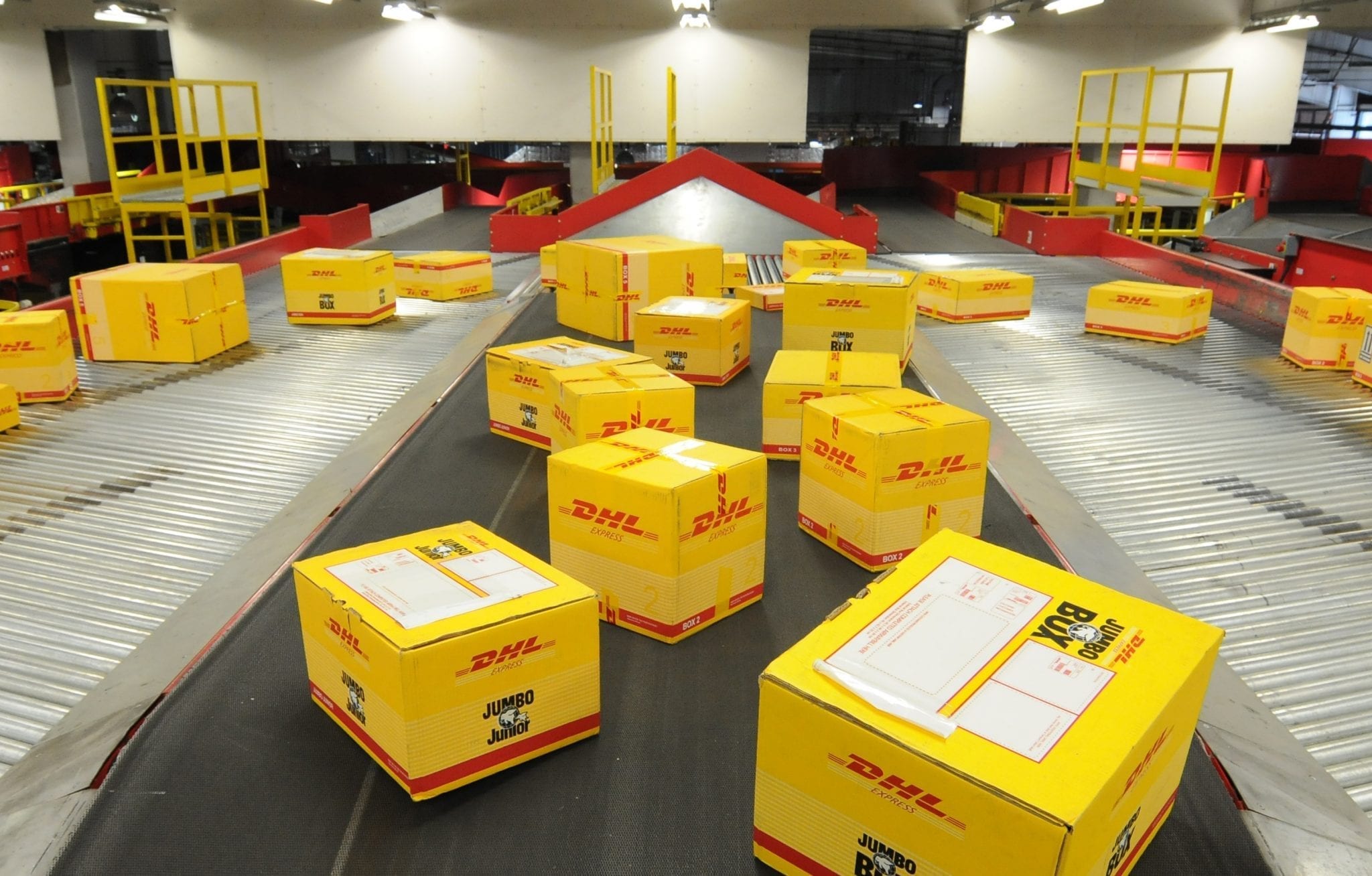
    DHL Express has opened an expanded facility at Auckland Airport to cater to growing demand for trade in and out of New Zealand.

    According to DHL, the new NZ$15.3 million (US$11.2 million) Auckland Gateway measures approximately 5,000m2 and doubles the processing capability of the previous facility.

    “International trade via imports and exports now comprises approximately 60% of New Zealand’s overall economic activity and is growing,” said Ken Lee, CEO of DHL Express Asia Pacific. “DHL Express is proud to facilitate trade for local businesses via our international network that connects New Zealand with over 220 countries and territories globally. The most popular trading partners for goods moving in and out of this Auckland-based facility include Australia, China, Hong Kong, Singapore, the UK and USA — with all trade lanes showing solid performance in recent months.”

    Some of the features include high-speed reweigh machines, telescopic extendable conveyors and 360-degreee CCTVs providing 24-hour monitoring.

    Mark Foy, country manager of DHL Express New Zealand, said that the company is committed to helping Kiwi businesses export and import products to facilitate global trade.

    “A key driver for this expanded gateway has been the growth in New Zealand SMEs shipping products internationally via DHL Express,” he said. “This expansion will assist with volume increases from all areas of the country, as innovative Kiwi businesses continue to tap into the global marketplace and reach international customers like never before.”

  • New Zealand’s Chorus plans 1Gbps wholesale fiber service

    New Zealand’s Chorus plans 1Gbps wholesale fiber service

    New Zealand fixed line operator Chorus has revealed plans to extend 1Gbps wholesale fiber services across its entire share of the Ultrafast Broadband (UFB) network from next month.

    The operator will make wholesale residential and SME broadband services available nationwide on any UFB connection within Chorus’ UFB rollout area.

    The UFB is New Zealand’s national fiber broadband network, designed to cover 80% of the New Zealand population by 2022. Chorus won 70% of the contracts to deploy the fiber network from Crown Fibre Holdings, the government-owned company set up to manage the project.

    Chorus said it plans to offer residential wholesale gigabit broadband services to retailers at an introductory price of NZ$60 ($44) per month – increasing to $65 per month after June 2017 – and a business service for NZ$75 per month.

    These prices still require approval from Crown Fibre Holdings, but if this approval does not come by the end of September services will still launch on a trial basis.

    With current technology Chorus said the gigabit broadband service will offer real-world downlink speeds of between 900Mbps and 970Mbs and uplink speeds of up to 500Mbps. This compares to an average download speed across Chorus’ networks of just 35Mbps.

    Chorus began offering Gigabit broadband services in the city of Dunedin in February 2015.

    “We are delighted that other fiber providers have joined Chorus in championing gigabit residential and business services,” Chorus CEO Mark Ratcliffe said.

    “Making New Zealand a true ‘Gignation’, beyond the 5,000-plus connections we have in Dunedin, should see us catapulted up the league tables of broadband speed rankings and reinforce the high quality of the broadband infrastructure we’re rolling out.”

  • JDA expands in Australia

    JDA expands in Australia

    JDA Software Group, Inc. announced the opening of a new North Sydney office that expands on the company’s Australia and New Zealand (ANZ) presence, which includes an office in Melbourne.

    JDA opened its first office in Sydney in 1994 and now counts more than 100 customers across retail, manufacturing, third-party logistics and wholesale distribution.

    “Since its beginning in 1994, JDA’s ANZ presence has continually grown and we’re proud to count so many customers across industries and solutions that count on JDA to power their supply chains,” said Amit Bagga, regional vice president for Asia-Pacific, JDA.

    “The move to a new office in Sydney represents a commitment by the business to continue to build on the success that our team has achieved.”

    JDA offers a rich portfolio of solutions that have been delivering great value for its customers for more than 30 years, including technology from its merger with RedPrairie (2012), and acquisitions of i2 Technologies (2010) and Manugistics (2006).

    “The Australian and New Zealand market is unique globally. In all of our target market segments, customers face a highly competitive landscape and high operating costs. In addition, their consumers are rapidly embracing omni-channel and demanding a more personalized experience. In such a market, our customers are continuously looking to reduce inventories, increase supply chain velocity, and use their people and capital assets efficiently,” said Bruce How, vice president of sales, ANZ, at JDA.

    “JDA’s solutions are backed by years of experience and driven by continuous customer feedback and research thereby enabling success for our customers. Looking ahead, we plan to continue our focus in empowering customers and driving profitable customer commerce, adaptable manufacturing, and intelligent fulfillment,” continued How.

    The new office is located at Level 3, 60 Miller St, North Sydney.