Tag: New Zealand

  • Vocus Group scraps plans to sell NZ business

    Vocus Group scraps plans to sell NZ business

    Australian enterprise-focused fixed line operator Vocus Group has abandoned plans to sell its New Zealand business, ending negotiations with all interested parties.

    In a statement, Vocus Group said none of the multiple offers it had received for the New Zealand business appropriately reflected the strategic value of the operation.

    The offers also did not provide the required certainty of funding and execution, according to Vocus Group chairman Bob Mansfield.

    As a result, Vocus Group now plans to “continue to invest in and grow Vocus NZ to enable that business to realise its strategic potential for shareholders.”

    Vocus Group first revealed it was seeking a buyer for its New Zealand operations in October 2017, and had originally planned to complete the sale by June this year.

    The company meanwhile announced that it is in the process of finalizing the appointment of several banks to arrange a full refinancing of its existing debt facilities, which will include an upsizing of the facilities. Vocus expects to complete its debt refinancing by the end of June.

    “The board would like to thank our bank group for their strong support shown to date,” Mansfield said.

    “We are comfortable that the increased financial capacity and covenants that will be sought through the refinancing will provide sufficient financial flexibility for the company to complete its strategic and transformation initiatives over the next few years.”

  • Credit card spending rebounds in March

    Credit card spending rebounds in March

    New Zealand retail spending on electronic cards rebounded in March on the back of increased grocery and liquor spending.

    Seasonally adjusted total retail spending on credit and debit cards increased 1 per cent in March, Statistics New Zealand.

    Economists had expected a lift of 0.5 per cent, according to a Bloomberg poll. Core retail spending, excluding fuel and vehicles, rose 1.6 per cent.

    “Despite losing a trading day to Good Friday, retail card spending rose in March,” retail manager Sue Chapman said.

    “The rise was driven by an increase in spending on grocery and liquor retailing, rebounding from a fall in the previous month.”

    Ms Chapman said spending may have been lower in February due to two large storms that hit several parts of the country.

    Consumables spending, which covers grocery and liquor retailing, rose 2.9 per cent in March.

    Spending on durables – which includes hardware, furniture and appliances – lifted 1.2 per cent on the month while hospitality rose 1.4 per cent in March versus February.

    Apparel spending, however, fell 1.1 per cent on the month. Spending on vehicles fell 1.8 per cent and spending on fuel fell 0.5 per cent.

    Thursday’s figures show actual total retail spending climbed rose 6.0 per cent in March to $5.5 billion.

    Card-holders across all industries made 151 million transactions in the month. The average value of $49 was unchanged on the year and down from $50 in February.

    “Election-related uncertainty looks to be well behind us, with consumers voting with their wallets. We remain constructive on the outlook for consumer spending over 2018 and beyond,” said ASB senior economist Mark Smith.

  • Spark launches LoRa IoT network across NZ

    Spark launches LoRa IoT network across NZ

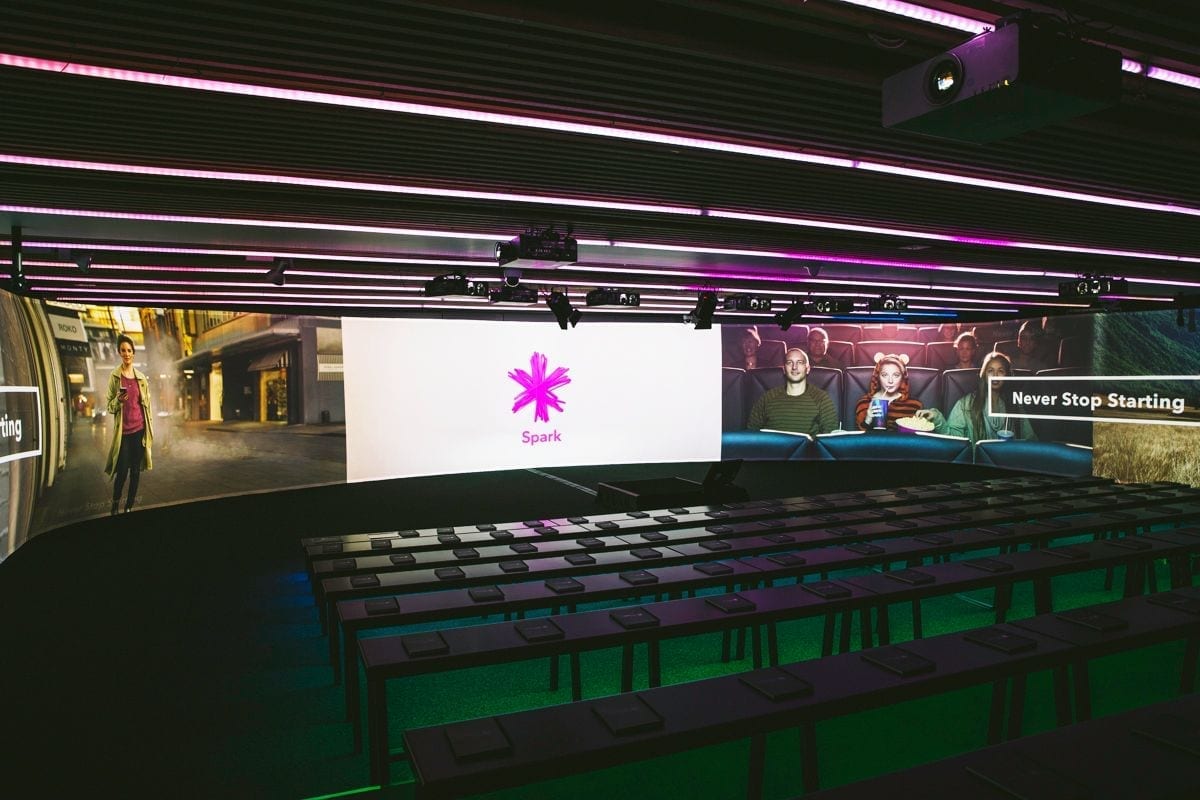
    New Zealand operator Spark has announced the commercial launch of its nationwide IoT network for businesses across the nation, with coverage reaching 60% of the country’s population.

    The IoT network, using the LoRaWAN technology, has been switched on in Auckland, Tauranga, Hamilton, Rotorua, Palmerston North, Shannon, Wellington, Nelson, Blenheim, Christchurch and Dunedin. Sites in Hastings and Invercargill will go live in the next few weeks, the telco said in a company statement.

    The network consists of gateways and antennas installed on Spark’s 4G cell sites. Spark is using Actility’s ThingPark Wireless platform, Kerlink’s gateways, and Kordia to build and maintain the network.

    Spark initially announced its LoRaWAN plans in July 2017, and details of coverage plans in December 2017.

    “Our IoT capability is really gathering pace, and now we’ve got this critical mass of coverage we’re able to make the network commercially available. This is a real milestone for Spark as we help New Zealand organizations win big in IoT,” said Michael Stribling, Spark’s general manager of IoT solutions.

    “While we currently have 60% of rural and urban New Zealand covered, we’ll be working to extend that to 70% by July this year. We’re also looking to partner with organizations to extend coverage into areas where they need it.”

    With its LoRaWAN IoT network, Spark said, business and local governments can deploy sensors across on a range of objects including vehicles, waterways, rubbish bins, machinery, carparks and livestock, with the sensors sending such information as the volume of rubbish in a public bin or water pH in a stream, over the network to the people managing these objects.

    Spark said LoRaWAN technology, which carries small amounts of data over long distances, uses less power than cellular networks, making it an affordable IoT solution.

    Compared to cellular connectivity, it works with a wide range of low-cost sensor technologies that are significantly cheaper on average than sensors for cellular networks. The cost to use the network is based on the number of sensors connected, and the number of messages those sensors send each month, the telco explained.

    For example it would cost a local farmer around NZ$1.79 ($1.29) per cow each month to track location and body temperatures of their cows using the LoRaWAN IoT network, Spark said.

    Spark has been testing LoRaWAN technology on trial sites for well over a year, with partners from a range of industries, including agriculture, marine and smart buildings.

    Some of its early adopters of the new commercial network include Levno, which has signed up as Spark’s first customer and will be working with the telco to extend network coverage to other areas. The Pamerston North-based agriculture firm is using Spark’s network to connect its fuel tank monitoring sensors.

    NB Smartcities NZ, a local firm offering smart city services, will also use Spark’s connectivity for smart outdoor lighting across the country.

    Claus Oustrup, director NB Smartcities NZ said the Spark network enables its council customers to leverage a range of smart city applications in addition to smart light technology.

    “For many councils, having real-time data, asset information and being in control of these devices can increase customer service response times and create real benefits for communities. For example, street lighting can account for as many as 50% of call center complaints. By having adaptable street lighting managed with real-time systems, these complaints can be quickly addressed, and their volume decreased,” said Oustrup.

    According to Stribling, the new LoRaWAN network will also enable more IoT technologies from overseas, like smart street lighting, to be adopted in New Zealand. At the same time, it is expected to give New Zealand developers of IoT technologies the chance to launch their products locally.

    “We’ve worked with the International LoRa Alliance to agree on Asia-Pacific standards so that products developed on LoRaWAN in New Zealand will work the same way on LoRaWAN networks in other countries,” he said.

    In addition to LoRaWAN, Spark has also deployed an IoT network using the 3GPP-compliant LTE CAT-M1 standard to cater different use cases. The company is also monitoring the global progress of the emerging Narrow Band (NB-IoT) standard and will invest in it when the use cases and ecosystem for NB-IoT become more mature.

    Last week, Spark also kicked off a 5G trial in Wellington, making it the country’s first mobile carrier to do so. The 5G trial came weeks after Spark announced changes to its management team as part of the company’s restructuring.

  • Vietnam Prime Minister meets New Zealand’s milk firms

    Vietnam Prime Minister meets New Zealand’s milk firms

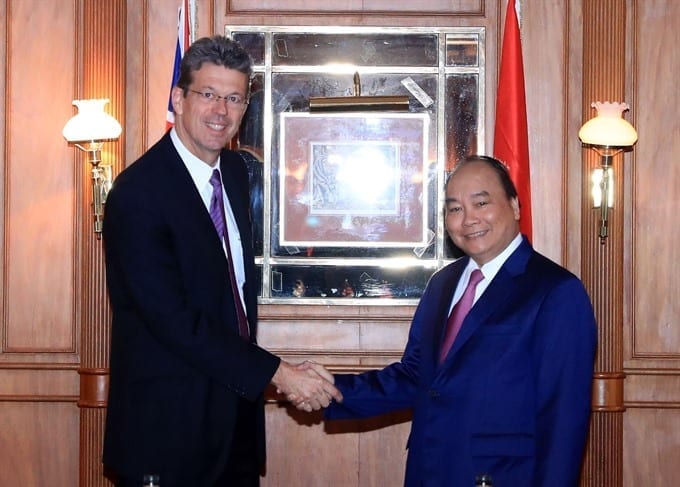
    Prime Minister Nguyễn Xuân Phúc said his Government encouraged foreign firms in milk production and processing to expand production, upgrade technology and apply energy-saving solutions in the country.

    He said this during his meeting with the representatives of some milk companies in New Zealand in Auckland on March 13 as part of his official visit to the country.

    During his reception for Lukas Paravicini, chief executive of Fonterra Cooperative Group Ltd – the leading milk exporter of New Zealand, Phúc said Việt Nam appreciated the cooperation of the firm with its Vietnamese partners. He highlighted the development of Việt Nam’s dairy and nutritional food market, saying the 93-million-strong market was considered one of the most attractive market groups in the world.

    Talking about the vast opportunities brought by the newly signed Comprehensive and Progressive Agreement for Trans-Pacific Partnership, Phúc expressed hope that Fonterra and other enterprises in New Zealand would fully tap those opportunities to increase investment in Việt Nam with the aim of expanding their market to other ASEAN member nations.

    He said the Vietnamese Government would promote investment in developing the dairy sector as well as create favourable conditions for enterprises to foster production in the field, contributing to generating more jobs and improving social welfare.

    On his part, Paravicini affirmed his firm’s interest in the Vietnamese market and said Fonterra had cooperated with many Vietnamese dairy firms.

    He said the group was providing dairy material for Việt Nam’s dairy, beverage and nutritional food companies and was selling high-quality products in the Vietnamese market.

    Fonterra pledged to further boost cooperation with Vietnamese enterprises, broadening its investment for production and business in Việt Nam, Paravicini said.

    The same day, Phúc received Kim Willoughby, director of Deosan Company, and Victor Trương, director of Richmond Company.

    Expressing their pleasure to meet the Vietnamese leader, the representatives of the two companies said they had worked with a number of Vietnamese partners with the intention of assisting Vietnamese firms in producing and processing dairy, contributing to improving the capacity of Vietnamese dairy companies.

    Willoughby spoke highly of the development potential of leading dairy businesses in Việt Nam, such as Vinamilk and TH True Milk. He said Deosan had cooperated with Vietnamese farmers processing milk and planned to invest in the dairy industry in Việt Nam.

    He also said Deosan would support Việt Nam’s dairy farms by providing suitable products and services, such as milking equipment and consumer goods, veterinary services, farm design management and quality management.

    Phúc said he highly valued Deosan’s assistance to Vietnamese dairy companies and affirmed that the Vietnamese Government always supported business and cooperation with local firms.

    Việt Nam is developing its dairy-processing industry in a modern and comprehensive direction, aiming to improve its competitiveness for regional and global integration, Phúc said.


  • Bubble tea franchise set to expand throughout New Zealand

    Bubble tea franchise set to expand throughout New Zealand

    New Zealanders have a growing thirst for the popular Asian drink “bubble tea,” with more stores expanding around the country next year.

    Bubble tea or boba tea is made with soft tapioca balls called pearls and originated in Taiwan in the 1980.

    The drink has become popular around the world with global sales of tapioca pearls growing at 4 per cent a year.

    Bubble tea sales in New Zealand are growing around 20 per cent a year, according to Marcus Teh, New Zealand manager of Gong Cha, an international chain of bubble teahouses.

    Auckland’s large Asian student population initially drove its popularity, he said, but this year around 30 per cent of customers were Kiwis.

    The black balls at the bottom of the glass are tapioca pearls.

    “Marketing plays a part but the bubble tea culture and drinks are slowly being loved by Kiwis,” Teh said.

    “We already know our brand is loved by Asians so we are trying to attract more New Zealanders.”

    Retail licensing expert Katrina Hammon said bubble tea bars were the new juice bars.

    “It’s new, different and on trend globally. McDonald’s Germany even added bubble tea to the menu in 2012, so New Zealand is well behind this trend,” she said.

    One of the pull factors of tea was the experience, she said.

    “The Chatime Tea brand, another chain of teahouses has an unique fit out, consumers can see the product being made and add in pearls. There are also healthy options like sugar free options, chia seeds, aloe vera.”

    Gong Cha and Chatime each have more than 1000 stores worldwide and three stores in Auckland.

    A fourth Gong Cha is set to open at Sylvia Park in November.

    Teh said potential franchisees had been in contact asking him to open stores in the South Island. He plans on opening three more stores next year, including in Wellington and Christchurch.

    Gong Cha will hire 20 staff in addition to the team of 30 already working for the company.

    The company was recently voted the most popular food and beverage brand in Singapore, and was also named the most popular tea brand in Korea.

  • Adairs continues with international expansion plans

    Adairs continues with international expansion plans

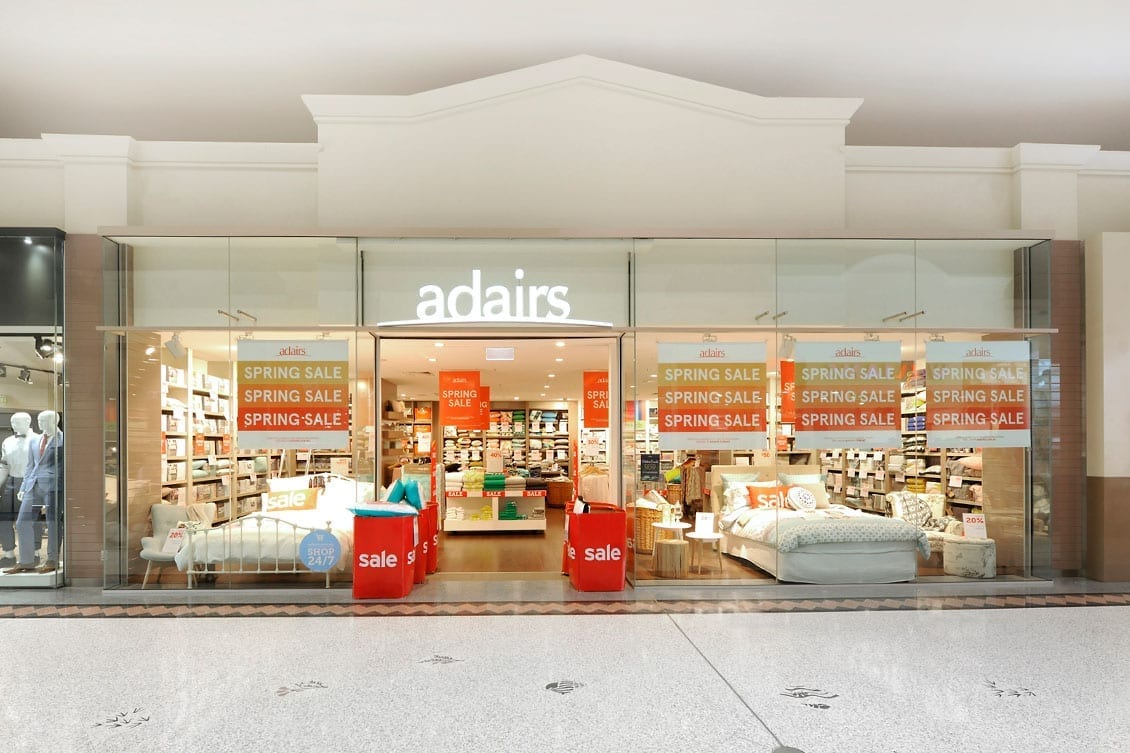
    Bedding retailer, Adairs, announced it will continue its international expansion next year and will roll out new stores in New Zealand and launch an international website.

    Mark Ronan, managing director and CEO, stated after the successful opening of their store in New Zealand, the company is looking into opening up to two additional stores in the country.

    Ronan said the company is also looking to deliver an international website in 2018.

    “Adairs has considerable opportunity to grow inside and outside of Australia and we will continue to assess these opportunities over the coming year,” he said.

    Ronan said Adairs will also continue to invest in their product team by adding resources to ensure that they “can deliver great product to customers.”

    “As I reflect on the lessons of the last 12 months, it has served to enhance my confidence that our strategy is sound, and our results will be most influenced by our successful execution of this strategy, rather than matters beyond our control,” he said. “‘Product, product and product’ refers to our product differentiation, range optimisation and merchandise planning strategy. Adairs is a product and design led business. Great product is critical to our success.”

    The company has posted a seven per cent increase in total sales for FY17, like-for-like sales, however, finished down 1.4 per cent.

    The company’s online sales continued to grow with investments in this area seeing second half sales up 41 per cent on the prior year. Despite growing total sales, Adairs’ NPAT result was well down on the prior year, with the large majority of this decline coming in the first half.

    Michael Butler, chairman of Adairs also addressed the ASIC infringement notice, denying the allegation asserting the retailer “has complied with its continuous disclosure obligations at all times.”

    “Nevertheless, your Bboard considered that it was in the best interests of Adairs to pay the penalty of $66,000 to enable the management team to focus on the operations of the business and avoid the anticipated cost and management diversion of defending this allegation,” he said.

    “Adairs is committed to keeping our shareholders fully informed.”

  • Timberland buys Icebreaker

    Timberland buys Icebreaker

    US-based global fashion brand owner VF Corporation has bought New Zealand’s Icebreaker Holdings.

    Icebreaker pioneered the ethical and sustainable production of natural performance apparel for men, women and children, using Merino wool, plant-based fibres and recycled fibres.

    The brand is sold in 47 countries through wholesale, branded retail stores and online.

    The company has an annual turnover of about US$150 million, however terms of the sale were not disclosed.

    Jeremy Moon, who founded the company in 1995, says it was always his plan to build a global brand from New Zealand.

    “Our partnership with VF provides us with the largest platform in the world to tell our story, access new markets and reach new consumers at an accelerated pace. This is a once-in-a-lifetime opportunity for our global Icebreaker brand team and for our wool suppliers to introduce a whole new universe of consumers to the benefits of sustainably farmed, ethically sourced, New Zealand Merino wool,” he said in a statement announcing the deal.

    “Bringing the Icebreaker brand into the VF portfolio is a special opportunity,” added Steve Rendle, chairman, president and CEO of VF Corporation. “Its natural fiber focus is an ideal complement to our SmartWool brand, which also features Merino in its clothing and accessories. Together, the SmartWool and Icebreaker brands create an advantaged position for VF as a leader in the growing and underpenetrated natural fibre category. We will have unmatched capabilities that will strengthen our ability to create innovative and sustainable natural fiber products across our brand portfolio, especially in VF’s outdoor and workwear brands.”

    VF Corporation has a diverse portfolio of lifestyle brands, including Vans, The North Face, Timberland, Wrangler and Lee.

  • JB Hi-Fi sales slow as New Zealand turnaround begins

    JB Hi-Fi sales slow as New Zealand turnaround begins

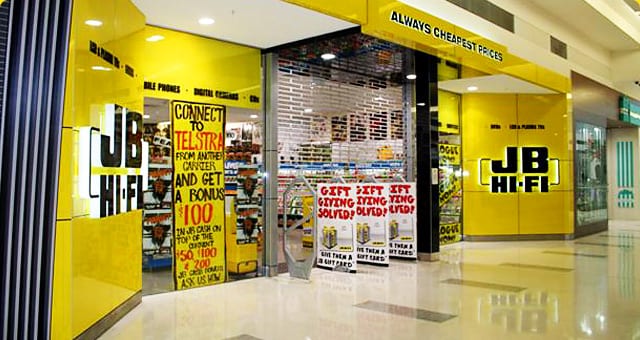
    JB Hi-Fi has recorded significantly lower sales on the prior corresponding period (pcp) in the first weeks of FY18 trading, outlining an expectation that the market will remain competitive heading into the Christmas trading period.

    In a trading update delivered at its Annual General Meeting on Thursday, JB Hi-Fi advised that year-to-date sales growth to October 22 was 6.2 per cent, down from 14.3 per cent in the pcp.

    Comparable sales growth for JB Hi-Fi was 3.2 per cent, down from 10 per cent in the pcp, while The Good Guys booked 3.1 per cent total sales growth and 2.4 per cent comparable sales growth.

    Sales moderated in September and October due to changes in the timing of “key product releases” from last year, which the company said had elevated sales growth in the pcp.

    “[We] expect the market to remain competitive as retailers drive for market share in the lead up to the key Christmas period,” the company said on Thursday.

    “In JB Hi-Fi and The Good Guys, we believe we have to unique and relevant brands, particularly in the eyes of our customers … we are confident we will maintain our market leading competitive position.”

    JB Hi-Fi Group CEO Richard Murray told investors at the AGM that since Terry Smart had been appointed as managing director of The Good Guys in April a variety of positive changes had been made to the business.

    This has reflected in TGG’s year-to-date trading, which is well up on the 1.3 per cent decline in comparable sales that JB Group booked for the business between November 2016 and June 2017.

    Murray reiterated his confidence in JB’s prospects against incoming competitors like Amazon, saying the strategy that’s been adopted to deal with the changing retail landscape has been extensively researched.

    “We have engaged and researched internationally and have challenged our current and future strategies, particularly as they relate to new competitors,” Murray said.

    “From price intelligence and benchmarking, delivery and fulfilment capability, digital infrastructure to customer experience, we have undertaken detailed analysis and planning and are confident in our go to market plans.”

    Murray also signalled that the first stages on his turnaround of NZ operations, which he called out at the full-year result in August, are underway, with the launch of a new e-commerce website.

  • Hawaiki Cable nearly ready for installation

    Hawaiki Cable nearly ready for installation

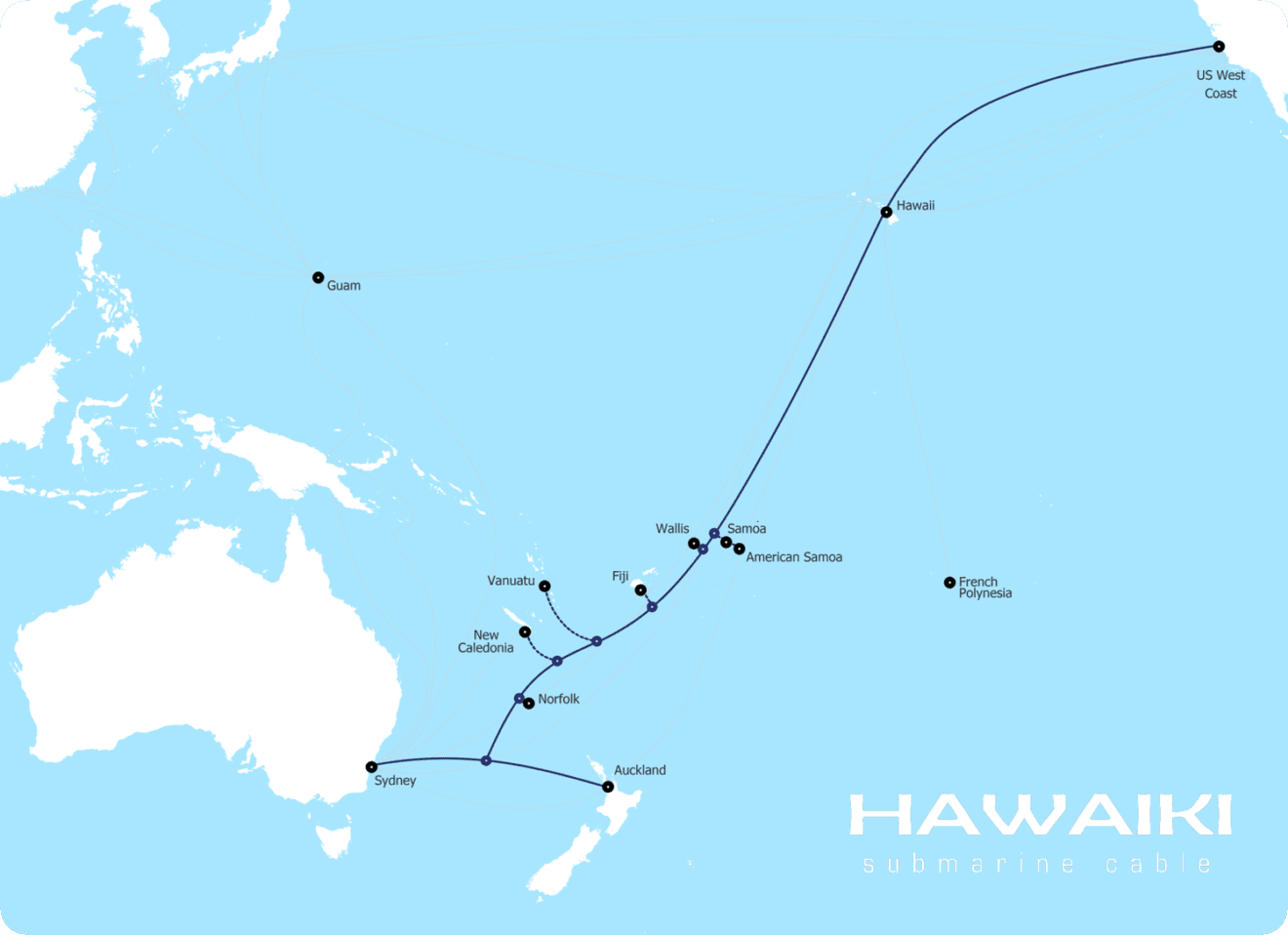
    The companies behind the planned Hawaiki transpacific cable connecting Australia and New Zealand with the US have revealed that installation of the cable is due to commence next month.

    Hawaiki Submarine Cable and cable supplier TE Connectivity said the 14,000km of subsea cable are in the final stages of being loaded onto two cable laying vessels.

    All installation permits for the planned landings in Australia, New Zealand and the US have meanwhile been secured, and the system remains on track for completion in mid-2018.

    Once complete, the Hawaiki Cable will link the three nations via Hawaii and American Samoa, with options to expand to multiple south Pacific islands such as Fiji and Tonga. It will be the highest cross-sectional capacity link between the US and Australia and New Zealand.

    “The coming months will see the realization of our vision for Hawaiki, a system that will impact the capabilities and economies of hundreds of Pacific communities,” Hawaiki Submarine Cable CEO Remi Galasso said.

  • ANZ markets outpaced in mobile shopping

    ANZ markets outpaced in mobile shopping

    Growth in online shopping in Australia and New Zealand is much slower compared to some emerging markets in the Asia Pacific region, according to the recent Mastercard Mobile Shopping Survey.

    Emerging markets in Asia Pacific have recorded high year-on-year growth in mobile shopping, outpacing their more developed counterparts. India, at 75 per cent, has retained its crown as the region’s top mobile shoppers for the second consecutive year; China, at 71.4 per cent, remains a close second.

    The Philippines (53.5 per cent) and Malaysia (55.6 per cent) have the highest year-on-year growth in mobile shopping, recording increases of 12.6 per cent and 10.1 per cent respectively.

    While the Philippines, Malaysia, China and India have recorded growth in mobile spending, the more advanced markets like Japan (31 per cent), Australia (26 per cent), and New Zealand (26 per cent) are keeping their mobile purse strings tight, the study showed.

    The study also revealed Asia Pacific’s penchant for mobile shopping has also fueled a steady increase in digital wallet adoption, with more than one in five consumers (22.3 per cent) using such payment methods. The region’s consumers are also embracing QR code payments. Over one in ten consumers use QR code payments with the most avid users hailing from China (42.6 per cent) by a wide margin.

    “Consumers in many of Asia Pacific’s emerging markets are mobile-first users, having leapfrogged the traditional payment evolution,” said Benjamin Gilbey, senior vice president, Digital Payments and Labs, Asia Pacific, Mastercard. “Their governments are making significant efforts to push the development of the e- and m-commerce landscape as well as its supporting infrastructure, which has in part contributed to the growth we’ve seen in the latest survey results.”

    Gilbey said today’s consumers have shifted from simply being one-device users to one-app users as they demand more seamless payment experiences.

    The Mastercard Mobile Shopping Survey, which was carried out across fourteen markets in Asia Pacific (Australia, China, Hong Kong, India, Indonesia, Japan, Malaysia, New Zealand, Philippines, Singapore, South Korea, Taiwan, Thailand & Vietnam) where total of 8,738 consumers aged 18-64 were polled online, revealed that majority of consumers across the region (53.6 per cent) cite convenience as a key reason for shopping on their mobile devices, particularly those in China (70.9 per cent), Thailand (60.8 per cent) and Taiwan (59.2 per cent). Contrary to the rest of the region, majority of consumers in Malaysia cited the ability to shop on the go as a key reason, as opposed to convenience.

    Clothing and fashion accessories (34.9 per cent), personal care and beauty products (21 per cent) and movie tickets (20.2 per cent) are the top purchases made by Asia Pacific’s mobile shoppers, the study showed. This was not the case, however, for mobile shoppers in Japan, New Zealand and Taiwan, whose top purchases include books, CDs and DVDs; toys and gifts; and personal and beauty care products, respectively.

    Preferences for in-store shopping continues its steady decline across Asia Pacific, dropping to 45.9 per cent from 48.6 per cent two years ago.

  • New Zealand expanding national fiber network

    New Zealand expanding national fiber network

    The New Zealand government plans to extend its Ultra-Fast Broadband (UFB) national fiber network to 190 more small towns.

    The government has announced plans to spend NZ$130 million ($93.4 million) to extend the network to 60,000 new households and businesses across the nation and complete the UFB deployment by 2022.

    A further NZ$130 million will be spent to expand the concurrent Rural Broadband Initiative (UFB) to bring non-fiber broadband to another 74,000 rural premises, and to extend mobile coverage to an extra 1,000km of rural highways as part of the Mobile Black Spot Fund.

    The RBI involves a combination of upgrades to existing fixed line infrastructure and fixed wireless infrastructure.

    “We started UFB in 2010 with the original goal of connecting 34 towns to world-class fibre-to-the-premises. Earlier this year we expanded it to 200 more towns and today’s announcement will bring us to 390,” New Zealand communications minister Simon Bridges commented.

  • Flight Centre buys two New Zealand firms

    Flight Centre buys two New Zealand firms

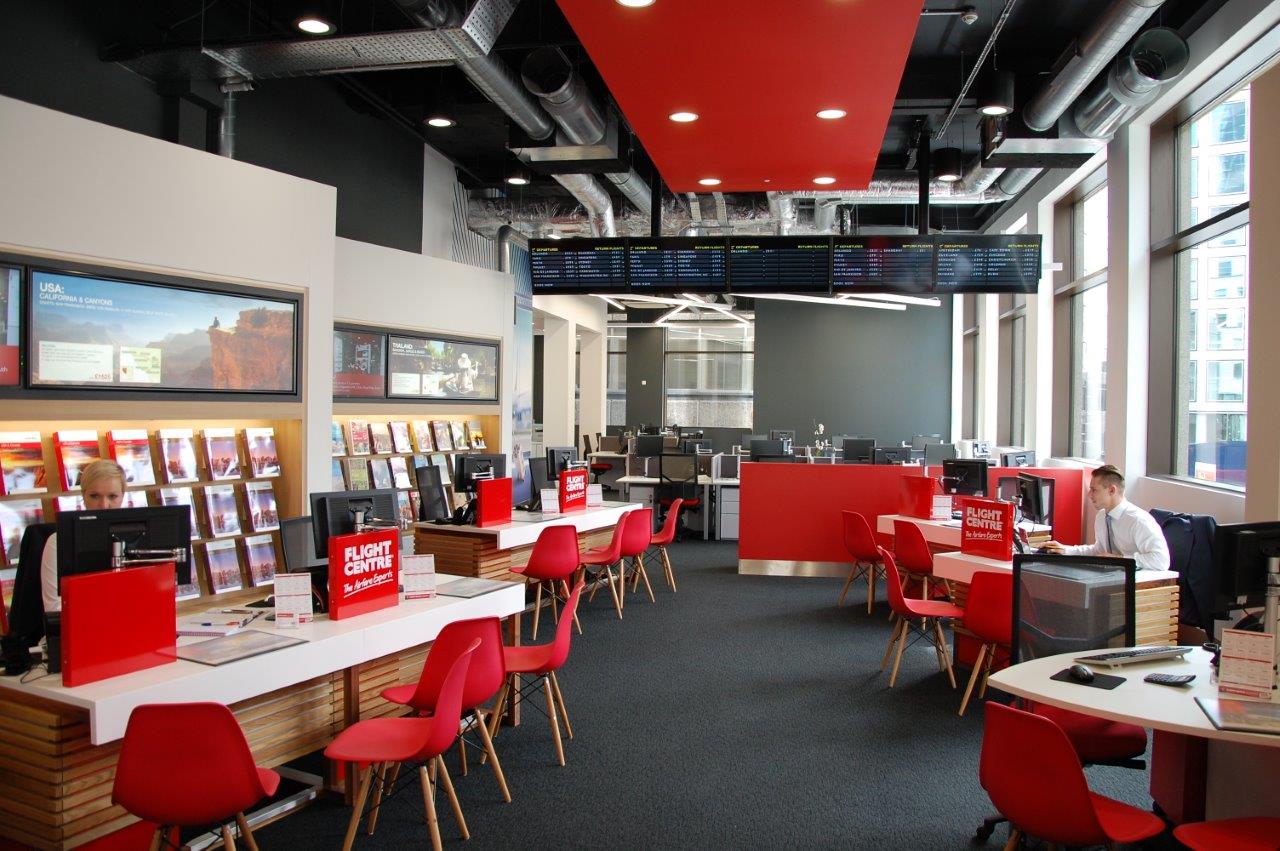
    ASX-listed Flight Centre Travel Group bought two local travel firms for a combined A$19.5 million as it seeks to expand its footprint in New Zealand, making it one of the country’s biggest travel management groups.

    In its annual earnings published to the ASX on Thursday morning, the Brisbane-based company said it has agreed to buy Travel Managers Group (TMG) for an initial A$8.37m and Executive Travel Group (ETG) for an initial A$11.17m, each with working capital adjustments to be made.

    TMG provides systems and support to a network of 180 travel brokers and operates a 22-shop franchise network including 12 TravelSmart shops and 10 other non-branded stores, while ETG is New Zealand’s biggest independent corporate travel manager.

    The Australian travel agent’s New Zealand business generated total transaction value of A$1.1 billion in the year ended June 30, 2017, up 10 per cent from a year earlier.

    Chief operating officer Melanie Waters-Ryan said the business was “successfully executing its key global strategies which include enhancing productivity in the short-term”.

    “The company has also strengthened its presence in the home-based/independent contractor sector, a rapidly growing part of the travel industry, by recently agreeing to buy established networks in both New Zealand (Travel Managers) and Australia,” she said.

    When it announced the deals at the beginning of August, Flight Centre said the purchases made New Zealand its fifth biggest business globally.

  • FJT Logistics ships ocean cruising trimaran from Vietnam to New Zealand

    FJT Logistics ships ocean cruising trimaran from Vietnam to New Zealand

    FJT Logistics, a Pangea member in New Zealand, has shipped a brand-new ocean cruising trimaran constructed from light weight carbon fibre in Cat Lai, Vietnam to Auckland, New Zealand. The Trimaran departed from Tan Cang – Cat Lai port, near Ho Chi Minh city, which is the biggest and most modern container port in Vietnam.

    The Trimaran was secured with a special tailor-made wood support saddle and shrink-wrapped for protection against damages during the whole journey. The packed Trimaran measured 18m long, 4.8m wide and 5.33m high, with a total weight of 10,000kg.

    The boat was stowed under deck on a platform of 8 40’ Flat Racks and departed on 25th July. It was shipped from Vietnam via Kaohsiung Port in Taiwan and finally arrived at Auckland on board M/V OOCL Savannah on 18th August.

    Once the Trimaran arrived to Auckland, FJT Logistics coordinated the lifting and discharging operations as well as the delivery with a low bed truck to Silo Park boat yard, where the boat will be assembled and rigged. After sea trials are completed the ultimate Trimaran will begin cruising in the ocean.

  • Spark profit grows 13% in FY17

    Spark profit grows 13% in FY17

    New Zealand’s Spark has reported a 13% increase in net profit for the financial year ended in June as a result of one-off gains and improved mobile performance.

    Net profit grew to NZ$418 million ($305.7 million), with revenue increasing 3.3% to NZ$3.61 billion. Mobile revenue grew 5.6% due to a 4.1% increase in high margin service revenue and a 4.3% growth in total connections.

    Spark also increased its wireless broadband subscriber base by nearly 17% to 84,000, while the company increased its fiber broadband subscriber base by nearly 74% to 172,000.

    The company has to date migrated more than a third of its customers off its legacy copper network and on to wireless broadband as well as fiber services via the state-led Ultrafast Broadband national fiber network project.

    Fixed voice and managed data revenues meanwhile fell 12% to NZ$104 million due to ongoing substitution. Part of this substitution involves the migration of 11,000 voice only connections on Spark’s VoLTE service.

    For the current year, Spark is anticipating a 0-2% increase in both revenue and ebitda, and a slightly lower capex spend of NZ$410 million.

    The operator said it plans to increase its emphasis on wireless services and investment, and to develop its multi-brand strategy to better serve the low end of the market.

  • Online spending eases in June

    Online spending eases in June

    The growth rate for New Zealanders’ total online retail shopping eased back slightly in June, but spending was still up 10 per cent compared to June last year.

    According to the latest BNZ and Marketview monthly report on New Zealand’s online retail sales, purchases from offshore online retailers accounted for 44.5 per cent of the month’s online spending, and spending at these retailers was up 13 per cent on June 2016.

    A surge in spending on Computers and Electronics drove half of the increase.

    Clothing had a quieter month than usual, with purchases from offshore online retailers only up  per cent on June last year.

    Spending at local online retailers was up 9 per cent on June last year.

    “While slower than the double-digit growth rates we’ve generally been seeing since 2016, this level of growth is still more than double that of local bricks-and-mortar stores, which were only up 4 per cent on June last year,” said Gary Baker, director, institutional research, Bank of New Zealand.

    Food store-types drove approximately half of the growth at local online sites (June 2017 vs June 2016).

    Clothing purchases were also strong at local online merchants, up 16 per cent on last June.