Tag: nike

  • Adidas expects to grow China sales this year

    Adidas expects to grow China sales this year

    German sportswear company Adidas said on Thursday it would grow in its key market of China in 2022 even after it was hit by renewed pandemic restrictions and the aftermath of a consumer boycott of Western brands.

    The comments come after Manager Magazin reported Adidas expects sales in China to be down 400 million euros ($455 million) in 2022, without citing its sources.

    Asked about the article, an Adidas spokesperson said: “Our business in China grew in 2021 and our business in China will grow in 2022 as well.”

    Adidas’s third-quarter sales fell 15% in Greater China, although they were up 15% in the first nine months of the year. The company reports full-year 2021 results on March 9.

    Western brands have come under fire in China for saying they would not source cotton from Xinjiang after reports of human rights abuses against Uyghur Muslims in the region. Beijing denies any abuses.

    Adidas said last year it had launched an action plan to try to revive its fortunes in China, long its most important growth market. It has set up a dedicated studio for marketing and is increasing its creation of products just for the Chinese market.

    Manager Magazin said the situation was seen as so critical that Adidas sales chief Roland Auschel had traveled to China in January despite quarantine requirements.

    Rival Nike said in December supply issues and fresh COVID-19 lockdowns led to a 20% fall in revenue in Greater China in its fiscal second quarter.

  • Nike cries foul over virtual shoes, suing retailer that sells sneaker NFTs

    Nike cries foul over virtual shoes, suing retailer that sells sneaker NFTs

    Sneaker giant Nike sued online reseller StockX in New York federal court on Thursday for selling unauthorized images of Nike shoes, marking the latest lawsuit over digital assets known as non-fungible tokens.

    Nike said StockX’s NFTs infringe its trademarks and are likely to confuse consumers. Its lawsuit asked for unspecified money damages and an order blocking their sales.

    Detroit-based StockX, a platform for reselling sneakers, handbags, and other goods, was valued at more than $3.8 billion last year.

    A representative for the company did not respond to a request for comment, nor did Nike or its attorneys.

    Nike said StockX last month began selling unauthorized NFTs of its sneakers, telling buyers they would be able to redeem the tokens for physical versions of the shoes “in the near future.”

    The complaint said StockX has sold over 500 Nike-branded NFTs.

    The lawsuit said complaints about the NFTs’ “inflated prices and murky terms of purchase and ownership” and buyers’ doubts about the legitimacy of StockX’s model have hurt Nike’s business reputation.

    Nike said it will release “a number of virtual products” later this month in conjunction with the digital art studio RTFKT, which it acquired in December.

    NFTs have recently exploded in popularity, and lawsuits over them have begun to hit U.S. courts. Miramax sued director Quentin Tarantino in November over his plans to auction NFTs related to the 1994 film “Pulp Fiction,” which he directed and the studio distributed.

    Last month, Hermes sued artist Mason Rothschild over his “MetaBirkin” NFTs of the French company’s Birkin bags.

  • Thousands strike work after Nike supplier cuts Tet bonus

    Thousands strike work after Nike supplier cuts Tet bonus

    Thousands of workers of Taiwanese-invested footwear maker Pouchen Vietnam, a Nike contract manufacturer, struck work Friday, demanding the same Tet bonus as last year.

    They refused to return to work after finishing their lunch to protest the company’s policy to pay less bonus than last year for the coming Tet (Lunar New Year) festival. Tet, the most important Vietnamese festival, falls in early February this year. The workers stood on national road 1K in front of their factory’s entrance, causing traffic congestion for hours. The strike affected others and all 14,000 workers of the factory in Bien Hoa Town, southern Dong Nai Province, stopped working.

    A mobile police team was dispatched to maintain order in the area. A female worker said that the company had announced Thursday that employees who have worked for it a full year or more will be given Tet bonuses of 1-1.54 months’ salary – around VND5 million ($217) to nearly VND20 million.

    The highest bonus in 2021 was 1.87 months’ salary, and in previous years, 2.2 months. “With this (coefficient), workers’ Tet bonus in 2022 will be lower than before,” she added.

    A Pouchen representative said that in 2021, the company had faced difficulties in production and business. When the fourth wave of Covid-19 broke out, the factory had to stop working from July 12 to Sept. 30, 2021. On Oct. 5, 2021, it resumed production, but at 60 percent capacity.

    Due to the failure to fulfill the production plan, profits fell, so the Tet bonus, the biggest and most anticipated reward for workers, could not be the same as the previous year. The rep also said that under the collective labor agreement, the company would pay Tet bonus to employees based on its business performance.

    Nguyen Thi Nhu Y, head of the Dong Nai Provincial Labor Confederation, said the union was coordinating with authorities to resolve the situation. She noted that Pouchen’s Tet bonus was higher than the local industry average.Nguyen Huu Nguyen, Chairman of the People’s Committee of Bien Hoa, said relevant agencies are trying to negotiate with the board of directors of Pouchen to increase the Tet bonus. “However, employees need to share the company’s difficulties, because Covid-19 has caused businesses to suspend operations for months,” he said.

    Pouchen Vietnam, part of Taiwan’s Pouchen Group, has one more factory in Dong Nai and six others in HCMC and the three southern provinces of Tien Giang, Tay Ninh and Ba Ria – Vung Tau for a total of 130,000 employees. The group is expected to spend more than VND1.2 trillion on Tet bonuses this year.

  • Nike eyes recovery as Vietnam factories reopen

    Nike eyes recovery as Vietnam factories reopen

    Sportswear maker Nike is confident the resumption in production in Vietnam will boost the company’s future recovery.

    “Compared to ninety days ago, we are increasingly confident supply will normalize heading into fiscal 2023” as all factories in Vietnam were operational and production was at about 80 percent of what it was before the closures, finance chief Matthew Friend said.

    Social distancing in Vietnam, where more than half of Nike’s footwear and about a third of its apparel manufacturing occurs, in the July-September period caused the company to cancel production of roughly 130 million units.

    But as the government eased its social distancing regulations early October, its factories have reopened.

    The company forecasts growth to be in the lower single digits for the next quarter because of the continuing impact of lost production from pandemic-related disruptions in Vietnam where an average 18,000 new cases were recorded in the last seven days.

    Friend said Nike will continue to watch the Omicron variant to see what impacts it may bring to production.

    Demand for Nike’s goods continues to outpace supply. The previous quarter, Nike reported a 10-week delay in production because of a lockdown in Vietnam and said it expected flat revenue growth for the November quarter.

    Nike posted a revenue of $11.4 billion in the quarter ending Nov. 30, up 1 percent from the same period a year earlier. Analysts expected revenue of $11.2 billion.

  • Major garment producer says did not lose Nike orders due to Covid restrictions

    Major garment producer says did not lose Nike orders due to Covid restrictions

    Viettien Garment Corporation has not lost any of its Nike orders to other countries since the American company could not find suitable alternatives, its chairman said.

    “Until October, when we reopened, Nike has not moved any of its orders from Viettien to another country because it could not find an appropriate manufacturer in terms of delivery time and quality.”

    Giang, also chairman of the Vietnam Textile & Apparel Association, said during the restrictions in the third quarter, 13-14 percent of garment orders were moved from Vietnam to other countries.

    But there are signs that orders are coming back for next year, he said.

    “This is why we have set an export target of $43.5 billion.”

    Last year, exports had fallen by 9 percent to $35 billion.

    Giang said that foreign companies only move orders to other countries when the deadline is too close, and they continue to have confidence in Vietnam.

    Vietnam’s garment exports in the first 10 months of this year fell by 5 percent year-on-year to $24.74 billion.

  • Nike manufacturers in Vietnam resume operations

    Nike manufacturers in Vietnam resume operations

    Nearly 200 Vietnamese contract manufacturers for Nike have resumed production after a period of suspension due to Covid-19, a company executive told Vietnamese Prime Minister Pham Minh Chinh.

    Nike is committed to further investing and expanding in Vietnam, the company’s chief sustainability officer, Noel Kinder, told the PM Tuesday at a meeting on the sidelines of the 2021 United Nations Climate Change Conference in the U.K.

    The fourth wave of Covid, which began at the end of April, forced factories, especially in the south, to restrict production and impose stringent curbs to contain its spread.

    On October 1, HCMC allowed most commercial and business activities to resume as rapidly increasing vaccination rates helped bring the outbreak under control.

    Vietnam’s purchasing managers’ index (PMI) surpassed the 50-point threshold in October after four months of decline, indicating expansion in manufacturing.

  • Nike’s Vietnam supply hurdles in focus ahead of quarterly results

    Nike’s Vietnam supply hurdles in focus ahead of quarterly results

    Nike’s updates to its full-year sales outlook on Thursday will likely answer that pressing question for Wall Street as the world’s largest sportswear maker deals with unprecedented supply challenges ahead of the holiday season.

    Three months ago, Nike gave a rosy outlook for the rest of the year as it benefited from consumers splurging on sneakers for running and hiking as they returned to their routines after over a year of staying at home.

    Still, some analysts have cut their outlook for Nike’s sales, predicting that lockdowns and factory closures in Vietnam, where about half of all Nike footwear is manufactured, will cause shortages during the crucial shopping season.

    “We believe the risk of significant cancellations beginning this holiday and running through at least next spring has risen materially for Nike as it is now facing at least two months of virtually no unit production at its Vietnamese factories,” BTIG analysts wrote in a note.

    Many factories in Vietnam’s manufacturing hubs have been shut or are operating with drastically fewer on-floor workers since mid-July as a surge in Delta variant cases forced the government to implement tight containment policies.

    Other apparel companies including Abercrombie & Fitch and Adidas AG have taken a hit to their businesses due to production issues in Vietnam. read more

    Some analysts, however, see Nike using its scale to offset the sales impact from Vietnam shutdowns.

    “The company should be able to mitigate some headwind by shifting production to other countries, like China, and prioritizing top sellers, key products, and its DTC (direct-to-consumer) channel,” Telsey Advisory Group analysts said.

    Since the start of September, analysts have cut their full-year sales expectations for Nike to $49.81 billion from $50.34 billion due to worries about supply shortages

    Full-year earnings per share estimates have also fallen to $4.24 from $4.33, according to IBES data from Refinitiv.

    Nike’s revenue for the reporting quarter is expected to have risen 17.7 percent to $12.46 billion from a year earlier.

    The blue-chip stock has gained 11 percent this year, but is down about 10 percent from its record high hit in August.

  • Nike launching sustainable concept store in Seoul

    Nike launching sustainable concept store in Seoul

    After launching the Rise concept store last year to Guangzhou, China, sportswear giant Nike has unveiled a new version of the concept which will launch in Seoul, South Korea.

    The store will feature a new digital platform, Sports Pulse, which will seek to bridge the gap between physical and online retail and create an “immersive retail experience”, as well as an interactive RFID-enabled footwear table, Inside Track, where shoppers can compare product details by simply placing products on the table.

    Three new ‘experience zones’ will also be debuted in the Seoul store: The Sports Hub, which will help shoppers connect with sporting opportunities in the city; The City Replay, a space to showcase hyperlocal products; and The Huddle, a place for a group or one-on-one expert sessions tailored to their fitness goals.

    And, according to Nike, it does so while also boosting the business’ sustainability and circularity.

    “In addition to being among the first Nike stores to secure a LEED Gold certification, Nike Seoul is also the first in Asia to launch … Nike’s fully integrated service for recycling and donating gently worn footwear and apparel,” the business said in a statement.

    “Shoppers can drop off gently-worn shoes – and now, for the first time, apparel – to the Seoul store, where the products will either be recycled or donated to partnering organizations that help communities facing disasters and other challenging circumstances.”

  • Nike and Adidas face supply-chain disruption after Vietnam factory closure

    Nike and Adidas face supply-chain disruption after Vietnam factory closure

    Taiwan’s Pou Chen, which makes footwear for companies such as Nike and Adidas, suspended operations at its plant in Ho Chi Minh City on Wednesday as COVID-19 curbs hit factories in the country’s business hub.

    Vietnam’s health ministry said in a statement that production at Pou Chen’s Pouyuen Vietnam factory would be suspended for 10 days.

    State media said 49 infections had been detected at the plant in Ho Chi Minh City, which is at the epicenter of the country’s worst coronavirus outbreak.

    The company did not immediately respond to an email seeking comment.

    Shares in Pou Chen, the world’s largest manufacturer of branded athletic and casual footwear, closed down 1.3% on Wednesday.

    After successfully containing the disease for much of the pandemic, Vietnam has faced a more stubborn outbreak since late April.

    Record infections and strict curbs on movement have left plants operating below capacity in northern provinces where suppliers for Apple, Samsung Electronics and other global tech firms are located, sources have said.

    Pouyuen Vietnam, the largest employer in the city with 56,000 workers, was unable to arrange for its workers to sleep at the site as required by authorities to allow the business to remain open, the health ministry said on Wednesday.

    Last year, Pouyuen Vietnam was ordered to suspend its production for two days after failing to meet local social distancing rules.

    Earlier this week, state media said authorities also ordered 29 companies in the Tan Thuan Export Processing Zone, an industrial park, to suspend production due to the outbreak.

    In the neighboring Saigon Hi-Tech Park, which houses international companies, more than 700 infections were detected in recent days and authorities ordered companies to shut units with infected workers, state media reported.

    Despite the latest outbreak, Vietnam has recorded far lower caseloads than many other countries with 36,605 infections in total and 130 deaths.

  • Nike could run out of Vietnamese sneakers

    Nike could run out of Vietnamese sneakers

    The shutdown of two contract manufacturers in Vietnam due to Covid-19 could worsen Nike’s sneaker supply problems, a market research company has warned.

    The fact that South Korea’s Changshin Vietnam and Taiwan’s Pou Chen Corp in HCMC have stopped operating since last week “may exacerbate the supply chain disruptions that the company has had to deal with,” S&P Global Market Intelligence said in a report.

    Vietnam accounted for 49 percent of U.S. seaborne imports linked to Nike and its products in the second quarter, it said.

    Nike said in fiscal 2020 contract factories in Vietnam made roughly 50 percent of its branded footwear.

    There is a refocusing on China, the report said, pointing out that in the second quarter of this year, growth of U.S. seaborne imports linked to Nike from Vietnam was 6.6 percent year-on-year while it was 54.6 percent for China.

    A Nike spokeswoman said in an emailed statement: “We continue to work with our suppliers to support their efforts in response to the dynamic and unprecedented nature of Covid-19.”

    HCMC has recorded over 39,500 Covid-19 cases since April 27.

  • Nike supplier halts production at three Vietnam plants due to Covid-19

    Nike supplier halts production at three Vietnam plants due to Covid-19

    Changshin Vietnam, a South Korean shoemaker, became the second major Nike supplier to suspend production in Vietnam as it shut three of its factories near HCMC on Thursday due to a coronavirus outbreak.

    The factories in Dong Nai province, which employ nearly 42,000 workers, will remain shut until July 20, the Vietnamese government said in a statement, adding many of the 177 infection cases detected in the province were from the factories.

    Nike did not respond for comment outside U.S. business hours, while calls to Changshin went unanswered.

    On Wednesday, Taiwan’s Pou Chen Corp, which makes footwear for Nike and Adidas, suspended operations at its plant in Ho Chi Minh City. The plant will be closed until July 23 for “health and safety considerations”, the company said, adding it did not expect a major financial impact.

    Vietnam had until recently successfully contained coronavirus outbreaks, with limited disruption to its crucial manufacturing sector. However, since late April, it has seen record cases on many days this month, most of those in the commercial hub Ho Chi Minh City and its neighboring industrial provinces of Dong Nai and Binh Duong.

    The country has recorded 38,200 infections and 138 deaths overall, a vast majority of those since May.

    Almost all of Nike’s footwear is manufactured outside the United States. The company has said contract factories in Vietnam produced about 50 percent of total Nike brand footwear in fiscal 2020, but did not specify the volumes that came from Changshin or Pou Chen.

    The latest resurgence in virus cases could signal another hiccup for the world’s largest sportswear chain in 2021, after container shortages and U.S. port congestion held up Nike’s inventory earlier in the year.

    “Having the factories shut for one or two weeks for Nike is going to cause a massive problem for its supply chain,” China Market Research Group analyst Shaun Rein said, adding the shutdown would lead to price hikes.

    Nike also saw its China sales take a hit after calls to boycott global brands for their comments around forced labor in Xinjiang.

    Eclat Textile Co, a Taiwan-based garment and fabric supplier, has suspended production at its Dong Nai plant until July 17, it told the Taipei stock exchange.

  • Nike sues company that made ‘Satan Shoes’ with Lil Nas X

    Nike sues company that made ‘Satan Shoes’ with Lil Nas X

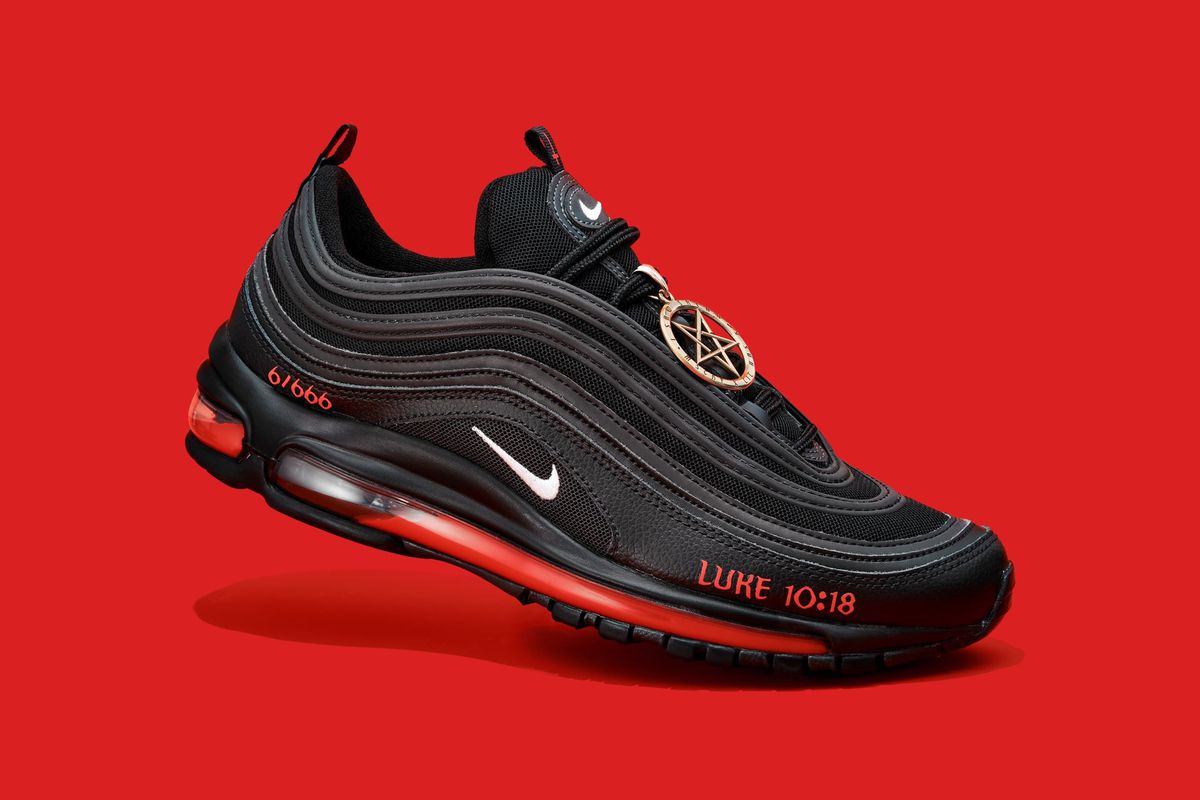
    Athletic shoe maker Nike Inc on Monday sued a New York-based company that produced “Satan Shoes” purported to contain a drop of human blood as part of a collaboration with “Old Town Road” rapper Lil Nas X.

    Nike said in the lawsuit that the company, MSCHF Product Studio Inc, infringed on and diluted its trademark with the black-and-red, devil-themed shoes, which went on sale online on Monday. Lil Nas X is not named as a defendant in the suit.

    The shoes are customized Nike Air Max 97 sneakers that contain red ink and “one drop of human blood” in the sole, according to a website describing the 666 pairs of limited edition shoes. The back of one shoe says “MSCHF” and the other says “Lil Nas X.” her

    Several media outlets reported that the shoes sold out in less than one minute at a cost of $1,018 per pair. Lil Nas X said on Twitter he would choose the recipient of the 666th pair from social media users who circulated one of his tweets.

    Nike, in its lawsuit filed in federal court in New York, said the shoes were produced “without Nike’s approval and authorization,” and the company was “in no way connected with this project.”

    “There is already evidence of significant confusion and dilution occurring in the marketplace, including calls to boycott Nike in response to the launch of MSCHF’s Satan Shoes based on the mistaken belief that Nike has authorized or approved this product,” the lawsuit said.

    Nike asked the court to immediately stop MSCHF from fulfilling orders for the shoes and requested a jury trial to seek damages.

    Representatives for Lil Nas X and MSCHF did not immediately respond to requests for comment.

    The Grammy-winning rapper, 21, on Friday released a video for new song “Montero (Call Me By Your Name)” in which he dances with a character wearing devil horns.

  • Nike sales crimped by pandemic and shipping issues

    Nike sales crimped by pandemic and shipping issues

    Nike’s quarterly sales missed estimates due to shipping issues and a pandemic-related slump at brick-and-mortar stores, and investors were disappointed by the world’s biggest athletic shoe maker’s full-year revenue forecast.

    Nike forecast “low-to-mid-teens” full-year revenue growth, falling just short of the 15.9% increase in sales that analysts were expecting, according to IBES data from Refinitiv.

    Nike shares were down about 3% in post-market trade.

    “I think the expectations for Nike into the call were very high with many analysts upping revenue and earnings expectations into the quarter,” said Ivan Feinseth, head of investment at Nike shareholder Tigress Financial Partners.

    Revenue rose to $10.36 billion from $10.1 billion, while analysts on average had expected $11.02 billion. The company said revenue from North America fell 11% on a currency-neutral basis because container shortages and U.S. port congestion held up inventory by more than three weeks.

    “We expect to capture this delayed revenue in the fourth quarter,” Nike Chief Financial Officer Matthew Friend said.

    U.S. container-freight traffic has slowed significantly in recent months due to COVID-19 outbreaks among dockworkers and safety restrictions aimed at stemming the spread of the virus. At the same time, ports are dealing with a cargo surge due to pandemic-led demand for bulk products.

    Nike’s net income nonetheless climbed to $1.45 billion, or 90 cents per share, in the third quarter ended Feb. 28, from $847 million, or 53 cents per share, a year earlier. Analysts were expecting earnings per share of 76 cents.

    In Europe, the Middle East and the Africa region, 45% of Nike-owned stores were closed for the last two months of the quarter. Currently, 65 percent of stores in EMEA are open or operating on reduced hours, Nike said.

    Rival Adidas ADSGn.DE said last week that it had reopened 95% of its stores after coronavirus lockdowns.

  • Former Nike innovation chief joins speaker lineup for MarketingPulse 2021

    Former Nike innovation chief joins speaker lineup for MarketingPulse 2021

    A former senior Nike executive once named by Fast Company magazine as one of the most creative people in business, has been confirmed as a headline speaker at this month’s MarketingPulse 2021 virtual conference in Hong Kong.

    Greg Hoffman, global chief marketing officer at Nike from 2016-2018 before moving into the role of VP of global brand innovation until last year, now leads Modern Arena, a brand advisory group he founded for Fortune 500 brands, startups, and non-profit organizations.

    At MarketingPulse 2021, Asia’s premier marketing and branding conference, Hoffman will be drawing on his 27-year career with Nike to explain how innovation drives consumer experiences, envisioning the future of storytelling and the role of tomorrow’s CMOs.  Hoffman was a major strategic and creative influence for Nike at every major global sporting event, overseeing the launches of signature Nike products and innovations, and building the brands of its contracted athletes.

    A major part of Nike’s global marketing success was the strength of its experiential-anchored strategies which helped establish the iconic sportswear brand as one of the world’s pre-eminent storytellers. Hoffman was seen as a leading innovator in digital and physical brand experiences and broadly recognized for his role in the rise of marketing and design through that period.

    Under Hoffman’s leadership, Nike drove themes of equality, sustainability, and empowerment through sport. He was a member of the advisory board of the Nike Black Employee Network and as a member of the charitable Nike Foundation’s board.

    Another drawcard at MarketingPulse 2021 is Alves Huang, CEO, Qianxun (Hangzhou) Holdings, considered the current leading live-streaming e-commerce company in Mainland China.

    Huang founded Qianxun E-commerce in 2017 and in just four years his team has built the company into the country’s largest e-commerce live-streaming broadcasters. Among Qianxun’s successes was being recognized by Taobao Live as its number one e-commerce live-broadcasting agency, as manager of popular Taobao anchor Weiya Viya, who has more than 130 million fans on Chinese platforms.

    The company has long-term cooperative relations with more than 20,000 domestic and foreign brands and has already trained close to 40 anchors. At MarketingPulse 2021, Huang will explain the reasons why live-streaming e-commerce and short-video marketing is proving so successful in Mainland China.

    Putting purpose at the core

    Another high-profile speaker at MarketingPulse 2021 is Bryan Meehan, executive chair and CEO at Blue Bottle Coffee.

    A recent arrival to Hong Kong, Blue Bottle is a specialty coffee roaster and retailer headquartered in Oakland, California with cafes throughout the US, Japan and South Korea.

    Besides his passion for coffee, Meehan has always pursued a personal mission to do good for the environment. Both of his previous companies placed a premium on eco-consciousness – Fresh & Wild was one of the first organic food chains in the UK and Nude Skincare was an all-natural cosmetics business. While Blue Bottle maintains meticulous standards for roasting and brewing coffee (its Oakland location has a full lab to train new baristas), it is equally committed to sustainable business practices.

    At MarketingPulse 2021, Meehan will explain how to put purpose at the core of a business to connect brand values with today’s consumers, and share his success in marketing a globally renowned lifestyle coffee brand disrupting the industry.

    Register now to enjoy the privilege offer 55 percent discount (discount code: MPR02K5P) for Inside Retail readers.
  • Nike Japan ad on bullying, racism sparks hot online response

    Nike Japan ad on bullying, racism sparks hot online response

    A video ad from Nike Japan against bullying and racism that features biracial athletes and other minorities, such as those of Korean descent, has prompted a sharp online response including calls to boycott the company.

    Japan has traditionally prided itself on being racially homogeneous, although successful mixed-race athletes such as tennis star Naomi Osaka are challenging that image.

    The commercial, “Keep Moving: Yourself, the Future,” released on Nov 30, shows several teen girls bullied in school over their race or other differences, but who ultimately find confidence through soccer prowess.

    One scene features a girl whose father is Black surrounded by fellow students, squealing and pulling her hair.

    The video, viewed 14.1 million times on Nike Japan’s Twitter feed by noon (0300 GMT) Wednesday, had racked up 63,000 likes but also a cascade of critical comments from many who vowed never to buy Nike products again.

    “Nowadays, you often see one or two people of different nationalities going to school perfectly peacefully. The one that’s prejudiced is Nike,” wrote one user named “hira1216”.

    Another asked, “Is it so much fun to blame Japan?”

    Although Japanese sports fans have celebrated Osaka, who counts Nike as a sponsor and makes a cameo appearance in the ad, she was once depicted as a cartoon character by another sponsor, Nissin, with pale hair and light brown hair, while a comedy duo said she “needed some bleach”.

    Nike Japan was not immediately able to comment on the response, but said on its website it believes in the transformative nature of sports.

    “We have long listened to minority voices, supported and spoken for causes that fit our values,” it added.

    “We believe sports have the power to show what a better world looks like, to bring people together and encourage action in their respective communities.”