Tag: nike

  • Adidas sales soar on reformation plan

    Adidas sales soar on reformation plan

    Adidas sales have soared 18 per cent last year as the German sportswear brand plays catch-up with America’s Nike.

    For the first time in its history, Adidas’ net income topped euro 1 billion.

    In Greater China, sales soared 28 per cent year-on-year.

    “These results are proof positive that our strategy ‘Creating the New’ is paying off,” said Adidas CEO Kasper Rorsted. “2016 was an exceptional year for Adidas. We have improved the desirability of our brands and products around the globe. Building on our 2016 performance, our momentum continues and we will again achieve strong top- and bottom-line improvements in 2017.”

    Total sales reached euro 19.3 billion with operating margins up 1.3 percentage points to 7.7 per cent. Net income soared 41 per cent to euro 1.019 billion, allowing the company to promises shareholders a two euro per share dividend.

    The company is projecting another sales increase during 2017 ranging from 11 to 13 per cent, another increase in operating margin to between 8.3 and 8.5 per cent and net income up between 18 and 20 per cent to euro 1.225 billion.

    Even the troubled Reebok brand gained ground in 2016, currency-neutral sales up 6 per cent year-on-the-year, reflecting double-digit sales increases in its Classics range as well as mid-single-digit growth in the training and running categories.

    The Adidas group achieved double-digit revenue growth in nearly all market segments. In Western Europe, sales increased by 20 per cent, in North America by 24 per cent, in Russia by 3 per cent, in Latin America by 16 per cent and in Japan by 16 per cent. Revenues in Middle East and Africa also grew 16 per cent on a currency-neutral basis, reflecting double-digit growth in almost all of the region’s countries.

  • Nike develops performance hijab

    Nike develops performance hijab

    Nike has developed a performance hijab for Muslim women athletes.

    The head covering, called the Nike Pro Hijab, has a single-layer pull-on design made from lightweight polyester in dark, neutral colors. Tiny holes in the fabric make it breathable while remaining opaque.

    Nike says it began work on the hijab after Muslim athletes complained about wearing a traditional head scarf during competition. The design process took 13 months, and the final product will be ready to roll out in the company’s spring 2018 collection.

    Meanwhile, a prototype is already being worn by Emirati figure skater Zahra Lari, who says few hijabs work for her when performing. “But once I put on the Nike hijab and took it for a spin on the ice, I was blown away by the fit and the light weight.”

    News of the new product comes just weeks after Nike released a commercial in the Middle East featuring five female professionals from different parts of the Arab world pursuing their athletic dreams while a voice asks, “What will they say about you?” – a rhetorical question many young Arab women face if they step out of cultural and traditional norms. The video went viral with million of views on social media, prompting a debate over its message.

  • Nike plus-sized workout range launched in US

    Nike plus-sized workout range launched in US

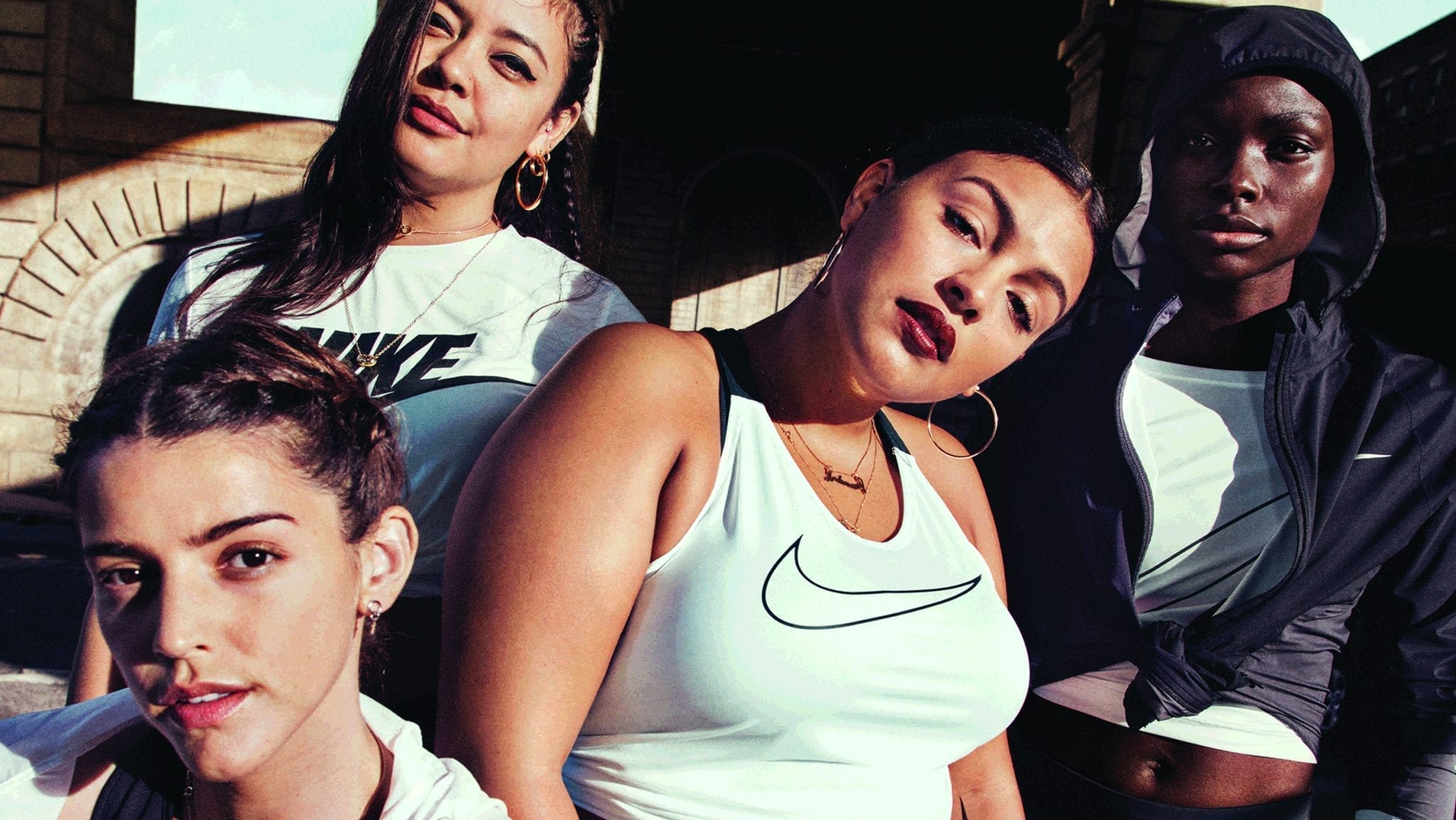
    A new Nike plus-sized range will expand the US sportswear brand’s reach – and appease those who criticise it for focusing on the purely athletic.

    The new workout wear range includes sizes from XL to 3XL.

    “Nike recognises that women are stronger, bolder and more outspoken than ever,” the sportswear giant said in a statement.

    “The days where we have to add ‘female’ before ‘athlete’ are over. She is an athlete, period. And having helped fuel this cultural shift, we celebrate these athletes’ diversity, from ethnicity to body shape.”

    Like Nike’s core range, the plus-size collection will use the same technology in design and fabric and includes sports bras, running tights, high-tech hoodies.

    Helen Boucher, VP of women’s training apparel, says when the company created its range it did not just make existing products larger.

    “That doesn’t work because as we know, everyone’s weight distribution is different.”

    The pressure will now be on rivals like Lululemon, Puma and Adidas to follow suit…

  • First phase of Europark Dalian complete

    First phase of Europark Dalian complete

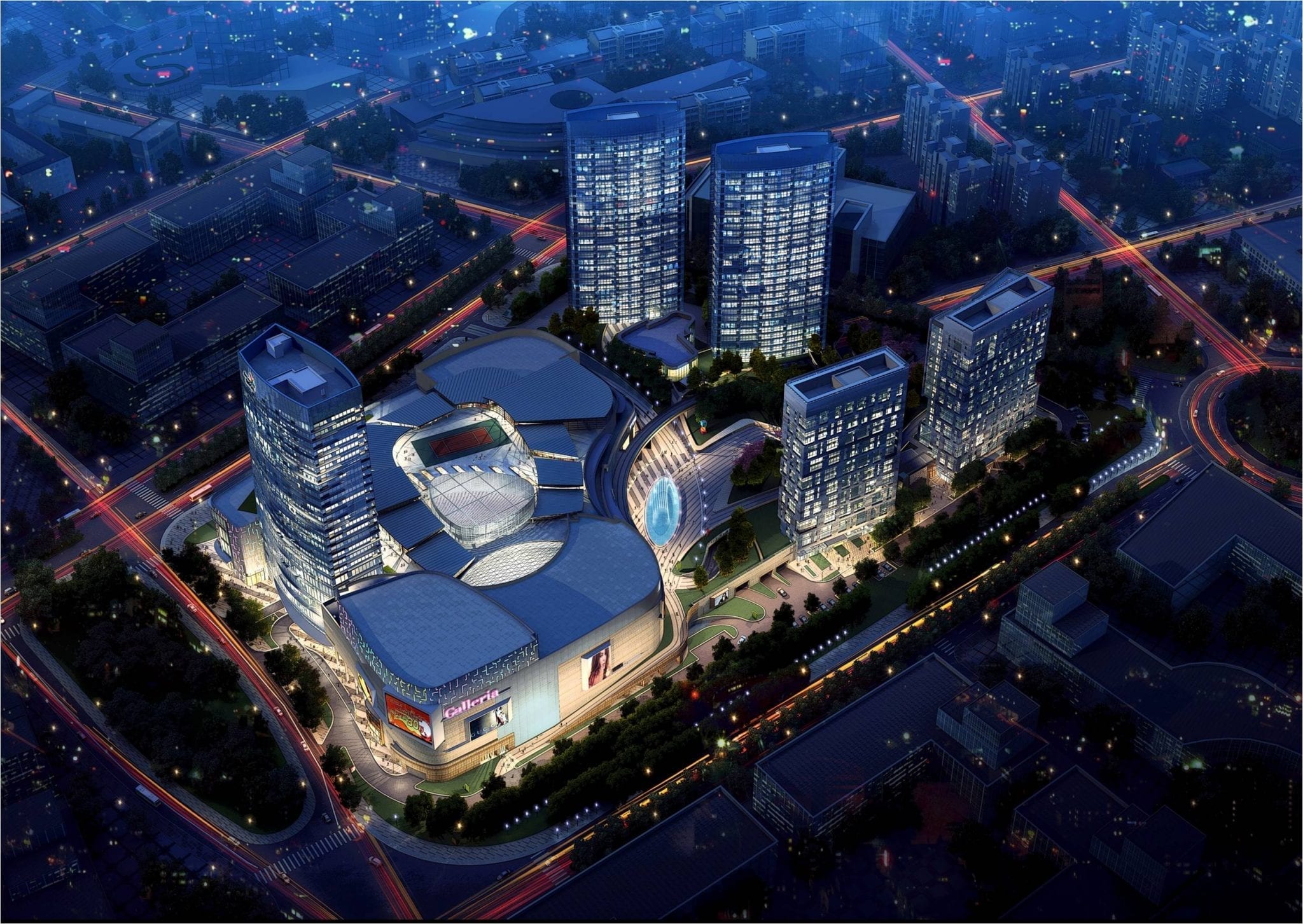
    New York-based architecture and urban planning firm Laguarda.Low Architects has completed the first phase of Europark, a 3 million sqft (280,000 sqm) mixed-use complex in Dalian.

    Set on a landscaped park in the heart of Donggang’s CBD, Europark Dalian comprises the award-winning Galleria Mall, a tower of apartment suites, two SOHO office towers and two residential towers, which are planned for the second phase of construction starting late this year.

    “Now the first phase is complete, we are certain the cutting-edge architectural style, contemporary design and endless retail options in this complex will attract attention throughout the region,” says Laguarda.Low principal John Low.

    Officially opened in August 2015, the Galleria Mall is the first European-style shopping centre in Donggang. It is at the site’s centre, offering four levels of retail, including Adidas, H&M, Nike and Zara stores plus an Imax theatre – all arranged around a central skylight that permeates daylight to all levels.

    The Galleria Mall has won such accolades as the China Building Complex Award in 2011, the Design Innovation Award in 2013, a bronze award for retail development in 2014 and the New Media Service Marketing Award in 2015. Laguarda.Low also designed the mall’s interior.

    In partnership with international landscape design firm SWA, Europark has the biggest green park in Donggang. The development is within walking distance of Dalian Port and the Davos Conference Center.

  • Nike Cambodia opens official outlet

    Nike Cambodia opens official outlet

    American sporting goods giant Nike Cambodia has opened its first dedicated retail store.

    The shop, store in central Phnom Penh, is the country’s first official outlet for Nike goods such as sport shoes and apparel, including items produced at local factories.

    Market commentators say Nike’s choice to open a flagship store at along Preah Monivong Boulevard rather than in a shopping centre such as Aeon Mall or neighbourhood like Boeung Keng Kang could signify the brand is testing the market.

  • Activewear and F&B driving Hong Kong retail innovation

    Activewear and F&B driving Hong Kong retail innovation

    Food and beverage and lifestyle is driving Hong Kong retail innovation, says property expert Shaun McManus with JLL Hong Kong.

    “The activewear and sports apparel sector has been a front-runner in elevating in-store experiences for shoppers,” McManus, who specialises in lifestyle retail and F&B with the property  company. “Looking to boost their winter sales, Adidas recently added a virtual reality fitting room in their flagship store in Causeway Bay, giving customers the chance to test new products in a training run simulation that mimics winter weather through a temperature control system,” he wrote in a market review.

    Nike’s new 13,000 sqft flagship store on Granville Road in Tsim Sha Tsui offers customised T-shirts and sports bras, as well as a personalised coaching section where customers can test running shoes on a treadmill to see if they are the right fit.

    JLL’s foodservice consulting team forecasts that by 2020, 80 per cent of retailers will have some form of additional entertainment element or other unique offerings, like these within their stores.

    “The progression of omni-channel retailing – through physical and online stores and mobile apps – is another pattern that looks likely to emerge in 2017. Unlike other markets, eCommerce has yet to gain a strong foothold in Hong Kong.

    According to the Hong Kong Trade and Development Council, online sales account for less than 5 per cent of total retail sales among retailers with an omni-channel sales platform within the city.

    “To boost sales, retailers are increasingly turning to social media platforms to sell their goods, and will look to take advantage of apps like Instagram and Snapchat to give customers a behind-the-scenes look at their operations with the aim of building brand engagement and legions of loyal followers,” says McManus.

    “With over 40 million hits per month on Instagram, Facebook and Snapchat combined; it is no wonder popular brands such as watchmaker Daniel Wellington are attributing the largest proportion of their revenue to their social media marketing campaigns.”

    McManus also forecasts that this year promises a further shift away from traditional shopping mall tenant mixes towards an increased focus on entertainment hubs and food courts.

    “Many developers are already starting to reposition their portfolios. Swire Properties – whose shopping mall portfolio in Hong Kong includes Pacific Place Mall, CityPlaza and Citygate Outlets – has been at the forefront of this movement. At Pacific Place Mall, for example, it has increased the F&B footprint by more than 20 per cent in the space of 12 months and totally revamped its cinema complex to include a new VIP House with state-of-the-art sound system technology, higher resolution screens and vibrating seats. These changes have all been made with the aim of increasing and retaining footfall to the mall and attracting new customers.

    “The use of pop-up stores will also continue to be popular in prime malls, enabling landlords to optimise space and minimise void periods; an important consideration given the current challenges facing the city’s retail sector.”

    McManus says that for consumers, revolving pop-up stores freshen the shopping experience and encourage repeat visits.

    “All of the above factors point towards a more balanced and increasingly vibrant retail market for Hong Kong in 2017, and suggests that it is far from all doom and gloom for the sector in the year ahead. Rather, we believe these changes are ushering in a healthier retail climate that drives domestic consumption and is less reliant on tourist spend. Hong Kong must, and will, maintain its status as a shopper’s paradise in Asia for the foreseeable future.”

  • Nike And Jordan Brand have opened a huge store in China

    Nike And Jordan Brand have opened a huge store in China

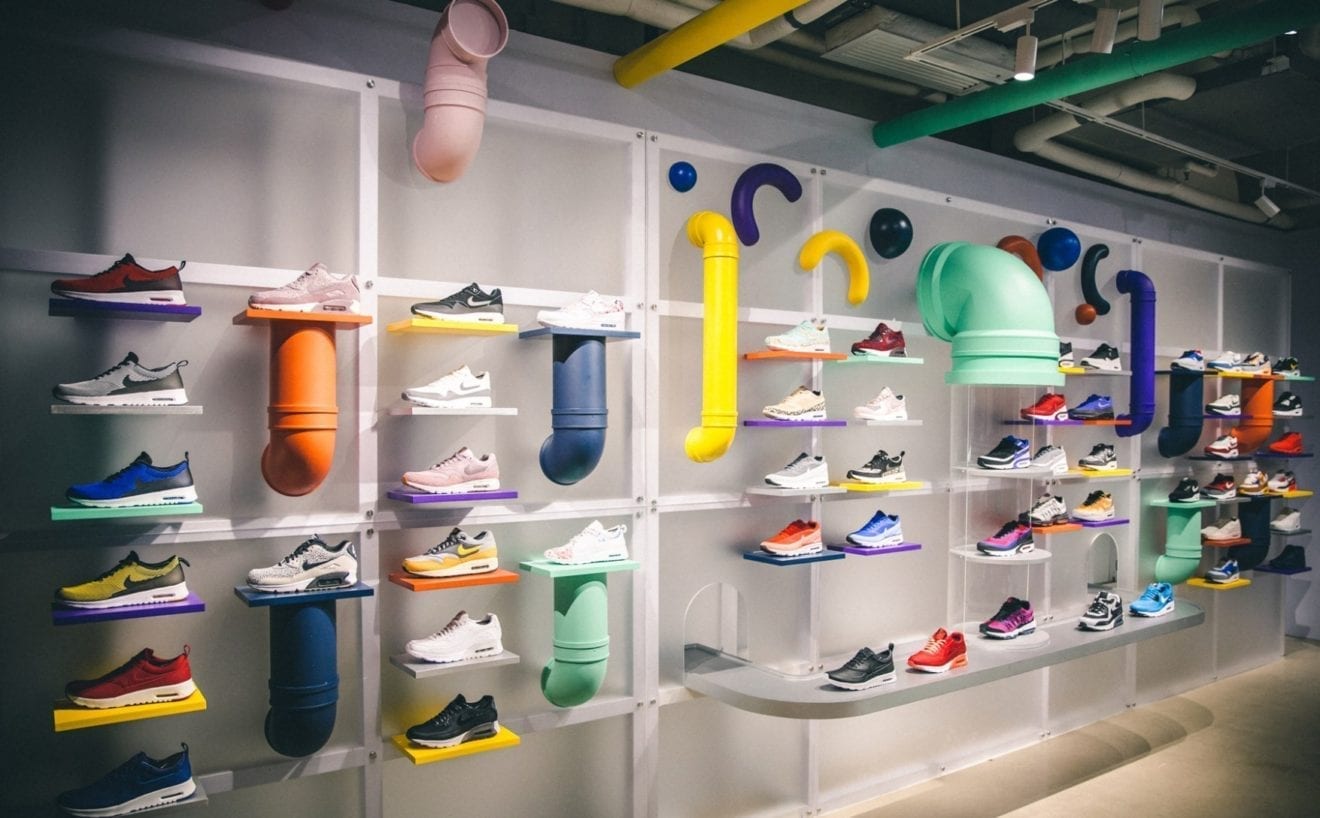
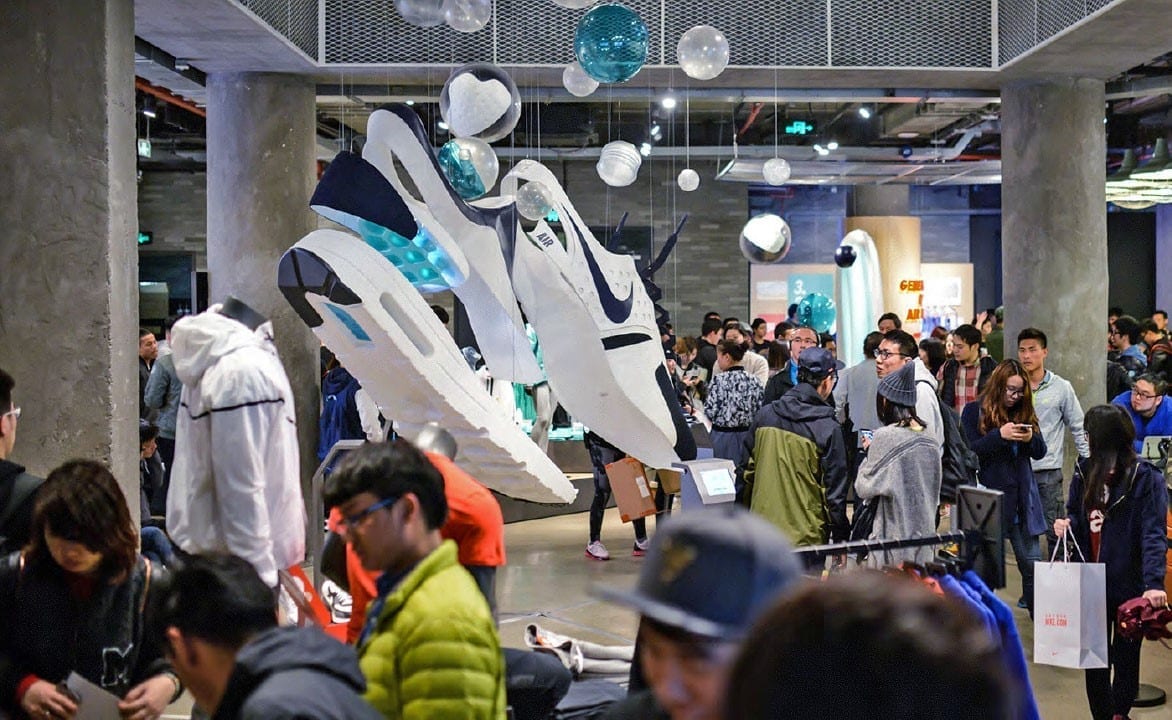
    Jordan Brand and Nike came together to open up a humongous store dedicated to basketball. China will now hold a 6,550-square-foot store located in Beijing’s EC Mall. The store will feature some of Nike basketball and Jordan brand’s latest basketball products with opportunities for personalized store experiences with NIKEiD. The space will also feature trailing zones for custom products which is called Nike+Basketball trial zone.

    “Our new Nike and Jordan Basketball Experience Store demonstrates Nike’s commitment to the sport and culture of basketball in China, and how we’re continuing to lead the future of sport retail,” said Dennis van Oossanen, Nike’s VP of direct to consumer efforts in Greater China.

    The store will also include huge appearances from athletes, in-store events and much more.  Check out the gallery below of the 6,550-square-foot store.


  • Nike opens 600 outlets inside JCPenney stores

    Nike opens 600 outlets inside JCPenney stores

    Nike has opened more than 600 brand shops environments inside JCPenney stores.

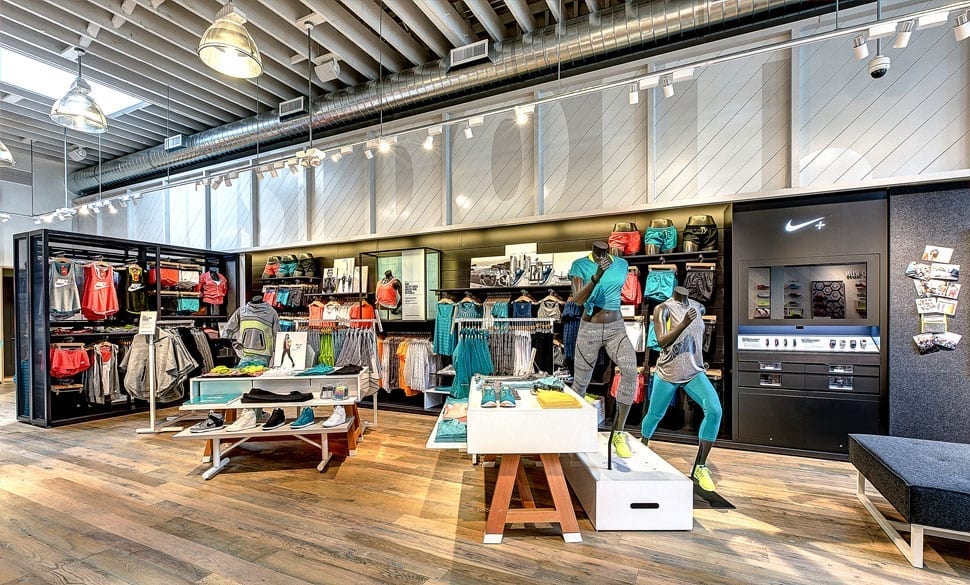
    The two brands say they have teamed up due to the rapid growth of the activewear sector. The new Nike shops boast “pumped-up visual elements” featuring world-class athletes and crisp signage to help shoppers find the best gear for basketball, training and running. The shops also feature an expanded assortment of apparel and accessories from one of the world’s leading activewear brands.

    “Nike is immensely popular across all categories and with the rapid rise of activewear and athletic shoes, we want to have the best expression of Nike in any department store,” said John Tighe, chief merchant for JCPenney. “JCPenney is an activewear destination, and by partnering with a perception-shifting national brand like Nike, we can deliver both the performance and athleisure products that customers want.

    Shoppers browsing our new Nike environments will be both inspired and motivated to take their athletic wardrobe to the next level.”

    Anchored by an impressive Nike swoosh sign suspended above the shop, JCPenney has dedicated 500 sqft. of space to the activewear giant in a prominent location within the men’s department. Motivating graphics of athletes adorn the shop walls and updated fixtures, combined with dedicated mannequins, present the merchandise in an inspiring light. The iconic Nike logo is emblazoned throughout the shop and popular activities, including basketball, training and running, are called out with new signage to help customers shop quickly and easily. The JCPenney and Nike teams worked closely together to test various visual elements at a JCPenney store in Portland, Oregon, to create the inspiring environment for the men’s department, now available in 600 locations across the country. Similar visual elements are available in select stores for women and kids.

    The Nike selection at JCPenney will be featured throughout JCPenney marketing, including weekly sales circulars, direct mail, email and social media. Nike complements a robust assortment of fitness and athleisure brands available at JCPenney, including the retailer’s private brand, Xersion and an exclusive brand, MSX by Michael Strahan.

  • Nike aims for traction in Cambodia with first retail store

    Nike aims for traction in Cambodia with first retail store

    American sporting goods giant Nike has opened its first dedicated retail store in Cambodia in what observers have described as another sign the Kingdom’s strong economy and rising incomes had not gone unnoticed by international retail giants.

    The opening of the outlet store in central Phnom Penh marks the first time that Nike goods such as sport shoes and apparel – including items produced at local factories – can be purchased from a dedicated brand outlet.

    According to Julie Chung, Charge d’ Affaires at the US Embassy in Phnom Penh, Nike’s retail launch underscores the Kingdom’s economic development and its ability to attract major name-brand American products and investment.

    “This is a testament to the economic transformation that is taking place here a transformation we hope the United States and American companies can continue to help support,” she said at the store opening on Saturday.

    Ronald Marvin, executive director of the American Chamber of Commerce, said the Nike store’s arrival was a positive sign that American businesses have confidence in the Cambodian market.

    However, on a retail level, some analysts said the choice of opening a flagship store on Monivong Boulevard, rather than in an upscale mall or neighbourhood such as Aeon Mall or Boeung Keng Kang 1, could signify that Nike was still testing the market before going all in.

    “The fact that they are not opening a flagship store in a more prime location could be because they just want to establish a presence in Cambodia for the meantime,” said Sofia Perez of property consultancy advisory Knight Frank Cambodia.

    She said that while Nike’s brand-name appeal would certainly help business, it should not be relied on as the sole marketing tool.

    “The choice in location and the store size will definitely affect brand image, which is important for consumers because for a higher price, they would also expect a more exclusive shopping experience among other added benefits,” Perez said.

    She added, however, that if Nike can develop an effective marketing strategy with added consumer benefits, “they could definitely increase the pressure on their competitors”.

  • Alibaba joins forces with counterfeited brands

    Alibaba joins forces with counterfeited brands

    Chinese eCommerce giant Alibaba has teamed up with some of the world’s most-counterfeited brands to fight against copycats.

    Collaborating with such global brands as Louis Vuitton, Samsung and Swarovski, Alibaba will provide its members with big data and other support to help them block, identify and even take down listings from its marketplaces such as Taobao and Tmall. Those two sites boast 1 billion product listings at any given time.

    In return, the brands have committed to share their anti-counterfeiting data with Alibaba.

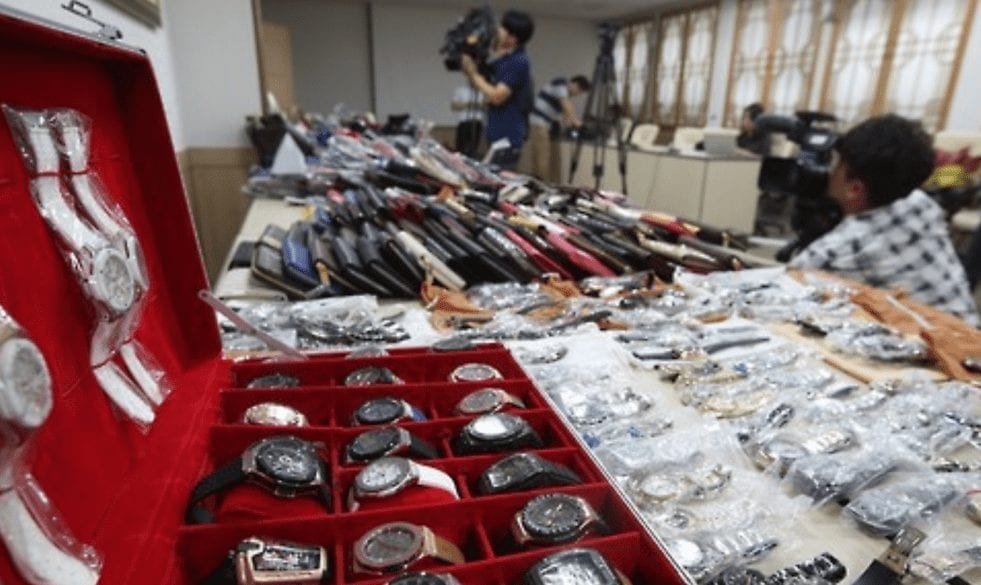
    The move follows a lawsuit filed by the internet powerhouse against two vendors selling knock-off Swarovski watches from their online shopping bazaars on Taobao, claiming 1.4 million yuan (US$202,950) in losses. Taobao is the retail platform for smaller merchants.

    “The most powerful weapon against counterfeiting today is data and analytics, and the only way we can win this war is to unite,” says Alibaba’s chief platform governance officer Jessie Zheng.

    “Alibaba welcomes brands and other organisations to join us in what we believe is the world’s first ‘big-data anti-counterfeiting alliance’.”

    Taobao was returned to the US government blacklist of “notorious markets” last month for hosting fake items, four years after Alibaba lobbied American trade officials to drop the platform from the list.

    Listings removed

    Alibaba says it is disappointed by the decision, noting it has “proactively removed more than double the number of infringing product listings than in 2015”. The company employs 2000 permanent staff and 5000 volunteers devoted to spotting fake goods.

    According to the International Anti-Counterfeiting Coalition, a nonprofit watchdog overseeing piracy concerns, China is the biggest market for knockoffs globally with handbags, footwear, watches and iPhones topping the list of most-faked items.

    Louis Vuitton, Nike, Ray Ban and Rolex are among the labels that seem to be more intensely targeted by counterfeiters, says a report by the Organisation for Economic Co-operation and Development (OECD).

    Domestic brands also have fallen victim. Chinese liquor maker Kweichou Moutai has confiscated 300 tonnes of fake Moutai in a three-year drive against bootleggers, whose products can feature packaging identical to genuine products.

    Chinese authorities have also stepped up efforts to root out people involved in marketing fake goods, staging raids and arresting thousands of suspected offenders.

  • Nike sales saved by basketball sector

    Nike sales saved by basketball sector

    A rebound in basketball drove strong Nike sales and profit growth in the last quarter.

    The US-headquartered sports giant has reported a profit rise of 7.3 per cent to US$842 million in the three months to November 30, with sales up 6.4 per cent, to $8.18 billion. Excluding the impact of currency rates, profit rose 8 per cent.

    Sales in the basketball category, which includes its Jordan brand, accounted for 15 per cent of wholesale revenue in 2016. And even greater growth is expected in the next quarter after the brand lost momentum in the core category in previous periods.

    “We’re seeing incredible momentum in basketball,” said Trevor Edwards, president of Nike Brand. “To be clear, basketball is back.”

    Sales in China rose 12 per cent, and in the US by 3 per cent.

    Nike has moved to drive more direct sales, improved its online sales apps and adjusted pricing on some of its marquee products, including basketball shoes.

  • Nike Singapore turns back on small outlets

    Nike Singapore turns back on small outlets

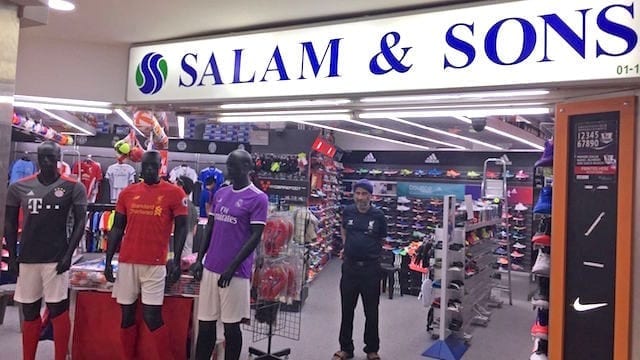
    Sports brand Nike Singapore will stop supplying smaller retailers from next month.

    This is a huge blow for mom-and-pop stores in Peninsula Plaza and Queensway Shopping Centre, which rely on top-selling brands to attract customers, as reported.

    “Its move would force many of us out of business soon,” says Salam & Sons manager Gurbachan Singh, who has run the business for more than 30 years.

    “We did business with Nike for more than 20 years. We followed their rules, never defaulted on payments nor brought in fake or parallel imports. Many of us don’t understand why they are doing this to us,” he says.

    Out of the US, Nike tops the 10 most-valuable apparel brands segment in market research company Millward Brown’s 2016 Brandz Top 100 Most-Valuable Global Brands report.

  • How to grow for Luxury brands

    How to grow for Luxury brands

    Luxury brands need to use new technologies and offer experiences for their customers, the second Luxury Society keynote event in Shanghai has been told.

    UCO Cosmetics CEO Arthur Zhang told the event that the early-stage eCommerce model of simply providing a platform for selling products online is dead.

    He said key technologies being experimented and improved upon in China include augmented reality, virtual reality and live-streaming.

    “The millennial generation in China, which already numbers about 300 million people, seeks experiences and emotional connection – they are not just bystanders,” DLG China partner/MD Pablo Mauron told the audience of more than 150 luxury-industry brand executives. “As a result, live-streaming has become a medium for them to express themselves.”

    He told how brands such as Maybelline, Montblanc and Swarovski are taking advantage of these new opportunities.

    Underlining the key message of the event that eCommerce is changing, CEO Thibault Villet of luxury fashion eCommerce platform Mei.com told how a live-streamed show in collaboration with TMall resulted in 65 per cent of the products featured quickly selling out.

    Meaningful data

    Social customer-relationship management (CRM) makes highly targeted messaging and engagement possible, the event was told by Four Seasons Hotels Asia Pacific director of marketing communications John Hamilton. He said the luxury hotel chain has been gaining meaningful data about its customers, which in turn has driven growth. In the past year, through trial-and-error and optimisation, the group has defined a CRM-led content strategy on WeChat.

    Celebrity and key-opinion-leader partnerships can make a big impact in China, said East Entertainment commercial director Qing Dai, who spoke of her experience of partnering luxury brands with appropriate celebrities. One of Easy Entertainment’s most successful was in linking up Cartier with singer/actor Lu Han.

    Baidu GM for East China Wan (Grace) Zhang said Cartier was the most-searched luxury watch brand among the generation born between 1990 and 2000, linked to Cartier’s collaboration with Lu Han.

    Other speakers at the event included Four Seasons Hotel Pudong (Shanghai) GM Arthur Ho, writer Casey Hall of Women’s Wear Daily, Digital Luxury Group founder/CEO David Sadigh and MD for China Pablo Mauron, Baidu senior project manager Di Fu and Sephora China digital manager Vanessa Qian.

    Attendees included representatives of Alexandre de Paris, Baume & Mercier, Bottega Veneta, Bulgari, Cartier, Chanel, Chaumet, Conde Nast, De Beers, Dior, Hublot, Loewe, LVMH, Marc Jacobs, Massimo Dutti, Michael Kors, Montblanc, Nars, Net-a-Porter, Nike, Sephora, Shiseido, Swarovski, TAG Heuer, Tiffany & Co and Vacheron Constantin.

    Luxury Society, published by Digital Luxury Group, is an online destination for luxury-brand executives covering digital and technology matters and with more than 40,000 members across 150 countries.

  • Apple, Nike and Playboy among most popular US brands on Alibaba’s Singles Day

    Apple, Nike and Playboy among most popular US brands on Alibaba’s Singles Day

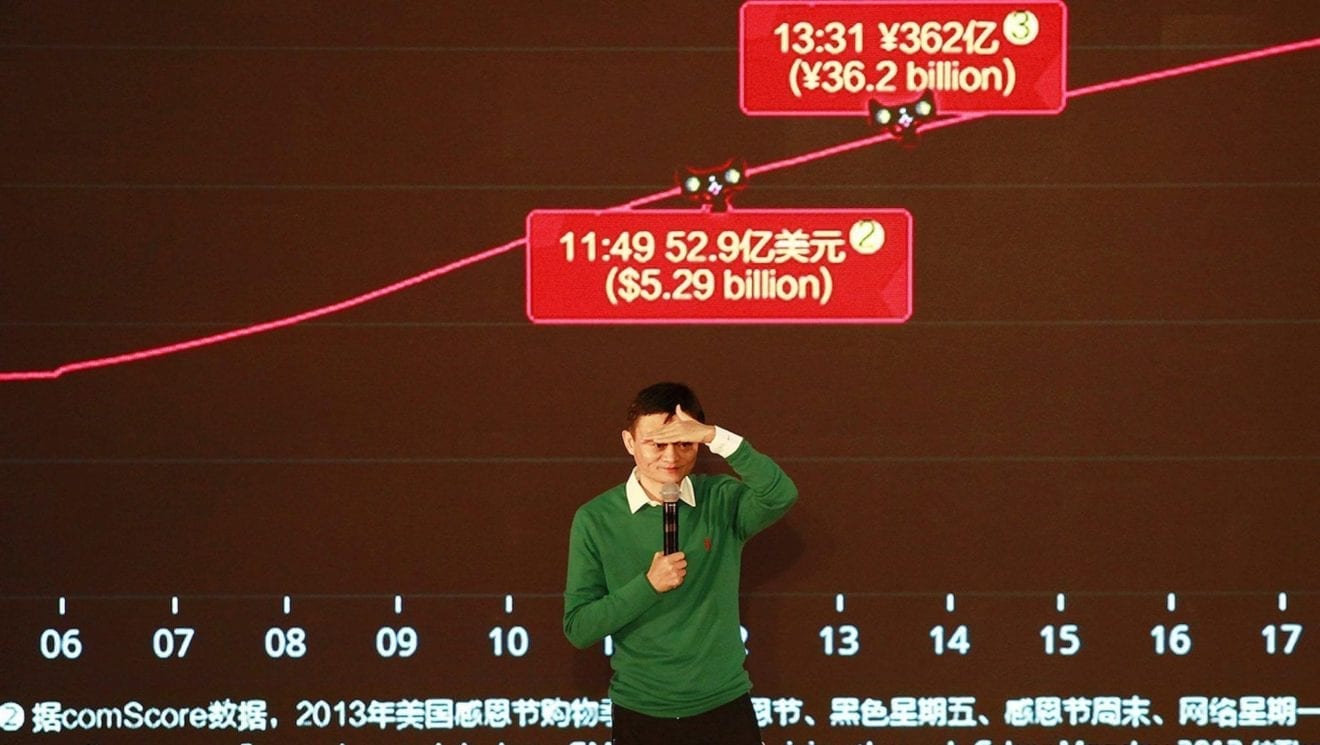
    Alibaba Group Holding Ltd. says sales from its massive Singles Day shopping event totaled $17.8 billion, up more than 24% from the record $14.3 billion sold last year.

    (This year’s total is RMB 120.7 billion, up 32% year-over-year due to fluctuations in the Chinese currency.)

    The most popular U.S. brands as of about 10:30 p.m. CST were, in order: Apple Inc. Nike Inc. New Balance, Playboy, and Skechers USA Inc.

    “Alibaba is using this year’s Singles Day to showcase the number of international brands participating, everyone from Apple, Victoria’s Secret, Burberry, Gap, [and] Nike, acting as the gateway to China for these brands and fulfilling Chinese consumers’ insatiable demand for Western products,” said Danielle Bailey, head of Asia-Pacific research for L2 Inc.

    Victoria’s Secret is in the L Brands Inc.  portfolio.

    Singles Day started strong, with sales of $1 billion recorded in the first five minutes.

    Alibaba Offers Virtual-Reality Shopping on Singles’ Day

    Alibaba is hoping to boost sales from China’s biggest annual online-shopping event–Singles’ Day–with what it claims is the world’s first virtual-reality shopping experience.

    Many U.S. brands have tried and, so far, failed to find success in the Chinese market. Recently, Netflix Inc. said it would abandon efforts to launch a full-service offering in China.

    Wal-Mart Stores Inc.  announced in June that it would partner with Alibaba rival JD.Com Inc. to grow its China business. The partners announced new initiatives in October.

    Apple and Nike are popular in China irrespective of the day, with Nike reporting 21% revenue growth in China in fiscal first-quarter 2017. The U.S. and China are Nike’s two biggest basketball markets, Trevor Edwards, Nike brand president, said on the Sept. 27 earnings call, according to a FactSet transcript.

    The Playboy brand is also popular in China, with items like jewelry and fragrances selling well.

    Starbucks Corp. seized the opportunity to get into the Singles Day festivities, offering a Cocoa Java Mocha beverage exclusively for the day at locations across China. The company also sold gift sets, exclusively-designed gift cards, and limited-edition My Starbucks Rewards Cards 11/11.

    Forty-seven million users purchased international brands, led by U.S. brands, according to L2 data, and 82% of sales were made on a mobile device.

    “With Alibaba distributing different deals across different devices, they have encouraged devoted savings seekers to keep separate shopping carts on their desktops and mobile phones,” said Tim Barrett, retail analyst at Euromonitor International. “Alibaba is grooming a generation of mobile-first shoppers, a move which will pay off greatly when the entire world is addicted to their mobile devices.”

    For Alibaba Chief Executive Daniel Zhang, this integration of sales across different platforms is critical.

    “If you look at this as an online game, people see you will have less margin in the future,” Zhang said, according to the Alibaba live blog of the Singles Day event. “But when we look at the entire landscape, only 10% of China’s total retail is online. What we believe is that at the end of this, online and offline… should be fully integrated.”

    This year, Alibaba introduced virtual reality into the 11.11 experience, as well as games, with 2.6 billion games played, according to L2.

    “Alibaba is blurring the lines between entertainment and e-commerce and extending technologies thought to be simply gimmicks in the West,” said Bailey.

    Even with the eye-popping sales numbers, popular brands and new technologies, Alibaba shares are down 1.4% in Friday trading.

    “In keeping with the de-emphasis of GMV [gross merchandise value] as a reported metric, we expect sales volume to become but one of many focuses of the event, with others being new mobile functionality, innovations and improvements in logistics, new partnerships,” said Deutsche Bank in a note published Tuesday, which calls Singles Day “a PR exercise.” Analysts there expected 35% year-over-year growth.

    Deutsche Bank rates Alibaba shares buy with a $138 price target.

    Alibaba shares are up 14.4% for the year so far while the S&P 500 is up 5.7% for the same period.
  • CityOn.Zhengzhou to open fully leased

    CityOn.Zhengzhou to open fully leased

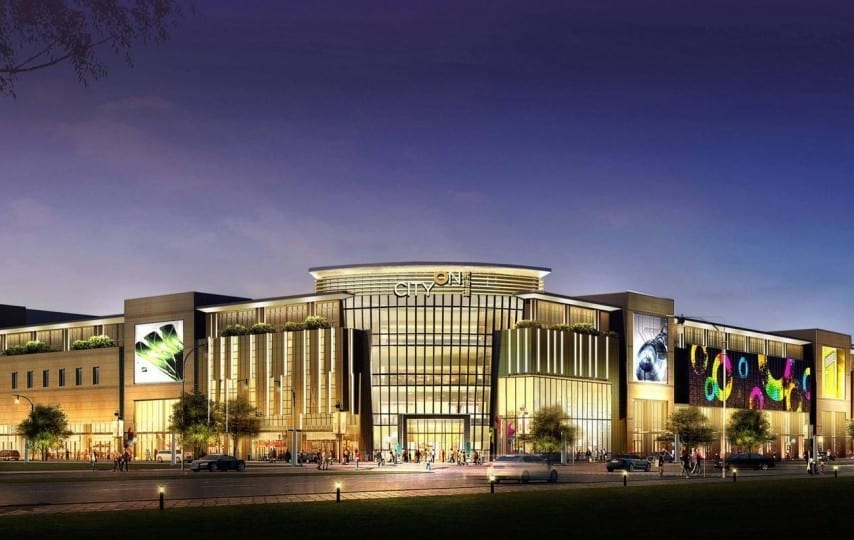
    Taubman Asia, a subsidiary of US shopping centre group Taubman Centers, and China’s Wangfujing Group, have announced the line-up of retailers for its CityOn.Zhengzhou mall in Henan province, set to open on March 16.

    When it opens, the centre will be 100 per cent leased and 90 per cent occupied with nearly 200 stores and restaurants. In the heart of Zhengdong New District, the six-level, 94,000 sqm shopping and dining destination will offer domestic, international and lifestyle brands from fast fashion to accessible luxury, anchored by a four-level Wangfujing department store.

    “We are thrilled to see our second China project coming to life in Zhengzhou,” says Taubman Asia president Rene Tremblay.

    Local, regional and international cuisine at all price points and in both seated restaurants and quick-serve formats will be a feature of the centre, which will also offer family-friendly experiential, educational and entertainment offerings.

    Many international brands will be making their central China debut at the centre, says Taubman Asia group VP Paul Wright.

    Outlets at the mall include…

    Fashion: Adidas, Ajidou, Basic House, Bershka, Charles & Keith, Columbia, Converse, Ecco, Five Plus, Forever 21, H&M, Innisfree, Jack & Jones, KIKC, Kipling, La Chapelle, Lee, Levi’s, Mango, Massimo Dutti, Miniso, Mishka, Mobi Garden, Nike, Pandora, Polo, Sand & Foam, Sephora, Skechers, Stradivarius, The North Face, Uniqlo, Vans, Vero Moda, Westlink and Zara.

    F&B/entertainment/kids/lifestyle/electronics: Acasia Food Village (featuring 14 food vendors), Benfu Sushi, Boat Noodle, Chatime, Chez Choux, Chicken Container, Coco, Dollar Shop, FrozenYo, GB Kids Station, Gong Cha, Grandma’s Kitchen, Guoguo Mutton Soup Restaurant, Guxiang No. 9 Catering, Hallmark Babies, Homao, Huawei, iSpace, La Chapelle Kids, Lenovo, MagicSalad, MM by Haircode, Mr Wish, NaughtyKids, New York Fries, Oscar CityOn Cinema, PapaBubble, Pizza Zone, Rbike, Siwuke Tea, Starbucks, Strawberry Forever, Subway, Teppanyaki Xiang, Toot Science, Udon & Tempura, Uncle, Wan Quan Bu Tong, Xiang Tian Xia Huo Guo, Xiao Liu Jia, Xiao Zhu Zhu Kao Rou, Xue Mi Da, Yang Xiang Dou Pi Shuan Niu Du, YuYuTo, ZBX Fresh Fish Hot Pot, Zheng Shi Yi and Zoo Steak.