Tag: Philippines

  • Globe’s ‘Historic’ Subsea Cable Project to Be Completed by April 2023

    Globe’s ‘Historic’ Subsea Cable Project to Be Completed by April 2023

    Globe has announced that it has landed fiber optic cable in eight provinces within just two months, on track to complete the landmark project by April 2023.

    The $150-million Philippine Domestic Submarine Cable Network (PDSCN), the longest domestic subsea cable project in the Philippines, has landed in Lucena City, Boac in Marinduque, Calatrava in Romblon, Placer in Masbate, Iloilo City, Bacolod City, Roxas City and most recently, the tourist island of Siargao in Surigao del Norte.

    “This is a historic subsea cable project that will bring better connectivity and data capacity to several communities who rely on communications for their day-to-day needs, including education, work and livelihood,” announced Globe Group President and CEO Ernest Cu.

    The sites are among 33 landing points of PDSCN, which has a total cable distance of about 2,500 kilometers. The project commenced in July and is set to finish covering all sites by April next year.

    “Despite disruptive weather events this wet season, our PDSCN project has been touching down its landing points as planned, bringing reliable fiber connectivity to remote and underserved areas,” said Arlene Jallorina, vice president for strategic infrastructure investments for Globe Business, Enterprise Group.

    The project kicked off in July at the Subic Bay when Globe, Infinivan, Inc. and Eastern Communications, along with Japanese vendor partner Kokusai Cable Ship Co., started transporting fiber optic cable manufactured by global firm Nexans to the landing points across the country.

    The project is seen to deliver connectivity crucial to the country’s recovery from the pandemic, as it will support the government, education, business and even recreational needs for reliable communication facilities.

    Further cable landings will be made in the coming months, including in Mactan, Cebu and Boracay, Aklan. Fiber connections will be activated thereafter.

  • Philippines Re-elected as ITU Council Member

    Philippines Re-elected as ITU Council Member

    The Department of Information and Communications Technology (DICT) has announced that the Philippines was re-elected to the International Telecommunications Union (ITU) Council on October 3 in Bucharest, Romania.

    One hundred and ninety-three member states of the ITU selected 48 states to lead the Council. The Philippines is among the 13 states selected from Region E (Asia and Australia), along with Australia, Bahrain, China, India, Indonesia, Japan, Korea, Kuwait, Malaysia, Saudi Arabia, Thailand and the United Arab Emirates.

    Represented by DICT, the agency said that the country commits to working towards the fulfillment of the ITU’s mandate to make the digital future inclusive and more accessible for everyone, especially in developing countries.

    “The DICT looks forward to working with all our stakeholders both in the public and private sectors to attain our common aspirations of a digitally empowered Philippines. As a country, we are very eager to take an active part in building a better digital future for all as our commitment under the Bucharest Declaration,” DICT Secretary Ivan John Uy said as he addressed the nation’s win in the ITU Council.

    DICT Undersecretary Jocelle Batapa-Sigue assisted in the country’s successful bid for re-election and will be representing the Philippines until the end of the Plenipotentiary Conference on October 14, 2022

    “To us in government, it may be just work, but for others, it may mean their lives, their food, their education, their health. Let’s help the world in the next four years with every [bit of] knowledge, every sharing we can share. The PH is blessed to stand among nations and have a voice in the next four      years. Let us show the world that DICT is a government agency of global standards. Let us use this seat, this voice to help build a better digital future,” Batapa-Sigue asserted.

    The DICT is expected to lead the country’s involvement in discussions and decision-making that will significantly affect the member states’ digital agenda. The Department also enjoins the support and collaboration of government agencies to achieve its goals as a Council member.

  • Jollibee plots Tim Ho Wan expansion in China

    Jollibee plots Tim Ho Wan expansion in China

    Philippine fast food chain operator Jollibee Foods on Wednesday said it will inject over $60 million into its dim sum chain, Tim Ho Wan, to expand in mainland China, where strict COVID-19 lockdowns have battered the restaurant industry.

    Jollibee, which aims to join the likes of McDonald’s and Yum Brands as one of the world’s largest quick-service restaurant companies, has seen its business rebound as economies reopen. But recovery in China has hit a snag due to President Xi Jinping’s zero-COVID strategy, which relies on lockdowns and wide-scale testing to fight outbreaks.

    Yet Jollibee remains upbeat about its prospects in China, announcing fresh funding for Titan Dining, the fund that owns the Michelin-starred Tim Ho Wan chain.

    Jollibee owns 90% of Titan Dining and will raise its committed capital in the fund to 315 million Singapore dollars ($217 million) from SG$225 million in November, the company said.

    The fresh capital, Jollibee said, will mainly fund Tim Ho Wan’s store expansion and capital requirements.

    Jollibee Foods aims to open 100 Tim Ho Wan branches in mainland China in the next four years. It currently has 11 stores there, mostly in Shanghai.

    Jollibee Foods had over 6,300 branches worldwide under more than a dozen brands, as of August. The company regards China as one of its three key markets. The others are the U.S. — where it has taken over Los Angeles-based Coffee Bean & Tea Leaf and Denver-based Smashburger — and the Philippines, where the company started out as an ice cream shop before becoming an industry leader that outsells McDonald’s in the country.

    Before investing in Tim Ho Wan in 2018, the company had built other businesses in China, such as Yonghe King, a Taiwanese food-inspired restaurant famous for its freshly prepared soy milk, and Hong Zhuang Yuan, which serves congee and other hot dishes. Yonghe King and Hong Zhuang Yuan have 410 and 54 branches, respectively.

    But the pandemic has hit the restaurant industry hard and a recovery in China has been derailed by the government’s continued reliance on strict lockdowns.

    In its latest quarterly report ended June, Jollibee reported record systemwide (franchised and company-owned stores) sales of 73.1 billion Philippine pesos ($1.24 billion), up 44.8% on the year. But while most of its business units expanded during the quarter, China sales fell 28% “due to COVID-related restrictions” that forced the company to temporarily shut some stores.

    Even before the pandemic, China has not always been an easy market for Jollibee, which was founded by company Chairman Tony Tan Caktiong, who was born to emigrant parents from Fujian province.

    In 2017, the company closed over a dozen hot pot outlets after selling its stake in a beef noodle chain as part of a restructuring the previous year. In 2015, the company announced plans to open more than 1,400 Dunkin’ Donuts shops in China over 20 years under a franchise deal, but it had only opened seven outlets as of June.

  • Shell Philippines to open Adidas and Starbucks stores in its gas stations

    Shell Philippines to open Adidas and Starbucks stores in its gas stations

    Pilipinas Shell Petroleum, the publicly listed Philippine arm of Shell Plc, plans to have retail shops and restaurants in a third of its gasoline refilling stations by 2025 as its seeks to boost revenues beyond fuel.

    That could drive non-fuel retail earnings to grow at least 15% a year and build an income stream that provides a quarter of sales, CEO Lorelie Quiambao Osial said in a Bloomberg interview. Shell wants 550 of its 1,300 to 1,400 stations in the Philippines in 2025 to have retail offerings that range from convenience stores to restaurants and shops like Jollibee, McDonald’s, Starbucks and Adidas.

    “We are transforming what you’d normally call petro retail stations into mobility destinations,” said Osial. “Before it’s motorists-driven. Now, it’s something for the passengers to enjoy as well.”

    Pilipinas Shell’s push to grow its non-fuel revenue while aggressively expanding its gas stations gained focus after it closed its refinery in 2020 and shifted to buy fuel supplies from abroad. The refinery’s closure made earnings more predictable and freed up resources to fund projects with higher yields, like building up its gas station footprint. Currently, a quarter of revenue is from non-fuel retail, Osial said.

    The five-year strategy, which started in 2021, costs about 3 billion pesos ($52.3 million) to 4 billion pesos annually. It calls for adding between 40 to 60 stations a year, to bring Pilipinas Shell’s network to up to 1,400 outlets and five mid-range oil terminals by 2025. The plan is a bet on rising personal income and petroleum demand in the Philippines, and expectations that the country’s “low motorization rate” will catch up with other markets, Osial said.

    Pilipinas Shell has also added electric-vehicle charging points at some of its stations in anticipation of a growth in EV use in the Philippines.

    Among the country’s biggest gasoline retailers, which also include Chevron Corp.’s local unit and the nation’s sole refiner Petron Corp., Shell Pilipinas has been making the biggest push into diversifying away from fuel in its gasoline stations since 2021, said Astro del Castillo, managing director at First Grade Finance Inc., an investment advisor and consultancy firm.

    “It could double this segment by 2025 considering that it’s just starting to aggressively penetrate this market,” he said.

    To further diversify income from fuel, Pilipinas Shell also plans to have 900 of its gas stations in 2025 provide oil change and car maintenance services, said Osial, who helped build Shell’s gas business when the global oil company returned to Iraq in 2013 and was tapped in 2021 to take charge of its Philippine retail operations.

    “There will be more offers on the non-fuel space,” Osial said. “Customer behavior is changing and it’s still evolving.”

  • PLDT to Start Construction Of Two Major ICT Projects by Year End

    PLDT to Start Construction Of Two Major ICT Projects by Year End

    PLDT Group announced that it will inaugurate the construction of its fourth cable landing station and the initial construction phase of the Asia Direct Cable (ADC) system by the end of the year.

    The two additional major ICT infrastructure projects follow the group’s build-out of the Philippines’ largest hyperscaler data center and the activation of Jupiter, the fastest international cable direct to the US and Japan.

    “After the successful launch and activation of Jupiter, PLDT hopes to lead the country to become the best Transpacific cable hub in Asia, as we work on delivering additional subsea cables and new cable landing stations in 2024,” said former PLDT VP and Technology Advisor for Enterprise Victor Aliwalas.

    The cable landing station in Baler, Aurora, to be completed by 2024, will supplement PLDT’s international gateway on the northern and eastern borders. The ADC cable, meanwhile, is expected to be completed by the end of 2023 and is strengthening the country’s data links in Asia.

    “Apart from the DC and the International connectivity, PLDT is also leading the charge on 5G rollouts and domestic fiber rollouts on top of all the other platforms to significantly increase the country’s take up of digitalization. We are not focusing on just one or two pillars, we are building out the entire ecosystem to work as a whole. We need a full working and energized system to support this hyperscale initiative and PLDT is determined to put together everything to be the strongest hyperscale player in the country, to establish and promote the Philippines as a hyperscale destination,” Aliwalas added.

    PLDT has been working closely with government agencies, including the Department of Trade of Industry and the Department of Information and Communications Technology (DICT), in positioning the Philippines as the next hyperscaler hub in the Asia Pacific, as the country transforms into a globally competitive and digitally empowered nation.

    “We believe that the hyperscalers industry will be the next growth engine of the Philippines. We are keen on helping hyperscalers cloud services and start-up ecosystem in the Philippines,” Aliwalas further noted     .

    DICT Secretary Ivan John Uy also recognized the crucial role of ICT in the social-economic development of the country, saying, “the value of information and communications technology or ICT is encompassing. It is necessary in every aspect of life, business, education, and in advancing our general scientific understanding.”

    “We still have a lot of improvement on key strategic areas such as digital infrastructure buildup to achieve the President’s goal of a digitally transformed Philippine government. Hence, it’s important for us to address the gaps that hinder our drive towards inclusive growth and innovation, especially the long-standing gap in the development of digital connectivity nationwide. And indeed, we want to work hand in hand with our partners to achieve this goal,” he added.

    Last year, PLDT joined the multi-agency government initiative to support the priming of the country’s digital readiness to attract global hyperscalers expanding in Asia, including it as the sixth key sector and highlighting the strong government and private sector partnership to cement the foundation of the Philippine digital economy.

  • Globe Deploys 933 5G Sites in 1st Half 2022

    Globe Deploys 933 5G Sites in 1st Half 2022

    Globe Telecom has announced that it has built 933 base stations in the first half of 2022 as part of its continued 5G rollout across the Philippines.

    Globe’s 5G network outdoor coverage has reached nearly 97% of the National Capital Region and 86% of key cities in Visayas and Mindanao.

    “Globe has been ramping up its rollout amid rising demand for 5G connectivity. The drive to build more and faster is fueled by our desire to deliver more improvements in our customer service experience that are consistent and reliable,” said Joel Agustin, SVP and head of network planning and engineering at Globe.

    As of end-June 2022, Globe has logged approximately 2.7 million devices on its 5G network.

    The telco giant is also accelerating its 5G roaming rollout to more countries in Asia, the Middle East and Europe to enable the connectivity experience for travelers and overseas Filipino workers.

    For data-related upgrades and expansion, Globe has already spent P50.5 billion out of its P89 billion capital expenditure allocation for 2022. The majority of the amount was used to build its fiber assets further, put up more cell sites, upgrade towers to 4G LTE and roll out 5G technology and in-building solutions.

  • NOW Telecom’s Equity Restructuring Gets Nod

    NOW Telecom’s Equity Restructuring Gets Nod

    NOW Telecom Company has announced it was granted the approval of the Philippines’ Securities and Exchange Commission (SEC) for the increase of NOW Tel’s authorized capital stock, the quasi-reorganization of its equity and a stock split.

    Following the approval, the company increased the number of its authorized common shares from 14.59 million to 952.09 million and lowered its par value from Php100.00 per share to Php1.00 per share.

    Previously, the stockholders of NOW Corp approved the increase of the company’s stake in NOW Tel, for a total of Php600 million which was part of the proceeds from the placement received from the equity subscription of Velarde, Inc. to NOW Corp. The additional subscription from NOW Corp and other shareholders supported the increase in the authorized capital stock of NOW Tel.

    In addition, the SEC also certified the approval of the equity restructuring to fully expunge NOW Tel’s deficit as of December 31, 2020. The quasi-reorganization has allowed NOW Tel to eliminate its deficit, which will allow the company (NOW Tel) to declare dividends to its shareholders from its unrestricted retained earnings that may be generated subsequent to the quasi-reorganization.

    “This strategic initiative of NOW Tel is envisioned to support its growth plans. The three-step equity restructuring better positions NOW Tel for investors both domestic and foreign to participate in its equity. With the amended Public Services Act allowing up to 100% foreign ownership in public utility companies and this recent approval from SEC, NOW Tel can now proceed in its growth plans starting with its fundraising efforts including but not limited to tapping either the debt market or equity market, or both.” says Rene Rosales, NOW Telecom president and COO.

    Former President Rodrigo Duterte, in 2018, signed into law the proposed extension of NOW Tel’s franchise for another 25 years or until 2043.

  • Cebu Pacific boosts international flights

    Cebu Pacific boosts international flights

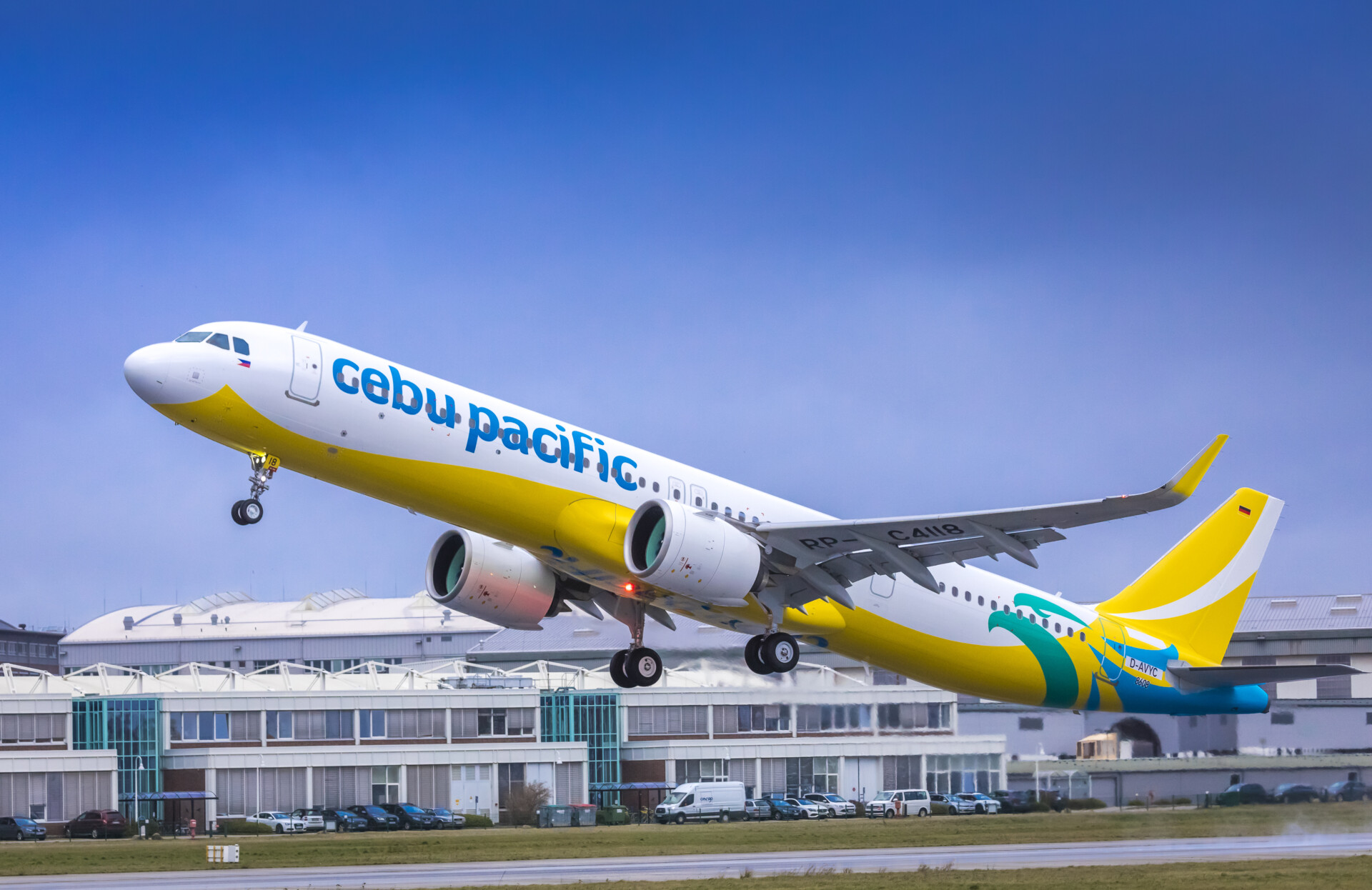
    Cebu Pacific, the country’s leading airline, continues to boost its international network as it adds flights to some of its top ASEAN destinations, namely Bangkok and Bali.

    Beginning Aug. 29, 2022, CEB will fly daily from Manila to Bangkok, coming from its current five-times-a-week frequency. By September, flights from Manila to Bali will also increase from thrice to five times weekly.

    The airline also intends to restart its Manila-Brunei flights by Sept. 1, starting with a twice-weekly frequency.

    “We are happy to keep growing our international network as we see an increasing demand for travel abroad, and as more destinations ease restrictions. It is exciting and encouraging to see more Filipinos travelling confidently in and out the Philippines, that is why we make sure we consistently provide convenient and affordable flight options to enable everyJuan to travel more for less,” said Xander Lao, CEB chief commercial officer.

    Fully vaccinated Filipinos flying to these three destinations are only required to present their proof of complete vaccination as Thailand and Indonesia have already eased its restrictions to easily allow tourists to enter.

    Apart from this, the airline also intends to increase its flights from Cebu to Seoul from twice weekly to a daily service by Sept. 9. On Sept. 23, flights to Nagoya from Manila will be daily from its current five times weekly.

    By Oct. 1, CEB’s Bali flights will increase to a daily service, while its flights to Hanoi and Taipei from Manila will both have one additional flight per week – from thrice to four-times-a-week for Hanoi, and twice to thrice weekly for Taipei.

    Coming home, boosted Filipinos no longer need to take a COVID test pre-departure. For more information, passengers may refer to CEB travel reminders page for the latest updates and complete travel guidelines to their destination.

    CEB continues to offer its guaranteed low fares to stimulate travel across its widest domestic network in the Philippines. It continues to implement a multi-layered approach to safety, while it operates with a 100 percent fully vaccinated crew, 95 percent of whom have been boosted.

  • Globe Gains Approval to Sell 7,000 Towers

    Globe Gains Approval to Sell 7,000 Towers

    Globe announced that it received board approval to sell over 7,000 towers in what is to be the largest ever tower sale and leaseback deal in the Philippines.

    In a company disclosure, Globe said the tower assets offered for sale are comprised of 79% ground-based towers and 21% rooftop towers. The sale has been grouped into three distinct portfolios assigned to three different tower companies representing local and international groups.

    Globe said it expects to raise a significant amount of capital over the next few quarters by executing these transactions. Of the total proceeds, approximately 75% will be used to fund capital expenditures      to support ongoing network expansion and sustain industry-leading network consistency and reliability scores. The balance of 25% will be earmarked to cover 2023 debt servicing requirements.

    Globe said that this will significantly improve the overall health of its balance sheet and provide sufficient flexibility to properly compete in a dynamic market as well as further expand its digital ecosystem.

    As the biggest milestone of this initiative, Globe signed two sale and leaseback agreements for two portfolios consisting of 5,709 telecom towers and related passive telecom infrastructure for over 71 billion pesos.

    The first portfolio being sold consists of 2,180 telecom towers in Luzon, which will be acquired by MIESCOR Infrastructure Development Corp. (MIDC) for a total consideration of 26 billion pesos and be leased back to Globe for an initial period of 15 years. The first close for this portfolio is targeted      within the 3rd quarter of the year, with subsequent closings happening as and when closing conditions are met.  MIDC is a joint venture between investment firm Stonepeak and the country’s largest electric distribution utility company, Meralco.

    The second portfolio consisting of 3,529 towers will be sold to Frontier Tower Associates Philippines Inc. for 45 billion pesos and also leased back over an initial period of 15 years. The first closing target for this portfolio is set for the late third quarter, with subsequent closings happening as and when closing conditions are met.

    Globe is also in advanced discussions with one other tower company for the potential sale and leaseback of an additional ~1,350 telecom towers and related passive telecom infrastructure. This last portfolio is comprised of towers located in the Visayas and Mindanao islands. Globe expects to sign the sale and leaseback agreement with this tower company within the third quarter, with the first closing happening within the 4th quarter of the year.

    “These expanded long-term relationships with the tower companies show Globe’s commitment to help improve the Philippines’ internet condition, as well as our desire to have as many Filipinos enjoy the benefits of having access to reliable internet. We also believe that through these monetization efforts, Globe will be able to further improve overall operational efficiency, allowing us to serve our customers better, and supporting our goal of enabling the digital lives of Filipinos,” said Ernest Cu, Globe President and CEO.

    “We are very pleased with this landmark deal with Globe that marks a critical milestone in MIDC’s strategy to enter digital infrastructure space, which plays a pivotal role in driving economic growth and social well-being through digital inclusion. This also gives momentum to pursue more opportunities that will help us achieve our aspiration to become a trusted telco tower operator in the Philippines and eventually, a market leader in the digital infrastructure business,” MIDC Chairman, Ray Espinosa stated.

  • Smart Partners With Omnispace to Explore Space-Based 5G Technologies

    Smart Partners With Omnispace to Explore Space-Based 5G Technologies

    PLDT’s wireless subsidiary Smart Communications is collaborating with US-based Omnispace to explore and demonstrate the capabilities of space-based 5G communications using low earth orbit (LEO) satellites.

    In a statement, the Head of PLDT’s Technology Strategy and Transformation Office, Arvin Siena said, “This collaboration with Omnispace will allow our companies to work together to define use cases for the Philippine market.”

    He added that possible use cases include enabling 5G connectivity in remote areas, incorporating IoT and sensors for use in monitoring weather disturbances and natural calamities, and augmenting network coverage for disaster relief, maritime and telematics for vessels and equipment.

    “This is also part of PLDT’s broader initiatives to future-proof our services, including Smart 5G. This includes exploring opportunities to team up with companies like Omnispace, to test the interoperability of our network with their 3GPP-compliant 5G non-terrestrial network (NTN), which will support the 5G ecosystem of the future,” Siena added.

    Having launched Omnispace Spark-1 and Spark-2 in April and May, respectively, the company recently completed the deployment phase of Omnispace Spark™. This program is the initial phase in the company’s development and delivery of the world’s first global 5G-capable satellite network.

    The Omnispace 5G NTN global network will interconnect with terrestrial or land-based mobile networks to serve mobile subscribers utilizing the company’s 2 GHz mobile satellite spectrum allocation and operating in 3GPP band n256.

    As the world’s first 3GPP-compliant 5G NTN system, the Omnispace network is expected to deliver the power of 5G directly to billions of devices everywhere, extending the reach of mobile connectivity to enable people and assets to communicate in real-time through a single, seamless global service.

    “We are excited to announce this collaborative agreement with Smart Communications, which shares our vision of delivering reliable mobile connectivity to consumer, government and enterprise users, everywhere,” said Brian Pemberton, Omnispace. “Together with Smart, we seek to bridge the digital divide, while also providing the communications infrastructure to power the development of the Filipino economy of the future.”

    PLDT and Smart’s pioneering foray into satellite-powered communication is part of their broader initiative to deliver world-class customer services across the country, complementing the nationwide rollout of their fiber infrastructure, and wireless networks based on 4G and 5G technologies.

  • SmarTone to Terminate 2G Services on October 14

    SmarTone to Terminate 2G Services on October 14

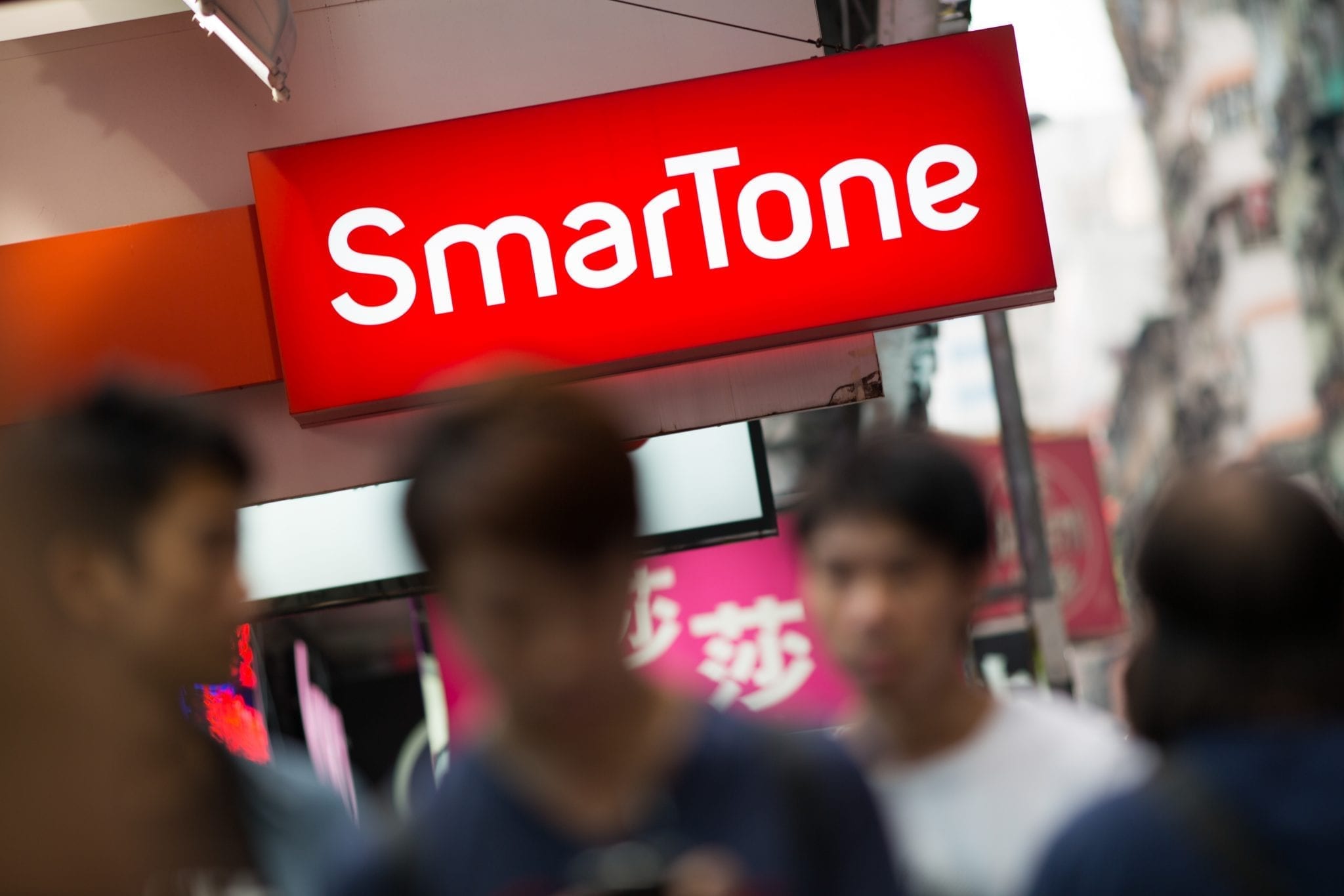
    SmarTone said that it would terminate its 2G services on October 14. This comes after Hong Kong’s Office of the Communications Authority announced the Communications Authority’s decision to grant prior consent to the application by SmarTone to discontinue its 2G services.

    In a press release, the company said that in response to the massive growth of mobile data usage in recent years and the decreasing market demand for 2G services, spectrum resources currently deployed for 2G network will be reallocated efficiently to drive 5G network development, bringing more innovative services and a better network experience to its customers.

    SmarTone said that in entering the 5G era, the need for and usage of mobile data and digitalized services are growing. The number of SmarTone customers upgraded to 5G has been increasing. As of April 2022, the number of SmarTone customers using 2G handsets or devices only accounts for less than 0.1% of its customer base.

    To fully appropriate the existing spectrum resources utilized by the 2G network (i.e. the 900 MHz and 1800 MHz bands of spectrum), the spectrum will be reallocated on October14 to better provide more advanced mobile services to customers using SmarTone’s 4G and 5G networks. SmarTone’s existing 2G network will continue as normal until October 14.

    Norman Tam, Deputy Chief Executive Officer of SmarTone, said, “The value of ‘Building Network with Heart’ has always been at the core of SmarTone’s development, and we will continue to adapt to the ever-changing needs of our customers to deliver the best possible user experience in 5G and beyond.”

    To facilitate a smooth migration from 2G to more advanced mobile networks, SmarTone has been facilitating the affected customers to upgrade their 2G handsets or devices to options that have supported a higher generation mobile network since early 2021.

    SmarTone is also working with a few enterprise customers who are still using 2G devices to ensure their smooth transition to 4G/5G services. SmarTone will continue to assist the affected customers in their upgrade of handsets or devices for the enjoyment of its 4G/5G services, and endeavor to offer proper arrangements to those who do not intend to upgrade from 2G.

  • Will Satellite Technology Be a Game-Changer in the Philippines?

    Will Satellite Technology Be a Game-Changer in the Philippines?

    The Philippines will soon have the first satellite-based internet connectivity in the country as SpaceX’s Starlink is set to be up and running by the end of this year.

    Starlink is a satellite internet constellation under Elon Musk’s SpaceX, offering satellite Internet access coverage to 40 countries, and aims to expand globally. It features speeds of up to 200 Mbps and latency as low as 20ms for residential use.In July, the company announced that Starlink Internet Services Philippines Inc. will already be available in the country, the first in Southeast Asia to be welcoming what is dubbed Starlink Technology.

    The Philippine government said they welcome this latest industry development as this will help enhance connectivity nationwide. The Department of Information and Communications Technology (DICT) secretary joined SpaceX representatives in Manila during the announcement of SpaceX’s rollout.

    The country’s ICT chief, Ivan John Uy, said that SpaceX stands by its commitment to provide satellite internet access to remote areas in the country. “The DICT is closely following the directives of President Ferdinand Marcos Jr., that is to provide digital connectivity across the many islands of the Philippines by building the country’s digital infrastructure, that will also lead to effective e-governance.”

    He added, “This will bridge the digital divide in the country especially in an archipelagic country like the Philippines where laying fiber cables or establishing cell towers in mountainous areas can be challenging.”

    According to a report by DataReportal, the Philippines’ internet penetration rate reached 68%, or about 76 million internet users.

    There are currently three major internet services providers in the Philippines, including those operated by two telecommunication giants, PLDT and Globe. But with many areas in the country still unserved or underserved, demand for internet connectivity continues to increase.

    From this year into the next, the DICT aims to speed up the deployment of internet infrastructure to connect several regions in the country. The plan also includes building cell towers and hi-throughput satellites servicing certain provinces.

    And with the introduction of satellite technology in the country, officials say that this will serve as a solution to connectivity challenges.

    Starlink is expected to connect rural and remote areas where there’s unstable or completely unavailable connectivity. Through this development, DICT said Filipinos from far-off areas can have better access to education, health services and online banking, among other digital needs.

    And to ensure that people in these geographically isolated and disadvantaged areas get to access the internet, the government also said they may start the free rollout of Starlink-powered internet hubs by the first quarter of next year.

    Moreover, satellite technology will also be ideal for those countries prone to natural disasters like the Philippines. Based on the company’s experience in 40 countries since it began operation in October 2020, SpaceX Government Affairs Senior Manager Rebecca Hunter said that Starlink’s technology has withstood “all sorts of inclement weather,” including heavy rains and cloudy weather.

    Some major natural disasters in the Philippines have affected communication access, including last year’s typhoon, which damaged telecommunications infrastructure, leaving people without internet access.

    How is Satellite Technology Changing the Local Telecom Industry

    Since SpaceX unveiled its plans to launch its services in the Philippines, several other satellite internet services providers have also followed suit.

    One of the largest telecom firms in the country, Globe, announced in April that it partnered with AST SpaceMobile Inc. to deliver the first satellite broadband service directly to standard mobile phones in the country. The company said this is part of its expansion to improve such service across the nation     .

    Its major competitor, PLDT also boasts that it has completed successful testing of high-speed broadband connectivity with Canada’s Telesat’s Phase 1 Low Earth Orbit satellite. This test allows opportunities for the telecom operator and its wireless unit, Smart, to use innovations in the satellite industry to expand      high-speed mobile and Internet services to more hard-to-reach communities.

    The Head of Technology at PLDT and Smart, Mario Tamayo, said in a statement, “This year, with our successful test with Telesat, we are a step closer to bringing satellite connectivity innovations and services to businesses and homes in the deepest rural and remote areas of the country.”

    The Smart wireless unit has also collaborated with US-based AST SpaceMobile and is scheduled to test space-based cellular broadband technology.

    The third telecom player in the Philippines, DITO Telecommunity, recently announced that it is      also planning to deploy satellite technology in a bid to expand its coverage, especially to those underserved areas.

    Local media reported that the company was already in talks with prospective satellite service operators to achieve this goal.

    Last year, internet service operator, Converge, also partnered with a foreign satellite company to provide satellite broadband connections to more than 2,000 public schools.

    A report by local media, Business World, also suggested that the local telecommunications regulator is expecting more foreign satellite broadband providers to enter the market. However, no further details were revealed.

    Earlier this year, telecommunications firm Philippine Telegraph and Telephone Corp. (PT&T) teamed up with Singapore-based next-generation broadband satellite operator Kacific Broadband Satellites Ltd.      to “offer high-speed satellite internet at a more economical cost.”

    In 2019, the Asian Development Bank signed a deal to provide a $50 million financing package to      Kacific to deliver satellite-based, low-cost, high-speed, wholesale broadband internet connections to the Philippines and other countries in Asia and the Pacific.

    As to whether or not satellite technology is a threat to existing telecom service providers in the country, PLDT Group’s President and CEO, Al Panlilio, doesn’t think so. During a stockholder’s meeting last June, he said that they welcome new technologies, including satellite, as these would enable wider reach, including to remote communities.

    SpaceX Executive Rebecca Hunter, in concurrence, said that Starlink will not compete with the country’s telecom operators, but instead will fill in the gaps particularly in the unserved and underserved areas in the country to further expand connectivity.


  • DITO Slapped With Interconnection Penalty by Globe After Filing Anti-Trust Complaints vs Telco Giants

    DITO Slapped With Interconnection Penalty by Globe After Filing Anti-Trust Complaints vs Telco Giants

    The Philippines’ two pioneering telecom firms, Globe and PLDT’s wireless unit Smart, hit back at new industry player DITO after it filed a complaint against the two firms for their alleged anti-trust practices.

    Local media reports cited Globe’s statement saying that it had asked the local telecoms regulator to penalize DITO with 622 million pesos’ worth of fines for violating telecom rules. The statement said DITO made “fraudulent calls” through its network to Globe, calls which allegedly sidestepped “proper voice traffic channels”.It said that an average of 1,000 fraudulent calls were allowed to pass daily through DITO’s network to Globe users, which breaches the interconnection rules. Globe said the calls were “fraudulent” as they were international in origins that were masked as calls being made locally.

    According to reports, Globe also asked the local telecom regulator to allow its “temporary disconnection” of interconnection trunk lines with DITO until it resolves all alleged illegal bypass operations coming from its network and until it pays Globe all existing charges for what it says are fraudulent calls.

    Smart meanwhile said in a statement that DITO’s complaint was “baseless” and denied that they are in any way involved in anti-trust activities against DITO.

    A day before Globe’s move, DITO filed with the Philippine Competition Commission two separate complaints against Smart and Globe. It accused them both of abusing their market dominance by imposing interconnection barriers, resulting in low interconnection for calls made by DITO subscribers to Globe and Smart.

    The Philippine Competition Commission said in a statement, “Our Competition Enforcement Office (CEO) is now evaluating the merits of Dito’s complaints. The Commission has 10 days within which to decide whether or not to give due course to the complaint. If given due course, our CEO will proceed to investigate the charges and if it subsequently finds sufficient basis, file with the Commission en banc a Statement of Objections against the allegedly erring entities. The PCC shall also consult with the National Telecommunications Commission for related regulatory concerns.”

  • Cebu Pacific retimes, cancels 31 flights Tuesday

    Cebu Pacific retimes, cancels 31 flights Tuesday

    Low-cost carrier Cebu Pacific (CEB) on Tuesday announced the retiming and cancellation of 31 flights, saying these are the affected flights during the memorial rites for former President Fidel Ramos.

    Spokesperson Carmina Romero said a notice to airmen (NOTAM) restricting the movement from 11 a.m. to 1 p.m. was issued for a planned showering of petals.

    An advisory posted on its Facebook page showed the carrier has canceled 28 domestic flights, and has retimed three international flights because of the activity.

    “We cannot reschedule all (the flights). We can only consolidate so much,” Romero told the Philippine News Agency as to why CEB had to cancel flights instead of retiming them like these three:

    • 5J273 Hong Kong – Manila New ETD 11:15 a.m. /New ETA 1:25 p.m.
    • 5J188 Manila – Seoul (Incheon) New ETD 3:40 p.m. / New ETA 6:50 p.m. KST
    • 5J189 Seoul (Incheon) – Manila New ETD 9:05 p.m. KST / New ETA 12:05 a.m.

    The 28 canceled flights are:

    • DG6041/6042 Manila – Coron – Manila
    • 5J659/660 Manila – Tacloban – Manila
    • 5J851/852 Manila – Zamboanga – Manila
    • 5J641/642 Manila – Puerto Princesa – Manila
    • 5J483/484 Manila – Bacolod – Manila
    • 5J963/964 Manila – Davao – Manila
    • 5J453/454 Manila – Iloilo – Manila
    • 5J553/554 Manila – Cebu – Manila
    • 5J911/912 and 5J919/920 Manila – Boracay – Manila
    • 5J643/644 Manila – Puerto Princesa – Manila
    • 5J621/622 Manila – Bohol – Manila
    • 5J327/328 Manila – Legazpi – Manila
    • DG6029/6030 Manila – San Jose – Manila

    “As the situation remains fluid, other flight schedules may also be affected,” the advisory read.

  • Converge ICT Now Offers Data Center Service Connectivity Solution

    Converge ICT Now Offers Data Center Service Connectivity Solution

    Philippines’ fiber broadband provider Converge ICT Solutions, Inc. announced it is now offering its Data Center Express (DC Express) to address high-capacity requirements of its customers from the residential and business sectors.

    DC Express delivers clear channel, dedicated connectivity between data centers, such as those used in BPOs, banks and multinational companies, through Converge’s Data Center Interconnect Network. This product leverages the latest DWDM (Dense wavelength division multiplexing) technology for high-capacity requirements to reach data transfers of up to 100 Gbps to data centers in the Philippines and, in the future, key international data centers as well.

    DC Express is complemented by the Optical Transport Network, for customers who want to use their own network terminals for their high-capacity requirements.

    Aside from supporting Ethernet connectivity, this service also supports different protocols to interconnect customer equipment housed in the data centers. For the subscriber’s Storage Area Networking requirements, Fiber Channel is the best solution as DC Express supports FC800 (20G) and FC3200 (40G) for business-critical applications.

    DC Express aims to cater to the connectivity needs of enterprises whose equipment is based in data centers. The service can be provisioned quickly, has enterprise-grade SLAs, and has a 24-hour support and restoration team.

    Converge Chief Operations Officer, Jesus Romero, said in a statement, “DC Express is yet another expansion of our services, leveraging on our inter-data center connections, to ensure faster, better, and more secure data transfer for our enterprise subscribers.”