Tag: Philippines

  • Montblanc Philippines relaunches in Rustan’s Makati

    Montblanc Philippines relaunches in Rustan’s Makati

    Following a renovation and enlargement, Montblanc Philippines has relaunched its Rustan’s Makati store as the first concept boutique of the German luxury brand for Southeast Asia.

    From an original 78 sqm, the store now covers 110 sqm, allowing the brand to widen its offering of writing instruments, leather goods and classic timepieces.

    Inspired by the signature elements of Montblanc, the new boutique boasts a palette of black, white and wood, with designer Noé Duchaufour-Lawrance aiming for an uncluttered aesthetic.

    “We’re proud to be Montblanc’s partner in realising its new global vision,” says Rustan VP for store planning and expansions Michael Huang.

    SSI Group president Anton Huang says the brand has garnered a strong following during its years in the Philippines with its high standards of perfection.

    A grand re-opening event for the store attracted Manila celebrities, glitteratti and influencers.

  • Smart taps Redknee to keep up with demand

    Smart taps Redknee to keep up with demand

    Smart Communications, based in the Philippines, has awarded Redknee a services and support contract for an agile, flexible, and scalable converged billing, charging, and customer care platform.

    Redknee Unified promises service providers to enhance their competitiveness and maximize value by quickly launching new revenue streams and service offerings with multi-channel customer support.

    The solution provides a capable adaptive quota solution allowing customers to access data services on multiple devices at the same time, delivering an optimal user experience and an efficient use of resources.

    With Redknee Unified, Smart can benefit from improved time to market, by adding tool-based testing for product configuration and real-time configuration changes. Redknee’s multi-campus solution is deployed with geo-redundancy, enabling Smart to support its rapidly growing subscriber base with high quality and resilient backend, the vendor said.

    “We are excited to launch Redknee Unified in the fast paced Asia Pacific region,” said Danielle Royston, Redknee’s CEO. “Redknee’s strong client relationship with Smart allowed us to quickly transform the business support systems to deliver leading real-time monetization solutions to its major cellular brands.”

  • Smart targets 70% LTE coverage by year end

    Smart targets 70% LTE coverage by year end

    The Philippines’ Smart Communications aims to make LTE services available in 70% of the population by the end of the year.

    A recent study from JP Morgan estimates that Smart’s nationwide LTE coverage reached 51.5% by the end of May, Smart VP of network planning and engineering Mario Tamayo said in a statement.

    Smart, the wireless division of PLDT, said the findings show that Smart is on track to meet the targets the company stipulated in the three-year network rollout plan the operator to the National Telecommunications Commission in July last year.

    The plan stated that the operator is targeting making LTE available to 95% of the company’s cities and municipalities by the end of 2018.

    The report also estimated Smart’s average broadband speeds at 11.1Mbps on a nationwide basis, ahead of rival Globe Telecom.

    Smart said it is currently re-equipping its cell sites to use low-frequency bands such as 700 MHz and 850 MHz to provide better indoor coverage, while simultaneously deploying high-frequency bands like 1800 MHz and 2100 MHz to increase the cell sites’ capacity.

    “We are asking for people’s patience and understanding as we are upgrading our network facilities. We assure you that we are taking steps to minimize the impact of these activities on our subscribers,” Tamayo said.

    “In the end, our commitment to all our subscribers is that they will enjoy progressively better mobile data services in the next few months, particularly for those using LTE devices.”

    To promote adoption of its LTE network the company has launched a new data package offer, Video Prime 99, that comes with 2GB of data and a subscription to the iflix and iWant TV streaming services. The offer is valid for seven days.

  • Cebu Pacific seeks to increase Manila-Sydney flight frequency

    Cebu Pacific seeks to increase Manila-Sydney flight frequency

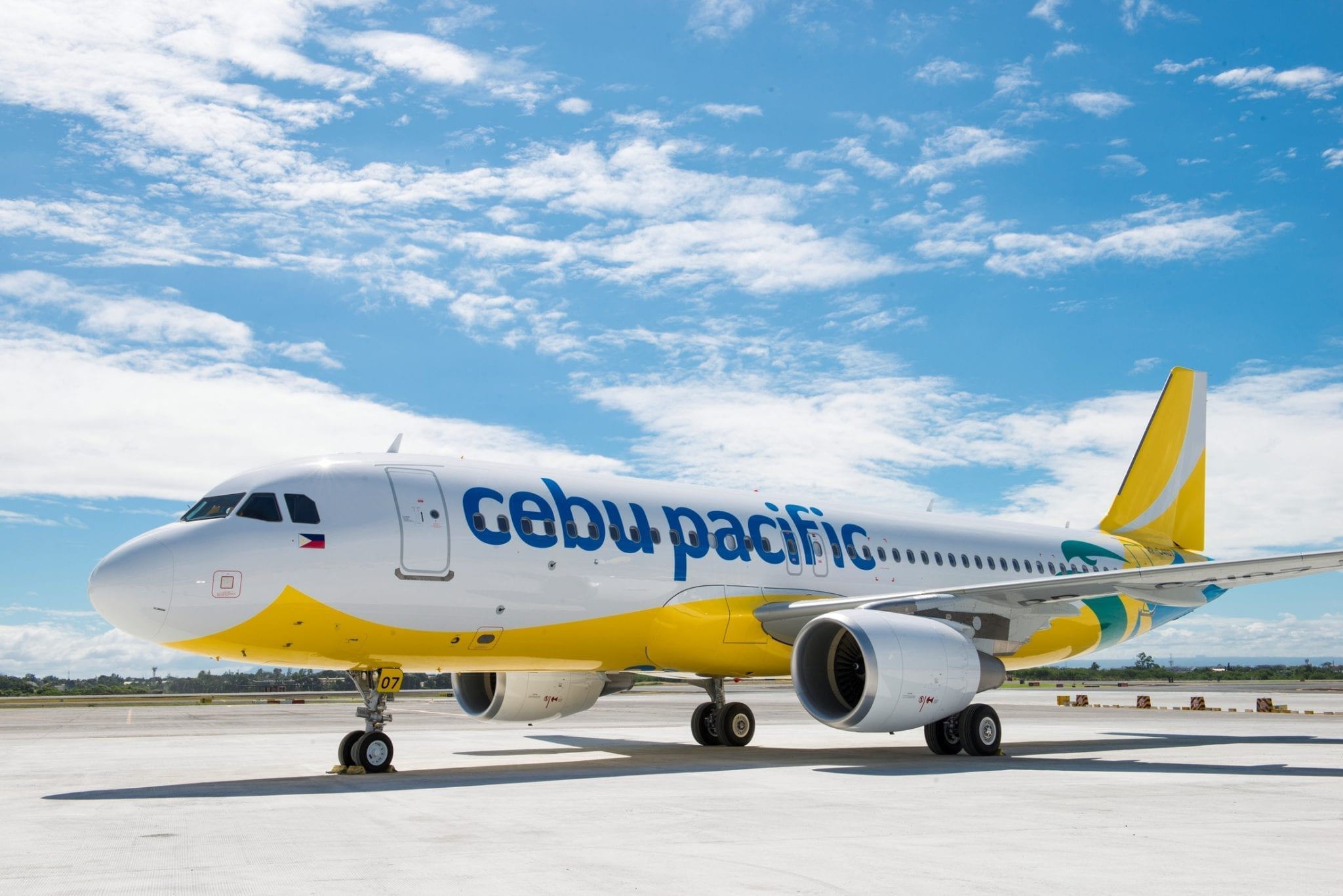
    Cebu Pacific (CEB), the only low-cost carrier servicing Manila and Sydney in Australia, has captured the largest market share for both passenger and cargo services on the route as of April 2017 and wants to increase its flight frequencies to this destination.

    Data from Australia’s Bureau of Infrastructure, Transport and Regional Economics (BITRE) showed that CEB flew 16,441 passengers in April alone, representing 41.8% of the total market share for the Manila-Sydney route, the highest among the three carriers flying this route.

    This brings the total number of passengers flown by CEB to 59,953 – representing 41.7% market share. Its closest competitor, on the other hand, captured 33.5% market share. Load factor for CEB for the Manila-Sydney route was at an average 80% for the first four months of 2017.

    Year-on-year, total passenger volume for the first four months of 2017 of all three carriers plying the Manila-Sydney route reached 143,765, up 12% versus the 128,352 passengers flown in the same period in 2016.

    For cargo service between Manila and Sydney, CEB captured 43.8% market share of the total 789 tons carried in April 2017. From January to April 2017, CEB had 47.4% market share of the total 3,114 tons of cargo carried for that route. The total cargo volume for the first four months of 2017, however, is 30.6% lower than the 2,128 tons carried in the comparable period last year.

    “Since opening the Sydney route in 2014, we have contributed to the growth of trade and tourism between the Philippines and Australia, through year-round low fares. Today, Sydney is one of our top international routes and bodes well for our future expansion plans in the Australian market,” according to Atty. JR Mantaring, Vice President for Corporate Affairs of Cebu Pacific.

    Cebu Pacific currently offers the most number of seats between Manila and Sydney, operating up to five weekly nonstop services between Sydney and Manila, departing every Tuesday, Wednesday, Thursday, Saturday and Sunday from Sydney at 11:35 a.m. and arriving Manila at 5:50 p.m.

    The flights from Manila to Sydney, on the other hand, depart at 12:05 a.m. and arrive Sydney at 10:05 a.m.

    Recently, the airline expressed interest to increase frequency between Manila and Sydney, noting strong demand for this route.

    Cebu Air, Inc. is the largest carrier in the Philippine air transportation industry, offering its low-cost services to more destinations and routes with higher flight frequency within the Philippines than any other airline. It also offers flights to over 60 destinations including Dubai, Tokyo, Beijing, Bali and Sydney.

    CEB’s 61-strong fleet, comprised of 4 Airbus A319, 36 Airbus A320, 8 Airbus A330, 8 ATR-72 500 and 5 ATR 72-600 aircraft, is one of the most modern aircraft fleets in the world. Between 2017 and 2022, Cebu Pacific will take delivery of 7 Airbus A321ceo, 32 Airbus A321neo, and 11 ATR 72-600 aircraft.

  • PLDT expands FTTH services to east Manila

    PLDT expands FTTH services to east Manila

    The Philippines’ PLDT has expanded the reach of its FTTH services to east Metro Manila in the latest phase of its nationwide fiber expansion program.

    The operator has added over 70,000 fiber lines in the area following deployments in south Metro Manila as well as Cebu, General Santos and Naga City.

    With the expansion, PLDT’s fiber networks now passes 3.3 million homes across five cities and three towns. The operator’s fiber rollout drive has seen it add around 500,000 homes passed within around six months, and PLDT has a target of passing 4.4 million homes by the end of the year.

    PLDT is also deploying hybrid fiber technologies including Huawei’s G.fast, which can boost data speeds of current subscribers up to 600-700 Mbps over copper lines.

    In a statement, the operator said it has invested 300 billion pesos ($5.9 billion) over the past 10 years on its fixed and wireless network deployments.

    “PLDT Home continues its efforts to create Fibr-powered PLDT Smart Cities nationwide to enrich the lives of more Filipinos through our innovative digital services and connectivity solutions,” PLDT EVP and home business head Enrico Reyes Jr said.

    “The network rollout in East Metro Manila will provide powerful connections and top-of-the-line services that will benefit both its residents and businesses.”

  • Biz leader asks airlines to make Davao City hub for international flights

    Biz leader asks airlines to make Davao City hub for international flights

    Davao City Chamber of Commerce and Industry trustee Arturo Milan has asked airline companies to make the Davao International Airport, also known as the F. Bangoy International Aiport, the hub for international flights in Mindanao to decongest traffic at the Ninoy Aquino International Airport (NAIA).

    Milan told a press briefing Friday that NAIA must be devolved of some international flights and distribute these to provincial airports like Cebu and Davao because the congestion in the airport in Manila results in flight delays, causing discomfort to passengers.

    He said it is not practical to place all international flights in NAIA when some destinations are closer to Davao City than Manila, like Australia, Palau, and other member countries of the Association of Southeast Asian Nations (ASEAN).

    SilkAir flies directly to Singapore from Davao City.

    “That’s overdue. Look at the traffic in Metro Manila. Flights are delayed because you cannot just put them in one airport, all (passengers) keep coming. It will certainly affect the flight schedules,” he said.

    Milan believes there is a market for Davao-Australia route because many tourists would want to visit a tropical country like the Philippines during winter season.

    He said Australia is located just below the Philippines on the global map.

    “There should be a flight emanating from Australia that will go to Davao because you are making a route that is attractive to foreigners. Australia by itself has too many tourists,” he said.

    He said Western tourists either go to Bali, Indonesia or Palau in the Micronesia. Both are closer to Davao in terms of proximity.

    He said reviving the Manado-Davao flights would also help sustain the Davao-General Santos- Bitung, Indonesia roll on/roll off (RORO) that was launched in April.

    “For RORO to be sustainable, we should encourage the revival of the flight of Davao to Manado and back because I don’t think if you invest or you trade you don’t wanna see the area,” he said.

    He said the direct flight to Manado will also make transactions between Indonesians and their counterparts from Davao to discuss business deals.

    On June 15, Milan urged the House of Representatives to pass into law House Bill 2002 which seeks to create the Davao International Airport Authority to decentralize management of the airport from the national government to enable a faster implementation of development programs.

    He said the management of the airport cannot implement projects on its own because it is dependent on the national government.

    He said the government can replicate the model of Mactan Cebu International Airport Authority “to make Davao City airport inviting” to both tourists and business executives visiting the city.

    Once approved, he said the “authority,” a body that will take over the management, can immediately plan out development projects and implement them on its own.

    The F. Bangoy International Airport, also known as the Davao International Airport, is currently being managed by the Civil Aviation Authority of the Philippines (CAAP).

    “When it is ‘authority’, the Davao International Airport will have flexibility rather than the current set up where you depend so much on the national (office). It’s really a must now, if we want a more responsive Davao airport,” he said.

    “We need to upgrade our airport because it is where the first contact of the investors is. They need to have a good impression of our region by way of our airport terminal. We are pushing to improve airport. Overall passenger experience has to be improved a lot, in terms of aircon, ventilation, and X-ray machines. They have to work efficiently all the time,” he said.

  • Rhenus takes over O’Brien Logistics

    Rhenus takes over O’Brien Logistics

    The Rhenus group will have its own national company in Australia, Rhenus Logistics Australia, in future too. The logistics specialist signed an agreement to purchase the freight forwarding company known as O’Brien Customs and Forwarding Pty Ltd in order to expand its network of business sites in the Asia-Pacific region.

    The O’Brien family business handles air and sea freight consignments and provides customs and warehouse services. It was initially founded as a pure customs clearance firm by Jan and Shane O’Brien in 1996. O’Brien has been offering its customers air and sea freight transportation in addition to customs services for seven years. O’Brien has its headquarters in the northern part of Melbourne.

    The Rhenus Group is planning to expand the firm’s current operations in future with its network and its services. They include, for example, domestic traffic, support for imports/exports, buyers’ consolidation as well as warehouse and integrated logistics solutions.

    “The takeover of O’Brien and the founding of the national company to be known as Rhenus Logistics Australia enable us to cover the whole of Australia with our services. As a result of the acquisition, we’re gaining experienced employees with local expertise for the global operations of the Air & Ocean business unit at Rhenus Freight Logistics too,” says Jan Harnisch, Rhenus COO Ocean Freight Asia.

    The new Rhenus operations on the Australian continent are part of the logistics specialist’s expansion strategy in the Asia-Pacific region. Rhenus is planning to open a number of new business sites this year in this area, including centres in China, Vietnam, Malaysia, Indonesia and the Philippines.

  • Cebu Pacific boost Boracay flights

    Cebu Pacific boost Boracay flights

    Cebu Pacific has started evening flights to and from Caticlan, the gateway to Boracay Island. CEB is the first carrier to introduce night flights and use the upgraded air traffic control system and newly-installed night navigational equipment at the Godofredo P. Ramos Airport.

    CEB has added roundtrip flights daily between Manila and Caticlan and will be use ATR aircraft through its wholly owned subsidiary Cebgo.

    In total, Cebu Pacific has 39 flights weekly between Manila and Caticlan; 14 between Cebu and Caticlan; and seven between Clark and Caticlan. The additional night frequencies will add 12 more flights to Caticlan to bring the total CEB frequency to 72.

    Currently, the last flight from Manila to Caticlan leaves at 1530 with the return flight at 1710. With CEB’s new night operations, the last flight will leave Manila at 1855 and will be return from Caticlan at 2045.

    Night flights at Caticlan Airport was given the go-signal following  technical reviews and consultations on its night operation capability with  the Civil Aviation Authority of the Philippines (CAAP), the Department of Transportation, and other relevant aviation authorities.

    Prior to Caticlan, Cebu Pacific had added night flights to and from the Roxas City Airport in Capiz, the Laguindingan  Airport (Cagayan  de  Oro)  in  Misamis  Oriental,  and  the  Legazpi  International  Airport  in  Albay.

    “We believe that expansion of operating times will not only boost frequencies to key domestic routes,  but  it will  also give  travellers  more  options,  greater  flexibility on when they fly and also help decongest air traffic, especially during the peak flying hours at noon and during the early afternoon,” said Cebu Pacific vice president for corporate affairs Atty, JR Mantaring.

    For as low as PHP2,774.88 (approximately USD55), passengers can fly from Manila to Caticlan, while Cebu Pacific also offers daily flights from Clark to Caticlan at PHP2,365.88 (approximately USD48) and from Cebu to Caticlan at only PHP2,217.88 (approximately USD45).

  • Philippines urged to bring in third telco

    Philippines urged to bring in third telco

    A Philippine think tank has urged the government to facilitate the entry of a third player into the nation’s telecoms market, but warned that a series of structural barriers will make this “extremely difficult” to achieve in the near future.

    The Philippine Institute for Development Studies (PIDS) has published a new reporton the competitive landscape of the nation’s telecoms sector, in light of the recent buyout of San Miguel corporation’s telecoms assets.

    The report found that the acquisition, which ensured the telecoms market was left with only two main players – PLDT and Globe Telecom – “brought a cloud of doubt as to the motives” behind the transactions.

    Report author senior research fellow Erlinda Medalla recommended there be at least three major players in the industry to promote competition.

    But she said challenges “arising from structural barriers, such as the cost of obtaining various permits and licenses, the cost of obtaining rights of way, the available spectrum or bandwidth, and the foreign equity limitation” will make this difficult.

    To address these challenges, Medalla called for liberalization, competition, and regulatory reforms on the part of the Philippine Competition Commission, telecoms regulator NTC and the telecoms ministry.

    While the PCC is currently challenging the legality of the San Miguel acquisition in court, Medalla said the acquisition is a “done deal”. She urged the government to instead concentrate on ensuring the transaction benefits customers, including by pressuring PLDT and Globe to “increase and widen their services.”

    But she also suggested that rules on future M&As be introduced that would mitigate potential anti-competitive impacts and ensuring that a dominant position arising from a merger produces gains for consumers.

  • Cebu Pacific to launch Manila-Dumaguete night flights

    Cebu Pacific to launch Manila-Dumaguete night flights

    The Gokongwei-led airline said in a statement that it will add three round-trip flights weekly between Manila and Dumaguete, utilizing its 180-seater Airbus 320 aircraft. With the additional service, the budget carrier said the last flight will be leaving Manila at 5:20 p.m. and arriving in Dumaguete at 6:50 p.m. while return flight will be at 8:00 p.m. “Increasing the number of airports with night-flying capability would help promote tourism and improve connectivity within the country,” Cebu Pacific Vice-President for Corporate Affairs Paterno S. Mantaring, Jr. said. Increasing the number of airports with night operations will also allow the budget airline, along with other carriers, “leeway to spread flight times,” which in turn will improve aircraft movement and traffic at the Ninoy Aquino International Airport in the capital during the peak hours, he added.

    Cebu Pacific flies 21 times weekly between Manila and Dumaguete; and 14 times a week between Cebu and Dumaguete, through its wholly owned subsidiary Cebgo. Prior to Dumaguete, the airline announced night flights to and from Caticlan, the gateway to Boracay. It also operates night flights to and from the Roxas City Airport in Capiz, the Laguindingan Airport in Misamis Oriental, and the Legazpi International Airport in Albay, on top of trunk routes in Cebu and Davao. Cebu Pacific flies to 37 domestic and 26 international destinations, with over 104 routes spanning Asia, Australia, the Middle East, and USA. The airline operates flights out of six hubs in the Philippines: Clark, Davao, Kalibo, Cebu, Iloilo and Manila. Cebu Air, Inc.’s net income plunged 68% to P1.28 billion in the first quarter.

  • Decathlon Opens First Store in the Philippines

    Decathlon Opens First Store in the Philippines

    Decathlon, one of the world’s largest sporting goods retailers, is taking another step to realizing its tagline—”Making Sports Accessible to the Many”—when it will officially open its first Philippine store in Manila on June 30.

    Founded in France in 1976, the retail giant currently has more than 1,200 stores and operates in over 30 countries. Decathlon’s Alabang branch in Muntinlupa City Metro Manila marks the company’s 16th store in Southeast Asia, and the first of many more stores the company plans to roll out in the Philippines.

    Over the next 10 years, Decathlon plans to expand to other key cities, such as Cebu, Davao, Iloilo, and Legazpi.

    “We have been interested in the Philippines for quite some time now,” says Hans Iff, CEO of Decathlon Philippines. “As the country’s economy has gotten more robust and consumers are becoming more wellness-conscious, it is the right time to invest.”

    According to a McKinsey report, the sports industry in the Philippines is projected to multiply four times over the next twenty years, reaching €1 billion by 2026. With a growing younger population, an emerging middle class, and increased infrastructure spending, the World Bank Group expects the country’s real GDP to grow at a rate of 6.9 percent in 2017 and 2018.

    A core part of Decathlon’s operations is an investment in in-house, consumer-focused products, called Passion Brands. Each of the company’s 40 Passion Brands represents a different sport or group of sports, with a dedicated team that is responsible for the research, design, development, and testing of their product.

    “We want Decathlon to become one of the most loved brands in the Philippines. Thanks to the innovation and unbeatable value of our passion brands, we will continue to deliver the best quality and safety to guarantee customer satisfaction,” says Iff.

    The company places particular emphasis on recruiting people that share our company values: passionate about sports, service-minded, and autonomous. Managers at Decathlon work closely with their staff, encouraging them to make decisions and take on more responsibilities. “We believe satisfied customers start with satisfied employees,” says Iff. “Our employees are given the room to make mistakes and grow in their roles.”

    Decathlon Philippines is also investing in the local ecommerce market, allowing customers to purchase goods from their website. “Our physical stores are part of our omni-channel strategy to help us interact and serve our customers better. As consumer shopping behaviours and expectations are changing, we want to offer a seamless user experience, both in-store and online.”

    Through all of its platforms and brands, Decathlon is committed to creating value for its end users, employees, partners, and citizens wherever the company is present.

    The company is also looking to manufacture some of its products in the Philippines. “We aim to setup factories in the near future for the production of goods sold locally,” says Iff. “The Philippines already has the infrastructure in place for certain processes, such as heavy stitching and injection moulding for shoes.  And we have already made plans to locally produce a Bluetooth communication kit for Easybreath —our innovative snorkelling mask that lets you breath through your nose.”

    Decathlon Philippines actively supports the local community by investing in community development programs and partnering with NGOs and non-profit organizations. The company also recruits local underprivileged youth who have the opportunity to become Decathlon employees after undergoing a series of training. As part of their long-term vision, the company is seeking to collaborate with such youth for the design and development of certain new goods tailored for the Philippine market.

    “In a country where natural resources are limited, we want our stores to be as eco-friendly as possible,” says Iff. “The objective in the middle term is to build our stand-alone concept store with a minimal impact on the environment, through the reduction of energy consumption, the optimization of waste treatments and other strategies.”

    Aside from the brand’s corporate responsibility initiatives, their stores are famous for the sheer variety. The 3,000-square-meter store occupies the ground floor of Festival Mall in Alabang and stocks goods for 70 different types of sports. Aside from popular sports like basketball, running, diving, hiking, and cycling, Decathlon will also provide products that support the Philippines’ national and traditional sports like Arnis and Sipa.

    Customers can even try out products before buying. All Decathlon stores in the Philippines will contain a large playground spanning more than 400 square meters, which will be free and accessible to all customers. Sports activities will also be organised onsite to promote healthy living and fitness for store visitors.

    “Ultimately, the store was designed to enhance customers’ brand experience, inviting them in to touch, feel and see the quality of our products, the latest innovations, while discovering new sports.”


  • Jaeger-LeCoultre reopens Philippines store

    Jaeger-LeCoultre reopens Philippines store

    Luxury watchmaker Jaeger-LeCoultre has reopened its flagship store in Makati City in the Philippines, enhancing the experience for local timepiece gurus.

    Located in Ayala Center’s Greenbelt 5 in Makati, the 40-square-metre boutique was reopened last week with an official relaunch party attended by company executives including Jaeger-LeCoultre’s managing director for Southeast Asia and Oceania, Maxence Kinget.

    “It’s not a store, it’s a boutique with an experience,” Kinget told the Philstar, when describing the new store at the party.

    “For us it’s very important that there is emotion and discovery, the two key mindsets when we designed the boutique.”

    The newly reopened Philippine boutique will carry the watchmaker’s complete range of watches and accessories, as well as the famous Geophysic Tourbillon Universal Time, of which just one will be stocked.

    Jaeger-LeCoultre has also launched a new Geophysic collection for men with a steel metal bracelet, said to be “very good for South Asia because with the humidity and warm weather sometimes you want a stainless-steel bracelet instead of the alligator strap,” according to Kinget.

    There’s also a women’s range, with a new take on the iconic ‘Rendez-Vous’, a round watch with diamonds around the bezel.

    Finally, the new store will stock boutique-exclusive pieces, made in collaboration with Jaeger-LeCoultre and Lucerne – the distributor of Jaeger-LeCoultre in the Philippines — that aren’t available anywhere else in the world.

    Moreover, timepiece aficionados can create their own one-of-a-kind watch with Jaeger-LeCoultre’s new bespoke service on offer.

    “There is in the Philippines a very high level of watchmaking knowledge, a very strong appetite for watches and a very strong Maison in the Philippines,” said Kinglet. “Jaeger-LeCoultre is considered a reference in fine watchmaking, as well as having a very high level of craftsmanship. Within our manufacture we have developed the biggest collection of movements — 1,200 calibers developed in our history, which is absolutely crazy — and we still produce more than 50 calibers in the collection today. We spend a lot of time trying to make sure there is a very strong connection between respect for our tradition, our heritage, as well as being oriented towards the future.

    The Swiss watch group entered The Philippines in 2000, after striking a deal with Lucerne. But it only opened its first store in 2008, which is the newly fitted Greenbelt 5 store.

    Jaeger-LeCoutlre is also sold at Lucerne Jewellers in Taguig City and at the recently opened L’Atelier Lucerne at Shangri-La at the Fort.

  • New Cebu Pacific flights from Davao to boost tourism

    New Cebu Pacific flights from Davao to boost tourism

    New Cebu Pacific direct domestic flights from Davao are seen as another door of opportunities for the local tourism industry especially for the upcoming Kadayawan Festival, said City Tourism Operations Office (CTOO) official. By July 26, Cebu Pacific will have scheduled flights three times a week, Monday, Wednesday, and Friday between Davao and Dumaguete. They will also fly four times a week from Davao to Tacloban and vice versa starting July 27. Schedules will be every Tuesday, Thursday, Saturday, and Sunday.

    The flights will be carried by the Cebgo fleet of ATR aircraft. “We’re very happy with these updates as it means opportunities for us. We’re deep into planning for Kadayawan so we’ll include these new routes in our plans. We’re going all out now with preparations and events. We’re setting up a Kadayawan Village at Magsaysay Park and hoping that Dabawenyos will also help promote and join the activities,” said CTOO Head Generose Tecson. It was earlier reported that the tourism sector in Davao City had been “slightly affected” by the declaration of Martial Law in Mindanao especially with the hotel bookings, accommodations, and events being cancelled for security purposes.

    Aside from the direct Davao flights to be launched by the last week of July, Cebu Pacific will also launch flights between Cebu and Masbate, Zamboanga and Cotabato, and Cagayan de Oro and Zamboanga.

  • Air Asia unit expects record revenue

    Air Asia unit expects record revenue

    Budget airline Philippines Air Asia hopes to breach a new revenue record this year on expectations that people will fly more and avail themselves of add-on services such as onboard meals and extra luggage space.

    Philippines Air Asia is targeting revenue to hit P13 billion in 2017, up by about 20 percent from the P10.8 billion it booked in 2016, airline CEO Dexter Comendador said. Revenue growth last year was 21 percent.

    Comendador, a veteran Air Force and commercial pilot who who has held the CEO post for almost a year, said the airline’s growth was being driven by passenger and ancillary revenues.

    “This will be the best year in our existence,” Comendador said. Philippines Air Asia started in 2012 and it has grown organically and via acquisitions.

    It completed in 2015 an investment in and merger with Zest Airways, a move that gave it access to valuable slots in Manila’s Ninoy Aquino International Airport, the Philippines’ busiest air gateway.

    Comendador said profitability would also improve in 2017, as the carrier controls costs here and abroad via the group’s “One AirAsia” strategy, which involves the consolidation of its Malaysian, Philippines, Indonesian and Thai units under a single holding company that will also be publicly traded.

    Comendador said Philippines Air Asia would still push for its initial public offering, earlier estimated at about $200 million, this year, with its potential listing by the fourth quarter of 2017.

    “Tony’s instruction is to push for it,” Comendador said, referring to Air Asia Group CEO Tony Fernandes.

    The Air Asia Group closed 2016 with 174 Airbus A320s, its annual report showed. Comendador said Philippines Air Asia would end 2017 with 19 A320s, up from 16 planes, to support its growth. Philippines Air Asia carried 1.04 million passengers last year, up 19 percent.

    Comendador said the domestic fleet would grow to 70 planes in 15 years, or by 2032.

    He said the plan was also to increase its presence in Clark International Airport in Pampanga, which was where the carrier first started operations.

    After temporarily suspending its Clark service in 2013 to focus on Manila, Philippines Air Asia resumed flights to Kalibo on March 27, 2017.

    The Duterte administration had signaled its intention to pursue the development of Clark, an alternative air gateway to Naia, which is suffering from growing air congestion. Part of the government’s commitment was to build a new train system linking Clark to Manila before Mr. Duterte’s term ends in 2022.

  • First J/Speedy Card in the ASEAN Region to be issued by BDO

    First J/Speedy Card in the ASEAN Region to be issued by BDO

    JCB International, the international operations subsidiary of JCB, announced the launch of the J/Speedy JCB card in the Philippines with BDO Unibank (BDO), the largest bank in the Philippines in terms of consolidated resources, customer loans, deposits, assets under management and capital, as well as branch and ATM network nationwide. Card issuance has started this month, for the first J/Speedy JCB card to be launched in the ASEAN region. J/Speedy, JCB’s EMVCo compliant contactless scheme, provides a convenient and easy payment solution to valued customers of BDO.

    JCB brand cards are currently issued in 23 countries and territories with over 100 million cardmembers around the globe. BDO has cooperated with JCB for JCB card acceptance at BDO merchants from 1998 and started issuing JCB card in the Philippines in the same year. The launch of this new product, entering the contactless payment market, is the next step for the partnership between BDO and JCBI. BDO will also start acceptance of J/Speedy JCB card from July 2017 at BDO merchants.

    Mikihisa Asano, Country Manager of JCBI Philippines, said, “We are very excited and appreciative of BDO’s launching the new contactless card. Together, we will aggressively expand and grow our business in this country. In fact, BDO and JCB will soon launch another card product in the market, which is a response to the increased competition of credit cards in the Philippines”.