Tag: Philippines

  • Cebu Pacific to launch evening flights to Caticlan in July

    Cebu Pacific to launch evening flights to Caticlan in July

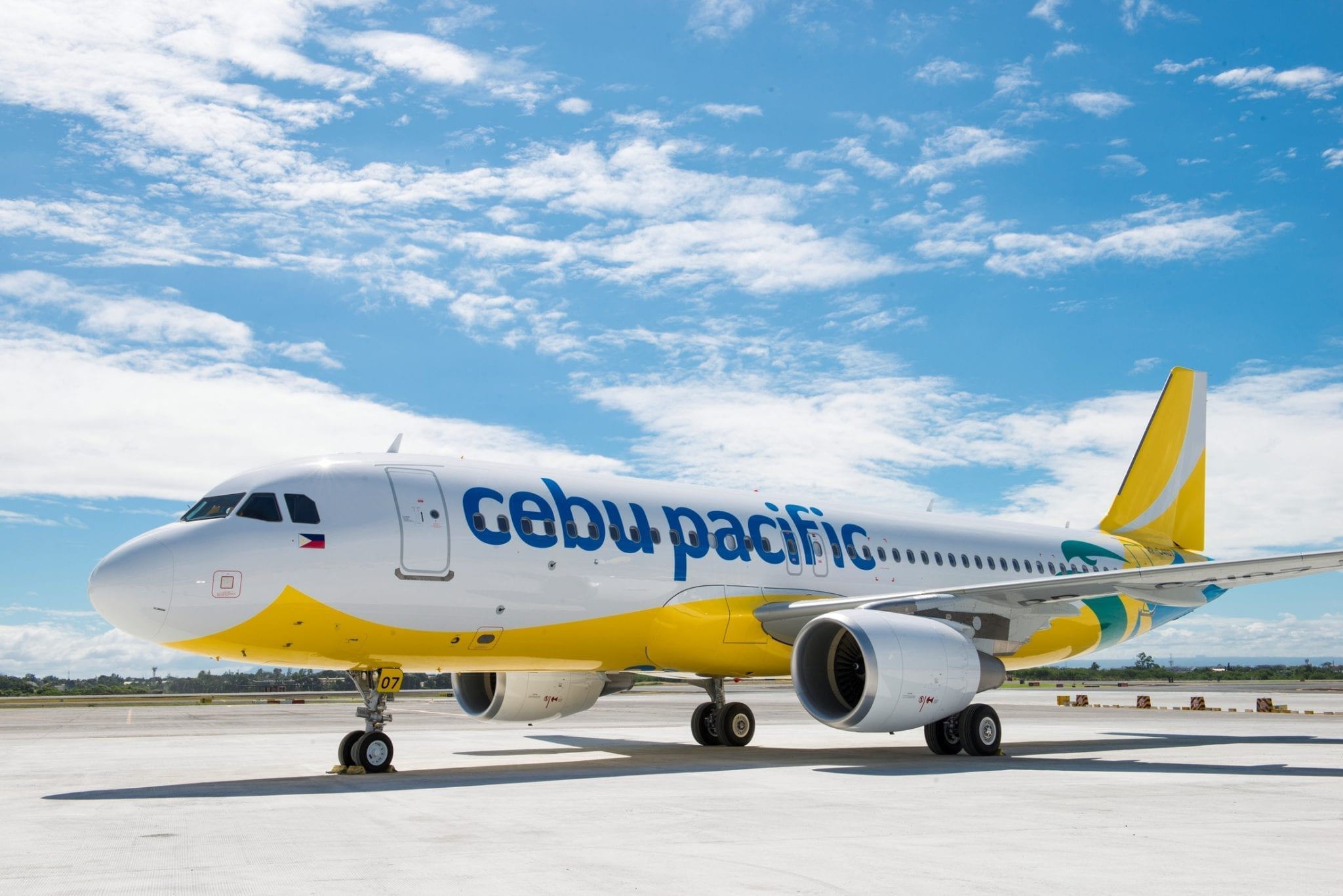
    Cebu Pacific Air will launch in July night flights to and from Caticlan, the gateway to tourism spot Boracay, the airline announced Thursday.

    The country’s leading budget airline said it would add two round-trip flights for this route daily, with the last leaving Manila at 6:55 PM and returning from Caticlan at 8:45 PM.

    This would bring to 72 the total number of Cebu Pacific flights to Caticlan, including the current 60 from Manila, Cebu and Clark.

    Cebu Pacific said it would be the first carrier to mount night flights and use the upgraded air traffic control system and newly-installed night navigational equipment at Caticlan’s Godofredo P. Ramos Airport.

    The Civil Aviation Authority of the Philippines (CAAP), the Department of Transportation, and other relevant aviation authorities gave the operations the green light after technical reviews and consultations on Caticlan Airport’s night operation capability.

    “We thank CAAP for continually leading the scale-up of our airports to night-flying capability. We believe that expansion of operating times will not only boost frequencies to key domestic routes, but it will also give travelers more options, greater flexibility on when they fly and also help decongest air traffic, especially during the peak flying hours at noon and early afternoon,” said JR Mantaring, Cebu Pacific’s Vice President for Corporate Affairs.

    Mantaring said the launch of evening flights to and from Boracay, world-renowed beach destination, was “a long-standing request of tourism stakeholders.”

    The additional flights, he said, would make flights available to more passengers.

  • Cebu Pacific dominates Manila-Sydney route

    Cebu Pacific dominates Manila-Sydney route

    he Philippines’ leading airline, Cebu Pacific (CEB) continues to soar high, capturing the lion’s share for both passenger and cargo traffic between Manila and Sydney in the first quarter of 2017. Data from the Bureau of Infrastructure, Transport and Regional Economics (BITRE) of Australia showed that CEB carried over 43,512 passengers, representing 42% passenger market share on the Manila-Sydney route, the highest among the three carriers covering this route.

    The BITRE report noted that from January to March 2017, passenger traffic between Manila and Sydney totalled 104,446, up seven percent (7%) versus the same period last year.  The growth in passenger traffic was dominated by CEB, which carried 16% more passengers from the 37,640 reported in the first quarter of 2016. Load factor for CEB for the Manila-Sydney route was at an average 78% for the first three months of 2017.

    “We are very pleased to see that the Cebu Pacific effect continues across one of our strongest international markets. Our goal is to make flights affordable, accessible and available to a greater number of travellers. These numbers do not only showcase the Philippines as a flourishing destination, but it also shows our strong commitment to remain and further stimulate our key market in Australia,” said Candice Iyog, Vice President for Marketing and Distribution of Cebu Pacific.

    Aside from the growth in passenger volume, Cebu Pacific also reinforced its leadership in the Manila-Sydney airline cargo service. CEB flew 1,131 tons of cargo between Manila and Sydney in the first three months of 2017, covering 49% of the total 2,325 tons carried by the three carriers.

    The growth in CEB’s cargo service tracked the increase in total volumes, from 1,567 tons carried in the comparable quarter last year.

    BITRE, an agency under the Department of Infrastructure and Regional Development of the Australian government, “provides economic analysis, research and statistics on infrastructure, transport and regional development issues,” according to its official website. The bureau holds data and statistics on the aviation industry.

    Cebu Pacific offers the most number of seats between Manila and Sydney, covering close to 40% of the route’s total capacity.

  • Resorts World Manila set to reopen shopping section

    Resorts World Manila set to reopen shopping section

    Recovering from a deadly tragedy, the hotel-casino complex set on fire by an attacker last week will begin to open its retail section soon. Stephen Reilly, chief operations officer of Resorts World Manila, said that while management has been eyeing to open the shopping area which had 114 outlets, the gaming area will remain closed.

    “We’re not intending to open the gaming facilities at this given time. It’s insensitive to do so,” Reilly said on Friday.

    “But for the retail component, people still love to come to Resorts World. Go to restaurants, go to the cinema, go and dine and shop. We’d be looking to open up the retail component by the end of this week,” he added.

    Reilly maintained, however, that the business keeps as its priority the victims and families of the fatal incident on June 2 when gunman Jessie Javier Carlos armed with a rifle entered its premises and set parts of the gaming area on fire.

    Javier, the lone suspect behind the deadly attack, was a heavily indebted gambling addict, police said Sunday. Thirty-seven died due to suffocation while 78 others were injured. Outside the premises, people are still holding a vigil before a memorial set up for the victims of the assault.

    Reilly said Resorts World Manila is wholly shouldering medical expenses of the victims, among whom were its own employees, giving out P1 million for each and setting aside funding for their dependents’ education.

    Financial matters ‘irrelevant,’ says exec

    Asked how much the company is losing each day it remains closed, Reilly chose not to disclose and dismissed the concern as “irrelevant.”

    “What is important to me, to the company and to the executives is: let’s work through this in the best interest of everybody, the victims, the families, the industry, and also how the Philippines is perceived,” he said.

    Still, the franchise of casino giant based in Pasay City is facing threat as it remains in hot water over possible security lapses that resulted in scores of casualties.

    “I wouldn’t like to comment that we would lose our franchise. We’ll wait for the investigations to be concluded. That would also include PAGCOR. They are our governing body,” Reilly said.

    The executive, who has over a decade of experience in surveillance and security before helping set up Resorts World in the Philippines, also said experts and third parties are coming in to sort out the establishment’s fault in the tragedy.

    While insisting that the complex has followed international security standards, Reilly said it would not be foolproof.

    “We’re engaging experts from prior military field, intelligence field to totally review all areas of operation with regards to security protocols of Resorts World Manila,” he said.

  • Globe Telecom picks Canvas for automation

    Globe Telecom picks Canvas for automation

    Globe Telecom in the Philippines has turned to Canvas to become the platform that integrates service functionalities and help Globe automate its office processes.

    This move is expected to reduce costs, increase operational efficiency, and further enhance the operator’s commitment to environmental protection and conservation.

    More importantly, this will enable Globe to take on a bigger role in providing digital services such as billing, logistics and customer service as well as opening more avenues for access to the Internet of Things (IoT) for its customers, the telco said.

    In the near-term, as it streamlines internal processes, Globe expects to save more than 1.5 million administrative hours company-wide each year by digitizing various processes such as customer relationship management, billing and other administrative services.

    As part of their partnership agreement, Globe also intends to make Canvas more widely available to its business customer base, building on the early high adoption among some of the Philippines leading companies. Globe’s business customers are already using Canvas to realize benefits for their own customers such as an increased level of customer care and reduced costs for services.

    “As an enterprise, the digital transformation we have undertaken is part of our continuing commitment to adopting efficient and viable IT solutions that will improve the experience of our employees and customers,” said Ernest Cu, president and CEO of Globe.

    “This strategic partnership with Canvas allows us to offer our millions of business customers in the Philippines a chance at a transformation of their own with similar productivity gains and green benefits.”

  • Philippines, Indonesia agree to open up banking

    Philippines, Indonesia agree to open up banking

    The Philippines and Indonesia are set to ink an agreement this weekend to open up the banking industry aimed at greater financial integration and economic development among members of the Association of Southeast Asian Nations (ASEAN).

    Bangko Sentral ng Pilipinas Governor Amando Tetangco Jr. said a letter of intent (LOI) on the ASEAN Banking Integration Framework (ABIF) would be signed with Indonesia’s Financial Services Authority (OJK) in Jakarta over the weekend.

    “The LOI is in line with the ASEAN Banking Integration initiative,” he said.

    Under the ABIF timeline, each ASEAN-5 including Indonesia, Malaysia, Philippines, Singapore, and Thailand should conclude at least one bilateral agreement with another ASEAN-5 country by 2018.

    By 2020, ABIF targets the conclusion or near conclusion of at least one bilateral agreement for each of the 10 ASEAN members as part of the integration under the ASEAN Economic Community (AEC).

    The integrated system is defined under the ASEAN Financial Integration Framework (AIFF) that also covers the integration of the banking markets wherein qualified ASEAN banks (QABs).

    To achieve the consolidation of the 10 ASEAN markets into a single economic base with the launch of the AEC in 2015, the BSP chief said there is a need to have an integrated and well-functioning regional financial system.

    “It reflects the mutual interest of the BSP and OJK to begin discussions intended to culminate in a formal bilateral agreement on the entry of QABs between the Philippines and Indonesia,” the outgoing BSP chief said.

    The BSP signed the Declaration of Conclusion of Negotiations (DCN) with Bank Negara Malaysia and the LOI with the Bank of Thailand on the sidelines of the 3rd ASEAN Finance Ministers’ and Central Bank Governors’ joint meeting and related meetings in Mactan, Cebu last April 6.

    Tetangco signed the DCN on the entry of Qualified ASEAN Banks between the Philippines and Malaysia with Bank Negara Malaysia Governor Muhammad bin Ibrahim as well as the LOI with Bank of Thailand Governor Veerathai Santiprabhob.

    The agreement signed by the BSP and Bank Negara Malaysia reflects the specific conditions for QABs from each jurisdiction to enter the other in a manner that is consistent with global banking standards and meets host jurisdiction regulations.

    The ASEAN region has a great potential as savings rate reached 33 percent of gross domestic product (GDP) against the lower rate of 25 percent in other regions.

    For his part, BSP Deputy Governor Nestor Espenilla Jr. said several foreign banks have expressed interest in establishing its presence in the Philippines through several modes of entry.

    Aside from entering as a QAB or as a strategic partner, he said foreign banks could enter the country through Republic Act 10641 signed by former president Benigno Aquino III in July 2014.

  • Cebu Pacific deploys bigger planes, opens new domestic routes

    Cebu Pacific deploys bigger planes, opens new domestic routes

    Cebu Pacific said Tuesday it would upgrade some domestic routes to larger aircraft, open new routes and add more flights to meet strong demand.

    The 180-seater Airbus A320 will replace the 78-seater turboprop ATR 72-600 for flights from Manila to Cauyan, Legazpi and Virac, the country’s largest airline said in a statement.

    The freed up ATR aircraft will be deployed to five new routes, which open late next month: Cebu-Masbate; Cagayan de Oro-Zamboanga; Davao-Dumaguete; Davao-Tacloban; and Cotabato-Zamboanga.

    The Gokongwei-owned airline said it would add 10 more flights weekly between Manila and Iloilo, 6 between manila and Bacolod, and 8 between Manila and Cagayan de Oro.

    Cebu Pacific is also shifting to the 436-seater Airbus A330 for its Cebu, Davao and Hong Kong routes by July 4.

  • More Filipinos adopt online trading at stock mart

    More Filipinos adopt online trading at stock mart

    Online accounts at the Philippine stock market grew 27.8 percent to 302,516 from 236,669 in 2015, according to the annual Philippine Stock Exchange (PSE) report.

    PSE reported also that the total number of stock market accounts, which include both online and traditional accounts, was at 8.5 percent, from 712,549 accounts in 2015 to 773,187 at the end of 2016.

    “Technology has played a big role in the growth of our investor base over the years. We are pleased to see that more Filipinos have continued to adopt online trading to invest in the stock market,” said PSE President and CEO Ramon S. Monzon.

    Investors with online accounts trade themselves, typing in their buy or sell orders on their online trading platform whereas investors with accounts in traditional stock brokerage firms have to call their broker to place their orders.

    The minimum required amount to open an account and the broker’s fee of online stock brokerage firms are usually lower compared with their traditional counterpart. Online investors are typically provided research materials by their online broker while investors of traditional firms also get research reports and they can discuss their investing options with their broker.

    The continued growth in online accounts also translated to higher trading activity. In 2016, 53.7 percent of total market transactions, measured in terms of number of trades, were accounted for by online accounts.

    This was the first year that online transactions were responsible for more than half of the market’s total transactions. Online trades registered a 41.4 percent growth in value turnover, which translated to a 9.3 percent share in the market’s total value turnover.

    Of the total stock market accounts, 98.2 percent, or 759,952, were held by local investors while the remaining 1.8 percent or 13,595 were accounts of foreign investors.

    The PSE’s 2016 Stock Market Investor Profile survey showed that among the retail investors using online and traditional brokering, 43.7 percent earn less than P500,000 annually. This was followed by investors earning above P1 million at 31.1 percent while investors with an annual income of Php 500,000 to Php 1 million made up 25.2 percent of the total retail investors.

    Meanwhile, close to 40 percent of investors were aged 30 to 44. The 45- to 59-year-old investors covered 26.4 percent of the total count and those who are 60 and above comprised 19.3 percent. The young millennials or those between 18 and 29 had accounted for 14.8 percent of investors.

    In terms of geographic location, a total of 96.1 percent of retail investors are based locally while the rest are based overseas.

    The concentration of retail investors continue to be in Metro Manila, which accounted for 70.6 percent of investors. Luzon cornered 16.4 percent of investors with Visayas and Mindanao making up for 6.2 percent and 2.9 percent, respectively. Overseas-based investors comprised 3.9 percent of retail accounts.

    “We are pleased with the continued growth of stock market investors in the market. Clearly, we have a long way to go and we at the PSE will continue our financial literacy programs to demystify stock market investing and make investing as understandable and accessible as bank or insurance products,”. Monzon said.

    In the past year, the PSE has intensified its market education efforts by doubling the number of its free seminars both in Metro Manila and in Cebu. To cater to the increasing number of tech-savvy Filipinos, PSE has been regularly conducting free webinars to discuss basic and intermediate topics. These webinars attract close to 500 participants per session.

    Online retail investors younger, more spread across the country

    The PSE survey results showed that close to three quarters of online retail investors are aged 18 to 44 years. Among online investors, 21.7 percent are in the 18 to 29 year old range, 52.9 percent are 30 to 44 years old, 18.4 percent are 44 to 60 years old, while the remaining 7.0 percent were 60 years and above.

    In terms of location, retail online investors are also less concentrated in Metro Manila compared to the geographical distribution of total stock market accounts. For online accounts, Metro Manila investors only accounted for 57.0 percent of the total online accounts, with Luzon, Visayas and Mindanao online investors making up a much bigger share of 26.0 percent, 6.8 percent and 4.2 percent, respectively. The share of overseas-based clients is also higher at 5.9 percent for online accounts.

    The survey also showed that online traders invest even with lesser incomes. Those earning P500,000 or less annually comprise 60.3 percent of the total online trading population. Meanwhile, 23.7 percent of online traders earn between P500,000 to P1 million per year and the remaining 16.0 percent have incomes of more than P1 million annually.

    “The numbers show that more investors are finding out that participating in the stock market is actually an affordable investment. We are also happy that our online brokers have been able to reach out to more Filipinos outside of Metro Manila towards making stock market investing more inclusive,” Monzon added.

  • Weak peso to weaken consumer spending

    Weak peso to weaken consumer spending

    Household spending in the Philippines is expected to post a slower growth this year because of rising consumer prices and a weaker currency, Business Monitor International, a unit of Fitch Group, said in a report over the weekend.

    “In US dollar terms, household spending growth will experience a significant deceleration from 6 percent in 2016 to 0.8 percent in 2017 as we forecast the Philippine peso to depreciate against the US dollar over 2017,” BMI said.

    “With that said, household spending will grow at an annual average of 8 percent between 2017 and 2021, reaching $337 billion up from $232 billion in 2017,” it said.

    BMI expects essential spending to remain dominant over its forecast period and account for 74 percent of total household spending in 2017 and 75 percent by 2021.  Essential items include food, beverage, housing, clothing, utilities and basic services.

    Essential spending is expected to grow at an average annual rate of 9.5 percent between 2017 and 2021, with non-essential spending growing at an average rate of 8.4 percent over the same period.

    “As a result of low average incomes and a large rural population, essentials will continue to account for the majority of household spending in the medium term at least. Food and non-alcoholic drinks, housing and utilities and transport will continue to account for the majority of household retail spending, rising from 74 percent of total spending in 2017 to 75 percent by 2021,” it said.

    The increasing cost of housing and utilities will demand a greater portion of household income over the coming years. Albeit declining, the share of household spending on food and drink will remain the largest, forecast at 37.3 percent in 2021 (down from 38 percent in 2017), it said.

    “Non-essential spending is expected to continue to account for a roughly stable portion of total household retail spending over our forecast period. Real wages are steadily on the rise, however, which should boost spending in the non essentials sector over the long term, and will prompt consumers to upgrade to higher quality essentials,” BMI said.

    Household spending in the Philippines is dominated by spending on food and non-alcoholic drinks; housing and utilities and transport, which accounts for 69 percent of total spending. BMI expects spending patterns in the Philippines to remain fairly static over the medium term with the top three spending categories retaining their positions.

    “Housing and utilities will make the greatest gains over our forecast period, increasing by 1.15 percentage points as a proportion of total spending on the back of rising costs in this segment. Food and

    non-alcoholic drinks spending will experience the largest decline over this period, registering a decline 0.7 percent as a proportion of total household spending,” it said.

    “Food and non-alcoholic drinks account for the largest share of retail spending in the Philippines, at 38 percent of total household spending in 2017. We expect that the sub-sector will maintain its

    dominant role in the Philippines’s retail basket, as low household income levels in the country encourage subsistence-based spending,” it said.

    Households are forecast to spend P4.4 trillion on food and non-alcoholic drinks in 2017, while spending another P190 billion on alcoholic drinks and tobacco. BMI said over the medium term, food and drink will continue to dominate household spending, as overall income levels remain low.

  • OJK to expand banking access to the Philippines

    OJK to expand banking access to the Philippines

    The Financial Services Authority (OJK) plans to expand banking access to the Philippines by signing a Letter of Intent (LoI) with the countrys central bank, Bangko Sentral ng Pilipinas (BSP).

    The cooperation will pave way for access to some Indonesian banks that already certified as “Qualified ASEAN Bank” (QAB), the authoritys Deputy Commissioner for Supervision, I Sukarela Batunanggar, said at a press conference in Jakarta on Friday.

    “Besides the positive trends in economy growth, the two countries also have similarities in the sectors of social and economy, mainly in their domestic credit ratios,” Batunanggar stated.

    Indonesia and the Philippines, he further remarked, also have great potential in terms of their population sizes.

    “The two countries still have more opportunities to continue flourishing,” he noted.

    The LoI that was scheduled to be signed on next Sunday is an initial measure for negotiating bilateral cooperation through the ASEAN Banking Integration Framework (ABIF).

    The framework, which is set by two main principles, including reciprocity and equality, is aimed at supporting the banks in expanding their business within the Southeast Asia region.

    In accordance with the framework, Batunanggar stated the authority has assessed several banks that seek to hold a QAB certification.

    Batunanggar hoped the negotiation between two countries could be completed soon, so it would enhance trade volumes between Indonesia and the Philippines.

    In 2016, the two countries trade volumes remained low, compared with other states.

    Indonesian exports to the Philippines reached less than 4 percent last year, while the imports were only about 1 percent.

    The authority had signed a similar LoI for bilateral financial cooperation with Bank of Thailand (BOT) in March last year.

    Another bilateral deal was implemented between the countrys financial authority and the Malaysian bank central in August last year.

  • Philippine airline Cebu Pacific to suspend operations in Kuwait, Doha, Riyadh

    Philippine airline Cebu Pacific to suspend operations in Kuwait, Doha, Riyadh

    Philippine carrier Cebu Pacific will fly the last of its four-times-a-week service from Manila to Kuwait on June 13, 2017, and its Kuwait-Manila flight on June 14, 2017.

    The thrice-weekly Manila-Doha-Manila route will have its last flight on July 1, 2017, while its last flight from Manila to Riyadh will depart on July 2, 2017, while the Riyadh-Manila flight will leave on July 3, 2017.

    “The entry of Cebu Pacific into these markets benefitted passengers with lower fares and more choices. Of late, other carriers have aggressively added more flights, which has resulted in substantial oversupply of seats and fares that are so low, hence making the routes unsustainable,” said Atty JR Mantaring, vice president for corporate affairs of Cebu Pacific.

    “We have to continuously review our routes to ensure their viability. At this point, it makes more sense for us to re-deploy the aircraft used for our Riyadh, Doha and Kuwait service to routes where we can further stimulate demand and sustain our low fare offers.”

    The airline will retain its other long-haul services to and from Dubai and Sydney with a view to increasing frequencies to these destinations in the future. The airline also flies to 24 other international destinations across Asia and USA, as well as 37 domestic destinations.

    Passengers affected by the suspension of the airline’s service in Doha, Riyadh and Kuwait are being contacted. Options are being provided to minimize the disruption, which include rebooking passengers on flights with other airlines or on earlier travel dates with Cebu Pacific, a full refund, or placing the full value of the ticket in a travel fund for future use.

    From January to March 2017, Cebu Pacific carried 4.8 million passengers, of which 1.3 million flew international destinations. Total revenues for the first quarter of 2017 were up 4.7 per cent to 16.9 billion Philippine pesos. However, this was outpaced by the growth in expenses, driven by a weaker peso versus the US dollar and rising fuel prices. The airline’s net income for the first three month of 2017 was down 68 per cent versus the same period in 2016.

  • Cebu Pacific gets 2 aircrafts, increases flights

    Cebu Pacific gets 2 aircrafts, increases flights

    The Philippines’ Cebu Pacific Air increases the frequency and capacity of its flights to Cebu, Davao, and Hong Kong, with the upgrading of its aircraft from an Airbus A320 to an A330. The increase in frequencies comes as Cebu Pacific added two brand-new aircraft into its fleet. Starting July 4, Cebu Pacific will be increasing frequency of its Manila to Hong Kong route by 50 percent, resulting in thrice-a-day flights, or a total of 21 flights a week, from the current twice-a-day.

    The Cebu Pacific will also use the A330s to fly between Manila and Cebu three times daily, or 21 times a week, while the Davao hub will get a boost with two additional daily flights to and from Manila, bringing frequency to four times daily, or 28 weekly flights. The upgrade from a 180-seater A320 to a 436-seater A330 makes available an additional 256 seats for each flight, or 59 percent more capacity.

    “More seats and more flights in high-demand destinations will help lower fares for every Juan. Moreover, using larger aircraft will make flying more efficient, freeing-up some aircraft and slots at the Ninoy Aquino International Airport. This will also enable us to increase capacity and frequency for other routes moving forward,” said lawyer JR Mantaring, Cebu Pacific Vice President for Corporate Affairs. The brand-new ATR 72-600 aircraft, on the other hand, will form part of the existing ATR fleet of wholly-owned subsidiary Cebgo.

    The latter recently announced five new domestic routes set to start operations in July, namely: Cebu to Masbate, Cagayan de Oro to Zamboanga, Davao to Dumaguete and Tacloban, and Zamboanga to Cotabato. Cebu Pacific boasts of one of the youngest fleets in the world, with an average aircraft age of 4.99 years. The carrier’s now 61-strong fleet is comprised of four Airbus A319, 36 Airbus A320, eight Airbus A330, eight ATR 72-500, and five ATR 72-600 aircraft. B

    etween 2017 and 2021, Cebu Pacific expects delivery of 32 Airbus A321neo, and 11 ATR 72-600 aircraft. Cebu Pacific currently offers flights to a total of 37 domestic and 26 international destinations, operating over 100 routes spanning across Asia, Australia, the Middle East, and United States of America.

  • Cebu Pacific to buy 7 Airbus jets for $812M

    Cebu Pacific to buy 7 Airbus jets for $812M

    The Philippines’ largest airline Cebu Pacific is ordering seven Airbus A321ceo aircraft in a deal worth $812 million to meet growing domestic and regional demand, the airline said Wednesday.

    Cebu Pacific, best known for its budget flights, said in a statement the new planes would start arriving next March.

    “There is… the need to increase our current capacity to meet growing domestic and regional network demand, thus the A321ceo order,” chief finance officer Andrew Huang was quoted in a statement as saying.

    The A321ceo order comes on top of an existing order for 32 Airbus A321neo aircraft which were originally scheduled to arrive from September 2017 to 2021.

    However these deliveries have been pushed back till late-2018 until 2022 due to delays with the engines selected to power them, the statement said.

    “The aircraft will enable us to increase capacity on popular routes, while at the same time benefiting from the lowest operating costs in this size category,” said Cebu Pacific president Lance Gokongwei.

    Cebu Pacific, which started operations in 1996, boasts a 61-plane fleet of which 48 are Airbus planes. It flies both domestic and international routes.

  • PLDT, Globe complete SMC acquisition

    PLDT, Globe complete SMC acquisition

    PLDT and Globe have completed the final payment for their joint acquisition of conglomerate San Miguel Corporation’s telco assets, despite the ongoing court challenge from the Philippine Competition Commission (PCC).

    The final 13 billion peso payment of the 69.1 billion ($1.39 billion) acquisition fulfills the operators’ payment obligations under the acquisition agreement for valuable spectrum assets reached in May last year.

    But the agreement has been a contentious one for Filipino regulators, with the PCC currently petitioning the Supreme Court to lift an injunction blocking a planned review into the joint acquisition on competition grounds.

    The regulator had sought to stop the operators from completing the payment or closing the acquisition while the case is ongoing.

    PLDT and Globe officials both told that the payment is merely fulfilling the operators’ contractual obligations, with Globe asserting that the PCC’s call for the final payment to be postponed was a mere suggestion.

    The operators also plan to continue implementing their newly-acquired spectrum into their operations while the case is ongoing.

    In its petition to the court, the PCC had argued that allowing the operators to proceed with the acquisition will make it harder to unwind the acquisition if the court does find in its favor and the investigation proves that the merger violates competition law.

  • YouAppi expands offices in Indonesia, the Philippines and Thailand

    YouAppi expands offices in Indonesia, the Philippines and Thailand

    YouAppi, a leading mobile growth marketing platform for premium mobile brands, today announced the expansion of the company’s Indonesia office led by Southeast Asia Country Manager Anna Mareta.

    YouAppi, founded in 2011, is a leading global growth marketing platform, enabling marketers to find the right mobile users at the right price. From brand awareness to user acquisition, brand and rewarded video, and re-engagement of inactive users, all with advanced anti-fraud functionality, YouAppi’s OneRun provides an all-inclusive mobile growth solution.

    YouAppi has been working with Indonesian marketers, agencies and publishers since early 2016, and now, with an expanded local office in Jakarta, the company will exceed expectations by an even greater amount in supporting the needs of local partners in the region.

    Anna Mareta, YouAppi’s Southeast Asia Country Manager, will lead YouAppi’s Indonesia office. She joined YouAppi in April 2016 from Adknowledge Asia Pacific. Anna’s team will also manage YouAppi’s activities in Southeast Asia, including Indonesia, Malaysia, the Philippines, Singapore, Thailand and Vietnam.

    The 700% growth rate achieved in 2016 in Southeast Asia has made the region one of YouAppi’s leading global markets in terms of app installs, made possible by premium global, Asian and Indonesian marketers. Clients in Southeast Asia include Blanja, a marketplace joint venture between eBay and Telkom Indonesia, Hooq, a video on demand streaming service backed by Sony Pictures Entertainment, Warner Bros. and Singtel, and Tokopedia, a marketplace backed by SoftBank and Sequoia Capital. Other YouAppi clients in Southeast Asia are in telecommunications, utilities, entertainment, news and other categories. YouAppi also works with leading publishers in Southeast Asia including PicMix and 8Elements.

    “Streaming service Hooq turned to YouAppi seeking qualified Android users in Indonesia, establishing a high registration rate as the target KPI for the campaign. Tapping into YouAppi’s extensive direct inventory sources utilizing OneRun’s predictive algorithms and machine learning technology, the company was able to exceed Hooq’s KPI and deliver a 130% achievement ratio,” said Sandro Simanjuntak, Head of Digital Marketing Hooq Indonesia.

    “YouAppi fulfilled our KPI, which enabled us to stay the #1 Shopping app in Indonesia on Google Play while also providing collaborative & passionate success management,” said Ignasius Igor Rendy, Internet Marketing Lead, Tokopedia.

    “What attracted me to YouAppi is the company’s commitment to Asia in general, and to me and my team in Indonesia specifically,” said Anna Mareta, the Country Manager for YouAppi Indonesia. “From a superior technology platform – YouAppi’s OneRun – to technology, media and support teams around the globe ready to answer any question 24 x 7, 365 days a year, YouAppi is the growth marketing solution for Asia.”

    “With Southeast Asia being one of YouAppi’s strongest global markets in terms of user installs, I’m thrilled with the work Anna has done, which is why we’ve expanded her team to better support this important market for YouAppi,” said Moshe Vaknin, CEO & co-founder, YouAppi. “We began 2016 by committing to Asia, and after generating over 700% growth last year, we’re supporting our commitment by re-investing revenue generated in Southeast Asia to grow our team.”

    By improving the mobile experience for marketers and publishers around the world, YouAppi is enjoying strong global revenue growth driven by the company’s success in Asia. Proof of the company’s success can be found in the 16,700 campaigns run for 485 leading advertisers via 110 billion monthly impressions served around the world over the last four years. YouAppi’s OneRun Platform offers one single point to streamline mobile media buying, combining the power of machine learning with the company’s proprietary predictive algorithms, which analyze over 250 terabytes of data every day.

  • Philippines billionaire Sy’s group counts on logistics as next growth engine

    Philippines billionaire Sy’s group counts on logistics as next growth engine

    Almost 60 years after turning a shoe shop in Manila into a banking-to-property conglomerate that’s made him the richest man in the Philippines, billionaire Henry Sy has found the next growth engine for his group: logistics.

    Mr Sy’s SM Investments Corp. is counting on logistics affiliate 2GO Group to fuel earnings growth as e-commerce and economic growth boosts demand for deliveries, chief executive officer Ricky DyBuncio, 57, said in an interview. Logistics may even become the company’s fourth business pillar after banking, real estate and retail, he said. The logistics company’s shares surged to a record Tuesday in Manila trading.

    “As economic growth spreads nationwide, you will see a more and more increasing need for logistics operations,” Mr DyBuncio, the first person from outside the Sy family to lead SM Investments, said in Manila May 25. “It definitely could grow by double digits for many, many years to come.”

    SM Investments, the country’s most valuable company after Sy-controlled residential and malls builder SM Prime Holdings, has said it needs to expand in high-growth sectors to complement its main businesses. Investments in logistics will help boost earnings as the core businesses reach a scale that makes double-digit percentage growth no longer the norm, Mr DyBuncio said. SM stands for Shoemart, the name of the original store Mr Sy opened in 1958.

    Mr DyBuncio, who took over from the founder’s son Harley Sy last month, has said he’ll look to the company’s share price as a measure of his performance. He will need fast-growing businesses to continue driving the stock higher as his predecessor oversaw a more than a six-fold increase since the shares began trading in 2005.

    Logistics can grow at least two times faster than the economy, according to Mr DyBuncio, who has been looking at investment opportunities in logistics over the past two years. Economic growth is boosting demand for shipping, warehouses and port facilities nationwide.

    Shares of 2GO climbed as much as 21 per cent to 25 pesos, the highest since the company’s 1995 listing, before paring gains to trade at 23.40 pesos as of the midday trading break in Manila on Tuesday. The stock has tripled so far this year. SM Investments fell 0.2 percent to 775.50 pesos.

    The Philippines plans to spend as much as 9 trillion pesos (S$249.1 billion) on infrastructure from this year to 2022 to boost Southeast Asia’s fastest growing economy. The economy grew 6.4 per cent in the first quarter, its weakest expansion in six quarters and is forecast to grow 6.6 per cent this year, according to economist estimates compiled by Bloomberg.

    “You can’t have faster economic growth without logistics,” said Gonzalo Bongolan, vice president at Philippine Commercial Capital Inc., a Manila-based investment bank. “Logistics and the last mile of distribution will become more critical as commercial activities multiply.”

    2GO is the largest provider of so-called end-to-end logistics services in the Philippines, a nation of more than 7,000 islands. The company, which has a fleet of 24 ships, had a 90 percent passenger market share and cornered 38 percent of cargo that passed through the ports where it operated. Customers include SM Investments’ department stores and grocers, Procter & Gamble, and Lazada Group, a Southeast Asian e-commerce operator whose Philippine clients include an SM’s online store.

    Net income will jump about 14 per cent this year to 35.4 billion pesos, based on the average of seven analyst estimates compiled by Bloomberg. That would be the fastest growth since the 16 percent advance in 2012.

    SM Investments indirectly owns about 30 per cent of 2GO. It’s part of portfolio investments amassed to diversify beyond core businesses that include BDO Unibank Inc., the biggest Philippine lender by assets, and China Banking Corp. SM Investments’ two other major units are SM Prime, the nation’s largest shopping mall operator, and SM Retail Inc., the biggest Philippine retailer with 2,303 outlets.

    Return on equity, which fell to about 11 percent last year from the 14.3 percent peak in 2012, will rebound in the next couple of years as returns from its investments, including property assets, improve, DyBuncio said.

    As for the logistics business, DyBuncio said he’s still not certain it will become a core business on the scale of the banking, property and retail mainstays.

    “Is it going to be big enough that we can say it’s a fourth leg? We need to see what happens in the next few years,” DyBuncio said. “We might be able to find the fourth leg but it will probably be a short leg given the size of the group’s three core businesses.”