Tag: Philippines

  • Inflight Sales Group secures five-year Philippine Airlines contract

    Inflight Sales Group secures five-year Philippine Airlines contract

    Inflight Sales Group (ISG) has been awarded a five-year contract by Philippine Airlines (PAL) following the airline’s recent inflight retail concessionaire tender. PAL chairman Lucio C Tan Senior took part in the official contract signing with ISG Group managing director Tony Detter at a ceremony held at the airline’s headquarters in Manila.

    The new agreement, which further builds on ISG and PAL’s existing strategic partnership — which began when PAL first outsourced its supply and marketing in 2011 — will take effect on April 1 2017. In addition to the services ISG already provides, it will also take over management of most elements of the operation from the airline, expanding its Philippine based team. It will also launch a new inflight retail tablet-based POS solution onboard.

    ISG’s Detter said: “It is a very exciting development for us to extend our relationship with PAL. ISG is extremely pleased about working with the airline more closely to build on the success we have had together over the last five years. We have a strong partnership, and our new model will offer greater synergies and a better-quality service to PAL’s passengers.”

    He added: “The Philippines is a market where we have seen positive sales growth over the past year and one where we believe we can leverage our success further. We will offer stronger and more creative, visible promotions, and some great deals for our customers.  While the inflight sector has seen a decline according to industry benchmarks, we have seen success with our strategy here and other markets.”

    Philippine Airlines Merchandising & Retail Duty Free Programme manager Kitinka Icalina-Bravo commented: “We are eager to start working with the ISG team to build on our success.  PAL is committed to supporting further growth by expanding our efforts with the cabin crew, offering them additional training, recognition and enhanced incentives.  Our company recognises our sales force is key to delivering a service that is high quality and genuinely warm and from the heart.  My background working within the crew community allows me to understand the challenges they face and advocate for the tools they need to be successful.”

  • SM Prime Holdings’ net profit rises 14 per cent

    SM Prime Holdings’ net profit rises 14 per cent

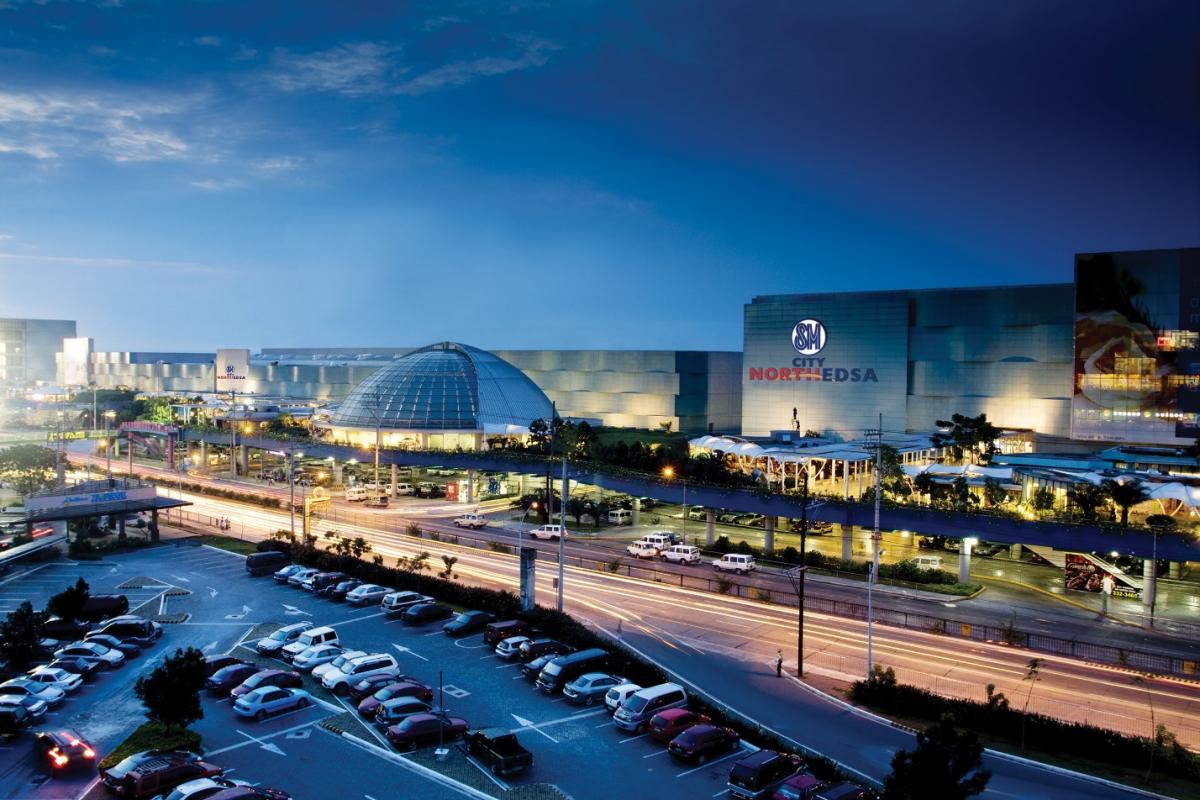
    Continuing mall expansion helped drive a 14 per cent rise in SM Prime Holdings’ net profit last year.

    In a stock exchange filing yesterday, the company said it achieved a net income of P23.8 billion (US$473.7 million) last year. Strong sales by its residential arm, which accounts for 32 per cent of its business, also contributed to the healthy profit rise.

    SM Prime has 60 shopping malls in the Philippines, with 7.7 million sqm of gross floor area and seven in China, with 1.3 million sqm of GFA. The company plans to open at least four more centres in its home market in 2017, adding a further 300,000 sqm of space.

    Total revenue last year rose 12 per cent to P79.8 billion.

    “SM Prime sustained its overall performance in 2016 on the account of focusing more on recurring income stream complemented by the solid performance of the housing group,” said president Jeffrey Lim in a statement.

    “SM Prime is well-positioned to capture the positive impact of the higher infrastructure spending intended by the government that will also spur overall economic growth of the country,” he added.

    Revenues from shopping malls rose by 9 per cent last year to P48.6 billion, driven by the addition of 1.5 million sqm of additional space during the past two years.

    Excluding new openings, sales growth was up 7 per cent, but cinema sales were down 3 per cent.

  • Philippines to crack down on spectrum hoarding

    Philippines to crack down on spectrum hoarding

    The Philippines’ Department of Information and Communications Technology (DICT) plans to crack down on spectrum hoarders, threatening to recall unused frequencies and potentially auction them to a third or even fourth local player.

    A recent audit of the National Telecommunications Commission (NTC) shows that a number of companies are not using the spectrum that has been assigned to them, and many of these have unpaid spectrum usage fees owing.

    In response, the government plans to ask these companies to explain their lack of use or their non payment of spectrum fees. In cases where it is deemed warranted, the government plans to initiate recall procedures for the spectrum. The report cites DICT undersecretary Jorge Sarmiento as stating that there is enough unused spectrum in the Philippines’ airspace to allocate to a third or even fourth player.

    The NTC is preparing to hold a new entrant spectrum auction by the middle of the year, as part of efforts to attract new competition to break up the Globe-PLDT duopoly.

    The ministry is also under pressure to resolve consumer complaints about the quality of internet services in the Philippines, and recently announced it will hold a “no-holds-barred” summit to address these concerns.

    The audit shows that spectrum has been allocated but is not in use in the 400-MHz, 700-MHz, 800-MHz, 2500-MHz, 3.4-GHz and 10-GHz bands.

  • Cebu Pacific flight soars from Masbate to Manila for 1st time

    Cebu Pacific flight soars from Masbate to Manila for 1st time

    The first and inaugural commercial flight of the Cebu Pacific connecting Masbate province to Manila flew on Tuesday morning, the Department of Tourism Bicol regional Director Maria Nini Ong-Ravanilla said.

    Seventy-six (76) passenger flights between Masbate and Manila have been flying daily since Feb. 15 (Wednesday), said Alexander Lao, CEO/President of the Cebgo,

    “This is the first time Cebu Pacific is flying Manila to Masbate (and vice versa). With this commercial flight, it will boost tourism, investment and business generation,” Ravanilla said on Wednesday.

    Two commercial airlines are now flying in Masbate.  The  other is Philippine Airlines.

    She said the additional flights would surely increase the tourist arrivals for Masbate. In 2015, Masbate hit the target of 262,850 tourist arrivals with a marked increase of six percent over previous records.

    “The data show that 300,000 are achievable with this development. Masbate is confident to hit its target of 350,000 tourist arrivals,” Ravanilla added.

  • Manila hosts Sugar Factory Asia debut

    Manila hosts Sugar Factory Asia debut

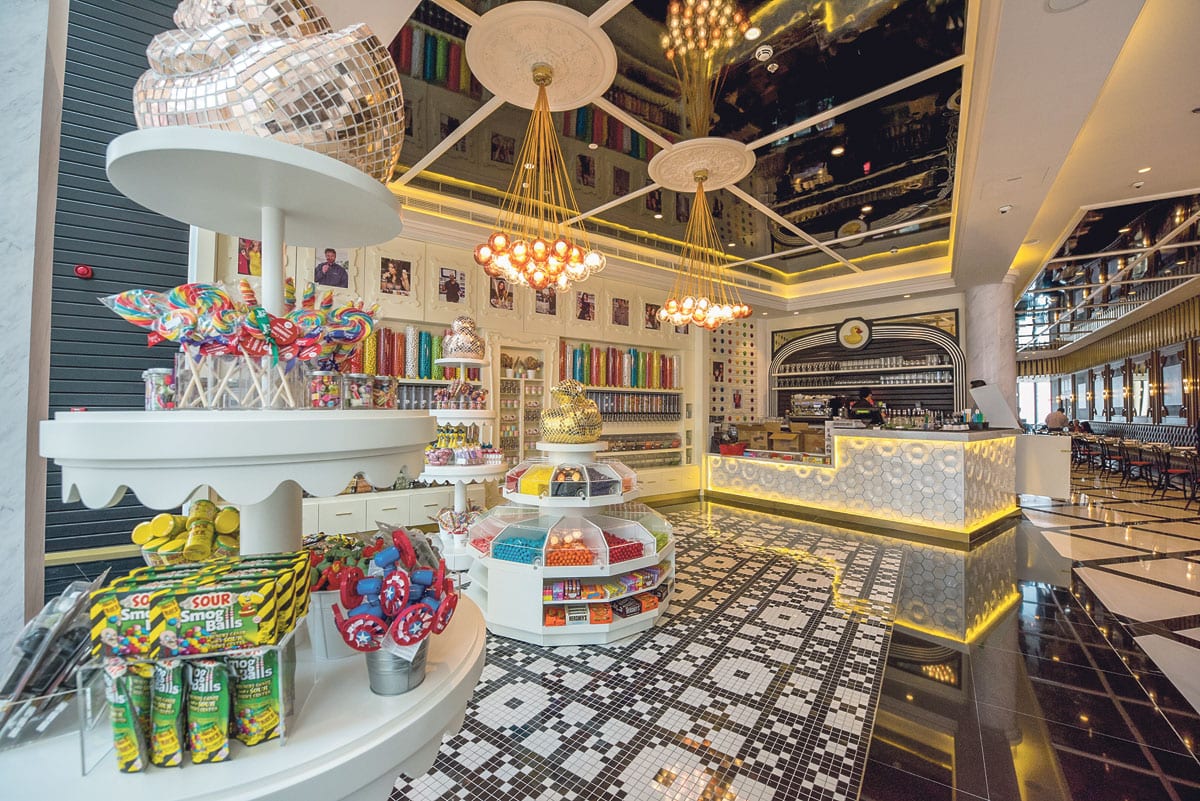
    Restaurant/bar/candy shop Sugar Factory American Brasserie has opened at Shangri-La at the Fort in Bonifacio Global City, Taguig.

    The Philippines is home to the first Sugar Factory Asia outlet, with more regional markets on the horizon.

    Following a soft opening four months ago, the Manila venue was officially launched with an exclusive party for VIPs, celebrities and media. Guests of honour, including Filipino Vice-President Maria “Leni” Robredo, billionaire businessman Fernando Zobel and his wife Kit, and dermatologist/TV personality Dr Vicki Belo, who all walked down a pink carpet.

    Sugar Factory’s menu includes pancakes, salads and burgers, while for adults the bar offers spiked beverages including the brasserie’s signature smoking candy goblets.

    The chain is known for its “couture pops”, sparkly lollipops that have been seen in the hands of such celebrities as Britney Spears, Carmen Electra and Eva Longoria. Other supporters of the restaurant include Charlie Sheen, Katy Perry, Kylie Jenner, Rihanna and Sting.

  • Japanese tariffs hobble Vietnamese tuna exports

    Japanese tariffs hobble Vietnamese tuna exports

    Thai and Filipino tuna exporters have accessed the market tariff-free for years. Vietnam’s tuna exports to Japan have steadily declined since 2013 due to exceptionally high tariffs, according to the Vietnam Association of Seafood Exporters and Producers (VASEP).

    Following a bilateral trade deal, Japan scrapped tariffs on Thai canned skipjack tuna, which carried a 3.2 percent tariff in 2009 and 1.1 percent tariff in 2011. During the same time, Japan has maintained a 6.4 percent tariff on similar products from Vietnam, according to VASEP.

    Japan extended the same policy to canned yellowfin tuna and frozen tuna loin, lifting duties entirely on Thai yellowfin imports in 2012 and Filipino imports the following year under the Generalised Systems of Preferences (GSP).

    During that time, Japan levied a 9.6 percent tariff on canned yellowfin tuna from Vietnam, even after the Vietnam – Japan Economic Partnership Agreement (VJEPA) came into effect in October 2009.

    The two countries have yet to set a timeline on lifting tariffs on Vietnamese tuna exports, which generates between $450-550 million, annually.

    Japan ranks among Vietnam’s top-eight tuna export markets and VASEP has called on the Ministry of Industry and Trade to negotiate a deal similar to the arrangement enjoyed by exporters in Thailand and the Philippines.

  • PLDT, Smart seal 5G partnership with Huawei

    PLDT, Smart seal 5G partnership with Huawei

    PLDT, together with its mobile arm Smart Communications, has signed a MoU with Huawei Technologies to jointly conduct research and development into 5G mobile technology.

    The goal of the partnership is to commercially launch 5G networks in in the Philippines by 2020, PLDT said in a statement released this week.

    Under the MoU, PLDT and Smart will work with Huawei to shape the strategic and commercial development of a 5G ecosystem in the country.

    The companies will identify and develop areas of technical innovation to deliver 5G. Plans include setting up a 5G innovation lab and the creation of a showcase network.

    Late last year, Smart and Huawei combined five frequencies through Carrier Aggregation (CA) to achieve data speeds of 1.4 Gbps. Smart also used CA in April 2016 to roll out a LTE-A service. Initially deployed in Boracay and soon in major urban areas such as Metro Davao, Metro Cebu, and Metro Manila, Smart’s LTE-A service delivers peak speeds of more than 100 Mbps to users with LTE-A capable devices.

    “Smart is focused on LTE, as it provides us the best platform to bring high-speed mobile internet throughout the country. LTE facilities, with strengthened transport links, can be quickly upgraded to LTE-Advanced (LTE-A), and will be an integral part of our future 5G network,” said Joachim Horn, chief technology and information advisor for PLDT and Smart.

    At present Smart is in the middle of a multi-year, multi-million dollar nationwide network expansion program to improve both coverage and quality of its 4G LTE service. A major leg of this network expansion was recently completed in Metro Davao, where Smart users are already reporting much improved mobile data experience, the operator said.

    The rollout is currently underway in Metro Manila and in Metro Cebu, and is expected to significantly boost Smart’s voice, SMS, and mobile data services – especially its indoor LTE coverage – in these urban centers. An upgrade of PLDT’s fixed access networks, part of the company’s transformation toward 5G-readiness, is also underway.

    “We are focused on ensuring that our current investments in network facilities will enable us to be ready with the necessary infrastructure foundation for 5G when it arrives sometime in 2020,” Horn noted.

  • AirAsia to launch Manila-Caticlan flights

    AirAsia to launch Manila-Caticlan flights

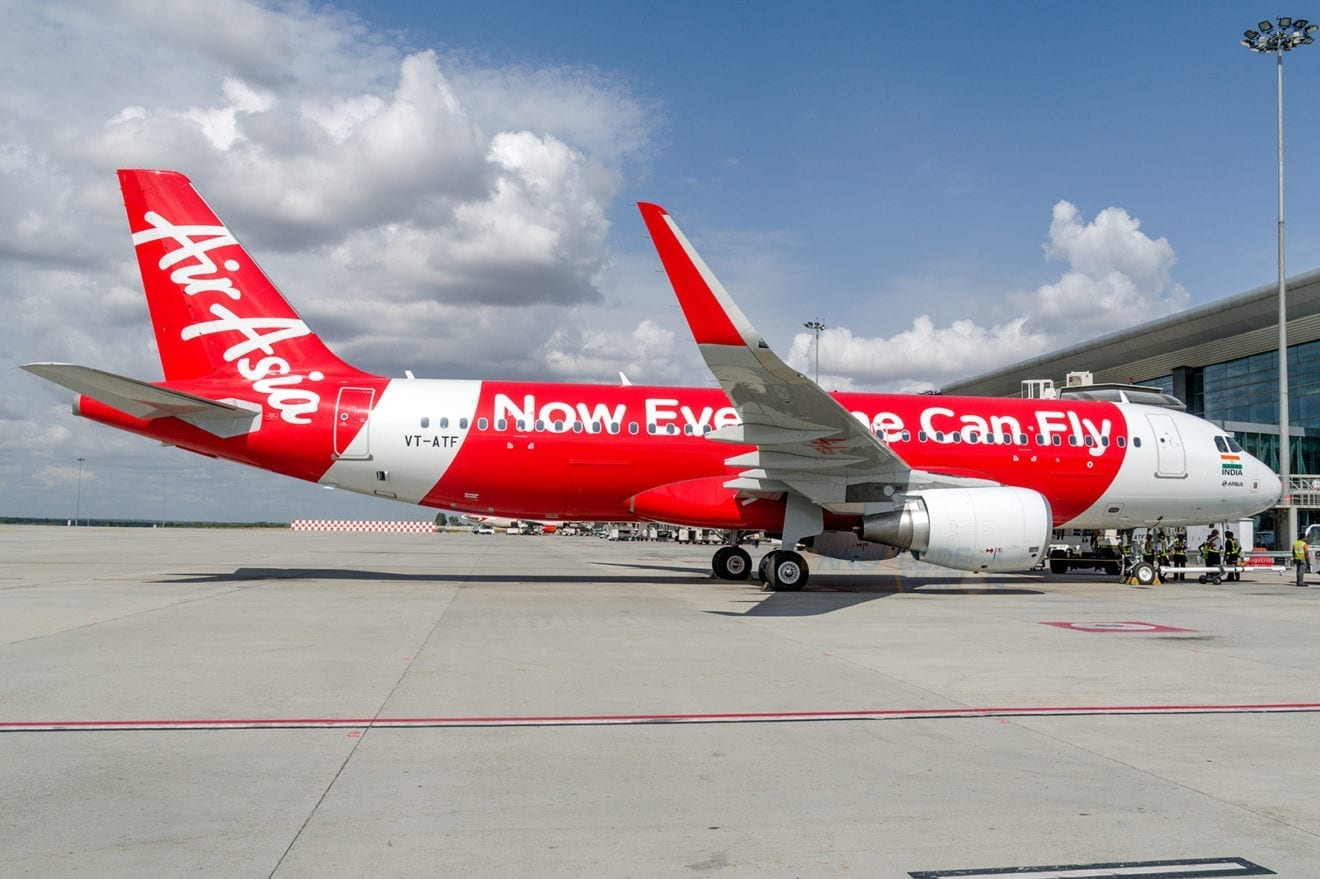
    In a statement, Philippines AirAsia said it will start offering twice daily flights from Manila to Boracay via Caticlan airport starting March 15, using the airline’s fleet of Airbus A320s that can accommodate up to 180 passengers.

    “It’s an exciting time to be in Boracay this summer with AirAsia’s signature low fares now available for direct flights to Caticlan airport. Our twice daily flights will significantly enhance connectivity to one of the world’s best island destinations,” Philippines AirAsia CEO Dexter M. Comendador was quoted as saying.

    AirAsia also maintains four times daily flights from Manila to Kalibo airport including international flights from Kuala Lumpur and Incheon/Seoul and has announced it will restart Clark-Kalibo flights starting March 27.

    With the introduction of Caticlan flights, AirAsia is offering promo fares from as low as P1,699 until Feb. 19. Travel period is between March 15 and June 18, 2017.

  • Cebu Pacific adds new aircraft

    Cebu Pacific adds new aircraft

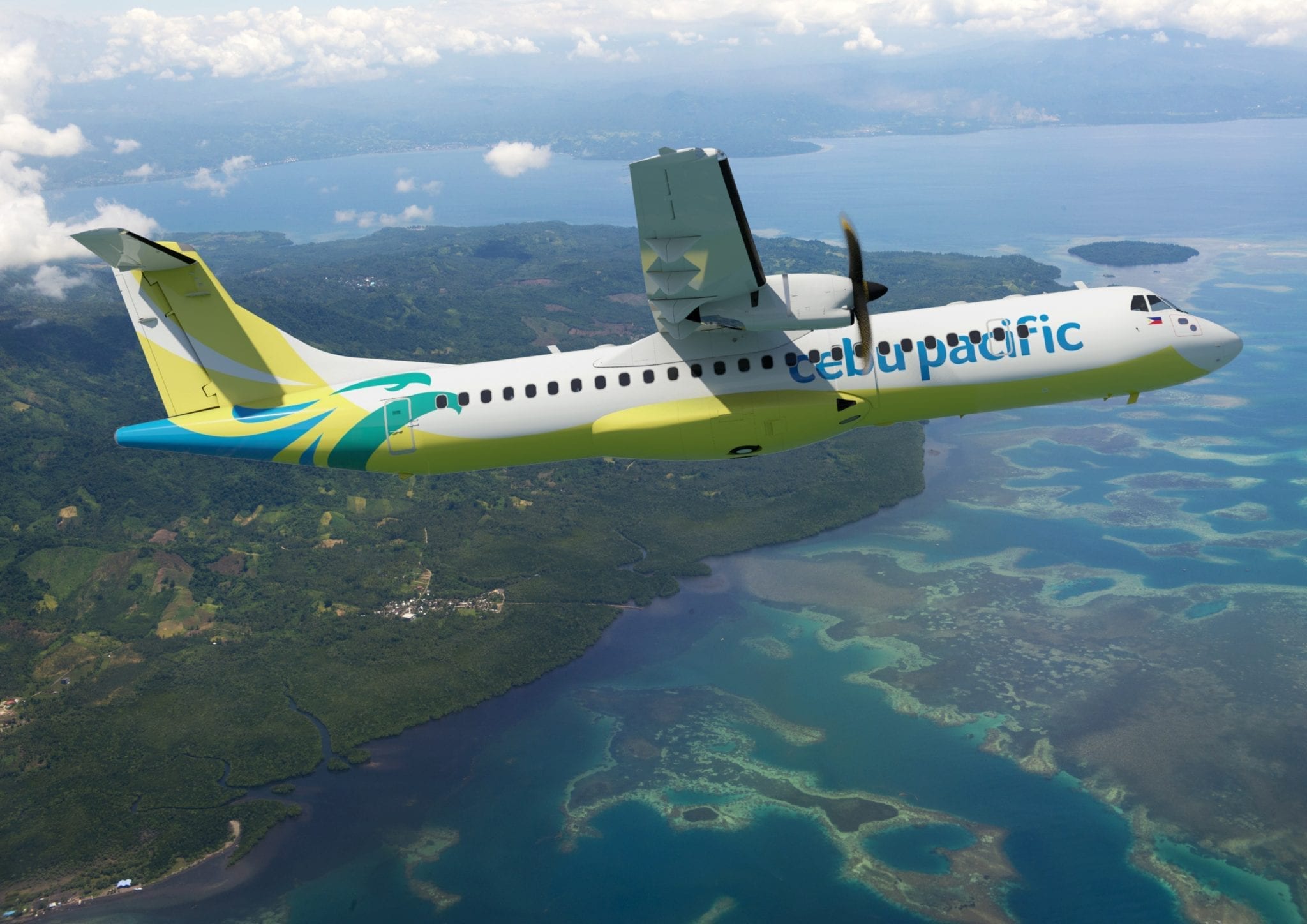
    Cebu Pacific Air (CEB), through its wholly-owned subsidiary, Cebgo, recently accepted delivery of its third ATR 72-600 High Capacity aircraft. This is the first ATR 72-600 delivered for this year, bringing the airline’s total fleet to 58.

    The carrier also chose the lightest aircraft seats in the world, Expliseat, for all 16 aircraft, two of which are already being utilised by CEB. The titanium seat, which is a technological breakthrough registered under 16 patents, made of ultralight materials such as titanium and carbon composite resources, is expected to help decrease fuel burn while allowing the carriage of more guests and cargo on board.

    The brand-new ATR 72-600 will be utilised for the two new routes CEB will be launching on February 15: Manila to Masbate and Manila to Tablas. “We are glad to take delivery of another brand-new ATR 72-600, especially since this is the first to have the titanium seats from Expliseat installed. This aircraft therefore combines reduced seat costs while optimising comfort for passengers,” said Alexander Lao, president and CEO of Cebgo.

    Today, CEB operates one of the youngest and most modern aircraft fleets in the world with an average age of 4.92 years.  This new ATR 72-600 will be used to support CEB’s expansion plans in the archipelago, now servicing 37 domestic destinations flying out of six strategically-placed hubs in Manila, Cebu, Clark, Iloilo, Kalibo, and Davao. CEB also offers flights to 29 international destinations, covering an extensive network that spans Asia, Australia, the Middle East, and US.
    CEB now operates a 58-strong fleet comprising four Airbus A319, 36 Airbus A320, seven Airbus A330, eight ATR 72-500, and three ATR 72-600 aircraft. Between 2017 and 2021, CEB expects delivery of one more brand-new Airbus A330, 32 Airbus A321neo, and 13 ATR 72-600 aircraft.

  • SM Aura Premier the first and sole mall in the Philippines to achieve Leed Gold certification

    SM Aura Premier the first and sole mall in the Philippines to achieve Leed Gold certification

    The LEED (Leadership in Energy and Environmental Design) rating system, developed by the U.S. Green Building Council (USGBC), is the foremost program for buildings, homes and communities that are designed, constructed, maintained and operated for improved environmental and human health performance.

    According to LEED Consultant Raymond Andrew Sih, SM Aura achieved LEED Gold by meeting and exceeding international standards in indoor air quality, thermal comfort, then energy and water efficiency. He cited the mall’s very own waste water treatment plant that recycles water for non-potable use, the energy efficient LED lighting system, the centralized air conditioning system cooled with recycled water, and double low emissivity insulated glass panels, to name a few. In addition, the entire operation is run optimally with regular measurement and verification.

    “SM Aura Premier was built with the environment in mind. Almost a third of the cost of construction materials were locally sourced, over twenty percent of the cost of construction materials were from recycled materials, and over ninety-five percent of the construction waste was recycled,” Sih said.

    Sih also pointed out SM Aura Premier’s Sky Park, which covers more than half of the building. The roof garden, according to Sih, not only “provides visitors with a great place to dine, relax and enjoy views from up high; it also gives plants plenty of soil, recycled water, and room to grow while protecting the building from the heat of the sun.”

    Apart from this outdoor green feature, SM Aura also maintains good indoor air quality for its occupants. The mall is also conveniently located where one can walk or bike to various businesses, offices, homes, public amenities, and transportation facilities.

    Mahesh Ramanujam, president and CEO of USGBC, underscored the significance of SM Aura Premier’s LEED Gold certification. “Achieving LEED certification is more than implementing sustainable practices. It represents a commitment to making the world a better place and influencing others to do better,” Ramanujam said. “Given the extraordinary importance of climate protection and the central role of the building industry in that effort, SM Aura Premier demonstrates their leadership through their LEED certification of Gold.”

  • PLDT to expand FTTH footprint by 80% in 2017

    PLDT to expand FTTH footprint by 80% in 2017

    PLDT plans to expand the reach of its high-speed FTTH service by around 80% in 2017 to reach 4.4 million homes passed, the company announced.

    The expansion will see around 1.9 million new serviceable homes added to the network footprint, which reached 2.5 million homes last year following an aggressive fiber rollout.

    PLDT offers FTTH services under the PLDT Home Fibr brand, which offers speed of up to 1Gbps.

    PLDT Home Fibr has also introduced the nation’s first symmetrical fiber service, and the platform is being used to support a growing line of smart home services such as home monitoring services.

    The operator has also started to deploy G.fast technology from Huawei and hybrid fiber technology GiGa Wire, developed by KT. The technologies can provide speeds of up to 700Mbps per user over existing copper last mile connections.

    “We are stepping up our efforts to deliver unrivalled internet services to more homes in various parts of the country, from the Ilocos provinces in the North to Zamboanga in the South,” PLDT chairman and CEO Manuel V. Pangilinan commented.

    PLDT had a capex budget of around $1 billion last year, and a significant portion of this was allocated for the rollout of domestic fiber infrastructure.

  • Cebu Pacific says it flew 19 million passengers in 2016

    Cebu Pacific says it flew 19 million passengers in 2016

    Cebu Pacific, the country’s largest airline, said Friday it flew 19.1 million passengers in 2016, a 4-percent increase from the previous year on the back of its short-haul services.

    The airline said it set a new record for most passengers flown in a single day, 64,638 on Dec. 27, 2016.

    Cebu Pacific said there was “notable” growth in passengers to Beijing, Xiamen, Taipei, Hanoi, Ho Chi Minh among international destinations.

    Locally, passengers increased in Cauayan, Siargao and Ozamiz, the airline said.

  • Cebu Pacific gets its 3rd ATR 72-600 aircraft

    Cebu Pacific gets its 3rd ATR 72-600 aircraft

    In a statement, Cebu Pacific said the new high capacity aircraft as delivered to its wholly owned subsidiary Cebgo on Feb. 3.

    The new ATR 72-600 will be used for the two new routes to be launched on Feb. 15 — Manila to Masbate and Manila to Tablas.

    “We are glad to take delivery of another brand-new ATR 72-600, especially since this is the first to have the titanium seats from Expliseat installed. This aircraft therefore combines reduced seat costs while optimizing comfort for passengers,” Cebgo President and CEO Alexander G. Lao was quoted as saying in a statement.

    Cebu Pacific’s aircraft fleet has an average age of 4.92 years, which the airline says is one of the youngest around the world.

    It currently operates a 58-strong fleet made up of four Airbus A319, 36 Airbus A320, seven Airbus A330, eight ATR 72-500, and three ATR 72-600 aircraft. Starting this year to 2021, the budget carrier expects to receive one more brand-new Airbus A330, 32 Airbus A321neo, and 13 ATR 72-600 aircraft.

  • How Indonesians Became Richer than Filipinos

    How Indonesians Became Richer than Filipinos

    An Indonesian boom sparked by growing economic stability and falling corruption and debt levels has helped Indonesians catch up and become better off than Filipinos in per capita income in recent years.

    That hasn’t surprised those following emerging markets closely, though the Philippines’ equity market has outperformed Indonesia’s in the last ten years. Nor has it been a surprise seeing the Philippines leave behind the old glory days of the 1960s, and be bypassed by the one Asian country after another in per capita GDP.

    “There was a time when the Philippines was seen as an Asian trendsetter, and fashionable young Malays would sport the barong, the formal embroidered shirt favored by Filipinos, to look cool,” writes Ruchir Sharma in Breakout Nations. “But that was back in the 1960s, when the Philippines had the second highest per capita income in Asia, behind only Japan. The nation’s fortunes shifted since then.

    By the 1970s South Korea and Taiwan had passed the Philippines in per capita income terms. Malaysia and Thailand followed in the 1980s and China in the 1990s. Then in 2009, in a moment the Manila elite thought it would never see, Indonesia’s boom made Indonesians richer than Filipinos for the first time in history.”

    That’s a trend that continued beyond 2009. In 2016, Philippines per capita GDP was close to two-thirds of that of Indonesia’s; the gap is even bigger in ppp. What has Indonesia done right that Philippines’ hasn’t?

    To begin with, it has managed to shake off the economic and political instability that came with the breaking of the Asian financial crisis – a crisis which hit Jakarta hard, with GDP falling close to 20 percent over the 1997-1998 periods.

    Moreover, Indonesia managed to bring its government debt down, which accounts roughly for 60 percent of that of Philippines. Then there’s the battle against corruption and cronyism, big killers of emerging market growth, though it still remains high compared to that of China and India.

  • Philippines airline PAL announces new direct Doha-Manila service

    Philippines airline PAL announces new direct Doha-Manila service

    Starting March 26, Philippine Airline (PAL) will launch its first direct flight from Manila to Doha. The service will operate four times a week, on Monday, Wednesday, Friday and Sunday on the A330.

    PR684 will leave Manila at 1:30pm and arrive in Doha at 6pm local time. And PR685 will depart Doha at 8pm and arrive in Manila at 10am.

    Tickets range from QR885 to QR2,745 in economy, and include WiFi and meal service. A business class option could be rolled out this summer.

    The moves come a year after the carrier introduced its first service to Doha, though that route currently first stops in Abu Dhabi.

    PAL will continue to fly that service Doha on Tuesdays, Thursdays and Saturdays. The non-stop service will make Manila’s Ninoy Aquino International Airport one of the few destinations connected directly to Doha by three airlines.

    It also heats up competition on the route, as Qatar Airways also flies to Manila direct. So does low-cost carrier Cebu Pacific Air, which launched its service to Doha in 2015.

    Growing community

    Qatar is home to a large Filipino population, which now numbers over 200,000 people.

    That’s the third largest expat group in the country, behind the local Indian and Nepali communities.