Tag: Philippines

  • Malaysia’s MYEG partners with Philippine I-Pay to bring e-services to Philippines

    Malaysia’s MYEG partners with Philippine I-Pay to bring e-services to Philippines

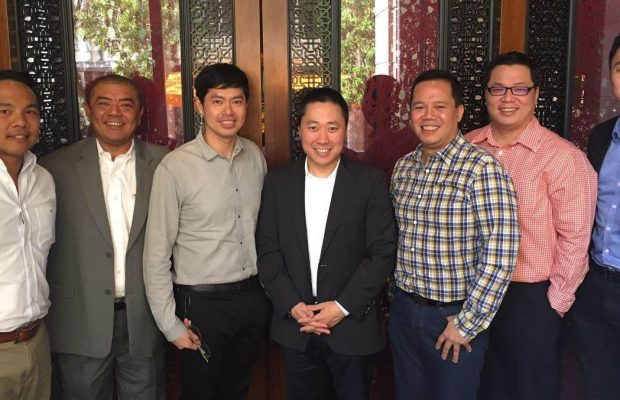
    I-Pay Ventures Commerce Ventures, Inc. (I-Pay) recently signed a joint-venture agreement with MY E.G. Services Bhd (MYEG) to enable government and large enterprises in the Philippines to offer a Payment Gateway and related value-added online services.

    I-Pay is the company behind the NBI’s online registration system. MYEG is Malaysia’s fastest-growing company as the country’s civil service embraces the digital way of providing services to the public. Its tie-up with the Immigration Department and Road Transport Department has resulted in massive growth in the company’s top and bottom lines.

    Both parties envision the joint venture will replicate the business model of MYEG in Malaysia. The new agreement represents each organization’s strong commitment to provide Philippine public service sector with the best and trusted e-commerce platform with an excellent track record.

    According to its latest annual report, MYEG recorded a 36.8% compounded annual growth rate (CAGR) in revenue for the five years between 2011 and June 2016 while its profit grew at a CAGR of 45.1% over the same period.

    MYEG has also been constantly recognized by Forbes as one of Asia’s “Best Under A Billion” companies.

    “We are very excited to work with I-Pay to offer a superior G2C user experience in the Philippines,” said TS Wong, managing director, My E.G. Services Bhd. “Our unique model provides significant cost savings and increased efficiency to all stakeholders. Combined with I-Pay’s established operating record, we are confident of achieving mass adoption in the coming years.”

    I-Pay’s vision is to facilitate Government and enterprises in delivering technology-driven services encompassing the Internet, automation, big data and electronic payments.

    I-Pay is a payment processing provider and a direct agent of Western Union in the Philippines. It is the payment processing investment of the IP Ventures Group (IPVI).

    IPVI has successfully built market leading companies in the data center space, IP Converge Data Center Inc. (CLOUD); online gaming space, IP E-games (EG); and business outsourcing, PCCW Teleservices Philippines, Inc.

    IPCVI is backed by renowned investors such as IP Ventures Inc. (leading technology and retail conglomerate in the Philippines), Kaikaku Fund (Softbank affiliated fund), JJ Atencio (Founder and CEO of 8990 Holdings Inc.) and Derrick Chiongbian.

    “Our partnership with MYEG gives us access to world class technology that can upgrade Internet infrastructure and government services in the Philippines. Its ultimate goal is to improve delivery of government services for the Filipino people,” said Enrique Y. Gonzalez, president of IP Ventures Group.

  • Singtel and Globe launch Tustwave MSS in Philippines

    Singtel and Globe launch Tustwave MSS in Philippines

    Singapore’s Singtel is bringing its Trustwave portfolio of managed security services to the Philippines, in collaboration with Globe Telecom.

    Under the collaboration, Globe is providing Trustwave’s services through its advanced security operations center (ASOC) in Manila, a new facility operated by Singtel’s Trustwave subsidiary.

    Globe’s ASOC will combine threat intelligence from Globe with global threat visibility from the global network of nine Trustwave ASOCs.

    The services will be supported by an ecosystem of global cyber security providers including Palo Alto Networks, FireEye and Arbor Networks.

    Singtel acquired a 98% stake in Trustwave for $810 million in a deal announced in 2015. In December that year, Singtel and Globe also signed a memorandum of understanding to strengthen Globe’s cyber security capabilities.

    Singtel and its managed security services business unit Trustwave also recently expanded their collaboration with Palo Alto to bring managed security services to multi-national businesses and government agencies, and the new agreement extends Singtel and Trustwave’s partnership.

    “As the leading cyber security services provider in the region, our deep global capabilities allow Trustwave Managed Security Services to monitor, assess and defend our customers’ operations round-the-clock against cyber attacks,” Singtel CEO group enterprise and Trustwave chairman Bill Chang said.

    “The launch of Trustwave Managed Security Services is timely as it complements the Philippine government’s National Cybersecurity Plan 2022.”

    The government’s plan is aimed at safeguarding the Philippines’ critical information structures, as well as governments, businesses of any size and all citizens using the internet.

  • Smart’s 2016 revenue grows 26% on mobile data growth

    Smart’s 2016 revenue grows 26% on mobile data growth

    The Philippines’ Smart Communications has reported a 26% increase in revenues for 2016 to 25.5 billion pesos ($509 million), in a result attributed to sustained growth in the company’s mobile data business.

    Smart, the wireless subsidiary of incumbent operator PLDT, said mobile data revenues for the year grew a strong 42% to 17 billion pesos.

    During the year, data revenues edged out voice calls and text messages as the operator’s largest wireless revenue source for the first time. Total usage reached 148,000 terabytes, up 49% from 2015.

    “The shift to data and digital services continues to gain momentum. With access to PLDT’s extensive fixed line network, Smart is rolling out the country’s fastest mobile internet network to address the growing demand of our subscribers for data services at home, their schools and offices and while on the go,” PLDT chief revenue officer Eric R. Alberto said.

    To help meet the steep rise in demand for mobile data, Smart has accelerated its rollout of LTE and 3G data networks and is incorporating the use of low-brand frequencies such as 700-MHz. The upgrade has now been completed in Metro Davao and is now underway in Metro Manila and Metro Cebu.

    Smart is also adopting LTE-A technology in selected areas, and recently entered a 5G partnership  with Huawei aimed at preparing its network for an evolution to the standard.

  • Metro Retail income reaches P789m

    Metro Retail income reaches P789m

    Cebu-based Metro Retail Stores posted P789 million (US$15.7 million) net income last year, up from P758 million in 2015.

    Net sales for the fourth quarter grew 7.4 per cent to P10.67 billion, reports the retailer, part of the Gaisano Malls group.

    Sales grew steadily during the quarter, says the Visayan retailer, with overall net sales hitting P34.4 billion for the year, up by P2.1 billion.

    During the year the company ramped up its supply chain and logistics modernization program. It inaugurated a warehouse in Cebu, and bought delivery trucks equipped with tracking devices.

    Chairman/CEO Frank Gaisano says the company is looking to sustain this growth trajectory this year, with initiatives in place to boost sales and improve store-by-store profitability.

    The company has a 50-strong store network – 25 supermarkets, 13 hypermarkets and 12 department stores.

  • Max’s Group eyes more stores as profit grows

    Max’s Group eyes more stores as profit grows

    Max’s Group, the listed dining group, has reported a 12 per cent increase in profit last year as sales rose across all of its banners.

    The company recorded total income of of P561.74 million for 2016, up from P501.39 million the prior year.

    And CEO Peter H. King says better is to come this year. “We remain bullish on the pace of our global business. Our focus this year is to boost recurring income by accelerating store development. Nonetheless, we shall constantly be on the lookout for fresh territories.”

    Max’s Group’s brands include Yellow Cab Pizza, Pancake House, Sizzlin’ Steak and Max’s Restaurants.

    President  Robert F. Trota said the company was able to execute successful strategies amidst “a rapidly intensifying competitive environment”.

    “Overall, it was another productive year for us.”

    Restaurant sales rose 10 per cent to P9.42 billion driven by the opening of 77 new stores and solid same-store sales performance.

    Max’s group now has 623 stores, including 49 overseas. It is targeting 1000 outlets by 2020, 200 of them offshore, and has budgeted P750 million to P800 million to open between 60 and 70 this calendar year. It already operates stores in the UAE, the US, Singapore, Egypt, Jordan and Vietnam.

    The company’s online and delivery business performed exceptionally well last year, with revenues up 24 per cent to P1.08 billion.

  • RoRo shipping service to ply Mindanao-Indonesia route

    RoRo shipping service to ply Mindanao-Indonesia route

    The Philippine and Indonesian governments will launch next month a roll-on, roll-off shipping service that will link Davao and General Santos cities to Bitung City in Indonesia, an official of the Mindanao Development Authority (MinDA) said.

    Presidents Rodrigo Duterte of the Philippines and Joko Widodo of Indonesia have been invited to grace the launch in Davao City after the 30th ASEAN Summit in Manila, MinDA Assistant Secretary Romeo Montenegro said.

    He said the DGB shipping will fill a gap in transport connectivity, at least between the Philippines and the rest of the Brunei-Indonesia-Malaysia-Philippines-East Asean Growth Areas and ASEAN itself.

    If pursued, the shipping service will be the first of its kind in the 50-year old ASEAN grouping and will help boost efforts for economic integration.

    RoRo carries rolling cargoes and do not require cranes for loading or off-loading as they simply roll on and off the vessel, hence the name. The mode is economical, according to the Asian Development Bank, because it has removed cargo handling costs for labor and equipment, as well as cut the transport time.

    In 2012, the Japan International Cooperation Agency recommended in a study to set up a sea link dedicated to freight services between General Santos City in Mindanao and the Indonesian port of Bitung as the much needed maritime connectivity aimed to revive and strengthen trade between Indonesia and the Philippines.

    The Master Plan of ASEAN Connectivity 2025 cited the need for physical, institutional and people-to-people linkages to help achieve economic, political-security and sociocultural pillars of integration under the ASEAN Economic Community.

    Since its launching in 1994, BIMP EAGA cited improvements made in physical connectivity through improved roads and ports. The BIMP-EAGA Vision 2025 document, however, noted that most of the projects became “stand alone projects” showing benefits at the national level that “fail to clearly demonstrate sub-regional impacts.”

    “Only a few projects have accounted for the need to link the two priority economic corridors of BIMP-EAGA, namely the Western Borneo Economic Corridor (WBEC) and the Greater Sulu and Sulawesi Corridor (GSSC),” the document said.

    For the transport sector strategy of BIMP-EAGA, the goal based on BIMP EAGA Vision 2025 is “interconnected, seamless and safe multi-modal transport.”

    According to the BEV 2025 project list for 2017 to 2025, aside from the DGB route, other sea linkages were also eyed in BIMP-EAGA, such as Bitung-Tahuna-Gensan, Brooke’s Point-Sandakan-Kota Kinabalo, Brooke’s Point-Bataraza-Kudat and Brooke’s Point-Brunei.

    For air linkages, there will be flights for the following routes: Puerto Princesa-Kota Kinabalo, Mulu-Bandar Seri Begawan, Davao-Manado, Pontianak-Bandar Seri Begawan and Balikpapan-Bandar Seri Begawan.

    Poor transport connectivity 

    Poor sub-regional transport connectivity, as identified in the BIMP-EAGA Vision 2025 document, is one of its major challenges.

    It added that uneven economic development has led to different priorities, policies and regulations related to the transport sector.

    Montenegro said there is greater chance to address connectivity from 2017 to 2025 because a total of $23 billion, compared to only $1 billion in the previous decade, has been earmarked for priority infrastructure projects in the area.

    Over half of the amount goes to projects identified in Mindanao because the island needs more infrastructures. Also, a big ticket project, the Mindanao Railway System is in the pipeline.

    The Duterte administration is giving special focus on infrastructure.

    The DGB, Montenegro added, is strategic for the Philippines, not just for Mindanao because it provides a faster and cheaper access for domestic products to be moved in ASEAN and other parts of the world. Notably, Mindanao is physically separated from the other BIMP members.
    Regular flights needed

    Vicente Lao, chairperson of the Mindanao Business Council Philippine representative to the BIMP-EAGA Business Council private sector forum, said the opening of the route will be good for Mindanao and trading with the Indonesian areas in the ASEAN sub-region.

    “The governments should act together to make it happen. The private sector should come in to take advantage,” he told this week.

    Since regular flights between Davao City and Manado in Indonesia have been suspended since 2008, travelers between the two areas have relied only on chartered flights, he added.

    Lao said the service should be made regular to stop the dependency on chartered flights.
    “It is not dependable. It has to be regular trips to make sure it addresses the needs of the businessmen,” he said via telephone.

    He said this means a big cut in transport cost, too. MinDA said it takes three to five weeks to move products from Davao City to Manado.

    With the DGB RoRo route, the travel time will be cut to three days. PortCalls Asia estimated the savings to be around P75,000 (PUS$1,500) per 20-foot equivalent unit.

    Apart from intra-regional trade, the route can also serve as a cheaper alternative for transshipment of goods in Asia, Montenegro said.

    Davao City will use the privately-owned Kudos Port. In General Santos City, the Makar Wharf will be used and in Sulawesi, the Bitung Port, which was recently identified as an international port of entry to Indonesia.

    Enough goods?

    Trade and Industry Assistant Secretary Arturo Boncato Jr. said the revival of regular Davao-Manado flights should follow the opening of the shipping service.

    He said the new shipping link will be crucial in increasing trading in the BIMP EAGA, which is now considered as a building block of ASEAN.

    “Connectivity plays a critical role in trading and the goal of the ASEAN Economic Community,” he added.

    But Boncato, who is the Philippine senior official to the BIMP-EAGA, said while the easier direction is for the route to be used in the transshipment business in Asia, it should really facilitate and improve intra-regional trading in BIMP-EAGA.

    For his part, Bronx Hebrona, who chairs the Committee on ASEAN and BIMP-EAGA of the Regional Development Council in Region 12, asked: “But now when a ship is available, are there enough goods to be transported?”

    He said there is greater push for BIMP EAGA with President Duterte, who he said was instrumental in expediting the preparations for the DGB route opening.

    “It’s possible. But it’s a wait and see situation. We are waiting for concrete terms,” he added.

    Boncato said loading the vessel is already the easier part. The challenge is how to sustain the shipping service.

    Montenegro said a joint meeting is scheduled next week for the Philippine and Indonesian task forces created to prepare for the opening of the route.

    During the Davao General Santos Bitung Business Forum last month, Philippine Transport Undersecretary Fernando Juan Perez described the route as a “gold mine” saying it opens up a lot of opportunities for exporters from both countries.

    Rosan P. Roeslani, chair of the Indonesian Chamber of Commerce and Industry welcomed the proposed opening of the route, as quoted by Jakarta Post on March 15.

    “It is going to be easier to access the Philippine market through the Bitung Port [in North Sulawesi], especially for products and commodities from Indonesia’s eastern regions,” the source added.

    Institutional, governance problems

    According to the MinDA website, the DGB, as one of three pilot areas for the ASEAN RORO Network Initiative, was initially pushed in 2012 by the private sectors in the three cities.

    Policy restrictions in Indonesia like Bitung Port’s status, however, hampered the launch. In 2014, the Indonesian Ministry of Trade officially identified Bitung Port as an international port, allowing entry of food and beverages, electronics and garments.

    Montenegro told the problem has been addressed by greater private and public sector coordination.

    Under the ASEAN Single Aviation Market, BIMP-EAGA is pushing for the revival of air connectivity within its focus areas to increase not only tourism arrivals but also trade activity within and beyond the sub-region.

    Various airlines have previously serviced the route such as Bouraq Airlines (2002), Merpati Nusantara (2005) and Sriwijaya airlines (2006), which have ceased operations due in part to the companies’ financial and operational losses, according to the MinDA website.

    There were on and off availability of chartered flights after the suspension of regular flights.

    Two of the players included Mid Sea Express, an Indonesian air carrier and Wings Air, a subsidiary of the Indonesian carrier’s Lion Air.

    In his April 2016 dissertation titled “Trade Governance Model in the BIMP EAGA,” Soehardi, an Indonesian doctorate student at the University of Southeastern Philippines in Davao City, found that connectivity management in transport infrastructure is an important consideration among traders.

    “The current condition of BIMP EAGA trade governance is marred with institutional and governance problems,” he wrote in his conclusion.

    He added that it created difficulties and cumbersome engagements with small and medium traders in BIMP-EAGA corridors.

    He identified six attributes with “availability of ships/planes as the major indicator.” The others include sufficient cargo ships and airplanes to ferry goods from one country to another and  that a sufficiently equipped port of entry as a good indicator of trade governance.

    No connectivity, no tourists

    Retired government employee Virna Gomez of Davao City said that as a traveler she looks for destinations that do not only have commercial appeal.

    “There are also those who look for historical and cultural purposes. This is the kind that we can see in Indonesia, for example,” she said.

    For her, the idea of connecting Davao and General Santos to Bitung is welcome news, especially for cargo shipping. She said it would open up opportunities for local people to trade in the sub-region. She would also be interested to explore the tourist attractions there. She, however, hoped that a comfortable passenger shipping service should be offered side by side with the cargo ships.

    “It would be an entirely different set of expectations from passengers,” she added.

    But she said the prospects of local tourists like her to go to Indonesia will not depend only on the availability of flights or shipping services.

    “We will be encouraged to travel if there are budget fares available such as the promotional peso-fare package (offered by a Philippine airline), she said.

    She said that for tourists it all redounds to affordability of travel cost and availability of hotels that cater to backpackers.

    “We must also have more of those hotels so that we also draw tourists from Indonesia to our shores,” she added.

    Unlike archipelagic Indonesia, she said, Malaysia seems to be a more attractive destination because you can take a bus or a train in going from one destination to another.

    “But I like to go to Bali and Yogyakarta, given the chance,” she said.

    Gomez, who in 2010 set up a small travel agency to keep herself busy, said she rarely get bookings for travel to Indonesia or Malaysia.

    ’Get acts together’

    Businesswoman Mary Ann Montemayor said this should not be a cause for discouragement.

    She said the nature of BIMP EAGA is really “going slow” and small, not grand, so hard work is needed to push ahead.

    But Montemayor, who sat at the BIMP EAGA Tourism Council from 1998 to 2008, said private and public sectors should get their acts together.

    “By all means, the impasse should be broken. It’s impossible to do trading without connectivity,” she added.

    Any aggressive marketing, she said, could help tourism and trade but it should be backed by physical connectivity.

    Assistance has been extended to micro, small and medium enterprises to help them compete in the ASEAN market. But Montemayor said connectivity will their chances.

    She said the ease of travel due to the Davao-Manado flights enabled business to pick up, although not as fast as expected.

    “When it happened, the flights were already suspended,” she said.

    She argued that it’s not entirely for the lack of attractions but that other destinations just had the edge in the competition.

    “The challenge is how to build up the market and prove to the airlines that it’s worth the risk,” she said in the sidelines of an ASEAN meeting in Davao last month.

    Like home

    Joanna Ruth Paloma, an English teacher at Bukidnon State University, recalled fond memories of her visit Manado in June 2012. She was then a member of a 40-person delegation of the university chorale who performed there for the Philippine Independence Day celebration organized by the Philippine Consulate.

    The group flew with Wings Air, an Indonesian airline serving the route with a 70-seater aircraft.

    Joanna said they traveled to another city and country but felt like she was home. “I felt like we were closely related in culture and language (separated only by the seas).”

    Indonesian food, she added, is familiar although a lot spicier. The style of the houses and buildings was also similar. In 2012, she compared Manado to Cagayan de Oro City. She said Manado folks were hospitable and were fond of Philippine tourists.

    She was saddened that there are no more regular flights serving the route.

    “I hope it will be revived. It’s good to connect with our neighbors. There were differences but there must be more similarities. It’s worth exploring,” she added.

  • Cebu Pacific opens Bacolod-CDO flights

    Cebu Pacific opens Bacolod-CDO flights

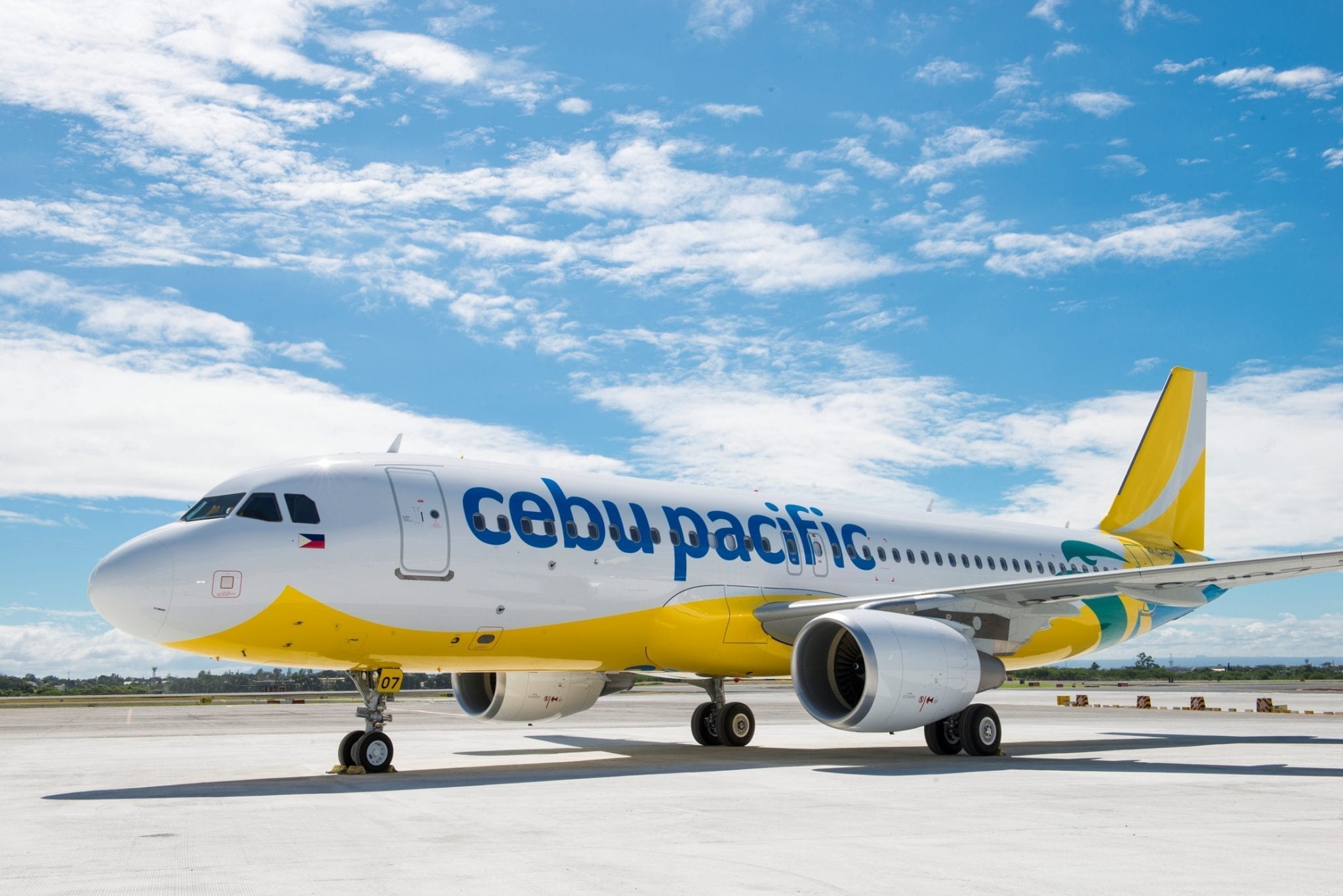
    CEBU Pacific (CEB) has expanded its inter-regional route network by opening its Bacolod and Cagayan de Oro (CDO) flights, one of the two new routes that will further connect the Visayas and Northern Mindanao. On March 15, the airline opened the Bacolod-CDO route with three flights every week specifically on Tuesday, Thursday, and Saturday.

    The other route is between CDO and Tagbilaran City, with four flight schedules weekly during Monday, Wednesday, Friday and Sunday. Both new routes will use the airline’s ATR aircraft. Alexander Lao, president and CEO of Cebgo, said these new routes will not only boost tourism, but also increase trade and productivity between Visayas and Mindanao.

    Lao said they are also optimistic that this will encourage a number of tourists and businessmen from Tagbilaran and Bacolod to visit Mindanao more often with direct flights. “We are very thrilled to begin flying to and from these destinations,” he said, adding that movement of goods between these islands will also be facilitated as Cebu Pacific cargo services are also available in these routes. The airline company, in a press statement, said the new routes going to and from CDO also provide travelers with the best connectivity option through direct flights that eliminates the need to pass through Manila or Cebu. Cebu Pacific offers its lowest all-in one way year-round fares of P1,806 and P1,235 from CDO to Bacolod and Tagbilaran, respectively, it added.

  • Globe launches 4CC LTE-A

    Globe launches 4CC LTE-A

    The Philippines’ Globe Telecom announced it has become the first operator in the nation to implement 4-component-carrier aggregation LTE-Advanced using the 2600-MHz band.

    The upgrade effectively doubles LTE capacity in areas covered by the deployment, the company said, and will be capable of generating speeds of up to 400 Mpbs once compatible devices hit the market.

    So far Globe has implemented the upgrade at 110 sites mostly in Metro Manila, including most areas in Makati and certain areas in Quezon City, Marikina, Antipolo, and San Mateo.

    The operator aims to deploy the technology in more than 500 sites this year across more of Metro Manila as well as key areas of North Luzon and South Luzon.

    Globe is using its new 2600-MHz band spectrum allocation acquired through its joint purchase with rival PLDT of conglomerate San Miguel Corporation’s telecommunications assets last year.

    Since acquiring the spectrum, the company has also deployed around 1,200 2600-MHz LTE sites mostly in Visayas and Mindanao.

    “This is the first time that a telco operator in the Philippines is making use of this 4-component carrier spectrum LTE-Advanced technology and we are maximizing the potential of the new spectrum assigned to us for the benefit of our customers,” Globe SVP for program governance Joel Agustin said.

    “This technology milestone significantly improves customer experience as smartphone penetration in the country continues to increase.”

  • Cebu Pacific expands VISMIN routes

    Cebu Pacific expands VISMIN routes

    CEBU Pacific announced it has expanded its inter-regional route network with the addition of two new routes that will connect the Visayas to Northern Mindanao. Starting Mar.15, 2017, CEB will be flying four times weekly (Monday, Wednesday, Friday and Sunday) between Cagayan de Oro and Tagbilaran; and three times a week (Tuesday, Thursday and Saturday) between the former and Bacolod.

    Both new routes to and from Cagayan de Oro will use the airline’s ATR aircraft.

  • 7-Eleven Philippines to open 412 stores

    7-Eleven Philippines to open 412 stores

    Philippine Seven Corp, the 7-Eleven Philippines operator, says it will open 412 new stores this year.

    For the second successive year the listed company will budget P3.5 billion (US$70 million) for capital expenditure.

    The company has just opened its 2000th outlet, at Legaspi Village in Makati City.

    The majority of the new stores will be opened in Luzon, with 50 scheduled for the Visayas and 50 for Mindanao.

    Philippine Seven president and CEO Jose Victor Paterno says half the new stores will be company owned and operated, the other half franchised.

    “We will stick to the provinces first because we have experience and we know the market. The sales of the others can’t support the high rents in the metro. If we cannot pay it, we won’t enter,” Paterno said during a press briefing.

    Sales at 7-Eleven Philippines stores rose 23 per cent in 2016 to P32 billion (US$636 million).

    Paterno said there is a lot of room for the convenience store industry to expand. He anticipates the total number of all brands of c-stores in the nation will exceed 15,000 within 10 years – almost four times the current number.

  • Del Monte Pacific recovers from losses, records $12m profit

    Del Monte Pacific recovers from losses, records $12m profit

    Del Monte reported a profit for the quarter ending in January, reversing losses incurred in the previous period.

    For the past quarter, Del Monte achieved an US$8.46m ($12m) net profit, on the back of strong sales in Asian markets particularly in the Philippines and the operational efficiency improvements resulting in cost reduction.

    Overall sales were US$604m, slightly higher than in the prior-year period as strong sales in Asia offset lower sales in the United States.

    “We continue to build on the consumption-driven growth in Asia as our team optimises opportunities in both the retail and foodservice sectors,” said Joselito Campos, Jr, managing director and Group CEO of DMPL.

    The Group’s US subsidiary, Del Monte Foods, Inc (DMFI), contributed US$450.6m or 75% of Group sales. US sales declined by 3% versus the same period last year driven by the continued weakness in the canned fruit industry, lower sales of regional brands in the packaged vegetable category across retail and foodservice due to supply-related issues, and lower sales of private label.

    “Our US business continues to be impacted by shifting consumer preferences, and our performance in the foodservice and private label sectors. We are implementing a strategy based on innovation and differentiation in existing categories, whilst seizing opportunities in other categories and channels to address consumer demands,” Campos explained.

    However, amidst industry contraction, DMFI increased its market share in two of the four major categories in retail, i.e. packaged vegetable and broth, which was further supported by the growth of the branded business amongst major retail customers.

  • AirAsia looking at 90% load factor this year with new flights

    AirAsia looking at 90% load factor this year with new flights

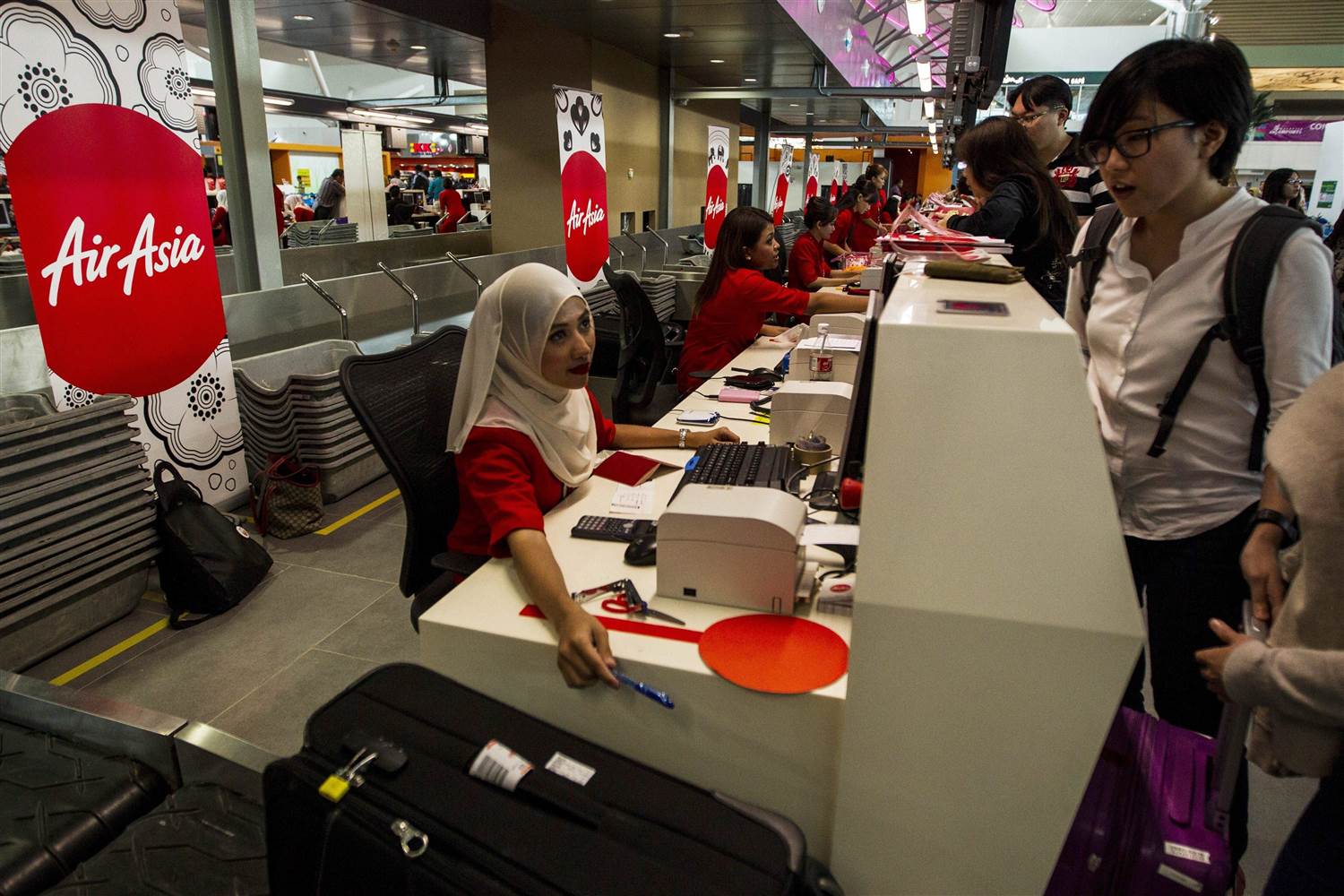
    In an interview, Dexter M. Comendador, Philippines AirAsia chief executive officer, said the parent firm is bringing in more aircraft for the expanded Philippine operations.

    “We’re one of the best performers in the group right now. Last year, we targeted 80-82% load factor and we were able to go over it… Our performance is giving us more planes, that is why we’re expanding,” Mr. Comendador said during the launch of the new Davao routes last Friday.

    While he did not specify how many aircraft will be added, he said AirAsia currently uses 14 for its Philippine local and international routes.

    The new flights starting April 22 using Airbus A320s are: twice a day between Davao and Cebu; daily Davao-Caticlan (Boracay); thrice a week Davao-Puerto Princesa; and four times a week Davao-Clark.

    With these flights, Philippines AirAsia now considers the Francisco Bangoy International Airport in Davao City as another one of its hubs.

    “Davao has so much potentials to be the next ‘wonder’ or the emerging tourism giant for the Philippines and the ongoing development will bear more fruit and contribute significantly to benefit our economy,” Mr. Comendador said.

    “Foreign tourists arriving in Cebu can skip the crowded airport of Manila and fly straight to Davao. With our newest routes, AirAsia would like to provide the much needed connections and tap the unserved markets, tourism and business, in Visayas and Mindanao,” he added.

    Meanwhile, Department of Tourism (DoT)-Davao Region Director Roberto P. Alabado III told the additional flights and routes are a very welcome development.

    “We need new routes that must be served for us to lure more visitors to the region,” said Mr. Alabado.

    DoT-Davao through Mr. Alabado, Mr. Comendador, and Visit Davao Fun Sale Executive Committee Chair Benjamin A. Lizada signed a memorandum of agreement last Friday for the annual summer event promoting the Davao Region.

  • REV Asia looking for partners in Indonesia, Philippines to grow overseas businesses

    REV Asia looking for partners in Indonesia, Philippines to grow overseas businesses

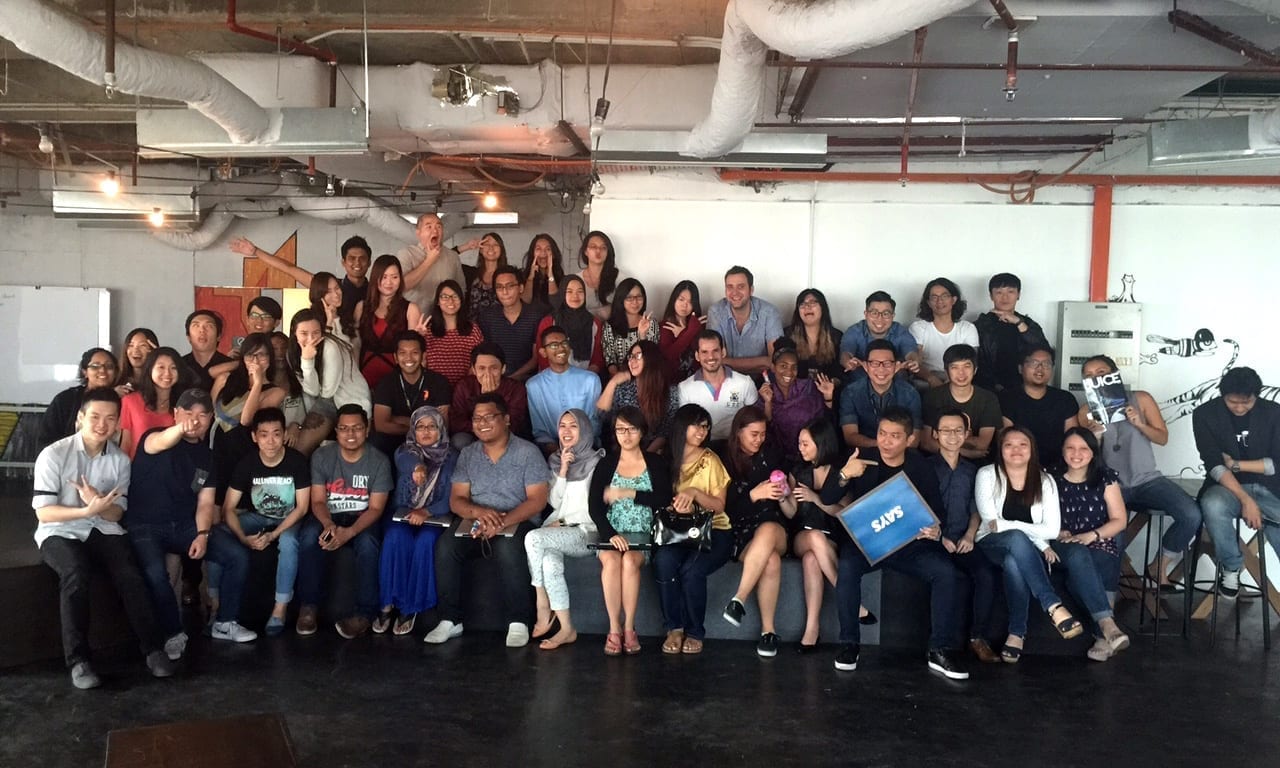
    Digital media group REV Asia is on the lookout for local partners for its operations in Indonesia and the Philippines, says managing director Voon Tze Khay.

    The group’s initial plan, which was to grow its market share in social media advertising revenue in those markets, hit a snag one-year into operations, leading it to seek home-grown partners.

    “We thought if we could run Malaysia at such a successful pace over the last three years, why not try it ourselves? However, after 12 months, we realised that the opportunities in these markets are plenty but the right way and more strategic way to do it is through a local partner, either in the form of merger and acquisition (M&A) or joint venture (JV),” Voon told in an interview.

    He said the group faced operational challenges in both markets, in terms of understanding the local business culture, dealing with local advertising agencies and brands as well as challenges in working style and expectations in the delivery of campaigns.

    “Running a business in these two countries is very different to how we run it in Malaysia simply because the understanding of local and business culture is a fairly important tool. We have not seen it grow in the way that we expected,” he added.

    Voon said it has identified certain players that could be potential partners but talks have not begun as it is still mapping out how to grow with a local partner. The group entered both markets in 2015 with their Says.com and 8share.com brands. These markets contribute about 5% to total group revenue and there are no plans to expand its other brands there in the immediate term.

    “In the next 24 months, we are looking at international revenue (contributing about) 5-8% because our focus is going to be Malaysia. We are expecting Malaysia to grow in the double digits year-on-year in both revenue and bottom line.

    “For international markets, there’s still a lot more groundwork to be done for local business understanding and a lot more research to be done from data point of view. That doesn’t mean we are not putting in efforts to grow it. But growth compared with Malaysia will be a lot smaller,” said Voon.

    In 2017, the group aims to grow in terms of audience and revenue in Malaysia, through organic growth and M&As, by shifting its focus to videos and small and medium enterprises (SMEs).

    Voon said consumption of videos on mobile has grown tremendously and will continue to grow. It also aims to tap into the 700,000 SMEs in Malaysia by offering them specific packages to promote their services across the group’s platforms.

    In 2016, total video revenue contributed 10% while total SME revenue contributed only 2%. This year, it aims to grow contribution from these two products to 25% and 12% respectively.

    In terms of M&A, Voon said, REV Asia is always on the lookout for opportunities within the three main languages in Malaysia.

    “We will continue to seek out M&A opportunities but we will be selective. It has to be a digital media product with a sizeable audience already visiting the site and we will look at how that particular brand fits within the entire REV Asia set-up,” he said.

    Recall that the group acquired two Chinese websites, Viralcham and Rojaklah, in 2015 and last year it acquired three Malay-language websites, namely Siraplimau.com, Myresipi.com and Kongsiresepi.com.

    Meanwhile, REV Asia Bhd (holding company of REV Asia) saw its shareholding in iCar Asia Ltd diluted to 17.28% in September last year and in November shareholders approved the transfer of its shareholding into a special purpose vehicle (SPV).

    “The process is underway, we are waiting for the finalisation of a court order to reduce the share capital and to fully formalise the transfer of the shares of iCar Asia out from REV Asia Bhd into an SPV. We hope to complete the transfer by first quarter this year,” said Voon.

  • Women empowered to become entrepreneurs

    Women empowered to become entrepreneurs

    Life was not easy for Charier Valcarcel Rosita of Tagum City, Davao del Norte. She had to give up her job in a school canteen to take care of her child and do household chores.

    Rosita thought that was all life had to offer until she became aware of her full potential as an entrepreneur.

    Her chance to do business came when she joined the first batch of the Coca-Cola 5by20 Sari-Sari Store Training and Access to Resources (STAR) program in Tagum City in 2014.

    Rosita is one of the more than 80,000 women who have benefited from the STAR program since Coca-Cola Philippines launched it in 2011. Under the program, they learned the rudiments of business, including managing capital expenditures against daily sales and other tips on how to run a sari-sari store.

    The 80,000 women whom the STAR program helped are just part of the Coca-Cola Company’s target to economically empower five million women by 2020 as part of its “5by20 global initiative.”

    “The STAR program has helped a lot. We were able to establish high-volume distribution of Coca-Cola in our community. It prods us to move on despite the hardships,” Rosita said in the local dialect.

    Last Friday, Rosita joined the gathering of 5,000 women micro-entrepreneurs at the University of Southern Philippines in Davao City.

    The gathering was organized by Coca-Cola Philippines in coordination with the local government of Davao City, non-governmental organizations and the private sector.

    With the theme “We Make Change Work for Women Micro-Retailers,” Friday’s gathering highlighted the impact of the initiatives of Coca-Cola Company in helping women achieve business success.

    “Coca-Cola is helping create an enabling environment for the business success of women micro-retailers by setting up these partnerships, particularly with government agencies and micro-finance institutions that would help women overcome barriers and challenges they face in achieving economic success,” said Gilda Maquilan, sustainability manager of Coca-Cola Philippines

    “This event is an avenue to promote STAR program’s inclusivity across all Filipino women interested in micro-retail businesses such as sari-sari stores and carinderias,” she added.

    On the same day, Coca-Cola Philippines also forged a memorandum of agreement with the Congressional Spouses Foundation Inc. headed by Emily Alvarez, wife of Speaker Pantaleon Alvarez, for a partnership in recruiting the spouses of military and police personnel for the STAR program.

    “As an organization, we will continue to help empower women both inside and outside our company,” said Diego Granizo, president and general manager of Coca-Cola Philippines.

    “I am here together with my colleagues from the Coca-Cola System to demonstrate our continued commitment as your partner to grow your sari-sari store and carinderia business. We believe that if you are able to grow your business, it will enable you to help your families, and together we help in the nation building,” he added.

  • 58 percent of Filipino women delay marriage and kids for career

    58 percent of Filipino women delay marriage and kids for career

    Most Filipino women believe there has never been a better time to be a woman and that femininity is strength, according to research made by global marketing communications brand J. Walter Thompson (JWT).

    That they are among the least likely to experience sexism in the workplace compared to their sisters in the Asia-Pacific region reflects this world view.

    ‘Too superficial’

    Filipino women also wish to mentor their juniors—whether in the family, office or other social circles—in the self-taught independence and expression they have honed as part of growth. One reason for this is that Filipino women apparently feel it is dangerous to leave young girls looking for role models in media, since female celebrities are “too superficial.”

    JWT revealed the results of its study called “Filipina Next” in time for the celebration of International Women’s Day last March 8. The quantitative and qualitative research covered Filipino women across socioeconomic levels, from 18 to 70 years old.

    “Filipina Next” is an offshoot of the group’s more exhaustive poll in 2016 called “Female Tribes” that involved 4,300 participants from the United States, China, United Kingdom, Brazil, Saudi Arabia, Russia, India, Australia and South Africa. In that study, women, ages 18 to 70, were asked about money, career, religion, sex and other “relevant topics.”

    Highlights

    Among the highlights that JWT Philippines managing director Golda Roldan and executive strategic planning director Pamela Pacete-Garcia shared from “Filipina Next” are:

    98 percent of Filipino women believe in establishing “strong and substantial women in television and film,” but 76 percent find female celebs “too superficial.”

    Still, 15 percent credit a female role model in media for inspiring them to leave an abusive relationship.

    94 percent want women in general to “step up and serve as mentors to young girls.”

    80 percent consider themselves “the main household purchaser,” with 73 percent saying they make majority of financial decisions at home.

    72 percent claim they “don’t need anyone but themselves to achieve their goals.”

    Among those who turned to role models, 41 percent “have taken risks in life that they otherwise would not have taken;” 40 percent “became more ambitious,” while 33 percent were encouraged to go to school or pursue further education.

    63 percent consider sexual fulfillment important as a lifelong concept, with 70 percent agreeing that sexual fulfillment is not just for the young; 50 percent expect to remain sexually active even in their advanced years.

    58 percent would delay getting married and/or having children to pursue their chosen career.

    More than career advancement and the acquisition of material wealth, 47 percent measure success as “achieving a higher level of religious and spiritual awareness.”

    Policy issues

    While JWT studies showed Filipino women as the least likely to experience sexism at work, guest panelists in the presentation agreed that mentoring young women would help them overcome challenges, especially in the workplace.

    Taguig Rep. Pia Cayetano said this means it becomes more crucial now to confront policy issues such as maternity leave, age discrimination and reproductive health because “we still live in a time when women are very much discriminated against.”

    In the case of Olympic medalist Hidilyn Diaz, she recalled facing opposition from family members, particularly her mother, Emelita, after she decided to concentrate on weightlifting—a sport normally associated with “macho” men.

    Luminaries

    Other panelists attributed their success to strong women in the family who raised them, and mentors at work who encouraged them to find their place.

    Trickie Lopa of Art Fair Philippines had grandmothers who were both luminaries in the faculty of University of Santo Tomas, and a mother who also worked.

    “I never experienced women being Maria Clara (the weak female character in Rizal’s “Noli Me Tangere”). These days I work with women… I’m surrounded so it’s never been an issue,” Lopa said.

    Armie Jarin-Bennett of CNN Philippines recalled asking too many questions (“Tanong ako nang tanong”) at work “so people had the tendency to take me under their wing.”

    Melissa Henson, senior vice president and chief marketing officer of Manulife Philippines, once had a “Turkish lady” who taught her the ropes during a stint abroad.

    “In the US, I was the quiet Filipina who didn’t speak. Kasi nakakahiya, baka mali ang sasabihin ko, mas matalino sila sa akin,” she said.

    Henson said her boss encouraged her to speak up “or they’ll think you don’t know. If I turn out wrong, so what? Do better next time. I grew significantly, professionally under her watch.”

    Role models

    Johnson & Johnson country director Tina Sabarre noted that her women role models “did not act like men,” which made her realize “I can really be a woman, be strong in my femininity, and not work as if I am a man, and succeed.”

    Globe Telecom senior vice president and head of consumer mobile marketing Issa Cabreira grew up watching a grandmother, who was widowed at 49, raise seven children, and a mother who raised four kids after separating from her husband.

    “Having two very strong role models made me who I am today. If I am asked what drives me, it’s always those two amazing women—professionals who were doing the (traditional) jobs of men because they were running businesses,” Cabreira said.

    “I did not follow them as entrepreneurs, but they drove me to be at least half as successful on my own,” she added.