Tag: Philippines

  • Jollibee to continue stinging McDonald’s despite labor issues

    Jollibee to continue stinging McDonald’s despite labor issues

    Jollibee Foods Corporation’s largest brand has been experiencing some financial challenges since July 2016 due to the rising cost of raw materials and contractualization issues in the Philippines. But despite these, the homegrown fast-food chain expects to maintain its lead against rival McDonald’s Philippines, driven by its network expansion and product innovation.

    Jollibee, known for its Chickenjoy fried chicken and sweet spaghetti, told the Philippine Stock Exchange that the brand expects to maintain a “significant lead” over its key competitor in the coming years.

    This was despite two price increases last year due to higher raw material costs and the Philippines’ new regulations on contractualization, which resulted to increased labor expenses.

    “These price increases did not adversely affect consumer purchase volume regardless of income class. Over the past years, the pricing of Jollibee had been at parity with key competitors,” Ysmael Baysa, chief finance officer and corporate information officer of Jollibee, told the local bourse on Wednesday, March 29.

    Baysa said this in reaction to an analyst report from Macquarie, saying that McDonald’s has been closing in on Jollibee in terms of preference and that the new labor rules could affect its leading position in the Philippine market.

    Baysa said Jollibee has been incurring the costs of those steps since the 3rd quarter of 2016.

    Because of this, Jollibee said the cost of labor will be higher in the first half of 2017 versus the same period in 2016. However, the labor cost increase in the 2nd half of 2017 over the same period of 2016 will be at a normal rate.

    At present, Jollibee already has 978 stores nationwide, while McDonald’s has 521 stores.

    David and Goliath

    McDonald’s had said that it plans to open 45 stores this year, while Jollibee said it continues to enjoy higher sales in the Philippines based on its latest financial report.

    Jollibee’s same store sales growth in the Philippines in 2016 stood at 8.3%, driven by higher customer traffic and higher amount of purchases per visit per customer compared with a year ago.

    Moving forward, Jollibee said the growth in its brand in the Philippines will continue at a strong pace, at least sustaining the number of new store openings in the past two years.

    “The Jollibee Group of Companies had faced many challenges in the past. It had emerged stronger from these challenges and its profit recovered quickly. It has one of the most consistent sales and profit growth track records among all public companies in the Philippines, while sustaining one of the highest returns on equity (ROE) at 18% to 22% annually over different economic cycles,” Baysa told the local bourse.

    Overall, Baysa said Jollibee’s share in burgers, fried chicken, and spaghetti “actually increased in 2016 from its key competitor,” which is McDonald’s.
  • Cebu Pacific expands payment options

    Cebu Pacific expands payment options

    Cebu Pacific has rolled out more payment options for travelers in time for the summer peak period. Cebu Pacific has partnered with American Express (Amex), allowing its cardholders to book and buy their flights using their Amex cards. Amex, owned by global services company American Express, is the largest card issuer in the world based on purchase volume and one of the largest card networks in the world, with over 109-Million cards running on its proprietary network, including those issued by 148 partners in 160 markets across the world. In the Philippines, AMEX cards are issued by BDO Unibank. “CEB remains firm to its commitment of allowing more and more travelers to fly.

    We believe that by continuing to expand the payment options we offer, we empower more travelers to not only choose their flights among the numerous we offer, but also pay for these in the easiest and most convenient way for them. Our partnership with American Express enables CEB to offer simplified and efficient business-to-business solutions for corporate payments,” said Cebu Pacific Vice President for Marketing and Distribution Candice Iyog. Aside from Amex, Cebu Pacific also accepts credit card payments through Visa and Mastercard.

    Other easy online payment options include BancNet Online, PayPal and Alipay. For passengers who still prefer to pay in cash, CEB offers over-the-counter payments through over 1,700 branches of 7-11 and over 1,800 Cebuana Lhuiller outlets nationwide. Existing CEB payment centers, Robinsons Department Stores and SM Department Stores still accept payments for online bookings. For cash or over-the-counter payments, can book flights through the CEB website, and choose the “Pay Within 24 Hours” payment center option, upon reaching the payment page.

    CEB currently offers flights to a total of 37 domestic and 29 international destinations, operating an extensive network across Asia, Australia, the Middle East, and USA. Its 59-strong fleet is comprised of four Airbus A319, 36 Airbus A320, seven Airbus A330, eight ATR 72-500, and four ATR 72-600 aircraft. Between 2017 and 2021, CEB expects delivery of one more brand-new Airbus A330, 32 Airbus A321neo, and 12 ATR 72-600 aircraft.

  • Amazon Ready to Launch in the Philippines

    Amazon Ready to Launch in the Philippines

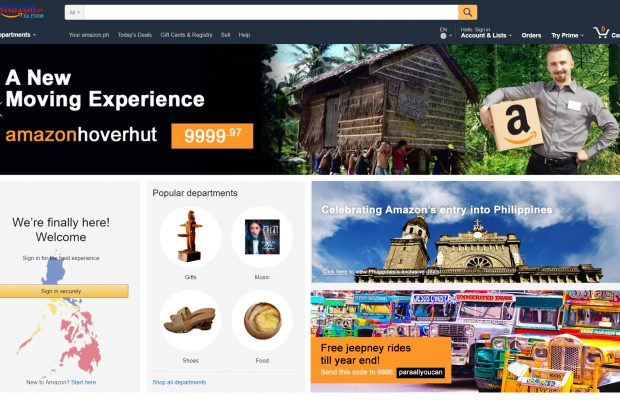
    Amazon with exclusive affiliate partner iPrice Philippines premieres the first screenshots of the all new and exciting online shopping platform: Amazon.ph. Slated to be launched late 2017, millions of local and international products will be made available to Filipinos with same-day delivery service throughout the nation.  Maintaining the ethos of Amazon, the new e-commerce platform in the Philippines will be guided by four principles: customer obsession rather than competitor focus, passion for invention, commitment to operational excellence, and long-term thinking.

    Partnering Amazon in this new endeavor is iPrice, a meta-search website in seven major countries in Southeast Asia as Amazon’s prime affiliate partner. With similar values and vision for ecommerce in Southeast Asia, iPrice’s partnership with Amazon will empower the Seattle based company with the needed marketing channels to aggressively market its products and services to the competitive ecommerce sector.

    Further details of Amazon’s affiliate partnership with iPrice will be revealed at the annual AWS Summit on 20th of April 2017 at the Marriott Hotel Grand Ballroom in Manila. Here is an exclusive screenshot of Amazon.ph.

    The Baguio Barrel Man

    Often seen as the souvenir of choice of most travelers, the Barrel Man offers more than just it’s barrel. Handcrafted from tropical wood unique only to the Philippines, the Barrel Man is a figure that is built of quality material and has the magical powers suited to relieve men of their physiological and psychological barriers.

    Amazon.ph and the Baguio Barrel Man was reviewed by test audiences prior to launch. It assisted in saving a marriage, and restoring one’s manhood.

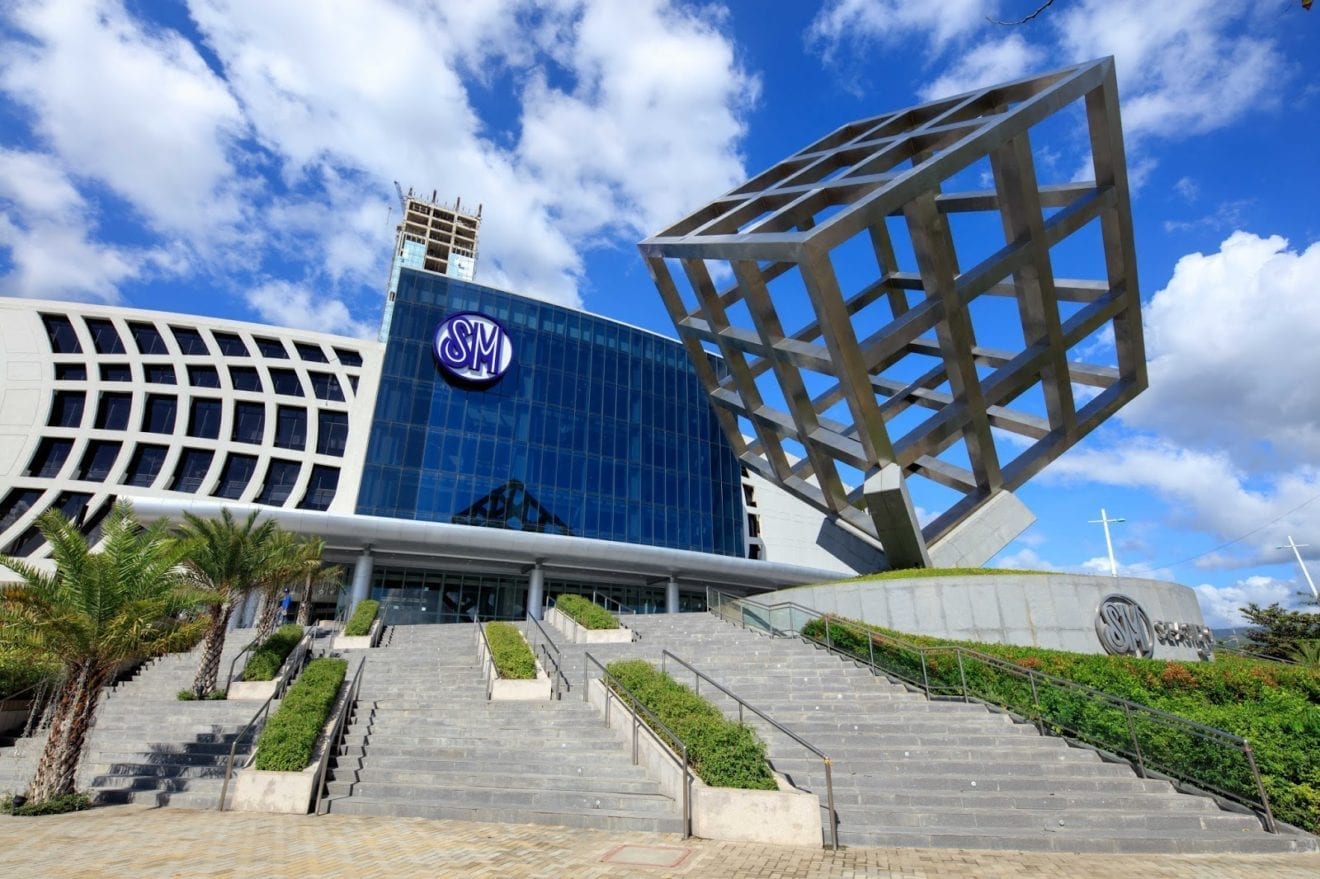
  • SM Supermalls teams with Grab

    SM Supermalls teams with Grab

    SM Supermalls has partnered with ride-hailing and multi-service mobile platform Grab in a special promotion.

    Grab

    The companies will offer 10,000 Grab coupons in Metro Manila and such key cities as Bacolod, Cebu, Davao and Iloilo. New users are offered free rides while existing Grab customers receive half-price rides.

    “Our collaboration with Grab marks not just a beginning of a bigger, long-term partnership, but also gives a glimpse of what our customers can expect in the coming months,” says SM Supermalls senior VP for marketing Jonjon San Agustin.

    Grab booths are available at 20 SM Supermalls nationwide, and the coupons are part of a campaign to reward shoppers. The SM Supermalls mobile app is free on Android and iPhone.

  • Zalora Philippines partners with Inquirer.net

    Zalora Philippines partners with Inquirer.net

    Online fashion store Zalora Philippines has signed a partnership with media site Inquirer.net with the aim of making online shopping more convenient.

    Zalora Group sells fashion and lifestyle products online in Brunei, Hong Kong, Indonesia, Malaysia, Singapore and Taiwan as well as The Philippines. Its partnership with the news site is a response to the growing Filipino digital lifestyle.

    The contract signing was attended by Zalora Philippines co-founder/CEO Paulo Campos III and Inquirer.net president Paolo Prieto and COO Gary Libby.

    Campos says that with the average Filipino spending eight hours a day online, half on desktop and half on mobile, the Philippines is the leading country in terms of time spent on social media and on the internet overall.

    He says 70 per cent of the population is 35 years or younger, with the median age being 23, and with the average Filipino connected all the time “that’s something very revolutionary”.

    He says it is a “cataclysmic shift” in consumer behavior and in the market in a good way.

    However, he sees the challenge in online shopping as removing frustration and disappointment such as unexpected delays on deliveries.

    Campos says that in most cases, Metro Manila online shoppers will receive their purchases within a day, with the average delivery time being 1.3 days. In other key cities like Bacolod, Cebu, Davao, Iloilo, Pampanga, Tacloban and Zamboanga it will take an average of 2.5 days for an item to be delivered, and an average of 3.5 days to one week for further-flung cities and remote areas.

    Zalora will next month add international brands such as Abercrombie and Fitch, Burton Menswear, Dorothy Perkins, Hollister and Topshop/Topman to its site.

  • PLDT, Globe launch cut-price call packages

    PLDT, Globe launch cut-price call packages

    Philippines operators PLDT and Globe Telecom have both cut mobile voice rates to as low as 1 peso ($0.02) per minute, in response to slumping voice usage and a regulator-encouraged cut in mobile termination rates last year.

    Globe and PLDT’s wireless division Smart have both introduced add-on packages for mobile subscribers offering a set allocation of calls for low rates.

    Globe has introduced an add-on pack for its higher-tier postpaid customers that costs 299 pesos for 300 minutes of calls to any network.

    Prepaid customers will be able to take advantage of a GoCall50 add-on pack providing 50 minutes of calls to any network valid for three days, while subscribers to Globe’s TM service can pay 5 pesos for 5 minutes of calls to any network for a day.

    Smart has meanwhile introduced a Call 50 promo providing 50 minutes of calls to any network valid for three days.

    Late last year, Globe and PLDT both agreed to cut voice interconnection rates by 16.7% to 4 pesos per minute for mobile calls and by 38% to 4 pesos per minute for mobile calls, in response to encouragement from regulator NTC. As part of the agreement to cut the mobile termination rate, the operators also committed to reduce rates for customers over time.

    Both operators have also been facing the common industry issue of subscribers continuing to substitute traditional voice calls with OTT messaging and VoIP usage, which has been contributing to a decline in voice revenue.

  • ​​Robinsons Store launches first​ ​Go Lokal! store in Robinsons Place Manila

    ​​Robinsons Store launches first​ ​Go Lokal! store in Robinsons Place Manila

    Robinsons Department Store, in partnership with the Department of Trade and Industry (DTI) opens today the first Go Lokal! store in Robinsons Place Manila.

    Robinsons Department Store, an affiliate of Robinsons Retail Holdings Inc., is the first mainstream outlet to launch Go Lokal!, a public-private collaboration between DTI and local retailer partners that aims to showcase modern and indigenous quality products crafted, designed, and created by innovative Philippine micro, small and medium enterprises (MSMEs).

    The Go Lokal! program has been designed to serve as incubation, marketing, and branding platform for the best of Philippine MSMEs products including next generation One Town One Product (OTOP) offerings. This new market access platform via a design-led concept store is set to revolutionize the way hard-to-find and artisanal Filipino products are sold in the local market, and will bring together a specially-curated line-up that ranges from food, apparel, accessories, home décor, gadgets and gift items. They can be found in consumer-frequented locations as a mainstream distribution channel for world-class Filipino products while offering value for money for targeted consumers and tourists.

    Trade Secretary Ramon Lopez said DTI is more than excited to open its first mainstream  Go Lokal! store with Robinsons Department Store as its dynamic partner in this effort of maximizing market access and providing exposure to our MSMEs. “Go Lokal! is truly a vibrant model for MSME development and inclusive business. We are happy that committed partners like Robinsons have taken on this challenge. We look forward to opening more outlets in their malls and department stores across the country,” Sec. Lopez said.

    Robina Gokongwei-Pe, President and COO of Robinsons Department Store, said that the program will benefit MSMEs because it’s a mainstream platform that brings them closer to a more diverse market and creates positive effects to the economy by encouraging entrepreneurship. “This partnership with DTI is Robinsons Department Store’s contribution to nation-building by providing our entrepreneurs an environment where they can be passionate about their businesses and prosper from their efforts, as we create opportunities for MSMEs to grow, succeed and make an impact to the retail industry,” said Gokongwei-Pe.

    Johnson Go, General Manager of Robinsons Department Store, said that Go Lokal! is Robinsons Department Store’s way of supporting Filipino entrepreneurs into their initial foray into more mainstream markets by making them more accessible to both local and foreign consumers. “The diverse product line of Go Lokal! brings together the best products that the Philippines has to offer which are world-class locally-made quality products by our MSMEs,” said Go.

    The DTI Secretary also said that aside from providing market access for MSME products, the Go Lokal! program is a platform for new entrepreneurs to test the marketability of their products without the fear of losing rental and commercial costs because their experience is free of charge

    Portion of Go Lokal! revenues will go to the various corporate social responsibility (CSR) projects of Robinsons Department Store including the government’s drug rehabilitation program.

    Robinsons Department Store, an affiliate of Robinsons Retail Holdings Inc., is the first mainstream outlet to launch Go Lokal!, a public-private collaboration between DTI and local retailer partners that aims to showcase modern and indigenous quality products crafted, designed, and created by innovative Philippine micro, small and medium enterprises (MSMEs). Launching the partnership recently were (l-r) Mr. Johnson Go, General Manager of Robinsons Department Store; DTI Bureau of Domestic Trade Promotion Director Rhodora Leaño; DTI Assistant Secretary for Industry Promotion Group Rosvi Gaetos, Secretary Ramon Lopez of the Department of Trade and Industry, Ms. Robina Gokongwei-Pe, President and COO of Robinsons Department Store; Mr. Irving Wu, Robinsons Malls Operations Director for Luzon and Ms. Maricar Reyes, celebrity endorser of Robinsons Department Store.


  • AirAsia ready to make Clark International Airport its operations center again

    AirAsia ready to make Clark International Airport its operations center again

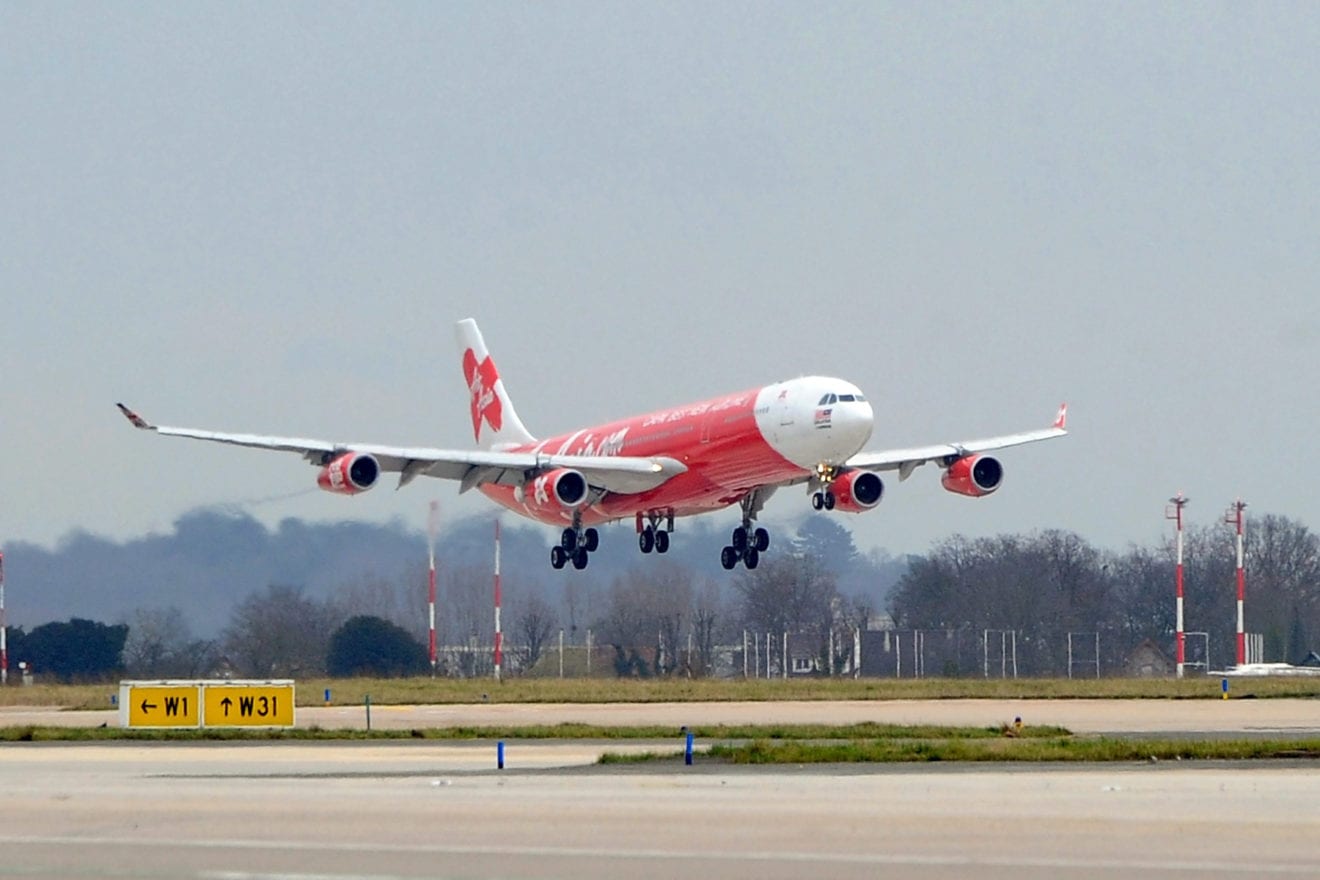
    Five years ago today, the Filipino subsidiary of Southeast Asia’s largest low-cost carrier graced the skies of the Clark International Airport with its signature red planes en route to the island of Kalibo, Aklan.

    A year after however, it decided to leave the north, and focus on the capital to support its then-newly acquired company’s dwindling operations.

    Now that its top line is stabilizing—thanks to years spent in increasing efficiencies, cost rationalizations and a management revamp—it is ready to go back to its birthplace, and once again help spur tourism and trade in the north.

    “We are thrilled to be painting Clark’s skies red again,” Philippines AirAsia CEO Dexter M. Comendador said during the inaugural flight of its Clark-Kalibo route on Monday. “We are now building Clark again.”

    He said his group, born in Clark in 2012, sees the airport as the only area left where it could expand its operations near Manila, whose main international gateway is riddled with slot constraints and air-traffic congestion.

    “AirAsia believes in Clark. We established our base of operations here, and launched commercial flights in 2012 with only two planes, and now, we have a fleet of 14 jets. We aim to expand and grow our operations here in the next five years,” Comendador said. “We can only expand here in Clark.” After launching thrice-weekly flights from Clark to Kalibo, the airline will also start flying to Davao from Clark on April 22.

    “AirAsia was with us in the past, but it decided to move to Manila in recent years. During its stay here, it contributed a lot in terms of passenger volume, specifically in 2013, when we posted a record of about 1.3 million passengers,” Clark International Airport Corp. President Alexander S. Cauguiran said. “I hope it could stay for good here at Clark. Hopefully, AirAsia will not only be flying domestic here, but also to major cities in Asia.”

    Comendador vowed to connect Clark to other major Philippine destinations, like Cebu and Puerto Princesa, when the time is ripe. The company will also launch international services to East Asia.

    “I will try to connect to our present international destinations, like Taipei, China and Korea,” he said. “We are growing the airport to prepare it as one of our central hubs.”

    Clark is seen as the immediate saving grace for the Ninoy Aquino International Airport, which has been operating at overcapacity for almost two years now.

    But local carriers have shied away from launching flights or expanding their operations in Clark due to the lack of full-service facilities, its distance from the capital and the dearth in mass transit going to Manila, among others.

    The government has programmed a P2.8-billion budget for the expansion of the airport, which will open its new terminal four years from now.

    Several groups have offered to develop Clark through unsolicited proposals.

    Claiming its P187-billion offer is “fully compliant” with the requirements of the build-operate-transfer law, the consortium of Filinvest Development Corp. and JG Summit Holdings Inc.’s proposal involves the modernization of the airport under a five-decade concession, and will start with an initial capacity for 8 million passengers per year.

    Its proposal, based on the Aeroport de Paris master plan prepared for Clark in 2015, also allows the airport to expand its terminals and runways to easily accommodate for traffic growth over the next 50 years.

    The P250-billion proposal of GMR-Megawide Cebu Airport Corp. involves the development of the airport in six phases, leading to a total annual passenger capacity of 100 million per year.

    Under a 50-year development plan, it aims to build two terminals and three runways, two of which will be independent in an 850,000-square-meter land. The plan also involves the construction of an integrated railway connection from Manila, similar to the one in Delhi, India.

    This unsolicited offer is at no cost to the government, will not require any subsidy, guarantee or mandatory movement of airlines from Naia to Clark.

    Instead, the proponent “committed to pay the government annually a share of the airport revenues over the concession period.”

    Metro Pacific Investments Corp. is also readying its own unsolicited proposal, even as it waits for a public tender to take place.

    The government wants to place contract to develop Clark under public bidding. It will be done through the Public-Private Partnership (PPP) scheme. The website of the agency, however, did not enumerate the specific details of the contract.

    Clark Civil Aviation Complex, located within the Clark Freeport Zone in Pampanga, covers an area of approximately 2,367 hectares with a 3,200-meter long runway and associated taxiways, aircraft parking apron, a passenger terminal building and related facilities. It has two runways in parallel configuration.

    The airport logged in a total of 6,205 international and domestic flights with 950,732 passengers for local and foreign routes in 2016.

    Although underutilized, Clark has a local catchment area with an estimated population of 23 million. It also serves passengers from Manila, and those with connecting flights from Cebu, Davao, and other local destinations.

  • Globe taps NuRAN for rural broadband trial

    Globe taps NuRAN for rural broadband trial

    The Philippines’ Globe Telecom has selected Canadian wireless broadband provider NuRAN Wireless to conduct the next phase of its trial rural connectivity program.

    Globe will use NuRAN’s equipment within 50 sites at various villages in across the Philippines. These sites will use NuRAN’s LiteCell 1.5 base stations, connected using a de-centralized GSM network topology.

    Globe will also be able to make use of the ecently-announced NuRAN Open Access (NOA) software suite, which includes the Community Cellular Manager (CCM) solution.

    Globe will be able to use this software to manage prepaid charging and forge business partnerships with local and regional organizations, NuRAN said.

    The agreement marks the next stage of a trial that commenced with the deployment of the same equipment at two sites in the Philippines in the fourth quarter of last year.

    During the same period, Globe also worked with NuRAN on a trial involving using TV white space spectrum with wireless backhaul. Both initiative form part of Globe’s goal of improving connectivity for remote or underserved regions of the Philippines.

    “We are proud to be partnering with Globe Telecom on this important initiative. The Philippines is an important market for NuRAN with a large rural and remote population desperate for connectivity,” NuRAN Wireless CEO Martin Bedard said.

    “This deployment further strengthens our relationship with Globe Telecom, the number one mobile brand in the Philippines.”

  • Cebu Pacific earned P9.8B in profits, up 122%, in 2016

    Cebu Pacific earned P9.8B in profits, up 122%, in 2016

    Budget carrier Cebu Pacific has vowed to increase inter island connectivity within the Philippines to stimulate trade and tourism within the country.

    Cebu Pacific Vice President for Corporate Affairs Paterno S. Mantaring said this commitment comes on the heels of the company registering a 122-percent increase in net income in 2016.

    A filing with the stock exchange showed Cebu Air Inc. booked P9.8 billion in profits last year, thanks to the strong demand for low-cost air travel and robust growth in ancillary revenues.

    Total revenues, including that of subsidiary Cebgo, rose by 9.6 percent to P61.9 billion, while expenses inched up by a mere 1 percent to P54.06 billion.

    “The year 2016 was a great year for Cebu Pacific, as we continue to enable every Juan to fly to more destinations around the Philippines and to key destinations in Asia, the Middle East, Australia and the US,” Mantaring said. “Cebu Pacific remains committed to further increase inter-island connectivity within the Philippines to promote trade and tourism and help more people connect with their families and friends all around the world, while consistently providing our trademark best-value fares.”

    In 2016 Cebu Pacific flew to 36 domestic and 30 international destinations through 102 routes and more than 2,820 flights weekly. It boosted its intra-regional network in the Visayas with flights from Cebu to Ormoc, Roxas and Calbayog.

    The airline also launched direct service between Kalibo and Incheon, Korea, as well as its first US destination, Guam. It also teamed up with some of the world’s leading low-cost carriers to form Value Alliance, the world’s largest budget-carrier alliance, which aims to provide greater value, connectivity and choice for travel throughout Southeast Asia, North Asia and Australia.

    In total, the airline flew 19.1 million passengers in 2016, up by 4.1 percent versus the 18.4 million passengers carried in 2015.

    The Gokongwei-led carrier capped 2016 with 57 aircraft, adding two brand-new ATR 72-600 aircraft in February 2017, to bring its current fleet to 59.

    For the rest of 2017, CEB expects to take delivery of one Airbus A330, two Airbus A321neo, and four more ATR 72-600; and delivering out three of its four Airbus A319 to end the year with 63 aircraft.

  • Philippines gov’t to sell $596M retail treasury bonds

    Philippines gov’t to sell $596M retail treasury bonds

    The Philippines plans to sell at least 30 billion pesos ($596 million) worth of three-year retail treasury bonds to provide small investors with safe investment options, the Bureau of Treasury said on Thursday.

    It would be the second retail bond issue under President Rodrigo Duterte’s nine-month-old government, which in September 2016 raised as much as 100 billion pesos from such offering.

    “We want more Filipinos to get into the habit of investing, and become more financially aware of how their money could work harder for them,” National Treasurer Rosalia de Leon said.

    Public offering runs from March 28 to April 6, with investors given an option to earn from a minimum investment of 5,000 pesos.

    The RTBs earn a fixed interest rate based on prevailing market rates with interest coupons paid quarterly.

    The treasury bureau has tapped First Metro Investment Corp and Land Bank of the Philippines as joint lead issue managers.

    BDO Capital & Investment Corp, BP Capital Corp, Development Bank of the Philippines, China Bank Capital Corp and SB Capital Corp are joint issue managers.

  • Ayala Malls the 30th offering Uber service

    Ayala Malls the 30th offering Uber service

    Ayala Malls has teamed up with ride-sharing service Uber to improve access to its newest mall, and may expand the service to the rest of its empire.

    Ayala 30th Uber

    Initially, Ayala Malls the 30th is teaming with carpool service UberHop, which offers fixed-rate ride shares for people heading in the same direction during rush hour.

    Ayala 30th Uber 1

    For a flat rate, people going to and coming from Ayala Malls the 30th in Ortigas will be linked to the business hubs of Makati City and Bonifacio Global City on weekdays.

    “The beauty of this is that it brings six to eight people together who would have otherwise taken their own cars from Makati and back, so that’s about six fewer cars on the road during rush hour,” says Uber Philippines communications head Cat Avelino.

    The test program may eventually lead to UberHop and other services being used by more Ayala malls.

    “Definitely we hope this will be the first of many more partnerships with Ayala. Ayala has more than 40 malls in Metro Manila and around the Philippines, so we’re definitely open to extending the benefit people get from ride-sharing,” says Avelino.

    The partnership ties in to Ayala’s Easy Ride project, which aims to give customers convenient access to various modes of public transport to and from its malls.

    “The real value-add of Uber is that it can direct where the drop-off and pick-up points are, and that really helps with the flow, the customer experience and our traffic,” says Ayala Malls the 30th GM Mariana Zobel de Ayala.

  • PLDT launches “Fibr city” in Cebu

    PLDT launches “Fibr city” in Cebu

    PLDT has ramped up its FTTH rollout with the launch of what it calls its first “Fibr City” in Cebu, which provides residents of Toledo City with speeds of up to 1Gbps.

    The initiative, named after PLDT’s Home Fibr branded FTTH service, has been conducted in collaboration with the Toledo City government.

    PLDT has invested $6 billion over the past ten years to roll out 150,000km of fiber infrastructure, and its FTTH services had a footprint of around 2.8 million premises by the end of last year.

    Last month, the operator announced plans to expand the reach of the network by around 80% this year, taking the total number of premises passed to around 4.4 million. The operator has also started adopting hybrid fiber technologies such as G.fast to boost data rates significantly over existing copper connections.

    By next year, PLDT aims to ensure that all its subscribers are accessing smart home services enabled by the fiber network.

    The company selected Toledo City to pioneer the Fibr City concept as part of its expansion plans in Central Philippines, the report states.

  • Philippines forges agri deals with Thailand in Duterte visit

    Philippines forges agri deals with Thailand in Duterte visit

    The Philippines on Monday signed agricultural deals with Thailand, three months before it scraps a quantitative restriction on rice imports under an agreement with the World Trade Organization (WTO).

    The agricultural agreement encompasses information exchange concerning best practices in irrigation, livestock and fisheries, and technology for soil and water conservation, said President Rodrigo Duterte in a joint statement with Thai Prime Minister Prayut Chan-o-cha.

    “The Philippines and Thailand have vibrant economic relations with a trade value of almost $8 billion in 2016. We have yet to reach the limit of our potentials. That is why we also recognize the importance of cooperation in agriculture…our agricultural sector should drive national growth,” he said.

    Thailand is one of the Philippines’ primary sources of imported rice. In December, the National Food Authority (NFA) said private traders would import 284,780 tons of rice from Thailand. This is in addition to 250,000 tons that the NFA bought in August last year from Vietnam and Thailand.

    Agriculture Secretary Emmanuel Pinol said last year that he would need 2 more years to strengthen Filipino rice farmers’ capacity to compete with their peers in Vietnam and Thailand.

    While cheaper imports would bring down retail costs of the country’s staple grain, it would pose a threat to Filipino farmers’ livelihoods, because production costs in those countries are cheaper and output more plentiful.

    The Philippines is set to host the Association of Southeast Asian Nations’ (ASEAN) Second Meeting of the Joint Agricultural Working Group in 2019.

    Aside from agriculture, the Philippines also forged agreements with Thailand regarding tourism, and the promotion of exchanges that aim to enhance their capacities for science and technology.

    The two countries also agreed to ensure security and stability in the region, and address issues particularly terrorism, sea piracy, and illegal trafficking of drugs and people.

    They also stressed the need to maintain peace and stability in the region, including the South China Sea.

    “We emphasize the need for the full and effective implementation of the Declaration of Conduct of Parties in the South China Sea, and express determination to complete the Framework of the Code of Conduct in 2017,” Duterte said.

    Duterte visited Myanmar on Sunday, before he flew to Thailand on Monday.

  • Henry Sy still Philippines’s richest man

    Henry Sy still Philippines’s richest man

    Business tycoon Henry Sy topped Forbes’ list of richest Filipinos, with a 2017 net worth of $12.7 billion. This is his 10th consecutive time to top the list.

    However, this is lower than his 2016 net worth of $13.7 billion.

    Sy is the 94th richest billionaire in the world. The global billionaires’ list released by Forbes magazine on Monday was topped by philantrophist Bill Gates with a net worth of $86.8 billion.

    The 92-year-old billionaire founded Shoe Mart in 1958 and has expanded his business to retail, banking, and property. Forbes said that SM Investments is now the largest retailer in the Philippines. Sy’s children are now running his businesses.

    John Gokongwei Jr. of conglomerate JG Summit also retained his spot at second place, with $5.8 billion net worth. The 90-year-old has interests in an airline, banking, food, hotels, power, chemicals, real estate, and telecommunications.

    Lucio Tan moved from last year’s fifth spot to the third spot with $3.7 billion net worth, down from $4.9 billion a year ago. The LT Group has interests in tobacco, spirits, banking, and property development.

    The youngest Filipino billionaire on the list is the man behind fastfood chain Mang Inasal, Edgar Sia. The 40-year-old businessman’s net worth this year is at $1 billion. He also owns a stake in DoubleDragon Properties.