Tag: Philippines

  • Cebu Pacific expected to mount more China flights

    Cebu Pacific expected to mount more China flights

    Cebu Pacific is expected to expand operations to China with the delivery of its ordered A321neo aircrafts that allow the budget carrier to open new routes and grow its capacity, the Center for Asia Pacific Aviation (CAPA) said in a recent report.

    The aviation think tank said the budget carrier has 47 aircraft on order, of which 32 are A321neos.

    “Cebu Pacific is particularly keen to use the A321neo to open new routes deeper into China,” CAPA said in its report, noting that the aircrafts will also support plans for its North Asia expansion.

    It said Cebu Pacific currently has a “small China operation,” consisting of only 17 weekly flights to four destinations.

    “However, it is keen to add new flights to China, both scheduled and charters, in line with expected further rapid growth in the China-Philippines market,” it added.

    CAPA said visitor numbers from China grew by approximately 20% in 2016, as China overtook Japan to become the country’s third largest source market for the Philippines.

    The think tank added that aside from China, Cebu Pacific is also considering opening a branch office in Japan to help support future capacity growth in both markets.

    “Cebu Pacific has expanded in Japan in recent years, adding three destinations for a total of four, and will likely use the A321neo to add capacity and new destinations,” it said in its report.

    CAPA said Japan is now Cebu Pacific’s third largest international market after Hong Kong and Singapore, while South Korea is its fourth largest international market.

    “It’s presence in Korea is surprisingly small given that South Korea is the Philippines largest source market for visitors,” the aviation think tank added.

    Cebu Pacific is looking to improve market share in South Korea with the A321neos adding to the expected capacity growth, CAPA said. The budget carrier already opened a branch office in Seoul in late 2016.

    CAPA noted that branch offices, which are “unusual,” for low cost carriers, should improve Cebu Pacific’s local distribution in international markets that consist mainly of inbound passengers.

    For this year, the think tank said Cebu Pacific “does not have the capacity to pursue significant growth in any of its international markets in 2017, but is putting in place the building blocks to support faster international growth once the A321neo arrives.”

    European plane-maker Airbus has committed to delivering three A321neos to the budget carrier in the fourth quarter, although some delays may push back the schedule.

    Cebu Pacific ended 2016 with a fleet of 57 aircraft — up only two from the beginning of the year. Cebu Pacific’s fleet was flat at 47 aircraft, while its turboprop subsidiary Cebgo expanded its fleet from eight to 10 aircraft.

    “The Cebu Pacific Group is planning once again to add only two aircraft in 2017, for a total of 59. The group plans to maintain the size of its narrowbody jet fleet at 39 aircraft as three more A319s are phased out and the first three A321neos are delivered. At the same time, an eighth A330 is being delivered and the turboprop fleet is expanding by one more aircraft for a total of 11,” CAPA said in its report.

    Cebu Pacific currently offers flights to nine destinations in China — Beijing, Guangzhou, Haikou, Lijiang, Ningbo, Shanghai, Shenzhen, Xiamen, Xian; four in Japan — Fukuoka, Nagoya, Osaka, and Tokyo; and flights to Incheon and Busan in South Korea, according to its Web site.

    Cebu Air, the listed operator of Cebu Pacific and Cebgo, saw its net income last year surge by 122% annually to P9.8 billion propelled by higher passenger, cargo and ancillary revenues.

    It flew 19.1 million passengers, up 4.1% from the 18.4 million passengers ferried in 2015.

  • Swine sector in the Philippines set to grow

    Swine sector in the Philippines set to grow

    The Philippines is undeniably one of the more interesting countries in Asia. With over a 100 million souls and a rapidly developing economy, there is a constant demand for pig meat and pork. What are the opportunities for the Philippines?

    The swine industry of the Philippines is one where jobs and economic opportunity seem guaranteed for the next decade for those who want to commit to a career or investment in modern pig production and processing. Demand is growing, in line with population and income (and tourism), and meat consumption is expected to grow in parallel. And, on the supply side, there is a deficit in pork and pig meat for the processing industry at the moment. The industry is a ‘hot zone’ for an expanding and growing supply chain from farm to fork (genetics, AI, feed, animal health, and equipment) and for foreign suppliers and importers/processors of pork.

    Second largest economic activity

    The swine sector is the second largest economic activity in the Philippines’ agricultural sector. Domestic pig production has been rising in both backyard and modern commercial farms. In 2016 (July 1), the total hog inventory in the Philippines was reported to be almost 12.5 million head – an increase of 1.4% compared with 2015.

    Backyard farms accounted for 64% of these animals and commercial farms made up 36% of the total hog population. Approximately 35% of the total breeding herd (1.68 million sows or 560,000 head) were on commercial farms (July 1 census 2016).

    The total breeding herd increased by 2.6% in 2016 and by 5.3% in 2015. The key regions for pig production are Central Luzon and Calabarzon which, together, account for almost two thirds of all commercial pig production. This proportion falls to around 30% of all pigs when backyard pig production is considered since these smaller units are spread more evenly around the Philippines. Although a lot of domestic pig meat is sold through wet markets there is a growing and vibrant meat processing sector which serves foodservice, retail and export customers. The Philippines’ Association of Meat Processors (Pampi) has around 50 company-members and claims that they account for more than P300 billion in revenues (US$ 6 billion) and provide jobs to more than 300,000 Filipinos.

    Investments are evident

    Investment in new production and processing capacity is evident. A recent example of this is the announcements by PIC of a new sire and dam line nucleus facility on the main island of Luzon, Hormel/San Miguel’s US$ 1.2 billion investment in doubling its meat processing capacity (to 120,000 tonnes) at General Trias, Cavite and the Charoen Pokphand Group’s (CP Group) plan to invest around US$ 2 billion on swine and poultry production in the Philippines in the next 5 years.

    However, it’s not all plain sailing since the domestic swine industry has a record of low productivity and has only recently begun expanding albeit the majority of local producers (mainly backyard and small farmers) are unlikely to be part of ‘commercialisation’. A particular challenge for the Philippines is the high feed and energy prices that are prevalent: these affect all producers and contribute to a relatively high cost of production for the domestic industry (estimated at US$ 1.80 per kg).

    San Miguel is one of the country’s largest conglomerates and meatpackers. The company aims to double its processing capacity in General Trias province. Photo: Vincent ter Beek

    Although the Philippines has some significant export markets (mainly Middle East) pig meat imports have grown to meet these export customers’ needs (up by circa 12% from the EU in 2016) and this may put some parts of the local supply chain under significant cost pressure in the future. The meat processing sector complains that locally produced raw pig meat does not meet its quality or presentation requirements and those imports of suitable pig meat are the only way that it can satisfy its export and domestic customers and this may be the main reason why new investments in integrated production and processing capacity are being seen.

    Reports of corruption and irregularities in customs processing are not uncommon as are complaints about unwieldy and bureaucratic SPS procedures and this may also be encouraging domestic investment. Lastly, the ever present threat of typhoons can seriously disrupt local production and this aspect of the weather’s behaviour affects decisions on location for new capacity.

    Hog Industry Roadmap

    Under the auspices of the Bureau of Animal Industry (BAI) the swine industry’s supply chain has signed up to a ‘Hog Industry Roadmap’ which describes the major challenges facing the domestic industry and the way to meet them over the next decade.

    This 26 page ‘action plan’ is most interesting and has been put together after consultations with commercial businesses and, if carried through, signals significant changes for local producers, their supply chain, and the value chain for pig meat in the Philippines. This plan envisages a growth of per capita consumption of pork in the Philippines from 14.9 kg/capita in 2015 to 16.4 kg/capita in 2017. This is relatively modest but still implies a growth of +30% in the domestic herd. The technical KPIs for production are also targets for improvement in the roadmap.

    The number of pigs sold/sow/year is required to increase from 18.8 in 2015 to 30 in 2027, and the FCR needs to shrink from 3.7 to 2.27 in the next decade. A final, ambitious, target worth mentioning is to get carcass meat production per sow per year up from 1.7578 tonnes to 3.5445 tonnes in ten years. That’s an improvement of just over 100%. It’s easy to see why these target figures imply that the Philippines is a ‘hot zone’ for investments in modern pig production.

    The Philippines at a glance

    The Philippine archipelago is made up of 7,107 islands. Together, the total area is 298,170 km2, which makes the country slightly smaller than Poland or Italy. The country’s capital Manila has about 13 million inhabitants; the economy’s growth rate is around 6% per year (2011-2015). The Philippines has a tropical marine climate with a northeast monsoon from November to April and a southwest monsoon between May and October. The country is usually affected by 15 typhoons and directly struck by five to six cyclonic storms each year. About 41% of the country is used for agriculture. Currently, the Philippines has a population of roughly 101 million, which grows 1.6% per year.

    Big challenges

    In conclusion, the Philippines is, classically, facing some big challenges if it wants to supply itself with more pig meat but it’s also clear that this is a country where opportunities beckon – and where the local industry has ambitions.

    These challenges and the potential to grow have not gone unnoticed by the local supply chain. The investment decisions of the CP Group and others noted earlier are a sign that moves are afoot to develop the pig and pig meat industry but there are other straws in the wind.

    A recent announcement of new power supply agreements between Aboitz Power Corporation and four of the largest members of Pampi; Foodsphere (CDO), Virginia Food, LIIP Food Processors (Century Pacific) and GenOSI (McDonald’s) is more evidence that wheels are turning and investments are being made. These major businesses need reliable and competitive power supplies to support their growing meat processing operations.

    That Hog Industry Roadmap for 2017-2027 has an ambitious vision – a sustainable and globally-competitive hog industry by the year 2027. The Philippines is one country where we can expect plenty of action for the swine industry in the years ahead.

  • Appetite in Europe, Philippines may boost Vietnam’s 2017 rice exports

    Appetite in Europe, Philippines may boost Vietnam’s 2017 rice exports

    Vietnam’s global rice export ranking this year is expected to remain unchanged, trailing behind Thailand and India. Preferential import taxes in Eastern European countries and an extended rice supply agreement with the Philippines may help boost Vietnam’s rice exports this year by around 9 percent to 6 million tons, a U.S. Department of Agriculture attache said.

    The 2017 forecast, up from the 5.5 million tons shipped last year, leaves Vietnam’s global rice export ranking unchanged in third place, trailing Thailand and India, according to USDA projections.

    Vietnam can benefit from preferential import duties in Russia, Belarus, Kazakhstan, Armenia and Kyrgyzstan after the Vietnam-Eurasia Economic Union Free Trade Agreement came into effect in October 2016, the USDA attache said in a report released on Tuesday.

    It also cited a rice trade agreement renewed in January, under which Vietnam can supply up to 1.5 million tons annually to the Philippines from 2017-2018.

    Rice exports to China, the biggest buyer of Vietnamese rice, are also expected to stay strong, now that China has approved 22 Vietnamese export firms, the report said.

    In a separate report released on Wednesday, the U.N. Food and Agriculture Organization also forecast Vietnam’s rice exports this year to jump 11 percent from 2016 to 6.9 million tons, citing demand from the Philippines and China.

    Exports slow

    Despite a positive outlook, Vietnamese export businesses said rice sales to eastern European countries have not been made easier because countries such as Russia often require high-quality grain.

    “There may be preferential import duties, but the cost to process rice and keep it pest-free would be higher than paying the import tariffs,” a Ho Chi Minh City-based exporter told VnExpress International.

    Asked about the Philippines, he said there were mixed reports, with some saying Manila was going to buy soon, while others said the National Food Authority, the country’s logistics agency in charge of importing rice, has not finalized any purchasing plans.

    Vietnam’s first-quarter rice exports fell 17.5 percent from a year ago to 1.29 million tons, extending a decline seen since May 2016, even though demand from China, Singapore and the Ivory Coast pushed March shipments alone to 550,700 tons, the highest monthly figure in a year, Vietnam Customs data shows.

    China is projected to import 5 million tons of rice in the 2016/2017 marketing year ending June 2017, up 4 percent from the previous year, a USDA report said in January.

    China bought 1.74 million tons of Vietnamese rice in 2016, down 17.5 percent from the previous year, based on customs data. The statistics did not include an estimated 1.5 million tons sold across the land border, according to a Vietnamese industry analyst.

    Shipments to the Philippines last year plunged 65 percent from 2015 to 396,000 tons, based on customs data.

    Vietnam is projected to export around 5 million tons this year, the Vietnam Food Association has said. Last year, the Southeast Asian nation shipped 4.8 million tons, the lowest since 2008, due to rising competition and growing production in key regional buyers, as well as higher stocks in Africa.

    In 2016, rice slipped to the third-biggest earner among Vietnam’s agro-exports, after seafood and fruit.

    Thinner stocks

    With rising exports expected in 2017, Vietnam’s stocks could drop to 1 million tons at the year-end from 1.42 million tons last year, the USDA report said, adding that output and domestic consumption would remain steady.

    Vietnam’s 2017 milled rice output is projected at 28.1 million tons, 0.7 percent up from last year due to higher yields, and domestic consumption and residual would edge up 0.4 percent to a combined 22.8 million tons.

    While per capita consumption has been easing thanks to rising incomes, there is “higher use of rice in home-made animal and aquaculture-feeds, and growth in the food processing sector, especially in the beer and rice wine industries,” the report said.

  • Rustan’s Department Store wins global award

    Rustan’s Department Store wins global award

    A global award for retail excellence has been won by Rustan’s Department Store.

    It took the title in the latest IHA Global Innovation Awards (GIA), announced at the International Home + Housewares Show in Chicago.

    IHA, the global sponsor and organiser of the program, announced 28 winning home and housewares retailers from 27 countries.

    Launched in 2000 to foster innovation and excellence in home and housewares retailing internationally, GIA has so far recognised more than 370 retailers from 45 countries.

    Rustan’s, the Philippines winner for the second time, was founded in 1952 by husband-and-wife team Bienvenido R. Tantoco Sr and the late Gliceria R. Tantoco as a home-based business in their living room. It became the only luxury department store chain in the Philippines. Today, Zenaida R. Tantoco is the second-generation leader of the family-owned business.

    20160722_105958-X2

    The GIA competition has two tiers, national and global, to recognise excellence in several business categories: overall mission statement, vision and strategy; store design and layout; visual merchandising, displays and window displays; marketing, advertising and promotions; customer service and staff training; and innovation.

    _MG_3766-XL

    20160723_153752-X2

    National GIA winners are invited to the annual Chicago show where the global GIA jury chooses up to five global honorees, as well as the winners of the Martin M. Pegler Award for Excellence in Visual Merchandising, and the GIA Digital Commerce Award for Excellence in Online Retailing. The jury comprises four experts representing Asia, Europe and the Americas, plus a rotating international group of co-sponsoring trade-publication editors.

    dav

    The national winners are featured in a special showcase in the Hall of Global Innovation, featuring visuals of their award-winning store design and branding ideas, visual merchandising and innovative displays.

    GIA is part of a larger education initiative that includes seminars by retail experts, exposure in international housewares publications and educational sessions at events in the sponsors’ home countries.

  • Cebu Pacific to Strengthen Domestic Network with Four New Routes

    Cebu Pacific to Strengthen Domestic Network with Four New Routes

    Cebu Pacific is to strengthen its domestic network with four new routes to and from its Clark and Cebu hubs. Starting 15 May 2017, Cebu Pacific’s wholly owned subsidiary, Cebgo, will be flying daily between Clark and Caticlan (Boracay); three times weekly (Monday, Wednesday, and Friday) between Clark and Busuanga; and three times weekly (Monday, Wednesday, and Friday) between Cebu and Busuanga.

    Cebgo will also begin flying between Cebu and Cotabato four times weekly (Tuesday, Thursday, Saturday, and Sunday) from 16 May 2017.

    “We believe that by opening these new routes, we are enabling more residents from Central and even North Luzon to travel to Palawan and Boracay – two of the world’s best islands, without having to make the trip to Metro Manila to catch their flights,” said Alexander Lao, Cebgo President and CEO. “Even guests from the Visayas who would like to explore Northern Palawan have to fly via Manila to get there. With a direct Cebu-Busuanga route, the islands of Coron and Culion are easier to get to. Aside from boosting domestic tourism, our new routes will also enhance trade and investment as we also make available our cargo services.”

    Aside from Cebu and Clark, Cebu Pacific also operates flights out of four other strategically placed hubs in the Philippines: Manila, Davao, Kalibo, and Iloilo. The airline’s extensive network covers over 100 routes and 66 destinations, spanning Asia, Australia, the Middle East and USA.

  • Manila Water to submit scaled-up proposals in projects in both Myanmar and Indonesia

    Manila Water to submit scaled-up proposals in projects in both Myanmar and Indonesia

    Manila Water the water concessionaire for the East Zone of Metro Manila, said it would submit scaled-up proposals within the third quarter of the year for possible water concessions in Myanmar and Indonesia following the completion of its pilot projects.

    In a news briefing after the firm’s annual stockholders’ meeting, the company’s Chief Operating Officer for New Business Operations Virgilio Rivera Jr. said these proposals will be for Yangon City in Myanmar and Bandung City in Indonesia.

    Rivera said the company submitted their report for the successful pilot project that drastically reduces the nonrevenue water in Yangon and expect to complete a similar pilot project in Bandung City, the capital of West Java.

    “With the completion of these pilot projects, we have shown them our best practices and are now ready to propose a scaled-up version,” Rivera said.

    The company’s new President and CEO Ferdinand de la Cruz said it is ready to take on much bigger projects in these cities to the extent of a full-scale water concession like what they have in the East Service Zone of Metro Manila. De la Cruz said the company’s expansion into countries in Southeast Asia will contribute to their goal of achieving a net income of P11.5 billion by 2020 and that half of this should come from businesses other than its Metro Manila concession, currently its single-biggest revenue generator.

    Rivera said the company intends to do more pilot projects in other parts of the Philippines and Southeast Asia as local government units and water districts are more receptive to tapping Manila Water based on its Metro Manila experience.

    In Yangon it partnered with Mitsubishi Corp. to adopt two district metering areas located in South Okkalapa and Insein.

    By the end of 2016, nonrevenue levels in both townships dropped to 14 percent from 54 percent.

    For Bandung, Indonesia’s fourth-largest city, a population of 2.4 million, the company has reduced non-revenue water from a high of 59 percent in September last year to 23 percent in just three months.

    Inc., Rivera said they have also been tapped by SM Development Corp. for five residential projects and will be signing up for five more by early next year.

  • The Philippines’ first budget airlines is counting on domestic demand

    The Philippines’ first budget airlines is counting on domestic demand

    Cebu Pacific is set to achieve record results for the last financial year, said Lance Gokongwei, president and chief executive of the Philippines’ first budget airline.

    “We have about 58 to 60 percent of the domestic market now … And naturally, we benefited from lower oil prices, so we did very well last year,” Gokongwei told.

    Most of those record profits will be re-invested into acquiring planes with higher fuel efficiency, which will in turn result in more competitive airfares for Cebu Pacific customers, Gokongwei added.

    The budget airline is part of JG Summit Holdings, the second largest conglomerate in the Philippines which began as a simple corn starch plant. As president and COO of conglomerate JG Summit Holdings, Gokongwei also holds various leadership roles in the JG Summit’s fast-moving consumer goods and property arms.

    As premium airlines in the region run into turbulence, Cebu Pacific is going all in with a twofold strategy aimed at improving competitiveness. The first of those strategies involves working around the limited aviation infrastructure in the Philippines, which together with an uptick in air travel demand, has led to congestion.

    “We have a limited slot situation in Manila. The airport there is quite slot-limited so our strategy is to up-gauge the existing slots we have by putting in larger aircraft,” Gokongwei said.

    Cebu Pacific will be ramping up productivity by replacing its existing Airbus 319 and 320 models with the Airbus 321neo. The 321 model has 230 seats compared to the existing 180 seats onboard the Airbus 320. The airline has committed $4 billion to a fleet upgrading program that would see it acquiring 46 new planes between now and 2021.

    The airline’s second strategy involves developing and investing in 5 additional hubs outside Manila, including Cebu, Davao and Ilo Ilo. Smaller aircraft will be used to provide direct access along those routes, Gokongwei said.

    Giving Cebu Pacific an additional boost could be the Philippine President Rodrigo Duterte’s plans to ramp up infrastructure spending. Gokongwei said there are plans to “build out the 5 airports outside of Manila.”

    “Before, travelling by air was considered something only the elite did and now, everyone in the Philippines has access to fly through democratized travel,” Gokongwei said.

  • Cebu Pacific links up with KLM AFI to service expanding fleet

    Cebu Pacific links up with KLM AFI to service expanding fleet

    Gokongwei-led budget airline Cebu Pacific (CEB) has chosen Air France Industries KLM Engineering and Maintenance (AFI KLM E&M) to provide maintenance support for its expected new fleet of Airbus A320s .

    “This is our first agreement with Cebu Pacific and also our first component support contract in the strategic Philippines market,” said Gery Mortreux, Executive Vice President of AFI KLM E&M in a statement released.

    The selection of AFI KLM E&M came following a call for tenders by CEB in September last year for the carrier’s expanding fleet of Airbus passenger jets .

    The long-term contract covers a fleet of over 40 Airbus A320-family aircraft, and encompasses full component support and solutions, including repairs and local pool access to maximize aircraft availability for both CEB’s A320s and its future A321neos.

    The A321 neo (new engine option) is a variant of the A320 that features a more efficient engine and more aerodynamic refinements.

    CEB currently has a fleet of 59 aircraft, comprised of 4 Airbus A319s, 36 Airbus A320s, 7 Airbus A330s, 8 ATR 72-500, and 4 ATR 72-600 aircraft. The average age of its fleet currently stands at 4.94 years.

    The airline also expects to take delivery of 45 brand-new aircraft as part of its fleet renewal program composed of one brand-new Airbus A330, 32 Airbus A321neos, and 12 ATR 72-600s

    All told, the new aircraft will bring the CEB fleet to 85 by 2021.

    CEB’s local rival, flag carrier Philippine Airlines (PAL), is also in the process of upgrading its fleet headlined by two new Boeing 777–300ERs set to arrive in December 2017 and January 2018, the airline announced over the weekend.

    Along with that, it is also expecting the arrival of the Q400 Next Generation turboprops for domestic flights starting in July 2017, and the first of 6 new A350-900s expected to arrive in 2018.

  • IPC, 1-Net plan interconnected data center network

    IPC, 1-Net plan interconnected data center network

    Philippines cloud services and data center provider IPC (IP Converge Data Services) has teamed up with 1-Net in Singapore to provide its customers with an interconnected data center network.

    This collaboration enables both organization to extend their data center capacity for faster access and deployment of customers in the countries.

    IPC and 1-Net are both data center providers who operate carrier-neutral and telco-grade internet data centers in Philippines and Singapore respectively.

    This strategic partnership will strengthen the data center services of both providers, ensuring that customers’ data is securely stored. This will also enable enterprises to run mission-critical systems in our facilities while they grow their businesses in the two countries.

    The partnership will enable both IPC and 1-Net to deploy customers in both Philippines and Singapore with a single contract, allowing quicker deployment without the need to renegotiate service level agreements and contracts.

    “Our partnership with 1-Net virtually expands the data center footprint of both companies. Gaining access to data center facilities in Singapore enables our enterprise customers to extend their network into the more mature market in Singapore, and likewise offers the same benefit to regional players present in Singapore who are looking to expand into our bustling Philippines economy for business expansion,” said IPC Chief Executive Officer Reynaldo R. Huergas.

  • Cebu Pacific’s Dubai route surges ahead as profit doubles

    Cebu Pacific’s Dubai route surges ahead as profit doubles

    Cebu Pacific Air boosted passenger numbers between Dubai and Manila last year as profits more than doubled, overcoming overcapacity in the global aviation sector.

    The Philippine low-cost carrier said overall passenger numbers between Dubai and Manila rose by 8 per cent to more than 252,000.

    That beat overall passenger growth at the airline, which flew a total of 19.1 million customers, up by 4.1 per cent on a year earlier.

    The airline reported profit of 9.8 billion Philippine pesos (Dh725.4 million) – an increase of 122 per cent on a year earlier. Growth in revenue from baggage fees, on-board meals and merchandise helped to drive profits higher, it said.

    Total revenue, which includes cargo services, jumped by 9.6 per cent to 61.9bn pesos.

    In 2016, Cebu Pacific flew to 36 domestic and 30 international destinations through 102 routes.

  • Cebu Pacific posts P9.8bn net income in 2016

    Cebu Pacific posts P9.8bn net income in 2016

    Cebu Pacific Air (CEB) posted a net income of P9.8bn in 2016, up 122% year-on-year, on the back of the strong demand for low-cost air travel and robust growth in ancillary revenues, which include baggage fees, on-board meals, and merchandise.

    Total revenues, which include CEB cargo services and wholly-owned subsidiary Cebgo, jumped 9.6% to P61.9bn, as passenger revenues surged 9.2% to P46.6bn. For the full year, CEB flew 19.1mn passengers, up 4.1% versus the 18.4mn passengers carried in 2015.
    “2016 was a great year for CEB as we continue to enable ‘every Juan’ to fly to more destinations around the Philippines and to key destinations in Asia, the Middle East, Australia, and the US.

    “CEB remains committed to further increasing inter-island connectivity within the Philippines to promote trade and tourism and help more people connect with their families and friends all around the world, while consistently providing our trademark best value fares,” said lawyer JR Mantaring, vice-president for Corporate Affairs of Cebu Pacific.

    In 2016, CEB flew to 36 domestic and 30 international destinations through 102 routes and more than 2,820 flights weekly. CEB boosted its intra-regional network in the Visayas with flights from Cebu to Ormoc, Roxas and Calbayog. The airline also launched direct service between Kalibo and Incheon, as well as its first US destination, Guam.

    CEB also teamed-up with some of the world’s leading Low Cost Carriers (LCC) to form Value Alliance, the world’s largest LCC Alliance, which aims to provide greater value, connectivity and choice for travel throughout Southeast Asia, North Asia, and Australia. CEB also opened a branch office in South Korea to boost promotional efforts in the Korean market.

    CEB capped 2016 with 57 aircraft, adding two brand-new ATR 72-600 aircraft in February 2017, to bring its current fleet to 59. For the rest of 2017, CEB expects to take delivery of one Airbus A330, two Airbus A321neo, and four more ATR 72-600, and delivering out three of its four Airbus A319 to end the year with 63 aircraft. CEB continues to have one of the youngest aircraft fleets in the world with an average age of 4.91 years.

  • Philippine Seven returns 16 per cent profit growth

    Philippine Seven returns 16 per cent profit growth

    Convenience store group Philippine Seven (PSC) had 16.6 per cent growth in net profit last year to reach P1.18 billion (US$23.5 million).

    Its figures were boosted by store openings and “modest” growth in same-store sales, says the 7-Eleven licensee.
    Its system-wide sales grew 23.2 per cent to P31.8 billion, attributed to store growth alongside a 1.2 per cent increase in same-store sales. The store count by year end reached 1995, up 393 outlets or 24.5 per cent from the previous year.

    There were 1633 7-Eleven stores in Luzon, 808 of them in Metro Manila, with 255 in Visayas and 107 in Mindanao. Franchisees control 55 per cent of stores, with the balance owned by the company.

    PSC says its spending on capacity building, such as establishing distribution centers and regional headquarters, is starting to produce results.

    “We aim to further expand our product offering, remodel stores and implement our market-development plan over the next five years,” says the company.

    PSC’s average net margin eased to 4.1 per cent last year from 4.5 per cent in 2015. For the fourth quarter alone last year, net margin stood at 7 per cent, down from 7.4 per cent for the same period in the previous year.

    For the quarter alone, net profit increased by 8 per cent to P532.1 million while system-wide sales ballooned by 20 per cent to P8.75 billion.

    This year PSC has budgeted capital expenditure of at least P3.5 billion to support its store expansion strategy.

  • Cebu Pacific launches four new routes in Clark, Cebu

    Cebu Pacific launches four new routes in Clark, Cebu

    Cebu Pacific (CEB) is set to launch four new routes from Clark International Airport and Mactan Cebu International Airport. This is in line with the airlines program to strengthen its domestic route network geared towards making inter-island travel more accessible to residents outside Metro Manila. Starting this May 15, Cebu Pacific’s wholly-owned subsidiary, Cebgo, will be flying daily between Clark and Caticlan (Boracay) three times weekly on Monday, Wednesday, and Friday between Clark and Busuanga,and three times weekly on Monday, Wednesday, and Friday between Cebu and Busuanga.

    Cebgo will also begin flying between Cebu and Cotabato four times weekly, on Tuesday, Thursday, Saturday, and Sunday on May 16, 2017. “We believe that by opening these new routes, we are enabling more residents from Central and even North Luzon to travel to Palawan and Boracay—two of the world’s best islands, without having to make the trip to Metro Manila to catch their flights. Even guests from the Visayas who would like to explore Northern Palawan have to fly via Manila to get there. With a direct Cebu-Busuanga route, the islands of Coron and Culion are easier to get to.

    Aside from boosting domestic tourism, our new routes will also enhance trade and investment as we also make available our cargo services,” Alexander Lao, Cebgo president and chief executive officer, said. CEB is launching the four flights with an introductory, all-in seat sale of P599 from April 6 to April 9, 2017, or until seats last. Travel period is from May 15 to November 30, 2017.

    “CEB has remained true to its commitment of making air travel safe, affordable, reliable, and fun-filled for every juan. Rest assured, we will continue expanding our network to enable even more of our kababayans to travel with our trademark lowest fares, not only within the Philippines, but also to international destinations,” added Lao. Aside from Cebu and Clark, CEB also operates flights out of four other strategically placed hubs in Manila, Davao, Kalibo, and Iloilo. The airline’s extensive network covers over 100 routes and 66 destinations, spanning Asia, Australia, the Middle East, and United States of America.

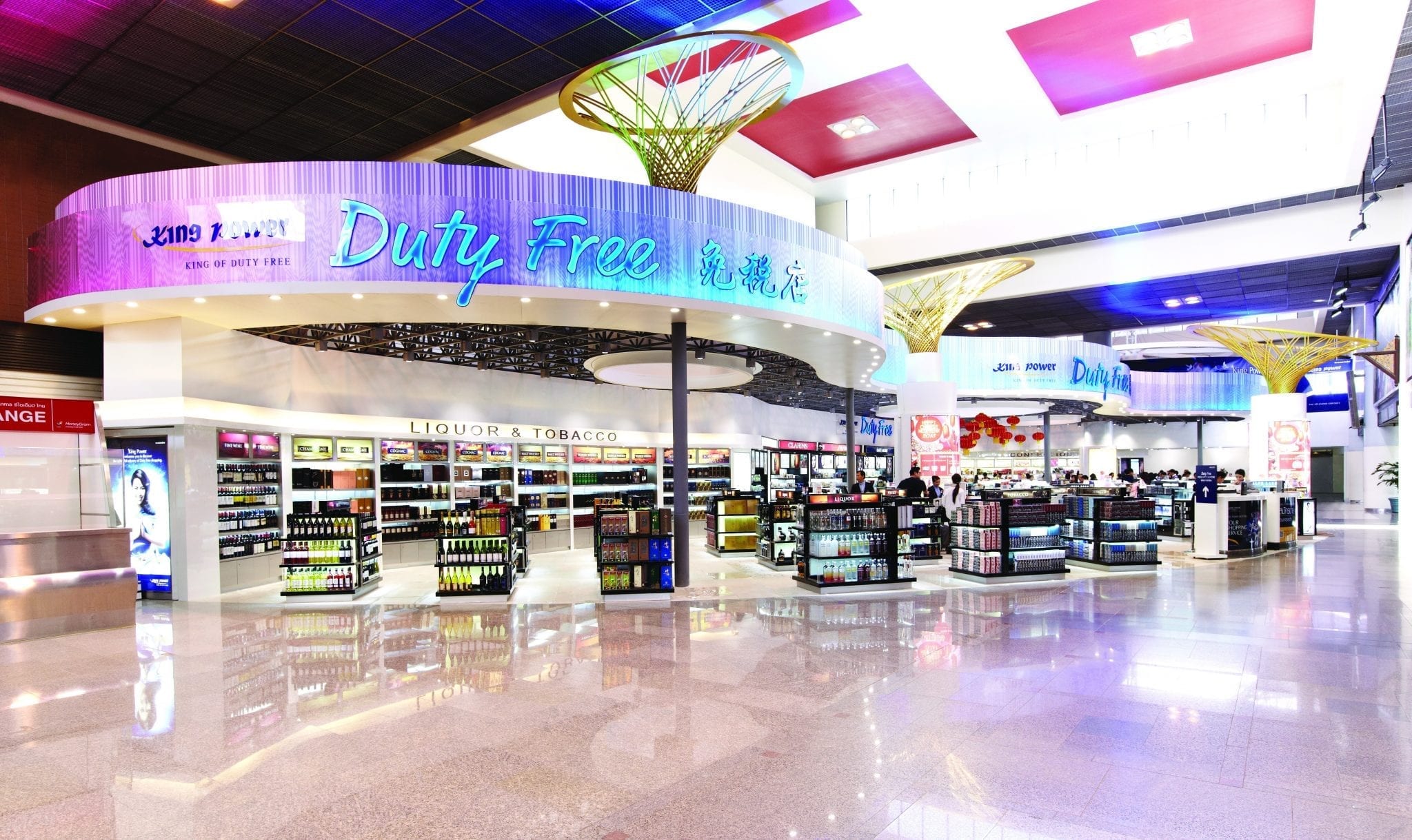
  • King Power Group plans THB10 billion expansion

    King Power Group plans THB10 billion expansion

    Thai duty-free giant King Power Group plans to spend THB10 billion (US$290.4 million) for business expansion over the next five years.

    CEO Aiyawatt Srivaddhanaprabha says the budget will be used to open five branches in Thailand and overseas, bringing its total to 14 by 2021. The stores are planned for downtown in major tourist destinations, with Chiang Mai one location being considered.

    The group will also join the bidding for a duty-free shop concession at U-Tapao International Airport, which serves Pattaya and Rayong.

    King Power is also studying opportunities to open and manage duty-free shops at such Asean airports as Myanmar and the Philippines.

    “King Power is set to become a top-five duty-free chain within five years,” says Srivaddhanaprabha. “Expansion both overseas and domestically will help grow our sales by 20 per cent to reach 130 to 140 billion baht in five years, on a par with leading duty-free brands in the US.”

    The company is the world’s seventh-largest duty-free chain, with its sales of THB75 billion last year missing its target by THB11 billion because of weak spending by Thai tourists and a drop in Chinese tourists. Tourists from China, Thailand and other Asean countries contributed about 75 per cent of its total sales last year, and the group is aiming for sales of THB92 billion this year.

    “Chinese tourists have rebounded, but are not back to normal yet,” says Srivaddhanaprabha.

    King Power will allocate THB400-500 million to promote its business this year, and has already pegged THB100 million to place its logo on three Thai AirAsia (TAA) jets and put advertising inside more than 40 TAA aircraft. The group hopes the tactic will raise the number of shoppers at its branches by 20 per cent this year.

    Meanwhile, King Power is ready to bid for a new licence to run a duty-free shop at Bangkok’s Suvarnabhumi airport when its present licence expires in 2020.

    It will also allocate about THB2.5 billion to renovate its Rangnam branch in Bangkok, which will be closed for renovation from next month.

  • Zalora transforms e-commerce with regional e-fulfillment hub

    Zalora transforms e-commerce with regional e-fulfillment hub

    ZALORA, Asia’s Online Fashion Destination, is pleased to announce the inauguration of its new Regional e-Fulfillment Hub located in Selangor, Malaysia. Covering a total area of 470,000 square feet – approximately the size of nine FIFA football fields – and split across five levels, the e-Fulfillment Hub plays a crucial role in fulfilling thousands of orders per day and facilitating the movement of fashion goods 24/7 across eight markets: Singapore, Malaysia, Brunei, Hong Kong, Macau, Taiwan, Indonesia and Philippines.

    ZALORA gives consumers access to thousands of local and international brands. To ensure the highest level of delivery experience for consumers across all markets, ZALORA invested heavily in building its e-commerce infrastructure from warehousing facilities to last mile delivery fleets. ZALORA is revolutionising the e-shopping experience across Asia Pacific. The Regional e-Fulfillment Hub will be a key driver for ZALORA’s growth as the regional online fashion player in the years ahead.

    Best-in-class facilities and innovative technology

    ZALORA invested resources and time to develop in-house logistics and operations systems:

    One example is Mobile Picking, a customised solution that transmits picking information of customer orders through mobile devices, allowing greater scalability and on-time fulfilment. Since its introduction, picking productivity increased significantly and accuracy is now at 100 percent, due to the real-time item verification.

    To process all orders in real-time, an in-house Order Management System (OMS) was developed for the ZALORA Operations team to track movements of inventory into and out of its warehouses, process orders, manage customer returns and refunds and manage ZALORA’s own delivery fleets.

    By leveraging innovative and cutting edge technologies, ZALORA’s average lead-time from item ordered to delivered is now as low as two days for customers in the region.

    Driving e-commerce growth in the region

    The ZALORA Regional e-Fulfillment Hub holds a single pool of stock for all markets giving the 5-year-old fashion e-tailer the advantage of depth and width. In other words, ZALORA is able to offer a wider selection of goods with higher quantities available for the customers to order. The fulfilment centre can process up to 100,000 items per day and has the storage capacity to hold more than four million items at any time.

    Additionally, ZALORA is one of the few companies in Malaysia to hold the AEO status (Authorised Economic Operator). The AEO status gives ZALORA’s Regional e-Fulfillment Hub a form of “express lane” at customs, making 24/7 cross-border movements seamless and helping ZALORA provide an even faster delivery for its customers. ZALORA is the first and only fashion e-commerce retailer in Malaysia to obtain this status.

    Commitment to provide customers with best possible online shopping experience

    The Regional e-Fulfillment Hub in Malaysia serves as the sole fulfilment centre for Singapore, Malaysia, Brunei, Hong Kong, Macau and Taiwan and at the same time provides stock support for the Philippines and Indonesia markets. The facility’s strategic location and logistics capabilities make it possible for international brands to expand their reach into the Philippines and Indonesia and at the same time, customers are able to access a wide selection of brands and products including Mango, Ray-Ban, Steve Madden, Adidas, Topshop and more.

    ZALORA orders can be easily tracked either through automatic email notifications or by visiting ZALORA’s app or website in the ‘Order Tracking’ section. Thanks to the integration of courier partners into ZALORA’s platforms, the app now allows customers to track their deliveries with real-time updates.

    At the Regional e-Fulfillment Hub, returns are delivered daily where dedicated operators process and clear requests to ensure customers get refunded as soon as possible.

    Partnership with YCH Group

    To tackle an increasingly complex operating environment, ZALORA is collaborating with YCH Group, the region’s leading supply chain specialist. The two partners are working closely together on multiple fronts from infrastructure design, storage, order fulfilment solutions, and procurement. As a long-term strategic partner, YCH is supporting ZALORA’s growth, not only through investment in the e-fulfillment infrastructure, but also by giving the flexibility of future expansion – the warehouse can in fact double its operations area in as fast as six months.

    Parker Gundersen, ZALORA Group CEO commented: “ZALORA has experienced solid growth since it was established in 2012 and as Asia’s online fashion retailer, we’re committed to continuously drive e-commerce progress in the region. Offering the best range of products, coupled with a seamless online shopping experience, we are proud to deliver the first and largest Regional e-Fulfillment Hub. We’re thankful for the support of YCH and other logistics partners in the region, without them we wouldn’t have been able to build the infrastructure we, and our customers, need.”

    “Southeast Asia is poised to become one of the world’s fastest growing regions for e-commerce. We’re proud to partner with the e-commerce fashion market leader ZALORA in its regional growth”, said Margaret Toh, Executive Director of YCH Group. “Driven by innovation and the evolution of the business landscape, working jointly with ZALORA, YCH has transformed efficiency in infrastructure design and configuration, supported by automation to position the Regional e-Fulfillment Hub as a Centre of Excellence for regional e-Commerce fulfilment. Empowered by the synergies brought about by this partnership, our innovative solutions will equip ZALORA with game changing capabilities to remain competitive among its expanding consumer markets.”