Tag: pizza

  • Domino’s Pizza eyes 420 more stores in China after Hong Kong IPO

    Domino’s Pizza eyes 420 more stores in China after Hong Kong IPO

    Following its successful Hong Kong IPO in March, DPC Dash, the master franchise of Domino’s Pizza, is accelerating its expansion in China, debuting in three new cities on the same day last week.

    The company says it aims to open another 180 new stores this year and 240 next year.

    DPC Dash entered the cities of Qingdao, Changzhou, and Wenzhou last Saturday, taking the store count to 638 as of April 30.

    “The recent listing was a great achievement for DPC Dash as well as for our global franchisor, Domino’s Pizza,” said Frank Paul Krasovec, director and chairman at DPC Dash.

    “With the newly raised proceeds, we aim to expand across the greater China region aggressively and to bring our comprehensive product offerings to hundreds of millions of potential Chinese consumers.”

    According to DPC Dash, the business established its first location in Jinan in December, setting new records for both the best opening sales for the first week and the best opening sales month for the first 30 days for Domino’s worldwide. By turnover, the top four trading stores in Domino’s global network are new locations opened by DPC Dash in Jinan, Chengdu, and Wuhan during the past five months.

    DPC Dash has been operating Domino’s Pizza since December 2010, when it purchased Pizzavest China Ltd, Domino’s Pizza’s then-master franchisee in several Chinese provinces. DPC Dash renewed the master franchise agreement with Domino’s Pizza International Franchising Inc in June 2017 and expanded the franchise territory to include the entire China mainland, Hong Kong and Macau.

    The company says the new Domino’s Pizza stores emphasise online channels through delivery and carryout services, which the company believes it can replicate in other markets in China.

  • Pizza 4Ps profits exceed pre-pandemic levels

    Pizza 4Ps profits exceed pre-pandemic levels

    Pizza 4Ps has reported after-tax profits of VND83.5 billion ($3.5 million) for last year, higher than in the pre-Covid period.

    The Japanese-owned chain, which had made a loss of VND38 billion in 2021, had earnings of around VND50 billion a year in 2018 and 2019.

    In a filing with the Hanoi Stock Exchange, it said its return on equity was 55%.

    Its equity increased to VND150 billion last year, and its debt-to-equity ratio declined from 1.99 to 1.51.

    Pizza 4Ps currently has 32 restaurants, 14 in Ho Chi Minh City, 10 in Hanoi, two in Phnom Penh, Cambodia, and the rest in Da Nang, Hai Phong, Binh Duong, and Nha Trang.

    Besides pizza, the company makes and sells dairy products, including cheese.

  • South Korean pizza chain GoPizza eyes major Asian expansion

    South Korean pizza chain GoPizza eyes major Asian expansion

    South Korean fashion chain GoPizza has launched its first physical location in Indonesia as part of a broader Asian expansion plan.

    This brand’s first direct-to-consumer store in Indonesia is located in Jakarta. It follows the opening of a small store inside CGV Grand Indonesia in October of last year in collaboration with Korean multiplex operator CGV. The brand reportedly will open its second branch at Mall of Indonesia this month and the KM 6B Toll Rest Area the following month.

    Beyond Indonesia, the company aims to increase its footprint in India from 25 to 100 locations this year and is preparing to expand into other markets, including Vietnam, Thailand, Malaysia, and the US.

  • Papa Johns to open 650 new stores in India

    Papa Johns to open 650 new stores in India

    Popular US-based pizza chain Papa John’s has partnered with PJP Investments Group to expand in India. It plans to open 650 outlets in the country by 2033. The first of these restaurants will be opened in Bengaluru in 2024. Papa John’s had forayed into India earlier too, but closed down its restaurants in 2017.

    The pizza chain, based in Atlanta, Georgia, has plans to open its stores in Southern cities first, and then scale up to other regions of the country. Papa John’s deems India an important market because of its size, as well as the rising aspirations of the middle class and the increasing income.

    Amanda Clark, Papa John’s Chief International and Development Officer said that the pizza chain first partnered with PJP in 2005 as they were expanding into the UAE. “We are excited that their commitment to the flawless execution of Papa John’s high standards is now being brought to India,” said Clark.

    PJP operates over 100 Papa John’s restaurants in the UAE, Saudi Arabia and Jordan. It will also open the first Papa John’s outlet in Iraq in 2024.

    PJP CEO Tapan Vaidya said Papa John’s expansion in South Asia would introduce an enormous new customer to the popular pizza chain’s offerings. The private equity investment firm will operate around 1,000 Papa John’s restaurants within the next 10 years.

    Meanwhile, Papa John’s partner FountainVest Partners plans to open more than 1,750 new Papa John’s restaurants in China by 2040.

    Established in 1984, Papa John’s original pizza dough is made of only six ingredients and is never frozen. It is also known for topping its pizzas with cheese made from mozzarella, pizza sauce made with vine-ripened tomatoes that go from vine to can in the same day, and meat free of fillers. It stated that it does not use artificial flavors and synthetic colors in its food menu. As of December 2022, it had 5,700 restaurants in around 50 countries and is the world’s third-largest pizza delivery company.

  • Domino’s Pizza buys German, Asian businesses for $150m

    Domino’s Pizza buys German, Asian businesses for $150m

    Domino’s Pizza Enterprises is raising to $165 million in fresh capital as it moves to full ownership of its pizza business in Germany, seven years after it made a foray into that market in a joint venture with its British stablemate.

    The Australian-listed pizza group made an original buyout of Joey’s Pizza chain in Germany in 2015 in conjunction with a British Domino’s Pizza entity. That joint venture followed up in 2017 with the acquisition of Hallo Pizza in Germany.

    The Australian-listed business is now buying out the remaining one-third of the joint venture entity, with funds raised via a $150 million placement and a $15 million share purchase plan.

    There are 412 Domino’s outlets in Germany, where soaring energy costs significantly drag the economy because of its dependence on gas from Russia. That has been upended after the Russian invasion of Ukraine.

    Chief executive Don Meij said on Thursday that Germany offered long-term solid growth prospects. In the short term, the company was trying to emphasize the value of its pizza meal offers, positioning them as cheaper for a family of four than burger and chicken chains.

    At its annual meeting, the broader group warned a month ago that overall profits in the first half would be “materially lower” than a year ago.

    Mr. Meij said on Thursday there had been little change in trading conditions since the trading update on November 2. “The business continues to track to plan,” he said.

    The final price in the placement will be determined via a book build, but there is an underwritten floor price of $65.05. This compares with a closing price of $66.38 on November 30. Domino’s shares went to a trading halt on Thursday.

    The company’s shares were trading at $164 in mid-September last year before inflation started to rise and input costs jumped.

    In August, the company expanded in Asia with the acquisition of 287 stores in Malaysia, Singapore and Cambodia in a deal with an upfront price of $214 million, in what was the biggest acquisition in the company’s history. The Malaysia, Singapore and Cambodia businesses had also been trading in line with expectations, the company said.

    The capital raising comes after Domino’s outlined three weeks ago that it had received an option exercise notice from Domino’s Pizza Group Plc requiring the purchase of all of its shares in the German joint venture.

  • Domino’s Pizza buys German, Asian businesses for $150m

    Domino’s Pizza buys German, Asian businesses for $150m

    Domino’s Pizza Enterprises is set to acquire the balance of its German joint venture operations for $150 million.

    The acquisition will be funded by an institutional placement of about 2.3 million new shares at $66.38 per share, indicating strong support from existing and new investors. Eligible shareholders will also be invited to apply for up to $30,000 worth of new shares.

    The pizza chain says it will use the money to expand its global footprint while any surplus funds will be used for debt retirement.

    Domino’s Pizza Enterprises CEO, Don Meij, said the support from new and existing institutional investors reflected shareholder feedback before the capital raising.

    “We look forward to acquiring full ownership in Domino’s Pizza Germany and continuing to build the momentum across our network and delivering value to our customers, team members, franchisees and investors.”

    The company has also completed the acquisition of its Domino’s Malaysia and Singapore businesses while the purchase of its Cambodian subsidiary is pending regulatory approval, which will be completed early next year.

    The former CEO of Domino’s Belgium and Luxembourg business, Ringo Joannes, will now take charge of these Asian markets.

    The international expansion is part of a rapid expansion program by the pizza company, which recently announced plans to open another 10 stores across Australia and New Zealand before the end of the year.

  • South Korean chain GoPizza bags $25 million in series C funding

    South Korean chain GoPizza bags $25 million in series C funding

    South Korea-based pizza chain GoPizza has bagged US$25 million in a series C funding round to fuel its expansion plan in India.

    The round was co-led by GS Ventures, CJ Investment, Mirae Asset Securities, NCore Ventures, Woori Bank, Capstone Partners, Big Basin Capital, DS Asset Management, and Pureun Investment.

    “The funding raised will allow us to massively scale our operations across the country and further cement our position in the Indian market…,” said Mahesh Reddy, CEO at GoPizza India. “Our plan is to launch 100 stores by next year.”

    The brand currently has 15 stores in the country and plans to increase its store number to 25 by the end of the year. Reddy added the fund will also be used to implement technologies in all outlets in India.

    “India is a key market for us and a majority of the investment will be directed to the Indian market,” said Jae Won Lim, founder and CEO of GoPizza.

    Known for its one-person, oval-shaped, fire-baked pizza with quick serving speed and affordable price, GoPizza operates 160 outlets across South Korea, Singapore, Indonesia, India, and Hong Kong.

    The pizza chain also aims to expand into new markets, including Thailand, Vietnam, Malaysia and the US.

  • Velocity Ventures invests in automated Pizza store

    Velocity Ventures invests in automated Pizza store

    Velocity Ventures, Southeast Asia’s leading venture capital firm focused on helping travel and hospitality solve industry challenges will be the anchor investor for Hyper Food Robotics (Hyper), an Israel-based firm that will debut its first fully autonomous  robotic  pizza kitchens in 2023.

    With Hyper’s autonomous robotic kitchens, it takes 8 mins to cook a pizza for the end-to end process and the kitchen can produce up to 120 pizzas per hour. An unmanned kitchen can operate three times more efficiently as compared to a human-staffed kitchen by reducing overheads for labour and rental costs, and also minimising food waste. The modular units are easy to transport ensuring ease of scalability. Using AI technology, the robotic kitchen is able to ensure consistency in food quality and safety standards.

    Hyper is the brainchild of Udi Shamai, Yariv Reches and Harel Shafran. CEO Udi is a well-known entrepreneur and owner of Pizza Hut Israel with over thirty years of managing fast food restaurants. Faced with rising labour costs and challenges to recruit kitchen crew, Shamai decided to explore how robotics and automation could alleviate the persistent problems of manpower shortage. He decided to bring together a team of experts in the fields of food, robotics, and mechanics to design a fully autonomous store that can increase efficiency and reduce reliance on a human workforce in the food services industry.

    The goal is to design a self-contained total solutions robotic box kitchen for fast food restaurants which will replace an entire restaurant kitchen and automate the entire process from food preparation to cooking and even packing the food for delivery without the need for any kitchen crew to be involved. With modular autonomous kitchens, clients can essentially operate off-premises food services using a “plug and play” boxed kitchen, ensuring ease of scalability while maintaining manufacturing costs are kept economical. Shamai is also committed to ensure that quality assurance and food quality is not compromised.

    Nicholas Cocks, Managing Partner of Velocity Ventures said: “We are excited to be investing in the Future Restaurant Kitchen as we know that restaurants all around the world are facing a manpower crisis. Our strategic roadmap at Velocity Venture is to identify and propel startups that will solve problems faced by businesses in the hospitality and travel industry. Hyper’s robotic kitchen will be tomorrow’s disruptive technology for the food services industry as labour shortage challenges escalate because more people now shun back-of-house operations jobs. Automation and robotics can help companies achieve lower labour costs and improve productivity by taking over repetitive tasks in the kitchen, allowing restaurants to redeploy their employees to other parts of the business that will improve the customer experience.”

    Udi Shamai , CEO and Co-founder of Hyper Food Robotics “Having Velocity Ventures come onboard as our anchor investor is a major milestone for the team at Hyper. We debuted our pilot store in October 2021 in Israel with Pizza Hut introducing a robotic kitchen that can prepare and cook pizzas and side dishes. We envision exciting times ahead as we grow and scale globally with the right partners. We aim to launch Hyper “robotic box kitchens” internationally by next year which will be a gamechanger for any food services operator wanting to deploy a cloud kitchen in which all automated technology and production zones are packed within a self-cleaning shipping-container-like unit.”

    Velocity Ventures is the most proactive investor in the travel and hospitality tech space in Southeast Asia and including Hyper, has seven portfolio companies. The firm also aims to make ten additional investments in the sector by Q4 2023.

  • Domino’s Pizza buys businesses in three SEA markets

    Domino’s Pizza buys businesses in three SEA markets

    Domino’s Pizza Malaysia is set to become part of the largest Domino’s network outside of the United States (US) via a proposed acquisition by Domino’s Pizza Enterprises Ltd (DPE).

    DPE is an Australian-based group that operates more than 3,400 Domino’s stores in ten markets around the world.

    DPE has entered into a binding agreement with Mikenwill (M) Sdn Bhd, which owns 100 per cent of

    Dommal Food Services Sdn Bhd, the master franchise holder in Malaysia; and Impress Foods Pte Ltd, which owns 100 per cent of Domino’s Pizza Singapore and 65 per cent of Domino’s Pizza Cambodia; as well as minority shareholders in Cambodia for the remaining 35 per cent stake.

    “This will see DPE acquiring 100 per cent of the Domino’s Pizza businesses in Malaysia, Singapore, and Cambodia, comprising 287 corporate stores across these markets.

    “The binding agreement entails the acquisition of the corporate stores and franchise rights held by Mikenwill (M) Sdn Bhd and Impress Foods Pte Ltd. The acquisition is expected to be completed by the end of 2022,” the pizza maker said in a statement today.

    Domino’s Pizza Malaysia, Singapore, and Cambodia group chief executive officer Ba U Shan-Ting said in tandem with the acquisition, the company aims to expand the number of stores to more than 600 over the long term, setting it on the path to becoming the largest pizza chain in the three countries.

    Domino’s Pizza Malaysia is the largest Domino’s market in Southeast Asia, managed by Dommal Food Services Sdn Bhd with 240 stores in the country while Impress Foods Pte Ltd manages the Singapore and Cambodia markets with 38 and nine stores respectively.

    “DPE’s latest strategic acquisition of Malaysia, Singapore, and Cambodia is in line with its ongoing expansion plans, particularly in Asia.

    “DPE’s impressive track record is reflected in its extensive international footprint which began in the Australian market, with Taiwan being the most recent addition to its portfolio, bringing its total presence to 13 countries around the world.

    “DPE aims to achieve a store count of 3,000 stores in Asia by 2033,” the company said.


  • Pizza 4Ps loss doubles to $1.66 million

    Pizza 4Ps loss doubles to $1.66 million

    Pizza 4Ps racked up a net loss of VND38 billion ($1.66 million) last year, as it struggled to recover from Covid-19 hits.

    The chain, produces pizzas, cheese and other dairy products, had posted its first ever loss of VND20.8 billion in 2020.

    Before the pandemic hit, the chain earned profits of over VND50 billion in 2018 and 2019.

    Pizza 4Ps charter capital has also fallen to 28 percent to VND98 billion, driving its debt-to-capital ratio up from 0.66 to 1.99.

    It issued bonds worth VND21 billion last year to build new outlets and a cheese factory.

    Founded in 2011 by a Japanese couple, Pizza 4Ps has 25 outlets in HCMC, Hanoi, Da Nang, Hai Phong and Nha Trang.

  • Domino’s Pizza China operator applies for Hong Kong listing

    Domino’s Pizza China operator applies for Hong Kong listing

    The operator of Domino’s Pizza in China, DPC Dash, has filed for Hong Kong stock exchange listing to expand its footprint in China.

    However, it was not clear how much the company was aiming to raise in its Hong Kong listing. The company is currently Domino’s Pizza master franchisee in Mainland China, operating 485 stores across 10 cities. More than half of the stores are located in Beijing and Shanghai.

    DPC Dash said it plans to increase its footprint in the country with 120 new stores slated to open this year followed by 180 stores next year.

    “Given the vast number of potential store locations in China, we expect we will continue to open new stores at a rapid pace in 2024 and 2025,” the company said in its online filing.

    DPC Dash recorded 45.9-per-cent year-on-year growth in revenue last year, reaching US$251.5 million. Despite an 18.7 per cent increase in same-store sales, the company has experienced a net loss for each of the past three years, which according to the filing, resulted from extensive store openings, marketing, staff training and technology.

    The company also said operations at some of its stores in Shanghai and Shenzhen have been adversely impacted since mid-March of this year as a result of local governments implementing temporary lockdowns and travel restrictions.

    According to The Frost & Sullivan Report, China pizza market was worth $1.6 billion in 2020 and is expected to reach $9.79 billion by 2025.

  • Papa John’s opening 1,350 stores in China

    Papa John’s opening 1,350 stores in China

    The pizza chain plans to open over 1,350 stores in South China by 2040 in partnership with the Asian private equity firm FountainVest Partners, it said on Friday. The deal will increase Papa Johns’s current global count by 25%, and marks the largest franchisee development agreement in the pizza company’s history.

    Pizza companies have lately been expanding their footsteps in the region, where they see an opportunity to boost sales.

    Pizza Hut, for example, opened 103 new stores in China in the third quarter. And Domino’s (DPZ) CEO Ritch Allison said in October that “with each passing quarter, we become even more confident about the long-term growth potential for the Domino’s brand in China.” He noted that in the third quarter of 2021, Chinese locations open at least a year grew sales by a percentage in the double-digits — way better than in the United States, where sales fell in the third quarter.

    Late last year, Papa Johns CEO Rob Lynch pointed to China as fertile ground for growth for his company, as well.

    Papa Johns has a “huge development opportunity in markets where we already compete but are much less penetrated,” compared to the competitors, Lynch said at the time. “I would offer China as an example,”

    Papa Johns has also been expanding into other regions. In November, the company announced plans to open 60 restaurants in Kenya in Uganda in the coming years along with franchise partner Kitchen Express. Over the summer, it expanded its partnership with its largest franchise, Drake Food Service International, with plans to open 220 restaurants globally, including in the UK and Latin America, by 2025.

    The “partnership with FountainVest marks another major milestone in achieving Papa Johns’s global growth potential,” Lynch said in a statement on Friday.

    The move follows a rebrand undertaken by Papa Johns last year when the company dropped the apostrophe in “Johns” and updated its log and store designs.

  • Domino’s seeks to grow its slice of QSR following bumper year

    Domino’s seeks to grow its slice of QSR following bumper year

    For many, March and April 2020 came with plummeting sales and a scramble to pivot operations. Domino’s was not a part of that crowd—not by a long shot. From April 20 to May 17 last year, same-store sales lifted 20.9 percent at U.S. franchises and 22 percent at company-owned stores. In the same period, domestic retail sales increased 25 percent.

    It was a stellar run for Domino’s amid all the challenges. But now the calendar has flipped forward a year, and the environment is completely different. Capacity restrictions are lifting, vaccines are increasing, and COVID rates are declining, for the most part. There’s a lot more options for consumers out there, which means Domino’s market share comes into question.

    CEO Ritch Allison is wary about the upcoming laps, but not worried, and that’s an important distinction, he said. Allison feels Domino’s is in as good of a position as it’s ever been. U.S. same-store sales increased 13.4 percent in Q1, the market’s 40th consecutive quarter of growth. With a two-year stack of 15 percent, Domino’s saw a slight sequential improvement on a two-year basis compared to Q4 2020. The lift in comps was driven by a healthy mix of average check and order growth.

    The brand opened a net of 36 U.S. stores, including just one company-owned closure. Most importantly, franchisees are coming off another year of record-setting profitability, with average store-level EBITDA coming in at just over $177,000.

    “We’ve got some pretty strong laps ahead of us from the second and the third quarters of last year, but what we’re really focused on are continuing to make the investments to drive long-term growth in the business,” Allison said during the chain’s Q1 earnings call. “And as I look out across the rest of the year, we are really in an enviable position.”

    Domino’s is in an enviable position because it has plenty of “arrows in the quiver” to fuel business, Allison said. For example, there is much room to gain in the carryout business, which saw growth in sales throughout 2020, but a weakening order volume. There’s reasons for this trend, too. Domino’s began 2020 running TV advertisements for Pie Pass, a big screen that displays customers’ names as they pick up their pizza. That had to be turned off immediately when COVID hit.

    Through the remainder of the year, Domino’s developed carside delivery as a safer service model, but it still wasn’t pushing carryout as hard as it had been in the past few years. Domino’s turned off its more aggressive promotional weeks that are usually spread across the annual calendar. Even in Q1 the pizza chain elected not to run any “boost week” promotions because of the positive sales impact from stimulus checks. Domino’s also doesn’t discount the affect of other restaurants dedicating more resources to the carryout channel throughout the pandemic.

    One key remedy is continuing the fortressing strategy, which helps Domino’s capture incremental carryout business, as well as lower relative costs, better service, and higher economics for drivers.

    “As I look this year and ongoing, fortressing is going to continue to be a big part of that strategy to gain share,” Allison said. “As we’ve talked about in the past, we are still relatively underpenetrated in terms of share in the carryout business specifically. And fortressing gives us an opportunity to go out and grab that largely incremental carry out business.”

    The foundation is already there. Domino’s has 27 million active members in its loyalty program, and the figure continues to grow. The company sees strong and steady frequency among these guests, as well. Going forward, Allison said there will be opportunities to “turn the volume back up” on new customers.

    Domino’s arsenal includes an advertising war chest to drive customer awareness and acquisition. It allows Domino’s to gather sales trends and “put a little bit more muscle against things” when and where it needs to. A good example of this came earlier this week. Domino’s announced a national TV campaign highlighting its relationship with Nuro, a robotic delivery company. As part of the advertisements, Domino’s brought back “The Noid,” a character the chain first used in the 1980s. Allison said the campaign is already “generating incredible buzz around the Domino’s brand.”

    “It’s stuff that we think about all the time because the vast majority of the dollars in that advertising fund are franchisees dollars,” Allison said. “So we spend it with great care. We talk a lot about how we use analytics to make decisions at Domino’s. It’s an area where we’ve got terrific analytics in terms of understanding the return on spending those dollars across a range of different channels or opportunities that we have to invest them on the part of our system. And so, we are constantly looking at that and managing the dials to use that investment for the greatest return for our system.”

    The marketing and advertising efforts will include carside carry out, which is a “critical weapon” in cranking up awareness toward the carryout business, Allison noted.

    “We brought that forward to address the safety concerns that customers had around picking up their food in a COVID environment,” Allison said. “But over the long-term, that’s really a great tool for us as we compete for carryout business against the drive-thru lanes of other [quick-service restaurant] concepts.”

    As Domino’s ignites its carryout business, it will be doing so in a pressure-filled labor market. Just this week, the pizza chain announced that franchise-owned stores in Florida are looking to hire roughly 4,000 workers across more than 400 stores.

    When it comes to labor pressures affecting the supply chain, CFO Stu Levy said Domino’s keeps franchisees from carrying that burden. The company is absorbing a piece of that labor increase versus passing it through, and it does the same with food inflation. At the store level, Levy noted that restaurants are challenged in many areas, but Domino’s will never use it as an excuse to slack on service.

    Similar to the carryout business, fortressing will be the “arrow” used to mitigate future labor issues. So will technological investments that drive throughput and reduce the need for manpower.

    “A good bit of the work that we’re trying to do around tech and around the store operating model is basically to keep drivers moving 100 percent of the time, with the long-term goal that they never get out of their cars or delivering pizzas constantly as opposed to other tasks and other activities that they had to perform in the old operating environment,” Allison said.

    Allison said one factor that separates Domino’s from the crowd in terms of incentive is that being a driver or a pizza maker is a legitimate stepping stone toward becoming an entrepreneur. Domino’s has the stats to prove it—more than 90 percent of franchisees started as employees.

    Will the job market prevent franchisees from opening stores? Allison doesn’t think so. In 2020, Domino’s opened a net of 624 stores. And when you look back at the trailing four quarters, its 730 net new openings. So the pace is accelerating. The unit economics are more than solid, and the demand for franchisee investment hasn’t faltered in the least, according to the CEO.

    “Staffing’s always a challenge, but one that we and our franchisees feel comfortable that we can manage overtime,” Allison said. “Part of the beauty, particularly as it relates to the opening of these new stores, is that the majority of these are opening as part of our fortressing program and giving us an opportunity to do two things. One is to shrink the territory, so we get more deliveries per hour of delivery driver labor, but also you get that incremental carry out business, which is a much less labor-intensive business for our stores, which is one of the reasons we want to continue to grow and build that business.”

    Domino’s ended Q1 with 17,819 restaurants—6,027 domestic franchise, 11,428 international, and 364 domestic company-owned.

    International comps increased 11.8 percent in Q1, marking the 109th consecutive quarter of international same-store sales growth. International markets also opened a net of 109 stores in the quarter.

    Total revenues increased from $873.1 million to $983.7 million year-over-year. The growth was primarily due to U.S. and international same-store sales growth and increases in global store counts during the trailing four quarters.
  • California Pizza Kitchen expanding in Hong Kong

    California Pizza Kitchen expanding in Hong Kong

    California Pizza Kitchen (CPK) – creator of California-style pizza – today announced the grand opening of its new restaurant in Hong Kong in partnership with Chun Fat Enterprise Limited. With over 27 years of serving guests in the Hong Kong market, the new restaurant, located within the Tuen Mun Town Plaza, the largest mall in Hong Kong’s Northwest New Territories, allows CPK to bring its diverse and innovative California-style menu to new diners within the popular mall location.

    The Tuen Mun Town Plaza location captures CPK’s warm California brand-style throughout the space with sunny tones, wood decor accents, and large windows that pour in plenty of natural light. CPK’s signature hearth pizza oven and open kitchen layout give a welcoming feeling and invites guests to sit, enjoy and watch their meals being prepped for a more engaging dining experience.

    “We are thrilled to expand our CPK Hong Kong presence with CS Lee and the Chun Fat team,” said Giorgio Minardi, Executive Vice President of Global Development & Franchise Operations at CPK. “We have strong momentum in our business and Hong Kong is a critical priority for our long term growth plans. We look forward to bringing ‘California Creativity’ and our diverse menu to local guests in this beautiful new restaurant in the Tuen Mun Town Plaza.”

    CPK continues to aggressively expand its presence in Asia with a focus on Hong Kong, South Korea, Singapore, Japan, and Malaysia. Through its partnership with Chun Fat Enterprise Limited, CPK projects to have four locations in the Hong Kong market by the end of 2022.

    “We’re excited to expand our relationship with CPK to bring its creative California-inspired cuisine to the local community,” said CS Lee, Managing Director of Chun Fat Enterprise Limited. “The new Tuen Mun Town Plaza location is the ideal place to bring CPK’s food and beverage innovations and globally inspired ingredients to the thousands of hungry guests that visit the mall every day.”

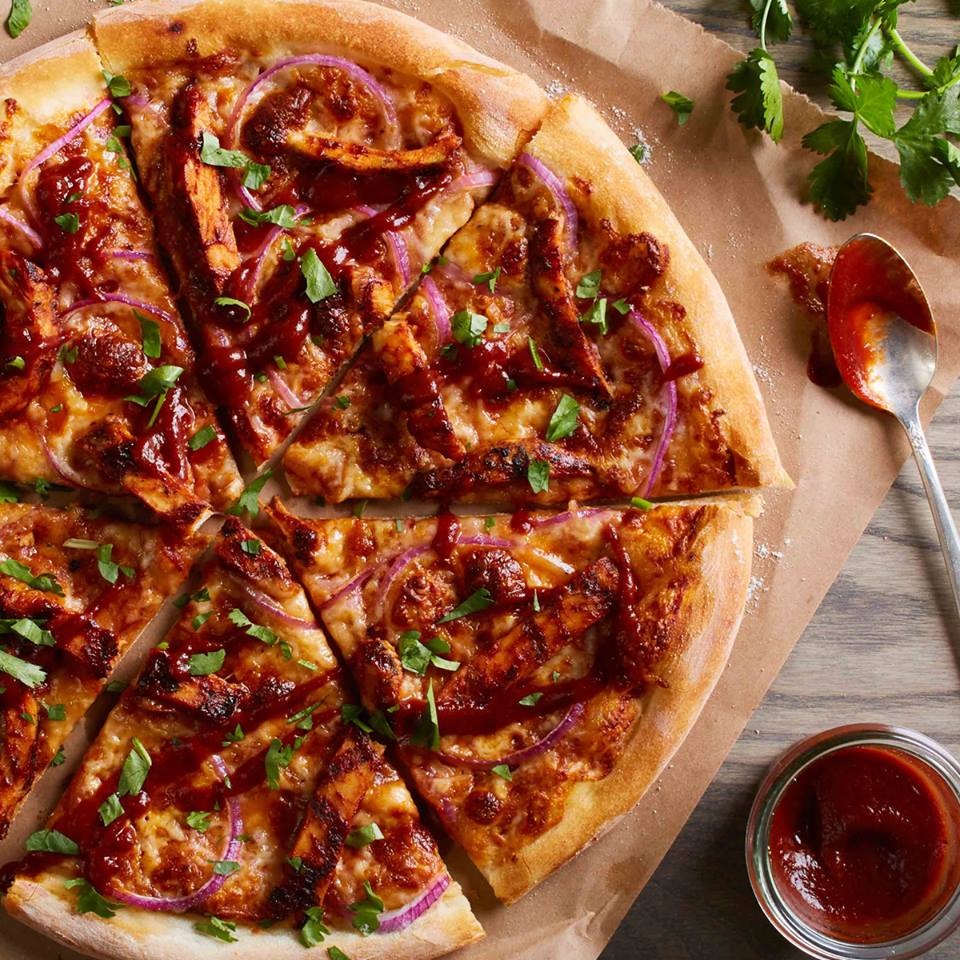
    The new location will feature several of the brand’s classic American menu offerings including the iconic BBQ Chicken Pizza, Cali Club Pizza, BBQ Chicken Salad, and Cedar Plank Salmon, among others.

    CPK’s global presence includes more than 200 locations in 8 countries and U.S. territories, which includes 40 international franchise locations in addition to 16 domestic franchise locations in airports, casinos and stadiums across the United States. While Hong Kong is no longer under COVID-19 lockdown restrictions, all CPK locations remain committed to providing a safe and secure dining experience with rigorous cleaning and safety protocols.

  • Domino’s buys up Taiwan operations

    Domino’s buys up Taiwan operations

    Fast food company Domino’s Pizza Enterprises is to acquire Domino’s Taiwan as part of its global expansion plan.

    The company has entered a binding agreement with Formosa International Hotels under which Domino’s will buy the Taiwan operation for $79 million on a cash and debt-free basis.

    “This is a market with tremendous opportunities for our business and this acquisition provides similar opportunities for the local team,” said Don Meij, CEO and MD at Domino’s Pizza.

    “Our expansion focus has been on identifying opportunities with large total addressable markets and a stable economy.”

    The deal is expected to close in the first half of FY2022.

    Domino’s is Taiwan’s second-largest pizza chain with 157 corporate and franchised stores across the territory. As part of the acquisition, Domino’s Pizza aims to increase the store network to more than 400 stores.

    The company also plans to expand the brand’s footprint in Asia from 1500 stores to 1900 stores by 2032.

    “We intend to expand the store footprint through opening more corporate stores, introducing new, internal, franchisees to the network, helping existing franchises profitably expand their businesses, and investing in the network and our people to drive long-term growth,” Meij added.